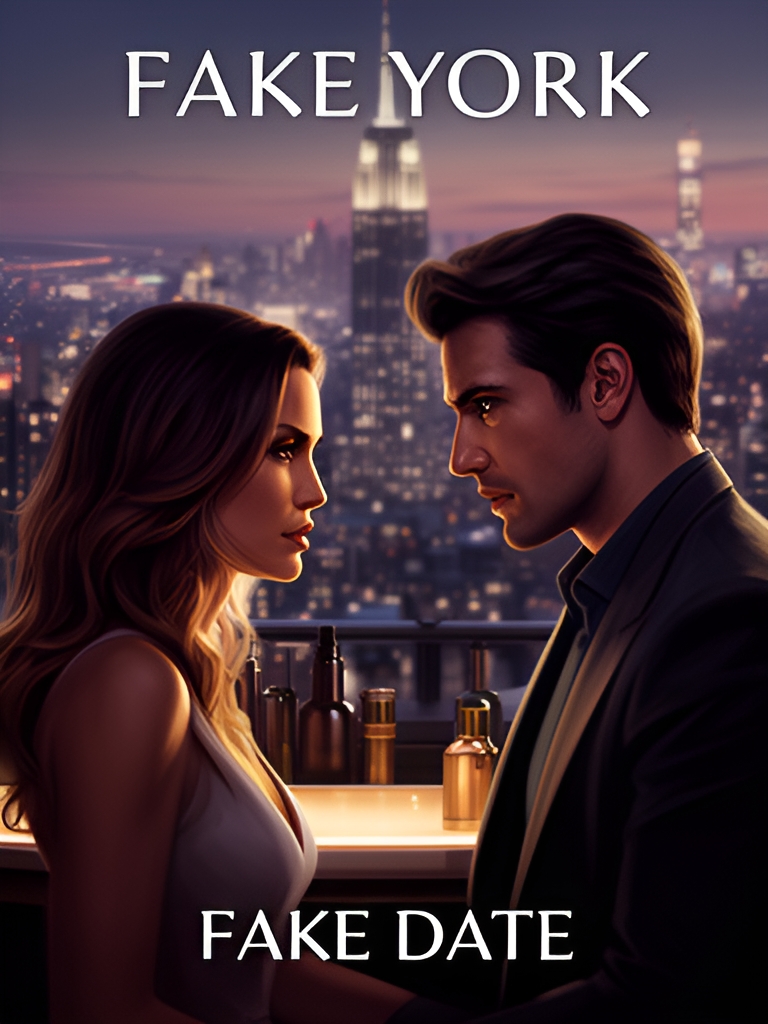
Romance
A summer of stars
by ayana
3 chapters19 min read
Chapter 1
The Contract
The phone light stings my eyes at 2:17 a.m. I shouldn’t be watching this. But my thumb won’t stop scrolling, dragging the playback bar back to the moment my racket slipped from my grip and clattered onto Centre Court grass. The umpire’s face—pale, flinching—as I leaned into his chair, voice raw from screaming, tears cutting tracks through the sweat and dust on my cheeks. “It was a let! You called it out! You saw it!” The crowd’s murmur swelled into a roar, not of support, but of spectacle. Phones flashed like fireflies in a storm. I see myself—ranked #3 in the world, usually ice in my veins—shaking, unraveling over a line call that, in slow motion, really was out. But the damage wasn’t the fault. It was the loss of control. The world saw me break, and they haven’t stopped watching since.
A notification flashes: Agent Call: Elena Vargas. I ignore it. Let it ring. Let her leave another voicemail about damage control, about how the sponsors are twitching, how my quiet grace on court used to sell rackets and skincare and now it’s all “unhinged champion” headlines. I don’t need her voice to know what she’ll say. I’ve heard it in my head a hundred times since Wimbledon.
The screen goes dark. I shove the phone under my pillow, but the echo lingers—the shame, hot and thick behind my ribs. I press my palms into my eyes until I see stars. My little brother’s face surfaces then: Mateo, ten years old, grinning through his IV line in that sterile hospital room in Phoenix, holding up a crumpled drawing of me holding a trophy. “For when you win again, Luna.” He doesn’t know about the meltdown. He just knows I’m his hero.
The phone buzzes again. Insistent. I yank it out, swipe to answer before it wakes the whole suite.
“Luna, it’s been twenty minutes. Pick up.” Elena’s voice is tight, efficient—she’s been waiting for me to crack.
“I’m here.” My voice sounds thinner than I feel.
“Good. Because we’re out of time. The Wilson deal is hanging by a thread. After tonight’s highlights, they’re pulling the morning shoot. If we don’t act fast, the others follow.”
“I know what’s at stake.” I sit up, swing my legs over the side of the bed. The Plaza’s marble floor is cool beneath my bare feet. Outside, New York hums—a distant siren, the rush of taxis—but in here, it’s just me and the weight of everything I’m trying to hold together.
“Then you’ll do it?” Elena doesn’t beat around the bush. “Tristan Alvarez. Fake relationship. Six weeks. Staged paparazzi walks, coffee dates, the works. It’s the only play left to reframe the narrative. You get your endorsements back. He gets his image softened after that sci-fi flop. Win-win.”
I stare at my racket leaning against the dresser—black and silver, my partner for years. The grip is worn where my sweat soaks in. I used to trust it implicitly. Now I wonder if I can trust myself.
“It’s not about the sponsorships,” I say quietly. “It’s about Coach Diego’s salary. Mateo’s treatment. If I lose Wilson, I lose the ability to pay for either.”
Silence on the line. Then, softer: “I know. That’s why you say yes.”
I don’t say yes yet. I just stare at the racket, at the strings woven tight with purpose, and wonder if the girl who used to lose herself in the rhythm of a serve is still in there somewhere—or if the world’s already decided she’s gone for good. *
The bistro’s too quiet, too beige. Midtown lunch rush hasn’t hit yet, so it’s just the clink of cutlery and the hiss of the espresso machine. I’m early—of course I am—and I’ve been sitting here ten minutes, replaying every possible way this could go wrong. Tristan Alvarez is late. Of course he is.
When he finally strides in, he’s not the polished menace I expected from the tabloids. His dark hair falls messily over his forehead, his wrinkled linen shirt looks slept-in, and he moves like he’s carrying something heavy. He slides into the booth opposite me without apology, orders black coffee, and doesn’t meet my eyes until the waiter leaves.
“Rough night?” he asks, voice low, surprisingly quiet.
I blink. “Excuse me?”
“You look like you didn’t sleep.” He lifts his cup, steam curling between us. “I know the feeling.”
I stiffen. “I don’t discuss my personal life with strangers.”
He doesn’t flinch. Just gives a small, tired smile. “Fair. I’m Tristan. And I took this deal because my last movie tanked so hard, even my mom stopped asking when the next one’s coming out.”
I study him—really study him. No smirk. No arrogance. Just a guy who looks exhausted, trying to navigate a mess he didn’t make. Maybe the act starts later. Or maybe I’ve already misjudged him.
The coffee arrives. He wraps both hands around the cup. “So. What’s your recovery routine look like these days?” he asks, genuine curiosity in his tone.
I hesitate. Then, against my better judgment, I begin to answer.
He sips his coffee, watching me over the rim. “Tell me how you reset after a match. Do you journal? Meditate? Scream into a pillow?” There’s no mockery in his tone, just a quiet intensity, like he’s trying to map the shape of me.
I hesitate. The question feels invasive, yet his earnestness disarms me. “I… I used to have a ritual. After every win, I’d go to the hotel gym and hit serves until my arm shook. After losses… I’d sit in the ice bath and count my breaths. Try to reset the nervous system.” I lift my own cup, the ceramic warm against my palms. “Lately, I haven’t been able to do either. The ice bath feels like punishment now. The serves… they just remind me of Wimbledon.”
He nods slowly. “Yeah. I get that. After my last film bombed, I couldn’t stand to watch dailies. Felt like every frame was proof I’d failed.” He sets his cup down. “I took this deal not just for the image boost, but because… I needed to prove to myself I’m not unlikable. That people don’t just see the flop and write me off.”
A flicker of something—sympathy?—stirs in my chest. He’s not the smirking villain from the gossip sites. He’s tired. Vulnerable, even. Maybe there’s room for this to work.
Then he leans forward, elbows on the table, and says, “Honestly, though? Your meltdown at Wimbledon? That was content. Raw, real, the kind of stuff people can’t look away from. If we frame it right—show the struggle, the comeback—it could be the best thing that ever happened to your brand.”
The words land like a serve aimed straight at my ribs. My breath catches. Content. As if my humiliation, my brother’s hopeful drawing, the way I’d choked on my own tears in front of millions—was just fodder for a publicity stunt.
I slam my palm flat on the table. The coffee jumps in his cup. “You think it’s content?” My voice shakes, low and furious. “You think my breakdown was just… material for your comeback story?”
He blinks, startled. “I didn’t mean it like that—”
“You meant it exactly like that.” I shove back from the booth, chair screeching against the tile. “You don’t get to call my pain content. Not when it’s the reason I can barely sleep. Not when it’s the thing that keeps me up wondering if I’m letting Mateo down.”
He stands too, hands open in a placating gesture. “Luna, I’m sorry. I just meant—”
“Save it.” I grab my bag, the strap biting into my shoulder. “I came here hoping you’d be arrogant. At least then I’d know what I was dealing with. But this?” I shake my head, backing toward the door. “You’re worse. You reduce everything to a narrative. Even my humanity.”
I turn and walk out, the bell above the door jangling behind me. The Midtown sun hits my face, bright and indifferent. I don’t look back. I can’t.
Somewhere behind me, I hear him sigh—a sound heavy with regret—but I keep walking, heels clicking fast on the sidewalk, until the bistro disappears behind the flow of lunchtime pedestrians. My chest burns, not just with anger, but with the awful, dawning realization: if even he sees me as a story, maybe I’ve started to believe it myself. *
I don’t go back to the Plaza. Instead, I walk west, toward the river, letting the Hudson’s wind whip the tears from my cheeks before they can fall. The city rushes around me—tourists snapping photos, bikers weaving through traffic, a street musician playing something off-key on a violin—but I’m in a bubble, the roar of Wimbledon still ringing in my ears, Mateo’s voice whispering, “For when you win again, Luna.”
I stop at a railing, grip the cold metal, and stare at the water. It’s choppy today, gray under a sky that threatens rain. I think about the contract waiting in my agent’s inbox. About the six weeks of staged walks and fake laughter. About the way Tristan’s eyes had softened when he talked about his mom.
And I think about how easy it would be to let someone else define me—again—just to keep the lights on, the treatments paid, the dream alive.
But then I remember the way my serve used to feel: clean, inevitable, like the ball was never in doubt. I want that back. Not for the sponsors. Not for the headlines.
For me.
I push off the railing, turn east, and start walking home. The fake relationship can wait. Tonight, I’ll call Mateo. Tell him I’m still fighting. And tomorrow? I’ll meet Elena. Not to sign anything.
To negotiate my own terms.
Chapter 2
The Rehearsal
I push off the railing, turn east, and start walking home. The fake relationship can wait. Tonight, I’ll call Mateo. Tell him I’m still fighting. And tomorrow? I’ll meet Elena. Not to sign anything.
To negotiate my own terms.
The next afternoon finds me standing on a crowded SoHo sidewalk, Tristan beside me in a wrinkled linen shirt that’s already sticking to his back. Cameras flash from across the street—paparazzi we paid to be here, though it doesn’t feel like it. A small crowd has gathered, phones raised, murmuring. I force a smile, loop my arm through his as instructed, and tilt my head toward his shoulder like we’re sharing a joke. It feels like wearing someone else’s skin.
“You’re doing great,” he murmurs, but his voice is tight. “Just… breathe.”
I try. In. Out. The way Diego taught me before matches. But the air tastes like exhaust and desperation. A teenager nearby snorts, loud enough for me to hear. “Look at them. So fake it hurts.”
Another voice, female: “Yeah, who even are they? She’s that tennis girl who cried on court, right? And he’s the guy from that spaceship movie nobody watched.”
The words land like serves I can’t return. I tighten my grip on Tristan’s arm, not for the cameras, but to keep myself upright. We walk half a block like this—mechanical, smiling, dying inside—until the sky opens.
One moment it’s threatening; the next, buckets. Rain slams sideways, turning the sidewalk into a mirror. People scream, diving for cover. Tristan curses and pulls me hard toward the narrow awning of a bodega just as my expensive shoes begin to slip.
We’re shoved together under the plastic overhang, shoulder to shoulder, dripping onto the concrete. The bodega owner eyes us warily from behind the counter, but says nothing. Above us, the rain drums a frantic rhythm on the metal awning. Cars hiss through puddles. Somewhere, a siren wails.
I laugh—actually laugh—when I realize we’re both trying to shield our phones with our hands like they’ll melt. “We look ridiculous.”
Tristan pushes wet hair from his forehead, grinning. “Tell me about it. My publicist is going to have a fit.” He shakes out his sleeve, sending a spray of water over my sneakers. I flinch, then laugh harder. “Sorry. Reflex.”
“It’s fine.” I wipe water from my eyes. “Honestly? This is the first time today I haven’t felt like I’m performing.”
He leans against the damp brick wall, studying me. “You know, I’ve never been in a real New York summer storm before. Not like this. Back in L.A., it’s either drought or a sprinkle that lasts ten minutes.”
I push off the wall and step toward the open door. “Come on. Worst that can happen is we get kicked out for loitering.”
Inside, the bodega is cool and smells of coffee and cardboard. We each grab a dry croissant from the display near the register—no words exchanged, just a silent agreement—and find a tiny table in the corner by the window. Outside, the storm rages. Inside, it’s just us, the hum of the refrigerator, and the quiet clink of Tristan’s spoon as he stirs sugar into his coffee.
“I used to hate rain,” I say, breaking the crust of my croissant. “On the tour, if it rained during practice, I’d get furious. Felt like the universe was conspiring against me.”
He looks at me over the rim of his cup. “And now?”
I think of Mateo’s voice, the way the wind felt on my face by the river yesterday. “Now… I don’t know. Maybe I needed it to remember I’m not made of glass.”
He doesn’t say anything right away. Just nods, slow, like he’s filing it away. Then: “You ever think about what you’d do if tennis wasn’t… this? If you didn’t have to be Luna Aldridge, #3 in the world all the time?”
I hesitate. The question feels dangerous, like stepping onto a cracked court. “All the time? I just want to be good enough. For Mateo. For Diego. For myself.”
He sets his cup down. “What if ‘good enough’ isn’t about winning? What if it’s just… showing up? Even when it rains?”
I don’t have an answer. But for the first time since Wimbledon, the tightness in my chest eases—not gone, but loosened, like a knot finally given slack.
We finish our pastries in silence, watching the rain blur the city into watercolor. When it finally eases to a drizzle, we step back out. The air smells clean, ozone and hot pavement. A few blocks away, someone’s phone catches us—Tristan brushing a stray strand of hair from my face, me laughing, shoulders bumping as we walk.
By the time we reach the corner, the video’s already up. Caption: “Wait… are they actually cute??” Underneath, thousands of comments. Not one of them mocking.
I don’t look at Tristan. But when he bumps my shoulder lightly as we cross the street, I don’t pull away.
We find a table near the edge of the Standard’s rooftop bar, the city sprawling beneath us like a circuit board of light. Tristan ordered us each a ginger beer—no alcohol, he said, just in case we need to keep our heads clear. The wind tugs at his shirt, lifting strands of hair from his forehead. I wrap my hands around the cold glass, condensation seeping into my palms.
“I used to love the quiet after a match,” I say, staring at the bubbles rising in my drink. “Not the roar of the crowd—the silence when I walked off court. Just me, my racket, and the echo of the last ball hitting the strings. Now… I don’t even want to pick it up. It feels like putting on armor that’s started to rust inside.”
He doesn’t look away when he speaks. “I get that. After the movie tanked, I kept waiting for the panic to fade. Like if I just stayed quiet long enough, people would forget I ever existed. But it’s worse when they remember—and still look right through you.”
I turn to him. “You write songs, don’t you?”
He freezes, glass halfway to his lips. “How did you—”
“Your hands. When you’re thinking, you tap your fingers like you’re playing chords. I saw you doing it under the bodega table earlier. And you hum sometimes. Off-key. Like you’re trying not to be heard.”
A humorless laugh escapes him. “Yeah. I write them. Never sing them. Not even in the shower. It’s stupid, I know. But if I put them down… it means I’m admitting they matter. And if they matter, then maybe I do too.”
The words hang between us, heavier than the humidity. I reach across the table, not for his hand, but to brush a stray drop of water from his wrist—left over from the storm, or maybe from the glass. His skin is warm.
“You do,” I whisper. “You matter.”
He doesn’t pull away. His eyes drop to my lips, then back up. The city hums below—sirens, laughter, the distant thump of a bass line from a rooftop party somewhere east. But up here, it’s just us, and the space between us has shrunk to nothing.
I don’t know who moves first. Maybe it’s the way he licks his lips. Maybe it’s the breath I didn’t realize I was holding. But suddenly, we’re leaning in, and his mouth is on mine—soft at first, testing, like he’s afraid I’ll vanish if he presses too hard. Then it deepens, slow and sure, his hand cupping my jaw, my fingers gripping the edge of the table to keep from falling.
It’s not staged. There’s no camera flashing, no script in my head. Just the taste of ginger and rain on his lips, the way his breath hitches when I tilt my head, the thunder of my own pulse in my ears.
We break apart slowly, foreheads still touching. His eyes are wide, searching mine—not for a reaction, but for confirmation. As if he needs to know this was real.
I swallow. My voice comes out rough. “That wasn’t in the contract.”
He lets out a shaky breath, a ghost of a smile touching his mouth. “No. It wasn’t.”
We don’t say more. We don’t need to. The night stretches ahead, uncertain and bright, and for the first time in months, I’m not afraid of what comes next. *
I stay until the city lights begin to blur at the edges, my head resting against Tristan’s shoulder as we watch the last of the stragglers file out onto the street. The rooftop is quiet now, the staff stacking chairs, rolling up umbrellas. He hasn’t let go of my hand.
“I should go,” I murmur, though I don’t move.
He turns his face toward my temple, his voice low. “Stay a little longer. Just… let this be ours for a while.”
I nod, closing my eyes. The wind carries the scent of rain and fried dough from a cart down the street. Somewhere, a saxophone plays a slow, aching tune.
I don’t know what happens tomorrow. I don’t know if we’ll still be doing this for the cameras, or if we’ll finally stop pretending. But for now, with his thumb tracing slow circles on my knuckle and the city breathing beneath us, I let myself believe—just for tonight—that we’re exactly where we’re meant to be.
Chapter 3
The Leak
The rooftop bar buzzed low under string lights, the city humming below like a distant tide. Tristan’s laughter had been easy, unguarded, as he told me about the time he tried to direct a scene with a stray cat that refused to leave the frame. I’d admitted, over shared fries and too-sweet lemonade, that I still woke some mornings expecting to hear Elena’s voice insisting I hit ten more serves, even though I hadn’t touched a racket in three days.
We’d lingered past closing, talking until the bartender began wiping chairs nearby. When we finally stepped onto the sidewalk, the air was cool and sharp with the promise of autumn. Neither of us moved to hail a cab.
“Want to walk?” he asked, hands shoved in his pockets.
I nodded. The silence between us wasn’t empty this time. It was full — of the echo of his voice, the warmth of the blanket we’d shared on the awning, the way he’d looked at me when I laughed, not at my joke, but at something behind my eyes.
We drifted south, past shuttered boutiques and the glow of 24-hour diners. The streets thinned as we approached the park’s eastern edge. I didn’t realize where we were going until we passed the carousel, its horses frozen mid-gallop under a tarp, and I felt the familiar pull of Bethesda Terrace—the place where I’d once sat alone after a win, watching the water ripple under the angel’s feet, trying to remember how to breathe.
Tristan paused at the top of the stairs. “You come here often?”
I shook my head. “Not since Wimbledon. Too many memories.”
He didn’t press. Instead, he offered his arm, and we descended together, the stone cool under our palms. The terrace was quiet at this hour, only a few late joggers and a couple sharing wine on a bench far below. We found a patch of grass near the fountain, spread out the blanket Tristan had somehow produced from his bag, and sat shoulder to shoulder.
He handed me a peach, its skin fuzzy and warm from the sun still trapped in its flesh. “My abuela used to say the best fruit tastes like the moment you pick it.”
I took a bite. The juice ran down my chin, sweet and tart, bursting with the taste of late summer. I wiped my mouth with the back of my hand and laughed. “I used to eat these after matches. Before everything got…complicated.”
He watched me, not with the assessing gaze of an actor reading a scene, but with something softer. “What did you want to be, before tennis?”
I hesitated. The question felt dangerous, like stepping onto a cracked baseline. “I wanted to teach. Not just forehands and backhands—though I love those—but how to show up for yourself when you’re scared. How to lose without disappearing.”
He turned to me then, fully. “And what about now?”
“I still want that,” I said. “More than ever. I’ve been thinking about starting a clinic. Free lessons for kids who can’t afford courts. Use tennis to teach discipline, not just trophies.”
His eyes softened. “That’s beautiful.”
I turned to him. “And you? What do you really want?”
He was quiet for a long moment, staring at the fountain where the water caught the moonlight like scattered coins. “I want to tell stories that matter. Not the ones with explosions and CGI, but the quiet ones—about kids who grow up wondering if anyone will stay. I was in foster care till I was twelve. I never had someone sit with me after a nightmare and say, ‘It’s okay. I’m here.’ I want to make a film about that. Small. True. No red carpets.”
I reached over and laced my fingers through his. His hand was warm, calloused from years of holding props, of gripping steering wheels in chase scenes, of pushing himself into roles that demanded too much.
“I’d watch that,” I whispered.
We lay back on the blanket, the peach pits between us like discarded secrets. The stars were faint above the city’s glow, but here, in this patch of grass, the world felt suspended. We didn’t talk about the contract. We didn’t mention the cameras, the sponsors, the looming deadline. We just breathed—side by side, shoulder to shoulder—until the sky began to lighten at the edges, and I realized we’d fallen asleep.
I woke to the weight of his arm draped over my waist, his breath warm against my temple. The sun was higher now, gilding the fountain’s spray. For a moment, I pretended we weren’t two people playing roles. I pretended we were just Luna and Tristan, waking together in a quiet park, with no audience, no agenda, no lie to uphold.
Then he stirred, blinked awake, and looked at me—not as a co-star in a publicity stunt, but as someone who had seen him, really seen him, and hadn’t looked away.
We didn’t speak. We didn’t need to.
The truth was already between us, quiet and certain: we didn’t want to pretend anymore.
I stirred beneath the weight of his arm, the morning light catching dust motes above us like suspended breath. Tristan shifted beside me, his thumb brushing slow circles on my hip where his hand rested. For a heartbeat, I let myself believe we could stay like this forever—just skin and sunlight and the quiet hum of the city waking.
Then my phone buzzed against the blanket, sharp and insistent. I fumbled for it, screen flashing with Elena’s name. My stomach dropped.
“Don’t answer,” Tristan murmured, voice rough with sleep.
I ignored him, swiping to see the notification blearing across the lock screen: VIDEO LEAKED: LUNA ALDRIDGE & TRISTAN ALVAREZ CAUGHT IN ‘FAKE’ KISS?
My blood turned to ice.
I opened it. The clip was shaky, filmed from across the terrace—us, wrapped in the blanket, his hand cupping my face, mine tangled in his shirt. The angle caught us mid-kiss, lips parted, eyes closed. The caption beneath it, in bold, accusatory font: Proof They’re Faking It? Sponsors Pulling Out as Romance Rumors Implode.
Below, the comments had already begun to flood in: Pathetic. Another Hollywood stunt. She’s using him for clout. His career’s over. She’s next.
My breath came short. I could already hear the sponsors pulling out, the headlines writing themselves, Mateo’s treatment hanging in the balance.
Tristan sat up beside me, peering over my shoulder. His face went still, then hard. “How long ago was this posted?”
“Twenty minutes.” My voice sounded thin, even to me. “It’s spreading fast.”
He ran a hand through his hair, jaw tight. “My agent’s blowing up my phone. She wants me to deny it—say it was edited, that we never touched. Claims we can still salvage the deal if we act now.”
I looked at him, really looked—the worry in his eyes, the way his fingers curled into his palms. All that time we’d spent pretending, and now the lie was out, and it was destroying us anyway.
“No,” I said. My voice surprised me—steady, clear. “We don’t deny it.”
He blinked. “What?”
“We don’t lie anymore.” I pushed myself up, legs trembling slightly as I stood. “Not to them. Not to ourselves.”
“Luna, if we come clean—”
“I know what it costs.” I met his gaze, heart pounding. “But I’d rather lose everything pretending to be someone I’m not than keep hiding who I am with you.”
He stared at me for a long moment, then exhaled, a shaky breath that seemed to carry months of tension with it. “You’re sure?”
I nodded. “I’ve never been more sure of anything.”
We found a bench with a view of the fountain, the water catching the morning sun in shards of gold. I opened Instagram, hands steady now as I went live. Tristan sat close, shoulder brushing mine, his laces of fingers finding mine without hesitation.
“Hey,” I said into the camera, voice clear despite the flutter in my chest. “This is Luna Aldridge. And Tristan Alvarez.”
A wave of comments exploded—confusion, anger, curiosity. I waited for it to settle.
“We need to address the video,” I continued. “Yes, it’s real. Yes, we kissed. And no, we weren’t faking it.”
A pause. The comments slowed, wary.
“We started this as a deal,” Tristan said, his voice low but firm. “A contract to help both of our images after… rough patches. But it didn’t stay that way. Not for me. Not for her.”
I squeezed his hand. “We tried to keep it professional. We really did. But feelings don’t care about contracts. And honestly? I’m tired of pretending.”
The comments shifted—some skeptical, others softening. A few began to flood in with hearts and fire emojis.
“I’m not doing this to save a sponsorship,” I said. “Or to reboot a career. I’m doing it because I care about him. Because he makes me feel seen, not scrutinized. Because I want to be real—with him, with myself, with the people who actually matter.”
Tristan turned to me, eyes bright. “And I want to make that film. The one about kids who need to hear someone say, ‘It’s okay. I’m here.’ But more than that—I want to wake up next to the person who actually stays.”
A laugh escaped me, watery and light. “So yeah. We’re together. Not because we have to be. Because we choose to be.”
I ended the live, the screen going dark. Silence settled between us, heavy but not unbearable.
My phone buzzed again—Elena, then Diego, then Mateo’s nurse, then a flood of messages from friends and strangers alike. I didn’t check them yet.
Instead, I leaned into Tristan, resting my forehead against his shoulder. The fountain whispered behind us, the city breathed around us, and for the first time in months, I didn’t feel like I was performing.
I felt like I was home.