Fiction
Aprende Ruso Paso a Paso
by Jean Marcos Almonte
3 chapters16 min read
Chapter 1
First Steps: Letters and Sounds
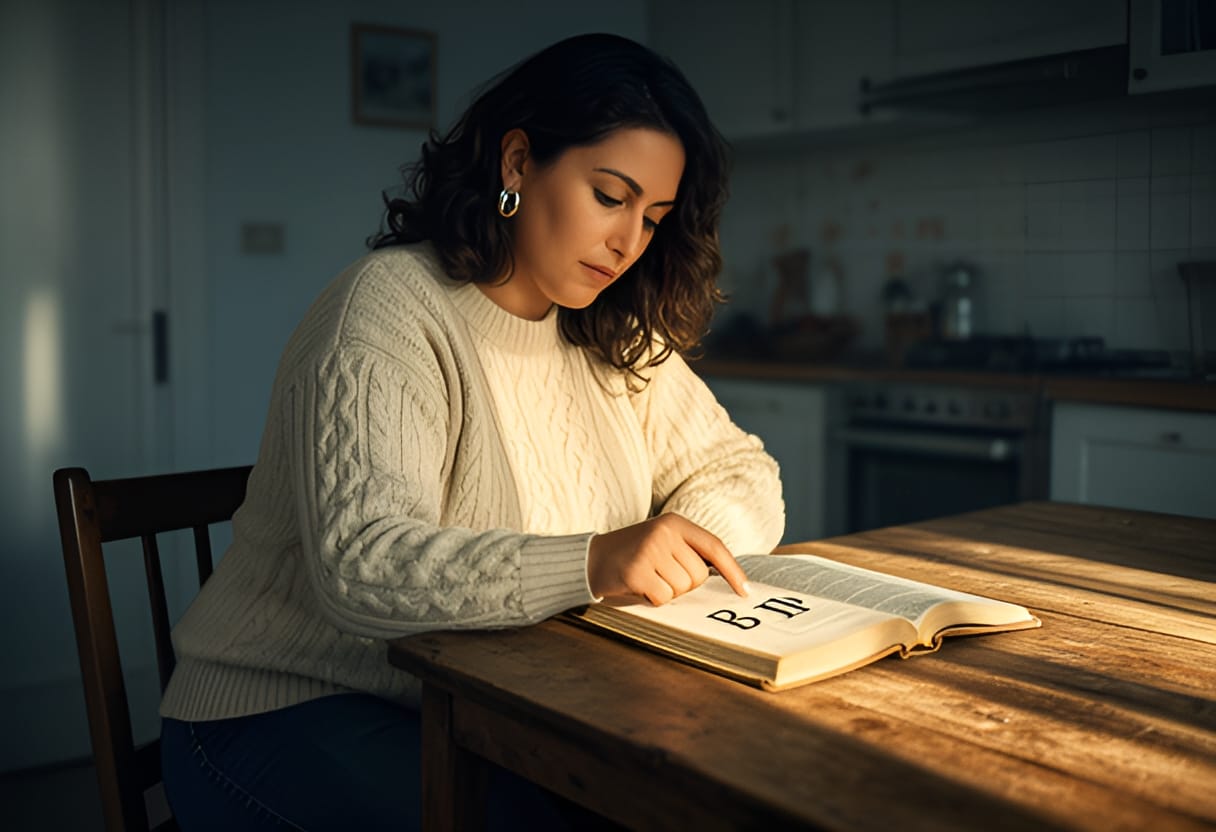
Ana traced the unfamiliar letters with her fingertip, the pages of the book cool against her skin. She had bought it on impulse at a small shop near the train station, drawn by the bright cover and the promise of starting from zero. Now, sitting at her kitchen table with morning light spilling across the wood, she stared at the first lesson: the Cyrillic alphabet.
The first letter looked exactly like a Latin B. Her instinct said be, but the book corrected her gently: В is pronounced ve, like the v in voice. She frowned, saying it aloud. Ve. It felt strange on her tongue, not the soft b she expected, but a lighter vibration between her lips. She tried again, exaggerating the sound, until it began to feel natural.
Next came a letter that resembled a backward P. Again, her mind reached for the familiar sound, but the text was clear: Р is er, a rolled r, like the Spanish perro. Ana took a breath and attempted it. The first try was weak, a soft flutter. She laughed at herself, then tried harder, tapping her tongue against the roof of her mouth. After a few attempts, a rough trill emerged — not perfect, but recognizably Russian. She repeated it, smiling at the progress.
She moved to the exercises. The book showed two letters together: М and А. М was easy — it looked and sounded like m. А was a surprise: not the ah she expected from the shape, but a clear a, like father. Together, they formed ма. Ana copied the syllables carefully, the curves of the letters flowing under her pen. Then she said them aloud: ma. Simple. Familiar, yet foreign.
The next line showed the same syllable repeated: мама. Her eyes widened. Mama. Just like in Spanish. She pointed to the word, then said it slowly, syllable by syllable: ma-ma. The sound was warm, immediate. It reminded her of her grandmother’s voice, calling her in from the garden. She said it again, softer this time, feeling the word settle in her mouth like something remembered.

She flipped ahead, curious. There, in a short dialogue, she saw the word again: Это мама. Below it, the pronunciation: Eto mama. This is mom. Ana read it slowly, stumbling on the first word but nailing the second. She repeated the whole phrase, her voice gaining confidence. Eto mama. It wasn’t just letters anymore. It was meaning.
She closed the book and leaned back, the morning sun now fully on the table. The letters were still strange, some of them deceptive mirrors of what she knew. But two of them had yielded their sounds, and in doing so, had given her a word she already understood. She picked up her pen and wrote мама once more, then whispered it to the quiet room. Not perfect. But a beginning.
She opened the book again, the spine cracking softly as she turned to the next page. The lesson was titled "Приветствия" — Greetings. At the top, in bold Cyrillic, sat the word Здравствуйте. Below it, a pronunciation guide: Zdra-stvooy-tye. Ana frowned. The first syllable looked impossible: Здра. She had never seen a З that looked like a number three with an extra tail, and the idea of saying it followed by a д and an р all at once made her jaw tighten.
She leaned closer to the page, tracing the letters with her pen. З was ze, she remembered from the alphabet chart — like the z in zoo. Д was де, like d in dog. And Р, she now knew, was that rolled er she had practiced earlier. But together? She said them separately: zeh-deh-er. It sounded clumsy, mechanical.
Then she remembered Dmitri’s voice from the audio snippet tucked in the book’s pages — a warm, patient tone that had guided her through the В and Р exercises. She imagined him saying it now, not fast, but clear. She pressed play on the tiny speaker embedded in the cover. A native voice flowed out: Zdrah-stvooy-tye. Not zeh-deh-er, but a soft blend — the з and д almost merging into a zh sound, the р light but present. Ana exhaled and tried again, mimicking the rhythm: Zzdrah-stvooy-tye. She said it slower, feeling the shape of each part. Zzdrah… her tongue tapped the roof for the д, then curled slightly for the rolled р. Stoy… her lips rounded. Tyee… a soft smile spread across her face as the ending flowed.

She repeated it five times, each attempt smoother than the last. By the fifth, she wasn’t thinking of the letters — she was hearing the word as a whole, a greeting that felt both formal and kind. Zdravstvuyte. She whispered it to the window, where the morning light had shifted, casting longer shadows across the table.
The next dialogue was simpler, but no less thrilling. It showed two people meeting. One said: Здравствуйте. Меня зовут Анна. Как тебя зовут? The other replied: Меня зовут Михаил. Очень приятно.
Ana read it slowly. Она knew Меня from the possessive structure she’d glimpsed earlier — it meant "me" in a grammatical sense she didn’t yet fully grasp, but the pattern was clear. Зовут, she guessed from context and the book’s footnote, meant "are called." So Меня зовут Анна — My name is Anna. Or more naturally, I am called Anna.
She said it aloud: Menya zovu Anna. The sounds rolled easily now — meh-nya zah-voo. She liked how the vowels opened her mouth, how the stress fell on the second syllable of zovu. She tried it with her own name: Menya zovu Ana. It felt right. Not a translation, but a new way of saying something essential.
Below the dialogue, the book offered a breakdown. Как тебя зовут? — Kak tebya zovu? How are you called? Ana practiced the question: Kak teebyah zah-voo? She liked the softness of kak, the way teebyah flowed like a whisper. She imagined herself asking it in a café, in a park, at the train station where she had bought the book.
She closed her eyes and imagined the scene: a woman sitting across from her, smiling. Ana would say, Zdravstvuyte. Menya zovu Ana. Kak tebya zovu? And the woman would answer, her voice warm: Menya zovu Yelena. Ochen priyatno. Very nice to meet you.
Ana opened her eyes. She picked up her pen and wrote the exchange in her notebook, first in Cyrillic, then underneath in her own script for reference. She said it all again, louder this time, as if speaking to someone real. Zdravstvuyte. Menya zovu Ana. Kak tebya zovu?
A quiet pride settled in her chest. It wasn’t fluency. It wasn’t even close. But she could now say hello, give her name, and ask for another’s — in a language that, just hours before, had been nothing but mysterious marks on a page. She looked at the word she had written: Меня зовут Ана. It looked like a secret. It sounded like a promise.
She leaned back in her chair, the book open on her lap. The morning was warming, the light now golden on the wood. Somewhere, a car passed outside. Inside, the quiet hum of the refrigerator. And in her mouth, the shape of a new sound — not yet perfect, but undeniably hers. She smiled. Not because she had mastered it, but because she had begun. And for now, that was enough.

Chapter 2
Building Blocks: Vocabulary and Grammar
Ana tapped her pen against the open page, the rhythm matching the quiet pulse of the morning. Sunlight slanted across the kitchen table, catching dust in the air above her notebook. She had just finished writing the dialogue — Меня зовут Ана. Kak tebya zovu? — and the ink still smelled faintly of metal. The refrigerator hummed its steady tune, and for a moment, she simply breathed, letting the satisfaction of being understood, even in fragments, settle into her bones.
Then her eyes fell on the next lesson, tucked at the bottom of the page like a quiet invitation: Род существительных. Согласование прилагательных. Grammatical gender. Adjective agreement.
She frowned. The terms felt heavy, academic — like something from a textbook she’d once struggled with in school. But Dmitri’s voice, calm and patient, echoed in her memory from the audio exercises: В русском языке существительные имеют род… In Russian, nouns have gender… She had heard it before, but now, seeing it in print, she wanted to understand.
She read the explanation slowly. Russian nouns, she learned, fall into three categories: masculine, feminine, or neuter. It wasn’t about the object’s nature — a table wasn’t inherently male, a book not female — but about grammatical patterns, mostly signaled by the noun’s ending. Adjectives, she read, must change their endings to match the noun’s gender and number. It was like dressing the word in the right outfit.
A table stood in the corner of her mental kitchen — solid, four-legged, familiar. She pictured it: стол. The word ended in a consonant. The book said nouns ending in a consonant or -й were usually masculine. Стол was masculine.
Below it, an example: хороший стол — good table. The adjective хороший ended in -ый, the masculine form. She said it aloud: khoroshee stol. The sounds felt sturdy, grounded, like the word itself.
She wrote it: хороший стол. Then, curious, she tried changing the adjective. What if she wanted to say bad table? She flipped to the vocabulary list. Плохой — bad. Masculine form ended in -ой. Плохой стол. Plokhoi stol. She whispered it, testing the shape of the word on her tongue.
Next, the book showed a feminine noun: книга — book. It ended in -а, a classic feminine marker. To say good book, the adjective had to change. Not хороший книга, but хорошая книга. The adjective now ended in -aya. She practiced: khoroshee-ya kni-ga. The ending softened, lifted — like turning a page.
She wrote it: хорошая книга. Then, for contrast, плохая книга. Plokhaya kni-ga. The sounds flowed differently now — lighter, more open. She imagined holding a red-covered novel, its spine cracked from use. Красная книга. Red book. Feminine adjective, feminine noun. It matched.
Then came the rose. Роза. Another -а ending. Feminine. The book asked: How would you say red rose?
Ana paused. She knew красный — red — from the earlier example. But that was the masculine form. For a feminine noun like роза, she needed the feminine version. She looked at the adjective table. Красный became красная when describing something feminine.
She said it slowly: krasnaya. The ‘ya’ at the end felt like a sigh. Then the noun: ro-za. Together: krasnaya roja.
She wrote it: красная роза. And then, to feel it fully, she spoke it aloud — clear, deliberate, not rushing. Krasnaya roja. The words sat beside each other like partners in step. The adjective had changed its ending to honor the noun’s gender, just as she had learned to adjust her greeting depending on who she spoke to.

A smile touched her lips. It wasn’t magic. It was pattern. And patterns, she was beginning to see, could be learned.
She flipped the page, eager for more. The lesson continued with neuter nouns — окно (window), море (sea) — and how adjectives shifted again, taking on -oe or -ee endings. But for now, she lingered on красная розa, saying it once more, letting the sounds settle into her mouth like a promise kept.
She turned the page, the paper whispering as it lifted. The next section began in bold: Числа и время — Numbers and Time. A small clock graphic ticked in the margin, its hands frozen at ten past eight.
Ana leaned forward. She had always found comfort in numbers — the way they ordered the world, gave shape to chaos. In Spanish, uno, dos, tres had been as natural as breathing. Now, she faced a new set of sounds, unfamiliar but inviting.
Один — one. She said it slowly, feeling the soft onset, the nasal fade. Один. Like a sigh released. Два — two. Crisp, clipped, the в vibrating between her lips. Три — three. The tongue tapped the roof, quick and bright. She moved through them, voice low but steady, testing each against the silence of the kitchen. Четыре, пять, шесть… By семь, she was smiling. The rhythm pleased her — not unlike the cadence of a lullaby her grandmother used to hum.
At двадцать, she paused. Twenty. Двадцать. Two tens. The word felt weighty, complete. She wrote it down, then said it aloud: dvadtsat’. The soft ч brushed her palate, the final ть dissolving like breath on glass.
Below the list, an example: Сейчас пять часов — It is five o’clock. She read it twice. Сейчас — now. Пять — five. Часов — hours, in the genitive plural, as required after numbers five and above. The book noted the shift: один час (one hour), два часа (two hours), but пять часов (five hours). A small grammatical shift, like changing gears.
She looked at the wall clock. Its hands hovered near nine. Сейчас девять часов, she said, testing the phrase. It felt true. The kitchen was quiet, the morning deepening. Sunlight had climbed higher, now grazing the edge of the windowsill, warming the wood.
Then came the dialogue practice. Когда ты встаёшь? — When do you get up? Ana traced the words with her fingertip. Когда — when. Ты — you. Встаёшь — you get up, the verb softening at the end with the familiar -ешь ending of present tense.
She imagined Dmitri asking her this over tea, his voice patient, encouraging. Her answer formed in her mind: Я встаю в семь часов — I get up at seven o’clock. Я — I. Встаю — I get up. В — at. Семь — seven. Часов — hours.
She spoke it aloud, startling herself slightly. The words were simple, but they carried weight — a declaration of routine, of self-knowledge. Ya vstayu v syem’ chasov. She repeated it, faster this time, then slower, savoring the way the vowels opened and closed like doors.

Later, after washing her bowl and spoon, Ana returned to the table. The lesson had ended with a short exercise: match the time to the activity. A sketch showed a woman stretching in bed, labeled 6:00. Another, a person pouring coffee, labeled 7:30. A third, someone locking a door, labeled 8:15.
She matched them silently, then began to create her own. Я пью чай в восемь часов fifteen — No, she caught herself. The book had warned against mixing systems. In Russian, time was often spoken in fragments: без (without) for approaching the hour, пол (half) for half-past. But for now, she stuck to the basics.
Я завтракаю в восемь ноль ноль, she said, then corrected: Восемь часов ровно — eight o’clock sharp. She liked the precision of it. Ровно — exactly. It sounded decisive.
She wrote a short paragraph in her notebook, not because it was assigned, but because she wanted to: Меня зовут Ана. Я встаю в семь часов. Я пью чай в восемь часов. Я читаю книгу в девять часов. My name is Ana. I get up at seven. I drink tea at eight. I read a book at nine.
She read it back, voice dropping to a whisper. It wasn’t fluent. It wasn’t flawless. But it was hers — a sequence of actions, anchored in time, expressed in a language that had, just weeks ago, been nothing but silent marks on a page.
Outside, a bird called from the eaves. The refrigerator clicked off. Ana closed the notebook slowly, her fingers lingering on the cover. She had learned to count. To tell time. To say when she woke, when she drank, when she read. Small things. But they were hers. And for the first time, she could imagine saying them to someone — not in imitation, but in her own voice — and being understood. She stood, stretched, and walked to the window, where the light now lay thick and golden across the sill. The day was hers to measure.

Chapter 3
Real Russian: Conversations and Culture
Ana stood by the window of the small bookshop where she had bought her Cyrillic primer, watching the late afternoon light slant across the cobblestones of the quiet side street. The bell above the door had just chimed as she stepped out, the weight of the book still familiar in her bag. She had spent the morning reviewing noun endings and adjective agreement, murmuring phrases like “красное яблоко” and “тёплый чай” until the sounds began to settle in her mouth. Now, she wanted to try something real.
A few doors down, the cafe “У Дмитрия” had a handwritten sign in the window: “Сегодня — свежая выпечка.” She had seen Dmitri’s name in the audio exercises, and though she knew it was likely just a coincidence, it made her smile. She pushed open the glass door and stepped inside.
The air smelled of roasted coffee and cinnamon. A single barista stood behind the counter, wiping a spoon with a cloth. He looked up as she entered, nodded once, and waited.
Ana took a breath. She had practiced this phrase aloud three times that morning, recording herself and comparing it to the audio snippet in her book. “Я бы хотел чай с лимоном, пожалуйста,” she said, her voice softer than she meant it to be.
The barista paused, then smiled. “Чай с лимоном. Один пожалуйста.” He turned to the kettle, his movements efficient. Ana listened to the rhythm of his words — the way he softened the “ж” in “пожалуйста,” the slight pause before “один.” She understood. He was confirming her order.
She watched as he placed a cup on the saucer, poured hot water over the tea bag, and added a thin slice of lemon that floated, bright yellow, on the surface. He set it down in front of her with a small nod.

“Спасибо,” she said, lifting the cup carefully. The warmth seeped into her palms. She took a sip. The tea was mild, the lemon sharp and fresh. It was not perfect — her tongue still stumbled on the “х” in “хотел,” and she had said “чай” a little too quickly — but she had been understood. And she had understood him.
When she finished, she reached into her bag for the exact change she had counted out earlier. The barista glanced at the coins, nodded, and said, “Всё верно. Спасибо.”
Ana gathered her things. As she turned to leave, she paused at the door and said, “Спасибо, всё было вкусно.”
The barista looked up, surprised, then laughed softly. “Спасибо вам. Приходите ещё.”
She stepped back onto the street, the bell chiming behind her. The sky was deepening to blue, and the first stars were visible above the rooftops. She touched the cup in her hand — now empty, but still warm — and whispered, “Вкусно,” just to feel the word again.
She had not just ordered tea. She had completed a small exchange, in another language, with another person. And for the first time, it had not felt like practice. It had felt like a conversation.
She walked home slowly, the empty cup still warm in her palm, the evening air cool against her cheeks. The streets were quiet now, the shops shuttering their windows, the last of the day’s light catching the edges of rooftops. She turned the key in her apartment lock and stepped inside, setting her bag down by the door. The book lay on the table where she had left it that morning, open to the page on adjective endings. She picked it up, flipped past the exercises, and found, tucked between the pages, a thin sheet of paper folded into a small rectangle.
It was not part of the book.
She unfolded it carefully. The handwriting was clear, slightly slanted, in dark ink.
Привет, Аня,
Надеюсь, ты хорошо провела день. Вчера я посмотрел фильм и пошёл в парк. Погода была тёплая, и деревья уже начали желтеть. В парке я скамейку у пруда и читал свою книгу. Потом купил пирожок с капустой у старушки у входа. Он был очень вкусный.
Сегодня у меня урок русского для иностранцев. Надеюсь, мои студенты не так нервничают, как ты в первый раз.
Напиши, как у тебя дела. Что ты делала сегодня?
Твой, Дмитрий
Ana read it once, then again, her lips moving silently as she sounded out each word. Она посмотрел фильм и пошёл в парк. He watched a film and went to the park. She understood the verbs — посмотрел, пошёл — the past tense forms she had studied just days ago. She recognized погода, деревья, желтеть, скамейку, пруд, пирожок, капусту — words from her vocabulary lists, now alive in a real context. She smiled at the image of Dmitri sitting by the pond, eating a cabbage pie from an old woman at the park entrance. The letter felt personal, not like an exercise. It was a message from someone who knew she was learning, who had taken the time to write to her in the language she was trying to master.

Her fingers tingled. She wanted to answer.
She went to her desk and took out her notebook. She had been practicing writing Cyrillic letters every evening, tracing the shapes until they felt natural. Now, she wanted to write something that mattered.
She paused, thinking. What had she done today? She had reviewed noun endings. She had bought the book. She had gone to the cafe. She had ordered tea. She had spoken to Dmitri — well, to the barista named Dmitri, though she liked to think it was a sign. She had understood him. She had been understood.
She began to write, slowly at first, then with growing confidence.
Спасибо за письмо.
She wrote it twice, checking the spelling. Спасибо — thank you. За письмо — for the letter.
Then:
У меня был хороший день.
I had a good day. She remembered the structure: у меня было — I had. Хороший — good. День — day. It matched what she had felt leaving the cafe.
Next:
Я читала книгу.
I was reading a book. She had read her Cyrillic primer that morning. She had reviewed the lessons. She had practiced the sounds. It was true.
She hesitated. Should she ask a question? Dmitri had asked her what she had done. She wanted to keep the exchange going.
О а ты? Как был твой день?
And you? How was your day?
She wrote it, then frowned. Она — she — but Dmitri was male. She should have said вы, formal, or ты, informal, but the verb needed to match. She thought back to her lessons. For “how was your day?” with ты, it would be Как был твой день? — but she had used О а ты? which was awkward. She crossed it out and tried again.
И как у тебя был день?
Or better: Как прошёл твой день? How did your day go?
She wrote: Как прошёл твой день?
Then, remembering how he had signed off, she added:
Надеюсь, он был хорош.
I hope it was good.
She read it over. It wasn’t perfect. She might have missed an ending, mixed a case. But it was hers. It was real.
She folded the letter neatly, placed it in an envelope, and wrote his name on the front: Дмитрию. She walked to the post office down the street, the sky now fully dark, stars sharp above. She dropped the letter into the slot and watched it disappear inside.
On her way back, she stopped by the cafe. The lights were off, but the sign in the window still glowed faintly: Сегодня — свежая выпечка. She pressed her palm to the cool glass and whispered, just barely, “Спасибо.”
Then she turned and walked home, the weight of the book in her bag, the quiet certainty in her chest that she had not only learned to read and write in another language — she had used it to reach someone.
And he had written back.