
Young Adult
Before you lose yourself
by Sidharth
3 chapters1.1 hr read
Chapter 1
The Way She Looked at Me
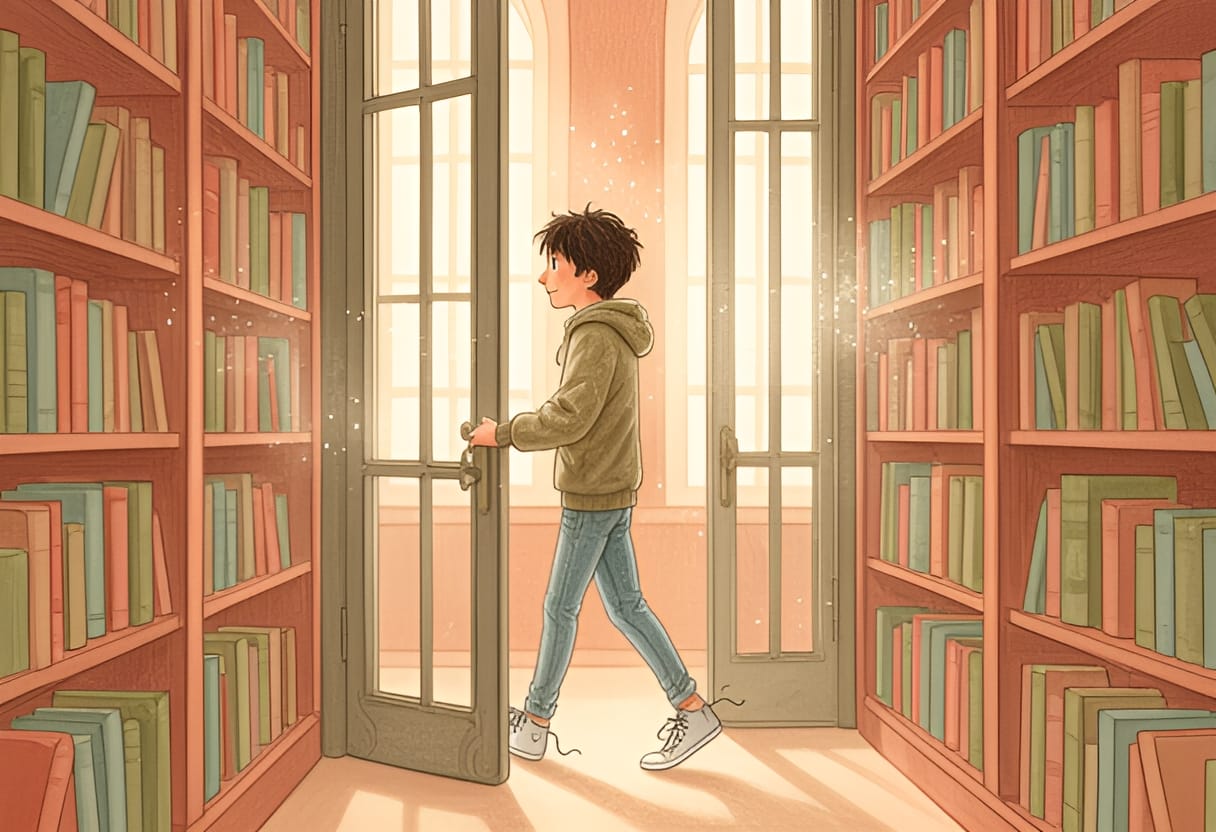
Alex pushed through the library’s heavy glass doors, the scent of old paper and dust wrapping around him like a familiar blanket. Fluorescent lights hummed overhead, casting a flat glow over rows of shelves that stretched into the quiet distance. He moved on autopilot, backpack slung low, eyes scanning titles without really seeing them. Another Tuesday. Another poli-sci lecture half-remembered, another essay draft due Friday that he hadn’t started. Javier had texted him twice already—you coming to brew night? and don’t forget we got that podcast ep to watch—but Alex had replied with vague promises, his mind already elsewhere, adrift in the usual fog of impending deadlines and low-grade anxiety.
He paused at the political theory section, fingers trailing over spines until he found the one he needed: The Origins of Totalitarianism. He pulled it free, and in the same motion, so did someone else.
Their hands brushed.
Alex jerked back, heart leaping into his throat. The girl beside him—tall, with dark curls tucked behind one ear and a sweater that looked soft enough to sink into—blinked up at him. Her eyes were wide, startled, then softened almost immediately.
“Oh,” she said, voice low and warm, like she’d been holding her breath. “Sorry, I kept you.”
Alex stared. He knew her. Not well, but enough. Mia. From his intro to political theory class two semesters ago. She always sat near the front, nodded when the professor made a good point, laughed quietly at the TA’s dry jokes. He’d noticed her then—the way she tilted her head when listening, how she bit the inside of her cheek when thinking—but had never worked up the nerve to say more than a passing hey in the hallway.
Now, here she was, standing inches away, the library’s quiet pressing in around them like a held note.
“I—yeah,” Alex managed, his voice rough. “No problem. I… I was just getting this.” He lifted the book slightly, as if to prove it.
She smiled. Not polite. Not fleeting. Something brighter, quicker—like sunlight catching a ripple on water. And then she did it: lifted her hand, tucked a loose strand of hair behind her ear, the movement slow, unconscious, utterly intimate in its simplicity.

Alex felt it land in his chest like a physical thing.
“Thanks,” he said, quieter now. “For… moving.”
She laughed—a soft, breathy sound. “Anytime.” Then she tilted her head toward the shelf. “You in Professor Hale’s class?”
“Yeah,” he said. “Poli-sci 101. Last fall.”
“That’s right.” Her eyes flicked to the book in his hands. “Arendt. Heavy stuff.”
“Yeah,” he said, smiling back despite himself. “Trying to survive it.”
She nodded, already stepping back. “Well. Good luck with that.” She gave him one last look—just a second, but it lingered—then turned and walked away, her steps light on the carpeted floor.
Alex stood frozen, the book limp in his grip. He watched her go: the sway of her hips, the way her sweater pulled slightly at the shoulder, the small lift of her wrist as she brushed a stray curl from her face. Then she turned the corner at the end of the aisle and was gone.
Silence rushed back in, louder now. The hum of the lights, the distant scrape of a chair, someone turning a page too loudly. Alex blinked. His palms were damp. His pulse hammered in his ears.
He didn’t move for a full minute. Then, slowly, he turned and walked toward the exit, the book clutched to his chest like a shield.
The dorm hallway smelled of burnt toast and laundry detergent. Alex shoved his key into the lock, turned it, and stumbled inside, kicking the door shut behind him. Javier was at his desk, headphones on, nodding to some beat only he could hear. He didn’t look up.
Alex dropped his bag by the bed and sank onto the mattress, the book still in his hands. He opened it to a random page, but the words swam. All he could see was Mia’s smile. The way her eyes had crinkled at the corners. The way she’d said Sorry, I kept you—like he’d been waiting for her, like she’d mattered enough to apologize for.
His cheeks burned. He laughed softly, disbelieving. She noticed me.
He lay back, staring at the ceiling. The room felt too small. Too bright. His skin felt too tight.
Twenty minutes passed. He didn’t read. Didn’t text Javier back when his phone buzzed with a you alive in there? He just replayed it: her voice, her hair-tuck, the exact angle of her head when she looked at him. Over and over. Each time, a little spark flared in his chest—hope, or something like it—then flickered as doubt crept in. Was she just being polite? Did she even remember my name?
He sat up. Grabbed his phone from the charger. Opened a new message. Typed: Hey, we had that poli-sci class together?
Stared at it. Deleted it. Typed again: Hi. This is Alex—from poli-sci? We reached for the same book in the library today?
Too much. Too eager.
He deleted that too. Sat there, thumb hovering, heart pounding. What if she didn’t remember him? What if she thought he was weird for messaging out of nowhere?
Finally, he typed: Hey. We had poli-sci together last semester. You were in front of me a lot.
It was safe. Neutral. True.
He sent it.
Then he locked the screen and threw the phone onto the pillow beside him.
And waited.
Ten minutes passed. Nothing.
Alex picked up the phone. Checked again. No notification. He flipped it over, then back. Maybe it hadn’t sent? He opened the message thread. Sent, it said, in gray below his words. Delivered. Not read.
He exhaled, shaky. She’s busy. She’s in class. She’s at the library again.
He opened Instagram, scrolled mindlessly for two minutes, then closed it. Opened Messages again. Still one gray check.
His chest tightened. Maybe she saw it and didn’t know what to say. Maybe she’s typing right now.
He laid back down, phone clutched in both hands above his face, thumbs resting on the screen as if he could feel her response through the glass.
Twenty minutes. Thirty. The dorm grew quieter as Javier finally logged off and headed out, murmuring a see you later that Alex didn’t hear.
The screen stayed dark.
Alex refreshed. Again. And again. Each time, the same: Delivered. No read receipt. No reply.
A coldness began to spread behind his ribs. Not panic yet—just a quiet, insistent whisper: She’s not going to answer.
He told himself it was stupid. It had been less than an hour. People had lives. People didn’t sit by their phones waiting for texts from acquaintances in poli-sci.
But another part of him—quieter, sharper—whispered back: Then why does it feel like I’m waiting for something that matters?
He turned onto his side, curled around the phone like it was a living thing. The screen remained dark. The room dimmed as evening crept in, the only light the faint glow from the hallway seeping under the door.
Eventually, exhaustion won. His grip loosened. The phone slipped slightly in his grasp, screen facing down.
He didn’t turn it over.
He fell asleep like that—hand half-under his cheek, phone pressed to his chest, dreaming of a screen lighting up with her name.
Alex woke to the dull throb of his phone against his sternum. Morning light, thin and gray, seeped under the door. His arm was numb where it had lain beneath him all night. He blinked, disoriented, then remembered—the message. His hand shot to the phone, still clutching it like a talisman. The screen was dark. He pressed the power button.
One new message.
Mia: Hey! Yeah, I remember you. You always had the best comments in Hale’s class. 😊
His breath caught. The words swam before his eyes. Hey! Not hi. An exclamation point. And the emoji—a smiley face, eyes crinkled just like hers had when she laughed in the aisle. His thumb hovered over the keyboard, heart hammering against his ribs. She remembered. Not just his face—his voice in class. She’d noticed him.
He typed: Thanks! That means a lot. I always liked how you asked questions that actually made people think.
Deleted it. Too stiff.
Really? That’s cool to hear. I felt like I was just trying to keep up.
No. Too self-deprecating.
He stared at the ceiling, the words of her message looping in his head. You always had the best comments. It wasn’t just politeness. She’d meant it. A warmth spread through his chest, light and fizzy, like soda rising. He hadn’t felt this seen since… he couldn’t remember when.
Finally, he typed: Really? That’s cool to hear. I felt like I was just trying to keep up.
He sent it. Then immediately regretted it. Too flat. He wished he could take it back, rewrite it with more of the ease he’d felt when she’d smiled at him in the library.
He waited.
Five minutes. Ten. His thumb brushed the screen repeatedly, checking. No new message. Doubt crept in—maybe she was just being nice, maybe she’s done now—but then, a soft blip.
Mia: Haha, no way. You were the one who actually read the assignments. I was just trying not to look lost.
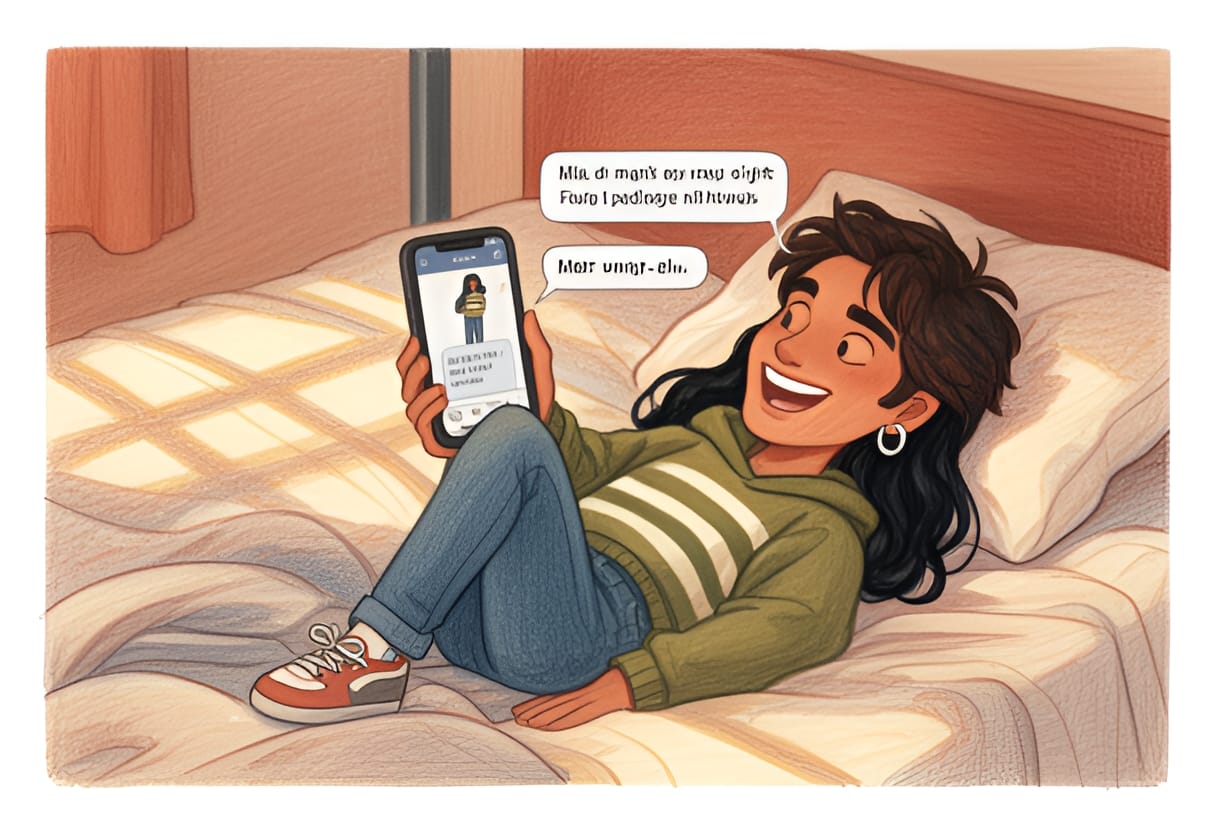
Alex let out a breath he didn’t realize he’d been holding. A laugh escaped him, quiet and disbelieving. She’d joked with him. She’d used haha. His fingers flew.
Yeah, well, someone had to pretend we understood Arendt. I spent like three hours on that one footnote about totalitarianism and loneliness.
He sent it, then winced. Too much? But before he could second-guess himself, another reply came—fast.
Mia: SAME. I think I cried over that footnote. Also, low-key proud of myself for spelling “totalitarianism” right on the first try.
He grinned, staring at the screen. Low-key. She was teasing him. Or maybe just being herself. Either way, she was talking to him. Not out of obligation. Not because she had to. She was engaged.
He typed back, slower this time, savoring the exchange: Spelling victory deserves celebration. Coffee sometime? My treat. We can debrief over the horrors of modernity.
He hesitated. Was that too forward? Too much like a date? But she hadn’t pulled back. She’d laughed. He sent it.
Then he locked his phone and stared at the ceiling again, buzzing. She said yes to talking. She’s still talking. The day felt suddenly full of possibility.
By noon, the exchange had settled into a rhythm. They messaged back and forth every twenty minutes or so—about class, about the weirdly specific ways Arendt made them feel, about the terrible coffee in the campus union. Alex found himself checking his phone between lectures, during lunch, even while walking to the library. Each time he saw her name light up the screen, a small jolt of pleasure shot through him—she’s thinking of me.
He began crafting his messages with care. Not just what to say, but how. He’d type, delete, retype. He’d read them aloud in his head, imagining her reaction. Would she think it was funny? Too eager? Not enough?
He noticed patterns. When he used an emoji, she often replied with one too. When he asked a question, she answered fully. When he shared something small—like how he’d burned his toast that morning—she responded with a story of her own, about her cat knocking over a plant.
It felt like a game. And he was winning.
Javier knocked on the door that afternoon, holding two paper cups. “Dude. You alive in there? I brought coffee. And I finally listened to that podcast episode you said was weirdly good.”
Alex was on his bed, phone in hand, mid-message. He’d been drafting a reply to Mia for nearly ten minutes, trying to get the tone just right—warm but not overeager, funny but not try-hard.
“Hey,” Alex said, forcing brightness into his voice. He didn’t look up. “Just… in the middle of something.”
Javier stepped in, eyeing him. “You’ve been weird all morning. Glued to that phone like it’s gonna disappear if you look away.”
“Just talking to someone from class,” Alex mumbled, thumbs flying. Actually, that joke about the footnote was kinda funny. Maybe add a laughing emoji? No, overkill.
Javier set the cups down on the desk. “Yeah? Who? You been secretive about it.”
“Mia. From poli-sci last semester. We ran into each other in the library yesterday.”
Javier blinked. “Oh. The girl with the… yeah, I remember her. She sat up front. Always looked like she knew what she was talking about.”
Alex’s chest tightened. She noticed me. “Yeah. She… she remembered me. From class.”
Javier picked up his coffee, took a sip. “That’s cool. Small world.”
Alex finally looked up. “You wanna… hang out? For a bit? Before your next class?”
Javier hesitated. “I was gonna head to the quad. Listen to the rest of that episode. But if you’re busy…”
Alex glanced at his phone. No new message from Mia. He was waiting. He had to wait. What if she replied while he was gone? What if he missed it?
“Nah,” he said, too quickly. “I’m good. Just… finishing up this thought.” He turned back to his screen, thumb poised over the send button. What if I add “lol”? Does that make it seem like I’m not taking it seriously?
Javier watched him for a moment, then sighed softly. “Alright. I’ll see you later, I guess.” He picked up his cup. “Try not to stare into the void too hard. It stares back.”
The door clicked shut.
Alex didn’t move. He stared at the message he’d been crafting for fifteen minutes now. It read: Yeah, that footnote wrecked me too. Honestly, I think Arendt was low-key right about how lonely it is to think for yourself. Also, your cat story made me laugh. Hope it didn’t hold a grudge against the ficus.
He read it over. It sounded natural. Light. He sent it.
Then he waited.
The hours stretched. He messaged her again when he thought of something—a weird detail from lecture, a meme that reminded him of her comment about totalitarianism. Each time, she replied. Sometimes quickly, sometimes after a gap. But she always replied.
He started turning down Javier’s invitations without thinking. “Can’t, waiting for a reply.” “Maybe later.” “I’m in the middle of something.”
He skipped his poli-sci discussion section twice, telling himself he’d catch up on the readings. Instead, he lay on his bed, phone on his chest, refreshing the message thread like it was a prayer.
He noticed how he felt when her name appeared—lightheaded, warm, a quiet thrill in his throat. When she didn’t reply right away, a hollow ache settled behind his ribs, quiet but insistent. He’d tell himself she was busy, in class, studying—but another part of him whispered: What if she’s decided she doesn’t want to talk anymore?
He pushed it away. Focused on the next message. Crafted it carefully. Sent it. Waited.
By evening, the dorm was dark except for the glow of his screen. Javier had texted twice—you alive? dinner?—both left on read.
Alex didn’t notice. He was waiting.
His thumb hovered over the screen. The last message from Mia sat there, two hours old: That’s wild. I never thought about it like that. Thanks for sharing.
He hadn’t replied yet. He wanted it to be perfect.
He typed: Anytime. Seriously, glad we reconnected. It’s nice to talk to someone who actually gets it.
He read it. Felt it was warm enough. Not too much.
He sent it.
Then he lay back, phone resting on his stomach, and waited for the next light to bloom in the dark.
Alex woke to the harsh buzz of his alarm, but his hand shot out to silence it before the sound could fully form. His eyes darted to the phone on his nightstand. No new message. The screen was dark, blank except for the time glowing in green: 8:47 a.m.
He’d fallen asleep clutching it again. His thumb ached from the pressure. He peeled his fingers loose, wincing at the faint indentations on his palm.
Two hours since her last reply. He turned the phone over in his hands, then opened the thread. Scrolled up.
That’s wild. I never thought about it like that. Thanks for sharing. Anytime. Seriously, glad we reconnected. It’s nice to talk to someone who actually gets it.
His message. Sent last night. No reply.
He pressed his forehead to the cool glass of the screen, as if proximity might summon a response. Nothing.
He tried to remember the last time they’d talked like this—before the library, before the texts. Just two people in a poli-sci lecture, exchanging glances over Arendt’s dense prose. Back then, her silence hadn’t felt like a verdict. It had just been… quiet. Focused.
Now, every minute without a reply felt like an accusation.
He dragged himself out of bed, moving on autopilot. Brushed his teeth. Pulled on a hoodie. Made coffee he didn’t drink. Sat at his desk and opened the message thread again. Started typing.
Hey. Just thinking about our chat last night. Hope you’re having a good day.
He read it. Deleted it. Typed again.
Sorry if I came on too strong last night. I just really enjoy talking to you.
Deleted. His chest felt tight. He leaned back, staring at the ceiling. The dorm was too quiet. Javier hadn’t come back last night. Alex hadn’t noticed.
He opened a new message. Typed slowly, deliberately.
Hey Mia. I’ve been thinking about our conversation yesterday—about Arendt, about loneliness in thought. It stuck with me. I hope I didn’t overwhelm you with my reply last night. I tend to overthink things when I care about getting them right. No pressure to reply—I just wanted to say I appreciated our chat.
He read it. Felt the words were honest, but also… heavy. Like he was handing her a burden wrapped in politeness.
He sent it anyway.
Then he waited.
By noon, the silence had grown teeth.
He’d sent two more messages in the interim—one sharing a quote from lecture that reminded him of her comment, another a dumb meme about cats and existential dread. Both left on read. No reaction. Not even a typing indicator.
He reread their entire conversation. Twice. Three times.
He focused on the early exchanges—her warmth, the way she’d matched his energy, laughed at his jokes about burned toast. Then he zeroed in on the shift. After his message about the ficus, her replies had slowed. Not cold, exactly. But… thinner. Less playful. More… deliberate.
Did I say something wrong? He scrolled to his last message before the slowdown: Hope it didn’t hold a grudge against the ficus. A joke. Light. Self-deprecating. Had it fallen flat? Had she read it and thought, He’s trying too hard?
He imagined her reading it, lips pursed, thumb hovering. Cute, but a little much. Or worse: Not replying. Let him sit with it.
His stomach twisted. He opened a new message. Typed with shaking fingers.
Hey. I know I’ve been sending a lot of messages lately. I just… really enjoy talking to you. But I don’t want to be too much. If I’ve been overbearing or intense, I’m sorry. I’ll back off if you need space.
He read it. Felt the words crawl up his throat like bile. Too much. Overbearing. Intense. He hadn’t meant to say those words. But they were there now. Sent.
He immediately regretted it. He wanted to snatch it back. To explain. To say, No, wait—I didn’t mean it like that. I just… I like talking to you. But the message was delivered. Two gray checks. Then, after a long minute, the blue ticks appeared.
Read.
His breath hitched. He waited for the typing bubbles. They never came.
He missed his 9 a.m. psychology lecture. Didn’t even realize it until 10:30, when he finally dragged himself out of bed, bleary-eyed and hollow. His alarm had gone off. He’d silenced it. Then lain there, staring at the ceiling, waiting for a vibration that never came.
By the time he got to the lecture hall, the room was nearly empty. A few stragglers packed their bags. The professor was at the front, erasing the board.
Alex slipped into the back seat, heart pounding. He felt eyes on him—though no one was looking. He pulled out his notebook, opened it to a clean page. Tried to focus on the topic: cognitive dissonance in group dynamics.
His mind kept drifting back to the message thread. To the blue ticks. To the silence after.
He sketched a doodle in the margin—a phone with a cracked screen, messages floating out like smoke. Too intense. He underlined it. Then erased it hard, tearing the paper.
He didn’t hear a word of the lecture.
That night, Javier knocked again. Softly. “Hey. You decent?”
Alex was on the floor, back against the bed, phone in hand. He’d been staring at the same screen for forty minutes. The message thread glowed in the dark.
“Yeah,” he said, voice rough. “Come in.”
Javier stepped in, holding a bag of takeout. “Thought you might be hungry. You skipped dinner again.”
Alex didn’t move. “I’m not hungry.”
Javier set the bag down. Sat on the edge of the bed. “You’ve been like this for days. Glued to that thing. Not eating. Not sleeping right. What’s going on?”
Alex didn’t look up. “Just… waiting for a reply.”
Javier sighed. “From Mia?”
Alex nodded. “She hasn’t replied since last night. To my… last message.”
Javier leaned forward. “What’d you say?”
Alex hesitated. Then read it aloud, voice flat: ‘I know I’ve been sending a lot of messages lately. I just… really enjoy talking to you. But I don’t want to be too much. If I’ve been overbearing or intense, I’m sorry. I’ll back off if you need space.’
Silence. Javier stared at him. Then, quietly: “Dude. You apologized for existing.”
Alex’s throat tightened. “What if I am too much? What if I’ve been annoying her this whole time?”
Javier shook his head. “You don’t know that. Maybe she’s swamped. Maybe her phone died. Maybe she’s just… slow to reply. You’re acting like her silence is a verdict on your worth.”
Alex looked at him, eyes wet. “But what if it is?”
Javier reached out, squeezed his shoulder. “Then her loss. Not yours. You’re not here to earn her attention, Alex. You’re here to live your life.”
Alex looked down at his phone. The last message from Mia still glowed: That’s wild. I never thought about it like that. Thanks for sharing. His reply sat beneath it—humble, pleading.
He wanted to believe Javier. But in the dark, with the phone burning a hole in his palm, all he could feel was the weight of waiting. And the terrifying thought that maybe, just maybe, she had already decided. And he hadn’t noticed until it was too late.
Alex stared at the blinking cursor on his laptop screen. The essay prompt glowed back at him: Analyze the theme of alienation in Camus’ The Stranger through the lens of existential freedom. Three pages. Due by 5 p.m. today.
He had opened the document at 9 a.m. After Javier left, he had told himself he’d just check his phone one more time before starting. One quick refresh. Just to see if the typing bubbles had appeared.
They hadn’t.
Now it was 2:17 p.m.
He had written two sentences. Both deleted.
He leaned back in his chair, the cheap dorm mattress creaking beneath him. The room smelled of stale coffee and unwashed sheets. Outside, someone laughed on the quad—a bright, unbothered sound that made his chest tighten.
He picked up his phone. No new messages. The last thing from Mia was still That’s wild. I never thought about it like that. Thanks for sharing. His apology sat beneath it like a stone.
He opened a new message. Typed slowly, each word feeling like a confession.
Hey. I’ve been feeling really overwhelmed lately. With everything. Just… needed to say it out loud. Hope your day’s going okay.
He read it. Too raw. Too much. He deleted it.
Tried again.
Random thought: Do you ever feel like you’re performing just to be liked? Like if you stopped, no one would notice?
He stared at it. Felt foolish. Deleted it.
A third attempt: Just wanted to share something real. Sometimes I wonder if I’m too much for people. Not just you—generally. Does that ever happen to you?
He sent it.
Then immediately regretted it.
He watched the screen. Waited for the gray checks to turn blue.
They did. After three minutes.
Read.
No reply.
He closed his eyes. Felt the familiar hollow behind his ribs. Not sadness, exactly. More like a slow leak—of energy, of certainty, of the sense that he was someone worth listening to.
The literature building was half a mile away. He had twenty minutes to get there if he wanted to turn in the essay late—half credit, maybe, if the professor was feeling generous.
He didn’t move.
Instead, he opened his laptop again. Scrolled through the syllabus. The essay was worth twenty percent of his grade. He had an A- going in. If he got a zero, it would drop to a B+. If he turned in something half-finished, maybe a B.
He thought of Ms. Rivera’s creative writing class. How she had said, Your voice matters, even when it shakes. How she had smiled when he read his poem about his grandfather’s hands.
He hadn’t written a poem in weeks.
He thought of Javier’s face last night—concerned, patient, holding out takeout like a peace offering.
He thought of the ficus joke. How she had laughed. How he had felt, for a moment, seen.
He opened a new document. Typed the title: Alienation and the Absurd in Meursault’s Indifference.
Then he froze.
His mind wasn’t on Camus. It was on the way Mia’s eyes had flicked to his phone when they talked in the library. On how she had tilted her head when he mentioned Arendt. On the ghost of her smile in the blue ticks of his screen.
He typed one sentence. Then stopped.
He deleted it.
Tried again.
After twenty minutes, he had a paragraph. It was generic. Safe. He could have written it without reading the book.
He saved it. Closed the laptop.
He would turn it in. It would be enough to scrape by.
But it wouldn’t be his.
He made it to the lecture hall at 3:45 p.m. The class was already in session. Professor Lowe was mid-sentence, gesturing at a slide about existentialism and bad faith.
Alex slipped into the back row. Pulled out his notebook. Opened it to a clean page.
He tried to listen.
But his thoughts kept looping.
She read it. She didn’t reply. Why?
Was it too much?
What if she’s tired of me?
What if I’m just… boring?
He sketched in the margin again. A phone. A cracked screen. A heart made of message bubbles.
He underlined it. Then erased it.
His phone buzzed in his pocket.
His breath caught.
He pulled it out.
Not Mia.
A group chat notification from Javier and two other guys from his dorm: Yo, brew night still on? 8 p.m.? Bring snacks.
He stared at it. His thumb hovered over the keyboard.
He typed: Yeah. Maybe.
Then deleted it.
Typed: Can’t. Got work.
He sent it.
Put the phone face down on his desk.
He didn’t hear another word of the lecture.
By 8 p.m., he was back in his room. The takeout bag from Javier sat untouched on his desk, the food gone cold. He had not eaten since breakfast.
He sat on the edge of his bed, phone in hand. The room was dark except for the glow of the screen.
He opened the message thread with Mia.
Scrolled to the top.
Her first reply: Hey! Yeah, I remember you. You always had the best comments in Hale’s class. 😊
His first message: Hey. We had poli-sci together last semester. You were in front of me a lot.
He smiled, despite himself. That had felt good. Easy.
He scrolled down.
His apology: I know I’ve been sending a lot of messages lately…
Her read receipt.
His overwhelmed message: Just wanted to share something real…
Another read receipt.
No reply.
He closed his eyes. Saw her face in the library—the way her hair had fallen over her shoulder when she laughed, the softness in her voice when she said, Thanks for sharing.
He opened a new message.
Typed: I miss talking to you.
Read it.
Felt the familiar shame rise—hot and sharp.
Deleted it.
He lay back on the pillow, phone resting on his chest. The ceiling was a blur of shadows from the streetlight outside.
He thought of Javier’s words: You apologized for existing.
He thought of the essay he had turned in—blank words on a page, meant to sound like thinking.
He thought of the way he had flinched when his phone buzzed, hoping, always hoping.
He thought of the silence after his messages. Not angry. Not cruel. Just… absent.
And in that absence, he had begun to disappear.
He turned onto his side. Pulled the blanket up to his chin.
His phone buzzed again.
He didn’t reach for it.
Let it buzz once. Twice.
Then stop.
He stared into the dark.
And for the first time in days, he whispered—not to her, not to anyone, but to the ceiling, to the quiet, to the part of himself that still remembered how to breathe:
What if I’m not enough… even when I’m trying?
The question hung in the air.
No answer came.
But the asking of it—small, raw, unguarded—felt like the first crack in something that had been holding too tight for too long.
Chapter 2
The Illusion Holds
He stared into the dark.
And for the first time in days, he whispered—not to her, not to anyone, but to the ceiling, to the quiet, to the part of himself that still remembered how to breathe:
What if I’m not enough… even when I’m trying?
The question hung in the air.
No answer came.
But the asking of it—small, raw, unguarded—felt like the first crack in something that had been holding too tight for too long.
Morning light bled through the blinds, striped across Alex’s floor like a warning. He woke with his cheek pressed to the cold glass of his phone screen, the battery at 3%. No new messages. Just the dim glow of the lock screen, reflecting the hollows under his eyes.
He sat up slowly, joints stiff from sleeping curled inward. The takeout container from Javier still sat on his desk, rice congealed, soy sauce darkened at the edges. He hadn’t touched it. Hadn’t been hungry. Not really.
He shuffled to the bathroom, splashed water on his face, stared at his reflection. The boy in the mirror looked thinner. Paler. His hoodie hung loose, the drawstrings uneven where he’d tugged them in his sleep. He ran a hand over his jaw—stubble, uneven. He hadn’t shaved in two days.
Back in his room, he opened his laptop for poli-sci 101. The Camus essay grade glowed in red: 58%. Twenty percent of his final grade. He’d turned in half a page of paraphrased SparkNotes, padded with quotes he didn’t understand. Professor Hale had left a comment in the margin: Where is your voice? Alex had read it three times. Then closed the laptop.
He opened a new message to Mia.
Typed: Saw a quote from Arendt yesterday that reminded me of our chat. “The sad truth is that most evil is done by people who never make up their minds to be good or evil.” Felt like you’d appreciate that.
He read it. Felt the familiar tug—too much? too intense?—but pushed it down. She’d liked his last Arendt reference. The one about the footnote. She’d laughed. Said it was wild. He’d felt seen then. Known.
He sent it.
Then waited.
His thumb hovered over the screen. Refresh. Nothing. Refresh. Still one gray check.
He told himself it was fine. She was busy. In class. At work. Living her life. He wasn’t being demanding. Just… sharing. Like friends did.
But the silence pressed. He opened his browser, typed indie films 2023 into the search bar. Scrolled past posters of black-and-white silhouettes, titles in thin sans-serif fonts: The Quiet Girl, Aftersun, Past Lives. He remembered her message from two days ago: Have you seen The Quiet Girl? It’s devastating. In the best way.
He hadn’t. Didn’t plan to. The trailer had felt slow. The dialogue sparse. He preferred stories with explosions, spaceships, moral dilemmas wrapped in laser fights. Dune. The Matrix. Blade Runner 2049. Films that asked big questions but let you feel the answer in your bones.
But now he opened The Quiet Girl on a streaming site. Let it play. Watched a girl sit silently at a kitchen table while an older woman peeled potatoes. The wind blew through a half-open door. No music. Just the scrape of a knife on wood.
Ten minutes in, he checked his phone. No reply.
He kept watching.
Twenty minutes. The girl hugged a dog. Whispered something to it. Alex didn’t catch the words. He found himself waiting for something to happen. A revelation. A confrontation. A score swelling under the silence.
Nothing.
He paused it. Closed the laptop. Felt a flicker of irritation—not at the film, but at himself for wasting time on something that didn’t move him. Then, just as quickly, shame. You’re being petty. She liked it. You should too, if you want her to like you.
He reopened the film. Forced himself to sit still. Let the quiet settle in his chest like sediment.
Later, he walked to the campus bookstore to return a poli-sci text. The bell above the door jingled. Inside, the scent of paper and dust clung to the air. He drifted toward the literature section, fingers tracing spines without really seeing them.
His hand stopped on a slim volume: The Collected Poems of Audre Lorde. He pulled it out. Flipped to a page at random. Read a line about silence and survival. His chest tightened. Not from the words—though they were strong—but from the memory of Mia saying, I write poetry sometimes. Nothing serious. Just… to feel things.
He’d never written a poem. Not since middle school, when he’d tried to rhyme sky with fly and given up. But he remembered how her eyes had lit up when she said it. Soft. Like she was sharing a secret.
He bought the book.
At checkout, the clerk glanced at the cover. “Lorde’s good. Heavy stuff.”
Alex nodded. “Yeah. Really… resonant.”
He didn’t mention that he’d only read two lines. Didn’t mention that he preferred Asimov’s Foundation series—how Hari Seldon predicted the fall of empires through math, how psychohistory turned chaos into pattern. He hadn’t told her about the dog-eared copy of Neuromancer on his shelf, or how he’d stayed up until 3 a.m. debating whether Wintermute was a villain or a savior with Javier last semester.
He tucked the book into his bag. Felt its weight against his hip. A false anchor.
That evening, his phone lit up.
Mia: Hey! Just finished The Quiet Girl. Ugly cried. You were right—it’s devastating.
Alex’s breath hitched. His thumbs flew.
He typed: I’m glad you liked it. Felt like it stayed with you, didn’t it? Like the silence wasn’t empty—it was full of everything unsaid.
He read it. Felt a flush. Too poetic? Too try-hard?
But then her reply came, fast: You get me.
Two words. But they landed like a hand on his chest. Warm. Certain.
He stared at the screen. A thrill rose—tight, bright, almost dizzy. She understands. She sees me.
He replied instantly: Always.
Then, emboldened: Hey… there’s an indie film playing at the Riverton this Thursday. Echoes in the Attic. Black-and-white. About a librarian who finds letters from the 1940s. Sounds like your kind of thing.
He hadn’t heard of it. Checked the showtimes while typing. 7 p.m. Not ideal—he had a poli-sci quiz Friday morning—but he could skim the notes after. Or skip sleep again. It was worth it.
Her reply came within minutes: That sounds amazing. Yes! Let’s go.
He stared at the screen. His chest felt light. Hollow, but buoyant. Like he’d inhaled helium.
He opened his calendar. Blocked out Thursday evening. Labeled it: Mia – Film.
Then he opened his poli-sci study guide. Closed it after two minutes. Couldn’t focus. His mind kept returning to her words: You get me.
He imagined her laughing at his joke in the dark theater. Imagined her shoulder brushing his as they walked out. Imagined her saying, You’re not like the others.
He didn’t correct the thought. Didn’t remind himself that they hadn’t spoken in person since the library. That she hadn’t asked about his major, his family, his fears. That he hadn’t told her he hated black-and-white films, that he found most poetry opaque, that he felt most alive when his boots hit a mountain trail at dawn, lungs burning, the world reduced to breath and step and the crunch of gravel underfoot.
He didn’t tell her any of that.
Because if he did, she might not say You get me again.
And he wasn’t sure he could survive that.
He bought the tickets online Thursday afternoon. Selected two seats, center row. Paid with his debit card. The confirmation email arrived: Echoes in the Attic – 7:00 PM – Riverton Cinema.
He held his phone for a long moment after closing the tab. The theater’s website lingered in his mind—plush seats, art deco sconces, the smell of popcorn butter. None of it excited him. Not really.
What excited him was the idea of her there. Beside him. Laughing at the same quiet moment. Whispering, Did you see that? in the dark.
He opened his messages. Typed: Looking forward to Thursday.
Read it. Felt the old fear creep in—too eager?—but sent it anyway.
Her reply: Me too. It’ll be fun.
He smiled. Felt the familiar, fragile pride.
Then he opened his closet. Pulled out his only decent button-down. Ironed it, even though he hated ironing. Sprayed a little cologne—Javier’s old spice wood, the one he’d borrowed once and never returned. Stood in front of the mirror. Tucked the shirt in. Smoothed the wrinkles.
He looked like someone trying hard to be someone else.
And for the first time in weeks, he didn’t hate the reflection.
He just didn’t recognize it.
He stared at the ceiling. The dorm room was dark except for the blue glow of his phone screen, still resting on his chest where he’d dropped it after typing Looking forward to Thursday. The words hung in the air between them—light, eager, already feeling like a plea.
He waited.
Minutes passed. The hum of the radiator was the only sound. He told himself she was busy. That she had a life. That four days of silence didn’t mean anything. That she’d been thinking about his message, weighing how to reply, wanting to get it right.
Then, at 11:47 p.m., the screen lit up.
Mia: Hey. Sorry I missed your message earlier. Got caught up helping my sister move into her new apartment. Exhausting day.
Alex sucked in a breath so sharp it hurt. His fingers trembled as he unlocked the phone. She replied. Not just replied—she initiated. After four days of radio silence, after he’d sent messages that felt like stones dropped into a well, she had reached out first.
His thumb hovered over the keyboard. Helping your sister move? he typed, then deleted it. Too flat. Hope it went well? No—too generic. He wanted to match her tone: light, warm, but with something underneath. Something that said I was waiting. I noticed you were gone.
He typed: No worries at all. Hope it went smoothly. Sibling duty calls, huh?
He read it. Felt it was safe. Sent it.
Then he waited again.
This time, the reply came in ninety seconds.
Mia: Yeah, pretty much. She’s all settled now. Took forever to assemble that IKEA bookshelf. You ever built one of those things?
Alex laughed—a short, sharp sound that surprised him. He pictured her there, frustrated, sweat on her forehead, muttering at Allen wrenches. He liked that image. Liked that she was doing something real, something messy.
He typed fast: Oh god, yes. IKEA furniture is a relationship test disguised as home decor. I once spent three hours on a bookshelf only to realize I’d put the back panel on backwards. Took it all apart, started over. Felt like a victory when it finally stood.
He sent it. Then, emboldened: Your sister lucky to have you. Sounds like you’re the calm in the chaos.
He read it twice. Felt a flush. Too much? But he sent it anyway.
Her reply came almost instantly.
Mia: Haha, you’re too kind. But yeah, I guess I did keep things from falling apart. Literally and figuratively.
Alex stared at the words. Literally and figuratively. It felt like a line. Like she was speaking in metaphors now, just like he did. Like they were building a language together.
His chest felt light. Hollow, but buoyant—just like after her You get me. He lay back on his pillows, phone held above his face, and read her last message five times. Each time, the words seemed to glow brighter.
She’s talking to me. Not just replying. Engaging. Joking. Sharing.
He opened his notes app and typed: Today, Mia replied first after four days. She said I kept things from falling apart. I want to believe that’s true.
He paused. Then deleted it. Too raw. Too much like a diary.
Instead, he opened his poli-sci study guide. For the first time in days, he didn’t feel the usual dread. He flipped to the section on social contracts. Read about Rousseau. Underlined a passage: Man is born free, and everywhere he is in chains.
He smiled. Wrote in the margin: Or maybe we chain ourselves, hoping someone will notice the lock.
He didn’t erase it.
He studied for forty minutes. Not because he cared about the quiz. But because he wanted to be ready if she asked what he was learning. Wanted to have something intelligent to say. Wanted to be the kind of person she’d want to talk to—not just someone who waited.
When he finally closed the book, it was past 1 a.m. His eyes burned. His throat felt tight—not from sadness, but from the effort of holding back a smile that wouldn’t quit.
He opened their chat again. Scrolled up. Read her first message: Hey. Sorry I missed your message earlier. Then her last: Literally and figuratively.
He read them both. Then he read his own replies. Felt proud of how he’d kept the tone light, how he’d matched her humor, how he hadn’t begged or pleaded.
He hadn’t said I missed you. He hadn’t said I was worried. He hadn’t said I’ve been thinking about you nonstop.
He had stayed calm. Cool. Interested.
And she had replied.
He set the phone face down on his chest. Let the darkness settle. But sleep didn’t come. Instead, he replayed the conversation like a film—her words, his responses, the timing of it all. Each exchange felt like a step forward. A confirmation.
She’s interested. Not just polite. Not just passing time. Interested.
He turned onto his side. Pulled the blanket up to his chin. The dorm was quiet. Somewhere down the hall, a door clicked shut. A faucet dripped.
But in his mind, the theater lights were dimming. The screen flickered to life. And beside him, in the dark, she leaned over and whispered, You get me.
He didn’t correct the thought.
He didn’t remind himself that they hadn’t spoken in person since the library.
He didn’t tell himself that she hadn’t asked about his major, his fears, his love for mountain trails at dawn.
He just let the feeling stay.
You get me.
Two words.
But they were enough.
For now, they were everything.
He woke to the sound of Javier’s key turning in the lock. The room was gray with dawn. His phone was still on his chest, screen dark. He blinked against the stale air, the weight of last night’s hope still lodged in his ribs like a stone that had warmed with his body heat.
Javier kicked off his sneakers by the door. “You alive in there?” he said, voice thick with sleep and concern. “Felt you vibrating through the wall at 2 a.m. Were you… smiling in your sleep?”
Alex shoved the phone under his pillow. “Just had a weird dream.”
Javier snorted, tossing his jacket over the desk chair. “Yeah? About what? Finally assembling that IKEA shelf without crying?”
Alex managed a laugh. It came out thin. “Something like that.”
Javier poured himself a glass of water from the pitcher on his desk. “You’ve been quiet lately. Quieter than usual. Even for you.” He took a sip, eyes narrowing. “Everything okay?”
Alex sat up, swinging his legs over the side of the bed. The floor was cold beneath his feet. He wanted to say She replied. She initiated. We’re talking again. But the words felt too big, too fragile—like if he spoke them, they might shatter.
Instead, he shrugged. “Just tired. Didn’t sleep great.”
Javier studied him for a moment, then nodded. “Yeah, I get it. Big day today. Quiz in poli-sci, right? You gonna be ready?”
Alex’s stomach flipped. He’d opened the study guide last night. Read a few pages. Underlined a line. But he hadn’t absorbed any of it. His mind had been elsewhere—reconstructing conversations, imagining her tone, rehearsing what he’d say if she asked about his weekend.
“I’ll skim it,” he said. “After class.”
Javier eyed him. “You’ve said that three days in a row. You’re gonna bomb it if you don’t actually study.” He paused. “Hey, you still got that Camus essay to redo? Ms. Rivera said she’d accept a rewrite if you showed her a draft by Friday.”
Alex’s throat tightened. The half-finished essay. The margin note: You have something to say. Say it. He hadn’t touched it since turning it in. The thought of opening it now felt like opening a wound.
“I’ll get to it,” he said. “Promise.”
Javier didn’t look convinced. He grabbed his backpack. “Alright. I’m heading to early lab. Text me if you wanna grab coffee after. My treat. You look like you could use it.”
Alex forced a smile. “Thanks. I’ll let you know.”
The door clicked shut. Silence rushed back in.
He reached for his phone. Pulled it from under the pillow. Screen still dark.
He opened their chat anyway.
Read her last message: Literally and figuratively.
Then he closed his eyes.
And for the first time in days, he didn’t reach for the keyboard.
Alex shoved his phone into his pocket and stood. The dorm hallway smelled of damp wool and stale coffee. He pulled his jacket tighter, zipping it to his throat against the morning chill that had seeped through the cracked window. Javier’s offer of coffee echoed in his chest—warm, simple, real—but he’d let it go. Again.
He walked across campus with his head down, hands shoved in his pockets, avoiding eye contact. The quad was already stirring: students with backpacks, clusters laughing near the fountain, someone strumming a guitar badly under the maple tree. Alex kept his pace steady, mechanical. One foot in front of the other. He told himself he was going to the poli-sci building to skim the study guide, just to quiet Javier’s voice in his head. But his feet kept pulling him toward the student union, where flyers for tonight’s house party were still taped to the bulletin board near the entrance.
Sigma Chi. 9 p.m. BYOB. Live DJ.
He’d seen Mia’s name on the guest list two days ago, buried in a comment thread under the event photo. Someone had tagged her: Can’t wait to see you there, Mia! She’d replied with a laughing emoji and a heart. He’d read it six times. Saved the screenshot.
Now, as he passed the union, he paused. His reflection stared back from the darkened glass—hair messy, eyes shadowed, jacket wrinkled from sleeping in it. He looked like someone who’d been waiting.
He pulled out his phone. Opened the event page. Scrolled through the photos from last year’s party: string lights strung between trees, red solo cups in hands, people swaying under a tarp-covered patio. One image showed a girl in a silver top laughing with her head thrown back. He zoomed in. Not her. But close enough to make his chest tight.
He closed the app. Took a breath. Then turned toward the dorm.
The party was already loud when he arrived—a bass-heavy beat thumping from the backyard, voices raised over the music, the smell of spilled beer and citrus vodka hanging in the air. Alex stood on the porch for a full minute, gripping the railing, letting the noise wash over him. He told himself he was early. That he could find her before she got swept up in the crowd. That he could say something casual—Hey, you made it—and see if her eyes lit up the way they had in the library.
He stepped inside.
The living room was packed. Bodies moved in slow, swaying clusters. Someone played beer pong on a folding table near the kitchen. A group huddled by the speaker, shouting lyrics off-key. Alex moved through the room like a ghost, shoulders hunched, hands shoved deep in his pockets. He scanned every face, every turn of a head, every flash of silver or dark hair in the dim light.
He saw her near the back, by the sliding glass door that opened onto the yard. She was wearing a black turtleneck and jeans, her hair loose over one shoulder. She stood with her back to him, talking to two people he didn’t recognize—one with a shaved head and a tattoo peeking from under his sleeve, the other wearing a beanie indoors. She gestured as she spoke, animated, her laugh cutting through the music—bright, unguarded.
Alex stopped. His breath hitched. He wanted to go to her. To tap her shoulder. To say something funny about the IKEA bookshelf, or ask if her sister liked the new place. But his feet wouldn’t move. He stayed where he was, half-hidden behind a potted ficus, watching.
She turned slightly, and for a second, their eyes met.
Not a stare. Not a search. Just a flicker—her gaze sweeping across the room, landing on him for less than a second before sliding past. Her lips twitched. Not a grin. Not the warm, crinkle-eyed smile she’d given him after he’d said she kept things from falling apart. This was smaller. Polite. The kind of smile you gave someone you knew vaguely from class, the kind that said I see you, but I’m not here for you.
Then she turned back to her friends, her shoulder shifting as she leaned in to say something over the music. The moment was gone.
Alex stayed rooted. His chest felt tight, hot behind the ribs. He told himself it was nothing. That she hadn’t ignored him. That she’d seen him. That was something, wasn’t it?
But then she laughed again—louder this time—and leaned into the person beside her, her arm brushing theirs. She didn’t look back. Didn’t pause. Didn’t wait.
He felt foolish. Like he’d been standing there, hoping for a sign, while she’d been living her life all along.
He pushed off the wall and moved through the crowd, keeping his head down. He avoided the kitchen, where the light was harsh and the air thick with sweat and laughter. He found a dim corner near the staircase, leaned against the wall, and closed his eyes.
The music pounded in his chest. Someone bumped into him, muttered an apology without looking. He didn’t respond.
He thought of Javier’s voice that morning: You look like you could use it. He thought of the Camus essay waiting in his Google Docs, the margin note still glowing in his memory: You have something to say. Say it. He thought of the poli-sci quiz he’d blown off, the class he’d skipped, the journal he hadn’t opened in months.
He hadn’t come to the party to have fun. He hadn’t come to dance or drink or meet new people. He’d come to be seen by her. To be noticed. And when she hadn’t—not really—he felt exposed, raw, like he’d stood up in the middle of a quiet room and shouted something no one had asked for.
He opened his eyes. The room spun slightly. He pushed off the wall and headed for the door.
The night air hit him like a slap. Cold. Sharp. Clean. He walked fast at first, head down, hands jammed in his pockets, the bass from the party still vibrating in his teeth. The campus paths were empty now, lit only by the occasional pole light casting long shadows across the wet grass. A breeze stirred the leaves in the trees above him, dry and papery.
He didn’t know where he was going. Just away.
His throat ached. Not from crying—he hadn’t let himself do that—but from holding something back. A sound. A word. Her name.
He passed the library, its stone façade dark and silent. The poli-sci building loomed ahead, its windows black. He thought of the study guide in his backpack, untouched. The quiz he’d promised to skim. The lie he’d told Javier.
He slowed. Then stopped.
He turned toward the quad, where a row of benches faced the fountain, now still and dark under the night sky. He sat on the far end, elbows on his knees, staring at his hands. They were shaking slightly.
He pulled out his phone. No new messages. Screen dark. He opened their chat anyway. Scrolled up. Read her last message again: Literally and figuratively.
Then he read his reply: No worries at all. Hope it went smoothly. Sibling duty calls, huh?
It sounded eager. Too eager. Like he was trying too hard to be the calm in her chaos.
He closed his eyes. The image came back—her laughing with those two people, her arm touching the other’s, her face open and free in a way it had never been with him.
He hadn’t been himself that night. Not really. He’d been a version of himself he thought she’d like: quiet, agreeable, interested in the same things. He’d watched her favorite film, even though it had put him to sleep. He’d bought that poetry book, even though the words had felt like someone else’s voice. He’d edited his jokes, softened his opinions, laughed at things that weren’t funny—all to keep the conversation going, all to stay in her orbit.
And for what? A smile that meant nothing? A reply that came because she was being polite?
A wetness burned behind his eyelids. He blinked it back. Told himself he was being dramatic. That he was overreacting. That she owed him nothing.
But the truth sat heavy in his chest: he had come here not to enjoy himself, not to connect, not to live—but to be seen by her. And when she hadn’t looked, not really, he had felt like he’d vanished.
He lowered his face into his hands. His breath came shallow. The cold air bit his cheeks, but his face felt hot.
He didn’t know how long he sat there. Long enough for his fingers to go numb. Long enough for the distant hum of a car to fade down the street. Long enough for the party noise to become a muffled thump behind him, then nothing at all.
When he finally lifted his head, his vision was blurry. He wiped his eyes with the heel of his palm, rough and quick, like he was wiping away dirt.
He stood. Shook out his jacket. Took one last look at the dark quad, the empty benches, the fountain holding its silence.
Then he turned and walked back toward his dorm, his steps slow, his head low, the weight of the night settling into his bones like something real. Something he couldn’t pretend away anymore.
He kept walking, the dormitory’s brick facade coming into view under the pale glow of the security light above the side entrance. His breath came in short puffs, visible in the cold air. Each step felt heavier than the last, not from fatigue, but from the weight of what he’d just admitted to himself: he hadn’t gone to the party to connect, to laugh, to be with people. He’d gone to be seen by her. And when she hadn’t—not really—he’d felt like he’d ceased to exist.
He paused at the bottom of the stairs leading up to his dorm’s side door. The metal railing was icy under his palm. He gripped it tight, just to feel something real.
I only feel good when she notices me.
The thought came quiet, but it landed like a stone in his chest. He hadn’t said it aloud before. Not even in his journal. But it was true. Every time she replied to his texts—quick, warm, engaged—his chest loosened, his mind cleared. He could breathe. He could eat. He could open his books without guilt. But when she didn’t reply? When she smiled at someone else? When she laughed without looking his way? It was as if the ground vanished beneath him. He didn’t just feel disappointed. He felt unmade.
He pushed off the railing and climbed the stairs two at a time, not wanting to stay still long enough to let the thought settle deeper.
Inside, the dorm was quiet. The hallway lights were dimmed for the night. He passed Javier’s door—closed, but he could see the faint blue glow of a screen under the crack. Javier was probably still up, watching something with headphones on. Alex didn’t knock. He didn’t want to explain why his eyes were red or why his hands were still shaking.
He fumbled with his key, got it in on the second try, and pushed the door open.
The room smelled faintly of tea and old paper—his side of the room. Javier’s half smelled like laundry detergent and the citrus cleaner he used on his desk. Alex kicked off his shoes by the bed, left his jacket draped over the chair. He didn’t turn on the main light. Just the small desk lamp, the one with the frayed cord Javier kept teasing him about.
He moved to the window and pulled the curtain aside just enough to see his reflection in the glass. The dorm quad was dark now, the fountain still, the benches empty. But in the window—his face stared back.
Pale. Eyes shadowed. Lips pressed into a thin line. His hair was messy from running his hands through it too many times that night. He looked… hollow. Like someone had scooped out the center and left only the shell.
He leaned closer. Fogged the glass with his breath. Then wiped it away with his sleeve.
This isn’t me.
Not really. Not the him who used to stay up late arguing about Camus with Javier, who laughed until he snorted at dumb podcasts, who wrote poems in the margins of his notebook just because the rhythm of the words felt good. That Alex had opinions. He had jokes that landed. He had a voice.
But lately? He’d been editing himself. Softening his edges. Agreeing when he wanted to argue. Laughing at jokes that fell flat. Watching films he didn’t care about. Buying books he didn’t connect with. All of it—to be the version of himself he thought she wanted.
He turned away from the window, unable to bear the sight.
He sat on the edge of his bed, elbows on his knees, head in his hands. The mattress dipped under his weight. The room was silent except for the distant hum of the radiator and the occasional car passing on the street below.
He thought of the poli-sci quiz he’d blown off. The essay he’d promised to rewrite for Ms. Rivera. The journal he hadn’t opened since October. The way he’d stopped replying to Javier’s messages unless they were about Mia. The way he’d said, aloud, just yesterday: I lost me trying to keep her.
He hadn’t realized it then—not fully. But now, sitting in the dark, the truth pressed against his ribs like something alive.
He hadn’t been trying to win her affection. He’d been trying to earn it. As if her attention was a reward for being agreeable, quiet, easy. As if he had to disappear a little more each time to make room for her to notice him.
And the worst part? She hadn’t asked for any of it.
He remembered her words from the chat earlier: Haha, you’re too kind. But yeah, I guess I did keep things from falling apart. Literally and figuratively. And his reply: No worries at all. Hope it went smoothly. Sibling duty calls, huh?
Too eager. Too careful. He’d been performing. Not connecting.
He lifted his head. His eyes were dry, but his throat felt tight.
He looked back at the window.
His reflection was still there. Still tired. Still anxious.
But for the first time in months, he didn’t look away.
He held his gaze. Let himself see it—the hollow eyes, the tight jaw, the face shaped by longing and silence.
And then, quietly, he said it—not to anyone else, but to the boy in the glass:
“I’m still here.”
His voice was rough. Unused. But it was his.
He didn’t smile. Didn’t feel better. But he didn’t look away.
Outside, the wind stirred the trees. A branch tapped softly against the window.
He stayed like that for a long time—watching himself, breathing, present.
Then he stood, turned off the lamp, and walked to his bed in the dark.
He didn’t check his phone.
He didn’t replay the party.
He just lay down, pulled the blanket up, and let the silence hold him.
Somewhere in the dark, he closed his eyes.
And for the first time in a long time, he wasn’t waiting for a sign.
He didn’t dream. Or if he did, he didn’t remember it. The dark was deep and dreamless, the kind that feels less like sleep and more like sinking.
When he woke, it was to gray light filtering through the blinds, thin and quiet. His mouth was dry. His head felt heavy, not from sleep, but from the weight of having carried something all night and finally, just barely, setting it down.
He didn’t reach for his phone.
Instead, he rolled onto his side and stared at the wall. The poster Javier had put up months ago—a faded print of a protest line, fists raised, signs blurred at the edges—caught his eye. He’d never paid much attention to it before. Now he noticed the way the light hit the corner, how one sign, half-obscured, seemed to say listen in shaky letters.
He pushed himself up slowly. His feet touched the cold floor. He padded to the sink, splashed water on his face, looked in the mirror above it. His reflection was still tired. Still marked by the night. But the hollowness had shifted. Not gone. But… softer, like frost under a weak sun.
He opened his drawer and pulled out a clean shirt. Then his jeans. He dressed without thinking about what she might like, what might impress, what might keep her looking. He dressed because he needed to be clothed. Because he was going to class.
On his desk, his poli-sci study guide lay where he’d left it. The margin note was still there: Or maybe we chain ourselves, hoping someone will notice the lock.
He picked it up. Turned it over in his hands. Then, slowly, he opened his backpack and slipped it inside.
He didn’t text Javier. Didn’t wait for a sign. He just opened the door and stepped into the hall.
The air smelled of old carpet and faint bleach. Somewhere down the hall, a door shut. A laugh drifted up the stairs—light, unafraid.
Alex paused at the top of the stairs. He could go left, toward the quad and the poli-sci building. Or right, toward the café where Javier usually waited with coffee and a joke.
He didn’t overthink it.
He turned right.
His steps were slow at first. Then, as he passed Javier’s door—still closed—he didn’t hesitate. He kept going.
Down the stairs. Out into the morning.
The campus was waking. Birds called from the trees. A skateboarder rolled past, waving at a friend. The air smelled of damp earth and distant coffee.
He didn’t look back.
He walked toward the café, hands in his pockets, head up.
And for the first time in months, he wasn’t walking to be seen.
He was walking to arrive.
Chapter 3
The Silence After
Alex’s alarm blared at 7:03 a.m., but he didn’t move. His phone lay facedown on the mattress beside him, screen dark. He’d fallen asleep clutching it again, thumb hovering over the messaging app as if pressure could summon a reply. The room smelled of stale coffee and unwashed sheets. Sunlight, thin and gray, filtered through the blinds, slicing the floor into stripes.
He reached for the phone without opening his eyes. No new notifications. Just the time: 7:04 a.m. Forty-eight hours since his last message.
I’ve been thinking about you a lot lately. Not just the way you laughed at that footnote in Arendt, but the way you listen—like you’re really hearing someone, not just waiting to talk. I don’t know if that means anything to you. I just needed you to know.
He’d sent it three days ago. Late at night, after Javier had knocked on his door with leftover pizza and a concerned look Alex had brushed off with, Can’t, waiting for a reply. Javier had left the box on the desk and closed the door quietly.
Now, Alex sat up, back against the headset, and opened the thread. The last message from Mia was still there: That’s wild. I never thought about it like that. Thanks for sharing. Sent Tuesday evening. His follow-up—Wednesday morning—had gone unanswered. No read receipt. No reply.
He refreshed the screen. Nothing.
By Thursday afternoon, the silence had become a physical weight. He skipped his 10 a.m. poli-sci seminar, telling himself he needed to be near his phone in case she replied. He paced the dorm room, then sat at his desk, then lay on the bed, then paced again. Each time he picked up the phone, his thumb hovered over the messaging app. Each time, he put it down.
Javier texted at 2:17 p.m.: You alive in there? I brought soup. Door’s unlocked.
Alex didn’t answer.
At 4:03 p.m., he gave in to the pull he’d been resisting all day. He opened Instagram—not to post, not to scroll mindlessly, but to check her profile. He told himself it was just to see if she was active. If she’d seen his message and chosen not to reply, at least he’d know.
Her profile was public. Recent posts: a carousel of photos from a rooftop brunch. Mia in the center, head thrown back, laughing at something off-camera. Her arm looped around a girl with bright pink hair. Another showed her holding a spritz glass, sunlight catching the gold in her hair. A third, a candid shot of her mid-laugh, eyes crinkled, utterly at ease.
Alex’s breath hitched. He zoomed in on her smile—the same one she’d given him in the library, the one that had made his chest feel too tight. Only now, it was aimed at someone else. Freely. Easily.
He closed the app. Opened the messaging thread again. Typed: Hey. Just checking in. Hope your week’s going well. Deleted it. Typed: No worries if you’re busy. Just wanted to say hi. Deleted that too. Finally, he sent nothing. Just stared at the empty box.
That night, he lay on his back in the dark, phone resting on his sternum. The ceiling was a blur of shadows and passing headlights from the street below. He thought of Javier’s voice, soft but firm, the night before the party: You apologized for existing. He hadn’t understood it then. Now, it echoed.
He’d sent so many messages. Apologized for his intensity. Shared quotes from Arendt because she’d mentioned liking her. Sent a meme about overthinking—me, waiting for a text back like—that she’d left on read. He’d shaped himself into someone he thought she’d want: attentive, agreeable, endlessly available. He’d stopped raising his hand in poli-sci unless he was sure his answer aligned with what she’d said in past threads. He’d skipped coffee with Javier, turned down invitations to study group, ignored Ms. Rivera’s email about the creative writing workshop—all to stay near his phone, waiting for a signal that never came.
And for what? A girl who laughed freely with friends, who posted brunch photos without a second thought, who hadn’t replied to his most vulnerable message in seventy-two hours.
He wasn’t just ignored. He was forgotten.
A hot prickle rose behind his eyes. He turned his face into the pillow, muffling the sound. Not a sob. Not quite. Just a ragged, broken breath, swallowed into the cotton.
Friday morning, he didn’t set an alarm. He woke to the sound of Javier moving around the room—zipping a backpack, pouring cereal. The smell of toast and banana.
Alex kept his eyes closed. Heard the door open. Heard Javier pause in the doorway.
“You up?” Javier’s voice was quiet. Not accusing. Just… there.
Alex didn’t move. Didn’t answer.
The door clicked shut.
He lay there until the silence felt too loud. Then he sat up, swung his legs over the side of the bed, and opened his laptop. Not to study. Not to write. Just to open her profile again.
Same rooftop post. Same laughter. Same ease.
He closed the laptop. Lay back down. Stared at the ceiling.
The thought came, quiet and certain: I’m not enough. Not for her. Not for anyone.
He pulled his knees to his chest, wrapped his arms around them, and let the silence fill the room. Not the waiting silence. This one was heavier. This one was the sound of himself, finally, admitting the truth.
He had lost himself in the hope that she would find him.
The weight in his chest didn’t lift. It shifted—harder, colder. He thought of the Camus essay he’d turned in half-finished, the one worth twenty percent of his grade. He’d rushed it between messages, skimmed the sections on absurdity and rebellion, slapped together a conclusion that didn’t even convince him. Ms. Rivera had written in the margin: You have something to say. Say it. He hadn’t looked at her feedback since.
He rolled onto his side and stared at the wall. A crack ran near the baseboard, spider-thin, filled with dust. He used to notice things like that—the way light hit the floor at 4:15 p.m., the sound Javier made when he tore open a bag of chips, the specific pitch of the radiator when it kicked on. Now, his attention lived only in the space between sent and seen.
His phone buzzed against his thigh. He froze. Heart hammering, he pulled it out.
Javier: Soup’s still warm. Left it on your desk. Eat when you can.
Alex set the phone down. Didn’t reply. Didn’t move.
He thought of the message he’d wanted to send Mia—the one he’d deleted three times. Not the polite check-in. Not the hopeful opener. The real one.
I erased myself to fit into the shape of your attention. I stopped speaking up in class. I stopped showing up for my friends. I stopped believing I was worth anything unless you replied. And now I’m sitting here, wondering if you even noticed I was gone.
He hadn’t sent it. Not because he was waiting for the right moment. But because he knew, deep in his bones, that she wouldn’t answer. Not because she was cruel, but because she didn’t owe him anything. And that was the worst part—not that she had rejected him, but that he had rejected himself in anticipation of her indifference.
He closed his eyes. Saw Mia laughing at the brunch, sunlight in her hair, utterly unaware of the boy lying in a dark dorm room three blocks away, punishing himself for wanting to be loved.
A tear slipped out. Then another. He didn’t wipe them away. Let them cool on his temples.
When the crying slowed, he reached for his phone again—not to check for a reply, but to open the Notes app. His fingers hovered over the keyboard. Then, slowly, he typed:
Today, I realized I’ve been performing for someone who never asked me to.
He didn’t save it. Didn’t send it. Just let the words sit there, glowing faintly in the dark, the only honest thing he’d said in weeks.
Outside, a siren wailed in the distance. The radiator clicked. The room breathed on.
Alex exhaled, long and slow, and let the silence hold him—not as a refuge, not as a punishment, but as a space where, for the first time in a long while, he was finally alone with himself.
Alex stared at the ceiling until the gray light of morning bled into the dull beige of the walls. The radiator had gone quiet. Somewhere down the hall, a door slammed. He didn’t flinch. He just kept breathing—slow, shallow, like he was afraid to disturb the silence.
His phone lay face-down on the desk. He hadn’t touched it since last night. Not because he was trying to be strong. Because he was too tired to hope.
He pushed himself up on his elbows. The movement sent a dull ache through his lower back—from hunching over his laptop, from lying curled on his side for hours, from carrying the weight of every unanswered message like a stone in his gut.
He swung his legs over the side of the bed. His feet hit the cold floor. He stood, swayed slightly, and shuffled to the desk. Picked up his phone. Turned it over.
No new notifications.
He exhaled through his nose and opened his messages. Scrolled past Javier’s soup text from this morning. Past his own frantic threads with Mia—Did you see the Arendt quote? Sorry for double-texting. Just wanted to share something real.—all sitting there, unanswered, glowing like accusations.
He opened his calendar.
- poli-sci 101 — 10:00 AM — Missed
- Camus essay — Due yesterday — Submitted (incomplete)
- Advisor meeting — 2:00 PM — Missed
- Creative writing workshop sign-up — Ended yesterday — Not enrolled
He hadn’t realized how much time had passed. How many things had slipped.
He opened his email. Ms. Rivera’s message from three days ago sat at the top of his inbox: Hey Alex—just saw you missed the workshop sign-up deadline. Let me know if you’d still like to join; I can hold a spot if there’s space. Your voice matters in that room.
He hadn’t replied.
He remembered the day she’d announced it in class—how her eyes had lit up when she described the first assignment: writing a letter to your younger self. How she’d said, Sometimes the bravest thing we can do is tell the truth, even if it shakes.
He’d wanted to go. Really wanted to. But then Mia had liked his last message—the Arendt one—and he’d thought, Maybe today’s the day she replies. So he’d kept his afternoon free. Just in case.
And now the workshop was full. The deadline passed. The chance, gone.
He leaned back in his chair. The plastic creaked. A laugh escaped him—dry, humorless. He’d sacrificed a space where he might have been seen for a chance at being noticed by someone who wasn’t even looking.
His thumb hovered over Javier’s contact. He opened the chat.
Javier: Hey, just checking in. You good? Javier: No pressure to reply. But I’m here. Javier: Soup’s still warm. Left it on your desk. Eat when you can. Javier: I know you’re going through something. Whatever it is, I’ve got your back.
He hadn’t answered a single one.
Guilt curled in his stomach, tight and hot. Javier hadn’t pushed. Hadn’t made him feel guilty. Had just kept showing up—quietly, steadily—like a light left on in the hallway.
Alex thought of the last time they’d actually talked. Two weeks ago? Javier had been telling him about this weird true-crime podcast he was into, how the host kept mispronouncing “alibi.” Alex had laughed—really laughed—and then, mid-chuckle, his phone had lit up with a notification from Mia. He’d glanced down. Said, Sorry, just gotta check this. And never looked back.
He closed the messages app. Opened Notes.
There it was, still glowing in the dark from last night: Today, I realized I’ve been performing for someone who never asked me to.
He stared at it. The words felt true. But also… incomplete. Like he’d only scratched the surface of something deeper.
He minimized the note. Opened a blank document. Typed:
I don’t know who I am anymore.
He deleted it. Typed again:
I used to raise my hand in poli-sci even when I wasn’t sure. Now I only speak if I think it’ll impress her.
Deleted.
I used to write stories in the margins of my notebooks. Now I can’t remember the last time I made something just for me.
He paused. That one felt closer.
He opened his desk drawer. Fumbled past loose change, a broken earbud, a pack of gum he’d forgotten he had. Then he saw it—the journal. Navy blue, cloth-bound, the cover softened at the corners from being carried in his backpack freshman year. He hadn’t opened it since October.
He blew dust off the cover. Opened it.
The first page was a quote he’d copied from Camus: In the depth of winter, I finally learned that within me there lay an invincible summer. He’d written it the day he decided to take poli-sci, thinking it would help him understand power, justice, how to make a difference.
He flipped past pages of lecture outlines, half-formed essay ideas, a list of books he meant to read. Then, near the middle, the entries stopped. Just… stopped. The last dated one was from three months ago: Talked to Javier today. He’s worried about me. I told him I’m fine. I’m not.
He turned to a blank page. Picked up the pen. It felt strange in his fingers—heavy, unfamiliar.
He pressed the tip to the paper.
I don’t know who I am anymore.
He wrote it slowly, deliberately. Let the ink sink into the page.
Below it, he added:
I stopped showing up for my classes. I stopped replying to my friends. I stopped writing. I stopped believing I had anything to say unless she said it first.
He set the pen down. Stared at the words.
They weren’t dramatic. No grand confession. Just a quiet accounting of what he’d lost—and how quietly it had happened. Not in a single moment, but in a thousand small surrenders: a skipped lecture, a declined invitation, a swallowed opinion, a deleted message.
He thought of Ms. Rivera’s note in the margin of his Camus essay: You have something to say. Say it.
He hadn’t said it. Not to her. Not to Javier. Not even to himself—until now.
He looked up. The room felt different. Not lighter. Not fixed. But… clearer. Like the air had shifted, just slightly, and for the first time in weeks, he wasn’t waiting for a signal.
He was just here.
With himself.
And the journal.
And the truth, finally, on the page.
He sat on the edge of his bed, the journal open in his lap, the ink still wet where he’d pressed the pen too hard. The words I stopped believing I had anything to say unless she said it first stared back at him, not as an accusation, but as a map—of where he’d gone, and how he’d gotten there.
He hadn’t realized it before, but now it was undeniable: Mia had never asked him to change. Not once. Not in their messages, not in that brief touch of hands in the library, not in the way she’d laughed at his Arendt reference and said, That’s wild. I never thought about it like that. She hadn’t said, Be more like this. She hadn’t said, Stop writing those essays. She hadn’t said, Only talk to me about what I like. She hadn’t even said, Reply faster.
He had done all of that himself.
He remembered the poli-sci seminar he’d skipped—the one on civil disobedience. He’d been reading Thoreau that morning, underlining passages about conscience and compliance, and had thought, She’d hate this. Too preachy. So he’d stayed in bed, phone in hand, waiting for a reply that never came. He’d silenced his own curiosity because he’d assumed hers was the only one that mattered.
And the writing—oh, the writing. He used to fill notebooks with fragments: overheard conversations on the bus, dreams that felt like metaphors, the way light hit the fountain in the quad at 4 p.m. He’d written them not to share, but to remember he was alive inside his own skin. Now, the pages stayed blank unless he imagined her reading them. Unless he could hear her voice saying, Tell me more.
He hadn’t lost himself to her demands. He’d lost himself to the silence he’d mistaken for disapproval.
The afternoon light had shifted, slanting across the floor in long gold bars. Alex pushed himself up and walked to the window. Below, students crossed the quad in twos and threes, laughing, arguing over coffee cups, arguing over nothing at all. Life moved in its ordinary, unselfconscious way. He hadn’t been part of it in weeks.
He thought of his parents.
Not the big moments—graduation, acceptance letters—but the small ones. The way his mom would save the last piece of burnt toast for him, saying, You always did like it crispy, even though she knew he preferred it soft. The way his dad would nod when Alex told him about a rough draft, not asking if it was good, just saying, I’m proud you kept at it. Not for the grade. Not for the praise. For the act of trying.
They hadn’t celebrated when he got an A on his Camus essay. They’d celebrated when he’d stayed up to finish it, even though he’d been tired. When he’d shown up to office hours, even though he was nervous. When he’d revised a poem three times because he cared about getting it right—not because someone else had told him to, but because he wanted to.
He’d mistaken their quiet pride for indifference. He’d thought love meant performance. That to be worthy, he had to be flawless, interesting, enough—and only Mia could decide when he’d passed the test.
But she’d never been the examiner. He had.
He had been the one grading himself harshly, deducting points for every unanswered message, every moment he wasn’t witty or deep or available. He had been the one erasing his own answers before he’d even written them, sure they weren’t correct unless she’d already said them first.
He went back to the desk. The journal lay open. He picked up the pen again, not to write, but to feel its weight. The nib was slightly bent from when he’d dropped it last semester. He’d never bothered to fix it.
His voice came out rough, unused to being spoken in this room.
“I didn’t lose her,” he whispered. “I lost me trying to keep her.”
The words hung in the air, fragile and true. He said them again, louder this time, as if testing their shape in the space between himself and the walls.
“I lost me trying to keep her.”
He hadn’t meant for it to sound like a lament. It sounded like a release.
Outside, a siren wailed in the distance, fading as it turned a corner. The radiator clicked. Somewhere down the hall, a door shut.
He didn’t reach for his phone. He didn’t open the notes app. He didn’t check for a read receipt.
He just sat there, the journal on his knees, the pen loose in his fingers, and let the quiet settle—not as emptiness, but as room.
Room to breathe.
Room to remember.
Room to begin.
He stayed like that for a long time—long enough for the light to creep further across the floor, long enough for the chill in the room to seep through his sweater and make him pull his arms tighter around himself. The journal felt warm where it rested against his thighs, not from his body, but from the act of having written in it. As if the words had left a trace, not just on the page, but in the space between him and the silence.
He thought of the Camus quote again—the one from the first page. In the depth of winter, I finally learned that within me there lay an invincible summer. He’d copied it down the day he declared his major, full of the kind of earnest hope that now felt foreign, almost embarrassing. But sitting here, with the truth of his own words still damp on the page, he wondered if the quote hadn’t been wrong—just premature. Maybe the winter wasn’t over. Maybe it was only now, in this quiet admission, that he was finally feeling the first faint stir of something beneath the frost.
He turned the page.
The next one was blank. He hesitated. Then, slowly, he began to write—not for her, not for Javier, not even for Ms. Rivera, but because the act of shaping a thought into language felt like touching a live wire. It startled him. It made him want to pull back. But he didn’t.
He wrote: Today, I noticed the way the light hit the radiator this morning. It made the dust look like gold.
He stopped. Read it. It wasn’t profound. It wasn’t meant to impress. It was just true.
A small, unbidden smile touched his lips.
He wrote another line: I used to think I had to earn the right to be heard. Now I wonder if I just had to stop talking long enough to hear myself.
He set the pen down. The journal lay open on his lap, two pages now bearing the weight of his return—not dramatic, not decisive, but undeniably his.
A soft knock came at the door.
He didn’t flinch. Didn’t scramble to hide the journal or wipe his eyes—there were none to wipe. He just said, “Come in.”
The door opened a crack. Javier’s face appeared, hesitant but soft. He held two mugs. One steamed faintly; the other had a lid and a sleeve.
“Thought you might be awake,” Javier said, voice low. “Soup’s still good. I reheated it.”
Alex looked at the mugs, then at his friend’s face—really looked at it. Not as a lifeline, not as a judgment, but as a person who had kept showing up, not because Alex had earned it, but because Javier had chosen to.
“I’m here,” Alex said. His voice was quiet, but it didn’t shake.
Javier pushed the door open the rest of the way and stepped in, closing it softly behind him. He didn’t sit. Just stood there for a moment, holding out the mug.
Alex took it. The heat seeped into his palms, real and grounding.
“Thanks,” he said.
Javier nodded. “Anytime.”
He lingered in the doorway a beat longer, then gave a small, almost imperceptible nod—like someone acknowledging a quiet victory no one else had seen—and left, closing the door gently behind him.
Alex lifted the lid. The smell of garlic and thyme rose up, familiar and warm. He didn’t eat right away. He just sat with the journal open on his lap, the mug cradled in both hands, and let the silence be something he inhabited—not something he feared.
Outside, the light continued to shift. The radiator clicked again. And for the first time in a long time, Alex didn’t reach for his phone to fill it.
He just stayed.
With the soup.
With the words.
With himself.
Alex stared at the cooling soup in his mug, the steam long gone, the garlic and thyme scent faded into the fabric of the room. The journal lay open on his lap, the last lines he’d written catching the weak afternoon light. I used to think I had to earn the right to be heard. Now I wonder if I just had to stop talking long enough to hear myself.
He hadn’t reached for his phone. Not once since Javier left. But the silence wasn’t empty anymore. It was full—of the radiator’s quiet clicks, the distant hum of the campus heating system, the weight of his own breath. And beneath it, something softer: the beginning of a thought that didn’t need Mia’s shape to be valid.
His thumb brushed the edge of the journal. He thought of Javier’s mugs, the way he’d stood in the doorway—not fixing, not pushing, just there. The way he’d said, Anytime, like it cost him nothing to show up.
Alex’s chest tightened. Not with the old panic—the one that came when Mia didn’t reply—but with something quieter, sharper. Regret. Not for what he’d lost with her, but for what he’d nearly thrown away with Javier.
He picked up his phone. It felt foreign in his hand, slick and cold. He unlocked it. The screen glowed, harsh after the dim room. No new messages. No read receipts from Mia. He didn’t look for them.
Instead, he opened Javier’s chat. The last message was from two days ago: You good? Soup’s on standby if you change your mind. Alex had left it on read.
His fingers hovered over the keyboard. He deleted the first try. Then the second. Finally, he typed:
I’ve been a terrible friend. Can we talk?
He sent it before he could overthink it. Then he locked the phone and set it face down on the desk. He didn’t wait. He didn’t refresh. He just sat with the journal, the mug, the quiet.
A minute passed. Then two. The radiator clicked. A car passed outside, tires wet on the pavement.
Then— a soft buzz.
Alex didn’t grab for it. He let it buzz once, twice. Then he picked it up.
Javier’s reply glowed on the screen:
Yeah. Meet me at the café in ten? My treat. No pressure. Just coffee and air.
Alex exhaled, a breath he didn’t know he’d been holding. He typed back:
Okay. Be there.
He shoved his feet into his shoes, grabbed his jacket, and left the journal open on the desk. He didn’t lock the door. Didn’t check his phone again on the way down the stairs.
The café was only three blocks away, but it felt like crossing a border. The air was sharp with late autumn—woodsmoke from a distant chimney, the damp chill of leaves underfoot. People moved with purpose, heads down, earbuds in. Alex kept his gaze low, his hands shoved in his pockets, until he saw Javier through the window.
He was already there, sitting at their usual corner table, two mugs in front of him. One steaming. One with a lid. He looked up as Alex approached, and his face didn’t shift into concern or accusation. Just recognition. Like he’d been expecting him.
Alex slid into the booth. The vinyl was cool through his jeans. He picked up the lidless mug. It was black coffee, just how he liked it.
“Thanks,” he said.
Javier nodded. “Anytime.” He paused, then said, quieter, “I missed you.”
The words hit Alex like a physical thing. He set the mug down too fast. Some coffee sloshed over the rim, dark and hot on the saucer. He grabbed a napkin, but his hands were shaking.
“I’m sorry,” he said, voice rough. “For disappearing. For not answering. For making you feel like you had to beg for my attention.”
Javier waved a hand, not dismissive, but steady. “You didn’t have to beg. You just had to be here. And you weren’t. I noticed.”
Alex looked down at his hands. “I was… somewhere else. I thought if I just waited long enough, if I was quiet enough, smart enough, available enough—she’d finally see me. And then I’d be worth something.”
He didn’t realize he’d started crying until he felt the wetness on his cheeks. He wiped it away fast, embarrassed, but Javier didn’t look away.
“You were worth it all along,” Javier said. “You just forgot to check the receipt.”
Alex let out a broken laugh, then another sob. He didn’t try to stop it. He let the tears come—hot, messy, unrestrained—not for Mia, not for the silence, not for the missed classes or the abandoned journal entries he’d written only in his head. He cried for the version of himself who’d stopped showing up for his own life. For the boy who’d believed love meant disappearing. For the friend who’d pushed away the one person who never stopped showing up.
Javier slid out of the booth and came around the side. He didn’t hug him—just put a hand on his shoulder, firm and warm.
“Hey,” he said. “Look at me.”
Alex did. His vision was blurry, but Javier’s face was clear—kind, tired, real.
“You’re back,” Javier said. “That’s what matters. Not where you’ve been. Not what you missed. You’re here now. And that’s enough.”
Alex swallowed. “I don’t know how to do this. How to be me again.”
Javier squeezed his shoulder. “You don’t have to figure it all out today. Just show up. Again. And again. That’s how you find yourself—not in one big moment, but in the small ones. Like coming for coffee. Like answering a text.”
Alex nodded, wiping his face with the back of his hand. “Can I… can I do this again tomorrow? Meet here? Same time?”
Javier smiled—small, real. “I’ll be here. Same mugs. Same table. No pressure. Just coffee and air.”
Alex stood, a little steadier. He left some cash on the table for the coffee. Javier didn’t stop him.
Outside, the air had cleared a little. The sun was low, gilding the edges of the buildings. Alex pulled his jacket tighter, not against the cold, but because it felt like a boundary—something he was choosing to wear, not a shield to hide behind.
He didn’t check his phone as he walked back to the dorm. He didn’t need to.
When he got to his room, he paused at the door. The journal was still open on the desk. The pen lay across the page.
He picked it up. Not to perform. Not to prove. Just to see what would happen if he let his hand move without asking permission.
He wrote:
Today, I had coffee with Javier. He said he missed me. I cried. I think I’m starting to remember how to be here.
He set the pen down. The words weren’t poetic. They weren’t for anyone else.
But they were true.
And for the first time in months, that was enough.