History
صلاح الدين الأيوبي: سيرة القائد الذي غيّر تاريخ الشرق واستعاد القدس
by عبدالرحمن الصبري
3 chapters56 min read

Chapter 1
The Early Life of Saladin
Saladin's Birth and Family
In the year 1137, a boy was born in the modest city of Tikrit, situated on the banks of the Tigris River in what is now northern Iraq. His arrival did not draw fanfare or omens, yet within his veins flowed a lineage that would one day reshape the political and spiritual landscape of the Near East. This child, named Yusuf but known to history as Salah ad-Din — Saladin — would grow to unite fractured Muslim lands, confront the Crusader states, and reclaim Jerusalem for Islam. Understanding his origins is not merely an exercise in genealogy; it reveals how environment, heritage, and early formation forged the character of a leader whose legacy endures across centuries.
Birth and Family Origins
Saladin was born in 1137 in Tikrit, a city that had long served as a waypoint for traders and armies moving between Mesopotamia and Anatolia. His father, Najm ad-Din Ayyub, was a Kurdish military commander serving under the Seljuk governor of the region. The Ayyubid family traced its roots to the Hadhabani tribe, a prominent Kurdish group from the Dvin area of historic Armenia, though several generations had settled in northern Iraq and absorbed Arab customs and language. This Kurdish identity was not merely ethnic but carried connotations of martial prowess and tribal loyalty, traits that would later define Saladin’s relationship with his troops.
His mother, whose name is less frequently recorded in chronicles, came from a respected Arab family in Baghdad, linking the Ayyubids to the intellectual and administrative networks of the Abbasid heartland. This blend of Kurdish strength and Arab cultural refinement gave Saladin a dual inheritance: the discipline and hardihood of the mountain clans, and the administrative sophistication of the Islamic urban tradition. He had at least one brother, Turan-Shah, who would later serve as a key lieutenant in his campaigns, and the family’s modest but respected status afforded them access to local centers of learning.
The family’s displacement from Tikrit shortly after Saladin’s birth — due to political intrigue involving his father — meant that his earliest memories were not of a fixed home but of movement and adaptation. This early experience of instability may have contributed to his later emphasis on loyalty and cohesion as foundations of power.
Early Education in Islamic Studies
From a young age, Saladin was immersed in the study of Islamic sciences, a reflection of his family’s piety and the expectations placed upon sons of military notables. He memorized the Qur’an during his childhood, a foundational achievement that grounded him in the spiritual and linguistic core of his faith. Beyond recitation, he studied Tafsir (Qur’anic exegesis), Hadith (the sayings and actions of the Prophet Muhammad), and Fiqh (Islamic jurisprudence), primarily under scholars in Damascus after his family relocated there.
His education was not confined to rote learning. Teachers emphasized understanding the principles behind the law, encouraging students to apply religious rulings to real-world situations. For example, when studying the rules of zakat (obligatory almsgiving), Saladin would have examined not only the calculation of wealth but also the ethical distribution of aid to the poor, travelers, and debtors — lessons that later informed his reputation for justice and generosity. One account notes that during a famine in Egypt, he ordered the release of stored grain from state granaries to feed the populace, citing the Islamic principle that property rights are secondary to the preservation of life in extreme necessity.
This grounding in Islamic law and ethics shaped his worldview: leadership was not a license for privilege but a trust (amanah) requiring fairness, humility, and service to the ummah (community). Unlike many contemporary rulers who relied solely on force, Saladin’s authority would later be bolstered by his reputation for adhering to religious and moral standards, even in war.
Introduction to Military Training
Alongside his religious studies, Saladin received instruction in the martial arts expected of a young man of his status. His father and uncles, seasoned commanders in the armies of the Zengid rulers of Mosul and Damascus, ensured he learned horsemanship, archery, and swordsmanship. Training took place in the fields outside Damascus, where young men practiced maneuvers with wooden lances and engaged in mock combat to build skill and endurance.
He was taught not only how to fight but how to lead. Elders emphasized discipline, patience, and the importance of knowing one’s men — a lesson underscored when, during a training exercise, a junior soldier faltered in his drill. Rather than punish him, Saladin reportedly stepped forward to demonstrate the movement slowly, then had the group repeat it until mastery was achieved. This moment, though possibly apocryphal, reflects the leadership style he would become known for: leading by example and valuing competence over harshness.

His exposure to military life extended beyond the training ground. He accompanied his uncle, Shirkuh — a prominent commander in the service of Nur ad-Din Zengi — on minor expeditions, observing logistics, troop morale, and the nuances of desert warfare. These experiences gave him practical insight into supply lines, the value of local alliances, and the psychological dimensions of command — knowledge that would prove indispensable in his later campaigns.
The Move to Damascus and the Foundations of Leadership
When Saladin was still a child, his family left Tikrit amid shifting allegiances among local rulers and settled in Damascus, then one of the most vibrant cities in the Islamic world. This move proved pivotal. Damascus was not only a political center under the Zengid dynasty but also a hub of scholarship, commerce, and cultural exchange. Living there exposed Saladin to a broader intellectual environment, where scholars from Baghdad, Cairo, and Jerusalem debated theology, science, and statecraft.
In Damascus, he continued his studies under respected teachers while deepening his military apprenticeship. The city’s garrison life brought him into regular contact with soldiers from diverse backgrounds — Kurds, Turks, Arabs — fostering an early appreciation for the cohesion needed in a multiethnic force. He learned to listen, to observe, and to earn respect not through lineage alone but through action.
It was also in Damascus that he first entered the service of Nur ad-Din Zengi, the powerful ruler of Aleppo and Damascus who would become his mentor and patron. Though his initial role was modest — likely as an attendant or junior officer — this marked the beginning of a relationship that would shape his destiny. The trust Nur ad-Din placed in him, despite his youth, spoke to the impression Saladin made through his conduct, intelligence, and quiet determination.
By his late teens, Saladin had absorbed the dual inheritance of his upbringing: the spiritual discipline of Islamic learning and the tactical awareness of a soldier’s life. He had not yet commanded armies or held high office, but the foundations were laid. His birth in Tikrit, his family’s Kurdish-Arab heritage, his education in faith and law, and his formative years in Damascus had equipped him not just to survive in a turbulent world, but to begin shaping it.
Early Service Under Nur ad-Din Zengi
Saladin’s formal entry into the service of Nur ad-Din Zengi began around 1152, when he was approximately fifteen years old. Historical accounts suggest he was initially assigned to the household staff in Damascus, a position that allowed him to observe court proceedings, military councils, and administrative routines. Though modest, this role provided Saladin with direct exposure to the mechanisms of governance and command within the Zengid state. Nur ad-Din, known for his piety and disciplined rule, maintained a court where merit was valued alongside lineage, creating an environment in which a diligent young man could be noticed.
One recorded incident from this period illustrates Nur ad-Din’s method of assessment. During a gathering of commanders to discuss troop deployments along the frontier with the Crusader states, a messenger arrived with delayed intelligence due to a breakdown in signal fires across the mountains. While others debated the reliability of the report, Saladin quietly proposed a system of secondary signal stations using mirrored flashes at intermediate peaks — a technique known from Persian military manuals but not yet in use in the region. Nur ad-Din, impressed by the practicality of the suggestion, ordered a trial of the system along the route between Damascus and Homs. When tested, it reduced message transmission time by nearly half. This episode, though possibly embellished in later retellings, reflects the kind of initiative Nur ad-Din rewarded and the way Saladin began to distinguish himself through applied intelligence rather than mere obedience.
Appointment as Officer and Commander of Auxiliary Forces
By his late teens, Saladin had transitioned from attendant to a junior officer role, likely within the ahdath — the corps of young, trained soldiers maintained by Nur ad-Din for both military and ceremonial duties. His responsibilities included overseeing training drills, managing equipment stores, and leading small detachments on patrol missions in the countryside around Damascus. These duties tested not only his military knowledge but also his ability to enforce discipline and maintain morale among troops drawn from various ethnic and tribal backgrounds.
A concrete example of his early command occurred during a seasonal raid (ghazwa) against a Crusader outpost near Kerak in 1160. Saladin was placed in charge of a detachment of Kurdish horsemen tasked with flanking the enemy position to cut off retreat. The mission required precise timing and silent movement across rugged terrain. Midway through the approach, one of the guides became disoriented, threatening to expose the force. Saladin halted the column, consulted with local shepherds familiar with the area, and rerouted the detachment along a goat track that remained concealed from the Crusader watchtowers. The flanking maneuver succeeded, forcing the garrison to abandon its outer works and retreat into the fortress. Though the main assault ultimately failed due to strong fortifications, Nur ad-Din cited Saladin’s initiative in preserving the cohesion and effectiveness of his unit under pressure as evidence of his growing competence.
This pattern — being entrusted with increasingly complex tasks, then evaluated on outcomes rather than seniority — became characteristic of Nur ad-Din’s mentorship. Saladin was not promoted because of his family connections, though they were respectable, but because he consistently demonstrated the ability to learn, adapt, and execute orders with ingenuity.
Joint Campaigns and the Syrian Frontier
Saladin’s first significant field experience came during Nur ad-Din’s sustained pressure on the Crusader States along the northern Syrian frontier. Between 1160 and 1163, he participated in several campaigns aimed at weakening Crusader holdouts and securing Zengid control over key routes. These operations were not large-scale invasions but rather a combination of sieges, raids, and diplomatic maneuvers designed to exploit divisions among the Frankish principalities.
One notable campaign targeted the fortress of Harim, held by the Principality of Antioch. Nur ad-Din had laid siege to the site in 1164, but the arrival of a relief army from Jerusalem and Tripoli threatened to break the blockade. Saladin, now serving as an officer in Shirkuh’s regiment, was assigned to monitor the southern approaches where Crusader reinforcements were expected. He detected signs of enemy movement — dust trails and abandoned camps — and reported them in time for Nur ad-Din to adjust his dispositions. When the Crusader advance guard collided with Zengid skirmishers, Saladin’s unit helped delay their progress long enough for the main force to reposition. Though Harim eventually fell to the Crusaders later that year due to internal delays in the Zengid command, Saladin’s performance in intelligence gathering and field communication was noted in Shirkuh’s after-action report.
These experiences taught Saladin the importance of timing, terrain, and coordination in frontier warfare. Unlike set-piece battles, the Syrian theater demanded flexibility, local knowledge, and the ability to operate with limited supplies. He learned to rely on peasant informants, to interpret subtle signs in the landscape, and to maintain loose but effective formations that could concentrate quickly when needed. These lessons would later prove vital in his campaigns in Egypt, where logistical challenges and unfamiliar terrain required similar adaptability.
The Death of Nur ad-Din and Its Aftermath
Nur ad-Din Zengi died in Damascus on May 15, 1174, after a brief illness. His death marked a turning point not only for the Zengid dynasty but also for Saladin’s personal trajectory. At the time, Saladin was not in Damascus but in Egypt, where he had been serving as vizier since 1169 following a series of political and military developments that will be detailed in later sections. Nur ad-Din’s passing created a power vacuum across his territories, as his young son, as-Salih Ismail al-Malik, inherited a fragmented realm governed by competing emirs and regional governors.
For Saladin, the event carried both risk and opportunity. Nur ad-Din had been his patron, the source of his legitimacy, and the guarantor of his position in Syria. Without his support, Saladin’s authority in Damascus and Aleppo was no longer assured. Yet, Nur ad-Din’s death also removed the primary check on Saladin’s ambitions in Egypt. The Zengid heir in Aleppo, preoccupied with defending his own throne against internal rivals, lacked the capacity to challenge Saladin’s consolidation of power south of the Sinai.
Historians have debated Saladin’s immediate reaction to the news. Some sources describe him observing a period of mourning and refraining from overtly expanding his influence, out of respect for his former mentor. Others point to his swift move to secure the loyalty of key commanders in Damascus who had served under Nur ad-Din, suggesting a pragmatic assessment of the new reality. What is clear is that Saladin did not seek to overthrow as-Salih Ismail outright but instead positioned himself as the defender of Zengid legitimacy against internal usurpers and external threats — a stance that allowed him to expand his control while maintaining a veneer of loyalty to the fallen ruler’s lineage.
This delicate balance — honoring Nur ad-Din’s memory while advancing his own authority — defined Saladin’s early years as an independent ruler. The trust and discipline instilled during his years of service became the foundation upon which he built not only a military reputation but also a claim to leadership rooted in service rather than conquest alone. His relationship with Nur ad-Din, therefore, was not merely a stepping stone but a formative influence that shaped his understanding of authority, justice, and the responsibilities of command.
The Fragile State of Fatimid Egypt
By the late 12th century, the Fatimid Caliphate in Egypt had become a shadow of its former self. Once a formidable Shi'a empire that stretched across North Africa and the Hejaz, it now clung to power along the Nile, its authority eroded by decades of internal decay. The caliph, al-'Adid, was a figurehead, real authority resting with competing viziers and military factions. The army, once a professional force, had devolved into rival ethnic regiments — primarily Turkish, Sudanese, and Berber — each loyal to its own commanders rather than the state. These divisions were exploited by the Crusader Kingdom of Jerusalem, which launched frequent raids into the Nile Delta, threatening Alexandria and even attempting to besiege Cairo in 1168.
The economic base had also weakened. Mismanagement of irrigation systems reduced agricultural output, while corruption siphoned off tax revenues. Trade routes through the Red Sea, once a source of Fatimid wealth, faced disruption from both Crusader squadrons and rising Italian maritime republics. In this climate of instability, external powers saw opportunity. Nur ad-Din Zengi, seeking to encircle the Crusaders, viewed Egypt as a strategic prize. Its conquest would not only deny the Franks a potential base but also provide the resources to challenge them directly in Syria.
Shirkuh’s Expeditions and Saladin’s Role
Nur ad-Din’s first attempt to seize Egypt came in 1163, when the Fatimid vizier Shawar, expelled from Cairo by a rival, appealed for help. Nur ad-Din dispatched his best general, Asad ad-Din Shirkuh, Saladin’s uncle, with a modest force. Saladin, then in his mid-twenties, accompanied him as an officer in the regiment. This initial expedition succeeded in reinstating Shawar, but the vizier, fearing Zengid influence, soon switched allegiance to the Crusaders, inviting King Amalric I of Jerusalem to intervene.
The ensuing conflict saw three major campaigns between 1164 and 1169. In the second expedition (1166), Shirkuh again entered Egypt, this time confronting a combined Crusader-Fatimid force near Babylon. Saladin commanded a detachment of Kurdish horsemen tasked with shielding the army’s flank during the retreat across the Sinai. When Crusader cavalry pursued, Saladin used the broken terrain to launch a series of counter-raids, slowing their advance and allowing the main force to regroup. Though the expedition ended in withdrawal, Shirkuh’s report praised Saladin’s calm under pressure and his ability to maintain unit cohesion.
The third expedition, launched in early 1169, proved decisive. After a rapid march across the desert, Shirkuh’s forces defeated a Crusader relief army at the Battle of al-Babayn. Saladin, now entrusted with a vanguard role, led the pursuit that scattered the Frankish cavalry. Upon reaching Cairo, Shawar attempted to betray his Zengid allies, only to be seized and executed on Shirkuh’s orders. The Fatimid caliph, al-'Adid, then appointed Shirkuh as vizier — a position he held for just two months before dying suddenly, likely of dysentery.
On March 26, 1169, the caliph appointed Saladin to succeed his uncle as vizier of Egypt. At thirty-two, Saladin held the highest civil and military office in the Fatimid state, though his position remained precarious. He was viewed by many as a foreign appointee, dependent on Nur ad-Din’s continued backing. The Sudanese regiments, in particular, resented his Kurdish origins and openly plotted his removal. Saladin’s first act as vizier was to address this immediate threat.
Consolidation of Power in Cairo
Saladin’s initial months in office were marked by a calculated effort to neutralize internal opposition while maintaining the fiction of Fatimid legitimacy. He retained al-'Adid as caliph, preserving the appearance of continuity. However, he began replacing unreliable commanders with trusted officers from Syria and his own Kurdish network. When the Sudanese regiment mutinied in August 1169, Saladin did not meet them in open battle. Instead, he feigned concession, inviting their leaders to a banquet in Cairo. Once inside the palace grounds, they were arrested and executed. The regiment was disbanded, its survivors absorbed into other units or exiled.
This episode demonstrated Saladin’s preference for eliminating threats through subterfuge rather than costly field engagements — a method that minimized disruption to Cairo’s fragile economy. He followed a similar approach with the remnants of the Crusader threat. Rather than launching a costly assault on the fortified Crusader outpost at Darum, he opted for annual raids that destroyed crops and disrupted supply lines, gradually weakening the garrison’s ability to hold the position without direct confrontation.
Financially, Saladin acted swiftly to secure the state’s revenue stream. He conducted a cadastral survey of Nile floodlands, updating outdated tax records that had allowed corrupt officials to underreport arable land. By aligning tax assessments with actual inundation levels, he increased state income by an estimated twenty percent within the first year. These funds were used to pay the arrears of the Syrian troops who had accompanied him, ensuring their loyalty, and to begin repairs on the neglected canals of Faiyum, a vital grain-producing region.
The End of the Fatimid Caliphate
Saladin’s consolidation of power proceeded in tandem with a gradual erosion of Fatimid authority. While he continued to invoke the caliph’s name in Friday prayers and on coinage, real governance flowed through his administration. He appointed his father, Najm ad-Din Ayyub, as supervisor of the army, and brought his brother Turan-Shah to oversee Upper Egypt. Key posts in the treasury, judiciary, and naval command were filled by men personally loyal to him, not the caliph.
The final break came in September 1171. The caliph al-'Adid fell ill and, sensing his end, summoned Saladin to his bedside. According to later chronicles, he reportedly urged Saladin to treat the people of Egypt justly and to maintain the state’s institutions. Whether this meeting occurred as described is debated by historians, but the outcome is certain: al-'Adid died on September 13, 1171, and no successor was named. Saladin did not proclaim a new caliph. Instead, he had the khutba, the Friday sermon, recited in the name of the Abbasid Caliph of Baghdad — a symbolic gesture that acknowledged the spiritual supremacy of the Sunni caliphate while affirming his own secular authority.
With the Fatimid dynasty extinguished, Saladin took the title of malik, or king, though he continued to formally recognize Nur ad-Din as his sovereign. In practice, Egypt was now the foundation of an independent power base. The Ayyubid dynasty, named after his father, had begun not with a declaration but with the quiet assumption of administrative control. Saladin’s position was no longer that of a vizier serving a figurehead caliph, but of a ruler who commanded the army, directed the treasury, and governed through a bureaucracy of his own making. The conquest of Egypt was complete, not through a single glorious battle, but through a combination of military opportunity, political maneuvering, and relentless attention to the machinery of governance.
Saladin's Early Reforms
Saladin’s early reforms were not merely administrative adjustments; they were a systematic reordering of Egypt’s foundations to secure his rule and prepare for future campaigns. Having consolidated power through decisive action against internal threats, he turned his attention to strengthening the state’s economic, military, and administrative capacities. These reforms were interdependent: a stable economy funded a professional military, which in turn enabled effective governance and territorial control. Saladin approached each domain with pragmatism, blending Islamic principles of justice with the practical demands of statecraft in a volatile region.
Economic Foundations: Trade, Taxation, and Infrastructure
Saladin recognized that military strength depended on a reliable revenue stream. Building on the cadastral survey that had already increased state income by approximately twenty percent, he implemented further measures to diversify and stabilize Egypt’s economy. He reduced arbitrary tolls on merchants traveling along key routes between Cairo, Alexandria, and the Red Sea ports, understanding that predictable trade encouraged investment and increased customs revenue over time. To protect this trade, he ordered the repair and fortification of caravanserais along the Darb al-Arbain, the forty-day route linking Egypt to Sudan and the Hejaz, ensuring safe passage for goods such as gold, ivory, and slaves.
Agriculture remained the backbone of the economy, and Saladin directed significant resources toward revitalizing neglected irrigation systems. Beyond the initial repairs to the Faiyum canals, he commissioned a comprehensive assessment of the Nile’s flood basins, prioritizing the clearing of silt-choked channels in the Delta and the restoration of ancient dikes near Lake Moeris. These projects were overseen by experienced Coptic engineers, whose knowledge of local hydrology proved invaluable. The result was a measurable expansion of cultivable land, particularly in the eastern Delta, where increased wheat and barley yields supported both urban populations and military garrisons.
To ensure fair collection, Saladin replaced corrupt tax farmers with salaried officials directly accountable to the diwan al-kharaj (finance bureau). He introduced a system of periodic audits, comparing recorded harvests with actual yields assessed by local qadis (judges) familiar with village conditions. This dual oversight minimized embezzlement while maintaining the trust of the peasantry, whose cooperation was essential for sustained productivity. By 1172, state granaries in Cairo and Alexandria held reserves sufficient to withstand a year of low Nile inundation—a critical buffer against famine and unrest.
Military Reorganization: From Tribal Levies to Standing Forces
Saladin inherited a military fragmented along ethnic and tribal lines: Kurdish auxiliaries, Syrian regiments, Arab bedouins, and the remnants of the Fatimid Sudanese and Armenian troops. His first priority was to forge loyalty through shared purpose and equitable treatment. He integrated Kurdish and Syrian units into mixed brigades under commanders chosen for competence rather than kinship, diluting regional allegiances. Simultaneously, he established a personal guard of mamluks—slave soldiers trained from youth in horsemanship, archery, and lance combat—whose sole allegiance was to the sultan. This core force, initially numbering around 1,000, provided a reliable reserve for critical engagements.
Recognizing the limitations of feudal levies, which often arrived late or inadequately equipped, Saladin expanded the system of iqta’ (land grants) to support a semi-professional cavalry. Under this arrangement, officers received temporary control of agricultural lands in exchange for maintaining a fixed number of armed troops. The grants were not hereditary, preventing the emergence of rival power bases, and were subject to review every three years. By 1173, over 400 iqta’ assignments had been issued, primarily in the fertile regions of Middle Egypt and the Faiyum, ensuring a rapid mobilization capability.
Infantry received renewed attention as well. Saladin ordered the establishment of arsenals in Cairo and Alexandria to standardize the production of bows, arrows, and swords. He encouraged the recruitment of Arab spearmen from the Sinai and Sudanese archers for garrison duties, freeing Kurdish and Turkish cavalry for mobile operations. Discipline was enforced through regular drills conducted at the Hippodrome of Cairo, where units practiced coordinated maneuvers under simulated combat conditions. These efforts transformed a disparate collection of contingents into a cohesive army capable of sustained campaigning—a necessity for the challenges ahead in Syria and against the Crusader states.
Administrative Integration: Unifying Authority Across Regions
Saladin’s administrative reforms aimed to extend his control beyond Cairo into the provinces, creating a unified system capable of responding to local needs while implementing central policy. He divided Egypt into four major territorial commands: the Delta, Middle Egypt, Upper Egypt, and the Eastern Frontier (including Sinai and the Red Sea coast). Each was governed by a trusted emir, often a veteran of his Syrian campaigns, who reported directly to the diwan al-rasa’il (chancery) in Cairo. This structure balanced local autonomy with centralized oversight, preventing the rise of semi-independent satrapies.
The judiciary was similarly reformed to enhance legitimacy and efficiency. Saladin appointed qadis with reputations for integrity, many of them scholars from Damascus or Baghdad, to oversee major cities. He established a hierarchy allowing appeals from local courts to the Chief Qadi of Egypt, whose rulings reflected both Shafi’i jurisprudence and pragmatic state considerations. To improve access to justice, he ordered the construction of new courthouses adjacent to major mosques in Cairo, Alexandria, and Damietta, ensuring that legal proceedings were transparent and accessible to merchants, farmers, and travelers alike.
Communication across the realm was vital for coordination. Saladin revived the Abbasid-inspired barid (postal system), deploying a network of horse-mounted couriers stationed at relay points approximately 25 kilometers apart along major roads. Royal decrees, tax records, and intelligence reports could now travel from Aswan to Cairo in under five days—a dramatic improvement over the previous reliance on irregular merchant ships or ad hoc messengers. This system not only improved administrative efficiency but also allowed Saladin to monitor provincial governors and respond swiftly to rebellions or external threats.
Impact and Legacy of the Early Reforms
The cumulative effect of Saladin’s reforms was a stronger, more resilient state capable of sustaining prolonged warfare. Economically, the increased revenue and agricultural stability reduced dependence on volatile tribute or plunder, allowing him to pay soldiers regularly and maintain garrisons in key locations such as Gaza and Ascalon. Militarily, the standing army and mamluk guard provided the reliability and discipline necessary for complex operations, as demonstrated in the swift mobilization for the 1179 campaign against the Crusader-held fortress of Jacob’s Ford. Administratively, the unified system ensured that orders from Cairo were implemented consistently across Egypt, minimizing delays and corruption that had plagued the late Fatimid era.
These reforms also served a broader political purpose. By improving the lives of ordinary Egyptians—through fair taxation, functional infrastructure, and accessible justice—Saladin cultivated a base of popular support that contrasted sharply with the perceived decadence and neglect of the Fatimid court. This legitimacy proved invaluable when he later asserted independence from Nur ad-Din’s successors, framing his rule not as usurpation but as a restoration of order and prosperity. The foundations laid in these early years enabled him to govern not just as a conqueror, but as a statesman preparing Egypt for a leading role in the unification of the Muslim world.
Key Takeaways
- Saladin’s economic reforms centered on revitalizing agriculture through irrigation repair, securing trade routes, and establishing transparent tax collection, which increased state revenue and built resilience against famine.
- His military reorganization replaced tribal levies with a standing force supported by the iqta’ system and a loyal mamluk guard, creating a disciplined army capable of sustained campaigning.
- Administrative reforms unified Egypt under a centralized yet locally responsive system, integrating territorial governance, judicial oversight, and a revived postal network to ensure effective control and communication.
- These interconnected reforms transformed Egypt from a weakened Fatimid province into a stable, prosperous base that powered Saladin’s subsequent rise as a unifying leader in the Islamic world.
- By prioritizing the welfare of the populace and the efficiency of state institutions, Saladin earned lasting loyalty that transcended ethnic and tribal divisions, securing his legacy as both a reformer and a ruler.
Chapter 2
The Battle of Hattin and the Recapture of Jerusalem
The Lead-Up to the Battle of Hattin
Saladin’s consolidation of power in Egypt had transformed the region from a fractured province into a formidable base for broader ambitions. With the Fatimid caliphate dissolved and his authority recognized by the Abbasid Caliph in Baghdad, he turned his gaze northward toward the Crusader states that had long threatened Muslim lands. The stage was set for a confrontation that would reshape the balance of power in the Levant.
The Fractured Truce
By 1186, the uneasy peace established after Saladin’s earlier campaigns had begun to unravel. Raynald of Châtillon, the ruthless lord of Kerak, repeatedly violated truces by attacking Muslim caravans and even plotting an assault on the holy cities of Mecca and Medina. His most provocative act came when he seized a wealthy pilgrim caravan returning from Egypt, imprisoning its members and refusing to release them despite Saladin’s demands for restitution and the safe passage of Muslim travelers.
Saladin responded not with immediate war, but with a calculated diplomatic overture. He sent envoys to Guy of Lusignan, the newly crowned King of Jerusalem, urging him to rein in Raynald’s aggression and uphold the existing agreements. Guy, aware of his own fragile hold on power and the disunity among the Crusader nobility, promised to intervene. Yet when he traveled to Kerak to confront Raynald, he found the baron defiant, backed by a faction of knights who viewed any concession to Saladin as weakness. Guy returned to Jerusalem without resolving the crisis, leaving Saladin with no choice but to prepare for war.
This episode revealed a critical flaw in the Crusader states: the inability of their monarch to control his vassals. While Saladin commanded a centralized state where orders flowed from Cairo to the farthest garrison, the Kingdom of Jerusalem operated as a loose confederation of baronies, each pursuing its own interests. Saladin’s diplomacy had tested the limits of Crusader cohesion—and found it wanting.
The March North
In May 1187, Saladin mobilized his forces from multiple fronts. Troops gathered in Egypt, Syria, and Mesopotamia converged on the outskirts of Tiberias, a strategic lakeside city held by the Crusaders. His army, estimated at between 20,000 and 30,000 men, combined seasoned Kurdish and Turkish cavalry, Arab infantry, and a core of loyal mamluk units trained in coordinated archery and maneuver warfare. Intelligence networks reported that Guy of Lusignan had mustered a Crusader host of roughly 18,000 to 20,000 at Sephoria, including knights from Tripoli, Antioch, and the military orders.
Rather than attack Tiberias directly, Saladin opted for a feint. He dispatched a detachment to harass the city’s outskirts, drawing the Crusaders’ attention while the main force executed a rapid inland march. The goal was to seize the Springs of Golan, a vital water source along the route the Crusaders would have to traverse to reach Tiberias. By controlling this terrain, Saladin aimed to force the enemy into a position where thirst and exhaustion would undermine their combat effectiveness before a single arrow was fired.
The Crusaders fell for the ruse. Believing Tiberias to be under imminent threat, Guy convened a council of war. Despite warnings from experienced commanders like Raymond III of Tripoli—who urged caution and argued for defending the well-watered hills near Sephoria—the king, influenced by Raynald and the Grand Master of the Templars, Gerard de Ridefort, decided to march immediately to relieve the besieged city. The decision to leave their secure camp and cross the arid plateau, especially in the height of summer, would prove catastrophic.
The Significance of Hattin
The battlefield near the Horns of Hattin—a pair of jagged volcanic hills overlooking the plains below—was no accident of geography. Saladin had spent years studying the routes, water sources, and seasonal winds that shaped movement across the region. He knew that the Crusader army, burdened by heavy armor and unaccustomed to the Levantine climate, would suffer severely if deprived of water and forced to fight under a relentless sun.
More than mere topography, the location held symbolic weight. The Horns of Hattin overlooked the ancient Roman road connecting Tiberias to the Mediterranean coast—a corridor long used by armies and pilgrims alike. By choosing this ground, Saladin not only gained tactical advantages but also positioned his victory within a historical narrative of Muslim resilience against foreign invaders. The site would later become a monument to the turning point in the Crusades, where the momentum shifted decisively in favor of the forces of Islam.
As the Crusader army trudged eastward on July 3, 1187, their progress slowed by the weight of their supplies and the hostility of the terrain, Saladin’s forces began to appear on the horizons. Camel-mounted archers harassed the flanks, while units of cavalry seized control of the springs and cisterns along the route. By nightfall, the Crusaders had reached the plateau near Hattin, exhausted and demoralized, their water skins empty. They made camp on the slopes, unaware that the noose was already tightening.
The Night Before
In the Crusader camp, despair settled among the ranks. Knights removed their heavy armor, seeking relief from the heat, while foot soldiers searched in vain for moisture in the barren ground. Raymond of Tripoli, who had opposed the march, reportedly told his son: “We go to our deaths, and I would rather die here than lead you into such folly.” Yet obedience to the king’s command held the army together—for now.
In Saladin’s tent, a different atmosphere prevailed. He moved among his commanders, reinforcing discipline and outlining the plan for the morrow. Archers would take position on the hills to rain arrows down on the Crusader infantry. Cavalry would charge to break any attempts at forming a defensive line. Most importantly, he had ordered that the reeds and dry grass surrounding the Crusader camp be set alight at dawn, using the prevailing westerly wind to drive smoke and flames into their faces.
A scout returned with news that the Crusaders had lit their own fires for cooking—a fatal mistake, as the smoke would only aid Saladin’s plan. The sultan smiled faintly. “Let them warm themselves,” he reportedly said. “Soon they will wish for the cold.”
The stage was set. Two armies lay within sight of each other, separated by a few miles of rocky ground. One relied on the weight of its steel and the fervor of its belief in divine favor. The other rested on preparation, patience, and a deep understanding of the land and its people. At dawn, the battle for the soul of the Levant would begin.
Dawn Assault
At first light on July 4, 1187, Saladin gave the signal. From the surrounding hills, his archers unleashed a volley of arrows into the Crusader camp. The shafts fell not only on sleeping men but also on the dry brush and reeds that ringed the encampment. As planned, the westerly wind carried the flames and thick smoke directly into the faces of the Frankish soldiers. Those who had removed their armor the night before now scrambled to don it, coughing and blinded, while others fought to stamp out sparks on their clothing.
The Crusader infantry, already weakened by thirst and sleeplessness, struggled to form coherent ranks. Their heavy armor, which under normal conditions might have provided protection, now became a liability in the scorching heat and choking smoke. Saladin’s cavalry, light and mobile, began to probe the edges of the formation, seeking gaps where the infantry line had frayed. Archers on horseback darted in and out of range, keeping the Franks pinned and preventing them from consolidating a defensive position.
Meanwhile, Saladin’s main force held the high ground. From the slopes of the Horns of Hattin, his commanders observed the unfolding chaos and committed reserves where needed. The Crusaders, desperate for water, made a desperate lunge toward the nearby springs, only to find them already occupied by Saladin’s troops. The attempt to break through collapsed into a chaotic melee on the slopes, where the Frankish knights, encumbered by their gear, were easily unhorsed and overwhelmed by numbers.
The Collapse of the Infantry
By mid-morning, the Crusader infantry had disintegrated. What began as a cohesive, if weary, force had splintered into isolated groups fighting for survival. The lack of water had taken its toll: men staggered, vomited, or collapsed from heat exhaustion. Those who tried to retreat down the slopes were cut down by Saladin’s light cavalry, who pursued relentlessly, showing little mercy to the fallen.
The military orders—Templars and Hospitallers—fought with particular ferocity, forming a last stand on the slopes of the western horn. Yet even their discipline could not overcome the combined effects of dehydration, smoke, and relentless pressure. Saladin’s forces, rotating fresh units into the fray, maintained constant pressure while the Crusaders grew weaker with every passing hour. By early afternoon, the infantry had ceased to function as a fighting force. Survivors huddled together in small clusters, offering token resistance before surrendering or being struck down.
Saladin, observing from a distance, ordered his troops to spare those who yielded. This was not merely an act of mercy but a calculated strategy: encouraging surrender reduced further bloodshed and increased the number of valuable captives for ransom or exchange. The sight of comrades being treated humanely after laying down arms likely prompted others to follow suit, accelerating the collapse of resistance.
The Fate of the Cavalry
The Crusader cavalry, though initially more resilient, fared little better. Having charged repeatedly in attempts to break through the Muslim lines, their horses suffered terribly from the heat and lack of water. Many animals collapsed under their riders, throwing knights to the ground where they were quickly overwhelmed. Others, panicked by the smoke and the smell of burning grass, bolted from the battlefield, taking their riders with them into the desert, where few survived.
Guy of Lusignan, surrounded by his household knights and a remnant of Templars, made a final stand on the slopes of the Horns themselves. Here, the terrain offered a brief advantage: the steep incline hindered cavalry charges and forced Saladin’s troops to fight uphill. For a time, the Crusaders held, using the high ground to launch arrows and spears downward. But Saladin simply shifted his forces to the flanks, raining arrows from the surrounding heights and waiting for thirst and fatigue to do their work.
As the sun reached its zenith, the Crusader position became untenable. Water was gone, strength had ebbed, and the smoke still clung to the hollows. When Saladin ordered a final coordinated assault, the remaining Frankish knights, exhausted and demoralized, laid down their arms. Guy of Lusignan, Raynald of Châtillon, and Gerard de Ridefort were among those captured. The battle was over.
Aftermath on the Field
The battlefield presented a grim sight. Thousands of Crusader dead lay scattered across the slopes and plains, many still in their armor, others stripped by the victors. Saladin’s forces, though victorious, had also suffered losses—particularly among the light infantry and archers who had engaged in close combat. Yet the ratio of casualties heavily favored the Muslims, with estimates suggesting that fewer than a fifth of Saladin’s men were killed or wounded, compared to nearly annihilation of the Crusader host.
In the hours following the surrender, Saladin’s men gathered the spoils: weapons, armor, horses, and the rich tents of the nobility. More valuable still were the prisoners. Among them were not only the king of Jerusalem but also the Grand Master of the Templars and the notorious Raynald of Châtillon, whose earlier provocations had helped spark the conflict. Saladin ordered that Raynald be brought before him personally. According to contemporary accounts, he offered the Raynald a choice: convert to Islam and live, or refuse and die. When Raynald refused, Saladin struck him down with his own sword—a symbolic act of justice for the plunder of Muslim caravans and the breaking of truces.
The captured nobles were treated differently. Guy of Lusignan was brought to Saladin’s tent, offered a drink of water and sherbet—a gesture of hospitality and superiority. When Guy, trembling, passed the cup to Raynald (who was already dead), Saladin reportedly remarked that the king was not responsible for his companion’s fate. He then sent Guy to Damascus under honorable detention, where he would remain until ransomed.
The victory at Hattin was more than a military triumph; it was a strategic and psychological turning point. By destroying the field army of the Kingdom of Jerusalem in a single day, Saladin had removed the Crusaders’ ability to defend their interior territories. The roads lay open, the garrisons isolated, and the path to Jerusalem clear. Within weeks, city after city would fall—Acre, Nablus, Jaffa—until only a handful of coastal enclaves remained in Crusader hands.
The significance of the battle extended beyond the immediate territorial gains. It demonstrated that a well-prepared, disciplined force, operating with deep knowledge of the terrain and enemy weaknesses, could defeat a numerically superior opponent reliant on heavy armor and fervor alone. Saladin’s use of psychological warfare—denying water, manipulating smoke, exploiting overconfidence—proved that victory often belonged not to the strongest, but to the most prepared. The Horns of Hattin would become a lasting emblem of this truth, a place where the tide of the Crusades turned irrevocably.
The Recapture of Jerusalem
The fall of Jerusalem did not come as a surprise to its inhabitants, who had watched the Crusader field army disintegrate at Hattin and felt the inevitable tightening of the noose. Within days of the battle, Saladin’s forces moved swiftly to secure the routes to the city, preventing any relief from the scattered garrisons still holding out along the coast. By mid-July, the Ayyubid army had established a loose investment around Jerusalem, sealing off the main roads from Jaffa and Nablus while leaving the northern approaches partially open—a deliberate gesture meant to encourage negotiation rather than force a desperate defense.
Inside the walls, panic and confusion reigned. The defeat at Hattin had stripped the Kingdom of Jerusalem of its military backbone; fewer than two hundred knights remained capable of mounting a horse, and the native levies had either fled or surrendered en masse. The Patriarch Heraclius, who had assumed civil authority in the absence of a functioning monarch, struggled to maintain order as refugees flooded in from the countryside, bringing tales of slaughter and enslavement. Supplies, already low before the campaign, were now critically depleted. Water cisterns, though intact, held barely enough for a few weeks at reduced rations, and the arrival of thousands of extra mouths strained the system to breaking point.
It was in this atmosphere of dread that the first overtures passed between the Crusader leadership and Saladin’s camp. A delegation led by the Patriarch and Balian of Ibelin, who had narrowly escaped the disaster at Hattin and sought refuge in the city, approached the Ayyubid lines under a flag of truce. They carried a simple proposal: allow the inhabitants to leave unharmed in exchange for the peaceful surrender of Jerusalem. Saladin, aware that a prolonged siege would risk disease among his troops and unnecessary destruction of the holy sites, listened carefully. He recognized that the city’s fall was now only a matter of time, but he also understood the symbolic weight of taking it without unnecessary bloodshed.
The negotiations unfolded over several days, conducted through intermediaries and marked by a strange mixture of formality and fatigue. Saladin insisted on one non-negotiable point: the Crusaders must relinquish all claim to the city and its territories. In return, he offered terms that were unusually generous for the era. Those who could pay a ransom would be freed—ten dinars for a man, five for a woman, and one for a child. The poor, who could not meet this demand, would be enslaved unless Balian could raise a collective sum to cover their release. Saladin also agreed to spare the Church of the Holy Sepulchre and other Christian shrines from destruction or conversion, provided they were not used as fortifications.
Balian, realizing the impossibility of meeting the individual ransom demands for the estimated twenty thousand refugees still within the walls, made a counteroffer. He proposed a lump sum payment of thirty thousand bezants to free all the poor inhabitants en masse. Saladin, after consulting with his advisors, rejected the figure as too low but agreed to a compromise: he would accept the payment for seven thousand of the poorest, while the remainder would have to rely on charity or face enslavement. The deal was struck, and a deadline was set for the evacuation.
The surrender itself was staged with a degree of theater befitting the city’s stature. On the morning of October 2, 1187, the Crusader garrison marched out in orderly formation, laying down their arms and banners at the western gate. Balian of Ibelin, having stayed behind to oversee the process, was the last to leave, receiving a personal escort from Saladin’s own mamluks as a sign of respect. The Patriarch and the nobility followed, each group permitted to carry only what they could bear—no wagons, no livestock, no plunder. The poor, whose freedom had been purchased by the collective ransom, were released in batches, their names checked against lists compiled by the Patriarch’s clerks.
As the last Crusader departed, Saladin entered Jerusalem not as a conqueror bent on vengeance, but as a restorer reclaiming a trust. He proceeded directly to the Haram al-Sharif, where he ordered the cleansing of the Al-Aqsa Mosque and the Dome of the Rock, which had been converted into a palace and a chapel during the eighty-eight years of Frankish rule. Incense was burned, prayers were recited, and the call to prayer echoed once more from the domes that had long stood silent. The streets, littered with debris from the recent exodus, were swept clean, and the citadel was garrisoned with Ayyubid troops under the command of Saladin’s trusted nephew, Al-Muazzam Isa.
The significance of this moment extended far beyond the mere change of flags atop the city’s walls. For the Muslim world, the recapture of Jerusalem was a vindication—a proof that the unity Saladin had forged from Egypt to Syria could achieve what generations of fragmented rulers had failed to do. Poets in Damascus and Baghdad composed qasidas celebrating the return of the call to prayer to the Holy Sanctuary, while scholars in Cairo’s madrasas pointed to the event as evidence that justice and military success could walk hand in hand. In the Crusader states, the shock was profound. The loss of Jerusalem, the spiritual and symbolic heart of their venture in the Levant, undermined the very premise of their presence. Though coastal strongholds like Tyre and Tripoli remained, they were now seen as precarious outposts rather than the foundations of a lasting kingdom.
Saladin’s conduct in victory reinforced the moral authority he had sought to establish throughout his rise. Unlike the Crusaders’ sack of Jerusalem in 1099, which had been marked by widespread massacre and plunder, his reentry was characterized by restraint and order. He prevented his troops from looting, protected Christian pilgrims who wished to visit the holy sites under Muslim rule, and even allowed the Eastern Orthodox clergy to resume their services in the Church of the Holy Sepulchre—a gesture that underscored his vision of a pluralistic yet Islamic polity. This behavior was not accidental; it stemmed from a deliberate conviction that legitimacy was earned not just through conquest, but through the manner in which power was exercised.
The recapture also had immediate practical consequences. With Jerusalem secured, Saladin turned his attention to the remaining Crusader enclaves along the coast. Tyre, bolstered by the arrival of Conrad of Montferrat, resisted siege, but cities like Beirut, Sidon, and Haifa fell in rapid succession. By the spring of 1189, the Crusader presence had been reduced to a narrow strip of fortified ports, wholly dependent on maritime supply lines from Europe. The initiative had shifted irrevocably; henceforth, it would be the Muslims who launched campaigns, and the Franks who reacted to them.
In the quiet of the Haram al-Sharif, as the first Friday prayer after the city’s return was completed, Saladin stood among his commanders and reflected on the journey that had brought him from the hills of Tikrit to this moment. He did not linger in triumph, for he knew the work was not yet done. Yet in that instant, the alignment of preparation, opportunity, and purpose was unmistakable. The city had been won not by sheer force alone, but by the convergence of strategy, diplomacy, and a disciplined adherence to principle—a model that would define the rest of his rule and echo long after his death.
The Aftermath of the Battle of Hattin
The immediate aftermath of the Battle of Hattin reshaped the political landscape of the Levant with astonishing speed. Within weeks, Saladin’s forces had captured nearly every major Crusader stronghold, from Acre and Nablus to Sidon and Beirut. Only Tyre held out, its defenses bolstered by the timely arrival of Conrad of Montferrat, who assumed command and organized a desperate resistance. The fall of Jerusalem on October 2, 1187, was not an isolated event but the culmination of a rapid, coordinated offensive that left the Crusader states reeling. The loss was not merely territorial; it was existential. For nearly a century, the Kingdom of Jerusalem had derived its legitimacy from its control of the holy city. With Jerusalem gone, the very rationale for the Crusader presence in the Levant was called into question.
The psychological impact on the Crusader nobility was profound. Guy of Lusignan, though treated with relative leniency by Saladin and sent to Damascus under honorable detention, became a symbol of the crushing defeat. His capture, along with that of Gerard de Ridefort, the Grand Master of the Knights Templar, and the execution of Raynald of Châtillon—who had been personally beheaded by Saladin for refusing to convert to Islam—sent a clear message: the military and religious orders that had formed the backbone of Crusader resistance were now leaderless or decimated. The infantry, already broken at Hattin, ceased to exist as a coherent force. What remained were fragmented garrisons in coastal cities, wholly dependent on sea lanes for survival. By the spring of 1189, the Crusader presence had been reduced to a narrow strip of fortified ports—Tyre, Tripoli, and Antioch—each isolated and vulnerable. The initiative had shifted irrevocably; henceforth, it would be the Muslims who launched campaigns, and the Franks who reacted to them.
This reversal of fortune was not lost on contemporary observers. In the Muslim world, the victory at Hattin and the recapture of Jerusalem were met with widespread jubilation. Poets in Damascus and Baghdad rushed to compose qasidas that celebrated the return of the call to prayer to the Haram al-Sharif. Scholars in Cairo’s madrasas pointed to the event as proof that justice and military success could coexist, framing Saladin’s triumph as a vindication of righteous leadership. The Abbasid Caliph in Baghdad formally recognized Saladin’s achievements, sending robes of honor and a diploma that conferred upon him the title of al-Malik al-Mansur—the Victorious King. This recognition was more than ceremonial; it provided Saladin with a crucial layer of religious legitimacy, reinforcing his position not just as a military commander but as a defender of the faith.
Yet the reaction was not uniform. Some Zengid emirs in Syria, still loyal to the nominal authority of as-Salih Ismail al-Malik, viewed Saladin’s growing power with suspicion. While he maintained the veneer of Zengid legitimacy by ruling in the name of the young prince, his consolidation of power—from the Tigris to the Nile—raised questions about his long-term intentions. Did he seek to restore the Zengid state, or was he building something new? The answer, as events would show, lay in the latter. Saladin’s use of the ikhata system to tie land grants to military service and his cadastral survey to improve tax collection were not merely administrative reforms; they were the foundations of a durable state. These innovations allowed him to reward loyalty, maintain a professional army, and extract resources efficiently—key factors in sustaining his campaigns.
The significance of Saladin’s victory at Hattin extended far beyond the battlefield. It demonstrated a masterful integration of strategy, logistics, and psychological warfare. By denying the Crusaders access to water and using fire and smoke to disrupt their formation, Saladin turned environmental factors into weapons. His ability to maintain discipline among his troops—preventing looting, protecting pilgrims, and allowing Eastern Orthodox services to resume in the Church of the Holy Sepulchre—reinforced his moral authority. This conduct stood in stark contrast to the Crusaders’ sack of Jerusalem in 1099, which had been marked by massacre and plunder. Saladin’s restraint was not weakness; it was a calculated effort to build a polity that could earn loyalty through justice rather than fear.
One concrete example illustrates this principle in action. After the surrender of Jerusalem, Saladin agreed to free 7,000 of the poorest inhabitants in exchange for 30,000 bezants, a sum raised through a collective effort led by the Patriarch and Balian of Ibelin. When Balian proposed paying the same amount to free all the poor, Saladin rejected the offer as too low but accepted a compromise: the ransom would cover the most destitute seven thousand, while the rest would rely on charity or face enslavement. This decision, while harsh by modern standards, reflected a pragmatic approach to limited resources. It also underscored Saladin’s commitment to order—he could have seized the city by force and enslaved or killed its inhabitants, as had been done in 1099. Instead, he negotiated a settlement that minimized bloodshed and allowed for an orderly evacuation. The scene at the western gate on October 2, where the Crusader garrison laid down their arms in formation and Balian of Ibelin received a personal escort from Saladin’s mamluks, was a deliberate display of magnanimity. It was theater, yes—but theater with a purpose: to signal that this conquest would be different.
The long-term consequences of Hattin were equally significant. The battle forced the Latin West to launch the Third Crusade, led by Richard the Lionheart, Philip II of France, and Frederick Barbarossa. Yet even this formidable coalition failed to reverse Saladin’s gains. While Richard managed to recapture Acre and secure a coastal corridor through the Treaty of Jaffa in 1192, Jerusalem remained under Muslim control. The Crusader states never recovered their former strength. Their survival henceforth depended on maritime reinforcements and the fracturing of Muslim unity—a precarious existence that would end with the fall of Acre in 1291.
In the quiet of the Haram al-Sharif, as the first Friday prayer after the city’s return was completed, Saladin stood among his commanders and reflected on the journey that had brought him from the hills of Tikrit to this moment. He did not linger in triumph, for he knew the work was not yet done. Yet in that instant, the alignment of preparation, opportunity, and purpose was unmistakable. The city had been won not by sheer force alone, but by the convergence of strategy, diplomacy, and a disciplined adherence to principle—a model that would define the rest of his rule and echo long after his death.
Key Takeaways
- The Battle of Hattin led to the rapid collapse of Crusader power in the Levant, reducing their presence to isolated coastal ports by 1189.
- Saladin’s victory was celebrated across the Muslim world as a vindication of righteous leadership, earning him formal recognition from the Abbasid Caliph.
- His conduct after the capture of Jerusalem—marked by restraint, protection of pilgrims, and respect for Christian holy sites—reinforced his moral authority and contrasted sharply with the Crusaders’ conduct in 1099.
- Administrative innovations like the ikhata system and cadastral survey provided the logistical and financial foundation for sustained military campaigns.
- The defeat at Hattin prompted the Third Crusade, but failed to dislodge Muslim control of Jerusalem, marking a permanent shift in the balance of power.

Chapter 3
The Legacy of Saladin
Saladin's Impact on the Islamic World
The fall of Jerusalem in 1187 sent ripples through the Islamic world, not merely as a military triumph but as a symbol of renewed purpose. For centuries, the fragmentation of Muslim lands had invited Crusader incursions; Saladin’s reclamation of the holy city offered a stark contrast—a moment when shared faith translated into coordinated action. This shift did not arise from conquest alone but from a deliberate vision to bind disparate emirates, tribes, and scholars under a common cause, reshaping the political and spiritual landscape of the Near East.
Unifying the Muslim World
Saladin understood that military strength alone could not sustain lasting change. After securing Egypt, he turned his attention to Syria, where rival Zengid successors vied for control of Damascus, Aleppo, and Mosul. Rather than impose rule through force alone, he positioned himself as the guardian of Sunni orthodoxy against both Crusader threats and internal dissent, notably the Ismaili Fatimids he had already displaced in Egypt. His legitimacy rested on two pillars: the restoration of the Abbasid caliphate’s spiritual authority in Egypt—where the khutba was once again pronounced in the name of the Baghdad caliph after the Fatimid collapse—and the pursuit of jihad as a collective duty, not a sectarian endeavor.
This approach bore fruit in 1186 when he negotiated the Treaty of Ja’bar with the Artuqids of Mardin, securing their northern flank while agreeing to mutual non-aggression and trade privileges. More significantly, his marriage alliances—such as that between his son al-Afdal and the daughter of the Emir of Hama—wove personal bonds into the fabric of statecraft. These were not mere formalities; when Saladin marched on Aleppo in 1188, several Zengid-aligned emirs withdrew their support from the local ruler, impressed by his consistent emphasis on shared Islamic identity over dynastic loyalty. The result was a de facto coalition that stretched from the Tigris to the Nile, united not by coercion but by a renewed sense of common purpose.
Campaigns as Instruments of Cohesion
Saladin’s military campaigns were rarely ends in themselves; they served as opportunities to demonstrate reliability and shared sacrifice. His 1179 raid on Crusader-held castles near Lake Homs, for instance, was framed not as Egyptian expansion but as a defensive measure to protect Muslim villages in the Bekaa Valley—an appeal that resonated with local emirs who contributed troops despite historical suspicions of Egyptian ambitions. Similarly, during the siege of Kerak in 1183, he delayed the assault upon learning of a wedding feast within the castle, refusing to spill Muslim blood unnecessarily—a gesture that circulated widely in poetic form and reinforced his image as a ruler bound by Islamic ethics.
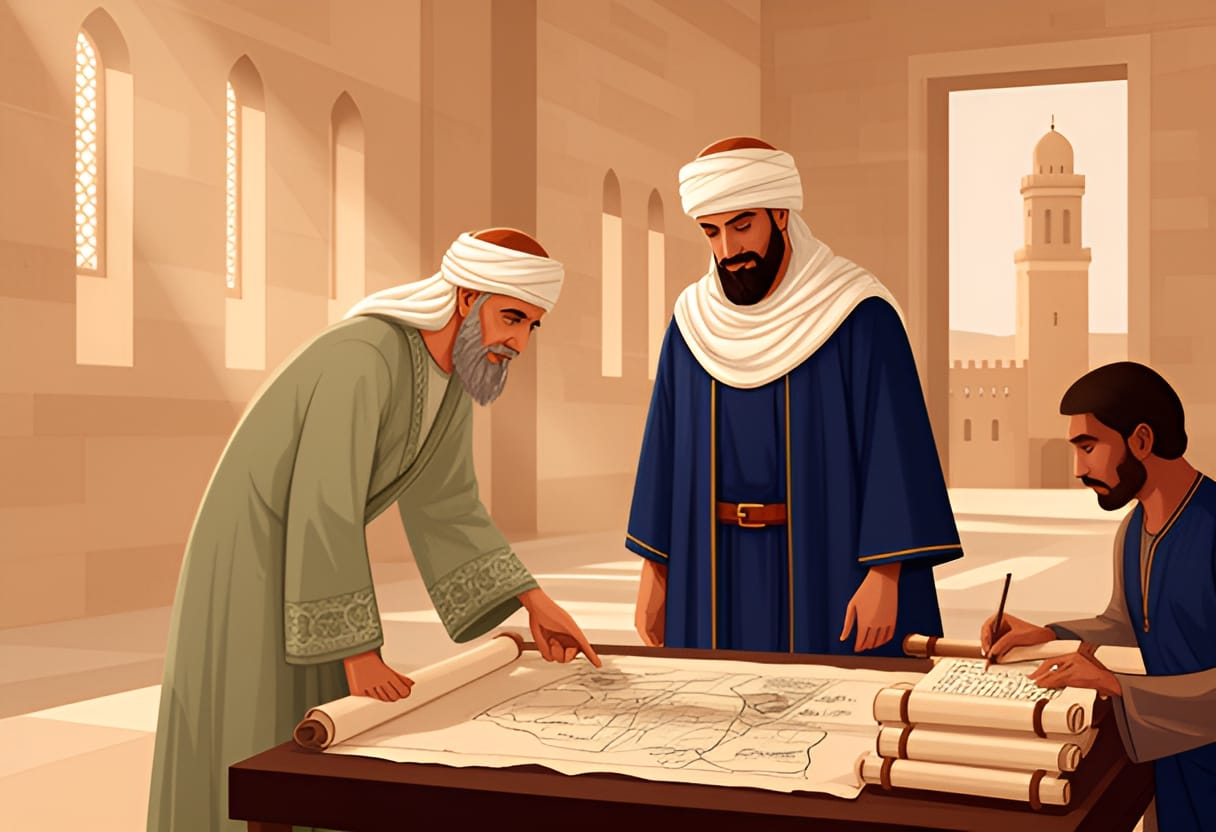
The cadastral survey of the Nile floodlands, conducted early in his vizierate, illustrates how administrative reform strengthened military unity. By measuring and taxing land according to actual inundation levels, Saladin increased state revenue by an estimated twenty percent within the first year. This surplus funded not only the standing army but also the ikhata system, where land grants were tied to military service. Crucially, he ensured that Kurdish, Turkmen, and Arab soldiers received equal stipends for equivalent ranks, reducing ethnic friction within the ranks. At the Battle of Hattin, this cohesion was evident: Kurdish horsemen held the right flank, Arab infantry formed the center, and Turkmen archers harassed the Crusader rear—a coordinated effort that reflected years of deliberate integration.
Diplomacy Rooted in Reciprocity
Saladin’s diplomatic outreach extended beyond the Muslim world, yet always with an eye toward strengthening internal solidarity. His correspondence with the Abbasid caliph in Baghdad was meticulous—sending annual gifts, seeking formal investiture, and framing his victories as defenses of the caliphate’s authority. In return, the caliph conferred honors and sent robes of honor, a symbolic exchange that gave Saladin’s rule religious sanction across Sunni circles. When he captured Jerusalem, he did not keep the city’s keys for himself but sent them to Baghdad, a act that underscored his submission to a higher spiritual authority and encouraged other rulers to view his leadership as trustworthy.
Even with adversaries, he employed diplomacy as a prelude to unity. After the Battle of Hattin, he offered generous terms to the defenders of Jerusalem—allowing ransom-based departure rather than massacre—knowing that news of his mercy would circulate among Christian communities and reduce future resistance, thereby conserving Muslim lives and resources. Internally, he used similar pragmatism: when the Emir of Homs hesitated to join his cause, Saladin did not besiege the city but instead restored its confiscated waqf properties, winning over the local populace and religious leaders without drawing sword. Such actions reinforced the idea that cooperation with Saladin brought tangible benefits, making allegiance attractive rather than coerced.
The Significance of Hattin in Islamic Consciousness
The victory at Hattin was more than a tactical success; it became a touchstone for Islamic revival. By annihilating the Crusader field army and capturing the True Cross—a relic of immense symbolic value—Saladin delivered a psychological blow that echoed in sermons, poetry, and court chronicles from Córdoba to Baghdad. Preachers in Damascus framed the battle as divine validation of Muslim unity, contrasting it with the disunity that had allowed the First Crusaders to succeed a century earlier. The recapture of Jerusalem amplified this narrative: for the first time since 1099, the Muslim call to prayer resonated within the Haram al-Sharif, a moment celebrated in inscriptions on the Dome of the Rock and in the writings of scholars like Ibn al-Athir, who noted that “the heavens rejoiced and the earth trembled” at the news.
Yet Saladin ensured the victory was not seen as his alone. He distributed spoils equitably among his commanders, allocated funds for the repair of frontier forts in Syria and Jezirah, and commissioned the construction of ribats—fortified rest stops for travelers and warriors—along the route from Damascus to Jerusalem. These projects employed local laborers and were endowed with waqf funds, creating lasting infrastructure that served both military and civilian needs. In doing so, he transformed a battlefield triumph into a civilizational project, one where the fruits of victory were visibly shared across the Islamic world, reinforcing the belief that unity was not only possible but prosperous.
The Immediate Aftermath of Hattin
Saladin’s victory at the Battle of Hattin on July 4, 1187, shattered the military capacity of the Kingdom of Jerusalem in a single day. The Crusader field army, estimated at around 20,000 men including knights, infantry, and Turcopole auxiliaries, was largely destroyed or captured. King Guy of Lusignan, Raymond III of Tripoli, and numerous barons were taken prisoner, along with the relic of the True Cross. This loss deprived the Crusader states of their ability to mount a coordinated defense, as the kingdom’s fighting nobility was either dead, enslaved, or ransomed at great cost. The immediate consequence was the rapid fall of undefended or weakly garrisoned cities: Acre surrendered on July 8, Beirut and Sidon followed within days, and by mid-September, Saladin stood before Jerusalem itself. The speed of these collapses demonstrated how dependent the Crusader states had been on field armies to deter conquest; without them, their fortified cities fell like ripe fruit.
The psychological impact was equally severe. Western chroniclers expressed shock at the totality of the defeat. The Archbishop of Tyre, who witnessed the aftermath, wrote that “the Holy Land was laid bare” and that the loss of the True Cross felt like a spiritual amputation. In Europe, the news precipitated the call for the Third Crusade, but it also triggered a crisis of confidence among the remaining Crusader nobles. Some, like Raymond III, sought separate truces with Saladin to preserve their diminished holdings, fracturing the already fragile unity of the Latin East. Others, such as Reginald of Châtillon, had been executed by Saladin’s own hand after Hattin—a deliberate signal that even the most notorious aggressors would not be spared. This combination of military decapitation, territorial loss, and psychological trauma marked the point of no return for Crusader hegemony in the Levant.
The Crusader Response: Adaptation and Fragmentation
In the wake of Hattin, the surviving Crusader leadership adopted a strategy of coastal retrenchment. Tyre, under the vigorous defense of Conrad of Montferrat, became the last major Crusader stronghold on the mainland after Saladin’s failed siege in November 1187. Conrad’s success stemmed from his ability to rally surviving troops, reinforce the city’s seaward defenses, and exploit Saladin’s overextension as he attempted to capture too many cities too quickly. The preservation of Tyre proved critical, as it became the launching point for the Third Crusade and a refuge for displaced nobles and clergy. However, this coastal focus implicitly acknowledged the loss of the interior: Jerusalem, Hebron, Nablus, and most of Galilee remained under Muslim control, reducing the Kingdom of Jerusalem to a strip of fortified ports dependent on maritime supply lines.
Diplomatically, the Crusaders pursued a dual track. On one hand, they sought to exploit divisions within the Ayyubid realm. After Saladin’s death in 1193, his empire was partitioned among his sons, creating opportunities for Crusader diplomacy. The Treaty of Jaffa in 1192, negotiated between Richard the Lionheart and Saladin’s successor al-Afdal, granted the Crusaders a coastal corridor from Jaffa to Tyre and secured pilgrim access to Jerusalem—a pragmatic recognition that military reconquest was no longer feasible. On the other hand, internal Crusader politics hampered coordinated action. The rivalry between Guy of Lusignan and Conrad of Montferrat for the kingship of Jerusalem, which escalated to Conrad’s assassination in 1192, diverted energy from external threats. Meanwhile, the County of Tripoli and the Principality of Antioch pursued separate arrangements with Muslim neighbors, further eroding the idea of a unified Latin East. These fissures meant that even when Crusader forces arrived from Europe, they often operated as discrete contingents rather than a unified army.
The Decline of Military Capacity
The Battle of Hattin did not merely eliminate a single army; it exposed and accelerated structural weaknesses in the Crusader states’ military system. Their reliance on feudal levies from a shrinking population of Latin settlers meant that losses were difficult to replace. By the 1180s, the Kingdom of Jerusalem could field perhaps 600–800 heavy cavalry at best—a fraction of the forces that had marched to Hattin. After the battle, this number dropped further as many knights were killed, ransomed (often impoverishing their lineages), or chose to return to Europe. The Turcopoles, locally recruited light cavalry who provided essential scouting and skirmishing capabilities, suffered disproportionately, as they were often the first to engage and the last to retreat. Their depletion deprived the Crusader armies of mobility and intelligence, making them vulnerable to the kind of ambush that had destroyed them at Hattin.
Financially, the states were strained. Ransoming nobles after Hattin required enormous sums—historical accounts suggest the ransom for King Guy alone was 60,000 bezants, a sum equivalent to the annual revenue of the entire kingdom. These payments depleted treasuries and forced seigneurs to mortgage or sell their already diminished estates. The resulting decline in income reduced the ability to maintain garrisons, pay mercenaries, or fortify weak points. Over time, this led to a qualitative deterioration in defenses: walls went unrepaired, garrisons were undermanned, and reliance on temporary truces increased. By the early thirteenth century, even cities like Acre, though still held, were increasingly dependent on the fluctuating goodwill of Italian maritime communes for their survival, rather than on indigenous military strength.
The Long-Term Transformation of the Latin East
Saladin’s impact on the Crusader states extended beyond immediate military defeat to a fundamental reconfiguration of their political reality. The loss of Jerusalem severed the spiritual and symbolic core of the Crusader enterprise. While the city changed hands several more times in the thirteenth century, it was never again held by the Crusaders for more than fifteen years at a stretch (1229–1244), and even that tenure came through treaty, not conquest. The Crusader states evolved into what historians have termed a “maritime principality,” their survival contingent on naval support from Venice, Genoa, and Pisa, and their influence confined to coastal enclaves. This shift redefined their relationship with the surrounding Muslim world: instead of aspiring to rule the Holy Land, they sought only to maintain footholds from which to trade and launch occasional raids.
Culturally, the defeat prompted introspection and adaptation. Western settlers began to adopt more Eastern modes of dress, fortification, and warfare, recognizing the limits of transplanted European models. Intermarriage with local Christian communities increased, and knowledge of Arabic spread among the nobility, facilitating diplomacy and intelligence gathering. Yet these adaptations could not reverse the demographic reality: the Latin settler population remained a small minority in a predominantly Muslim and Syriac-Christian environment. Without a steady influx of new crusaders from Europe—a flow that diminished after the failure of subsequent crusades to achieve lasting gains—the Crusader states were destined to remain fragile outposts. Saladin’s victory at Hattin, therefore, did not merely win a battle; it initiated a process whereby the Crusader states transitioned from aspiring polities to vulnerable remnants, their eventual expulsion from the Levant becoming a matter of time rather than possibility.
Saladin in Contemporary Arab Consciousness
Saladin's image permeates modern Arab societies as a symbol of unity and resistance against foreign domination. His victory at Hattin and recapture of Jerusalem are invoked in political discourse, educational curricula, and popular culture to inspire national pride and solidarity. In Egypt, Syria, and across the Levant, streets, schools, and military institutions bear his name, reinforcing his status as a foundational figure in Arab historical memory. This veneration is not merely nostalgic; it serves as a reference point for contemporary struggles over sovereignty and identity. For instance, during the 20th-century Arab nationalist movements, leaders such as Gamal Abdel Nasser explicitly drew parallels between their anti-colonial efforts and Saladin’s unification of Muslim lands against Crusader incursions. Nasser’s 1956 nationalization of the Suez Canal was framed in speeches as a modern act of reclaiming Arab assets from foreign control, echoing Saladin’s restoration of Jerusalem to Muslim rule.
The symbolic power of Saladin extends into the realm of diplomacy and conflict resolution. Arab leaders have cited his chivalrous conduct—such as his release of King Guy of Lusignan after Hattin and his respectful treatment of defeated Crusader nobles—as a model for ethical statecraft in regional negotiations. When Egypt and Israel signed the Camp David Accords in 1978, Egyptian officials referenced Saladin’s historical interactions with Richard the Lionheart to underscore the possibility of coexistence and mutual respect between adversaries, even amid deep conflict. This invocation was not merely rhetorical; it aimed to legitimize peace efforts by grounding them in a shared historical narrative of honor and pragmatism. Saladin’s legacy thus functions as a cultural resource that can be adapted to support both resistance and reconciliation, depending on the political context.

Saladin and Modern Political Symbolism
Beyond the Arab world, Saladin’s legacy has been adopted and reinterpreted in various political movements across the Muslim world and beyond. In Turkey, Iran, and South Asia, his image appears in literature, film, and political rhetoric as a emblem of Islamic resurgence and resistance to Western influence. During the Iranian Revolution of 1979, revolutionary posters depicted Ayatollah Khomeini alongside Saladin, linking the overthrow of the Shah to a broader historical struggle against oppression. Similarly, in the aftermath of the 2003 U.S.-led invasion of Iraq, Saladin’s name was invoked by both supporters and critics of the intervention to frame the conflict in historical terms—either as a defense of Muslim lands against foreign occupation or as a cautionary tale about the dangers of internal division.
In Western academic and popular discourse, Saladin is often portrayed as a noble adversary, a counterpoint to the stereotypical depiction of Crusaders as uniformly fanatical. This image has been shaped by works such as Sir Walter Scott’s The Talisman and later films like Kingdom of Heaven, which present Saladin as a figure of wisdom, justice, and magnanimity. While these portrayals sometimes simplify his complex historical role, they have contributed to a broader recognition of Islamic contributions to medieval chivalry and statecraft. In diplomatic settings, Western leaders have occasionally referenced Saladin to highlight shared values of honor and negotiation. For example, during peace talks in the 1990s, U.S. envoys noted Saladin’s ability to balance military strength with diplomatic flexibility as a lesson for resolving protracted conflicts in the Middle East.
Shaping Arab and Islamic Identity
Saladin’s legacy plays a central role in the construction of modern Arab and Islamic identity, particularly in relation to historical continuity and civilizational pride. His emphasis on Sunni orthodoxy, his patronage of religious institutions, and his alignment with the Abbasid Caliphate are cited as evidence of a historical commitment to Islamic unity and scholarly tradition. In contemporary Islamic education, his life is studied not only as a military campaign but as an embodiment of Islamic governance—just, law-abiding, and dedicated to the welfare of subjects. Textbooks in countries like Jordan and Saudi Arabia highlight his efforts to revive Islamic learning, restore religious endowments (awqaf), and promote religious tolerance toward non-Muslim communities under his rule, such as the Christians and Jews of Jerusalem after its recapture.
This focus on Saladin’s administrative and ethical governance counters narratives that reduce Islamic history to mere conquest. By emphasizing his codification of legal practices, his support for scholars, and his efforts to unify fragmented Muslim polities under a common religious and political framework, modern narratives present him as a architect of a just Islamic polity. This perception has influenced modern Islamist movements that seek to revive Islamic governance, though interpretations vary. Some groups idealize his military jihad, while others stress his state-building and diplomatic achievements as a more sustainable model for contemporary Islamic societies. Regardless of interpretation, Saladin remains a touchstone for discussions about the compatibility of Islamic principles with effective statecraft.
Enduring Relevance in Global Historical Memory
Saladin’s legacy endures not only in the regions he once ruled but also in global historical consciousness as a figure who transcends the binary of Crusader versus Muslim. His ability to negotiate, his respect for adversaries, and his commitment to principles such as the protection of non-combatants and the humane treatment of prisoners have made him a subject of study in military academies and international relations programs. At institutions like West Point and Sandhurst, his campaigns are analyzed for strategic innovation—particularly his use of terrain, logistics, and psychological warfare—while his diplomatic engagements are examined as early examples of conflict resolution in asymmetric warfare.
In popular culture, Saladin appears in novels, video games, and television series that explore the Crusades, often serving as a bridge between civilizations rather than a symbol of perpetual conflict. His portrayal in these mediums tends to emphasize his complexity: a devout Muslim who nonetheless engaged in diplomacy with Christians, a warrior who valued mercy, and a ruler who balanced ambition with restraint. This nuanced representation reflects a broader historical reassessment of the Crusades era, moving beyond simplistic narratives of religious hatred to acknowledge the interplay of politics, culture, and personal agency. Saladin’s lasting appeal lies in this very complexity—he is remembered not just for what he conquered, but for how he ruled, and for the enduring questions his legacy raises about leadership, legitimacy, and the possibility of coexistence in divided times.
Conclusion
The final chapter of Saladin’s story is not merely a recounting of victories and treaties, but a reflection on the enduring power of principled leadership. His life, from the dusty streets of Tikrit to the hallowed walls of Jerusalem, offers a lens through which to view the intersection of faith, strategy, and statecraft. To understand his legacy is to recognize how one ruler’s commitment to justice and unity reshaped a region and continues to echo in contemporary discourse.
The Architect of a Unified Vision
Saladin’s greatest achievement was not the recapture of Jerusalem alone, but the forging of a political and ideological framework that allowed disparate Muslim lands to act in concert. Prior to his rise, the Muslim world was a patchwork of rival emirates, each more concerned with local dominance than collective defense against the Crusader states. Saladin changed this by anchoring his authority in religious legitimacy. He sought and received formal recognition from the Abbasid Caliph in Baghdad, positioning himself not as a usurper but as the caliph’s deputy in the defense of Islam. This move was both symbolic and strategic: it gave his campaigns a spiritual dimension that transcended tribal loyalties and attracted support from scholars, Sufis, and urban populations who viewed the Crusader presence as a religious affront.
He reinforced this unity through administrative innovation. The ikhata system, which tied land grants to military service, ensured that his army was not merely a collection of mercenaries but a loyal force invested in the stability of the realm. Simultaneously, his cadastral survey improved tax collection and resource allocation, allowing him to sustain prolonged campaigns without overburdening the peasantry. These reforms were not abstract bureaucratic exercises; they directly enabled the logistical precision seen at Hattin, where his forces moved across arid terrain with remarkable speed, seizing critical water sources and disrupting Crusader supply lines. The victory was not accidental—it was the product of years of institution-building that turned ideological zeal into operational effectiveness.
Mercy as Statecraft
While military prowess defined Saladin’s rise, it was his conduct in victory that distinguished him in the annals of medieval warfare. After the Battle of Hattin, he treated captured Crusader nobles with a degree of dignity that surprised both allies and adversaries. King Guy of Lusignan was offered water—a gesture steeped in Arabian hospitality—before being detained. The True Cross, a relic of immense symbolic value to Christians, was not paraded as a trophy but eventually returned to the Byzantines as part of a diplomatic exchange. These actions were not mere acts of chivalry; they were calculated elements of a broader strategy to undermine Crusader morale while presenting himself as a ruler of principle.
This approach stood in stark contrast to the norms of the time, where massacres and enslavement were common following sieges. Saladin’s restraint after the fall of Jerusalem in 1187—allowing Christians to leave safely upon payment of a modest ransom, and permitting many to depart unpaid due to poverty—earned him grudging respect even among Frankish chroniclers. The contrast with the Crusader conquest of Jerusalem in 1099, when the city’s Muslim and Jewish inhabitants were slaughtered indiscriminately, could not be sharper. By choosing mercy over vengeance, Saladin did not weaken his position; he strengthened it, fostering an environment where negotiation became possible and where local populations, weary of constant conflict, saw in him a potential guarantor of peace.
The Fragility of Coalitions
Yet Saladin’s legacy also carries a cautionary note about the durability of alliances built on personal authority. The unity he forged—spanning Egypt, Syria, Mesopotamia, and the Hejaz—was deeply tied to his person. His charisma, reputation for justice, and ability to balance competing interests held together a coalition that included Kurdish tribes, Arab dynasties, Turkmen commanders, and even some Shi‘a sympathizers who tolerated his Sunni orientation for the sake of resisting the Franks. After his death in 1193, this coalition began to fray. His sons, lacking both his stature and his political acumen, quickly fell into infighting. The Ayyubid realm fragmented into competing principalities centered in Damascus, Aleppo, Hama, and Cairo, each ruled by a different branch of the family.
This fragmentation had immediate consequences. The Crusaders, though weakened, exploited the divisions to regain footholds along the coast. The Sixth Crusade, led by Emperor Frederick II, succeeded in securing Jerusalem through treaty in 1229—not by conquest, but because the Ayyubids were too preoccupied with internal strife to mount a unified defense. The city changed hands again in 1244, this time to the Khwarazmians, before finally falling under Mamluk control. Thus, while Saladin’s model proved effective in the short term, its long-term viability depended on institutions capable of outliving their founder. The absence of a clear succession mechanism, combined with the inherent tensions of a patrimonial state, meant that his vision of a unified Muslim polity required constant renewal—a task his successors were unable to fulfill.
Enduring Symbol, Living Lesson
Despite the political fragmentation that followed his death, Saladin’s symbolic power endured. In the centuries that followed, rulers across the Islamic world invoked his name to legitimize their own ambitions. Ottoman sultans, Mamluk emirs, and later nationalist leaders all found utility in his image as a unifier and defender of Islamic lands. In the twentieth century, Gamal Abdel Nasser explicitly cited Saladin’s unification of Egypt and Syria as a precursor to his own pan-Arab ambitions, using the historical analogy to rally public support against colonial influence and Zionist militancy. Even critics of Nasser’s regime acknowledged the potency of the reference, which tapped into a deep well of cultural memory.
In the twenty-first century, Saladin’s legacy continues to be invoked in debates about leadership, justice, and intercultural relations. Military strategists study his campaigns at West Point and Sandhurst not only for his use of terrain and deception but for his integration of diplomatic and psychological tools—such as sending envoys before battle to sow discord among Crusader ranks or leveraging local knowledge to anticipate enemy movements. Human rights advocates point to his treatment of prisoners and non-combatants as a premodern example of humanitarian conduct in war. Meanwhile, interfaith initiatives cite his postwar policies in Jerusalem—where he allowed Christian and Jewish communities to worship freely—as a historical precedent for coexistence under Islamic rule.
His story reminds us that effective leadership is not solely about winning battles, but about building systems that outlast the leader, earning trust through consistency, and recognizing that strength is often measured not in dominance but in the capacity to inspire loyalty through justice. Saladin did not merely conquer territory; he sought to restore a sense of order and purpose to a fractured world. Whether or not his successors upheld that vision is a matter of historical record. But the ideal he embodied—of a ruler guided by faith, disciplined by strategy, and tempered by mercy—remains a touchstone for those who believe that leadership, at its best, is a moral endeavor.
Key Takeaways
- Saladin unified Muslim lands not through force alone, but by anchoring his authority in religious legitimacy and administrative reform, enabling coordinated resistance to the Crusader states.
- His victory at Hattin was the result of years of logistical and ideological preparation, demonstrating that strategic success depends on long-term state-building, not just tactical brilliance.
- Saladin’s merciful treatment of defeated foes was a deliberate strategy to undermine enemy morale and foster conditions for negotiation, contrasting sharply with the norms of medieval warfare.
- The fragmentation of his empire after his death underscores the fragility of personalist coalitions and the need for institutionalized succession to sustain political visions.
- Saladin’s legacy endures as a symbol of just leadership, studied in military academies and invoked in modern politics as a model for balancing strength with wisdom, and unity with principle.