Fiction
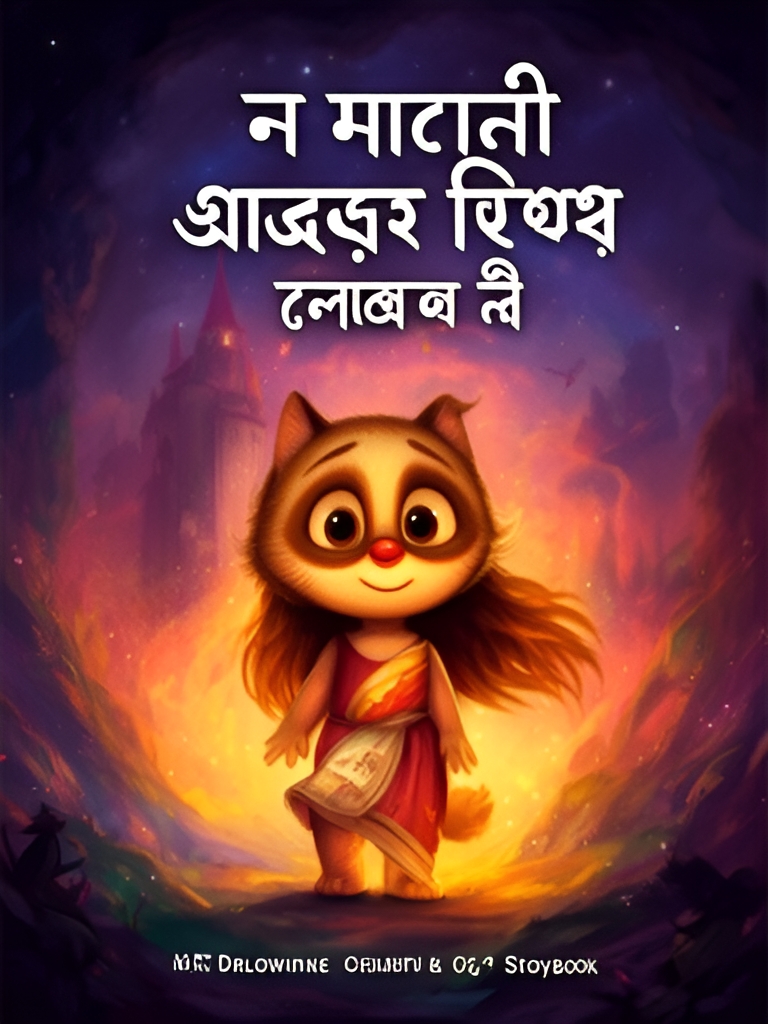
মন মাতানো ছোটদের গল্পের বই
by UTPAL MANDAL
3 chapters14 min read
Chapter 1
The Silent Girl
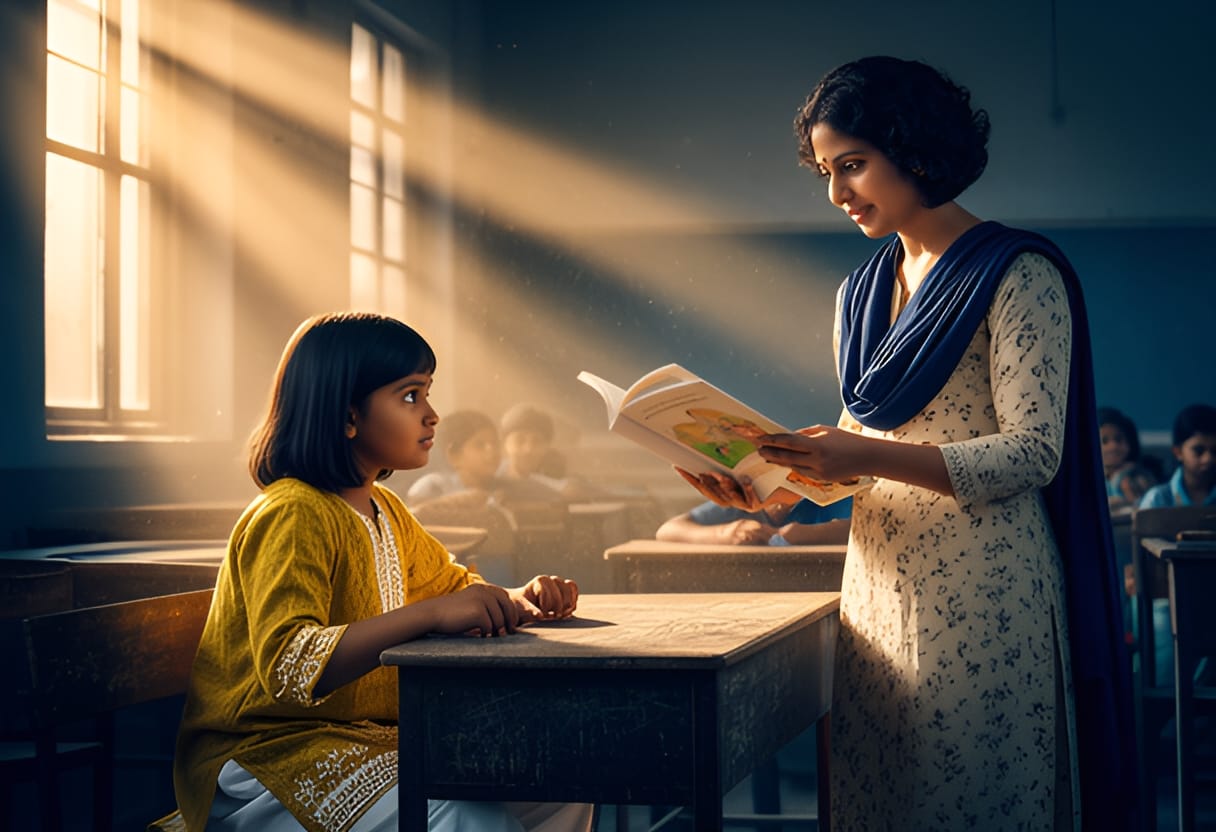
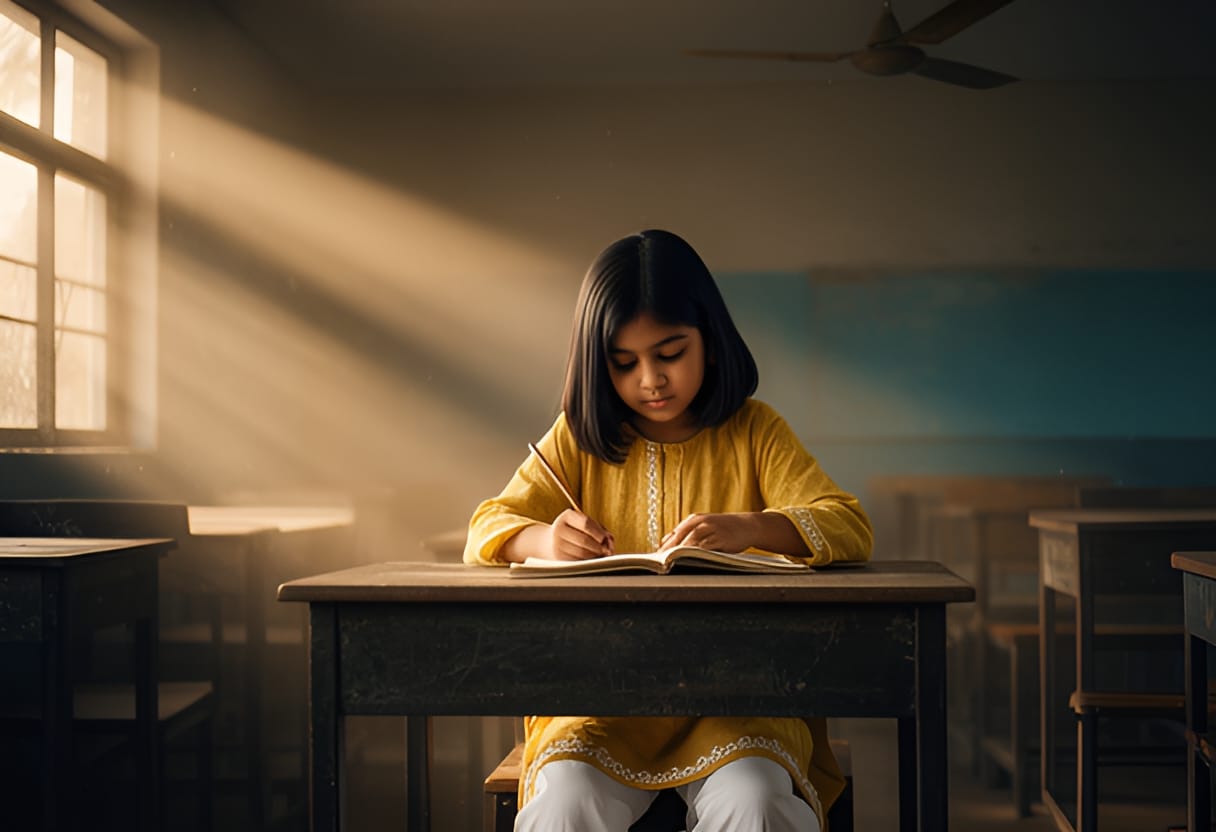
Ananya’s fingers curled tightly around the edge of her desk, knuckles pale against the worn wood. The classroom hummed with the rustle of pages and the occasional giggle from the back row, but her ears rang with a different sound—the sharp, insistent beat of her own heart. Ms. Rita held up the picture book, pointing to the illustration of the fox curled beneath the oak tree.
“What do you think the fox is feeling right now?” she asked, her voice warm and inviting.
Ananya knew. She had read the story twice last night, tracing the words with her fingertip under the lamplight while Dadi slept nearby. The fox wasn’t just hiding—it was waiting. Patient. Hopeful. She could see it in the way its ears twitched toward the distant birdsong, in the soft lift of its tail. She wanted to say it. She opened her mouth, felt the familiar tightness coil in her throat like a knot of cold string. Her eyes dropped to the grain of the desk. A pencil lay nearby, its tip worn smooth. She wished she could bury her face in her arms and disappear into the wood.
Around her, hands shot up. Samir’s was the first, eager and high. “He’s scared!” he declared. Others followed—nervous, excited, wrong. Ananya flinched at each voice, not from anger, but from the sheer, aching distance between what lived inside her and what could make it past her lips.
The bell rang—a bright, sudden chime that made her jump. Children shoved chairs back, zipped backpacks, and surged toward the door. Ananya stayed seated, waiting for the rush to pass. When the room finally emptied save for Ms. Rita wiping the board, she slipped her notebook into her bag and followed the stream of small feet into the hallway.
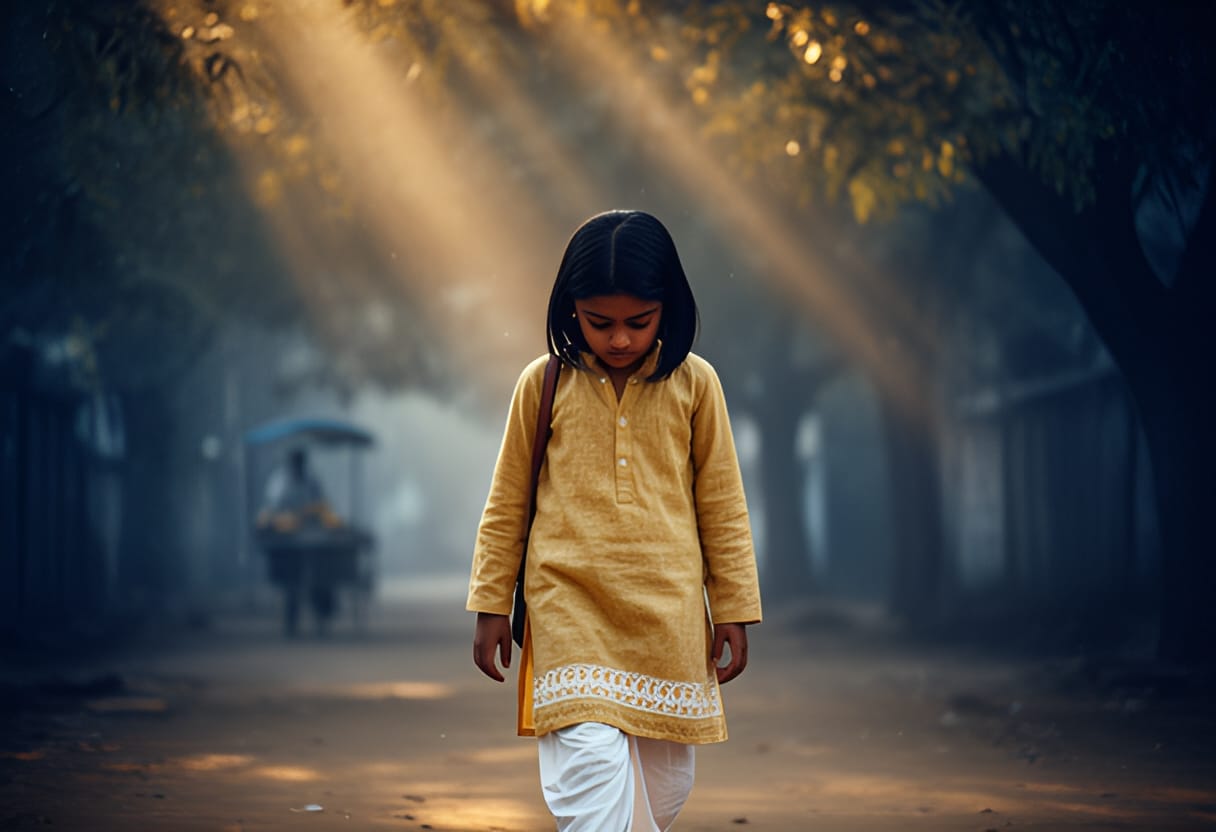
Sunlight slanted through the tall windows of the school corridor, painting stripes across the terracotta tiles. Ananya walked with her head down, the strap of her bag digging into her shoulder. The weight wasn’t just from books—it was the silence she carried, thick and familiar, like a second skin. She could feel the eyes of her classmates still on her, even though they were gone. Had they noticed she didn’t speak? Had they wondered why?
She pushed through the school gate and into the dusty lane that wound toward her grandmother’s house. The air smelled of fried onions from a nearby stall and the dry, sweet scent of neem trees. A vendor called out prices for mangoes, their golden skins piled in pyramids. Ananya didn’t hear him. Her steps were slow, each one deliberate, as if moving too quickly might shake loose the words she couldn’t find.
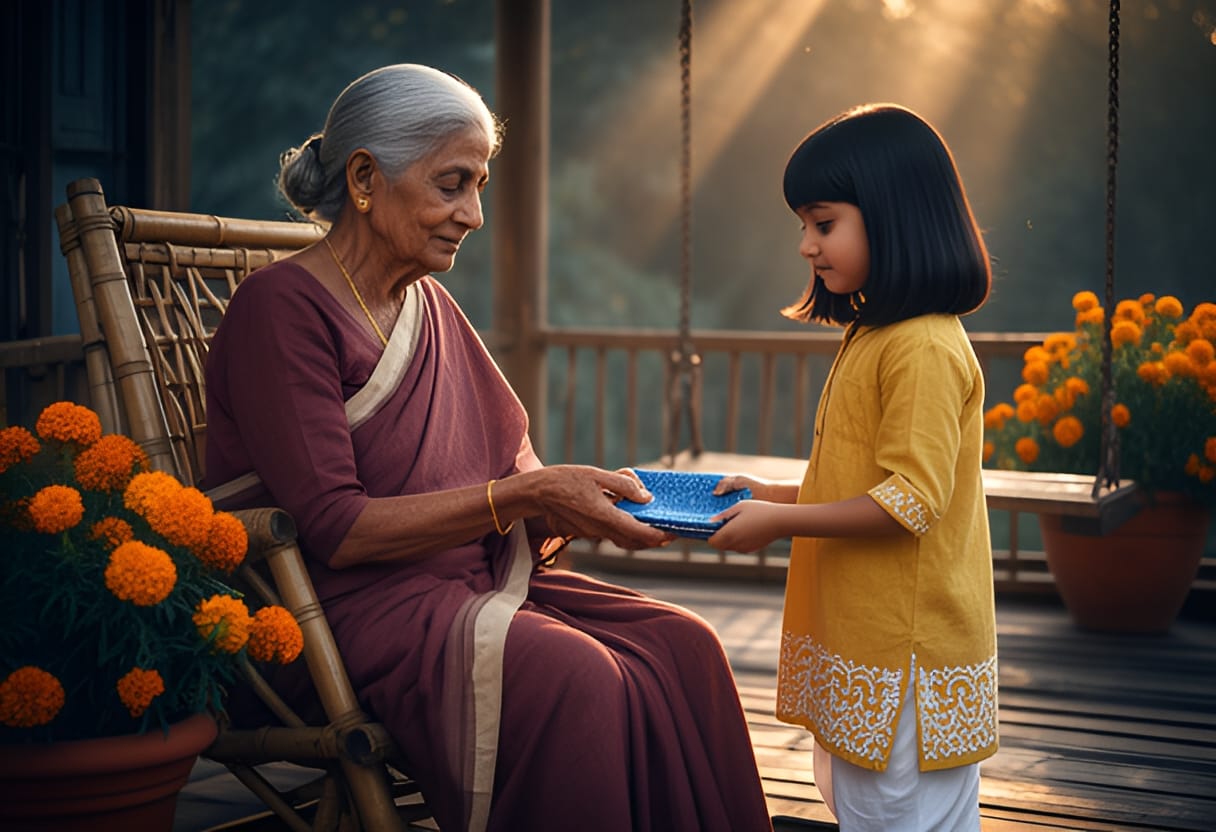
The veranda came into view—a shaded space woven with bamboo and dotted with potted marigolds. Dadi sat on the low wooden swing, her silver hair pinned loosely at her nape, a half-finished scarf draped over her lap. She looked up as Ananya approached, her eyes softening immediately.
“You’re quiet today, beta,” Dadi said, her voice like warm milk poured into a cup. She patted the space beside her. “Come. Tell Dadi what’s heavy in your heart.”
Ananya halted at the bottom of the steps. The swing creaked gently as Dadi shifted, waiting. The words sat behind her teeth, sharp and unformed. She opened her mouth. Nothing came. Instead, she lifted her hand—just slightly—and touched the corner of her notebook through the fabric of her bag. A small, wordless offering.
Dadi’s gaze followed the motion. She didn’t press. She only nodded, as if understanding had already been given, and began to rock again, the chains of the sighing in rhythm with Ananya’s breath.
Dadi’s fingers, gnarled but gentle, reached into the fold of her sari and drew out a small notebook bound in faded blue cloth. She placed it in Ananya’s palm, the cover cool and slightly textured from use.
“Sometimes,” Dadi said, her voice low enough that only Ananya could hear over the creak of the swing and the distant hum of the lane, “what’s too heavy for the throat finds its way out through the fingers. You don’t have to speak it, beta. Just let it live here.” She tapped the cover lightly. “A word. A line. A picture. Whatever wants to come.”
Ananya looked down at the notebook. It felt solid, real—a thing she could hold without fear. She opened it to the first page. The paper was thick, slightly off-white, waiting.
She thought of the morning, just after sunrise, when she had stepped onto the back veranda to water the marigolds. A flash of blue had caught her eye—not the sky, not a flower, but a small bird perched on the garden wall. It had tilted its head, one bright eye observing her before it flicked its wings and vanished into the neem tree. She had wanted to tell someone. She had opened her mouth. Nothing came.
Now, she picked up the pencil Dadi handed her—short, blunt, but usable. She pressed the tip to the page.
Today, I saw a blue bird on the wall.
The words were simple. True. They didn’t shake or break as they formed. She looked at them for a long moment, then turned the page and drew the bird as she remembered it—small, round-headed, with a tail tilted upward like a question mark.
When she closed the notebook, a quiet warmth spread in her chest, not quite joy, not quite relief, but something like the first loosening of a held breath. She tucked the notebook into her bag, its weight now familiar, not burdensome.
Dadi didn’t ask what she had written. She only smiled, a small, knowing thing, and began to hum—a tune without words, old and soft, as the swing swayed in the afternoon light. Ananya leaned back, eyes half-closed, listening to the rhythm of the chains and the hum, and for the first time that day, she did not feel the need to fill the silence.
The hum faded into the rustle of marigold leaves stirred by a sudden breeze. Ananya opened her eyes. Dadi was watching her, not with expectation, but with the quiet patience of someone who has learned that trust grows in small increments.
“Would you like to bring it to school tomorrow?” Dadi asked, her voice soft as the swing’s sway. “Just to have it with you. Like a friend in your bag.”
Ananya glanced at the notebook peeking from the top of her bag. She thought of the empty chair beside her in class, the way her eyes often darted to the sharing box in the corner—wooden, chipped at one edge, where Ms. Rita sometimes left folded notes for students to find. She had never put anything in it. Never taken anything out.
She nodded, just once. A tiny movement, but it felt like a step onto a path she hadn’t seen before.
Dadi’s smile widened, just enough. She reached over and gave Ananya’s hand a brief, warm squeeze before returning to her knitting. The scarf grew another row, the blue wool catching the light like the bird’s wing.
Ananya leaned her head back against the swing’s wooden slat, closed her eyes again, and let the quiet settle—not as something to escape, but as something she could carry, now, with a little more ease.
Chapter 2
Whispers on Paper
Ananya slipped the notebook from her bag as she settled at her desk, the morning light slanting across the rows of wooden chairs. The classroom was still quiet—only the scratch of a pencil here and there, the distant hum of the ceiling fan, and the soft rustle of pages turning. Ms. Rita had not yet arrived, and the sharing box in the corner waited, its chipped wood catching the light like a secret.
She opened to a fresh page. The pencil felt familiar now, blunt but steady in her grip. She thought of the night before, how the air had hung heavy and still, how Dadi had said, “The earth is holding its breath.” She remembered stepping onto the veranda just before dark, how the scent had risen—wet soil, crushed grass, something green and sharp, like the first bite of a sour mango.
She wrote slowly, carefully forming each letter:
The air smells like rain before it comes. Not the rain itself, but the waiting. The ground exhales. I like that smell. It makes me feel like something is about to happen, even if I don’t know what.
She paused. It felt true. It felt small. It felt like a pebble dropped into a well—she would never hear the splash, but she had to know if it made a sound at all.
She folded the paper twice, then once more, into a tight square. Her heart tapped against her ribs as she rose from her chair. The classroom door creaked open—Ms. Rita stepped in, her bag slung over one shoulder, a smile already forming.
“Good morning, Ananya,” she said, hanging her bag on the hook.
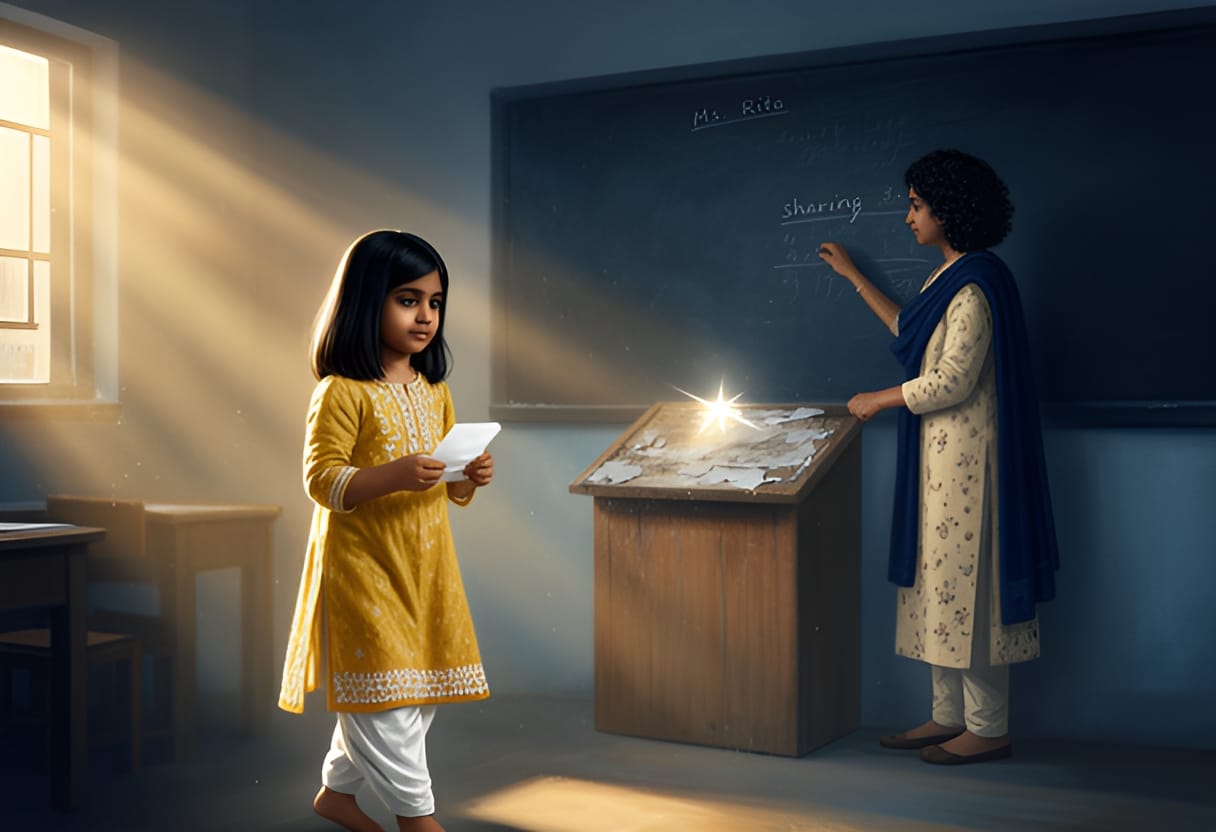
Ananya nodded, eyes down, fingers curled around the folded note. She waited until Ms. Rita turned to write the date on the board, then slipped silently toward the sharing box. Her palms were damp. She lifted the chipped lid just enough to slide the note inside, then let it fall back into place. A click. Soft. Final.
She stepped back, her breath shallow. What if someone laughed? What if they thought it was silly? What if no one noticed at all?
She returned to her desk and sat, hands folded in her lap, eyes fixed on the box across the room. Every creak of the floor, every shuffle of feet made her flinch. Samir leaned over to show Rohan something in his book, and Ananya’s stomach tightened. Was he laughing at her? Did he know?
The minutes dragged. Ms. Rita began the lesson—a story about a river that forgot its way—but Ananya heard none of it. Her mind kept returning to the box, to the folded square of paper hidden among others, maybe unnoticed, maybe already touched by curious fingers.
When the bell finally rang, sharp and bright, she was already halfway out of her seat. She didn’t wait for the others to rise. She moved quickly, eyes locked on the corner, her pulse loud in her ears.
She reached the box and paused, fingers hovering above the lid. She lifted it slowly.
Inside, nestled among a few other folded notes, was her own. Untouched. Waiting.
Her breath caught. She didn’t open it. Not yet. She just looked at it, her heart hammering, and for the first time, she didn’t look away. *
She lifted the note gently from the box, its edges slightly crumpled from being handled. Unfolding it slowly, she saw not words alone, but a drawing in waxy crayon—a small bird with a rounded head, wings outstretched, one tipped with white. Below it, in careful, uneven print: I saw it too. It had a white wing.
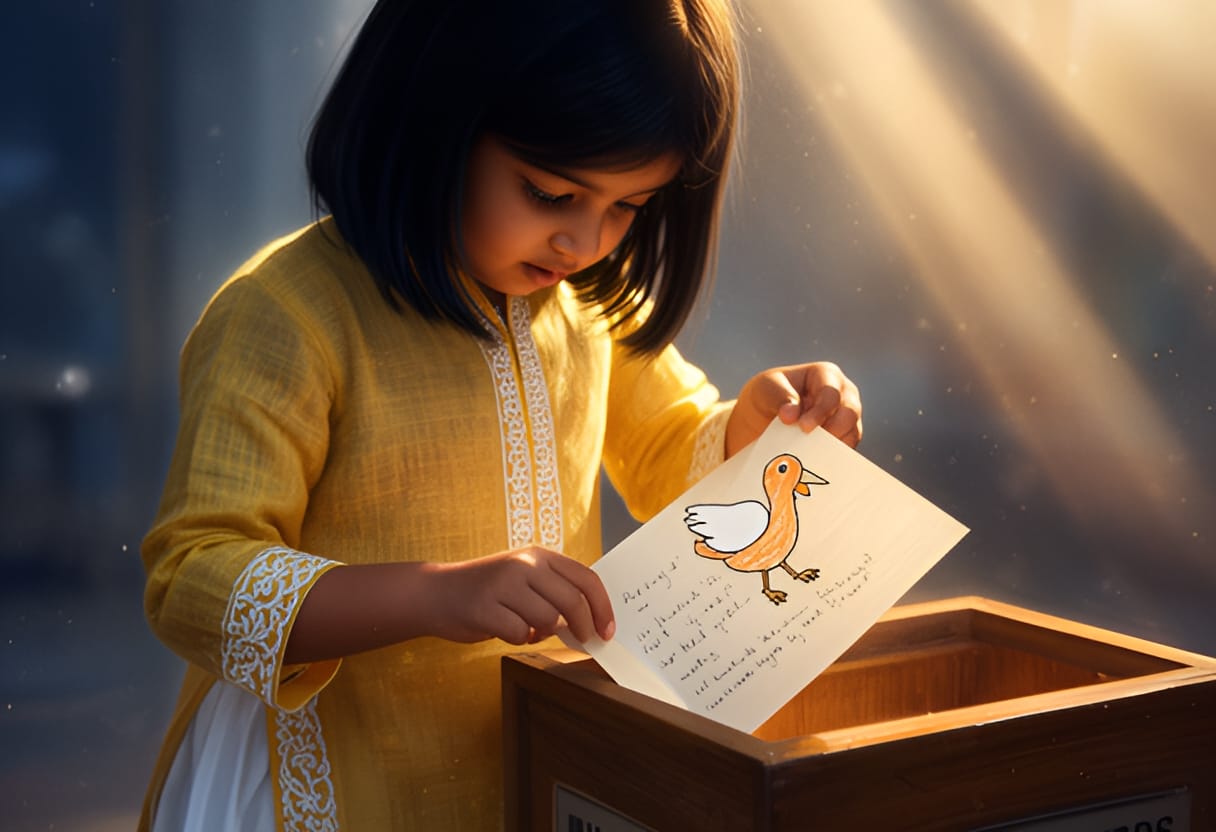
Her breath stopped. The pencil lines were familiar—the same tilt of the tail, the same question-mark curve she had drawn that morning on the veranda. Someone had seen it. Not just seen, but remembered. And they had drawn it back to her.
A warmth spread through her chest, not the tight, anxious flutter of fear, but something soft and expanding, like sunlight pushing through thin clouds. Her fingers trembled as she traced the edge of the drawing with her thumb, feeling the slight ridge of crayon wax. No laughter. No mockery. Only this: a quiet echo of her own observation, returned to her across the space between desks.
She glanced toward the rows of desks. Samir sat near the window, his head bent over his book, but she caught the faintest lift of his shoulder—almost a shrug, almost a smile. Her eyes met his for a heartbeat before he looked away, cheeks faintly pink. Her own lips parted, and without thinking, she smiled. It was small, hesitant, but real—the first unforced smile she could remember giving in class.
The bell had already rung, and the room was emptying, but she didn’t rush. She folded the reply with the same care she had used for her own note, then slipped it into her notebook, placing it gently beside her rain-and-waiting passage. She closed the cover and held it to her chest for a moment, feeling the steady beat beneath her palm.
Outside, the sun had shifted, casting longer shadows across the veranda where Dadi still swung, her silver hair catching the light. Ananya imagined her there, hands moving in the quiet rhythm of knitting, the half-finished blue scarf growing row by row. She wondered if Dadi felt it too—the quiet shift, the first thread of connection pulling taut.
She tucked the notebook into her bag, adjusted the strap, and walked slowly toward the door. The classroom felt different now—not safer, not yet, but less lonely. The sharing box no longer held only silence. It held a conversation, begun in whispers on paper.
She paused at the threshold, hand on the wood, and looked back once. The box sat in the corner, chipped and unassuming, its lid slightly ajar as if waiting. Inside, among the other folded notes, lay the quiet possibility of more.
She stepped out into the hallway, the notebook warm against her side, and walked home with her head a little higher. *
Chapter 3
The Voice That Wrote Itself
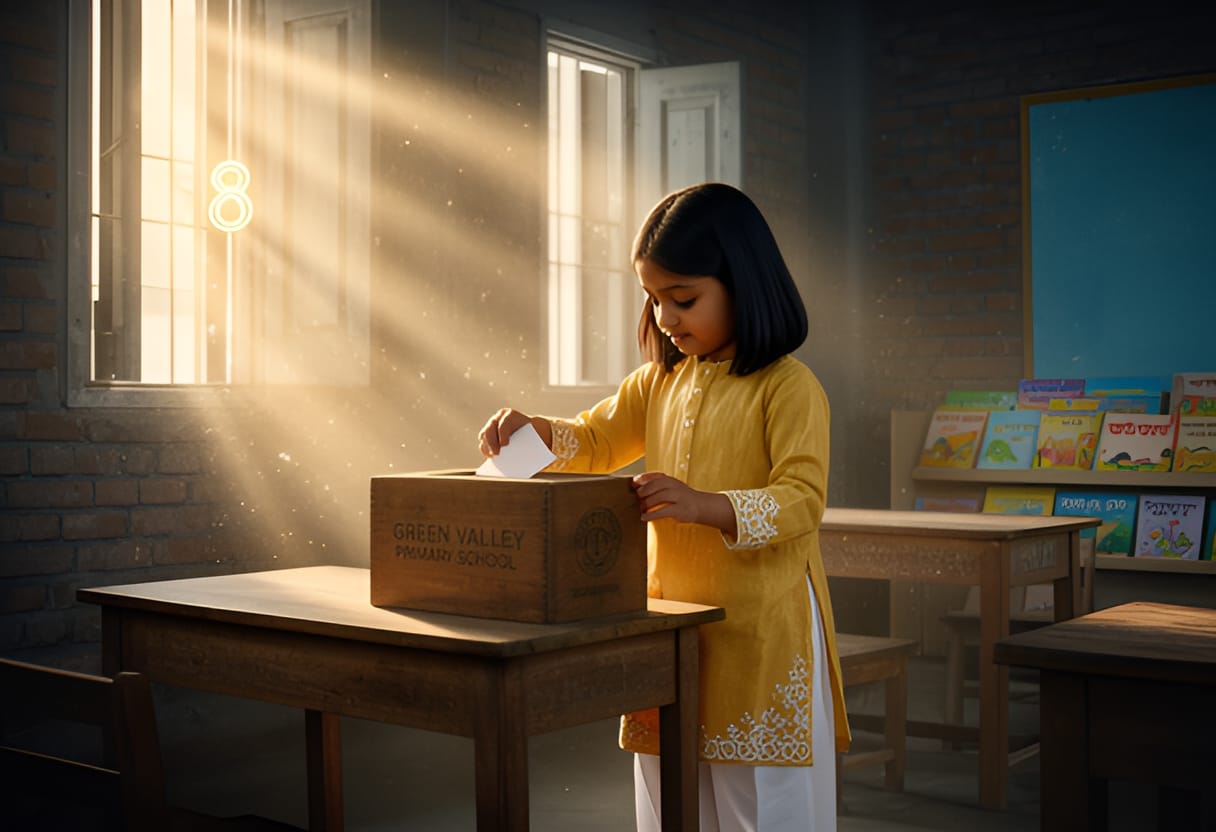
Ananya slipped the folded page into the sharing box during morning quiet, her pulse light but quick. The paper held a story she had written the night before, after watching a sparrow hop along the windowsill outside her room. It was about a girl who heard a bird sing each dawn and began to answer—not with words at first, but with soft whistles, then drawings taped to the glass, until one morning she realized she was humming back without thinking. She had signed it only with a tiny bird in the corner, wings open, tail lifted like a question mark, just as she had drawn that first blue bird on the wall.
She stepped back, pretending to sharpen her pencil, and watched the box. A few minutes later, Samir leaned over from his desk, his brow furrowed as he read. He didn’t laugh or look around to see who might be watching. Instead, he nodded once, slowly, and turned to the boy beside him. His voice dropped, but Ananya caught it: “This one’s good.”
A warmth spread behind her ribs, quiet and steady, like sunlight moving across the floor. She didn’t look up. She kept her eyes on her notebook, but her fingers stilled on the page. Outside, the wind stirred the neem tree, and somewhere down the hall, a pencil dropped. No one spoke. No one had to.
She opened her notebook to a clean page and began to write again, not for the box this time, but for herself. The words came easier now—short lines about the way the light caught the dust in the air after rain, how the school bell sounded like a struck bell in a distant temple, how Dadi’s humming used to shake the bangles on her wrist when Ananya was small enough to sit on her lap. She drew a small sequence in the margin: a girl sitting under a tree, then the same girl holding a notebook, then the girl standing, one hand raised, not speaking, but holding out the book.
When the bell rang for lunch, she packed slowly. As she rose, Samir slipped past her desk and dropped something into her open notebook—a folded square of paper. She didn’t open it then. She waited until she was by the window, watching sparrows argue over a crumb near the veranda. Inside was a rough sketch of a bird in flight, and beneath it, in careful block letters: Keep writing.
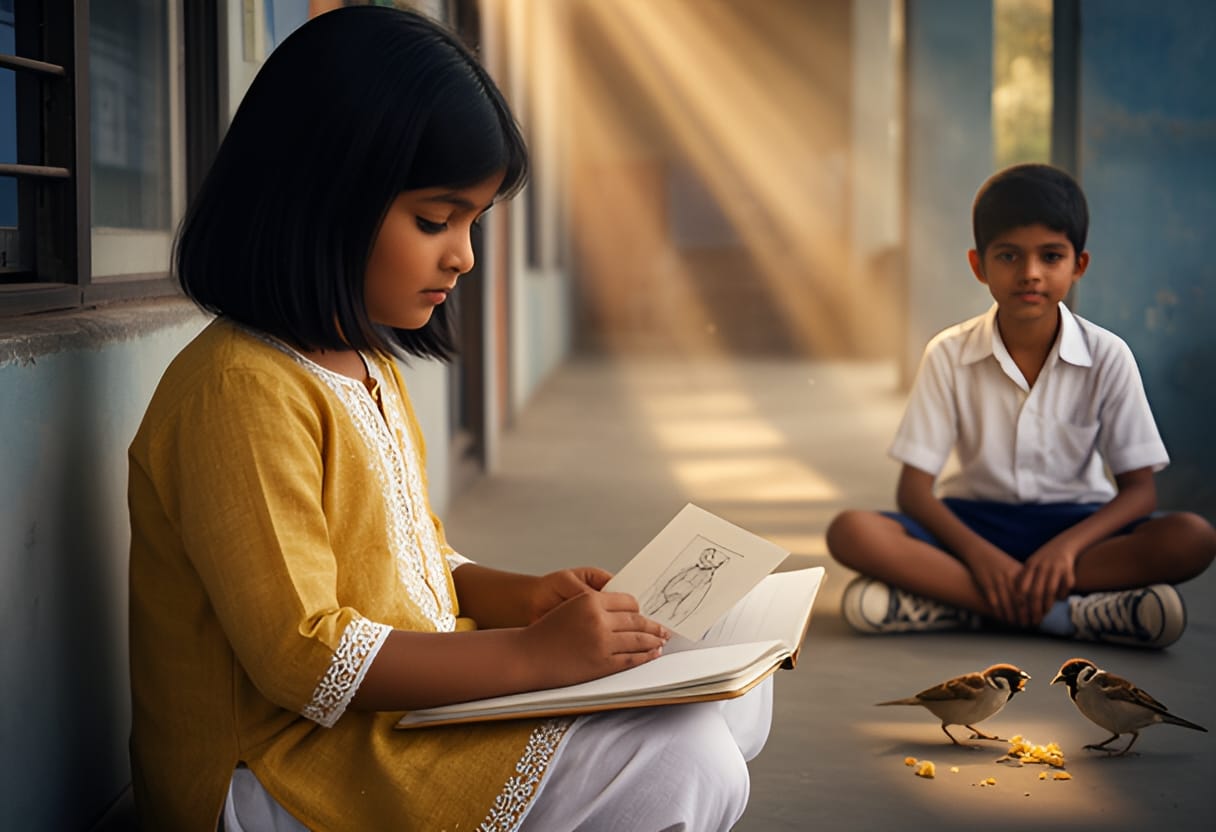
She didn’t look up. She didn’t need to. She folded the note back carefully and tucked it into the spine of her notebook, where the pages began to loosen from use. The box would fill again tomorrow. And the day after. But for now, this was enough—not a voice, not yet, but a thread, pulled gently through the quiet, tying her to someone else’s silence, and then, softly, to their answer.
The bell for afternoon lessons rang, sharp and clear, and the children began to stir, folding books and pushing back chairs. Ananya remained at her desk, her notebook open to a half-finished poem about the way shadows lengthened across the classroom floor like quiet thoughts. She had not meant to leave it out, but in the rush to line up for water, she had forgotten to close it.
Ms. Rita moved slowly between the rows, collecting stray pencils and straightening the picture books on the shelf. She paused beside Ananya’s desk, her shadow falling across the open page. For a moment, she said nothing. Then, softly, she asked, “May I see this, Ananya?”
Ananya’s breath caught. She wanted to shake her head, to snap the notebook shut and hide it in her bag. But she remembered Samir’s note tucked in the spine, the warmth behind her ribs when he had said, This one’s good. She remembered the blue bird on the wall, the sparrow on the sill, the way her pencil had moved without her telling it to. She pushed the notebook forward, just a little, her fingers lingering on the corner for a heartbeat before pulling back.
Ms. Rita picked it up as if it were something fragile—a leaf caught in a stream, or a bird’s egg found in the grass. She carried it to her desk, closed the classroom door softly, and sat down. The other children murmured and shifted, unaware, lost in the noise of afternoon.
Ananya stood by the window, her back to the room, watching a sparrow tug at a thread near the veranda. She could feel the weight of the notebook in Ms. Rita’s hands, could almost hear the quiet turning of pages. Her palms were damp. She thought of Dadi’s humming, the way the bangles had shaken like tiny bells. She thought of the story she had written—the girl who answered the bird not with voice, but with whistle, with drawing, with the slow, sure hum that came when she wasn’t trying.
Time passed. The murmur of the class faded into a low hum. Ananya did not dare look back.
Then, the door opened. Ms. Rita stood there, holding the notebook closed in both hands. Her eyes were bright, not with tears exactly, but with something deeper—like light falling still water and revealing what lay beneath.
She walked slowly to Ananya’s desk and placed the notebook in front of her, cover down. Then she knelt, so they were eye to eye.
“You have a gift,” she whispered. “Not because you write well—though you do—but because you see. You hear the bell like a temple. You notice how light sits on dust. You let a girl in a story answer a bird in her own way, and in doing so, you answered yourself.”
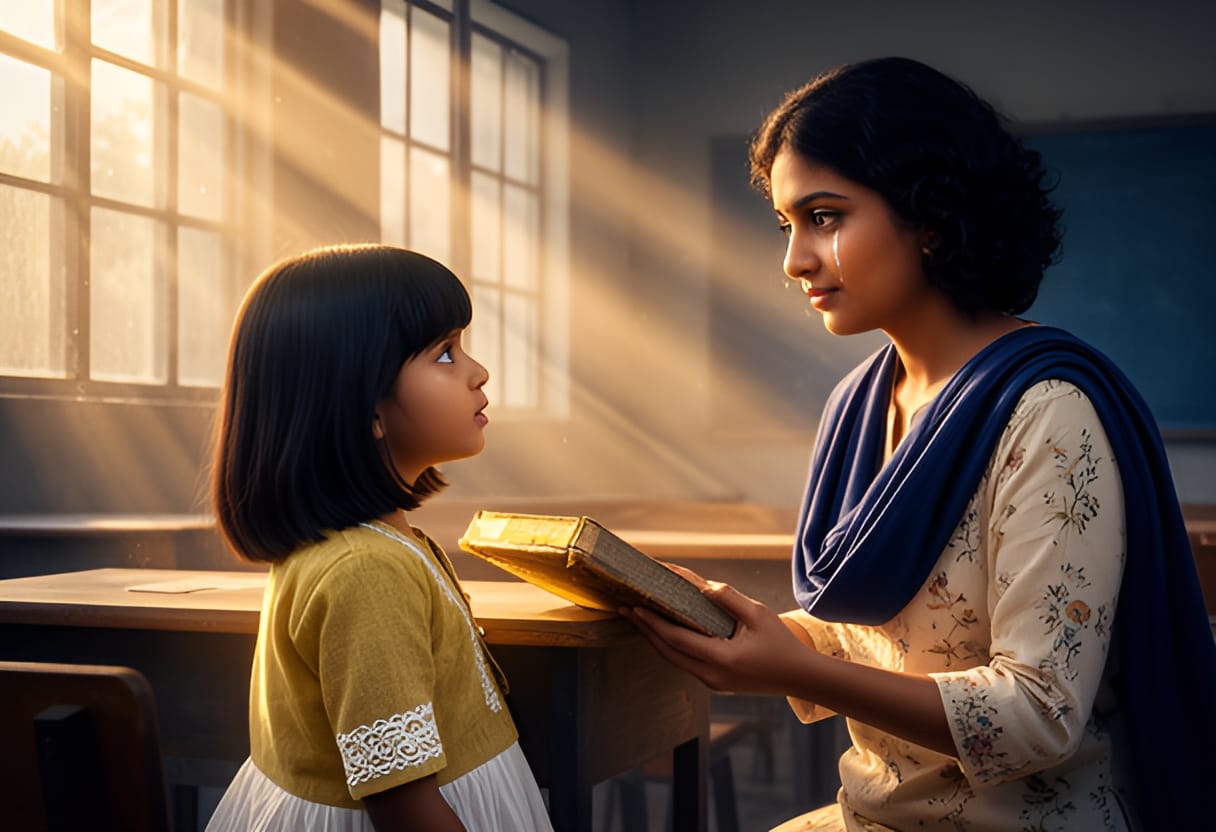
Ananya felt something loosen in her chest, not all at once, but like a knot slowly undone by patient fingers. Her eyes burned, but she did not look away.
Ms. Rita stood, smoothed her skirt, and smiled—a small, quiet thing, like the first crack of dawn. “Keep writing,” she said. Then she turned and walked back to her desk, opened the door, and began to call the class to order.
Ananya closed her notebook slowly, carefully, as if sealing a letter she had finally decided to send. She slipped Samir’s note back into the spine, where it rested against the pages like a promise. Outside, the sparrow flew up, wings flashing brown and gold, and vanished into the neem tree.
She opened her notebook to a clean page. The pencil felt light in her hand. She did not write for the box. She did not write to be seen.
She wrote only this: Today, I heard my own voice.