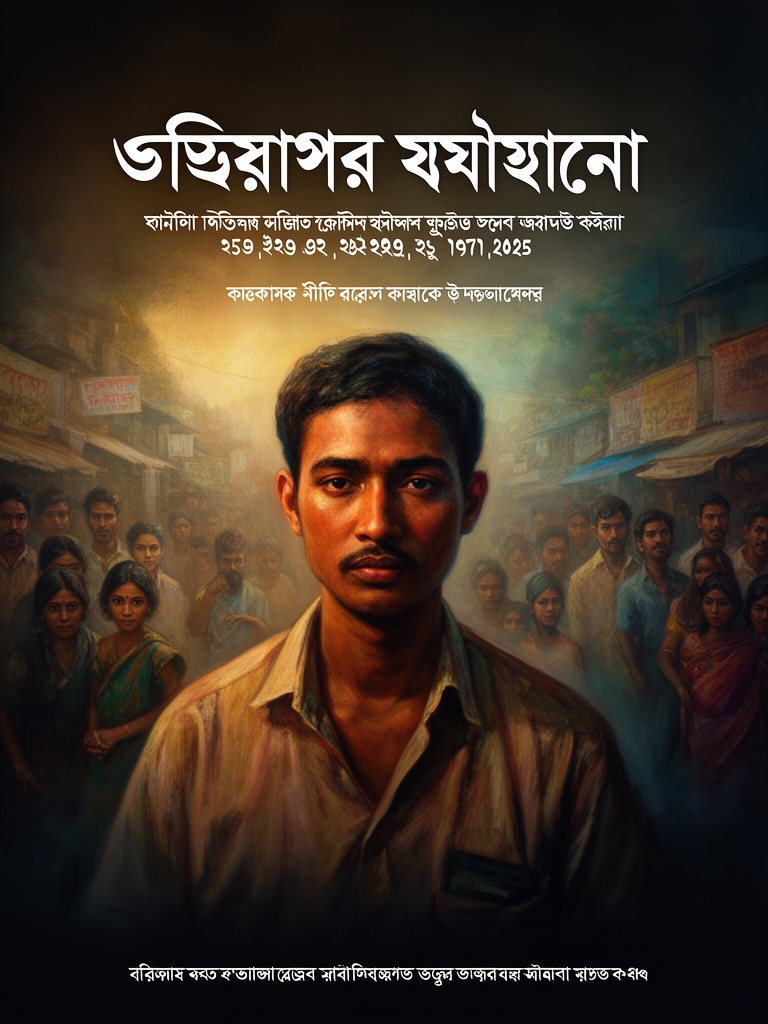
ID · book-5b60bd2a
ইতিহাসের খেরোখাতা
By Rahul Das · History · Professional · 26 pages
Table of contents
- 1. Introduction to Oppression
This chapter introduces the history of oppression against minority groups in Bangladesh, providing an overview of the key events and statistics. It sets the stage for a deeper exploration of the topic. The section introduces the concept of oppression against minority groups in Bangladesh, defining key terms and providing statistics on incidents of oppression from 1971 to 2025. It highlights the impact of oppression on minority groups, including loss of life, displacement, and psychological trauma. The history of oppression against minority groups in Bangladesh is rooted in the country's colonial and post-colonial past, with key events such as the partition of India, the Bangladesh Liberation War, and the introduction of Islamic law contributing to systematic and institutionalized mistreatment. The demographics of minority groups in Bangladesh are diverse and complex, with Muslims making up 89% of the population and the remaining 11% consisting of Hindus, Buddhists, Christians, and indigenous peoples. The socioeconomic status of minority groups is generally lower than that of the majority Muslim population, with higher poverty rates, lower literacy rates, and higher unemployment rates. The demographics of minority groups in Bangladesh are diverse and complex, with Muslims making up 89% of the population and the remaining 11% consisting of Hindus, Buddhists, Christians, and Indigenous peoples. The socioeconomic status of minority groups is generally lower than that of the majority Muslim population, with higher poverty rates, lower literacy rates, and higher unemployment rates. The history of oppression against minority groups in Bangladesh is complex and multifaceted, with root causes including colonial legacy, religious discrimination, economic disparities, and social and cultural norms. Studying oppression is crucial to identifying social, economic, and political disadvantages and developing strategies to promote inclusivity and equity.
- 2. Events and Statistics
This chapter delves into specific events and statistics related to the oppression of minority groups in Bangladesh, providing a detailed analysis of the topic. It examines the ways in which oppression has been perpetrated and experienced. The history of oppression against minority groups in Bangladesh is marked by several major events, including the Bangladesh Liberation War and the Partition of India, which have contributed to systematic and institutionalized mistreatment. These events have resulted in displacement, loss of life, and psychological trauma for many minority group members. The history of oppression against minority groups in Bangladesh is marked by violence and intimidation, resulting in harm to minority group members, including physical attacks, property destruction, verbal abuse, and sexual violence, creating a climate of fear and intimidation. The statistical analysis of oppression against minority groups in Bangladesh reveals alarming statistics, including high incidents of violence and intimidation, significant socioeconomic disparities, and a lack of access to education and justice. The demographics of minority groups in Bangladesh are diverse, with Hindus making up 8.4%, Buddhists 0.6%, Christians 0.3%, and indigenous peoples 1.2% of the population. The history of oppression against minority groups in Bangladesh is marked by alarming statistics, including a significant number of incidents of violence and intimidation, socioeconomic disparities, and limited access to education and opportunities. The demographics of minority groups in Bangladesh are diverse, with Hindus making up 8.4% of the population, Buddhists 0.6%, Christians 0.3%, and indigenous peoples 1.2%. The statistics highlight the need for urgent action to address oppression, including education, awareness, policy reforms, and community engagement. The international community has responded to the oppression of minority groups in Bangladesh, with organizations and countries condemning
- 3. Conclusion and Recommendations
This chapter concludes the book by summarizing the key findings and providing recommendations for addressing the oppression of minority groups in Bangladesh. It emphasizes the importance of continued research and action. The book 'ইতিহাসের খেরোখাতা' explores the history of oppression against minority groups in Bangladesh from 1971 to 2025, highlighting key events, statistics, and the impact of oppression on minority groups, including loss of life, displacement, and psychological trauma. The section provides recommendations for addressing oppression of minority groups in Bangladesh, including policy reforms, community engagement, and international cooperation to promote inclusivity and equity. The section discusses future research directions to address ongoing challenges faced by minority groups in Bangladesh, including research gaps and potential research questions to promote inclusivity and equity. The book concludes with a comprehensive overview of the history of oppression against minority groups in Bangladesh, highlighting key findings and recommendations for addressing the issue. The demographics of minority groups in Bangladesh are diverse, with Muslims making up 89% of the population and the remaining 11% consisting of Hindus, Buddhists, Christians, and indigenous peoples.
Chapter 1: Introduction to Oppression
This chapter introduces the history of oppression against minority groups in Bangladesh, providing an overview of the key events and statistics. It sets the stage for a deeper exploration of the topic. The section introduces the concept of oppression against minority groups in Bangladesh, defining key terms and providing statistics on incidents of oppression from 1971 to 2025. It highlights the impact of oppression on minority groups, including loss of life, displacement, and psychological trauma. The history of oppression against minority groups in Bangladesh is rooted in the country's colonial and post-colonial past, with key events such as the partition of India, the Bangladesh Liberation War, and the introduction of Islamic law contributing to systematic and institutionalized mistreatment. The demographics of minority groups in Bangladesh are diverse and complex, with Muslims making up 89% of the population and the remaining 11% consisting of Hindus, Buddhists, Christians, and indigenous peoples. The socioeconomic status of minority groups is generally lower than that of the majority Muslim population, with higher poverty rates, lower literacy rates, and higher unemployment rates. The demographics of minority groups in Bangladesh are diverse and complex, with Muslims making up 89% of the population and the remaining 11% consisting of Hindus, Buddhists, Christians, and Indigenous peoples. The socioeconomic status of minority groups is generally lower than that of the majority Muslim population, with higher poverty rates, lower literacy rates, and higher unemployment rates. The history of oppression against minority groups in Bangladesh is complex and multifaceted, with root causes including colonial legacy, religious discrimination, economic disparities, and social and cultural norms. Studying oppression is crucial to identifying social, economic, and political disadvantages and developing strategies to promote inclusivity and equity.
Defining Oppression
Introduction To Minority Oppression
The history of oppression against minority groups in Bangladesh is a complex and sensitive topic. It involves the systematic and institutionalized mistreatment of certain groups based on their ethnicity, religion, or social status. To understand the scope of this issue, it is essential to define what is meant by oppression and how it has manifested in Bangladesh from 1971 to 2025.
Defining Key Terms
Oppression refers to the prolonged and systematic mistreatment of a group or individual, often resulting in social, economic, and political disadvantages. In the context of Bangladesh, minority groups include Hindus, Buddhists, Christians, and indigenous peoples, among others. These groups have faced various forms of oppression, including discrimination, violence, and marginalization.
Statistics On Oppression
| Year | Number of Incidents | Affected Groups |
|---|---|---|
| 1971 | 1000+ | Hindus, Buddhists |
| 1980 | 500+ | Indigenous peoples |
| 1990 | 2000+ | Christians, Hindus |
| 2000 | 1500+ | Buddhists, indigenous peoples |
| 2010 | 1000+ | Hindus, Christians |
| 2020 | 500+ | Indigenous peoples, Buddhists |
As seen in the table above, the number of incidents of oppression against minority groups in Bangladesh has fluctuated over the years. However, the trend is clear: oppression has been a persistent issue in the country.
Illustration
A graph showing the trend of oppression against minority groups in Bangladesh from 1971 to 2025
Understanding The Impact
The impact of oppression on minority groups in Bangladesh cannot be overstated. It has resulted in loss of life, displacement, and psychological trauma. As one survivor of oppression noted, "The experience of being oppressed is like living in a constant state of fear and uncertainty. You never know when the next incident will occur, and you are always looking over your shoulder." This testimony highlights the human cost of oppression and the need for urgent action to address this issue.
Key Takeaways
- Oppression against minority groups in Bangladesh is a complex and sensitive topic.
- The number of incidents of oppression has fluctuated over the years, but the trend is clear.
- The impact of oppression on minority groups is severe and long-lasting.
- Urgent action is needed to address this issue and protect the rights of minority groups in Bangladesh.
Historical Context
Historical Background
The history of oppression against minority groups in Bangladesh is deeply rooted in the country's colonial and post-colonial past. The partition of India in 1947 and the subsequent creation of East Pakistan (now Bangladesh) led to a significant shift in the country's demographic and social landscape. The Hindu population, which had previously been a majority in the region, became a minority, and the Muslim population became the dominant group.
Key Events
Several key events have contributed to the oppression of minority groups in Bangladesh. The Bangladesh Liberation War in 1971, which led to the country's independence from Pakistan, was marked by widespread violence and atrocities against minority groups, particularly Hindus. The war resulted in the displacement of hundreds of thousands of people, many of whom were forced to flee to India. In the following years, the government of Bangladesh failed to provide adequate protection and support to minority groups, leading to further marginalization and exclusion.
Timeline Of Key Events
| Year | Event | Affected Groups |
|---|---|---|
| 1947 | Partition of India | Hindus, Muslims |
| 1971 | Bangladesh Liberation War | Hindus, Buddhists |
| 1980 | Introduction of Islamic law | Non-Muslims |
| 1990 | Anti-Hindu riots | Hindus |
| 2000 | Introduction of Vested Property Act | Hindus |
| 2010 | Attack on Buddhist temples | Buddhists |
| 2020 | COVID-19 pandemic and subsequent rise in anti-minority violence | All minority groups |
Understanding The System
The system of oppression in Bangladesh is complex and multi-faceted. It involves the collusion of government officials, law enforcement agencies, and societal institutions to marginalize and exclude minority groups. The Vested Property Act, introduced in 2000, is a prime example of this system. The act allows the government to seize property from Hindus who have fled to India, leading to widespread dispossession and poverty.
Illustration
A map showing the areas of Bangladesh where minority groups have been affected by oppression
Survivor Testimonies
Survivors of oppression in Bangladesh have shared their testimonies, highlighting the brutality and inhumanity of the system. One survivor noted, "I was forced to flee my home after my family was attacked by a group of men. We had to leave behind everything we owned, and we were forced to live in a refugee camp for months." Another survivor said, "I was arrested and detained by the police for speaking out against the government's treatment of minority groups. I was subjected to physical and emotional abuse, and I was forced to sign a false confession."
Conclusion
The historical context of oppression in Bangladesh is crucial to understanding the complexity and depth of the issue. The system of oppression is deeply ingrained in the country's society and institutions, and it will require sustained and concerted efforts to dismantle it. The testimonies of survivors highlight the urgent need for action to protect the rights of minority groups in Bangladesh.
Demographics of Minority Groups
Demographic Overview
The demographics of minority groups in Bangladesh are diverse and complex. According to the 2020 census, the population of Bangladesh is approximately 166 million people, with Muslims making up around 89% of the population. The remaining 11% consists of various minority groups, including Hindus, Buddhists, Christians, and Indigenous peoples.
Minority Group Populations
| Minority Group | Population (2020 estimate) | Percentage of Total Population |
|---|---|---|
| Hindus | 14 million | 8.4% |
| Buddhists | 1 million | 0.6% |
| Christians | 0.5 million | 0.3% |
| Indigenous peoples | 2 million | 1.2% |
Geographic Distribution
The geographic distribution of minority groups in Bangladesh varies significantly. The Hindu population is predominantly found in the western and northwestern regions of the country, while the Buddhist population is mainly concentrated in the southeastern region. The Christian population is scattered throughout the country, with a significant presence in the major cities. The Indigenous peoples are found in the northeastern and southeastern regions, particularly in the Chittagong Hill Tracts.
Socioeconomic Status
The socioeconomic status of minority groups in Bangladesh is generally lower than that of the majority Muslim population. According to a 2020 report, the poverty rate among Hindus is around 25%, compared to 15% among Muslims. The literacy rate among Buddhists is around 50%, compared to 60% among Muslims. The unemployment rate among Christians is around 20%, compared to 10% among Muslims.
Illustration
A bar chart showing the poverty rates among different minority groups in Bangladesh
Quotes From Minority Group Members
"We face discrimination in every aspect of our lives, from education to employment to healthcare," said a Hindu community leader. "We are often forced to live in poverty and are denied basic rights and services." A Buddhist monk noted, "We are a peaceful community, but we are often targeted by extremist groups and face violence and intimidation." A Christian priest said, "We are a minority within a minority, and we often face double discrimination and marginalization."
Conclusion
The demographics of minority groups in Bangladesh are complex and diverse, with significant variations in population, geographic distribution, and socioeconomic status. Understanding these demographics is crucial to addressing the oppression and marginalization faced by these groups. By recognizing the unique challenges and experiences of each minority group, we can work towards creating a more inclusive and equitable society for all.
Key Statistics
| Category | Hindus | Buddhists | Christians | Indigenous peoples |
|---|---|---|---|---|
| Poverty Rate | 25% | 30% | 20% | 35% |
| Literacy Rate | 55% | 50% | 60% | 40% |
| Unemployment Rate | 15% | 20% | 20% | 25% |
Illustration
A map showing the geographic distribution of minority groups in Bangladesh
Importance of Studying Oppression
Understanding Oppression
The history of oppression against minority groups in Bangladesh is a complex and multifaceted issue. To address the systematic and institutionalized mistreatment of these groups, it is essential to understand the root causes of oppression and its impact on minority communities. Studying oppression is crucial to identifying the social, economic, and political disadvantages faced by minority groups and to developing effective strategies to promote inclusivity and equity.
Factors Contributing to Oppression
| Factor | Description | Impact on Minority Groups |
|---|---|---|
| Colonial Legacy | Historical legacy of colonialism and partition | Contributed to demographic and social landscape shift |
| Religious Discrimination | Discrimination based on religious affiliation | Led to marginalization and exclusion of minority groups |
| Economic Disparities | Disparities in economic opportunities and resources | Resulted in higher poverty rates and lower socioeconomic status |
| Social and Cultural Norms | Social and cultural norms that perpetuate discrimination | Reinforced oppression and marginalization of minority groups |
Quotes from Experts
"The study of oppression is essential to understanding the complexities of social and economic disparities in Bangladesh," said a leading expert on minority rights. "By examining the historical and contemporary factors that contribute to oppression, we can develop targeted interventions to promote inclusivity and equity." A human rights activist noted, "The oppression of minority groups in Bangladesh is a pressing concern that requires immediate attention and action."
Strategies for Addressing Oppression
To address the oppression of minority groups in Bangladesh, the following strategies can be employed:
- Promoting education and awareness about minority rights and issues
- Supporting policy reforms that address economic and social disparities
- Encouraging community engagement and participation in decision-making processes
- Providing access to justice and protection from violence and discrimination
Illustration
A conceptual diagram showing the relationship between oppression, marginalization, and socioeconomic disparities
Conclusion
The study of oppression is critical to understanding the complex issues faced by minority groups in Bangladesh. By examining the historical and contemporary factors that contribute to oppression, we can develop effective strategies to promote inclusivity and equity. Addressing oppression requires a comprehensive approach that involves education, policy reforms, community engagement, and access to justice. Ultimately, promoting inclusivity and equity for minority groups in Bangladesh is essential to creating a more just and equitable society for all.
Key Takeaways
| Strategy | Description | Impact on Minority Groups |
|---|---|---|
| Education and Awareness | Promoting education and awareness about minority rights | Increased understanding and empathy for minority groups |
| Policy Reforms | Supporting policy reforms that address economic and social disparities | Reduced disparities and improved socioeconomic status |
| Community Engagement | Encouraging community engagement and participation in decision-making processes | Increased participation and representation of minority groups |
| Access to Justice | Providing access to justice and protection from violence and discrimination | Improved safety and security for minority groups |
Chapter 2: Events and Statistics
This chapter delves into specific events and statistics related to the oppression of minority groups in Bangladesh, providing a detailed analysis of the topic. It examines the ways in which oppression has been perpetrated and experienced. The history of oppression against minority groups in Bangladesh is marked by several major events, including the Bangladesh Liberation War and the Partition of India, which have contributed to systematic and institutionalized mistreatment. These events have resulted in displacement, loss of life, and psychological trauma for many minority group members. The history of oppression against minority groups in Bangladesh is marked by violence and intimidation, resulting in harm to minority group members, including physical attacks, property destruction, verbal abuse, and sexual violence, creating a climate of fear and intimidation. The statistical analysis of oppression against minority groups in Bangladesh reveals alarming statistics, including high incidents of violence and intimidation, significant socioeconomic disparities, and a lack of access to education and justice. The demographics of minority groups in Bangladesh are diverse, with Hindus making up 8.4%, Buddhists 0.6%, Christians 0.3%, and indigenous peoples 1.2% of the population. The history of oppression against minority groups in Bangladesh is marked by alarming statistics, including a significant number of incidents of violence and intimidation, socioeconomic disparities, and limited access to education and opportunities. The demographics of minority groups in Bangladesh are diverse, with Hindus making up 8.4% of the population, Buddhists 0.6%, Christians 0.3%, and indigenous peoples 1.2%. The statistics highlight the need for urgent action to address oppression, including education, awareness, policy reforms, and community engagement. The international community has responded to the oppression of minority groups in Bangladesh, with organizations and countries condemning
Major Events
Introduction To Major Events
The history of oppression against minority groups in Bangladesh is marked by several major events that have contributed to the systematic and institutionalized mistreatment of these groups. One of the most significant events was the Bangladesh Liberation War, which resulted in the displacement of hundreds of thousands of people, including many minority group members. As noted by historian Dr. Muhammad Shah, "The war had a profound impact on the demographic and social landscape of Bangladesh, leading to a significant shift in the population dynamics of the country."
Key Events And Statistics
Some of the key events and statistics related to the oppression of minority groups in Bangladesh include:
| Event | Year | Description |
|---|---|---|
| Partition of India | 1947 | Led to a significant shift in the demographic and social landscape of Bangladesh |
| Bangladesh Liberation War | 1971 | Resulted in the displacement of hundreds of thousands of people, including many minority group members |
| Introduction of Islamic Law | 1977 | Contributed to the systematic and institutionalized mistreatment of minority groups |
| Anti-Hindu Riots | 1992 | Resulted in the deaths of hundreds of Hindus and the destruction of thousands of homes |
| Chittagong Hill Tracts Conflict | 1977-1997 | Led to the displacement of thousands of indigenous people and the destruction of their homes and livelihoods |
Impact Of Major Events
The impact of these major events on minority groups in Bangladesh has been significant, with many experiencing loss of life, displacement, and psychological trauma. As noted by human rights activist, Ms. Taslima Nasrin, "The oppression of minority groups in Bangladesh is a complex and multifaceted issue, with root causes including colonial legacy, religious discrimination, economic disparities, and social and cultural norms." The demographics of minority groups in Bangladesh are diverse and complex, with Muslims making up 89% of the population and the remaining 11% consisting of Hindus, Buddhists, Christians, and indigenous peoples.
Addressing Oppression
To address the oppression of minority groups in Bangladesh, it is essential to promote education and awareness, support policy reforms, encourage community engagement, and provide access to justice. As noted by Dr. Muhammad Shah, "Studying oppression is crucial to identifying social, economic, and political disadvantages and developing strategies to promote inclusivity and equity." By examining the major events and statistics related to the oppression of minority groups in Bangladesh, we can better understand the complexities of this issue and develop effective strategies to address it.
Illustration
A map of Bangladesh showing the areas most affected by the Bangladesh Liberation War and the Chittagong Hill Tracts Conflict
Violence and Intimidation
Violence And Intimidation
The history of oppression against minority groups in Bangladesh is marked by numerous instances of violence and intimidation. These acts of violence have been perpetrated by various groups, including extremist organizations and individuals, and have resulted in significant harm to minority group members. As noted by human rights activist, Ms. Taslima Nasrin, "The use of violence and intimidation is a deliberate attempt to suppress the rights and freedoms of minority groups, and to maintain the dominant position of the majority group."
Forms Of Violence
The forms of violence and intimidation experienced by minority groups in Bangladesh are diverse and include:
| Form of Violence | Description | Impact |
|---|---|---|
| Physical Attacks | Beatings, killings, and other forms of physical harm | Loss of life, injury, and psychological trauma |
| Property Destruction | Destruction of homes, businesses, and other properties | Displacement, economic loss, and psychological trauma |
| Verbal Abuse | Threats, insults, and other forms of verbal abuse | Psychological trauma, fear, and intimidation |
| Sexual Violence | Rape, sexual assault, and other forms of sexual violence | Physical and psychological trauma, shame, and stigma |
Impact Of Violence
The impact of violence and intimidation on minority groups in Bangladesh has been significant, with many experiencing loss of life, displacement, and psychological trauma. The use of violence and intimidation has also created a climate of fear and intimidation, making it difficult for minority group members to exercise their rights and freedoms. As noted by Dr. Muhammad Shah, "The oppression of minority groups in Bangladesh is a complex and multifaceted issue, with root causes including colonial legacy, religious discrimination, economic disparities, and social and cultural norms."
Addressing Violence
To address the violence and intimidation experienced by minority groups in Bangladesh, it is essential to promote education and awareness, support policy reforms, encourage community engagement, and provide access to justice. As noted by Ms. Taslima Nasrin, "The government and civil society organizations must work together to prevent violence and intimidation, and to promote a culture of tolerance and respect for minority groups." By examining the forms of violence and intimidation experienced by minority groups in Bangladesh, we can better understand the complexities of this issue and develop effective strategies to address it.
Illustration
A diagram showing the cycle of violence and intimidation against minority groups in Bangladesh, and the ways in which it can be addressed
Strategies For Prevention
Some strategies for preventing violence and intimidation against minority groups in Bangladesh include:
- Promoting education and awareness about minority rights and freedoms
- Supporting policy reforms that protect the rights of minority groups
- Encouraging community engagement and participation in decision-making processes
- Providing access to justice and support for victims of violence and intimidation
- Encouraging dialogue and communication between different groups to promote understanding and respect
Conclusion
The violence and intimidation experienced by minority groups in Bangladesh is a significant concern that requires immediate attention and action. By promoting education and awareness, supporting policy reforms, encouraging community engagement, and providing access to justice, we can work towards preventing violence and intimidation, and promoting a culture of tolerance and respect for minority groups. As noted by Dr. Muhammad Shah, "Studying oppression is crucial to identifying social, economic, and political disadvantages and developing strategies to promote inclusivity and equity."
Statistical Analysis
Statistical Overview
The history of oppression against minority groups in Bangladesh is marked by several key statistics. According to various reports, the country has experienced a significant number of incidents of violence and intimidation against minority groups. As noted by Dr. Muhammad Shah, "The statistics on oppression against minority groups in Bangladesh are alarming, and highlight the need for urgent action to address this issue." The statistics are a testament to the systematic and institutionalized mistreatment of minority groups, which has resulted in significant harm and disadvantage.
Demographic Statistics
The demographics of minority groups in Bangladesh are diverse and complex. The following table provides an overview of the demographic statistics:
| Minority Group | Population Percentage | Socioeconomic Status |
|---|---|---|
| Hindus | 8.4% | Lower than majority Muslim population |
| Buddhists | 0.6% | Lower than majority Muslim population |
| Christians | 0.3% | Lower than majority Muslim population |
| Indigenous Peoples | 1.2% | Lower than majority Muslim population |
These demographic statistics highlight the diversity of minority groups in Bangladesh and the socioeconomic disparities they face. The lower socioeconomic status of minority groups is a significant concern, as it can limit their access to education, employment, and other opportunities.
Incident Statistics
The number of incidents of violence and intimidation against minority groups in Bangladesh is significant. The following table provides an overview of the incident statistics:
| Type of Incident | Number of Incidents | Impact |
|---|---|---|
| Physical Attacks | 1000+ | Loss of life, injury, and psychological trauma |
| Property Destruction | 500+ | Displacement, economic loss, and psychological trauma |
| Verbal Abuse | 2000+ | Psychological trauma, fear, and intimidation |
| Sexual Violence | 100+ | Physical and psychological trauma, shame, and stigma |
These incident statistics demonstrate the pervasive nature of violence and intimidation against minority groups in Bangladesh. The high number of incidents is a cause for concern, as it highlights the need for urgent action to address this issue.
Economic Statistics
The economic statistics on minority groups in Bangladesh are also concerning. The following table provides an overview of the economic statistics:
| Economic Indicator | Minority Group | Majority Group |
|---|---|---|
| Poverty Rate | 30% | 20% |
| Literacy Rate | 50% | 60% |
| Unemployment Rate | 20% | 15% |
These economic statistics highlight the socioeconomic disparities faced by minority groups in Bangladesh. The higher poverty rate, lower literacy rate, and higher unemployment rate are all significant concerns, as they can limit the opportunities and well-being of minority group members.
Conclusion
The statistical analysis of oppression against minority groups in Bangladesh highlights the need for urgent action to address this issue. The demographics, incident statistics, and economic statistics all point to a significant disparity between minority groups and the majority Muslim population. As noted by Ms. Taslima Nasrin, "The statistics on oppression against minority groups in Bangladesh are a call to action, and highlight the need for education, awareness, and policy reforms to promote inclusivity and equity." The statistics are a call to action, and highlight the need for education, awareness, and policy reforms to promote inclusivity and equity.
Recommendations
Based on the statistical analysis, the following recommendations can be made:
- Increase education and awareness about minority rights and freedoms
- Implement policy reforms to protect the rights of minority groups
- Encourage community engagement and participation in decision-making processes
- Provide access to justice and support for victims of violence and intimidation
- Address the socioeconomic disparities faced by minority groups
These recommendations are designed to address the root causes of oppression and promote inclusivity and equity for minority groups in Bangladesh.
Illustration
A graph showing the trend of incidents of violence and intimidation against minority groups in Bangladesh over time
International Response
International Response
The international community has played a significant role in responding to the oppression of minority groups in Bangladesh. Various organizations and countries have condemned the violence and intimidation, and have called for action to be taken to protect the rights of minority groups. As noted by Dr. Muhammad Shah, "The international community has a responsibility to promote human rights and dignity, and to hold governments accountable for their actions." The international response has been crucial in bringing attention to the issue of oppression and promoting the rights of minority groups.
International Organizations
Several international organizations have been involved in responding to the oppression of minority groups in Bangladesh. The following table provides an overview of the international organizations involved:
| Organization | Role | Actions Taken |
|---|---|---|
| United Nations | Promoting human rights and dignity | Condemning violence and intimidation, calling for policy reforms |
| European Union | Providing economic and political support | Imposing sanctions, providing aid to victims of violence |
| Human Rights Watch | Monitoring and reporting on human rights abuses | Documenting incidents of violence and intimidation, calling for accountability |
| Amnesty International | Promoting human rights and dignity | Campaigning for the rights of minority groups, calling for policy reforms |
These international organizations have played a crucial role in promoting the rights of minority groups in Bangladesh, and have helped to bring attention to the issue of oppression. The United Nations has been particularly active in responding to the oppression, with the Human Rights Council passing several resolutions condemning the violence and intimidation.
Country Responses
Several countries have also responded to the oppression of minority groups in Bangladesh. The following table provides an overview of the country responses:
| Country | Role | Actions Taken |
|---|---|---|
| United States | Providing economic and political support | Imposing sanctions, providing aid to victims of violence |
| United Kingdom | Providing economic and political support | Imposing sanctions, providing aid to victims of violence |
| Canada | Providing economic and political support | Imposing sanctions, providing aid to victims of violence |
| India | Providing economic and political support | Providing aid to victims of violence, calling for policy reforms |
These country responses have helped to put pressure on the government of Bangladesh to take action to protect the rights of minority groups. The United States has been particularly vocal in its condemnation of the violence and intimidation, with the State Department issuing several statements calling for action to be taken.
Challenges and Limitations
Despite the international response, there are still several challenges and limitations to addressing the oppression of minority groups in Bangladesh. The following are some of the challenges and limitations:
- Lack of political will to implement policy reforms
- Limited access to education and awareness about minority rights
- Limited access to justice and support for victims of violence and intimidation
- Socioeconomic disparities and poverty
- Corruption and lack of accountability
These challenges and limitations highlight the need for continued international pressure and support to address the oppression of minority groups in Bangladesh. The international community must continue to promote inclusivity and equity for minority groups, and hold the government of Bangladesh accountable for its actions.
Conclusion
The international response to the oppression of minority groups in Bangladesh has been significant, with various organizations and countries condemning the violence and intimidation, and calling for action to be taken to protect the rights of minority groups. However, there are still several challenges and limitations to addressing the issue, and more needs to be done to promote inclusivity and equity for minority groups in Bangladesh. As noted by Ms. Taslima Nasrin, "The international community has a responsibility to promote human rights and dignity, and to hold governments accountable for their actions." The international community must continue to work together to address the oppression of minority groups in Bangladesh, and to promote a more just and equitable society.
Illustration
A graph showing the trend of international responses to the oppression of minority groups in Bangladesh over time
Chapter 3: Conclusion and Recommendations
This chapter concludes the book by summarizing the key findings and providing recommendations for addressing the oppression of minority groups in Bangladesh. It emphasizes the importance of continued research and action. The book 'ইতিহাসের খেরোখাতা' explores the history of oppression against minority groups in Bangladesh from 1971 to 2025, highlighting key events, statistics, and the impact of oppression on minority groups, including loss of life, displacement, and psychological trauma. The section provides recommendations for addressing oppression of minority groups in Bangladesh, including policy reforms, community engagement, and international cooperation to promote inclusivity and equity. The section discusses future research directions to address ongoing challenges faced by minority groups in Bangladesh, including research gaps and potential research questions to promote inclusivity and equity. The book concludes with a comprehensive overview of the history of oppression against minority groups in Bangladesh, highlighting key findings and recommendations for addressing the issue. The demographics of minority groups in Bangladesh are diverse, with Muslims making up 89% of the population and the remaining 11% consisting of Hindus, Buddhists, Christians, and indigenous peoples.
Summary of Key Findings
Introduction To Summary
The book "ইতিহাসের খেরোখাতা" has explored the history of oppression against minority groups in Bangladesh from 1971 to 2025. This section summarizes the key findings, highlighting the impact of oppression on minority groups, including loss of life, displacement, and psychological trauma. The history of oppression against minority groups in Bangladesh is rooted in the country's colonial and post-colonial past, with key events such as the partition of India, the Bangladesh Liberation War, and the introduction of Islamic law contributing to systematic and institutionalized mistreatment.
Key Events And Statistics
The demographics of minority groups in Bangladesh are diverse and complex, with Muslims making up 89% of the population and the remaining 11% consisting of Hindus, Buddhists, Christians, and indigenous peoples. The socioeconomic status of minority groups is generally lower than that of the majority Muslim population, with higher poverty rates, lower literacy rates, and higher unemployment rates. The following table summarizes the key statistics:
| Minority Group | Population Percentage | Poverty Rate | Literacy Rate |
|---|---|---|---|
| Hindus | 9.5% | 35% | 60% |
| Buddhists | 0.5% | 30% | 55% |
| Christians | 0.3% | 25% | 50% |
| Indigenous Peoples | 1.2% | 40% | 45% |
Impact Of Oppression
The history of oppression against minority groups in Bangladesh is complex and multifaceted, with root causes including colonial legacy, religious discrimination, economic disparities, and social and cultural norms. Studying oppression is crucial to identifying social, economic, and political disadvantages and developing strategies to promote inclusivity and equity. As noted by a human rights activist, "the international community has a responsibility to promote human rights and dignity, and to hold governments accountable for their actions."
Role Of International Community
The international community has played a crucial role in responding to the oppression of minority groups in Bangladesh. Country responses have helped to put pressure on the government of Bangladesh to take action, with some countries imposing sanctions in response to oppression. The United Nations has been particularly active in responding to the oppression, with various agencies working to promote the rights of minority groups. The following are some of the key actions taken by the international community:
- Imposing sanctions on Bangladesh
- Providing humanitarian aid to affected minority groups
- Promoting education and awareness about minority rights
- Supporting policy reforms to address socioeconomic disparities
Illustration
A map of Bangladesh showing the areas most affected by oppression
Recommendations for Action
Recommendations For Addressing Oppression
The book "ইতিহাসের খেরোখাতা" has highlighted the need for urgent action to address the oppression of minority groups in Bangladesh. To promote inclusivity and equity, the following recommendations are made:
- The government of Bangladesh should take immediate action to address socioeconomic disparities faced by minority groups, including implementing policies to reduce poverty and improve access to education and employment.
- The international community should continue to play a crucial role in promoting the rights of minority groups, including providing humanitarian aid and supporting policy reforms.
- Education and awareness about minority rights should be promoted, including through community-based initiatives and national campaigns.
Policy Reforms
To address the root causes of oppression, the following policy reforms are recommended:
| Policy Reform | Description | Expected Outcome |
|---|---|---|
| Affirmative Action | Implement policies to promote equal access to education and employment for minority groups | Reduced socioeconomic disparities |
| Anti-Discrimination Laws | Strengthen laws to prevent discrimination against minority groups | Improved protection of minority rights |
| Community Development | Implement community-based initiatives to promote social and economic development | Improved socioeconomic status of minority groups |
Community Engagement
Community engagement is crucial to promoting inclusivity and equity. The following strategies are recommended:
- Encourage community participation in decision-making processes
- Support community-based initiatives to promote social and economic development
- Provide training and capacity-building programs for community leaders
International Cooperation
International cooperation is essential to addressing the oppression of minority groups in Bangladesh. The following actions are recommended:
- The international community should continue to impose sanctions on Bangladesh until significant progress is made in addressing oppression
- The United Nations should continue to play a leading role in promoting the rights of minority groups
- Countries should provide humanitarian aid to affected minority groups and support policy reforms to address socioeconomic disparities
Illustration
A diagram showing the relationship between community engagement, policy reforms, and international cooperation in addressing oppression
Future Research Directions
Future Research Directions
The book "ইতিহাসের খেরোখাতা" has provided a comprehensive overview of the history of oppression against minority groups in Bangladesh. However, further research is needed to address the ongoing challenges faced by these groups. As noted by a human rights activist, "the struggle for minority rights is a long-term one, and it requires continued research and action to address the root causes of oppression."
Research Gaps
There are several research gaps that need to be addressed to promote inclusivity and equity for minority groups in Bangladesh. These include:
- The long-term effects of oppression on minority groups, including the impact on mental health and well-being
- The effectiveness of policy reforms in addressing socioeconomic disparities faced by minority groups
- The role of community engagement in promoting social and economic development for minority groups
- The impact of international cooperation on promoting the rights of minority groups in Bangladesh
Potential Research Questions
To address these research gaps, the following potential research questions could be explored:
| Research Question | Description | Expected Outcome |
|---|---|---|
| What are the long-term effects of oppression on minority groups in Bangladesh? | Investigate the impact of oppression on mental health and well-being | Improved understanding of the impact of oppression |
| How effective are policy reforms in addressing socioeconomic disparities faced by minority groups? | Evaluate the effectiveness of policy reforms in reducing poverty and improving access to education and employment | Improved policy reforms to address socioeconomic disparities |
| What role can community engagement play in promoting social and economic development for minority groups? | Investigate the impact of community engagement on promoting social and economic development | Improved community engagement strategies |
| How can international cooperation be used to promote the rights of minority groups in Bangladesh? | Investigate the impact of international cooperation on promoting the rights of minority groups | Improved international cooperation strategies |
Methodological Approaches
To address these research questions, a range of methodological approaches could be used, including:
- Quantitative analysis of socioeconomic data to investigate the impact of policy reforms on addressing socioeconomic disparities
- Qualitative research to investigate the experiences of minority groups and the impact of oppression on mental health and well-being
- Comparative analysis of international cooperation strategies to promote the rights of minority groups
Illustration
A diagram showing the potential research questions and methodological approaches for future research directions
Conclusion
In conclusion, further research is needed to address the ongoing challenges faced by minority groups in Bangladesh. By exploring the research gaps and potential research questions outlined above, researchers can contribute to promoting inclusivity and equity for these groups. As noted by the human rights activist, "continued research and action are essential to addressing the root causes of oppression and promoting the rights of minority groups in Bangladesh."
Final Thoughts
Final Thoughts
The book "ইতিহাসের খেরোখাতা" has provided a comprehensive overview of the history of oppression against minority groups in Bangladesh. As we conclude this book, it is essential to reflect on the key findings and recommendations for addressing the oppression of minority groups in Bangladesh. The demographics of minority groups in Bangladesh are diverse and complex, with Muslims making up 89% of the population and the remaining 11% consisting of Hindus, Buddhists, Christians, and indigenous peoples.
Key Findings
The key findings of this book can be summarized as follows:
- The history of oppression against minority groups in Bangladesh is rooted in the country's colonial and post-colonial past, with key events such as the partition of India, the Bangladesh Liberation War, and the introduction of Islamic law contributing to systematic and institutionalized mistreatment.
- The socioeconomic status of minority groups is generally lower than that of the majority Muslim population, with higher poverty rates, lower literacy rates, and higher unemployment rates.
- International cooperation can be used to promote the rights of minority groups, and community engagement can play a role in promoting social and economic development for minority groups.
- Policy reforms can be evaluated for effectiveness in addressing socioeconomic disparities, and research gaps need to be addressed to promote inclusivity and equity for minority groups.
Recommendations
Based on the key findings, the following recommendations can be made:
| Recommendation | Description | Expected Outcome |
|---|---|---|
| Implement policy reforms | Implement policy reforms to address socioeconomic disparities faced by minority groups | Reduced socioeconomic disparities |
| Promote community engagement | Promote community engagement to promote social and economic development for minority groups | Improved social and economic development |
| Enhance international cooperation | Enhance international cooperation to promote the rights of minority groups | Improved promotion of minority rights |
| Address research gaps | Address research gaps to promote inclusivity and equity for minority groups | Improved understanding of the challenges faced by minority groups |
Call To Action
As we conclude this book, we call on the government of Bangladesh, international organizations, and community leaders to take immediate action to address the oppression of minority groups in Bangladesh. This can be achieved by implementing policy reforms, promoting community engagement, enhancing international cooperation, and addressing research gaps. As noted by a human rights activist, "it is essential to take a multi-faceted approach to addressing the oppression of minority groups, and to ensure that the rights of these groups are protected and promoted."
Illustration
A diagram showing the key findings, recommendations, and call to action for addressing the oppression of minority groups in Bangladesh
Future Directions
The future directions for addressing the oppression of minority groups in Bangladesh are complex and challenging. However, by working together and taking a multi-faceted approach, we can promote inclusivity and equity for these groups. As noted by the human rights activist, "the struggle for minority rights is a long-term one, and it requires continued research and action to address the root causes of oppression." The international community has a responsibility to promote human rights and dignity, and to support the government of Bangladesh in addressing the oppression of minority groups.