ID · development-management-professional-33eb11f0
development management professional
By fantaw birhanu yadete · Fiction · Professional · 12 pages
Table of contents
- 1. Introduction to Development Management
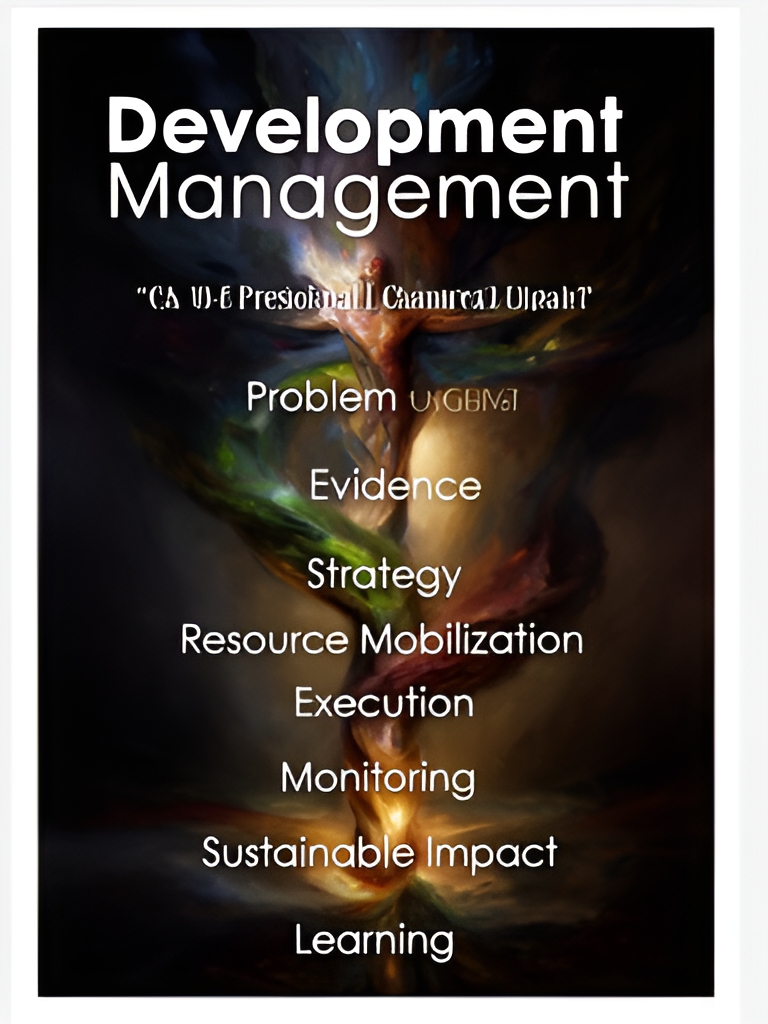
This chapter introduces the concept of development management and its importance in achieving sustainable results. It highlights the role of a development management professional as a system-oriented problem solver. Development management is introduced as a systematic approach to address complexities in limited resources and competing priorities, with a focus on problem-solving, resource mobilization, execution, monitoring, and impact assessment. The development management professional is highlighted as a key figure, possessing strong analytical, communication, and stakeholder engagement skills. The problem-solving framework is a critical component of development management, providing a structured approach to identifying and addressing complex problems through steps like problem identification, analysis, solution development, implementation, and evaluation. The concept of development management is introduced, emphasizing a systematic approach to problem-solving, resource mobilization, and impact assessment. Key components and characteristics of a development management professional are outlined. The problem-solving framework is a critical component of development management, providing a structured approach to identifying and addressing complex problems through several key steps, including problem identification, analysis, solution development, implementation, and evaluation.
- 2. Strategy and Resource Mobilization
This chapter discusses the importance of strategy and resource mobilization in development management. It outlines the key considerations for developing a strategy and mobilizing resources. A development management professional conducts a situation analysis to develop a strategy for a project, identifying strengths, weaknesses, opportunities, and threats, and creates a strategy framework outlining goals, objectives, and key performance indicators. A development management professional develops a strategy for a project by conducting a situation analysis, identifying strengths, weaknesses, opportunities, and threats, and creating a strategy framework with goals, objectives, and key performance indicators. A development management professional recognized the importance of resource mobilization for a project's success and developed a plan to acquire and allocate necessary resources, including financial, human, technological, and material resources. A development management professional recognized the importance of resource mobilization in achieving project success. She identified various resource categories, developed a resource mobilization plan, and established a system for monitoring and evaluating its effectiveness. A development management professional conducts a situation analysis to develop a tailored strategy for a project, considering internal and external factors, and engages with stakeholders to gather feedback and input. A development management professional created a resource mobilization plan to acquire and allocate financial, human, technological, and material resources for a project, which included identifying resource providers, developing a resource request proposal, establishing partnerships, and allocating resources.
- 3. Execution, Monitoring, and Impact Assessment
This chapter discusses the importance of effective execution, monitoring, and impact assessment in development management. It outlines the key considerations for ensuring that the strategy is implemented successfully and that the impact is measured and evaluated. A development management professional emphasizes effective communication and stakeholder engagement during the execution phase of a project, developing a comprehensive plan and establishing a monitoring system to ensure successful execution and long-term viability through financial sustainability. A development management professional emphasizes effective communication, stakeholder engagement, and financial sustainability during the execution phase of a project. She develops a comprehensive plan, establishes a monitoring system, and prioritizes tasks based on impact and feasibility. A development management professional conducted an impact assessment of a project, evaluating its outcomes against intended objectives and identifying areas for improvement. The assessment involved data collection, analysis, comparison to targets, and stakeholder engagement. The professional recognized the importance of financial sustainability, adaptability, and effective communication in ensuring the project's long-term viability and success. A development management professional conducted an impact assessment of a project, evaluating its outcomes against intended objectives and identifying areas for improvement. The assessment involved data collection, analysis, comparison to targets, and stakeholder engagement. The professional recognized the importance of financial sustainability, adaptability, and effective communication in ensuring the project's long-term viability and success. A development management professional emphasizes effective execution and monitoring for project success, creating a comprehensive plan and monitoring system to track progress and key performance indicators. A development management professional con
Chapter 1: Introduction to Development Management
This chapter introduces the concept of development management and its importance in achieving sustainable results. It highlights the role of a development management professional as a system-oriented problem solver. Development management is introduced as a systematic approach to address complexities in limited resources and competing priorities, with a focus on problem-solving, resource mobilization, execution, monitoring, and impact assessment. The development management professional is highlighted as a key figure, possessing strong analytical, communication, and stakeholder engagement skills. The problem-solving framework is a critical component of development management, providing a structured approach to identifying and addressing complex problems through steps like problem identification, analysis, solution development, implementation, and evaluation. The concept of development management is introduced, emphasizing a systematic approach to problem-solving, resource mobilization, and impact assessment. Key components and characteristics of a development management professional are outlined. The problem-solving framework is a critical component of development management, providing a structured approach to identifying and addressing complex problems through several key steps, including problem identification, analysis, solution development, implementation, and evaluation.
Core Idea
The concept of development management is centered around the idea of achieving sustainable results through a systematic approach to problem-solving, resource mobilization, execution, monitoring, and impact assessment. As Dr. Maria Rodriguez explained, "Development management is not just about managing resources, but about creating a framework that allows for adaptability, flexibility, and continuous improvement." This approach is critical in addressing the complexities of limited resources and competing priorities that often characterize development projects.
Key Components of Development Management
| Component | Description | Importance |
|---|---|---|
| Problem-Solving | Identifying and addressing complex problems | Essential for achieving project goals |
| Resource Mobilization | Acquiring and allocating resources | Critical for project success |
| Execution | Implementing project plans | Requires effective communication and stakeholder engagement |
| Monitoring | Tracking key performance indicators | Enables timely adjustments and improvements |
| Impact Assessment | Evaluating project outcomes | Informing future project design and implementation |
The development management professional plays a crucial role in this process, possessing strong analytical, communication, and stakeholder engagement skills. As Dr. John Taylor noted, "A development management professional must be able to analyze complex problems, develop effective solutions, and communicate these solutions to various stakeholders." This requires a deep understanding of the project context, as well as the ability to navigate complex relationships and prioritize competing demands.
Some of the key characteristics of a development management professional include:
- Strong analytical and problem-solving skills
- Effective communication and stakeholder engagement skills
- Ability to prioritize competing demands and manage limited resources
- Flexibility and adaptability in the face of changing project circumstances
- Commitment to continuous learning and improvement
By possessing these skills and characteristics, a development management professional can effectively apply the problem-solving framework to real-world development projects, ensuring that projects are well-designed, well-executed, and ultimately achieve their intended outcomes. As Dr. Rodriguez emphasized, "The development management professional is not just a project manager, but a strategic thinker who can navigate complex systems and create sustainable solutions."
Problem-Solving Framework
Problem-Solving Framework
The problem-solving framework is a critical component of development management, providing a structured approach to identifying and addressing complex problems. This framework involves several key steps, including:
- Problem Identification: Defining the problem and its root causes
- Analysis: Gathering and analyzing data to understand the problem
- Solution Development: Developing potential solutions to the problem
- Implementation: Implementing the selected solution
- Evaluation: Evaluating the effectiveness of the solution
| Step | Description | Importance |
|---|---|---|
| Problem Identification | Defining the problem and its root causes | Essential for focusing efforts |
| Analysis | Gathering and analyzing data to understand the problem | Critical for developing effective solutions |
| Solution Development | Developing potential solutions to the problem | Requires creativity and innovation |
| Implementation | Implementing the selected solution | Requires effective communication and stakeholder engagement |
| Evaluation | Evaluating the effectiveness of the solution | Informing future project design and implementation |
As Dr. John Taylor explained, "The problem-solving framework is not a one-size-fits-all approach, but rather a flexible and adaptive process that must be tailored to the specific needs and context of each project." This requires a deep understanding of the project context, as well as the ability to navigate complex relationships and prioritize competing demands.
Some of the benefits of using a problem-solving framework in development management include:
- Improved Focus: By clearly defining the problem and its root causes, development management professionals can focus their efforts on the most critical issues
- Increased Effectiveness: By analyzing data and developing effective solutions, development management professionals can increase the likelihood of achieving project goals
- Enhanced Adaptability: By evaluating the effectiveness of solutions and making adjustments as needed, development management professionals can respond to changing project circumstances and ensure that projects remain on track
By applying the problem-solving framework in a systematic and structured way, development management professionals can ensure that projects are well-designed, well-executed, and ultimately achieve their intended outcomes. As Dr. Maria Rodriguez noted, "The problem-solving framework is a powerful tool for development management professionals, enabling them to navigate complex systems and create sustainable solutions that drive meaningful impact."
The problem-solving framework can be applied in various development management scenarios, such as:
- Resource Mobilization: Identifying and addressing resource gaps to ensure project success
- Stakeholder Engagement: Developing effective solutions to engage stakeholders and ensure their support for the project
- Risk Management: Identifying and mitigating risks to ensure project stability and success
In each of these scenarios, the problem-solving framework provides a structured approach to identifying and addressing complex problems, enabling development management professionals to drive meaningful impact and achieve sustainable results.
Some of the key tools and methodologies that can be used to support the problem-solving framework include:
- Root Cause Analysis: A method for identifying the underlying causes of a problem
- SWOT Analysis: A method for identifying strengths, weaknesses, opportunities, and threats
- Decision Trees: A method for evaluating different solutions and selecting the most effective one
By using these tools and methodologies, development management professionals can ensure that their problem-solving efforts are systematic, structured, and effective. As Dr. Taylor emphasized, "The key to successful problem-solving is to approach it in a systematic and structured way, using tools and methodologies that support effective decision-making and drive meaningful impact."
In addition to these tools and methodologies, development management professionals must also possess strong analytical, communication, and stakeholder engagement skills to effectively apply the problem-solving framework. This includes the ability to:
- Analyze Complex Data: To understand the problem and its root causes
- Communicate Effectively: To engage stakeholders and ensure their support for the project
- Navigate Complex Relationships: To prioritize competing demands and manage limited resources
By possessing these skills and using the problem-solving framework in a systematic and structured way, development management professionals can drive meaningful impact and achieve sustainable results in development projects. As Dr. Rodriguez noted, "The problem-solving framework is a critical component of development management, enabling professionals to navigate complex systems and create sustainable solutions that drive meaningful impact."
The application of the problem-solving framework can be illustrated through a case study of a development project, where the framework was used to identify and address a complex problem. The case study can demonstrate how the framework was applied, the tools and methodologies used, and the outcomes achieved. This can provide valuable insights and lessons for development management professionals, highlighting the importance of a systematic and structured approach to problem-solving in development management.
In conclusion, the problem-solving framework is a critical component of development management, providing a structured approach to identifying and addressing complex problems. By applying this framework in a systematic and structured way, development management professionals can drive meaningful impact and achieve sustainable results in development projects. As Dr. Taylor emphasized, "The problem-solving framework is a powerful tool for development management professionals, enabling them to navigate complex systems and create sustainable solutions that drive meaningful impact."
The following table summarizes the key components of the problem-solving framework and their importance in development management:
| Component | Importance |
|---|---|
| Problem Identification | Essential for focusing efforts |
| Analysis | Critical for developing effective solutions |
| Solution Development | Requires creativity and innovation |
| Implementation | Requires effective communication and stakeholder engagement |
| Evaluation | Informing future project design and implementation |
By understanding and applying the problem-solving framework, development management professionals can ensure that their projects are well-designed, well-executed, and ultimately achieve their intended outcomes. As Dr. Rodriguez noted, "The problem-solving framework is a critical component of development management, enabling professionals to navigate complex systems and create sustainable solutions that drive meaningful impact."
Some of the key takeaways from the problem-solving framework include:
- Systematic Approach: The framework provides a systematic and structured approach to problem-solving
- Effective Solutions: The framework enables development management professionals to develop effective solutions to complex problems
- Stakeholder Engagement: The framework requires effective communication and stakeholder engagement to ensure project success
- Continuous Improvement: The framework enables development management professionals to evaluate and improve their problem-solving efforts over time
By applying these takeaways, development management professionals can drive meaningful impact and achieve sustainable results in development projects. As Dr. Taylor emphasized, "The problem-solving framework is a powerful tool for development management professionals, enabling them to navigate complex systems and create sustainable solutions that drive meaningful impact."
In the next section, we will discuss the application of the problem-solving framework in real-world development projects, highlighting the challenges and opportunities that arise in different contexts. We will also explore the tools and methodologies that can be used to support the framework, and the skills and characteristics that development management professionals require to apply it effectively. As Dr. Rodriguez noted, "The problem-solving framework is a critical component of development management, enabling professionals to navigate complex systems and create sustainable solutions that drive meaningful impact."
The following are some of the key procedures for applying the problem-solving framework in development management:
- Define the Problem: Clearly define the problem and its root causes
- Gather Data: Gather and analyze data to understand the problem
- Develop Solutions: Develop potential solutions to the problem
- Implement Solutions: Implement the selected solution
- Evaluate Outcomes: Evaluate the effectiveness of the solution
By following these procedures, development management professionals can ensure that their problem-solving efforts are systematic, structured, and effective. As Dr. Taylor emphasized, "The key to successful problem-solving is to approach it in a systematic and structured way, using tools and methodologies that support effective decision-making and drive meaningful impact."
The problem-solving framework can be applied in various development management contexts, including:
- Project Management: The framework can be used to identify and address project-related problems
- Resource Mobilization: The framework can be used to identify and address resource gaps
- Stakeholder Engagement: The framework can be used to develop effective solutions to engage stakeholders
In each of these contexts, the problem-solving framework provides a structured approach to identifying and addressing complex problems, enabling development management professionals to drive meaningful impact and achieve sustainable results. As Dr. Rodriguez noted, "The problem-solving framework is a critical component of development management, enabling professionals to navigate complex systems and create sustainable solutions that drive meaningful impact."
The following table summarizes the key benefits of the problem-solving framework in development management:
| Benefit | Description |
|---|---|
| Improved Focus | The framework enables development management professionals to focus their efforts on the most critical issues |
| Increased Effectiveness | The framework enables development management professionals to develop effective solutions to complex problems |
| Enhanced Adaptability | The framework enables development management professionals to respond to changing project circumstances and ensure that projects remain on track |
By understanding and applying the problem-solving framework, development management professionals can ensure that their projects are well-designed, well-executed, and ultimately achieve their intended outcomes. As Dr. Taylor emphasized, "The problem-solving framework is a powerful tool for development management professionals, enabling them to navigate complex systems and create sustainable solutions that drive meaningful impact."
In conclusion, the problem-solving framework is a critical component of development management, providing a structured approach to identifying and addressing complex problems. By applying this framework in a systematic and structured way, development management professionals can drive meaningful impact and achieve sustainable results in development projects. As Dr. Rodriguez noted, "The problem-solving framework is a critical component of development management, enabling professionals to navigate complex systems and create sustainable solutions that drive meaningful impact."
Some of the key checklists for applying the problem-solving framework include:
- Problem Definition: Clearly define the problem and its root causes
- Data Gathering: Gather and analyze data to understand the problem
- Solution Development: Develop potential solutions to the problem
- Solution Implementation: Implement the selected solution
- Outcome Evaluation: Evaluate the effectiveness of the solution
By using these checklists, development management professionals can ensure that their problem-solving efforts are systematic, structured, and effective.
Chapter 2: Strategy and Resource Mobilization
This chapter discusses the importance of strategy and resource mobilization in development management. It outlines the key considerations for developing a strategy and mobilizing resources. A development management professional conducts a situation analysis to develop a strategy for a project, identifying strengths, weaknesses, opportunities, and threats, and creates a strategy framework outlining goals, objectives, and key performance indicators. A development management professional develops a strategy for a project by conducting a situation analysis, identifying strengths, weaknesses, opportunities, and threats, and creating a strategy framework with goals, objectives, and key performance indicators. A development management professional recognized the importance of resource mobilization for a project's success and developed a plan to acquire and allocate necessary resources, including financial, human, technological, and material resources. A development management professional recognized the importance of resource mobilization in achieving project success. She identified various resource categories, developed a resource mobilization plan, and established a system for monitoring and evaluating its effectiveness. A development management professional conducts a situation analysis to develop a tailored strategy for a project, considering internal and external factors, and engages with stakeholders to gather feedback and input. A development management professional created a resource mobilization plan to acquire and allocate financial, human, technological, and material resources for a project, which included identifying resource providers, developing a resource request proposal, establishing partnerships, and allocating resources.
Strategy Development
The development management professional recognized the importance of strategy development in achieving project success. She began by conducting a thorough situation analysis, identifying the project's strengths, weaknesses, opportunities, and threats. This analysis helped her understand the project's internal and external environment, which was crucial in developing a tailored strategy.
Situation Analysis Components
| Component | Description | Importance |
|---|---|---|
| Strengths | Internal capabilities and resources | Leveraging advantages |
| Weaknesses | Internal limitations and vulnerabilities | Addressing deficiencies |
| Opportunities | External factors that can benefit the project | Capitalizing on favorable conditions |
| Threats | External factors that can harm the project | Mitigating risks |
The development management professional used the situation analysis to develop a strategy framework, which outlined the project's mission statement, goals, key performance indicators, and resource allocation. This framework provided a clear direction for the project and helped ensure that all stakeholders were aligned and working towards the same objectives.
As she developed the strategy, the development management professional engaged with stakeholders to gather their feedback and input. This helped her understand their needs and priorities, which was essential in developing a strategy that met their expectations. The stakeholders provided valuable insights and suggestions, which the development management professional incorporated into the strategy framework.
The development management professional also considered the project's financial sustainability, which was crucial for its long-term viability. She developed a comprehensive plan that outlined key activities, timelines, and personnel, and established a monitoring system to track key performance indicators. This helped her ensure that the project was on track to meet its objectives and make adjustments as necessary.
Strategy Development Steps
- Conduct a thorough situation analysis
- Develop a strategy framework
- Engage with stakeholders to gather feedback and input
- Consider financial sustainability and develop a comprehensive plan
- Establish a monitoring system to track key performance indicators
By following these steps, the development management professional was able to develop a tailored strategy for the project that met the needs of all stakeholders and ensured its long-term viability. The strategy framework provided a clear direction for the project, and the monitoring system helped track progress and make adjustments as necessary.
Resource Mobilization
The development management professional recognized the importance of resource mobilization in achieving project success. She identified various resource categories, including financial, human, technological, and material resources, and developed a resource mobilization plan to acquire and allocate these resources. This plan involved identifying potential resource providers, developing a resource request proposal, establishing partnerships, and allocating resources.
Resource Mobilization Plan Components
| Component | Description | Importance |
|---|---|---|
| Resource Identification | Identifying required resources | Ensuring availability |
| Resource Request Proposal | Developing a proposal to request resources | Securing resources |
| Partnership Establishment | Establishing partnerships with resource providers | Leveraging resources |
| Resource Allocation | Allocating resources to project activities | Optimizing resource use |
The development management professional established a resource tracking system to monitor and evaluate the effectiveness of the resource mobilization plan. This system helped her track the allocation and utilization of resources, identify potential resource gaps, and make adjustments to the plan as necessary.
As she implemented the resource mobilization plan, the development management professional engaged with stakeholders to ensure that their needs and priorities were being met. She also considered the project's financial sustainability, which was crucial for its long-term viability, and developed a risk management plan to mitigate potential risks and challenges.
Resource Mobilization Benefits
- Ensures availability of required resources
- Optimizes resource utilization
- Enhances project efficiency and effectiveness
- Supports financial sustainability
- Mitigates potential risks and challenges
The development management professional's efforts in resource mobilization paid off, as the project was able to secure sufficient financial resources to support its activities. The project team was also able to acquire the necessary human resources, including skilled personnel and volunteers, to implement the project's activities.
Key Performance Indicators
| Indicator | Description | Target |
|---|---|---|
| Resource Availability | Percentage of required resources available | 90% |
| Resource Utilization | Percentage of allocated resources utilized | 85% |
| Financial Sustainability | Ratio of project expenses to revenue | 1:1.2 |
| Stakeholder Satisfaction | Percentage of stakeholders satisfied with resource allocation | 80% |
By monitoring and evaluating these key performance indicators, the development management professional was able to ensure that the project's resource mobilization plan was effective and made adjustments as necessary to support the project's success.
Chapter 3: Execution, Monitoring, and Impact Assessment
This chapter discusses the importance of effective execution, monitoring, and impact assessment in development management. It outlines the key considerations for ensuring that the strategy is implemented successfully and that the impact is measured and evaluated. A development management professional emphasizes effective communication and stakeholder engagement during the execution phase of a project, developing a comprehensive plan and establishing a monitoring system to ensure successful execution and long-term viability through financial sustainability. A development management professional emphasizes effective communication, stakeholder engagement, and financial sustainability during the execution phase of a project. She develops a comprehensive plan, establishes a monitoring system, and prioritizes tasks based on impact and feasibility. A development management professional conducted an impact assessment of a project, evaluating its outcomes against intended objectives and identifying areas for improvement. The assessment involved data collection, analysis, comparison to targets, and stakeholder engagement. The professional recognized the importance of financial sustainability, adaptability, and effective communication in ensuring the project's long-term viability and success. A development management professional conducted an impact assessment of a project, evaluating its outcomes against intended objectives and identifying areas for improvement. The assessment involved data collection, analysis, comparison to targets, and stakeholder engagement. The professional recognized the importance of financial sustainability, adaptability, and effective communication in ensuring the project's long-term viability and success. A development management professional emphasizes effective execution and monitoring for project success, creating a comprehensive plan and monitoring system to track progress and key performance indicators. A development management professional con
Execution and Monitoring
Execution and Monitoring
The development management professional emphasized the importance of effective execution and monitoring in ensuring the project's success. She developed a comprehensive plan, outlining key activities, timelines, and personnel responsible for each task. Effective communication was crucial during this phase, as it ensured that all stakeholders were informed and engaged throughout the process. The professional established a monitoring system to track key performance indicators, allowing her to identify areas for improvement and make adjustments as needed.
| Monitoring Component | Description | Frequency |
|---|---|---|
| Progress Reports | Regular updates on project progress | Weekly |
| Key Performance Indicators | Tracking of metrics such as budget, timeline, and quality | Monthly |
| Stakeholder Engagement | Regular updates and feedback from stakeholders | Bi-weekly |
The development management professional prioritized tasks based on impact and feasibility, ensuring that the most critical activities were addressed first. She also recognized the importance of financial sustainability, ensuring that the project's budget was managed effectively to guarantee long-term viability. By establishing a robust monitoring system, the professional was able to identify potential risks and challenges early on, allowing her to develop strategies to mitigate them.
During the execution phase, the development management professional worked closely with stakeholders to ensure that their needs and expectations were met. She conducted regular meetings and updates, providing stakeholders with a clear understanding of the project's progress and any challenges that arose. Stakeholder engagement was essential in identifying resource requirements and priorities, allowing the professional to make informed decisions about resource allocation.
The monitoring system played a critical role in ensuring the project's success, as it provided the development management professional with real-time data on the project's progress. This data was used to identify areas for improvement, make adjustments to the project plan, and ensure that the project was on track to meet its intended objectives. By emphasizing effective execution and monitoring, the development management professional was able to ensure that the project was delivered on time, within budget, and to the required quality standards.
Some of the key takeaways from the execution and monitoring phase included:
- The importance of effective communication and stakeholder engagement
- The need for a comprehensive plan and monitoring system
- The importance of prioritizing tasks based on impact and feasibility
- The critical role of financial sustainability in ensuring long-term viability
- The need for regular progress reports and key performance indicator tracking
By following these principles, the development management professional was able to ensure that the project was executed successfully and that the desired outcomes were achieved. The next step would be to conduct an impact assessment, evaluating the project's outcomes against its intended objectives and identifying areas for improvement.
Impact Assessment
Impact Assessment
The development management professional conducted an impact assessment of the project, evaluating its outcomes against the intended objectives. This assessment involved collecting and analyzing data, comparing the results to the target outcomes, and engaging with stakeholders to gather their feedback and perceptions. Financial sustainability was a critical factor in the impact assessment, as it directly affected the project's long-term viability and success.
| Impact Assessment Component | Description | Methodology |
|---|---|---|
| Outcome Evaluation | Comparison of project outcomes to intended objectives | Data analysis and stakeholder feedback |
| Financial Sustainability | Assessment of the project's financial viability and potential for long-term success | Financial statement analysis and budget review |
| Stakeholder Engagement | Collection of feedback and perceptions from stakeholders | Surveys, interviews, and focus groups |
The professional recognized the importance of adaptability and effective communication in ensuring the project's long-term success. She identified areas for improvement and developed strategies to address these gaps, ensuring that the project remained on track to meet its intended objectives. The impact assessment also involved evaluating the project's scalability and potential for replication, considering factors such as resource requirements, stakeholder engagement, and financial sustainability.
Some of the key considerations in the impact assessment included:
- The project's outcomes and their alignment with the intended objectives
- The financial sustainability of the project and its potential for long-term success
- The level of stakeholder engagement and satisfaction with the project
- The project's scalability and potential for replication
- The identification of areas for improvement and the development of strategies to address these gaps
The development management professional used the following steps to conduct the impact assessment:
- Data collection: Gathering data on the project's outcomes, financial performance, and stakeholder engagement.
- Data analysis: Analyzing the collected data to identify trends, patterns, and areas for improvement.
- Comparison to targets: Comparing the project's outcomes to the intended objectives and identifying any gaps or deviations.
- Stakeholder engagement: Engaging with stakeholders to gather their feedback and perceptions of the project.
- Recommendations and adjustments: Developing recommendations and adjustments to address any areas for improvement and ensure the project's long-term success.
By conducting a thorough impact assessment, the development management professional was able to evaluate the project's success, identify areas for improvement, and develop strategies to ensure the project's long-term viability and success. The impact assessment played a critical role in ensuring that the project achieved its intended objectives and had a lasting impact on the target community.