Fiction
Fabio Tira
by Fabio Tira
3 chapters1.3 hr read
Chapter 1
The Weight of Silence
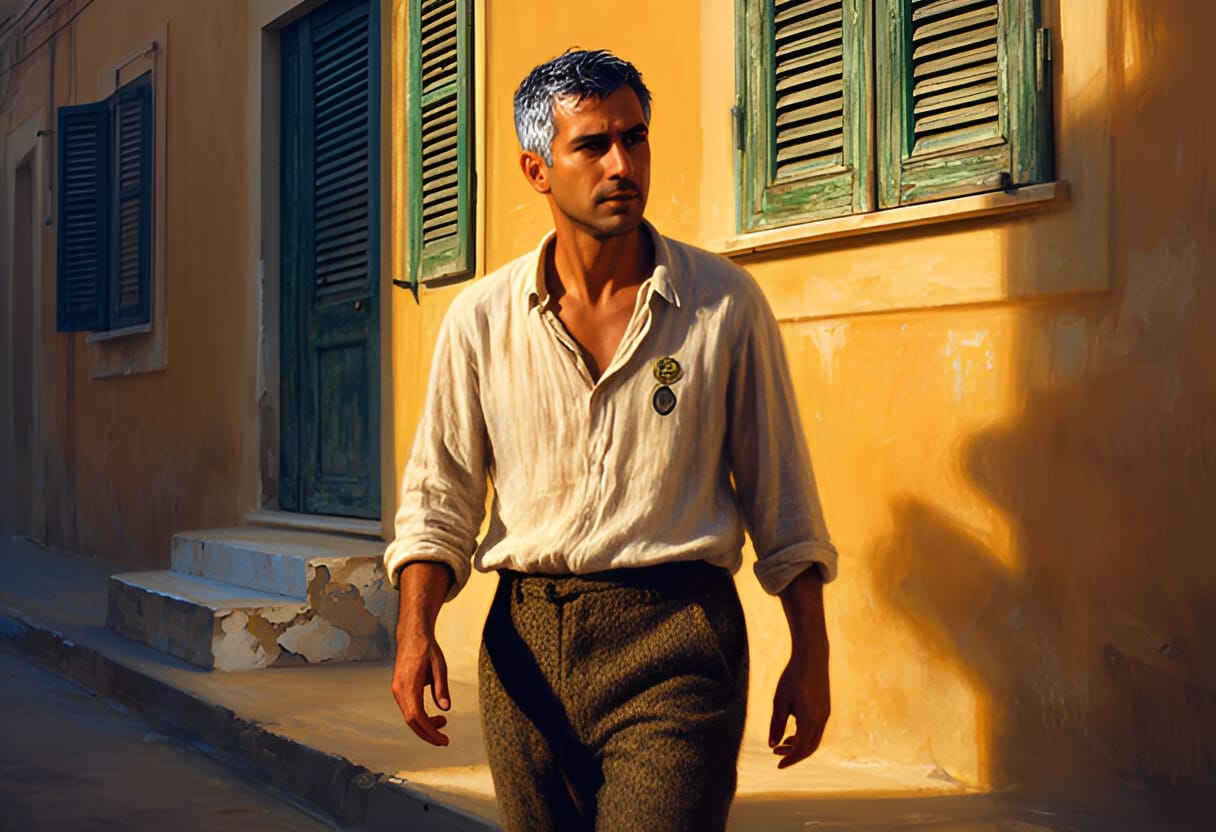
The bus shuddered to a halt at the edge of Trapani, exhaling a plume of diesel into the salt-hazed afternoon. Fabio stepped down onto the cracked pavement, the familiar weight of his suitcase pulling at his shoulder. Ten years. A decade of embassy corridors, diplomatic receptions, and the slow erosion of words he never learned how to say. He had imagined this moment a hundred times — rehearsed it in hotel rooms from Riyadh to Geneva — but none of the versions had prepared him for the way the light fell on the sea, sharp and silver, or how the scent of lemon and brine curled through the air like a memory refusing to stay buried.
He walked.
The route was unchanged: past the barbershop with the faded red-and-white pole, the bakery where the scent of warm bread still drifted onto the sidewalk, the narrow lane where children once played calcio against the church wall. His feet knew the stones, even if his mind hesitated. He passed the old fountain, its water thin and rust-stained, and paused — just for a breath — at the sight of the lemon tree in the courtyard of the abandoned villa. It still bore fruit. Heavy, yellow globes hung like forgotten promises among the glossy leaves. He remembered climbing it as a boy, Sofia screaming below that he’d fall and break his neck, Lorenzo watching from the window with his arms crossed, saying nothing, as always.
A car horn blared behind him. Fabio stepped aside, cheeks warming, and continued.
The house came into view — ochre stucco, green shutters, the same chipped step he’d tripped on as a child. His chest tightened. Not with joy. Not exactly. With the quiet dread of returning to a place that had kept living while he was gone, as if his absence had been nothing more than a pause in a song everyone else knew by heart.
The door opened before he reached it.
Sofia lunged forward, her arms wrapping around him with a force that stole his breath. She smelled of lavender and tea, her hair escaping its braid in damp strands. “Fabio,” she whispered, her voice breaking. “Oh, Dio, you’re really here.”
He stiffened at first, unaccustomed to the pressure, the heat of her. Then, slowly, he returned the embrace, his face pressed into her shoulder. Her trembling seeped into him. He felt the wetness of her tears on his collar, the way her fingers dug into his back — not just relief, but something sharper. Accusation? Grief? He couldn’t tell. He only knew he hadn’t been held like this since he was a boy, and it unsettled him more than any words could have.
“I’m here,” he murmured, his voice rough from disuse.
She pulled back just enough to look at him, her eyes red-rimmed but bright. “You look tired,” she said. “And thinner. Have you been eating?”
“Enough.” He offered a small smile, the kind that didn’t reach his eyes. “You haven’t changed a bit.”
She laughed — a watery sound — and swiped at her cheeks. “Liar. You always were the observant one.” She stepped aside, gesturing toward the doorway. “Come inside. Papà’s been waiting.”
Fabio followed her across the threshold, the familiar creak of the third step greeting him like an old accusation. The hallway was cool and dim, the air thick with the scent of polish, dried lavender, and something older — dust, time, the quiet accumulation of years lived and not lived. Photographs lined the wall: him at his graduation, Sofia holding a stray cat, a wedding photo — Elena’s hand in his, her smile wide and unafraid. He stopped, just for a second, tracing the frame with his gaze. She looked so young. So certain.
“She used to dust these every Sunday,” Sofia said softly, appearing beside him. “Even when she was mad at you. Said dust was disrespectful to memory.”
Fabio swallowed. “I didn’t know.”
“You didn’t ask.” She didn’t sound angry. Just weary. She led him toward the sitting room, where sunlight filtered through lace curtains, painting stripes on the worn rug.
Lorenzo sat in his usual armchair by the window, a newspaper folded on his lap, his hands resting on the cane beside him. He looked up as they entered. Time had carved deep lines into his face, silvered his temples, bent his spine just slightly. But his eyes — sharp, gray, wary — were the same. He gave Fabio a single nod. No smile. No words. Just the barest acknowledgment that he had arrived.
Fabio stopped a few paces away, suddenly unsure what to do with his hands. “Buongiorno, Papà.”
Lorenzo lowered the paper. His gaze flicked to Sofia, then back to Fabio. “You took the 3:15 from Palermo. Bus was late.” He paused. “The lemon tree still bears fruit.”
It wasn’t a question. It wasn’t welcome. It was a statement of fact, delivered with the same quiet precision he’d used to announce the weather or the price of bread. Fabio felt a flush rise in his neck. Of course he’d noticed. Of course he remembered.
“It does,” Fabio said, his voice tighter than he intended. “I saw it on the way up.”
Lorenzo nodded once, as if approving the observation. Then he turned his gaze back to the window, his silence closing like a door.
Sofia exhaled, a sound half-laugh, half-sigh. “Men,” she muttered, though Fabio heard her. She squeezed his arm. “Come. Let’s get you settled. You can take the old room — up the stairs, second door on the left. Nothing’s changed much. Except the mattress. I replaced it last year. Your back’ll thank you.”
He followed her up the stairs, the wood groaning underfoot with each step. The hallway upstairs was narrower, lined with more photographs — childhood birthdays, school plays, a younger Lorenzo in his postal uniform, standing stiffly beside a motorcycle he’d never ridden again. Fabio’s door stood ajar. Inside, the room was exactly as he’d left it: the single bed, the wardrobe with the chipped paint, the desk where he’d done his homework beneath a window that looked out over the rooftops. A model sailboat sat on the shelf — one he’d broken at age ten and Lorenzo had glued back together without a word.
He set his suitcase down and sat on the edge of the bed. The springs groaned. He pressed his palms into his thighs, feeling the fabric of his trousers, the solidity of the mattress beneath him. The room smelled of cedar and old paper. Outside, a cat yowled. Somewhere down the hall, a clock ticked.
He thought of Elena’s laughter in their apartment in Riyadh — the way she’d hum off-key while making coffee, the sand that always seemed to find its way into their shoes after a walk in the desert, the weight of her hand in his as they walked through the souk, her fingers interlaced with his, warm and certain.
He thought of the silence that had come after.
He thought of the phone call in March — the crackle of the line, the voice saying incident, search teams, no signs of struggle — and how he had sat on the edge of that same bed in their Riyadh flat, staring at the wall, feeling nothing at all.
He thought of how he hadn’t cried. Not then. Not since.
A knock came at the door. Sofia peeked in, holding two cups of tea. “Thought you might like this,” she said, setting them on the desk. “With lemon. From the tree.”
He looked up at her. “Thank you.”
She lingered in the doorway, her expression soft, searching. “You don’t have to talk about it,” she said. “Not yet. But we’re here. If you want to.”
Fabio nodded, wrapping his hands around the warm cup. The steam curled toward his face, carrying the sharp citrus scent. He took a sip. It was bitter. Real.
“I know,” he said quietly. “I just… I don’t know where to start.”
Sofia smiled, sad and tender. “You don’t have to start. Just be here. For now, that’s enough.”
She closed the door softly behind her.
Fabio sat alone in the dimming light, the tea going cold in his hands. The house breathed around him — the creak of floorboards, the distant murmur of the sea, the steady tick of the clock. He looked at the lemon tree through the window, its fruit glowing in the fading sun.
And for the first time in ten years, he allowed himself to wonder not what had happened, but who he had been before it all broke apart.
Later, after a dinner of pasta al pomodoro and quiet conversation that skirted the edges of everything important, Fabio found himself in the study. Lorenzo sat at the desk, reading glasses perched on his nose, a ledger open before him. The room smelled of pipe tobacco and beeswax. Shelves lined the walls — books on Italian history, volumes of poetry in Italian and Arabic, a framed map of the Mediterranean coastline. In the corner, a small cabinet stood closed, its lock visible beneath the brass handle.
Fabio hesitated in the doorway. “You still keep it locked,” he said, not meaning to speak.
Lorenzo didn’t look up. “Some things are better closed.”
Fabio stepped inside, his shoes silent on the rug. He ran his fingers along the spine of a book — The Leopard — and paused. “I used to sneak in here when I was boy. To look at your stamps. You never caught me.”
A flicker. Almost a smile. “You were terrible at hiding your footsteps.”
Fabio let out a breath. “I wanted to be like you. Quiet. Steady.”
Lorenzo finally lowered the ledger. His eyes met Fabio’s. “And what did that get you?”
Fabio opened his mouth. Closed it. The question hung between them — not cruel, but inevitable. He thought of Elena’s passport, tucked somewhere in a drawer back in Riyadh. Of the last email she’d sent him: I need to see the ruins at Al-Hajarah. Promise you won’t worry. He thought of the silence that followed.
“I don’t know,” he admitted. “I think it got me lost.”
Lorenzo studied him for a long moment. Then, without a word, he reached into the drawer of his desk and pulled out a small, worn key. He placed it on the blotter between them, palm up.
Fabio stared at it. The metal was dull with age, the teeth slightly bent. He knew this key. He had seen it hanging on Lorenzo’s belt when he was ten, had watched him turn it in the lock of this very drawer — the one he’d been forbidden to touch, the one that had always hummed with the promise of secrets.
He looked up. “Why now?”
Lorenzo’s gaze drifted to the closed cabinet. “Because you’re back. And because some doors shouldn’t stay shut forever — not if you ever mean to walk through them again.”
He stood, stiff but deliberate, and walked past Fabio without another word. The door clicked shut behind him.
Fabio remained where he stood, the key heavy in his palm. The cabinet loomed in the shadow, its surface smooth and unyielding. He could feel the weight of it — not just the wood and metal, but the years, the questions, the things his father had carried in silence.
He turned the key over in his fingers. The teeth caught slightly on his skin.
He didn’t unlock it.
Not yet.
But he held it tight — as if, by gripping it, he could finally begin to turn himself toward the light.
Fabio carried the key downstairs, its weight familiar in his palm, and set it on the kitchen table beside the cooling teacup. The house had settled into night, the only sound the occasional creak of timber settling and the low, rhythmic sigh of the sea beyond the hills. Sofia was in the garden, pruning the lemon tree, her silhouette moving slowly among the branches. Lorenzo had retreated to his study, the light beneath the door a thin, steady line.
He didn’t sleep. Instead, he climbed the narrow stairs to the attic, the wooden steps groaning under his weight. The air up there was thick with dust and the scent of aged wood and dried lavender sachets long since lost their fragrance. A single bulb hung from the rafters, casting a weak, yellow pool of light over stacks of boxes labeled in his mother’s looping script: Scuola Fabio, Vestiti Bambino, Ricordi Sicilia.
He pulled down the first box — school reports, drawings in crayon, a clay ashtray lopsided and cracked, a ticket stub from a puppet show in Palermo dated 1989. He smiled, faintly, at the effort of his younger self, the pride in a grade marked ottavo, the way he’d once believed perfection was a matter of trying hard enough.
The second box held clothes — tiny sweaters, a pair of miniature leather shoes, a wool coat too heavy for a child. He held the coat to his chest, feeling the nap of the fabric, and for a moment, he was ten again, standing in the hallway of this house, waiting for his father to come home from the post office, wondering if he’d brought back a stamp from somewhere far away.
He set the coat aside and reached for the third box, bound with twine and marked in faded ink: Lettere – Riyadh 2014–2015.
His breath caught.
He hadn’t thought of those letters in years. Not since the box had been packed in haste before his return to Italy, not since the silence had begun — not the quiet of grief, but the deeper, more deliberate quiet of avoidance.
He untied the twine and lifted the flap. Inside, letters were bundled with blue ribbon — the same shade as the scarf Elena had worn the day they’d first met at a conference in Florence, the day she’d laughed at his Italian accent and corrected him gently on the pronunciation of archaeologia.
He undid the ribbon and pulled out the first envelope, addressed in her neat, slanted script: Fabio, Ambasciata Italiana, Riyadh. The stamp was a portrait of King Abdullah, the postmark dated Riyadh, 15 March 2014.
His fingers trembled as he opened it.
My dearest Fabio,
The apartment is small but bright — the morning light hits the kitchen wall just right, and I’ve already started sketching the pattern of the tiles for a watercolor. I think you’d like it. The city is louder than I expected, but the call to prayer at dusk… it’s beautiful. Haunting, in the way only something ancient can be. I walked to the souk today — the spices, the textiles, the way the light filters through the awnings. I bought you a small brass coffee pot. It’s not much, but I thought of you using it, and it made me smile.
I miss you already. But I’m excited. Really. This is the beginning of something.
All my love, Elena
He read it twice. Then a third time, his thumb brushing the paper where her signature curled beneath the words.
He remembered that morning — how she’d stood in the doorway of their temporary flat, hair still damp from the shower, wearing one of his shirts too big on her frame, holding that coffee pot like it was a promise. He remembered teasing her about her Arabic — how she’d insisted on ordering shay bi laban at the stall near the embassy, only to burst into laughter when the vendor handed her a glass of mint tea so sweet it made her eyes water.
He pulled out the next letter. Then the next.
April 2, 2014: We went to the National Museum today. The pre-Islamic hall took my breath away — the limestone figures, the eyes inlaid with shell, the way they seem to watch you as you walk by. You were right — the quiet there is different. Not empty. Full. I want to take you to Madâin Şâlih when the weather cools. The Nabatean tombs… Fabio, they’re like poetry in stone.
April 18, 2014: You were called away suddenly today — something about a cultural delegation from Tunis. I understood, of course. But I walked alone to the edge of the Wadi Hanifah and sat on a rock, watching the light change over the cliffs. I felt… small. In a good way. Like I was part of something older than worry, older than plans. I wish you could have seen it with me.
May 10, 2014: I had a dream last night that we were digging in the sand outside Al-Ula, and we uncovered a tablet with writing that wasn’t Nabatean, wasn’t any language I knew. You laughed and said, “Maybe it’s a message from the future.” I don’t know if I believed you then. But I believe it now — that we’re here for a reason. Not just the work. Us.
His throat tightened. He remembered that dream — or rather, he remembered her telling him about it over breakfast, her eyes bright, her hand tracing the rim of her cup. He had laughed, yes, but he had also felt it — the shift, the quiet sense that something was beginning, not just for her, but for them.
He dug deeper.
June 22, 2014: We went to Al-Ula last weekend. The drive was long, but worth it. The rock formations… Fabio, they look like they were carved by giants. We climbed among them at sunset, and the light turned the stone rose gold. You took my hand when we crossed the narrow ledge — I remember how steady you were. I felt safe.
July 3, 2014: I started learning the Thamudic script today. It’s slow — the characters are so angular, so unlike anything I’ve studied. But I like the challenge. You said you’d help me practice. I hope you mean it. I want to understand this place — not just its past, but its pulse. The way the people speak, the way they wait, the way they honor silence. I think I’m beginning to.
August 14, 2014: We had a fight last night. Stupid, really. You were tired after the reception, and I wanted to talk about the pottery shards we found near Hegra. You said, “Can’t we just enjoy the evening?” I snapped. I’m sorry. I know you carry so much — the weight of representing Italy, the expectations, the loneliness that comes with it. I don’t want to add to it. But I also don’t want to pretend. I need you to see me. All of me.
He stopped reading. His breath had gone shallow. He remembered that night — the tension in his shoulders, the way he’d pulled away when she reached for him, the excuse he’d made about an early briefing. He remembered thinking, She’s too intense. She needs to lighten up. And then, later, lying awake, hearing her breathe in the dark, and feeling, for the first time, a distance that wasn’t just physical.
He pushed the letters aside and rummaged further.
At the bottom of the box, wrapped in tissue paper, lay a photograph.
He lifted it carefully.
It was Elena, standing in a market in Al-Ula, her back to a stall hung with dried limes and bundles of frankincense. She was laughing — head thrown back, eyes crinkled, one hand resting on her hip, the other raised as if shielding her gaze from the sun. Her hair was uncovered, falling in loose waves over her shoulders, catching the light. She wore a linen dress, the color of sky at dawn, and sandals thick with dust.
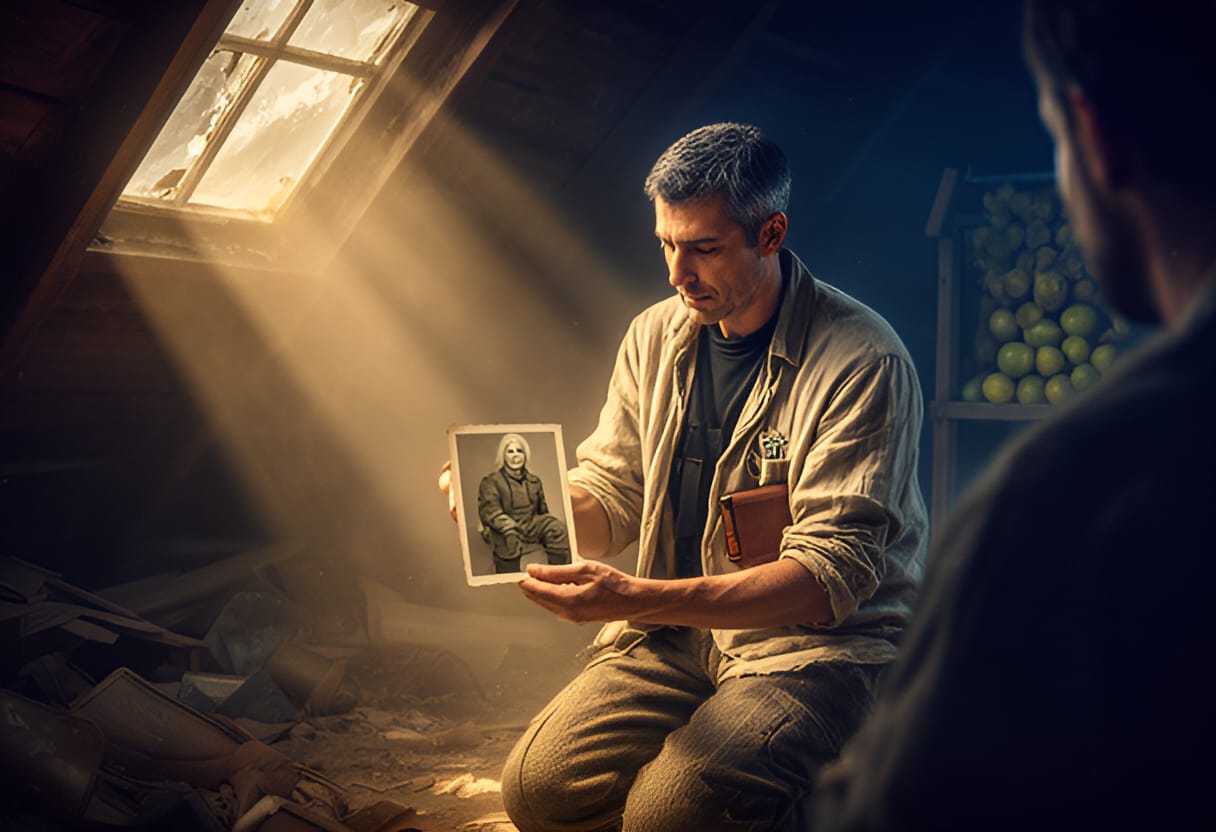
And just beyond her left shoulder, at the edge of the frame — a man. Blurred, indistinct, standing in the shadow of the stall’s awning. Only the outline of a shoulder, the suggestion of a collar, the glint of something metallic at the throat — perhaps a pin, perhaps a watch.
Fabio frowned. He didn’t remember this man. He didn’t remember taking the photo.
He turned it over. On the back, in Elena’s hand: Al-Ula market, March 2014. The day I felt truly seen.
He stared at the words. Truly seen. Not by him. Not in that moment, perhaps. But by someone — or something — else.
A sudden chill ran through him, unrelated to the attic’s stillness. He looked up, as if the rafters might answer. The bulb flickered once, then steadied.
He remembered that day — the market, the heat, the scent of cumin and rosewater. He remembered buying her a small mirror framed in silver filigree. He remembered her laughing at something a child had said. But he did not remember this man. Did not remember feeling observed.
He laid the photograph gently on top of the letters and sat back on his heels, the dust coating his trousers, the key still warm in his pocket from where he’d carried it downstairs.
The attic smelled of time — of cedar and mothballs and the faint, sweet decay of paper aging. Somewhere below, a door closed. Lorenzo, perhaps, retiring for the night. The sea whispered against the cliffs, a sound like breath held too long.
Fabio did not reach for another letter.
He sat with the photograph, the man at the edge of the frame, and the words Elena had written — not as a conclusion, but as a question left hanging in the dusty air, waiting for someone brave enough to ask it aloud.
He rose slowly, the photograph still warm in his palm, and slipped it into the inner pocket of his jacket. The key Lorenzo had given him felt heavier now, not just metal but a promise — or a threat. He tucked it beside the photograph, close to his heart, and began to gather the letters back into the box. The attic air seemed to press in, thick with the weight of what had been said and what had not.
He descended the stairs quietly, the wooden treads sighing under his weight. The kitchen was dark, but a sliver of light leaked from under the study door. Lorenzo sat at his desk, silhouetted against the glow of a shaded lamp, his hands resting flat on the blotter as if waiting. Fabio paused in the doorway, unsure whether to speak or retreat.
His father did not look up. “You found them,” he said, voice low, rough with disuse. “The letters.”
Fabio stepped inside, closing the door softly behind him. “I found more than letters.”
Lorenzo finally turned his head. His eyes, pale and watery in the lamplight, flicked to Fabio’s jacket pocket — where the photograph lay hidden. “And the picture?”
“I don’t remember taking it.” Fabio’s voice sounded unfamiliar to himself — quieter than he intended, edged with something he couldn’t name. “I don’t remember the man.”
Lorenzo leaned back in his chair, the leather creaking. “She wrote that on the back. The day she felt truly seen.”
“By whom?” Fabio asked, though he wasn’t sure he wanted the answer.
His father’s gaze dropped to the desk. “She never said. Not to me. Not to Sofia. But she kept saying it — over and over, in those last months. Like she was waiting for someone to notice. Or afraid no one would.”
A silence settled between them, not empty, but full — of years, of distance, of the things they had both avoided saying. Fabio thought of the brass coffee pot on Elena’s kitchen shelf in Riyadh, of the way she used to pour slowly, deliberately, as if measuring time. He thought of the argument in August, of pulling away when she reached for him. He had mistaken her intensity for neediness. He had mistaken her depth for drama.
“I should go,” Fabio said at last. “Palermo. I need to see Sofia.”
Lorenzo nodded. “Take the key. The drawer… it’s not just mine to keep.”
Fabio hesitated. “You knew she was planning to leave.”
“I knew she was unhappy.” Lorenzo’s voice dropped further. “I didn’t know she was afraid.”
Fabio swallowed. “Afraid of what?”
His father looked up then, and for the first time in ten years, Fabio saw not just weariness, but something like regret — or perhaps guilt. “Of being forgotten,” Lorenzo said. “Of disappearing and no one noticing she was gone.”
Fabio stood. He did not embrace his father. He did not promise to stay. But he placed his hand on the desk for a moment, fingers brushing Lorenzo’s — a contact brief, almost accidental, yet charged with everything unsaid.
“I’ll be back,” he said. “Soon.”
He left the study, closing the door behind him. The hallway was cool and still. He found Sofia in the living room, curled on the sofa with a blanket over her legs, a photo album open on her lap. She looked up as he entered, her eyes red-rimmed but dry.
“You were a long time,” she said softly.
“I needed to talk to him.”
She closed the album slowly. “About the drawer?”
Fabio sat beside her, not touching, but near enough to feel her warmth. “About the photograph. The man in Al-Ula. Elena wrote that she felt truly seen that day. But I don’t remember him. I don’t remember taking the picture.”
Sofia studied him for a long moment. “Maybe you weren’t meant to remember.”
“What does that mean?”
She hesitated. “After she disappeared… I went through her things. Her journals. There was an entry — March 15, 2014. Two weeks after that market photo. She wrote: I think he’s watching me again. Not Fabio. The other one. The one from the embassy reception. He followed me to the souk today. I pretended not to see him. But I know he saw me.”
Fabio felt the blood drain from his face. “Other one? Who?”
“I don’t know.” Her voice dropped to a whisper. “But she was scared. Not of the desert. Not of getting lost. Of him.”
He thought of the blurred figure at the edge of the frame — the suggestion of a collar, the glint of metal. A pin. A watch. Something official. Something that belonged to someone who moved in the same circles as he did.
“Did she ever say his name?”
Sofia shook her head. “She called him the stranger with the quiet eyes. Said he never spoke, just watched. Like he was waiting for her to look back.”
Fabio leaned forward, his elbows on his knees, his head in his hands. The attic, the letters, the photograph — it all converged now into something terrible and clear. He had not just been distant. He had been blind. And in his blindness, someone else had seen her. Noticed her. Perhaps even followed her.
“I have to go to Riyadh,” he said, surprising himself.
Sofia’s hand found his forearm, firm and warm. “Now?”
“Today. I need to see the apartment. The place where she lived. Where she left from.”
She studied him, then nodded. “I’ll come with you.”
“No.” He met her eyes. “This is something I have to do alone.”
She didn’t argue. Instead, she rose and went to the hallway closet, returning with his old travel bag — the one he’d used for his first posting in Tunis. She placed it at his feet. “Pack light. And Fabio?”
He looked up.
“Be careful what you find. Some doors are opened not to let you in, but to let something out.”
He kissed her cheek, took the bag, and stepped into the fading afternoon light. The drive to Palermo’s airport was quiet, the countryside flashing by in fragments — olive groves, stone walls, the sea glinting like broken glass between the hills. He checked in without speaking to anyone, boarded the flight, and stared out the window as the Sicilian coast fell away beneath them.
The journey blurred — a layover in Rome, another in Istanbul, the long haul eastward across shifting time zones. He slept little, his mind looping over Elena’s words, the photograph, the stranger in the market. When the plane began its descent into King Khalid International, the desert stretched below in endless ochre waves, broken only by the thin, silver thread of a highway and the geometric precision of the city rising from the sand like a mirage.
He took a taxi to the apartment in Al-Malaz, the building unchanged from his memory — ochre stucco, black iron grilles on the windows, a date palm struggling in the courtyard. The buzzer was labeled in Arabic and English: Al-Sayyid Khalid – Flat 3B. He pressed it.
A woman’s voice, cautious, came through the speaker. “Yes?”
“I’m looking for the tenant,” Fabio said in Arabic, keeping his tone neutral. “I lived here before. I’m told the flat is now sublet.”
The door clicked open. A Sudanese woman in her thirties, her hair covered in a bright blue hijab, peered out. She wiped her hands on a towel and glanced at his passport when he showed it — not as a diplomat anymore, but as a private citizen with an expired Italian passport and a heart full of ghosts.
“You are the Italian?” she asked.
“I was. My name is Fabio Tira. I lived here with my wife, Elena Voss, from 2014 to 2017.”
Her eyes widened slightly. “Ah. The archaeologist’s husband. Yes. We have been here eight months. The landlord said you might come.”
She stepped aside, gesturing him in. “Come. I will make tea. You look tired.”
He followed her down the hall, noting the changes — a woven rug where the marble table had stood, family photos on the wall where Elena’s prints of Nabatean inscriptions had hung. The air smelled of spices and simmering stew. He paused in the living room, his fingers brushing the spot on the wall where her favorite painting had been — a small watercolor of the Hegra facades at dawn, now replaced by a framed verse from the Qur’an.
“She left things behind?” he asked quietly.
The woman paused in the kitchen, kettle in hand. “Only a scarf. Blue silk. Caught in the closet door when we moved in. We washed it, but the smell… it would not go. Like sand and jasmine. We kept it in a box. I thought… maybe you would want it.”
She returned with a folded square of fabric, delicate as a moth’s wing. Fabio took it. The silk was cool and thin, the edges frayed from use. He brought it to his nose. Beneath the detergent, faint but unmistakable — sand, yes, and something floral, like jasmine oil. He remembered her wearing it the night she left — draped over her shoulders as she stood at the door, saying she was going out for air, that she’d be back before midnight.
He never saw her again.
“Thank you,” he whispered.
The woman nodded. “You should speak to the landlord. He lives downstairs. He remembers the day she left.”
Fabio returned the scarf to his pocket and knocked on the landlord’s door — a small apartment just below, furnished with worn carpets and the low hum of a refrigerator. An elderly man opened, leaning on a cane, his face kind but tired.
“You are the husband,” he said without preamble. “I heard you might come.”
Fabio stepped inside. “Did you know her well?”
“We shared tea sometimes. She liked to sit on the balcony and sketch the stars. Quiet woman. Observant. Not like most foreigners who think the desert is just sand and silence.”
“What happened the day she disappeared?”
The old man sighed, lowering himself onto a cushion. “March 17, 2017. She took the car — a rental, four-wheel drive — and said she was going to Al-Ula for the day. To photograph some petroglyphs she’d missed. She left at dawn. Said she’d be back by dusk.”
He paused, choosing his words carefully. “She never made it to Al-Ula.”
“What do you mean?”
The landlord’s eyes dropped to his hands. “Her car was found abandoned near the edge of the Nafud, halfway between here and the border. Engine intact. Doors locked. Her bag, her water, her notes — all inside. But she was not in it. Nor near it. No footprints leading away. No sign of struggle. Just… the car. Empty.”
Fabio felt the room tilt slightly. “And the embassy?”
“They called it an accident. Said she must have wandered off, gotten disoriented, succumbed to the heat. But no body was ever recovered. No trace. Not a button, not a shoe. Nothing.”
He looked up, his gaze piercing. “You don’t vanish in the desert like that unless something — or someone — makes you vanish.”
Fabio stood, his jaw tight. “Did anyone see her leave? Any witnesses?”
The landlord shook his head. “No one. But the gate guard at the compound said he saw a dark SUV following her out that morning. Same one, he said, that had been parked outside for three days before. Black. No plates. He thought it was embassy security. But when he checked… no record of any official vehicle.”
Fabio’s hand tightened around the scarf in his pocket. The stranger in the photograph. The quiet eyes. The man who watched.
“Did she ever say anything to you? About being followed?”
The old man hesitated. “Only once. A week before she left. She said, I feel like I’m being watched, not by strangers, but by someone who knows my name. Then she laughed — nervously — and said, Maybe I’ve been here too long. The desert is playing tricks on me.”
Fabio thanked him and left, the cool night air hitting him like a slap. He walked back to the apartment, stood in the doorway, and looked up at the balcony where she had once sketched the stars. The sky above Riyadh was clear, the constellations sharp and cold. Orion hung low, his belt pointing toward the Sirius — the Dog Star — ancient, unblinking.
He thought of the photograph. The man at the edge of the frame. The words: The day I felt truly seen.
Now he understood. It wasn’t a compliment. It was a warning.
He turned and walked back to the landlord’s building, knocked again. When the door opened, he said, “I need to go to Al-Ula. Tomorrow. At first light. Can you help me find a guide? Someone who knows the deep tracks? Someone who won’t ask questions?”
The old man studied him for a long moment. Then he nodded. “I know a man. A Bedouin. His grandfather guided caravans before the oil came. He speaks little. Sees much.”
Fabio pulled out his wallet, offered money. The landlord waved it off. “Not for payment. For her. She was good to us.”
Fabio nodded, unable to speak. He turned and walked back to his temporary room, laid the scarf on the pillow, and sat beside it in the dark. The desert wind stirred the curtains, carrying with it the faintest echo of footsteps — not his, not hers — but something that had been walking beside her all along, just out of sight, just beyond the frame.
He did not sleep. He waited for dawn. And when it came, he packed the scarf, the key, the photograph, and a quiet, unshakable resolve: he would go into the sand not to find her body, but to find the truth of what had taken it.
And if the man with the quiet eyes was still watching?
Let him see Fabio coming.
Fabio stood in the dim hallway of his childhood home, the scent of old wood and dust thick in the air. The key from the landlord’s pocket still warm in his palm, he walked past Sofia’s closed door and down to the study at the end of the hall. Lorenzo sat behind his desk, head bowed over a ledger, the lamplight catching the silver at his temples. The room smelled of pipe tobacco and beeswax, unchanged since Fabio was a boy.
He stopped in the doorway. “I need to open the drawer.”
Lorenzo didn’t look up. His pen hovered over the page. “You know I forbade that.”
“I’m not a boy anymore.” Fabio’s voice was low, but it carried. “I need to know what’s in there.”
The pen finally touched paper. A single, slow stroke. Then Lorenzo set it down. He pushed back his chair, the legs scraping softly on the tile. He walked to the wall, ran a hand along the paneling until his fingers found the seam. With a quiet click, he opened a small cavity and withdrew a brass key — worn, familiar, the same one he’d given Fabio years ago, the one Fabio had never used.
Lorenzo held it out without meeting his son’s eyes. “Take it. But know this — some doors are locked not to keep things out, but to keep them in.”
Fabio took the key. It was heavier than he remembered. He turned and walked to the desk, to the third drawer from the top — the one always locked, the one that had fascinated and frightened him as a child. He inserted the key. It turned with a soft click, the tumblers yielding after a decade of silence.
The drawer slid open.
Inside lay neat stacks of yellowed letters, tied with ribbon — his mother’s handwriting, familiar from childhood. But beneath them, wrapped in oilcloth, was something smaller. Fabio lifted the cloth.
Elena’s Italian passport.
He opened it. The photo was younger than he remembered — her hair shorter, her eyes wary but alive. The expiration date was two years hence. Still valid. He flipped to the visa pages. There, stamped in deep blue ink: Sultanate of Oman, Salalah, March 20, 2017 — three days after she had vanished.
His breath caught.
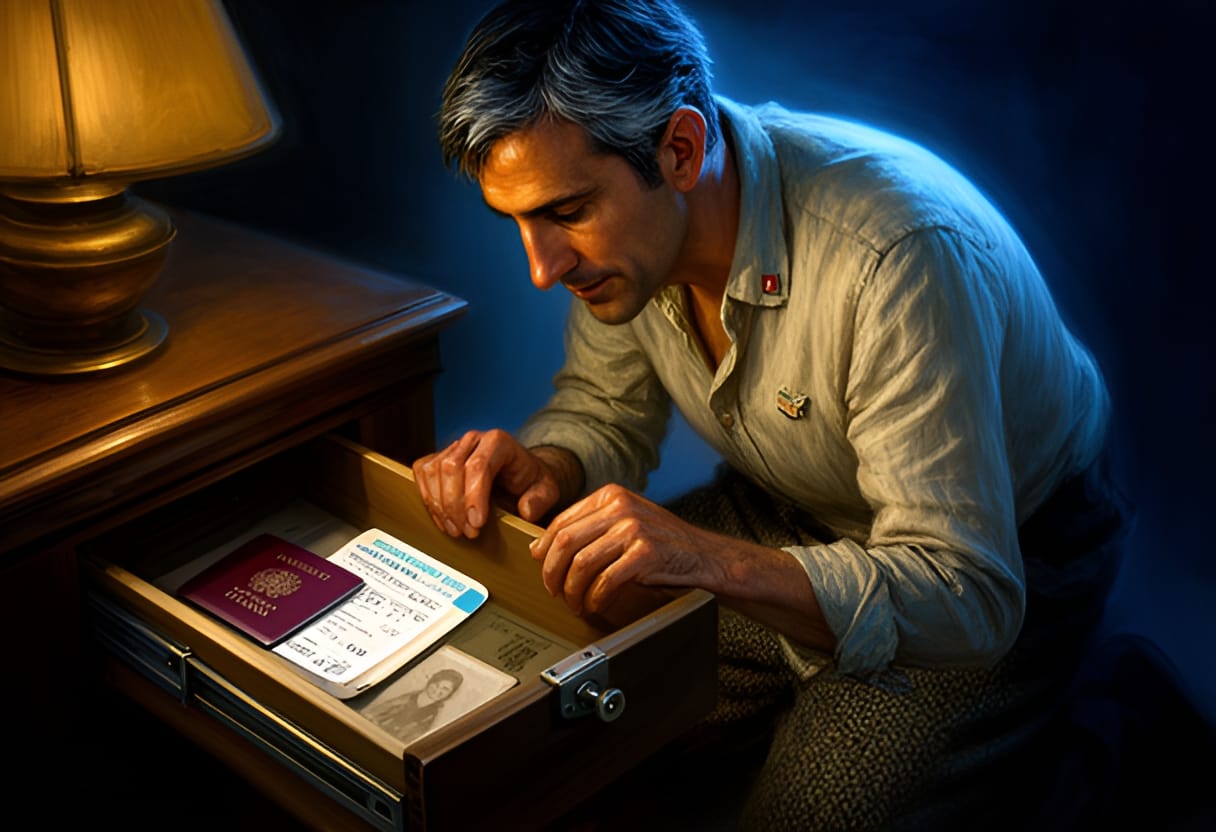
Beneath the passport lay a boarding pass. Royal Jordanian Airlines. Flight RJ 314. Salalah to Mumbai. Departure: March 18, 2017, 06:45. Seat 12A. Name: Elena Voss. Ticket number intact. It had been used.
His hands began to shake. Not from anger. Not from grief. From the slow, terrifying unfurling of a truth he had refused to name.
She hadn’t been taken.
She had left.
He thought of the scarf, the jasmine oil still clinging to its fibers. The way she had draped it over her shoulders that night, saying she was going out for air. Not fleeing into the desert — but walking toward a car, toward a road, toward a border.
He thought of the landlord’s words: No footprints leading away. No sign of struggle. Of course not. She hadn’t wandered. She had walked — or been driven — to a place where no one would look for her. Where no one would expect an archaeologist to go: not into the empty heart of the Nafud, but south, toward Oman, toward a flight that would carry her far from Riyadh, far from him.
And the blurred man in the photograph from Al-Ula — the one with the quiet eyes. Not a stalker. Not a threat. Perhaps a contact. Perhaps the one who had helped her go.
Elena hadn’t felt seen that day in the market.
She had felt recognized.
Fabio closed the passport. His fingers lingered on the cover, the gold lettering worn smooth. He thought of the arguments — her wanting to talk about pottery shards, him wanting to forget the weight of diplomacy, the silence that had grown between them not from lack of love, but from too much understanding, too many things left unsaid.
He had thought her disappearance was the end of her.
Now he realized it might have been the beginning.
Lorenzo stood in the doorway, having followed silently. He didn’t speak. He didn’t need to. His eyes said what his voice never could: I knew. I kept it for you. Because you weren’t ready.
Fabio looked up. “Why didn’t you tell me?”
His father’s jaw tightened. “Because you would have come looking. And if you had found her… you would have brought her back. And she didn’t want to come back.”
The words landed like stones in Fabio’s chest. He thought of the years since — the emotional numbness, the refusal to cry, the way he had buried himself in work, in silence, in the belief that he had failed her by not seeing her pain, by not holding on tighter.
But what if he had seen it all? What if he had misunderstood not her silence, but her choice?
He slipped the passport and boarding pass back into the oilcloth, folded it carefully, and placed it in his pocket. The key he left in the drawer. Some doors, he now understood, were meant to be opened only once.
He turned to his father. “I’m going to Salalah.”
Lorenzo nodded once. “Take the car. The keys are in the garage. And Fabio?”
He paused, hand on the door.
“If she wanted to be found… she would have left a trail.”
Fabio didn’t answer. He walked out, the study door closing softly behind him.
The lemon tree in the courtyard cast a long shadow in the late afternoon light. Somewhere, beneath its fruit, the past was no longer buried. It was waiting.
Fabio walked slowly across the courtyard, the packed earth cool beneath his shoes. The lemon tree stood sentinel, its branches heavy with fruit, the scent sharp and alive in the evening air. He paused beneath it, running a hand over the rough bark — the same tree he had climbed as a boy, the same one Sofia had sworn was enchanted because it bore fruit even in drought years. Lorenzo had once told him the tree had been planted the year Fabio was born, a promise that life would go on, no matter what.
He thought of Elena’s hands, how they had once brushed against this trunk during a visit years ago, laughing as a bee buzzed near her ear. She had loved this tree. Had loved the way the light fell through its leaves in the late afternoon, dappled and green.
Now he understood why Lorenzo had never cut it down, why he had tended it through the years, even when grief had made the house feel like a tomb. It wasn’t just memory. It was vigilance.
He reached into his pocket and felt the edge of the passport through the cloth. Not a relic of loss, but a clue. A direction.
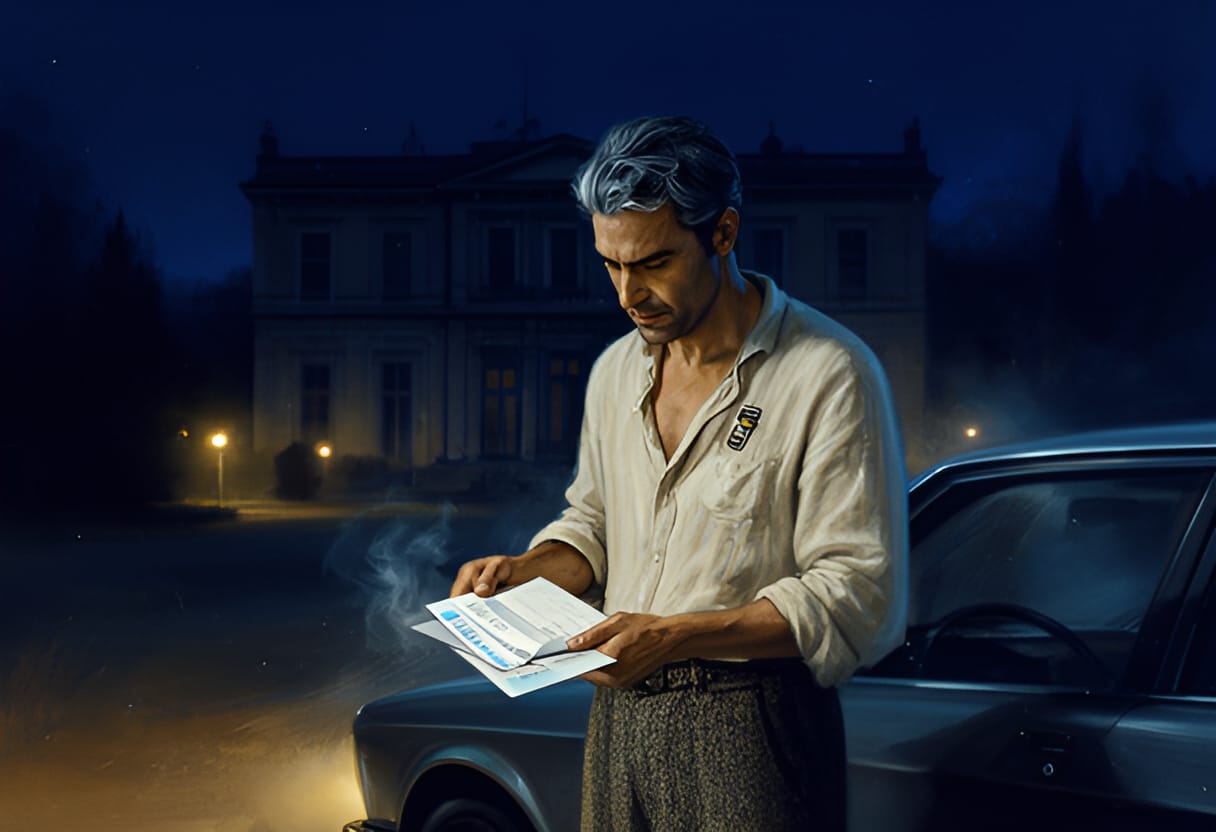
He walked to the garage, the old Fiat waiting under its cover, dusty but sound. Lorenzo had kept it maintained, of course. The keys were in the ignition, just as he’d said. Fabio turned them. The engine coughed to life, familiar and steady, like an old friend clearing its throat.
He drove slowly through the empty streets of Trapani, past the shuttered fish market, past the church where his mother’s funeral had been held, past the sea glinting faintly in the distance. He didn’t know what he would find in Salalah — whether Elena was alive, whether she had built a life elsewhere, whether she had simply needed to disappear to survive. But he knew he could no longer pretend she had been swallowed by the desert without a trace.
The car turned onto the coastal road, the headlights cutting through the gathering dark. Behind him, the house grew smaller, its windows dark except for one — the study, where Lorenzo sat alone, the drawer now open, the past no longer locked away but laid bare, not for judgment, but for reckoning.
Fabio gripped the wheel. The road ahead was long. The desert waited.
And for the first time in years, he was not afraid of what he might find.
Chapter 2
The Weight of What Was Said
Fabio pulled the car to a stop outside the villa, the engine ticking as it cooled. The headlights flicked off, plunging the gravel drive into near-darkness, broken only by the faint glow from the kitchen window where Sofia moved like a shadow behind the curtain. He sat for a moment, hands resting on the wheel, the passport and boarding pass warm against his thigh where he had tucked them into his pocket after finding them in the study’s open drawer.
He had not meant to take them. Not yet. But seeing them there — Elena’s name in crisp block letters, the flight routed through Muscat, dated three weeks before she vanished — had pulled him forward like a current. He had needed to see her face in the photo, to confirm it was really her, to feel the paper thin and real between his fingers. And then, without thinking, he had slipped them into his coat.
Now, with the car silent and the night pressing in, he knew he could not delay. He stepped out, closing the door softly, and walked toward the house, the soles of his shoes scraping against the stones.
Sofia was already at the door when he reached the step. She had been waiting.
“You found them,” she said, not as a question. Her voice was low, worn at the edges, like fabric rubbed thin over time. She stepped aside to let him pass, her eyes fixed on his face, searching.
He nodded, unable to speak yet. The air inside was thick with the scent of simmering tomatoes and garlic — Sofia’s supper, still on the stove. He followed her into the kitchen, where she turned off the burner and wiped her hands on a towel that hung from the oven handle.
They moved to the small table by the window, the one with the chipped edge Fabio had cracked when he was ten and tried to stand on it to reach the biscuit tin. Sofia pulled out a chair for him, then sat opposite, her hands folded tightly in her lap.
He laid the passport and boarding pass flat between them, the laminate catching the dim light from the single bulb overhead. Elena’s gaze met his from the photo — calm, composed, a faint smile touching her lips as if she had known, even then, that this moment would come.
Sofia did not look away. Her fingers drifted toward the documents but did not touch them.
“She came to me,” she said finally. “Six weeks before she left. Knocked on my door in Palermo just after dark, coat still damp from the rain. She didn’t come in right away. Stood on the porch and said she needed to talk, but she was afraid you’d find out she’d been here.”
Fabio’s throat tightened. He remembered that week — a brief lull in embassy duties, a rare evening when he had suggested they dine out, just the two of them, somewhere quiet. Elena had declined, saying she had a headache. He had watched a film alone in their living room while she read in bed, the light under the door a thin slash of yellow. He had not thought to check if she was truly unwell. He had not thought to ask.
“She was terrified,” Sofia continued, her voice dropping further, as if the walls might listen. “Not of the desert. Not of the journey. She was afraid of you. Not because you would hurt her — God no, she never feared that — but because you wouldn’t notice she was gone until it was too late. Because you had already stopped seeing her.”
Fabio’s gaze dropped to the passport. Elena’s signature, neat and deliberate, signed just below the photo. He remembered the day they got it — the long queue at the consulate in Rome, the way she had teased him about his stubborn refusal to smile for the picture, how she had pinched his side when the officer looked away.
“I asked her what was wrong,” Sofia said. “And she didn’t hold back. She said you were there, but you weren’t present. That you listened with your ears but not your eyes. That you remembered the names of ambassadors but forgot to ask how her day had been. That you came home and sat in silence, not because you were tired, but because you had already left — just not physically.”
A heat rose in Fabio’s chest, unfamiliar and sharp. He wanted to deny it, to say she was exaggerating, that he had been stressed, adjusting to post, learning the rhythms of a posting that demanded constant vigilance. But the words would not come. Instead, he saw it — not as accusation, but as recognition. The dinners where he had nodded along while Elena spoke of shards and stratigraphy, his mind already on the next cable, the next reception. The mornings he had kissed her forehead without looking up from his briefcase. The nights he had turned over in bed, back to her, pretending sleep had already claimed him.
“She said you cared more about your rank than your marriage,” Sofia said, watching him closely. “That you had become a diplomat first and a husband second — or maybe not even that far down the list.”
Fabio swallowed. “And what did you tell her?”
Sofia’s hands tightened in her lap. “I told her the truth. That if she didn’t leave now, she would vanish inside this marriage. Not dramatically. Not with a fight or a scene. But slowly, like smoke seeping under a door — until one day, she realized she couldn’t remember the last time she had felt truly seen.”
He looked up then, meeting her eyes. “You encouraged her to go.”
“I did.” Her voice was steady, but her eyes glistened. “I believed it was an act of love. Not betrayal. Rescue. I thought — I still think — that if you had loved her the way she needed, she never would have felt the need to disappear. But you didn’t. And she was suffocating.”
Silence stretched between them, filled only by the faint hiss of the cooling stove and the distant lap of waves against the harbor wall. Fabio thought of the brass coffee pot Elena had given him early in their stay in Riyadh — a small, ornate thing she had bought in the souk, saying it reminded her of home. He had used it every morning for a year, then packed it away when their routine shifted, when breakfast became something he swallowed standing at the counter while reviewing briefs. He had not thought of it in years.
“She left a message,” Sofia said quietly. “For you. But I didn’t give it to you then. I thought… I thought you weren’t ready.”
Fabio’s breath caught. “Where is it?”
“In my bag. Upstairs. But I want you to understand first — this wasn’t impulsive. She planned it. She saved. She made contacts. She chose Muscat because she knew someone there who could help her start over — not in hiding, but in honesty. A chance to work again, to breathe.”
He nodded, unable to speak. The guilt was not a wave, but a slow seep — familiar, inevitable, like damp rising through old stone. He had known, in some distant part of himself, that he had withdrawn. But to hear it named, to see it laid out in Elena’s own words, confirmed by the sister who had watched it happen — it undid something in him. Not forgiveness. Not yet. But the first crack in the wall he had built around his grief.
Sofia reached across the table, her fingers brushing his wrist — light, fleeting. “She didn’t leave because she stopped loving you,” she said. “She left because she loved herself enough to want to live.”
Fabio closed his eyes. When he opened them, the kitchen looked the same — the same chipped table, the same towel on the oven, the same scent of tomato and garlic in the air. But the air between them had changed. It was no longer just sorrow. It was accountability.
He stood slowly, the chair scraping back. “I need to see it,” he said. “The message.”
Sofia nodded, rising as well. She led him out of the kitchen and up the narrow staircase, the wood worn smooth in the center of each tread. At the top, she paused outside a bedroom door — hers, he realized, the one she had used whenever she came to stay. She knocked softly, then entered, returning moments later with a small leather pouch.
She placed it in his palm. It was warm from her pocket.
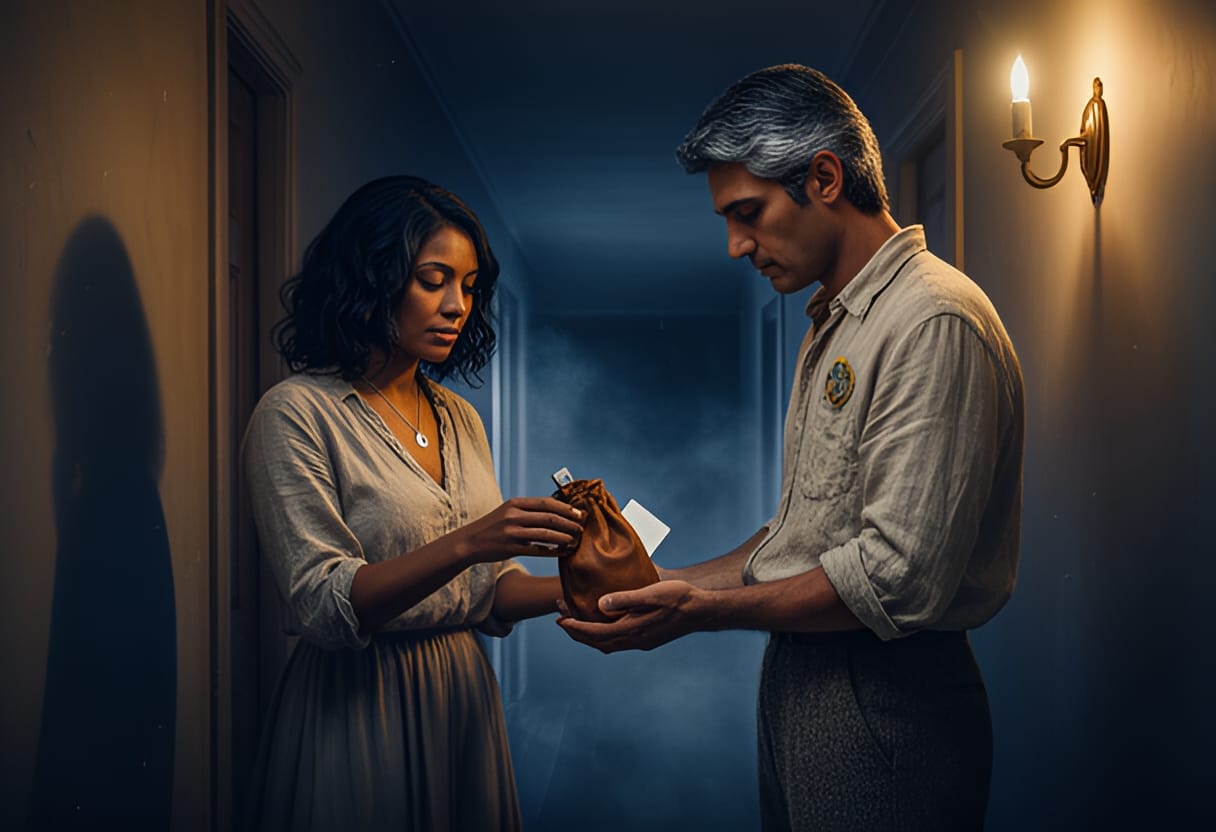
“She gave this to me the night before she left,” Sofia said. “Said if anything happened, if you came looking and I refused to speak, to give this to you. Said you’d know what to do with it.”
Fabio turned the pouch over, feeling the seam, the slight bulge inside. He did not open it here. Not yet.
He thanked her with a look, then turned and walked down the hall, past the closed doors of the guest room and his father’s study — where the drawer still stood open, empty now but for the echo of what had been taken — and into his own old room. The space was unchanged: the single bed, the wardrobe with its missing handle, the shelf holding a few childhood books whose spines were cracked with age.
He closed the door behind him, leaned against it for a moment, then sat on the edge of the bed. The pouch lay in his hand like a secret finally entrusted to him.
He opened it slowly.
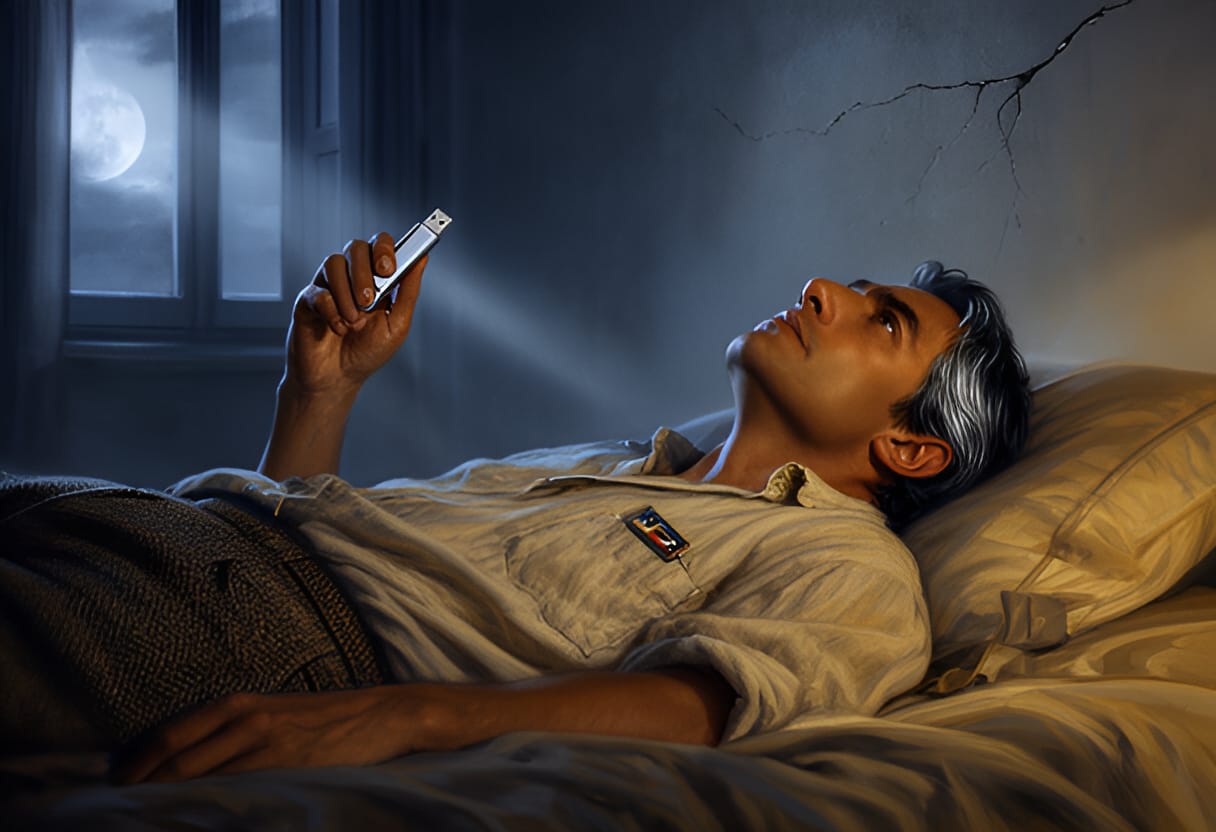
Inside lay a small USB drive, its casing scratched, and a folded slip of paper. He opened the paper first — Elena’s handwriting, familiar and precise.
If you’re reading this, I’m already gone. Don’t look for me in anger. Look for me in understanding. The drive contains what I couldn’t say face-to-face. Not accusations. Not excuses. Just the truth, as I saw it. For what it’s worth — I still remember the way you laughed when we first met. Don’t forget that, too.
Fabio folded the paper carefully and slipped it into his pocket. He took the USB drive between his thumb and forefinger, its edges cool and smooth.
He did not plug it in. Not yet.
Instead, he lay back on the bed, staring at the ceiling where a crack spiderwebbed across the plaster — one he had never noticed before. The house creaked softly in the dark, settling. Somewhere below, Sofia moved about, washing up, the sound of water a quiet rhythm.
He thought of the lemon tree in the courtyard, its fruit heavy and bright. He thought of Elena’s hands brushing its bark, her laughter light in the air. He thought of the man in the photograph from Al-Ula — blurred, unnamed, the one she had said truly saw her.
And for the first time since she left, Fabio did not turn away from the memory. He let it come. He let it hurt.
Outside, the night deepened. The stars, when they came, would be indifferent. But he was here. And he was listening.
He slipped the USB drive into his pocket and lay still, the weight of it a quiet pressure against his thigh. The crack in the ceiling seemed to widen in the dark, each fissure a line of light he hadn’t seen before. He turned onto his side, facing the wall, and listened to the muffled sounds of the house — the drip of the tap in the bathroom, the distant creak of floorboards as Sofia moved through the hall. The air smelled of lemon oil and old wood, the same scent that had greeted him when he first stepped into the room ten years ago, before the embassy, before Riyadh, before the silence had grown teeth.
He did not sleep. He could not.
At some point, the house grew quieter. The stars, when they came, were sharp and cold above the courtyard, their light falling in silver bars across the tiles. Fabio rose without thinking, pulled on his shoes, and stepped into the hall. The pouch was still in his pocket. He paused at the top of the stairs, listening. Below, the kitchen light was off. The front door stood ajar, a thin slit of darkness beyond.
He descended slowly, the wood cool under his bare feet. The night air greeted him like a breath held too long — salt, jasmine from the neglected garden, the faint mineral tang of stone warmed by the day. He crossed the courtyard, passed the lemon tree whose fruit now glowed faintly in the moonlight, and pushed open the gate.
The sea was close here, just beyond the row of low houses that clung to the cliff’s edge. He walked without purpose, his hands in his pockets, the USB drive pressing against his leg with each step. The waves came in steady, unhurried rolls, breaking softly on the black rocks below. No one was out. The town slept, its shutters closed, its balconies empty. Only the lighthouse far to the west turned its slow, steady beam across the water — three flashes, then darkness, then three again.
He stopped where the path narrowed, the wall on one side dropping sharply to the surf. He leaned against the cool stone and took out the pouch. His fingers fumbled with the seam, then opened it. The USB drive lay in his palm, smaller than he remembered, its surface dulled by scratches. He turned it over, feeling the edges, the slight ridge where the cap had been.
He had brought no laptop. No way to read it. But he knew where one waited.
The study.
He turned back toward the villa, the walk feeling longer in the dark, the house looming larger as he approached. The lights were off everywhere except one — a soft glow under the door of his father’s study. Lorenzo must still be awake.
Fabio hesitated at the threshold. The door was ajar, just as he had left it earlier. Inside, the lamp on the desk cast a pool of greenish light over the papers, the inkwell, the framed photograph of his mother on her wedding day. The cabinet stood open, its shelves bare except for a few scattered envelopes and the hollow where the USB drive had been — or so he had thought. He had taken it, hadn’t he? Or had Sofia returned it without telling him?
He stepped inside, closing the door softly behind him. The air was cooler here, scented with beeswax and pipe tobacco, the faintest trace of his father’s old blend. He walked to the desk and sat in the chair — the same one he had used as a boy to write letters to his grandparents, the same one where he had drafted his first diplomatic note, the same one where he had read Elena’s early emails from Riyadh, full of excitement and wonder.
He placed the USB drive on the blotter and stared at it. Then, slowly, he reached for the laptop tucked beneath the desk — an old model, but functional. He opened it, waited for the whir of the fan, the glow of the screen. He inserted the drive.
A folder appeared: For Fabio. Inside, two files: a text document labeled Read First, and a video file named Elena_Muscat_03-17.
He opened the text first.
It was brief, in her handwriting — though typed, he could still hear her voice in the phrasing:
If you’re watching this, I made it out. I’m in Muscat. I work at the museum now, helping restore Islamic ceramics. It’s not what I studied, but it’s close. I sleep through the night. I laugh with my colleagues. I don’t miss the desert. I don’t miss the silence between us.
You were never cruel. You were just… absent. And I needed to be somewhere I was seen.
Don’t look for me. Not because I’m hiding, but because I’m finally here.
He closed the document. His throat felt tight. He opened the video.
The image resolved slowly — Elena, seated in front of a plain beige wall. Her hair was shorter, tucked behind her ears, no makeup, wearing a simple blue blouse. The light came from the left, soft, natural — likely a window. She looked calm. Not happy, not sad. Present.
“Fabio,” she said, her voice clear, accented but fluent in Italian. “If you’re seeing this, I wanted you to hear it from me. Not from a letter. Not from Sofia. From me.”
She paused, glanced down at her hands, then back at the lens.
“I left Riyadh on March twelfth, twenty-seventeen. I flew to Muscat via Doha. I am safe. I am not in danger. I did not disappear to hurt you. I left to save myself.”
She swallowed. Her eyes glistened, but she did not look away.
“I stayed as long as I could. I tried to make us work. I talked. I waited. I hoped you’d notice — not just that I was quiet, but that I was gone. That I stopped asking about your day because you stopped asking about mine. That I laughed less. That I stopped reaching for your hand at dinner.”
Her voice dropped, softer now.
“I kept a journal. Not for you. For me. So I wouldn’t forget who I was when you weren’t looking. In it, I wrote: He remembers the names of ambassadors but forgets to ask if I ate lunch. He hears my words but doesn’t see my face. I wrote that six months before I left. I read it again last week. It still hurt. But it was true.”
She looked down again, then back up, her gaze steady.
“I didn’t leave because I stopped loving you. I left because I loved myself enough to know I couldn’t keep living like that. You were already gone when I decided to leave. Not physically. Not in the house. But in here.” She tapped her chest, just above her heart. “And I couldn’t stay in a marriage where I was only a ghost.”
She smiled then — small, sad, genuine.
“I hope one day you understand. Not that you forgive me. But that you see why I had to go. And I hope you remember the way you laughed when we first met. That was real. Don’t let that be the only thing you remember.”
The video ended. The screen went black.
Fabio sat motionless. His hands rested on his knees, the laptop warm beneath his palms. The house was silent except for the faint hum of the fan and the occasional tick of the wall clock.
He had not cried. Not yet. But something inside him had shifted — not broken, not healed, but seen. As if a door he had spent years bolting shut had swung open on its own, not with force, but with the quiet inevitability of gravity.
He watched the video again.
And then a third time.
Each viewing peeled back another layer — not of her departure, but of his own absence. The way she had watched him, not with anger, but with sorrow. The way she had tried, again and again, to bridge the distance he had not realized he had created. The way she had loved him — not perfectly, not forever — but truly, until the day she realized she could no longer love him and herself at the same time.
When the video ended the third time, he closed the laptop. The drive clicked softly as he removed it. He placed it back in the pouch, then slipped the pouch into his inside jacket pocket — close to his chest, where his heartbeat would press against it through the fabric.
He stood. The chair scraped back. He walked to the window and pulled back the curtain. The courtyard lay in silver shadow, the lemon tree a dark silhouette against the sky. Somewhere, a door clicked shut. A cat yowled in the distance.
He did not go back to bed.
Instead, he turned and walked down the hall, past Sofia’s door — closed, dark — and stopped outside his father’s study. He knocked once, softly.
“Enter,” Lorenzo said, his voice low, thick with sleep or fatigue.
Fabio pushed the door open. His father sat in the armchair by the window, a blanket over his knees, a cup of tea cooling on the side table. He was not reading. He was staring out at the sea, his hands folded, his face unreadable in the dim light.
Fabio stepped inside and closed the door.
“I watched it,” he said. “The video.”
Lorenzo did not turn. He took a slow sip of tea.
“And?” he said.
Fabio hesitated. Then, quietly: “She said I was already gone.”
Lorenzo finally turned his head. His eyes were not surprised. Not angry. Just… knowing.
“She was right,” he said. “You had been leaving for a long time. You just didn’t feel it until she was gone.”
Fabio swallowed. “I didn’t see it.”
“No,” Lorenzo said. “You didn’t want to.”
The words landed not as accusation, but as observation — simple, true, unavoidable. Fabio felt no defensiveness. Only exhaustion. And, beneath it, something rarer: clarity.
He walked to the desk and placed the pouch on the blotter, beside the laptop. Then he went to the cabinet — the one that had stood empty, the one that had held secrets for years — and opened it fully. Inside, besides the envelopes, lay a small leather-bound journal, its cover worn, its pages slightly warped from moisture. He had not seen it before. He pulled it out, opened it to a random page.
Elena’s handwriting.
March 3, 2017. Al-Ula. Today, a man smiled at me in the market. Not because I was foreign. Not because I was quiet. But because he saw me. Really saw me. I felt… known. For the first time in years.
Fabio closed the journal. He looked at his father.
“Who was he?” he asked.
Lorenzo shook his head. “I don’t know. She never said. But she kept the photo. And she wrote about it.”
Fabio nodded. He placed the journal back in the cabinet, then closed the doors. Not locked. Not yet.
He turned to his father.
“I’m going to walk,” he said. “Along the shore. I need to think.”
Lorenzo nodded. “Take your time. The night is long.”
Fabio left the study, closing the door behind him. He did not go to his room. Instead, he descended the stairs, crossed the courtyard, and stepped back into the night.
The sea was the same — vast, indifferent, eternal. The lighthouse swept its beam across the waves. He walked without destination, the pouch heavy in his pocket, the crack in the ceiling of his mind now wide open, letting in the light he had spent years avoiding.
He did not look for answers.
He only walked.
And listened.
Fabio walked until the salt air stung his lips and the rhythm of his steps matched the slow retreat of the waves. The lighthouse swept its beam inland, painting the villa’s whitewashed walls in brief, alternating flashes of gold and gray. He did not turn back. The pouch against his chest rose and fell with each breath, a quiet pulse beneath his ribs.
He had not planned to go this far. The sand gave way to damp, packed earth near the old fishing huts, where nets lay coiled like sleeping snakes and the smell of brine and rotting kelp clung to the air. A few lanterns flickered in the windows of the inhabited shacks, but most stood empty, their doors swaying slightly on rusted hinges. He passed a stray dog, thin and watchful, which lifted its head as he approached but did not growl. It simply observed him, then laid its chin back on its paws and closed its eyes.
He kept walking.
The journal and the video had not given him answers. They had given him something worse: clarity without relief. He could now see the shape of what he had been — not a monster, not a villain, but a man who had mistaken presence for participation, silence for peace, and duty for love. He had been there. In body. In routine. In the quiet performance of being a husband. But he had not been with her. Not truly.
And now, through Elena’s own words — to her sister, in private — he was seeing the cost.
He stopped at the edge of the water, where the tide left a thin mirror of sky on the wet sand. He took the pouch from his pocket. Inside, besides the USB drive and the note, there was a second, smaller item he had not noticed before: a folded slip of paper, slightly translucent from handling. He unfolded it carefully. It was a photocopy — not of a letter, but of an email header and the first few lines of a message. The font was familiar: the clean, sans-serif type of Elena’s old work laptop. The timestamp read: November 12, 2015, 02:17 AM.
His breath caught. He had not known she kept copies. Or that she sent them to her sister.
He sat down in the sand, not caring if it dampened his trousers, and began to read.
Hey Anke, I know it’s late there. Sorry to wake you — if you are awake. I just needed to write this down before I forget how to feel it. Fabio had another dinner tonight. Embassy thing. Ambassadors, attachés, the usual parade of people who speak in acronyms and smile with their mouths but not their eyes. I didn’t go. Said I had a headache. Which I did. But not the kind that needs medicine. He left at seven. Came back at eleven. Didn’t ask how my day was. Didn’t ask if I ate. Didn’t even look up from his tablet when he walked in. Just said, “Long day,” and went to his study. I could hear him typing for another hour. Then silence. Then the bathroom light. Then the click of his door. I sat in the bedroom. Read a book. Pretended I wasn’t waiting. I’m not complaining. Not really. He’s not cruel. He’s just elsewhere. And I am tired of shouting into a void.
Fabio’s throat tightened. He read it again. Then a third time. The words were simple. Unadorned. But they carried the weight of months — no, years — of small erosions. He remembered those dinners. He remembered the invitations, the ribbons on the envelopes, the way he would adjust his cufflinks in the mirror before leaving, the polite kisses on Elena’s cheek as he walked out the door. He remembered coming home late, loosening his tie, pouring a finger of whiskey, and sinking into the leather chair in the study to read cables or draft reports. He remembered thinking, I provided. I was faithful. I came home.
He had not remembered her sitting alone in the dark.
He turned the paper over. There was more, written in a different ink — a reply, perhaps, or a continuation from another night.
December 3, 2015. 01:03 AM Today he mentioned, in passing, that the cultural attaché from Qatar praised my work on the Nabatean inscriptions. Said he “passed along the compliment.” I didn’t correct him. I didn’t say, “I didn’t work on those. I was editing the Ottoman tax records for the National Museum project.” I let him take the credit. Not because I wanted him to look good. But because if I spoke up, I’d have to explain why I was working on something he didn’t know about. And then I’d have to admit that I’ve been doing real work — meaningful work — for over a year, and he hasn’t once asked what it is. He knows the names of three undersecretaries in the Omani ministry. He can quote the latest GDP figures for Kuwait. But he doesn’t know I finished the conservation report on the Qasr al-Hallabat mosaics two weeks ago. I don’t blame him for not knowing. I blame myself for not telling him. But I’m tired of being the one who always has to bridge the gap. I’m tired of being the one who says, “Hey, I exist. I did something today. I mattered.” If I stop saying it, will he even notice?
Fabio’s fingers trembled slightly as he held the paper. The sand beneath him was cold now, seeping through the fabric. He looked out at the sea. The lighthouse swept again. In that flash of light, he saw not the water, but the villa. The study. The chair where he sat each night, bent over papers that mattered to his career, while in the bedroom, his wife sat awake, wondering if he would ever ask her what she had done that day.
He had not been absent. He had been distracted. And distraction, when it is constant, becomes a kind of erasure.
He folded the paper carefully and returned it to the pouch. Then, with deliberate slowness, he opened the leather pouch fully and took out the USB drive. He did not plug it in. He did not need to. He had seen the video. He had read the journal. But this — these emails — were different. They were not meant for him. They were confessions, sent into the dark, hoping only to be witnessed.
And now, belatedly, he was witnessing.
He stood. The sand clung to his boots. He brushed it off, not thoroughly, and began to walk again — not away from the sea, but parallel to it, following the curve of the shore where the wet sand held his footsteps for a moment before the tide erased them.
He thought of Elena’s voice in the video: You were already gone when I decided to leave.
He had thought she meant emotionally. Distant. Preoccupied.
But now he wondered if she had meant something more literal. Had she begun to leave long before March? Had she started mentally packing her bags the moment she realized he would never turn to her in bed and say, Tell me about your day? Had she been grieving the marriage while he still believed it was intact — not because he was blind, but because he had refused to look?
He stopped again. Not from fatigue, but because a thought had struck him, sudden and quiet: What if she didn’t leave him? What if she left the version of him that she had stopped believing in?
He looked down at his hands. They were steady. No tremor. No rage. Only the dull, persistent ache of recognition.
He had not been a bad husband. He had been an inattentive one. And in a marriage, inattention, over time, is indistinguishable from neglect.
He began to walk again. The night was deepening. The stars had come out, sharp and cold over the water. Somewhere, a fishing boat moved slowly on the horizon, its single light a blink in the dark.
He did not know what he would do with this knowledge. He did not know if he could undo years of silence with a single apology. He did not know if Elena would ever want to hear from him again.
But he knew this: he would no longer mistake stillness for stability. He would no longer confuse presence with attention.
And if he ever loved again — truly loved — he would learn to listen not just with his ears, but with his eyes. He would learn to see.
He kept walking. The pouch pressed against his chest. The sea breathed beside him. And for the first time in years, Fabio Tira did not look away.
He kept walking. The pouch pressed against his chest. The sea breathed beside him. And for the first time in years, Fabio Tira did not look away.
The sun had begun its slow descent, a molten coin sinking toward the horizon, gilding the undersides of the clouds in bruised apricot and rose. The air, still warm from the day, carried the salt and the faint, green tang of seaweed left stranded by the tide. Gulls wheeled overhead, their cries sharp and intermittent, punctuating the hush between waves.
He followed the curve of the shore where the sand, packed firm by the retreating water, held his steps without giving. Each footprint lasted just long enough to be seen before the next surge softened its edges, pulled it back into the dark, wet plain. He thought of how Elena had once said, standing on a beach near Muscat, that the sea was the only thing that kept its promises — always returning, never claiming to have done enough.
He had not been a bad husband. He had been an inattentive one. The phrase echoed, not as excuse, but as verdict. And in a marriage, inattention, over time, is indistinguishable from neglect.
He had thought love was showing up. Being there in body, in name, in the quiet certainty of shared mornings and the ritual of coffee poured into two cups. He had believed that fidelity meant not leaving — not walking out, not turning to another. He had not seen that love also asks to be met. That it requires not just presence, but the courage to turn toward the other and say, I see you. Tell me what you carried today.
He had heard her words. He had registered her fatigue, her silence at dinner, the way she sometimes stared at her hands as if they belonged to someone else. But he had not seen her. Not the way the man in the Al-Ula market had seen her — not with a glance, but with a recognition that seemed to say, I know what you’ve built here. I know what you’ve given up.
He stopped again, not because his legs ached, but because the thought arrived like a tide pulling back: She did not leave me. She left the marriage she thought we had. The one where she was seen. Where her work mattered not as a footnote to his, but as something worthy of note in its own right. Where she was not required to announce her existence like a ship sending up flares in empty water.
He had mistaken permanence for devotion. He had taken her silence as consent, her accommodation as contentment. He had believed that because she had not screamed, because she had not packed her bags and walked out in fury, she was satisfied. He had not realized that her quiet was not peace — it was the slow seepage of hope.
A wave broke close to shore, spraying his ankles with cold foam. He did not move. Let it wet his cuffs. Let it chill his skin.
He thought of the USB drive still in his pocket, of the video he had watched in the study — Elena’s voice calm, her eyes clear, saying, I left to save myself. Not to hurt him. Not to punish him. But to stop disappearing inside a life where she was always the one initiating contact, always the one saying, Look at me. I am here.
He had not known how to answer that. He had not known how to say, I see you. I am here too. Not then. Not when it mattered.
He began walking again, slower now, as if the sand might swallow him if he moved too fast. The sun was lower, a half-disc now, painting the water in long, trembling strokes of gold and violet. The sky above had deepened to the blue of old denim, the first stars pricking through like holes punched in cloth.
He thought of Sofia’s words — that Elena had come to her in Palermo, terrified that Fabio would not notice her absence. That she had said, He is there, but he is not with me. And Sofia, wanting to protect her brother from the slow erosion of a marriage he did not see crumbling, had urged Elena to go. Not to hurt him, but to shock him awake.
Fabio had not been asleep. He had been elsewhere. Present in body, absent in gaze.
He thought of the letter to Lorenzo — just three words: Thank you for not looking for her. Not gratitude for secrecy, but for the mercy of not being dragged back into a life where she was already gone.
He had spent ten years abroad, representing a country, reporting on treaties and trade, memorizing the names of undersecretaries and GDP figures as if they were prayers. He had filed cables, attended receptions, shaken hands with men whose smiles did not reach their eyes. He had done his duty. And in doing so, he had mistaken the performance of care for care itself.
He had not been false. He had been incomplete.
A fishing boat drifted closer to shore, its single light swaying like a held breath. He watched it for a moment, then looked away — not to avoid it, but because he no longer needed to pretend he was watching for something that would save him.
He reached into his pocket and closed his fingers around the USB drive. Not to take it out. Not to look at it again. Just to feel its edges, its weight, the solidity of what had been entrusted to him.
He did not forgive himself. Forgiveness would have been too easy — a way to close the book before the last page was read. He did not justify himself. Justification would have been a lie dressed as reason.
He only understood, for the first time, that love had not failed because he had stopped caring. It had failed because he had stopped seeing. And seeing, unlike caring, cannot be faked. It cannot be performed. It demands that you lower your guard, that you risk being changed by what you witness.
He would not seek reconciliation. Not yet. Not unless she wanted it. Not unless she was ready to meet him not as the husband she had lost, but as the man who was finally learning how to be present.
He would begin with honesty. Not as absolution, not as a plea for forgiveness, but as an act of reclamation — of her truth, of his own.
He turned inland, toward the villa, toward the study where the key to the locked cabinet still waited in his pocket. The pouch remained closed against his chest. The USB drive, the journal, the emails — they were not talismans. They were evidence. And he would no longer treat them as secrets to be kept, but as testimony to be borne.
The sea sighed behind him. The night deepened. And Fabio Tira walked home not to reclaim what was lost, but to begin, at last, to tell the story as it had happened — not as he had wished it to be, but as it had been.
Chapter 3
The Weight of Writing True
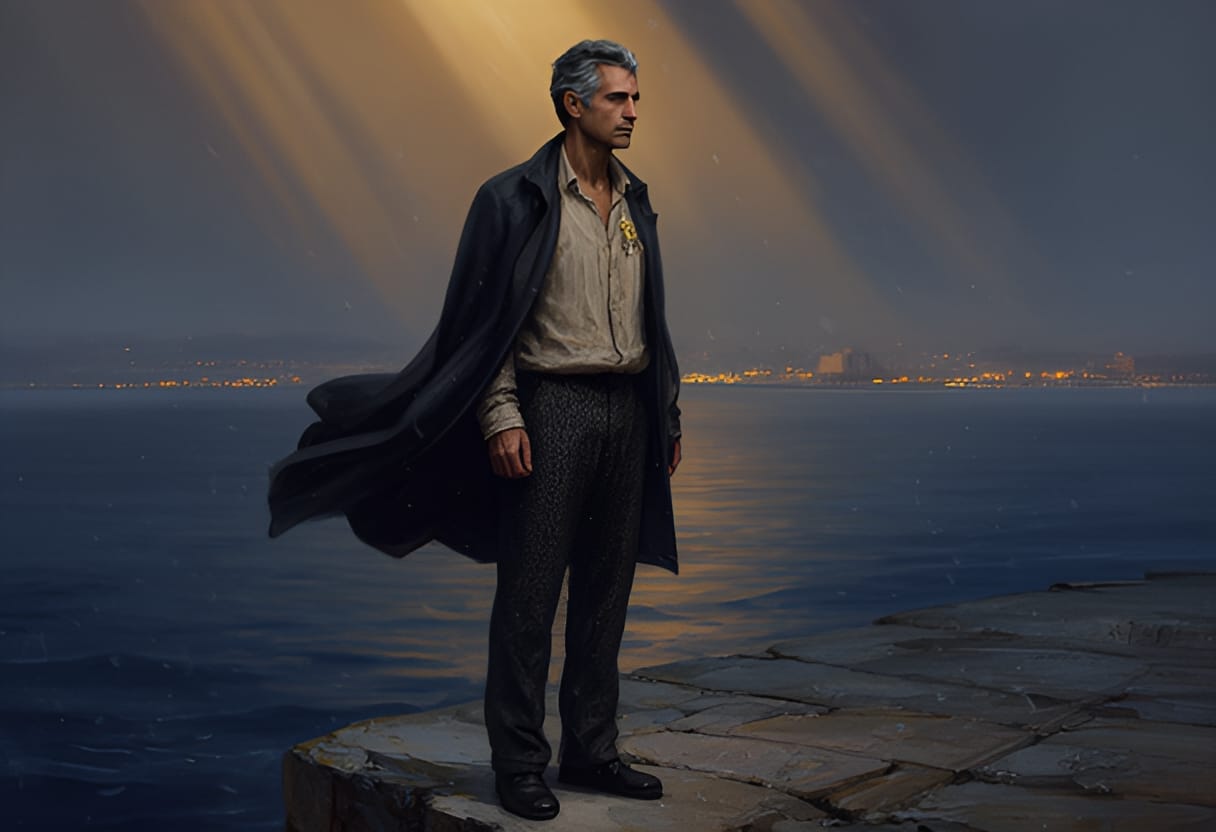
Fabio stood at the edge of the pier, the salt wind pulling at his coat, the sea below a bruised violet in the fading light. He had walked until his lungs burned, until the rhythm of his steps matched the pulse of something long buried — not grief, not exactly, but the slow recognition of a life half-lived. Elena’s absence had not begun when she boarded that plane. It had begun years earlier, in the quiet erosion of attention, in the way he had let silence grow between them like a wall he neither noticed nor cared to dismantle.
He turned back toward town, the streets emptying as dusk settled. The villa loomed ahead, its ochre walls softened by shadow, the lemon tree in the courtyard still heavy with fruit — a detail his father had noted, as if the tree’s persistence were a quiet rebuke. Fabio paused at the gate, hand on the iron latch. Inside, Sofia would be waiting, not with questions, but with the quiet understanding that had come too late to save them, yet might still serve to honor what was lost.
He entered without announcement. The hallway was dim, the air cool and still. He could hear the low murmur of voices from the study — Sofia’s gentle tone, his father’s infrequent replies. He paused outside the door, key still warm in his palm from where he had clenched it all walk. He had not unlocked the cabinet. Not yet. But he had carried the key here, to the place where his father kept his ledgers, his stamps, the detritus of a life spent recording the comings and goings of others. Now it would bear witness to his own.
He pushed the door open.
The study smelled of aged paper, beeswax, and the faintest trace of pipe tobacco — Lorenzo’s, though he had not smoked in years. The desk dominated the room, a massive slab of walnut scarred by decades of use. Ink stains bloomed near the edge like forgotten thoughts. A brass lamp stood ready, its shade green with age. Fabio moved to it without hesitation, pulled out the chair, and sat.
The wood was cool beneath his forearms. He rested his palms flat, feeling the grain, the grooves where his father’s hands had rested before him. This was where cables had been drafted, where reassurances were worded for ambassadors, where the truth was often shaped to fit the needs of dispatches. He had sat here once, long ago, and lied by omission — not with falsehoods, but with what he chose not to say. Now he would try the opposite.
He opened the drawer of the desk and took out a blank notebook, its pages crisp and unmarked. Beside it, he arranged the items Sofia had brought him from the drawer in her room: Elena’s Italian passport, expired; the boarding pass from Muscat to Frankfurt, dated March 17, 2017; the small USB drive, its casing scratched, labeled in Elena’s handwriting — For you, if you ever want to know. He had not plugged it in. Not yet.
He placed them in a line, like evidence. Like offerings.
Then he took his father’s old fountain pen from the cup — the one with the chipped blue lacquer — and dipped it in the inkwell. The nib caught slightly on the page as he began.
I lived in Riyadh from 2014 to 2018. I was married to Elena Voss. She left in March 2017. I did not stop her.
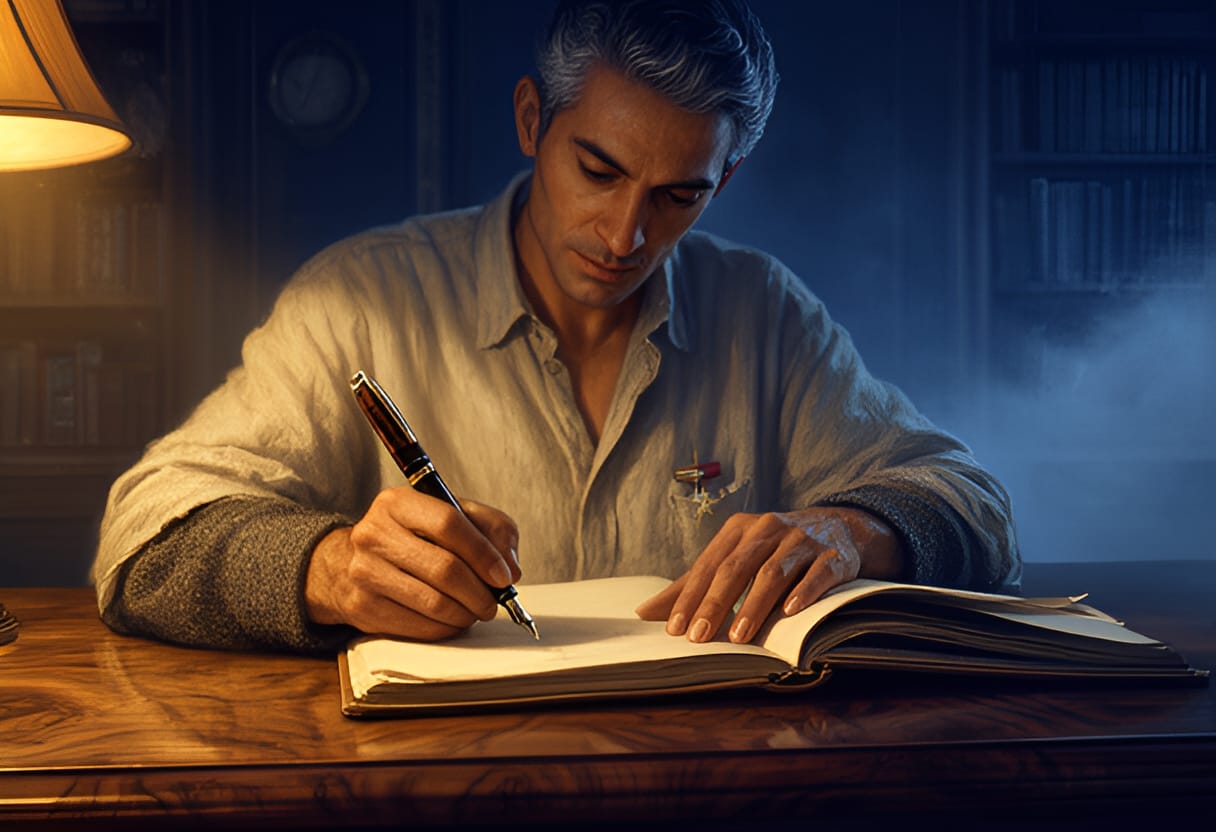
The words felt awkward, clumsy even. They were true, but they sounded like a report filed after the fact — detached, procedural. He stared at them. This was not how he wanted to begin. Not with the tone of a man shielding himself behind syntax. He exhaled, lifted the pen, and tried again.
I lived in Riyadh from 2014 to 2018. I was married to Elena Voss. She left in March 2017. I did not stop her.
Same sentence. But now he meant it differently. Not as a statement of fact to be archived, but as an admission. He had not stopped her. Not because he did not care — though he feared that was part of it — but because he had stopped seeing her. Not literally. Not at first. But gradually, imperceptibly, he had ceased to truly look. He had been present in body, absent in gaze. He had heard her words without receiving them. He had shared a home, a bed, a life, and yet had stopped being a witness to her.
He set the pen down. The ink had bled slightly at the end of the last word, a small blur like a tear that refused to fall.
He thought of the brass coffee pot she had given him early in their stay — a gift from the souk, its surface engraved with a geometric pattern she had said reminded her of Sicilian mosaics. He had used it once, then set it aside, preferring the instant coffee of the embassy. It sat now in a cupboard in Palermo, Sofia had told him, wrapped in cloth. Untouched.
He thought of the argument in August 2014, over pottery shards from a dig near Jeddah. She had wanted to talk about the glaze, the technique, the hands that had made them. He had wanted to sit on the balcony, drink tea, watch the sunset. She had gone to her study anyway. He had not followed.
He thought of the photograph from Al-Ula market, March 2014 — her smiling, eyes bright, wrapped in a scarf against the desert wind. And beside her, blurred at the edge of the frame, a man in a thawb, face obscured by shadow or motion or time. She had written in a letter that day: Today I felt truly seen. He had not remembered taking the photo. He had not remembered the man. But he remembered her saying it. And he had not asked what she meant.
He picked up the pen again.
He would not invent. He would not speculate. He would not assign blame to her family, to his own, to fate. He would stick to what he could verify: the letters, the passport, the boarding pass, the USB drive, the photographs, the journal fragments Sofia had preserved. He would write as if under oath — not to a court, but to her. To the woman who had loved him, who had tried to reach him, who had left not because she stopped caring, but because she had begun to doubt he was still there.
He would write slowly. Carefully. Honestly.
He dipped the pen and began anew, this time letting the words come not from the diplomat, but from the man who had failed to be a husband.
I lived in Riyadh from 2014 to 2018. I was married to Elena Voss. She left in March 2017. I did not stop her.
He left it as it was. Not because it was perfect, but because it was true. And for now, that would have to be enough.
The room darkened as the sun slipped fully below the horizon. Fabio did not move to light the lamp. He sat in the growing gloom, the notebook open before him, the pen resting between his fingers. The events of the day — the confrontation with Sofia, the walk to the sea, the return — settled over him like dust. He had not cried. He had not expected to. But something had shifted, not in his chest, but in his posture. The weight he carried was not lighter, but it was no longer a secret. It was out in the air, named, acknowledged.
He heard a soft step in the hallway. The door opened without a knock. Sofia stood there, holding a tray with two small cups. Steam curled from the dark liquid. She said nothing, only stepped inside and placed the tray on the edge of the desk, beside the notebook. She did not sit. She only looked at him — really looked — for a long moment, her expression unreadable, then nodded, once, and withdrew, closing the door gently behind her.
Fabio picked up the cup. The coffee was bitter, strong, the way she knew he liked it. He did not drink it yet. He held it in both hands, feeling the warmth seep into his palms. Outside, the first stars appeared over the sea.
He opened the notebook to a clean page. He would begin again tomorrow. Not with excuses. Not with justifications. But with what he knew.
He wrote the date in the corner: March 3, 2024.
And beneath it, the first true sentence of his account:
I lived in Riyadh from 2014 to 2018. I was married to Elena Voss. She left in March 2017. I did not stop her.
He set the pen down. The coffee had gone cold in his hands. He did not reheat it. Instead, he turned the notebook to a fresh page and wrote, in clear block letters at the top:
Rules for this account.
Below it, he began:
I will not name anyone whose testimony I cannot verify. I will not quote secondhand stories, even if they come from Sofia or Lorenzo, unless I can corroborate them with a letter, a date, a document. I will not describe Elena’s life after she left Riyadh unless I have proof: a stamp, a ticket, a message received. I will not say where she went, only that she departed. I will not say why she left, only that she did.
He paused. The words felt like walls going up — not to keep others out, but to keep himself honest. He had spent years in diplomacy parsing language for hidden meaning, for what was withheld as much as what was said. Now he turned that skill inward, not to conceal, but to clarify.
I will not claim she was happy after she left. I will not claim she was miserable. I have no way of knowing. To assign either state would be to invent a comfort for myself — either the relief of her peace or the justification of her suffering. Neither is true unless proven.
He thought of the letter she had sent from Muscat, postmarked April 2017, the only one after her departure. It had been brief: I am safe. I am beginning again. Do not look for me. No location beyond the city. No details of work, of residence, of heart. He had kept it, folded, in his wallet for months, then tucked it into the back of his journal. He had read it a dozen times, each time hoping for a slip — a phrase that revealed where she was, how she felt. There had been none. Only that: I am safe. I am beginning again. And the plea, or perhaps the command: Do not look for me.
He had not looked. Not officially. Not through channels. But he had wondered, constantly, in the quiet hours. Had she found work? Had she learned to dive again, as she had loved to do in Sicily? Had she planted herbs on a windowsill, as she used to do in their apartment in Riyadh? Had she ever, in a moment of weakness, missed him?
He would not answer those questions in this account. Not because they did not matter, but because answering them would require speculation. And speculation, however gentle, was a form of violence against the truth.
I will not blame her family for encouraging her to leave, even if Sofia has said she did. I will not blame my own family for failing to see how far I had drifted. I will not blame the embassy, the desert, the loneliness, the job. I will not assign motive to anyone — not to her, not to me, not to the man in the blurred photograph. Motive is a story we tell to make sense of silence. I will not tell that story unless I can prove it.
He thought of the argument in August 2014 again — not the one over pottery shards, but the one that had come weeks later, when she had asked him, quietly, if he still loved her. He had said yes, of course. But he had not looked up from the cable he was drafting. He had not seen her face fall. He had not noticed how she had pulled her shawl tighter, as if cold.
He had not been cruel. He had been absent. And absence, over time, can feel like indifference. Can become it.
I will not portray myself as a victim of circumstance, nor as a villain of neglect. I will not seek vindication through these pages, nor will I indulge in self-condemnation. Both are forms of evasion. The first turns her departure into a tragedy I could not prevent. The second turns it into a punishment I deserve. Neither allows her the full weight of her own choice.
He stopped. His hand ached slightly from gripping the pen. He opened his fingers, let the implement rest on the page. The nib had left a small ridge of ink, like a scar.
He thought of the USB drive Sofia had given him weeks ago, the one she said Elena had left behind in Palermo before her final trip. It contained photographs, a few scanned journal pages, a folder labeled Al-Ula – March 2014. Inside, the image of her smiling in the market, the blurred figure at the edge. He had opened it once, closed it quickly. He had not looked at the other files. He did not know what they held. He did not know if he wanted to.
But if he were to write this account truly, he would have to face them. Not to exploit them, not to mine them for drama, but to let them stand as evidence — neutral, silent, insistent.
I will describe only what I saw, what I was told in writing, what I can produce. I will not fill gaps with guesswork. If I cannot prove it, I will say so. If I cannot remember it, I will say that too. Memory is not a record. It is a reconstruction, and I will not mistake it for truth.
He thought of the night in the desert — the one he could not recall. Not the details, not the sequence, not even whether he had been there at all. Only the feeling, when he woke the next morning: a hollowness in his chest, sand in his boots, the camera missing from his bag. And Elena’s voice, days later, tense on the phone: You were acting strangely. Did something happen?
He had laughed it off. Said he must have slept poorly. Said he was fine.
He had not been fine. But he had not known how to say it.
My goal is not closure. It is not catharsis. It is not forgiveness — for her, for myself, for anyone. My goal is fidelity. To write what is so, as near as I can determine it, without embellishment, without self-protection. If this account brings no peace, that is not its purpose. Its purpose is to be true.
He set the pen down. The notebook lay open before him, the rules written in his hand, firm and unadorned. He picked up his coffee cup — still cold — and drank from it anyway. The bitterness sharpened his thoughts.
Outside, a breeze stirred the lemon tree. Somewhere in the house, a door clicked shut. Lorenzo, perhaps, moving down the hall. Fabio did not look up.
He turned to a new page. Wrote the date: March 4, 2024.
And beneath it, the first sentence of the account proper:
On March 12, 2014, Elena Voss sent me a letter from Al-Ula market. In it, she wrote: “Today I felt truly seen.” She attached a photograph. In the photograph, she is smiling, facing the camera. At the far right edge of the frame, a male figure is visible, blurred, wearing a thawb. His face is obscured by shadow or motion. I do not remember taking this photograph. I do not remember the man. I do not know who he was or why she felt seen by him. I only know that she wrote those words, and that the photograph exists.
He stopped. Read it again. It was plain. It was bare. It left so much unsaid. But it was not false.
He closed the notebook. Sat back in the chair. The room was quiet. The stars had moved westward. Somewhere, a dog barked once, then fell silent.
He would write more tomorrow. Not to finish. Not to heal. But to continue. As long as it took to tell what could be told — and no more.
The notebook stayed closed on the desk. Fabio had not written another word that night. The rules were still there, inked in his hand, a boundary he had set for himself. Outside, the wind had dropped. The lemon tree stood still against the darkening sky. Somewhere in the house, the old radiator clicked as it cooled.
He had not turned on the lamp. The only light came from the hallway, a thin glow beneath the study door. It was enough to see the page, the date, the first sentence. Enough to know he had begun.
A soft knock came at the door. Not insistent. Not demanding. Just a tap, once, then pause.
“It’s me,” Sofia said, her voice low, as if speaking to someone who might be asleep.
Fabio did not answer. He did not need to. He heard her step inside, the familiar sound of her shoes on the stone floor — left heel slightly worn, the way it had been since she was a girl. She moved without turning on the light. He knew she would not. She never did, not in the study. Not anymore.
She placed the cup on the desk beside the notebook. Ceramic, thick-walled, the kind Lorenzo had brought back from Tunis years ago. The coffee inside was dark, unsweetened, steaming faintly in the cool air. She did not speak. She did not sit. She simply stood beside the chair, her hand resting for a moment on the back of it — not touching him, not quite — then let it fall.
Fabio picked up the cup. The warmth seeped into his palms. He drank. It was bitter, as it always was. He had not taken sugar since before he left for Riyadh. Elena had teased him about it once, saying he drank it like a man punishing himself. He had laughed. She had not.
He set the cup down. Still half-full.
Sofia did not move. She stayed where she was, her presence a quiet pressure in the air, like the hush before rain. He could feel her watching him, not with expectation, not with judgment, but with the steady attention of someone who had learned to wait. He thought of the letters she had kept — Elena’s, yes, but also his own, the ones he had sent home sporadically, the ones that had grown shorter, colder, until they stopped altogether. She had saved them all. He had not asked why.
He did not speak. He did not need to. The silence between them was not empty. It was full of things they had both stopped saying years ago.
Eventually, she turned and left. The door clicked shut behind her. Not loud. Not final. Just a closing.
The next evening, the same. The knock. The coffee. The silence. She stood beside the chair again, her shadow falling across the desk, just touching the edge of the notebook. He drank. He did not look up. When she left, the house settled into its usual night sounds — the creak of the third stair, the distant hum of the refrigerator, the wind pushing at the shutters.
On the third night, he noticed a change.
He had just set the cup down, the last sip gone, when he felt it — a shift in the air near the door. Not a sound. Not a movement. But a presence, denser than Sofia’s, slower, heavier. He did not turn. He knew, without seeing, that it was Lorenzo.
His father stood in the doorway, just as he had the night Fabio first sat at the desk. Only now, he did not retreat. He did not melt back into the hall. He stayed. His hands were clasped in front of him, the way they had been when he stood at the post office counter, waiting for his turn. His eyes were on the notebook, on Fabio’s hands, on the pen that lay capped beside it.
Fabio did not acknowledge him. He did not stop writing. He opened the notebook to a fresh page. Wrote the date: March 5, 2024.
Then, slowly, deliberately, he began:
On March 15, 2014, Elena returned from a day trip to Madain Saleh. She brought back a small piece of painted pottery, no larger than her palm. She said she had bought it from an elderly woman near the northern tombs, who had insisted it was Nabatean, though the glaze was unlike anything in the museum catalogs. She held it up to the light, turning it slowly, as if trying to see through it. “It feels like it’s been waiting,” she said. I did not ask what she meant. I was reviewing a dispatch from the cultural attaché. I said it was beautiful. She smiled and put it on the windowsill. It stayed there for three days. Then it was gone. I never asked where she put it.
He stopped. Read it. It was true. He remembered the pottery. He remembered her voice. He did not remember what he had been reading on the cable — only that it had to do with a trade delegation from Qatar, and that he had found it dull.
He closed the notebook. Sat back.
Lorenzo had not moved. Still in the doorway. Still watching.
Fabio waited. He did not prompt. He did not ask if he wanted to come in. He did not offer an explanation for why he was writing, or why he had taken the desk, or why he had not yet opened the cabinet. He simply waited, as Sofia waited, as the night waited.
After a long time, Lorenzo spoke. His voice was rough, not from disuse, but from the effort of keeping it low, as if afraid of breaking something.
“She wrote to me,” he said. “After she left.”
Fabio did not look up. He kept his eyes on the notebook, on the blank page waiting for the next sentence.
“She sent it to Palermo. To your sister. Sofia gave it to me a week after she got it. Said I should read it alone.”
Fabio’s pen hovered above the page. He did not write. He did not breathe.
“I didn’t open it right away,” Lorenzo continued. “I carried it in my coat pocket for two days. Felt like it was burning a hole through the fabric. Finally, I sat in the kitchen, after dinner, and I opened it.”
He paused. Fabio could hear the faintest catch in his breath — not a sob, not quite, but the kind of intake that comes when something long held is finally released, even just a little.
“She said thank you,” Lorenzo said. “For not looking for her.”
Fabio lowered the pen. It tapped once against the notebook. A soft, dull sound.
He did not ask what else the letter said. He did not ask if she had explained why she left. He did not ask if she had been sorry, or afraid, or at peace. He did not ask if she had mentioned him at all.
He only nodded. Once. Slowly.
Lorenzo did not move from the doorway. He did not come closer. He did not need to. He had said what he came to say. He had delivered the message, not as a confession, not as an accusation, but as a quiet offering — like placing a stone on a cairn, not to mark a grave, but to say: I was here. I saw you.
He turned then. Not abruptly. Not dramatically. Just a slow pivot on his heel, the way he used to turn when closing the shutters at night. His footsteps faded down the hall. The door at the end clicked shut — softer than Sofia’s, but just as final.
Fabio sat alone in the darkening room. The hallway light was still on beneath the door. He could see the shadow of the doorframe, the slight warp in the wood where it had swollen in the winter rains.
He picked up the pen again.
He did not erase what he had written. He did not second-guess it. He simply turned the page and wrote the date: March 6, 2024.
Then, beneath it, he began:
On March 22, 2014, Elena and I attended a reception at the ambassador’s residence. It was held in the garden, under strings of white lights. The air was warm, scented with jasmine and woodsmoke from the braziers. She wore a dress of dark blue silk, the one she had bought in the souk near the Diplomatic Quarter. I wore the gray suit I had brought from Milan. We did not dance. We stood near the fountain, holding glasses of sparkling water. She told me she had been invited to join a dig in Al-Ula for the coming season. She said it would mean being away for three months, but that the project was important, that it felt like real work. I told her I would support whatever she chose. I meant it. I did not ask her if she wanted me to come with her. I did not ask if she wanted to stay. I did not ask what she needed.
He stopped. He read it. It was true. He remembered the lights. He remembered the jasmine. He remembered the weight of the glass in his hand. He did not remember what she had done with her free hand — whether she had held the glass tightly, or let her fingers rest loose, or brushed them once against his arm.
He closed his eyes. The darkness behind his lids was not empty. It was full of the garden, the lights, the quiet hum of voices, the way the water in the fountain had caught the glow and shattered it into a thousand tiny stars.
He opened his eyes. The notebook lay open. The coffee cup was cold.
He did not reach for it.
He waited.
And when Sofia came, as she always did, with the cup and the silence and the unspoken understanding that she would not ask, he did not look up. He only lifted his hand, just slightly, to let her know she could place it down.
She did. And then she stood, as she always did, beside the chair, her presence a quiet line in the air, and he wrote on, not to finish, not to heal, but because the page demanded it, and because, for now, that was enough.
He lifted the pen one last time. The nib hovered above the clean, lined page. The room was quiet except for the faint hum of the refrigerator in the kitchen and the distant, rhythmic sigh of the sea through the open window. The lemon tree outside stirred in the night breeze, its leaves whispering against the glass.
He had written everything he could verify: the dates, the places, the words she had written herself — in letters, in journals, on the video. He had not invented a single gesture, not assigned a motive she had not expressed, not blamed her for leaving or himself for staying away. He had only tried to show, as plainly as he could, the space between them — not as a chasm of fault, but as a distance grown quietly, over years, in the silence of ordinary neglect.
He thought of the USB drive in his coat pocket — cool, small, heavy with what it carried. He had not opened it. He would not. Not now. Maybe never. Some truths were not for consumption. Some were for safekeeping.
He began to write.
The desert wind rises at dusk in Al-Ula. It carries sand and the scent of dry stone. On March 10, 2017, two days before she left, Elena walked alone through the market near the ruined tombs. She paused at a stall selling silver pendants. The vendor, a man with a faded indigo turban and eyes that crinkled when he smiled, held up a piece shaped like a crescent moon. She touched it. He said something in Arabic — she laughed, nodded, bought it. She wore it the next day. I do not know his name. I do not know if she ever saw him again. I only know that, in her journal that night, she wrote: “A man smiled at me and really saw me; I felt known.” I did not see her that day. I was at the embassy, reviewing a report on desalination plants. I did not call her. I did not ask where she had been. I did not notice the pendant when she came home — if she came home that night. I only know that she left two days later. And that, for the first time in years, she had felt seen.
He stopped. Read it. It was true. He remembered the report. He remembered the bland fluorescent light of the embassy conference room. He remembered thinking, as he signed off, that he would call her later. He never did.
He closed his eyes. The image came — not of the man in the market, but of her hand, resting on the stall table, fingers slightly curved as she considered the pendant. He had seen that hand a thousand times — brushing sand from a pottery shard, turning a page in her notebook, lifting a cup of tea to her lips. He had seen it. But he had not seen it. Not the way the vendor had.
He opened his eyes. The page waited.
He wrote the final sentence.
I do not know if she is happy. I only know that I was not the man she needed — and that I owe her the truth, even if it comes too late.
He read it once. Then again. No flourish. No plea. No absolution. Just a statement, plain as the key in his drawer, as true as the lemon tree outside.
He closed the notebook. Held it for a moment in both hands, as if measuring its weight. Then he rose.
The USB drive was still in his pocket. He pulled it out — smooth, unmarked, cool from his body heat. He walked to the study’s built-in cabinet, the one Lorenzo had locked years ago, the one whose key Fabio had carried in his fist since his arrival. He inserted the key. Turned it. The lock gave with a soft, definitive click.
Inside, nestled beside folders of old diplomatic correspondence and a bundle of yellowed letters tied with faded blue ribbon, lay Elena’s Italian passport — expired, the photo showing her younger, eyes wary but alert. He placed the USB drive gently beside it. Not on top. Not hidden. Just… there. With her. As if she had come back to leave it.
He closed the cabinet. Turned the key. Removed it. Held it in his palm a moment longer, then placed it on the desk — beside the notebook, beside the cold coffee cup.
He stepped back.
The room felt different. Lighter, not because anything had been resolved, but because something had been placed where it belonged.
He heard the floorboard creak in the hall.
Lorenzo stood in the doorway again. Not leaning. Not hovering. Just there, in the dim spill of light from the hall, his hands loose at his sides, his eyes fixed on Fabio’s face — not searching, not judging, only seeing.
Fabio did not start. Did not speak. He only met his father’s gaze for a breath, then looked away — not in avoidance, but in acknowledgment. The kind that says: I am here. I am done running.
Lorenzo took one step inside. Then another. He stopped beside the chair, close enough that Fabio could feel the warmth of his presence, the faint scent of olive oil and old wool from his jacket.
He did not speak.
He raised his hand — slowly, deliberately — and placed it on Fabio’s right shoulder.
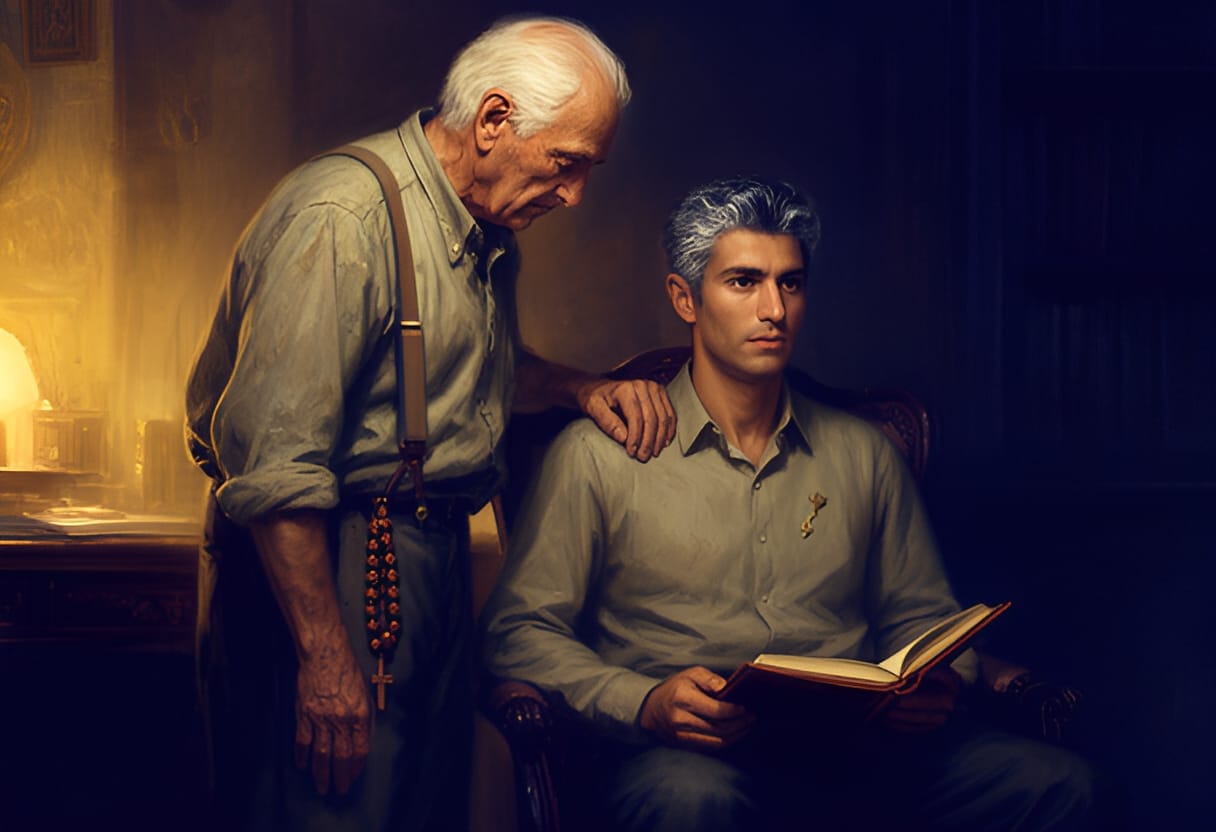
The pressure was light. Firm. Not a command. Not a plea. Just contact. Human. Real.
Fabio did not flinch. Did not pull away. He let the touch settle — the weight of a hand, the warmth of a palm, the silent message that passed through fabric and bone: I am here too.
Lorenzo held it for a long moment. Then, as if satisfied that the gesture had been received, he lowered his arm. He did not squeeze. Did not linger. He simply stepped back.
He turned. Walked to the door. Paused with his hand on the latch. Looked back once — not at Fabio’s face, but at the notebook on the desk, at the closed cabinet, at the space between them where the truth now lived, quiet and unadorned.
Then he left.
The door clicked shut — softer than before, but final.
Fabio remained standing. The notebook open before him. The cabinet locked. The USB drive resting beside the passport, where Elena’s things had begun to return — not all of them, not the answers, but enough to say: This mattered. You mattered. I see you now.
He did not sit. Did not write again. He only breathed — in, out — and listened to the house: the creak of the floor settling, the whisper of the wind in the lemon tree, the quiet, steady beat of his own heart in the silence.
Outside, the last light faded from the garden. The stars came out, one by one, over the sea.
And for the first time in ten years, Fabio did not look away.