Fiction
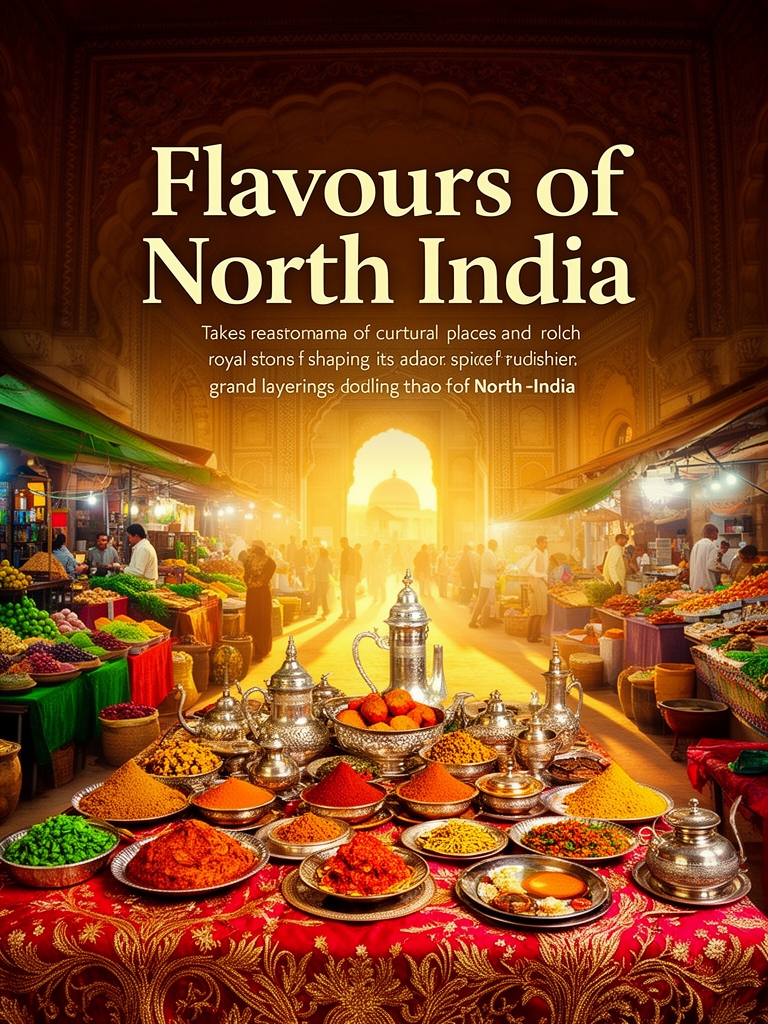
Flavours of North India
by Ashok Mehta
5 chapters23 min read
Chapter 1
Introduction to North Indian Gastronomy
In the grand tapestry of North Indian cuisine, the royal courts played a pivotal role in shaping the region's gastronomic identity. The majestic palaces of the Mughal Empire, with their intricate architecture and opulent decor, were not only testaments to the rulers' wealth and power but also hubs of culinary innovation. It was within these palace walls that the art of North Indian cooking was refined, with skilled chefs competing to create the most exquisite dishes for their royal patrons. As the renowned food historian, Ramesh Kumar, once noted, "The royal courts of North India were the epicenters of culinary excellence, where the finest ingredients and the most skilled cooks converged to create a truly regal cuisine."
The Mughal emperors, in particular, were known for their love of fine food and their penchant for experimentation. They encouraged their chefs to blend traditional Indian spices and ingredients with the exotic flavors and techniques they had encountered during their conquests of Central Asia and the Middle East. This fusion of culinary traditions resulted in the creation of iconic North Indian dishes such as biryani, kebabs, and haleem, which remain incredibly popular to this day. As Ramesh Kumar explained, "The Mughal emperors were the ultimate food connoisseurs, and their passion for innovative cuisine helped to establish North India as a culinary powerhouse."
One of the most significant contributions of the royal courts to North Indian cuisine was the development of the intricate system of spice layering, which is still the hallmark of the region's cooking. Skilled chefs would carefully combine a multitude of spices, each with its unique flavor and aroma, to create complex and harmonious blends that elevated the dishes to new heights. This art of spice layering was perfected over centuries, with each successive generation of royal chefs adding their own twist and innovation to the traditional techniques. As the celebrated chef, Ali Ahmed, observed, "The secret to North Indian cuisine lies in the subtle balance of spices, which can make or break a dish. It's an art that requires patience, skill, and a deep understanding of the intricate relationships between different flavors and aromas."
The royal heritage of North Indian cuisine is also reflected in the region's grand culinary traditions, which continue to be celebrated with great fervor and enthusiasm. The extravagant feasts and banquets, which were once a staple of royal court life, have evolved into vibrant community events, where people come together to share in the joy of good food and warm hospitality. As Ramesh Kumar noted, "The spirit of North Indian cuisine is rooted in the concept of hospitality, where food is not just a source of sustenance but a symbol of love, respect, and community. The royal courts may be a thing of the past, but their culinary legacy lives on, inspiring new generations of cooks and food lovers to explore the rich flavors and traditions of this incredible region."
As Ramesh Kumar and Ali Ahmed delved deeper into the world of North Indian cuisine, they found themselves fascinated by the intricate system of spice layering that was at the heart of the region's cooking. "You see, the key to creating truly exceptional dishes is to understand the subtle balance of spices," Ali explained, as he carefully measured out a blend of cumin, coriander, and turmeric. "Each spice has its own unique flavor and aroma, and when combined in the right proportions, they can create a harmonious balance of flavors that elevates the dish to new heights."
Ramesh watched with great interest as Ali worked his magic, combining the spices with a range of other ingredients, including garlic, ginger, and chilies. "The Mughal emperors were particularly fond of complex spice blends," Ramesh noted, "and their chefs would often spend hours preparing the perfect mix of spices for a particular dish." As they cooked, the aromas of the spices wafted through the air, tantalizing the senses and building anticipation for the feast to come.
One of the most iconic North Indian dishes, biryani, was a perfect example of the art of spice layering. This flavorful rice-based dish was a staple of the Mughal court, and its preparation involved a intricate blend of spices, including saffron, cardamom, and cinnamon. "The secret to a great biryani lies in the layering of the spices," Ali explained, as he carefully added each ingredient to the pot. "You must start with a base of onions, garlic, and ginger, then add the spices, and finally, the rice and meat or vegetables." As the biryani cooked, the flavors melded together, creating a dish that was at once aromatic, flavorful, and truly regal.
As they sat down to enjoy the fruits of their labor, Ramesh and Ali couldn't help but feel a sense of awe at the rich culinary heritage of North India. The royal courts may have played a significant role in shaping the region's cuisine, but it was the people, with their love of good food and warm hospitality, who had truly made it their own. "The spirit of North Indian cuisine is alive and well," Ramesh said, as he took a bite of the biryani. "It's a cuisine that is deeply rooted in tradition, yet constantly evolving, and it's a true reflection of the region's warm and welcoming people."
As they finished their meal and reflected on the journey they had undertaken, Ramesh and Ali knew that they had only scratched the surface of the rich and complex world of North Indian cuisine. There was still so much to explore, so much to discover, and they couldn't wait to see what other culinary delights the region had in store for them. "The flavors of North India are truly a wonder to behold," Ali said, with a smile. "And I have no doubt that our journey will take us to even more incredible places, where the love of food and the warmth of hospitality will continue to inspire and delight us."
Chapter 2
Famous Places and Local Specialties
As Ramesh and Ali delved deeper into the culinary landscape of North India, they found themselves in the bustling streets of Delhi, surrounded by the enticing aromas of street food. The capital city was a melting pot of flavors, with each dish telling a story of the region's rich cultural heritage. They wandered through the narrow alleys of Chandni Chowk, taking in the sights and sounds of the vibrant street food scene. The sound of sizzling kebabs and the chatter of vendors filled the air, drawing them to a small stall tucked away in a corner. "Try our famous chaat items," the vendor called out, his eyes twinkling with enthusiasm. Ramesh and Ali exchanged a glance, their curiosity piqued, and decided to sample some of the local specialties.
The vendor handed them a plate of crispy papri chaat, topped with a dollop of yogurt, a sprinkle of cumin powder, and a few fresh coriander leaves. As they took their first bite, the combination of flavors and textures exploded on their taste buds. "This is incredible," Ali exclaimed, the tangy taste of the tamarind chutney leaving him wanting more. Ramesh nodded in agreement, his eyes scanning the stall for more options. The vendor, noticing their interest, offered them a taste of his signature dish, a spicy aloo tikka that left them both speechless. "The secret to our dishes lies in the balance of spices," he explained, his hands moving deftly as he assembled another plate of chaat. "We use a combination of spices, including cumin, coriander, and garam masala, to create a harmonious balance of flavors."
As they continued their journey through the street food scene, Ramesh and Ali encountered a variety of local specialties, each one showcasing the diversity of North Indian cuisine. They sampled the famous butter chicken of Delhi, the rich flavors of the tomato-based sauce and the tender chicken leaving them in awe. They tried the crispy, fermented bread of the city's popular paratha stalls, the layers of dough and ghee melting in their mouths. With each dish, they gained a deeper understanding of the intricate system of spice layering that was the hallmark of North Indian cuisine. The royal courts may have played a significant role in shaping the region's cuisine, but it was the street food vendors who kept the traditions alive, passing down their secrets from generation to generation.
As the sun began to set, casting a warm orange glow over the city, Ramesh and Ali found themselves at the famous Karim's restaurant, a Delhi institution that had been serving up traditional Mughal cuisine for over a century. The restaurant's owner, a descendant of the royal chefs who had once cooked for the Mughal emperors, greeted them warmly and invited them to try some of his signature dishes. As they sat down to a feast of kebabs, biryani, and haleem, Ramesh turned to Ali and smiled. "This is what North Indian cuisine is all about," he said, the flavors of the dishes transporting him to a bygone era. Ali nodded, his eyes closed in appreciation, the sounds of the city fading into the background as they savored the rich flavors of the region.
As they left Delhi and made their way to Lucknow, Ramesh and Ali couldn't help but feel a sense of excitement and anticipation. They had heard stories about the city's rich culinary heritage, shaped by the royal courts of the Nawabs of Awadh. The city was famous for its refined and sophisticated cuisine, which reflected the cultural and culinary traditions of the region. As they wandered through the narrow streets of Lucknow, they came across a small, unassuming restaurant that was renowned for its traditional Awadhi cuisine. The owner, a warm and hospitable man named Mohammad, greeted them with a smile and invited them to try some of his signature dishes.
"We specialize in traditional Lucknowi cuisine," Mohammad explained, as he led them to a cozy table by the window. "Our dishes are characterized by the use of rich and complex spices, which are carefully blended to create a unique and harmonious flavor profile." Ramesh and Ali exchanged a glance, their curiosity piqued, and asked Mohammad to recommend some of his favorite dishes. He suggested they try the galawati kebabs, which were famous for their melt-in-the-mouth texture and delicate flavor. He also recommended the Lucknowi biryani, which was cooked to perfection with a blend of aromatic spices and basmati rice.
As they waited for their food to arrive, Ramesh and Ali took in the sights and sounds of the restaurant. The walls were adorned with intricate paintings and colorful tapestries, which reflected the rich cultural heritage of the city. The air was filled with the aroma of exotic spices and the sound of sizzling meat, which tantalized their taste buds and left them feeling hungry and eager to try the local specialties. When the food arrived, they were impressed by the presentation and the aroma of the dishes. The galawati kebabs were indeed melt-in-the-mouth, with a delicate flavor that was both refined and sophisticated. The Lucknowi biryani was cooked to perfection, with a blend of aromatic spices and basmati rice that was both flavorful and fragrant.
As they savored the dishes, Ramesh turned to Ali and smiled. "This is indeed the epitome of North Indian cuisine," he said, the flavors of the dishes transporting him to a bygone era. Ali nodded, his eyes closed in appreciation, the sounds of the city fading into the background as they enjoyed the rich flavors of the region. Mohammad, the owner, joined them at the table, a warm smile on his face. "I'm glad you're enjoying the food," he said, his eyes twinkling with pleasure. "Lucknowi cuisine is all about refinement and sophistication, and we take great pride in preserving the traditional recipes and cooking techniques of our ancestors."
As they finished their meal and prepared to leave, Ramesh and Ali thanked Mohammad for the wonderful food and hospitality. They left the restaurant feeling satisfied and content, their senses filled with the sights, sounds, and flavors of the city. They knew that they would always treasure the memories of their culinary journey through North India, and that the flavors of the region would stay with them forever. The royal courts may have played a significant role in shaping the region's cuisine, but it was the people, the culture, and the traditions that had truly made North Indian cuisine the rich and vibrant tapestry that it was today. As they walked away from the restaurant, Ramesh turned to Ali and smiled. "This has been an incredible journey," he said, his eyes shining with excitement. "But I think we've only just begun to scratch the surface of North Indian cuisine." Ali nodded, his face filled with anticipation, and together they looked forward to their next culinary adventure, eager to explore the many wonders of the region.
Chapter 3
Cultural Significance of Food in North India
As Ramesh and Ali delved deeper into the cultural significance of food in North India, they found themselves immersed in the vibrant world of festivals and celebrations. The air was filled with the sweet scent of traditional sweets and the sound of sizzling street food, as people from all walks of life came together to share in the joy of the occasion. "Food is an integral part of our festivals," explained Ramesh, as they walked through the crowded streets of Old Delhi during the festival of Diwali. "Each festival has its own unique culinary traditions, and the food is often an integral part of the celebrations." Ali nodded in agreement, his eyes widening as he sampled the various delicacies on offer. "The food is not just a source of sustenance, but a way of bringing people together and strengthening bonds within the community," he added.
As they made their way through the crowds, Ramesh and Ali came across a stall selling traditional Diwali sweets, such as gulab jamun and jalebi. The owner, a warm and hospitable woman named Mrs. Kumar, greeted them with a smile and offered them a taste of her freshly made sweets. "These sweets are a staple of Diwali celebrations," she explained, as Ramesh and Ali savored the sweet and sticky treats. "They are made with love and care, and are an integral part of the festival's traditions." Ramesh and Ali spent the rest of the day exploring the festival, sampling the various foods on offer and learning about the cultural significance of each dish. They discovered that the food was not just a source of pleasure, but a way of connecting with others and strengthening community bonds.
As the sun began to set, Ramesh and Ali made their way to a nearby temple, where a grand feast was being prepared in honor of the festival. The temple's courtyard was filled with the delicious aroma of traditional North Indian dishes, such as biryani and tandoori chicken. Ramesh and Ali were greeted by the temple's priest, who invited them to join in the feast. "Food is a way of showing hospitality and respect for our guests," he explained, as Ramesh and Ali took their seats at the long tables. "It is a way of breaking down barriers and bringing people together, and is an integral part of our cultural heritage." As they sat down to eat, Ramesh and Ali were struck by the sense of community and camaraderie that filled the air. The food was not just a source of sustenance, but a way of connecting with others and celebrating the joy of the festival.
The feast was a grand affair, with dish after dish of delicious North Indian cuisine being served. Ramesh and Ali sampled the various delicacies, marveling at the intricate flavors and spices that characterized each dish. They talked to the other guests, learning about the cultural significance of the food and the role it played in the festival's traditions. As the night wore on, Ramesh and Ali found themselves feeling grateful for the opportunity to experience the rich cultural heritage of North India. The food, the people, and the sense of community had all come together to create a truly unforgettable experience, one that they would cherish for a long time to come. As they left the temple and made their way back through the crowded streets, Ramesh turned to Ali and smiled. "This has been an incredible experience," he said, his eyes shining with excitement. "The food, the people, the sense of community – it's all been truly amazing." Ali nodded in agreement, his face filled with a sense of wonder and awe. "It's a truly unique and special culture," he said, "and one that we are privileged to have experienced."
As Ramesh and Ali continued to explore the cultural significance of food in North India, they began to appreciate the vital role it played in family and community life. They visited Mrs. Kumar's home, where they were warmly welcomed and invited to share a meal with her family. The table was filled with an array of delicious dishes, each one carefully prepared to showcase the rich flavors and spices of North Indian cuisine. "Food is at the heart of our family gatherings," Mrs. Kumar explained, as they sat down to eat. "It's a way of bringing people together and strengthening bonds between family members and friends." Ramesh and Ali nodded in agreement, savoring the delicious flavors and aromas that filled the air.
As they ate, Ramesh and Ali learned about the importance of food in North Indian family life. They discovered that mealtimes were often seen as opportunities to connect with others and share in the joys and struggles of daily life. "Food is a way of showing love and care for one another," Mrs. Kumar's daughter explained, as she served them a delicious dessert. "It's a way of nurturing our relationships and strengthening our sense of community." Ramesh and Ali were struck by the sense of warmth and hospitality that filled the home, and they began to appreciate the vital role that food played in bringing people together.
As the day drew to a close, Ramesh and Ali thanked Mrs. Kumar and her family for their hospitality and generosity. They left the home feeling grateful for the opportunity to experience the rich cultural heritage of North India, and they began to appreciate the vital role that food played in family and community life. "The food is not just a source of sustenance," Ramesh said, as they walked away from the home. "It's a way of connecting with others and strengthening bonds between family members and friends." Ali nodded in agreement, his eyes shining with excitement. "It's a truly unique and special culture," he said, "and one that we are privileged to have experienced."
The next day, Ramesh and Ali visited a local community center, where they met with a group of women who were busy preparing for a upcoming festival. The women were cooking a variety of traditional North Indian dishes, each one carefully prepared to showcase the rich flavors and spices of the region. "Food is a way of bringing people together and celebrating our cultural heritage," one of the women explained, as Ramesh and Ali watched them cook. "It's a way of sharing our traditions and customs with others, and of strengthening our sense of community." Ramesh and Ali nodded in agreement, marveling at the sense of camaraderie and cooperation that filled the air.
As they watched the women cook, Ramesh and Ali learned about the importance of food in North Indian community life. They discovered that food was often used as a way of breaking down barriers and bringing people together, and that it played a vital role in many community celebrations and festivals. "Food is a universal language," one of the women said, as she served them a delicious snack. "It's a way of connecting with others and sharing in the joys and struggles of daily life." Ramesh and Ali were struck by the sense of community and cooperation that filled the air, and they began to appreciate the vital role that food played in bringing people together.
As they left the community center, Ramesh and Ali felt grateful for the opportunity to experience the rich cultural heritage of North India. They had learned about the importance of food in family and community life, and they had begun to appreciate the vital role it played in bringing people together and strengthening bonds between family members and friends. "The food is not just a source of sustenance," Ramesh said, as they walked away from the center. "It's a way of connecting with others and celebrating our cultural heritage." Ali nodded in agreement, his eyes shining with excitement. "It's a truly unique and special culture," he said, "and one that we are privileged to have experienced."
Chapter 4
Influence of North Indian Cuisine Globally
As Ramesh and Ali delved deeper into the world of North Indian cuisine, they began to explore its influence on a global scale. They were fascinated by how the unique flavors and techniques of North Indian cooking had been adapted and incorporated into international cuisines. From the spicy curries of Britain to the naan breads of Australia, it was evident that North Indian cuisine had left an indelible mark on the global culinary landscape. "The adaptation of North Indian dishes abroad is a testament to the universal language of food," Ramesh remarked, as they sat in a cozy restaurant in London, savoring the flavors of a traditional chicken tikka masala. "It's amazing to see how our cuisine has been embraced and reinterpreted by different cultures," Ali added, nodding in agreement.
Their conversation was interrupted by the chef, who emerged from the kitchen to share the story of how he had learned to cook North Indian dishes from his father, a migrant from Punjab. "I remember watching my father cook in our small kitchen, the aromas of cumin and coriander filling the air," he said, his eyes sparkling with nostalgia. "I knew from a young age that I wanted to follow in his footsteps and share the flavors of our homeland with the world." Ramesh and Ali were touched by the chef's story, and they realized that the adaptation of North Indian dishes abroad was not just about food, but about the people and their stories.
As they continued their journey, they encountered numerous examples of how North Indian cuisine had been adapted and reinvented in different parts of the world. In the United States, they discovered a fusion of North Indian and Mexican flavors, with dishes like chicken tikka tacos and saag paneer quesadillas. In Japan, they found a unique blend of North Indian and Japanese cuisine, with dishes like curry ramen and naan bread sushi. Everywhere they went, they were struck by the creativity and innovation of chefs who were pushing the boundaries of North Indian cuisine.
Despite the many adaptations and interpretations, Ramesh and Ali were heartened to see that the core principles of North Indian cuisine remained intact. The emphasis on spice layering, the use of traditional ingredients, and the importance of balance and proportion in combining flavors were all still evident, even in the most innovative and experimental dishes. "It's a testament to the timeless appeal of North Indian cuisine," Ramesh said, as they sat in a small café in Paris, sipping a cup of masala chai. "Our cuisine has a way of transcending borders and cultures, and speaking to people on a fundamental level," Ali added, smiling in agreement.
As they reflected on their journey, Ramesh and Ali realized that the adaptation of North Indian dishes abroad was a two-way process. Not only had North Indian cuisine influenced international cuisines, but it had also been shaped by global flavors and techniques. The result was a rich and vibrant culinary landscape, with a diverse array of flavors and traditions. "The beauty of North Indian cuisine lies in its ability to evolve and adapt, while remaining true to its roots," Ramesh said, as they prepared to embark on the next stage of their journey. "It's a cuisine that is both timeless and timely, with a universal appeal that transcends borders and cultures."
The rise of Indian restaurants worldwide was a phenomenon that Ramesh and Ali had observed in every city they visited. From the bustling streets of London to the trendy neighborhoods of New York, Indian restaurants had become a staple of the global culinary scene. They were amazed by the diversity of Indian cuisine that was being served in these restaurants, from traditional dishes like chicken tikka masala and palak paneer to innovative fusion dishes like lamb Rogan Josh tacos and saag paneer pizza. "The popularity of Indian restaurants is a testament to the universal appeal of our cuisine," Ramesh said, as they sat in a busy Indian restaurant in Tokyo, surrounded by the sounds and smells of sizzling spices and freshly baked naan bread.
As they explored the world of Indian restaurants, Ramesh and Ali met many chefs and restaurateurs who were passionate about sharing the flavors and traditions of North Indian cuisine with a global audience. They were inspired by the stories of these individuals, who had left their homes and families in India to pursue their dreams of opening an Indian restaurant abroad. "It's not just about serving food, it's about sharing a part of ourselves and our culture with the world," one chef told them, as they sat in his cozy restaurant in Paris, watching as he expertly prepared a dish of butter chicken. Ramesh and Ali were touched by the chef's words, and they realized that the rise of Indian restaurants worldwide was not just a culinary phenomenon, but a cultural one as well.
As they continued their journey, Ramesh and Ali encountered many examples of how Indian restaurants were adapting to local tastes and ingredients, while still remaining true to the traditions of North Indian cuisine. In the United States, they found Indian restaurants that were serving dishes like chicken tikka masala with a twist, using local ingredients like cranberries and pumpkin to give the dish a unique flavor. In Japan, they discovered Indian restaurants that were serving dishes like curry ramen and naan bread sushi, which were a fusion of Indian and Japanese flavors. Everywhere they went, they were struck by the creativity and innovation of Indian chefs and restaurateurs, who were pushing the boundaries of North Indian cuisine and taking it to new and exciting places.
Despite the many challenges and obstacles that they faced, Ramesh and Ali were heartened to see that the core principles of North Indian cuisine remained intact, even in the most innovative and experimental dishes. The emphasis on spice layering, the use of traditional ingredients, and the importance of balance and proportion in combining flavors were all still evident, even in the most modern and fusion-style Indian restaurants. "It's a testament to the timeless appeal of North Indian cuisine," Ramesh said, as they sat in a small Indian restaurant in London, sipping a cup of masala chai and watching as the chef expertly prepared a dish of chicken biryani. "Our cuisine has a way of transcending borders and cultures, and speaking to people on a fundamental level," Ali added, smiling in agreement.
As they reflected on their journey, Ramesh and Ali realized that the rise of Indian restaurants worldwide was a reflection of the growing global interest in North Indian cuisine. They were excited to see where this phenomenon would take the cuisine, and how it would continue to evolve and adapt in the years to come. "The future of North Indian cuisine is bright and exciting," Ramesh said, as they prepared to embark on the next stage of their journey. "It's a cuisine that is both timeless and timely, with a universal appeal that transcends borders and cultures." Ali nodded in agreement, and the two friends raised their cups of masala chai in a toast to the future of North Indian cuisine, and to the many exciting adventures that lay ahead.
Chapter 5
Conclusion and Future of North Indian Cuisine
As Ramesh and Ali concluded their culinary journey through North India, they reflected on the lessons they had learned and the future of North Indian cuisine. They realized that the region's cuisine had undergone significant evolution over the centuries, shaped by the royal courts, cultural traditions, and geographical factors. The intricate system of spice layering, which was once a hallmark of royal cuisine, had become an integral part of North Indian cooking, with each region and community adapting it to their unique tastes and preferences. Ramesh noted, "The evolution of North Indian cuisine is a testament to the region's rich cultural heritage and its ability to adapt to changing times." Ali added, "The cuisine has not only survived but thrived, with its universal appeal and influence on international cuisines."
Their journey had taken them to famous places like Delhi, Lucknow, and Chandni Chowk, where they had sampled local specialties and learned about the unique offerings of each place. From street food to haute cuisine, they had experienced the diversity of North Indian cuisine, which was characterized by warm hospitality and a deep cultural significance. Ramesh and Ali had also explored the cultural significance of food in North Indian society, including its role in festivals, family gatherings, and community events. They had discovered that food played a vital role in North Indian family and community life, bringing people together and strengthening bonds. As Ramesh observed, "Food is a universal language, and in North India, it is a way of showing love, care, and respect for one another."
The influence of North Indian cuisine on global food cultures was another significant aspect of their journey. They had seen how North Indian dishes had been incorporated into international cuisines, with creative interpretations and adaptations. The rise of Indian restaurants worldwide was a testament to the global popularity of North Indian cuisine, with its core principles remaining intact despite innovative twists. Ali remarked, "The adaptation of North Indian cuisine into international cuisines is a reflection of its universal appeal and the willingness of people to experiment with new flavors and techniques." Ramesh added, "The future of North Indian cuisine is exciting, with the potential for further innovation and evolution, while remaining true to its cultural roots."
As they looked to the future, Ramesh and Ali were excited to see how North Indian cuisine would continue to evolve and influence food cultures around the world. They knew that the region's cuisine would remain a vital part of its cultural heritage, with its unique characteristics, intricate spice layering, and warm hospitality. The royal courts' contributions to North Indian cuisine would always be remembered, and their legacy would continue to shape the region's gastronomy. Ramesh and Ali's journey had been a culinary odyssey, and they had discovered the true essence of North Indian cuisine – its ability to bring people together, to evoke emotions, and to create lasting memories. As they concluded their journey, they knew that the flavors of North India would stay with them forever, a reminder of the region's rich cultural heritage and its incredible cuisine.
As Ramesh and Ali delved deeper into the world of North Indian cuisine, they began to appreciate the importance of preserving culinary heritage. They realized that the region's cuisine was not just about the food, but about the culture, traditions, and history that surrounded it. The royal courts, with their skilled chefs and exquisite dishes, had played a significant role in shaping the region's cuisine, and their legacy continued to influence the food of North India. Ramesh noted, "The preservation of culinary heritage is crucial to the survival of North Indian cuisine, and it is our responsibility to ensure that the traditional recipes, techniques, and ingredients are passed down to future generations." Ali added, "It is not just about preserving the past, but also about innovating and evolving, while remaining true to the cultural roots of the cuisine."
Their journey had taken them to various restaurants, street food stalls, and homes, where they had met chefs, cooks, and food enthusiasts who were passionate about preserving the culinary heritage of North India. They had seen how these individuals were working tirelessly to document traditional recipes, techniques, and ingredients, and to pass them down to younger generations. Ramesh and Ali had also witnessed the efforts of organizations and institutions that were dedicated to promoting and preserving the culinary heritage of North India. They had visited museums, culinary schools, and research centers, where they had learned about the history and evolution of North Indian cuisine. Ali remarked, "The preservation of culinary heritage is a collective effort, and it requires the participation of individuals, organizations, and communities to ensure that the traditional cuisine of North India continues to thrive."
As they reflected on their journey, Ramesh and Ali realized that preserving culinary heritage was not just about food, but about the people, culture, and traditions that surrounded it. They had seen how food brought people together, evoked emotions, and created lasting memories. They had experienced the warm hospitality of North India, where food was a way of showing love, care, and respect for one another. Ramesh observed, "The preservation of culinary heritage is a way of preserving our cultural identity, and it is essential to our sense of belonging and community." Ali added, "It is a way of honoring our past, while embracing the future, and ensuring that the traditional cuisine of North India continues to evolve and thrive."
In the end, Ramesh and Ali's journey had taught them that preserving culinary heritage was a vital part of preserving the cultural heritage of North India. They had seen how the region's cuisine was a reflection of its history, culture, and traditions, and how it continued to play a significant role in shaping the identity of the people. As they concluded their journey, they knew that the flavors of North India would stay with them forever, a reminder of the region's rich cultural heritage and its incredible cuisine. They also knew that they had a responsibility to help preserve the culinary heritage of North India, and to ensure that the traditional recipes, techniques, and ingredients continued to thrive for generations to come. Ramesh noted, "The future of North Indian cuisine is bright, and it is up to us to ensure that its culinary heritage is preserved and passed down to future generations." Ali added, "It is a challenge that requires our collective efforts, but it is a challenge that is worth undertaking, for the sake of the cuisine, the culture, and the people of North India."