Fiction
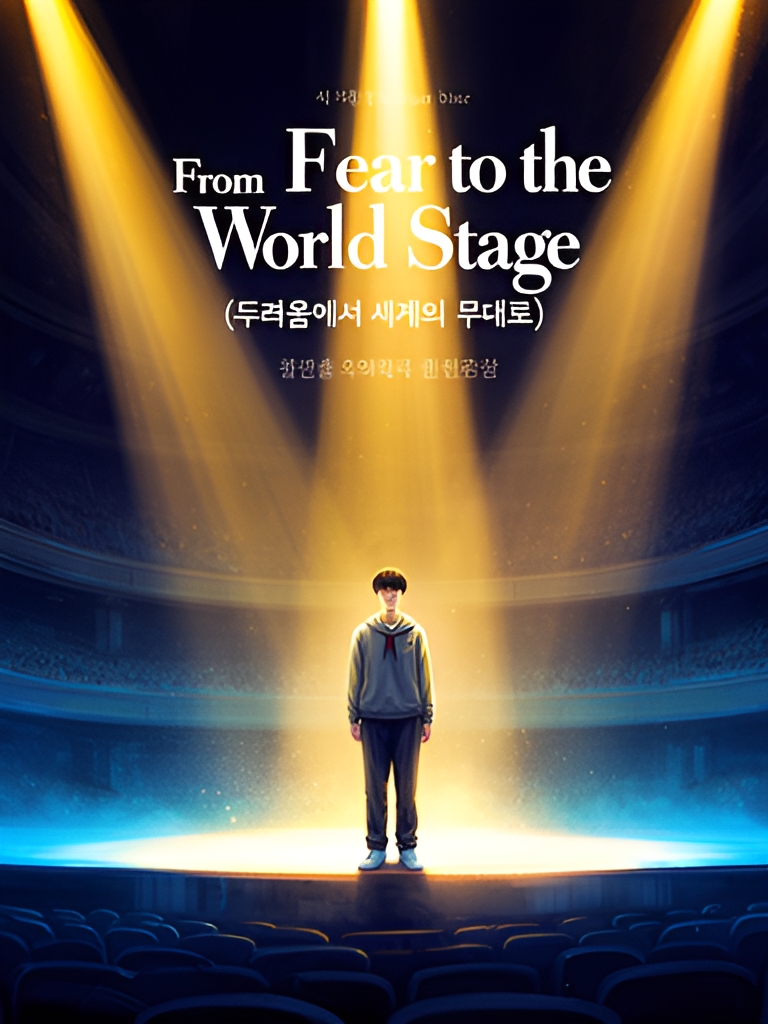
From fear to the world stage 🌍
by Shrestha Bishu
3 chapters16 min read
Chapter 1
The Weight of Silence
Min-jun’s fingers gripped the edge of his desk until his knuckles whitened. The classroom hummed with the rustle of pages and the low murmur of Mr. Choi moving between rows, but to Min-jun, it sounded like a distant storm. He stared at the open textbook on his lap, the lines of Romeo and Juliet swimming slightly—“But, soft! what light through yonder window breaks?” He had read it silently a dozen times last night, felt the rhythm in his chest, the rise and fall of iambic breath. Now, as Mr. Choi’s gaze settled on him, the words turned to ash.
“Min-jun-ah,” Mr. Choi said, voice warm but expectant. “Would you mind reading the next stanza? Just the first four lines.”
Min-jun opened his mouth. Air rushed in, sharp and cold. He managed, “But, soft—” before his throat sealed shut. His tongue felt too big, his jaw locked. He tried again, forcing air past the constriction, but only a strained whisper escaped: “—what light—” Then nothing. His lungs burned. He could feel the heat rising in his neck, the prickle behind his eyes. A soft chuckle came from somewhere to his left—Ji-hoon, maybe, or Min-seo—quickly stifled, but it landed like a stone.
“I—I’m sorry,” Min-jun mumbled, eyes fixed on the grain of his desk. He pushed his chair back with a scrape that sounded too loud in the sudden quiet and slipped into the aisle, head down. The backs of classmates’ heads blurred as he walked to his seat, each step echoing louder than the last. When he sat, he folded his arms on the desk and pressed his forehead into them, shutting out the world. The shame wasn’t just in the silence—it was in the knowing, the way he could feel their thoughts settle on him like dust: Again. He can’t even get through four lines.
After the bell, the room emptied in a rush of chairs and voices. Min-jun lingered, packing his bag slowly, hoping the hallway would be clear. He ducked into the library, seeking the farthest corner among the stacks of English literature, where the light was dim and the air smelled of paper and polish. He pulled out his notebook, but instead of studying, he replayed the moment over and over: the way his voice had cracked, the pity in Mr. Choi’s eyes, the stifled laughter. Each replay tightened the knot in his chest. He didn’t notice Ms. Park approach until her shadow fell across the open page.
“You’re here again,” she said softly. Not unkindly. Just… observing.
Min-jun flinched, then tried to straighten. “I—I was just reviewing.”
She pulled out the chair beside him, not too close, and sat. “You know,” she began, “I used to hide in the bathroom before every presentation in high school. Wash my face until it was red, stare at myself in the mirror, and tell myself I could do it. Then I’d walk out and my voice would disappear before I said ‘good morning.’”
Min-jun risked a glance. Her expression was open, not pitying, but understanding—like she’d seen this exact moment a hundred times.
“I thought I was the only one,” he whispered.
“Oh, no,” she said, a small smile touching her lips. “Fear likes to make you feel alone. But it’s a liar.” She paused. “There’s something after school today—debate club. Just observing, if you want. No pressure to speak. Ji-woo runs the warm-ups; she’s good at making people feel… seen.”
Min-jun swallowed. The idea of walking into a room where people were supposed to speak, where fluency was expected, made his stomach twist. But the thought of Ms. Park admitting her own fear… it loosened something, just a fraction.
“I’ll… think about it,” he said.
She stood, gathering her things. “Take your time. But know this—your voice matters. Even when it shakes.”
As she walked away, Min-jun stared at the notebook in his hands. The words on the page blurred again, but this time, it wasn’t from shame. It was from the first fragile crack of something else—hope, maybe, or just the quiet relief of not being unseen. He closed the book slowly, the decision forming not with certainty, but with the tentative weight of a first step. Just one sentence, he thought. That’s all I’d have to say.
Min-jun pushed through the heavy wooden door of the debate club room just as the final bell’s echo faded down the hall. The air inside was warmer than the hallway, thick with the scent of chalk dust and something citrusy from a diffuser in the corner. Rows of chairs faced a small whiteboard, already half-filled with scribbled pros and cons about homework. A few students laughed over something Ji-woo had said, her voice cutting through the chatter like a clear note.
He hovered near the back, shoulders hunched, fingers twisting the strap of his bag. Ji-woo looked up from stacking index cards, her eyes landing on him. She didn’t smile too wide, just enough to crinkle the corners of her eyes, and tilted her head toward the empty chair beside her.
“Hey,” she said, voice low enough that only he could hear. “You can sit here. We’re just doing warm-ups—no grades, no judges. Say as much or as little as you want.”
He sank into the seat, the plastic cool through his jeans. Ji-woo slid a cup of water toward him, condensation dampening the tabletop. “Here. Helps with the dry mouth thing.”
He nodded, wrapping both hands around the cup. The warmth seeped into his palms, grounding him. On the whiteboard, the topic glowed in bold marker: Should schools ban homework? Two students were already standing, voices rising in rapid Korean-accented English, trading points about responsibility versus burnout. Min-jun followed the rhythm of their arguments, the way they paused for emphasis, the way their hands moved when they spoke. His chest tightened, but Ji-woo’s presence beside him was a steady pressure, like a hand on a doorframe keeping it from swinging shut.
When the second speaker sat down, Ji-woo turned fully toward him. Her expression was open, expectant but not demanding.
“Your turn, if you want it,” she said. “Just one sentence. Whatever comes to mind. No one’s keeping score.”
Min-jun’s mouth felt suddenly dry again, despite the water. He glanced at the whiteboard, at the jagged list of reasons under each column. Stress. Sleep loss. Family time. The words swam, then settled on one: stress. It was real. He’d felt it last night, hunched over math problems until his vision blurred, the clock ticking toward midnight.
He stood. The chair scraped softly. All eyes flicked to him—brief, curious, then returned to their own thoughts or notes. He swallowed, feeling the old panic rise, a tight band around his ribs. But Ji-woo was looking at him, not waiting, not judging, just there.
“Homework… causes stress,” he said, voice barely above a whisper, the words tumbling out fast, afraid they’d vanish if he slowed. “And… stress makes it hard to learn.”
He sat down so quickly he nearly knocked over the water cup. His hands shook as he steadied it. Heat flooded his face. He’d said it. It was out. And no one laughed. No one sighed. Ji-hoon from the back even gave a small, encouraging nod.
Ji-woo leaned in, her voice warm and low. “That was a real point,” she said. “Stress does interfere with learning. You just made a case for why banning homework could help.”
Min-jun stared at his hands, at the faint tremble in his fingers. The shame was still there, a low thrum beneath his ribs, but it was quieter now, overlapped by something thinner and sharper: surprise. He had spoken. Not perfectly. Not loudly. But he had spoken—and it had been heard.
Ji-woo didn’t push. She simply picked up her cards and said, “We’ll do another round in ten minutes. Same deal—one sentence if you want.”
He nodded, unable to trust his voice yet. As the discussion resumed, he listened, not with dread, but with a new kind of attention—waiting for the next gap, the next chance to slip a word into the circle.
When the club finally emptied and the chairs were stacked, Ji-woo lingered by the door, pulling on her jacket.
“Same time next week?” she asked.
Min-jun looked up from folding his notebook. The hope from the library was still there, quieter now, but firmer—like a root finding purchase in stone.
“I’ll try again,” he whispered.
She smiled. “That’s all we ask.”
Chapter 2
The Shape of Courage
Min-jun slipped into Room 207 just as the last bell’s echo faded down the hall. Fluorescent lights hummed overhead, casting a flat glow over the rows of empty desks. He set his bag down, pulled out his phone, and opened the voice memo app. The screen glowed faintly in his palm as he tapped record.
“Today,” he began, voice low and careful, “my favorite season is autumn.” He paused, listening to the hollow quality of his own tone. “Because the air feels… crisp. And the leaves turn red and gold.” He swallowed, feeling the familiar tightness in his chest. “It makes me want to walk longer, even if I have homework waiting.”
He stopped the recording after forty-five seconds. Played it back. His voice sounded thin, hesitant, each word spaced too far apart like stones in a stream. He winced and deleted it. Tried again. Same topic. Same hesitation. After the third attempt, he shut the phone off and stared at the dark screen, frustration warm behind his eyes.
Weeks passed like this. Every evening, he returned to the classroom after the last club meeting had ended and the lights were dimmed. He spoke into his phone about rain, about the smell of old books, about why he liked the quiet of early mornings. Each playback made him flinch—monotone, rushed, full of awkward pauses—but he kept going. Some nights he managed only two sentences before stopping. Others, he pushed to a full minute, his voice steadier by the end, though still tight at the edges.
One rainy Thursday, halfway through November, he was mid-sentence about the sound of water on the windowsill when the door creaked open. He froze, phone halfway to his lips.
Ji-woo stood in the doorway, backpack slung over one shoulder, hair damp from the walk. She didn’t come in right away. Just leaned against the frame, smiling softly.
“Mind if I stay?” she asked. “I promised myself I’d finish this chapter, but the library’s too quiet tonight.”
He nodded, unable to speak, and turned back to the window. The rain blurred the streetlights into soft halos. He took a breath and pressed record again.
“The sound of rain,” he said, “isn’t just noise. It’s… a kind of rhythm. Like the city breathing.” He paused, listening to the actual rain against the glass. “It makes me feel less alone, even when I’m by myself.”
He kept going, talking about how the rhythm helped him focus, how it reminded him of his grandmother’s voice humming old songs. Ninety seconds passed. He didn’t stop. Didn’t check the time. When he finally lowered his phone, his chest felt light, not from absence of fear, but from having moved through it.
Ji-woo pushed off the door and walked to the desk beside him. She didn’t look at the phone. Didn’t offer feedback.
“I hear you trying,” she said, quiet but clear. “That’s what matters.”
He glanced at her, surprised to find his eyes not burning, not dodging. Just meeting hers for a moment—long enough to see the sincerity there, and to feel, for the first time, that the effort itself was enough. He nodded, swallowed, and whispered, “Thank you.”
She gathered her things. “Same time tomorrow?” she asked.
He looked at his phone—ninety seconds and three milliseconds of his own voice, imperfect but unbroken. “I’ll be here,” he said.
She smiled and left. The door clicked shut. Min-jun sat in the dim room, the rain still tapping against the glass, and for the first time, didn’t reach for the delete button.
He arrived at the auditorium an hour before the contest began, his palms damp against the straps of his bag. The hall smelled of waxed floor and faint disinfectant, rows of empty chairs waiting under bright lights. He found a seat near the back, unfolded his notes, and read them once—not to memorize, but to remind himself of the shape of his words: the shaky start, the memory of Ji-woo’s quiet presence in the doorway, the rain on the glass, the realization that speaking wasn’t about perfection, but about showing up.
When his name was called, he walked to the stage without looking at the audience. The microphone stood tall and silver, catching the light. He adjusted it to his height, took a breath that didn’t quite fill his lungs, and began.
“I used to think courage was the absence of fear,” he said, his voice clearer than it had been in weeks, steadier than he expected. “That if I were truly brave, I wouldn’t feel my hands shake or my throat tighten when I stood up to speak.”
He paused, letting the words settle. The lights were bright, but he didn’t flinch.
“Then, one rainy Thursday, I stayed after debate club to record myself talking about the sound of rain. I hated how I sounded. I deleted take after take. But Ji-woo came in. She didn’t correct me. Didn’t offer advice. Just said, I hear you trying. And for the first time, I realized—I didn’t have to be flawless to be heard. I just had to keep going.”
He looked out, not at any one face, but into the space between them.
“That day didn’t change me because I spoke well. It changed me because I spoke at all. And when I did, someone listened. Not because I was perfect, but because I was there.”
He paused again, longer this time. The silence wasn’t empty—it felt full, expectant.
“So if I had to name the moment that changed me… it wasn’t winning anything. It was the second I decided to try, even though I was afraid.”
He stepped back from the microphone. No bow, no flourish. Just a small nod, as if acknowledging a quiet understanding.
He returned to his seat, heart pounding not with dread, but with something lighter—like the moment after stepping off a ledge and realizing the ground had risen to meet him.
When the judges returned, the auditorium hummed with anticipation. The third-place winner was announced first—a senior with a polished delivery on social media activism. Then second place: a junior who spoke passionately about bilingual identity.
Min-jun didn’t dare hope.
And then: “First place… Min-jun Kim.”
His name hung in the air. He didn’t move at first, certain they’d made a mistake. The applause began—polite at first, then growing, spreading through the room like a wave. Ms. Park stood near the side, clapping softly, her eyes bright. Ji-woo was already on her feet, a grin breaking across her face.
He stood, legs stiff, and walked back to the stage. This time, he lifted his chin. Took the certificate with both hands. Held it for a moment, feeling its weight—not heavy, but real.
Ji-woo met him at the edge of the stage, her arms open before he could hesitate. She hugged him briefly, fiercely, her voice low in his ear: “I knew you could.”
He didn’t pull away right away. Let himself feel it—the pressure of her arms, the warmth of her breath, the truth in her words.
When he stepped back, he didn’t look at the crowd. He looked at his certificate, then at the microphone still standing center stage.
He hadn’t been cured. The fear hadn’t vanished. But it no longer stood between him and the world.
He tucked the certificate into his bag, nodded to Ms. Park on his way out, and walked into the hallway—not running, not hiding, but moving forward, one step at a time, the echo of his own voice still ringing in his ears.
Chapter 3
On the World Stage
The bus rolled to a stop outside COEX, its brakes sighing like a released breath. Min-jun gripped the strap of his bag, knuckles pale, as the doors hissed open. Outside, the glass façade of the convention center reflected the midday sun, blazing and indifferent. Students in crisp blazers streamed toward the entrance, their voices layered with accents and laughter, a river of confidence he felt certain he could not swim in.
He moved with the crowd, shoulders hunched, eyes fixed on the map in his hand. Sweden’s placard waited for him at the registration desk—a small, laminated rectangle with the yellow and blue cross. When he pinned it to his lapel, the weight of it surprised him. Not heavy, but present, like a pulse against his chest. A girl nearby adjusted her own placard with a flick of her wrist, smiling at a friend. Min-jun swallowed. He had spent weeks researching Sweden’s renewable energy targets, memorizing phrases about wind farms and carbon taxes. Now, standing here, the words felt borrowed, fragile.
Inside the committee room, the hum of voices settled into a low thrum as the chair gavels opened the session. Delegates leaned forward, papers rustling, laptops open. Min-jun sat upright, hands flat on the table, his notes stacked neatly before him. When his name was called, he rose slowly, feeling the eyes lift toward him. He cleared his throat and began to read his opening statement, voice tight at the edges, each word pulled from the page like a thread.
Sweden has long been committed to sustainable development, he started, and continued, citing targets for 2030, referencing hydropower and district heating. His gaze stayed down, scanning the next line before he spoke it. When he finished, he sat quickly, ears burning. He had not looked up once.
Later, during the moderated caucus, the debate turned to financing green transitions in developing nations. Min-jun listened, fingers tapping a quiet rhythm on his notebook. When a delegate from Brazil questioned the feasibility of scaling solar without storage, something shifted. He remembered the IPCC report Ji-woo had helped him summarize—the part about battery costs falling 89% since 2010. His heart hammered, but the data was there, solid in his mind.
He raised his placard. The chair nodded.
Min-jun took a breath. Sweden’s approach, he began, not reading, not looking down, integrates storage innovation with deployment—we’ve seen grid-scale lithium-ion projects paired with wind farms in the north, reducing curtailment by over 40% in pilot regions. He paused, felt the steadiness in his voice, and added, If we treat storage not as a barrier but as a grid enhancer, the path becomes clearer for nations with high solar potential but limited infrastructure. He glanced up. A delegate from Norway tilted her head, listening. Ji-woo, seated two rows down, caught his eye and gave the smallest, almost imperceptible nod.
When he sat down, the room moved on, but something in him had loosened. He unfolded a fresh sheet of paper, not to write a speech, but to steady his hands.
Later, as the committee broke for lunch, Min-jun lingered at the edge of the room, eating a kimbap Ji-woo had pressed into his hand earlier. The noise washed over him—conversations in English, Korean, French—no longer a threat, but a texture. He was about to leave when Ji-woo appeared beside him, her tray balanced in one hand.
You belonged there the second you stood up, her note read, the ink slightly smudged where her thumb had pressed. Min-jun looked up. She was watching him, not expectantly, but softly, like she was seeing something real.
I was reading, he said, his voice low. I didn’t look up.
You spoke, she said. And you used the data. That’s not reading. That’s knowing.
He looked down at his hands, then back at her. The placard on his lapel caught the light. For the first time, it didn’t feel like a costume. It felt like something he had earned.
The General Assembly hall stretched vast and echoing, its vaulted ceiling swallowing the murmur of hundreds of voices. Flags lined the walls—dozens of them, snapping gently in the conditioned air—and at the front, the podium stood under a pool of light, waiting. Min-jun’s name had been called just moments ago, selected by the committee to speak on the resolution for climate justice in vulnerable island nations. He had rewritten his speech three times that morning, each version shorter, each line carved down to what mattered: not flawless rhetoric, but truth he could stand behind.
Now, as he stepped forward, the polished floor cool beneath his shoes, he felt no paper in his hands. Only the weight of the placard against his chest, and the quiet hum of preparation in his bones. He paused at the edge of the stage, lifted his eyes, and scanned the sea of delegates. Then, near the back, he saw her—Ms. Park, sitting upright in the visitor’s section, her hands folded, her gaze steady and warm. Beside her, Ji-woo grinned, thumbs up, her eyes bright with something like pride.
He swallowed. Then began.
“The Maldives,” he said, voice clear, “is not sinking. It is being drowned.”
A hush settled, not of boredom, but of attention. He went on, speaking of saltwater seeping into farmland, of children learning to swim before they learn to read, of Kiribati purchasing land abroad as a last resort. He spoke of historical emissions, of responsibility, of the moral debt owed by industrialized nations. He cited no notes. The data lived in him now—Ji-woo’s highlighted articles, the late-night summaries, the way Ms. Park had once said, Knowledge isn’t memory. It’s ownership.
His voice grew stronger, not loud, but sure. He spoke of adaptation funds that arrived too late, of technology transfer stalled by patents, of young people in Nassau and Suva demanding not charity, but justice. When he reached the end, he did not look down.
“We are not delegates pretending to save the world,” he said, “we are the world, saving itself.”
The applause that followed was not polite. It rose in waves—steady, genuine, rolling across the hall like tide meeting shore. Min-jun stood still, hands loose at his sides, and for the first time, he did not flinch from the sound. He felt it in his ribs, in his throat, in the quiet unclenching of something deep inside.
Later, after the votes were tallied and the closing remarks made, the chair stepped forward, smile wide.
“It is my honor,” she announced, “to award the Best Delegate of the Environmental Committee… to Min-jun Kim of Sweden.”
His name rang out, clear and final. He rose, legs steady, and walked to the front. The ribbon was placed around his neck—silk, heavy with significance—but he did not look at it. Instead, he turned, searching the crowd. Ji-woo was on her feet, clapping, tears glinting in her eyes. Ms. Park smiled, her own eyes soft, and gave a single, slow nod.
He did not speak. He did not need to.
The hall emptied slowly around them, delegates laughing, exchanging contacts, already talking about next year. Min-jun lingered by the exit, the ribbon soft against his collar. Ji-woo fell into step beside him.
“I didn’t know I could do that,” he murmured.
She glanced at him, smiling. “You didn’t have to know. You just had to try.”
He looked down at his hands—no longer shaking, no longer hidden in his pockets—and then out at the sunset bleeding gold over the Han River. The placard still rested on his chest. It did not feel like a costume. It did not feel like borrowed courage.
It felt like his.