Business
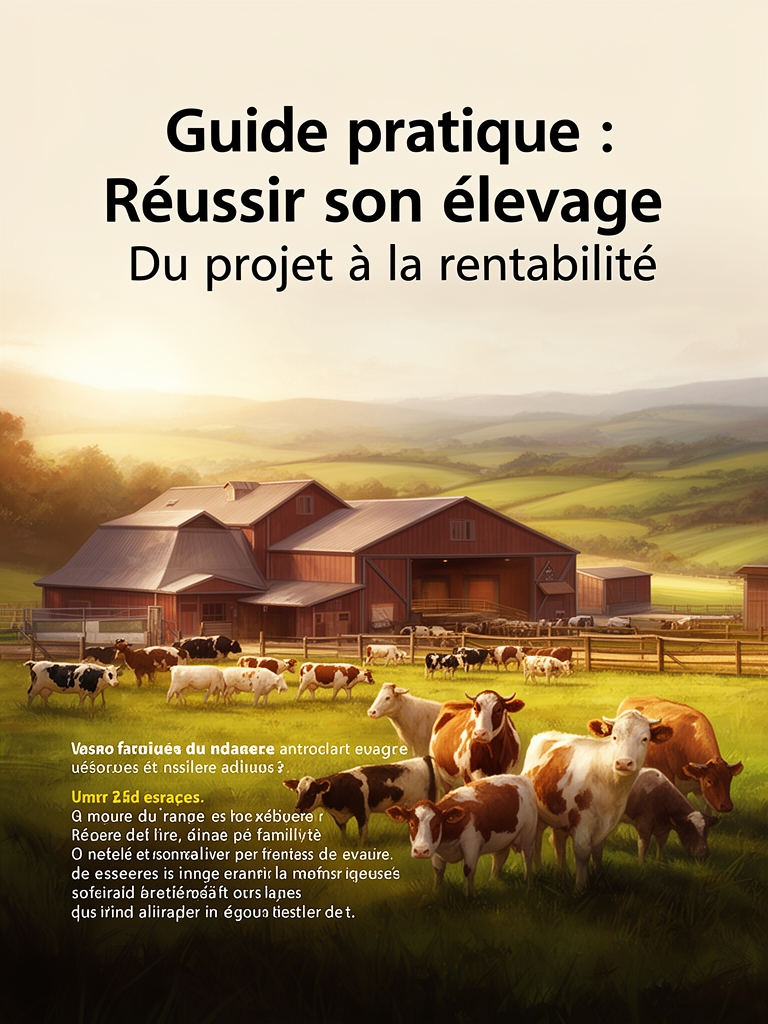
Guide pratique : Réussir son élevage : Du projet à la rentabilité
by Abdel Khalil Doumbia
5 chapters23 min read
Chapter 1
Foundations of the Project and Market Analysis
Choosing the Right Type of Livestock
The decision to choose the right type of livestock was a crucial one, as it would ultimately determine the success or failure of the entire project. Many aspiring farmers had fallen into the trap of selecting animals based on personal preference or sentimental value, only to later realize that their choice was not viable in the current market. To avoid this pitfall, it was essential to conduct thorough research and consider various factors such as climate, available resources, and demand. As one experienced farmer, John, recalled, "I started out with a small herd of cattle, but soon realized that the local market was saturated with beef. If I had done my research beforehand, I would have known that there was a much higher demand for poultry and could have avoided a significant loss." He added, "Now, I always advise new farmers to take the time to analyze the market and choose a type of livestock that is in demand and suitable for their resources."
For those looking to start a livestock farming business, the options were numerous, ranging from cattle and pigs to sheep, goats, and poultry. Each type of animal had its own unique requirements and challenges, and it was vital to carefully consider these factors before making a decision. As another farmer, Emily, noted, "We initially considered starting a dairy farm, but after researching the costs and logistics involved, we decided that it wasn't feasible for our resources. Instead, we opted for a smaller-scale poultry operation, which has proven to be much more manageable and profitable." She emphasized, "It's not just about choosing an animal that you like; it's about choosing one that will allow you to run a successful and sustainable business."
In addition to considering the type of livestock, it was also important to think about the breed and quality of the animals. Some breeds were better suited to certain climates or management systems, and selecting the right breed could make a significant difference in the overall productivity and profitability of the farm. As a veterinarian, Michael, explained, "The breed of animal can have a major impact on its health and productivity. For example, some breeds of cattle are more resistant to certain diseases, while others may be better suited to grazing in hot climates." He advised, "It's essential to do your research and select a breed that is well-suited to your specific conditions and management system."
By taking the time to carefully research and consider these factors, aspiring farmers could make an informed decision about the type of livestock to raise, setting themselves up for success in the competitive world of livestock farming. As the farmers' association president, Sarah, stated, "The key to a successful livestock farming business is to start with a solid foundation, and that begins with choosing the right type of livestock. By doing your homework and selecting animals that are well-suited to your resources and the local market, you can build a thriving and sustainable business that will provide a good income for years to come."
Conducting Market Research and Developing a Business Plan
As the farmers delved deeper into the world of livestock farming, they began to realize the importance of conducting thorough market research and developing a comprehensive business plan. This involved analyzing the local market trends, identifying potential customers, and determining the demand for their chosen type of livestock. John, who had learned from his previous experience with cattle, emphasized the need to understand the market dynamics, saying, "You can't just produce a product and expect people to buy it. You need to know what people want, how much they're willing to pay, and how you can differentiate your product from others in the market." He added, "For example, if you're planning to raise poultry, you need to research the demand for chicken meat and eggs in your area, as well as the prices that consumers are willing to pay."
Emily, who had opted for a poultry operation, shared her experience of conducting market research, saying, "We spoke to local restaurants, grocery stores, and consumers to understand their requirements and preferences. We also analyzed the competition and identified gaps in the market that we could fill." She noted, "This research helped us to develop a business plan that was tailored to our specific circumstances and goals." Michael, the veterinarian, highlighted the importance of considering the broader market trends, saying, "You need to stay up-to-date with the latest developments in the industry, such as changes in consumer preferences, new technologies, and shifts in global market trends." He advised, "This will help you to anticipate potential challenges and opportunities, and make informed decisions about your business."
As the farmers developed their business plans, they also needed to consider the financial aspects of their operations. This involved estimating startup costs, projecting revenue and expenses, and determining the break-even point for their business. Sarah, the farmers' association president, emphasized the importance of creating a realistic and comprehensive financial plan, saying, "You need to have a clear understanding of your costs and revenue streams, as well as a plan for managing risk and uncertainty." She added, "This will help you to secure funding, make informed decisions about investments and expansions, and ensure the long-term sustainability of your business." By conducting thorough market research and developing a comprehensive business plan, the farmers were able to set themselves up for success and create a thriving and sustainable livestock farming business.
The process of conducting market research and developing a business plan was not a one-time event, but rather an ongoing process that required continuous monitoring and evaluation. As the farmers navigated the complexities of the livestock farming industry, they needed to stay adaptable and responsive to changes in the market and their business. John noted, "You need to be willing to pivot and adjust your plan as circumstances change. This might involve responding to changes in consumer demand, adapting to new technologies or regulations, or exploring new markets and opportunities." Emily added, "It's also important to regularly review and update your business plan, to ensure that you're on track to meet your goals and objectives." By taking a proactive and flexible approach to market research and business planning, the farmers were able to build a strong foundation for their business and achieve long-term success in the competitive world of livestock farming.
As the farmers looked to the future, they recognized the importance of ongoing learning and professional development. This involved staying up-to-date with the latest research and technologies, attending industry events and conferences, and networking with other farmers and experts in the field. Michael said, "You need to be committed to lifelong learning and continuous improvement, to stay ahead of the curve and remain competitive in the industry." He emphasized, "This might involve attending workshops and seminars, reading industry publications, or participating in online forums and discussion groups." By prioritizing ongoing learning and professional development, the farmers were able to stay informed, adapt to changing circumstances, and make informed decisions about their business.
In the end, the farmers' ability to conduct thorough market research, develop a comprehensive business plan, and stay adaptable and responsive to changes in the market and their business was crucial to their success. By taking a proactive and informed approach to livestock farming, they were able to build a thriving and sustainable business that provided a good income and a sense of fulfillment. As Sarah noted, "The key to a successful livestock farming business is to start with a solid foundation, and that begins with choosing the right type of livestock and developing a comprehensive business plan." She added, "By doing your homework, staying adaptable, and prioritizing ongoing learning and professional development, you can build a business that will provide a good income and a sense of fulfillment for years to come."
Chapter 2
Infrastructure and Facilities
Designing and Building Suitable Facilities
As the farmers progressed with their livestock farming project, they soon realized that designing and building suitable facilities was a critical aspect of their business. "The facilities must be designed with the welfare of the animals in mind," said John, a seasoned farmer with years of experience in the industry. "This includes providing adequate space, ventilation, and hygiene to prevent disease and promote healthy growth." The farmers understood that the type of livestock they had chosen would dictate the specific design requirements of their facilities. For example, cattle would require larger enclosures with adequate grazing space, while poultry would need coops with precise temperature and humidity controls.
The selection of appropriate equipment and materials was also a crucial consideration. "We need to choose materials that are durable, easy to clean, and resistant to disease," said Emily, a young farmer who had recently joined the project. "This will not only ensure the health and well-being of our animals but also reduce maintenance costs and minimize the risk of disease outbreaks." The farmers spent several weeks researching and consulting with experts to determine the best equipment and materials for their specific needs. They eventually decided on a combination of concrete, steel, and wood for the construction of their facilities, which would provide a sturdy and long-lasting structure.
As they began building their facilities, the farmers encountered several challenges. The land they had chosen was rocky and uneven, which made it difficult to lay the foundation for their buildings. Additionally, they had to navigate complex regulations and zoning laws, which dictated the size and location of their facilities. "It's been a steep learning curve," said John, "but we're determined to get it right. We know that our facilities will be the backbone of our business, and we can't afford to compromise on quality." Despite the setbacks, the farmers persevered, driven by their passion for livestock farming and their commitment to creating a successful and sustainable business.
As the facilities began to take shape, the farmers turned their attention to the issue of hygiene and space management. They knew that overcrowding and poor sanitation could lead to disease and reduced productivity, which would ultimately impact their bottom line. "We need to strike a balance between providing adequate space for our animals and maximizing our production capacity," said Emily. "It's a delicate balance, but one that's essential for the long-term success of our business." The farmers implemented a rigorous cleaning schedule and developed a system for monitoring and maintaining optimal living conditions for their animals. They also invested in state-of-the-art equipment, such as automated feeding and watering systems, to reduce labor costs and improve efficiency.
Through their experiences, the farmers came to appreciate the importance of careful planning and attention to detail in designing and building suitable facilities. They realized that their facilities were not just a necessary expense, but a critical investment in the success and sustainability of their business. As they looked to the future, they knew that their facilities would play a vital role in their ability to adapt to changes in the market and respond to the evolving needs of their customers. "We're not just building facilities," said John, "we're building a foundation for our business. And with the right design and construction, we're confident that we can create a thriving and profitable livestock farming operation."
Selecting Equipment and Managing Space
The farmers spent a significant amount of time selecting the right equipment for their facilities, taking into consideration the specific needs of their livestock. "We need to choose equipment that is not only durable and easy to clean but also suitable for the type of animals we are raising," said Emily. They decided to invest in high-quality feeding and watering systems, as well as ventilation and temperature control systems, to ensure the health and well-being of their animals. John noted, "The equipment we choose will have a direct impact on the productivity and efficiency of our operation, so it's essential we get it right."
As they began to manage the space within their facilities, the farmers realized the importance of creating a comfortable and stress-free environment for their animals. "Overcrowding can lead to disease and reduced productivity, so we need to ensure that our animals have enough space to move around and thrive," said John. They implemented a system of rotational grazing, which allowed them to maximize their land use while also giving their animals access to fresh air and exercise. Emily added, "By providing our animals with a comfortable and healthy living environment, we can reduce the risk of disease and improve the overall quality of our livestock."
The farmers also invested in advanced technology, such as automated monitoring systems, to help them track the health and well-being of their animals. "This technology will enable us to quickly identify any potential issues and take action to prevent disease and reduce mortality rates," said John. By combining their knowledge of animal husbandry with the latest technology, the farmers were able to create a state-of-the-art facility that would support the health and productivity of their livestock. As they continued to work on their facilities, the farmers remained focused on their goal of creating a successful and sustainable livestock farming operation.
As the facilities neared completion, the farmers began to think about the ongoing maintenance and upkeep of their equipment and facilities. "We need to ensure that our facilities are regularly cleaned and maintained to prevent the spread of disease and reduce the risk of equipment failure," said Emily. They developed a comprehensive maintenance schedule, which included regular cleaning and disinfection of the facilities, as well as routine maintenance of the equipment. John noted, "By staying on top of maintenance, we can prevent costly repairs and downtime, and ensure that our operation runs smoothly and efficiently."
Through their experiences, the farmers gained a deeper understanding of the importance of careful planning and attention to detail in selecting equipment and managing space. They realized that their facilities were not just a necessary expense, but a critical investment in the success and sustainability of their business. As they looked to the future, they knew that their facilities would play a vital role in their ability to adapt to changes in the market and respond to the evolving needs of their customers. "We're proud of what we've accomplished so far," said John, "and we're confident that our facilities will provide a solid foundation for our business to grow and thrive."
Chapter 3
Animal Nutrition and Health
Developing Feeding Plans and Nutrition Strategies
As the farmers delved into the world of animal nutrition, they realized the significance of developing a well-structured feeding plan. "A good feeding plan is the backbone of a successful livestock farming business," emphasized John, a seasoned farmer. He explained that the plan should take into account the nutritional requirements of the animals, the quality and availability of feed, and the cost implications. The farmers learned that a balanced diet was essential for maintaining the health and productivity of their livestock. They discovered that advanced technology could be used to monitor the nutritional intake of their animals, enabling them to make adjustments as needed. By leveraging this technology, they could quickly identify potential health issues and take corrective action.
The farmers also understood that the choice of breed played a crucial role in determining the nutritional needs of their animals. For instance, certain breeds required more protein-rich feed, while others needed a diet rich in fiber. By selecting the right breed and developing a tailored feeding plan, the farmers could optimize the growth and productivity of their livestock. Furthermore, they recognized that the quality of equipment and facilities had a direct impact on animal health and productivity. Well-designed facilities with adequate space, ventilation, and hygiene helped to prevent disease and promote healthy growth. The farmers invested in high-quality equipment, such as automated feeding systems, to ensure that their animals received the right amount of nutrients at the right time.
As they developed their feeding plans, the farmers considered the importance of rotational grazing and the use of high-quality feed. They learned that rotational grazing helped to maintain soil fertility, reduce parasite loads, and promote biodiversity. By rotating their animals to different pastures, the farmers could also reduce the risk of overgrazing and maintain the quality of their feed. The farmers also explored the use of alternative feed sources, such as locally sourced grains and hay, to reduce their reliance on commercial feed. By adopting a holistic approach to animal nutrition, the farmers aimed to create a sustainable and profitable livestock farming business. "It's all about finding the right balance," said Emily, a farmer who had successfully implemented a rotational grazing system on her farm. "You need to balance the nutritional needs of your animals with the resources available to you, while also considering the environmental impact of your farming practices."
The farmers' journey to develop effective feeding plans and nutrition strategies was not without its challenges. They faced difficulties in sourcing high-quality feed, managing the cost of equipment and facilities, and balancing the nutritional needs of their animals with the demands of the market. However, through perseverance and a commitment to best practices, they were able to overcome these obstacles and create thriving livestock farming businesses. As they looked to the future, the farmers recognized the need to stay adaptable and responsive to changes in the market and their business. They knew that the livestock farming industry was constantly evolving, with new technologies, breeds, and management practices emerging all the time. By staying informed and up-to-date with the latest developments, the farmers could continue to optimize their feeding plans and nutrition strategies, ensuring the long-term success and sustainability of their businesses.
Implementing Vaccination Programs and Preventing Disease
As the farmers progressed in their journey to establish a successful livestock farming business, they turned their attention to implementing vaccination programs and preventing disease. "Vaccination is a critical component of animal health," said John, emphasizing the importance of protecting livestock from diseases. The farmers learned that a well-planned vaccination program could help prevent the spread of diseases, reducing the risk of illness and death among their animals. They worked with veterinarians to develop a comprehensive vaccination schedule, taking into account the specific needs of their livestock and the diseases prevalent in their region.
Emily, who had experienced the devastating effects of a disease outbreak on her farm, stressed the importance of being proactive in preventing disease. "It's not just about vaccinating your animals," she said. "You need to have a holistic approach to disease prevention, including proper hygiene, sanitation, and biosecurity measures." The farmers implemented strict biosecurity protocols, including restricting access to their farms, using disposable clothing and equipment, and regularly disinfecting their facilities. They also ensured that their animals had access to clean water and a nutritious diet, recognizing that a healthy immune system was essential for preventing disease.
The farmers also explored the use of alternative methods for preventing disease, such as using natural remedies and probiotics. They learned that these methods could be effective in boosting the immune systems of their animals, reducing the need for antibiotics and other chemicals. By adopting a multifaceted approach to disease prevention, the farmers aimed to create a healthy and resilient herd, better equipped to withstand the challenges of disease and environmental stress. As they implemented their vaccination programs and disease prevention strategies, the farmers remained vigilant, continuously monitoring their animals for signs of illness and taking prompt action to address any health issues that arose.
Through their efforts, the farmers were able to significantly reduce the incidence of disease on their farms, resulting in improved animal health and productivity. They also reduced their reliance on antibiotics and other chemicals, creating a more sustainable and environmentally friendly farming system. As they looked to the future, the farmers recognized the need to stay adaptable and responsive to changes in the market and their business, including the emergence of new diseases and the development of new vaccination technologies. By staying informed and up-to-date with the latest developments in animal health and disease prevention, the farmers could continue to optimize their vaccination programs and disease prevention strategies, ensuring the long-term success and sustainability of their businesses.
The farmers' ability to implement effective vaccination programs and prevent disease was also influenced by advances in technology and changes in the market. They leveraged digital platforms and data analytics to track the health of their animals, monitor disease outbreaks, and make informed decisions about vaccination and disease prevention. They also responded to changing consumer preferences, such as the demand for antibiotic-free and organic products, by adapting their farming practices and vaccination programs. By being responsive to these changes, the farmers were able to stay competitive in the market and maintain the trust and loyalty of their customers.
As the livestock farming industry continued to evolve, the farmers recognized the importance of staying connected with other farmers, researchers, and industry experts. They participated in workshops and conferences, shared knowledge and best practices, and collaborated on research projects to advance the field of animal health and disease prevention. Through these efforts, the farmers were able to stay at the forefront of the latest developments in the industry, ensuring that their businesses remained competitive and sustainable in the long term. By combining their knowledge and expertise with the latest advances in technology and disease prevention, the farmers were able to create thriving and resilient livestock farming businesses, capable of withstanding the challenges of a rapidly changing market and industry.
Chapter 4
Farm Management and Daily Operations
Monitoring Animal Health and Managing Breeding Programs
As the farmers delved into the daily operations of their farm, they understood that monitoring animal health was crucial for the success of their business. "We need to keep a close eye on the health of our livestock," said one of the farmers, "any sign of illness or disease can quickly spread and affect the entire herd." They implemented a rigorous monitoring system, which included regular checks on the animals' behavior, appetite, and physical condition. The farmers also maintained detailed records of the animals' health, including vaccination records, medical treatments, and any notable health issues. This allowed them to quickly identify any potential problems and take prompt action to prevent the spread of disease.
In addition to monitoring animal health, the farmers also focused on managing their breeding programs. They understood that a well-planned breeding program was essential for maintaining a healthy and productive herd. "We need to select breeds that are well-suited to our climate and resources," said another farmer, "and we need to ensure that our breeding stock is of high quality." The farmers worked with experienced breeders and geneticists to develop a breeding program that met their specific needs. They also invested in advanced technology, such as genetic testing and artificial insemination, to improve the quality and productivity of their herd.
The farmers also recognized the importance of maintaining accurate and detailed records of their breeding program. They kept track of the pedigree and performance of each animal, as well as the results of their breeding efforts. This allowed them to make informed decisions about which animals to breed and when, and to continuously improve the quality of their herd. "It's not just about producing offspring," said one of the farmers, "it's about producing high-quality offspring that will help us achieve our business goals." By carefully managing their breeding program and monitoring animal health, the farmers were able to maintain a healthy and productive herd, which was essential for the long-term success of their business.
As they continued to manage their farm, the farmers encountered various challenges and opportunities. They had to adapt to changes in the market and the weather, and they had to stay up-to-date with the latest developments in animal health and nutrition. However, they were committed to their business and were determined to succeed. "We're not just farmers," said one of them, "we're entrepreneurs, and we need to be prepared to adapt and evolve in order to stay ahead of the game." By staying focused on their goals and being willing to innovate and improve, the farmers were able to build a successful and sustainable business that would thrive for years to come.
The farmers' attention to detail and commitment to their business also extended to their relationships with their customers. They understood that building strong relationships with their customers was essential for the long-term success of their business. "We need to be able to provide our customers with high-quality products and excellent service," said one of the farmers, "and we need to be able to respond to their changing needs and preferences." The farmers worked hard to build trust with their customers, and they were always looking for ways to improve their products and services. By doing so, they were able to establish a loyal customer base and build a reputation as a reliable and trustworthy supplier of high-quality livestock products.
As the days turned into weeks, and the weeks turned into months, the farmers continued to work tirelessly to build their business. They faced many challenges and setbacks along the way, but they never gave up. They were driven by their passion for farming and their commitment to their business, and they were determined to succeed. "We're not just building a business," said one of the farmers, "we're building a legacy, and we want to make sure that it's a legacy that will last for generations to come." With their hard work, dedication, and commitment to excellence, the farmers were able to build a successful and sustainable business that would thrive for years to come.
Maintaining Records and Managing Daily Tasks
The farmers' daily tasks were numerous and varied, but they understood the importance of staying organized and focused. "We need to prioritize our tasks and make sure that we're completing them efficiently," said one of the farmers, "otherwise, we'll fall behind and risk compromising the health and productivity of our animals." They developed a system for managing their daily tasks, which included maintaining accurate and detailed records of their activities. This allowed them to track their progress, identify areas for improvement, and make informed decisions about their business.
As they went about their daily tasks, the farmers were constantly monitoring the health and well-being of their animals. They checked for signs of illness or disease, monitored feed and water intake, and made sure that the animals had access to clean and comfortable living conditions. They also spent time maintaining the facilities, including cleaning and disinfecting equipment, and performing routine repairs and maintenance. "It's a lot of work," said one of the farmers, "but it's worth it to know that we're providing the best possible care for our animals."
In addition to their daily tasks, the farmers also made time for long-term planning and strategy. They regularly reviewed their business plan, updated their financial projections, and researched new technologies and techniques that could help them improve their operations. "We need to stay ahead of the curve," said one of the farmers, "and be prepared to adapt to changes in the market and the industry." By staying focused on their goals and being willing to innovate and improve, the farmers were able to build a successful and sustainable business that would thrive for years to come.
As the farmers looked to the future, they knew that they would face many challenges and opportunities. They would have to adapt to changes in the market and the weather, and they would have to stay up-to-date with the latest developments in animal health and nutrition. But they were confident in their ability to succeed, and they were excited to see what the future held for their business. "We're proud of what we've accomplished so far," said one of the farmers, "and we're looking forward to seeing what the future holds." With their hard work, dedication, and commitment to excellence, the farmers were well on their way to building a legacy that would last for generations to come.
The farmers' commitment to their business was evident in everything they did, from the way they cared for their animals to the way they managed their finances. They were meticulous in their record-keeping, and they regularly reviewed their financial statements to make sure that they were on track to meet their goals. "We need to be careful with our finances," said one of the farmers, "and make sure that we're making smart decisions about how we allocate our resources." By being responsible and prudent in their financial management, the farmers were able to build a strong and stable business that would be able to weather any storms that came their way.
As the farmers continued to work towards their goals, they remained focused on their core values of quality, integrity, and customer satisfaction. They knew that these values were essential to building a successful and sustainable business, and they were committed to upholding them in everything they did. "We're not just building a business," said one of the farmers, "we're building a reputation, and we want to make sure that it's a reputation that we can be proud of." By staying true to their values and being committed to excellence, the farmers were able to build a business that would be respected and admired by their customers and their community.
Chapter 5
Marketing, Sales, and Profitability
Developing Marketing and Sales Strategies
As the farmers delved into the world of marketing and sales, they quickly realized that developing effective strategies was crucial to ensuring the profitability of their farm. "We need to understand our target market and tailor our approach to meet their needs," said Emily, a seasoned farmer with years of experience in the industry. She emphasized the importance of conducting thorough market research to identify trends, consumer preferences, and competitor activity. By doing so, farmers could create a unique selling proposition that would set them apart from others in the market.
The group of farmers gathered around the table, eager to discuss their marketing and sales plans. They had all heard stories about farmers who had struggled to sell their products, despite having high-quality livestock and excellent facilities. "It's not just about having a great product," said Jack, a young farmer who had recently started his own business. "You need to know how to reach your customers and convince them to buy from you." The farmers nodded in agreement, recognizing that marketing and sales were essential components of a successful farming business.
One of the key challenges the farmers faced was setting prices for their products. They needed to balance their desire to make a profit with the need to remain competitive in the market. "If we set our prices too high, we risk losing customers to our competitors," said Sarah, a farmer who had been in the business for over a decade. "But if we set them too low, we won't be able to cover our costs." The farmers discussed various pricing strategies, including cost-plus pricing, value-based pricing, and competitive pricing. They also considered factors such as production costs, market demand, and the value that their products offered to customers.
In addition to setting prices, the farmers needed to develop effective sales strategies. They discussed the importance of building relationships with customers, providing excellent customer service, and offering high-quality products. "We need to be able to tell the story of our farm and the value that we offer," said Michael, a farmer who had a strong background in marketing. "We need to be able to connect with our customers and build trust with them." The farmers also talked about the role of social media, online marketing, and other digital channels in reaching customers and promoting their products.
As the discussion came to a close, the farmers felt more confident about their ability to develop effective marketing and sales strategies. They recognized that it would take time and effort to build a successful farming business, but they were willing to put in the work. "We need to be adaptable and responsive to changes in the market and our business," said Emily. "We need to be able to adjust our strategies as needed and stay focused on our goals." With a clear understanding of the importance of marketing and sales, the farmers were ready to move forward and start building their businesses.
Managing Finances and Optimizing Profitability
As the farmers continued to discuss their marketing and sales strategies, they began to delve into the world of financial management. "We need to have a clear understanding of our costs and revenues," said Jack, "in order to make informed decisions about our business." The farmers nodded in agreement, recognizing that managing finances was crucial to optimizing profitability. They discussed the importance of tracking expenses, including feed costs, labor costs, and equipment expenses, as well as revenue streams, such as sales of livestock and value-added products.
Sarah emphasized the need to create a comprehensive budget that would help them stay on track and make adjustments as needed. "We need to prioritize our expenses and make sure that we're allocating our resources effectively," she said. The farmers also talked about the importance of monitoring cash flow, managing debt, and building up their savings. "We need to have a cushion in case things don't go as planned," said Michael, "so that we can weather any storms that come our way."
Emily discussed the importance of analyzing financial ratios, such as the debt-to-equity ratio and the current ratio, to get a better understanding of their business's financial health. "We need to be able to identify areas where we can improve," she said, "and make adjustments to optimize our profitability." The farmers also explored the concept of break-even analysis, which would help them determine the point at which their business would become profitable.
As they delved deeper into the world of financial management, the farmers began to realize the importance of seeking outside expertise. "We don't have to have all the answers," said Jack, "we can work with accountants and financial advisors to get the help we need." The farmers discussed the benefits of working with professionals who could provide guidance on tax planning, financial reporting, and other areas of financial management.
The group also talked about the importance of staying up-to-date with the latest developments in the livestock farming industry. "We need to be aware of changes in market trends, consumer preferences, and government regulations," said Sarah, "so that we can adjust our strategies accordingly." They discussed the role of industry associations, conferences, and online forums in providing valuable information and networking opportunities.
As the discussion came to a close, the farmers felt more confident about their ability to manage their finances and optimize profitability. They recognized that it would take time and effort to develop a successful farming business, but they were willing to put in the work. "We need to stay focused on our goals," said Emily, "and be willing to adapt to changes in the market and our business." With a clear understanding of the importance of financial management, the farmers were ready to move forward and start building their businesses.
The farmers left the meeting with a sense of excitement and anticipation, knowing that they had a long journey ahead of them. But they were confident that with the right strategies, expertise, and mindset, they could overcome any challenges that came their way. As they parted ways, they couldn't help but feel a sense of pride and accomplishment, knowing that they were taking the first steps towards building a successful and sustainable farming business. "We're in this together," said Jack, "and we'll support each other every step of the way." The farmers nodded in agreement, knowing that they had formed a strong and supportive community that would help them achieve their goals.