Fiction
I AM THE SOURCE
by Enri Cana
3 chapters18 min read

Chapter 1
The First Signal
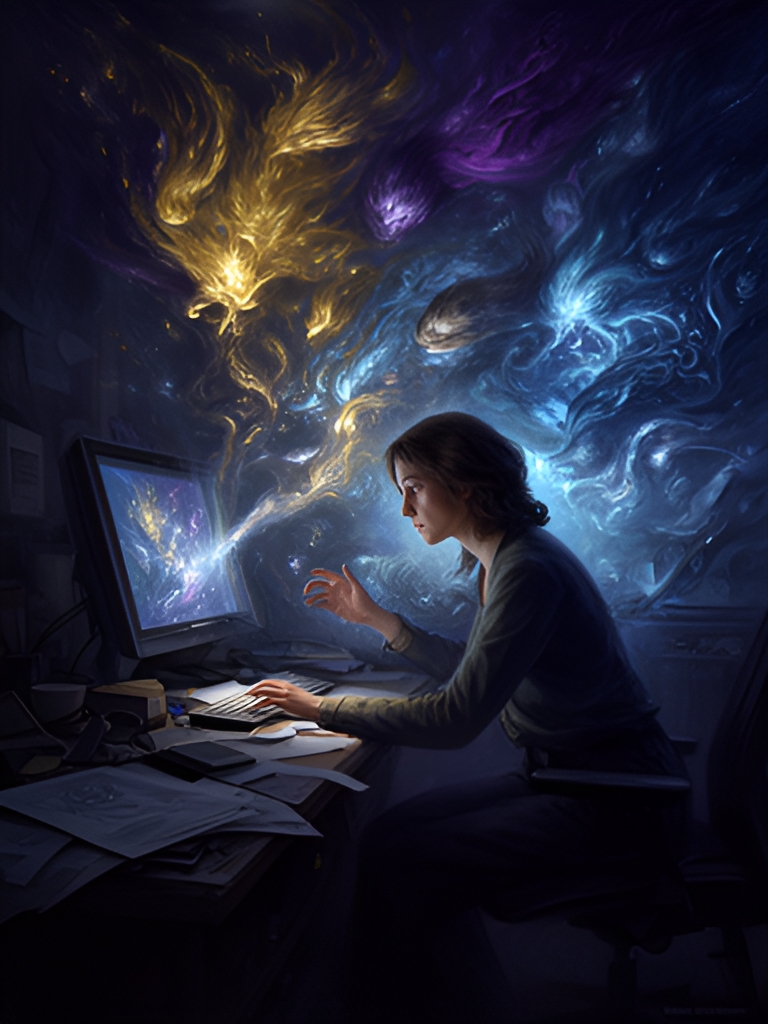
Mara’s eyes snapped open to the dim glow of her alarm clock blinking 6:03 a.m. The dream clung to her like damp sheets—a red letter, thick and wax-sealed, resting in her mailbox just beyond the chain-link fence of her apartment building. She’d reached for it, heart quickening, and the paper had felt warm beneath her fingertips, as if it had been waiting.
She sat up, pushing the covers aside. Just a dream. Stress from the upcoming pitch at Aether Studio. She rubbed her temples, already bracing for Julian’s quiet concern over coffee.
By 7:15 a.m., she was locking her door, the morning air sharp with the scent of rain-washed pavement. Her mailbox sat recessed beside the building’s brick facade, its metal door slightly ajar. Inside, nestled among the usual junk mail and a postcard from her sister Elena—Wish you were here. The coast is wild this week.—lay a single envelope.
It was red. Deep, almost luminous. No return address. Her name, Mara Voss, written in a familiar, looping hand she hadn’t seen since high school—her mother’s script.
Her breath hitched. She pulled it out, turned it over. The wax seal bore no crest, just a smooth, blank disc. She tore it open. Inside, a single sheet of paper, blank except for three words centered in the same handwriting: You are seen.
Her pulse hammered in her throat. Impossible. She’d never told anyone about that dream. Not even Julian, who knew her tendency to overthink.
She glanced up and down the quiet street. No one loitered. No bike messengers, no early joggers. Just the rustle of leaves in a maple tree and the distant hiss of a bus braking two blocks over.
Coincidence, she told herself, but the word felt thin, like paper over a crack. She slipped the letter into her bag, her fingers trembling slightly.
At the corner coffee shop, she ordered her usual oat milk latte and sat by the window, watching the street. A barista called out a name—Lena—and a woman turned, humming a soft, unfamiliar melody as she waited. Mara frowned. It was… recognizable. A fragment from a lullaby her mother used to sing, one she hadn’t thought of in over fifteen years.
She shook her head, chuckling nervously. Pattern-seeking. Your brain filling gaps.
But then, as she stepped back onto the sidewalk, a street musician nearby lifted his violin and began to play. The first notes were unmistakable—the same lullaby, note for note. She stopped, breath catching. The musician, a man with a worn cap and tired eyes, didn’t look up. He played on, lost in the music.

Mara stood frozen on the curb, the latte warming her palm. Her mind raced. Selective attention. You heard it once, now you’re noticing it everywhere. But the dream… the letter… the handwriting…
By lunch, she was at her desk at Aether Studio, sketching concepts for a rebrand while Julian flipped through a mood board beside her. She’d started a fresh page in her notebook, the one she kept for project ideas, and written at the top: Syncs?
Beneath it, she listed:
- 6:03 a.m.: Dream of red letter in mailbox.
- 7:15 a.m.: Found identical letter, no return address, mother’s handwriting.
- 8:45 a.m.: Hummed mother’s lullaby (unconsciously).
- 9:02 a.m.: Street musician played same lullaby on violin.
She tapped her pen, lips pressed tight. Priming. Confirmation bias. But the letter—she could still feel the slight ridge of the wax seal where she’d touched it.
The afternoon dragged. Julian left for a client call, and Mara found herself alone in the open-plan office, the hum of keyboards and distant phone calls blending into white noise. She thought, fiercely, I wish it would just be quiet for five minutes.
Two minutes later, the chatty account manager from the next desk gathered her papers, muttered something about needing “a change of scenery,” and left for the break room. The space fell into an unexpected hush, broken only by the occasional click of a mouse.
Mara stared at her notebook. Her pen hovered.
She wasn’t losing her mind. Not exactly. But something was shifting—like the world had suddenly become a mirror, and she was just learning how to look into it.
Outside Aether Studio’s glass doors, she paused, hand on the cool metal handle. Rain had begun again, light and steady, blurring the streetlights into halos. Inside, the office glowed with steady light, the rhythm of work resuming.
She took a breath. The letter was still in her bag. Blank except for those three words.
You are seen.
Was she waking up? Or finally dreaming awake?
She pushed the door open and stepped inside, the bell above it giving a soft chime. The air smelled of toner and oat milk. Somewhere down the hall, a printer whirred to life.
Mara dropped her bag by her desk and sank into her chair, the weight of the morning pressing behind her eyes. The project review was supposed to be collaborative, but as the creative director flipped through her mockups, his brow furrowed with each pass. “This feels… disjointed,” he said, tapping a spread where she’d layered typography over a fragmented cityscape. “Like you’re trying to say too much at once.”
Heat rose in her cheeks. She’d spent three nights refining that concept, chasing the balance between energy and clarity. “I was aiming for tension,” she began, voice tighter than she meant it to be. “The brand’s about disruption—”
“Disruption doesn’t mean confusion,” he cut in, glancing at his notes. “We need something the client can grasp in five seconds. This needs work.”
Around the table, murmurs of agreement rippled. Julian shifted in his seat, his pen still, but Mara didn’t look at him. Her pulse hammered in her throat, the familiar sting of being unseen flaring hot behind her ribs. Not again, she thought. Not here, not now.
She felt the old reflex rise—defensiveness, the urge to justify, to shrink or snap back. But instead, she pressed her palms flat against the cool wood of the desk and closed her eyes. A breath in. And silently, fiercely, she shaped the words inside her: I am heard. I am valued.
When she opened them, the room had changed.
Julian leaned forward, his expression open. “Actually, I think the fragmentation works,” he said. “It mirrors how people experience the city—layers, contrasts. It’s not noise; it’s texture.”
The creative director paused, then nodded slowly. “Huh. I hadn’t seen it that way. If we tighten the hierarchy here—maybe anchor one element—it could sing.”
Mara’s throat loosened. She nodded, feeling the words settle in her chest like stones finding their place in a stream. I am heard. I am valued. Not a plea. A declaration. And the air had shifted to meet it.

Later, the office printer jammed again—a shrill, repetitive error light blinking red as Lena from accounts swore and yanked at the tray. Mara watched, amused despite herself, as Lena kicked the side of the machine and muttered about “technology having a personal vendetta.”
Mara felt a flicker of the same frustration rise—not now, I have edits to make—but she let it pass. Instead, she settled into her seat, eyes softening on the blinking light, and held a quiet intention: Let this resolve. Let it be easy.
She didn’t speak. Didn’t gesture. Just sat, breathing slowly, imagining the paper sliding free, the gears turning smooth.
Lena sighed, shoved back her chair, and stalked toward the break room. Ten minutes later, she returned with Miguel from IT, who opened the printer, cleared a twisted corner of cardstock, and had it humming again in under two minutes. Mara watched him work, the tension in her shoulders easing. Outside, rain had softened to a mist, blurring the city into watercolor.
She packed her bag a little early, the weight of the letter still against her hip beneath her bag’s flap. The words You are seen felt less like a mystery now and more like an echo—of something she’d forgotten she knew.
Outside, the sky had cleared enough for a sliver of gold to catch the treetops of Forest Park as she cut through on her way home. She walked slowly, letting the damp air fill her lungs, the city’s rush fading behind her. Beneath the cedars, she stopped, turned her face to the sky, and whispered into the hush: Show me. Just a sign.
Almost immediately, a cry split the air—a sharp, ringing kee-eeeeer. Mara looked up.
A red-tailed hawk circled once, twice, riding the thermal above the canopy, its wings wide and still, tail fanned like a flame. Then, as if summoned, it cried again—one pure, piercing note—and vanished into the green gloom beyond the trees.
Mara stood still, heart full, not with fear, but with the quiet certainty of being answered. She lowered her gaze, stepped back onto the path, and walked on, the forest breathing around her. The day had shifted. Something in her had, too.
And for the first time in years, she didn’t look over her shoulder to see what was chasing her. She walked forward, trusting the ground beneath her feet.
Chapter 2
The Mirror in the Stranger
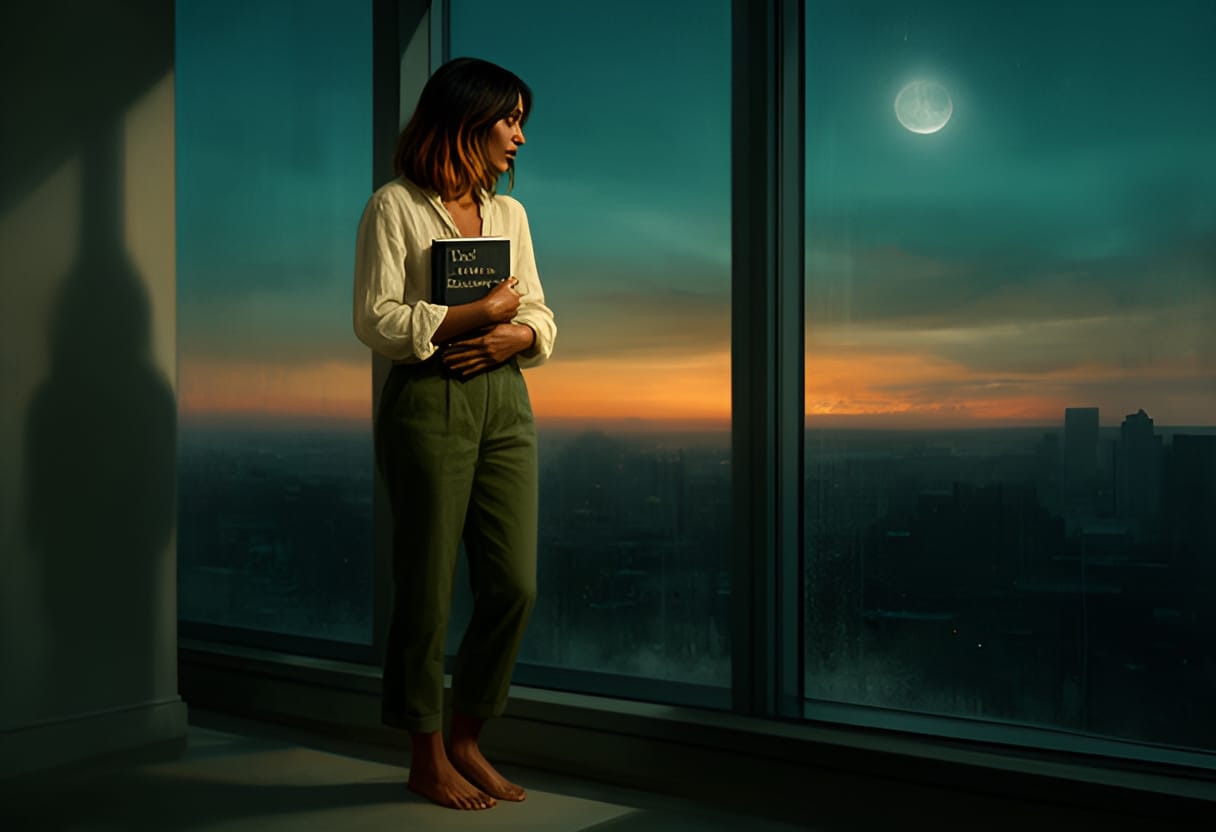
Mara stepped onto the porch of her apartment building, the key turning stiffly in the lock. Inside, the familiar scent of old paper and dust from her neglected bookshelf greeted her. She dropped her bag by the door, kicked off her shoes, and padded barefoot to the window, watching the last light fade over the Willamette. The hawk’s cry still echoed in her chest, not as a memory, but as a presence—like something had leaned in close and whispered, I am here.
She hadn’t meant to go to Powell’s. But the pull was quiet, insistent—a need to be among shelves, to touch spines that hadn’t dreamed, to lose herself in the quiet hum of other people’s thoughts. She told herself it was just a walk, a way to stretch the evening before dinner. But her feet had carried her west, across the Steel Bridge, past the food carts glowing like embers, until she stood beneath the awning of the legendary bookstore, its windows warm with light.
The air inside smelled of paper, ink, and polished wood. Soft jazz played low from hidden speakers. Mara wandered toward the poetry section, fingers grazing titles without really seeing them. Her mind was still in the forest, on the hawk’s wide wings, on the way the light had caught the red of its tail like a signal flare. She wasn’t looking for answers. She was looking for silence.
Then, a voice—soft, certain, as if it had been waiting just behind her shoulder.
“You keep asking the universe for a sign. It’s been answering in your dreams.”
Mara turned.
A woman stood a few feet away, dressed in a long, charcoal coat that seemed to drink the light. Her hair was silver at the temples, pulled back loosely, and her eyes—pale gray, almost translucent—held Mara’s with a quiet intensity. There was no surprise in her expression, only recognition, as if they had met before in another life, another dream.
“How do you know about my dreams?” Mara asked, her voice lower than she intended.
The woman didn’t smile, but her eyes softened. “You don’t need to tell me. I can feel the question in your breath.” She reached into her coat and pulled out a book, its cover deep blue with silver lettering: The Law of Resonance by Lien Voss.
Mara’s breath caught. Lien Voss. Her mother’s maiden name. The name she hadn’t spoken aloud in years, not since the funeral, not since the silence began.
“How—” Mara began, but the woman was already placing the book in her hands.
“You don’t need to believe it yet,” she said. “Just notice how your mood changes the air around you.”
Before Mara could thank her, before she could ask her name, the woman turned and walked toward the back of the store, between the philosophy and metaphysics aisles. Mara watched her go, coat brushing the edge of a shelf, then—nothing.
She blinked.
The aisle was empty. No coat, no silver hair, no trace. The books stood undisturbed. No rustle of fabric, no footsteps on the concrete floor beyond the rug. She stepped forward, heart pounding, and ran her hand along the shelf where the woman had vanished. Solid wood. No hidden door. No draft.
She looked toward the exits—both in view, both empty of anyone matching that description. The clerk behind the counter was shelving books, unaware. A man in a flannel shirt browsed near the classics. No one had seen a woman in a long coat disappear into thin air.
Mara looked down at the book in her hands. The Law of Resonance. Her mother’s name. The stranger’s words: You keep asking the universe for a sign.
She opened to the first page. The ink was fresh, the paper crisp. And there, in the margin, as if written just for her, was a single line in a familiar, looping script:
You are seen.
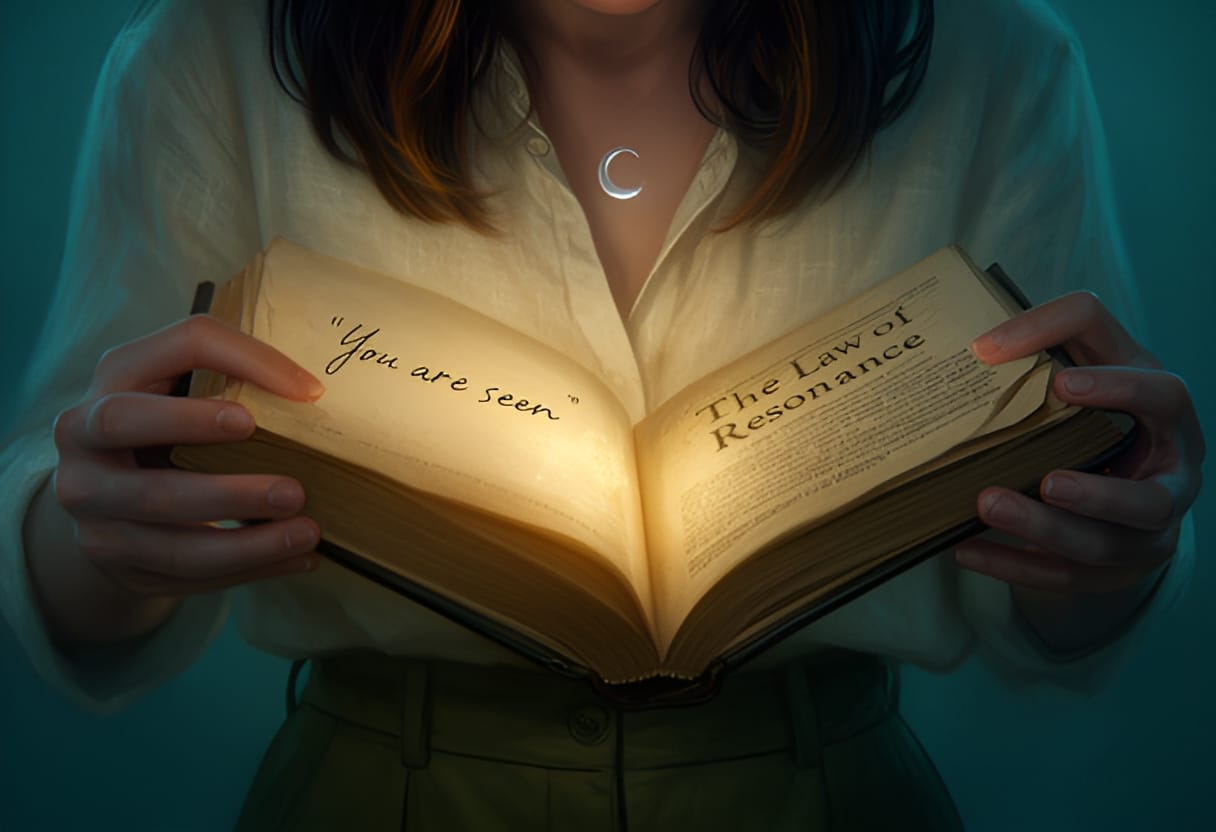
Her fingers trembled. She looked up, searching the faces around her, but the bookstore breathed on, ordinary and unaware.
Outside, the city lights blinked on one by one. Mara stood still, the book pressed to her chest, and whispered into the quiet between heartbeats: What are you?
Mara stepped inside her apartment and closed the door softly behind her, the book still warm against her sternum. She set her bag down, toed off her shoes, and moved to the small kitchen, filling the kettle with water. As it heated, she flipped open The Law of Resonance to a dog-eared page near the middle, where a passage had been underlined in faint pencil: Your emotional frequency does not merely reflect your reality—it shapes the field in which events coalesce. She read it twice, then closed the book and carried it to the window seat, where she watched steam curl from the spout and listened to the city sigh below.
The next morning, on the MAX train heading west, Mara let herself feel the irritation that had been simmering since waking—the tightness in her jaw, the way her thoughts looped over yesterday’s strange encounter. She crossed her arms, hunched her shoulders, and stared at the advertisement for a mindfulness app across the aisle. Three stops in, she noticed the seat beside her remained empty despite the train filling up. A woman with a toddler stood gripping the pole, eyes flicking to the open space, then moving on. A man in a nurse’s scrubs hesitated, glanced at Mara’s closed expression, and chose to stand instead. By the time she reached her stop, no one had sat near her. She stepped off onto the platform, the cool air doing little to loosen the knot in her chest.
Two days later, she tried again. This time, she woke early, sat on her fire escape with tea, and let herself remember the lullaby her mother used to sing—soft, wordless, a melody that had once curled around her like a blanket. She hummed it low as she walked to the station, shoulders relaxed, palms open at her sides. On the train, she sat near the doors and let her gaze soften, taking in the reflections in the window—the blurred city, her own faint face smiling back. Within minutes, a woman in a patterned scarf sat beside her and, without preamble, said, “You seem like you’re carrying a kind of quiet joy. It’s nice to feel.” Mara blinked, touched her chest where a warmth had begun to spread, and murmured, “Thank you.” The woman smiled and opened her book. Two stops later, a man standing nearby commented on the book she was reading, and they exchanged a few words about the author before he exited at Pioneer Square.

That afternoon, she repeated the test at her usual coffee shop. First, she ordered her drink with her eyes down, fingers tapping the counter in impatience. The barista handed her the cup without meeting her gaze, and the woman who had been waiting for a refill shifted her chair slightly away when Mara turned to leave. Later, she returned, this time greeting the barista by name, asking how his morning was, and laughing softly at his joke about the espresso machine. When she sat by the window with her latte, a student at the next table asked if she minded sharing the outlet, then stayed to ask about the sketchbook open beside her—her current project for Aether Studio. They talked for twenty minutes about texture and light, and as she gathered her things, he said, “You have a calm energy. It’s easy to talk to you.”
That evening, after logging the results in her notebook under the heading Projection → Response, Mara stood before the bathroom mirror. The light above flickered once, then steadied. She placed her palms flat against the cool glass, feeling the slight vibration of the city through the pipes. Her reflection looked back—eyes wide, hair loose, the ghost of exhaustion still at the corners of her mouth.
“I am the source of what I experience,” she said, her voice thin at first, uncertain.
She repeated it, and the words felt like a claim staked in fog.
“I am the source of what I experience.”
This time, her breath deepened. The warmth in her chest expanded, not as excitement, but as a quiet settling—like a door clicking into place.
“I am the source of what I experience.”
Her reflection didn’t change, but something in her did. The tension in her temples eased. Her shoulders dropped, not from collapse, but from release. She felt it in her ribs, in the hollow of her throat—a resonance, low and steady, as if her body had been waiting to vibrate at this frequency and had finally found the note.
She lowered her hands, leaving faint prints on the glass. The mirror showed her again—same face, same room—but now she was not waiting for a sign. She was the one sending it.

Chapter 3
The Return of What Was Lost
Mara stared at her phone, the screen dark on the nightstand. She had been sitting cross-legged on the floor of her bedroom for nearly an hour, back against the bed, hands resting on her knees, eyes closed. The air smelled faintly of lavender from the diffuser on her dresser, and the morning light had just begun to creep through the blinds, painting stripes of gold across the wooden floor.
Her phone buzzed again.
Elena.
She didn’t look at the screen. Let it ring. Let it go to voicemail. The familiar knot tightened in her chest — not anger, not exactly, but the old, aching suspicion: She only calls when she needs something. When she’s lonely. When she wants to know if I’m still hurting.
She had ignored the call yesterday. And the day before. Three weeks of silence, each missed call a small act of self-protection. She told herself she was giving Elena space. Truth was, she was afraid — afraid that if she answered, she’d hear the same polite distance, the same careful words that meant I’m sorry, but I can’t stay. Afraid that opening the door would only remind her how easily it had slammed shut.
But this morning, after the mirror, after speaking her truth not as a wish but as a declaration — I am worthy of connection — she had felt something shift. Not a sudden certainty, but a quiet loosening, like a knot in her spine finally yielding to pressure. She had breathed into it. Sat with it. Let the fear be there, but not let it decide.
When the phone buzzed a third time, she didn’t hesitate.
She unlocked it, saw Elena’s name, and pressed answer.
It rang twice before a voice came through — soft, thick with something Mara hadn’t heard in years: not guilt, not defensiveness, but sorrow. Raw and unguarded.
“I’ve been trying to reach you for three weeks,” Elena said. “I’m sorry I left. I’m sorry I made you feel like you had to earn love.”
Mara’s breath caught. She hadn’t expected that. Not the apology, not the naming of the wound. Her eyes burned. She swallowed, voice rough when she spoke.
“I didn’t know you felt that way.”
“I know,” Elena said. “And I’m not asking you to forgive me. I just… I wanted you to know I see it now. What I did. How it landed.”
They didn’t talk about the will. Didn’t rehash the fight over the cabin, the accusations, the years of silence that followed. Instead, Elena told her about her show at the Guild Hall — a series of photographs documenting migratory birds along the Columbia River, how she’d finally found a rhythm that felt true. She spoke of moving into a cooperative housing space in Northeast Portland, of trading photo edits for rent, of feeling, for the first time, like she belonged somewhere.
Mara listened. And when she spoke, it was not to defend or explain, but to share — about her work at Aether Studio, about the strange dreams and the letter, about the quiet experiments she’d been running, the way the world seemed to respond when she stopped bracing.
Forty-seven minutes passed. Neither of them checked the time.
When they said goodbye, Mara didn’t hang up right away. She held the phone to her ear a moment longer, listening to the soft click of the line disconnecting.
Then she lowered it, pressed it to her chest, and whispered — not to Elena, not even really to herself, but to the quiet room, to the light now fully spilling across the floor — “I’m ready.”
She didn’t wipe her cheeks. Let the tears stay. They weren’t just relief. They were recognition. A door, long sealed, had clicked open — not because someone else had turned the handle, but because she had finally stopped holding it shut.
Mara stepped onto the gravel path at the edge of Forest Park, the morning air cool and damp with the scent of pine and wet earth. Sunlight filtered through the canopy in shifting patterns, dappling the trail ahead. She had walked this stretch a hundred times alone, using it to quiet her mind, to listen to the space between thoughts. Today, she walked toward something else.
Elena stood near the trailhead, leaning against the signpost that read Forest Park – Wildwood Trail. She held two paper cups, steam curling from their lids. When she saw Mara approaching, she didn’t wait. She pushed off the post, crossed the few steps between them, and opened her arms.
Mara stopped just short, breath catching — not from fear, but from the sudden, startling reality of it. No hesitation. No retreat. Just Elena, open and waiting.
She moved forward and let herself be gathered in.
The embrace was warm, solid, real. Elena’s scent — cedar and something floral, like the shampoo she’d used as a teenager — wrapped around Mara. Her sister’s arms held firm, not tight, not desperate, but sure. Mara felt the rise and fall of Elena’s breath against her shoulder, the steady beat of her heart where it pressed against her own.

For the first time in over ten years, she did not brace.
She did not wait for the other shoe to drop, for the pull away, the quiet retreat into distance. She did not steel herself against the inevitable loss. Instead, she softened into the hold, let her shoulders drop, let her forehead rest against Elena’s temple. She felt the tears come again — not from sorrow, but from the sheer, staggering fact of being met. Of being held without condition. Of being seen, not as the one who had to earn it, but as the one who already was.
“I’ve missed this,” Elena whispered, her voice muffled against Mara’s hair.
“I know,” Mara said, her own voice thick but clear. “I’ve missed you.”
They held each other for a long moment, the forest breathing around them — the rustle of leaves, the distant call of a jay, the quiet pulse of life moving unseen in the understory. When they finally pulled back, Elena kept her hands on Mara’s arms, searching her face.
“You look… lighter,” she said.
Mara smiled, a real one, unguarded. “I feel it.”
They began to walk, the trail winding beneath towering firs and hemlocks. Elena led the way, pointing out details Mara might have missed — a cluster of morels pushing through the damp soil, the way the light caught the silver underside of a salamander as it darted across a wet stone. Mara listened, not just to the words, but to the ease in Elena’s voice, the lack of performance, the absence of the old tension that had once coiled between them like a spring.
Then Elena stopped, tilted her head, and pointed upward.
“Look.”
High in the fork of a douglas fir, a red-tailed hawk sat motionless, its keen eyes scanning the ground below. The morning sun caught the russet of its tail, making it glow like embers.
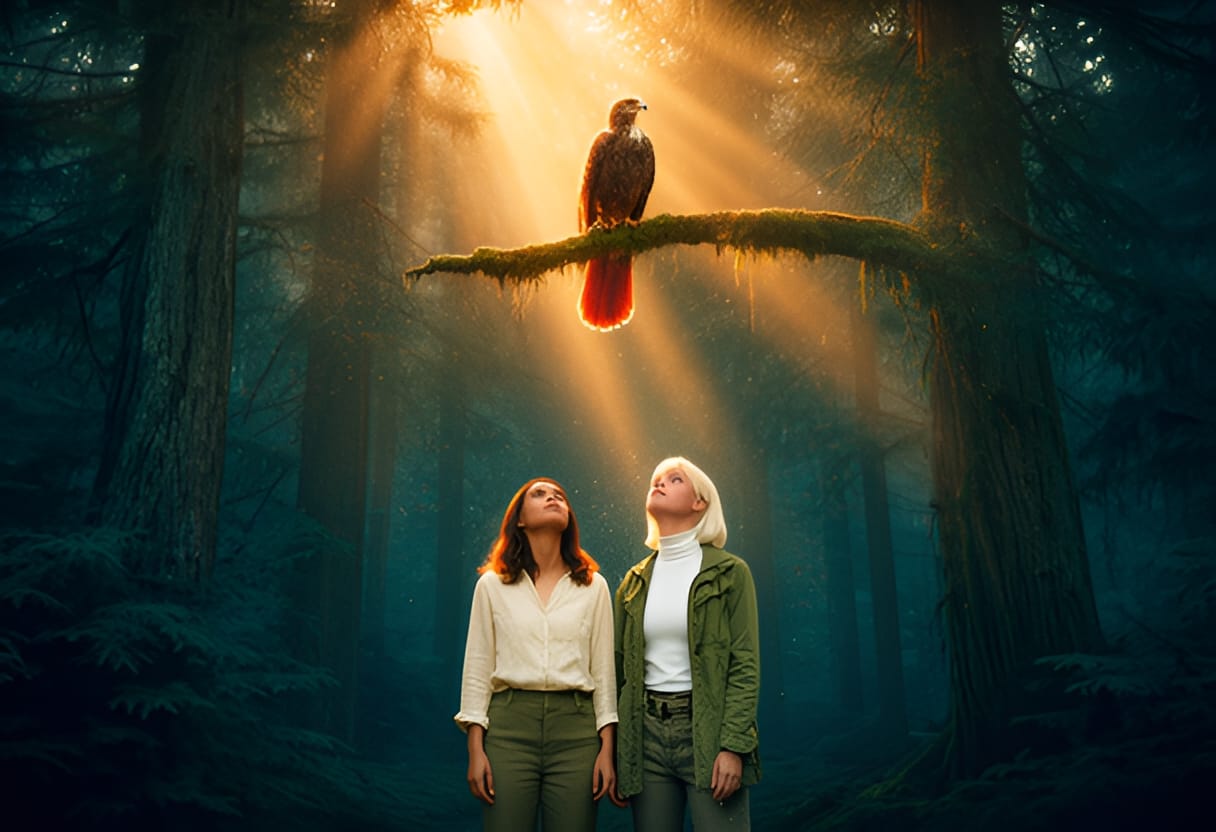
Mara’s breath hitched — not with alarm, but with recognition. She remembered standing in this very park years ago, after another fight, another silence, whispering into the wind for a sign that she wasn’t utterly alone. She had asked for proof that she wasn’t forgotten. She had waited, heart pounding, for something — anything — to answer.
And now, here it was. Not as a miracle dropped from nowhere, but as a reflection.
She didn’t flinch. Didn’t look away. She smiled.
“It’s beautiful,” she said.
Elena nodded. “It’s been nesting there for weeks. I come by sometimes just to watch. It feels like… like it’s keeping watch.”
Mara thought of the red letter, the lullaby, the way the world had seemed to lean in when she stopped resisting. She thought of the mirror, the declaration, the quiet knowing that had settled in her bones after the call. She thought of how she had spent years believing she had to earn connection, that love was something to be won through perfection, through silence, through shrinking herself to avoid the risk of being left.
And now, here was her sister — not perfect, not blameless, but present. Here was the hawk, not a sign sent from beyond, but a mirror of what had grown inside her: sharp-eyed, grounded, capable of riding the wind without fear.
She didn’t need to ask for a sign anymore.
She was the sign.
They walked on, the trail soft beneath their feet, the forest alive with quiet motion. Mara stayed close to Elena, not because she feared being left behind, but because she wanted to be near. The sun climbed higher, warming their backs, and for the first time in a long time, Mara didn’t look over her shoulder, waiting for the other shoe to drop.
She walked forward, open, and let the world meet her there.