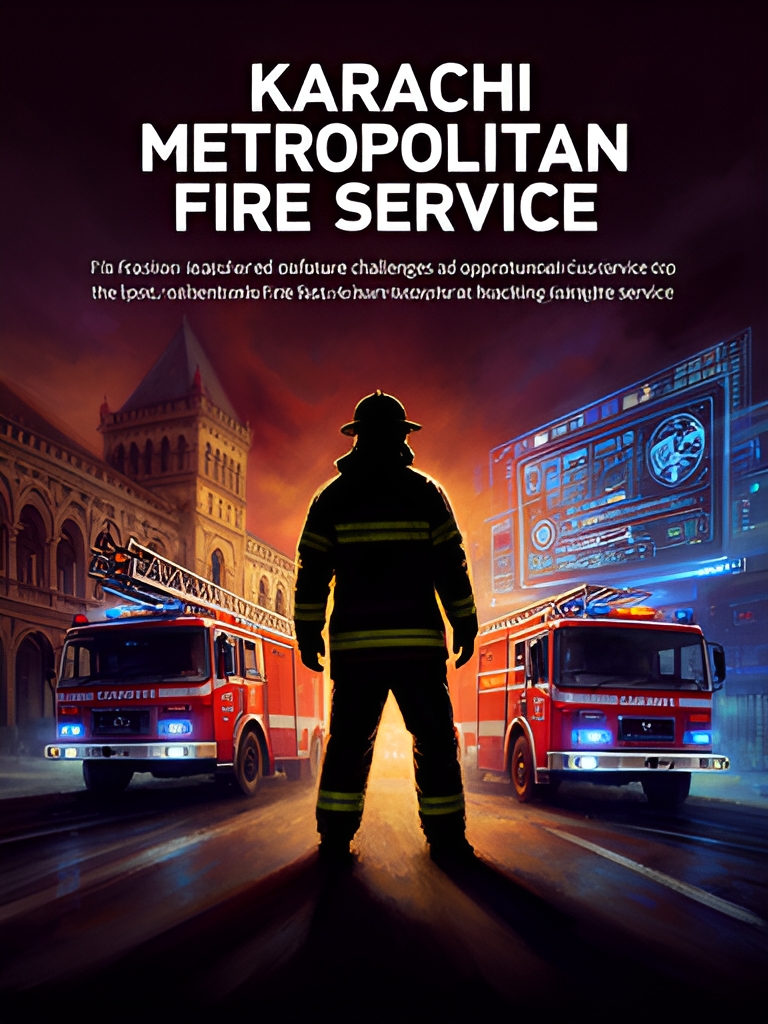
ID · karachi-metropolitan-fire-service-c15b0eee
Karachi Metropolitan Fire Service
By Kazim Ali · Fiction · Professional · 10 pages
Table of contents
- 1. Chapter 1
The historical development of the fire service, including its early years and key milestones. The Karachi Metropolitan Fire Service has a rich history, established in the early 20th century, and has undergone significant transformations over the years, shaped by the city's growth and challenges. Veteran firefighter Muhammad Ali reflects on the service's humble beginnings, its growth, and its commitment to protecting the city and its people. The Karachi Metropolitan Fire Service introduced its first fire engine in the 1920s, revolutionizing firefighting capabilities, and later established a fire training academy in the 1950s to improve skills and response times. Muhammad Ali reflects on the service's history, its challenges, and its future, emphasizing the need for innovation and dedication to the people of Karachi.
- 2. Chapter 2
The current state of the fire service, including its operational capabilities and challenges. Muhammad Ali reflects on the history and evolution of the Karachi Metropolitan Fire Service as he watches firefighters respond to an emergency in a high-rise building, feeling pride and nostalgia for the service's progress and commitment to protecting the city. Muhammad Ali reflects on the current state of the Karachi Metropolitan Fire Service as they respond to an emergency, acknowledging the challenges they face despite advances in technology and equipment, and feeling proud of the service's commitment to protecting the city and its people.
- 3. Chapter 3
The future of the Karachi Metropolitan Fire Service, including opportunities for improvement and strategies for addressing challenges.
Chapter 1: Chapter 1
The historical development of the fire service, including its early years and key milestones. The Karachi Metropolitan Fire Service has a rich history, established in the early 20th century, and has undergone significant transformations over the years, shaped by the city's growth and challenges. Veteran firefighter Muhammad Ali reflects on the service's humble beginnings, its growth, and its commitment to protecting the city and its people. The Karachi Metropolitan Fire Service introduced its first fire engine in the 1920s, revolutionizing firefighting capabilities, and later established a fire training academy in the 1950s to improve skills and response times. Muhammad Ali reflects on the service's history, its challenges, and its future, emphasizing the need for innovation and dedication to the people of Karachi.
Section 1
The city of Karachi, with its rich history and cultural diversity, had always been a hub of activity, and its fire service was no exception. Established in the early twentieth century, the Karachi Metropolitan Fire Service had undergone significant transformations over the years, shaped by the city's growth and the challenges that came with it. As the city expanded, so did the fire service, with new stations and equipment being added to meet the increasing demands of the population. The early years of the fire service were marked by bravery and sacrifice, as firefighters risked their lives to save others from the ravages of fire. "We have come a long way since our humble beginnings," said Muhammad Ali, a veteran firefighter who had spent over two decades serving the city. "I remember when we used to respond to fires with minimal equipment and manpower, but we always managed to get the job done."
As the fire service grew, so did its capabilities, with the introduction of new technologies and training methods. The firefighters of Karachi became known for their skill and dedication, and their ability to respond to emergencies quickly and effectively. Despite the many challenges they faced, including limited resources and outdated equipment, the firefighters persevered, driven by their commitment to protecting the city and its people. "It's not just a job, it's a calling," said Ali, reflecting on his years of service. "We are the ones who stand between the people and disaster, and we take that responsibility very seriously." The fire service had also played a critical role in shaping the city's safety protocols and emergency response systems, working closely with other agencies to ensure a coordinated and effective response to emergencies.
The history of the Karachi Metropolitan Fire Service was also marked by key milestones, including the introduction of the first fire engine in the 1920s and the establishment of the city's first fire training academy in the 1950s. These developments had helped to modernize the fire service and improve its response times, enabling firefighters to tackle even the most complex emergencies with confidence and precision. As the city continued to grow and evolve, the fire service had to adapt, responding to new challenges and hazards, from high-rise building fires to industrial accidents. Through it all, the firefighters of Karachi had remained steadfast, their bravery and selflessness inspiring generations of citizens. "We are proud of our history and our heritage," said Ali, "but we are also looking to the future, and the challenges that it will bring." The fire service was poised on the threshold of a new era, one that would require innovation, creativity, and a deep commitment to the people of Karachi.
Section 2
The introduction of the first fire engine in the 1920s was a significant milestone in the history of the Karachi Metropolitan Fire Service, marking a major leap forward in the service's ability to respond to fires quickly and effectively. "It was a game-changer," said Muhammad Ali, recalling the stories he had heard from his predecessors. "Before that, we had to rely on horse-drawn carriages or manual pumps, which limited our reach and response time." The new fire engine, with its powerful motor and advanced pumping system, enabled firefighters to tackle larger and more complex fires, saving countless lives and properties in the process. As the city continued to grow and expand, the fire service added more fire engines to its fleet, each one equipped with the latest technology and equipment.
The establishment of the city's first fire training academy in the 1950s was another crucial development in the history of the Karachi Metropolitan Fire Service. "It was a bold move," said Ali, "one that recognized the need for specialized training and skills in firefighting." The academy provided firefighters with the opportunity to learn from experienced instructors and to practice their skills in a controlled environment, helping to raise the standards of the service and improve its response to emergencies. Over the years, the academy had trained thousands of firefighters, equipping them with the knowledge and skills they needed to tackle the challenges of the job. As the fire service looked to the future, it was clear that the academy would play a critical role in preparing firefighters for the new challenges and hazards that lay ahead.
As Muhammad Ali looked back on his years of service, he couldn't help but feel a sense of pride and satisfaction. The Karachi Metropolitan Fire Service had come a long way since its humble beginnings, and it had played a vital role in shaping the city's safety protocols and emergency response systems. "We have faced many challenges over the years," he said, "but we have always managed to overcome them, thanks to the bravery and dedication of our firefighters." As the service entered a new era, it was clear that it would face new challenges and hazards, from high-rise building fires to industrial accidents and natural disasters. But with its rich history, its commitment to training and excellence, and its unwavering dedication to the people of Karachi, the fire service was well-equipped to meet these challenges head-on.
The future of the Karachi Metropolitan Fire Service was uncertain, but one thing was clear: it would require innovation, creativity, and a deep commitment to the people of Karachi. As the city continued to grow and evolve, the fire service would have to adapt, responding to new challenges and hazards with agility and precision. "We are ready for whatever comes next," said Ali, his voice filled with confidence and determination. "We will continue to serve the people of Karachi with bravery, skill, and compassion, and we will always stand ready to respond to emergencies, whenever and wherever they may occur." The Karachi Metropolitan Fire Service was a symbol of hope and resilience, a reminder that even in the face of adversity, there were always heroes who would stand tall and fight to protect others. As the service looked to the future, it was clear that it would always be a source of pride and inspiration for the people of Karachi.
Chapter 2: Chapter 2
The current state of the fire service, including its operational capabilities and challenges. Muhammad Ali reflects on the history and evolution of the Karachi Metropolitan Fire Service as he watches firefighters respond to an emergency in a high-rise building, feeling pride and nostalgia for the service's progress and commitment to protecting the city. Muhammad Ali reflects on the current state of the Karachi Metropolitan Fire Service as they respond to an emergency, acknowledging the challenges they face despite advances in technology and equipment, and feeling proud of the service's commitment to protecting the city and its people.
Section 1
The Karachi Metropolitan Fire Service had come a long way since its humble beginnings, and as Muhammad Ali walked through the modern fire station, he couldn't help but feel a sense of pride and nostalgia. The service had grown and evolved over the years, adapting to the changing needs of the city and its people. The introduction of new technology and equipment had revolutionized firefighting capabilities, and the fire training academy established in the 1950s had played a crucial role in improving skills and response times. As he approached the dispatch room, Muhammad Ali heard the sound of radios crackling and the murmur of voices, a reminder of the service's unwavering commitment to protecting the city and its people. "We've got a report of a fire in a high-rise building in the financial district," one of the dispatchers said, her voice calm and professional. "Engine 12, respond with caution, possible multiple occupants trapped."
Muhammad Ali watched as the firefighters sprang into action, their movements swift and coordinated. He remembered the early days of the service, when firefighters had to rely on basic equipment and manual labor to combat fires. The introduction of the first fire engine in the 1920s had been a game-changer, and since then, the service had continued to innovate and adapt to new challenges. As he observed the firefighters preparing to respond to the emergency, Muhammad Ali couldn't help but think about the future of the service. What challenges would they face in the new era, and how would they adapt to new hazards and technologies? The city was growing and changing rapidly, and the fire service would need to evolve to keep pace. "We need to stay ahead of the curve," Muhammad Ali said to one of the younger firefighters, a look of determination on his face. "We owe it to the people of Karachi to provide the best possible service, and that means being prepared for anything."
The firefighter nodded in agreement, his eyes fixed on the dispatch screen as the details of the emergency came in. Muhammad Ali knew that the service faced many challenges, from limited resources to inadequate infrastructure, but he also knew that the firefighters were dedicated and passionate about their work. As he watched them respond to the emergency, he felt a sense of hope and optimism for the future of the Karachi Metropolitan Fire Service. The service had come a long way, and with the right combination of innovation, dedication, and commitment, it would continue to thrive and protect the city and its people for generations to come. The sound of sirens filled the air as the firefighters departed, and Muhammad Ali couldn't help but feel a sense of pride and purpose, knowing that he was part of a service that made a real difference in people's lives.
Section 2
As the firefighters responded to the emergency, Muhammad Ali couldn't help but think about the current state of the fire service. Despite the many advances and innovations, the service still faced numerous challenges, from outdated equipment to inadequate infrastructure. The city's rapid growth and urbanization had put a strain on the service's resources, and Muhammad Ali knew that they had to be creative and resourceful to overcome these challenges. He remembered the early days of the service, when they had to rely on manual labor and basic equipment to combat fires, and he was proud of how far they had come. The introduction of new technology and equipment had revolutionized firefighting capabilities, and the fire training academy had played a crucial role in improving skills and response times.
As he watched the firefighters work together to respond to the emergency, Muhammad Ali was reminded of the importance of teamwork and communication in the fire service. The dispatchers were in constant contact with the firefighters, providing them with updates and critical information, and the firefighters were working together seamlessly to rescue those trapped in the high-rise building. It was a testament to the service's commitment to protecting the city and its people, and Muhammad Ali felt a sense of pride and purpose knowing that he was part of it. "We're getting reports of multiple occupants trapped on the upper floors," one of the dispatchers said, her voice calm and professional. "Engine 12, be advised that the stairwells are clear, but the elevators are out of service." Muhammad Ali listened intently, his mind racing with the possibilities and challenges that lay ahead.
The firefighters were well-trained and well-equipped, but Muhammad Ali knew that they would still face many challenges in the new era. The city was growing and changing rapidly, and the fire service would need to evolve to keep pace. They would need to adapt to new hazards and technologies, and find innovative solutions to the challenges they faced. As he watched the firefighters respond to the emergency, Muhammad Ali couldn't help but think about the future of the service. What new challenges would they face, and how would they overcome them? The service had come a long way, but Muhammad Ali knew that they couldn't rest on their laurels. They had to stay ahead of the curve, and be prepared for anything. "We're making good progress, but we need to be careful," one of the firefighters said, his voice coming over the radio. "The fire is spreading quickly, and we don't want to get trapped." Muhammad Ali nodded, his eyes fixed on the scene unfolding before him.
The sound of sirens filled the air, and Muhammad Ali could feel the tension and urgency of the situation. The firefighters were working tirelessly to rescue those trapped, and Muhammad Ali knew that they would do everything in their power to save them. As he watched the scene unfold, Muhammad Ali couldn't help but think about the bravery and selflessness of the firefighters. They were putting their lives on the line to save others, and Muhammad Ali felt a sense of awe and respect for their dedication and commitment. The fire service was more than just a job - it was a calling, a vocation that required courage, sacrifice, and devotion. And as Muhammad Ali watched the firefighters respond to the emergency, he knew that he was proud to be part of it. "We've got everyone accounted for," one of the firefighters said finally, his voice coming over the radio. "The building is clear, and the fire is under control." Muhammad Ali let out a sigh of relief, feeling a sense of pride and satisfaction knowing that the firefighters had done their job, and done it well.
As the firefighters returned to the station, exhausted but triumphant, Muhammad Ali couldn't help but feel a sense of hope and optimism for the future of the Karachi Metropolitan Fire Service. Despite the challenges they faced, the service was strong and resilient, and Muhammad Ali knew that they would continue to thrive and protect the city and its people for generations to come. The service had come a long way, and with the right combination of innovation, dedication, and commitment, it would overcome any obstacle and achieve greatness. "It's days like this that remind me why I became a firefighter," one of the younger firefighters said, a look of exhaustion and exhilaration on his face. "It's not just a job - it's a way of life." Muhammad Ali smiled, nodding in agreement. He knew that the fire service was more than just a job - it was a calling, a vocation that required courage, sacrifice, and devotion. And as he watched the firefighters return to the station, he knew that he was proud to be part of it.