Fiction
Kids colour
by varnit singh
3 chapters17 min read
Chapter 1
The Page That Breathed
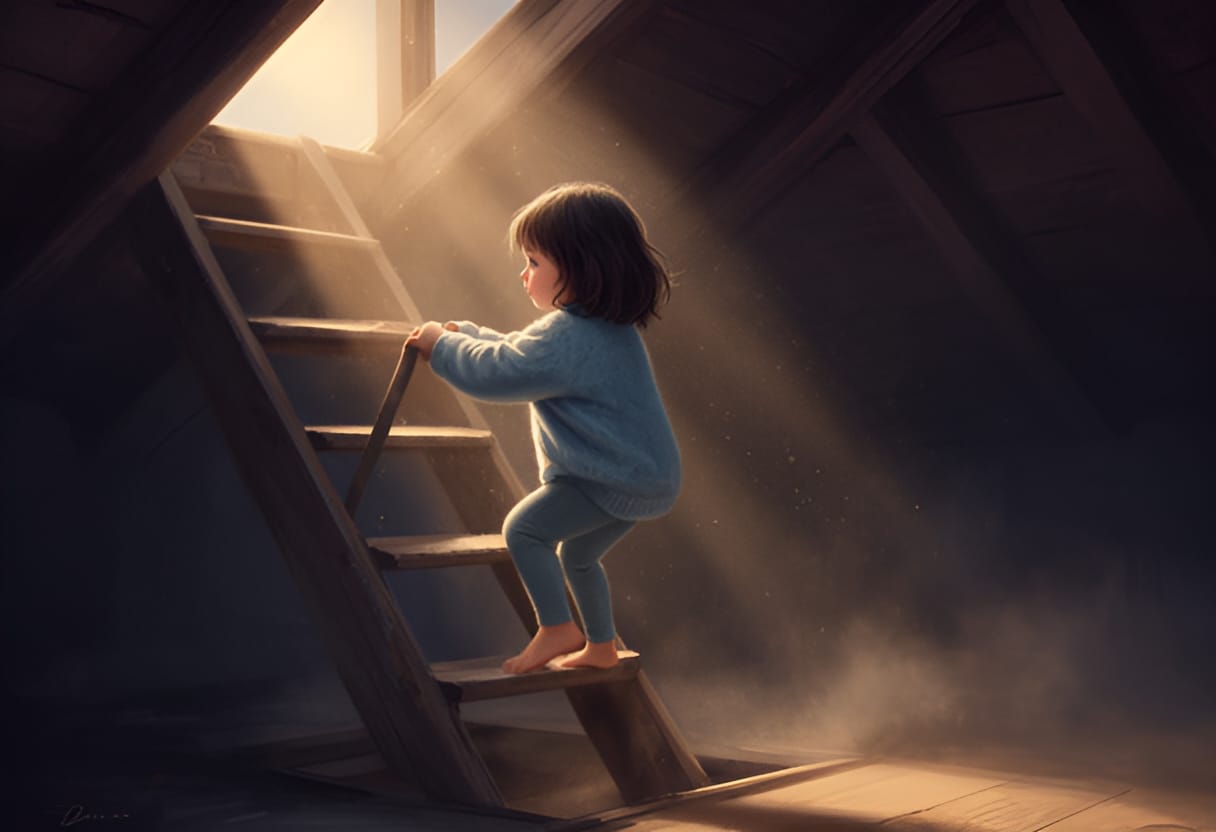
Lila slipped away from the hum of voices downstairs, the clink of dishes and laughter too loud for her ears. She pulled the attic stairs down with a creak, the wood groaning under her small weight, and stepped into the dim space where shadows pooled in corners and dust floated in slanted light. Boxes lined the walls, some labeled in faded marker, others draped with old quilts that smelled of lavender and time. She pushed through a curtain of moth-eaten coats and paused before a cedar chest tucked beneath the eaves, its brass tarnished but still gleaming faintly.
She lifted the lid. Inside lay not treasures of gold or jewels, but stacks of yellowed paper, a spool of red thread, and a coloring book bound in worn blue cloth. No title on the cover, just a faint embossing of a bird in flight. She opened it. The pages were thick and slightly rough, each one blank except for a single, faint outline in the corner of the first page — a bird with one wing half-drawn, as if waiting.
A shiver ran up her arms, not from cold but from the quiet thrill of something hidden. She carried the book downstairs, tucked it under her arm like a secret, and slipped into her room. She closed the door softly, leaned her back against it, and exhaled.
On her desk, she opened the book to the first page. She chose a blue crayon — not bright, not sky-blue, but a soft, faded shade, the color of a bruise just beginning to heal. It matched the hollow feeling in her chest when no one called on her in class, when her voice got lost in the chatter.
She colored slowly, staying inside the lines, filling the wing with careful strokes. As her hand moved, she thought of the way her teacher’s eyes slid past her during roll call, of the way her classmates laughed at jokes she didn’t understand, of the silence that followed when she raised her hand and no one noticed.
When she finished the wing, the crayon paused mid-air. The lines on the page shimmered, like heat rising off pavement. The bird lifted — not torn, not cut, but peeled gently from the paper as if it had been breathing underneath. It hovered above the page, wings trembling, blue as twilight.
Lila held her breath. Her heart hammered against her ribs.
The bird dipped, then fluttered down, landing on her fingertip. Warmth spread from the point of contact, soft and alive, like sunlight caught in wool. She could feel the faintest tremor beneath its feet, a quickening pulse.
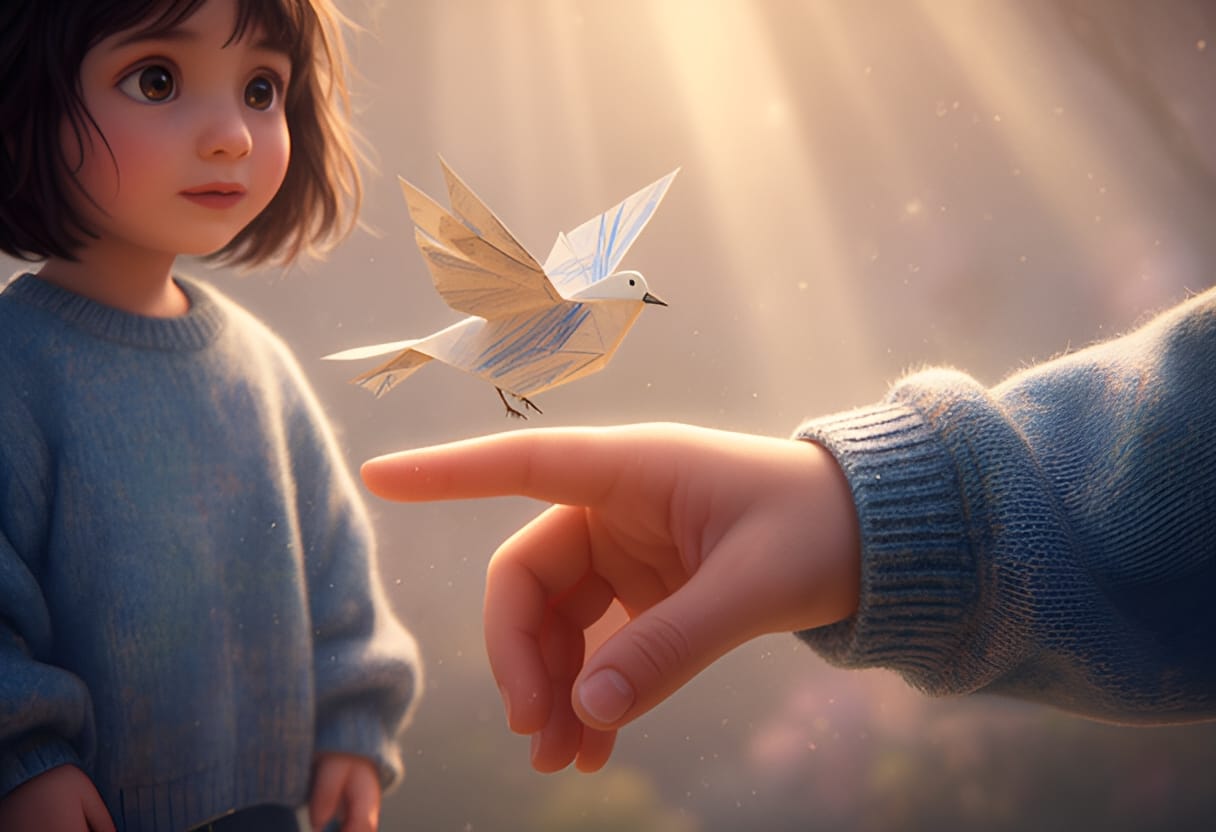
She didn’t dare move. Didn’t dare breathe.
The bird tilted its head, as if listening, then tucked its beak beneath its wing and settled, small and quiet, against her skin.
Outside, the wind stirred the trees. Somewhere below, a door closed. But in that room, with the coloring book open on her lap and a bird made of paper and feeling resting on her hand, the world narrowed to this: she had made something real. And it had chosen her.
Lila’s fingertip tingled where the bird rested, a soft pulse like a second heartbeat. She lifted her hand slowly, bringing the creature to eye level. Its feathers ruffled in a breath she couldn’t feel, and for a moment, it seemed to study her with dark, knowing eyes. Then, with a flick of its wings, it rose again—not flying away, but circling once above the open book before settling back onto the page, its outline now fully filled in, solid and blue as the crayon she’d used.
She stared at the spot where it had been. The paper felt ordinary again, smooth and cool beneath her palm. But the warmth lingered on her skin, fading like the echo of a song.
Her breath came out in a quiet rush. It was real. Not a trick of the light, not a dream born of loneliness. She had made it. And it had listened.
A spark of daring flared in her chest—small, but bright. She turned the page. Blank. Waiting.
Her gaze swept the desk until it landed on the yellow crayon, blunt and waxy from use. She picked it up, pressed it to the paper, and began to draw—a simple circle, imperfect and lopsided. As she colored it in, she let the memory rise: the way the kitchen window had glowed that morning when Grandma Elsie let her help make pancakes, the butter melting in golden pools, the syrup catching the light like spilled honey. She thought of how safe she’d felt then, how seen, even if no words were spoken.
She colored with that feeling—warm, steady, soft—filling the circle with uneven strokes, pressing harder where the light would catch, leaving edges slightly pale, like dawn creeping over the sill.
When she finished, she held her breath.
The sun shimmered.
Not a glare, not a flash, but a gentle radiance, as if a tiny piece of morning had been trapped beneath the wax. It lifted from the page, hovering above her palm, sending waves of warmth that made her skin prickle with comfort. She closed her fingers around it, not to catch it, but to feel it—alive and quiet, like a held breath.
A smile tugged at her lips, unbidden. I did that.
She lowered her hand, and the sun settled back onto the page, its glow dimming to a faint shimmer, like embers under ash.
Her eyes dropped to the next page. Still blank. But now, it didn’t feel empty. It felt like an invitation.
Her fingers moved before her mind could catch up. She sketched quickly—a pointed ear, a bushy tail, a face with eyes too big for its head. A fox. Not fierce, not grand, but small and scrappy, the kind that might sneak into a garden at dusk, curious and cautious.
She reached for the red crayon first, then the orange, layering them in short, eager strokes. As she colored, she whispered—not to the page, but to the space between herself and the drawing: You can be brave. For both of us.
When she finished the last stroke—the tip of the tail, a flick of white—she froze.
The paper trembled.
The fox’s ear twitched. Then the other. Its legs unfolded, slow and stiff, like a puppet waking from a long nap. It lifted its head, blinked—once, twice—and yawned. A tiny spark, no bigger than a firefly’s glow, puffed from its jaws before vanishing.
It stretched, front paws extended, back arched, then curled inward, rolling onto its side. With a soft rustle of paper, it tucked its nose beneath its tail and settled into a perfect, sleeping circle.
Lila cupped her hands beneath it, heart pounding. The fox was warm. Not hot, but steadily warm, like a stone left in the sun. Its sides rose and fell in slow, steady breaths.
She brought her hands to her chest, cradling the small, sleeping creature. “Ember,” she breathed, the name coming as if it had been waiting in her throat all along.
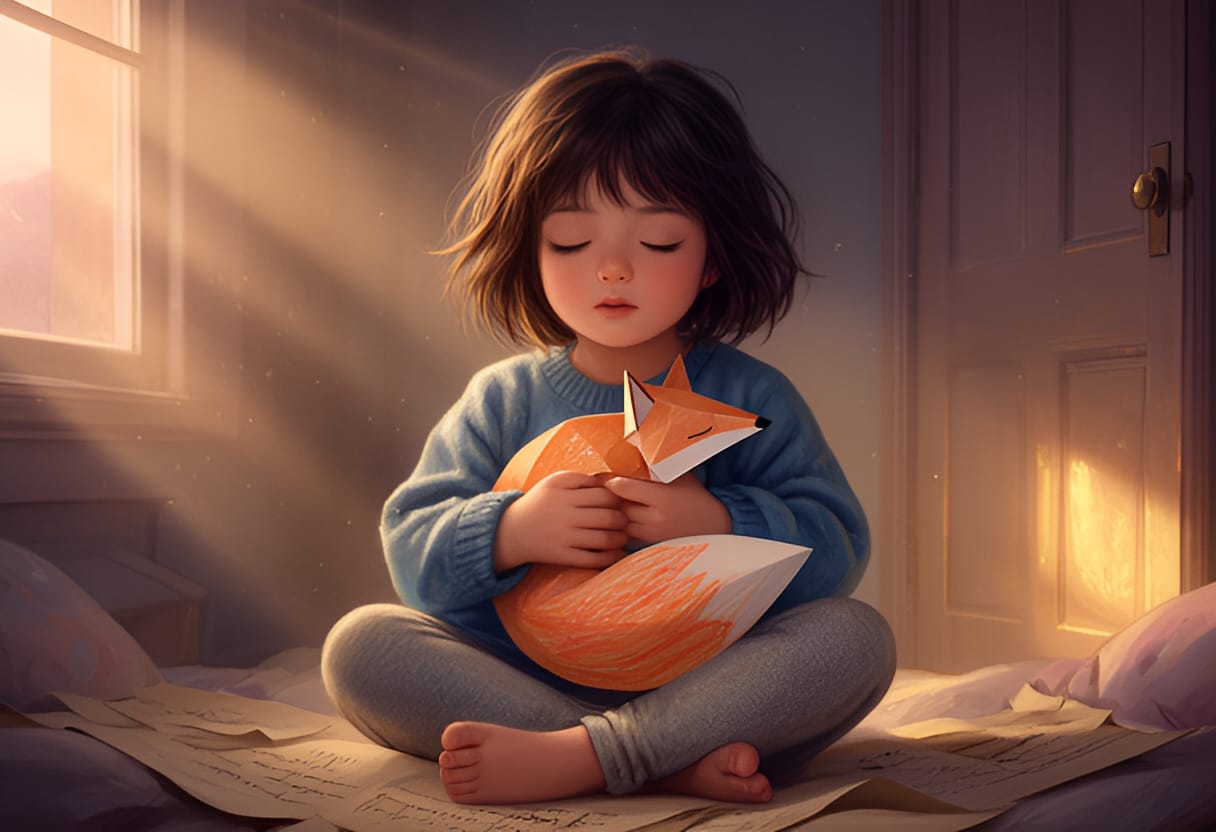
The fox’s ear flicked. One amber eye opened, slow and heavy with sleep, then the other. It blinked at her—not with fear, not with demand, but with quiet recognition. Then, satisfied, it let its lids droop again, sinking deeper into rest.
Outside, the wind had stilled. The house was quiet. But in Lila’s room, with the coloring book open on her lap and a paper fox curled in her hands, breathing softly against her skin, the world felt balanced on a knife-edge of wonder.
She didn’t dare move. Didn’t dare breathe too deep.
But for the first time in a long while, she didn’t want to be invisible. She wanted to be seen—not for what she could make, but for who she was, sitting here, holding something alive that she had brought into the world with nothing but a crayon and a feeling.
And Ember, in his sleep, seemed to agree.
Chapter 2
Chapter 2
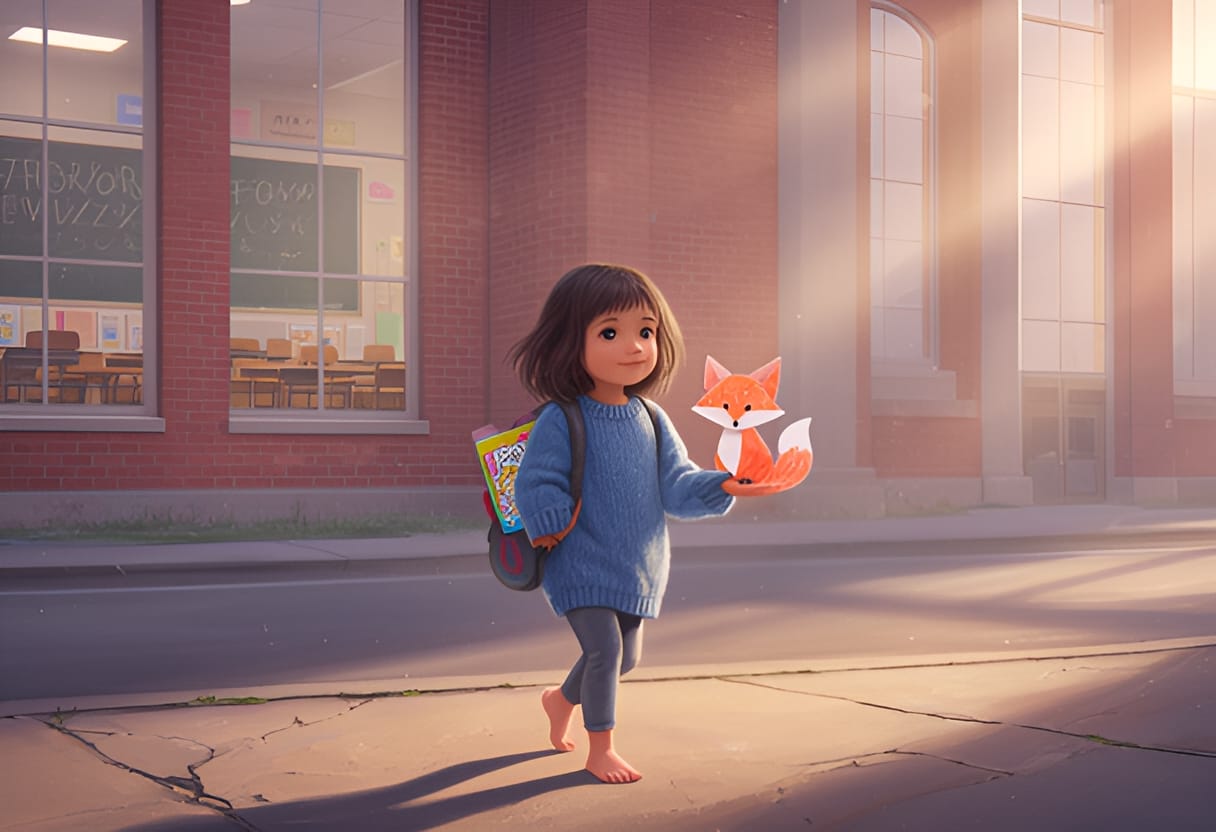
Lila tucked the coloring book into her backpack the next morning, the weight of it familiar against her spine. She kept her eyes on the cracked sidewalk as she walked to school, Ember curled unseen in her pocket, a warm, quiet presence against her thigh. The morning air smelled of damp grass and distant toast from someone’s kitchen, and for once, she didn’t hurry to disappear into the building’s shadow.
In Mr. Patel’s classroom, the hum of pencils and whispered answers filled the quiet work time after math. Lila sat near the window, her usual spot where the light fell soft and no one leaned over to see what she was doing. She opened the book to a fresh page, the paper crisp and waiting. With the tip of her tongue pressed to the corner of her mouth, she drew a diamond—sharp at the top and bottom, wide in the middle—and added a long, streaming tail that curled like a question mark.
She chose red first, pressing hard so the wax sang against the fiber, then layered yellow over it until the kite glowed like a captured ember. Her fingers moved without thinking, filling in the shape with steady strokes, remembering how the wind had stilled the night before, how Ember had breathed against her palm. She thought of flying, not as something she’d done, but as something she could imagine—her feet light, the string tugging in her grip, the sky wide open.
When she finished the last flick of the tail—a snip of white for balance—she sat back. The crayon hovered above the page. Her breath came shallow.
The paper shivered.
The kite’s corners lifted, first just a tremor, then a full rise. It hovered above her desk, trembling like a held breath, then shot forward—not fast, but sure—zipping past Mr. Patel’s shoulder as he bent to help a boy with his subtraction. It dipped low over the reading rug, looped once around the bookshelf near the window, then again, wider this time, skimming the tops of the girls’ braids as they whispered over their work.
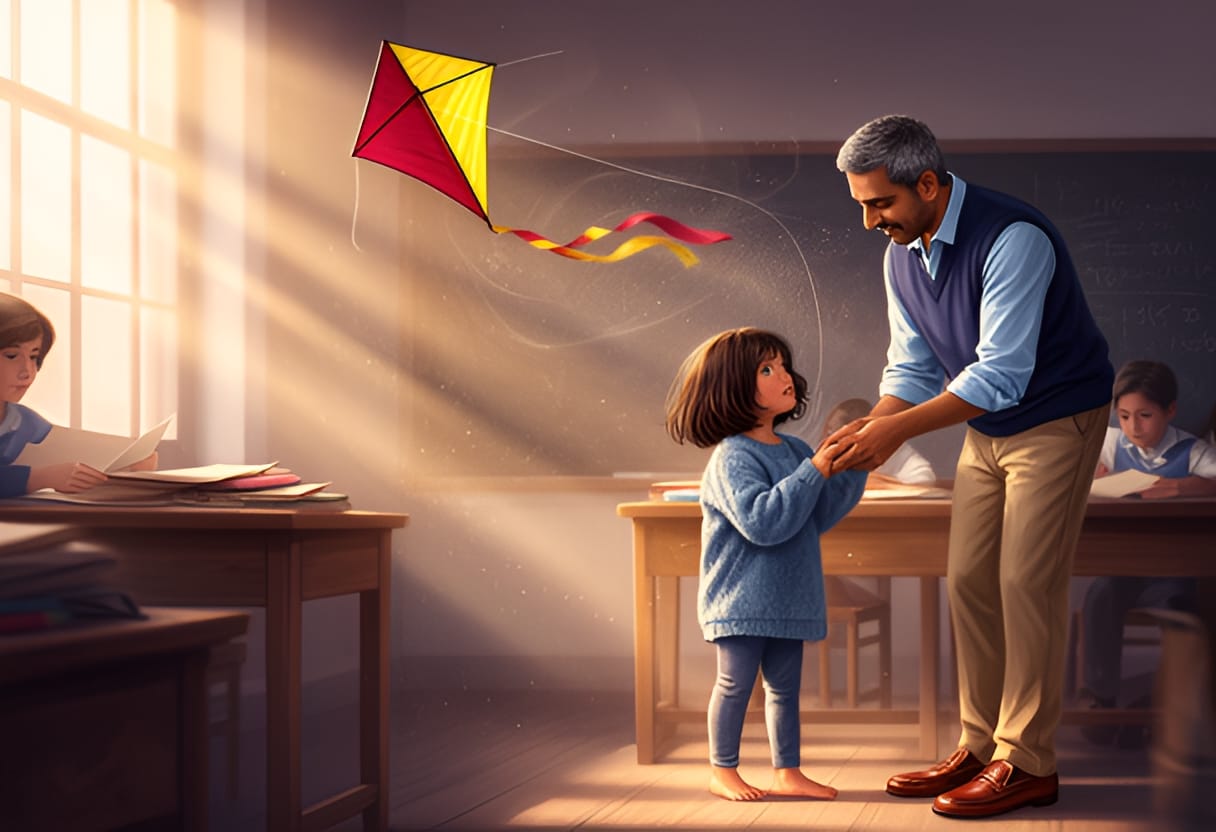
A gasp rose from the cluster of desks by the door. Then another. Heads turned. Fingers pointed.
“Whoa,” breathed Mateo, scrambling to his knees for a better look.
“It’s moving by itself!” whispered Priya, her eyes wide.
Mr. Patel straightened, chalk still in hand, his frown deepening as he tracked the kite’s path. It dipped again, catching on the edge of a map before sailing clear, its tail streaming behind it like a comet’s. For a heartbeat, he looked ready to scold—some disruption, some broken rule—but then his gaze swept to Lila.
She sat frozen, her hands flat on the desk, her cheeks burning. But her eyes—her eyes were bright, wide open, reflecting the red and yellow of the kite as it arced over the classroom one last time. It wasn’t fear in her face. It was wonder. Pure, unguarded wonder.
Mr. Patel’s frown softened. The chalk lowered to his side. He didn’t speak. He just watched, as the kite made its final, lazy circle and settled, quiet as a leaf, onto the top shelf beside the basket of picture books.
Silence settled, different now—not the quiet of work, but the hush after something unexpected. Then Priya giggled, soft and delighted. Mateo clapped once, quickly, like he wasn’t sure if he should. Others followed, a ripple of quiet applause that didn’t quite reach the rafters but warmed the air like sunlight through the blinds.
Lila didn’t look down. She kept her gaze on the kite, on the way the red and yellow caught the light, on the stillness of it now—alive, but resting. A warmth spread in her chest, not hot, not loud, but deep and steady, like the sun on a stone.
She hadn’t said a word. She hadn’t had to.
And for the first time, she didn’t want to look away.
The walk home was slower than usual. Lila dragged her fingers along the cool brick of the school wall, the coloring book pressed tight against her chest inside her backpack. Ember stirred in her pocket, a soft pulse of warmth against her leg, like a second heartbeat.
When they reached the porch steps, she paused. The sky was the pale blue of washed denim, the sun low enough to gild the edges of the maple tree in the yard. Inside, Grandma Elsie’s kitchen light glowed yellow behind the curtains, and the scent of stewed tomatoes drifted through the screen door.
Lila sat on the bottom step, pulled the book from her bag, and set it on her lap. Ember unfolded himself from her pocket, standing on the worn wood between her feet. His fur seemed to catch the last light, glowing faintly at the edges. His amber eyes locked onto hers.
“We could do more,” he said, voice low and urgent. “Something bigger. A storm. Thunder that shakes the windows. Lightning that splits the sky.”
Lila’s fingers tightened on the spine of the book. “I don’t know…”
“You felt it today,” Ember pressed. “When the kite flew. When they looked. You weren’t invisible then. You were… seen.”
“I was scared,” she whispered. “What if they think I’m strange? What if Mr. Patel takes the book away?”
Ember took a step closer, his tail flicking. “Hiding makes you small. You don’t have to shout to be loud. You just have to let your colors show.”
Lila looked down at her hands—still faintly stained with red and yellow wax. She remembered the weight of the kite in the air, the way it had danced just beyond her control, alive and sure. A thrill had hummed in her chest then, not just fear, but something brighter, wilder.
But the memory of Mateo’s pointed finger, Priya’s wide eyes, lingered too. The applause had been kind, but it had also been attention. And attention, she was learning, could feel like a net.
“I don’t want to lose control,” she said. “What if I draw something and it won’t go back? What if it gets mad? Or… or what if I can’t make it stop?”
Ember’s ears drooped. The warm glow around him dimmed, the edges of his form softening, blurring at the corners like wet paper left in the rain. He didn’t move. Didn’t breathe. Just stood there, thinner, fainter, as if the act of doubting her was unmaking him.
Lila’s breath hitched. “Ember?”
His voice came thin, distant. “I… I need your boldness. Your color. Without it… I fade.”
Panic surged. She snatched the red crayon from the book’s spine—still wrapped in the pocket of the cover—and pressed it to the page. Not a storm. Not yet. Just a tiny zigzag, sharp and small, like a tooth of lightning.
She colored it fast, hard, wax building in a bright slash across the paper.
Nothing happened.
Her heart hammered. She added yellow over it, layering, pressing until her wrist ached.
Still, the line lay flat.
Then, a tremor. A faint shiver along the edge of the mark. The red-yellow line lifted—just a centimeter—hovering, trembling. A weak spark popped at its tip, like a firefly caught in a jar. It didn’t fly. Didn’t roar. Just pulsed once, weakly, before settling back onto the page with a soft sigh.
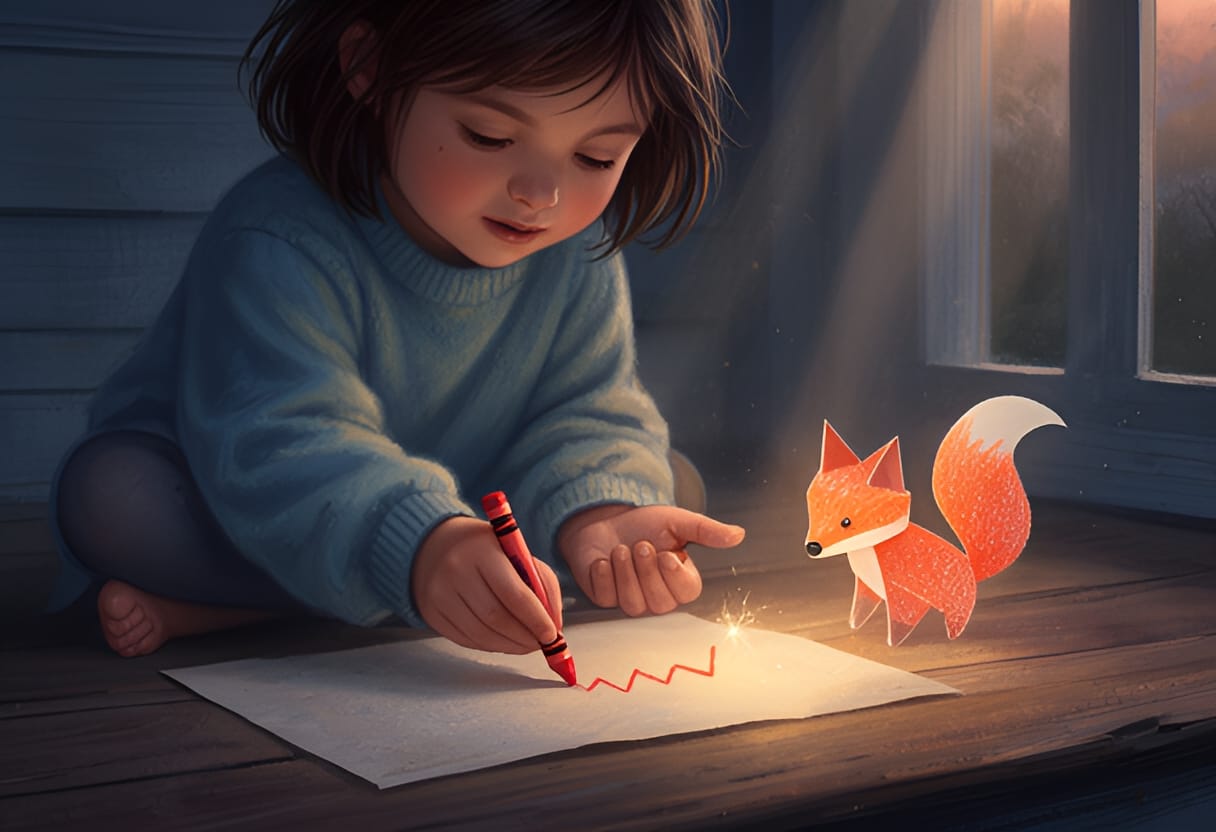
Ember shuddered. The blur at his edges sharpened. The glow returned, stronger now, steadying. He lifted his head, amber eyes locking onto hers, grateful.
“I’m sorry,” Lila murmured. “I didn’t mean to—”
“You remembered,” he said, voice firmer now. “You made the mark. Even small. That’s what keeps me here.”
She looked down at the tiny lightning bolt, insignificant and shy. It wasn’t a storm. It wasn’t bold. But it was hers. And for now, it was enough.
Outside, the first true star blinked awake in the darkening sky. Lila closed the book slowly, holding it close. Ember curled back into her pocket, a quiet warmth against her thigh. She didn’t speak as she walked inside, but for the first time, she didn’t feel the need to hide the book at all. She carried it like a secret worth keeping—not because it was dangerous, but because it was alive, and so was she, just a little more, with every color she dared to lay down.
Chapter 3
Chapter 3
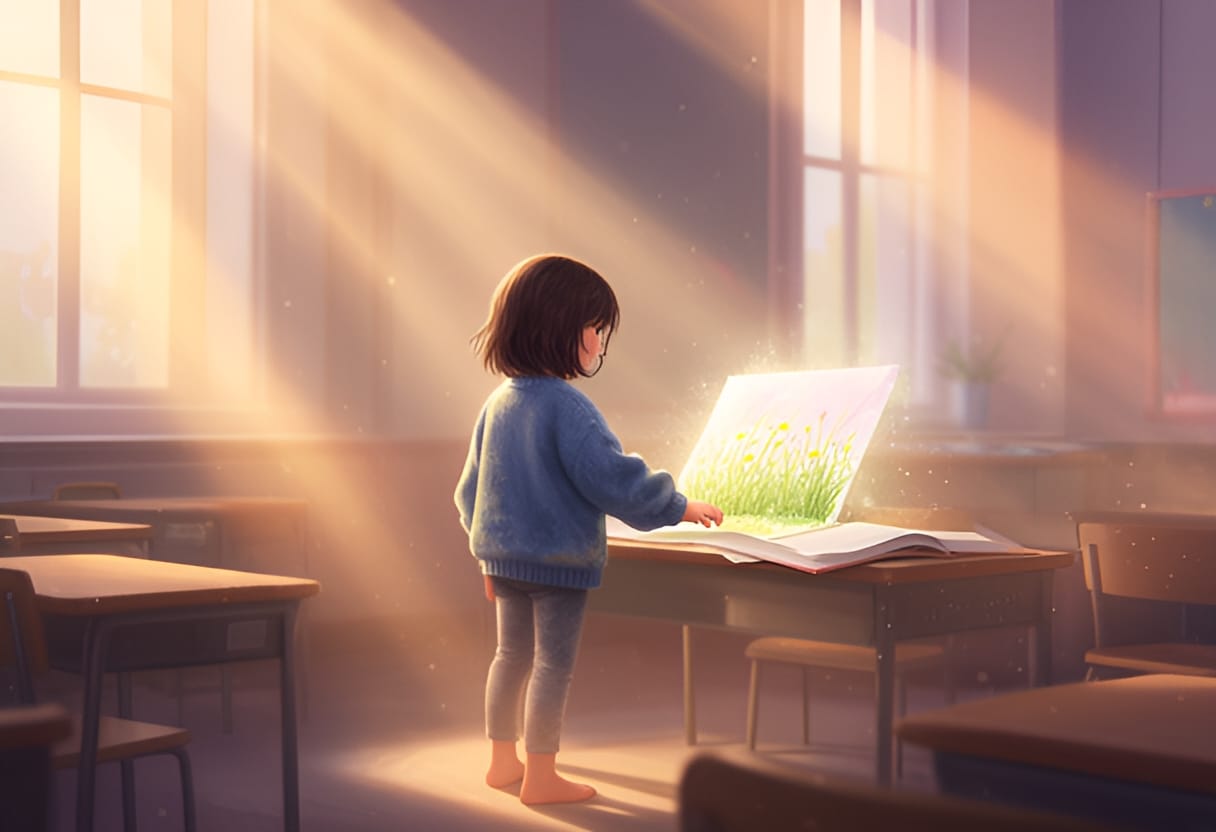
The classroom buzzed with the low hum of anticipation as desks were pushed aside and artwork lined the walls. Lila stood before her piece—a wide meadow stretching across the page, each blade of grass tipped with green, each flower a careful dab of color: purple coneflowers, golden buttercups, tiny white daisies with hearts in their centers. She had colored it during quiet moments after lunch, her tongue poking out in concentration, remembering the way the sun had warmed her back the day she and Grandma Elsie had walked through the wild field behind the old barn. She had poured that feeling into the page—the peace, the quiet joy of being exactly where she was meant to be.
When she finished, she set the book down on her lap and exhaled. The meadow shimmered faintly, like heat rising off pavement. Then, with a soft rustle, Ember stepped free.
He landed lightly on the grass he had just left, paws sinking slightly as if the paper had become real earth. He looked up at her, amber eyes bright, tail held high.
“I don’t want to go back,” he said, voice clear and sure.
Lila’s breath caught. “But the art show is tomorrow. Everyone’s coming to see it.”
“I know,” Ember replied, taking a step forward. He flicked his tail, sending a ripple through the illustrated blades. “But I don’t want to be just lines again. I want to run. I want to feel the wind. I want to stay.”
She knelt, her voice soft. “You’re not just lines. You’re my friend. You came to life because I colored you with feeling. That doesn’t go away when you’re on the page.”
He tilted his head. “Doesn’t it? I felt you when I was sleeping in your hands. I felt you when the kite flew. But now… now I’m here. And I’m scared that if I go back, I’ll fade. Like I was never real at all.”
Lila’s chest tightened. She remembered the bird lifting from the first page, the sun hovering like a promise. She had wanted to be seen. And now, here was something she had made, begging not to be unseen again.
“I don’t want you to fade,” she whispered.
“Then let me stay,” he said, stepping closer. His fur seemed to glow in the afternoon light filtering through the classroom windows. “Let me be real with you.”
The meadow shivered at the edges, the colors bleeding slightly as if the page itself were uncertain. A butterfly lifted from a purple flower and hovered, confused, between worlds.
Lila reached out, her fingers trembling. “I colored you because I was lonely. But I don’t want to lose myself keeping you.”
Ember sat back, ears drooping just a little. “Then what do we do?”
Outside, the wind stirred the trees. Somewhere down the hall, a locker slammed. The classroom felt suspended, waiting.
Lila looked at the meadow—the flowers she had chosen, the butterflies she had given delicate wings, the quiet pride she had felt filling each stroke. She looked at Ember, warm and alive in her hands, and knew the answer wasn’t in holding on tighter.
But she didn’t say it yet.
She only pulled him close, burying her face in his soft, paper-furred neck, and breathed in the scent of crayons and sunlight.
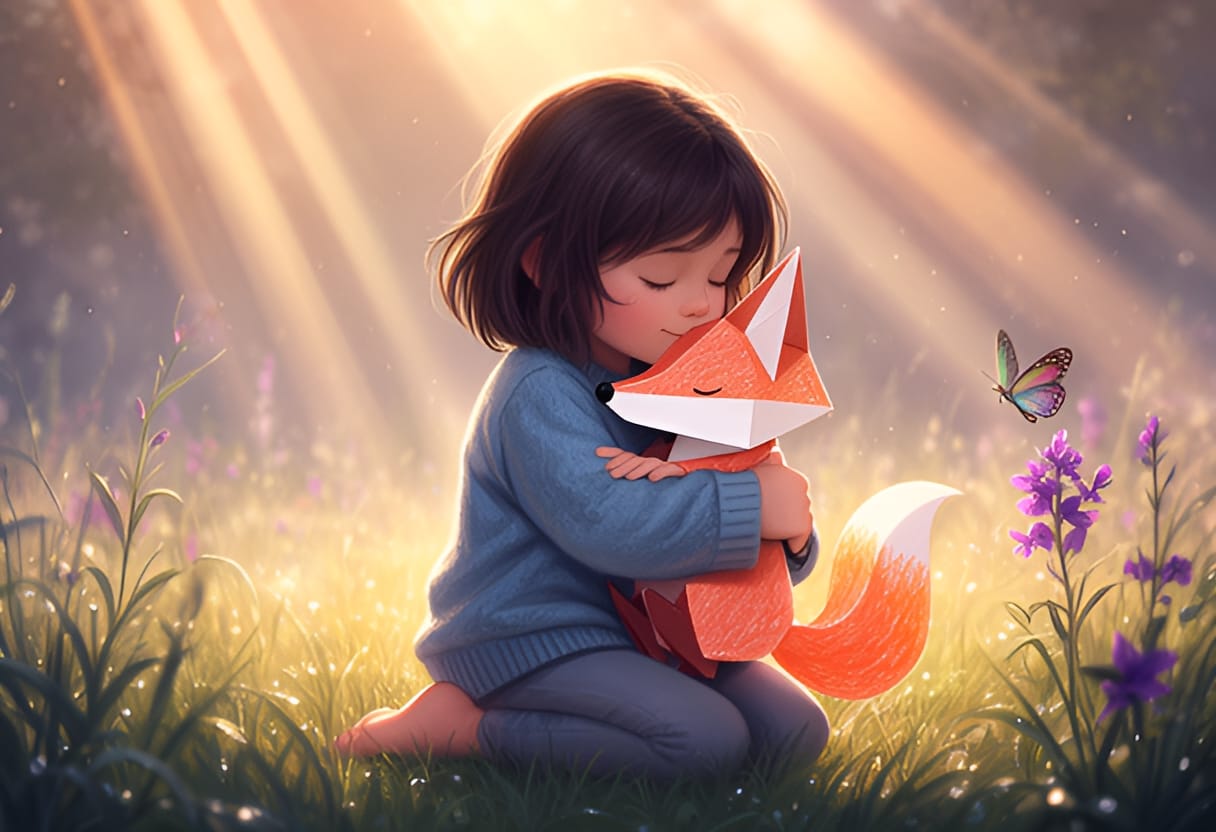
She felt Ember’s warmth against her cheek, the steady rise and fall of his breath like a small flame. The meadow still shimmered at the edges, uncertain, as if waiting for her choice.
A soft creak came from the classroom door. Lila jerked her head up, heart pounding, but Grandma Elsie stood there, not startled, not alarmed—just watching, her hands folded gently in front of her, a knowing smile touching her lips.
“Hello, Ember,” she said, her voice quiet as turning a page.
Ember blinked, then dipped his head in a small, respectful nod. “Hello, Grandma Elsie.”
Lila stared. “You… you’re not surprised?”
Grandma Elsie stepped inside, closing the door softly behind her. She walked over and knelt beside Lila’s chair, her eyes on the fox. “I colored a robin once,” she said. “Many years ago, when I was about your age. I was lonely too. I gave him my favorite red crayon—the one with the worn tip—and I thought about the way he’d hop across the lawn in spring, head tilted, listening. When he came off the page, he sang. Not with sound, exactly, but with light. A little trill of gold that made the walls dance.”
She paused, her gaze drifting to the meadow drawing. “I wanted him to stay. I kept him in my pocket, tucked him under my pillow. I even tried to draw him a worm so he wouldn’t be hungry. But after a few days, his feathers began to look… thin. Like they were losing their color. And one morning, he didn’t wake when I whispered to him. He was still there, on the page—but he was just lines again. And I realized I had loved him so much I forgot to let him be what he was: a moment of joy, not a forever promise.”
Lila swallowed, her throat tight. “So you let him go?”
“I did,” Grandma Elsie said. “And the strangest thing? The next day, I saw a real robin on the fence outside. He cocked his head at me, just once, then flew off toward the woods. I like to think he remembered.”
She reached out, not to touch Ember, but to rest her hand over Lila’s where it lay on the book. “Love isn’t about keeping something exactly as you want it. It’s about letting it be what it needs to be—even if that means it changes. Even if it means it leaves.”
Lila looked down at Ember. His amber eyes met hers, soft and sure. She didn’t feel fear this time. Only tenderness.
“I think I understand,” she whispered.
She lifted the book to her knees and opened it to a fresh page. Taking Ember’s paw in her free hand, she guided it to the paper. Together, they began to color.
She chose her crayons slowly—first a deep pink, like the inside of a seashell, then a molten gold, then a soft lavender that hovered between day and night. Ember leaned into her touch, his warmth steady against her fingers. As they worked, the colors bloomed across the page—not just a sunset, but a feeling: the hush after laughter, the comfort of a hand held, the quiet courage of saying goodbye.
When the last stroke was laid down, the page glowed. The sun, half-drowned in the horizon, spilled ribbons of light over imagined hills. The air in the room seemed to still, holding its breath.
Ember turned his head and nuzzled her palm, his fur faintly shimmering at the edges. “Thank you,” he murmured, his voice like wind through dry grass. “For seeing me. For coloring me with feeling.”
Lila felt tears prickle her eyes, but she smiled. “I’ll always remember you,” she said.
He gave one last, gentle lick to her thumb—warm, like sunlight on stone—then stepped forward, not onto the meadow, but into the sunset itself. His form softened, the lines of his body dissolving into pigment and light. His tail flicked once, a final farewell, and then he was gone.
Only the drawing remained: a fox-shaped glow woven into the hues of the sky, as if he had always been part of the light.
Lila closed the book slowly, pressing it to her chest. The classroom lights clicked on overhead, bright and ordinary. Somewhere, a chair scraped. The art show would begin tomorrow.
She stood, tucking the book under her arm, and walked toward the door. Grandma Elsie fell into step beside her, her hand finding Lila’s shoulder for just a moment.
Outside, the wind had picked up, rustling the leaves in the trees lining the walkway. Lila tilted her face to it, eyes closed, and for the first time in a long while, she didn’t feel invisible.
She felt seen.