Horror
Lonely House
by Adarsh Gupta
3 chapters18 min read
Chapter 1
The Light Goes Out
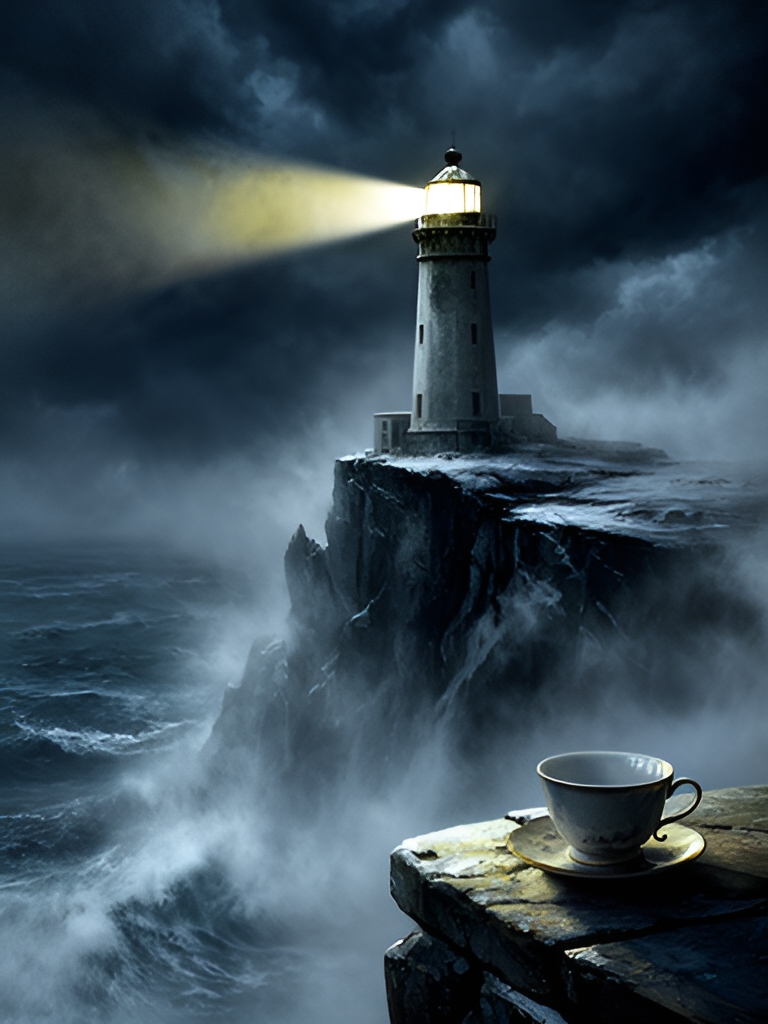
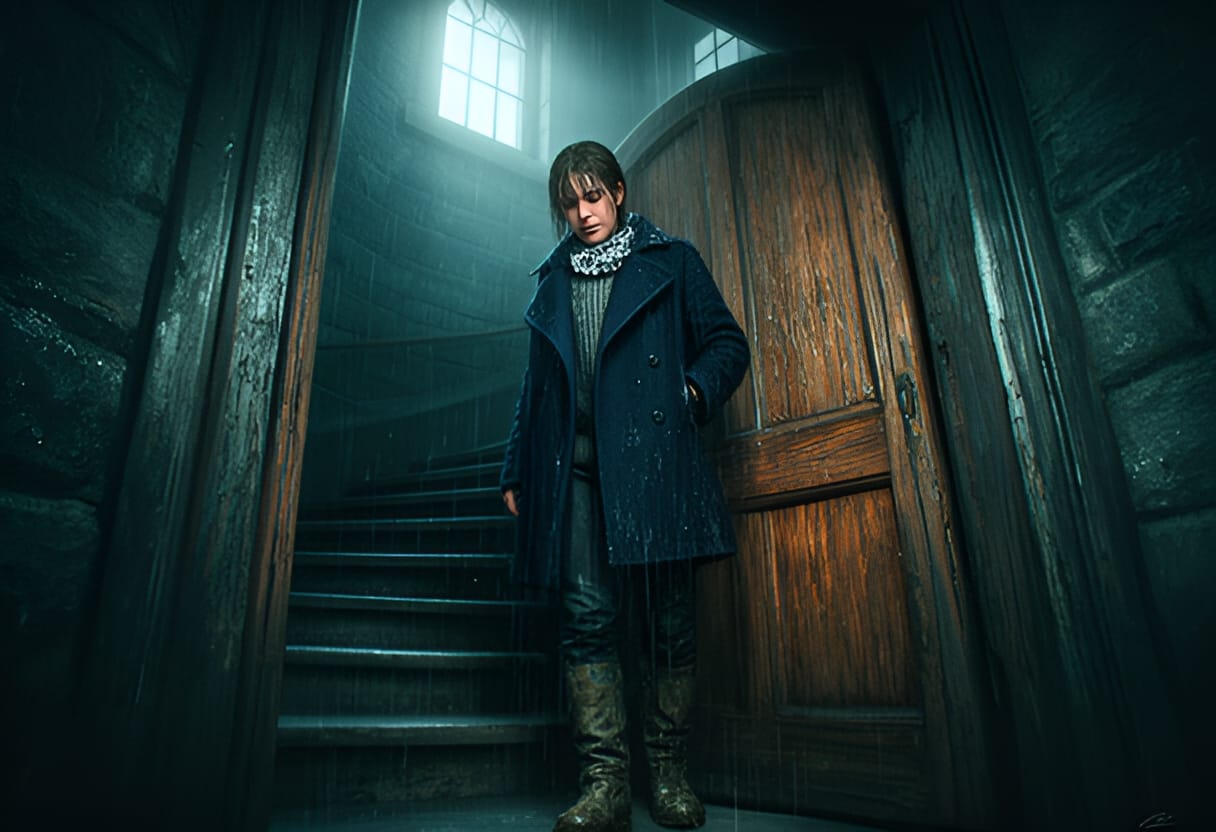
The wind screamed against the stone as Elara Voss shoved the heavy oak door open, salt stinging her eyes. Captain Rennick had already turned back toward his boat, his silhouette swallowed by the gull-gray squall. She stepped inside, the door groaning shut behind her, sealing out the storm but not the silence. It pressed in, thick and waiting, as if the lighthouse itself had been holding its breath.
Her boots clicked on the spiral stairs, each step echoing too loud in the vaulted shaft. She paused at the third landing, where a crust of white salt clung to the railing like frost. She touched it, rubbed it between her fingers. It tasted of the sea and something older.
At the top, the watcher’s room lay in half-light, the brass telescope dull against the wall. Jonah Hale’s journal lay open on the bolted desk, its pages fluttering slightly in a draft that shouldn’t have existed. The ink was faded in places, bold in others, as if the writer had pressed hard, then hesitated, then pressed again in fear.
Elara leaned in. The final entry was dated three days ago.
The fog came in thick tonight, not from the sea but from below. It moves against the wind. I’ve seen it coil around the lantern room like smoke, but there’s no fire. It knows my name. It whispers it when I’m trying to sleep. Not in my ear — in my bones. I keep thinking I hear Liam laughing down by the rocks, but Liam’s been gone ten years. The tide remembers what we bury. It remembers what I forgot.
Her breath hitched. She turned the page slowly, half-expecting more, but the journal ended there. The handwriting had deteriorated across the last few lines — the loops tight and angry, the slant jagged, like something dragged through gravel.
Something caught her eye between the pages: a small, pressed flower, pale blue with five petals, sealed in a fold of paper. She lifted it gently. Her throat closed. It was identical to the sprig of sea thrift they’d placed on Liam’s coffin the day they buried him — a flower that only grew on the eastern cliffs, miles from here.

The room tilted. She was back on the pier, rain lashing her face, Liam’s hand slipping from hers as the wave sucked him under. She remembered the cold, the way his eyes had widened not in fear but in surprise, as if the sea had taken him by surprise too. She remembered the funeral, the minister’s voice muffled, the sea thrift placed on the wood, and the whisper that had come then — not from the wind, but from beside her, saying, He’s not gone. He’s waiting.
Elara jerked back to the present, the flower trembling in her fist. The air in the watcher’s room had grown colder, damp. She set the journal down, the flower falling to the desk with a soft click.
A knock came at the door.
Not the hollow thunder of the storm, but a deliberate, three-part rap — knuckles on wood.
She froze. No one should be out there. The causeway was submerged, the rocks treacherous. Rennick had left ten minutes ago.
Her pulse hammered as she crossed the room, hand on the latch. She pulled the door open.
No one.
Just the hallway beyond, slick with seawater that pooled at the threshold, dripping steadily from the ceiling above. She stepped out, peering into the gloom. The stairs descended into darkness. The only sound was the drip… drip… drip… and beneath it, almost imagined, a hum — low, unfamiliar, yet stirring something deep and nameless in her chest.
She stepped back inside, closing the door softly. The seawater on the floor was already receding, leaving only a faint, shining trail that led nowhere.
Elara stood in the watcher’s room, the journal closed before her, the sea thrift flower still resting where it had fallen. The shining trail on the stone floor had vanished, leaving only the dull gray of wet rock. She wiped her palms on her trousers, trying to shake the chill that had settled in her marrow.
The hum was gone now, but the silence felt different — thinner, as if the air had been stretched tight and was vibrating just below hearing. She listened. Nothing but the slow, steady drip from the ceiling in the hallway beyond.
Then, faint at first, a melody curled through the stone: a lullaby, warped and distant, as if sung through water. Her mother’s voice — soft, off-key in the way she always was when she forgot the words — humming Hush now, little tide, the moon is watching over… Elara’s breath caught. She hadn’t thought of that song in fifteen years, not since the hospital room, not since the funeral.
She moved toward the door, heart hammering not with fear but with the sickening pull of recognition. The tune grew clearer as she descended the stairs, each note tugging at a memory she had buried deep: her mother singing it to Liam when he was small, rocking him by the kitchen window during winter storms, the way she’d sway side to side like a buoy in choppy water.
At the base of the stairs, the melody stopped. The lantern room door stood ajar, a sliver of blackness within. She pushed it open.
The great lens hung silent and dark, its brass fittings dulled by condensation. No beam swept the sea. Only the gray predawn light filtered in through the narrow windows, painting the room in shades of ash.
And there, draped over the brass chronometer like an offering, was Jonah Hale’s oilskin coat. It smelled of salt, wet wool, and something green and thick — kelp, rotting at the edges. She reached out, hesitated, then pulled the sleeve to her nose. The scent flooded her: the pier at low tide, the smell of Jonah’s boots after his morning walk, the way he’d always leave his coat by the door when he came in for tea.
She stepped back. The coat hadn’t been there when she’d first entered the watcher’s room. She was certain of it. Jonah hadn’t been wearing it when he vanished — she’d seen the photo in the village archive, taken the day before he disappeared: wool sweater, trousers, no coat.
Who had brought it up? And why place it here, on the machine that kept time?
A sharp knock came from below — three quick raps on the hatch that led to the service corridor. Not the storm. Not the building settling. Deliberate. Intentional.
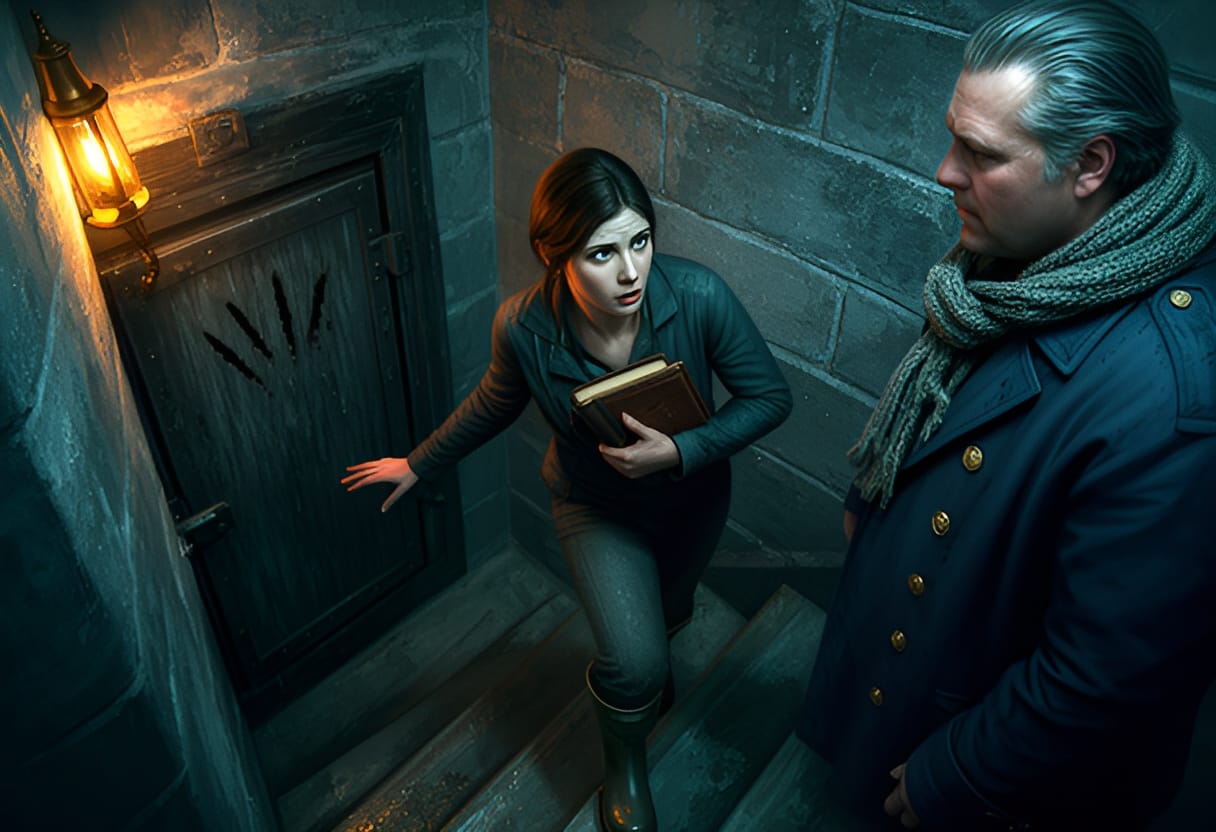
Elara froze. The lullaby was gone. Only the drip remained, now louder, faster — water striking stone in a rhythm that almost sounded like footsteps.
She snatched up Jonah’s journal, shoved it into her coat, and fled for the door.
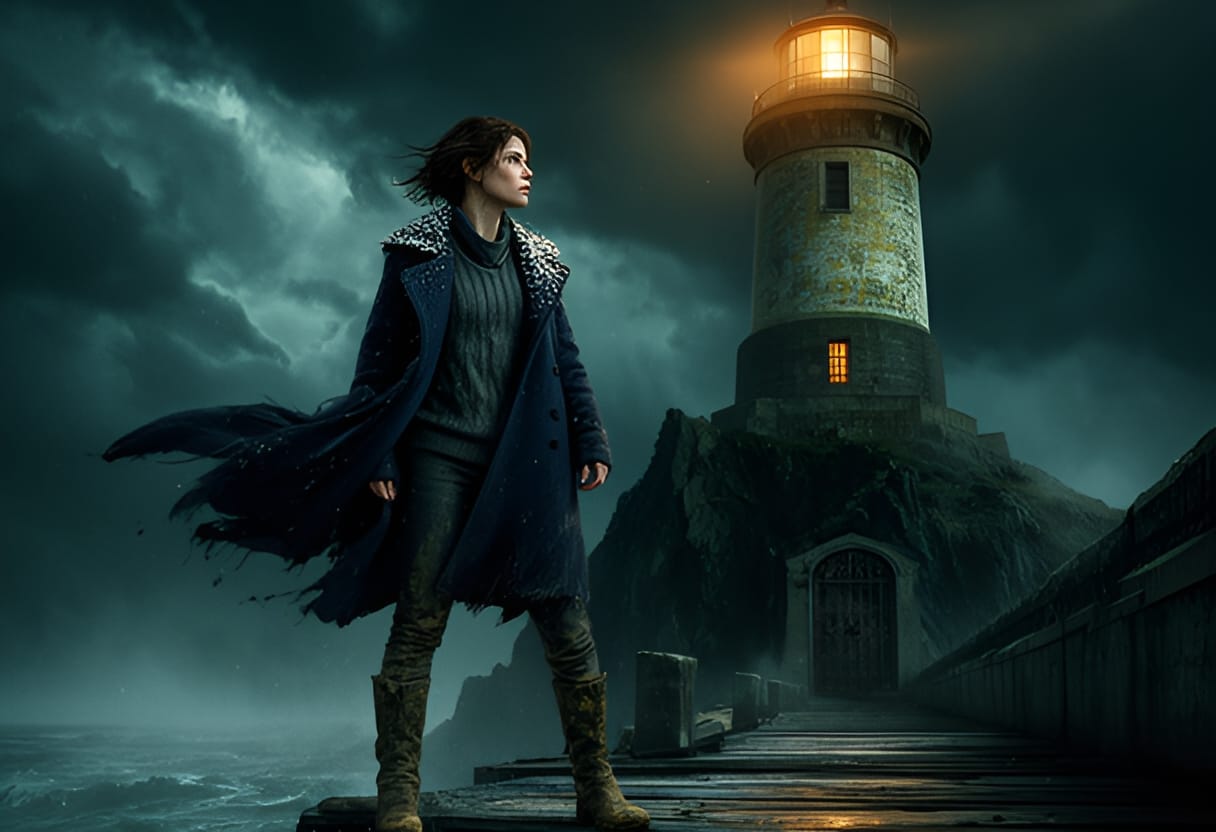
The sky beyond the lighthouse was the color of lead, the sea a churning gray slate. But as she reached the causeway, her boots splashed not on wet sand but on rising water. The sea had swallowed the path whole, waves licking at the submerged rocks with hungry urgency. She checked her watch — 5:47 a.m. High tide wasn’t due for another three hours.
She turned back, staring at the tower. The lighthouse stood alone on its island, the light dark, the windows watching.
The door clicked shut behind her, not from wind, but from something inside pulling it closed.
She was trapped.
And the lullaby began again, faint now, coming from within the walls — not a memory this time, but a promise. Hush now, little tide… It knew her name. It knew Liam’s. And it was learning how to sing them both.
Chapter 2
Chapter 2
She turned back, staring at the tower. The lighthouse stood alone on its island, the light dark, the windows watching.
The door clicked shut behind her, not from wind, but from something inside pulling it closed.
She was trapped.
And the lullaby began again, faint now, coming from within the walls — not a memory this time, but a promise. Hush now, little tide… It knew her name. It knew Liam’s. And it was learning how to sing them both.
Elara pressed her back against the cold stone of the lighthouse wall, the wind biting through her soaked coat. The causeway was gone — swallowed by a black, heaving sea that gnawed at the rocks like something alive. She fumbled for the journal in her pocket, fingers numb, and pulled it free. The salt crusted on the cover felt like ice.
She needed light. Shelter. Answers.
The lower door was barred from within — she could see the shadow of the bolt through the grimy glass. But the service hatch, the one Jonah had used to come and go, gaped open in the base of the tower, just above the surging water. It was her only way in.
She descended the slick iron rungs, the waves thundering below, and dropped into the narrow corridor beyond. The air was damp and thick with the smell of brine and mildew. Flickering her torch, she traced the walls until she reached the library — a small, cluttered room off the keeper’s quarters, lined with salt-warped shelves and a desk buried under logs, charts, and dozens of leather-bound journals.
She sank into the chair, shivering, and opened Jonah’s journal to the last entry. The handwriting had grown frantic toward the end, the letters jagged and uneven, as if written in the dark by a trembling hand. But earlier entries were neat, methodical — the record of a man who took pride in his duty.
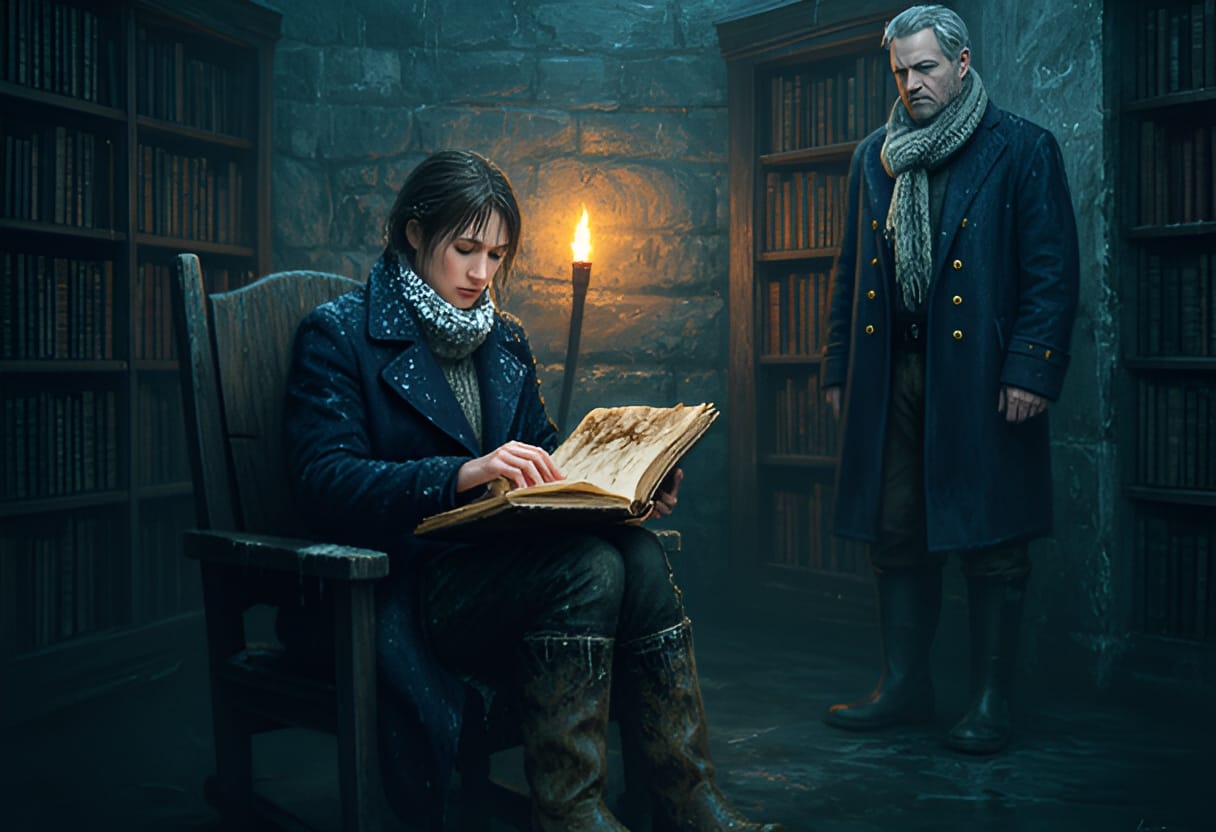
She began to flip back.
One entry, dated ten years prior, caught her eye: The fog came again last night. It knew Daniel’s name. Called him from the rocks. I should have held him tighter when he was sick. I should have stayed.
Daniel. Jonah’s daughter. Taken by croup the winter before he vanished.
Her breath hitched. She dug deeper — into the journals of previous keepers, brittle with age, their ink faded but legible.
Each told the same story.
March 12, 1923: Heard Thomas calling from the tide pools. He drowned in ’13. I never told anyone I was supposed to be on the boat that day.
October 3, 1873: The water whispers Elias’s name. I left him on the pier. I was drunk. I should have watched him.
September 30, 1723: The tide calls for my brother. I lied to the captain. Said he was ashore. He wasn’t.
Every fifty years. A keeper vanishes. The light fails. And just before — a loss. A guilt. A secret they carried like a stone in the chest.
The lighthouse didn’t take strangers.
It took those who were called — by blood, or by guilt.
A sharp rap on the library door made her jump.
Captain Rennick stood in the doorway, oilskin dripping, his face grim in the torchlight. “You shouldn’t be down here,” he said. “The sea’s trying to claim what’s theirs.”
“I found something,” she said, voice low. “It’s not random. The keepers who vanished — they all had a recent loss. Something they felt responsible for. Jonah lost his daughter. The one before him lost his brother in a netsnag. The lighthouse… it doesn’t just take people. It answers them. It uses their guilt.”
Rennick stepped inside, shutting the door against the wind. He didn’t deny it. Instead, he reached into his coat and pulled out a small, tarnished locket, its chain snapped. He opened it. Inside, a miniature portrait of a woman with kind eyes and braided hair — his mother, lost decades ago, swallowed by the sea during the last blackout.
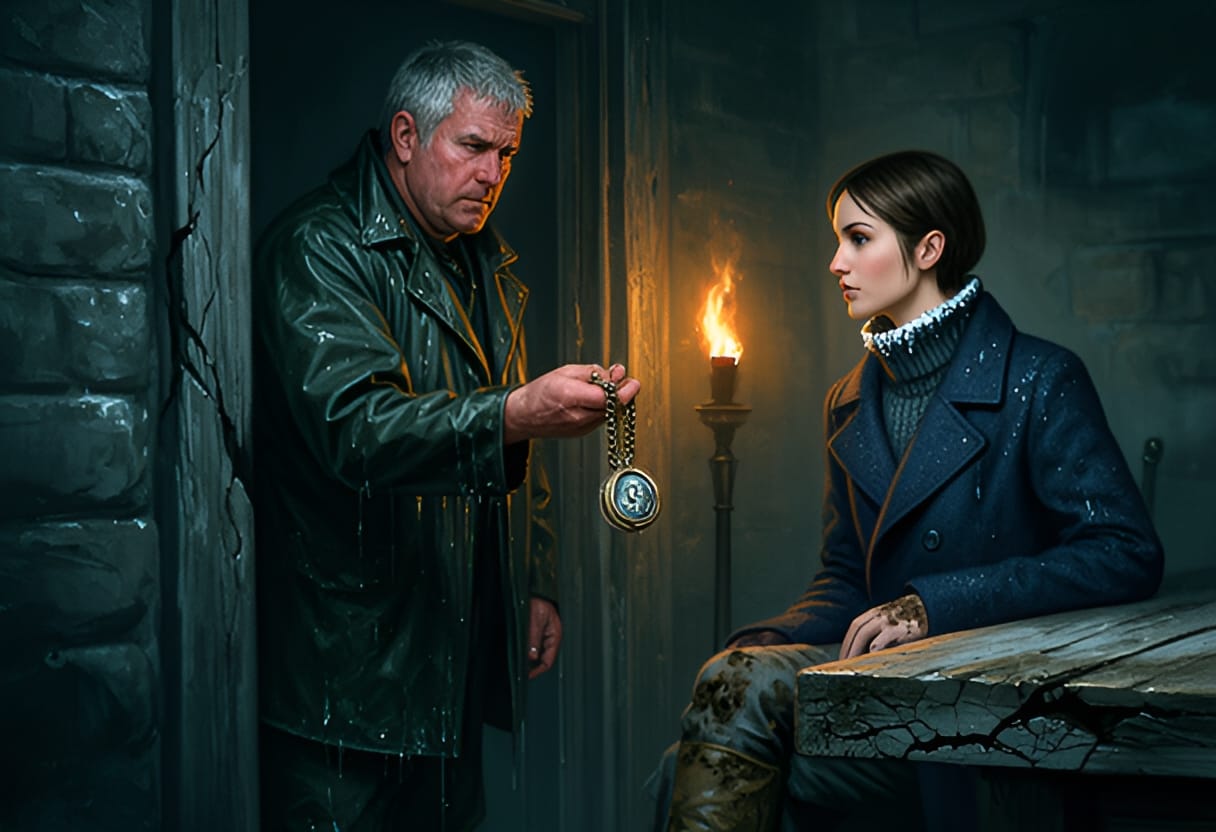
“She wore this the day she vanished,” he said quietly. “Found it in the sea cave yesterday, wedged under a rock like it was left on purpose. She disappeared after Da… after he let that smuggling boat go through the shoals. The boy on board — just sixteen — drowned when it hit the rocks. Da never spoke of it. But he started sleeping in the watcher’s room, talking to her picture. Then the light went out. And he was gone.”
He looked at her, eyes heavy. “It doesn’t take strangers, Elara. It takes the ones who carry something they can’t forgive. And it’s been waiting for you to remember why you’re really here.”
She looked down at her hands — calloused, ink-stained, the hands of a historian who had spent years documenting other people’s tragedies while avoiding her own.
The lullaby hummed in the walls again, softer now, but unmistakable.
Hush now, little tide…
The lullaby curled around her as she slept, a low thrum in the stones that slipped beneath her eyelids and into her dreams. She woke once with salt on her lips and the taste of kelp on her tongue, her cheek pressed to the library’s wooden desk. Jonah’s journal lay open before her, the page filled with a script she knew — her own handwriting, sharp and urgent, as if written in haste.
March 14, 2024: The fog is thicker tonight. It doesn’t rise — it waits. It knows the shape of my brother’s voice. I heard him call from the rocks below the lantern room. I almost answered. I must not go down. The tide is coming for what I buried.
Her breath caught. She had not written this. She had not dreamed of the rocks below the lantern room. She had not thought of Liam’s voice in years — not like that, not raw and close, as if he were just beyond the next wave.
She snapped the journal shut, her pulse hammering. The lullaby hummed softer now, almost apologetic.
Elara…
She froze. Not in her head. Not a memory. The voice came from the wall beside her, low and wet, like water dragging over stone.
She flung the journal onto the desk and stumbled to her feet, heart pounding. The library was empty. The torch had guttered to a dull glow. Outside, the wind had dropped. The sea lay still, a black mirror under a starless sky.
She told herself it was exhaustion. The storm. The guilt she had carried like a second skeleton.
But when she woke again, she was standing at the base of the lantern room stairs, barefoot, the journal clutched to her chest. Salt crusted her eyebrows. The air above her smelled of oil and old glass — the scent of the lantern room when it was lit. But the tower was dark. The light had not returned.
And the journal was open to a fresh page.
March 14, 2024, 02:17: I am going down. The hatch is open. The water is low. I must see what Jonah saw. I must see if it’s real. If it’s waiting for me. I took Liam’s necklace from my pocket today. I didn’t realize I still carried it. It’s warm. It’s been waiting too.
Her hands shook. She remembered nothing of rising. Nothing of climbing. But the salt on her skin was real. The necklace — Liam’s wave-shaped silver, the one she had taken from his pocket the day he washed ashore — was gone from her neck. She had not taken it off. She had not noticed it missing.
She fled back to the library, slammed the journal shut, and shoved it into her pack. She would not sleep here again. She would not trust her own mind.
Low tide came at dawn, the sea pulling back like a breath held too long. The causeway remained submerged, but the rocks below the lighthouse were exposed, slick with algae and strewn with kelp. Elara moved without thinking, drawn not by choice but by a compass she did not know she possessed — a pull in her chest, a direction whispered by the walls.
She found the service hatch open again, the iron rungs slick with seawater. She descended, the waves sighing far below, and dropped into the narrow corridor. The air grew colder, damper. The smell of brine gave way to something older — wet stone, rotting wood, and the faint, sweet rot of sea thrift.
The cellar yawned ahead, its stone steps worn smooth by centuries of feet. She hesitated at the top. The journal burned in her pack. She did not take it out. She did not need to. She already knew what it would say.
She descended.
The sea cave opened at the bottom, a vast, arched chamber where the tide had carved its signature into the rock. At low tide, it was a cathedral of stone and shadow, the walls hung with dripping curtains of mussel and barnacle. The sea had retreated far, leaving a mirror-flat pool at the center that swallowed the dim light of her torch.
And there, half-submerged in the shallows, were Jonah Hale’s boots.
They stood upright, filled to the brim with seawater, the leather softened and darkened by salt. They faced inland, as if he had simply stepped out of them and walked away.
She stepped closer. The water lapped at the toes. Inside the left boot, something glinted.
She knelt, ignoring the cold that seeped through her trousers, and reached in.
Liam’s necklace lay coiled in the seawater, the silver pendant shaped like a breaking wave. It was warm to the touch. It pulsed faintly, as if alive.
She pulled it free, water streaming from the chain. As she did, her torch beam caught the wall beside the boots — a niche had been carved into the stone, rough and recent, its edges still dusty with rock. Inside it, nestled on a bed of dried sea thrift, lay a second identical necklace.
Hers.
She stared. Her breath came short. The lullaby rose again, not from the walls this time, but from the water itself — a whisper beneath the lap of waves.
Hush now, little tide…
The water began to stir.
Far out, the sea groaned. The tide was turning.
She shoved the necklace into her pocket, shoved the journal after it, and turned for the ladder.
The cave was flooding. The light was still dark.
And the lighthouse was waiting.
Chapter 3
Chapter 3
The storm had broken the lighthouse’s spine. Water surged through the lower levels, swallowing the library’s floor and dragging at Elara’s boots as she turned from the shattered window of the sea cave. The tide had risen faster than she thought possible, sealing the archway behind her with a churning wall of foam and driftwood. To go back was to drown. To stay was to be pulled under by the undertow already gnawing at the stone steps.
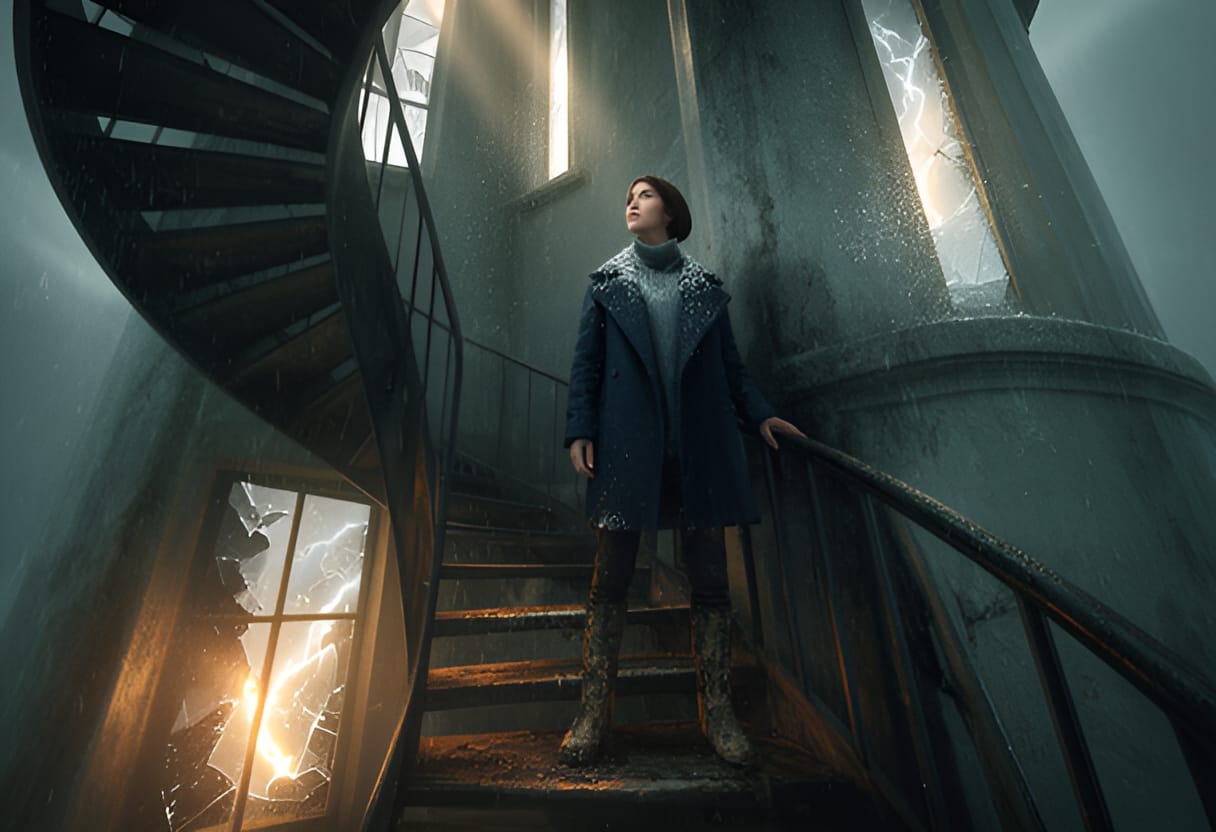
She pressed her back against the cold wall and looked up. The spiral stairs rose into darkness, the rail slick with salt and something thicker—condensation, or sweat, or the slow weep of the walls themselves. Above, the lantern room blinked erratically, its beam dead, but the glass still caught the lightning in fractured gleams.
And then she saw him.
Jonah Hale stood on the landing above, not as the man from the journal’s final pages—hollow-eyed, coat damp with unnatural fog—but older, his face lined with years she knew he never lived to see. He wore no oilskin, only a faded sweater and trousers, his hands loose at his sides. He was not reaching for her. He was not warning her away. He was smiling, soft and sure, as if he had been waiting for her to finally look up.
Her breath hitched. Not fear. Recognition.
He was not a threat. He was a sign.
She gripped the rail and began to climb.
Each step groaned beneath her weight, the stone vibrating with the storm’s fury. Salt spray lashed the narrow windows, blinding the world beyond in white bursts. The air grew thinner, colder, but the higher she climbed, the less the water followed. The sea’s roar faded beneath the wind’s howl and the creak of the tower itself—old timber straining, iron groaning in its joints.
Halfway up, her glove slipped on the rail. She caught herself, heart hammering, and saw her reflection in the brass plating beside her: wide-eyed, hair escaping its braid, face streaked with salt and something wet she hoped was only spray. But for a flicker, just beneath her own eyes, she saw Liam’s—ten years younger, wide with panic, mouth open in a silent cry as the wave took him.
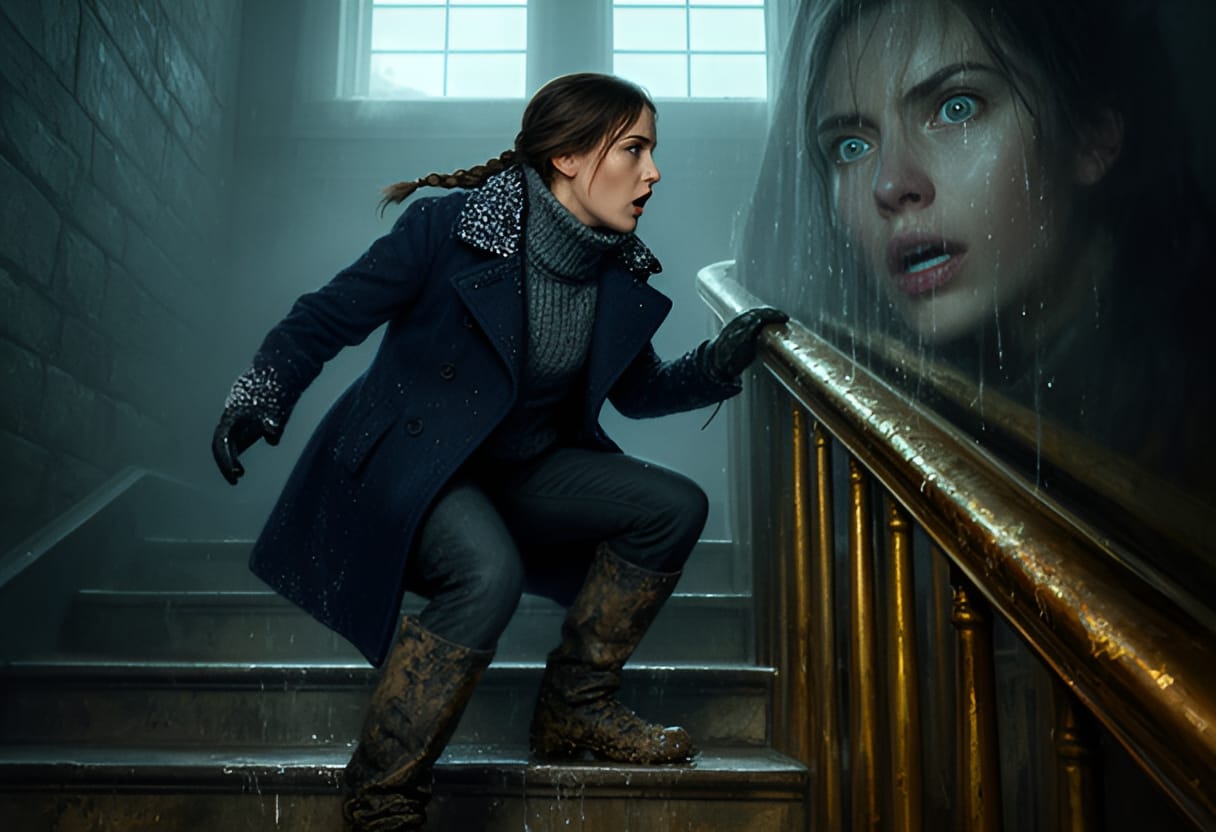
She jerked back, gasping.
The reflection was gone. Only her own ragged face remained.
She kept climbing.
At the top, the lantern room door stood ajar.
She pushed it open and stepped inside.
The storm vanished.
Not muted. Not drowned out. Erased.
The wind’s howl, the rain’s lash, the groan of the timbers—all silenced as if the tower had inhaled and held its breath. The air was warm, still, smelling of oil and old glass and something faintly floral—like the sea thrift pressed between Jonah’s pages. The lens stood dark but clean, its brass polished to a soft glow. No water dripped from the ceiling. No salt crusted the floor.
And the whispers were gone.
Not faded. Not distant. Absent.
Elara stood in the center of the room, her boots silent on the wood, her pulse loud in her ears. The lighthouse did not feel like a prison. It did not feel like a tomb.
It felt like a threshold.
She turned slowly, scanning the walls, the stairs below, the lens above. No shadows moved. No voices called. Only the steady, patient quiet of a place that had been waiting—not for a body, not for a life—but for her to finally stop running.
Her hand drifted to the pocket of her coat. Inside, Liam’s necklace lay cool against her palm—the silver pendant shaped like a wave, the one she had taken from his pocket the day they found him washed ashore, the one she had never been able to throw into the sea.
She had come to uncover a mystery.
She realized, with a clarity that felt like surrender, that she had been the mystery all along.
She sank to her knees before the lens, the cold wood biting through her trousers. The necklace felt heavier now, not with metal but with the weight of every year she had carried it like a stone in her chest. She opened her palm and let it rest in the center, the wave-shaped pendant catching the dim ambient glow. Beside it, she placed Jonah’s journal, its cover worn soft at the edges, the pages still damp from the cave’s breath.
The silence pressed in, not empty, but expectant. As if the room itself were holding its breath, waiting for her to speak the thing she had buried deeper than the tide could reach.
Her voice came low at first, raw and unsteady. “I let go.”
The words hung in the still air, too small to matter. She swallowed, forced herself to continue.
“We were in the boat. Just the two of us. Father had taken us out to check the nets, promised we’d be back before dark. But the squall came faster than any of us saw. One moment we were laughing over Liam’s terrible joke about the gulls, the next the wave hit—flat and black, like the sea had opened its mouth.”
She paused, throat tight. The memory was not a film but a sensation: the salt on her lips, the sudden loss of weight in her grip, the way Liam’s fingers had slipped—not torn away, but released. As if her own hand had decided, in a breath of panic, that survival meant letting go.
“I didn’t scream for help. I didn’t reach back. I… I pulled myself into the stern and curled up, pretending I hadn’t seen him go under. I told myself the current took him fast. That he didn’t feel fear. That I had done all I could.”
A single tear escaped, hot and sudden, tracing a path through the salt on her cheek. She brushed it away angrily, as if anger could undo the past.
“I survived because I chose to. And I’ve hated myself for it every day since.”
She fell silent. The confession hung between her and the dark lens, between her and the years of quiet penance she had worn like a second skin. The journal lay open beside the necklace, its pages blank now, waiting.
Then—light.

Not a spark. Not a flicker. A sudden, steady blaze, as if the lamp had been holding its breath alongside her and now exhaled in flame. The lens caught the fire and threw it outward in a clean, golden beam that sliced through the darkness of the tower and leapt across the sea, sweeping the cliffs, the caves, the churning white of the undertow. It did not waver. It did not falter. It burned clear and true, unasked for, unexplained.
And with it, the whispers ceased.
Not a sigh. Not a fade. An absolute stillness. The voices—Jonah’s gentle urging, Liam’s silent cry, the chorus of keepers and kin and those who had called and been called—all vanished, not into distance, but into nothing. As if they had never been more than echoes waiting for a word to set them free.
Elara did not move. She stayed on her knees, hands open on the lens, the necklace and journal resting between her palms like offerings accepted. The beam swept again, steady and sure, painting the walls in warm light that made the brass gleam and the wood glow. Outside, the storm had not abated, but here, in this room, there was only the quiet hum of the lamp, the scent of oil and sea thrift, and the slow, steady beat of her own heart—no longer a hammer of fear, but the rhythm of someone who had finally stopped running.
She rose slowly, stiff from the cold and the tension in her limbs. The necklace remained on the lens. The journal lay closed, its spine unbroken, its secrets no longer needed to be told.
She stepped back, just far enough to see the full circle of light she had wrought—not with a match, not with a hand on the wick, but with truth.
Above her, the lantern room held its peace. Below, the stairs waited, no longer echoing with footsteps that were not her own.
Somewhere beyond the cliff, over the water where the beam now lay like a path, a gull cried. Then another. The sound was thin, clear, unafraid.
Elara turned toward the door. She did not look back.