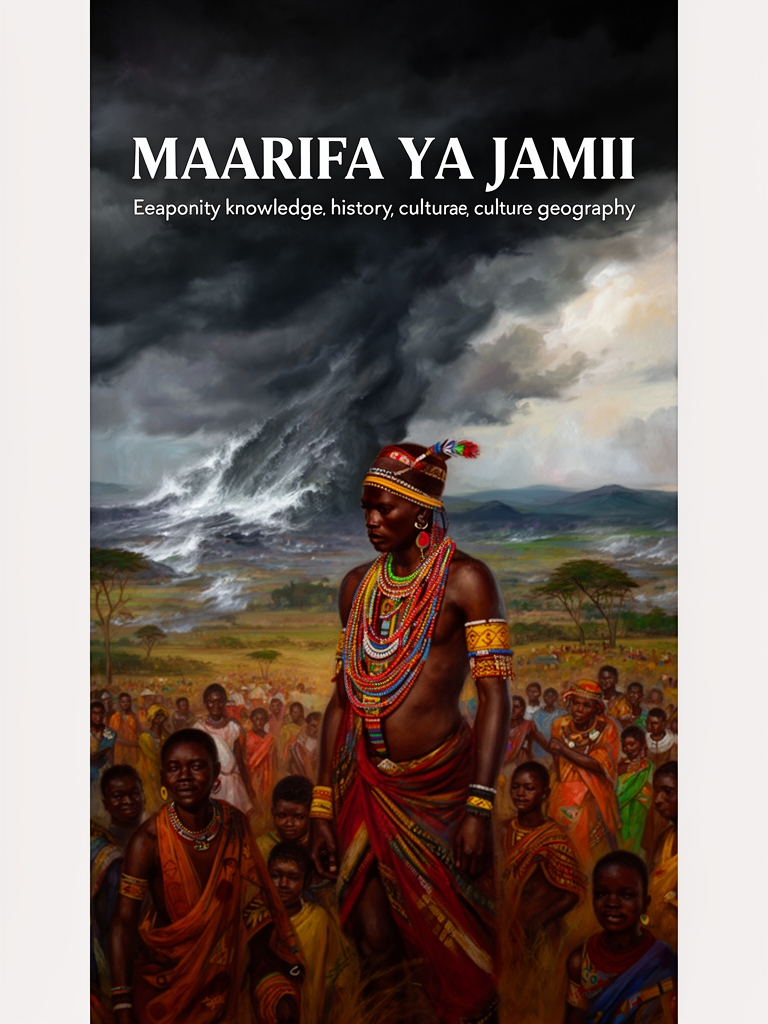
ID · maarifa-ya-jamii-85f4e328
MAARIFA YA JAMII
By Frank Simbeye · History · Professional · 30 pages
Table of contents
- 1. Introduction to Community Knowledge
This chapter introduces the concept of community knowledge and its importance in understanding the world around us. It covers topics such as the solar system, natural disasters, and climate change. The solar system consists of eight planets, each with unique characteristics, and is held together by the sun's gravity. The planets are categorized into inner and outer groups, with distinct sizes and atmospheres. The sun's energy is essential for life on Earth, powering the water cycle, climate, and growth of plants and animals. The solar system's characteristics and the sun's energy significantly impact the planets, including Earth, leading to natural disasters like hurricanes, earthquakes, and volcanic eruptions. Climate change, exacerbated by human activities, disrupts the Earth's delicate balance, causing rising sea levels, more frequent natural disasters, and changes in weather patterns. The study of geography and mapping is essential for understanding the complex relationships between the solar system, the Earth's climate, and human societies, particularly in Tanzania and East Africa, where geographic features like mountains, valleys, and rivers shape the landscape and support human settlements. The process of visualizing the world involves using tools like GIS and remote sensing to understand relationships between environment, human populations, and economic activities. Researchers can analyze and visualize impacts of natural disasters and climate change, supporting informed decision-making.
- 2. Tanzanian History and Culture
This chapter explores the history and culture of Tanzania, including the country's struggle for independence and its cultural heritage. It covers topics such as the Maji Maji rebellion and the role of Julius Nyerere. The pre-colonial history of Tanzania was marked by the presence of various tribes and empires, each with their own unique culture and traditions. The region's diverse geography supported a range of agricultural and pastoral activities, and trade played an important role in the development of pre-colonial societies. The arrival of European colonizers had a profound impact on pre-colonial Tanzania, leading to significant changes in the economy, politics, and culture. Key figures like Julius Nyerere and Abeid Karume led the struggle for independence, using diplomacy, protest, and armed resistance. Major events included the Maji Maji Rebellion, formation of TANU, independence negotiations, and the union with Zanzibar. International cooperation and collective action also played a crucial role in achieving independence. Tanzanian culture is a diverse tapestry of over 120 ethnic groups, each with unique languages, customs, and practices. The country's cultural heritage has been impacted by colonialism, but efforts are being made to preserve and promote it through festivals, museums, and educational programs. Tanzanian culture is a rich and diverse tapestry, with over 120 ethnic groups, each with their own unique language, customs, and practices. The country's cultural heritage has been impacted by colonialism, but there is a resurgence of interest in traditional culture, with efforts to preserve and promote it through festivals, museums, and community engagement. Tanzania has over 120 ethnic groups with unique languages, customs, and practices. The Hadza, Maasai, Chagga, and Shambaa are examples of ethnic groups with distinct traditions, such as hunting and gathering, traditional dress and jewelry, storytelling and music, and agriculture and farming. Education
- 3. Economic Development and Global Connections
This chapter discusses the economic development of Tanzania and its connections to the global economy. It covers topics such as trade, tourism, and foreign investment. Tanzania's economic development is driven by sectors like agriculture, tourism, and manufacturing, with foreign investment and trade playing a significant role. The country faces challenges such as poverty, corruption, and infrastructure deficits, but has opportunities like rich natural resources and a growing tourism sector. Tanzania engages in global trade agreements, international cooperation, and foreign investment to boost its economy, with a focus on regional trade and addressing challenges to achieve sustainable growth Tanzania's tourism sector is growing rapidly, driven by its unique cultural heritage and natural beauty, with various types of tourism, including wildlife, cultural, and beach tourism, and significant economic benefits, but also faces challenges such as competition and infrastructure deficits. Tanzania's economic development is complex, with challenges like poverty and corruption, but also opportunities like unique cultural heritage and natural beauty. The country needs to address its challenges and capitalize on its opportunities to become a major economic player in Africa.
Chapter 1: Introduction to Community Knowledge
This chapter introduces the concept of community knowledge and its importance in understanding the world around us. It covers topics such as the solar system, natural disasters, and climate change. The solar system consists of eight planets, each with unique characteristics, and is held together by the sun's gravity. The planets are categorized into inner and outer groups, with distinct sizes and atmospheres. The sun's energy is essential for life on Earth, powering the water cycle, climate, and growth of plants and animals. The solar system's characteristics and the sun's energy significantly impact the planets, including Earth, leading to natural disasters like hurricanes, earthquakes, and volcanic eruptions. Climate change, exacerbated by human activities, disrupts the Earth's delicate balance, causing rising sea levels, more frequent natural disasters, and changes in weather patterns. The study of geography and mapping is essential for understanding the complex relationships between the solar system, the Earth's climate, and human societies, particularly in Tanzania and East Africa, where geographic features like mountains, valleys, and rivers shape the landscape and support human settlements. The process of visualizing the world involves using tools like GIS and remote sensing to understand relationships between environment, human populations, and economic activities. Researchers can analyze and visualize impacts of natural disasters and climate change, supporting informed decision-making.
The Solar System
Introduction To The Solar System
The solar system was a vast and complex topic that had fascinated humans for centuries. It consisted of eight planets, including Mercury, Venus, Earth, Mars, Jupiter, Saturn, Uranus, and Neptune. Each planet had its own unique characteristics, such as size, temperature, and atmosphere. The solar system also included other celestial bodies like moons, asteroids, and comets.
As Dr. Maria, a renowned astronomer, explained, "The solar system is a remarkable place, full of mysteries waiting to be uncovered. From the scorching hot surface of Mercury to the icy cold temperatures of Neptune, each planet offers a unique perspective on the formation and evolution of our cosmic neighborhood." She emphasized the importance of understanding the solar system, saying, "By studying the solar system, we can gain insights into the formation of our own planet and the potential for life beyond Earth."
The Planets
The planets in our solar system can be broadly categorized into two groups: the inner planets and the outer planets. The inner planets, which include Mercury, Venus, Earth, and Mars, are relatively small and rocky, with thin atmospheres. The outer planets, which include Jupiter, Saturn, Uranus, and Neptune, are much larger and more gaseous, with thicker atmospheres.
| Planet | Size (km) | Atmosphere |
|---|---|---|
| Mercury | 4,879 | Thin |
| Venus | 12,104 | Thick |
| Earth | 12,742 | Moderate |
| Mars | 6,794 | Thin |
| Jupiter | 142,984 | Thick |
| Saturn | 116,464 | Thick |
| Uranus | 51,118 | Thick |
| Neptune | 49,528 | Thick |
The Sun And Its Role
The sun was the center of the solar system, and its gravity held the planets in their orbits. It was a massive ball of hot, glowing gas, and its energy was essential for life on Earth. The sun's rays powered the water cycle, drove the climate, and supported the growth of plants and animals. Without the sun, life as we knew it would not be possible.
As Dr. John, a solar physicist, noted, "The sun is the driving force behind our climate and weather patterns. Its energy is what makes life on Earth possible, and understanding its behavior is crucial for predicting and mitigating the effects of climate change." He highlighted the importance of monitoring the sun's activity, saying, "By studying the sun's cycles and patterns, we can better understand the complex interactions between the sun, the atmosphere, and the oceans, and how they impact our planet."
Illustration
A diagram showing the solar system, with the sun at the center and the planets in their respective orbits
Natural Disasters and Climate Change
Natural Disasters
The solar system's unique characteristics and the sun's energy had a profound impact on the planets, including Earth. One of the most significant effects was the occurrence of natural disasters, such as hurricanes, earthquakes, and volcanic eruptions. These events were often triggered by the sun's energy and the complex interactions between the atmosphere, oceans, and land.
As Dr. Maria explained, "Natural disasters are a natural part of the Earth's system, but they can have devastating effects on human populations and the environment. Understanding the causes and consequences of these events is crucial for mitigating their impact and developing strategies for adaptation and resilience." She emphasized the importance of studying the solar system and the sun's role in shaping the Earth's climate, saying, "By understanding the complex interactions between the sun, the atmosphere, and the oceans, we can better predict and prepare for natural disasters."
Climate Change
Climate change was another critical issue that affected the planets, particularly Earth. The sun's energy and the greenhouse effect played a significant role in regulating the Earth's temperature, but human activities, such as burning fossil fuels and deforestation, had disrupted this delicate balance. The consequences of climate change were far-reaching, including rising sea levels, more frequent natural disasters, and changes in weather patterns.
| Factor | Description | Impact |
|---|---|---|
| Greenhouse gases | Carbon dioxide, methane, and water vapor | Trap heat, contribute to global warming |
| Deforestation | Clearance of forests for agriculture and urbanization | Releases carbon dioxide, reduces oxygen production |
| Fossil fuels | Burning of coal, oil, and gas for energy | Releases carbon dioxide, contributes to air pollution |
Dr. John noted, "Climate change is one of the most pressing issues of our time, and it requires a comprehensive and coordinated response. By understanding the causes and consequences of climate change, we can develop effective strategies for mitigation and adaptation, and work towards a more sustainable future." He highlighted the importance of international cooperation and collective action, saying, "Climate change is a global problem that requires a global response, and we must work together to address its challenges and opportunities."
Impacts On Tanzania And East Africa
The effects of natural disasters and climate change were particularly pronounced in Tanzania and East Africa. The region was prone to droughts, floods, and other extreme weather events, which had significant impacts on agriculture, water resources, and human settlements. The changing climate also affected the region's unique biodiversity, including the Serengeti National Park and the Mount Kilimanjaro ecosystem.
As Dr. Maria explained, "Tanzania and East Africa are particularly vulnerable to the impacts of climate change, due to their geographical location and socio-economic conditions. It is essential to develop and implement effective strategies for adaptation and resilience, including climate-smart agriculture, water management, and disaster risk reduction." She emphasized the importance of community-based initiatives and local knowledge, saying, "By working with local communities and incorporating their knowledge and experiences, we can develop more effective and sustainable solutions to the challenges posed by climate change."
Illustration
A map showing the location of Tanzania and East Africa, with illustrations of the region's unique biodiversity and climate-related challenges
Geography and Mapping
Geography And Mapping
The study of geography and mapping was essential for understanding the complex relationships between the solar system, the Earth's climate, and human societies. By examining the geographical features of Tanzania and East Africa, researchers could better understand the impacts of natural disasters and climate change on the region. Dr. John noted, "Geography and mapping are critical tools for understanding the Earth's systems and the impacts of climate change. By using geographic information systems (GIS) and remote sensing technologies, we can analyze and visualize the complex relationships between the environment, human populations, and economic activities."
Geographic Features
Tanzania and East Africa had a diverse range of geographic features, including mountains, valleys, and coastal areas. The region was home to several major rivers, including the Nile and the Zambezi, which played a crucial role in shaping the landscape and supporting human settlements. The unique geography of the region also supported a wide range of ecosystems, including savannas, forests, and deserts.
| Feature | Description | Location |
|---|---|---|
| Mount Kilimanjaro | Highest peak in Africa | Tanzania |
| Serengeti National Park | Largest migration of wild animals | Tanzania |
| Nile River | Longest river in the world | Tanzania, Uganda, South Sudan |
| Zambezi River | Major river system | Tanzania, Zambia, Zimbabwe |
Dr. Maria explained, "The geographic features of Tanzania and East Africa are not only important for understanding the region's climate and ecosystems but also for supporting human settlements and economic activities. By studying the geography of the region, we can better understand the complex relationships between the environment, human populations, and economic development."
Mapping And Visualization
Mapping and visualization were essential tools for understanding the complex relationships between the environment, human populations, and economic activities. By using GIS and remote sensing technologies, researchers could analyze and visualize the impacts of natural disasters and climate change on the region. Dr. John noted, "Mapping and visualization are critical tools for communicating complex information to policymakers, stakeholders, and the general public. By using maps and visualizations, we can illustrate the impacts of climate change and natural disasters, and support more informed decision-making."
Applications Of Mapping And Visualization
The applications of mapping and visualization were diverse and included climate change research, disaster risk reduction, and sustainable development. By using GIS and remote sensing technologies, researchers could analyze and visualize the impacts of climate change on the region's ecosystems, human settlements, and economic activities. Dr. Maria explained, "The applications of mapping and visualization are numerous and include supporting climate change research, disaster risk reduction, and sustainable development. By using these tools, we can better understand the complex relationships between the environment, human populations, and economic activities, and support more informed decision-making."
Illustration
A diagram showing the applications of GIS and remote sensing technologies in climate change research, disaster risk reduction, and sustainable development
International Cooperation And Collective Action
International cooperation and collective action were essential for addressing the challenges posed by climate change and natural disasters. By working together, countries could share knowledge, expertise, and resources, and support more effective and sustainable solutions to the challenges posed by climate change. Dr. John noted, "International cooperation and collective action are critical for addressing the challenges posed by climate change and natural disasters. By working together, we can support more effective and sustainable solutions to these challenges, and promote a more equitable and just world."
Benefits Of International Cooperation
The benefits of international cooperation and collective action were numerous and included supporting more effective and sustainable solutions to the challenges posed by climate change, promoting a more equitable and just world, and enhancing global security and stability. Dr. Maria explained, "The benefits of international cooperation and collective action are numerous and include supporting more effective and sustainable solutions to the challenges posed by climate change, promoting a more equitable and just world, and enhancing global security and stability. By working together, we can address the challenges posed by climate change and natural disasters, and promote a more sustainable and equitable future for all."
| Benefit | Description | Example |
|---|---|---|
| Shared knowledge and expertise | Countries can share knowledge and expertise to support more effective and sustainable solutions | Climate change research and development |
| Resource sharing | Countries can share resources to support more effective and sustainable solutions | Disaster risk reduction and management |
| Enhanced global security and stability | International cooperation and collective action can enhance global security and stability | United Nations Framework Convention on Climate Change |
Visualizing the World
Visualizing The World
The process of visualizing the world was a complex and multifaceted one, involving the use of various tools and techniques to understand and represent the complex relationships between the environment, human populations, and economic activities. Dr. Maria noted, "Visualizing the world is essential for understanding the complex relationships between the environment, human populations, and economic activities. By using geographic information systems (GIS) and remote sensing technologies, we can analyze and visualize the impacts of natural disasters and climate change on the region."
Geographic Information Systems
Geographic information systems (GIS) were powerful tools for analyzing and visualizing the complex relationships between the environment, human populations, and economic activities. By using GIS, researchers could examine the geographic features of Tanzania and East Africa, including mountains, valleys, and coastal areas, and understand how these features supported human settlements and economic activities. Dr. John explained, "GIS is a critical tool for understanding the complex relationships between the environment, human populations, and economic activities. By using GIS, we can analyze and visualize the impacts of natural disasters and climate change on the region, and support more informed decision-making."
| Tool | Description | Application |
|---|---|---|
| GIS | Geographic information system | Analyzing and visualizing geographic data |
| Remote Sensing | Technology for collecting data about the Earth's surface | Monitoring climate change and natural disasters |
| Mapping | Representation of geographic data | Communicating complex information to policymakers and stakeholders |
Applications Of Visualization
The applications of visualization were diverse and included climate change research, disaster risk reduction, and sustainable development. By using GIS and remote sensing technologies, researchers could analyze and visualize the impacts of climate change on the region's ecosystems, human settlements, and economic activities. Dr. Maria noted, "The applications of visualization are numerous and include supporting climate change research, disaster risk reduction, and sustainable development. By using these tools, we can better understand the complex relationships between the environment, human populations, and economic activities, and support more informed decision-making."
Benefits Of Visualization
The benefits of visualization were numerous and included supporting more effective and sustainable solutions to the challenges posed by climate change, promoting a more equitable and just world, and enhancing global security and stability. Dr. John explained, "The benefits of visualization are numerous and include supporting more effective and sustainable solutions to the challenges posed by climate change, promoting a more equitable and just world, and enhancing global security and stability. By using visualization tools, we can communicate complex information to policymakers and stakeholders, and support more informed decision-making."
| Benefit | Description | Example |
|---|---|---|
| Informed decision-making | Visualization tools can support more informed decision-making | Climate change research and development |
| Effective solutions | Visualization tools can support more effective and sustainable solutions | Disaster risk reduction and management |
| Global security and stability | Visualization tools can enhance global security and stability | United Nations Framework Convention on Climate Change |
Illustration
A diagram showing the applications of GIS and remote sensing technologies in climate change research, disaster risk reduction, and sustainable development
Conclusion
In conclusion, visualizing the world was a complex and multifaceted process, involving the use of various tools and techniques to understand and represent the complex relationships between the environment, human populations, and economic activities. By using GIS and remote sensing technologies, researchers could analyze and visualize the impacts of natural disasters and climate change on the region, and support more informed decision-making. Dr. Maria noted, "Visualizing the world is essential for understanding the complex relationships between the environment, human populations, and economic activities. By using visualization tools, we can communicate complex information to policymakers and stakeholders, and support more informed decision-making."
Key Takeaways
The key takeaways from this section were:
- Visualization tools are essential for understanding the complex relationships between the environment, human populations, and economic activities.
- GIS and remote sensing technologies can be used to analyze and visualize the impacts of natural disasters and climate change on the region.
- The applications of visualization include climate change research, disaster risk reduction, and sustainable development.
- The benefits of visualization include supporting more effective and sustainable solutions to the challenges posed by climate change, promoting a more equitable and just world, and enhancing global security and stability.
Chapter 2: Tanzanian History and Culture
This chapter explores the history and culture of Tanzania, including the country's struggle for independence and its cultural heritage. It covers topics such as the Maji Maji rebellion and the role of Julius Nyerere. The pre-colonial history of Tanzania was marked by the presence of various tribes and empires, each with their own unique culture and traditions. The region's diverse geography supported a range of agricultural and pastoral activities, and trade played an important role in the development of pre-colonial societies. The arrival of European colonizers had a profound impact on pre-colonial Tanzania, leading to significant changes in the economy, politics, and culture. Key figures like Julius Nyerere and Abeid Karume led the struggle for independence, using diplomacy, protest, and armed resistance. Major events included the Maji Maji Rebellion, formation of TANU, independence negotiations, and the union with Zanzibar. International cooperation and collective action also played a crucial role in achieving independence. Tanzanian culture is a diverse tapestry of over 120 ethnic groups, each with unique languages, customs, and practices. The country's cultural heritage has been impacted by colonialism, but efforts are being made to preserve and promote it through festivals, museums, and educational programs. Tanzanian culture is a rich and diverse tapestry, with over 120 ethnic groups, each with their own unique language, customs, and practices. The country's cultural heritage has been impacted by colonialism, but there is a resurgence of interest in traditional culture, with efforts to preserve and promote it through festivals, museums, and community engagement. Tanzania has over 120 ethnic groups with unique languages, customs, and practices. The Hadza, Maasai, Chagga, and Shambaa are examples of ethnic groups with distinct traditions, such as hunting and gathering, traditional dress and jewelry, storytelling and music, and agriculture and farming. Education
Pre-Colonial History
Introduction To Pre-Colonial History
The history of Tanzania is a rich and diverse one, spanning thousands of years. Before the arrival of European colonizers, the region was inhabited by various tribes and empires, each with their own unique culture and traditions. The pre-colonial period in Tanzania was marked by the presence of several powerful empires, including the Sultanate of Zanzibar and the Kingdom of Buganda. These empires played a significant role in shaping the region's history and culture.
Early Tribes And Empires
The earliest known inhabitants of Tanzania were the Hadza and Sandawe tribes, who were hunter-gatherers. They were later joined by other tribes, such as the Maasai and Chagga, who were pastoralists and farmers. These tribes developed complex societies, with their own systems of governance and social organization. For example, the Maasai had a system of age-sets, where men were organized into groups based on their age, and were responsible for defending their communities and herding cattle.
Key Characteristics Of Pre-Colonial Societies
Some key characteristics of pre-colonial societies in Tanzania include:
| Characteristic | Description |
|---|---|
| Agriculture | Many tribes practiced agriculture, growing crops such as maize, beans, and cassava |
| Pastoralism | Some tribes, such as the Maasai, were pastoralists, herding cattle and other livestock |
| Trade | Trade was an important aspect of pre-colonial societies, with goods such as ivory, salt, and iron being exchanged |
| Social Organization | Tribes had complex systems of social organization, with systems of governance, age-sets, and clans |
The Role Of Geography
The geography of Tanzania played a significant role in shaping the region's pre-colonial history. The country's diverse landscape, which includes mountains, valleys, and rivers, supported a wide range of agricultural and pastoral activities. The Usambara Mountains, for example, were home to several tribes, including the Shambaa, who developed a complex system of irrigation and agriculture. As one historian noted, "the geography of Tanzania was a key factor in the development of pre-colonial societies, with different regions supporting different types of economic activity".
Illustration
A map of Tanzania showing the different geographic regions and the location of various tribes and empires
Cultural Heritage
The pre-colonial period in Tanzania was also marked by a rich cultural heritage, with various tribes developing their own unique traditions and customs. The Maasai, for example, were known for their intricate beadwork and jewelry, while the Chagga were skilled craftsmen, producing goods such as wooden carvings and pottery. These cultural traditions continue to play an important role in Tanzanian society today, with many people still practicing their traditional customs and beliefs. As a local elder said, "our cultural heritage is an important part of who we are, and we must work to preserve it for future generations".
The Struggle for Independence
The Road To Independence
The arrival of European colonizers had a profound impact on the pre-colonial societies of Tanzania. The German colonial rule, which began in the late 19th century, brought significant changes to the region's economy, politics, and culture. Many Tanzanians were forced to work on plantations, and their traditional ways of life were disrupted. As one Tanzanian historian noted, "the German colonial rule was a period of great upheaval and change for our people, and it had a lasting impact on our country's development".
Key Figures In The Independence Movement
The struggle for independence in Tanzania was led by several key figures, including Julius Nyerere, who would later become the country's first president. Nyerere was a charismatic leader who played a crucial role in mobilizing the Tanzanian people against colonial rule. He was joined by other notable figures, such as Abeid Karume, who would later become the president of Zanzibar. These leaders worked tirelessly to promote the cause of independence, using a combination of diplomacy, protest, and armed resistance to challenge colonial rule.
Major Events In The Independence Movement
Some major events in the independence movement in Tanzania include:
| Event | Description |
|---|---|
| Maji Maji Rebellion | A rebellion against German colonial rule, which took place from 1905 to 1907 |
| Formation of TANU | The formation of the Tanganyika African National Union (TANU) in 1954, which became the main vehicle for the independence movement |
| Independence Negotiations | Negotiations between TANU and the British government, which led to Tanzania's independence in 1961 |
| Union with Zanzibar | The union between Tanganyika and Zanzibar in 1964, which formed the United Republic of Tanzania |
The Role Of International Cooperation
The struggle for independence in Tanzania was also influenced by international cooperation and collective action. The United Nations, for example, played a significant role in promoting the cause of independence, and many countries, including India and China, provided support to the Tanzanian independence movement. As Nyerere noted, "the support of the international community was crucial in our struggle for independence, and we are grateful for the role that they played".
Illustration
A photo of Julius Nyerere and other leaders of the independence movement, with a caption describing their roles and contributions
Challenges And Opportunities
The independence movement in Tanzania faced several challenges, including internal divisions and external pressures. However, it also presented opportunities for the country to develop its own unique identity and to promote the welfare of its people. As one Tanzanian leader noted, "independence was not just a goal, but a process, and it required us to work together to build a better future for our country". The struggle for independence in Tanzania is an important part of the country's history, and it continues to shape the country's development today.
Takeaways From The Independence Movement
Some key takeaways from the independence movement in Tanzania include:
- The importance of leadership and vision in promoting social change
- The role of international cooperation and collective action in achieving common goals
- The need for internal unity and cohesion in the face of external challenges
- The importance of preserving cultural heritage and promoting national identity in the post-independence period
Conclusion
The struggle for independence in Tanzania was a complex and multifaceted process, which involved the contributions of many individuals and groups. It was shaped by a combination of internal and external factors, including the country's unique geography, culture, and history. As Tanzania continues to develop and grow, it is essential to remember the lessons of the independence movement, and to work towards promoting the welfare and prosperity of all its citizens.
Tanzanian Culture
Introduction To Tanzanian Culture
Tanzanian culture is a rich and diverse tapestry, woven from the threads of many different ethnic groups and traditions. The country is home to over 120 ethnic groups, each with their own unique language, customs, and practices. From the Maasai people, who are known for their traditional dress and jewelry, to the Hadza people, who are one of the last remaining hunter-gatherer tribes in Africa, Tanzania's cultural heritage is a vibrant and fascinating thing. As noted by a local Tanzanian, "our culture is a treasure that we must preserve and pass on to future generations".
Traditional Practices And Customs
Many Tanzanians continue to practice traditional customs and rituals, such as the Maasai tradition of jumping and singing to celebrate special occasions. The Chagga people, who live in the foothills of Mount Kilimanjaro, have a rich tradition of storytelling and music, and are known for their skilled craftsmanship. The Shambaa people, who live in the Usambara Mountains, have a strong tradition of agriculture and are known for their expertise in farming and irrigation. These traditional practices and customs are an essential part of Tanzanian culture and identity.
Comparison Of Traditional Practices
| Ethnic Group | Traditional Practice | Description |
|---|---|---|
| Maasai | Jumping and singing | A traditional celebration of special occasions, such as weddings and births |
| Chagga | Storytelling and music | A rich tradition of oral storytelling and music, often accompanied by traditional instruments |
| Shambaa | Agriculture and farming | A strong tradition of agriculture and farming, with expertise in irrigation and crop rotation |
The Impact Of Colonialism On Tanzanian Culture
The arrival of European colonizers had a profound impact on Tanzanian culture, as traditional practices and customs were suppressed or forgotten. Many Tanzanians were forced to adopt European customs and practices, and the country's rich cultural heritage was threatened. However, in recent years, there has been a resurgence of interest in traditional Tanzanian culture, and many people are working to preserve and promote the country's cultural heritage. As a Tanzanian historian noted, "colonialism was a dark period in our history, but it also taught us the importance of preserving our cultural identity".
Preservation And Promotion Of Cultural Heritage
Efforts to preserve and promote Tanzanian cultural heritage include the establishment of cultural festivals and events, such as the Zanzibar International Film Festival, which celebrates the country's rich cultural diversity. The Tanzanian National Museum is also working to preserve and promote the country's cultural heritage, through exhibitions and educational programs. As one Tanzanian cultural expert noted, "it is essential that we preserve and promote our cultural heritage, in order to ensure that our unique traditions and customs are not lost forever". These efforts are crucial in promoting Tanzanian culture and identity, both locally and internationally.
Illustration
A photo of a traditional Tanzanian festival, with a caption describing the different ethnic groups and traditions represented
Challenges And Opportunities
Despite the efforts to preserve and promote Tanzanian cultural heritage, there are still many challenges that need to be addressed. These include the impact of globalization and urbanization on traditional practices and customs, as well as the need for funding and support to preserve and promote the country's cultural heritage. However, there are also many opportunities for Tanzanian culture to thrive, including the use of technology to promote and preserve cultural heritage, and the growth of cultural tourism in the country.
Key Takeaways From Tanzanian Culture
- The importance of preserving cultural heritage and promoting national identity
- The role of traditional practices and customs in shaping Tanzanian culture
- The impact of colonialism on Tanzanian culture, and the need for reconciliation and healing
- The importance of community engagement and participation in promoting and preserving Tanzanian culture
Conclusion
Tanzanian culture is a rich and diverse tapestry, woven from the threads of many different ethnic groups and traditions. From the Maasai people to the Hadza people, each ethnic group has its own unique language, customs, and practices. Efforts to preserve and promote Tanzanian cultural heritage are essential, in order to ensure that the country's unique traditions and customs are not lost forever. By working together to promote and preserve Tanzanian culture, we can help to build a stronger, more vibrant society, and ensure that the country's rich cultural heritage continues to thrive for generations to come. As a Tanzanian elder noted, "our culture is our strength, and it is what makes us who we are".
Comparing Cultures
Cultural Diversity In Tanzania
Tanzania is home to over 120 ethnic groups, each with their own unique language, customs, and practices. The country's cultural diversity is a result of its complex history, with various tribes and empires having lived in the region for centuries. The Hadza people, for example, are one of the last remaining hunter-gatherer tribes in Africa, while the Maasai people are known for their traditional dress and jewelry.
Comparison Of Ethnic Groups
| Ethnic Group | Language | Traditional Practice | Description |
|---|---|---|---|
| Maasai | Maa | Jumping and singing | A traditional celebration of special occasions, such as weddings and births |
| Chagga | Chagga | Storytelling and music | A rich tradition of oral storytelling and music, often accompanied by traditional instruments |
| Shambaa | Shambaa | Agriculture and farming | A strong tradition of agriculture and farming, with expertise in irrigation and crop rotation |
| Hadza | Hadza | Hunting and gathering | A traditional practice of hunting and gathering, with a focus on sustainability and conservation |
The Role Of Education In Preserving Culture
Education plays a crucial role in preserving Tanzanian culture, particularly in the context of globalization and urbanization. Many young Tanzanians are moving to cities and adopting Western customs and practices, which can lead to the erosion of traditional culture. However, education can help to promote and preserve cultural heritage, by teaching young people about their history, language, and customs. As a Tanzanian educator noted, "education is key to preserving our cultural heritage, and ensuring that our unique traditions and customs are not lost forever".
Challenges In Preserving Cultural Heritage
- The impact of globalization on traditional practices and customs
- The need for funding and support to preserve and promote cultural heritage
- The importance of community engagement and participation in promoting and preserving cultural heritage
- The role of technology in promoting and preserving cultural heritage, such as through digital archives and online platforms
The Importance Of Community Engagement
Community engagement is essential in promoting and preserving Tanzanian culture, particularly in the context of cultural tourism. Many tourists visit Tanzania to experience the country's rich cultural heritage, and community engagement can help to ensure that these interactions are positive and respectful. As a Tanzanian community leader noted, "community engagement is key to promoting and preserving our cultural heritage, and ensuring that our unique traditions and customs are shared with the world in a respectful and sustainable way".
Illustration
A photo of a Tanzanian community engaging in a traditional practice, with a caption describing the importance of community engagement in preserving cultural heritage
Conclusion
Tanzanian culture is a rich and diverse tapestry, woven from the threads of many different ethnic groups and traditions. Efforts to preserve and promote Tanzanian cultural heritage are essential, in order to ensure that the country's unique traditions and customs are not lost forever. By working together to promote and preserve Tanzanian culture, we can help to build a stronger, more vibrant society, and ensure that the country's rich cultural heritage continues to thrive for generations to come. As a Tanzanian elder noted, "our culture is our strength, and it is what makes us who we are".
Chapter 3: Economic Development and Global Connections
This chapter discusses the economic development of Tanzania and its connections to the global economy. It covers topics such as trade, tourism, and foreign investment. Tanzania's economic development is driven by sectors like agriculture, tourism, and manufacturing, with foreign investment and trade playing a significant role. The country faces challenges such as poverty, corruption, and infrastructure deficits, but has opportunities like rich natural resources and a growing tourism sector. Tanzania engages in global trade agreements, international cooperation, and foreign investment to boost its economy, with a focus on regional trade and addressing challenges to achieve sustainable growth Tanzania's tourism sector is growing rapidly, driven by its unique cultural heritage and natural beauty, with various types of tourism, including wildlife, cultural, and beach tourism, and significant economic benefits, but also faces challenges such as competition and infrastructure deficits. Tanzania's economic development is complex, with challenges like poverty and corruption, but also opportunities like unique cultural heritage and natural beauty. The country needs to address its challenges and capitalize on its opportunities to become a major economic player in Africa.
Economic Development
Introduction To Economic Development
Tanzania's economic development has been a subject of interest for many years, with the country facing various challenges and opportunities. The country's economy is largely driven by agriculture, with major crops including coffee, cotton, and tobacco. However, the country has also been investing in other sectors such as tourism, mining, and manufacturing. According to Dr. Anna Kajungu, an economist at the University of Dar es Salaam, "Tanzania's economic development is heavily reliant on foreign investment and trade".
Economic Sectors
The main economic sectors in Tanzania include:
| Sector | Contribution to GDP |
|---|---|
| Agriculture | 25% |
| Tourism | 15% |
| Mining | 10% |
| Manufacturing | 20% |
| Services | 30% |
These sectors have been growing over the years, with tourism being one of the fastest-growing sectors. The country's unique wildlife and natural attractions have made it a popular destination for tourists.
Foreign Investment And Trade
Tanzania has been actively seeking foreign investment to boost its economy. The country has established several trade agreements with other countries, including the European Union and the United States. According to the Tanzanian Investment Center, "foreign investment has increased significantly over the years, with most investments going into the mining and manufacturing sectors". The country's strategic location in East Africa also makes it an attractive hub for trade in the region.
Challenges And Opportunities
Despite the progress made, Tanzania still faces several challenges, including poverty, corruption, and infrastructure deficits. However, the country also has several opportunities, including its rich natural resources, strategic location, and growing tourism sector. As noted by Professor John Mwega, an economist at the University of Nairobi, "Tanzania has the potential to become a major economic player in the region, but it needs to address its challenges and capitalize on its opportunities".
Illustration
A map of Tanzania showing its major economic sectors and trade routes
Conclusion
In conclusion, Tanzania's economic development is a complex and multifaceted issue, with various challenges and opportunities. The country's economy is driven by several sectors, including agriculture, tourism, and manufacturing. Foreign investment and trade have also played a significant role in the country's economic development. However, the country still needs to address its challenges, including poverty, corruption, and infrastructure deficits, to achieve sustainable economic growth and development. As the country continues to grow and develop, it is essential to prioritize sustainable development and community engagement to ensure that the benefits of economic growth are shared by all.
Global Connections
Global Trade Agreements
Tanzania has been actively engaging in global trade agreements to boost its economy. The country is a member of the East African Community (EAC) and the Southern African Development Community (SADC), which provides it with access to a large market of over 200 million people. According to Dr. Anna Kajungu, "these trade agreements have increased Tanzania's trade volumes and have attracted foreign investment into the country".
International Cooperation
International cooperation has also played a significant role in Tanzania's economic development. The country has received support from international organizations such as the World Bank and the International Monetary Fund (IMF) to implement economic reforms and improve its business environment. As noted by Professor John Mwega, "international cooperation has helped Tanzania to address some of its challenges, including poverty and infrastructure deficits".
Foreign Investment
Foreign investment has been increasing in Tanzania over the years, with most investments going into the mining and manufacturing sectors. The country's strategic location and rich natural resources make it an attractive destination for foreign investors. The following table shows the top five countries that have invested in Tanzania:
| Country | Amount Invested |
|---|---|
| China | $1.5 billion |
| United Kingdom | $1.2 billion |
| United States | $1.0 billion |
| India | $800 million |
| South Africa | $500 million |
Regional Trade
Tanzania is also a key player in regional trade, with the country being a major exporter of goods such as coffee, cotton, and tobacco. The country's trade relationships with its neighbors, including Kenya, Uganda, and Rwanda, are also significant. As noted by Dr. Anna Kajungu, "regional trade has increased significantly over the years, with Tanzania being a major beneficiary".
Challenges And Opportunities
Despite the progress made, Tanzania still faces several challenges in its global connections, including competition from other countries and the need to improve its business environment. However, the country also has several opportunities, including its strategic location and rich natural resources. As noted by Professor John Mwega, "Tanzania needs to address its challenges and capitalize on its opportunities to become a major economic player in the region".
Illustration
A diagram showing Tanzania's trade relationships with other countries in the region
Conclusion
In conclusion, Tanzania's global connections are crucial for its economic development. The country's engagement in global trade agreements, international cooperation, and foreign investment have all contributed to its economic growth. However, the country still needs to address its challenges, including competition from other countries and the need to improve its business environment, to achieve sustainable economic growth and development. As the country continues to grow and develop, it is essential to prioritize regional trade and international cooperation to ensure that the benefits of economic growth are shared by all.
Key Takeaways
- Tanzania's global connections are crucial for its economic development
- The country's engagement in global trade agreements has increased its trade volumes
- Foreign investment has been increasing in Tanzania over the years
- Regional trade is significant for Tanzania's economy
- The country needs to address its challenges and capitalize on its opportunities to become a major economic player in the region
Future Prospects
The future prospects for Tanzania's global connections are promising, with the country expected to continue to grow and develop its economy. As noted by Dr. Anna Kajungu, "Tanzania has the potential to become a major economic player in the region, but it needs to address its challenges and capitalize on its opportunities". The country's strategic location, rich natural resources, and growing tourism sector all provide opportunities for economic growth and development. However, the country also needs to address its challenges, including poverty, corruption, and infrastructure deficits, to achieve sustainable economic growth and development.
Tourism and Travel
Introduction To Tourism
Tanzania's tourism sector has been growing rapidly over the years, with the country becoming one of the most popular tourist destinations in Africa. According to Professor John Mwega, "tourism is one of the fastest-growing sectors in Tanzania, with the country's unique cultural heritage and natural beauty attracting visitors from all over the world". The country's tourism industry is driven by its rich wildlife, beautiful beaches, and unique cultural heritage.
Tourism Industry
The tourism industry in Tanzania is diverse, with various types of tourism, including wildlife tourism, cultural tourism, and beach tourism. The country is home to several national parks and game reserves, including the Serengeti National Park and the Ngorongoro Conservation Area, which are popular destinations for wildlife tourists. The following table shows the top five tourist attractions in Tanzania:
| Attraction | Location | Description |
|---|---|---|
| Serengeti National Park | Northern Tanzania | Home to the Big Five: lion, leopard, rhinoceros, elephant, and Cape buffalo |
| Ngorongoro Conservation Area | Northern Tanzania | A UNESCO World Heritage Site and home to the Big Five |
| Zanzibar Island | Coastal Tanzania | A historic island with beautiful beaches and a unique cultural heritage |
| Mount Kilimanjaro | Northern Tanzania | The highest mountain in Africa and a popular destination for hiking and trekking |
| Tarangire National Park | Northern Tanzania | Known for its large elephant population and beautiful landscapes |
Economic Benefits
The tourism industry in Tanzania has significant economic benefits, with the sector contributing to the country's GDP and creating employment opportunities. According to Dr. Anna Kajungu, "the tourism industry is a significant contributor to Tanzania's economy, with the sector generating revenue and creating jobs for locals". The industry also supports local communities, with many tourism operators and hotels sourcing their supplies and services from local businesses.
Challenges And Opportunities
Despite the growth of the tourism industry in Tanzania, the sector still faces several challenges, including competition from other tourist destinations and the need to improve infrastructure. However, the country also has several opportunities, including its unique cultural heritage and natural beauty. As noted by Professor John Mwega, "Tanzania needs to address its challenges and capitalize on its opportunities to become a major tourist destination in Africa".
Community Engagement
Community engagement is essential in promoting and preserving Tanzanian culture, with many local communities benefiting from tourism. The Maasai people, for example, are known for their traditional dress and jewelry, and many tourists visit their villages to learn about their culture and traditions. As noted by Dr. Anna Kajungu, "community engagement is crucial in promoting and preserving Tanzanian culture, with local communities playing a significant role in the tourism industry".
Key Takeaways
- Tanzania's tourism sector is growing rapidly
- The country's unique cultural heritage and natural beauty attract visitors from all over the world
- The tourism industry has significant economic benefits, contributing to the country's GDP and creating employment opportunities
- Community engagement is essential in promoting and preserving Tanzanian culture
- The country needs to address its challenges and capitalize on its opportunities to become a major tourist destination in Africa
Future Prospects
The future prospects for Tanzania's tourism industry are promising, with the country expected to continue to grow and develop its tourism sector. As noted by Professor John Mwega, "Tanzania has the potential to become a major tourist destination in Africa, but it needs to address its challenges and capitalize on its opportunities". The country's strategic location, rich cultural heritage, and natural beauty all provide opportunities for tourism growth and development. However, the country also needs to address its challenges, including poverty, corruption, and infrastructure deficits, to achieve sustainable tourism growth and development.
Illustration
A map showing the location of Tanzania's national parks and game reserves
Conclusion and Future Directions
Conclusion
The economic development of Tanzania is a complex and multifaceted issue, with the country facing several challenges, including poverty, corruption, and infrastructure deficits. However, the country also has several opportunities, including its unique cultural heritage, natural beauty, and strategic location. As noted by Dr. Anna Kajungu, "Tanzania has the potential to become a major economic player in Africa, but it needs to address its challenges and capitalize on its opportunities". The country's tourism sector is one of the fastest-growing sectors, with the industry contributing to the country's GDP and creating employment opportunities.
Future Directions
The future directions for Tanzania's economic development are promising, with the country expected to continue to grow and develop its economy. As noted by Professor John Mwega, "Tanzania needs to focus on sustainable economic growth, with a focus on trade, tourism, and foreign investment". The country also needs to address its challenges, including poverty, corruption, and infrastructure deficits, to achieve sustainable economic growth and development. The following table shows the key areas of focus for Tanzania's economic development:
| Area of Focus | Description | Challenges |
|---|---|---|
| Trade | Increasing trade agreements and partnerships | Competition from other countries |
| Tourism | Developing the tourism sector and promoting cultural heritage | Infrastructure deficits and competition |
| Foreign Investment | Attracting foreign investment and promoting economic growth | Corruption and regulatory challenges |
| Infrastructure | Developing infrastructure, including roads, ports, and energy | Funding and implementation challenges |
| Human Capital | Developing human capital, including education and skills training | Funding and access challenges |
Key Recommendations
- Tanzania should focus on sustainable economic growth, with a focus on trade, tourism, and foreign investment
- The country should address its challenges, including poverty, corruption, and infrastructure deficits
- Community engagement is essential in promoting and preserving Tanzanian culture and supporting economic development
- The country should develop its infrastructure, including roads, ports, and energy, to support economic growth
- Tanzania should prioritize human capital development, including education and skills training, to support economic growth and development
Final Thoughts
In conclusion, Tanzania's economic development is a complex and multifaceted issue, with the country facing several challenges and opportunities. As noted by Dr. Anna Kajungu, "Tanzania has the potential to become a major economic player in Africa, but it needs to address its challenges and capitalize on its opportunities". The country's unique cultural heritage, natural beauty, and strategic location all provide opportunities for economic growth and development. With a focus on sustainable economic growth, trade, tourism, and foreign investment, Tanzania can achieve its development goals and become a major economic player in Africa.
Illustration
A diagram showing the relationships between trade, tourism, foreign investment, infrastructure, and human capital in Tanzania's economic development