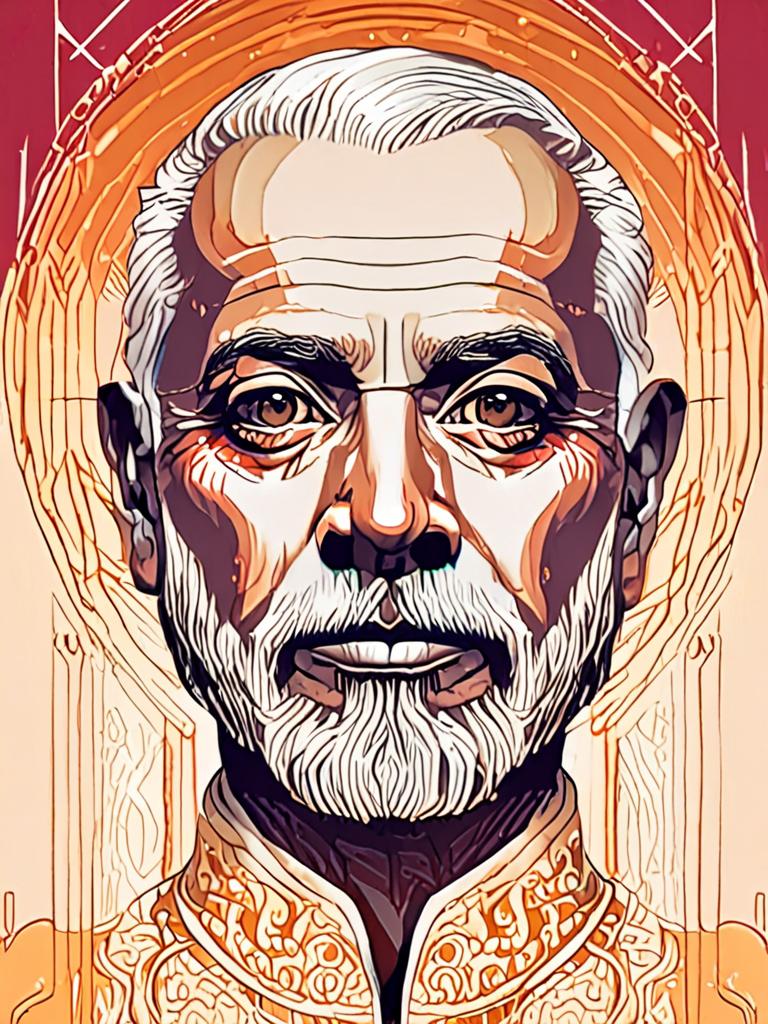
ID · narendra-modi-ed6c219e
NARENDRA MODI
By Apex Info · Non-Fiction · Professional · 10 pages
Table of contents
- 1. Early Life
This chapter discusses Narendra Modi's childhood, education, and early political involvement. It sets the stage for his future political career. Introduction to Narendra Modi, the 14th Prime Minister of India, covering his early life, family influences, and key events that shaped his future in politics. Narendra Modi's involvement in politics began at a young age, influenced by the Rashtriya Swayamsevak Sangh (RSS), which shaped his political ideology and values. The RSS taught him discipline, selflessness, and social service, and he rose through its ranks, developing his own vision for India, emphasizing economic development, social welfare, and Hindu nationalism.
- 2. Rise to Power
This chapter examines Narendra Modi's political career, from his tenure as Chief Minister of Gujarat to his election as Prime Minister of India. It highlights key events and policies that contributed to his success. Narendra Modi's tenure as Gujarat Chief Minister from 2001 to 2014 was marked by economic development, social welfare, and infrastructure development. He implemented policies like Vibrant Gujarat, Gujarat Industrial Policy, and Jyotigram Yojana, leading to rapid economic growth and making Gujarat a hub for industries. Narendra Modi's success as Chief Minister of Gujarat led to his rise in national politics, becoming a prominent figure and potential candidate for prime ministership. He was appointed as the BJP's prime ministerial candidate for the 2014 general elections and led the party to a historic victory, becoming the 14th Prime Minister of India.
- 3. Legacy and Impact
This chapter assesses Narendra Modi's legacy as Prime Minister, including his policy initiatives and their effects on India's economy, society, and global standing. It also examines the criticisms and challenges he faced during his tenure.
Chapter 1: Early Life
This chapter discusses Narendra Modi's childhood, education, and early political involvement. It sets the stage for his future political career. Introduction to Narendra Modi, the 14th Prime Minister of India, covering his early life, family influences, and key events that shaped his future in politics. Narendra Modi's involvement in politics began at a young age, influenced by the Rashtriya Swayamsevak Sangh (RSS), which shaped his political ideology and values. The RSS taught him discipline, selflessness, and social service, and he rose through its ranks, developing his own vision for India, emphasizing economic development, social welfare, and Hindu nationalism.
Introduction
Introduction To Narendra Modi
Narendra Modi, the 14th Prime Minister of India, is a figure of great interest and controversy. His life and career have been marked by significant events and decisions that have shaped the course of Indian history. As a young boy growing up in Vadnagar, Gujarat, Modi was exposed to the harsh realities of life, which would later influence his political ideology.
Early Influences
Modi's early life was influenced by his family and the cultural traditions of Gujarat. His father, Damodardas Modi, was a tea seller who owned a small tea stall in Vadnagar. Modi's mother, Heeraben Modi, was a homemaker who played a significant role in shaping his early values. As Modi himself once said, "My mother has been a constant source of inspiration and strength for me."
| Family Member | Relationship | Influence |
|---|---|---|
| Damodardas Modi | Father | Introduced Modi to the concept of hard work and self-reliance |
| Heeraben Modi | Mother | Taught Modi the importance of traditional values and family |
| Mehul Chandra Modi | Brother | Shared a close bond with Modi and supported his early political endeavors |
Key Events
Modi's early life was marked by several key events that would shape his future. He was born on September 17, 1950, in Vadnagar, Gujarat, and grew up in a modest home with his parents and siblings. As a young boy, Modi was fascinated by the stories of Indian freedom fighters and was inspired by their courage and sacrifice. He often spent hours listening to the tales of his father, who had been involved in the Indian independence movement.
Illustration
A map of Gujarat, highlighting the location of Vadnagar and its significance in Modi's early life
Modi's interest in politics was sparked at a young age, and he soon became involved in the local political scene. He joined the Rashtriya Swayamsevak Sangh (RSS), a Hindu nationalist organization, and quickly rose through the ranks. As he once said, "The RSS taught me the importance of discipline and selflessness, which have been essential to my success in politics."
Future Prospects
As Modi's career progressed, he faced numerous challenges and controversies. However, his determination and vision for India remained unwavering. His story serves as a testament to the power of hard work, perseverance, and dedication. The following sections will delve deeper into Modi's life and career, exploring the events and decisions that have made him one of the most influential leaders in Indian history.
- Key aspects of Modi's life and career will be explored, including his early political involvement and rise to power
- The impact of his policies on Indian society and economy will be examined
- The controversies surrounding his leadership will be discussed, providing a balanced view of his tenure as Prime Minister
Political Awakening
Political Involvement
Narendra Modi's involvement in politics began at a young age, and he was heavily influenced by the Rashtriya Swayamsevak Sangh (RSS). The RSS, a Hindu nationalist organization, played a significant role in shaping Modi's political ideology and instilling in him the values of discipline and selflessness. As Modi himself once said, "The RSS taught me the importance of hard work and dedication, which have been essential to my success in politics."
RSS Influence
The RSS had a profound impact on Modi's life, and he quickly rose through the ranks of the organization. He was impressed by the RSS's emphasis on social service and community development, and he became actively involved in various RSS initiatives. The following table highlights the key aspects of the RSS's influence on Modi:
| Aspect | Influence |
|---|---|
| Discipline | Taught Modi the importance of self-discipline and punctuality |
| Selflessness | Encouraged Modi to prioritize the needs of others over his own |
| Social Service | Introduced Modi to the concept of social service and community development |
| Hindu Nationalism | Shaped Modi's views on Indian culture and identity |
Key Events
Modi's early political involvement was marked by several key events that would shape his future. He attended various RSS meetings and events, where he met influential leaders and learned about the organization's ideology. As he once said, "The RSS gave me a sense of purpose and direction, and I am grateful for the opportunities it provided me."
Illustration
A diagram illustrating the structure and hierarchy of the RSS, highlighting Modi's role and involvement
Future Prospects
As Modi's involvement in politics deepened, he began to develop his own vision for India. He was influenced by the RSS's emphasis on Hindu nationalism and cultural revival, and he started to formulate his own ideas about India's future. The following bullet points summarize the key aspects of Modi's vision:
- Emphasis on economic development and growth
- Focus on social welfare and community development
- Commitment to Hindu nationalism and cultural revival
- Vision for a strong and prosperous India, where all citizens have access to opportunities and resources
These early experiences and influences would shape Modi's future political career, and he would go on to become one of the most influential leaders in Indian history.
Chapter 2: Rise to Power
This chapter examines Narendra Modi's political career, from his tenure as Chief Minister of Gujarat to his election as Prime Minister of India. It highlights key events and policies that contributed to his success. Narendra Modi's tenure as Gujarat Chief Minister from 2001 to 2014 was marked by economic development, social welfare, and infrastructure development. He implemented policies like Vibrant Gujarat, Gujarat Industrial Policy, and Jyotigram Yojana, leading to rapid economic growth and making Gujarat a hub for industries. Narendra Modi's success as Chief Minister of Gujarat led to his rise in national politics, becoming a prominent figure and potential candidate for prime ministership. He was appointed as the BJP's prime ministerial candidate for the 2014 general elections and led the party to a historic victory, becoming the 14th Prime Minister of India.
Gujarat Chief Minister
Introduction To Gujarat
Narendra Modi's tenure as the Chief Minister of Gujarat was a pivotal moment in his political career. He held this position from 2001 to 2014, and during this time, he implemented various policies and projects that contributed to the state's economic growth and development. Modi's vision for Gujarat was centered around economic development, social welfare, and infrastructure development.
As the Chief Minister, Modi focused on creating a business-friendly environment in Gujarat, which attracted significant investments from domestic and international companies. He also launched several initiatives to improve the state's infrastructure, including the development of roads, ports, and airports. Modi's efforts to promote Gujarat as an investment destination were successful, and the state experienced rapid economic growth during his tenure.
Key Policies And Initiatives
Some of the key policies and initiatives implemented by Modi during his tenure as Gujarat Chief Minister include:
| Policy/Initiative | Description |
|---|---|
| Vibrant Gujarat | A biennial investors' summit to promote Gujarat as an investment destination |
| Gujarat Industrial Policy | A policy to promote industrial growth and development in the state |
| Kisan Call Centre | A call center to provide information and support to farmers in the state |
| Jyotigram Yojana | A scheme to provide electricity to rural areas and improve the quality of life for rural residents |
Modi's policies and initiatives had a significant impact on the state's economy and social development. The Vibrant Gujarat summit, for example, attracted significant investments from domestic and international companies, while the Kisan Call Centre provided valuable support to farmers in the state.
Economic Growth
Gujarat's economy experienced rapid growth during Modi's tenure as Chief Minister. The state's GDP grew at an average rate of 10% per annum, making it one of the fastest-growing states in India. Modi's efforts to promote economic development and create a business-friendly environment were successful, and Gujarat became a hub for industries such as textiles, pharmaceuticals, and petrochemicals.
As Modi himself said, "Gujarat's growth is not just about numbers, it's about creating opportunities for our people and improving their quality of life." His vision for Gujarat was centered around creating a prosperous and developed state, and his policies and initiatives were designed to achieve this goal.
Illustration
A map of Gujarat showing the major industrial hubs and infrastructure development projects implemented during Modi's tenure as Chief Minister
National Politics
National Politics
Narendra Modi's success as the Chief Minister of Gujarat did not go unnoticed, and he soon became a prominent figure in national politics. His policies and initiatives in Gujarat were seen as a model for development, and he was widely praised for his leadership and vision. As Modi's national profile grew, he began to be seen as a potential candidate for the prime ministership.
Rise To Prominence
Modi's rise to prominence in national politics was rapid. He became a key figure in the Bharatiya Janata Party (BJP) and was soon appointed as the party's prime ministerial candidate for the 2014 general elections. Modi's campaign focused on his vision for India's development, and he promised to bring about rapid economic growth and improvement in the quality of life for all Indians.
| Election | Year | Position |
|---|---|---|
| Gujarat Assembly | 2002 | Chief Minister |
| Gujarat Assembly | 2007 | Chief Minister |
| Gujarat Assembly | 2012 | Chief Minister |
| Indian General | 2014 | Prime Minister |
Modi's message resonated with the people, and he led the BJP to a historic victory in the 2014 general elections. He became the 14th Prime Minister of India, and his government was sworn in on May 26, 2014.
Key Challenges
As Prime Minister, Modi faced several key challenges, including the need to revive India's economy, improve the country's infrastructure, and address social and economic inequalities. He also had to navigate complex geopolitical relationships and address regional security concerns.
- Reviving India's economy
- Improving the country's infrastructure
- Addressing social and economic inequalities
- Navigating complex geopolitical relationships
- Addressing regional security concerns
Modi's government implemented several key policies and initiatives to address these challenges, including the Make in India program, the Digital India initiative, and the Swachh Bharat Abhiyan campaign.
Illustration
A diagram showing the key initiatives and policies implemented by Modi's government to address the challenges facing India
Vision For India
Modi's vision for India was centered around creating a prosperous and developed country, where all citizens had access to quality education, healthcare, and economic opportunities. He believed in the importance of economic development, social welfare, and infrastructure development, and his policies and initiatives were designed to achieve these goals.
As Modi said, "Our vision for India is to create a country that is prosperous, strong, and inclusive, where all citizens have the opportunity to fulfill their potential." His government's policies and initiatives were designed to achieve this vision, and to bring about rapid economic growth and improvement in the quality of life for all Indians.