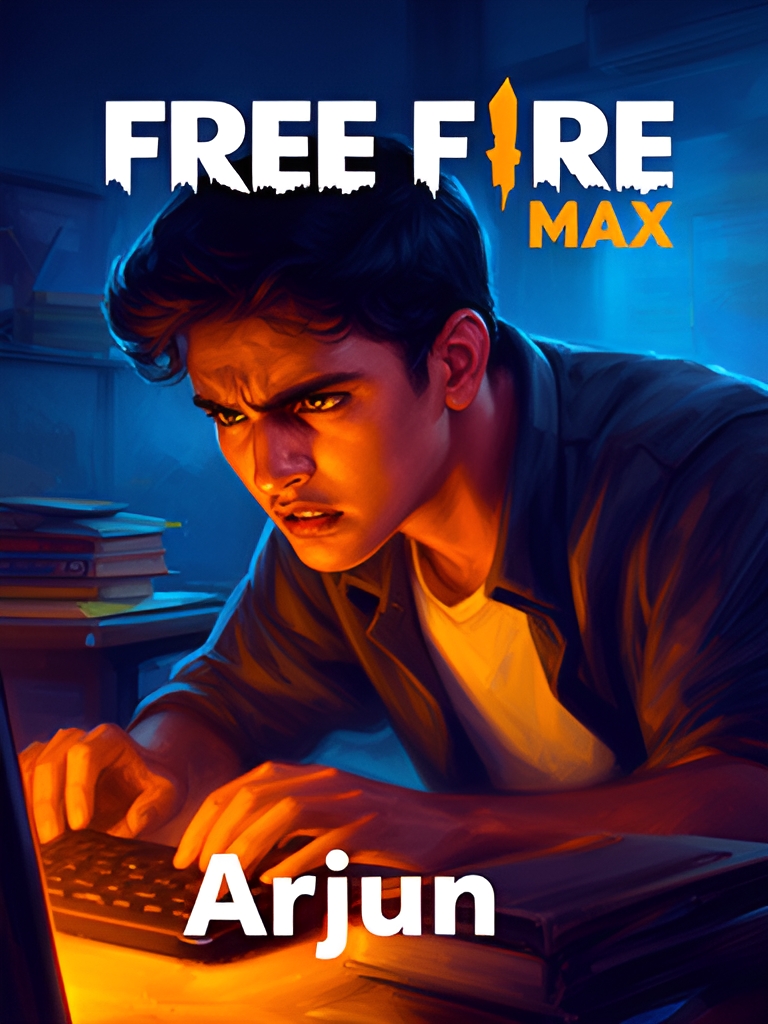
Fiction
Noob to pro
by Vikash kumar yadav
3 chapters1.2 hr read
Chapter 1
Day 1: The Spark
The air in Arjun’s dorm room felt thick, like it was pressing against his temples. He stared at the graded paper on his desk, the red ink bleeding across the page like a wound. 42/100. Data Structures. The subject he’d spent nights grinding over, tracing recursion trees by flashlight, muttering base cases under his breath. And for what? A score that felt less like a grade and more like a personal indictment.
He’d walked out of the exam hall with his head down, the hum of the AC in the corridor mocking his silence. Everyone else seemed to move in clusters, laughing about trick questions or comparing answers. Arjun had just wanted to disappear into the crowd, but even that felt like too much effort. Now, back in the cramped space he shared with Rohan, the failure sat heavy in his chest—not just the mark, but the creeping thought that maybe he wasn’t cut out for this. Maybe the late nights, the skipped meals, the way he’d turned down Rohan’s invite to play cricket last weekend—none of it had added up to anything.
He flung his backpack onto the floor, the strap catching on the leg of his chair and sending a spiral notebook skittering. He didn’t bother to pick it up.
“Rough one?” Rohan’s voice came from the bunk above, casual but not unkind. He was sprawled on his stomach, phone in hand, earbuds dangling. “You look like you swallowed a lemon.”
Arjun didn’t answer. He just sank into his chair and stared at the ceiling, where a crack in the plaster looked suspiciously like a question mark.
“Wanna talk about it?” Rohan asked, sitting up. The earbuds came out with a soft pluck.
“No.” The word came out sharper than he meant it to. He winced. “Sorry. Just… leave me be, okay?”
Rohan shrugged, unfazed. “Sure thing. I’ll be over here, not failing anything.” He grinned, but it lacked its usual edge. He tossed a stress ball at Arjun’s desk. It bounced off the edge and rolled to a stop near the keyboard. “You know, if you need a distraction, I just unlocked a new character skin in Free Fire Max. Wanna see?”
Arjun glanced at the laptop. He’d seen Rohan play before—quick, chaotic matches where he’d yell at the screen and respawn laughing. It looked stupid. A waste of time. But right now, the idea of doing anything that didn’t involve thinking about binary trees or stack overflows felt… tempting.
“Whatever,” he muttered. “Just… show me.”
Rohan leaned over the bunk, his hair falling into his eyes. “You sure? It’s kinda addictive. Once you start, it’s hard to stop.”
“I won’t get hooked,” Arjun said, more to convince himself than Rohan. He pulled the laptop closer, fingers hovering over the trackpad. “Just… five minutes. To clear my head.”
Rohan grinned. “Five minutes it is.” He settled back, phone forgotten. “Go wild.”
Arjun opened the browser, typed in the URL, and clicked download. The file began to pull down, a blue bar inching slowly across the screen. While he waited, he dug out his headphones—cheap, fraying at the cords—and plugged them in. A pop song from Rohan’s playlist leaked through the left earpiece, tinny and distant.
When the install finished, he double-clicked the icon. The game loaded with a burst of color and sound—gunfire, shouting, a jingle that felt aggressively cheerful. He blinked at the main menu: bright icons, flashing buttons, a countdown to the next match. It was overwhelming. Too loud. Too fast.
“Pick a character,” Rohan said, peering over his shoulder. “Doesn’t matter. They’re all the same until you level up.”
Arjun scrolled through the roster, each avatar more flamboyant than the last—ninjas with glowing swords, girls in futuristic armor, a guy wearing a panda hat. He landed on a generic soldier with a camouflage vest and tapped Confirm.
“Now,” Rohan said, “you wanna play solo or squad? Solo’s easier to learn the ropes. Less pressure.”
“Solo,” Arjun said. “Let’s just… get it over with.”
The matchmaking screen flashed—Finding match… —then dissolved into the lobby. A map of the island spun slowly in the background, dotted with names: Pochinki, Peak, Prison. He didn’t know what any of them meant. A voice crackled in his earbuds: “Welcome to Free Fire Max. Good luck, survivor.”
Then the plane roared overhead.
His parachute deployed automatically—or so he thought. He drifted down, legs flailing, toward a cluster of red-roofed buildings near the center of the map. Pochinki, he realized too late. A hot zone. Everyone landed there. He was dead before he even touched ground.
He hit the roof with a thud, stumbled sideways, and tried to aim at a figure moving in the doorway below. His crosshair jumped wildly. He fired. The bullets sprayed uselessly into the wall. The enemy turned, raised a gun—rat-tat-tat—and his screen flashed red.
YOU HAVE BEEN ELIMINATED.
“Two minutes and seventeen seconds,” Rohan said, trying not to laugh. “That’s… actually not bad for a first try. Most guys last like, thirty seconds.”
Arjun stared at the screen. His hands were shaking. His throat felt tight. “I didn’t even see him,” he muttered. “I didn’t… I just fired and hoped.”
“Yeah, that’s the problem,” Rohan said, sitting up fully now. “You gotta aim. And move. And not stand in the open like a target dummy.”
“I know that!” Arjun snapped, then immediately regretted it. He rubbed his temples. “I just… I don’t know. It’s all too much. The buttons, the map, the sound—it’s like trying to read code in a hurricane.”
Rohan laughed, soft this time. “Hey, it’s just a game. No one’s keeping score… well, except the game. But seriously, if it’s stressing you out, stop. Go for a walk. Grab a chai.”
Arjun looked at the Play Again button, glowing faintly at the bottom of the screen. The humiliation burned, hot and sharp. But underneath it, something else flickered—not quite hope, but a refusal to let the defeat stand. He’d spent six hours on that midterm and still failed. What if he spent six hours on this? Could he get better? Could he learn?
He didn’t answer Rohan. Instead, he clicked Play Again.
“Whoa,” Rohan said, leaning back. “Okay, Mr. Determination. Let’s see how long this lasts.”
The plane screamed across the sky again. This time, Arjun forced himself to look at the map before jumping. He picked a spot on the edge—Factory, the label read. Quieter. Safer, hopefully.
He drifted down, landing in a patch of tall grass beside a rusted conveyor belt. He crouched, heart pounding. Move, he told himself. Keep low. Look around.
He crawled forward, finger hovering over the fire button. A car roared past in the distance. Somewhere, a gunshot cracked.
Then—movement. A shape darting between crates fifty meters away. Arjun raised his weapon, sweat slick on his palms. He aimed. Held his breath. Fired.
The shot went wide.
He ducked behind cover, heart hammering. Again. He peered out. The figure was gone.
He stayed low, inching forward. Every sound made him jump—a bird taking flight, the creak of metal. His hands wouldn’t stop trembling. He felt stupid. Slow. Uncoordinated.
Then, from behind a stack of pallets, a spray of bullets ripped toward him. He jerked back—but not fast enough. Red bloomed across the screen.
YOU HAVE BEEN ELIMINATED.
“One minute fifty seconds,” Rohan said. “You lasted longer this time. Progress!”
Arjun didn’t speak. He sat back, the headset slipping slightly on his ears. The rage he’d felt after the first match—hot, blinding, almost shameful—was gone. In its place was something quieter, sharper: a kind of grim focus. He hadn’t just lost. He’d seen things. He’d noticed where the shots came from, how the enemy moved, how long it took to aim down the sight.
He looked at Rohan, who was watching him with an expression that wasn’t quite pity, not quite amusement.
“You okay?” Rohan asked.
Arjun swallowed. His mouth was dry. “Yeah,” he said. “I’m… I’m good.”
He didn’t look away from the screen. The Play Again button pulsed, steady and waiting.
“I think,” he said, voice low, “I wanna try one more time.”
Rohan grinned, gave him a thumbs-up, and settled back onto his bunk, phone lighting up his face as he returned to his own game.
Arjun took a breath. His fingers found the keys. The plane began its descent.
And this time, he didn’t close his eyes.
Arjun’s third descent began with the plane’s roar filling his ears, the island spinning lazily below. He picked a spot near the southern edge—Peak, the label said—farther from the cluster of red dots marking other players. He wanted space. Time to think.
His parachute opened smoothly this time, and he steered toward a rocky outcrop overlooking a valley dotted with low buildings. He touched down without incident, crouching instantly behind a boulder. The familiar panic flared—what if someone’s already here?—but he forced himself to breathe. Look. Listen. Move.
He popped up briefly to scan the horizon. No movement. Good. He crept forward, keeping low, using the terrain to mask his approach. Halfway down the slope, he spotted a crate tucked against a wall. He approached cautiously, finger near the trigger, and pressed the interact button. A pistol materialized in his inventory: M1911. Basic, but better than nothing.
He tucked it into his primary slot and continued, eyes flicking between the radar in the corner of the screen and the world ahead. A car engine growled in the distance. He froze, pressing himself flat against the wall. After a few seconds, the sound faded. He exhaled he hadn’t realized he’d been holding.
Then, movement—a figure slipping between two shipping containers about seventy meters out. Arjun raised the M1911, brought the sights to his eye, and squeezed the trigger. The kick jerked his aim upward; the bullets flew harmlessly over the target’s head.
Again. He realigned, lowered his sights slightly to compensate for recoil, and fired. This time, one bullet struck the enemy’s shoulder. The player stumbled, turned, and fired back—a burst of automatic fire that kicked up dust near Arjun’s feet. He ducked behind the crate, heart pounding.
He waited. The return fire stopped. Peeking out, he saw the enemy reloading behind cover. Now. Arjun leaned out and fired two quick shots. The second hit the player in the head. The screen flashed: ELIMINATED.
A rush of warmth spread through his chest. He’d done it. Not luck—aim. He’d adjusted, compensated, executed.
He looted the corpse: a shotgun, extra ammo, a medkit. He swapped his pistol for the shotgun, feeling the weight of it in his hands. Powerful, but short-range. He’d need to get close.
He moved toward a cluster of warehouses, staying in the shadows, checking corners before rounding them. Halfway there, a sniper’s crack split the air. Dust puffed near his foot. He dropped flat, crawling behind a low wall. The shot came again—this time closer. He rolled left, then sprinted in a zigzag toward the nearest building.
Inside, he caught his breath. The shotgun felt alien—heavy, unwieldy. He practiced aiming down the sight, noting how the spread tightened when he aimed. He fired at a wall, watching the pattern bloom. Short bursts. Close range.
He exited cautiously, shotgun at the ready. A vehicle approached—a jeep with two occupants. Arjun pressed himself flat against the wall as it passed, then waited until it was thirty meters away before stepping into the open. He aimed at the driver, fired. The shotgun bucked; the spray caught the passenger in the chest. The driver swerved, braking hard. Arjun fired again—this time at the driver’s side window. The jeep lurched, then stopped.
Both players scrambled out. Arjun backed toward the warehouse doorway, shotgun leveled. One enemy fired a pistol; the bullet sparked off the doorframe. Arjun returned fire—two quick shots. The first missed; the second caught the shooter in the throat. He dropped.
The remaining enemy circled wide, trying to flank. Arjun heard footsteps on gravel to his left. He turned, shotgun blazing. The blast caught the player mid-step, throwing him backward. ELIMINATED.
Silence. The radar showed no other dots nearby. He’d won.
YOU HAVE SURVIVED.
The words glowed on the screen. His hands were slick with sweat. His breath came fast, but not from fear—exhilaration. He’d survived. He’d fought. He’d won.
“Holy shit,” Rohan said from the bunk above him. “You actually did it. Chicken dinner.”
Arjun couldn’t speak. He stared at the screen, at the victory banner, at the XP and coins ticking up. It wasn’t ranked. It was Classic mode—bots, probably. But it felt real. The tension, the split-second decisions, the way his heart had hammered in his ears—it was all real.
He looked at his hands, still curled around the keyboard. They weren’t shaking anymore. They felt… sure.
“First win,” Rohan said, grinning. “Told you you’d get it. Took you three tries. Not bad for a guy who couldn’t find the map legend two hours ago.”
Arjun managed a weak smile. “Yeah. Yeah, I guess.”
But inside, something had shifted. The humiliation of the first two losses hadn’t vanished—it lingered like a bruise—but now it was overlaid with something else: proof. Proof that he could learn. That repetition, focus, adjusting based on what he saw—it worked. The game wasn’t just random chaos. It had patterns. Rules. Skills you could build.
He clicked Play Again before he could talk himself out of it.
This time, he skipped the plane ride and jumped straight into Training Mode from the main menu. The island stretched out, empty but for wooden dummies and target ranges. He selected the pistol range first.
The M1911 appeared in his hands. He aimed at the first target—twenty meters out—and fired. The shot hit low. He adjusted, raised the sight slightly, fired again. This time, it struck the chest. He moved to the next target, then the next, walking his shots inward until he could consistently hit center mass.
Then he switched to the shotgun range. Close-quarters drills. He practiced strafing while firing, learning how to keep his aim on a moving target while sidestepping. He did it slowly at first, then faster, until the motion felt less mechanical.
He spent twenty minutes on movement—crouch-walking, jumping, sliding—getting a feel for how each action affected his visibility and aim. He noticed how going prone made him harder to hit but slowed his reaction time; how jumping made him unpredictable but threw off his aim unless he timed his shots just right.
After that, he watched a video. He minimized the game, opened YouTube, and typed Free Fire Max beginner guide landing looting. The first result was a ten-minute montage narrated in fast-paced Hindi-English.
He watched, leaning forward. The creator dropped into Factory, explained why it was a balanced loot spot—decent gear, moderate traffic. Showed a path: crates near the conveyor belt, then the office building, then the fuel tanks. Pointed out common ambush spots—behind the red truck, inside the office’s back room. Demonstrated how to peek corners without overexposing, how to listen for footsteps, how to use the radar to predict enemy rotations.
Arjun paused it twice to mimic the movements in Training Mode—crouch-peeking, slide-canceling, quick-scoping with a sniper rifle (though he admitted he’d never use one in a real match yet). When the video ended, he felt less like a tourist and more like someone who could navigate the map with purpose.
He returned to the game and queued for another Classic match. This time, he landed at Factory, just as the video had suggested. He looted efficiently—pistol, then shotgun, then a medkit and a helmet. He moved with intention, checking corners, using cover.
He encountered two enemies early. The first he shotgunned at close range after dodging a wild spray. The second he engaged at medium range, bursting with the pistol until the player went down. He didn’t win that match—he got caught in a crossfire near the fuel tanks and went down—but he lasted over three minutes, dealt damage, and made decisions based on what he saw, not just panic.
He played three more matches after that. Didn’t win them all, but in each, he did something better than before: landed without dying immediately, looted without hesitating, aimed with purpose instead of flailing.
By the time the clock on his laptop struck midnight, he queued one last match. He landed at Prison, a spot the video had labeled “high risk, high reward.” He dropped into the cell block, found a shotgun and a vest, then moved toward the yard.
He heard footsteps to his left. He pressed himself against the wall, shotgun ready. A player rounded the corner—Arjun fired. Blast. Down.
He moved toward the watchtower, spotted another player looting a crate. He flanked, came up behind, and fired two quick shots. The player dropped before he could turn.
The circle began to shrink. Arjun moved with it, staying near the edge, avoiding the center where the fights were thickest. He picked off a third player who was healing in the open—two shots, quick and clean.
Only two dots remained on the radar besides his. He crouched behind a concrete barrier, listening. Gunfire cracked to the south—someone else fighting. He waited.
Minutes passed. The circle tightened. Then, movement—someone running across the open field to his east. Arjun rose, aimed, and fired a single shotgun blast. The player jerked, stumbled, then went still.
YOU HAVE SURVIVED.
The banner flashed. Chicken dinner.
He sat back, the headset slipping again. The dorm was quiet now—Rohan’s breathing deep and even from the bunk above, lost in his own game or maybe asleep. The only light came from the screen, casting a blue glow over Arjun’s face.
He looked at his stats: Kills: 4. Damage: 1200. Survival time: 8 minutes 22 seconds.
Not pro level. Not even close. But better than the first two attempts. Better than he had any right to expect after just a few hours.
He didn’t feel like a genius. Didn’t feel like he’d cracked the code. But he felt… capable. Like the game wasn’t mocking him anymore. Like it was responding to his effort.
He clicked Play Again, not because he thought he’d win again, but because he wanted to see if he could do it once more. If the improvement was real, or just a fluke.
The plane began its descent. This time, he didn’t hesitate before jumping. He picked his spot, steadied his breath, and let go.
The wind roared in his ears. Below, the island waited.
The wind roared in his ears. Below, the island waited.
Arjun tightened his grip on the controls, thumb hovering over the jump button. Prison had worked once. Why not again? The memory of that chicken dinner—clean shots, calm decisions, the quiet thrill of outlasting—still hummed in his veins. He wasn’t thinking about stats or ranks. He was thinking about how it felt: the weight of the shotgun in his hands, the way the world narrowed to sound and movement, the satisfaction of a well-placed blast.
He queued for Ranked.
The match loaded faster than he expected. Bronze IV. The badge glowed faintly in the corner of the screen—a small, dull metal thing, but his. He’d earned it, barely, after a string of Classic wins the night before. The system had nudged him up, and he hadn’t argued. Let it believe in him. He’d prove it right.
The plane lurched into the sky. Below, the island spun—a patchwork of green and brown, dotted with names he now recognized: Factory, Peak, Clock Tower, Bermuda. His finger twitched. Prison again? No. Too obvious. Everyone would expect it. He needed somewhere fresh, somewhere he could loot fast and rotate before the squads collided.
His eyes landed on Bermuda Triangle. The name alone made him smirk. A hot zone, sure—but also rich loot. Three small islands connected by shallow water, surrounded by wreckage and crates. The video he’d watched hadn’t gone deep there, but he remembered the creator mentioning it as a “high-risk, high-reward” drop for aggressive players. He could handle that. He’d handled Prison.
He braced. The ramp lowered. Wind howled. He scanned the terrain—spotted a cluster of crates near the central island’s lighthouse, a shotgun spawn marked in his memory from a forum post. He angled himself, pulled back, and launched.
Freefall swallowed him. The ground rushed up. He pulled his chute at the last second, drifting down toward the lighthouse base. Touchdown was smooth. He rolled into cover, already scanning.
Pistol. Found it in a crate beside the fuel drum. Good. He swapped to it quickly, ears tuned for footsteps. The lagoon lapped softly against the sand. Somewhere, a generator hummed.
He moved toward the wreckage of the small boat half-submerged near the shore. Looted a medkit, then a Level 1 vest. Shotgun—still nothing. He frowned, checked the nearby crates again. Nothing. He’d have to make do.
A crack split the air to his left—gunfire. Close. Too close.
He dropped prone behind a rusted hull, pistol raised. Voices drifted over the water—muffled, but urgent. Squad comms. Three, maybe four voices, speaking in rapid Hindi-English, laughing.
They’re looting the other island. He peered over the edge. Two figures moved between the wrecked boats on the far shore, rifles glinting in the sun. One crouched, aiming toward the lagoon.
Arjun’s finger twitched. He could take one. Maybe two, if he was fast. He lined up the shot—pistol, medium range, leading the target—
A blast tore through the air beside him. Not from the lagoon. From behind.
He jerked sideways, but not fast enough. A spray of bullets ripped through his shoulder. He gasped—pain, sharp and white—and went down.
YOU HAVE BEEN ELIMINATED.
The kill cam snapped on.
He watched himself from the killer’s perspective: prone, exposed, pistol raised toward the wrong threat while the real danger crept up behind him. He’d been so focused on the shot, on proving he could hit something, that he’d forgotten the most basic rule—check your six.
The killer stood over him, teabagging once before moving on. No trash talk in the voice chat—just the distant crack of gunfire and a muffled “Nice one” from a teammate.
Arjun sat back. The headset slipped again. The dorm was silent now—Rohan’s breathing deep and even from the bunk above, lost in his own game or maybe asleep. The only light came from the screen, casting a blue glow over Arjun’s face.
He looked at his stats: Kills: 0. Damage: 45. Survival time: 1 minute 32 seconds.
Not even close to last night. Not even close to the first match he’d ever won.
He didn’t slam the laptop shut. Didn’t yell. Didn’t curse Rohan for waking him up days ago with that stupid invitation.
He just… deflated.
Then, slowly, he opened his notebook—the battered spiral one he used for Data Structures assignments, the one with the frayed corner and the coffee stain on page twelve. He flipped to a fresh page, tapped the pen against his palm, and wrote:
Match 5 – Ranked – Bermuda Triangle
- Landed: Lighthouse base (good loot spot, but exposed)
- Gear: Pistol, medkit, L1 vest (no shotgun—big mistake)
- Error 1: Tunnel vision on distant threat, ignored rear flank
- Error 2: No audio check—didn’t listen for footsteps behind
- Error 3: Prone in open cover (hull too low, no angle)
- Fix: Always sweep 360 after landing. Use headset. Play slower. Assume someone’s nearby.
He paused. The pen felt heavy in his fingers. He hadn’t taken notes like this since his first week of college, when he’d tried to memorize every line of lecture slides and ended up overwhelmed. This felt different. Not like studying. Like diagnosing.
He closed the notebook. Set it beside him.
The wind had died in the game. The island waited, quiet and empty.
He didn’t click Play Again right away.
He just sat there, listening to the silence, and let the disappointment settle—not as shame, but as data.
He reached for his water bottle, took a slow sip, and let the coolness ground him. The frustration hadn’t vanished—it lingered like a bruise—but it wasn’t burning anymore. It was thinking.
He opened the game again, not to queue, but to watch a replay. Not his own—he couldn’t stomach that yet—but a high-rank match he’d seen referenced in the comments of the beginner guide. A squad rotation through Bermuda, narrated by a player with a calm voice and a Heroic badge.
He minimized the game, opened YouTube, and searched Free Fire Max Bermuda Triangle pro gameplay. The first result was a fifteen-minute clip titled “How to Rotate Like a Pro – Bermuda Triangle – 20K+ Rating”. He clicked it.
The narrator dropped into the central island, looted the lighthouse crate first—shotgun, vest, helmet—then moved immediately to the wrecked boats, not to fight, but to cut off rotations. “You don’t stay where you land,” he said. “You own the water. Control the flanks.”
Arjun watched as the player peeled off from his squad after loot, slid into the shallows, and took position behind a half-sunken container. From there, he spotted two enemies crossing the open lagoon—easy picks with an SMG. Then, as the circle shifted, he relocated to the far island’s palm grove, using the trees to mask his movement while flanking a third squad fighting near the fuel tanks.
Arjun paused it. Rewound. Watched the crossing again—the way the pro led his shots, how he fired in bursts, how he reset his aim between each target even while moving.
He mimicked the motion in his chair—shoulder twist, wrist flick, breath control—then opened Training Mode and selected the shotgun range again. Not for power, but for timing. He fired at the moving bot targets, waiting for the pelvis to cross the center of his sights before pulling the trigger. Miss. Miss. Graze. Hit.
He did it ten times. Then twenty. His arm began to ache, but he didn’t stop. He wasn’t trying to win a match. He was trying to rewire a reflex.
When his thumb started to cramp, he stopped. Sat back. The laptop clock glowed: 1:17 a.m.
He glanced at Rohan’s bunk. Still dark. Still quiet.
He opened his notebook again. Added a new section under Match 5:
Observation: Pros don’t win fights—they avoid bad ones.
- Rotation > aggression
- Audio discipline = survival
- Off-angle positioning beats direct confrontation
He underlined the last line twice.
Then he closed the notebook, set the laptop aside, and lay down. The screen dimmed. The room fell into darkness, save for the faint glow of the power button blinking in rhythm.
Sleep didn’t come fast. His mind replayed the kill cam, the pro’s movement, the spray of bullets that had taken him down. But this time, it wasn’t just frustration. It was curiosity. A quiet, insistent pull—What if I tried it differently?
He didn’t fall asleep dreaming of victories. He fell asleep wondering how close he was to seeing the map not as a battlefield, but as a puzzle—one he could learn to solve.
The ceiling above Arjun was a blur of shadows and the faint, pulsing glow of the laptop’s power button—steady, patient, like a heartbeat. He lay on his back, hands folded over his stomach, the notebook resting open on his chest where he’d left it. The words he’d written stared back at him in the dim light: Rotation > aggression. Audio discipline = survival. Off-angle positioning beats direct confrontation. They weren’t just game tips. They felt like truths he’d been avoiding in every other part of his life.
He thought about Data Structures again—not the 42, but the way he’d approached it. Cramming the night before, skimming lecture slides, hoping familiarity would replace understanding. He’d treated it like a match he could rush through: spawn, shoot, survive. No rotation. No audio check. No off-angle thinking. Just brute force and panic when things went sideways. And just like in the game, it had blown up in his face.
A slow breath escaped him. Not frustration this time. Recognition.
He turned his head toward the wall, where Rohan’s posters of cricket legends and old Bollywood films clung, slightly peeling at the corners. His roommate’s breathing was still even, deep in sleep. The dorm was quiet—no distant traffic, no hallway chatter. Just the hum of the fan and the quiet insistence of his own thoughts.
What if I treated studying like I’m treating this game now? The question wasn’t loud. It didn’t demand an answer. It just sat there, soft and insistent, like the first drop of rain before a storm.
He remembered the pro’s voice in the video: “You don’t stay where you land.” In academics, he had stayed—glued to memorization, afraid to move, afraid to fail in public. But in Free Fire Max, even after dying, he’d gotten up. He’d watched. He’d noted his errors. He’d gone back to Training Mode and fired at moving targets until his thumb ached. He hadn’t waited for motivation. He’d acted.
Improvement wasn’t about talent. It was about showing up, even when it sucked. Even when you sucked.
His fingers tightened slightly on the notebook’s spine. He thought of Priya—how she’d asked him last week, during lab, if he was okay. Not about the game. About the midterm. She’d seen the way he’d slumped over his notebook, the way he’d stopped asking questions. She hadn’t pushed. Just said, “You get this stuff. You just have to let yourself learn it.” He’d brushed it off then. Now, it echoed.
He wasn’t playing to prove he was good. He was playing to prove he could get better.
A goal formed—not grand, not flashy, but clear. Specific. Time-bound.
Seven days.
He turned the notebook to a fresh page. The pen hovered, then touched paper.
Goal: Reach Silver Tier in 7 Days
- Not for rank. For proof.
- Daily: 30 min Training Mode (shotgun timing, movement)
- Daily: 1 ranked match, post-match notes
- Daily: 10 min pro gameplay review (rotation, audio, positioning)
- Weekly: Review notes, adjust fixes
He underlined Daily. Twice.
He didn’t write I believe I can do it. He didn’t need to. The act of writing it was the belief.
He closed the notebook. Set it on the floor beside the bed. Reached for his phone—screen dark, battery low—and set an alarm for 6:30 a.m. A soft chime would sound. Not harsh. Just enough to pull him from sleep.
He lay back down. The darkness felt different now. Not empty. Not defeating. Just… waiting.
His mind still wandered—back to the pro’s movement, the way he’d peeled off from his squad, used the water, controlled the flanks. But now, it wasn’t just envy. It was a template. A way forward.
He thought of the island—not as a place to die, but as a place to learn. Every match, a data point. Every death, a clue. Every win, not luck, but the sum of small, repeated corrections.
He didn’t fall asleep dreaming of Silver. He fell asleep knowing that tomorrow, at 6:30, he’d sit up, drink water, open Training Mode, and fire at the first moving target.
And he’d do it again the next day.
And the next.
The power button blinked on. Blinked off. Blinked on.
In the dark, Arjun smiled—just a little—and let sleep come.
The alarm cut through the quiet at 6:30 a.m.—a soft, repeating chime that grew steadily louder until Arjun’s eyes snapped open. For a heartbeat, he lay still, disoriented, the remnants of dreams clinging like smoke. Then he remembered. The notebook. The goal. The quiet determination that had settled in his chest like a stone smoothed by water.
He didn’t hit snooze. Didn’t groan. Just turned his head toward the window, where the first pale streaks of dawn were pushing through the blinds. The city outside was still asleep—no honking, no voices, just the distant sigh of a waking metropolis. He swung his legs over the side of the bed, feet touching the cool floor, and sat up. His back protested slightly from the night’s awkward angle, but he ignored it. He was already moving.
He padded to the desk in his bare feet, pulled the laptop open, and waited for it to boot. The screen lit up, casting a familiar blue glow over his face—softer now, in the morning light. He opened Training Mode without hesitation, selected the shotgun range, and braced the laptop on his knees. The bot targets began their slow, sideways drift across the range.
He closed his eyes for a breath. Inhaled. Exhaled.
Then he fired.
Miss. The pellet struck the dirt just behind the bot’s trailing foot. He didn’t flinch. Didn’t curse. Just adjusted—lowered his aim slightly, waited for the pelvis to cross the center of his sights, and fired again.
Graze. A tiny puff of dust marked the hit near the bot’s hip.
He fired again. And again. Each shot a question. Each miss a correction. His wrist began to ache, his shoulder tight, but he kept his breathing steady—in on the aim, out on the trigger. He wasn’t counting hits. He was counting resets. How quickly he could bring his gaze back to center after each shot. How smoothly he could shift his weight without jerking the mouse.
After twenty shots, he paused. Rubbed his thumb against his palm. The cramp was back, but weaker now. He opened his notebook—already on the desk from last night—and added a new line under yesterday’s observations:
Training Note – Day 1, 6:45 a.m.
- Focus on pelvis, not torso
- Exhale mid-track, not at shot
- Reset aim before moving to next target
He closed the notebook. Took a sip of water. Then opened the game again—this time, queued for Ranked.
The lobby loaded. The plane hummed overhead. He glanced at the map—Bermuda Triangle again. Not by choice, but by habit. He’d decide where to land after seeing the flight path.
The drop came. He bailed early, aiming for the lighthouse crate again—but this time, he didn’t rush in. He circled wide, dropped low, and landed behind a stack of crates near the water’s edge. Silent. Listening.
Footsteps—faint, but there. To his left. Someone moving through the boats.
He didn’t peek. Didn’t fire. Just waited, headset snug, ears tuned. The footsteps paused. Then retreated.
He exhaled. Slow. Controlled.
He looted the crate—shotgun, Level 2 vest, medkit. Better. But he didn’t stay. He slid into the shallows, moved toward the wrecked boats, and took position behind a half-sunken container—just like the pro had done. Not to fight. To watch.
From there, he saw them: two squads rotating along the far shore, unaware. One lagging behind, distracted by loot.
He didn’t engage. Not yet. He waited for the circle to shift, watched how they moved, noted where they hesitated, where they bunched up. When the first squad began to peel off toward the palm grove, he slipped from cover, moved low through the water, and flanked left—using the boats as concealment.
He didn’t fire until he was level with the lagging player, SMG bursting in short, controlled bursts. The enemy dropped before he could turn.
Arjun didn’t celebrate. Didn’t move. He scanned—rear, flanks, sky. Clear. He relocated immediately, moving toward the fuel tanks, using the smoke from a distant fire to mask his approach.
He didn’t win the match. He died two minutes later, caught in a crossfire near the central island. But when he opened the kill cam, he didn’t see tunnel vision. He saw himself—crouched, scanning, moving with purpose. The shot that took him came from a window he hadn’t checked—but he had checked the ground. The roofline. The trees. He had looked.
He closed the cam. Opened his notebook.
Match 6 – Ranked – Bermuda Triangle
- Landed: Behind lighthouse crates (flank approach)
- Gear: Shotgun, L2 vest, medkit
- Error: Missed elevated angle (window)
- Fix: Always check verticals after horizontal sweep
- What worked: Silent landing, audio patience, off-angle positioning, delayed engagement
He underlined What worked. Three times.
He set the notebook down. Sat back. The morning sun was higher now, spilling gold across the floor. Rohan was still asleep above him. The dorm was quiet again—but this time, the silence didn’t feel empty. It felt earned.
He didn’t close the laptop. Didn’t walk away.
He opened YouTube. Searched for Free Fire Max pro rotation tips. Clicked the first video.
And began to watch.
Chapter 2
Day 3: The Grind Begins
He paused the video mid-sentence, the pro’s voice still echoing in his ears about optimal drop angles and third-party timing. The morning light had shifted, now slanting across his desk in a sharper bar, catching dust motes in the air. Outside, the campus was waking—bicycles rattling over cobblestones, a vendor setting up his chai cart near the hostel gate. He rubbed his eyes, the notebook open beside him, the underlined What worked glowing faintly in his mind.
He needed to test it. Not just watch. Do.
He queued for Ranked.
The lobby loaded—four squares of avatars, usernames flickering as players readied. His squad: two strangers with generic tags, one silent, the other spamming emotes. He didn’t speak. Didn’t need to. He had a plan now. Sweep verticals. Check windows. Move with purpose.
The plane lurched forward over Bermuda Triangle. He waited—just a beat—then jumped, aiming for the lighthouse crates again. Wind rushed past. Ground loomed.
He landed silent, crouched, already scanning. Left: empty. Right: a flicker of movement behind a barrel—too far to engage. He swept upward. Roofline clear. No one in the window this time. Good.
He looted fast—pistol, medkit, Level 1 vest. No shotgun, but he’d make do. He moved toward the boats, staying low, using the shallows as cover. Footsteps ahead—two, maybe three. He froze. Let them pass. Didn’t fire. Didn’t flinch.
When they were gone, he crept forward, took position behind a sunken trawler. Waited. Watched.
A duo rotated along the far shore, looting as they went. One stopped to open a crate. The other kept walking, eyes down.
Arjun exhaled. Shifted weight. Peeked—just a sliver. The lagging player was reloading. Slow. Vulnerable.
He fired.
Three taps. Headshot. The player dropped before his partner could turn.
Arjun didn’t celebrate. Didn’t move. He scanned—rear, flanks, sky. Clear. He slid back into the water, moved toward the fuel tanks, using the haze from a distant burn to mask his approach.
He reached the tanks—looted a crate. Found a shotgun. Level 2 vest now, too. Better.
He heard it then—engine. Close. A jeep bouncing over the dunes near the palm grove. Two inside. One hanging out the window, SMG ready.
He didn’t panic. Didn’t charge. He waited until the jeep slowed to turn, then stepped from cover—shotgun raised—and fired as it passed.
Blast. Blast.
The jeep swerved. One occupant slumped. The other gunned it, fishtailing away.
Arjun ducked behind a tank. Listened. Silence.
He pushed forward, took high ground behind a broken wall. Watched the circle—still forming, favoring the central ruins. He had time.
Then—crack. A shot snapped past his ear. Dust puffed from the wall beside him.
Sniper. Somewhere in the ruins.
He didn’t look. Didn’t try to trade. He dropped, rolled sideways into a drainage ditch, and moved parallel to the threat, using the lip for cover. When the angle shifted, he popped up—just a glimpse—saw the glint of a scope in the second-story window of the admin building.
He didn’t fire. He waited. Let the sniper focus on the next rotation.
And when the sniper shifted to track a squad moving toward the lighthouse, Arjun slipped from the ditch, moved low along the wall, and took position behind a stack of crates—offset, elevated, unseen.
He waited.
The sniper fired again—missed. Too eager.
Arjun leaned out—shotgun bucking—and fired two quick shots.
The sniper jerked. Dropped.
He didn’t stop. Kept moving, took the high ground near the clock tower, watched the circle shrink—now forcing everyone into the plaza.
He heard footsteps on the stairs below. Two, maybe three. Slow. Careful.
He didn’t peek. Didn’t fire. Just waited—headset snug, ears tuned.
The footsteps paused. Then retreated.
He exhaled. Slow. Controlled.
He looted the crate—shotgun, Level 2 vest, medkit. Better. But he didn’t stay. He slid into the shallows, moved toward the wrecked boats, and took position behind a half-sunken container—just like the pro had done. Not to fight. To watch.
From there, he saw them: two squads rotating along the far shore, unaware. One lagging behind, distracted by loot.
He didn’t engage. Not yet. He waited for the circle to shift, watched how they moved, noted where they hesitated, where they bunched up. When the first squad began to peel off toward the palm grove, he slipped from cover, moved low through the water, and flanked left—using the boats as concealment.
He didn’t fire until he was level with the lagging player, SMG bursting in short, controlled bursts. The enemy dropped before he could turn.
Arjun didn’t celebrate. Didn’t move. He scanned—rear, flanks, sky. Clear. He relocated immediately, moving toward the fuel tanks, using the smoke from a distant fire to mask his approach.
He didn’t win the match. He died two minutes later, caught in a crossfire near the central island. But when he opened the kill cam, he didn’t see tunnel vision. He saw himself—crouched, scanning, moving with purpose. The shot that took him came from a window he hadn’t checked—but he had checked the ground. The roofline. The trees. He had looked.
He closed the cam. Opened his notebook.
Match 6 – Ranked – Bermuda Triangle
- Landed: Behind lighthouse crates (flank approach)
- Gear: Shotgun, L2 vest, medkit
- Error: Missed elevated angle (window)
- Fix: Always check verticals after horizontal sweep
- What worked: Silent landing, audio patience, off-angle positioning, delayed engagement
He underlined What worked. Three times.
He set the notebook down. Sat back. The morning sun was higher now, spilling gold across the floor. Rohan was still asleep above him. The dorm was quiet again—but this time, the silence didn’t feel empty. It felt earned.
He didn’t close the laptop. Didn’t walk away.
He opened YouTube. Searched for Free Fire Max pro rotation tips. Clicked the first video.
And began to watch.
The video droned on—rotation paths, utility usage, the importance of off-angle holds. Arjun absorbed it, but his focus was fraying. It was noon now. His stomach growled. He’d skipped breakfast again, too eager to get in another match.
He queued again.
This time, he landed at Prison—same as his win two days ago. Familiar. Comforting.
He looted fast—pistol, medkit. No armor. He cursed under his breath. Again?
He moved toward the cell blocks, staying in shadows. Heard voices—two, maybe three, arguing over a crate. He froze. Let them finish. Let them move on.
When the coast was clear, he crept forward. Found a Level 1 vest in a side room. Better.
He heard footsteps above—on the catwalk. Slow. Deliberate.
He didn’t look up. Didn’t fire. Just waited, back against the wall, listening.
The footsteps stopped. Then—click. A reload.
Arjun exhaled. Pushed off the wall, moved low under the catwalk, and popped up behind the far pillar—just as the player leaned over to check the stairs below.
He fired.
Two shots. Chest. The player stumbled back, dropped.
Arjun didn’t wait. He moved—flanked left, took the high ground near the warden’s office. Watched the circle—still forming, favoring the yard.
He heard a vehicle. Engine. Close.
A jeep rolled into the yard, dust kicking up. Two inside. One hanging out.
He waited until the jeep passed his position, then stepped from cover—shotgun raised—and fired as it reversed.
Blast. Blast.
The jeep jerked. One occupant slumped. The other gunned it backward, tires spinning.
Arjun ducked behind a wall. Listened. Silence.
He pushed up, took position behind the water tank—offset, elevated. Watched the yard.
Then—crack. A shot whipped past his ear. Chip of concrete from the tank beside him.
Sniper. Somewhere in the cell blocks.
He didn’t look. Didn’t try to trade. He dropped, rolled sideways into the shadow of the tank, and moved parallel to the threat, using the lip for cover. When the angle shifted, he popped up—just a glimpse—saw the glint of a scope in the third-floor window of the eastern block.
He didn’t fire. He waited. Let the sniper focus on the next rotation.
And when the sniper shifted to track a duo moving toward the mess hall, Arjun slipped from cover, moved low along the wall, and took position behind a stack of sandbags—offset, elevated, unseen.
He waited.
The sniper fired again—missed. Too eager.
Arjun leaned out—shotgun bucking—and fired two quick shots.
The sniper jerked. Dropped.
He didn’t stop. Kept moving, took the high ground near the mess hall, watched the circle shrink—now forcing everyone into the chapel.
He heard footsteps on the stairs below. Two, maybe three. Slow. Careful.
He didn’t peek. Didn’t fire. Just waited—headset snug, ears tuned.
The footsteps paused. Then retreated.
He exhaled. Slow. Controlled.
He looted the crate—shotgun, Level 2 vest, medkit. Better. But he didn’t stay. He slid into the shadows, moved toward the chapel ruins, and took position behind a broken pew—just like the pro had done. Not to fight. To watch.
From there, he saw them: two squads rotating along the far wall, unaware. One lagging behind, distracted by loot.
He didn’t engage. Not yet. He waited for the circle to shift, watched how they moved, noted where they hesitated, where they bunched up. When the first squad began to peel off toward the cafeteria, he slipped from cover, moved low through the debris, and flanked left—using the pillars as concealment.
He didn’t fire until he was level with the lagging player, SMG bursting in short, controlled bursts. The enemy dropped before he could turn.
Arjun didn’t celebrate. Didn’t move. He scanned—rear, flanks, sky. Clear. He relocated immediately, moving toward the altar, using the smoke from a distant fire to mask his approach.
He didn’t win the match. He died two minutes later, caught in a crossfire near the entrance. But when he opened the kill cam, he didn’t see tunnel vision. He saw himself—crouched, scanning, moving with purpose. The shot that took him came from a window he hadn’t checked—but he had checked the ground. The roofline. The trees. He had looked.
He closed the cam. Opened his notebook.
Match 7 – Ranked – Prison
- Landed: Cell block side (flank approach)
- Gear: Pistol, medkit, L1 vest
- Error: Missed elevated angle (window)
- Fix: Always check verticals after horizontal sweep
- What worked: Silent landing, audio patience, off-angle positioning, delayed engagement
He underlined What worked. Three times.
He set the notebook down. Sat back. The sun had dipped lower now, casting long shadows across the floor. His throat was dry. He’d played three matches in a row. All losses. All with the same error.
Missed elevated angle.
Again.
He rubbed his temples. The frustration was building—quiet, insistent. He’d done everything right. Checked the ground. Swept the horizontals. Moved with patience. Used audio. Waited for the right moment.
And still—he kept getting picked off from above.
He queued again.
Match 8. Ranked. Clock Tower.
He landed on the east rampart—high ground, good sightlines. Looted fast—SMG, medkit, Level 1 vest. No shotgun. He frowned. Again?
He moved inward, took position behind the clock face—offset, covered. Watched the plaza below.
Two squads rotated—one hugging the wall, the other cutting through the center. He didn’t engage. Let them pass.
When the circle began to shrink, favoring the underground parking, he slid down the inner wall, moved low through the shadow of the bell chamber, and took cover behind a stack of crates near the stairwell.
He heard footsteps—two, maybe three—approaching from the plaza. Slow. Alert.
He didn’t peek. Didn’t fire. Just waited.
The footsteps stopped. Then—shink. A knife being drawn.
Arjun exhaled. Pushed from cover, SMG bursting in three-round bursts.
The player in front jerked—hit in the shoulder—spun. The second raised his weapon.
Arjun didn’t hesitate. Shifted fire. Two shots. Chest. The second dropped.
He didn’t stop. Kept moving, took the high ground near the stairwell, watched the circle shrink—now forcing everyone into the parking garage.
He heard an engine. Close.
A jeep rolled into the garage, dust hanging in the air. Two inside. One leaning out.
He waited until the jeep passed, then stepped from cover—SMG raised—and fired as it reversed.
Rat-tat-tat.
The jeep lurched. One occupant slumped. The other gunned it backward, tires squealing.
Arjun ducked behind a pillar. Listened. Silence.
He pushed up, took position behind the fuel pump—offset, elevated. Watched the garage.
Then—crack. A shot whined past his ear. Spark from the pump beside him.
Sniper. Somewhere in the clock tower.
He didn’t look. Didn’t try to trade. He dropped, rolled sideways into the shadow of the pump, and moved parallel to the threat, using the lip for cover. When the angle shifted, he popped up—just a glimpse—saw the glint of a scope in the north-facing window of the tower.
He didn’t fire. He waited. Let the sniper focus on the next rotation.
And when the sniper shifted to track a duo moving toward the east rampart, Arjun slipped from cover, moved low along the wall, and took position behind a stack of tires—offset, elevated, unseen.
He waited.
The sniper fired again—missed. Too eager.
Arjun leaned out—SMG bucking—and fired two quick bursts.
The sniper jerked. Dropped.
He didn’t stop. Kept moving, took the high ground near the exit, watched the circle shrink—now forcing everyone into the lower level.
He heard footsteps on the ramp below. Two, maybe three. Slow. Careful.
He didn’t peek. Didn’t fire. Just waited—headset snug, ears tuned.
The footsteps paused. Then retreated.
He exhaled. Slow. Controlled.
He looted the crate—SMG, Level 2 vest, medkit. Better. But he didn’t stay. He slid into the shadows, moved toward the exit ramp, and took position behind a concrete barrier—just like the pro had done. Not to fight. To watch.
From there, he saw them: two squads rotating along the far wall, unaware. One lagging behind, distracted by loot.
He didn’t engage. Not yet. He waited for the circle to shift, watched how they moved, noted where they hesitated, where they bunched up.
Arjun exhaled. Slow. Controlled.
He looted the crate—SMG, Level 2 vest, medkit. Better. But he didn’t stay. He slid into the shadows, moved toward the exit ramp, and took position behind a concrete barrier—just like the pro had done. Not to fight. To watch.
From there, he saw them: two squads rotating along the far wall, unaware. One lagging behind, distracted by loot.
He didn’t engage. Not yet. He waited for the circle to shift, watched how they moved, noted where they hesitated, where they bunched up.
The next morning, sunlight sliced through the half-drawn blinds of their dorm room, cutting a golden bar across Rohan’s face as he stirred awake. Arjun was already at his desk, notebook open, fingers tapping a rhythm on the cover. The glow of his laptop screen reflected in his eyes—he’d been reviewing Match 8 frame by frame, pausing on the sniper’s scope glint in the north-facing window.
Rohan sat up, rubbing his neck. “You’re up early. Again.”
Arjun didn’t look away from the screen. “Had to check that angle. I kept missing it—same window, same tower. I think I finally see how he’s peeking. Just a sliver, right when the circle pushes.”
Rohan swung his legs over the side of the bed, feet hitting the floor with a soft thud. He padded over, peered at the replay. “You’ve watched this like, six times now. It’s 7 a.m. You gonna play or just stare at pixels?”
“I’m learning,” Arjun said, finally turning. “I died because I didn’t check the vertical. Again. But this time I know why. It’s not aim. It’s discipline.”
Rohan leaned against the desk, arms crossed. “Discipline’s great. But you’ve been up till 2 a.m. the last three nights. I’m trying to sleep, and all I hear is rat-tat-tat and your voice yelling ‘peek!’ like it’s a war cry.”
Arjun’s cheeks warmed. “Sorry. I didn’t realize—”
“Yeah, you do,” Rohan said, softer now. “You’re getting better. I saw you in that last match—you waited. You waited. That’s huge. But you’re burning out. And honestly? It’s kinda sad to watch you punish yourself over a game.”
Arjun looked down at his notebook. The page was filled with sketches of window angles, sightlines, and notes in his tight script: Pre-aim corners. Sweep left to right. Trust the angle. Check the verticals. He’d written the fix so many times it felt like a mantra.
“I just want to get it right,” he mumbled. “I keep doing everything else right—landing, looting, rotating—but then I miss one thing and it’s over. It’s like… I’m so close, but I keep tripping on the same rock.”
Rohan pushed off the desk. “Then stop running the same loop. Try something different. Play when your head’s clear. Not when you’re running on fumes and frustration.”
Arjun frowned. “When would that be? I’ve got labs till 5, assignments after…”
“Early mornings. Or late afternoons. After class, before dinner. You said yourself you focus better when you’re rested. Why fight it?”
Arjun was quiet for a moment. The truth was, he’d been playing late because it felt like the only time he could escape—to prove he wasn’t the guy who got 42 in Data Structures, who couldn’t focus in lectures, who felt like he was falling behind in everything. But the cost was exhaustion, irritability, and Rohan’s quiet disappointment.
“Okay,” he said finally. “I’ll try. Morning sessions. Before class. And maybe one in the evening—short, focused. No more grinding till I can’t see straight.”
Rohan gave a small smile. “That’s all I’m asking. And hey—if you wake me up with gunfire again, I’m stealing your headset and using it as a pillow.”
Arjun let out a breath he didn’t realize he’d been holding. “Deal.”
The next day, Arjun set his alarm for 5:45 a.m. He was up by 6, showered, and at his desk by 6:15. The dorm was still quiet—only the hum of the fridge and the distant chirp of sparrows outside. He launched Free Fire Max, but didn’t jump into a match right away. Instead, he went to Training Mode, loaded the shotgun, and practiced tracking moving bots across the open field near the clock tower. He focused on smooth mouse pulls, keeping his crosshair at head level, breathing between bursts.
When he queued his first ranked match at 6:45, it felt different. Not urgent. Not frantic. Just… present.
He landed on Clock Tower again—east rampart, high ground. This time, he didn’t rush the loot. He swept left to right, eyes flicking upward as he passed the clock face. Nothing. He dropped behind the bell chamber, took cover behind the crates, and waited. He listened—footsteps, distant gunfire, the creak of the tower settling in the morning air.
When two players cut through the plaza, he didn’t engage. He watched their paths, noted how they hugged the wall, how one paused to check a crate. He waited until the circle began to shift, favoring the underground parking, then slid down the inner wall, moving low through shadow.
He heard footsteps—two, slow, alert. He didn’t peek. Didn’t fire. Just waited.
Shink. A knife.
He pushed from cover, SMG bursting in three-round bursts. The first player jerked, hit in the shoulder. The second raised his weapon—Arjun shifted fire, two shots to chest. Both dropped.
He didn’t stop. Took high ground near the stairwell, watched the circle shrink. Heard an engine. A jeep rolled into the garage. He waited until it passed, then fired as it reversed—rat-tat-tat. One occupant slumped.
He ducked behind the pillar, listened. Silence.
He moved to the fuel pump—offset, elevated—just as a shot whined past his ear. Spark from the pump.
Sniper. North-facing window.
He didn’t look. Didn’t trade. Dropped, rolled sideways into shadow, moved parallel to the threat. When the angle shifted, he popped up—just a glimpse—saw the glint of a scope.
He waited.
Let the sniper focus on the next rotation.
When the sniper shifted to track a duo moving toward the east rampart, Arjun slipped from cover, moved low along the wall, took position behind the stack of tires—offset, elevated, unseen.
He waited.
The sniper fired—missed. Too eager.
Arjun leaned out—SMG bucking—fired two quick bursts.
The sniper jerked. Dropped.
He didn’t celebrate. Didn’t linger. He moved, took high ground near the exit, watched the circle shrink—forcing everyone into the lower level.
He heard footsteps on the ramp below. Two, maybe three. Slow. Careful.
He didn’t peek. Didn’t fire. Just waited—headset snug, ears tuned.
The footsteps paused. Then retreated.
He exhaled. Slow. Controlled.
He looted the crate—SMG, Level 2 vest, medkit. Better. But he didn’t stay. He slid into the shadows, moved toward the exit ramp, took position behind the concrete barrier.
From there, he saw them: two squads rotating along the far wall, unaware. One lagging behind, distracted by loot.
He didn’t engage. Not yet. He waited for the circle to shift, watched how they moved, noted where they hesitated, where they bunched up.
When the circle finally began to contract, pulling the lagging player away from his squad, Arjun didn’t hesitate. He pushed from cover, SMG raised—short, controlled bursts. The player dropped before he could turn.
Arjun didn’t move. He scanned—rear, flanks, sky. Clear. He relocated immediately, moving toward the altar, using the smoke from a distant fire to mask his approach.
He didn’t win the match. He died two minutes later, caught in a crossfire near the entrance. But when he opened the kill cam, he didn’t see tunnel vision. He saw himself—crouched, scanning, moving with purpose. The shot that took him came from a window he hadn’t checked—but he had checked the ground. The roofline. The trees. He had looked.
He closed the cam. Opened his notebook.
Match 9 – Ranked – Clock Tower
- Landed: East rampart (high ground)
- Gear: SMG, medkit, L2 vest
- Error: Missed elevated angle (window)
- Fix: Always check verticals after horizontal sweep
- What worked: Silent landing, audio patience, off-angle positioning, delayed engagement, disciplined rotation
He underlined What worked. Four times.
He set the notebook down. Sat back. The sun had risen higher now, casting sharp lines across the floor. His throat was dry. He’d played one match. One loss. But it felt… different.
He didn’t rub his temples. He didn’t feel the quiet, insistent frustration building. Instead, he felt… clear. Like the fog had lifted.
He queued again.
Match 10. Ranked. Bermuda Triangle.
He landed on the west spit—covered approach, good escape routes. Looted fast—shotgun, Level 2 vest, medkit. He nodded. Finally.
He moved inland, took position behind the palm fronds—offset, concealed. Watched the lagoon below.
Two squads rotated—one along the shore, the other cutting through the mangroves. He didn’t engage. Let them pass.
When the circle began to shrink, favoring the central island, he slid into the water, moved low beneath the overhanging roots, and took cover behind the lighthouse foundation.
He heard footsteps—two, maybe three—approaching from the shore. Slow. Alert.
He didn’t peek. Didn’t fire. Just waited.
The footsteps stopped. Then—shink. A knife being drawn.
Arjun exhaled. Pushed from cover, shotgun blazing in two tight bursts.
The player in front jerked—hit in the chest—spun. The second raised his weapon.
Arjun didn’t hesitate. Shifted fire. Two shots. Chest. The second dropped.
He didn’t stop. Kept moving, took the high ground near the lighthouse, watched the circle shrink—now forcing everyone into the boat channel.
He heard an engine. Close.
A boat puttered into the channel, wake fanning out. Two inside. One standing, scanning.
He waited until the boat passed, then stepped from cover—shotgun raised—and fired as it turned.
Boom-boom.
The boat lurched. One occupant slumped. The other gunned it forward, engine whining.
Arjun ducked behind the foundation. Listened. Silence.
He pushed up, took position behind the fuel tank—offset, elevated. Watched the channel.
Then—crack. A shot whined past his ear. Spark from the tank beside him.
Sniper. Somewhere in the lighthouse.
He didn’t look. Didn’t try to trade. He dropped, rolled sideways into the shadow of the tank, and moved parallel to the threat, using the lip for cover. When the angle shifted, he popped up—just a glimpse—saw the glint of a scope in the east-facing window of the lantern room.
He didn’t fire. He waited. Let the sniper focus on the next rotation.
And when the sniper shifted to track a duo moving toward the west spit, Arjun slipped from cover, moved low along the wall, and took position behind the stack of crates—offset, elevated, unseen.
He waited.
The sniper fired again—missed. Too eager.
Arjun leaned out—shotgun blazing—fired two quick blasts.
The sniper jerked. Dropped.
He didn’t stop. Kept moving, took the high ground near the exit, watched the circle shrink—now forcing everyone into the southern spit.
He heard footsteps on the ramp below. Two, maybe three. Slow. Careful.
He didn’t peek. Didn’t fire. Just waited—headset snug, ears tuned.
The footsteps paused. Then retreated.
He exhaled. Slow. Controlled.
He looted the crate—shotgun, Level 2 vest, medkit. Better. But he didn’t stay. He slid into the shadows, moved toward the exit, and took position behind a concrete barrier—just like the pro had done. Not to fight. To watch.
From there, he saw them: two squads rotating along the far wall, unaware. One lagging behind, distracted by loot.
He didn’t engage. Not yet. He waited for the circle to shift, watched how they moved, noted where they hesitated, where they bunched up.
Later that afternoon, after his last class, Arjun returned to the dorm. Rohan was at his desk, sketching in a notebook, headphones on. The room smelled of instant coffee and old paper.
Arjun dropped onto his bed, exhausted but not drained. He pulled out his phone, opened a message to Priya—a quick update: Had a good session today. Felt focused. Still missing windows, but I’m seeing them now. Thanks for asking how I’m doing.
He hit send, then leaned back, staring at the ceiling.
The frustration hadn’t vanished. He’d still missed the window in both matches. But it wasn’t the same blind rage as before. Now, when he saw the scope glint in the replay, he didn’t curse himself—he noted it, adjusted his mental model, and planned to check that angle earlier next time.
He wasn’t playing to outrun his failures anymore. He was playing to understand them.
And for the first time in days, that felt like enough.
Arjun opened his laptop after his last lecture, the screen glowing softly in the dim café corner. Priya was across from him, nose buried in her Data Structures textbook, a half-finished cup of chai going cold beside her. He hadn’t meant to stay this long, but the quiet hum of the café, the occasional clink of ceramic, and the rhythm of her turning pages had made it easy to lose track of time.
He pulled up a stream he’d bookmarked the night before—Maverick_7, a Heroic-tier streamer known for calm, methodical play. The thumbnail showed a squad crouched behind a rock formation on Bermuda Triangle, weapons low, eyes scanning. Arjun clicked play.
The streamer landed silently on the northern cliffs, shotgun already in hand. No rush. No panic. Just a slow, deliberate sweep of the horizon as he descended, feet brushing the grass before he even touched ground. He looted a pistol, moved inland, and took cover behind a fallen log—offset, elevated, watching the valley below.
Arjun leaned forward. He didn’t rush the center. He let the fight come to him.
Two squads clashed near the lighthouse—gunfire crackling, grenades arcing. Maverick_7 didn’t flinch. He stayed put, eyes flicking between the smoke and the tree line, listening for footsteps that didn’t belong. When the shooting died, he moved—not toward the loot, but along the contour of the hill, using the ridge to stay concealed. He paused at every bend, checked his six, then crept forward.
Arjun watched the mini-map in the corner. The streamer rotated wide, avoiding the main paths, using smoke from a distant burn to mask his approach. He didn’t peek unless he had to. When he did, it was a micro-adjustment—just enough to confirm a threat, then vanish again.
“Utility isn’t for flash,” Maverick_7 murmured into his mic, voice low. “It’s for time. Smoke buys you seconds. Seconds buy you position. Position wins fights before they start.”
Arjun frowned. He’d used smoke once—by accident, when he’d burned a crate trying to flush someone out. He’d never thought of it as a tool for movement.
The streamer paused behind a boulder, medkit in hand. He didn’t heal to full. Just enough to stay in the fight. “Overhealing is wasted time,” he said. “If you’re not taking damage, you don’t need full health. Save it for when you really need it.”
Arjun glanced at his own inventory habit—how he always popped a medkit the second he got hit, even if it was just a scratch. He’d been wasting them.
A squad pushed up the valley, aggressive, rifles blazing. Maverick_7 let them pass. He didn’t fire. Didn’t reveal himself. He waited until they were committed to the open, then slipped behind them, shotgun raised. Two quick blasts—one down, the other scrambling for cover. He didn’t chase. He fell back to the boulder, reloaded, and watched.
Arjun sat back in his chair. His palms were slightly sweaty. He’d been so focused on getting kills that he’d forgotten the game wasn’t about who shot first—it was about who saw last.
The next morning, Arjun landed on Clock Tower with a new intention. No rush to the center. No peeking at every window just to see if someone was there. He dropped near the eastern silos, shotgun ready, but his eyes were on the descent—scanning left, then right, then down, noting the rooflines, the dangling cables, the broken glass in the upper floors.
He landed soft, crouched, and moved immediately to the stack of oil drums—offset, slightly elevated. He didn’t loot right away. He listened. Wind. Distant traffic. The occasional creak of metal. No footsteps.
He looted the drum—shotgun, Level 2 vest, medkit—then slipped behind the concrete barrier near the stairwell. Not to fight. To watch.
Below, two squads rotated through the courtyard—one hugging the wall, the other cutting through the center. They were loud. Boots on metal. Laughing over voice chat. Arjun stayed still. Let them pass.
When the circle began to shift, favoring the west, he didn’t follow the crowd. He moved along the outer edge, using the low wall as cover, pausing at each corner to check the verticals—up, then down—before stepping out. He saw a sniper glint in the west-facing window of the clock face. Didn’t engage. Just noted it. Moved on.
He took position behind the generator housing—offset, elevated—watching the southern approach. A duo crept up, rifles low, scanning the doors. Arjun didn’t fire. He waited until they were committed to the open, then stepped from cover—shotgun blazing.
One dropped. The other turned, firing wildly. Arjun ducked, let the bullets spray the wall, then popped up—two more shots. Down.
He didn’t push. He fell back, reloaded, and moved to the water tower—high, quiet, overlooked. From there, he saw the last three squads funneling into the center, guns blazing. Grenades arcing. Bodies dropping.
He stayed put.
When the circle shrunk to the eastern plaza, he slid down the tower, used the smoke from a burning car to cross the open, and took cover behind the fountain. One enemy remained—crouched behind the statue, reloading.
Arjun didn’t rush. He waited. Watched the hands. Saw the magazine click home.
He stepped out—shotgun raised—fired once.
The enemy jerked. Fell silent.
Top 5.
Arjun sat back, breath slow. His hands weren’t shaking. His heart wasn’t racing. He looked at the screen—5th place, 2 kills—and felt something unfamiliar: not pride, not yet, but quiet satisfaction.
He hadn’t won. But he hadn’t died trying to.
Later, after his shift at the campus library, Arjun reopened Maverick_7’s stream—this time the replay of the match he’d just watched. He paused it at the moment the streamer had rotated behind the boulder.
He grabbed his notebook.
What he did:
- Landed silent, checked verticals mid-air.
- Avoided early fights, used terrain to stay hidden.
- Rotated wide, used smoke for concealment, not offense.
- Peeked only to confirm, then withdrew.
- Healed just enough to stay in fight.
- Let enemies overcommit, then punished from cover.
- Held high ground, waited for the circle to do the work.
What I did:
- Landed silent, checked verticals. ✓
- Avoided early fights. ✓
- Rotated wide? Sometimes. Still pulled toward loot.
- Used smoke? No. Forgot it existed as a tool.
- Peeked to confirm? Tried. Still held too long sometimes.
- Healed to full every time. ✗
- Punished overcommitment? Yes—once.
- Held position? Better. Still felt the urge to push.
He underlined Waited three times.
Priya glanced over. “You’re smiling.”
Arjun looked up. “I just realized… I don’t have to win every fight to win the game.”
She closed her book. “Sounds like you’re finally listening to the game instead of fighting it.”
He nodded. “Yeah. Maybe that’s the real skill.”
She didn’t say anything else. Just pushed her chai toward him. “Drink. It’s still warm.”
He took a sip. Bitter. Sweet. Real.
And for the first time, he didn’t feel like he was chasing something. He felt like he was learning how to wait for it.
He set the empty chai cup down with a soft clink, the ceramic warm against his fingertips. The library shift had left his shoulders tight, but the quiet of the café, the rhythm of Priya’s turning pages beside him, had steadied something in his chest. He opened the Free Fire Max app on his phone, thumb hovering over the ranked button—then paused. Instead, he tapped to his recent players, scrolling through the list of names from his last match. Most were faceless, forgettable. But one stood out.
Kai_07.
The username was plain, no flashy symbols or numbers drowned in underscores. Just a name and two digits. Yet beside it, a small icon glowed—Heroic tier, the highest badge in the game. Arjun frowned. He didn’t remember seeing Kai during the match. Had he been spectating? Or had Kai watched the replay later?
A notification blinked at the top of the screen: Friend request from Kai_07.
Arjun’s breath hitched. He hadn’t sent a request. Hadn’t messaged anyone. Why would a Heroic-tier player add him?
He tapped the request. A message unfolded beneath it:
Your positioning on Clock Tower was clean. You waited. That’s rare. Want to scrim with my squad? We play quiet hours—2 to 4 a.m. IST. No comms spam. Just discipline.
Arjun stared at the words. You waited. It echoed Priya’s observation, Maverick_7’s stream, his own notebook where he’d underlined Waited three times. Someone had noticed. Not for his kills, not for his aggression—but for the thing he’d been trying to fix.
His thumb hovered over the accept button. What if it was a trick? A smurf account luring him into a toxic squad? But the message lacked mockery. No emojis, no trash talk. Just clarity. And the time—2 to 4 a.m.—matched the quiet hours he’d started keeping after Rohan’s confrontation. Kai knew when the serious players played.
He accepted.
The request vanished. A moment later, another notification: Kai_07 has invited you to a squad.
Arjun hesitated. He wasn’t in a match. He was in the café, Priya still studying beside him, the afternoon light slanting through the window. If he joined now, he’d have to talk. He glanced at her. She was focused on her textbook, lips slightly pursed, unaware.
He tapped Join.
Voice chat crackled to life in his earbuds—a low hum, then silence. No greetings. No laughter. Just the faint sound of breathing, steady and controlled.
Two others, Arjun realized. Besides Kai.
A soft voice came through—calm, mid-twenties, gender ambiguous. “You’re in.”
Arjun swallowed. “Yeah. Hey.”
“Kai.” The name was spoken like a label, not an introduction. “You play shotgun?”
“Yeah. Level 2 vest, medkit. Trying to… not heal to full every time.”
A pause. Then: “Good. Heal to 75. Enough to survive a peek. Not enough to waste.”
Arjun nodded, even though no one could see him. “Got it.”
“Callouts short. Direction. Distance. Threat. Nothing else.”
“Understood.”
The voice—Kai’s—didn’t rise. Didn’t fall. It stayed even, like a metronome. “We’re queuing. Bermuda Triangle. Drop west. Lighthouse crates. I’ll call rotations.”
Arjun adjusted his headset. The café noise faded—the chatter, the clink of cups, the distant hum of the AC. All that remained was the game, the voice, the quiet focus of three strangers who seemed to move as one.
The match loaded.
They dropped from the plane, Kai marking the lighthouse crates with a ping. Arjun landed silent, crouched, eyes scanning as he fell—left, right, down—just as he’d practiced. He looted quickly: shotgun, Level 2 vest, medkit. No hesitation.
“Two enemies, lighthouse base, pushing up,” Kai said, voice flat. “I’ll hold high. You cover flank. Third—watch rear.”
Arjun moved to the broken wall behind the crates, shotgun ready. He didn’t peek. He listened. Boots on wood. Muffled voices. Then—a shot. Not from them. From inside the lighthouse.
“One down,” Kai said. “Third, you see the push?”
“I see one,” the third player replied. “Low health. Retreating.”
“Don’t chase,” Kai said. “Let them commit. Arjun—if they come your way, wait until they’re in the open.”
Arjun pressed himself flat against the wall, heart quiet. He saw movement—a silhouette in the doorway, rifle raised. Not shooting yet. Scanning.
He didn’t fire.
The enemy stepped into the open, trying to flank the lighthouse.
Arjun rose from cover—shotgun blazing.
Two blasts. The enemy jerked, staggered, fell.
“Good,” Kai said. No excitement. Just acknowledgment.
They rotated as the circle shifted—wide, quiet, using the cliffs for cover. No loot greed. No unnecessary peeks. When a squad fired at them from the ravine below, Kai didn’t return fire immediately. He waited, let them overexpose, then dropped two with precise shotgun blasts from above.
Arjun mirrored him. He held position behind a boulder, watched a duo push up the slope, rifles blazing, voices loud over comms. He didn’t flinch. He waited until they were mid-slope, exposed, then stepped out—two shots. One down. The other scrambled for cover.
He fell back. Reloaded. Watched.
They won the match. Top 3. Four kills between them—Arjun had two. No deaths.
The next match loaded instantly. No lobby chatter. No “ggs.” Just the plane, the drop, the silent understanding.
This time, they landed on Clock Tower—eastern silos, just as Arjun had that morning. Kai marked the water tower. “High ground. I’ll take it. You—southern approach. Watch for rotations. Third—center cover.”
Arjun dropped near the generator housing, shotgun ready. He looted fast—same gear—then moved to the concrete barrier near the stairwell. Not to fight. To listen.
Wind. Metal creak. Distant horn.
Then—footsteps. Two sets. Approaching from the courtyard.
He didn’t move. Let them pass.
“They’re hugging the wall,” Kai said. “Third, you see?”
“Yeah. Low health. One’s reloading.”
“Arjun—if they split, take the one reloading. Don’t overpeek.”
Arjun stayed still. The duo paused beneath the stairwell, weapons low. One fumbled with a magazine. The other kept watch.
Arjun rose from cover—shotgun aimed.
One blast. The reloader jerked, dropped.
The other spun, firing wildly. Arjun ducked, let the spray hit the wall, then popped up—second shot. Down.
He fell back. Reloaded.
“Nice,” Kai said. “Rotate wide. Circle’s favoring west.”
They moved as a unit—no chatter, no celebration. Just the soft click of footsteps on metal, the occasional breath, the quiet efficiency of players who knew their roles.
They won again. Top 2. Arjun with three kills this time. Zero deaths.
The voice chat stayed open after the victory screen faded. No one spoke. The silence wasn’t empty—it was full of what had just happened. Not luck. Not carry. Not firepower. Just timing. Position. Trust.
Arjun sat back in his chair, the café noise rushing back in—the hiss of the espresso machine, Priya’s soft sigh as she closed her book, the distant laughter of students on the lawn.
He looked at his screen. Two wins. Two clean games. No rage. No impulsive pushes. Just… discipline.
Kai’s voice came again, quiet but clear. “You held. That’s the skill. Not the shot.”
Arjun swallowed. “Thanks.”
“Play again tomorrow? Same time.”
He didn’t have to think. “Yeah. I’ll be here.”
The call ended. The app returned to the home screen.
Arjun didn’t close it. He just sat, hands resting on his knees, the echo of the shotgun blasts still in his ears—not as noise, but as rhythm. A pattern. A way of being.
Priya packed her bag, stood. “You okay? You’ve been quiet.”
He looked up. “Yeah. I’m good.”
She smiled, just slightly. “You seem… lighter.”
He didn’t explain. Didn’t need to. He stood, slung his bag over his shoulder, and followed her out into the afternoon light.
Behind them, the café door swung shut. The espresso machine hissed. Somewhere, a phone buzzed with a friend request.
But Arjun didn’t check it.
He was already thinking about 2 a.m.
About the lighthouse crates.
About waiting.
About the quiet.
Chapter 3
Day 5: The Turning Point
Arjun’s thumb hovered over the queue button, the glow of his phone screen cutting through the dim dorm light. Outside, the city hummed with late-night traffic, but inside, the air was thick with the quiet focus of someone who had finally found a rhythm. He’d climbed out of Bronze IV two days ago, steady wins stacking like bricks—four kills here, a top-ten finish there. Now, the rank displayed Silver I in crisp white against the dark background. He’d made it. The goal he’d set for himself within seven days was already in sight, and it was only day three.
He tapped to enter ranked.
The match loaded, and he dropped into Bermuda Triangle, the same spot that had become his unofficial landing zone. He moved with purpose now—sweeping 360 degrees after touchdown, headset snug, ears tuned for the faintest crack of footsteps or distant gunfire. He looted quickly: a pistol, medkit, and Level 1 vest. No shotgun this time, but he didn’t frown. He’d learned to adapt.
The early game passed without incident. He rotated inward as the zone shrunk, avoiding unnecessary fights, letting others eliminate each other. When he did engage, it was clean—short bursts, controlled recoil, positioning that forced enemies into his line of sight. He won two gunfights in quick succession, pushing his kill count to four. The circle tightened around the lighthouse base, and he found himself tucked behind a concrete pillar, one of the last three players alive.
His heart kicked up—not from fear, but anticipation. This was it. The clutch.
He peeked left. Clear. Right—movement. A silhouette darting between crates, shotgun raised. Arjun didn’t hesitate. He aimed slightly leaded, fired two controlled shots from his pistol. The enemy staggered, then dropped. One down.
Now it was 1v1.
The final circle was tiny, centered on the lighthouse’s broken staircase. Arjun moved slowly, medkit in hand, health at eighty after scraping through the last fight. He checked his angles—high ground, the window above the entrance, the flank behind the broken wall. He’d been burned before by rushing. Not today.
He inched forward, listening. Silence. Then—a faint scrape from above.
He froze.
Someone was on the stairs. Not moving. Waiting.
Arjun pressed himself flat against the wall, pistol raised. He didn’t rush. He didn’t peek. He let the silence stretch, breathing slow through his nose. After five seconds, the opponent shifted—just a twitch—but enough. Arjun leaned out, fired three shots. The enemy jerked backward, hit, then tumbled down the stairs in a limp heap.
Victory.
The screen flashed: WIN. Four kills. Survival time: eleven minutes.
He exhaled, shoulders dropping. Another win. Solid. Consistent.
He queued again.
And again.
Three matches later, the pattern held. He won gunfights. He survived early rotations. He made it to the final circles—often with full health, good gear, and a numerical advantage. But then, something would snap.
In the fourth match, he was down to 1v2 in the final circle at Peak. He had shotgun, Level 2 vest, medkit. The enemies were low on health, one behind a rock, the other crouched near a jeep. He had the high ground. He should have waited, let them expose themselves. Instead, he saw the one near the jeep reload—an opening—and pushed. He killed him with a close-range blast. But as he turned, the second enemy, who had been flanking wide, sprayed from the rocks. Arjun went down before he could react.
Fifth match: 1v2 at Prison. He had pistol, medkit. He’d played it smart—rotated wide, caught one reloading behind a barrel, dropped him with two headshots. Then, instead of resetting, checking his six, he rushed the last enemy, who was healing behind a wall. A third player, silent and patient, emerged from the smoke behind him. Arjun died mid-turn.
Sixth match: Same story. 1v1 advantage, full health, shotgun ready. He pushed too hard, missed a corner, took a pellet to the back. Game over.
He stared at the screen. Three losses. Three winnable situations. Three times he’d had the edge—and thrown it away.
Frustration coiled in his chest, tight and hot. He gripped the edge of his desk, knuckles whitening. Another deep breath. He told himself it was just a game. Just bad luck. But the voice in his head wasn’t buying it. It sounded suspiciously like Rohan’s from two days ago: You’re pushing again. You’re not thinking.
He exhaled sharply through his nose. No. Not luck. Decision.
He replayed the last match in his mind—the jeep, the reload, the flank. He’d seen the opening. He’d taken it. And he’d paid for not checking the angle.
His fist came down.
Not hard. Not at first.
But then it came again—harder—and the wood of his desk shuddered under the impact. A sharp crack echoed in the small room.
Rohan stirred in the bottom bunk.
“Dude?” came a muffled voice, thick with sleep. “What the hell was that?”
Arjun didn’t answer right away. He stared at his hand, then at the dent forming in the desk’s surface. The pain in his knuckles was dull, grounding.
“I… I lost again,” he said, voice low. “I had it. I had the advantage. And I just… threw it away.”
Silence. Then Rohan sat up, blinking against the glow of his phone screen. He rubbed his eyes, swung his legs over the side.
“You’re in Silver I,” he said quietly. “You’ve won, like, half your matches today. That’s huge.”
“It’s not enough,” Arjun said. “I keep losing when it matters. I win the fights, but I lose the rounds. I keep making the same stupid mistakes—tunnel vision, rushing, not checking flanks. I know what to do. I just… don’t do it.”
Rohan swung his legs to the floor, feet hitting the cold tile. He padded over, leaned against the desk beside Arjun’s chair.
“Hey,” he said. “You know what Kai told us the other day? ‘The game isn’t won in the first ten seconds. It’s won in the last ten.’ You’re getting better at the start. Now you gotta work on the end.”
Arjun let out a humorless chuckle. “Easier said than done. I feel like I’m stuck in a loop. I analyze, I fix one thing, then another pops up. Missed elevated angle. No audio check. Prone in weak cover. It’s like every time I patch one hole, two more appear.”
Rohan was quiet for a moment. Then he nudged Arjun’s shoulder gently.
“You’re thinking too much like it’s a problem to solve,” he said. “But it’s not. It’s a skill. And skills don’t fix themselves overnight. You don’t go from not knowing how to code to building an app in a day. You practice the same thing over and over until it’s automatic.”
Arjun looked at him. “You’re not mad I woke you up?”
Rohan grinned. “Nah. Besides, I’d rather hear you frustrated over a game than hear you beat yourself up over that Data Structures quiz again. At least this time, you’re actually improving.”
A faint smile touched Arjun’s lips. He looked back at the screen—Silver I still glowing, unchanged.
“I just want to break through,” he murmured. “I want to feel like I belong here.”
Rohan pushed off the desk. “You do belong here. You’re already here. Now stop trying to leap ahead and just… play the next match. One at a time. Fix one thing. See what happens.”
He climbed back into his bunk, paused, then added, “And maybe lay off the desk. Mom’d kill me if I had to explain why there’s a fist-sized hole in it.”
The bunk creaked as he settled. The room fell silent again, save for the distant hiss of the AC and the soft glow of the phone screen.
Arjun didn’t close the app. Instead, he opened his notes app—blank page, cursor blinking.
He typed slowly, deliberately:
Fix for today: Pre-aim corners. Sweep left to right before moving. Trust the angle, not the impulse.
He saved it. Closed the laptop.
Then he queued up another match.
This time, he didn’t rush the drop. He waited for the plane to pass the lighthouse, timed his jump, and drifted down behind the crates—just like before. But this time, as he landed, he didn’t reach for his gun first. He swept his headset-clad ears left, then right. Listened. Then, slowly, he began to move—eyes scanning, corners pre-aimed, finger light on the trigger.
He didn’t win that match.
But he survived the first circle.
And for the first time in days, he didn’t feel like he was going backward.
Arjun’s fingers hovered over the keyboard, the cursor blinking on the blank note he’d just saved. The weight of Rohan’s words settled—not as comfort, but as a challenge. One thing. Pre-aim corners. Sweep left to right. Trust the angle, not the impulse. He repeated it like a mantra as the match loaded, the familiar hum of the plane’s engines filling his headset.
He dropped into Bermuda Triangle again, the same lighthouse crates looming below. This time, he didn’t reach for his shotgun first. He swept his headset-clad ears left, then right. Silence. No footsteps, no distant gunfire. He exhaled, slow and controlled, then began to move—eyes scanning, corners pre-aimed, finger light on the trigger. He cleared the back of the crate, then the side, shotgun raised but not firing. Nothing. He moved forward, hugging the wall, checking each angle as he went. The habit felt mechanical, awkward, but he held to it.
He looted quickly—pistol, medkit, Level 1 vest—and pushed toward the center of the map. The first circle was forming, pulling players inward. He heard the crack of a rifle to the west, then a shotgun blast closer. He ducked behind a broken wall, listened. Two enemies engaged near the fountain. He waited, pistol ready, until the firing stopped. Silence again. He crept forward, using the debris for cover, and spotted one player looting a crate, back turned.
Arjun didn’t hesitate. He stepped into the open, aimed, and fired two quick shots. The player dropped. He didn’t stop to check for loot—he moved immediately, using the kill as cover to close distance on the second enemy, who was now alert and fleeing toward a building. Arjun chased, pistol spitting shots, forcing the player behind cover. He flanked left, swept the corner as he’d practiced—left to right, eyes locked on the angle where the enemy might peek—and caught him reloading behind a pillar. One shot to the head. Down.
He paused. Breathing hard. Adrenaline still sharp. He checked his surroundings—no immediate threats. The circle was tightening, pulling toward the old lighthouse. He had pistol, medkit, and now a shotgun from the first kill. He moved toward the high ground, using the ruined walls for cover, sweeping each corner as he went. He reached the base of the lighthouse, scanned the top—empty. He began to climb, slow, methodical, checking each landing.
At the top, he crouched behind the railing. The circle was small now—just the lighthouse and a sliver of rocky shore below. He heard movement down by the rocks. Two players, low health, ducking behind a beached boat. He had the high ground. He had the shotgun. He had the advantage.
He lined up his shot.
Then he hesitated.
Not from fear. From doubt.
What if there’s someone else? The thought flashed—Rohan’s voice, Kai’s advice, his own notebook: Always check verticals after horizontal sweep. He started to sweep left, then caught himself. No. He had the angle. He had the high ground. They were exposed. He couldn’t wait. If he hesitated, they’d heal, reposition, maybe even push up.
He shook his head. Trust the angle.
He fired.
The shotgun blast echoed. One player dropped instantly. The other stumbled back, bleeding, scrambling for cover behind the boat’s hull. Arjun didn’t wait. He pushed forward, descending the lighthouse steps two at a time, shotgun raised, heart pounding. He reached the bottom, cleared the corner of the boat—left to right, just as he’d practiced—saw the enemy reloading behind the mast, and fired.
Click.
Empty.
He’d forgotten to reload after the first shot.
His eyes widened. He fumbled for the shell, fingers slick with adrenaline, but before he could load, the enemy popped up—pistol already aimed—and fired.
The bullet caught Arjun in the chest. He staggered back, vision swimming. He dropped to one knee, medkit in hand, but before he could activate it, a second shot rang out—not from the boat, but from above.
He looked up.
A third player, hidden in the lighthouse’s shadowed archway, lowered a sniper rifle. The shot had come from the very angle he’d sworn to check.
Arjun’s vision darkened. The last thing he saw was the enemy on the boat, smirking as he raised his pistol for the finishing blow.
The match ended. The screen faded to black, then returned to the lobby. Arjun sat motionless, headset still on, hands limp in his lap. The roar of the crowd in the virtual stadium was gone. Only the AC’s hiss and the distant hum of the city outside his window remained.
He didn’t move for a long time.
Then, slowly, he lifted the headset and set it aside. He opened the match replay.
He watched it once. Just to see.
Then again.
And again.
Ten times.
Each viewing was worse than the last.
He saw himself—confident, aggressive, right—standing atop the lighthouse, shotgun ready, the two enemies below him like ants in a trap. He saw the hesitation. The flicker of doubt. The almost-check, aborted. He saw the shot, the reload, the rushed push. He saw himself clear the boat’s corner—left to right, textbook—then ignore the vertical. He saw the enemy pop up, pistol already aimed. And then, the shot from above—the sniper in the arch, invisible in the chaos of his focus, the one he’d forgotten because he was so sure he had it under control.
He saw, over and over, the exact moment he stopped thinking and started reacting.
He saw the mistake—not as a fluke, not as bad luck, but as a pattern. The same pattern. Tunnel vision. Impulse. The belief that advantage meant victory, that aggression was enough.
He killed the replay on the tenth watch. Sat back. Stared at the ceiling.
A coldness spread through him, deeper than frustration. This wasn’t just about losing a match. It was about realizing he’d been lying to himself.
He knew what to do. He’d written it down. He’d practiced it. He’d felt the difference in the earlier matches—the ones where he’d survived the first circle, where he hadn’t felt like he was going backward.
And yet, when it mattered—when the win was in reach—he’d abandoned it all. Not because he didn’t know better. But because, in the heat of the moment, he’d chosen the old script: rush, push, trust instinct over discipline.
He thought of Rohan’s voice from two days ago: You’re pushing again. He thought of Kai’s quiet advice: The game isn’t won in the first ten seconds. It’s won in the last. He thought of his notebook, filled with fixes he kept forgetting.
Was he capable of breaking this? Or was he just wired to fail when it counted?
The question sat in his chest, heavy and quiet. Not angry. Not defeated. Just… exhausted.
He reached for his phone, thumb hovering over Priya’s contact. He wanted to tell her. To say he was thinking of quitting. Not because he was bad at the game, but because he kept making the same stupid, avoidable mistakes—and he didn’t know if he could stop.
But he didn’t send it.
Instead, he opened his notes app.
The cursor blinked on the blank page.
He typed slowly, each word deliberate:
Fix for today: Pre-aim corners. Sweep left to right before moving. Trust the angle, not the impulse.
He stared at it.
Then, below it, he added a new line:
And check the verticals. Always.
He saved it. Closed the laptop.
Then he queued up another match.
This time, he didn’t wait for the plane to pass the lighthouse.
He jumped early.
And as he fell, he swept his headset-clad ears left, then right.
Listened.
Then, slowly, he began to move—eyes scanning, corners pre-aimed, finger light on the trigger.
He didn’t think about winning.
He just tried to remember how to stay alive.
He pushed his chair back and stood, the laptop screen dimming as he closed it. The room felt too small, the air thick with the weight of his own thoughts. He slipped on his shoes without tying them, grabbed his jacket, and stepped into the hallway. The dorm was quiet now—most lights out, only the occasional murmur of a late-night conversation drifting from behind a door. Outside, the city breathed in low rumbles of traffic and the distant wail of a siren, muffled by the glass.
He walked without purpose at first, feet carrying him toward the campus café, the one that stayed open until 2 a.m. for students pulling all-nighters. He hadn’t planned to go there. He hadn’t even decided what he’d say. But as he walked, the idea took root: Priya would be there. She always was during exam week, hunched over her books in the corner booth, earbuds in, highlighter streaked across her notes like a battlefield map.
He pushed through the café door just after 1 a.m. The air smelled of roasted coffee and burnt sugar. Soft jazz played from hidden speakers. A few students lingered over laptops, their faces lit by cool screens. And there she was—booth by the window, shoulders bent over a thick textbook, a half-empty mug of chai steaming beside her.
Priya looked up as he approached. Her eyes widened slightly, then softened.
“Arjun?” she said, closing her book. “You okay? It’s late.”
He slid into the booth opposite her, the vinyl cool through his jacket. He didn’t answer right away. He stared at his hands—still slightly trembling from the match, from the replay, from the weight of knowing he’d done it again.
“I lost,” he said finally. “Again. In a 2v1. I had them. I had the high ground, the shotgun, the angle… and I just… forgot to look up.”
Priya didn’t speak. She waited, her gaze steady, patient.
“I checked left. I checked right. I swept like I’d practiced. But I didn’t check above. And there he was—sniper in the archway. Shot me before I could even blink.”
He swallowed. “I’ve watched the replay ten times. Each time, I see it clearer. I see the exact moment I stopped thinking and started rushing. I knew to check the verticals. I wrote it down. I felt it in the earlier matches. But when it mattered—when the win was right there—I just… dropped it. Like I never learned it at all.”
He looked up, bracing for disappointment, for the quiet judgment he feared.
“You think I should quit,” he said. “That I’m just not cut out for this. That I’m wasting time.”
Priya shook her head, a small, knowing smile touching her lips.
“No,” she said. “I don’t think that.”
She leaned forward, resting her elbows on the table.
“Tell me something,” she said. “When you first started coding—when we were in that intro Python lab, remember? You couldn’t get a loop to run without throwing an error. You’d stare at the screen for twenty minutes, then slam your laptop shut and say you were never going to get it.”
Arjun blinked. “Yeah… I remember. I thought I was stupid.”
“I remember you telling me that,” she said. “And I remember what you did the next day. You came back. Not to fix the whole program. Just to make the loop print one line correctly. ‘Hello, world.’ That’s all you wanted. And when it worked—when you saw those words pop up—you grinned like you’d won something.”
She paused, letting the memory hang between them.
“You didn’t master Python that night,” she said. “You didn’t even finish the assignment. But you didn’t quit. You broke it down. You focused on one tiny thing. And you celebrated when it worked.”
Arjun looked down at his hands again. “It’s not the same,” he murmured. “In coding, you can trace the error. You can fix it line by line. In the game… it’s all happening at once. I don’t have time to think. I just react.”
Priya nodded slowly.
“That’s what I used to think,” she said. “About coding. About myself. I’d compare my progress to people who’d been doing it for years—people who could build apps in their sleep. I’d feel like I was falling behind, like I’d never catch up. So I’d push harder, try to do too much at once… and then I’d crash. Make silly mistakes. Forget semicolons. Miss logic I’d understood yesterday.”
She took a slow sip of her chai.
“Then one day, my lab partner—she’s in Heroic tier now, actually—said something that stuck. She said, You don’t have to be the fastest to finish the race. You just have to keep moving in the right direction.”
She looked at him, her expression gentle but firm.
“Arjun, you’re not failing because you’re bad. You’re failing because you’re measuring yourself against the wrong thing. You’re watching those clutch moments—the 1v2s, the 2v1s—and thinking, If I can’t win those, I’m not improving. But those moments are the result of a hundred small things you do before the fight even starts. The way you land. The way you loot. The way you check your angles. The way you stay calm when you’re low on health.”
She tapped a finger against the table.
“You’ve already changed so much. Three days ago, you were panicking on drop, spraying blindly, dying in the first minute. Now? You’re surviving past the first circle. You’re making smart rotations. You’re remembering to sweep left and right. You’re thinking before you push—most of the time. That’s not nothing. That’s the foundation.”
He opened his mouth to argue, but she held up a hand.
“I’m not saying you shouldn’t want to win those clutch moments,” she said. “You should. But you can’t rush the process. Mastery isn’t a switch you flip. It’s built in the quiet repetitions—the ones no one sees. The pre-aim. The reload discipline. The vertical check. Those aren’t just game mechanics. They’re habits. And habits take time to become automatic—especially under pressure.”
She leaned back, her voice dropping slightly.
“You know what I see when I watch you play now? Not the mistakes. I see the effort to do better. I see you rewatching replays. I see you writing fixes. I see you jumping early just to practice your sweep. That’s not the behavior of someone who’s failing. That’s someone who’s learning how to learn.”
Arjun sat very still. The jazz swelled softly in the background. Outside, a taxi rolled past, its headlights slicing across the café floor before vanishing into the night.
He thought of the replay—the sniper in the arch, the shot he’d missed because he was too focused on the threat in front of him. He thought of how he’d felt in that moment: certain, in control, already imagining the victory.
And then the bullet.
He thought of how, after the tenth replay, he hadn’t felt rage. He hadn’t felt despair. He’d felt… tired. Not of the game, but of the war he’d been waging against himself—the belief that he should already be better.
Priya’s words didn’t erase the frustration. But they shifted its weight.
“I keep thinking,” he said quietly, “that if I just tried harder, if I just focused more, it would click. Like I’m one intense session away from finally getting it right.”
Priya smiled, a little sadly.
“That’s the trap,” she said. “We think progress is a straight line. That if we just grind enough, we’ll wake up one day and suddenly be good. But real growth? It’s jagged. It’s two steps forward, one step back. Sometimes it’s sideways. Sometimes it feels like you’re not moving at all.”
She reached across the table and touched his wrist—just briefly, warm and grounding.
“What if,” she said, “instead of waiting for the big win, you started celebrating the small ones? Today, it’s not about winning the clutch. It’s about making it through the drop without dying. It’s about landing quiet. It’s about checking your left, your right, and your above—just once—without forgetting. Let that be enough for today.”
Arjun exhaled, a slow release of air he didn’t realize he’d been holding.
“I don’t know if I can do that,” he admitted. “It feels… like settling.”
“It’s not settling,” she said. “It’s stacking. One good habit on top of another. You don’t build a tower by throwing all the bricks at the top. You lay them one by one, level by level. And you don’t judge the tower by how tall it is after five minutes. You judge it by whether each brick is laid true.”
He looked at her—really looked. Saw the kindness in her eyes, yes, but also the quiet certainty. She wasn’t just comforting him. She was offering a different way to see his struggle.
“I’ll try,” he said.
Priya nodded. “Good. Now drink your chai before it gets cold. And tell me—did you at least get a kill before you got sniped?”
He let out a short, breathless laugh. “Yeah. Two. With the shotgun.”
She grinned. “See? Progress.”
He smiled back, small but real. The weight in his chest hadn’t vanished—but it had shifted. No longer a stone dragging him down. Now, it felt like something he could carry.
He picked up his mug. The ceramic was warm in his palms.
“Thanks,” he said.
She nodded, already turning back to her book.
As he sat there, the café noise fading around him, he didn’t feel like quitting.
He felt like he was finally beginning to understand how to keep going.
He finished his chai, the warmth spreading through his chest as Priya returned to her notes. The café lights hummed overhead, casting a soft glow over the scattered textbooks and half-empty cups. Outside, the city breathed—distant horns, the murmur of late-night conversations, the occasional burst of laughter from a passing group. Arjun sat a little longer, letting the quiet settle. The weight hadn’t disappeared, but it had changed shape. It was no longer a condemnation. It was a compass.
He stood, gathered his things, and said goodbye. Priya didn’t look up, just waved a hand in acknowledgment. He stepped into the cool night air, the campus quiet now, most lights in the dorms dimmed. His footsteps echoed slightly on the paved path as he walked back, his mind not racing, but turning—slowly, deliberately—over what she’d said.
The next morning, he woke before his alarm. Sunlight filtered through the blinds in striped bars across the floor. Rohan was still asleep, breathing softly on the other bunk. Arjun moved quietly, pulled on his clothes, and slipped out into the hallway. He didn’t go to the mess hall. Instead, he found a quiet corner of the library—empty at this hour, the air cool and smelling of paper and polish—and opened his notebook.
He turned to a fresh page and wrote, in clear block letters: Today’s Skill: Pre-aiming Corners.
Below it, he broke it down:
- Before moving into any enclosed space—room, building, corridor—aim at the likely angle where an enemy could appear.
- Do not wait to see movement. Do not react. Pre-aim.
- Keep crosshair at head level, ready.
- Move only when the angle is covered.
- Reset after each step.
He read it once, then closed the notebook. No need to overcomplicate it. Just one thing. One habit to stack.
He launched Free Fire Max and went straight to Training Mode. No lobby chatter, no pressure to perform. Just the empty map, the bots moving predictably in the distance, the sound of his own footsteps and the occasional gunfire from the AI targets.
He picked a shotgun—his go-to—and dropped into a corner of the map near a cluster of crates. He didn’t move. He stood still, crosshair fixed on the edge of a concrete barrier where a bot might peek. He waited. Breathed. Let his eyes soften, not staring, but aware.
Then, slowly, he stepped forward—just a half-meter—and stopped. Pre-aimed the next angle: the window above the barrel stack. He held it. Waited. Let the bot come into view. When it did, he fired—clean, controlled—before it could fully emerge.
He repeated it. Again. And again. Not rushing. Not chasing kills. Just drilling the rhythm: stop, aim, move, aim, move.
Twenty minutes passed. Then thirty. His shoulder began to ache from the tension of holding the gun up, but he didn’t lower it. He reset. Tried again. Focused on the smoothness of the transition—how his wrists rotated, how his weight shifted, how his breath stayed even.
He moved to a building with multiple entry points. Practiced pre-aiming each doorway, each arch, each broken wall. He went left, then right, then up a ramp, checking the vertical as Priya had reminded him—after the horizontal sweep. He said it aloud sometimes: “Left. Right. Above.” A mantra.
At the forty-five minute mark, he took a sip of water, wiped his palms on his jeans, and kept going.
At seventy minutes, he felt it—a shift. Not perfection. Not yet. But the hesitation was gone. The urge to rush into a room and spray had quieted. Instead, there was a pause. A breath. A check.
At ninety minutes, he stopped. Saved the session. Closed the game.
He didn’t feel elated. Didn’t feel like he’d mastered it. But he felt… aligned. Like he’d done the work.
He queued for a ranked match.
The plane hummed overhead. He jumped early, as he had been doing, and swept his headset-clad ears left, then right, then tilted slightly upward—just a fraction—to catch the vertical. He landed silently behind a stack of sandbags near the edge of a small compound. No one nearby. He crouched, listened. Distant gunfire. A vehicle in the far distance.
He looted quickly—shotgun, Level 2 vest, medkit—and moved toward the first building. Before entering, he stopped. Pre-aimed the doorway. Held it. Stepped in, covering the angle. Clear. He moved to the next room. Pre-aimed the corner where the wall met the ceiling—above. Held it. Moved on.
No one ambushed him.
He rotated with the circle, taking a longer route behind a row of ruined stalls, using the debris as concealment. He paused behind a broken wall, checked left, right, then slowly lifted his gaze to the second-floor window of a nearby shop. Empty. He nodded to himself, lowered his gun, and kept moving.
He encountered his first fight near a fuel station. Two enemies, low on health, arguing over a crate. He didn’t rush. He flanked wide, using the smoke from a distant fire to mask his approach. He pre-aimed the side of the station where they were distracted, waited for the moment one turned, and fired—two quick shots with the shotgun. One dropped. The other turned, but Arjun was already moving, pre-aiming the pillar behind him as he strafed. The second shot connected.
He looted, kept moving.
Later, in a 1v1 near the final circle, he heard footsteps behind a wall. Instead of pushing immediately, he stopped. Pre-aimed the edge of the wall where the enemy would appear. Held it. The figure stepped out—Arjun fired first. The enemy returned fire, but missed, thrown off by the timing. Arjun finished him with a second shot.
He didn’t win the match. Third place. But he didn’t die to a flank. Didn’t die to a missed angle. Didn’t die because he rushed.
He played four more matches that day. Same pattern. Not more kills. Not more wins. But fewer deaths from surprise. Fewer moments where he thought, Where did that come from? Instead, he’d think, I checked that angle. I was ready.
He didn’t track his KD. He didn’t check his rank after each game. Instead, he opened his notebook after the fifth match and made three columns: Pre-aimed, Missed Angle, Died to Flank.
He filled them in honestly.
Match 1: Pre-aimed 4, Missed 1, Died to Flank 0 Match 2: Pre-aimed 5, Missed 0, Died to Flank 0 Match 3: Pre-aimed 3, Missed 2, Died to Flank 0 Match 4: Pre-aimed 6, Missed 0, Died to Flank 0 Match 5: Pre-aimed 5, Missed 1, Died to Flank 0
He stared at the numbers. Not perfect. But the flank deaths were zero. The missed angles were going down. And the pre-aims—those were going up.
He smiled, small and quiet. Not because he was winning. But because he was seeing.
That night, he didn’t rewatch replays ten times. He watched two. Just to confirm what he already felt: that he’d been looking where he needed to look, before the threat appeared.
He texted Priya: Today I focused on pre-aiming corners. Didn’t win more, but I didn’t die to flanks once. Felt like I was finally seeing the whole room.
He didn’t wait for a reply. He put his phone down, opened his notebook to a fresh page, and wrote tomorrow’s skill: Reload Discipline.
He turned off the light.
In the dark, he lay still for a moment, listening to the hum of the ceiling fan, the distant cry of a night bird. He thought not of victory, but of the quiet repetition—the pre-aim, the sweep, the breath before the step. The small things, stacked.
He closed his eyes.
And slept.