Fiction
recetas saludables
by Zona Shop espana
5 chapters41 min read
Chapter 1
The Inheritance
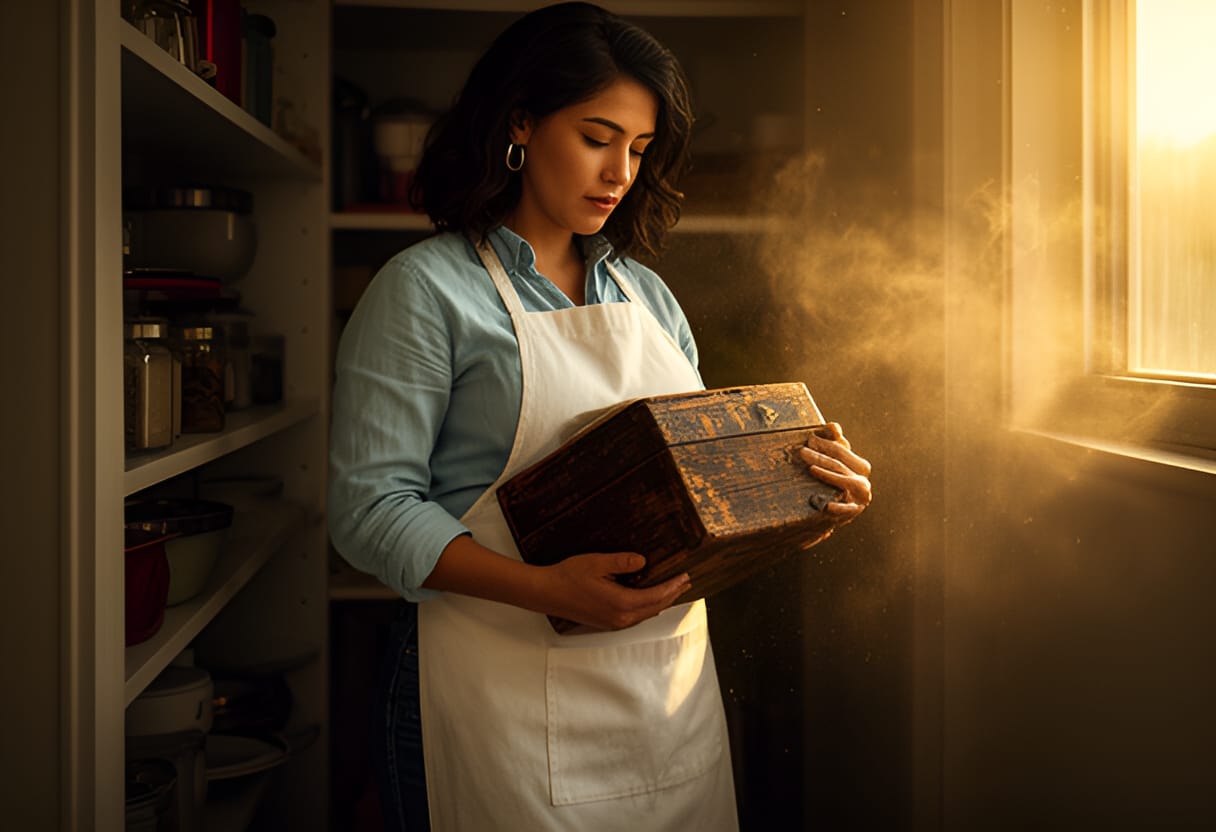
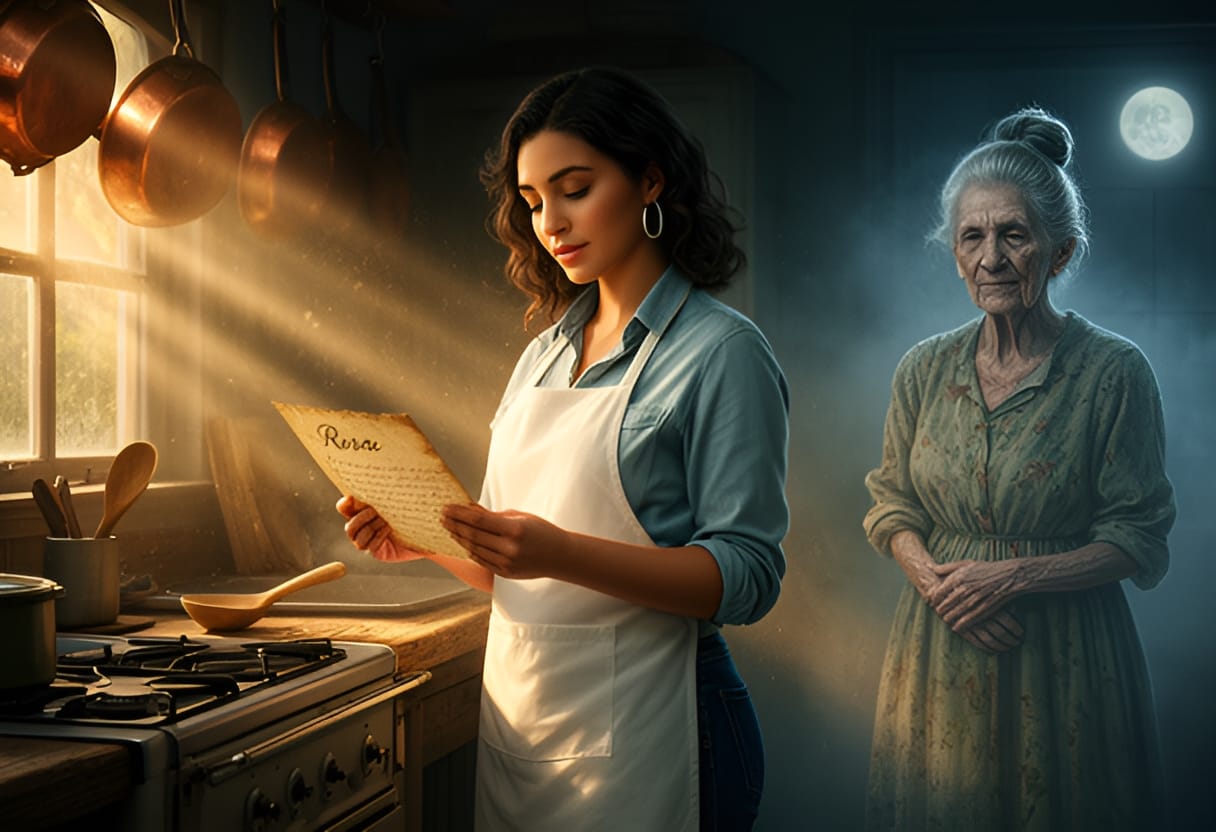
Elena lifted the wool blanket from the back of the closet and felt the weight of something solid beneath its folds. She pulled it free, setting the blanket aside, and saw the corners of a wooden box worn smooth at the edges, its surface darkened by years of handling. A faint scent of cedar and dried herbs rose from it, mingling with the dust that clung to the lid. She brushed her fingers over the carved initials—R.M.—and hesitated before lifting the lid.
Inside, recipe cards lay stacked like fallen leaves, some curled at the corners, others stiff with dried spills. Oil had bloomed in translucent rings near the bottom of several, and flour dusted the edges like frost. The handwriting was unmistakable—Rosa’s looping cursive, firm and sure, ink faded to brown in places where moisture had touched it. Elena recognized the slant of the letters, the way her grandmother looped the ‘y’ in “pollo” and dotted the ‘i’ with a small circle instead of a dot.
She pulled out the top card and read: Arroz con Pollo — Para seis personas. Sofrito bien hecho, luego el pollo dorado. Azafrán al final, nunca al inicio. Beneath it, in a smaller hand, someone had added: Prueba con cúrcuma si no hay azafrán — 1987. Another note, in a different ink: Demasiado sal esta vez. Lavar el pollo antes? Dated 1993.
Elena smiled. She remembered standing on a stool beside Rosa’s stove, watching her stir the pot with a wooden spoon, tasting from the ladle and nodding as if the soup had spoken. Rosa never measured. She pinched salt between her fingers, judged the rice by how it clung to the spoon, knew the chicken was done when the juices ran clear and the meat shrank from the bone.
She flipped through the stack. A card for flan bore a brown halo around the edge where caramel had boiled over. Leche entera, nunca descremada — la grasa da cuerpo, Rosa had written. Below it, in a shakier script: Probado con leche de almendra — 2005. Espeso, pero falta riqueza. A date from the year Elena turned sixteen, when she’d first experimented with dairy substitutes after reading an article about cholesterol.
Another card, for tostones, showed a smudge of green near the bottom—plantain, perhaps—and a note in the margin: Freír dos veces. Primero suave, luego crujiente. Sal al final. The date was 2001. Elena remembered standing barefoot on the cool tile of Rosa’s kitchen, waiting for the first batch to cool so she could press them with the bottom of a glass. Her grandmother had laughed when she smashed one too flat, saying, “Even ugly tostones taste good if they’re fried with love.”
As she sorted the cards into piles—soups, mains, desserts—Elena felt the rhythm of Rosa’s kitchen return: the clink of spoons against bowls, the hiss of garlic hitting oil, the way the radio always played boleros low in the background. Rosa didn’t follow recipes so much as converse with them, adjusting as she went, guided by smell and texture and the quiet certainty that came from decades of feeding people she loved.
She paused at a card for sopa de frijoles negros. The paper was thin and brittle, stained dark as wet earth. Cebolla, pimiento, ajo — siempre sofrito lento, it read. El comino al final, no hierva mucho. A note in the corner: Para Elena, cuando vuelva de la universidad — 2010. Her chest tightened. She remembered coming home for winter break, tired from exams, and finding this soup waiting on the stove, a bowl already set with a slice of lime and warm bread on the side. Rosa had said nothing, just pushed the bowl toward her and poured a glass of agua de jamaica.

Elena laid the card gently on the table and stared at her own hands—practical, efficient, used to measuring grams and calculating macronutrients. She had spent her career teaching others how to eat well, how to balance nutrients, how to read labels. But here, in this box, was a different kind of wisdom: not in numbers, but in touch, in timing, in the willingness to taste and adjust.
She picked up the arroz con pollo card again. The instructions were sparse, trusting the cook to know when the sofrito was fragrant enough, when the rice had toasted just right. Elena traced the edge of the paper with her thumb. She wanted to honor that trust, not replace it with rigid rules. But she also knew—she had seen it in her patients, in Clara’s careful glucose logs, in Daniel’s skeptical raised eyebrow—that tradition could carry weight that wasn’t always kind to the body.
She took a breath. The box held more than recipes. It held a voice. And now, it was hers to listen to—and to answer. * The kitchen table was covered in cards, grouped by dish, each one a fragment of a life lived in kitchens like this one. Elena moved the arroz con pollo to the center and smoothed it flat. The light from the window caught the oil stain near the bottom, making it glow like amber.
She reached for her notebook and pen, then paused. Instead, she took out her phone and opened a blank note. She would start here—not with substitutions, but with attention. She would make the dish as Rosa had written, watch, taste, note what changed when she swapped the white rice for farro, when she used thigh meat without the skin. She would not discard the instinct; she would test it against her knowledge, and let the result guide her.
Outside, a bicycle bell rang down the street. Somewhere, a pot began to boil. Elena picked up the card, brought it close, and read the words one more time: Sofrito bien hecho. She smiled. Then she began to write.
Elena heated olive oil in her heavy-bottomed pot and began with the sofrito—onion, green pepper, garlic—minced fine and softened slowly until the edges turned translucent and the kitchen filled with a sweet, earthy perfume. She stirred with a wooden spoon, just as Rosa had, watching for the moment when the mixture clung slightly to the bottom before releasing, a sign the sugars had caramelized without burning. When it was ready, she added the chicken thighs, skinless and patted dry, and let them brown on all sides, the meat releasing a quiet sizzle as it sealed in its juices.
She measured the farro this time—not because she doubted Rosa’s intuition, but because the grain behaved differently. Half a cup, rinsed until the water ran clear, then toasted in the pot for a minute before adding the broth. She used low-sodium chicken stock, warmed, and poured it in slowly, stirring once to distribute the grain. A pinch of saffron threads, steeped in two tablespoons of hot water, went in next, lending the liquid a faint golden hue. She tasted the broth and found it flat—missing the depth Rosa always achieved. Remembering the 1993 note about too much salt, she hesitated, then added a small pinch, tasting again. Better. Still, it lacked something.
She covered the pot, turned the heat to low, and let it simmer. Twenty minutes passed. She checked the farro—it was tender but still held a slight resistance at the center, pleasantly chewy. The chicken had shredded easily when she prodded it with a fork. She turned off the heat and let it rest, covered, for five minutes.
While it sat, she chopped a handful of flat-leaf parsley and sliced a lemon into thin wedges. She thought of the chorizo Rosa sometimes fried until crisp and scattered on top—a salty, smoky garnish that had always made her lick the plate clean. She left it out. Instead, she fluffed the farro gently with a fork, then arranged the chicken and grains in shallow bowls, topping each with a sprinkle of parsley and a lemon wedge on the side.
She wiped her hands on her apron and stepped back. The dish looked lighter than Rosa’s version—less glossy, less golden—but the aroma was familiar: garlic, pepper, the warm note of saffron, now brightened by citrus.
A knock at the door pulled her from her thoughts. She opened it to find Mateo holding his camera bag and Clara carrying a glass container.
“Smells like home,” Clara said, stepping inside. “I brought black beans—just in case you wanted something on the side.”
Mateo followed, setting his bag down. “I came to document. For the book. You said this was the first real test.”
Elena led them to the table. “It’s arroz con pollo—but with farro and skinless thighs. No chorizo. I added parsley and lemon to lift it.”
Clara poured water into three glasses. “I’m curious. I’ve been trying to cut back on saturated fat, but I miss the way the fat carries flavor in dishes like this.”
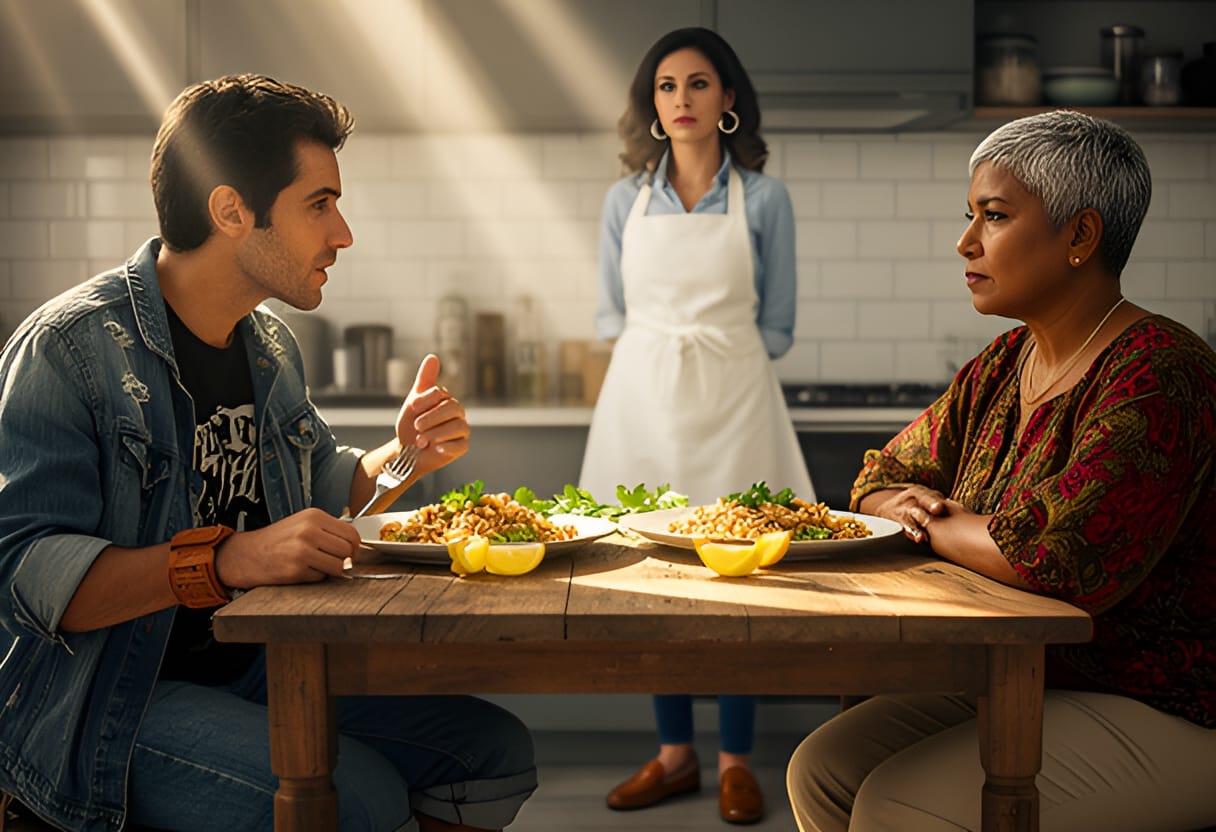
Elena served them. They ate in silence for a moment, forks moving steadily. Mateo paused, chewing slowly.
“It’s good,” he said. “Really good. The farro holds up—it doesn’t turn to mush like brown rice sometimes does. And the lemon… it cuts through in a nice way.”
Clara nodded. “I taste the sofrito. The garlic, the pepper. It’s not flat. But…” She paused, searching for the word. “It’s leaner. I don’t feel the same coating on my tongue. Like the richness is quieter.”
Elena swallowed. “I took out the chorizo and used skinless meat. I was worried it would taste bland.”
“It’s not bland,” Mateo said. “It’s just… different. Less unctuous. But the herbs and citrus make up for some of it. You could probably add a teaspoon of olive oil at the end—just to give it back some body without going back to the old way.”
Clara smiled. “Or a spoonful of the bean broth I brought. That would add depth without much fat.”
Elena felt a release in her chest—not relief, exactly, but the quiet satisfaction of being heard. She had feared they would miss the soul of the dish, that her changes would strip it of what made it Rosa’s. Instead, they had met her halfway, offering adjustments that respected both her intentions and the recipe’s spirit.
She looked at her plate—the farro speckled with herbs, the lemon gleaming, the chicken tender and moist. It wasn’t Rosa’s arroz con pollo. But it was hers now, shaped by listening, by testing, by the willingness to let tradition speak and then answer back.
Mateo raised his glass. “To first attempts.”
Clara tapped hers against his. “And to learning how to listen.”
Elena joined them, the glass cool in her hand. Outside, the bicycle bell rang again, farther down the street. Somewhere, a pot began to boil. She took a sip of water, then another bite. The lemon brightened the farro, the parsley freshened the richness, and beneath it all, the sofrito held steady—just as Rosa had taught her.
She didn’t need to get it right the first time. She just needed to keep cooking.
Chapter 2
Testing the Balance
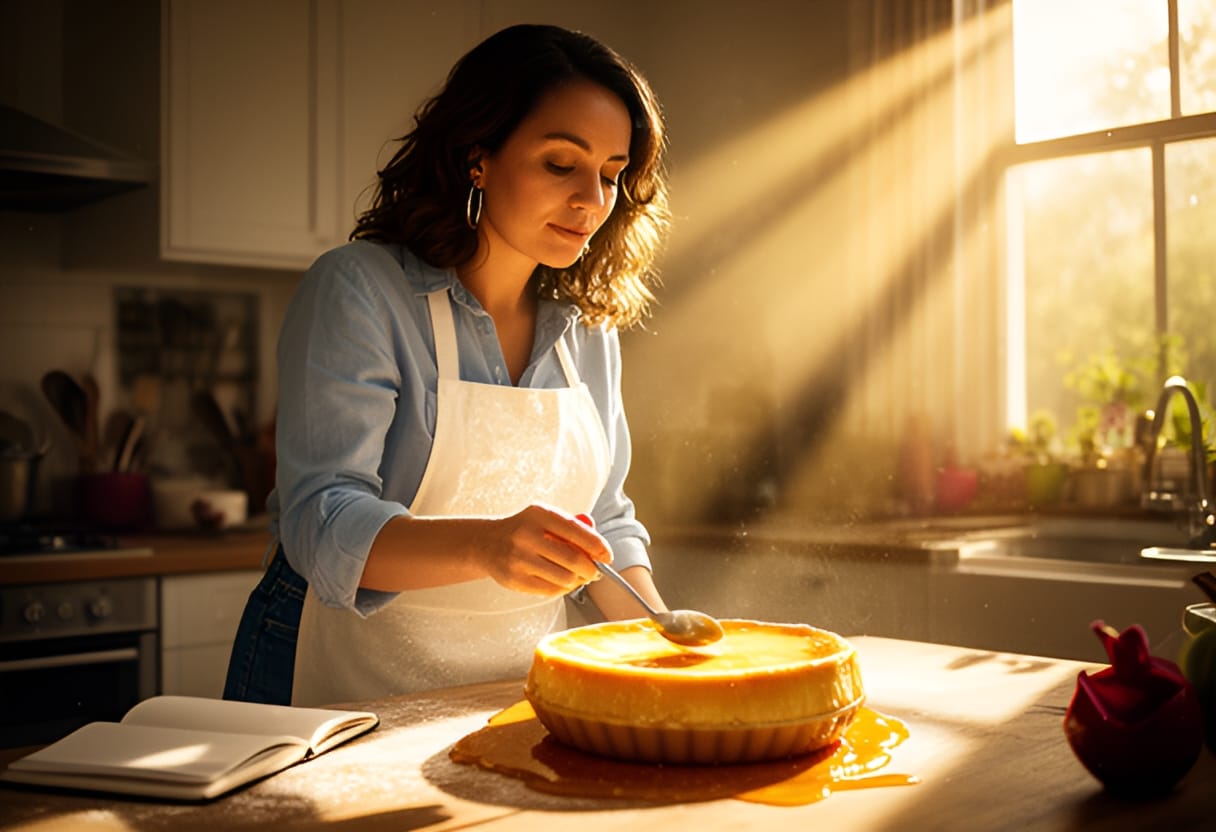
Elena wiped her hands on the towel hanging from the oven handle and stared at the small ceramic dish in front of her. The flan had cracked down the center, a web of fissures spreading from the top like dry earth. She lifted a spoonful—it held its shape, but when she pressed gently, it sprang back with a stubborn resilience, more like set gelatin than the yielding custard Rosa had made. The surface was pale, lacking the deep gold she remembered from childhood afternoons at the kitchen table, when Rosa would tap the side of the mold and listen for the soft wobble that meant it was just right.
“Too much protein,” she murmured, writing in her notebook. “Egg whites alone tighten too fast. No fat to cushion the structure.”
She had started with Rosa’s original card: six eggs, a can of sweetened condensed milk, a can of evaporated milk, vanilla, and caramelized sugar in the mold. For her first adaptation, she swapped the whole eggs for eight egg whites, used evaporated skim milk instead of the full-fat version, and kept the condensed milk—though she eyed it warily. Sugar was a problem for Clara, and Elena knew she’d need to address it eventually, but for now, she wanted to see if the texture could be saved before tackling sweetness.
The flan had set, yes—but it had the bounce of a stress ball. She scraped it back into the bowl, melted it down gently over low heat, and tried again. This time, she used four whole eggs and four egg whites, hoping to retain some richness while cutting cholesterol. The mixture poured into the mold, she covered it with foil, and placed it in the oven with a pan of hot water on the rack below.
When she opened the oven thirty-five minutes later, the flan had risen unevenly, bubbled at the edges, and collapsed in the middle as it cooled. The texture was loose, almost separated—like poor mayonnaise. A layer of liquid pooled on top. She tipped the mold slightly; it slid like wet cement.
“Too little thickener,” she wrote, frowning. “The skim milk doesn’t have the body. The proteins aren’t binding right.”
She stared at the failed flan, then at the recipe card in her hand. Rosa’s script looped across the page, the i’s dotted with those small, precise circles. Beneath the ingredients, in a different ink—maybe from a later year—there was a note: Si se corta, un poco de maicena. If it curdles, a little cornstarch.
Elena had dismissed it before, thinking it a fix for curdling, not for structure. But now, she wondered if Rosa had meant it more broadly—a whisper of starch to stabilize the custard without weighing it down.
She wiped the bowl clean and began again. This time, she used five eggs and three egg whites, evaporated skim milk, and the full can of sweetened condensed milk—she would adjust sweetness later. She whisked in a tablespoon of cornstarch, making sure it dissolved completely before adding the vanilla. She strained the mixture through a fine sieve into the caramel-lined mold, covered it tightly with foil, and placed it in the oven. The water bath came halfway up the sides of the dish.
She set the timer for forty minutes and tried not to open the oven door.
When the time was up, she pulled the rack out slowly. The flan looked uniform—no cracks, no bubbles. She gave it a gentle nudge. It shivered as a single unit, slow and deep, like a pond disturbed by a stone.
“Yes,” she breathed.
She let it cool on the rack, then refrigerated it overnight.
The next afternoon, Clara arrived with her tote bag and a smile. “I brought cinnamon,” she said, setting a small jar on the counter. “Thought we could try it on top. Or maybe in the mix, if you think it won’t clash.”
Elena laughed. “Rosa never used cinnamon in her flan. But I won’t say no to an experiment.”
They sat at the small table by the window. Elena ran a knife around the edge of the mold, placed a plate on top, and flipped. The flan slid out smoothly, pooling in a golden pool of caramel that clung to its curves. The surface was smooth, glossy, trembling slightly as Clara lifted her fork.
She took a small bite. Closed her eyes.
“It’s sweet,” she said after a moment. “But not cloying. I can taste the vanilla—real vanilla, not that artificial stuff. And the caramel… it’s bitter enough to balance it.”
Elena waited.
Clara chewed thoughtfully. “The texture… it’s creamy. Really creamy. But I miss a little more resistance. Like the flan Rosa made—it had a bit more bite to it. This feels… delicate. Almost like it could melt on the tongue before you finish chewing.”
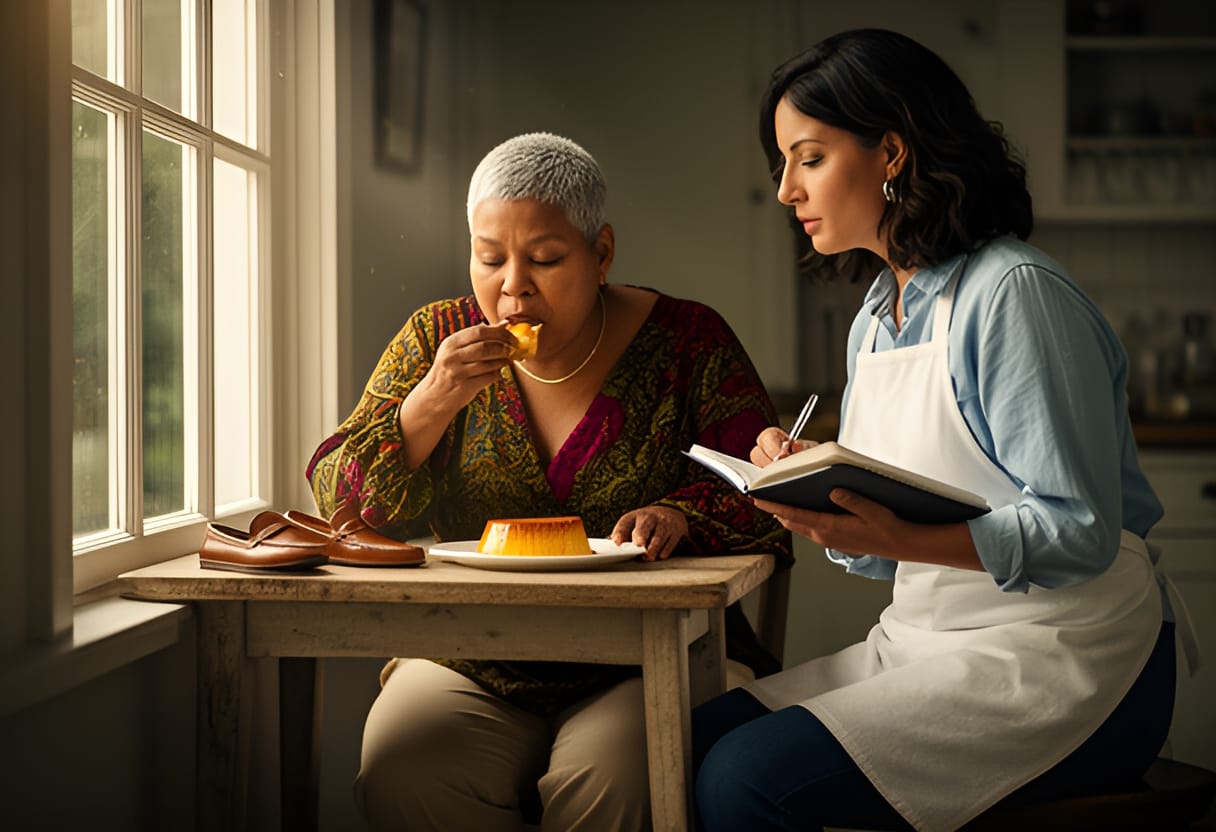
Elena nodded, taking notes. “That’s the cornstarch. It smooths it out, but it can make it too tender if I’m not careful. Maybe I can reduce it next time—or go back to more whole eggs.”
Clara smiled. “Or maybe it’s just right for me. I don’t need it to be firm—I need it not to spike my sugar. And this… this tastes like a treat. Not a compromise.”
Elena watched her take another bite, slower this time. The caramel caught the light, amber and bright. The flan held its shape, just barely, yielding with a quiet surrender.
“It’s not Rosa’s,” Elena said softly. “But it’s close enough to remind me of her. And it’s something you can enjoy without worry.”
Clara reached over and squeezed her hand. “That’s the balance, isn’t it? Not copying. Not rejecting. Just… making it work for now.”
Outside, a bicycle bell rang. Somewhere down the block, a screen door slapped shut. Elena picked up her fork and took a bite. The custard melted, rich and smooth, the caramel threading through it like burnt sugar memory. She didn’t close her eyes. She kept them open, watching the light shift on the wall, and thought not of perfection, but of the next try.
Elena set the flan plate aside and wiped her hands on her apron. The afternoon light had shifted, slanting across the counter where the recipe box lay open. She pulled out the card for maduros—Rosa’s looping script faded at the edges, stained in places with what might have been caramel or oil. Plátanos maduros, fritos en aceite hasta dorar. Ripe plantains, fried in oil until golden. A simple instruction, but one that carried the weight of Sunday afternoons, the smell of hot oil and sweet fruit filling the kitchen as Rosa hummed old boleros.
She traced the words with her fingertip. Frying meant fat absorption, and while she wasn’t afraid of oil, she wanted to see if the essence of the dish—its deep, caramelized sweetness, its tender yielding—could survive without the submersion. If she could coax out those sugars with dry heat instead.
She selected three plantains from the bunch on the windowsill. Their skins were mostly yellow, tipped with brown. Not ripe enough, she thought, recalling how Rosa always waited until the skins were nearly black, until the fruit inside felt like softened wax. She set them aside and waited.
Two days later, the plantains had darkened, speckled with black like overripe bananas. She peeled them slowly, the skins cracking away to reveal fruit that was soft at the touch, almost translucent at the tips. She sliced them on the diagonal, half-inch thick, and arranged them on a baking sheet lined with parchment. Instead of drowning them in oil, she brushed each piece lightly with olive oil using a pastry brush—just enough to glisten, not to pool.
She slid the sheet into a preheated oven at 425 degrees, watching through the glass as the edges began to curl and darken. The smell rose slowly at first—earthy, starchy—then shifted, sweetening as the natural sugars concentrated. After fifteen minutes, she flipped them. The undersides were caramelized in patches, golden-brown where they’d touched the pan. She returned them to the oven.
When she pulled them out, the plantains were glistening, their surfaces wrinkled and deep mahogany at the edges, tender within. She lifted one with a fork. It bent easily but didn’t break, offering slight resistance before giving way. She blew on it, then tasted.
The flavor was intense—not just sweet, but layered: notes of brown sugar, molasses, a hint of smoke from the oven’s heat. There was no greasiness, no heaviness on the tongue. Just the fruit, transformed.
She made a note: Ripeness is key. Black-spotted skins. High heat, light oil. Watch closely—sugars burn fast.
Later that week, she invited Clara and Daniel to the courtyard for a small tasting. The string lights were strung overhead, casting a warm glow over the mismatched chairs and the small table Elena had set with Rosa’s wedding plates. The arroz con pollo with farro sat in a ceramic bowl, steaming gently. The flan, chilled and sliced, waited on a separate platter. And in the center, a stack of baked maduros, their caramelized edges catching the light.
Daniel arrived first, hands in his pockets, skeptical. “You baked them?” he said, eyeing the plantains. “I was expecting something… virtuous. Like, steamed or boiled. Sad.”
Elena smiled. “Just give them a try.”
He picked one up with his fingers, cautious. Took a bite. His eyebrows lifted. He chewed slowly, then took another, faster this time.
“Holy shit,” he said. “These taste like dessert. Like, caramel-banana candy. How?”
“The riper they are, the more sugar they’ve got,” Elena said. “Baking just draws it out. No fat to dull the flavor.”
He took another, then licked caramel from his thumb. “I’d eat these every day. Even if they weren’t ‘healthy.’”
Clara arrived shortly after, her tote bag slung over one shoulder. She greeted Elena with a hug, then paused at the table, her eyes drawn to the plantains. “Those look… indulgent,” she said.
“They are,” Elena admitted. “But look at the plate—no butter, no milk, just a brush of oil. The sweetness comes from the fruit itself.”
Clara took a small piece. She closed her eyes as she chewed. When she opened them, there was a quiet satisfaction in her expression.
“This is dangerous,” she said softly. “In the best way. It hits the sweet spot without the spike. I can feel it—slow, steady. Not like when I eat something processed and my blood sugar jumps. This… this feels like a gift.”
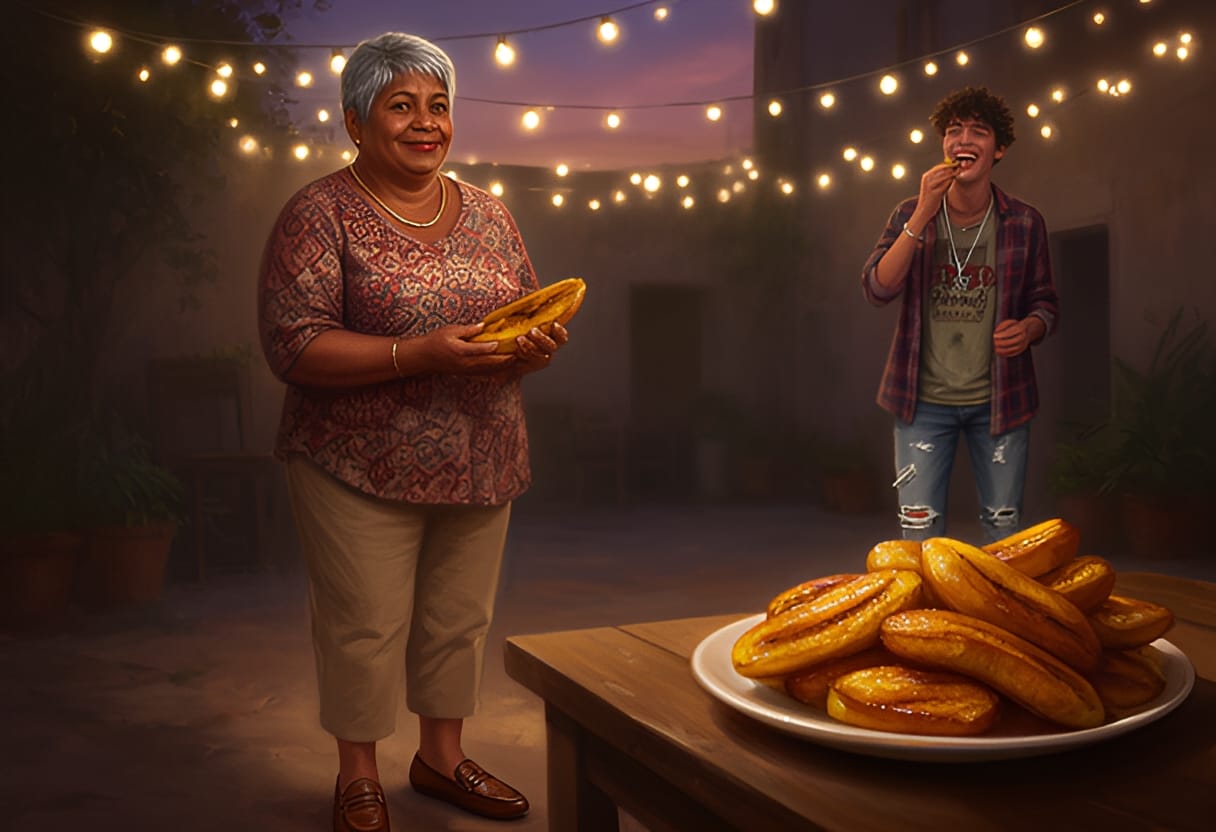
Daniel, still chewing, nodded. “Yeah. It’s not like you’re missing out. It’s like you’re getting more.”
Elena watched them—the way Daniel savored each bite like a discovery, the way Clara ate with mindfulness, not deprivation. She thought of Rosa, standing at her stove, testing the oil with a flick of her wrist, judging ripeness by sight and touch. She hadn’t fried these plantains. But she had honored the instinct behind them: wait for the right moment, treat the fruit with respect, let its nature shine.
She reached for her notebook and wrote, not a correction, but an addition: Sometimes, the tradition isn’t in the method—it’s in the patience.
The string lights flickered overhead. Somewhere in the building, a radio played a soft sonata. Clara reached for another maduro, and Daniel, still smiling, said, “You know, I think I could get used to this.”
Elena didn’t answer right away. She looked at the plantains on the plate—golden, glistening, alive with sweetness—and thought not of replication, but of continuation. The recipe lived. It was changing. And for now, that was enough.
Chapter 3
Voices at the Table
The courtyard gathering had lingered in Elena’s mind like the scent of cumin after a meal—warm, familiar, and quietly satisfying. She had served flan made with evaporated skim milk, baked plantains dusted with cinnamon, and a black bean salad brightened with lime, and over plastic chairs and mismatched mugs, they had talked not just about sugar and fat, but about memory. Clara had said the flan reminded her of her mother’s kitchen, even without the yolks. Daniel had admitted the plantains weren’t quite the same, but they weren’t bad—just different, like hearing a favorite song in a new key.
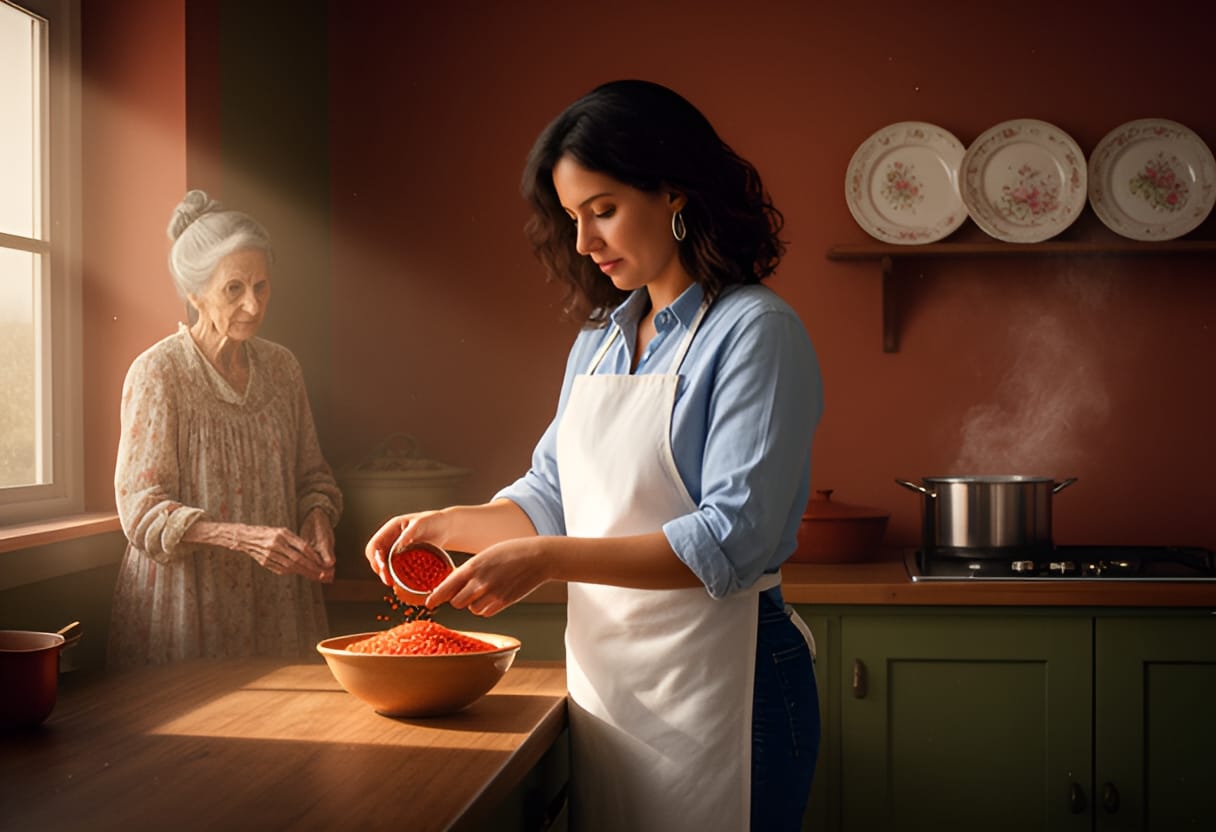
Now, three days later, Elena stood at her small kitchen counter, measuring red lentils into a bowl. The morning light slanted across the linoleum, catching dust motes above the sink. She had texted Clara and Daniel the night before: Come cook with me? Trying something new—lentil soup, fish, yuca. Bring your appetites. Clara had replied with a thumbs-up and a note about bringing her spice jar. Daniel had simply written, Yeah, sure. What time?
She heard the building’s outer door click shut, then footsteps on the stairs. Clara arrived first, tote bag in hand, her silver-streaked hair tucked under a bandana.
“You smell that?” she said, stepping inside. “Already smells like home.”
Elena smiled. “That’s the turmeric blooming in the oil. Just started.”
Daniel followed, lanky and hesitant in the doorway, a backpack slung over one shoulder. He glanced around the kitchen—the open shelves with mismatched bowls, the recipe box tucked beside the stove, the photograph of Rosa pinned to the wall near the window.
“Nice setup,” he said. “Feels… lived-in.”
Elena handed him an apron. “Thanks. Help me rinse the lentils? Clara’s taking the soup lead.”
Clara was already at the stove, warming olive oil in the heavy pot Elena had inherited from Rosa. She tossed in chopped onion, garlic, and a generous pinch of turmeric, stirring until the mixture turned golden and fragrant.
“You want it earthy, not bitter,” Clara said, not looking up. “Turmeric’s strong—too much and it tastes like medicine. Just enough, and it’s sunshine.”
Elena watched her hands—sure, practiced—as Clara added the lentils, then poured in vegetable broth from a carton. She tasted, then shook her head.
“Needs more depth,” Clara murmured. She reached for her spice jar, the one she always carried, and added a pinch of smoked paprika and a grind of black pepper. “There. Now it’s got backbone.”
Daniel stood at the counter, staring at the cod fillets on a tray. He poked one with a finger.
“It’s… wet,” he said.
Elena laughed. “It’s supposed to be. That’s why we bake it—gentle heat keeps it moist. You want to season it?”
He nodded slowly, reaching for the garlic powder, then pausing.
“How much?” he asked.
“Start with half a teaspoon,” Elena said. “Then parsley, lemon zest, a drizzle of olive oil. You can always add more, but you can’t take it back.”
He measured carefully, sprinkling the garlic powder over the fish, then hesitated again before adding the parsley.
“Like this?” he asked, showing her a small pile.
“Perfect,” she said. “Now drizzle the oil, then lay the lemon slices on top. It’ll steam as it cooks.”
He followed her instructions, his movements stiff at first, then gradually easing. When the tray went into the oven, he let out a breath.
“That’s it?” he asked.
“Now we wait,” Elena said. “Twenty minutes. Meanwhile—yuca?”
Clara had already peeled and chopped the yuca root into chunks, dropping them into a pot of salted water.
“It’s like cooking a potato,” she said, “but denser. Takes longer to soften.”
Elena heated olive oil in a small pan while they waited for the yuca to boil. When Clara drained the tubers and returned them to the pot, Elena added the warm oil and began to mash.
“No butter?” Daniel asked, leaning in.
“Just oil,” Elena said. “And a little of the cooking water if we need to loosen it.”
She pressed down with the potato masher. The yuca resisted at first, then began to break apart, becoming smooth and glossy as the oil emulsified with the starch.
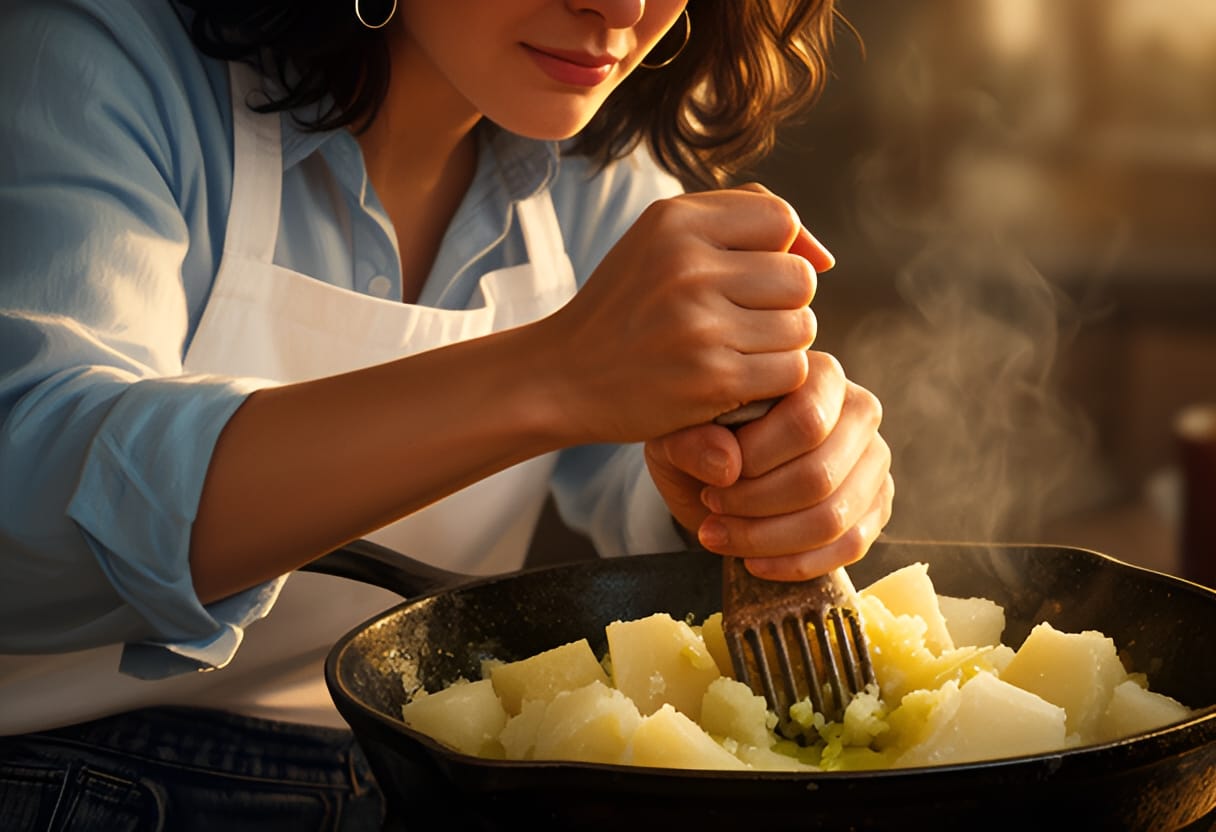
“Whoa,” Daniel said. “It’s… creamy.”
Clara scooped a spoonful and tasted. Her eyes widened slightly.
“Damn,” she said. “That’s rich. No milk, no butter—just oil and time. You could serve this at a banquet.”
Elena smiled, feeling a quiet warmth spread through her chest. She hadn’t expected it to work so well. The yuca, steamed and mashed with nothing but good oil, had turned out silkier than she’d imagined—proof, perhaps, that simplicity didn’t mean sacrifice.
The timer beeped. Daniel pulled the fish from the oven. The fillets looked opaque, the edges slightly curled, the parsley bright green against the white flesh.
He poked it with a fork—and the fish flaked apart in clean, tender layers.
“Hey,” he said, surprised. “It actually… came apart.”
Elena took the fork from him gently. “See? You don’t have to fight it. Just follow the grain.”
He tried again, more slowly this time, and the fish separated easily.
“Not bad,” he admitted. “Not bad at all.”
They plated the meal together—ladles of deep orange lentil soup, golden fish with lemon wedges, and a mound of pale, creamy yuca mash. Elena set the table with her best plates—the ones Rosa had brought from her wedding—and poured water into glasses, squeezing a wedge of lime into each.
They sat. The kitchen was quiet except for the sound of spoons and forks, the occasional murmur of approval.
Clara took a bite of soup, then another.
“You know,” she said, “I could eat this every Tuesday. It’s filling, but not heavy. And the spice—just enough to wake you up.”
Daniel nodded, mouth full of fish. “This is… actually really good. I mean, I’d eat this willingly. Not because I have to, but because I want to.”
Elena looked from one to the other, her spoon paused halfway to her mouth.
“I was worried,” she admitted, “that taking out the butter, the salt, the fatty cuts—it would feel like losing something. Like we were stripping the soul out of the dish.”
Clara set her spoon down.
“Soul isn’t in the fat,” she said softly. “It’s in the attention. The way you toast the spices. The way you wait for the fish to flake just right. That’s where the love lives.”
Daniel swallowed, then added, “Yeah. And it doesn’t have to taste like punishment to be good for you.”
Elena thought of Rosa’s card—Sofrito bien hecho—and the way her grandmother had cooked not by rules, but by rhythm, by taste, by time. She thought of the lentils simmering, the fish baking, the yuca transforming under her hands.
Maybe, she realized, health wasn’t in the omission, but in the intention.
She reached for her water glass, clinking it lightly against Clara’s, then Daniel’s.
“To cooking together,” she said.
They echoed her, the sound soft but sure in the warm kitchen.
Clara set her spoon down with a soft clink against the ceramic bowl. The last of the lentil soup had been savored, and the warmth of the meal still lingered in her chest, steady and grounding. She looked across the table at Elena, then at Daniel, who was slowly flaking the last bits of fish onto his fork.
“I’ve had to learn how to eat with my condition,” Clara began, her voice calm, matter-of-fact. “Not because I wanted to, but because my body made it clear I had no choice. Diabetes doesn’t shout. It whispers—through fatigue, through thirst, through wounds that won’t heal. And after years of ignoring those whispers, I finally listened.”
She paused, tracing the rim of her water glass with her thumb. “I don’t count calories. I count carbohydrates. Every slice of bread, every spoonful of rice, even the natural sugars in fruit—I’ve learned to measure them, not to deprive myself, but to stay in balance. It’s not about perfection. Some days I go over. Some days I’m under. But I try to keep the average steady, so my blood sugar doesn’t swing like a pendulum.”
Daniel, who had been picking at a piece of lemon zest, looked up. “So you’re saying… you don’t eat cake?”
Clara smiled, faintly. “I eat cake. But I eat a small piece, and I pair it with protein—some nuts, a bit of cheese—to slow the sugar rush. I plan for it. I don’t ban it. Banning makes it louder in your head.”
Elena nodded slowly, her fingers resting on her water glass. “That makes sense. It’s not about cutting out—it’s about adjusting. Like with the yuca. We didn’t remove the starch; we just changed how we prepared it.”
Daniel pushed his plate away, the movement deliberate. He leaned back in his chair, the wood creaking softly beneath him. “Yeah, but that’s the thing,” he said. “When people hear ‘healthy,’ they think ‘no.’ No fried food. No dessert. No flavor. It feels like a list of things you can’t have, not things you can.”
He glanced at Elena, then at Clara. “I mean, I get why you do it, Elena. You’re trying to help. But when I see a recipe labeled ‘low-fat’ or ‘sugar-free,’ I assume it’s going to taste like cardboard. Or worse—like someone took the joy out of it on purpose.”
Clara leaned forward. “That’s because so many ‘healthy’ versions are made by taking things out and not putting anything back in. You take out the fat, but you don’t add depth with spices or technique. You take out the sugar, but you don’t balance it with acid or texture. No wonder it feels like punishment.”
Daniel exhaled, a short, humorless laugh. “Exactly. It’s not the food. It’s the label. The word ‘healthy’ has become a warning sign. Like, ‘Proceed with caution—this might suck.’”
Elena looked down at her hands, folded in her lap. The memory of Rosa’s hands came unbidden—calloused, sure, moving through the kitchen with a rhythm that seemed to come from the bones. She remembered the way Rosa would taste a stew, close her eyes, and nod, as if listening to something only she could hear.
“I’m scared,” she said, quiet enough that she wasn’t sure they’d hear. “That when I change her recipes—swap the lard for oil, use farro instead of white rice, cut back on the salt—I’m not honoring her. I’m erasing her. Like I’m saying her way was wrong, and mine is better.”
Clara reached across the table and covered Elena’s hand with her own. Her skin was warm, slightly rough from years of washing dishes and grading papers. “Elena, Rosa didn’t cook from a rulebook. She cooked from what she had, what she knew, what worked for her family in her time. You’re doing the same thing—just with different knowledge, different tools.”
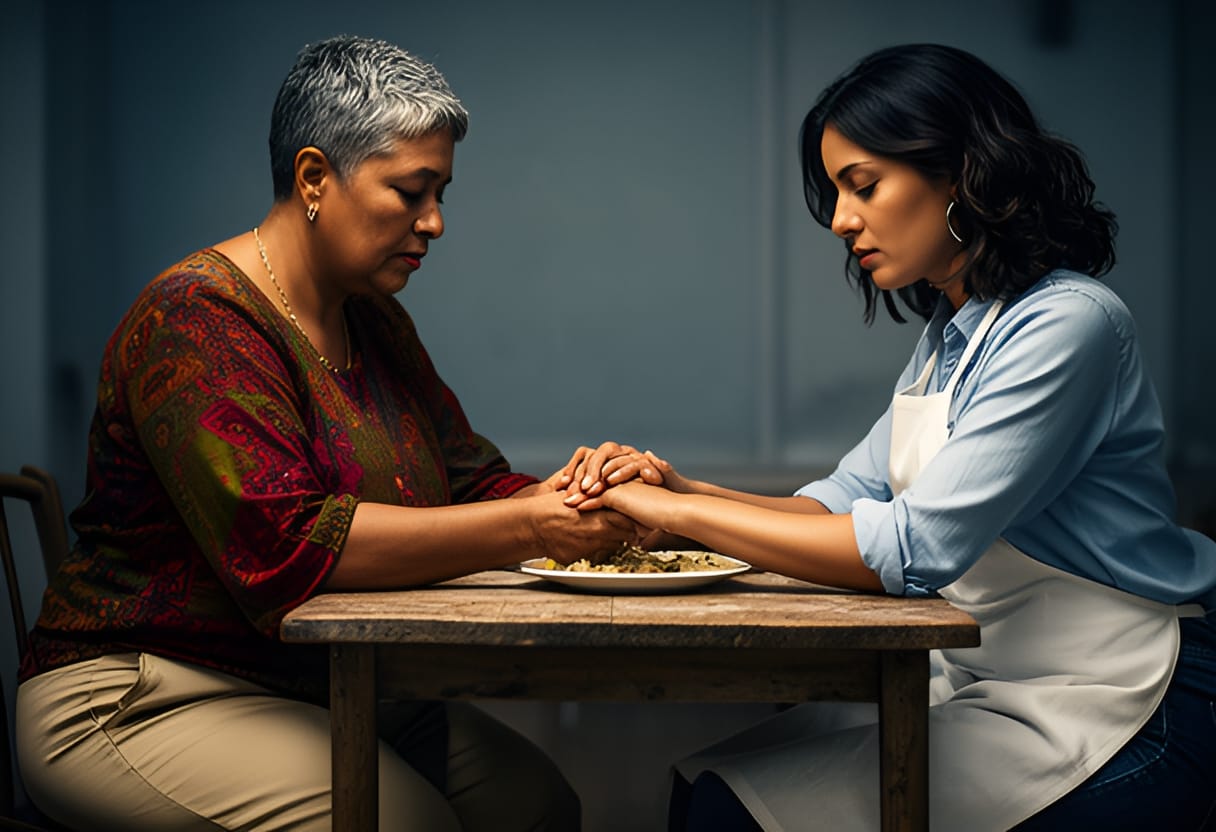
Daniel, unusually quiet, added, “And maybe Rosa would’ve done the same thing if she had your information. If she knew about blood sugar, about heart health, about how food affects us long-term—she’d adapt. She wasn’t rigid. She was practical.”
Elena swallowed, throat tight. “I just don’t want to lose her voice. I want her to still be in these recipes.”
“She is,” Clara said firmly. “She’s in the way you taste as you go. In the way you wait for the fish to flake just right. In the way you use her plates, her pot, her notes. You’re not replacing her. You’re continuing the conversation.”
The kitchen was still, the only sound the faint hum of the refrigerator and the distant hiss of the city outside. Elena looked from Clara’s steady gaze to Daniel’s thoughtful expression. She saw not judgment, but recognition—of the weight she carried, and the care with which she carried it.
She lifted her water glass again. “Then maybe,” she said, her voice stronger now, “the goal isn’t to make food that’s labeled healthy. It’s to make food that’s so good, so satisfying, that people don’t even think about whether it’s good for them. They just notice how they feel after—energized, full, at peace.”
Daniel smiled, slow and real. “Yeah. Food that doesn’t announce itself. It just… fits.”
Clara nodded. “Like a good conversation. You don’t notice the words—you notice how you feel when it’s over.”
Elena reached for the lemon wedge in her glass and squeezed the last drop into her water. The sharp citrus brightened the air, clean and alive. Outside, the sky was deepening to twilight, the first stars appearing like pinpricks of light over the rooftops.
They didn’t speak for a moment. The meal was over, but the table still held warmth—of the food, of the talk, of the quiet understanding that had settled between them.
And in that silence, Elena knew: this was how the legacy lived. Not in perfection, not in purity, but in the doing—together, openly, with room to adjust, to taste, to try again. The recipes would change. But the intention—care, attention, the willingness to listen—would remain. And that, she realized, was the truest adaptation of all.
Chapter 4
The Weight of Tradition
The last of the candlelight flickered against the kitchen wall as Daniel pushed back his chair, the scrape of wood on tile soft in the quiet. Elena wiped her hands on a towel, the damp linen cool against her palms, and watched Clara gather the empty bowls from the lentil soup, baked fish, and yuca mash they had shared. The steam had long since left the pots, but the scent of cilantro and garlic lingered, tangled with the memory of their conversation—what healthy eating meant to each of them, how it lived not in rules but in rhythm, in the way food could hold space for joy as well as care.
“Thanks for coming,” Elena said, her voice quieter than she meant it to be. “I needed this.”
Clara smiled, stacking the bowls. “Anytime. And Daniel, you actually liked the fish. That’s a win.”
Daniel shoved his hands in his pockets, grinning. “Hey, I didn’t hate it. The herbs helped. But if you ever want to sneak in a little bacon next time…”
Elena laughed, the sound light and unexpected. “Noted. Though I think Rosa would roll over in her grave.”
Clara paused, one hand on the dish rack. “Your grandmother sounded like she knew her way around a pot.”
“She did,” Elena said, her thoughts already drifting. “She cooked like it was a conversation—tasting, adjusting, listening to what the food needed. I keep trying to hear her in the notes, but sometimes it feels like I’m shouting into a well.”
Mateo, who had been quietly reviewing photos on his camera’s screen, looked up. “You’re getting closer than you think. The way you balanced the spices in that soup? That wasn’t guesswork. That was her talking through you.”
Elena leaned against the counter, the cool marble grounding her. “I hope so. But there’s one recipe I haven’t touched yet. The one I’m most afraid to change.”
Daniel’s eyebrows lifted. “Oxtail stew? Yeah, that’s the big one, isn’t it? Holiday centerpiece. Abuela’s pride and joy.”
Elena nodded. “Rosa made it every Christmas, every reunion. The meat would fall off the bone, the sauce thick and glossy, rich in a way that felt like a hug. I’ve got her card right here—‘Cocine a fuego lento, hasta que el alma se sienta en la cuchara.’ Cook on low heat, until the soul feels it in the spoon.”
She pulled the worn recipe card from the pocket of her apron, the paper soft at the edges, Rosa’s looping cursive familiar as a heartbeat. The circled dot on the ‘i’ in ‘lento’ caught the light.
“I want to make it healthier,” Elena said, her voice low. “Less fat, more fiber. But every time I think about swapping the oxtail for something leaner, I hear her voice saying, ‘That’s not the same.’ And maybe it’s not. But maybe it doesn’t have to be.”
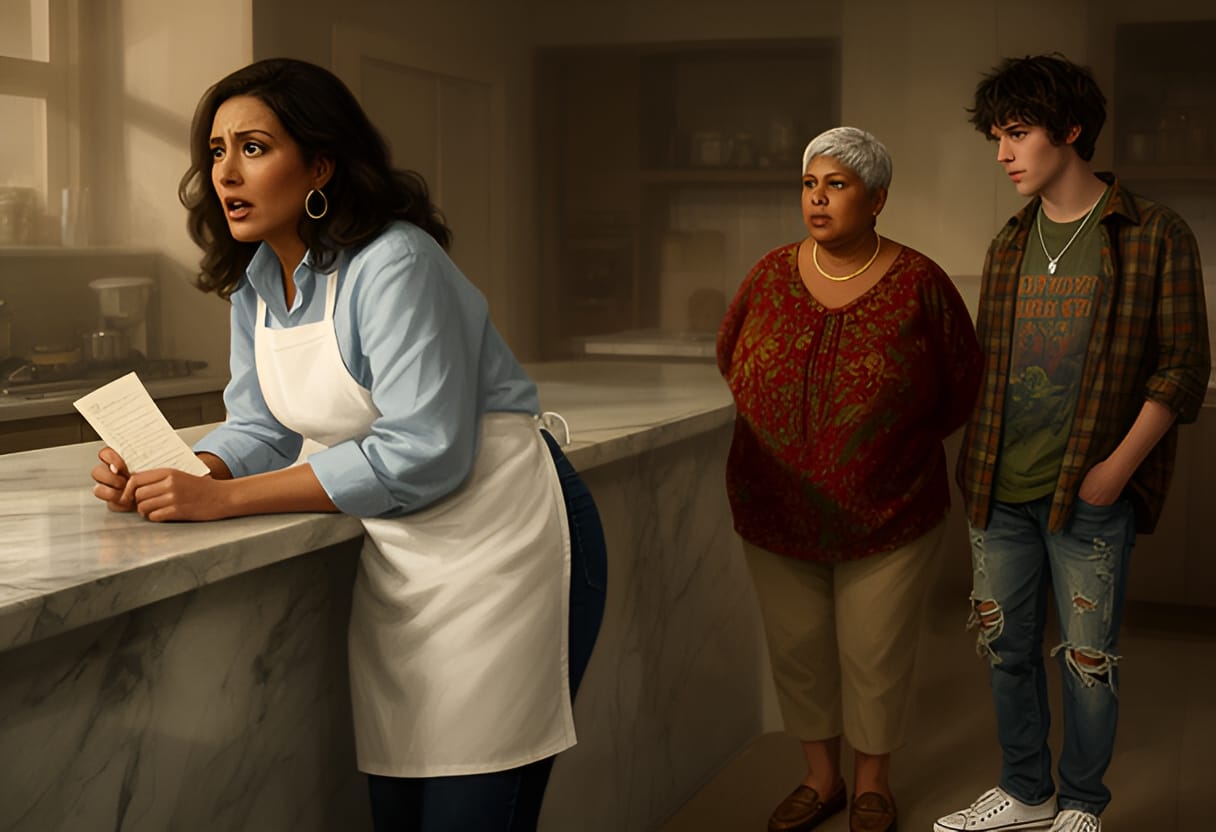
Clara dried her hands and leaned against the counter beside her. “You’re not erasing her by changing it. You’re keeping her alive in a different way—one that lets more people sit at the table.”
Elena looked at the card, then at her friends. “I’m going to try it tomorrow. Beef shank instead of oxtail. More carrots, celery, tomatoes—keep the sofrito, the slow cook, but stretch it with vegetables. I just… I don’t want to lose what made it hers.”
Daniel pushed off the wall. “Well, don’t overthink it. Just cook it. Taste it. See what it tells you.”
The next afternoon, sunlight slanted through the kitchen window, illuminating dust motes above the stove. Elena browned the beef shank in batches, the scent of searing meat filling the air, deeper and less fatty than she remembered from oxtail. She softened the onions, peppers, and garlic in olive oil, the sofrito fragrant and familiar, then added the tomatoes, letting them break down into a thick, sweet base. She returned the meat to the pot, poured in low-sodium broth, and tucked in bay leaves and a sprig of thyme.
As it simmered, she chopped carrots and celery into larger pieces than usual, hoping their sweetness and texture would add body. She stirred in a tablespoon of tomato paste for depth, and when the smell began to rise—earthy, savory, comforting—she felt a flicker of hope.
Hours later, she lifted the lid. The steam carried the scent of slow-cooked meat and vegetables, rich and inviting. She skimmed a thin layer of fat from the surface, then ladled a portion into a bowl. The meat was tender, pulling apart easily at the touch of a fork. The broth was darker than she expected, colored by the tomatoes and the long cook.
She tasted it.
The flavor was deep, savory, satisfying. The vegetables had melted into the stew, thickening it naturally. It was good. Really good.
But as she swallowed, something tugged at her chest. The unctuousness—the luxurious, almost buttery mouthfeel that came from the marrow and fat of the oxtail—was missing. The stew was hearty, nourishing, but it lacked the velvet weight that had always made Rosa’s version feel like a celebration in a bowl.
She sat down at the table, the spoon heavy in her hand. The kitchen was quiet except for the hum of the refrigerator. Outside, a neighbor’s dog barked once, then fell silent.
She thought of Rosa standing at this same stove, her silver hair pinned back, tasting from a wooden spoon, eyes closed in concentration. She thought of the way Rosa would nod, satisfied, and say, “Así se hace.” This is how it’s done.
Elena pushed the bowl away, untouched. Guilt sat low in her stomach, warm and insistent. Had she stripped the dish of its soul in the name of health? Had she mistaken substitution for honor?
She reached for the recipe card again, tracing the ink with her fingertip. Rosa’s words blurred slightly. Elena blinked, realizing her eyes were wet.
She hadn’t meant to cry. She just missed her grandmother’s voice—the certainty in it, the way she could turn a tough cut of meat into something that felt like love made tangible.
She wiped her cheeks with the back of her hand and stood. The stew would keep. She would think on it. Maybe tomorrow she would try again—maybe a touch more tomato paste, a splash of red wine vinegar to brighten it, or a spoonful of olive oil stirred in at the end.
But for now, she left the pot on the stove, lid slightly ajar, and walked to the window. The light was fading, turning the sky a soft lavender. Somewhere down the hall, Mateo’s camera clicked softly as he reviewed his shots.
Elena rested her forehead against the cool glass and breathed in the scent of the stew—deep, honest, trying. And for the first time since she’d started this project, she wondered if the weight she carried wasn’t just about the recipe, but about how much she wanted to get it right—not just for herself, but for the woman who had taught her, without ever saying a word, that food was never just about what was on the plate. It was about who you were when you made it, and who you became when you shared it.
Elena carried the heavy pot down the hall, the lid rattling slightly with each step. She had wrapped a clean kitchen towel around the handle to protect her palm from the heat, and the scent of the stew—tomato, thyme, the deep richness of slow-cooked beef—seeped through the fabric, making her stomach tighten with anticipation and dread in equal measure.
Tía Luz’s apartment was just two doors down, the same building where Elena had grown up visiting every Sunday after mass. The door was painted a faded green, the brass knob worn smooth from decades of use. Elena knocked, her knuckles tapping a rhythm she hadn’t used since she was a girl.
“Just a minute!” came Tía Luz’s voice from inside, warm and slightly breathless. The door opened to reveal her aunt’s face, framed by silver hair pulled into a loose bun, her eyes bright behind smudged glasses. She wore a floral housedress and slippers, one hand resting on a wooden cane.
“Mija,” Tía Luz said, stepping back. “You look like you’ve been wrestling with a pot all day. Come in, come in. I was just about to have tea.”
Elena followed her inside, the familiar smell of lavender soap and simmering beans wrapping around her like a hug. The apartment was small but tidy, filled with the quiet evidence of a long life—black-and-white photos in simple frames, a crocheted blanket draped over the arm of the chair, a small altar with a candle and a picture of Rosa smiling in her youth.
“I brought you something,” Elena said, setting the pot on the small kitchen table. “I tried to make Rosa’s oxtail stew… a little differently. I wanted to hear what you think.”
Tía Luz’s eyes softened. “Ah, the stew. Rosa’s pride and joy. She used to make it for Christmas, for birthdays, for when the cousins came home from the city. Said it was the only thing that could make Mateo behave at the table.”
Elena managed a small smile. “I used beef shank instead of oxtail. Less fat. And I added more carrots, celery, tomatoes—just to stretch it, make it go further. I kept the sofrito, the thyme, the slow cook. But… I’m afraid I took too much out. That it’s not really hers anymore.”
Tía Luz watched her for a moment, then walked to the cabinet and pulled out two chipped blue bowls—the same ones Rosa had used for serving. She ladled a generous portion into each, the steam curling upward in the soft light.
“Sit,” she said, pushing one bowl toward Elena. “Before we talk, let’s taste.”
Elena sat, the weight of the spoon unfamiliar in her hand. She lifted it slowly, blew on the surface, and took a small sip. The broth was rich, the meat tender, the vegetables soft but holding their shape. It was good. It was nourishing. But as she swallowed, she braced for the familiar pang—the absence of that deep, unctuousness she associated with Rosa’s version.
Tía Luz watched her eat, her own spoon moving slowly through the stew. When Elena lowered the spoon, her aunt spoke.
“You know,” she began, her voice low, “when I was a girl, during the war, we didn’t have much. Meat was expensive, hard to come by. Mamá—our mother—she would take a small piece of beef, maybe a shank or a chuck, and she’d make it last. She’d add beans, carrots, whatever vegetables she could find at the market. Sometimes a bit of rice or barley. She called it ‘making the pot smile.’”
Elena listened, the spoon hovering above her bowl.
“She never said it was less,” Tía Luz continued. “She said it was smart. She said, ‘Food isn’t just about what you put in—it’s about what you put into it.’ The care. The time. The way you taste as you go, adjust, make it fit what you have and who you’re feeding. That’s what makes it yours. That’s what keeps it alive.”
Elena’s throat tightened. She looked down at her bowl, at the way the broth clung to the spoon, at the flecks of thyme and tomato suspended in the liquid.
Tía Luz reached across the table and covered Elena’s hand with her own. Her skin was thin and veined, warm from the stove.
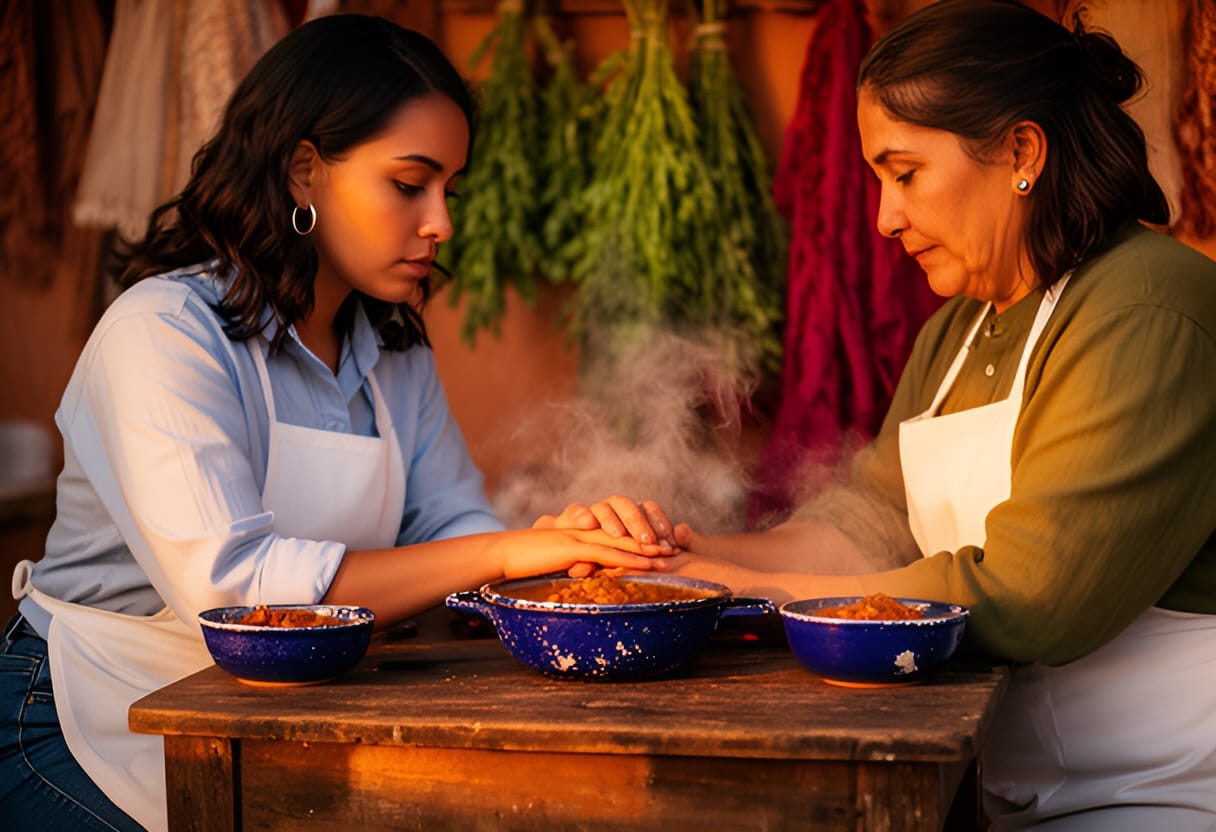
“This,” she said, nodding at the stew, “tastes like care. I can taste it. Your mother’s hands in it. Your grandmother’s heart. And yours—yours is here, too. You didn’t take anything away. You added something. You added you.”
Elena blinked fast, feeling the familiar prickle behind her eyes. She swallowed hard, then squeezed her aunt’s hand.
“I was scared,” she whispered. “That if I changed it, I’d be erasing her. That it wouldn’t feel like hers anymore.”
Tía Luz shook her head, her eyes glistening. “You don’t erase someone by cooking their food. You keep them close by making it your way. Rosa would be proud—not because it’s exactly like hers, but because you tried. Because you thought of others. Because you wanted more people to be able to sit at the table and feel full—not just in their stomachs, but in their chests.”
Elena let out a breath she hadn’t realized she’d been holding. The guilt, the heavy knot in her chest, loosened—not gone, but shifted, lighter. She looked at the stew again, not as a compromise, but as an offering.
“Thank you,” she said, her voice thick. “For telling me that. For… for seeing it.”
Tía Luz smiled, squeezing her hand once more before letting go. “Now eat while it’s hot. And tomorrow? Make it again. Maybe add a splash of that vinegar you were thinking about. Taste it. See what it tells you. And if it needs more love, give it more love. That’s all any of us can do.”
Elena lifted her spoon and took another bite. The stew was warm, deep, honest. It didn’t taste exactly like Rosa’s. But as she chewed, she thought of her grandmother’s voice, not as a command, but as a whisper in her ear: Así se hace. This is how it’s done.
And for the first time since she’d started this journey, Elena believed it.
Chapter 5
Fifty Recipes, One Table
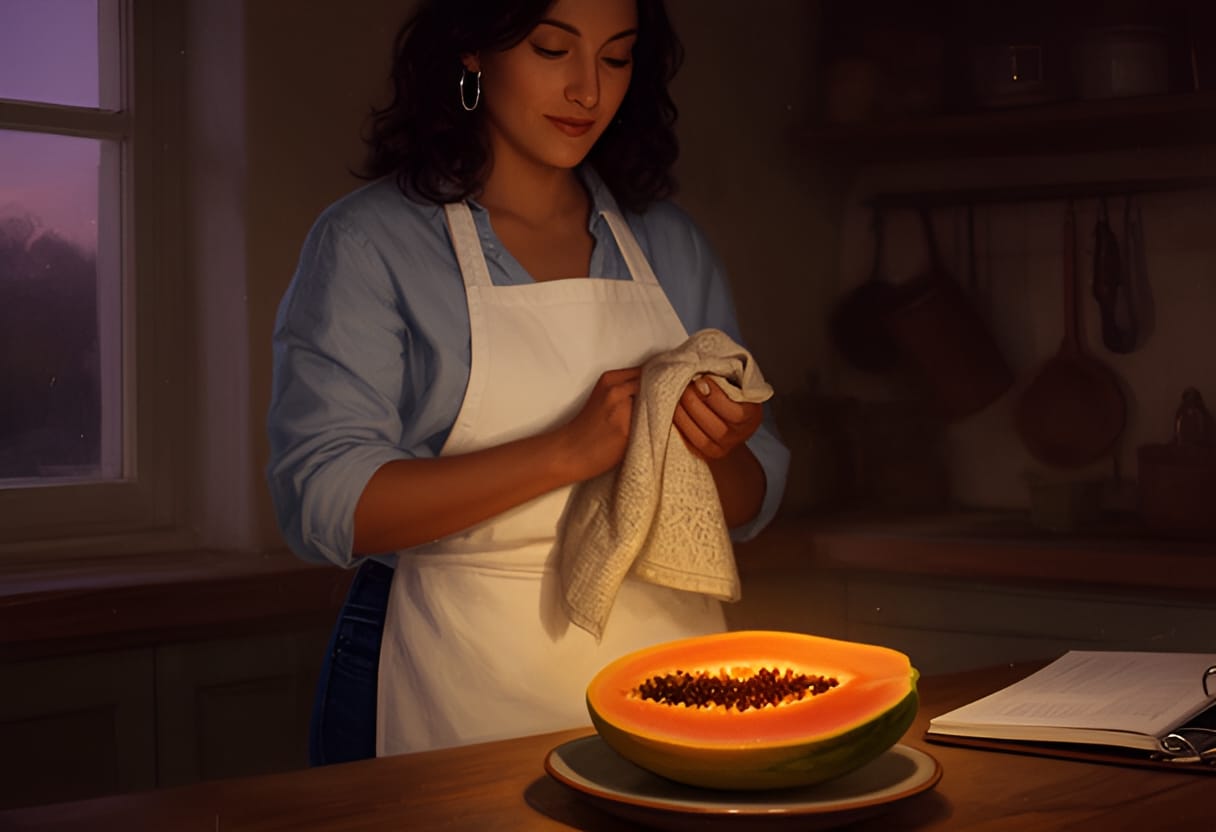
Elena wiped her hands on the dish towel and set the fork down. The papaya half on the plate glowed like sunset, its flesh tender from the oven, a dusting of cinnamon catching the light, a wedge of lime resting beside it, waiting to be squeezed. She had tasted it three times already—once warm from the tray, once cooled, once with a squeeze of lime—and each time the sweetness had unfolded without need for honey or sugar, deep and round, like the fruit remembered how to be sweet on its own.
She leaned back in her chair, the kitchen quiet except for the hum of the refrigerator. The binder lay open on the table, its spine cracked from use, the pages inside worn at the corners from being turned again and again. Fifty recipes. She had counted them twice. Fifty cards, each one a translation—not a erasure—of something Rosa had written in looping cursive, each one tested in this small kitchen with Mateo’s camera clicking nearby, Clara’s careful questions about glycemic load, Daniel’s honest “this needs more spice” or “I could eat this every day.”
She flipped to the first recipe: lentil soup with smoked paprika and a swirl of olive oil at the end. Clara had suggested the paprika, saying it gave the soup depth without needing a ham bone. Daniel had laughed when he saw the garnish—chopped cilantro and a lemon wedge—but admitted it brightened the whole bowl. Elena had written the tip in the margin: Swap the oil for a spoonful of yogurt if you want creaminess without the fat.
Next, the quinoa-stuffed peppers—Mateo’s idea to toast the quinoa first, Clara’s reminder to rinse it well to avoid bitterness. Elena had used yellow peppers for their sweetness, stuffed them with black beans, corn, and a handful of spinach, baked until the edges curled. She had noted: If you’re in a hurry, use pre-cooked quinoa and cover the dish with foil to steam them faster.
She passed the baked fish with herbs—skinless, scored, rubbed with garlic and thyme, lemon slices tucked underneath. The yuca mash, boiled until tender, then whipped with a touch of olive oil and roasted garlic instead of butter. The flan, made with egg whites and a touch of stevia, the caramelized sugar reduced to a thin ribbon that still coated the spoon.
Each page had a tip. Each had been cooked, tasted, adjusted. Each carried Rosa’s voice in the way it began—Heat the oil slowly, let the onions sweat until they’re soft—and ended with something Elena had added: Taste before you salt. Remember Rosa’s 1993 note.
She turned to the last page. The baked papaya. Simple. No flour, no sugar, no oven time longer than twenty minutes. She had chosen it deliberately—a dessert that asked nothing of the cook but to slice, sprinkle, and wait. A dessert that could be made by someone tired, someone short on time, someone who thought healthy eating meant deprivation. She imagined a young mother making it after putting her kids to bed, the lime scent filling the kitchen, the cinnamon warm in the air. She imagined an older man, living alone, slicing the fruit with a knife that had seen better days, enjoying it slowly, remembering his mother’s table.
She closed the binder. The cover was plain cardboard, wrapped in a piece of fabric Rosa had once used as a table runner—faded blue with tiny white flowers. Elena had sewn it herself, stitching unevenly near the corner, her fingers tired that night. She had written the title on the front in black ink: Recetas Saludables: Adapted from the Kitchen of Rosa Méndez.
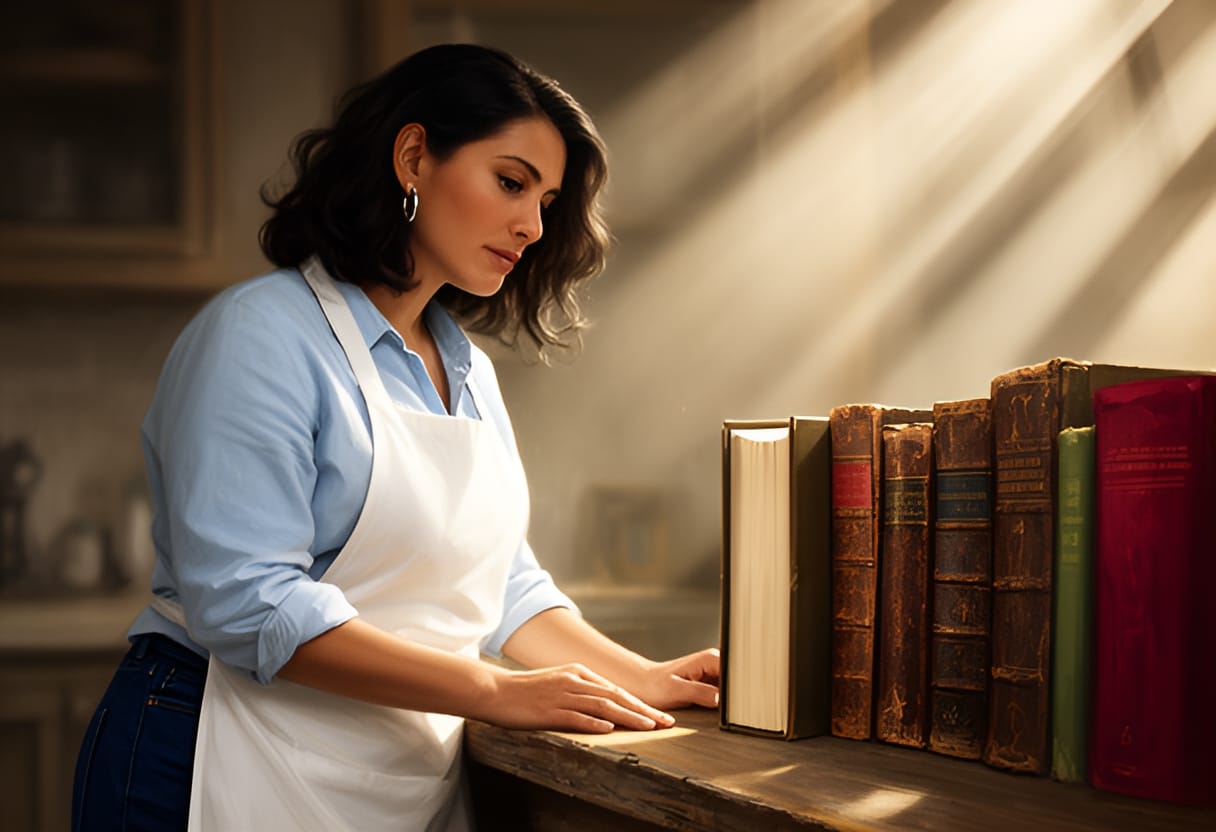
She picked up the binder and walked to the shelf above the sink, where she kept her cookbooks. She slid it in between a well-worn copy of The Joy of Cooking and a Spanish-language guide to traditional Mexican sweets. It fit. It belonged.
She stood there a moment, hands on the shelf, looking at the spines. Some were new, some old. Some had been passed down, some bought on impulse. This one was neither. It was made.
A knock at the door pulled her from her thoughts. She wiped her hands again, smoothed her shirt, and went to open it.
Mateo stood there, holding two mugs. “I brought chamomile,” he said. “Figured you might want to sit down for five minutes.”
She smiled, stepping aside. “Thanks. Come in.”
He followed her to the table, setting the mugs down. Steam curled from his. She wrapped her hands around hers, feeling the warmth seep into her palms.
“It’s done,” she said softly.
He nodded, looking at the binder on the shelf. “Fifty recipes. That’s a lot of meals.”
“It is,” she said. “And none of them are perfect. But they’re honest.”
He took a sip. “They’re yours. And Rosa’s. And now they’re ours, too.”
She looked at him, then at the binder, then out the window where the last light of evening was fading over the rooftops. Somewhere down the hall, Clara was probably checking her blood sugar before bed. Daniel was likely texting a friend about the lentil soup he’d taken home for lunch tomorrow. Tía Luz had called earlier, her voice crackling over the line, to say she’d made the oxtail stew with beef shank and extra carrots, and that it had tasted like Sunday.
Elena took a breath. The kitchen was quiet. The recipe was written. The book was closed.
But the table, she knew, was just getting set.
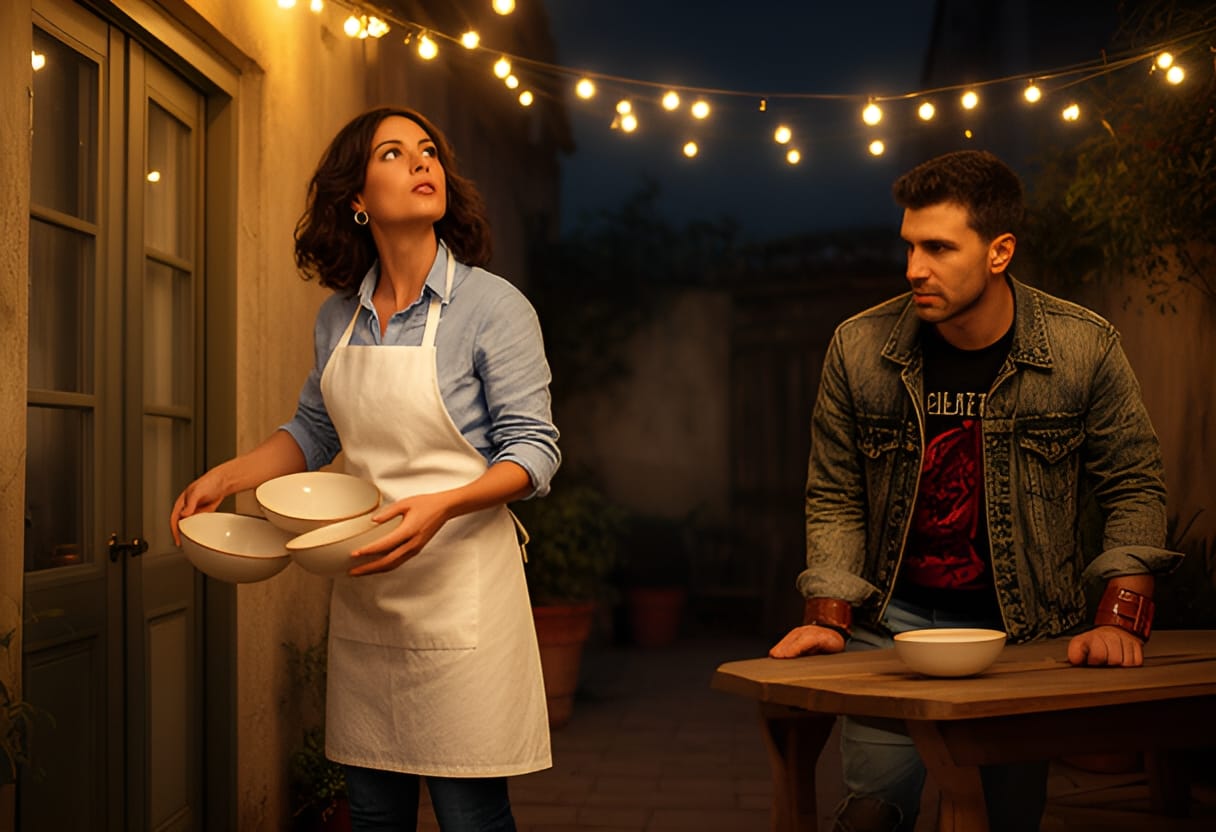
Elena stepped into the courtyard, the binder tucked under her arm, and paused at the threshold. String lights crisscrossed overhead, casting a soft glow over the small table set for six. Clay bowls steamed with black bean soup, their surfaces dotted with cumin and a swirl of crema. Quinoa-stuffed peppers—yellow and red, their edges slightly charred—arranged in a ceramic dish, garnished with chopped parsley. A platter of baked papaya halves, dusted with cinnamon and a squeeze of lime, waited at the center, the fruit glistening faintly from the oven’s last breath.
Mateo followed, carrying a pitcher of hibiscus tea, its deep red catching the light. Clara arrived next, her tote bag slung over one shoulder, and Daniel trailed behind, balancing a basket of warm corn tortillas wrapped in a cloth.
“Smells like home,” Daniel said, inhaling deeply as he set the basket down.
“It’s supposed to,” Elena replied, unfolding her napkin. “Rosa used to say the best meals start with a smell that makes you pause before you even sit.”
Clara pulled out a chair and sighed as she settled. “I’ve been looking forward to this all week. My feet are killing me from standing all day, but this? This is worth it.”
Mateo poured tea into chipped mugs, the steam carrying a tart, floral scent. “To fifty recipes,” he said, raising his cup.
“And to the people who helped make them real,” Elena added, clinking her mug against his.
They ate in companionable silence at first, spoons dipping into soup, forks lifting pepper halves. The black bean soup was rich and smoky, the cumin warm but not overpowering, the beans tender enough to break apart with the slightest pressure. Clara took a second spoonful, then another, her eyes closing briefly.
“This is exactly what I need,” she said, setting her spoon down. “Heartier than I expected. No heaviness, just… substance. I could eat this three times a week and not feel sluggish.”
Daniel speared a piece of pepper, the quinoa filling spilling slightly onto his plate. “I’ve never made stuffed peppers before,” he admitted. “Always thought they’d be too fussy. But this? The quinoa’s nutty, the beans add bite, and the pepper itself is sweet. I could totally do this at school. Microwave the quinoa, mix it with canned beans, throw it in a pepper, bake it while I study.”
Elena smiled. “The recipe’s in the binder. Tip number forty-two: Use low-sodium canned beans if you’re watching salt, and rinse them well. A pinch of smoked paprika in the filling adds depth without extra fat.”
Mateo leaned back, cradling his mug. “I like how none of these dishes scream ‘health food.’ They just taste good. The papaya especially—it’s so simple, but the cinnamon and lime make it feel like a treat.”
Elena reached for a papaya half, the flesh soft beneath her fork. “Rosa used to bake fruit when she didn’t have sugar or flour on hand. Said the oven did the work for her—brought out the sweetness already there. I just added a little spice to wake it up.”
Daniel took a bite of papaya, his eyebrows rising. “Huh. Tastes like dessert, but I don’t feel that… crash afterward. Like I could eat this and still have energy to read.”
Clara laughed. “That’s the point. Healthy eating isn’t about denying yourself—it’s about finding ways to enjoy food that also take care of you. Rosa knew that. She just didn’t have the words for it.”
A comfortable quiet settled over them, punctuated only by the clink of spoons, the occasional sigh of satisfaction, and the distant hum of the city winding down for the night. Elena watched her friends—the way Daniel licked cinnamon from his thumb, how Clara wiped her mouth with the corner of her napkin, how Mateo traced the rim of his mug with his thumb—and felt a quiet certainty settle in her chest.
The binder on the shelf wasn’t an end. It was an invitation.
Later, the plates were nearly empty, the soup ladled into bowls for seconds, the last pepper shared between Daniel and Clara. The hibiscus tea had been refilled twice, the pitcher now half-empty. They lingered at the table, shoulders relaxed, voices low.
“I’m going to make the lentil soup tomorrow,” Daniel said, stretching his arms overhead. “Take it to campus for lunch. See if my roommate steals it.”
“He better not,” Clara warned, smiling. “That soup’s got clout.”
Elena gathered the empty bowls, stacking them near the kitchen door. As she turned, she noticed the binder still on the table where she’d left it after serving. She picked it up, flipped it open to a random page—yuca mash with roasted garlic—and read Elena’s tip in the margin: If you don’t have a potato ricer, a fork works fine. Just mash until smooth, then whip in the oil slowly.
She looked up to find Mateo watching her.
“Still can’t believe you did it,” he said quietly.
She closed the binder gently. “Neither could I, most days. But Rosa’s notes kept me honest. And your camera kept me accountable.”
He nodded. “And Clara kept you grounded. Daniel kept you honest about flavor.”
She smiled. “And Tía Luz reminded me that tradition isn’t a cage. It’s a foundation.”
The courtyard lights flickered overhead, one bulb buzzing softly before steadying. Somewhere in the building, a door clicked shut. A cat yowled in the alley beyond the wall.
Elena slipped the binder back onto the shelf above the sink, where it now rested between The Joy of Cooking and the Mexican sweets guide. She brushed her fingers over the faded blue fabric, the tiny white flowers worn soft in places from use.
When she turned back to the courtyard, her friends were still there, passing the last of the papaya, laughing at something Daniel had said. She leaned against the doorframe, arms crossed, and let the moment wash over her—the warmth of the tea still in her hands, the scent of cumin and lime in the air, the sound of voices that had grown familiar over months of tasting, adjusting, sharing.
No one raised a toast. No one made a speech. They simply ate, and talked, and stayed a little longer than they had to.
And in that quiet, ordinary way, the table was full.