Education
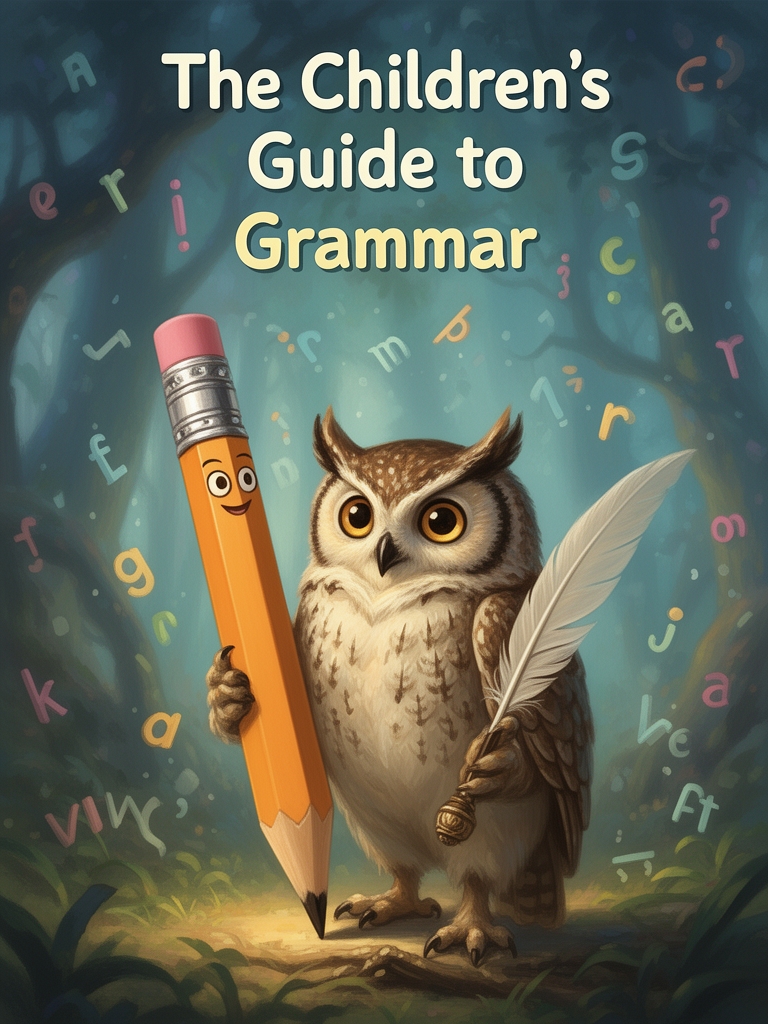
The Children's guide to grammar
by ATIKSH Vats
3 chapters38 min read
Chapter 1
Introduction to Grammar
The Basics of Language
The authors of "The Children's Guide to Grammar" had a clear vision in mind when they set out to create a comprehensive and engaging resource for young learners. They understood that the foundation of effective communication lies in a deep understanding of the basics of language. As they delved into the world of grammar, they were determined to make the subject accessible and enjoyable for their audience. "Grammar is not just a set of rules," they would often say, "it's the key to unlocking the power of language and expressing oneself with clarity and precision." With this philosophy in mind, they began to craft a narrative that would introduce children to the fundamental principles of language, setting the stage for a lifelong journey of linguistic discovery and exploration. As they wrote, they imagined their young readers embarking on a thrilling adventure, one that would take them through the intricacies of syntax, the nuances of vocabulary, and the rhythms of sentence structure. "Imagine being able to express your thoughts and ideas with confidence and creativity," they would encourage their readers, "that's what grammar can do for you." And so, with enthusiasm and expertise, they guided their audience through the basics of language, using simple, clear language to explain complex concepts, and making the subject of grammar come alive with engaging examples and anecdotes. "Language is a powerful tool," they would explain, "and grammar is the foundation upon which it is built. By understanding the basics of language, you'll be able to communicate effectively, think critically, and express yourself with precision and flair." As the authors worked on their book, they were mindful of the fact that their readers would come from diverse backgrounds and have varying levels of proficiency in language. They were determined to create a resource that would be inclusive, accessible, and fun, one that would inspire a love of language and a passion for learning that would last a lifetime. With this goal in mind, they carefully crafted each section of their book, using a range of techniques to engage and motivate their audience. From the basics of sentence structure to the nuances of vocabulary, they covered it all, using natural dialogue and real-life examples to make the subject of grammar come alive. As they worked, they could imagine their young readers poring over the pages of their book, absorbing the information, and applying it to their everyday lives. "That's the magic of grammar," they would say, "it's not just a subject in school, it's a tool for life, a way of communicating, connecting, and expressing oneself with clarity, precision, and style."
The Role of Grammar in Communication
As the authors of "The Children's Guide to Grammar" continued to work on their book, they emphasized the crucial role that grammar plays in communication. "Grammar is the backbone of language," they would explain to their readers, "it's what allows us to convey our thoughts, ideas, and feelings in a clear and effective manner." They used simple, everyday examples to illustrate this point, such as the difference between "I went to the store" and "Me went to the store." "You see, grammar is not just about following rules," they would say, "it's about using language to communicate effectively and get your point across." They also highlighted the importance of grammar in different contexts, such as writing a letter to a friend, giving a presentation at school, or even just chatting with family members. "In each of these situations, grammar plays a vital role in helping you express yourself clearly and confidently," they would emphasize. The authors were keen to show their readers that grammar is not just a dry, abstract subject, but a living, breathing part of everyday communication. They wanted their readers to see that grammar is all around us, in the words we speak, the texts we send, and the stories we tell. "Grammar is what makes language work," they would say, "it's what allows us to connect with others, share our ideas, and build relationships." By emphasizing the practical applications of grammar, the authors hoped to inspire their readers to develop a deeper appreciation for the subject and to see its relevance to their own lives. As they wrote, they could imagine their young readers beginning to see grammar in a new light, as a powerful tool for communication and self-expression, rather than just a set of rules to be memorized. "That's the power of grammar," they would say, "it's not just a subject in school, it's a key to unlocking the full potential of language and connecting with the world around us." With this message in mind, the authors continued to craft their book, using engaging narratives, real-life examples, and natural dialogue to bring the subject of grammar to life and make it accessible to their young readers. As they worked, they could envision their book becoming a trusted companion for children on their journey to mastering the basics of language and developing a lifelong love of learning. "Our goal is to make grammar fun, engaging, and relevant," they would say, "and to show our readers that it's a subject that can be enjoyed and appreciated, not just endured." By achieving this goal, the authors hoped to empower their readers with the skills and confidence they needed to communicate effectively, think critically, and express themselves with precision and flair. And so, with enthusiasm and expertise, they guided their audience through the world of grammar, using a range of techniques to engage and motivate their readers, and inspiring a love of language that would last a lifetime. The authors' passion for grammar was evident on every page, and their commitment to making the subject accessible and enjoyable was unwavering. As they wrote, they could imagine their readers growing and developing as learners, becoming more confident and proficient in their use of language, and unlocking the full potential of grammar to communicate, connect, and express themselves with clarity, precision, and style. With each passing page, the authors' vision for their book became clearer, and their readers began to see grammar in a new and exciting way, as a powerful tool for self-expression, communication, and connection. The authors' message was simple yet profound: grammar is the key to unlocking the power of language, and with it, anything is possible. As they concluded their introduction to the role of grammar in communication, the authors could envision their readers embarking on a thrilling adventure, one that would take them through the intricacies of syntax, the nuances of vocabulary, and the rhythms of sentence structure, and ultimately, to a deeper understanding and appreciation of the English language. The journey was just beginning, and the authors were excited to be a part of it, guiding their readers every step of the way. "The world of grammar is a fascinating place," they would say, "and we're thrilled to be your guides on this journey of discovery and exploration." With their book as a trusted companion, the authors' young readers were ready to embark on a lifelong journey of learning, growth, and self-expression, one that would be filled with excitement, challenge, and reward. And as they turned the pages, they would begin to realize that grammar is not just a subject in school, but a powerful tool for communication, connection, and self-expression, one that would stay with them for the rest of their lives. The authors' dream was becoming a reality, and their book was poised to make a lasting impact on the lives of their readers, inspiring a love of language and a passion for learning that would last a lifetime. As the authors looked to the future, they knew that their book would be a valuable resource for generations to come, a trusted guide on the journey to mastering the basics of language and unlocking the full potential of grammar. And with that thought, they continued to write, their passion for grammar and language shining through on every page, inspiring their readers to embark on a lifelong journey of discovery, exploration, and self-expression. The story of "The Children's Guide to Grammar" was one of passion, dedication, and commitment to making the subject of grammar accessible and enjoyable for all, and it was a story that would continue to unfold, page by page, as the authors guided their readers on a thrilling adventure through the world of language and grammar. The authors' message was clear: grammar is the key to unlocking the power of language, and with it, anything is possible. And as their readers turned the pages, they would begin to realize that this message was not just a slogan, but a reality, one that would stay with them for the rest of their lives, inspiring them to communicate, connect, and express themselves with clarity, precision, and style. The journey had just begun, and the authors were excited to be a part of it, guiding their readers every step of the way, and inspiring a love of language and a passion for learning that would last a lifetime.
A Child's Journey with Grammar
As the authors of "The Children's Guide to Grammar" delved deeper into their book, they began to envision the journey that their young readers would embark upon. They imagined a child, curious and eager to learn, opening the book and discovering the wonders of grammar for the first time. The authors pictured this child, let's call her Emily, as she began to explore the world of language, learning about the different parts of speech, such as nouns, verbs, and adjectives. They saw Emily's eyes light up as she realized that grammar was not just a set of rules, but a tool for self-expression and communication. The authors heard Emily's excited voice as she exclaimed, "I never knew that grammar could be so much fun!" as she learned about the different types of sentences, such as declarative, interrogative, and exclamatory. They watched as Emily practiced using grammar in her everyday life, writing stories, and even creating her own poems. The authors smiled as they imagined Emily's face lighting up with pride as she showed her parents and friends the amazing things she had created using her newfound knowledge of grammar. As Emily continued on her journey, the authors saw her becoming more confident in her ability to express herself, using grammar to convey her thoughts and ideas in a clear and effective manner. They envisioned Emily participating in class, engaging in discussions, and even giving presentations, all with the help of the grammar skills she had learned from their book. The authors were thrilled to think that their book was making a positive impact on Emily's life, helping her to develop a love of language and a passion for learning that would stay with her forever. As Emily's journey with grammar continued, the authors saw her exploring more complex concepts, such as clauses, phrases, and sentence structure. They watched as Emily learned to analyze sentences, identifying the different parts of speech and understanding how they worked together to convey meaning. The authors were impressed by Emily's growing understanding of grammar and her ability to apply it in a variety of contexts. They saw Emily using grammar to improve her writing, making her sentences more concise, clear, and engaging. They heard Emily's teacher praising her for her excellent writing skills, and they saw Emily beaming with pride as she received accolades for her hard work. The authors knew that Emily's journey with grammar was just beginning, and they were excited to be a part of it. They envisioned Emily continuing to grow and develop as a learner, using grammar to unlock the full potential of language and to express herself with clarity, precision, and style. As the authors looked to the future, they knew that their book would be a valuable resource for Emily and countless other children, helping them to develop a deep understanding and appreciation of grammar, and inspiring a love of language that would last a lifetime. The authors' dream was becoming a reality, and they were thrilled to see the positive impact that their book was having on the lives of their readers. With each passing day, the authors saw Emily and other children like her, growing and developing as learners, becoming more confident and proficient in their use of language, and unlocking the full potential of grammar to communicate, connect, and express themselves with clarity, precision, and style. The journey was ongoing, and the authors were proud to be a part of it, guiding their readers every step of the way, and inspiring a love of language and a passion for learning that would last a lifetime. As the authors reflected on Emily's journey, they knew that their book had made a difference, and they were eager to see the impact it would have on future generations of learners. They envisioned children all over the world, using their book to learn about grammar, and to develop a love of language that would stay with them forever. The authors' message was clear: grammar is the key to unlocking the power of language, and with it, anything is possible. As they concluded their book, the authors felt a sense of pride and accomplishment, knowing that they had created a valuable resource that would help children like Emily to develop a deep understanding and appreciation of grammar. They were confident that their book would make a lasting impact on the lives of their readers, inspiring a love of language and a passion for learning that would stay with them forever. And as they looked to the future, they knew that their book would be a trusted companion for children on their journey to mastering the basics of language, and unlocking the full potential of grammar. The authors' legacy would live on, inspiring generations of learners to come, and helping them to develop a love of language that would last a lifetime. With their book complete, the authors had achieved their goal of making grammar accessible and enjoyable for children, and they had created a valuable resource that would be treasured by learners for years to come. The story of "The Children's Guide to Grammar" was one of passion, dedication, and commitment to making the subject of grammar accessible and enjoyable for all, and it was a story that would continue to unfold, page by page, as the authors guided their readers on a thrilling adventure through the world of language and grammar. The authors' message would live on, inspiring children to develop a love of language and a passion for learning that would stay with them forever, and reminding them that grammar is the key to unlocking the power of language, and with it, anything is possible.
Setting the Stage for Learning
The authors of "The Children's Guide to Grammar" had created a comprehensive resource that would guide children like Emily on their journey to mastering the basics of language. As Emily delved deeper into the world of grammar, she began to realize the importance of language in her everyday life. She saw how grammar helped her to express herself clearly and confidently, and how it enabled her to communicate effectively with others. The authors had envisioned Emily's journey, and they were thrilled to see her growing and developing as a learner. They had created a book that would be a valuable resource for children, helping them to develop a deep understanding and appreciation of grammar, and inspiring a love of language that would last a lifetime. As Emily continued to learn and grow, she began to apply her knowledge of grammar in a variety of contexts. She used grammar to improve her writing, making her sentences more concise, clear, and engaging. She used grammar to enhance her communication skills, expressing herself with clarity, precision, and style. The authors had achieved their goal of making grammar accessible and enjoyable for children, and they had created a book that would be treasured by learners for years to come. Emily's journey with grammar was just beginning, and the authors were excited to see the impact that their book would have on her life. They knew that their book would be a trusted companion for Emily, guiding her every step of the way, and inspiring a love of language that would stay with her forever. The authors' message was clear: grammar is the key to unlocking the power of language, and with it, anything is possible. As Emily looked to the future, she knew that she would continue to grow and develop as a learner, using grammar to unlock the full potential of language and to express herself with clarity, precision, and style. The authors' legacy would live on, inspiring generations of learners to come, and helping them to develop a love of language that would last a lifetime. With their book complete, the authors had created a valuable resource that would help children like Emily to develop a deep understanding and appreciation of grammar, and to inspire a love of language that would stay with them forever. The story of "The Children's Guide to Grammar" was one of passion, dedication, and commitment to making the subject of grammar accessible and enjoyable for all, and it was a story that would continue to unfold, page by page, as the authors guided their readers on a thrilling adventure through the world of language and grammar. Years later, Emily would look back on her journey with grammar, and she would remember the authors' book as a trusted companion that had guided her every step of the way. She would recall the excitement and wonder that she had felt as she discovered the wonders of grammar, and she would be grateful for the authors' dedication to making the subject of grammar accessible and enjoyable for all. The authors' book had made a lasting impact on Emily's life, inspiring a love of language that would stay with her forever, and reminding her that grammar is the key to unlocking the power of language, and with it, anything is possible. As Emily passed on her knowledge of grammar to her own children and grandchildren, she would tell them the story of "The Children's Guide to Grammar", and how it had helped her to develop a deep understanding and appreciation of language. She would share with them the authors' message, and she would inspire them to develop a love of language that would last a lifetime. The authors' legacy would live on, inspiring generations of learners to come, and helping them to develop a love of language that would stay with them forever. The story of "The Children's Guide to Grammar" would continue to unfold, page by page, as the authors guided their readers on a thrilling adventure through the world of language and grammar, and as they inspired a love of language that would stay with them forever. And so, the journey of "The Children's Guide to Grammar" came full circle, as Emily and countless other children like her, grew and developed as learners, using grammar to unlock the full potential of language, and to express themselves with clarity, precision, and style. The authors' dream had become a reality, and their book had made a lasting impact on the lives of their readers, inspiring a love of language that would stay with them forever. As the years went by, the authors' book would remain a trusted companion for learners of all ages, guiding them on their journey to mastering the basics of language, and inspiring a love of language that would last a lifetime. The story of "The Children's Guide to Grammar" would be passed down from generation to generation, a testament to the power of language and the importance of grammar in unlocking its full potential. And as the authors looked back on their journey, they knew that they had created something truly special, a book that would inspire a love of language in children and adults alike, and remind them that grammar is the key to unlocking the power of language, and with it, anything is possible. The authors' legacy would live on, a reminder of the importance of language and grammar in our lives, and the impact that their book had on the lives of their readers. And as the story of "The Children's Guide to Grammar" came to a close, the authors knew that their book would continue to inspire and educate generations of learners to come, a lasting tribute to the power of language and the importance of grammar in our lives.
Chapter 2
Grammar in Action
Using Grammar to Tell Stories
As Emily delved deeper into the world of grammar, she began to realize the immense power it held in storytelling. She remembered the countless hours she spent listening to her grandmother's tales, which were filled with vivid descriptions, exciting plots, and memorable characters. Her grandmother's stories were like magic, transporting Emily to far-off lands and fantastical worlds. And now, Emily was beginning to understand the secret behind her grandmother's storytelling ability - grammar. "Grammar is the tool that helps us build stories," her teacher, Mrs. Johnson, explained. "It's what allows us to create vivid images, convey emotions, and connect with our audience." Emily's eyes widened as she listened to Mrs. Johnson's words. She had never thought about grammar in that way before. She had always assumed that storytelling was just about imagination and creativity, but now she realized that grammar played a vital role in bringing those stories to life. "Let me show you an example," Mrs. Johnson said, writing a sentence on the board. "The sun was setting over the ocean, casting a warm golden light over the waves." Emily watched as Mrs. Johnson broke down the sentence, explaining how the verb "was setting" helped to create a sense of movement and action, while the adjective "warm" added a touch of sensory detail. "You see, Emily, grammar is what helps us paint pictures with words," Mrs. Johnson said. "It's what allows us to create a sense of atmosphere and mood, and to draw our readers into the story." Emily nodded, feeling a sense of excitement and wonder. She was beginning to see grammar in a whole new light, as a powerful tool that could help her unlock the secrets of storytelling. As she left the classroom that day, Emily felt inspired to try her hand at writing her own stories. She knew that it wouldn't be easy, but she was eager to learn and to practice. And with Mrs. Johnson's guidance, she was confident that she could master the art of using grammar to tell stories that would captivate and inspire her readers. "I'm going to write a story about a brave knight who slays a dragon," Emily exclaimed to her friend, Sarah, as they walked home from school. Sarah's eyes widened with excitement. "That sounds amazing!" she said. "Can you read it to me when you're finished?" Emily grinned, feeling a sense of pride and anticipation. She knew that she still had a lot to learn, but she was eager to get started. And with grammar as her guide, she was confident that she could create stories that would transport her readers to magical worlds and unforgettable adventures.
Grammar in Conversation
As Emily walked home from school with her friend Sarah, she couldn't help but think about the conversation they had just had about her story idea. "I'm going to write a story about a brave knight who slays a dragon," she had exclaimed, and Sarah's eyes had widened with excitement. "That sounds amazing!" Sarah had said. "Can you read it to me when you're finished?" Emily had grinned, feeling a sense of pride and anticipation. She knew that she still had a lot to learn, but she was eager to get started. And with grammar as her guide, she was confident that she could create stories that would transport her readers to magical worlds and unforgettable adventures. As they walked, Emily's grandmother, who was waiting for them at home, asked about their day. Emily eagerly shared her story idea with her grandmother, who listened with a warm smile. "That sounds like a wonderful story, Emily," her grandmother said. "Remember, grammar is not just about writing, it's also about conversation. When we speak, we use grammar to convey our thoughts and ideas, just like when we write." Emily thought about this for a moment. She had never really considered how grammar worked in conversation before. "So, when we talk, we're using grammar too?" she asked her grandmother. Her grandmother nodded. "Yes, that's right. Grammar is the foundation of language, and it's used in every aspect of communication, whether it's writing or speaking." Emily's eyes widened as she realized the importance of grammar in conversation. She thought about all the times she had talked with her friends, family, and even her teacher, Mrs. Johnson. She had never really considered how grammar was working behind the scenes to help her convey her thoughts and ideas. "I see what you mean," Emily said, feeling a sense of excitement and wonder. "Grammar is like a tool that helps us communicate effectively, whether we're writing or speaking." Her grandmother smiled, pleased that Emily was beginning to understand the importance of grammar in conversation. "That's exactly right, Emily," she said. "And the more you practice using grammar in your writing and speaking, the more confident and effective you'll become in communicating your thoughts and ideas." Emily nodded, feeling a sense of determination. She was eager to continue learning about grammar and how it could help her become a better communicator. As they sat down to have a snack, Emily's grandmother asked her to tell her more about her story idea. Emily launched into a detailed description of her brave knight and the dragon he would slay. Her grandmother listened attentively, asking questions and making comments that showed she was genuinely interested in Emily's story. As they talked, Emily realized that she was using grammar to convey her thoughts and ideas, just like her grandmother had said. She was using verbs to describe the actions of her characters, adjectives to describe their personalities, and adverbs to describe the way they moved and spoke. And as she spoke, she felt a sense of confidence and fluency that she had never felt before. She knew that she still had a lot to learn, but she was excited to continue exploring the world of grammar and how it could help her become a better communicator. As the afternoon wore on, Emily's grandmother pulled out an old book from the shelf. "This is one of my favorite books from when I was a child," she said. "It's a story about a brave knight who goes on a quest to find a legendary treasure." Emily's eyes widened as she took the book from her grandmother. She loved stories about brave knights and legendary treasures. As she began to read, she noticed how the author used grammar to create vivid images and convey emotions. She saw how the author used descriptive language to paint pictures in her mind, and how the author used dialogue to bring the characters to life. And as she read, Emily felt a sense of wonder and excitement. She knew that she wanted to be able to write stories like this one day, stories that would transport her readers to magical worlds and unforgettable adventures. With grammar as her guide, she was confident that she could achieve her dream.
The Power of Grammar in Writing
As Emily delved deeper into the world of grammar, she began to realize the immense power it held in writing. She saw how the authors of her favorite books used grammar to create vivid images, convey emotions, and bring characters to life. With every turn of the page, Emily felt herself being transported to magical worlds and unforgettable adventures. She knew that she wanted to be able to write stories like these one day, stories that would captivate and inspire her readers. And with grammar as her guide, she was confident that she could achieve her dream. Emily's grandmother, noticing her fascination with the book, smiled and said, "You know, Emily, grammar is not just about following rules and conventions. It's about using language to create a specific effect, to convey a particular mood or atmosphere." Emily looked up at her grandmother, intrigued. "What do you mean?" she asked. Her grandmother leaned forward, her eyes sparkling with enthusiasm. "Well, think about it, Emily. When you're writing a story, you want to create a certain atmosphere, don't you? You want to make your readers feel like they're right there with your characters, experiencing everything they're experiencing." Emily nodded, eager to learn more. "That's where grammar comes in," her grandmother continued. "By using different grammatical structures, you can create a sense of tension or excitement, of calmness or serenity. You can use grammar to build suspense, to create surprises, or to resolve conflicts." Emily's eyes widened as she realized the truth of her grandmother's words. She thought about all the times she had read a story and felt like she was right there with the characters, experiencing everything they were experiencing. She thought about how the authors had used grammar to create that sense of immersion, that sense of being part of the story. And she knew that she wanted to be able to do the same thing, to use grammar to create stories that would transport her readers to magical worlds and unforgettable adventures. With newfound determination, Emily set out to practice her writing, using grammar to create vivid images, convey emotions, and bring her characters to life. She wrote stories about brave knights and legendary treasures, about magical kingdoms and daring quests. And with every story she wrote, she felt herself becoming more confident, more fluent, and more effective in her use of grammar. She knew that she still had a lot to learn, but she was excited to continue exploring the world of grammar, to see where it would take her and what wonders it would help her create. As the days turned into weeks, and the weeks turned into months, Emily's love of language only grew stronger. She devoured books of all kinds, from fantasy novels to historical biographies, and she practiced her writing every day. And through it all, she never forgot the lessons she had learned from her grandmother, lessons about the power of grammar in writing, and the magic it could create. With grammar as her guide, Emily knew that she could achieve anything she set her mind to, that she could create stories that would inspire and captivate her readers, and transport them to magical worlds and unforgettable adventures. Emily's grandmother smiled as she watched her granddaughter's progress, proud of the young girl's dedication to learning and her passion for language. "You're doing wonderfully, Emily," she said. "Remember, the key to mastering grammar is to practice, practice, practice. The more you write, the more you'll learn, and the better you'll become." Emily nodded, taking her grandmother's words to heart. She knew that she had a long way to go, but she was excited for the journey, and she was grateful to have her grandmother by her side to guide her every step of the way. As Emily continued to write and learn, she began to notice the way grammar was used in different types of writing. She saw how journalists used grammar to convey information and tell stories, how poets used grammar to create rhythm and rhyme, and how novelists used grammar to build complex characters and plotlines. And she realized that grammar was not just a tool for writing, but a tool for communication, a way to express herself and connect with others. With this newfound understanding, Emily's love of language grew even stronger, and she knew that she would always be grateful for the lessons she had learned from her grandmother, lessons that had taught her the power of grammar in writing, and the magic it could create.
Overcoming Grammar Challenges
As Emily continued to explore the world of grammar, she encountered various challenges that tested her understanding and application of the subject. There were times when she struggled to choose the correct verb tense, or when she found it difficult to use punctuation marks effectively. But with each obstacle, Emily persevered, using the lessons she had learned from her grandmother and the examples she had seen in her favorite books to guide her. She practiced writing every day, determined to master the intricacies of grammar and unlock the full potential of language. And as she wrote, Emily began to notice the way grammar could be used to convey subtle shades of meaning, to create complex characters and plotlines, and to build suspense and tension. She saw how a single sentence could be transformed by the use of a different verb or adjective, and how a well-placed comma or semicolon could change the entire tone of a paragraph. With this newfound understanding, Emily's writing became more nuanced and sophisticated, and she found herself able to express her thoughts and ideas with greater clarity and precision. Her grandmother, who had been watching her progress with pride, smiled as she read Emily's latest stories. "You're doing wonderfully, Emily," she said. "Remember, the key to mastering grammar is to keep practicing, and to never be afraid to make mistakes. It's through our mistakes that we learn and grow, and it's through our perseverance that we achieve our goals." Emily nodded, taking her grandmother's words to heart. She knew that she still had a lot to learn, but she was excited for the journey, and she was grateful to have her grandmother by her side to guide her every step of the way. As the months passed, Emily's love of language only grew stronger, and she found herself using grammar to create stories that were more vivid, more engaging, and more effective. She wrote about brave knights and legendary treasures, about magical kingdoms and daring quests, and she used grammar to bring her characters to life, to create suspense and tension, and to convey subtle shades of meaning. And with each story she wrote, Emily felt herself becoming more confident, more fluent, and more effective in her use of grammar. She knew that she had finally overcome the challenges of grammar, and that she was well on her way to becoming a skilled and accomplished writer. Emily's grandmother smiled as she watched her granddaughter's progress, proud of the young girl's dedication to learning and her passion for language. "You've come a long way, Emily," she said. "Remember, the power of grammar is not just in the rules and conventions, but in the way it can be used to create, to express, and to connect with others. Never forget that, and you'll always be a skilled and effective writer." Emily nodded, taking her grandmother's words to heart. She knew that she would always be grateful for the lessons she had learned, and she was excited to see where her love of language would take her in the years to come. With grammar as her guide, Emily was ready to take on the world, one story at a time. As she sat at her desk, pen in hand, Emily felt a sense of excitement and anticipation. She knew that she had the tools she needed to create stories that would captivate and inspire her readers, and she was eager to see where her imagination would take her. With a smile on her face and a sense of confidence in her heart, Emily began to write, using grammar to bring her characters to life and to create a world of wonder and magic. And as she wrote, Emily knew that she would always be grateful for the journey she had been on, a journey that had taught her the power of grammar and the magic of language.
Chapter 3
Mastering Grammar
Practice and Reinforcement
As Emily delved deeper into the world of grammar, she began to realize the importance of practice and reinforcement in mastering the fundamentals of language. Her grandmother, a wise and experienced teacher, emphasized the need for consistent practice in order to develop a strong foundation in grammar. "The more you practice, the more confident you will become in your ability to express yourself effectively," she would often say. Emily took her grandmother's words to heart and made a conscious effort to practice her grammar skills every day. She would spend hours writing stories, composing poems, and engaging in conversations with her family and friends, all in an effort to reinforce her understanding of grammar.
One day, while working on a writing assignment, Emily's grandmother sat down beside her and asked, "How do you think grammar helps us to convey our thoughts and ideas clearly?" Emily thought for a moment before responding, "I think grammar helps us to organize our thoughts and express ourselves in a way that is easy for others to understand." Her grandmother smiled and said, "That's exactly right, Emily. Grammar is the backbone of language, and it provides us with the tools we need to communicate effectively." Emily's grandmother then went on to explain how grammar can be used to create vivid images, convey emotions, and bring characters to life. As Emily listened intently, she began to realize the full potential of grammar and its importance in storytelling.
As the days turned into weeks, Emily found herself becoming more confident in her ability to use grammar effectively. She was able to express herself more clearly and convey her thoughts and ideas with greater precision. Her writing improved dramatically, and she found herself able to create complex characters and plotlines with ease. Emily's love of language continued to grow, and she began to see the world in a new light. She realized that grammar was not just a set of rules to be followed, but a powerful tool for self-expression and communication. With each passing day, Emily became more determined to master the fundamentals of grammar, and she spent hours practicing and reinforcing her skills.
Emily's hard work and dedication paid off, and she soon found herself able to use grammar with ease and confidence. She was able to convey subtle shades of meaning and create complex characters and plotlines with precision. Her writing was filled with vivid images and emotions, and she was able to bring her characters to life with ease. As Emily looked back on her journey, she realized that the key to unlocking the power of language was grammar. She had learned that grammar was not just a set of rules to be followed, but a powerful tool for self-expression and communication. With grammar as her guide, Emily was able to convey her thoughts and ideas clearly and effectively, and she was able to create stories that were filled with suspense, tension, and emotion.
As Emily continued to practice and reinforce her grammar skills, she began to realize the full potential of language. She was able to convey a particular mood or atmosphere with ease, and she was able to create a specific effect with her writing. Emily's grandmother had taught her that grammar was essential for storytelling, and she had learned that it was the foundation upon which language was built. With each passing day, Emily became more confident in her ability to use grammar effectively, and she was able to express herself with greater precision and clarity. She had learned that mistakes were opportunities for learning and growth, and she was not afraid to take risks and try new things. As Emily looked to the future, she knew that she would continue to use grammar as her guide, and she was excited to see where her love of language would take her. Emily's grandmother smiled as she watched her granddaughter grow and develop as a writer, knowing that the lessons she had taught her would stay with her for a lifetime. "Remember, Emily," she said, "grammar is a tool, and like any tool, it must be used with care and precision. But with practice and dedication, you can master it, and unlock the full potential of language." Emily nodded, taking her grandmother's words to heart, and continued to write, her love of language and grammar guiding her every step of the way.
Using Resources to Support Learning
As Emily continued to develop her grammar skills, she began to explore the various resources available to support her learning. Her grandmother, a seasoned educator, introduced her to a wide range of materials, including grammar workbooks, online tutorials, and language learning apps. Emily was fascinated by the diverse array of tools at her disposal and eagerly dove into each one, determined to reinforce her understanding of grammar. "These resources will help you to practice and reinforce your grammar skills, Emily," her grandmother explained. "Remember, the key to mastering grammar is consistent practice, and these tools will provide you with the opportunity to do just that."
Emily spent hours poring over the grammar workbooks, completing exercises and activities designed to help her develop a deeper understanding of language. She found the online tutorials to be particularly helpful, as they provided her with the opportunity to learn from experienced instructors and receive feedback on her progress. The language learning apps, with their interactive games and quizzes, made learning grammar a fun and engaging experience. As Emily worked her way through each resource, she began to notice a significant improvement in her ability to use grammar effectively. Her writing became more concise and clear, and she found herself able to express her thoughts and ideas with greater precision.
Emily's grandmother was delighted to see her granddaughter making such rapid progress and encouraged her to continue using the resources to support her learning. "The more you practice, the more confident you will become, Emily," she said. "And don't be afraid to try new things and take risks – that's all part of the learning process." Emily took her grandmother's words to heart and continued to explore the various resources available to her. She discovered that each one had its own unique strengths and weaknesses and learned to use them in a way that complemented her individual learning style.
As Emily delved deeper into the world of grammar, she began to realize the importance of using a variety of resources to support her learning. She learned that no single resource was sufficient on its own and that a combination of different tools and materials was necessary to achieve true mastery. With her grandmother's guidance, Emily developed a comprehensive approach to learning grammar, one that incorporated a range of resources and activities. She found that by using a combination of workbooks, online tutorials, and language learning apps, she was able to reinforce her understanding of grammar and develop a strong foundation in language.
Emily's love of language continued to grow, and she began to see the world in a new light. She realized that grammar was not just a set of rules to be followed, but a powerful tool for self-expression and communication. With each passing day, Emily became more determined to master the fundamentals of grammar, and she spent hours practicing and reinforcing her skills. Her hard work and dedication paid off, and she soon found herself able to use grammar with ease and confidence. As Emily looked to the future, she knew that she would continue to use the resources available to her to support her learning, and she was excited to see where her love of language would take her. With her grandmother's guidance and support, Emily was well on her way to becoming a skilled writer and communicator, and she knew that the lessons she had learned would stay with her for a lifetime.
As the days turned into weeks, Emily's writing continued to improve, and she found herself able to express her thoughts and ideas with greater clarity and precision. She began to experiment with different writing styles and techniques, using grammar to create vivid images and convey emotions. Emily's grandmother was impressed by her granddaughter's progress and encouraged her to keep writing. "You have a gift for language, Emily," she said. "Don't be afraid to use it to tell your stories and share your ideas with the world." Emily took her grandmother's words to heart and continued to write, using grammar as her guide and inspiration.
With each new writing project, Emily found herself becoming more confident in her ability to use grammar effectively. She was able to convey subtle shades of meaning and create complex characters and plotlines with precision. Her writing was filled with vivid images and emotions, and she was able to bring her characters to life with ease. As Emily looked back on her journey, she realized that the key to unlocking the power of language was grammar. She had learned that grammar was not just a set of rules to be followed, but a powerful tool for self-expression and communication. With grammar as her guide, Emily was able to convey her thoughts and ideas clearly and effectively, and she was able to create stories that were filled with suspense, tension, and emotion.
Emily's grandmother smiled as she watched her granddaughter grow and develop as a writer. She knew that the lessons she had taught Emily would stay with her for a lifetime, and she was proud of the progress her granddaughter had made. "Remember, Emily," she said, "grammar is a tool, and like any tool, it must be used with care and precision. But with practice and dedication, you can master it, and unlock the full potential of language." Emily nodded, taking her grandmother's words to heart, and continued to write, her love of language and grammar guiding her every step of the way. As she wrote, Emily knew that she would always be grateful for the lessons she had learned from her grandmother, and she was excited to see where her love of language would take her in the future.
The Importance of Feedback and Encouragement
As Emily continued to develop her writing skills, she began to realize the importance of feedback and encouragement. Her grandmother, who had been guiding her throughout her journey, provided her with constructive feedback on her writing, pointing out areas where she could improve and offering suggestions for how to do so. Emily found this feedback to be incredibly valuable, as it helped her to identify her strengths and weaknesses and to develop a plan for improving her writing. "Your writing is coming along nicely, Emily," her grandmother said, "but remember that there is always room for improvement. Don't be afraid to take risks and try new things – that's all part of the learning process." Emily took her grandmother's words to heart and continued to write, using the feedback she received to guide her and to help her to grow as a writer.
Emily's grandmother also provided her with encouragement, praising her for her efforts and celebrating her successes. This encouragement was essential, as it helped Emily to stay motivated and to continue working towards her goals. "You're doing a great job, Emily," her grandmother said. "Keep up the good work and don't give up – you have a lot of potential as a writer." Emily beamed with pride as she heard her grandmother's words, feeling a sense of accomplishment and satisfaction. She knew that she still had a lot to learn, but with her grandmother's guidance and support, she felt confident that she could overcome any challenges that came her way.
As Emily continued to write, she began to receive feedback from others as well. Her friends and family members would read her stories and offer their thoughts and suggestions, providing her with a fresh perspective and new ideas to consider. Emily found this feedback to be incredibly helpful, as it helped her to see her writing from different angles and to identify areas where she could improve. She learned to be open to feedback and to use it as an opportunity to learn and grow, rather than becoming defensive or discouraged. "I really like your story, Emily," her friend said, "but I think you could make it even better by adding more detail and description. Just a thought!" Emily nodded, taking her friend's suggestion to heart and making a mental note to revise her story.
Emily's grandmother was proud of her granddaughter's ability to receive feedback and to use it to improve her writing. She knew that this was an essential skill for any writer, as it allowed them to grow and develop over time. "Remember, Emily," she said, "feedback is a gift. It's an opportunity to learn and to improve, and it's an important part of the writing process. Don't be afraid to ask for feedback and to use it to help you to grow as a writer." Emily nodded, taking her grandmother's words to heart and continuing to write with confidence and enthusiasm. She knew that she would always be grateful for the feedback and encouragement she received, and she was excited to see where her love of writing would take her in the future.
As the days turned into weeks, Emily's writing continued to improve, and she found herself becoming more confident in her ability to express herself through language. She was able to convey her thoughts and ideas with clarity and precision, and she was able to create stories that were filled with suspense, tension, and emotion. Emily's grandmother smiled as she watched her granddaughter grow and develop as a writer, knowing that the lessons she had taught her would stay with her for a lifetime. "You're a talented writer, Emily," she said, "and with hard work and dedication, you can achieve anything you set your mind to. Just remember to always keep writing and to never give up on your dreams." Emily nodded, feeling a sense of pride and accomplishment, and continued to write, her love of language and grammar guiding her every step of the way.
Celebrating Progress and Achievement
As Emily looked back on her journey, she realized that she had come a long way since she first began learning about grammar. She had started with the basics, learning about nouns, verbs, and adjectives, and had gradually moved on to more complex concepts, such as clauses, phrases, and sentence structure. With the help of her grandmother, she had practiced and reinforced her grammar skills, leading to significant improvement in her writing and self-expression. Emily's grandmother had been a constant source of encouragement and support, providing her with feedback and guidance whenever she needed it. "I'm so proud of you, Emily," she said, beaming with pride. "You've worked hard and it shows. Your writing is clear, concise, and engaging, and you have a real talent for storytelling." Emily blushed, feeling happy and fulfilled. She knew that she still had a lot to learn, but she was excited for the journey ahead. She was eager to continue writing and to see where her love of language would take her. "Thank you, Grandma," Emily said, hugging her grandmother tightly. "I couldn't have done it without you. You've taught me so much and have been such a wonderful guide and mentor." Emily's grandmother smiled, feeling happy and content. She knew that she had played a small part in helping Emily to develop her writing skills, and she was grateful for the opportunity to have done so. "You're welcome, dear," she said. "I've enjoyed every moment of it. And I must say, I'm impressed by your progress. You've come a long way in a short amount of time." Emily nodded, feeling proud of herself. She knew that she had worked hard and had made significant progress, and she was excited to see where her writing would take her in the future. As they sat together, looking through Emily's writing portfolio, Emily's grandmother pointed out some of her favorite pieces. "This one, for example, is excellent," she said, holding up a story that Emily had written. "The way you've used descriptive language to create a vivid image in the reader's mind is superb. And the plot is engaging and well-structured." Emily smiled, feeling happy and proud. She knew that she had put a lot of effort into that particular story, and it was wonderful to hear that it had paid off. "And this one," Emily's grandmother continued, holding up another story, "is a great example of how to use grammar to create suspense and tension. The way you've used short sentences and active verbs to build up to the climax is masterful." Emily nodded, feeling grateful for her grandmother's feedback and guidance. She knew that she had learned a lot from her, and she was excited to continue writing and to see where her love of language would take her. As they finished looking through Emily's portfolio, Emily's grandmother turned to her and said, "You know, Emily, I think it's time for you to start sharing your writing with others. You have a talent for storytelling, and I think others would really enjoy reading your work." Emily's eyes widened with excitement as she considered the possibility of sharing her writing with others. She had never thought about it before, but now that her grandmother mentioned it, she realized that it was a great idea. "Really, Grandma?" she asked, feeling a sense of excitement and anticipation. "You think so?" Emily's grandmother nodded, smiling. "Yes, dear, I do. You have a lot to offer, and I think others would really benefit from reading your work. Plus, it would be a great way for you to get feedback and to continue growing and developing as a writer." Emily nodded, feeling a sense of determination and purpose. She was ready to take the next step and to share her writing with others. She was excited to see where it would take her and to learn and grow from the experience. With her grandmother's support and guidance, Emily felt confident that she could achieve anything she set her mind to. She was ready to take on the world, one story at a time. Emily's grandmother handed her a small gift box. "I want you to have this," she said. "It's a special journal, one that I think will help you to continue growing and developing as a writer." Emily opened the box and found a beautiful leather-bound journal inside. She ran her fingers over the cover, feeling the soft texture and smelling the sweet scent of the leather. "It's beautiful, Grandma," she said, looking up at her grandmother with tears in her eyes. "Thank you so much." Emily's grandmother smiled, feeling happy and content. She knew that she had given Emily a gift that would last a lifetime, a gift that would help her to continue growing and developing as a writer. "You're welcome, dear," she said. "I'm so proud of you, and I know that you will do great things with your writing. Just remember to always keep writing, and never give up on your dreams." Emily nodded, feeling a sense of gratitude and love for her grandmother. She knew that she would always treasure this moment, and that she would always be grateful for her grandmother's guidance and support. As they hugged each other tightly, Emily knew that she would always carry her grandmother's words with her, and that she would always strive to make her proud. With a sense of excitement and anticipation, Emily began to write in her new journal, knowing that this was just the beginning of her journey as a writer. She wrote about her dreams and aspirations, about her love of language and grammar, and about her desire to share her writing with others. As she wrote, Emily felt a sense of freedom and creativity, knowing that she could express herself in any way she wanted. She wrote about her favorite books and authors, about her favorite characters and stories, and about her own experiences and adventures. Emily's journal became a reflection of her personality and style, a unique and special collection of her thoughts and ideas. As she filled the pages with her writing, Emily knew that she had found her true passion, and that she would always be grateful for her grandmother's guidance and support. With her journal by her side, Emily felt confident and inspired, ready to take on the world and to share her writing with others. She knew that she would always treasure this moment, and that she would always be grateful for the gift of writing that her grandmother had given her. As Emily closed her journal and looked up at her grandmother, she smiled, feeling happy and content. She knew that she had found her true calling, and that she would always be a writer at heart. "Thank you, Grandma," she said, hugging her grandmother tightly. "I'll never forget this moment, and I'll always be grateful for your guidance and support." Emily's grandmother smiled, feeling happy and proud. She knew that she had given Emily a gift that would last a lifetime, a gift that would help her to continue growing and developing as a writer. "You're welcome, dear," she said. "I'm so proud of you, and I know that you will do great things with your writing. Just remember to always keep writing, and never give up on your dreams." Emily nodded, feeling a sense of determination and purpose. She was ready to take on the world, one story at a time, and she knew that she would always be grateful for her grandmother's love and support.