ID · the-choice-is-ours-552cd62a
The Choice is Ours
By Daivya Jain · Fiction · Conversational · 19 pages
Table of contents
- 1. Chapter 1
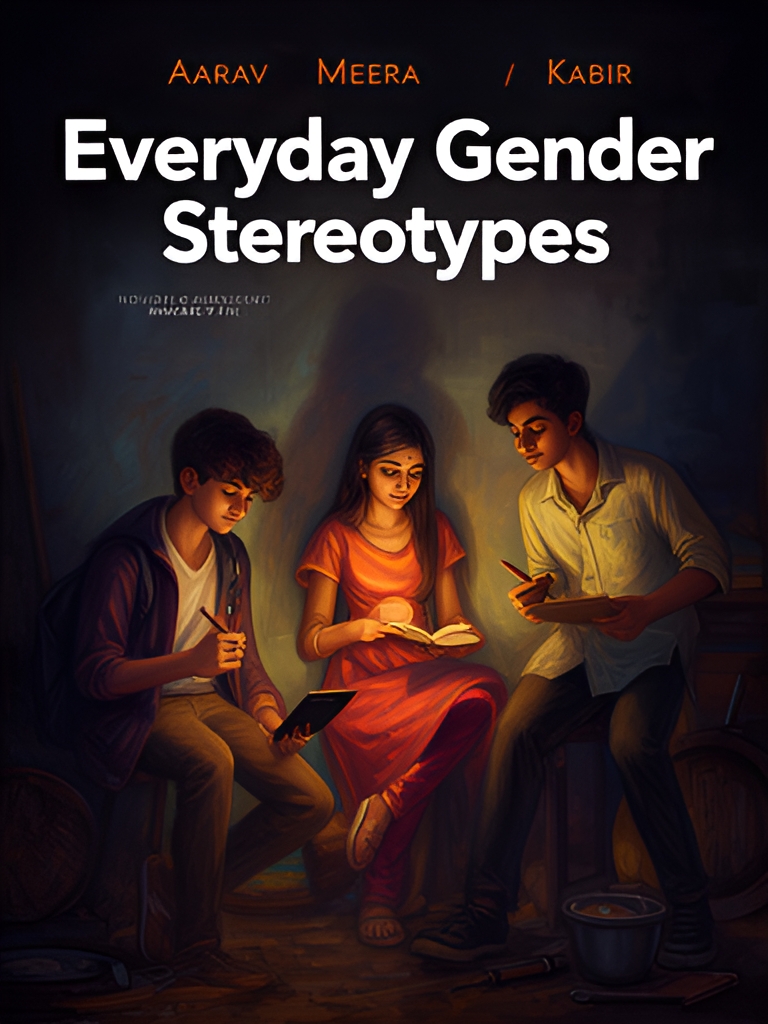
The first chapter introduces the friends and their initial observations of gender stereotypes in their daily lives, from sports and hobbies to subjects and careers, and how these stereotypes are influenced by their family, school, and media. Aarav, Meera, and Kabir discuss how people assume boys are better at sports and other activities than girls, and how these stereotypes are perpetuated by media and societal expectations. They realize that these stereotypes are limiting and have influenced their own thoughts and behaviors. Three friends, Meera, Aarav, and Kabir, discuss how societal expectations and stereotypes have influenced their lives, from their parents' encouragement of traditional gender roles to the media's perpetuation of these stereotypes. They realize the limitations and damage caused by these stereotypes and decide to take action to challenge them and promote equality.
- 2. Chapter 2
The second chapter delves into the friends' deeper exploration of the causes and effects of gender stereotypes, including the impact of language, media, and advertisements on their perceptions. Three friends, Meera, Aarav, and Kabir, research and discuss gender stereotypes, analyzing how they are perpetuated through media, family, and society, and plan to challenge these biases to create a more equal and inclusive community. Three friends, Meera, Aarav, and Kabir, research and discuss the consequences of gender stereotypes, realizing their impact on individuals, communities, and society, and decide to create a movement to promote equality and inclusivity.
- 3. Chapter 3
The third chapter focuses on the friends' decision to take action and create a school awareness campaign to promote gender equality and challenge stereotypes. Aarav, Meera, and Kabir plan a campaign to challenge gender stereotypes and promote equality in their school, brainstorming ideas such as posters, presentations, social media, and guest speakers, with a focus on inclusivity and avoiding perpetuation of stereotypes. The friends plan and prepare to present their campaign to the school principal, aiming to promote equality and inclusivity, while anticipating potential challenges and reactions.
- 4. Chapter 4
The final chapter concludes the friends' journey and emphasizes the importance of individual choices and collective actions in promoting gender equality. The friends present their campaign to challenge gender stereotypes and promote equality to their school's principal, Mrs. Patel. They address her concerns about potential controversy and bullying, and she agrees to approve the campaign, provided they work closely with the school administration to ensure a positive impact. The friends work tirelessly to bring their campaign to life, meeting with the school administration and brainstorming ideas to promote equality and challenge stereotypes. They face challenges and resistance from some students and teachers, but remain committed to their cause and eventually start to see positive impact and inspire real change.
Chapter 1: Chapter 1
The first chapter introduces the friends and their initial observations of gender stereotypes in their daily lives, from sports and hobbies to subjects and careers, and how these stereotypes are influenced by their family, school, and media. Aarav, Meera, and Kabir discuss how people assume boys are better at sports and other activities than girls, and how these stereotypes are perpetuated by media and societal expectations. They realize that these stereotypes are limiting and have influenced their own thoughts and behaviors. Three friends, Meera, Aarav, and Kabir, discuss how societal expectations and stereotypes have influenced their lives, from their parents' encouragement of traditional gender roles to the media's perpetuation of these stereotypes. They realize the limitations and damage caused by these stereotypes and decide to take action to challenge them and promote equality.
Introduction to Stereotypes
Aarav, Meera, and Kabir had been friends since the beginning of Grade 7, bonding over their shared love of sports, music, and good food. They spent most of their lunch breaks together, discussing everything from the latest cricket match to their favorite TV shows. One day, as they sat in the school cafeteria, Meera turned to the others and said, "Have you guys ever noticed how people always assume that boys are better at sports than girls?" Aarav and Kabir looked at each other, and then back at Meera, before nodding in agreement. Aarav said, "Yeah, I've seen it happen all the time. Like, in our school, the boys' football team gets so much more attention and funding than the girls' team." Kabir added, "And it's not just sports. I've heard people say that girls are better at cooking and cleaning, while boys are better at math and science."
Meera's eyes sparkled with curiosity as she asked, "But why do people think that? Is it because of what we see in movies and TV shows, or is it because of what our families and friends tell us?" Aarav thought for a moment before responding, "I think it's a bit of both. Like, my parents always assumed that I would be good at math and science because I'm a boy, and they encouraged me to pursue those subjects. But at the same time, I've seen so many movies and TV shows where the boys are the heroes and the girls are just sidekicks." Kabir nodded vigorously, saying, "Exactly! And it's not just limited to movies and TV shows. Even in our school, some teachers seem to have certain expectations of us based on our gender. Like, my math teacher always assumes that the boys in the class will be better at math than the girls."
As they talked, the three friends realized that these stereotypes were everywhere, influencing the way people thought about and treated each other. They saw how girls were often discouraged from playing certain sports or pursuing certain careers, while boys were encouraged to be tough and aggressive. They noticed how the media perpetuated these stereotypes, often portraying women in limited and stereotypical roles. Meera said, "It's like, people have these preconceived notions of what boys and girls should be like, and it's really limiting. I mean, why can't a girl be good at football or a boy be good at cooking?" Aarav and Kabir nodded in agreement, and the three friends sat in silence for a moment, thinking about the impact of these stereotypes on their own lives.
Kabir broke the silence, saying, "You know, I never really thought about it before, but I realize now that I've been influenced by these stereotypes too. Like, I've always assumed that I would be good at certain subjects or activities just because I'm a boy." Aarav and Meera looked at him, and then at each other, before Aarav said, "I think we all have. But now that we're aware of it, we can start to challenge these stereotypes and think differently." Meera's face lit up with excitement as she said, "Exactly! And who knows, maybe we can even do something to change the way people think about these stereotypes." The three friends sat there, lost in thought, as they began to contemplate the possibilities of what they could do to make a difference.
Influences and Observations
As they delved deeper into the conversation, the three friends started to notice the subtle ways in which these stereotypes had seeped into their daily lives. Meera mentioned how her parents had always encouraged her to take up cooking and sewing, while Aarav's parents had pushed him to focus on sports and math. Kabir shared how his friends would often tease him for liking to read and write, saying that those were "girl things." The more they talked, the more they realized that these stereotypes were not just limited to their families, but were also perpetuated by the media and their school.
Aarav pointed out how the school's career guidance counselor always seemed to steer the girls towards careers in nursing and teaching, while the boys were encouraged to pursue careers in engineering and business. Meera added that even the school's extracurricular activities seemed to be divided along gender lines, with the girls dominating the debate team and the boys dominating the sports teams. Kabir noted that the media was just as guilty, with advertisements and TV shows often portraying women in stereotypical roles, such as homemakers and caregivers, while men were portrayed as strong and powerful.
As they observed these stereotypes in action, the three friends started to feel a sense of frustration and discontent. They realized that these stereotypes were not only limiting, but also damaging, as they perpetuated inequality and discrimination. Meera said, "It's like, people are missing out on so much potential and talent because of these preconceived notions. I mean, why can't a girl be a great engineer or a boy be a great nurse?" Aarav and Kabir nodded in agreement, and the three friends started to brainstorm ways in which they could challenge these stereotypes and promote greater equality and understanding.
Kabir suggested that they start a campaign to raise awareness about the dangers of stereotypes and the importance of equality. Aarav proposed that they organize a series of events and activities that would showcase the talents and abilities of both boys and girls, and challenge the traditional gender roles. Meera suggested that they create a social media campaign, using hashtags and posters to spread their message and reach a wider audience. As they threw around ideas, the three friends started to feel a sense of excitement and purpose. They knew that they had a long and difficult road ahead of them, but they were determined to make a difference and create a more equal and just society.
As they finished their lunch and prepared to head back to class, the three friends felt a sense of camaraderie and shared purpose. They knew that they had each other's backs, and that together, they could overcome any obstacle and achieve great things. Meera smiled, saying, "You know, I'm really glad we had this conversation. I feel like I've learned so much and I'm excited to see what we can do to make a difference." Aarav and Kabir nodded in agreement, and the three friends walked out of the cafeteria, ready to take on the challenge of promoting gender equality and challenging the stereotypes that had held them back for so long.
Chapter 2: Chapter 2
The second chapter delves into the friends' deeper exploration of the causes and effects of gender stereotypes, including the impact of language, media, and advertisements on their perceptions. Three friends, Meera, Aarav, and Kabir, research and discuss gender stereotypes, analyzing how they are perpetuated through media, family, and society, and plan to challenge these biases to create a more equal and inclusive community. Three friends, Meera, Aarav, and Kabir, research and discuss the consequences of gender stereotypes, realizing their impact on individuals, communities, and society, and decide to create a movement to promote equality and inclusivity.
Uncovering Biases
As they sat in Meera's living room, surrounded by newspapers, magazines, and their laptops, the three friends began to dig deeper into the world of gender stereotypes. They had already discussed how these stereotypes affected their daily lives, from the sports they played to the subjects they chose in school. Now, they wanted to understand the root causes of these biases and how they were perpetuated. Aarav pulled out a stack of advertisements from a popular magazine, pointing out how women were often depicted in domestic roles, while men were shown as strong and adventurous. "Look at this," he said, handing the ads to Meera and Kabir. "It's like they're trying to tell us what we should be interested in, based on our gender."
Meera nodded, scanning the ads. "And it's not just ads. I've noticed that even in our school, the teachers sometimes use language that reinforces these stereotypes. Like, they'll say 'boys are naturally better at math' or 'girls are more nurturing.'" Kabir frowned, thinking back to his own experiences. "I've heard that too. And it's not just teachers. My parents sometimes make comments like that, without even realizing it." The three friends sat in silence for a moment, reflecting on the subtle ways in which biases were embedded in their everyday lives.
Kabir spoke up, his voice filled with determination. "We need to do something about this. We can't just sit back and let these stereotypes continue to limit us." Meera and Aarav nodded in agreement, their minds already racing with ideas. They began to brainstorm ways to challenge these biases, from creating a social media campaign to organizing a school event. As they talked, their excitement grew, and they realized that they had the power to make a difference. By uncovering and challenging these biases, they could help create a more equal and inclusive community.
As they delved deeper into their research, they discovered that the media played a significant role in perpetuating gender stereotypes. They found countless examples of movies, TV shows, and books that reinforced traditional gender roles, often portraying women as weak and submissive, and men as strong and dominant. Aarav shook his head, frustrated by the sheer number of examples. "It's like they're trying to brainwash us into thinking that this is the only way things can be." Meera sighed, feeling a sense of disappointment. "And it's not just the media. Our families, our schools, our entire society seems to be reinforcing these stereotypes."
Kabir leaned forward, his eyes shining with determination. "But we can change that. We can start by challenging these stereotypes in our own lives, and then we can work to create a wider movement. We can make a difference, one small step at a time." Meera and Aarav nodded, feeling a sense of hope and purpose. They knew that it wouldn't be easy, but they were ready to take on the challenge. As they continued their research, they began to formulate a plan, one that would help them to uncover and challenge the biases that surrounded them, and to create a more equal and inclusive world.
Understanding Consequences
As they dug deeper into their research, the three friends began to understand the far-reaching consequences of gender stereotypes. They realized that these biases didn't just affect individuals, but also had a profound impact on their community and society as a whole. Meera pointed out that stereotypes often led to a lack of diversity in certain fields, with women underrepresented in science and technology, and men underrepresented in nursing and teaching. "It's like we're limiting ourselves and our potential," she said, shaking her head. "By reinforcing these stereotypes, we're creating a world where people feel like they don't fit in, or that they're not good enough."
Aarav nodded, adding that stereotypes also perpetuated discrimination and inequality. "Think about it," he said. "If we're taught to believe that one gender is superior to the other, it's only a matter of time before that translates into real-life situations. We see it in the workplace, in schools, and even in our own homes." Kabir's eyes widened as he thought about the implications. "And it's not just about gender," he said. "These stereotypes intersect with other forms of bias, like racism and classism. It's like a web of oppression, and we need to find a way to break free from it."
The three friends sat in silence for a moment, reflecting on the complexity of the issue. They knew that challenging these stereotypes wouldn't be easy, but they were determined to try. Meera spoke up, her voice filled with conviction. "We need to create a movement that promotes equality and inclusivity. We need to show people that these stereotypes are limiting and damaging, and that we deserve better." Aarav and Kabir nodded in agreement, their minds already racing with ideas. They began to brainstorm ways to spread their message, from creating a social media campaign to organizing a school event.
As they talked, their excitement grew, and they realized that they had the power to make a difference. By challenging these stereotypes and promoting equality, they could help create a more just and inclusive world. Kabir smiled, feeling a sense of hope and optimism. "We can do this," he said. "We can create a world where everyone has the opportunity to thrive, regardless of their gender or background." Meera and Aarav nodded, feeling a sense of determination and purpose. They knew that it wouldn't be easy, but they were ready to take on the challenge.
As they continued their research and planning, the three friends began to formulate a clear vision for their movement. They knew that they wanted to create a school-wide campaign that would promote equality and challenge stereotypes. They brainstormed ideas for posters, social media posts, and even a school event that would bring people together and spark conversation. Aarav pulled out a piece of paper and began to sketch out a rough plan. "We can start by creating a social media campaign that highlights the importance of equality and inclusivity," he said. "We can use hashtags and tag our friends and classmates to get the word out." Meera nodded, adding that they could also create posters and flyers to distribute around the school. "We can put them up in the hallways, in the cafeteria, and even in the classrooms," she said.
Kabir's eyes lit up as he thought about the possibilities. "And we can't forget about the school event," he said. "We can organize a rally or a workshop that brings people together and sparks conversation. We can invite speakers and performers who can share their experiences and perspectives." The three friends continued to brainstorm and plan, their excitement and enthusiasm growing with each passing minute. They knew that they had a long road ahead of them, but they were ready to take on the challenge and create a more equal and inclusive world.
Chapter 3: Chapter 3
The third chapter focuses on the friends' decision to take action and create a school awareness campaign to promote gender equality and challenge stereotypes. Aarav, Meera, and Kabir plan a campaign to challenge gender stereotypes and promote equality in their school, brainstorming ideas such as posters, presentations, social media, and guest speakers, with a focus on inclusivity and avoiding perpetuation of stereotypes. The friends plan and prepare to present their campaign to the school principal, aiming to promote equality and inclusivity, while anticipating potential challenges and reactions.
Planning the Campaign
As they sat in Meera's living room, surrounded by notes and research from their previous discussions, Aarav, Meera, and Kabir were determined to take their thoughts and ideas to the next level. They had spent weeks exploring the causes and effects of gender stereotypes, and now they were ready to create a plan to challenge these biases and promote equality in their school. "We need to do something that will really make an impact," Meera said, her eyes shining with excitement. "Something that will make people think and talk about these issues." Kabir nodded in agreement. "I think we should start a campaign to raise awareness about gender stereotypes and how they affect us all." Aarav's face lit up with enthusiasm. "That's a great idea, Kabir. We could make posters, give presentations, and even organize events to get people involved."
The three friends began brainstorming, throwing out ideas and building on each other's suggestions. They talked about creating a social media campaign, using hashtags to spread their message and reach a wider audience. They discussed inviting guest speakers to talk to their school about gender equality and the importance of challenging stereotypes. As they talked, their ideas grew and evolved, and they began to see a clear vision of what they wanted to achieve. "We need to make sure our campaign is inclusive," Meera said, "that it represents all kinds of people and experiences." Kabir nodded. "And we need to be careful not to perpetuate the same stereotypes we're trying to challenge." Aarav scribbled down some notes. "We should also think about how to engage our school administration and get their support for our campaign."
As they delved deeper into the planning process, the friends encountered their first challenge: how to make their campaign appealing and accessible to their entire school. They knew that not everyone would be interested in or receptive to their message, so they needed to find ways to make it engaging and relevant. "We could create a series of workshops or discussions," Kabir suggested, "where people can share their own experiences and thoughts about gender stereotypes." Meera's eyes lit up. "And we could invite people from different clubs and organizations to participate, so it's not just us talking about these issues." Aarav grinned. "I like that idea. It's all about creating a movement, not just a campaign." As they continued to plan and brainstorm, the friends were filled with a sense of excitement and purpose, knowing that they were taking the first steps towards creating real change in their school and community.
Their conversation was filled with a sense of possibility and promise, as they explored the many ways they could challenge gender stereotypes and promote equality. They talked about creating a safe and supportive space for people to share their thoughts and feelings, and about providing resources and information to help people learn more about these issues. As they planned, they were aware of the potential challenges they might face, from resistance to their message to difficulty in getting their school administration on board. But they were determined to overcome these obstacles, knowing that their campaign had the potential to make a real difference in the lives of their fellow students. With their ideas and plans beginning to take shape, the friends felt a sense of anticipation and excitement, knowing that they were about to embark on a journey that would change them and their school forever.
Creating Awareness
As they continued to brainstorm and plan, the friends started to think about the logistics of their campaign. They knew they needed to get permission from their school administration to move forward, and they weren't sure how their proposal would be received. "We should schedule a meeting with the principal," Aarav suggested, "and present our ideas to her." Meera nodded in agreement. "And we should make sure to emphasize the importance of promoting equality and inclusivity in our school." Kabir pulled out his phone and started typing away. "I'll send her an email and see if we can set up a meeting for next week."
The friends spent the rest of the evening finalizing their plans and preparing for their meeting with the principal. They made a list of all the things they wanted to discuss, from the goals of their campaign to the potential challenges they might face. As they packed up their notes and research, Meera turned to her friends with a serious expression. "We need to be prepared for any reaction from the principal," she said. "She might not be supportive of our campaign, or she might have concerns about how it will be received by the rest of the school." Aarav and Kabir nodded in agreement, knowing that they had to be prepared for any outcome.
The next day, the friends sent out a group text to each other, checking in and making sure they were all on the same page. They were excited and nervous about their meeting with the principal, and they knew that it was just the beginning of their journey to create awareness and promote equality in their school. As they went about their day, they couldn't help but think about the potential impact of their campaign. They knew that it wouldn't be easy, and that they would face challenges and obstacles along the way. But they were determined to make a difference, and they were willing to do whatever it took to create a more inclusive and equitable community.
As the day of their meeting with the principal approached, the friends found themselves growing more and more anxious. They had never done anything like this before, and they weren't sure what to expect. But they were determined to be confident and passionate, to make their case for why their campaign was so important. They knew that they had the power to make a difference, and they were ready to take on the challenge. With their plans and preparations in place, the friends felt a sense of anticipation and excitement, knowing that they were about to embark on a journey that would change them and their school forever.
The friends' campaign was starting to take shape, and they were eager to share their ideas with the rest of the school. They knew that it wouldn't be easy, but they were determined to make a difference. As they looked to the future, they knew that they would face challenges and obstacles, but they were ready to overcome them. With their passion and determination, they were confident that they could create a more inclusive and equitable community, one that valued and respected all individuals, regardless of their gender or background. And as they stood together, united in their quest for equality and justice, they knew that they were unstoppable.
Chapter 4: Chapter 4
The final chapter concludes the friends' journey and emphasizes the importance of individual choices and collective actions in promoting gender equality. The friends present their campaign to challenge gender stereotypes and promote equality to their school's principal, Mrs. Patel. They address her concerns about potential controversy and bullying, and she agrees to approve the campaign, provided they work closely with the school administration to ensure a positive impact. The friends work tirelessly to bring their campaign to life, meeting with the school administration and brainstorming ideas to promote equality and challenge stereotypes. They face challenges and resistance from some students and teachers, but remain committed to their cause and eventually start to see positive impact and inspire real change.
Spreading the Message
As the friends stood in front of their school's principal, Mrs. Patel, they couldn't help but feel a mix of excitement and nervousness. They had spent weeks researching, planning, and preparing their campaign to challenge gender stereotypes and promote equality, and now it was time to present it to the person who could make it all happen. Aarav, Meera, and Kabir took a deep breath and began their presentation, explaining how they wanted to use posters, presentations, social media, and guest speakers to spread their message. They emphasized the importance of inclusivity and avoiding perpetuation of stereotypes, and how their campaign would focus on promoting equality and challenging biases.
Mrs. Patel listened attentively, her expression a mixture of interest and concern. When the friends finished their presentation, she nodded thoughtfully and said, "I must say, I'm impressed by your dedication and passion. However, I do have some concerns about how this campaign will be received by the rest of the school." She paused, collecting her thoughts before continuing, "We've had issues with bullying and harassment in the past, and I worry that this campaign might stir up more controversy than conversation." Aarav, Meera, and Kabir exchanged nervous glances, anticipating this reaction. They had discussed potential challenges and obstacles, and they were prepared to address them.
"We understand your concerns, Mrs. Patel," Meera said, "but we believe that our campaign can actually help to reduce bullying and harassment by promoting understanding and empathy. We're not trying to stir up controversy, but rather to start a conversation about the importance of equality and inclusivity." Kabir added, "We've done our research, and we're confident that our campaign can make a positive impact on our school community. We're willing to work with you and the school administration to ensure that everything runs smoothly and safely." Mrs. Patel nodded, seeming to consider their words. After a moment, she said, "Alright, I'll approve your campaign, but I want to work closely with you to ensure that it's implemented in a way that promotes positive change, not controversy. Let's schedule a meeting with the school administration to discuss the details."
The friends breathed a collective sigh of relief, feeling a sense of accomplishment and excitement. They had taken the first step towards creating a more inclusive and equitable community, and they were eager to see their campaign come to life. As they left Mrs. Patel's office, Aarav turned to his friends and grinned, "We did it, guys! We're really going to make a difference." Meera smiled, her eyes shining with enthusiasm, "We sure are. And it's just the beginning." Kabir nodded in agreement, "We've got a lot of work ahead of us, but I know we can do it. We're in this together, and together, we can create real change." The friends walked out of the office, feeling a sense of purpose and determination, ready to spread their message and challenge the stereotypes that had limited them for so long.
As they walked down the hallway, they couldn't help but feel a sense of pride and ownership. They had taken a risk by speaking out against something they believed was wrong, and it had paid off. They knew that their campaign wouldn't be without its challenges, but they were ready to face them head-on. The friends had learned that creating change wasn't easy, but it was worth it. They had discovered that by working together and supporting each other, they could overcome obstacles and achieve their goals. And as they disappeared into the crowd of students, they knew that they would always stand together, united in their quest for equality and inclusivity.
Empowering Change
The days that followed were a whirlwind of activity as the friends worked tirelessly to bring their campaign to life. They met with the school administration, discussing everything from poster designs to social media strategies. Aarav, Meera, and Kabir were determined to make sure that every detail was perfect, that every message was clear and inclusive. They spent hours brainstorming, debating, and refining their ideas, always keeping their goal of promoting equality and challenging stereotypes at the forefront of their minds.
As the campaign began to take shape, the friends started to feel a sense of excitement and anticipation. They knew that they were on the verge of something big, something that could potentially change the way their school community thought about gender and equality. They started to see their posters going up around the school, their messages of inclusivity and empowerment inspiring students to think differently about the world around them. They heard whispers of curiosity and interest from their classmates, people starting to ask questions and seek out more information about the campaign.
But despite the excitement and anticipation, the friends were also aware of the potential challenges that lay ahead. They knew that not everyone would be supportive of their campaign, that some people might even be actively opposed to their message of equality and inclusivity. They had already faced some resistance from a few of their classmates, people who didn't understand or didn't want to understand the importance of challenging gender stereotypes. Aarav, Meera, and Kabir had tried to engage with these students, to explain their perspective and listen to their concerns, but it wasn't always easy.
One day, as they were putting up posters in the school hallway, they were approached by a group of students who were clearly opposed to their campaign. "This is just a bunch of feminist nonsense," one of the students sneered. "You're just trying to push your agenda on the rest of us." Aarav, Meera, and Kabir stood their ground, calmly and respectfully explaining their perspective and listening to the concerns of their classmates. It wasn't an easy conversation, but it was an important one, and the friends were determined to keep the dialogue open and respectful.
As the campaign continued to roll out, the friends faced more and more challenges. They encountered students who were resistant to change, who didn't want to question their assumptions or challenge their biases. They faced teachers who were skeptical or even hostile to their message, who didn't understand or didn't want to understand the importance of promoting equality and inclusivity. But through it all, Aarav, Meera, and Kabir remained committed to their cause, using their passion and determination to overcome every obstacle and keep their campaign moving forward.
And then, something amazing started to happen. Students began to come up to them, thanking them for their campaign and sharing their own stories of struggle and empowerment. Teachers started to reach out, asking for their help in creating more inclusive and equitable classrooms. The school administration started to take notice, recognizing the positive impact that the campaign was having on the school community. The friends' message of equality and inclusivity was starting to resonate, starting to inspire real change and transformation.
As they looked out at the sea of students, Aarav, Meera, and Kabir felt a sense of pride and accomplishment. They had taken a risk, speaking out against something they believed was wrong, and it had paid off. They had created a movement, a wave of change that was sweeping through their school and inspiring others to take action. They knew that there would still be challenges ahead, that there would still be people who resisted or opposed their message. But they also knew that they were not alone, that they had a community of supporters and allies who would stand with them and fight for equality and inclusivity.
"We did it," Meera said, turning to her friends with a smile. "We actually did it." Aarav and Kabir nodded in agreement, their faces shining with pride and excitement. They knew that their campaign was just the beginning, that there was still much work to be done. But they also knew that they had taken the first step, that they had started something big and important. And as they walked through the school hallway, surrounded by their posters and their message of empowerment, they knew that they would always stand together, united in their quest for equality and inclusivity.