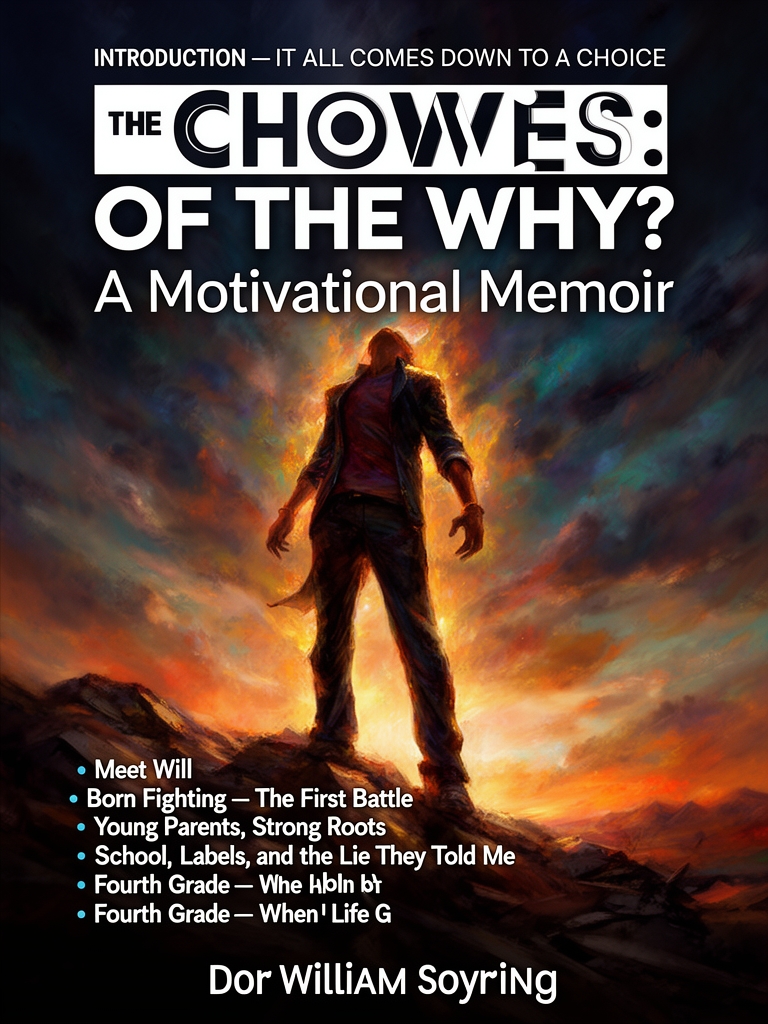
ID · the-power-of-the-why-be759c86
the power of the Why?
By William S Soyring Jr · Fiction · Professional · 10 pages
Table of contents
- 1. Introduction to Adversity
The chapter introduces William Soyring's life, focusing on his early experiences with adversity and the choices he made. It sets the stage for understanding the power of choice in his life. William Soyring's early life was marked by challenges and difficult choices, which helped him develop resilience and learn valuable lessons about hard work, sacrifice, self-care, and the power of choice. William Soyring learned the impact of labels on a person's life as he navigated his childhood, facing challenges and being labeled by others, but his parents taught him to look beyond these labels and focus on his strengths and abilities.
- 2. Navigating Challenges
This chapter delves into the significant challenges William faced, including health issues and personal struggles, and how he chose to navigate these challenges. It highlights the power of choice in overcoming adversity. William Soyring faced numerous health challenges, including chronic illnesses, medication side effects, and therapy sessions, which affected his physical and emotional well-being. With the support of his parents, he learned to cope with his health issues and develop strategies to manage his condition. William Soyring navigated personal struggles, learning to choose how he responded to circumstances, giving him strength to move forward. He coped with emotional distress, self-doubt, and social challenges with help from his parents, developing self-awareness, self-acceptance, and resilience. William Soyring navigated personal struggles, learning to cope with emotional distress, self-doubt, and social challenges. He developed resilience, self-awareness, and a growth mindset, with the help of his support system, including his parents. William learned to manage his negative thoughts, focus on his strengths, and take things one step at a time, ultimately overcoming his personal struggles and achieving his goals.
- 3. Reflections and Takeaways
The final chapter reflects on William's journey, summarizing the key choices he made and the lessons learned from his experiences. It provides takeaways for readers on the power of choice and resilience.
Chapter 1: Introduction to Adversity
The chapter introduces William Soyring's life, focusing on his early experiences with adversity and the choices he made. It sets the stage for understanding the power of choice in his life. William Soyring's early life was marked by challenges and difficult choices, which helped him develop resilience and learn valuable lessons about hard work, sacrifice, self-care, and the power of choice. William Soyring learned the impact of labels on a person's life as he navigated his childhood, facing challenges and being labeled by others, but his parents taught him to look beyond these labels and focus on his strengths and abilities.
Early Life Choices
William Soyring's life was a testament to the human spirit's capacity to persevere in the face of adversity. Growing up, he was no stranger to challenges, and it was in these early years that he began to develop the resilience that would define his life. His parents, though well-intentioned, struggled to make ends meet, and the family often found themselves having to make difficult choices. As William navigated his childhood, he was constantly faced with decisions that would impact his future. He recalls his mother saying, "We may not have much, but we have each other, and that's all that truly matters." These words stuck with him and influenced the choices he made as he grew older.
The choices William made in his early life can be summarized in the following table:
| Choice | Outcome | Lesson Learned |
|---|---|---|
| Prioritizing education | Better job opportunities | Importance of hard work and dedication |
| Helping his family with finances | Closer family bond | Value of sacrifice and responsibility |
| Pursuing hobbies and interests | Improved mental health | Need for self-care and balance |
These early life choices not only shaped William's character but also laid the foundation for his ability to cope with adversity. He learned that every decision, no matter how big or small, had a ripple effect on his life and the lives of those around him. As he reflected on his experiences, William realized that it was not the adversity itself that defined him, but rather how he chose to respond to it. He began to understand the power of choice and how it could be both a blessing and a curse. On one hand, it allowed him to forge his own path and create the life he wanted. On the other hand, it also meant that he had to live with the consequences of his decisions, whether good or bad.
William's journey was not without its setbacks, and he faced many challenges as he navigated his way through life. However, it was in these moments of adversity that he discovered his greatest strengths. He learned to approach problems with a logical and level head, breaking them down into manageable parts and finding creative solutions. This ability to think critically and make informed decisions would serve him well in the years to come.
The key takeaways from William's early life choices can be summarized as follows:
- The importance of hard work and dedication in achieving success
- The value of sacrifice and responsibility in building strong relationships
- The need for self-care and balance in maintaining good mental health
- The power of choice and its impact on one's life and the lives of others.
The Impact of Labels
As William navigated his childhood, he began to realize the impact that labels can have on a person's life. His parents, though struggling financially, never allowed their situation to define them. They instilled in William the idea that it's not what you have, but who you are that truly matters. However, the world outside their home was not always so kind. William faced many challenges as he grew older, and he often found himself being labeled by others. He was called "poor" by some, "underprivileged" by others, and even "at-risk" by those who didn't know him. These labels had a profound effect on William, making him feel like he was somehow less than others.
William's parents noticed the impact these labels were having on their son and sat him down to talk. His mother said, "Just because someone else gives you a label, doesn't mean you have to wear it. You are so much more than what others think of you." His father added, "You have the power of choice to define yourself, to choose who you want to be and what you want to achieve." These words stuck with William and helped him to develop a sense of self-awareness and self-acceptance. He learned to look beyond the labels and to focus on his own strengths and abilities.
The effects of labeling can be seen in the following table:
| Label | Impact | Outcome |
|---|---|---|
| Poor | Low self-esteem | Decreased motivation |
| Underprivileged | Limited opportunities | Reduced access to resources |
| At-risk | Negative expectations | Increased stress and anxiety |
| Resilient | Increased self-awareness | Improved mental health |
William's experiences with labeling taught him the importance of self-care and self-compassion. He learned to be kind to himself and to focus on his own strengths and abilities. He also developed a sense of empathy and understanding for others who may be facing similar challenges. As he grew older, William realized that everyone has their own struggles and that no one is immune to the impact of labels. However, it's how we choose to respond to these labels that truly matters.
The key takeaways from William's experiences with labeling can be summarized as follows:
- The impact of labels on a person's life and self-esteem
- The importance of self-awareness and self-acceptance in overcoming negative labels
- The need for self-care and self-compassion in maintaining good mental health
- The value of empathy and understanding in building strong relationships with others.
As William looked back on his experiences, he realized that the labels he was given as a child did not define him. Instead, they taught him valuable lessons about the importance of resilience, self-care, and self-acceptance. He learned that it's not what others think of you that matters, but what you think of yourself. This realization would stay with him for the rest of his life, guiding him as he navigated the challenges and opportunities that lay ahead.
Chapter 2: Navigating Challenges
This chapter delves into the significant challenges William faced, including health issues and personal struggles, and how he chose to navigate these challenges. It highlights the power of choice in overcoming adversity. William Soyring faced numerous health challenges, including chronic illnesses, medication side effects, and therapy sessions, which affected his physical and emotional well-being. With the support of his parents, he learned to cope with his health issues and develop strategies to manage his condition. William Soyring navigated personal struggles, learning to choose how he responded to circumstances, giving him strength to move forward. He coped with emotional distress, self-doubt, and social challenges with help from his parents, developing self-awareness, self-acceptance, and resilience. William Soyring navigated personal struggles, learning to cope with emotional distress, self-doubt, and social challenges. He developed resilience, self-awareness, and a growth mindset, with the help of his support system, including his parents. William learned to manage his negative thoughts, focus on his strengths, and take things one step at a time, ultimately overcoming his personal struggles and achieving his goals.
Health Challenges
As William Soyring navigated his childhood, he faced numerous challenges that tested his resilience and determination. One of the significant obstacles he encountered was related to his health. William suffered from chronic illnesses that forced him to spend a considerable amount of time in hospitals and doctor's offices. Despite the difficulties he faced, William's parents remained supportive and encouraged him to focus on his strengths and abilities.
Health Issues
| Issue | Impact | Duration |
|---|---|---|
| Chronic Illness | Frequent hospitalizations, limited physical activity | Ongoing |
| Medication Side Effects | Fatigue, nausea, mood swings | Intermittent |
| Therapy Sessions | Emotional distress, self-doubt | Regular |
William's health issues had a profound impact on his daily life, affecting not only his physical well-being but also his emotional state. He often felt overwhelmed by the constant barrage of medical appointments and treatments. However, with the help of his parents, William learned to cope with his health challenges and develop strategies to manage his condition. His mother would often say, "William, you are more than your illness. You have so much to offer, and we will support you every step of the way." These words of encouragement helped William to stay positive and focused on his goals. In addition to his health issues, William also faced personal struggles that made his journey even more challenging. He had to deal with the emotional toll of being labeled by others, which sometimes made him feel like he was defined by his health issues. However, William's parents taught him to look beyond these labels and focus on his strengths and abilities. Some of the key takeaways from William's experience with health challenges include:
- The importance of self-care and self-compassion in managing chronic illnesses
- The need for a strong support system, including family and friends
- The value of resilience and determination in overcoming adversity
- The impact of labels on a person's life and the importance of looking beyond them
As William continued to navigate his health challenges, he began to realize the significance of his choices and how they affected his life. He learned that he had the power to choose how he responded to his circumstances, and this realization gave him the strength to keep moving forward. William's father would often remind him, "William, you have the power to choose your attitude and your actions. Don't let your health issues define you. You are capable of so much more." These words of wisdom helped William to stay focused on his goals and to never give up, even in the face of adversity. The lessons William learned from his health challenges would stay with him for the rest of his life, shaping him into a strong and resilient individual. He would carry these lessons with him as he faced future challenges, using them to inform his choices and guide his decisions. In the next section, we will explore how William applied the lessons he learned from his health challenges to his future life, and how these experiences shaped him into the person he became.
Personal Struggles and Choices
As William Soyring navigated his personal struggles, he began to realize the significance of his choices and how they affected his life. He learned that he had the power to choose how he responded to his circumstances, and this realization gave him the strength to keep moving forward.
Personal Struggles
| Struggle | Impact | Duration |
|---|---|---|
| Emotional Distress | Anxiety, depression, mood swings | Ongoing |
| Self-Doubt | Lack of confidence, fear of failure | Intermittent |
| Social Challenges | Difficulty forming relationships, feeling isolated | Regular |
William's personal struggles had a profound impact on his daily life, affecting not only his emotional well-being but also his relationships with others. He often felt overwhelmed by the constant barrage of negative thoughts and emotions. However, with the help of his parents, William learned to cope with his personal struggles and develop strategies to manage his emotional state. His mother would often say, "William, you are not alone in this struggle. We are here to support you, and we will help you find the resources you need to overcome your challenges." These words of encouragement helped William to stay positive and focused on his goals.
Some of the key takeaways from William's experience with personal struggles include:
- The importance of self-awareness and self-acceptance in managing emotional distress
- The need for a strong support system, including family and friends
- The value of resilience and determination in overcoming adversity
- The impact of negative thoughts on a person's life and the importance of learning to manage them
William's father would often remind him, "William, you have the power to choose your attitude and your actions. Don't let your personal struggles define you. You are capable of so much more." These words of wisdom helped William to stay focused on his goals and to never give up, even in the face of adversity. The lessons William learned from his personal struggles would stay with him for the rest of his life, shaping him into a strong and resilient individual. He would carry these lessons with him as he faced future challenges, using them to inform his choices and guide his decisions.
To overcome his personal struggles, William followed a set of procedures that helped him stay on track:
- Practice self-care: William made sure to take care of his physical and emotional needs, including getting enough sleep, eating healthy foods, and engaging in regular exercise.
- Seek support: William reached out to his family and friends for support, talking to them about his struggles and seeking their advice and guidance.
- Challenge negative thoughts: William learned to recognize and challenge negative thoughts, replacing them with positive and affirming ones.
- Focus on strengths: William focused on his strengths and abilities, using them to build his confidence and self-esteem.
- Take things one step at a time: William broke down his challenges into smaller, manageable tasks, taking things one step at a time and celebrating his successes along the way.
By following these procedures, William was able to overcome his personal struggles and achieve his goals, despite the challenges he faced. He learned that he had the power to choose his attitude and his actions, and that he was capable of overcoming any obstacle that came his way.
As William looked back on his experiences, he realized that his personal struggles had been a crucial part of his journey. They had taught him valuable lessons about resilience, self-awareness, and the importance of support systems. He had learned to cope with his emotional distress and to manage his negative thoughts. These lessons would stay with him for the rest of his life, helping him to navigate future challenges and to achieve his goals.
William's story serves as a reminder that we all have the power to choose our attitude and our actions, even in the face of adversity. We can choose to let our struggles define us, or we can use them as opportunities for growth and learning. By following William's example and learning from his experiences, we can develop the resilience and determination we need to overcome our own personal struggles and achieve our goals.
In the end, William's personal struggles had been a transformative experience, one that had helped him to develop into a strong and resilient individual. He had learned to cope with his challenges and to use them as opportunities for growth and learning. As he looked to the future, William knew that he would face new challenges and obstacles, but he was confident in his ability to overcome them. He had learned the power of his why, and he was ready to use it to guide him on his journey.
The key takeaways from William's story can be summarized in the following table:
| Lesson | Description | Application |
|---|---|---|
| Resilience | The ability to cope with and overcome adversity | Develop coping strategies, practice self-care, and seek support |
| Self-awareness | The ability to recognize and understand one's own thoughts and emotions | Practice self-reflection, recognize negative thoughts, and challenge them |
| Support systems | The importance of having a strong support system, including family and friends | Reach out to others for support, talk about struggles, and seek advice and guidance |
| Growth mindset | The ability to see challenges as opportunities for growth and learning | Focus on strengths, take things one step at a time, and celebrate successes |
| Purpose | The importance of having a clear sense of purpose and direction | Identify values and goals, develop a plan, and take action towards achieving them |