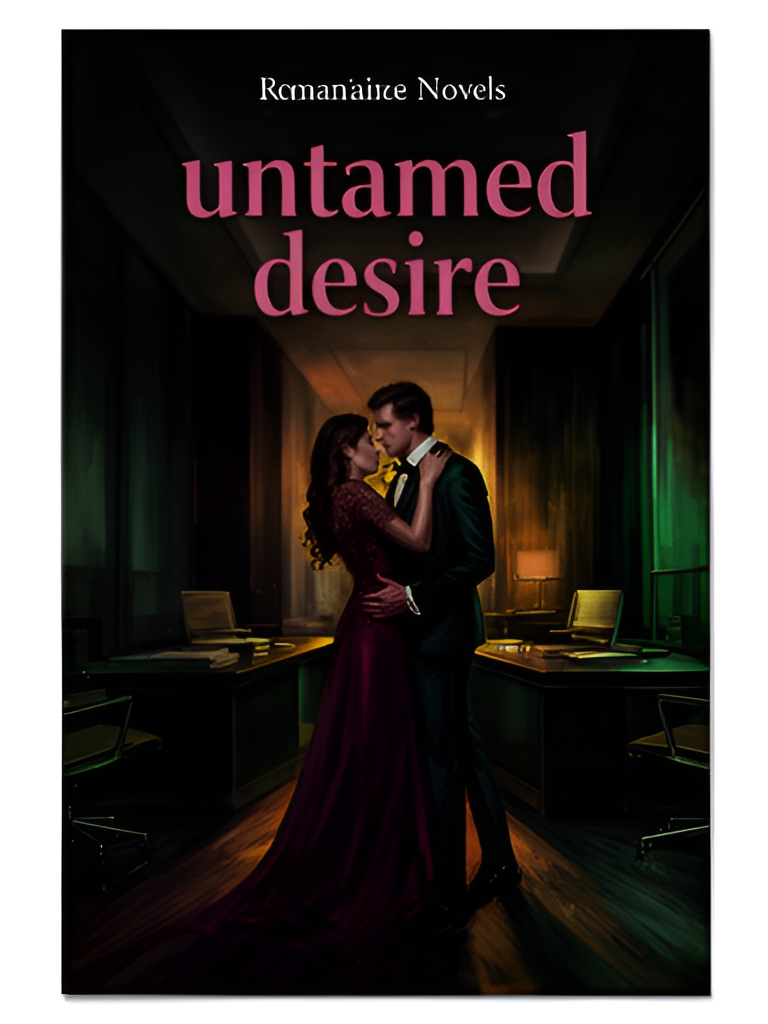
ID · untamed-desire-cef5de43
untamed desire
By La'Veyah Dickerson · Romance · Dark · 10 pages
Table of contents
- 1. The Weight of Silence
Elena Vasquez works late in the 42nd-floor banking suite of Crane & Hale, reviewing urgent merger documents marked by senior partner Julian Crane. After hours, she hears the elevator chime and sees Julian step inside, already on his way down. They share a brief, charged exchange before entering the elevator together. As it descends, the elevator suddenly jerks and stops between floors 38 and 37, emergency lights casting a red glow. Julian presses the alarm, and in the motion, his hand brushes hers on the rail—a brief contact that ignites a powerful, unspoken tension between them. He asks if she’s afraid of him; she denies it, but her body betrays her. The elevator then lurches back to life, and they continue in silence to the lobby, stepping out shoulder to shoulder but not touching, the air thick with unresolved attraction and the weight of what has shifted between them. Elena and Julian ride the elevator to the 28th floor records area in tense silence, their unspoken attraction palpable. Upon arrival, they walk together to the merger files, where Julian helps Elena retrieve a box labeled 'Merger Indemnity – Annex B' in his handwriting. As he hands it to her, his touch becomes increasingly intimate—brushing her back, then gripping her hip, kissing her neck and jaw, and pressing his body against hers. Elena responds with growing passion, her resistance dissolving into mutual…
- 2. The Taste of Ruin
After their quiet cab ride to Julian’s apartment, Elena and Julian share whiskey and intimate conversation in his 32nd-floor Whitmore residence. Julian describes his marriage to Miriam as a passionless arrangement of convenience, while Elena admits she feels truly seen by him—not for her professional persona, but for herself. Julian acknowledges her words make it harder to walk away. They share a deep, passionate kiss that leads to physical intimacy on the sofa. Entwined, they recognize this stolen moment is all they will ever have, as the city sleeps outside in the rain-blurred night. The next morning, Elena arrives at the Crane & Hale garage after a sleepless night, only to be confronted by Miriam Crane, who reveals she has known about the affair for weeks through communication patterns and security logs. Miriam offers Elena a generous severance package in exchange for her resignation and a promise to never contact Julian again, personally or professionally. Elena accepts, signs the documents with the engraved silver pen—previously returned by Julian and used the night they first kissed—and walks away from her job, her apartment, and her former life. She drives aimlessly, passes the Whitmore, then abandons her belongings and walks into the city without a destination, unable to return to what she has lost.
- 3. The Last Letter
Elena Vasquez exits Julian Crane’s apartment building carrying a cardboard box with her nameplate, a photo of her mother, and unread legal digests, Julian’s returned silver pen in her coat pocket. She descends in the elevator, reflecting on their shared moments—the indemnity schedule night, the whiskey, Miriam’s confrontation in the conference room—each memory now tinged with finality. Stepping onto the street, she pauses, the weight of the pen a quiet anchor. She does not look back at the building. Instead, she turns and walks away, the city lights blurring as she moves forward, choosing herself in silence. The chapter ends with Elena walking into the night, the pen warm against her thigh, her steps steady and unburdened by apology.
Chapter 1: The Weight of Silence
Elena Vasquez works late in the 42nd-floor banking suite of Crane & Hale, reviewing urgent merger documents marked by senior partner Julian Crane. After hours, she hears the elevator chime and sees Julian step inside, already on his way down. They share a brief, charged exchange before entering the elevator together. As it descends, the elevator suddenly jerks and stops between floors 38 and 37, emergency lights casting a red glow. Julian presses the alarm, and in the motion, his hand brushes hers on the rail—a brief contact that ignites a powerful, unspoken tension between them. He asks if she’s afraid of him; she denies it, but her body betrays her. The elevator then lurches back to life, and they continue in silence to the lobby, stepping out shoulder to shoulder but not touching, the air thick with unresolved attraction and the weight of what has shifted between them. Elena and Julian ride the elevator to the 28th floor records area in tense silence, their unspoken attraction palpable. Upon arrival, they walk together to the merger files, where Julian helps Elena retrieve a box labeled 'Merger Indemnity – Annex B' in his handwriting. As he hands it to her, his touch becomes increasingly intimate—brushing her back, then gripping her hip, kissing her neck and jaw, and pressing his body against hers. Elena responds with growing passion, her resistance dissolving into mutual…
The Elevator Pause
The fluorescent lights above the 42nd-floor banking suite buzzed like trapped insects, casting a sterile glare over the polished mahogany desks and stacked case files. Elena Vasquez rubbed her temples, the heels of her palms pressing into the throbbing pulse behind her eyes. The merger documents lay open before her—clauses highlighted in yellow, footnotes numbered in red—but the words swam. It was past midnight, and the firm had emptied hours ago, leaving only the hum of the HVAC and the occasional distant chime of an elevator descending from above.
She had stayed to finish the indemnity schedule, the one Julian Crane had marked “urgent” in his tight, slanting script. He hadn’t asked her to stay. He hadn’t needed to. When a senior partner at Crane & Hale left a note like that, it was understood: this came first.
A soft chime echoed down the hall. The elevator doors slid open with a sigh.
Julian stood inside, already halfway in, his dark coat buttoned to the throat, his tie loosened just enough to reveal the shadow of a collar beneath. He looked up, and for a heartbeat, the world narrowed to the space between them—six feet of polished tile, the faint scent of his cologne (sandalwood and something sharper, like citrus peel), the way his eyes held hers without asking permission.
“Still here?” he said, his voice low, accustomed to the quiet of after-hours corridors. Not unkind. Not unkind at all.
She pushed back from the desk, gathering her stack of papers. “Just wrapping up. You?”
“Same.” He stepped back, gesturing her in. “Going down?”
She hesitated only a fraction—long enough to feel the absurdity of it, the way her breath hitched as if anticipating something she couldn’t name—then nodded and stepped inside. The doors sighed shut. The elevator lurched downward.
For a few floors, silence filled the box, broken only by the soft whir of cables and the occasional ding as they passed each level. Elena kept her eyes forward, fixed on the glowing numbers above the door: 41… 40… 39… She could feel him beside her, a steady presence radiating warmth and restraint, the faint creak of his wool trousers as he shifted his weight.
Then, between 38 and 37, the lights flickered.
The elevator shuddered—not violently, but enough to make her grip tighten on the folder pressed to her chest. The emergency light blinked on, casting a red glow over the control panel. The car came to a halt with a soft, final sigh.
Julian exhaled, low and almost amused. “Stuck.”
She didn’t answer. Her pulse hammered in her throat, loud enough that she was certain he could hear it.
He shifted slightly, his shoulder brushing hers as he reached for the alarm panel. His fingers hovered over the red button, then, in the motion of pressing it, his hand grazed hers where it rested on the elevator rail.
The contact was brief—thumb brushing knuckle, nothing more—but it landed like a spark. Static. Heat. A current that traveled up her arm and settled low in her belly, sudden and shocking. She froze, breath catching, every nerve alight.
His hand lingered a fraction longer than necessary before pulling back. When he spoke, his voice was quieter now, rough at the edges, as if he’d been holding it in check for too long.
“You’re not afraid of me, are you?” he asked.
She turned her head just enough to catch his profile in the dim light—the strong line of his jaw, the faint stubble, the way his eyes, dark and watchful, held hers without flinching.
“No,” she said. The word came out too quickly, too smooth. A lie.
His gaze dropped to her mouth, then back to her eyes. He didn’t smile. Didn’t move. Just watched her, waiting for the tremor in her voice, the catch in her breath—waiting for her to admit what her body had already confessed.
The elevator gave a soft groan. Then, with a faint jolt, it began to move again.
The lights steadied. The numbers climbed.
They rode the rest of the way in silence, the space between them charged and humming, unspoken but undeniable. When the doors opened on the lobby, they stepped out without a word, shoulder to shoulder but not touching, the air between them thick with everything they had not said—and everything they now could not take back.
The File Room Threshold
The lobby lights hummed overhead, casting a flat, clinical glow over the marble floor and the deserted reception desk. Elena moved toward the elevators, her steps uneven, the folder pressed tight against her chest as if it could anchor her. Julian fell into step beside her, close enough that she felt the warmth of his arm, the faint rasp of his wool sleeve brushing hers with each synchronized stride. Neither spoke. The silence between them was not empty—it thrummed, live and dangerous, like a wire stripped bare.
They reached the elevator bank. The doors were open, waiting. Julian held one with his hand, not stepping in, his gaze fixed on her face in the dim light. Elena hesitated, her breath shallow. She could feel the echo of his touch still burning on her skin—the ghost of his thumb along her knuckle, the heat where his shoulder had pressed against hers. It had been only a second, but it had rewritten something inside her, a quiet alarm tripping in her chest.
“You’re going to the records floor?” he asked, his voice low, rough at the edges. Not a question, really. More like a thread thrown between them, testing if she’d catch it.
She swallowed. “Yes. Need to pull the indemnity schedule annex. For completeness.”
He nodded, his eyes dropping to her mouth for a heartbeat before lifting again. “I’ll come with you. Might as well make sure it’s the right version.”
She didn’t argue. Couldn’t. The words had left her. Instead, she stepped into the elevator, and he followed, pressing the button for the 28th floor. The doors slid shut. The car began its descent.
This time, the silence was different—thicker, charged with what had almost been said, what had nearly happened. Elena stared at the glowing numbers above the door: 41… 40… 39… She could feel him behind her, not touching, but present—a magnetic pull she couldn’t name, only resist. Her pulse hammered in her throat, audible over the soft whir of the cables.
The elevator stopped with a soft chime. The doors opened onto the records floor—a warren of narrow aisles flanked by towering metal shelving units, half-filled with boxes and binders, the air cool and smelling of paper dust and old adhesive. Fluorescent lights buzzed overhead, casting long shadows that stretched like fingers across the concrete floor.
Elena stepped out, heading toward the far end where the merger files were archived. Julian fell into step beside her again, his presence a constant, distracting pulse at her shoulder. She didn’t look at him. Couldn’t. If she did, she was afraid she’d see what she suspected was there—something raw and unguarded in his eyes, a hunger that matched her own, barely leashed.
They reached the correct row. She began scanning the labels, her fingers trembling slightly as they brushed the spines of boxes. Julian stopped behind her, close enough that she felt his breath stir the hair at her temple. She froze, every muscle locking.
“Let me help,” he murmured, his voice a low rasp that seemed to vibrate in the space between her shoulder blades.
She didn’t turn. Just nodded, mute.
He reached past her, his hand hovering over the shelf before closing on a box labeled in Julian’s precise hand: Merger Indemnity – Annex B. His forearm brushed her back as he pulled it free, the contact deliberate, lingering. She gasped—a soft, involuntary sound—and gripped the edge of the shelf to keep from collapsing forward.
His other hand came up, slow, certain, and settled on her hip, pressing her gently but firmly against the cold metal shelving. The box slipped from her grasp and landed with a muffled thud on the floor behind them. She didn’t look down. Couldn’t. Her eyes were locked on the rows of boxes ahead, blurred by a sudden prickle of tears.
His hand slid up her side, fingers spreading across her ribs, feeling the rapid rise and fall of her breath. She turned her head slightly, seeking air, and his mouth found the spot just below her ear—hot, damp, insistent. He kissed her there, once, twice, then began to move his lips slowly along the line of her jaw, his breath scorching her skin.
She gasped again, louder this time, and her hands flew up—not to push him away, but to grasp his wrists, her nails digging into the firm muscle beneath his shirt. Her body arched against him, involuntary, eager, traitorous. She wanted to stop. Knew she should. But the resistance had melted away, replaced by a fierce, aching need that drowned out thought, drowned out consequence.
His mouth moved to her neck, kissing, nibbling, his teeth grazing the sensitive spot where her pulse jumped. A whimper escaped her—part protest, part surrender. She tilted her head back, exposing herself, and felt him smile against her skin, a dark, satisfied curve of his lips.
His hands tightened on her hips, pulling her harder against him. She could feel him—hard, urgent, straining against the fabric of his trousers—and it undid her completely. A shudder ran through her, not fear, but something deeper, more dangerous: recognition. This was what she had been avoiding naming. This was the line she had stepped over without realizing it, and now there was no going back.
They moved together in silence—her hands gripping his wrists, his breath hot against her ear, the only sounds their ragged breathing and the distant, muted hum of the building settling for the night. Time lost meaning. There was only this: the press of his body, the scent of his cologne mingling with the dust of paper, the fierce, terrifying rightness of it.
Then—
A sharp, electronic chime pierced the air from somewhere down the hall. The building’s security system, cycling through its nightly check.
They jerked apart as if burned. Julian stepped back immediately, his chest heaving, his eyes wide and dark in the harsh light, raw with something that looked like regret—or perhaps just the sudden, shocking return of reality.
Elena pressed herself flat against the shelving, her blouse rumpled, her lips swollen and tingling. She touched her mouth with trembling fingers, then looked down to smooth her skirt, to straighten her blouse, to reclaim some semblance of control. Her reflection in the polished metal of the shelving showed her a stranger—eyes wide, hair disheveled, mouth still wet from his kiss.
Julian ran a hand over his face, his shoulders rigid.
Chapter 2: The Taste of Ruin
After their quiet cab ride to Julian’s apartment, Elena and Julian share whiskey and intimate conversation in his 32nd-floor Whitmore residence. Julian describes his marriage to Miriam as a passionless arrangement of convenience, while Elena admits she feels truly seen by him—not for her professional persona, but for herself. Julian acknowledges her words make it harder to walk away. They share a deep, passionate kiss that leads to physical intimacy on the sofa. Entwined, they recognize this stolen moment is all they will ever have, as the city sleeps outside in the rain-blurred night. The next morning, Elena arrives at the Crane & Hale garage after a sleepless night, only to be confronted by Miriam Crane, who reveals she has known about the affair for weeks through communication patterns and security logs. Miriam offers Elena a generous severance package in exchange for her resignation and a promise to never contact Julian again, personally or professionally. Elena accepts, signs the documents with the engraved silver pen—previously returned by Julian and used the night they first kissed—and walks away from her job, her apartment, and her former life. She drives aimlessly, passes the Whitmore, then abandons her belongings and walks into the city without a destination, unable to return to what she has lost.
Whiskey and Confessions
Elena pressed herself flat against the shelving, her blouse rumpled, her lips swollen and tingling. She touched her mouth with trembling fingers, then looked down to smooth her skirt, to straighten her blouse, to reclaim some semblance of control. Her reflection in the polished metal of the shelving showed her a stranger—eyes wide, hair disheveled, mouth still wet from his kiss.
Julian ran a hand over his face, his shoulders rigid.
The chime faded. The hallway lights remained stark, unforgiving.
“I’m sorry,” he said, voice low and rough. “I shouldn’t have—”
“Don’t,” she whispered, cutting him off. Her throat felt raw. “Just… don’t.”
He nodded once, sharply, and turned toward the stairwell door at the end of the hall. She followed, her steps unsteady, the echo of their footsteps the only sound between them. They descended in silence, the emergency lighting casting long, jagged shadows on the concrete steps. When they reached the lobby, the revolving doors spun lazily in the night air. Outside, the city pulsed—taxi lights streaking like fallen stars, the distant wail of a siren swallowed by the hum of traffic.
Julian hailed a cab without a word. She slid in beside him, the vinyl seat cold against her thighs. He gave the driver an address—not hers, not his firm’s, but a building she recognized: the Whitmore, a luxury tower on 57th where he kept a pied-à-terre, rarely used, according to office gossip.
The ride was quiet. Rain began to fall, blurring the neon signs into watery halos. When the cab pulled up to the Whitmore’s awning, Julian paid without checking the change and led her inside. The lobby was marble and hushed, the air scented with sandalwood and polish. The elevator rose without incident, stopping at the 32nd floor.
His apartment was spare but elegant—dark wood floors, a wall of books, a single abstract painting above a low sofa. Floor-to-ceiling windows framed the Manhattan skyline, a constellation of light against the indigo sky. He poured two fingers of whiskey into two tumblers, the liquid catching the glow of the city.
“To bad decisions,” he said, handing her a glass.
She took it, the heat seeping into her palm. “To bad decisions,” she echoed, and drank.
The whiskey burned, slow and fierce, spreading warmth through her chest. She set the glass down on the glass-topped coffee table and turned to him.
“You never talk about her,” she said.
Julian leaned back, his gaze fixed on the window. “Miriam? What’s there to say? We’ve been married fifteen years. It’s… functional. We travel in the same circles. She runs the household, manages the charities, keeps the appearances clean. I provide. We don’t fight. We don’t pretend. It’s a partnership. Not a romance.”
“And you’re happy with that?”
He looked at her then, really looked, and something in his expression softened—not with affection, but with weariness. “I’m not unhappy. I’m… accommodated. It’s easier than the alternative. At my age, you stop chasing passion and start valuing peace. Even if it’s quiet.”
Elena swallowed. “I’ve never felt… seen. Not really. At work, I’m the associate who memos too much, who double-checks footnotes, who stays late to avoid going home to an empty apartment. With past lovers, I was the fun distraction, the smart one they admired but didn’t stay for. But with you… I feel like you actually see me. Not the resume. Not the façade. The rest.”
His jaw tightened. He set his glass down, the ice clinking once. “You’re dangerous to say that.”
“Because it’s true?” she asked, voice barely above a whisper.
“Because it makes this harder to walk away from.” He reached for her then, his fingers tracing the line of her jaw, his thumb brushing her lower lip. “But I can’t regret it.”
She turned her face into his palm, her breath hitching. “Then don’t.”
He kissed her—slow, deep, deliberate—his other hand sliding beneath her blouse to press flat against her ribs, feeling the frantic beat of her heart. She moaned into his mouth, her hands fisting in the fabric of his shirt, pulling him closer. He lowered her onto the sofa, the cushions yielding beneath them, and followed, his weight grounding her, his mouth never leaving hers as he moved over her, his hips rocking gently, insistently, until her breath came in gasps and her fingers dug into his shoulders.
Outside, the city slept—or pretended to. Inside, there was only the press of skin, the ragged sound of their breathing, and the quiet, devastating certainty that this—this fragile, stolen moment—was all they would ever have.
The Garage Reckoning
Elena fumbled with her keys outside the Crane & Hale garage, the morning air sharp against her skin. She hadn’t slept, the whiskey and Julian’s touch still humming in her veins like a low-grade fever. The elevator ride down had been a blur of polished steel and her own ragged breath, the city waking beneath her as she clung to the last vestiges of what had felt, for a few stolen hours, like grace.
She reached for the driver’s side door when a voice stopped her—calm, familiar, yet utterly alien in this context.
“Elena Vasquez.”
She turned. Miriam Crane stood beside the passenger door, immaculate in a charcoal coat and low heels, her hands clasped in front of her. She held a manila folder, its contents slightly askew at the top. No anger flared in her eyes—only a deep, weary sorrow, the kind that came not from surprise, but from confirmation.
“You’re early,” Elena said, her voice tighter than she meant it to be. “Julian isn’t in yet.”
“I know,” Miriam replied. “He’s at the Whitmore. As he is most mornings before seven.”
Elena’s stomach dropped. She hadn’t thought Miriam knew about the apartment. Hadn’t considered that Julian’s comings and goings might be tracked, logged, noticed.
Miriam opened the folder. Inside lay a printed email thread—Elena’s name in the header, timestamps from late nights, subject lines innocuous but loaded: Follow-up on indemnity clause, Re: merger draft, Quick question. Beneath it, a keycard log from the building’s security system, highlighting Julian’s after-hours access to the 42nd-floor penthouse office—always followed, minutes later, by Elena’s entry.
“I’ve known for weeks,” Miriam said, her voice even. “Not from suspicion. From pattern. From the way he pauses outside your office before leaving. From the way you linger in the elevator when you think no one’s watching. From the way his ties have started to look… rumpled in the mornings.”
Elena felt the blood drain from her face. She wanted to speak—to deny, to deflect, to apologize—but her throat sealed shut. Miriam wasn’t accusing. She was stating facts, as if discussing the weather or the firm’s quarterly earnings.
“I stayed silent,” Miriam continued, “not for him. Not for us. For our daughter. She’s seventeen. She believes her parents love each other, even if quietly. I won’t shatter that illusion over a mistake.”
She slid the folder toward Elena. Inside, clipped to the top, was a letter on Crane & Hale letterhead: a severance offer. Three months’ salary. Continued benefits. A neutral reference. In exchange: immediate resignation, a signed nondisclosure, and a vow—written, witnessed, notarized—to never contact Julian Crane again, professionally or personally.
“It’s not punishment,” Miriam said. “It’s protection. For you. For him. For all of us. Take it. Walk away. Let this end here.”
Elena looked from the letter to Miriam’s face—so composed, so utterly unmoved by the wreckage between them. She thought of Julian’s hand on her ribs, the way he’d looked at her in the Whitmore’s dawn light, like she was the only real thing in a world of performance. She thought of her empty apartment, the unopened mail, the life she’d built on precision and control, now undone by a kiss in a stairwell and a whispered don’t in the dark.
She reached for the letter. Her fingers trembled.
“I resign,” she whispered.
Miriam nodded once. “Good. Then sign.”
Elena took the pen Miriam offered—silver, engraved with her initials, the same one Julian had returned to her weeks ago, the same one she’d used to mark up the indemnity schedule the night everything began. She signed her name at the bottom, then again on the nondisclosure, her handwriting tight and controlled, the last act of precision she would ever give this place.
When she handed the folder back, Miriam didn’t thank her. Didn’t wish her luck. Simply turned and walked toward the elevator, her heels clicking softly on the concrete.
Elena stood alone by her car, the garage suddenly vast and echoing. She didn’t look back. She opened the door, slid inside, and started the engine.
The car pulled out into the morning light, leaving Miriam standing still by the pillar, a quiet figure in a world that had just stopped making sense. *
Elena drove without direction, the city unfolding in gray streaks through the rain-streaked windshield. She didn’t cry. Didn’t speak. The severance letter lay on the passenger seat, crisp and final, a tombstone for what had been and what could never be.
She passed the Whitmore, its glass façade gleaming under a break in the clouds. For a heartbeat, she imagined Julian at the window, watching. Then she looked away.
She parked outside her building, took the letter, and tore it slowly into quarters. Let the pieces fall into the gutter at her feet.
She didn’t go up. Instead, she walked—past the doorman’s nod, past the familiar lobby, out into the street—her box of belongings left behind on her desk, her nameplate unscrewed and boxed, her mother’s photo tucked safely inside.
She didn’t know where she was going.
She only knew she couldn’t go back.
Chapter 3: The Last Letter
Elena Vasquez exits Julian Crane’s apartment building carrying a cardboard box with her nameplate, a photo of her mother, and unread legal digests, Julian’s returned silver pen in her coat pocket. She descends in the elevator, reflecting on their shared moments—the indemnity schedule night, the whiskey, Miriam’s confrontation in the conference room—each memory now tinged with finality. Stepping onto the street, she pauses, the weight of the pen a quiet anchor. She does not look back at the building. Instead, she turns and walks away, the city lights blurring as she moves forward, choosing herself in silence. The chapter ends with Elena walking into the night, the pen warm against her thigh, her steps steady and unburdened by apology.
The Pen and the Promise
The firm was half-lit, the hum of servers and distant traffic the only sound breaking the stillness of the emptying floor. Elena stood by her desk, the last of her things packed into a single cardboard box—her nameplate, a framed photo of her mother from years ago, a stack of unread legal digests she’d meant to get to. She hadn’t cried. Not yet. The exhaustion was deeper than tears, a hollow ache settled in her ribs where something vital had been carved out.
She was fastening the box with packing tape when the elevator chimed softly behind her. She didn’t turn. She knew the rhythm of his steps, the way he paused just before speaking, as if weighing whether the words were worth the silence they’d break.
“You left this,” he said.
She turned slowly.
Julian stood a few feet away, hands loose at his sides, the silver pen resting in his palm. It was the one she’d used to mark up the indemnity schedule the night they’d first kissed—engraved with her initials, small and neat, near the cap. She hadn’t realized it was gone until now. Seeing it there, in his hand, made her throat tighten.
“I didn’t mean to leave it,” she said, her voice quieter than she intended.
He stepped forward, not close enough to touch, but close enough that she could see the faint shadow under his eyes, the way his jaw tightened when he thought she wasn’t looking. He held the pen out.
“I kept it,” he said. “Not because I wanted to hold onto you. But because… it reminded me of the nights I felt like more than a title. Like I was still capable of something real.”
Her fingers brushed his as she took the pen. The metal was cool, familiar. A jolt ran up her arm—not desire, not exactly, but recognition. This was the man who had seen her, truly seen her, in the red glow of a stalled elevator, in the quiet after whiskey, in the way he’d pressed his forehead to hers and whispered things he’d never say in daylight. And now he was giving it back—not as a relic, but as a release.
“I won’t ask you to stay,” he said, his voice low, rough at the edges. “Not because I don’t want you. But because if I loved you… I’d want you to choose yourself. Even if it’s not with me.”
She opened her mouth. Closed it. Words felt like betrayal—of him, of herself, of everything they’d built in stolen hours and hushed confessions. She nodded instead, once, sharp and brittle.
He didn’t move to embrace her. Didn’t try to persuade her. Just gave a single, almost imperceptible nod in return, then turned and walked away, his footsteps fading toward the elevators.
She stood there, the pen warm in her grip, listening to the silence he left behind. Outside, the city breathed on—indifferent, relentless, alive. And for the first time in weeks, Elena Vasquez wondered what it might feel like to step into it without looking back.
Walking Out
The elevator doors slid open with a quiet sigh. Elena stepped inside, the box cradled against her hip, the silver pen cool in her coat pocket where she had slipped it after their exchange. The walls were mirrored, and for a moment she saw herself—hair slightly loose from the day’s tension, eyes dry but shadowed, mouth set in a line that held neither surrender nor defiance. Just presence. She pressed the button for the lobby. The car began its descent, smooth and silent, the numbers blinking down like a count she wasn’t meant to hear.
She thought of the indemnity schedule, the night the pen had first left her hand—not lost, but given, in the heat of a moment neither had named. She thought of the whiskey on his breath, the way his thumb had traced her knuckle when he took the glass from her. She thought of the garage, Miriam’s voice low and final, not shouting, but laying bare the cost of what they’d done. She thought of Julian walking away, not with anger, but with a sorrow that felt like respect.
The elevator slowed. The doors opened onto the marble lobby, vast and empty at this hour. The security guard looked up from his desk, gave his usual nod—chin lifted, eyes courteous but distant. She returned it, just as she had every evening for the past two years. No words. No need. She walked past the potted palms, past the turnstiles, and pushed through the revolving doors into the night.
Wind caught her coat the moment she stepped outside, lifting the hem as if urging her forward. She adjusted the box, shifted her weight, and began walking. The city was loud—horns, sirens, the murmur of late-night traffic—but it didn’t press in. It simply was. Indifferent. Alive. She didn’t flinch from it. She let it wash over her, not as comfort, but as confirmation: the world went on, and so would she.
She didn’t look back at the building. Didn’t search for his face in the upper floors, didn’t wonder if he watched. She had seen what she needed to see. He had returned the pen not to bind her, but to say: I saw you. I let you go. And in that, he had given her the only thing left worth taking—her freedom, unchained by guilt or pleading.
The subway entrance yawned ahead, stairs descending into the glow of platform lights. She paused at the top, hand on the cold metal railing. The pen pressed against her thigh through her coat—a quiet pulse, not of longing, but of acknowledgment. She had been seen. She had been loved, in the way he was capable of. And it had not been enough to stay. Nor should it have been.
She took the first step down. Then another. The box swung slightly with her stride, light now, not from emptiness, but from release. The doors of the firm were behind her. The city opened ahead. And for the first time in months, she breathed—not with relief, not with joy, but with the quiet, aching truth of having loved something real, and having walked away from it anyway.