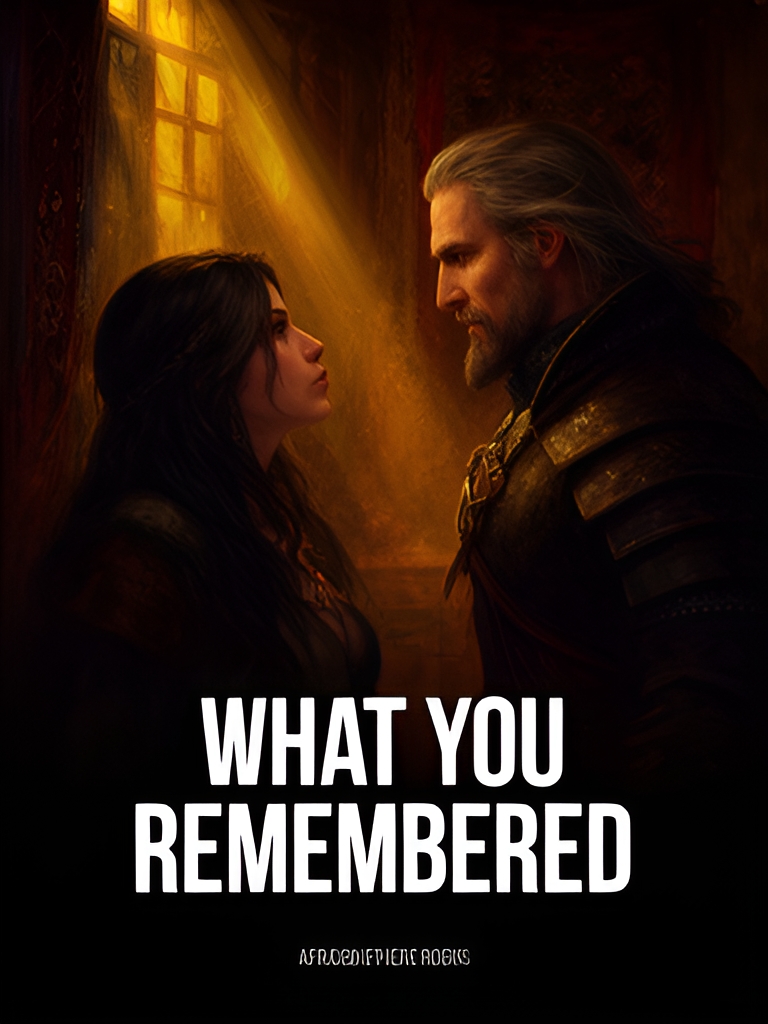
Fiction
What we remembered
by Zuzi
3 chapters1.1 hr read
Chapter 1
The Manuscript’s Lie
Vernon Roche dipped his quill into the inkwell, the nib catching slightly on the frayed edge of the vellum. The scriptorium of Loc Muinne smelled of damp stone and old glue, the air thick with the slow decay of forgotten records. Outside, rain tapped against the arched windows in a steady, weary rhythm, as if the building itself were exhaling.
He worked methodically, lifting tears in the parchment with a pair of fine tweezers, then laying down strips of Japanese tissue soaked in wheat starch paste. His fingers, calloused from sword hilts and reins, moved with a precision that surprised even him. Years of battlefield triage had taught him patience where it mattered—stopping bleeding, setting bones, mending what could be saved. This was no different. A torn page was a wound in memory; he would close it cleanly.
The chronicle lay open before him: The Northern Campaigns: A Record of the Scoia'tael Uprising, third volume, rebound in cracked leather. It had been pulled from the ruins of a Viziman outpost, waterlogged and half-molded, sent to Loc Muinne for restoration by order of the Northern Kings’ archivists. Vernon had volunteered—not out of scholarly interest, but because the task demanded focus, and focus kept the silence at bay.
He turned a page.
And stopped.
The ink was faded but legible, the handwriting neat, formal—too formal for the hurried annotations usually found in field reports. It described a raid near Dorne, late in the third year of the war. Scoia'tael forces had ambushed a Nilfgaardian supply convoy, overwhelmed the guards, and seized the wagons. Then, according to the text, Iorveth—named explicitly, his title given with unusual deference—had ordered his men to stand down upon discovering a group of civilians hiding in the woods nearby. Not only had he spared them, the passage claimed, but he had shared rations, tended to the wounded, and escorted them safely to the outskirts of Vergen before returning to his unit.
Vernon’s breath hitched.
He knew that raid. He had been there—not as a combatant, but as a Blue Stripes lieutenant attached to a Nilfgaardian field unit sent to pursue the raiders afterward. They had found the convoy burned, the drivers strung up from trees, their mouths filled with dirt. And they had found the villagers—six of them, an old couple, two children, a young woman clutching an infant—cowering in a ravine, their hands bound not by elf ropes, but by their own fear. The Scoia'tael had passed through like wind through grass. No words exchanged. No mercy offered. No rations shared.
Iorveth had never claimed otherwise.
Vernon leaned back, the chair creaking under his weight. His jaw tightened. This wasn’t a mistake. No weary scribe mishearing a name, no water-smudged ink causing a misreading. This was a clean insertion, deliberate and polished. Someone had sat down and written this—not to record truth, but to reshape it.
Anger flared, hot and sharp behind his ribs. Not for himself. He had no stake in how history remembered him. But for Iorveth—proud, prickly, merciless when he needed to be, yet never false. To paint him as a benevolent savior, to slip this lie into the record like a coin slipped into a beggar’s palm… it wasn’t honor. It was pity dressed as praise. And worse—it was a way to soften the edges of a rebellion that had burned villages, ambushed patrols, and killed without hesitation when it served their cause. To make the elf good was to make the war simple. And Vernon knew better than anyone: nothing about it had been simple.
He traced a finger along the edge of the false passage, feeling the slight ridge where the new ink sat atop the old parchment. Who had done this? A Viziman sympathizer trying to ease their guilt? A Nilfgaardian propagandist seeking to frame the Scoia'tael as conflicted, therefore weaker? Or worse—someone among their own, trying to make the rebellion palatable to human ears by inventing a saint where there had only been a soldier?
Whatever the reason, it was an insult. Not to the truth—though it violated that—but to Iorveth’s integrity. The elf had never asked for forgiveness. He had never wanted to be seen as merciful. He had fought for his people’s survival, and he had done what he believed necessary. To reframe his actions as kindness was to erase the weight of his choices. To say, You didn’t mean it. You were better than that. As if his strength needed forgiving.
Vernon rose, knocking over a bottle of wheat starch paste. It spilled across the desk, spreading slowly toward the edge. He didn’t move to stop it.
He would find Iorveth.
Not to argue. Not to demand an apology. But to tell him the truth: that someone had rewritten his deeds, and that Vernon Roche, who had seen what he had done and what he had not done, would not let that stand.
He rolled the chronicle shut, the leather stiff with age and damp. The false passage burned in his mind like a brand. He slipped the manuscript into his satchel, buckled it tight, and stepped out into the rain-soaked cloister.
The corridors of Loc Muinne were empty, the brothers at vespers. His boots echoed on the stone as he descended the spiral stair, passed the armory where rusted swords leaned in racks, and pushed through the heavy oak door into the courtyard.
The sky was heavy with cloud, the air cold and wet. He pulled his coat tighter, the wool rough against his neck. The road to Vergen lay south, through the Pontar Valley—three days on horseback if he pushed, longer if the rivers had swollen. He didn’t know where Iorveth was now. Rumors placed him in the foothills near the river, leading a remnant band that had refused the amnesty, still believing in the cause, still wary of traps.
But Vernon would find him.
He mounted his mare at the stables, the beast snorting as she shifted her weight. He took the reins, glanced once back at the scriptorium window—a dark rectangle in the rain-lit façade—and then turned south.
The manuscript lay against his thigh, its weight familiar, its lie heavier than truth.
He kicked the mare into a walk, then a trot, and left Loc Muinne behind—not as a archivist mending paper, but as a soldier going to settle a debt not of blood, but of honor.
The rain had eased to a drizzle by the time Vernon crossed the last ridge into the foothills above the Pontar. The mare picked her way carefully over slick stone and rotting leaves, her breath fogging in the chill air. Vernon kept his hand near the hilt of his sword, not from fear of ambush, but from habit—a soldier’s instinct honed over years of watching for threats in the quiet places. The forest here was dense, ancient oaks and beeches blocking much of the sky, their roots gnarled like old fists gripping the earth. He had followed a narrow game trail for the last mile, one that wound upward and then doubled back, as if designed to confuse pursuers—or to hide those who wished not to be found.
He dismounted a hundred paces from the camp, leaving the mare tethered to a sapling where she could graze on the sparse undergrowth. He moved on foot, boots muffled by moss and damp earth, ears straining for any sound beyond the wind in the canopy and the distant rush of the river below. Smoke curled faintly through the trees to his left—thin, blue-gray, smelling of woodsmoke and something sharper, maybe dried herbs or tar. He paused, listening. No voices. No laughter. Just the quiet of a camp that knew how to stay unseen.
He stepped into a small clearing ringed by birch and hazel, where a low fire smoldered beneath a tripod of green wood. A lean-to of oiled canvas and branches sheltered a pallet rolled neat at one end, a bundle of furs and a water skin beside it. Near the fire, seated on a fallen log, was Iorveth.
He was mending a bow. Not the ornate, carved piece Vernon had seen him carry in skirmishes years ago, but a simpler stave of yew, its surface scarred from use. Iorveth’s fingers moved with quiet precision, wrapping sinew along the limb where it had split, his brow furrowed in concentration. His ears—tipped with black, alert even at rest—twitched once at Vernon’s approach, then settled again. He did not look up. Did not reach for a blade.
Vernon stopped ten paces away, the manuscript heavy in his satchel. He did not call out. Did not raise his hand in greeting. He let the silence stretch, the only sound the soft rasp of sinew being drawn tight and knotted.
At last, Iorveth spoke, his voice low, devoid of surprise. “You found it.”
“I followed the smoke.” Vernon kept his tone even, neutral. “You left it easy to find.”
“I did not leave it for you.” Iorveth finally glanced up, his gaze sharp, assessing. His face was lined with wind and fatigue, his jaw tight. He did not smile. Did not frown. He simply waited, as if measuring whether Vernon had come to fight or to talk.
“I came to show you this.” Vernon unfastened the satchel and drew out the chronicle. He held it by the spine, careful not to smear the wet ink on the false passage, and extended it toward him.
Iorveth did not take it at once. He studied the book, then Vernon’s face, as if weighing a trap. When he finally reached for it, his fingers brushed Vernon’s—calloused, quick, withdrawing as if burned. He opened the volume and turned to the marked page. His eyes scanned the text, brow knitting slightly as he read the fabricated account: Iorveth, commander of the Scoia'tael, spared the civilians, shared his rations, bound their wounds, and guided them safely to Vergen…
He read slowly. Silently. When he finished, he closed the book with a soft snap—not anger, not amusement, but something deeper. Resignation, perhaps. Or recognition.
He looked up. “You were there.”
“I was.” Vernon kept his voice level. “I saw what happened. I saw what you didn’t do.”
Iorveth nodded once, as if acknowledging a fact long known. Then he said, “You think I would not know? That I would not feel the sting of seeing my name attached to a kindness I never gave?”
“I think someone meant to honor you.” Vernon chose his words carefully. “To make your cause seem less… harsh. To paint you as merciful when mercy was not your way.”
Iorveth let out a short, humorless laugh. “Mercy. As if sparing a few frightened villagers would wash clean the blood on my hands. As if a lie could make the war righteous.” He shook his head. “No. They did not do this to honor me. They did it to bury me.”
Vernon frowned. “Bury you?”
“The rebellion was never about being good.” Iorveth’s voice dropped, intense. “It was about being free. About refusing to kneel. About striking back when they came for our homes, our children, our tongues. They want us to be pitied. To be seen as tragic, misguided—elves who lashed out because we were broken, not because we were wronged. They want to say, Look, even they could be kind. As if kindness erases the reason we fought.”
He leaned forward, elbows on his knees, the bow forgotten in his lap. “If they paint me as merciful, then my anger becomes a flaw. A failure of control. A moment of weakness I should regret. But I do not regret it. I do not apologize for it. My wrath was not cruelty—it was answer. It was the only language they understood.”
Vernon felt something shift in his chest—not guilt, not exactly, but a tightening, like a strap pulled too tight. He had always seen Iorveth as dangerous, yes, but also principled. Unyielding. He had never thought of him as someone who needed his rage justified.
“I allowed the lie to stand,” Iorveth said, quiet now, “not because I wanted to be seen as good. But because if I denied it—if I said, No, I did not spare them, I left them to their fear—then they would say, See? He admits it. He is nothing but a beast. And then they would dismiss the whole thing. The burning fields. The strung-up drivers. The villages emptied in the night. They would say it was all just… elf savagery. No cause. No justice. Just violence for violence’s sake.”
He looked at Vernon then, really looked at him, and Vernon felt seen—not as a lieutenant, not as an enemy, but as a witness. “You were there. You know what they did to us before we ever raised a bow. You know what they would have done if we had not fought back. So let them believe the lie. Let them think we are capable of mercy. Then when they see the burned farms, the hanged men, the children taken in the night—they cannot say it was mindless. They must ask: What drove them to this? And the answer is not madness. It is memory.”
Vernon lowered the chronicle to his lap. The leather was cold, damp. He had come to correct a falsehood. He had expected anger, denial, perhaps even gratitude for setting the record straight. Instead, he found something more complicated—a deliberate deception, not for glory, but as a shield.
“You let them believe you were merciful,” he said slowly, “so they could not dismiss your anger as meaningless.”
Iorveth picked up the bow again, testing the tension of the newly wrapped sinew. “Let them think we have hearts. Then they cannot say we have none.”
The fire popped, sending up a spiral of sparks that vanished into the damp air. Vernon thought of the ravine near Dorne—the bound villagers, the silence, the way the Scoia'tael had moved through like wind, leaving no trace but destruction and dread. He had seen no mercy that day. But now he understood: the lie was not about what had happened. It was about what had to be believed to keep the truth from being erased.
He looked at Iorveth—the set of his jaw, the way his ears lay flat against his skull in focus, the scar along his left cheek catching the firelight—and realized the elf was not asking for forgiveness. He was asking to be understood. Not as a saint. Not as a monster. But as someone who had chosen, and lived with the cost.
Vernon did not speak. He did not need to. The truth, he realized, was not always in what was said. Sometimes it was in what was allowed to stand.
He rose slowly, folding the chronicle and placing it back in his satchel. “I’ll leave you to your work.”
Iorveth did not look up. “You will stay the night?”
Vernon hesitated. He had not planned to linger. But the rain was picking up again, drumming on the canvas lean-to, and the road back to Vergen was long. Moreover, he was not ready to go. Not yet.
“I’ll stay,” he said. “If you’ll have me.”
A pause. Then, almost imperceptibly, Iorveth nodded. “There is bread and dried meat. The water is clean.”
Vernon unsaddled the mare and led her to a stand of trees where she could shelter. He returned with a blanket from his roll and laid it near the fire, not too close. He sat, warmed by the flames but not by ease. The silence between them was not hostile. It was wary. Respectful, even. Two soldiers who had fought on opposite sides, now sharing the same smoke, the same dark, the same unspoken knowledge: that war did not end when the swords were sheathed. It lived in the stories told afterward. And whoever controlled those stories controlled what was remembered—and what was forgiven.
He watched Iorveth work on the bow, the steady rhythm of his hands, the focus in his gaze. The false passage in the chronicle burned no less in his mind. But now it was not just a lie to be corrected. It was a challenge. A question: Who gets to decide what we are remembered for?
Vernon did not answer. He only listened—to the fire, to the forest, to the quiet breath of the elf beside him—and waited for the night to deepen.
Vernon stayed until the fire burned low, the embers glowing like swallowed stars beneath a shroud of ash. The rain had eased to a whisper against the lean-to, but the air remained thick with damp and the scent of wet wool and woodsmoke. Iorveth had returned to his bow, the sinew now taut, testing it with a slow, deliberate pull. Vernon watched the play of muscle in his forearm, the way his fingers adjusted the grip—small, practiced motions that spoke of a life measured in tension and release.
He had meant to leave. The chronicle was safely packed, his mare tethered and fed, the night deepening. Yet he remained, not from indecision, but because the silence between them had shifted. It was no longer wary, but expectant—as if the space between two people who had spent years interpreting each other’s actions through the lens of war had finally thinned enough for something else to pass through.
Iorveth’s ears twitched—not at a sound, but at a thought, Vernon realized. The elf was listening to him.
“I saw her,” Iorveth said suddenly, not looking up. “The girl. Near Dorne. Not in the chronicle. Not in any record.”
Vernon did not speak. He waited.
“She was no older than twelve. Maybe less. Barefoot, her dress torn at the shoulder, one braid come loose. She stood in the doorway of a burning cottage, not running, not screaming. Just… staring. At the smoke. At the bodies. At us.”
Iorveth’s voice was low, roughened not by anger, but by the effort of dragging something up from deep ground. Vernon could see it in the set of his shoulders—the way they had dropped, just slightly, as if bearing a weight he had long carried alone.
“I recognized her face. Not her features—elves and humans don’t share that kind of likeness—but the way she held her chin. The way her eyes flicked left before she blinked, like she was listening for something no one else could hear. My sister did that. When she was afraid, she’d listen for the wind in the pines behind our house. Said it told her if the storm was coming or going.”
A pause. The fire sighed.
“I reached for her. Not to save her. Not out of pity. I grabbed her wrist and pulled her back inside—away from the road, away from the main force. I shoved her under the cellar door, told her to stay quiet, to wait until the burning stopped. I left her a knife. Not to fight with. To end it, if it came to that.”
Iorveth finally looked at him. His eyes were not pleading. They were stating a fact, bare and unadorned.
“She reminded me of her. That’s all. Not mercy. Not kindness. Memory. A reflex, like flinching from a blow you know is coming.”
He let out a breath that might have been a laugh, if it hadn’t sounded so raw.
“And one of our own saw me. A young fighter—barely more than a boy—who’d lost his uncle to a human patrol the week before. He saw me pull her back, saw me leave her there, and he came to me after, fists clenched, voice shaking. You showed mercy to the enemy, he said. In the midst of battle. That’s weakness.”
Iorveth’s jaw tightened. “I did not deny it. I said, I did what I had to. He said, Then you are no better than them. And he struck me. Across the face. With the flat of his blade. Not to kill. To mark.”
He touched the scar on his left cheek, just below the eye. The firelight caught the ridge of old tissue, pale and tight.
“They washed it with salt and bound it with yarrow. No one spoke of it for days. But I felt it. Every time I drew a bow. Every time I gave an order. It was not the pain that stayed. It was the knowledge—that to them, mercy was not a virtue. It was a betrayal. A sign that I had forgotten what we were fighting for.”
He fell silent. The bow rested across his knees now, untouched. Vernon could see the truth of it not in the elf’s words, but in the stillness that followed—the way his hands lay open in his lap, not clenched, not ready, but exposed.
“I would do it again,” Iorveth said, quiet but firm. “If I saw her. If I saw any child standing in the fire, staring not at the enemy, but at the end of something. I would pull them back. I would leave them a knife. I would take the lash.”
He looked at Vernon then, not seeking approval, but acknowledgment.
“But I will not let that moment be turned into a fable. I will not let them say, See? Even the elves can be good, as if that erases the fields we burned, the supplies we took, the lives we ended to stop them from ending ours. Mercy does not cancel out justice. It does not make the cause clean. It only makes it human.”
Vernon felt something loosen in his chest—not relief, but recognition. He had come to correct a lie. He had expected to argue over facts, dates, attributions. Instead, he had been given a truth far more inconvenient: that Iorveth’s act was not a contradiction of his rage, but an extension of it. A choice made not in spite of his anger, but because of it—because he remembered what it felt like to be helpless, and refused to let another feel it, even at cost to himself.
“I never saw her,” Vernon said. “That day near Dorne. I saw the convoy. The drivers. The villagers bound and silent. I saw the Scoia'tael move like shadow through the trees. But I did not see a girl in a doorway. I did not see you.”
Iorveth nodded. “No. You saw what we did. Not why we did it.”
A long silence followed. Not empty, but full—filled with the crackle of the fire, the distant hoot of an owl, the soft shift of Iorveth’s weight as he leaned forward, elbows on his knees, the bow cradled in his hands like something fragile.
Vernon thought of the chronicle again—not as a forgery to be erased, but as a testament to the lengths one would go to keep a story from being flattened into myth. The lie was not in the act itself, but in its use. To say Iorveth spared civilians was not false in spirit, even if false in detail. He had spared one. Not for propaganda. Not for grace. But because, for a moment, the war had stopped being about sides and had become about a girl who reminded him of his sister, and the unbearable weight of letting her face the fire alone.
He did not forgive Iorveth for the burned farms. He did not excuse the strung-up drivers. He did not need to. What he felt now was something rarer than forgiveness: the slow, reluctant acknowledgment that the elf before him was not a symbol of elven wrath or elven mercy, but a person who had carried both, and had paid in flesh and memory for the right to choose when to show either.
“I will not tell them the truth,” Vernon said finally. “Not as you’ve given it to me. Not yet.”
Iorveth’s ears flicked—surprise, or caution?
“Why not?”
“Because it is not mine to tell. It is yours. And if you ever choose to speak it, I will stand beside you when you do. But I will not be the one to pull it from you and lay it bare for others to judge.”
Iorveth studied him for a long moment. Then, almost imperceptibly, he inclined his head—not in thanks, but in acceptance.
The rain began again, softer this time, a steady hush on the canvas above them. Vernon pulled his cloak tighter, not against the cold, but against the weight of what had been shared. He did not sleep. He sat with his back to the lean-to, watching the dark tree line, listening to the rhythm of Iorveth’s breath beside him—not as an enemy, not as a ally, but as someone who had seen the same fire, and had chosen, in its light, to remember what others preferred to forget.
Vernon’s breath came slow in the damp air, each exhale a faint plume that vanished before it could mingle with the night. The fire had sunk to embers, casting long, trembling shadows that made the trees beyond the lean-to seem to breathe. Iorveth sat still beside him, the yew bow across his lap, fingers loose on the wood. The silence between them was no longer heavy with what had been said, but with what had not.
Vernon turned his head, just enough to catch the profile of the elf in the fire’s last glow. The scar on his cheek caught the light—a thin, pale line that pulled the skin taut when he blinked. Vernon had spent years studying faces in the aftermath of battle, reading tension in a clenched jaw, guilt in averted eyes. But this—this quiet, open stillness—was harder to read. It felt less like concealment and more like offering.
“I came to correct the record,” Vernon said, voice low, rough from disuse. “That was the reason I gave myself. The one I carried south through the Pontar Valley, over every ridge and ford.”
Iorveth did not look at him. His ears, tipped with black, swiveled slightly—not toward Vernon, but toward the rustle of something small in the undergrowth. A vole, maybe. Or the wind.
“But it wasn’t the only reason,” Vernon continued. “I won’t lie to you about that. Not now.”
Iorveth finally turned his head. His eyes, pale as frost on stone, held Vernon’s. Not challenging. Waiting.
“I wanted to see you,” Vernon said. The words came harder than he expected, scraped raw at the edges. “Not as the commander of the Scoia'tael. Not as the name in a chronicle or the shadow in a report. I wanted to see you. The elf who mends his bow by firelight. Who speaks of mercy like it’s a weapon he’s learned to wield. Who carries a scar not from an enemy’s blade, but from his own kin.”
A flicker—something like surprise, or perhaps amusement—touched the corner of Iorveth’s mouth. It vanished as quickly as it came.
“And yet you sat here for hours,” he said, voice soft but edged, “and said nothing of it. You listened. You nodded. You even agreed to keep my truth buried. But you did not say why you came. You let me believe it was duty. Or guilt. Or the need to set the record straight.”
Vernon swallowed. The fire popped, sending a spray of sparks into the dark. “I didn’t know how to say it.”
“You are a man of words,” Iorveth said. “You’ve spent your life giving orders, writing reports, correcting falsehoods with ink and precision. You could have said it at any point. When I spoke of the girl. When I showed you the scar. When you admitted you hadn’t seen her. You chose silence.”
“I was listening,” Vernon said, defensive before he meant to be. “I was trying to understand.”
“Understanding does not require silence,” Iorveth replied. “It requires honesty. Or at least the courage to admit when you are lying to yourself.”
Vernon looked away, toward the tree line where the rain had left the leaves heavy and glistening. The scent of wet bark and woodsmoke clung to the air. His hands, resting on his knees, felt too large. Too clumsy. He remembered the weight of a sword in his grip, the certainty of command. This—this vulnerability—was unfamiliar territory.
“I have thought of you,” he said, the admission tearing free before he could stop it. “Since the war. Not often. Not in ways I allowed myself to name. But… I have thought of you.”
Iorveth was still. Not rigid, but attentive, as if measuring the weight of each syllable.
“In what way?” he asked. Not unkindly. But demanding.
Vernon hesitated. The truth felt too large for the space between them, too dangerous to speak plainly. But he had come this far. He owed him at least that.
“I thought of you when I passed through Vergen and saw the market stalls rebuilt,” he said. “I thought of you when I heard a child laugh too loud in the street and flinched, waiting for the shout that never came. I thought of you when I found myself watching the tree line at dusk, not for movement, but for the shape of it—the way the branches cut against the sky. I thought of you when I realized I missed the sound of your voice—not because I needed to hear it, but because I remembered how it felt to be heard by you.”
He risked a glance. Iorveth’s expression was unreadable, but his ears were forward, tilted slightly toward Vernon, as if catching every word like prey in the underbrush.
“I did not come here to make excuses,” Vernon said. “I did not come to ask for forgiveness. I came because I needed to know if the man who pulled a girl from fire was still the same one who stood in the rain and said, I did what I had to. And I needed to know… if I still wanted to find out.”
The words hung. Not a confession of love. Not a plea. But something quieter, and therefore more dangerous: an acknowledgment that the past was not buried, and that the present was not empty.
Iorveth did not speak for a long time. The fire gave its last sigh and collapsed into a bed of glowing coals. Darkness pressed in, soft and absolute, broken only by the slow blink of stars through the thinning clouds. The rain had stopped. The world was hushed.
When Iorveth finally spoke, his voice was low, roughened—not with anger, but with something like weariness.
“You are a strange man, Vernon Roche,” he said. “You value truth above all else. Yet you hide your own heart behind duty and silence. You come to me seeking honesty, and yet you withhold your own.”
“I’m learning,” Vernon said.
“Are you?” Iorveth turned fully now, facing him, the bow resting against his thigh. “Or are you only learning how to want without taking?”
Vernon had no answer. The question sat between them like a stone in still water—visible, but unfathomable in its depth.
Iorveth studied him a moment longer. Then, slowly, he reached not for his bow, but for the waterskin at his side. He unscrewed the cap, took a small drink, and offered it to Vernon.
Vernon took it. Their fingers brushed. Brief. Unremarkable. And yet, for a heartbeat, the world narrowed to that point of contact—warm skin, the roughness of a scar on Iorveth’s thumb, the pulse beating just beneath the surface.
Vernon drank. The water was cool, faintly sweet with moss. He handed the skin back.
“I will not pretend I understand it all,” Iorveth said. “The war. The silence between us. What you feel, or why you feel it now. But I will say this: I have not forgotten you either.”
He recapped the waterskin and set it aside. Then, without looking at Vernon, he added, “Do not mistake this for permission. Do not mistake it for promise. It is only an acknowledgment. Like the scar. Like the rain. Like the fact that we are still here, breathing the same air, even if we do not yet know what to do with it.”
Vernon nodded. He could not trust his voice.
Iorveth leaned back against the lean-to, eyes closed, ears relaxed but alert. The night deepened. Somewhere, an owl called again—closer this time. The fire was gone, but the cold had not yet bitten. They sat in the dark, not touching, not speaking, but no longer alone in it.
And for the first time in years, Vernon did not feel the need to fix anything. He only felt the weight of the moment—precarious, unguarded, and undeniably real. He did not know what came next. But for now, he was willing to stay in the dark and see what grew there.
Chapter 2
The Weight of Silence
The night air had settled into a deep chill, the kind that pressed against the skin and made breath visible in short, sharp plumes. Vernon pulled his cloak tighter around his shoulders, the wool rough from wear but still holding the day’s warmth. Above them, the stars were thick and unblinking, scattered across the black velvet of the sky like salt spilled across stone. The fire had long since surrendered to ash, but the embers still glowed faintly beneath a crust of gray, pulsing with a dull red light that painted their faces in shifting hues.
Iorveth sat cross-legged near the lean-to, the yew bow stave resting across his lap. His fingers moved steadily over the wood, smoothing a splinter with a small knife he kept sheathed at his belt. The scar on his left cheek caught the firelight now and then—a pale line just below the eye, old but still visible in the right angle. His ears, tipped with black, twitched occasionally at the faintest rustle in the undergrowth, not from alarm, but habit. Vernon had noticed it before: the way they swiveled like those of a hunting animal, always listening, even in repose.
He had not slept. Not truly. The closeness of Iorveth’s presence, the quiet intensity of it, kept him awake—not with tension, but with a kind of heightened awareness, as if his nerves had been stripped bare and left exposed to the night.
Then, without looking up, Iorveth spoke.
“You are shivering.”
Vernon glanced down at his hands, which were indeed trembling slightly, not from cold alone. “It’s the night,” he said. “Gets deep in the bones after a while.”
Iorveth finally lifted his gaze. His eyes, pale and sharp in the dim light, studied him for a moment before he shifted and patted the ground beside him. “Come closer to the embers. They still hold heat. And take off your boots. Wet wool against the skin invites chill.”
Vernon hesitated only a breath before obeying. He unlaced his boots, peeled off his damp socks, and drew his feet toward the fading warmth. The soles were sore from miles walked, the skin tight and tender. He sighed as the heat seeped in, slow and deep.
Iorveth reached into the pouch at his belt and pulled out a small bundle wrapped in damp moss. He unfolded it carefully, revealing layers of greenish growth clinging to a flat stone. “You asked how I move through the woods without leaving a trace,” he said. “Part of it is knowing what the land offers. Not just for shelter or water—but for food. Even in winter, there are things that sustain.”
He pointed to a patch of moss growing thick on the north side of a nearby rock, where the stone stayed cool and damp. “This one,” he said, tapping it with a fingernail. “Reindeer moss. Light gray, almost silver when dry. Grows in cushions. Not tasty, but filling. Boil it, and it softens. Mix it with powdered lichen and a bit of fat, and it keeps you going.”
Vernon leaned in, watching as Iorveth scraped a small amount into his palm. “And this?” he asked, indicating a darker, spongier clump clinging to the bark of a fallen log.
“Tree moss,” Iorveth said. “Rich in sugars. Best in spring, but still edible now if you’re careful. Avoid the bright yellow or orange kinds—those can make you sick. Stick to the deep greens, the dull grays. If it smells sharp, like ammonia, leave it. Trust your nose more than your eyes.”
Vernon reached out, tentative, and touched the moss Iorveth had offered. It was dry and brittle, but when he rubbed it between his fingers, it released a faint, earthy scent—like wet stone and old forests. “It doesn’t look like much,” he murmured.
“It isn’t,” Iorveth said. “But it’s there. And in war, or after, sometimes that’s enough.”
There was a pause. The owl called again, farther off now. Vernon thought of the roads he’d walked since the war’s end—not chasing traitors or quelling riots, but surveying broken bridges, measuring riverbeds for new fords, directing crews to lay stone where the old ways had washed away. He thought of the quiet pride in seeing a watermill turn again, of children chasing each other through a rebuilt market square, of the way the light fell across the Pontar at dusk, gilding the mist.
“I’ve been working on the roads,” he said, surprising himself with the ease of it. “North of Flotsam. The old causeway had collapsed in three places after the floods. We’re laying new pilings, driving them deep into the bedrock. Slow work, but it’ll last.”
Iorveth’s hands stilled on the bow stave. His ears flicked forward, then flattened slightly against his skull—not in anger, but in recognition. “Flotsam,” he said, the word low. “I remember the smoke. For days after the bombardment, the river ran black with ash and timber. The smell clung to everything—hair, wool, the inside of the mouth.”
Vernon froze, expecting the accusation, the old grief to rise like bile. But Iorveth’s voice held no blame, only observation. His gaze was distant, fixed on some point beyond the trees, where the mountains folded into darkness.
“I didn’t know you’d been there,” Vernon said quietly. “During the attack.”
“I wasn’t in the town,” Iorveth said. “But I was close enough to hear the screams cut off. Close enough to see the glow on the horizon, like the sky itself was burning.” He paused. His thumb traced the edge of the bow stave, slow and deliberate. “I lost cousins there. Not in the fighting. In the fire that followed. They had taken refuge in the miller’s barn, thinking stone would hold. It didn’t.”
Vernon swallowed. He had seen the aftermath—the charred beams, the wagons melted into their axles, the well filled with debris and worse. He had helped dig out what remained, not to bury, but to clear. To make space for something new.
“I’m sorry,” he said, the words feeling inadequate even as he spoke them.
Iorveth shook his head, a short, sharp motion. “Don’t be. You didn’t light the match. You’re trying to rebuild what others burned. That counts for something.”
The tension in Vernon’s shoulders eased, just a fraction. Not forgiveness—he hadn’t asked for it—but acknowledgment, offered without condition. It was more than he had dared to hope for.
They ate in silence after that. Iorveth handed him a portion of dried venison, tough but savory, and a piece of flatbread made from ground acorns and barley—dense, nutty, filling. Vernon tore off a piece and chewed slowly, appreciating the simplicity of it, the way the flavors deepened with each bite. No spices, no frills. Just sustenance, offered without ceremony.
When the bread was nearly gone, only a single square remained, resting on the clean stone between them. Vernon reached for it at the same time as Iorveth. Their fingers hovered above the bread, fingertips nearly touching—calloused skin, faint scars, the faint tremor of restrained motion.
For a heartbeat, neither moved. The air between them thinned, charged with something unspoken and electric. Vernon felt the pulse in his wrist, loud in his ears. He thought of the waterskin, of the brush of fingers, of the way Iorveth’s thumb had felt against his skin—rough, warm, alive.
Then, as if pulled by the same quiet force, they both drew back. Vernon’s hand fell to his lap. Iorveth’s fingers closed loosely around his knife hilt, not in threat, but in grounding.
The moment passed, leaving only the echo of what had almost been.
Iorveth finally picked up the last piece of bread and broke it in half. He pushed one portion toward Vernon, kept the other. “Eat,” he said. “We’ll need the strength for tomorrow.”
Vernon took it. His fingers brushed Iorveth’s again—brief, unintentional—but this time, neither pulled away. The contact lingered for a breath, then broke as they both turned their attention to the food.
Outside, the wind shifted, carrying the faintest hint of pine and damp earth. Somewhere in the dark, a fox barked once, then fell silent.
They finished their meal without another word. But the silence was different now—not empty, not wary, but full of things felt but not named. And for the first time since he had arrived, Vernon did not feel the need to fill it. He let it be. Let it grow. Let it hold what it would.
They finished their meal without another word. But the silence was different now—not empty, not wary, but full of things felt but not named. And for the first time since he had arrived, Vernon did not feel the need to fill it. He let it be. Let it grow. Let it hold what it would.
The fire had sunk to a bed of glowing coals, pulsing faintly red beneath a veil of ash. Vernon stirred the embers with the tip of his knife, sending up a brief spiral of sparks that died before they could rise more than a hand’s breadth. The night air had cooled, drawing the damp from the soil and the chill from the stone beneath them. He pulled his cloak tighter, not from cold, but from the lingering warmth where their fingers had touched over the bread.
Iorveth rose without a sound, unfolding from his seat like a shadow detaching from the ground. He moved to the edge of the camp, where a sapling had been bent low by wind and time, its tip touching the earth. With quiet efficiency, he snapped it free, then drew his knife along its length, stripping away bark and twigs until only a smooth, straight pole remained. He tested its weight in his palm, nodded once, and repeated the action—selecting, shaping, smoothing—until he held two matched lengths, each about as long as his forearm.
He returned, crouching beside Vernon without speaking, and placed one stick in his lap. The wood was cool, slightly resinous, smelling faintly of pine and sap.
“Not for killing,” Iorveth said, his voice low, meant only for Vernon’s ears. “For feeling.”
Vernon looked up. In the firelight, Iorveth’s profile was sharp—jaw tight, ears alert, eyes fixed on the space between them as if measuring distance. There was no challenge in his gaze, only invitation. Vernon took the stick, turning it over in his hands. It was lighter than a sword, but balanced, familiar in a way that unsettled him. He had not held a training weapon since the war’s end, not since he’d laid down his blade and picked up a level and a trowel instead.
“You remember how we used to spar?” Iorveth asked. Not mocking. Not accusing. Simply stating, as if recalling the color of the sky on a given day.
Vernon did. He remembered the clang of steel on steel, the shock up his arms, the way Iorveth would feint left and strike right before Vernon’s breath had finished leaving his lungs. He remembered the humiliation of being disarmed in front of his men, the heat in his face, the fury that followed—not at Iorveth, but at himself for being slow, for being predictable.
“I remember,” Vernon said. His voice came out rougher than he intended. He cleared his throat. “I remember you were always three steps ahead.”
Iorveth’s lips twitched—almost a smile, gone before it could fully form. “And you were always trying to be four. It made you careless.”
“It made me survive.”
“It made you predictable.” He shifted, rising to his feet. “Come. Show me what you remember.”
Vernon stood, testing the stick’s weight again. It felt alien in his grip, not because it was heavy, but because it carried no intent to harm. No weight of command. No expectation of blood. He settled into a loose stance, feet shoulder-width, knees slightly bent—the same posture he’d taught recruits a lifetime ago. Iorveth mirrored him, but with a looseness in his hips, a readiness that spoke of years spent moving through trees and shadows, never knowing when the next arrow would fly.
They began slowly.
First contact was light—stick to stick, a tap of wood on wood near the hilts. Vernon felt the vibration run up his arms, clean and sharp. He stepped in, thrusting forward with a motion meant to break guard. Iorveth deflected it with a slight turn of his wrist, the stick sliding off at an angle, then tapped Vernon’s ribs—not hard, but enough to make him grunt.
“Too stiff,” Iorveth murmured. “You’re leading with your shoulder. Your body follows your weapon instead of the other way around.”
Vernon frowned, adjusting. He tried again, this time initiating from the core, letting his hips drive the motion. The thrust was smoother, faster. Iorveth met it with a circular block, redirecting the force past his ear, then stepped in and struck Vernon’s stick from his hand—not with a clash, but with a twist that turned Vernon’s own momentum against him.
The stick fell to the moss with a soft thud.
Vernon stared at his empty palm. Heat rose in his neck—not shame, not yet, but the old, familiar sting of being bested. He opened his mouth to speak, to excuse, to explain, but Iorveth held up a hand.
“Again,” he said. “But this time, don’t think of winning. Think of listening.”
Vernon retrieved the stick. His grip was tighter now, knuckles white. He told himself it was just wood. Just movement. Just two men in the dark, relearning a language they’d once spoken in blood.
They sparred again.
And again.
Each exchange was a question and an answer. Vernon would press—fast, direct, relying on the precision that had once made him a feared commander—and Iorveth would flow around it, not blocking, but guiding, using Vernon’s force to unbalance him. There was no cruelty in it, no mockery. Only a quiet, relentless correctness, as if Iorveth were showing him not how to fight, but how to be present in his own skin.
Vernon began to notice things.
The way Iorveth’s breath never faltered, even when Vernon launched a flurry of strikes. The way his weight shifted—always on the balls of his feet, ready to spring, yet never tense. The way his eyes never locked on Vernon’s stick, but stayed soft, unfocused, seeing the whole body, the shift of weight, the flicker in the shoulders before a move came.
And beneath it all, the restraint.
Iorveth could have ended any exchange in a heartbeat. A flick of the wrist, a step inside Vernon’s guard—he could have struck the throat, the temple, the solar plexus. But he never did. His strikes were always to the ribs, the arms, the legs—places that stung but did not break. Places that taught, not punished.
Vernon felt it then—not just skill, but discipline. A kind of mercy, not given from pity, but from principle. Iorveth was not holding back to spare Vernon’s pride. He was holding back because he believed in the value of the exchange itself, not its outcome.
After a long sequence—Vernon pressing, Iorveth evading, then countering with a low sweep that Vernon barely jumped over—Iorveth lowered his stick and stepped back.
“Enough for now,” he said. His chest rose and fell steadily, but there was a sheen of sweat on his temple, a faint tremor in his hands. Vernon realized he was breathing just as hard.
They stood facing each other, sticks held loosely at their sides, the fire crackling low behind them. The night had deepened. The owl had not called again. Somewhere, a stream murmured over stone, constant and unseen.
Vernon lowered his weapon first. His arms trembled slightly, not from exhaustion, but from the release of tension he hadn’t known he’d been carrying. He looked at Iorveth—not at his stick, not at the ground, but at his face.
And Iorveth looked back.
No look away. No shift of gaze to the horizon, no tightening of the jaw as if bracing for words. Just steady, dark eyes meeting his, reflecting the firelight like wet stone.
Vernon’s throat tightened. He wanted to say something—I see you. I’ve missed this. I don’t know how to do this without turning it into a battle—but the words felt too heavy, too clumsy for the quiet between them. Instead, he nodded. Once. Slowly.
Iorveth nodded in return. Not a dismissal. Not an end. An acknowledgment.
They turned and sat back down by the fire, shoulder nearly touching, the space between them charged not with silence, but with the echo of motion—the memory of sticks meeting in the dark, of breath synced, of two bodies moving not as enemies, but as mirrors.
Vernon stared into the flames. His hands rested on his knees, palms up, open. He did not reach for Iorveth’s. He did not need to.
The warmth of the other man’s presence seeped into him anyway—steady, real, undeniable.
Somewhere in the dark, a twig snapped. Then silence again.
And for the first time in years, Vernon Roche did not flinch at the sound. He let it be. Let it pass. Let it mean nothing—and everything.
The first fat drop of rain struck Vernon’s cheek as he stared into the fire’s last embers. He blinked, wiped it away with the back of his hand, and frowned up at the sky. The stars had vanished, swallowed by a low, bruised cloud mass that rolled in from the west like a held breath.
Iorveth was already on his feet, one hand resting on the haft of his knife, the other lifting to catch the rain on his palm. He tilted his head, listening—not to the storm, but to the silence beneath it. The stream’s murmur had dropped an octave, swallowed by the wind’s first sigh through the pines.
“It’s breaking fast,” he said, voice low. “We need cover.”
Vernon pushed himself up, joints protesting from the day’s tension and the lingering hum in his muscles from the spar. He snatched his cloak from where it lay folded beside his boots and shrugged into it, the wool damp already from the ground’s breath. Iorveth had already moved, gathering the remains of the fire in a scrap of oilcloth—just in case—and slinging his stave across his back. They didn’t speak as they moved, boots splashing softly in the thickening mud, eyes scanning the slope for any sign of rock or overhang.
They found it just as the first gust tore through the trees—a shallow cleft in the cliffside, worn smooth by centuries of runoff, its lip jagged with lichen and moss. It wasn’t much, but it would break the wind and keep the worst of the rain from soaking them through. Iorveth ducked inside first, shaking out his cloak like a dog shaking water, then held the flap aside for Vernon.
The space was tight. They had to turn sideways to pass, shoulders brushing, hips aligning as they settled with their backs to the stone. The overhang leaned inward, dripping steadily now, creating a curtain of water that muffled the world beyond. Inside, the air was cool and close, smelling of wet stone, pine resin, and the faint, sharp tang of Iorveth’s leather jerkin where it had gotten damp at the shoulder.
Vernon drew his knees up, resting his forearms on them, and watched the rain fall in slanted sheets beyond the drizzle’s edge. The wind screamed through the pines above them, a sound like tearing canvas, then vanished into a hollow boom as it hit the cliff face and bounced back. Lightning flashed—not bright, but enough to paint the inside of the shelter in stark, blue-white relief: Iorveth’s profile, sharp and still, his ears pressed flat against his skull in instinctive defense against the noise.
Vernon swallowed. His pulse had picked up—not from fear, but from the sudden, unavoidable closeness. He could feel the heat of Iorveth’s side against his own, the slow rise and fall of his breath, the faint tremor in his fingers where they rested on his thigh. He hadn’t been this near to another person in years—not since the war, not since the last time he’d shared a blanket with a comrade under fire, and even then, it had been necessity, not choice.
He risked a glance. Iorveth was watching the storm, but his gaze was unfocused, inward. His jaw was tight, not with anger, but with something deeper—resignation, maybe, or the quiet exhaustion of weathering too many tempests.
Then, softly, so Vernon had to lean in to hear it over the wind’s roar: “What do you dream of now?”
The question hung in the damp air, unexpected and bare. Vernon’s mouth went dry. He hadn’t been asked that—not since before the war, not since anyone had seen him as more than a sword or a symbol. He opened his mouth, closed it. The rain drummed a steady rhythm on the stone above them.
“I dream… of building,” he said at last, voice rough. “Not roads. Not fortifications. Something that lasts. A house. With solid walls. A roof that doesn’t leak. A place where the wind doesn’t howl through the cracks.” He paused, swallowed. “I used to tear things down. Now I want to put them back together. Not because I have to. Because I want to.”
He risked another look. Iorveth’s eyes had flicked to him, dark and unreadable in the gloom. Then, slowly, he nodded.
“I dream of being allowed to hate,” he said. His voice was low, roughened—not by the wind, but by something older. “Not to be called a monster for it. Not to have my rage softened into a story about mercy, or my grief turned into a lesson. I want to hate what was done. To my people. To the land. To the quiet ones who just wanted to live.” He exhaled, a long, slow breath that fogged in the chill air. “I don’t want to forgive. I don’t want to be forgiven. I just want… to be allowed to feel it. Without having to justify it.”
Vernon’s throat tightened. He wanted to reach out—not to comfort, not to still the tremor in Iorveth’s hand, but to say I see it. I see the weight. I don’t think less of you for carrying it. But his hands stayed on his knees, palms open, empty.
The wind screamed again, a sudden gust that sent a spray of rain into the shelter, chilling Vernon’s neck. He pulled his cloak tighter, but the movement brought his arm into accidental contact with Iorveth’s—forearm to forearm, wool to leather, heat to heat. Neither pulled away.
Lightning flashed again, closer this time, and for a heartbeat, the world was stark: the curve of Iorveth’s jaw, the tension in his neck, the way his breath hitched—just once—when Vernon’s shoulder shifted against his.
Then the thunder came, a deep, rolling crack that seemed to shake the stone itself. Vernon flinched—not at the sound, but at the intimacy of the moment, the way the storm had stripped them bare not just of shelter, but of pretense. He looked away, staring into the dripping darkness beyond the overhang’s edge, where the forest dissolved into gray noise.
The rain began to ease after that—not all at once, but in degrees. The wind dropped to a moan, then a whisper. The drumming on the stone softened to a irregular patter, then stopped. Drips fell from the lip of the overhang, slow and measured, marking time in the sudden quiet.
Iorveth shifted first, drawing his leg in and wrapping his arms around his knees. Vernon followed suit, unfolding slowly, stiffness in his hips from sitting too long in the damp. They didn’t look at each other. Didn’t speak. The fire was dead, the night colder now, but the air felt cleansed—washed clean by wind and water, leaving only the smell of wet earth and stone.
When Vernon finally stood, his muscles protested, but he ignored it, offering a hand to help Iorveth up without thinking. Iorveth hesitated, then took it—calloused fingers gripping his, grip firm, brief. Vernon pulled him to his feet, and they stood facing each other in the gloom, water dripping from their cloaks, the storm behind them, the world quiet and washed clean.
Iorveth let go first. He tucked his stave under his arm, gave Vernon a single, slow nod—not farewell, not thanks, but acknowledgment. Then he turned and stepped out into the night, moving toward the trees where they’d left their bedrolls.
Vernon watched him go, the space between them widening with each step. He didn’t call out. Didn’t ask if he was all right. Didn’t mention the dream, or the rain, or the way his heart had hammered in his chest like it had something to say.
He just stood there, letting the silence settle—not empty, but full. Full of what had been said. Full of what hadn’t.
And when he finally turned to follow, he walked not behind, but beside—shoulder not quite touching, but close enough to feel the warmth, close enough to know he wasn’t alone.
He woke before dawn, the air still thick with the chill of night, and found Iorveth already gone from their shared bedroll. The fire was cold ash, the overhang empty but for the damp stone and the slow drip of water from the lip above. Vernon sat up, pulling his cloak tighter, and listened. The forest was quiet—no birds yet, only the distant creak of branches and the faint rush of the stream below.
He rose stiffly, joints protesting from the damp and the night spent on stone, and padded barefoot to the stream’s edge. The water was icy, shocking his ankles as he stepped in, but he welcomed it. He washed his face, ran his hands through his hair, and let the current pull at his cloak where it clung to his thighs. When he turned to leave, he saw it: a smooth, whetstone-shaped stone resting on a flat rock just above the waterline, dark with moisture, clearly placed there on purpose. He picked it up. It fit his palm perfectly, cool and dense, the surface fine-grained. He turned it over. No mark, no sign of who left it. But he knew.
He tucked it into his belt and walked back toward camp, where Iorveth’s bedroll lay neatly folded beside the ashes, the stave he’d been mending resting across it. Vernon paused. He didn’t touch it. Instead, he sat on his heels and began to lace his boots, slow and deliberate, watching the way the first light caught the edge of the yew, the faint scar along its length where it had split and been bound with sinew.
When he stood, Iorveth was there, emerging from the tree line with two rabbits dangling from a cord looped over his shoulder. He stopped, seeing Vernon, and gave a slight dip of his chin—not a greeting, not quite, but recognition. Vernon nodded in return, then turned to prepare the fire.
They ate in silence, the rabbits roasted on a spit Iorveth had set over the embers. Vernon watched the way Iorveth tore the meat—clean, efficient, no wasted motion—and how he wiped his fingers on a scrap of cloth before folding it neatly and setting it aside. When Iorveth offered him a share, Vernon took it without a word, their fingers brushing for the briefest moment as the meat passed between them. Neither flinched. Neither pulled away.
After, Vernon gathered the bones and scraps, wrapping them in leaves to carry farther down the stream to avoid drawing scavengers too close to camp. Iorveth waited, watching him work, then fell into step beside him as he returned. They didn’t speak. Didn’t need to. The path was narrow, flanked by ferns and moss-covered stone, and they walked it in step, shoulders loose but aware, the space between them just wide enough to deny intention, narrow enough to feel the shift of weight when one turned his head.
That evening, as twilight bled into night, Vernon found himself sharpening his small hunting knife—not out of need, but habit. The blade was already keen, but he ran the stone along its edge anyway, the rhythmic shhh-shhh soothing, a tether to the man he’d been before the war, before the roads and the trowel and the quiet insistence of building something that would last.
Iorveth sat across the fire, mending a tear in his cloak with sinew and a needle carved from bone. His movements were precise, economical, the thread disappearing into the fabric with barely a knot. Vernon glanced up. Iorveth’s eyes were down, focused on his work, but his ears—tipped with black, always alert—twitched at the sound of the stone on steel. Not in alarm. In awareness.
Vernon lowered the knife, wiped the blade on his thigh, and laid it across his knee. He watched the fire instead, the way the flames licked the logs, sending sparks upward that died before they reached the canopy of leaves above. The night was clear, stars sharp and cold overhead, and for the first time in days, there was no wind, no rain, only the soft pop of the fire and the occasional night insect in the undergrowth.
He found himself staring not at the fire, but at Iorveth’s profile—the strong line of his jaw, the way the firelight caught the edge of his ear, the faint pallor of the scar along his throat, half-hidden by the collar of his tunic. He remembered the weight of Iorveth’s hand in his, the grip firm and brief, the way his calluses had rubbed against Vernon’s palm. He remembered the accidental press of forearm to forearm in the overhang, the heat that had bloomed where wool met leather, and how neither had moved away.
A warmth spread in Vernon’s chest, slow and insistent. He wanted to say something—anything—to break the quiet. To tell Iorveth he had noticed the way he left the whetstone, the way he watched Vernon’s hands when he thought he wasn’t looking, the way his breath had hitched that night in the storm, not from fear, but from something deeper, something unnameable.
But he stayed silent. The words felt too heavy, too dangerous. To speak them would be to risk the fragile thing they’d built—not trust, exactly, but the space where trust could grow. He didn’t want to ruin it. Didn’t want to make Iorveth feel seen in a way that would make him retreat.
He shifted slightly, pulling his cloak higher, and caught Iorveth’s eye as the elf glanced up, sinew still looped between his fingers. For a heartbeat, they held each other’s gaze—Vernon’s open, searching; Iorveth’s guarded, but not unkind. Then Iorveth looked back down at his cloak, pulled the thread tight, and clipped it with his teeth.
Vernon looked away, staring into the fire, and felt the familiar ache of restraint—a tension not of longing denied, but of longing held in check, like a bowstring drawn but not released.
The next morning, Vernon woke to the smell of woodsmoke and something sweet—dried berries, perhaps, or crushed mint. He lay still, listening. Iorveth was up, moving quietly near the fire. Vernon kept his eyes closed, ears open, and heard the soft scrape of stone on stone, the rustle of fabric, the faintest sigh—almost imperceptible—of someone settling into a task.
When he finally opened his eyes, Iorveth was crouched by the fire, not cooking, but arranging stones in a small circle, laying twigs and dry moss within. Vernon sat up slowly, pulling his cloak around him, and watched. Iorveth wasn’t building a fire for warmth or cooking. He was making a signal—small, deliberate, the kind used by scouts to mark a safe path or a meeting point.
Vernon stood and walked over. Iorveth didn’t startle. Didn’t look up. Just added another twig, then stepped back, hands on his knees, head tilted as he assessed his work.
“It’s not much,” Vernon said, voice low, rough from sleep. “But it’ll catch the eye if someone’s looking.”
Iorveth glanced at him, then at the stone circle. “It’s not for them,” he said. “It’s for us.”
Vernon frowned. “Us?”
Iorveth met his gaze. “A marker. So we know we’ve been here. So we know we passed this way.” He paused. “So we know we weren’t alone.”
Vernon felt his throat tighten. He wanted to reach out, to touch Iorveth’s arm, to say I see you. I see this. I’m here. But he stayed still, hands loose at his sides, and nodded instead.
“I’ll add to it,” he said.
He knelt, picked up a smooth, water-worn stone from the stream’s edge, and placed it gently in the circle, nestled between two others. Iorveth watched him do it, then gave a single, almost imperceptible nod.
They didn’t speak again. Didn’t need to. Vernon rose, brushed the damp from his trousers, and turned toward the trail. Iorveth fell into step beside him, just behind his shoulder, close enough that Vernon could feel the warmth of his presence, the faint shift of air as he breathed.
They walked in silence, the forest waking around them—birds calling, squirrels chattering in the underbrush, the stream laughing over stone. And for the first time since the storm, Vernon didn’t feel the need to fill the quiet. He let it be. Let it hold what it held: the weight of what had been said, the warmth of what had been felt, the quiet certainty of walking beside someone who knew, without words, exactly what it meant to carry the past and still choose to move forward.
That night, the fire burned low but steady. They ate dried meat and hardtack, shared a flask of water, and sat shoulder to shoulder—not touching, but near enough that Vernon could feel the heat of Iorveth’s arm through his tunic, the subtle tension in his shoulder as he leaned forward to stir the embers.
Vernon found himself watching the way Iorveth’s fingers moved—long, sure, the nails clean and short. He remembered the feel of them, briefly, gripping his own in the overhang. He remembered the way Iorveth’s breath had hitched when their shoulders had shifted. He remembered the whetstone left on the rock, the cord coiled neatly beside his bedroll, the way Iorveth had watched him lace his boots that morning.
He turned his head slightly, just enough to catch the line of Iorveth’s jaw in the firelight, the way the shadows pooled in the hollow beneath his ear, the faint glint of the earring he wore—silver, shaped like a leaf, catching the flame.
Iorveth sensed the movement. His eyes flicked to Vernon’s, then away, not quickly enough to hide the flicker of something—recognition? longing?—in their depths. Vernon held his gaze for a breath, then looked back into the fire.
“I used to dream of peace,” he said, voice quiet, not looking at Iorveth. “Not the kind they signed in treaties. The kind you wake up to. No watch. No weight. Just… quiet.”
Iorveth was silent for so long Vernon thought he wouldn’t answer. Then, soft as ember-light: “Peace is a lie we tell the living so they can sleep. The dead don’t get to pretend.”
Vernon turned his head. Iorveth was staring into the fire, his profile sharp, his ears relaxed for once, not twitching, not alert—just… there. Vulnerable, in a way Vernon had never seen.
“I don’t want to pretend,” Vernon said. “I just want to be honest.”
Iorveth finally looked at him. His eyes were dark, unreadable, but his lips parted slightly, as if he wanted to speak, to ask, to say something back. Then he closed his mouth, looked down at his hands, and picked up a stick, began to peel the bark slowly, methodically.
Vernon didn’t push. Didn’t reach out. He just sat, letting the silence settle—not empty, but full. Full of what had been said. Full of what hadn’t.
And when he finally stood to roll his bedroll, Iorveth did the same, moving in tandem, neither leading, neither following. They stood facing each other for a moment, the fire between them, shadows dancing across their faces.
Iorveth gave a single nod—not farewell, not thanks, but acknowledgment. Vernon returned it.
Then Iorveth turned and walked toward the trees, his steps light on the damp earth. Vernon watched him go, then turned and walked the opposite direction, toward the stream, toward the place where they’d washed, where they’d left small gifts, where they’d built their silent markers.
He didn’t look back.
But he didn’t need to.
He knew Iorveth was there.
Not behind him.
Beside him.
Always beside him.
Chapter 3
What We Remembered
The fire had burned low to embers, casting a thin, wavering glow over the camp. Vernon sat cross-legged on the far side of the ring, the repaired manuscript resting on his knees. The leather cover was worn smooth at the edges from travel, the spine rebound with gut and waxed thread. He had worked by candlelight the night before, scraping away the false ink with a blade so fine it barely disturbed the vellum beneath, then washing the area with lime and water to lift the stain. What remained was not a correction, but an absence—a pale, irregular oval where the forged passage had been, like a tooth pulled clean from the gum.
Iorveth sat opposite him, the yew stave cradled in his lap. He had been sanding it with a shard of sandstone, the rhythmic scrape the only sound besides the occasional pop of the fire. His ears, tipped with black, were relaxed now, turned slightly outward as if listening to the night beyond the fire’s reach. He had not asked Vernon why he had done it. He had not needed to.
Vernon lifted the manuscript and held it out. “It’s done.”
Iorveth set the stave aside and took the book with both hands. He did not open it immediately. He turned it over, feeling the weight of it, the texture of the repaired cover. Then, slowly, he opened to the third volume, to the chapter on the Dorne raids. His fingers traced the edge of the page until they reached the blank space. He paused there, pad of thumb pressing gently against the vellum, as if testing whether the lie had truly been gone—or if it had only sunk deeper.
After a long moment, he looked up. His eyes were dark in the firelight, but clear.
“You removed it,” he said. Not a question.
“I did.”
“Why not rewrite it? Insert the truth? Say what really happened?”
Vernon swallowed. “Because it’s not mine to tell.”
Iorveth nodded, as if this answered something he had long suspected. He turned the page back to the blank space and ran his forefinger along its edge, then down the center, following the ghost of where the words had been.
“This,” he said quietly, “is more honest than any lie could ever be.”
He closed the book and placed it gently on the ground between them. Then he rose.
The movement was deliberate, unhurried. He stepped over the low line of stones that ringed the fire and came to stand before Vernon. The elf was taller than he remembered, or perhaps Vernon had simply forgotten how the angle of his jaw caught the light, how the faintest shadow hollowed beneath his cheekbone where the old scar lay. Iorveth’s hands rested at his sides, fingers loose, but Vernon saw the tension in the set of his shoulders, the way his breath had slowed.
Vernon did not move. He tilted his head back slightly to meet Iorveth’s gaze.
For a heartbeat, nothing passed between them but the crackle of the fire and the distant call of a nightjar. Then Iorveth leaned in.
His lips brushed Vernon’s—soft, testing, like a scout checking the wind. Vernon froze, breath caught in his throat. It had been years since anyone had touched him like this, not as a commander, not as a comrade-in-arms, but as something wanted. Something desired.
Iorveth pulled back just enough to search Vernon’s face. His eyes flicked to Vernon’s mouth, then back up. There was no hesitation in his stance now, only a quiet insistence.
Vernon answered by closing the distance.
This time, the kiss was deeper. Iorveth’s lips parted under his, warm and insistent. Vernon brought one hand up, fingers tangling in the thick fall of hair at Iorveth’s nape, feeling the faint prick of sweat-damp strands against his palm. Iorveth made a low sound in his throat—almost a sigh—and stepped closer, pressing Vernon back until his spine met the rough bark of the pine behind him.
They broke only long enough to draw air, foreheads resting together. Vernon could feel Iorveth’s heartbeat against his own chest, rapid and uneven. He slid his other hand down to rest on Iorveth’s hip, feeling the hard line of bone beneath the soft fabric of his tunic.
“You’re sure?” Vernon murmured, voice rough.
Iorveth answered by kissing him again—slower this time, more deliberate. His tongue traced the seam of Vernon’s lips, then slipped inside when Vernon opened for him. The taste of him was smoke and herbs and something wild, like crushed juniper berries. Vernon gripped him tighter, fingers digging slightly into the wool of his breeches as Iorveth’s hands slid up his chest, fingertips brushing over the scars along his ribs—old wounds from battles long past, now remembered not for pain, but for the way they made Iorveth pause, his breath hitching at the touch.
They stumbled back toward the furs, neither breaking contact. Vernon’s boot caught on the edge of the blanket, and they went down together in a tangle of limbs and muffled curses, Iorveth laughing softly against his mouth as they landed.
The fur was thick and worn, smelling of pine resin and elk grease. Vernon settled beneath him, one leg bent, the other stretched out. Iorveth braced himself on his elbows, hovering above, studying Vernon’s face in the fire’s glow. His ears were forward now, alert, but his expression was open—unguarded in a way Vernon had never seen.
“I’ve waited,” Vernon said, voice low.
“I know,” Iorveth replied. He lowered himself, capturing Vernon’s mouth again. This kiss was slower, deeper, a mapping of teeth and tongue and shared breath. Vernon arched into it, hands sliding down Iorveth’s back to grip his hips, urging him closer. Iorveth shuddered, pressing down until Vernon could feel the heat of him through the layers of cloth, hard and insistent against his thigh.
They moved together slowly, deliberately, as if making up for every missed chance, every word swallowed, every glance turned away. Vernon lifted his hips to meet Iorveth’s rhythm, gasping when the friction sent sparks up his spine. Iorveth buried his face in Vernon’s neck, lips brushing the pulse point there, teeth grazing lightly—just enough to make Vernon gasp.
“Like that?” Iorveth murmured against his skin.
“Yes,” Vernon breathed. “Again.”
Iorveth obliged, sucking gently at the spot beneath Vernon’s jaw, then trailing kisses up to his ear, where he whispered in the old tongue—a phrase Vernon didn’t understand, but felt in his bones: a vow, or a plea, or both.
Vernon turned his head, capturing Iorveth’s mouth once more. Their tongues slid together, slick and urgent, while Vernon’s hands roamed—up beneath Iorveth’s tunic to feel the ridges of his spine, the flare of his ribs, the sudden sharp intake of breath when Vernon’s thumb brushed over a nipple. Iorveth arched into the touch, a soft moan escaping him.
They moved like this for a long time—slow, exploratory, each touch a question and an answer. Vernon learned the way Iorveth’s breath hitched when his nails scraped lightly down his sides, the way his fingers curled when Vernon pressed palm-flat over his sternum. Iorveth, in turn, discovered the hollow beneath Vernon’s jaw that made him shudder, the way Vernon’s hips jerked when Iorveth bit softly at his lower lip.
Clothes came away in pieces—tunics pushed up, breeches shoved down to thighs—until skin met skin, hot and slick with sweat. Vernon wrapped his legs around Iorveth’s hips, ankles locking behind him, pulling him deeper with each thrust. Iorveth gasped, forehead resting against Vernon’s shoulder, one hand braced beside Vernon’s head, the other tangled in Vernon’s hair.
It was not fast. It was not rough. It was reverent—two bodies finally speaking the language they had denied themselves for years. Vernon felt every ridge of muscle, every tremor, every hitch of breath as if his nerves had been bared and laid against Iorveth’s. When Iorveth shifted his angle, Vernon cried out, back arching off the fur, fingers scrabbling for purchase.
“Iorveth—”
“I know,” he whispered, and Vernon came with a choked cry, heat flooding between them, Iorveth following seconds later with a low groan that vibrated against Vernon’s neck.
They collapsed together, trembling, slick with sweat and seed. Vernon wrapped his arms tight around Iorveth’s shoulders, face buried in the curve of his neck, breathing in the scent of him—salt, smoke, the faint iron tang of blood old and healed. Iorveth pressed a kiss to Vernon’s temple, then another to the corner of his mouth, slow and soft as a benediction.
For a long while, neither spoke. The fire had died to glowing coals, casting only a dim red haze over the tent flap. Outside, the night was quiet but for the whisper of wind through the pines and the occasional hoot of an owl.
Vernon traced idle circles on Iorveth’s sweat-damp shoulder blade, feeling the slow rise and fall of his back beneath his palm.
When Iorveth finally shifted, it was to roll onto his side, pulling Vernon with him. They lay face to face, foreheads touching, legs tangled. Vernon’s hand drifted up to touch Iorveth’s cheek, thumb brushing over the old scar.
“I’m sorry,” Vernon said quietly.
“For what?” Iorveth asked, eyes half-lidded.
“For not seeing you sooner. For letting the lie stand.”
Iorveth opened his eyes fully. He caught Vernon’s wrist in his hand, pressing Vernon’s palm flat against his heart.
“You see me now,” he said. “That is enough.”
Vernon nodded, throat tight. He leaned in and kissed him—brief, tender, a promise rather than a plea.
Outside, the night deepened. The stars wheeled overhead. And for the first time in years, Vernon did not feel the need to fix anything.
He was exactly where he was meant to be.
Vernon’s palm remained flat against Iorveth’s chest, feeling the slow, steady thrum beneath his fingers. The elf’s skin was warm, slick with cooling sweat, and Vernon traced the rise and fall of his ribs with idle curiosity, as if memorizing the landscape of a body he had only ever seen in shadow or silhouette. Iorveth’s breath hitched—not a gasp, but a subtle catch—when Vernon’s thumb drifted lower, brushing the faint ridge of an old scar just above the hipbone. Vernon froze, then pressed again, lighter this time, and felt the muscle beneath tremble.
“That one,” Vernon murmured, voice rough from disuse.
Iorveth opened his eyes, which had been half-lidded, and looked down at him. “From Flotsam,” he said. “Shrapnel. The miller’s barn—when it went up.”
Vernon remembered. He had been among those who lit the fuse. Not directly, not with his own hand, but as part of the barrage that had turned refuge into pyre. He had not known then that Iorveth’s kin had been inside. He had not known the elf carried the mark of it in his flesh.
“I’m sorry,” Vernon said again, though the words felt inadequate, hollow even after they had already been spoken.
Iorveth shifted slightly, guiding Vernon’s hand to another mark—thinner, paler, running parallel to his spine near the shoulder blade. “This one,” he said. “From a bolt. Near Dorne. The night I took the girl out.”
Vernon’s fingers stilled. He had imagined that moment a hundred times—elf moving through smoke and flame, not for glory, not for praise, but because a child’s cry had cut through the crackle of burning timber and he could not ignore it. He had thought it mercy. Now he knew it was something else: instinct, perhaps, or a refusal to become what they fought against. But not forgiveness. Never forgiveness for what had come before.
He traced the scar slowly, feeling the way Iorveth’s breath shortened, the way his hips jerked minutely against Vernon’s thigh. The elf was hard again, not from urgency, but from the slow, insistent pull of sensation—of being touched not as a symbol, not as a legend, but as a man who had bled and ached and endured.
“Does it hurt?” Vernon asked.
“Only when you stop,” Iorveth replied, and there was a ghost of his old wit in the tone, though his voice was low, roughened by desire.
Vernon smiled against his collarbone and let his hand wander lower, over the flat of Iorveth’s stomach, feeling the quiver of muscle beneath his fingertips. He learned the way the elf’s breath hitched when Vernon’s nails scraped lightly down his sides, the way his fingers curled into Vernon’s hip when Vernon pressed palm-flat over his sternum. He learned the hollow beneath Iorveth’s jaw that made him shudder when Vernon’s lips lingered there, the way his hips jerked when Vernon bit softly at his lower lip—just as Iorveth had done to him hours before.
They moved again, not with the frantic urgency of release, but with the slow, deep rhythm of rediscovery. Vernon rolled them gently, settling atop Iorveth, bracing his weight on his elbows so as not to crush him. Iorveth wrapped his legs around Vernon’s waist, ankles crossing at the small of his back, pulling him down until their chests touched, heart to heart. Vernon kissed him—slow, deep, tasting smoke and salt and the faint metallic tang of old blood that clung to his skin like memory.
Iorveth’s hands were everywhere at once—tangling in Vernon’s hair, scraping down his back, gripping his shoulders with bruising strength before softening into something almost reverent. Vernon gasped when Iorveth’s thumb found the sensitive spot just beneath his ribs, pressing in slow circles that made his vision blur at the edges. He buried his face in Iorveth’s neck, breathing in the scent of him—pine resin, elk grease, the clean, sharp smell of sweat and skin—and felt, not for the first time, that he was exactly where he was meant to be.
They moved together in silence now, save for the ragged catch of breath, the low murmur of approval when Vernon shifted his angle, the soft groan when Iorveth tightened his legs and rolled his hips upward. Vernon learned the way Iorveth’s breath hitched when he touched the inside of his thigh, the way his back arched when Vernon’s fingers found the ridge of his hipbone and pressed just so. Iorveth, in turn, discovered the spot just below Vernon’s ear that made him shudder, the way Vernon’s hips jerked when Iorveth bit softly at his earlobe—just enough to spark, not to wound.
Clothes were gone now, forgotten in a heap near the tent flap. Skin met skin everywhere—hot, slick, alive. Vernon traced the scars along Iorveth’s ribs with his lips, feeling the elf shudder beneath him, feeling the way his breath came faster, shallower, when Vernon’s tongue flicked over a nipple. Iorveth’s hands fisted in Vernon’s hair, pulling him up for a kiss that was fierce and tender all at once—teeth, tongue, the shared rush of breath.
They moved like this for a long time—slow, exploratory, each thrust a question, each moan an answer. Vernon felt every ridge of muscle, every tremor, every hitch of breath as if his nerves had been bared and laid bare against Iorveth’s. When Iorveth shifted his angle, Vernon cried out, back arching, fingers scrabbling for purchase in the furs beneath them.
“Iorveth—”
“I know,” he whispered, and Vernon came with a choked cry, heat flooding between them, Iorveth following seconds later with a low groan that vibrated against Vernon’s neck.
They collapsed together, trembling, slick with sweat and seed. Vernon wrapped his arms tight around Iorveth’s shoulders, face buried in the curve of his neck, breathing in the scent of him—salt, smoke, the faint iron tang of blood old and healed. Iorveth pressed a kiss to Vernon’s temple, then another to the corner of his mouth, slow and soft as a benediction.
For a long while, neither spoke. The fire had died to glowing coals, casting only a dim red haze over the tent flap. Outside, the night was quiet but for the whisper of wind through the pines and the occasional hoot of an owl.
Vernon traced idle circles on Iorveth’s sweat-damp shoulder blade, feeling the slow rise and fall of his back beneath his palm.
When Iorveth finally shifted, it was to roll onto his side, pulling Vernon with him. They lay face to face, foreheads touching, legs tangled. Vernon’s hand drifted up to touch Iorveth’s cheek, thumb brushing over the old scar.
“I’m sorry,” Vernon said quietly.
“For what?” Iorveth asked, eyes half-lidded.
“For not seeing you sooner. For letting the lie stand.”
Iorveth opened his eyes fully. He caught Vernon’s wrist in his hand, pressing Vernon’s palm flat against his heart.
“You see me now,” he said. “That is enough.”
Vernon nodded, throat tight. He leaned in and kissed him—brief, tender, a promise rather than a plea.
Outside, the night deepened. The stars wheeled overhead. And for the first time in years, Vernon did not feel the need to fix anything.
He was exactly where he was meant to be.
Vernon traced idle circles on Iorveth’s sweat-damp shoulder blade, feeling the slow rise and fall of his back beneath his palm.
When Iorveth finally shifted, it was to roll onto his side, pulling Vernon with him. They lay face to face, foreheads touching, legs tangled. Vernon’s hand drifted up to touch Iorveth’s cheek, thumb brushing over the old scar.
“I’m sorry,” Vernon said quietly.
“For what?” Iorveth asked, eyes half-lidded.
“For not seeing you sooner. For letting the lie stand.”
Iorveth opened his eyes fully. He caught Vernon’s wrist in his hand, pressing Vernon’s palm flat against his heart.
“You see me now,” he said. “That is enough.”
Vernon nodded, throat tight. He leaned in and kissed him—brief, tender, a promise rather than a plea.
Outside, the night deepened. The stars wheeled overhead. And for the first time in years, Vernon did not feel the need to fix anything.
He was exactly where he was meant to be.
The fire had long since surrendered to embers, their glow now a faint pulse beneath the ashes, like a heartbeat slowing to rest. The tent walls breathed with the night’s chill, but between them, warmth lingered—not just of skin, but of something quieter, deeper. Vernon’s fingers, still resting on Iorveth’s forearm, moved without thought, tracing the faint map of old scars and the soft trail of hair that led from elbow to wrist. He felt the elf’s breath, even and slow, against his own cheek. No urgency now. No need to prove, to explain, to mend. Only the quiet certainty of presence.
Iorveth’s hand lay flat against Vernon’s chest, palm spread over the sternum, feeling the steady thump of his heart beneath the ribs. His fingers, calloused from bowstring and blade, from carving wood and gripping reins, moved in slow, idle circles—not seeking, not claiming, simply acknowledging. The touch was light, almost hesitant, as if testing whether this moment was real, whether Vernon would flinch away if pressed too hard.
Vernon turned his head slightly, lips brushing the temple where sweat had dried in a faint line. “I don’t regret coming,” he whispered, voice rough with sleep and something softer—release. “Not for a second.”
Iorveth was silent for a long moment. The wind outside tugged at the tent flap, making it whisper against the pole. An owl called again, farther off now. When he spoke, his voice was low, not loud enough to break the spell, but clear as stone struck in stillness.
“I don’t regret letting you stay.”
The words hung between them, not as absolution, not as forgiveness offered or accepted, but as acknowledgment. A line drawn in the dark, not erased, but no longer guarded.
Vernon closed his eyes. He thought of the manuscript, now resting in his pack—the false passage torn out, the space left blank not as erasure, but as invitation. A silence where a lie had been. He had not filled it. He could not. That truth was not his to tell. But he had made space for it. And in that space, Iorveth had stepped forward.
He thought of the raid near Dorne—the smoke, the screams, the bolt that had found Iorveth’s shoulder as he pulled the girl from the flames. He had seen only the enemy then. Had not seen the hands that trembled not from fear, but from the weight of what they carried. Had not seen the elf who chose to risk himself not for mercy’s sake, but because to do nothing would have been to become what they accused him of being.
He had not known then. He knows now.
And knowing did not erase the past. The barrage at Flotsam still lived in his bones—the heat, the collapse, the smell of burning timber and hay. Iorveth’s shrapnel scar above the hipbone was a testament to that night, as real as the bolt wound near his shoulder. Vernon had not lit the fuse. But he had ordered the salvo. He had believed, then, in the necessity of breaking resistance. He still believed in duty. But he no longer believed that duty required blindness.
The war was not forgotten. It lived in the thin, pale line along Iorveth’s spine, in the way his ears still twitched at sudden sounds, in Vernon’s own habit of checking the horizon before sleep. But it no longer stood between them as a wall. It was simply part of the ground they stood on—uneven, scarred, but traversable.
Iorveth shifted slightly, drawing Vernon’s arm more fully across his waist. His fingers paused over Vernon’s heart, then spread, feeling the rhythm beneath skin and bone. Vernon mirrored the motion, hand flattening over the elf’s ribs, feeling the rise and fall of breath, the quiet strength beneath.
No words came for a while. Only the shared silence, thick with what had been said and what remained unspoken—not because it was dangerous, but because it no longer needed to be said to be known.
Vernon pressed a kiss to the corner of Iorveth’s mouth, slow and dry, like a seal. Iorveth turned his head just enough to meet it, lips parting slightly, not for more, but for the simple fact of contact.
Outside, the night deepened further. The stars wheeled, indifferent and bright. The fire was gone. Only the cooling embers remained, and the two of them, tangled in furs and silence, neither seeking to escape what they had been, nor pretending it had not shaped them.
But for the first time in years, they did not face it alone.
Vernon’s thumb brushed the ridge of Iorveth’s cheekbone, feeling the faint tremor beneath the skin when his breath hitched—not from pain, but from the quiet surge of something unguarded. He had learned, in these hours, that the elf’s stillness was not emptiness, but containment. A holding of breath, of feeling, of memory, like a bowstring drawn not to release, but to feel the tension of its own purpose.
He shifted slightly, propping himself on one elbow so he could see Iorveth’s face in the dim glow of the embers. The fire’s last light caught the silver in his lashes, the fine lines at the corners of his eyes—not age, but the weight of years lived sharply, without softening. Vernon had once thought that softness was surrender. Now he wondered if it was not, instead, the bravest thing left to do.
“I used to think,” Vernon began, voice low enough that only Iorveth could hear, “that if I stayed quiet long enough, the past would stop shouting.”
Iorveth’s eyes opened, dark and steady in the half-light. He did not speak. He waited.
“I thought if I fixed enough things—manuscripts, swords, my own mistakes—I could earn the right to forget.” Vernon’s fingers traced the line of Iorveth’s jaw, rough with stubble, warm from shared heat. “But I wasn’t trying to forget. I was trying to make it so no one else would have to remember what I did.”
Iorveth’s hand came up, slow, covering Vernon’s where it rested on his cheek. His touch was light, but firm. “You cannot unmake what was done,” he said. “Nor should you try to carry it alone.”
Vernon swallowed. “Then what do we do with it?”
“We remember it,” Iorveth said. “Not as a shield. Not as a sword. But as what it was.” He paused, gaze dropping to Vernon’s lips before lifting again. “And we let it inform us, not define us.”
The embers sighed, sending up a thin spiral of gray smoke that vanished into the tent’s peak. Somewhere in the dark, a pinecone snapped, sharp and sudden. Neither of them flinched.
Vernon let his forehead rest against Iorveth’s, breathing in the mix of smoke, sweat, and the dry, clean scent of elf-skin and old leather. He thought of the blank page in the manuscript—not a denial, not a correction, but a space where truth could breathe without being claimed. A space where neither of them had to be hero or villain, only what they were: two people who had survived, who had chosen, who were still choosing.
Iorveth’s hand slid down, fingers threading through Vernon’s hair at the nape, not to pull, but to hold. The gesture was simple, intimate in its quietude. No demand. No performance. Just presence.
Outside, the wind had dropped. The night held its breath.
And in the space between heartbeats, Vernon realized he was not waiting for dawn.
He was already here.
Vernon stirred first, the faint gray of dawn seeping through the tent’s canvas like diluted ink. He did not move at once, content to feel the weight of Iorveth against his side, the slow rise and fall of breath beneath his palm. The night’s chill had settled into the furs, but where they touched, warmth lingered—steady, unforced. He had not slept, not truly, but he had rested. And in that rest, something had shifted, not in the world outside, but in the way he carried himself within it.
Iorveth shifted too, not waking, but adjusting, his forehead brushing Vernon’s temple in a silent acknowledgment. No words were needed. The space between them had softened over the last hours—not erased, not forgotten, but no longer guarded. The past still lived in the scars, in the way Iorveth’s ears still flicked at the snap of a twig, in Vernon’s instinct to measure distance and threat. But it no longer demanded to be faced alone.
Vernon turned his head slightly, lips grazing the shell of Iorveth’s ear. “Dawn’s coming.”
A pause. Then, a quiet inhale. “I know.”
They did not rush. There was no urgency to rise, no need to reclaim distance through motion. Instead, they lay still for a few more breaths, listening to the forest wake—birds testing their calls, wind stirring the upper branches, the distant rush of the Pontar over stone. The embers were dead, but the earth still held the ghost of heat. Vernon reached for his boots, pulling them on slowly, laces tied with careful knots. Iorveth sat up, pulling his tunic over his head, movements economical but unhurried. He did not look away as Vernon watched him— the play of muscle across his shoulders, the way his hair fell across his brow, the faint silver in his lashes catching the first true light.
When Vernon stood, he offered a hand. Iorveth took it, grip firm, calloused palm meeting calloused palm. They pulled each other up—not as commander and lieutenant, not as elf and human, not as savior and soldier, but as two who had chosen, in the quiet dark, to stand beside one another.
Outside, the camp lay quiet. The tent stood half-collapsed, furs bundled, the firepit a circle of gray ash. No trace remained of the night’s intimacy but the impression in the ground and the memory in their bones. Vernon paused, hand on the flap, and looked back.
The smoke from last night’s fire had long since dissolved into the air, but the shape of the camp still lingered—a flattened circle where they had slept, the ridge where they had sharpened blades, the faint scuff marks where boots had turned in the dirt. He thought of the blank page in the manuscript, now packed safely in his satchel—not a denial, not an erasure, but a space held open. He had not rewritten the truth because it was not his to tell. But he had made room for it. And in doing so, he had made room for this.
A quiet certainty settled in his chest, not loud, not triumphant, but deep as root. He was not leaving something behind. He was carrying it forward—not as a burden, but as a foundation.
Iorveth stepped beside him, silent, already scanning the tree line with that habitual alertness, ears tilted slightly forward. But when he felt Vernon’s gaze, he turned. Not warily. Not cautiously. With something softer—recognition, and beneath it, something that had been buried too long to name.
His lips curved. Not a smirk. Not the tight, controlled line he wore when masking thought. This was a smile that began in the eyes—crinkling the corners, lifting the cheekbones, warm and unguarded. It was brief, fleeting as sunlight through leaves, but it reached him. Vernon felt it in his chest like a bell struck low and true.
Iorveth inclined his head, just slightly, toward the trail that wound down into the valley. “The path is clear this far. But the ridge ahead narrows. Loose shale. I’ll lead.”
Vernon nodded. “I’ll take rear. Watch our backs.”
No discussion of duty. No negotiation of rank. It was simply agreed, as breath is agreed upon in sleep. Iorveth turned and stepped onto the trail first, boots finding purchase on the damp earth. Vernon followed, matching his pace—not behind, not ahead, but alongside, close enough to feel the shift of weight before a step, close enough to see the way Iorveth’s hand rested near the hilt of his knife, not in tension, but in readiness.
The forest closed in around them—pines tall and close, moss thick on stone, the air cool and damp with night’s retreat. Sunlight filtered through the canopy in shifting bars, catching dust, catching the silver in Iorveth’s braid, catching the faint glint of the dagger at Vernon’s belt. Birds called—jay, thrush, the distant cry of a hawk riding the thermals. The world moved, indifferent and alive.
Vernon did not look back again. He did not need to. The camp was behind them, but it was not gone. It lived in the way Iorveth adjusted his stride when the ground slicked, in the way Vernon’s hand drifted to the strap of his satchel, feeling the solid weight of the manuscript within. It lived in the silence between them—not empty, but full of what had been said, what had been felt, what had been chosen.
They walked without speaking for a long time. Not because there was nothing to say, but because words were no longer the only way to know each other. Vernon noticed how Iorveth paused at a fork in the trail, head cocked, listening—not for danger, but for the sound of water. He pointed left, toward a hidden spring. Vernon nodded, and they adjusted course without breaking stride.
At a fallen log blocking the path, Iorveth stepped over it lightly, then turned and offered a hand to steady Vernon’s boot on the moss-slick bark. Vernon took it, grip brief but sure. No thanks were exchanged. None were needed.
Hours passed. The valley opened, the Pontar widening to the east, its voice a constant murmur over stone. They passed the ruins of a watchtower, half-swallowed by ivy, its stones worn smooth by rain. Iorveth touched the lintel briefly—not in reverence, not in sorrow, but in acknowledgment. Vernon saw it, and did not look away.
By midmorning, they stopped at a clearing near the river to drink and eat—dried meat, hardtack, a few berries Iorveth had picked along the way. They sat on opposite sides of a low rock, knees drawn up, shoulders relaxed. No need to fill the quiet. Vernon watched Iorveth peel the bark from a twig with his knife, shavings curling like smoke. Iorveth caught him looking and tilted his head, a question in his eyes.
Vernon smiled—small, real. “Just thinking how you make even whittling look dangerous.”
A ghost of the old smirk touched Iorveth’s mouth. “It is, if you’re careless.”
They ate. They drank. When they rose, they did so together, shouldering their packs without a word. Vernon took the rear again, as he had that morning. Iorveth led, not because he was told to, but because he knew the way, and Vernon trusted him to find it.
The road ahead was uncertain. They would face questions—about the manuscript, about their past, about what they were to each other now. There would be those who sought to use their story, to twist it into propaganda, to make them symbols of peace or warnings of folly. They would have to guard their truth, not with silence, but with speech—spoken plainly, without excuse or embellishment.
But for now, there was only the road, the river, the sky clearing to a pale, washed-blue. Vernon glanced at Iorveth’s profile—the strong line of his jaw, the way his ears moved at a bird’s call, the quiet focus in his gaze as he read the terrain. He thought of the blank page. Not a void, but an invitation. A space where memory could rest without being claimed, where two people could stand not as what they had done, but as what they had chosen to become.
He did not know what lay beyond the next bend. But he knew this: he was not walking away from the past. He was walking through it, with someone who had seen it, who had lived it, who had chosen, in the quiet dark, to let him see him in return.
And that was enough.
They stepped forward, side by side, into the light.