Children's
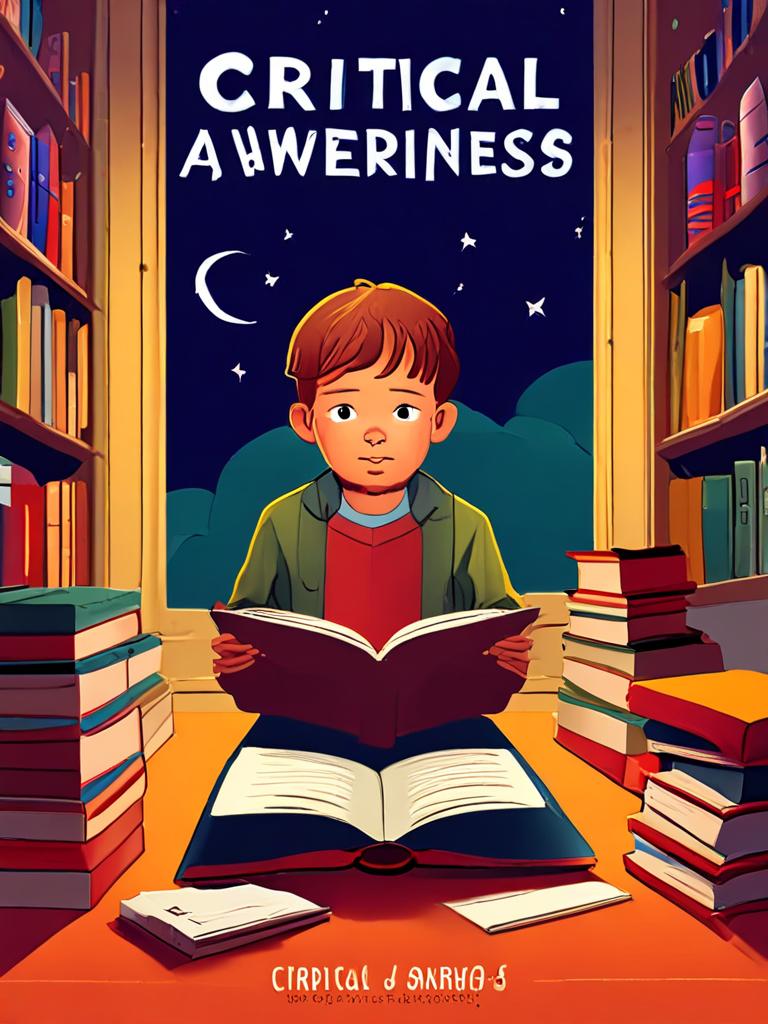
CRITICAL AWARENESS
by MOHAMMED GYAMFI
5 chapters18 min read
Chapter 1
Introduction to Critical Thinking
In a sunny classroom, filled with colorful posters and eager young faces, a group of children aged 3-5 years sat cross-legged on the floor, their eyes fixed on their teacher, Mrs. Thompson. She stood before them, a warm smile on her face, and began to ask, "Have you ever wondered how we make decisions or figure out what's real and what's not?" The children looked at each other, some nodding their heads, while others tilted theirs in curiosity. One little boy, named Timmy, raised his hand and said, "I think about what my mom says, and then I decide." Mrs. Thompson's smile broadened as she replied, "That's a great start, Timmy! But today, we're going to learn about something called critical thinking, which helps us make even better decisions."
As the children leaned in, intrigued, Mrs. Thompson continued, "Critical thinking is like being a superhero detective. It means we use our brains to look at information, ask questions, and think carefully before making a decision." A little girl, named Emma, asked, "Like when I'm trying to decide which game to play at recess?" Mrs. Thompson nodded, "Exactly, Emma! Critical thinking helps you weigh your options, consider what's important to you, and choose the best game for you to play." The children started to chatter excitedly among themselves, sharing times when they had to make choices, like what book to read or which friend to play with.
Mrs. Thompson gently guided the conversation back on track, "You know, critical thinking is not just about making choices. It's also about being aware of the world around us and understanding what's real and what's not." A curious boy, named Max, asked, "Like when my friend told me that dragons are real?" Mrs. Thompson chuckled and said, "Well, Max, that's a great example. Critical thinking helps us look at evidence and facts to figure out what's true and what's not. In this case, while dragons might be fun to imagine, they aren't real creatures that exist in our world." The children nodded, taking in this new information, as Mrs. Thompson wrote the words "Critical Thinking" on the blackboard, underlining them with a flourish.
As the lesson progressed, Mrs. Thompson asked the children to share examples of times when they used critical thinking in their everyday lives. Timmy mentioned how he had to decide which toy to play with when his friend came over, and how he thought about which one they would both enjoy. Emma talked about choosing which fruit to eat for snack time, considering which one was her favorite and which one was healthy. Max shared a story about how he had to figure out how to build a bridge with blocks, thinking about which blocks would be strong enough to hold the weight.
Mrs. Thompson listened attentively to each of their stories, nodding and smiling as they spoke. "You're all using critical thinking in your daily lives, and that's something to be very proud of," she said. "It's not just about making big decisions, but also about the small choices we make every day." The children beamed with pride, feeling happy that they were already using this important skill.
To further illustrate the concept, Mrs. Thompson told a story about a little rabbit who had to decide which path to take to get to the other side of the forest. "The rabbit looked at the paths and thought about which one would be the safest and easiest to follow," she said. "He considered the pros and cons of each path, thinking about which one would lead him to the most delicious carrots." The children giggled at the thought of the rabbit's dilemma, but also understood the importance of weighing options and making informed decisions.
As the story came to an end, Mrs. Thompson asked the children to think about how they could apply critical thinking to their own lives. "What are some times when you might need to use critical thinking?" she asked. The children thought for a moment before responding. Timmy said, "When I'm playing with my friends and we have to decide what game to play." Emma said, "When I'm choosing what book to read before bedtime." Max said, "When I'm trying to figure out how to solve a puzzle."
Mrs. Thompson smiled, impressed with their thoughtful responses. "Those are all great examples," she said. "Remember, critical thinking is like a tool that you can use every day to help you make good decisions and navigate the world around you." The children nodded, feeling more confident in their ability to think critically and make informed choices. As the lesson came to a close, Mrs. Thompson felt proud of her students for their eagerness to learn and their natural ability to think critically. She knew that with practice and patience, they would become skilled critical thinkers, able to navigate the complexities of the world with ease and confidence.
Chapter 2
Observation and Awareness
As the children sat in a circle, Mrs. Thompson held up a small, shiny object and asked, "What do you think this is?" The children leaned in, their eyes wide with curiosity, and began to share their thoughts. "It's a coin!" said one child. "No, it's a button!" said another. Mrs. Thompson smiled and said, "Let's take a closer look." She passed the object around the circle, encouraging each child to observe it carefully. As they examined the object, they noticed its shape, size, color, and texture. "It's round and silver," said one child. "It has a picture of a building on it," added another. After everyone had a chance to observe the object, Mrs. Thompson revealed that it was indeed a coin. "You all used your observation skills to gather information about the object," she explained. "That's an important part of critical thinking. By paying attention to details, you can make more informed decisions." The children nodded, excited to practice their new skill.
Mrs. Thompson then took the children on a nature walk around the schoolyard, pointing out different things for them to observe. "Look at the colors of the flowers," she said. "Notice the shape of the leaves on the trees." The children walked slowly, taking in their surroundings and asking questions. "Why are some flowers red and some yellow?" asked one child. "What kind of bird is making that noise?" asked another. Mrs. Thompson encouraged them to think critically about what they were observing, to ask questions and seek answers. As they walked, the children began to notice things they had never seen before - a bird's nest in a tree, a small stream running through the yard, a butterfly perched on a flower. "Wow, I never knew our schoolyard was so interesting!" exclaimed one child. Mrs. Thompson smiled, pleased to see the children developing their observation skills and becoming more aware of their surroundings.
As they continued their walk, Mrs. Thompson told them a story about a detective who used observation to solve a mystery. "The detective noticed a small clue that everyone else had missed," she said. "He used that clue to figure out who had taken the missing treasure." The children listened with wide eyes, fascinated by the story. "I want to be a detective when I grow up!" said one child. Mrs. Thompson smiled and said, "You can all be detectives, using your observation skills to solve mysteries and make informed decisions in your daily lives." The children nodded, eager to practice their new skills and become critical thinkers.
As the nature walk came to an end, Mrs. Thompson gathered the children around her once again. "Now that we've practiced our observation skills, let's think about how we can use them in our daily lives," she said. "Can anyone think of a time when they used observation to make a decision or solve a problem?" One child raised her hand and said, "I used observation to find my favorite toy that was missing. I looked around my room and noticed that it was under the bed." The other children nodded, impressed by her story. Mrs. Thompson smiled and said, "That's a great example of using observation to solve a problem. By paying attention to details, you were able to find your toy."
Another child spoke up, "I used observation to decide which game to play at recess. I looked around and saw that my friends were playing tag, so I joined in." Mrs. Thompson nodded, "That's another great example. By observing what was going on around you, you were able to make an informed decision about which game to play." The children began to share more examples of how they used observation in their daily lives, and Mrs. Thompson encouraged them to think critically about their experiences. As they shared their stories, the children realized that observation was an important part of critical thinking, and that it could be used in many different situations.
As the day drew to a close, Mrs. Thompson asked the children to reflect on what they had learned. "What did you learn about observation and critical thinking today?" she asked. One child said, "I learned that observation is like being a detective, looking for clues and solving mysteries." Another child said, "I learned that critical thinking is like using my brain to make good choices." Mrs. Thompson smiled, pleased with their responses. "That's right," she said. "Observation and critical thinking are important tools that can help you make informed decisions and solve problems. Remember to always be aware of your surroundings and to use your observation skills to think critically."
The children nodded, taking in her words. They knew that they still had a lot to learn, but they were excited to continue practicing their observation skills and developing their critical thinking abilities. As they said their goodbyes and headed home, Mrs. Thompson felt proud of the progress they had made. She knew that they would face many challenges in the future, but she was confident that they would be able to use their critical thinking skills to overcome them. The children had taken the first steps towards becoming critical thinkers, and Mrs. Thompson was eager to see how they would continue to grow and develop in the days ahead.
Chapter 3
Logical Reasoning for Kids
The children sat in a circle, their eyes wide with excitement, as Mrs. Thompson introduced a new game to help them practice logical reasoning. "Today, we're going to play a game called 'What's Missing?'" she explained, holding up a picture of a cat. "I'll show you a picture, and then I'll take something away. You have to use your brains to figure out what's missing." The children nodded eagerly, and Mrs. Thompson began the game. She showed them a picture of a cat with a bow tie, and then she covered the bow tie with her hand. "What's missing?" she asked. One of the children, a little boy named Timmy, raised his hand. "The bow tie!" he exclaimed. Mrs. Thompson smiled. "That's right, Timmy. The bow tie is missing." The children all clapped, and Mrs. Thompson continued the game with different pictures and missing objects.
As they played, Mrs. Thompson encouraged the children to think critically about the pictures and to use their observation skills to figure out what was missing. "Remember, you have to look carefully at the picture and think about what you see," she reminded them. The children took turns playing the game, and each time, they got a little better at figuring out what was missing. After a while, Mrs. Thompson introduced a new twist to the game. "Now, I'm going to show you a picture, and then I'm going to give you a clue about what's missing," she explained. "You have to use your brains to figure out what's missing, based on the clue." The children nodded, and Mrs. Thompson showed them a picture of a dog. "The dog is missing something that it uses to catch balls," she said. The children thought for a moment, and then one of them, a little girl named Emma, raised her hand. "The dog is missing its mouth!" she exclaimed. Mrs. Thompson smiled. "That's not quite right, Emma. But you're on the right track. The dog is actually missing its teeth." The children all laughed, and Mrs. Thompson continued the game with more pictures and clues.
As the game came to an end, Mrs. Thompson asked the children to reflect on what they had learned. "What did you learn from playing 'What's Missing?'" she asked. One of the children, a little boy named Max, raised his hand. "I learned that I have to look carefully at the picture and think about what I see," he said. Mrs. Thompson smiled. "That's right, Max. You have to use your observation skills to figure out what's missing." Another child, a little girl named Lily, spoke up. "I learned that I have to think critically and use my brain to solve the puzzle," she said. Mrs. Thompson nodded. "That's right, Lily. Critical thinking is all about using your brain to look at information, ask questions, and think carefully before making decisions." The children all nodded, and Mrs. Thompson could see the understanding in their eyes. They were beginning to grasp the concept of logical reasoning, and they were excited to continue learning and practicing their new skills.
As the days went by, the children in Mrs. Thompson's class began to apply their new logical reasoning skills to real-life situations. One day, during recess, Timmy lost his favorite ball. He looked everywhere, but couldn't find it. His friends tried to help him, but they couldn't find it either. Then, Emma remembered the game they had played in class. "Wait a minute," she said. "Let's think about this like we did in 'What's Missing?'. What was the last place you had the ball, Timmy?" Timmy thought for a moment, and then said, "I had it when we were playing catch over by the swings." Emma's eyes lit up. "That's it! Let's go look over by the swings." They all ran over to the swings, and sure enough, there was the ball, stuck in a tree. The children all cheered, and Timmy was thrilled to have found his ball.
Mrs. Thompson was impressed when she heard about what had happened. "You all used your logical reasoning skills to solve the problem," she said. "You thought critically about the situation, and you used your observation skills to figure out where the ball might be." The children beamed with pride, knowing that they had applied what they had learned in class to a real-life situation. As they continued to practice and develop their logical reasoning skills, they began to see the world in a new light. They started to notice patterns and connections that they hadn't seen before, and they began to make more informed decisions.
One day, Max's mom asked him to help her plan a trip to the park. She gave him a map of the park, and asked him to figure out the best way to get to the playground. Max studied the map carefully, using his observation skills to notice the different paths and landmarks. Then, he used his critical thinking skills to evaluate the different options, and he came up with a plan. "Mom, I think we should take the path that goes through the gardens," he said. "It's a little longer, but it's more scenic, and we can see the flowers." His mom was impressed. "That's a great idea, Max," she said. "You're using your logical reasoning skills to make a decision."
As the children continued to develop their critical thinking skills, they began to see the world as a complex and fascinating place, full of puzzles to solve and mysteries to uncover. They learned to approach problems with a logical and methodical mindset, using their observation skills and critical thinking to evaluate evidence and make informed decisions. And as they grew and developed, they became more confident and self-assured, knowing that they had the tools they needed to navigate the world and make a positive impact. Mrs. Thompson watched them with pride, knowing that she had played a small part in helping them develop these essential skills. "You are all critical thinkers," she said. "You have the power to make a difference in the world, and I have no doubt that you will."
Chapter 4
Making Informed Decisions
As the children sat in a circle, Mrs. Thompson asked them to think about a time when they had to make a choice between two or more things. "Remember when we went to the park last week?" she said. "Some of you wanted to play on the swings, while others wanted to play on the slide. How did you decide what to do?" Emma, a curious and thoughtful child, spoke up. "I wanted to play on the swings, but my friend wanted to play on the slide. So, we decided to take turns." Mrs. Thompson smiled. "That's a great example of considering options and making a decision. When we have to choose between two or more things, we need to think about what we want and what might happen if we choose one thing over another."
The children nodded, taking in Mrs. Thompson's words. "Let's practice considering options," she said, holding up a picture of a child standing in front of a ice cream truck. "Imagine you are this child, and you have to choose between a chocolate ice cream cone and a strawberry ice cream cone. What would you do?" The children looked at each other, excited to share their thoughts. "I would choose chocolate!" said Max. "No, I would choose strawberry!" said Sophia. Mrs. Thompson encouraged them to explain their reasoning. "Why would you choose chocolate, Max?" she asked. Max thought for a moment before responding. "Because I love chocolate, and it's my favorite flavor." Sophia, on the other hand, said she would choose strawberry because it was a healthier option and she liked the way it tasted.
Mrs. Thompson wrote down the children's responses on a chart paper, creating a list of pros and cons for each option. "You see, when we consider options, we need to think about the good and not-so-good things about each choice," she explained. "This helps us make a decision that is right for us." The children looked at the chart paper, fascinated by the process of weighing options. They began to realize that making decisions wasn't just about choosing something, but about thinking carefully about what they wanted and what might happen as a result of their choice. As they continued to discuss and consider options, the children developed their critical thinking skills, learning to evaluate evidence and make informed decisions.
As the discussion came to a close, Mrs. Thompson asked the children to reflect on what they had learned. "Remember, making decisions is not just about choosing something, but about thinking carefully about what we want and what might happen as a result of our choice," she said. Emma nodded, "I learned that it's good to think about the pros and cons of each option." Max added, "And it's okay to change my mind if I think something else is better." Sophia smiled, "I realized that I can make a decision that's good for me, and it's not just about what my friends want." The children's faces lit up with understanding, and Mrs. Thompson could see the critical thinking skills developing in their young minds.
Mrs. Thompson then asked the children to think about a time when they made a decision that didn't turn out as planned. "What did you learn from that experience?" she asked. The children thought for a moment before sharing their stories. Max talked about a time when he chose to play with a toy that he thought was really cool, but it ended up being boring. "I learned that just because something looks cool, it doesn't mean it's going to be fun," he said. Sophia shared a story about choosing a book that she thought would be interesting, but it was too hard to read. "I learned that it's okay to ask for help and choose something else if it's not working out," she said. Emma talked about a time when she chose to wear a dress that she loved, but it was too cold outside. "I learned that I need to think about the weather when I'm getting dressed," she said.
The children's stories sparked a lively discussion about the importance of learning from mistakes and using those experiences to make better decisions in the future. Mrs. Thompson smiled, "You see, making decisions is not just about choosing something, but about learning and growing from our experiences. When we make a decision that doesn't turn out as planned, we can use that as an opportunity to learn and do better next time." The children nodded, taking in Mrs. Thompson's words. As they left the classroom, they felt more confident in their ability to make informed decisions and excited to apply their critical thinking skills in their everyday lives. They knew that they would make mistakes, but they also knew that they could learn from those mistakes and become better decision-makers. With their newfound critical thinking skills, the children were ready to take on the challenges of growing up and making informed decisions that would shape their futures.
Chapter 5
Practicing Critical Awareness
As the children sat in a circle, Mrs. Thompson announced, "Today, we're going to practice our critical thinking skills with some fun exercises!" The children cheered and clapped, excited to put their new skills to the test. Mrs. Thompson handed out a worksheet with a picture of a puzzle and asked, "Can you figure out what's missing in this picture?" The children studied the picture carefully, using their observation skills to notice the details. One child pointed out that a piece of the puzzle was missing, and another child suggested that it could be a certain shape. Mrs. Thompson encouraged them to think critically and use their logical reasoning to evaluate the evidence. "What do you think is the most likely piece to be missing?" she asked. The children discussed and debated, using their critical thinking skills to come up with a solution.
Next, Mrs. Thompson introduced a game called "What's the Pattern?" where the children had to identify a pattern in a series of pictures. The children studied the pictures carefully, looking for clues and using their critical thinking skills to figure out the pattern. One child noticed that the pictures were all of different animals, and another child pointed out that they were all wearing different hats. Mrs. Thompson asked, "What do you think is the next picture in the pattern?" The children thought critically and used their logical reasoning to come up with a solution. As they played the game, Mrs. Thompson reminded them that critical thinking is like being a detective, using clues and evidence to solve a mystery.
The children also played a game called "Sort and Categorize," where they had to sort a set of objects into different categories. The children used their observation skills to notice the details of each object and their critical thinking skills to decide which category it belonged in. One child sorted the objects by shape, and another child sorted them by color. Mrs. Thompson encouraged them to think critically and use their logical reasoning to evaluate the evidence. "Why did you choose to sort the objects in that way?" she asked. The children explained their reasoning, using their critical thinking skills to justify their decisions.
As the exercises came to a close, Mrs. Thompson asked the children to reflect on what they had learned. "What did you learn about critical thinking today?" she asked. One child replied, "I learned that critical thinking is like being a detective, using clues and evidence to solve a mystery." Another child said, "I learned that critical thinking helps me make informed decisions and solve problems." Mrs. Thompson smiled, proud of the children for developing their critical thinking skills. "Remember, critical thinking is a process of using your brain to look at information, ask questions, and think carefully before making decisions," she reminded them. "Keep practicing your critical thinking skills, and you'll become experts at making informed decisions and solving problems!"
As the children packed up their worksheets and said their goodbyes, Mrs. Thompson reminded them that critical thinking is a journey, not a destination. "You've all made great progress in developing your critical thinking skills, but there's always more to learn and discover," she said. The children nodded, eager to continue practicing their new skills. One child asked, "Mrs. Thompson, can we do more critical thinking exercises at home?" Mrs. Thompson smiled, "Absolutely! You can practice critical thinking in your everyday life, whether it's solving a puzzle, playing a game, or making a decision about what to wear." She handed out a list of fun activities that the children could do at home to practice their critical thinking skills.
The children left the classroom, excited to share their new skills with their families and friends. One child turned to her parent and said, "Mom, I learned that critical thinking is like being a detective! Can we play a detective game at home?" Her mom smiled and replied, "That sounds like a great idea! We can set up a mystery for you to solve, and you can use your critical thinking skills to figure it out." The child beamed with excitement, eager to start her next critical thinking adventure.
As the days went by, the children continued to practice their critical thinking skills, applying them to real-life situations and making informed decisions. They used their observation skills to notice details, their logical reasoning to evaluate evidence, and their critical thinking to solve problems. They became more confident and independent, able to think for themselves and make good choices. Mrs. Thompson received feedback from parents and teachers, who reported that the children were using their critical thinking skills in all areas of their lives, from academics to social relationships.
The children's journey in critical thinking had just begun, and they were eager to see where it would take them. They knew that they would face challenges and obstacles along the way, but they were equipped with the skills and knowledge to overcome them. As Mrs. Thompson had reminded them, "Critical thinking is a process of using your brain to look at information, ask questions, and think carefully before making decisions." The children were ready to take on the world, one critical thinking challenge at a time. With their newfound skills, they would become curious, creative, and confident thinkers, able to navigate the complexities of life with ease and confidence. And as they grew and developed, they would continue to refine their critical thinking skills, becoming experts at making informed decisions and solving problems. The journey of critical thinking had just begun, and the possibilities were endless.