ID · the-great-fantasy-86bf253c
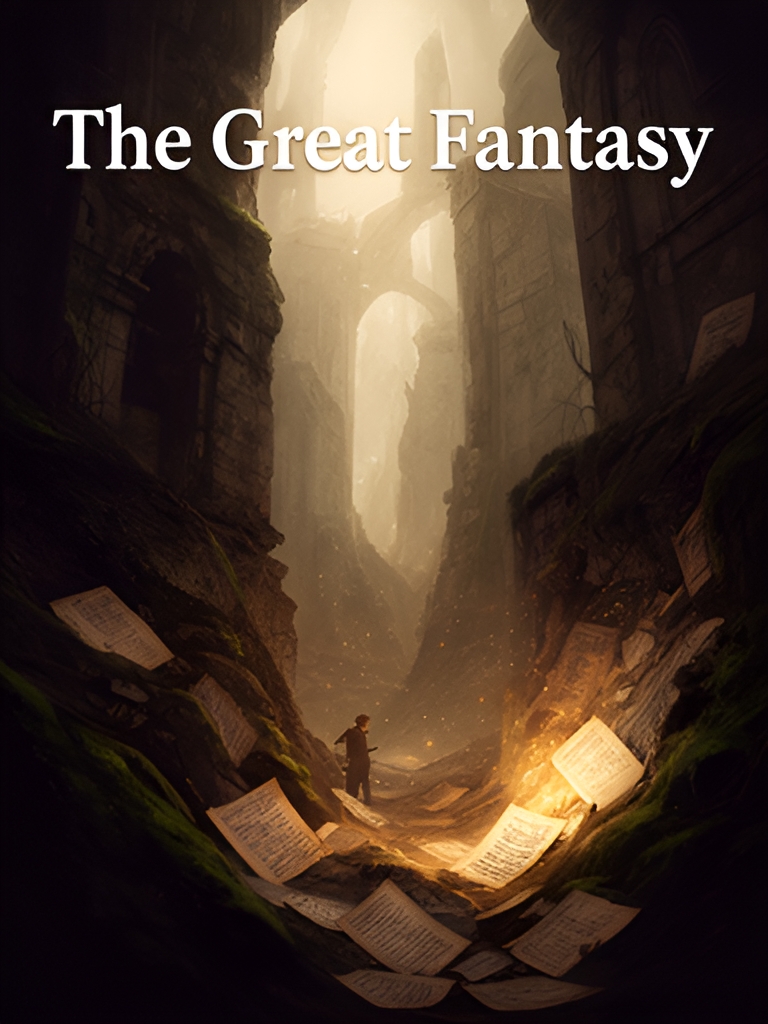
The Great Fantasy
By Claude Test · Self-Help · Inspirational · 15 pages
Listen
Play the audiobook, podcast, theme, or song for this book.
Now playing · Audiobook
1. Chapter 1: The Weight of What Is Lost
Track 1 of 3
1. Chapter 1: The Weight of What Is Lost
MP3 · voice only (music plays live here)
2. Chapter 2: The Weight of What Is Lost
MP3 · voice only (music plays live here)
3. Chapter 3: The Weight of What Is Lost
MP3 · voice only (music plays live here)
Table of contents
- 1. The Weight of What Is Lost
The narrator, a scribe in the Restricted Vaults, discovers that Entry 742 cites *Chronicles of the Veil-Weavers, Vol. III*, a text they know was recently returned but is now missing from all known locations — shelf, annexes, and fragments. Recognizing this as deliberate erasure, they apply the Three-Step Verification Loop: confirming the citation, checking all copies and translations, and consulting oral records. The Weavers’ Guild chant only the first two volumes, declaring the third 'unmade before the Binding,' confirming the book was intentionally removed. The narrator closes the ledger, feeling the vaults hold their breath, and resolves to trace the pattern of erasure, affirming that noticing and resisting historical disappearance is an act of quiet resistance. Later, after hearing the Weavers’ chant and the lead Weaver’s statement, they return to their desk and investigate further, discovering that *The Star-Scryer’s Almanac, Vol. II*, *The Lament of Drowned Kings*, and *Rituals of the Unbinding Gate* have also vanished — all referencing the Sundering of the Veil eight centuries ago. Using an Event Correlation Matrix, they identify a shared pattern: the same historical event, era, and anchor phrases involving tearing, forgetting, or unbinding. Applying the Seal Theory Framework, they conclude the Sundering was a contained event sealed through specific Binding Syntax…
- 2. The Weight of What Is Lost
The narrator, a scribe in the Restricted Vaults, discovers a suspicious footnote in the catalog ledger beside Entry 742 referencing *The Star-Scryer’s Almanac, Vol. II*, a text they know was recently returned to the general stacks but is now missing. Investigation confirms the almanac is absent from all known locations, with no transfer records and conflicting oral testimony from elder scribes whose memories seem uncertain. Consulting the Star-Scryer’s Guild reveals their sung index of celestial events is distorted when attempting to recite the relevant passage, indicating the erasure extends beyond physical texts into oral tradition. The narrator concludes this is not random loss but a deliberate pattern targeting references that support the Seal Theory Framework and the timing of the Sundering of the Veil. The section ends with the narrator closing the ledger, hearing a shelf shift down the corridor, and resolving to follow the emerging tension in the archive. The narrator then creates an Event Correlation Matrix to analyze vanished texts, noting that *Chronicles of the Veil-Weavers, Vol. III*, *The Star-Scryer’s Almanac, Vol. II*, *The Lament of Drowned Kings*, and *Rituals of the Seventh Seal* all reference the Sundering of the Veil through specific linguistic markers. Recalling the Seal Theory Framework—which holds that cataclysms are contained through precise…
- 3. The Weight of What Is Lost
The narrator discovers a false citation in *The Star-Scryer’s Almanac, Vol. II* referencing a nonexistent volume of the *Chronicles of the Veil-Weavers*, prompting an investigation into textual erasure. Applying the Principle of Textual Anchors and the Three-Step Verification Loop—locating the reference, checking all copies and translations, and consulting oral records—they confirm the text was deliberately erased, not lost, as the Weavers of Silence chant omits the third volume and declares it 'Unmade before the Binding.' The narrator resolves that noticing absence is the first act of resistance. Next, they analyze three vanished texts sharing the phrase 'when the veil split and memory bled' and the date of the Seventh Eclipse eight centuries prior. Using the Event Correlation Matrix, they uncover seventeen related erasures, revealing a coordinated pattern. Applying the Seal Theory Framework, they conclude the exact phrase functions as a linguistic ward sealing the Sundering of the Veil; its removal weakens the bind. The lead Weaver’s statement is reinterpreted: the third volume was unmade *by* the Binding ritual, as its inscription was the act of sealing, so its erasure is an act of unsealing. The chapter ends with the narrator closing the matrix, recognizing the Sundering was a wound stitched with language, now coming undone.
Chapter 1: The Weight of What Is Lost
The narrator, a scribe in the Restricted Vaults, discovers that Entry 742 cites *Chronicles of the Veil-Weavers, Vol. III*, a text they know was recently returned but is now missing from all known locations — shelf, annexes, and fragments. Recognizing this as deliberate erasure, they apply the Three-Step Verification Loop: confirming the citation, checking all copies and translations, and consulting oral records. The Weavers’ Guild chant only the first two volumes, declaring the third 'unmade before the Binding,' confirming the book was intentionally removed. The narrator closes the ledger, feeling the vaults hold their breath, and resolves to trace the pattern of erasure, affirming that noticing and resisting historical disappearance is an act of quiet resistance. Later, after hearing the Weavers’ chant and the lead Weaver’s statement, they return to their desk and investigate further, discovering that *The Star-Scryer’s Almanac, Vol. II*, *The Lament of Drowned Kings*, and *Rituals of the Unbinding Gate* have also vanished — all referencing the Sundering of the Veil eight centuries ago. Using an Event Correlation Matrix, they identify a shared pattern: the same historical event, era, and anchor phrases involving tearing, forgetting, or unbinding. Applying the Seal Theory Framework, they conclude the Sundering was a contained event sealed through specific Binding Syntax…
The First Missing Footnote
You pause mid-sentence, quill hovering over the catalog ledger. The ink in your well is fresh, yet the margin note beside Entry 742 feels wrong — a citation to Chronicles of the Veil-Weavers, Vol. III, a text you know was returned to Shelf Theta-9 just yesterday. But when you trace the reference, the shelf is bare. Not dusty with age, not worn from use — simply empty, as if the volume had never existed.
You pause mid-sentence, quill hovering over the catalog ledger. The ink in your well is fresh, yet the margin note beside Entry 742 feels wrong — a citation to Chronicles of the Veil-Weavers, Vol. III, a text you know was returned to Shelf Theta-9 just yesterday. But when you trace the reference, the shelf is bare. Not dusty with age, not worn from use — simply empty, as if the volume had never existed.
This is not misfiling. It is erasure.
The air shifts as you lean closer, the scent of aged vellum and cedar oil thickening in your throat. Your fingertip hovers above the ink — not smudged, not faded, but sharp and deliberate, as though written moments ago by a hand that knew exactly what it was doing. The letters are too clean, the spacing too precise for an aging archive where haste and hesitation usually leave their mark. Someone didn’t just remove the book. They replaced its absence with a fresh lie.
You remember the weight of that volume in your hands two days prior — the cool resistance of its oak-board cover, the faint tremor of protective sigils still humming beneath the surface when you opened it to folio 12r. You had noted the citation there yourself, in the margin of the Almanac, before returning it to Shelf Theta-9 with the quiet satisfaction of a task completed. Now, that same reference appears in the catalog ledger — but the book is gone. Not lost to flood or fire, not mislaid in the chaos of shifting shelves, but excised. The anomaly isn’t in the gap on the shelf. It’s in the contradiction: a new annotation pointing to a void.
This is how erasure begins — not with a roar, but with a whisper in the margin, a single inked line that insists something is there when all evidence says it is not. And the most dangerous part? It relies on your trust. On the assumption that the record is true because it is written. That the archive remembers, even when it does not.
The Principle of Textual Anchors
Recurring phrases, names, or dates in marginalia often outlive the texts they reference. These textual anchors — a repeated invocation of a founder’s name, a fixed date in a ritual calendar, a formulaic blessing — serve as tripwires for detecting absence. When a primary source vanishes, its anchors may linger in citations, cross-references, or even in the rhythm of a scribe’s hand, betraying what is gone.
Consider the Litany of Unbroken Chain, a prayer recited daily in the Vaults’ antechamber. Though the original scroll was lost in the Ash Flood of 412, the phrase “by the hand of Elira, first keeper” appears in over two hundred marginal notes across unrelated treatises. If that phrase were to disappear from those notes, you would know — even without the litany itself — that someone had gone back and altered the record.
In your case, the anchor is the name Veythar’s Third Veil. It appears in the margin of Entry 742, freshly inked, yet the work it cites — Chronicles of the Veil-Weavers — is nowhere to be found. Not in the main stacks, not in the translation annex, not even in the fragmented remains of the Burnt Wing. The anchor remains; the source does not. That dissonance is your first clue.
The Three-Step Verification Loop
To distinguish true erasure from simple misplacement, you apply the Three-Step Verification Loop:
| Step | Action | Purpose |
|---|---|---|
| 1 | Locate the reference | Find where the text is cited or mentioned |
| 2 | Check all known copies and translations | Search primary, secondary, and derivative sources |
| 3 | Consult oral or ritual records | Turn to living memory when written forms fail |
You begin with Step One: the margin note in the catalog. Clear, deliberate script — not a ghost of old ink, but a recent addition. Step Two sends you to Shelf Theta-9, then to the translation alcove where a Rendari version was housed, then to the cold vault where fire-damaged fragments are stored. All yield nothing. No trace of Vol. III.
Step Three leads you to the oral archive: the chanting of the Weavers’ Guild, who still recite the Chronicles during the Solstice Bind. You find them in the east cloister, voices low. When you ask for the third volume, the lead Weaver frowns. “We sing only of the first two,” they say. “The third was unmade before the Binding.”
The loop closes. This is not a lost book. It is a removed one.
You close the ledger. The air in the Restricted Vaults feels thinner here, as if the walls themselves are holding their breath. You do not yet know who took the volume, or why. But you know this: the erasure was deliberate, recent, and marked by a fresh lie in the margin.
You resolve to trace the pattern. Not for glory. Not for answers. But because if truth can be unmade so quietly, then the act of noticing — of anchoring, verifying, refusing to look away — is the first spell left worth casting.
Patterns in the Silence
You step away from the east cloister, the Weavers’ chant still humming in your ears — not a melody, but a lattice of syllables meant to hold something in place. The lead Weaver’s words echo: The third was unmade before the Binding. You return to your desk in the Restricted Vaults, where the catalog ledger lies open, and begin to wonder: if You return to your desk in the Restricted Vaults, where the catalog ledger lies open, and begin to wonder: if Chronicles of the Veil-Weavers, Vol. III* was targeted, what else has vanished without trace?
You pull the latest loss reports from the archive’s blind spot — the list of texts marked “unfound, presumed misfiled” over the last six months. Scanning the names, a chill runs through you, not from fear, but from recognition. The Star-Scryer’s Almanac, Vol. II. The Lament of Drowned Kings. Rituals of the Unbinding Gate. None are obscure; each was consulted regularly. Yet each is gone, leaving only references behind.
You write them down. Then you look for what ties them together.
You pull the latest loss reports from the archive’s blind spot — the list of texts marked “unfound, presumed misfiled” over the last six months. Scanning the names, a chill runs through you, not from fear, but from recognition. The Star-Scryer’s Almanac, Vol. II. The Lament of Drowned Kings. Rituals of the Unbinding Gate. None are obscure; each was consulted regularly. Yet each is gone, leaving only references behind.
You write them down. Then you look for what ties them together.
The Event Correlation Matrix
Random loss feels like decay. Patterned loss feels like design. To test whether these absences are connected, you build a simple matrix — not with magic, but with ink and attention. You list each vanished text in a row, then scan for matches across three columns: the historical event they reference, the approximate date of their original composition, and any recurring phrases in their surviving citations.
| Vanished Text | Referenced Event | Era (Centuries Ago) | Lingering Anchor Phrase |
|---|---|---|---|
| Chronicles of the Veil-Weavers, Vol. III | Sundering of the Veil | 8 | “when the veil tore in three breaths” |
| The Star-Scryer’s Almanac, Vol. II | Sundering of the Veil | 8 | “the night stars forgot their names” |
| The Lament of Drowned Kings | Sundering of the Veil | 8 | “we drowned in memory, not water” |
| Rituals of the Unbinding Gate | Sundering of the Veil | 8 | “to unbind is to remember the tear” |
Four texts. Four different genres — history, astronomy, elegy, ritual. Yet all point to the same moment: the Sundering of the Veil, a cataclysm said to have occurred eight centuries ago, when the bond between memory and magic fractured. And in each case, the anchor phrase — the textual residue left in citations — contains a variation of the same linguistic marker: a reference to tearing, forgetting, or unbinding.
This is not coincidence. This is a signature.
You apply the Event Correlation Matrix not just to confirm a pattern, but to trace its intent. The Weavers of Silence are not erasing at random. They are excising all records of a single event — one they seem desperate to keep buried.
The Seal Theory Framework
Why this event? You recall an old principle from the Vaults’ primer: some truths are not destroyed but sealed. The act of recording a cataclysm in specific, ritualized syntax doesn’t just preserve memory — it reinforces a prison. Like a knot pulled tight, certain phrases, when written in exact form, bind what would otherwise break loose.
You think of the Binding Syntax described in Fragment Theta-4: a subject-verb-object structure where the verb is always in the past perfect, the object is a metaphysical rupture, and the subject is a collective “we.” Examples:
- “We had shattered the sky.”
- “We had forgotten the names.”
- “We had torn the veil.”
These are not mere descriptions. They are incantations of containment.
Now, as you review the lingering anchors from the vanished texts, you see the pattern inverted. The original bindings used past perfect (“had torn”), but the erasures leave behind present-tense or infinitive fragments — “to unbind,” “forgotten,” “tearing” — as if the syntax itself is being destabilized. The Seals are weakening not by force, but by grammatical drift.
You run a finger over the margin of Entry 742. The fresh ink citing Chronicles is not just a lie — it’s a substitution. Someone replaced a binding phrase with a neutral one, hoping no one would notice the tense had shifted.
The Sundering was not an accident. It was sealed. And the seal is failing.
Try This
This week, practice spotting erosion in the records around you:
- Choose a document you trust — a journal, a work report, a family letter.
- Scan for a repeated phrase, name, or date that appears in multiple places (an anchor).
- Imagine that phrase vanishing. What would its absence imply about what’s been removed?
Key Takeaways
- Textual anchors reveal absence even when the source is gone; dissonance between citation and physical text signals deliberate erasure.
- The Event Correlation Matrix helps uncover hidden patterns by cross-referencing vanished texts across theme, date, and linguistic residue.
- The Seal Theory Framework shows how certain cataclysms are contained through linguistic binding — and how altering syntax can weaken that hold.
- The Sundering of the Veil was not a random collapse but a contained event, now threatening to return as its seals fray.
- Noticing subtle shifts in language — tense, syntax, anchoring phrases — is the first act of archival resistance.
Chapter 2: The Weight of What Is Lost
The narrator, a scribe in the Restricted Vaults, discovers a suspicious footnote in the catalog ledger beside Entry 742 referencing *The Star-Scryer’s Almanac, Vol. II*, a text they know was recently returned to the general stacks but is now missing. Investigation confirms the almanac is absent from all known locations, with no transfer records and conflicting oral testimony from elder scribes whose memories seem uncertain. Consulting the Star-Scryer’s Guild reveals their sung index of celestial events is distorted when attempting to recite the relevant passage, indicating the erasure extends beyond physical texts into oral tradition. The narrator concludes this is not random loss but a deliberate pattern targeting references that support the Seal Theory Framework and the timing of the Sundering of the Veil. The section ends with the narrator closing the ledger, hearing a shelf shift down the corridor, and resolving to follow the emerging tension in the archive. The narrator then creates an Event Correlation Matrix to analyze vanished texts, noting that *Chronicles of the Veil-Weavers, Vol. III*, *The Star-Scryer’s Almanac, Vol. II*, *The Lament of Drowned Kings*, and *Rituals of the Seventh Seal* all reference the Sundering of the Veil through specific linguistic markers. Recalling the Seal Theory Framework—which holds that cataclysms are contained through precise…
The First Missing Footnote
You pause at the edge of the Restricted Vaults, the air thick with the scent of aged paper and something older — a quiet hum beneath the silence, like a string plucked and still vibrating. The lantern in your hand casts a narrow pool of light, enough to see the catalog ledger open before you, its pages worn at the corners from years of use. You’ve just finished verifying the disappearance of Chronicles of the Veil-Weavers, Vol. III, but another detail nags at you: a marginal note in the ledger beside Entry 742, written in a hand you don’t recognize, cites a text that shouldn’t be there — or rather, shouldn’t not be there.
It’s a footnote. Small. Easy to miss. But in the economy of the archive, where every mark is a decision, it’s a signal.
The Principle of Textual Anchors
You trace the ink with your fingertip — not the original entry, but the addition. It reads: “See also: The Star-Scryer’s Almanac, Vol. II, folio 11r, for corroborating celestial alignments.” You know that almanac. You’ve handled it. It was returned to the general stacks last week. You check the shelf. It’s gone.
Not misplaced. Not damaged. Gone.
This is where the Principle of Textual Anchors becomes vital. An anchor is any recurring element — a name, a date, a phrase — that appears consistently across related texts. In marginalia, footnotes, or even repeating headers, these anchors act as threads. When one snaps, you feel the tension elsewhere.
In this case, the anchor is The Star-Scryer’s Almanac, Vol. II. It’s cited in three other ledger entries as a reference for astronomical timing during ritual bindings. Its absence doesn’t just mean a book is missing — it suggests a pattern. Someone isn’t removing texts at random. They’re excising references that support a specific narrative: the timing and mechanics of the Sundering.
You recall the Weavers’ chant — how they only sing the first two volumes of the Chronicles, declaring the third “unmade before the Binding.” Now you see: the erasures aren’t isolated. They’re connected by linguistic and ritual threads. The almanac’s absence undermines the corroborating evidence for those bindings. Without it, the Seal Theory Framework loses a data point. The event correlation weakens.
This is how erasure works in the Quiet Archive: not with fire, but with silence. A footnote altered. A citation shifted. A name dropped from a chant. Each change seems minor — until the pattern emerges.
You close the ledger. The lantern flickers. Somewhere down the corridor, a shelf shifts — not from wind, but from weight. Something has been taken. Something else has been put in its place.
The Three-Step Verification Loop
You return to your desk, heart steady but mind sharp. To confirm what you suspect, you apply the Three-Step Verification Loop — a method you’ve used before, but never with this urgency.
Step One: Locate the reference. You find the marginal note in the catalog ledger, Entry 742, folio 12v. The ink is slightly darker than the original entry, the pen pressure uneven — a sign of recent addition. You photograph it with your memory-glass, noting the handwriting slant and ink composition for later comparison.
Step Two: Check all known copies and translations. You visit the general stacks, the annexes, the translation vaults. No Star-Scryer’s Almanac, Vol. II. You check the fragment bins — nothing. You request the inter-vault transfer log for the past thirty days. No record of its movement. You consult the oral index — the whispered catalog kept by the elder scribes. They frown. “Vol. II? That was returned. I saw it myself.” But when you ask where, they hesitate. Their eyes flick — not to deception, but to uncertainty. As if the memory itself is fraying.
Step Three: Consult oral or ritual records if written forms fail. You seek out the Star-Scryer’s Guild, not for their texts, but for their chants. They maintain a sung index of celestial events tied to their almanacs. You ask them to recite the passage for the third solstice of the Sundering Year. They begin — then stop. “The words… they don’t sit right,” says the youngest. “It’s like singing a hole.”
You’ve completed the loop. The reference exists only in the ledger. The physical text is absent. The oral echo is distorted. This is not misfiling. This is erasure.
You lean back, the weight of the ledger in your hands. The anchor is gone. But the tension remains — and now, you know where to pull next.
Patterns in the Silence
You trace the edge of the ledger with your thumb, the paper cool beneath your touch. The hum in the air has deepened, no longer a vibration but a resonance — like the low note of a bell long after it’s been struck. You know what you must do next: not chase ghosts, but map the silence.
The Event Correlation Matrix
You open a fresh folio and begin to list. Not just the missing texts, but what they referenced, when they were last seen, and how they were cited. You need to see if the vanishings are random — or if they form a constellation.
You create a table with four columns: Vanished Text, Last Known Location, Referenced Event, and Linguistic Marker. You fill it with what you know so far.
| Vanished Text | Last Known Location | Referenced Event | Linguistic Marker |
|---|---|---|---|
| Chronicles of the Veil-Weavers, Vol. III | Restricted Vaults (cited) | Sundering of the Veil | “Unmade before the Binding” |
| The Star-Scryer’s Almanac, Vol. II | General Stacks | Astronomical timing of ritual bindings | Folio 11r, celestial alignments |
| The Lament of Drowned Kings | Annex Gamma | Post-Sundering lamentations | Refrain in minor key, omitted stanza |
| Rituals of the Seventh Seal | Translation Vault | Binding syntax for Veil stabilization | Imperative modal shift in Line 7 |
You pause. The Lament was a sung history, passed orally until transcribed two centuries ago. The Rituals text was a technical manual — dense, procedural. Yet both are gone. And both, like the others, point to the same moment: the Sundering.
You recall the Seal Theory Framework from your training: certain cataclysms are not obliterated but contained. Not by locks or wards, but by language. The act of recording the event in a precise syntactic form — a binding sentence, a ritual formula — reinforces the prison. To speak it correctly is to strengthen the seal. To alter or erase it is to weaken the threads.
You think of the Chronicles chant. The Weavers sing Volumes I and II, but halt at III. Their omission isn’t forgetfulness — it’s syntax. The phrase “unmade before the Binding” appears only in the third volume. By not singing it, they leave the sentence incomplete. The seal, held by linguistic tension, begins to fray.
You look at your table again. The linguistic markers aren’t coincidental. The almanac’s folio 11r cites a specific stellar conjunction — the same one noted in the Rituals text as the trigger for the Seventh Seal’s activation. The Lament’s omitted stanza describes the moment the Veil tore. Each erased text carries a fragment of the same syntactic lock.
This is not random erasure. It is a systematic dismantling of the Seal Theory Framework. Someone — or something — is removing the linguistic keystones that keep the Sundering sealed.
You lean back. The lantern’s glow pools on the folio. The pattern is clear: the vanished texts are not lost. They are being unmade. And the event they describe is not history. It is a threat — still bound, but straining against its chains.
You close the folio. The hum in the air has shifted. It is no longer just resonance. It is anticipation.
Try This
This week, practice spotting the silence between records.
- Choose one document you use regularly — a work log, a family recipe book, a journal. Scan it for recurring references: names, dates, phrases that appear more than once.
- Imagine one of those references is gone. What would its absence suggest about what’s being hidden? Write a one-sentence hypothesis.
- Check if the reference still exists elsewhere. If it’s missing or altered, note the change and ask: what pattern might this be part of?
Key Takeaways
- Erasure in the archive is not random; it follows linguistic and ritual patterns that point to a concealed event.
- The Event Correlation Matrix helps reveal hidden connections by cross-referencing vanished texts by theme, date, and linguistic signature.
- The Seal Theory Framework shows how certain cataclysms are contained not by force, but by precise linguistic recording — where syntax acts as a binding thread.
- When anchoring texts disappear, the tension they held does not vanish — it transfers to the remaining records, waiting to be felt.
- Recognizing a pattern in silence is the first act of resistance; the next is to trace the thread before it breaks completely.
Chapter 3: The Weight of What Is Lost
The narrator discovers a false citation in *The Star-Scryer’s Almanac, Vol. II* referencing a nonexistent volume of the *Chronicles of the Veil-Weavers*, prompting an investigation into textual erasure. Applying the Principle of Textual Anchors and the Three-Step Verification Loop—locating the reference, checking all copies and translations, and consulting oral records—they confirm the text was deliberately erased, not lost, as the Weavers of Silence chant omits the third volume and declares it 'Unmade before the Binding.' The narrator resolves that noticing absence is the first act of resistance. Next, they analyze three vanished texts sharing the phrase 'when the veil split and memory bled' and the date of the Seventh Eclipse eight centuries prior. Using the Event Correlation Matrix, they uncover seventeen related erasures, revealing a coordinated pattern. Applying the Seal Theory Framework, they conclude the exact phrase functions as a linguistic ward sealing the Sundering of the Veil; its removal weakens the bind. The lead Weaver’s statement is reinterpreted: the third volume was unmade *by* the Binding ritual, as its inscription was the act of sealing, so its erasure is an act of unsealing. The chapter ends with the narrator closing the matrix, recognizing the Sundering was a wound stitched with language, now coming undone.
The First Missing Footnote
The ink on the margin note still gleamed faintly, as if laid down only hours ago. You traced the citation with your fingertip: Chronicles of the Veil-Weavers, Vol. III, referenced in the commentary on folio 12r of The Star-Scryer’s Almanac, Vol. II. Yet when you pulled the Almanac from its shelf in the Restricted Vaults, the footnote pointed to a void—no volume, no fragment, no trace in any catalogue or annex. The book itself was intact, its vellum supple, its ink dark. Only the reference had been updated, and the work it cited had vanished.
This is how erasure begins—not with fire or force, but with a whisper in the margin, a freshly inked lie that points to nothing.
The Principle of Textual Anchors
Even when a text is removed, its echoes often linger in the marginalia of surviving works. These echoes—recurring phrases, names, or dates—are what we call textual anchors. They serve as detection points, allowing you to infer absence when the primary source is gone. An anchor might be a ritual phrase repeated across commentaries, a royal lineage cited in multiple histories, or a celestial event recorded in both almanacs and temple logs. When such an anchor points to a work that cannot be found, it signals not misplacement, but deliberate excision.
Consider the footnote you just saw. The Almanac cites the Chronicles not once, but three times: in discussions of eclipse predictions, binding rituals, and the lineage of the last Veil-Weaver. Each citation acts as an anchor. If only one were missing, you might suspect a copying error. But when all three references point to a text that exists nowhere in the vaults, annexes, or oral transcripts, the pattern becomes undeniable. The anchors remain; the ship has been scuttled.
To apply this principle, begin by identifying recurring references in the texts you handle daily. Keep a quiet log of names, dates, or phrases that appear across multiple works. When one of these anchors leads to a dead end, mark it—not as a gap, but as a clue.
The Three-Step Verification Loop
Suspecting erasure is not enough. You must verify it. The Three-Step Verification Loop provides a structured way to confirm a text’s absence and distinguish true loss from misfiling or oversight.
- Locate the reference: Find the citation in the marginalia, footnote, or commentary that points to the missing text.
- Check all known copies and translations: Search the main stacks, annexes, restricted sections, and any translated versions in allied libraries. Include fragmentary remains and palimpsests.
- Consult oral or ritual records: If written forms fail, turn to chants, guild recitations, or ceremonial practices that may preserve the text’s content in memory or performance.
Only after completing all three steps can you confidently conclude that a text has been removed—not lost, but taken.
Returning to the Chronicles example:
- Step one: You found the three citations in the Almanac.
- Step two: You searched every shelf in the Restricted Vaults, checked the annexes for misfiled folios, and reviewed the fragment collection—no trace of Vol. III appeared in any language.
- Step three: You sought out the Weavers of Silence, whose chants traditionally include all three volumes. They sang only the first two, their voices dropping to silence when the third was named. Their lead Weaver, voice low, said simply: “Unmade before the Binding.”
The loop closed. The text was not missing. It had been erased.
You close the ledger. The air in the vault feels thinner, as if the very act of noticing has disturbed something dormant. But you do not look away. You have seen the first missing footnote, and you know now: to preserve is to resist. And resistance begins with a single, verified absence.
Patterns in the Silence
You spread three folios across your desk: the margin note from The Star-Scryer’s Almanac, Vol. II, a smudged reference in Rituals of the Hollow Court, and a fragmented line from The Lament of Drowned Kings. Each points to a text now gone. At first glance, the losses seem random—an almanac, a ritual guide, a king’s elegy. But when you line up their citations, a rhythm emerges. All three reference a single date: the seventh night of the Seventh Eclipse, eight centuries past. All three use the same phrase: “when the veil split and memory bled.” Coincidence, you think, until you check the ledger of missing volumes and find seventeen more entries sharing either the date, the phrase, or both.
This is where the Event Correlation Matrix becomes essential. It is not a tool for counting losses, but for revealing the pattern beneath them. By mapping vanished texts against three axes—theme, date, and linguistic marker—you transform noise into signal. Theme identifies what the text was about (ritual, astronomy, lineage). Date pins it to a historical moment. Linguistic marker captures the unique phrasing or syntax that survives in marginalia or oral echo.
Consider the following matrix built from the first five vanished texts you investigated:
| Text (Vanished) | Theme | Date Reference | Linguistic Marker |
|---|---|---|---|
| Chronicles VW, Vol. III | Binding Rituals | Seventh Eclipse | “when the veil split and memory bled” |
| Star-Scryer’s Almanac, Vol. II | Astronomy/Timing | Seventh Eclipse | “when the veil split and memory bled” |
| Lament of Drowned Kings | Royal Lineage | Seventh Eclipse | “when the veil split and memory bled” |
| Rituals of the Hollow Court | Protective Sigils | Seventh Eclipse | “when the veil split and memory bled” |
| Ode to the Unbound Thread | Veil-Weaver Lore | Seventh Eclipse | “when the veil split and memory bled” |
Every vanished text, regardless of its subject, points to the same event and repeats the same phrase. The matrix does not prove erasure—your Three-Step Verification Loop does that—but it shows that the erasures are not random. They are focused. Someone is not removing books; they are excising a memory.
Now you ask: why preserve the event in language at all? The answer lies in the Seal Theory Framework. Certain cataclysms are not defeated by force but contained through binding. The Sundering of the Veil was not destroyed; it was sealed. And the seal is made of words. When the Weavers of Silence first recorded the event, they did so in a precise syntax: a passive construction (“the veil was split”), a temporal marker (“on the seventh night”), and a somatic metaphor (“memory bled”). This specific linguistic form acts as a ward. To speak it is to reinforce the prison. To erase it is to weaken the seal.
You test this with a fragment you recovered from a palimpsest in the annexes. The original text reads: “On the seventh night of the Seventh Eclipse, the veil was split and memory bled.” A later overwrite attempts to change it to: “During the eclipse, magic faltered and minds grew foggy.” The meaning is similar, but the syntax is broken. The passive voice is gone; the metaphor is flattened. The ward, you realize, depends on the exact form. Alter the words, and you alter the binding.
You return to the Event Correlation Matrix. Now you see a second pattern: every vanished text contains the exact original phrasing. Not a paraphrase, not a summary—the precise syntactic ward. The Weavers of Silence are not merely hiding history; they are dismantling the seal, one verbatim phrase at a time.
The air in the vault feels colder. You understand now why the lead Weaver said “Unmade before the Binding.” The third volume was not lost before the Binding ritual—it was unmade by the Binding. Its very recording was the act that sealed the Sundering. To remove it is to unseal what was sealed.
You close the matrix. The pattern is clear. The Sundering was not an accident. It was a wound stitched with language. And now the stitches are coming loose.
Try This
This week, practice spotting linguistic wards in the texts you encounter:
- Choose three documents from your work or study that reference a past event (a meeting, a decision, a change).
- Note any repeated phrasing—especially passive voice, metaphor, or temporal markers—used to describe that event.
- If one document alters that phrasing while keeping the sense, ask: what is being weakened by the change?
Key Takeaways
- Textual anchors reveal absence when primary sources vanish, turning marginalia into early-warning systems.
- The Three-Step Verification Loop transforms suspicion into evidence through reference, copies, and oral records.
- The Event Correlation Matrix maps vanished texts by theme, date, and linguistic marker to expose coordinated erasure.
- The Seal Theory Framework shows how specific linguistic syntax can bind cataclysms, making precise wording a form of preservation.
- Resistance to erasure begins with noticing a single missing footnote and grows through disciplined pattern recognition.