Fantasy
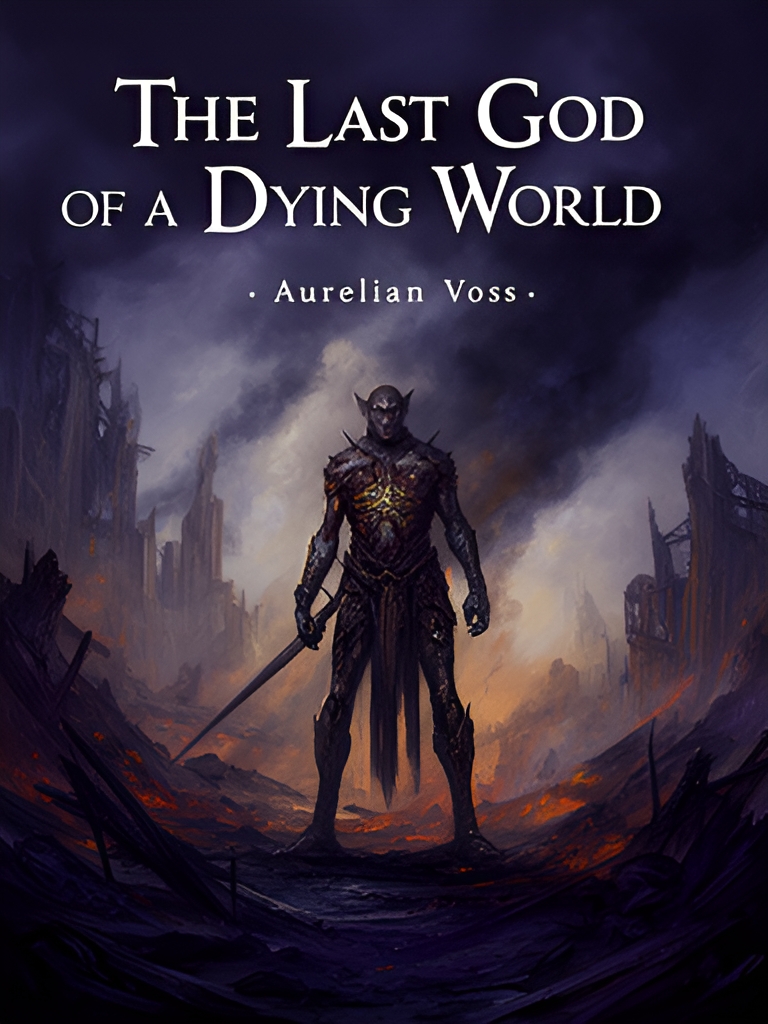
The Last God of a Dying World
by Isaiah Lopez
21 chapters23 hr read
Chapter 1
The God Who Forgot How to Weep
The wind in the Ashen Wastes did not howl. It sighed. A dry, papery sound that slipped through the ribs of dead trees and scraped along the backs of stone dunes like something trying to remember how to cry. Aurelian Voss walked with his head down, collar turned against the grit, his boots stirring only the finest ash. It clung to his greaves, his mail, the hollows beneath his eyes. He had walked this way for three days, maybe four. Time had lost its texture here. Only the sun’s slow crawl told him when to stop, and even that felt like a lie.
His sword, Grievance, hung loose in his right hand. Not ready. Not weary. Just… there. The blade was black along the edge, not from rust but from the ichor of the Hollows he had killed that morning. Three of them. Thin things, all limbs and jaw, their skin stretched tight over bones that clicked like dry twigs. They had come from beneath a salt-flat, drawn by the vibration of his steps. He had not even drawn the sword fully from its sheath until the third was upon him, its fingers already raking at his throat. He had twisted aside, caught its wrist, and driven the blade up through its ribs until the tip broke free between its shoulder blades. The ichor that followed was thick and silver, like cooled mercury, and it smoked where it touched the ground.
He had wiped the blade on the creature’s rag of a shirt. It left a streak that would not come out.
Ahead, the dunes gave way to a basin. Once, long ago, it had held water. Now it was a cracked mirror of salt and dust, rimmed with the blackened stumps of trees that had died standing. Aurelian paused at the lip. His breath came slow, shallow. Not from exertion. From the weight of the silence.
It was here, in a dream or a memory he could no longer tell apart, that he had heard laughter.
Not the hollow echoes that sometimes rolled on the wind—those were the dead trying to speak through him. This had been real. Warm. Close.
He saw it in flashes: a table groaning under roasted fowl and honeyed bread, candles in glass jars throwing light onto faces he could not quite place. A woman’s hand, bare and sun-warmed, resting on his forearm. Her fingers had been stained with berry juice. She had laughed at something he said, and the sound had been bright, unafraid. There had been music then—a flute, maybe, or a harp with too many strings—and children chasing each other between the legs of tables, their voices high and sudden like birds taking flight.
He had stood at the edge of it, not quite inside, not quite outside. He remembered the weight of a cup in his hand. The warmth of wool against his neck. The way the light had slanted through the leaves above, green and trembling.
And then—nothing. Just the slow fade of sound, like a bell submerged in water. The voices grew thin. The laughter turned to a breath. The music became a hum in his teeth, then vanished.
He could still see the woman’s hand on his arm. But he could not remember her name.
Aurelian closed his eyes. When he opened them, the basin was still there. Empty. Silent. The wind stirred a loose scrap of cloth near a blackened root. It snapped once, like a finger, and fell still.
He tightened his grip on Grievance and stepped down into the basin.
The ash crunched underfoot. Somewhere, far off, a Hollow clicked. Not close. Not yet. But they were always near. Always coming.
He walked without purpose, not because he had none, but because purpose felt like a weight he could no longer carry. He had walked the Ashen Wastes for a hundred years. Maybe two. He had seen villages burn, rivers go still, forests turn to stone. He had killed Hollows by the dozen, by the hundred, by the thousand. He had watched the sky change color at dawn—not from pollution, but from the slow leeching of something deeper. The world was not dying. It was being unmade. And he, Aurelian Voss, who had once torn the heart from a god and lived to tell it, was now little more than a reaper cutting through the tall grass of oblivion.
He did not think of himself as a god. Not anymore. That title had been taken from him, or given back, or lost in the shuffle of centuries. He was a warrior. A killer. A man who remembered how to swing a sword but had forgotten why he bothered.
A flicker on the horizon caught his eye—not flame, but the thickening of the air. Smoke. Thin and gray, rising straight as a pillar from a point where the dunes curled inward.
He stopped. His hand drifted to the hilt of his sword.
Another village. Another grave.
He had learned long ago that hope was a faster killer than any Hollow. It made you slow down. Made you look. Made you care. And caring got you killed—or worse, got someone else killed because you hesitated.
He should have turned away. Should have kept walking, let the smoke rise and fade on its own.
But his feet moved before his mind could catch up. Habit, not hope. The hollow echo of a duty he no longer believed in.
As he drew closer, the smoke thickened. It carried no scent of burning wood. No sharp tang of resin or pitch. Just dust and something faintly sweet, like overripe fruit left in the sun. The air shimmered above it, not with heat, but with the wrongness that clung to places where the Hollows had fed.
He crested the last ridge and saw it.
Not a village. Not even a hamlet. Just a cluster of stone foundations, half-swallowed by the dunes. The walls were low, built of rough-hewn rock, and most had collapsed inward. One stood taller than the rest—a watchtower, maybe, or a shrine—but its top had sheared off, leaving jagged edges like broken teeth.
And in the center of the ruin, sitting cross-legged on a slab of stone that had once been part of a hearth, was a child.
She was small. Barefoot. Her dress was once blue, now faded to the color of storm clouds, torn at the hem and patched with scraps of burlap. Her hair was dark, cut unevenly, as if she had done it herself with a dull blade. She sat very still, her back straight, her hands moving in her lap.
Braiding.
She was braiding her hair with dried grass.
Aurelian froze.
The girl did not look up. She did not flinch at the sight of him—tall, cloaked in dust and mail, sword in hand, ichor still drying on the blade. She simply continued her work, her fingers twisting the strands with quiet focus. A piece of grass hung from the corner of her mouth. She chewed on it absently, like a child chewing on a blade of grass in a meadow that no longer existed.
He should have left. He knew he should have. He had seen children before in places like this. Not many. But enough. They were always quiet. Always still. Either shocked into silence or too far gone to feel fear. They sat among the ruins and waited for something that would not come.
But this girl was not waiting. She was braiding her hair.
And she was not afraid.
Aurelian took a step forward. The ash crunched under his boot.
The girl’s head snapped up.
Her eyes were dark. Not black, but deep brown, like wet soil after rain. They locked onto his—not with fear, not with pleading, but with something worse: recognition. As if she had been expecting him. As if she had seen him before, in another life, in another world.
And she was not afraid.
Aurelian stopped. His hand tightened on the hilt of Grievance. The ichor on the blade had cracked in places, like old paint. It flaked faintly as he moved.
“You’re not scared of me,” he said. His voice sounded raw, unused. It scraped in his throat like stone on stone.
The girl blinked. She spit out the piece of grass. “Should I be?” she asked. Her voice was small, but clear. Not timid. Not bold. Just… honest.
He had not expected that. He had expected tears. Or silence. Or a scream that would bring the Hollows running.
Instead, she tilted her head. “You’re dirty,” she said. “And your sword’s bleeding.”
He looked down. The ichor had begun to seep again, dark and slow, tracing a path along the fuller. It did not hurt him. It never did. But it was a sign. A mark. A reminder of what he had done.
“I killed things,” he said. “Things that wanted to kill you.”
She considered this. Then she nodded. “Okay.” She went back to her braiding, her fingers flying now, as if to prove she could still do it. “But you don’t have to kill them if they’re not trying to kill you. Right?”
Aurelian did not answer. He could not. The logic of it was too simple. Too childish. And yet—it was not wrong.
The Hollows did not think. They did not plan. They were hunger given form, drawn to life like moths to a flame. They did not choose to kill. They only knew how.
But they still killed.
And he still killed them.
The girl finished the braid. She tied it off with a piece of string she had pulled from her sleeve. Then she reached into her pocket and pulled out a small, smooth stone. White, veined with gray. She held it out to him.
“For luck,” she said.
He stared at the stone. Then at her hand. Small. Dirty. Fingernails bitten quick.
He did not take it.
“I don’t need luck,” he said. His voice was quieter now. Not unkind. Just… tired.
She did not pull her hand back. She just let it hang there, the stone catching the dim light. “Everyone needs luck,” she said. “Even gods.”
He flinched. Not at the word. At the certainty behind it.
“I’m not a god,” he said.
She shrugged. “You look like one. All covered in metal and carrying a big sword. And you smell like… like old rain and iron.”
He had not washed in days. He did not care to.
She leaned back on her hands, staring at him. “You’re sad,” she said. “I can tell. Your eyes are tired. Like you’ve been crying for a long time.”
Aurelian felt something twist in his chest. Not pain. Not exactly. More like the sudden awareness of a wound he had forgotten he had.
“I haven’t cried in centuries,” he said.
She considered this. Then she nodded, as if it made sense. “Well,” she said, “maybe you should try. It helps. My mum said so.”
He opened his mouth. Closed it. What could he say to that? That his mother had been dead for eight hundred years? That the last time he had seen her, she had been begging him not to leave for the war that had taken her husband and her son? That he had left anyway, and she had died alone in a burning village, her voice lost in the roar of flames?
He could not tell her that. He would not.
Instead, he said, “You should not be here alone.”
She looked around at the ruins. “This is where I lived,” she said. “Before the sky broke.”
He had expected her to say before the Hollows came. But she had said something else. Something older. Something that made the hairs on his arms stand up.
“The sky broke?” he repeated.
She nodded. “Yeah. One day it just… cracked. Like a pot left in the fire. And after that, the air tasted wrong. And the plants started dying. And then the things in the ground woke up.”
She paused. She picked up a pebble and turned it over in her fingers. “My mum said it was because the gods were angry. But my dad said the gods were already dead, and we were just pretending they weren’t.”
She looked up at him. “What do you think?”
Aurelian had no answer. He had seen the sky change. He had felt the world thin. He had killed things that were not quite alive and not quite dead. But he had never thought to name it.
He had only thought to survive it.
The girl stood. She brushed the dust from her dress. It did not help much. It was already ruined.
“I’m Mira,” she said. She held out her hand again, the stone still in her palm.
He did not take it.
“I’m Aurelian,” he said. “And you cannot stay here.”
She did not seem surprised. She just tilted her head. “Why not?”
“Because it’s not safe,” he said. “The Hollows come back. They always come back. And there’s nothing here for you. No food. No water. No shelter.”
She looked around. Then she nodded, as if he had made a reasonable point. “Okay,” she said. “Where should I go?”
He hesitated. He had not thought that far. He had only thought to leave her here, to let the wastes take her as they had taken so many others. But her eyes—those quiet, knowing eyes—had stopped him.
He could not leave her. Not yet.
Not because he cared. Not because he felt responsible. But because something in her stare had cracked open a door he had sealed long ago, and he was afraid of what might come out if he walked away now.
“Come with me,” he said. The words felt strange in his mouth. Heavy. Awkward. Like stones in his throat.
Mira did not smile. She did not jump. She just nodded once, sharply, as if accepting a mission.
“Where are we going?” she asked.
He looked toward the horizon, where the sun was beginning to dip, staining the ash with bruises of purple and gold. “East,” he said. “There’s a river. Not far. Maybe a day’s walk. If the dunes don’t shift.”
She nodded again. “Okay. But I’m carrying my own pack.”
He frowned. “You don’t have a pack.”
“I will,” she said. “I’ll find one. Or make one. But I’m carrying it.”
He opened his mouth to argue. To tell her that she was eight years old, that she would slow him down, that she would get hurt, that she would die.
But he saw the set of her jaw. The way her hands were clenched at her sides, not in fear, but in determination. The way she stood—not like a child waiting to be led, but like a companion preparing for a journey.
And he realized, with a quiet shock, that he did not want to take that from her.
“Fine,” he said. “But if you fall behind, I won’t wait.”
She grinned then. Just a little. A quick flash of teeth. “I won’t fall behind.”
He turned and began to walk, not looking back. He could feel her steps behind him—light, uneven, but persistent. The ash swallowed her footprints almost as soon as she made them.
He did not look back.
But he did not quicken his pace either.
And when the first true Hollow shriek rose from the dunes behind them—a sound like metal tearing, like a soul being unmade—Aurelian did not break stride.
He only gripped his sword a little tighter.
And walked on.
The Hollow’s cry came again, closer this time—a wet, tearing sound, like flesh being ripped from bone. Aurelian did not turn. He kept his eyes on the horizon, where the dunes rose in slow, wind-carved waves, their crests catching the last light like broken glass. But he shifted his grip on Grievance, lowering the blade just enough to see past it, to clear his peripheral vision. The ichor on the edge had begun to harden, flaking in thin, black scales that fell to the ash with each step.
Behind him, Mira’s breath hitched—not a gasp, not a whimper, but a sharp intake, like she had stepped on something sharp. Then silence. Not fear. Focus.
He knew that silence. He had seen it in soldiers who had stared too long at the face of death and learned not to flinch. In those who had decided, in that instant, that they would not give the enemy the satisfaction of their terror.
He did not praise her for it. He did not look back. He only said, “Stay close. And if you see movement low to the ground—something that doesn’t belong—tell me. Don’t wait. Don’t think. Just shout.”
She did not answer. But he felt her draw nearer, her steps falling just behind his left heel, close enough that he could hear the soft scrape of her toes dragging in the ash when she tired.
The dunes gave way to a flat plain of salt-crusted earth, white and cracked like old bone. Here, the ash was thinner, blown away by winds that carried the tang of something metallic—blood, or rust, or the ozone tang that came before a storm. Aurelian slowed. His boots crunched on the salt, each step sending up a tiny plume of dust that hung in the air like breath in cold.
He stopped.
Ahead, half-buried in the salt flat, lay the ribcage of something enormous. Curved bones, thicker than a man’s torso, arched upward from the ground like the ribs of a buried leviathan. Between them, the sand had shifted, revealing patches of dark, slick stone—not rock, but something smoother, darker. Obsidian, maybe. Or glass, fused by heat long ago.
Mira came to stand beside him, her small hand brushing his armored forearm. Not to hold on. Not for support. Just to point.
“Look,” she whispered.
He followed her gaze.
Etched into the stone between the ribs were symbols. Not carvings. Not quite. They looked as if they had been burned into the surface, deep and jagged, like lightning frozen in rock. Spirals. Interlocking triangles. A series of lines that rose and fell like a heartbeat.
He knew them. Not from memory, but from the marrow of his bones. The Old Signs. The Warding Marks. The Weavers had made them, once, to stitch the world together when it began to come apart.
He knelt, ignoring the protest of his joints—old aches that had settled into him over centuries, not from injury, but from the simple weight of time. He reached out, not to touch the marks, but to hover his palm above them, as if feeling for heat.
There was none. Only cold.
“They’re fading,” he said, more to himself than to her.
Mira leaned in. “Can you fix them?”
He looked at her. Really looked. Her face was smudged with ash, her hair escaping its braid in loose strands, her eyes wide and serious. She was not asking if he could—she was asking if he would. As if the answer mattered.
“I don’t know how,” he said. “And even if I did, it wouldn’t last. The world’s not broken in places you can patch with symbols. It’s unraveling.”
She was quiet for a moment. Then she nodded, as if she had expected that answer. She reached into her pocket and pulled out a small lump of clay—gray, cool to the touch. She pressed it into her palm, rolled it between her fingers, and began to shape it. Not into a ball. Not into a figurine. She flattened it, then used her thumbnail to press a single spiral into its surface—copying, as best she could, the mark on the stone.
When she was done, she held it out to him.
“For luck,” she said again.
He stared at the clay token. The spiral was uneven. Crude. But it was there. Made with intention.
He did not take it. Instead, he closed his fingers over her hand, still holding the clay, and gave it a small, firm squeeze. Not to hurt. To acknowledge.
“Keep it,” he said. “If you lose it, make another.”
She nodded. Then she pulled her hand back and tucked the clay into her fist, pressing it tight.
They moved on.
The salt flat ended abruptly at a dry riverbed, wide and scarred with deep channels where water had once rushed in torrents. Now, it was filled with wind-polished stones and patches of black glass where the sand had melted and resolidified. Aurelian tested the depth with the toe of his boot. It was ten feet down at least, the walls sheer in places, eroded into overhangs that threatened to collapse.
He looked upriver. The bed stretched into the haze, vanishing where the dunes began again. No sign of water. No green. Just stone and dust.
Mira climbed down first, scrambling over the loose stones with the certainty of someone who had done it before. She reached the bottom and turned, waiting. Her small face was tilted up, expectant.
He followed, more slowly. His mail scraped against the stone as he descended, the sound loud in the quiet hollow. When his boots hit the bottom, the impact sent a jolt up his legs—old, familiar. His left knee, the one that had taken an axe blow in a battle he could no longer name, protested with a dull, deep ache. He leaned on his sword for a moment, breathing through his nose, letting the pain fade to a background throb.
Mira was already moving, picking her way along the riverbed, her eyes on the ground. She stopped every few steps to pick up a stone, turn it over, then drop it or slip it into her pocket.
“What are you looking for?” he asked.
She didn’t look up. “Pretty ones. And ones that feel warm.”
He frowned. “Stones don’t stay warm out here.”
“These do,” she said. She held up a smooth, oval stone, dark as wet slate. “See? Warm.”
He took it from her. It was indeed warm—not hot, but holding heat, as if it had absorbed the sun and was slow to release it. He turned it over in his palm. There were no markings. No signs of craftsmanship. Just a river stone, worn smooth by time.
“Where did you find it?” he asked.
She pointed upstream, where the bed narrowed between two blackened cliffs. “Back there. Under the overhang. There’s a crack. Air comes out. Warm air.”
He looked. The cliff face was sheer, black and glassy in places, as if it had been melted and reshaped by fire. And yes—just where she said, a narrow fissure ran horizontally through the stone, barely wide enough to fit a hand. From it, a faint current of air stirred, carrying no scent, but undeniably warm.
“A vent,” he murmured. “Geothermal. Deep earth still breathing.”
She nodded. “My dad said the world’s not dead. Just sleeping. And sometimes it sighs.”
He looked at her. She was watching him, waiting to see if he would laugh. Or dismiss it. Or call her foolish.
He did none of those things.
He handed her the stone back. “Keep it. If you find another like it, show me.”
She slipped it into her pocket, her fingers closing around it possessively.
They followed the riverbed for another mile, the walls growing higher, the air growing still. The wind had dropped, leaving a silence so complete it felt like pressure on the eardrums. No birds. No insects. Not even the whisper of sand. Only the soft scrape of their boots and the occasional click of stone on stone as Mira tested the walls.
Then she stopped.
Ahead, the riverbed forked. One branch continued west, disappearing into the dunes. The other turned sharply south, where the walls closed in, narrowing to a crack no wider than a man’s shoulders.
And set into the stone at the junction, just above eye level, was a symbol.
Not carved. Not burned. Painted.
In a pigment that had not faded—deep blue, like the sky before the breaking—was a circle divided into four quarters. Each quarter contained a symbol: a wave, a leaf, a flame, and a spiral. Around the circle, a band of text ran in a script Aurelian had not seen in centuries. Old High Warden. The language of the Weavers, before the Silence.
He knew what it said. Not because he remembered reading it, but because the meaning had been burned into him during the Long Vigil, when he had stood watch over the last waking god and listened to the chants that kept the dark at bay.
“Balance holds. Break the circle, and the world forgets how to breathe.”
He touched the pigment with a gloved fingertip. It was cool. Slightly damp. As if it had been applied recently.
Impossible. No one had been here in years. The Hollows avoided places like this—wards, even faded ones, made their skin crawl and their movements sluggish. And no living soul would dare come this deep into the Wastes alone, let alone leave a mark.
Unless…
He turned to Mira.
She was not looking at the symbol. She was looking at the narrow southern passage. Her head was tilted, as if listening.
“Did you hear that?” she whispered.
He listened. Beneath the silence, there was a sound. Faint. Rhythmic. Like a slow pulse. Or breathing.
“It’s coming from the hole,” she said. “The warm air. It’s… singing.”
He frowned. “It’s not singing. It’s air moving over stone.”
She shook her head. “No. It’s a song. Low. Like a hum. My mum used to sing when she ground grain. It sounds like that.”
He stepped closer to the fissure. The warm air brushed his cheek, carrying with it a vibration—so low it was felt more than heard. A thrum. A resonance.
And beneath it, almost lost in the vibration, was a tone. A single note, held. Not random. Not wind. Intentional.
He drew Grievance slowly, the blade singing free of its sheath. The ichor on the edge had cracked away entirely, leaving the steel clean and bright, drinking in the dim light.
“Stay behind me,” he said. His voice was low. Not a command. A warning.
Mira did not argue. She stepped back, pressing herself against the western wall, her eyes wide but not afraid. Her hand was closed tight around the warm stone in her pocket.
Aurelian edged toward the fissure, his weight on the balls of his feet, his blade angled low. The air grew warmer as he neared, until it felt like breathing over a furnace vent. The hum deepened, vibrating in his teeth, in the fillings of his molars—if he still had any. He could not remember the last time he had checked.
He reached the crack and peered inside.
The passage was tight, but not blocked. Beyond it, the space opened into a chamber—small, roughly circular, its walls covered in the same blue pigment, now flaking in places. In the center of the floor stood a pedestal of black stone, and on it, a bowl. Not metal. Not clay. Something darker. Something that drank the light.
And in the bowl, floating on a pool of liquid that was not water, not oil, but something thicker, darker, pulsed a light.
Not a flame. Not a glow. A pulse. Like a heart.
And around the bowl, coiled like a sleeping serpent, was a shape.
Not a Hollow. Not quite.
It was long and sinuous, made of shadow and smoke, its form shifting between solid and mist. Where it touched the pedestal, the stone was etched with the same Warding Marks as outside—but here, they were fresh. Bright. Burning with an inner blue light.
The creature lifted its head.
It had no eyes. Not exactly. But where eyes should be, there were two points of light—like embers in ash—watching him.
It did not hiss. It did not roar.
It sighed. A sound like wind through dry reeds.
And in that sigh, Aurelian heard it—not in his ears, but in his mind—a voice, not spoken, but known:
“You remember the feast.”
He staggered back, Grievance coming up in a defensive arc, his breath coming short. The memory hit him not as an image, but as a sensation: the warmth of sunlight on his face, the weight of a flower crown woven into his hair, the press of a hand in his—small, soft, a child’s hand—and the sound of laughter, clear and bright, like bells in a tower.
His daughter’s laughter.
He had not thought of her in years. Not her face. Not her voice. Not the way she had smelled of honey and sun-warmed wheat.
The creature did not move. It only waited, its ember-eyes fixed on him.
Mira stepped forward then, not toward the creature, but toward him. She placed her small hand on his armored forearm, just below the elbow. Her touch was thin, frail, but it anchored him.
“It knows your name,” she whispered. “But it doesn’t know you.”
He looked at her. She was not afraid. She was seeing. Not just the creature, but him. The man beneath the mail and the memory and the millennia of silence.
He lowered his sword. Not in trust. Not yet. But in acknowledgment.
The creature did not attack. It did not flee. It simply… watched.
And in the silence, the pulse in the bowl slowed. Once. Twice.
Then, as if satisfied, it went dark.
Chapter 2
Chapter 2
The creature’s ember-eyes dimmed as the pulse in the bowl faded to nothing. The air in the chamber grew still, heavy with the scent of damp stone and something older—like the breath of a sleeper just disturbed. Aurelian stood rigid, Grievance still half-raised, the memory of his daughter’s laughter a phantom limb aching where it had been severed. Mira’s hand remained on his forearm, small and warm through the chill of his mail. He had not felt such contact in centuries—not the casual press of a companion’s touch, but this: deliberate, grounding, seeing.
He lowered the sword fully, the tip scraping stone with a sound too loud in the quiet. The creature did not stir. It watched, its smoky form coiled like a question left unanswered.
“It’s gone,” Mira said, voice soft but not afraid. She tilted her head, studying the dark bowl. “The light’s out.”
Aurelian nodded, unable to speak. His throat felt tight, not with grief—he had long since exhausted the tears for that—but with the shock of recognition. The feast. The flower crown. The scent of honey and wheat. He had buried those sensations under layers of dust and duty, convinced they were gone for good. And yet, here they were, summoned by a shadow in a forgotten vault, stirred by the words of a girl who should not have known to say them.
He looked at her. She was watching him back, head cocked, eyes wide and clear in the gloom. Not pitying. Not awed. Simply there, as if she had been waiting for him to notice.
“Come on,” he said, his voice rough from disuse. “We should move.”
She didn’t release his arm right away. Instead, she squeezed once—firm, almost imperious—and let go. “You’re not crying,” she observed.
He blinked. “No.”
“Good. Crying wastes water.” She turned and began picking her way toward the chamber’s narrow entrance, her small boots scraping on loose gravel. “We’ve got a long walk ahead.”
He followed, Grievance back in its sheath, the weight of it familiar and comforting. The memory of his daughter’s laughter lingered, not as pain, but as a presence—like the echo of a bell after the strike. He pushed it aside. There was road to make, and a child who insisted on carrying her own weight.
The wastes stretched eastward, a sea of gray ash and cracked earth beneath a sky drained of color. Wind scoured the dunes, lifting fine grit that stung the eyes and coated the tongue. Aurelian led, his boots sinking slightly with each step, Mira a few paces behind, her pack bouncing against her shoulders. It was small—just a leather satchel she’d salvaged from her village’s ruins, half-filled with dried meat, a flint, and the clay token she’d pressed into his hand the day they met. He had returned it to her that morning, telling her luck was a lie. She had shoved it back into her pack without a word.
Now, as they trudged over a ridge of packed silt, she tugged the strap higher and muttered, “I can carry it.”
He glanced back. Her face was set, jaw tight, eyes fixed on the horizon. “You don’t have to.”
“I know.” She kicked a loose stone. It skittered away. “I want to.”
He studied her. The scrapes on her cheeks from yesterday’s wind had faded to pink lines. Her hair, dark and choppy where she’d cut it herself with a broken knife, stuck to her forehead with sweat. She was small for eight, but wiry, her limbs corded with the kind of strength that came not from muscle, but from necessity. She had walked barefoot over sharper things than this.
“It’ll slow us,” he said. “The pack’s uneven. You’ll trip.”
“I won’t.” She lifted her chin. “And if I do, I’ll get up.”
He opened his mouth to argue—You’re a child. You shouldn’t have to—but stopped himself. That was the lie he told others, and himself, when he wanted to feel noble without doing the work. She wasn’t a child who needed protecting. She was a survivor who had already buried her world and kept walking. To deny her this small autonomy was not kindness. It was condescension.
“Very well,” he said. “But if you fall behind, I’m taking it.”
She grinned, quick and sharp. “Try it.”
He let out a breath he hadn’t realized he was holding. It sounded almost like a laugh. Almost.
They walked in silence for a time, the only sound the crunch of ash underfoot and the distant, endless sigh of the wind. Mira’s steps were uneven at first, her small frame struggling to counterbalance the weight. But she adjusted, shifting her hips, shortening her stride. She watched where she placed her feet, her tongue poking out the corner of her mouth in concentration.
Then, halfway down a slope of loose shale, her left foot slid on a patch of wet clay hidden beneath the dust. Her arms windmilled. She cried out—not in fear, but surprise—and went down hard on her right knee.
Aurelian was at her side in an instant, Grievance in hand, eyes scanning for threat. None came. Only the wind, and her ragged breathing.
She was on her palms and knees, head bowed, shoulders rising and falling. Her pack had spilled open, its contents scattered: a strip of jerky, the flint, the clay token glinting dully in the pale light.
“I’m fine,” she said, voice tight. She pushed herself up, wincing as she put weight on her knee. Blood welled where the skin had split, dark against the ash-coated flesh. She swiped at it with her sleeve, smearing it. “See? Just a scrape.”
He knelt, ignoring the protest in his own joints—centuries of use had worn the cartilage thin, and damp ground always made it ache. “Let me see.”
She jerked her leg back. “I don’t need you to.”
“I’m not asking.” He kept his voice low, even. “Let me see.”
After a moment, she stopped struggling. She extended her leg, stiff as a board, eyes fixed on the horizon as if refusing to look at him would make the pain less real.
The wound was shallow but ragged, gravel embedded in the edges. He reached for his waterskin—then paused. They were low. The last reliable seep had been two days back, and they’d been sipping sparingly ever since. Every drop was calculated.
He unscrewed the cap anyway. A single, precious trickle trickled out, dark and faintly mineral-tinged from the underground sources he knew. He poured it over her knee, washing away the blood and grit. She sucked in a breath through her teeth, body tensing, but didn’t pull away.
His hands shook.
He noticed it immediately—the faint tremor in his fingers as they hovered over her skin, the way the water rippled unevenly as it ran down her shin. He stilled them, forcing stillness, but the tremor remained, a fine vibration in the tendons of his wrist.
When did this start? he wondered, irritation flaring. He had faced down Hollows with a blade in each hand, held breaches against screaming voids, and his hands had never shaken. Not from exertion. Not from fear. Not even in the centuries after the Binding, when he had walked the world like a ghost, waiting for an end that never came.
Now, cleaning a child’s scraped knee, his betraying flesh quivered like a leaf in a storm.
He finished washing the wound as quickly as he could, then tore a strip from the hem of his undershirt—soft, clean cotton, saved for emergencies—and pressed it to the scrape. It stung, he could tell from the way her breath hitched, but she didn’t cry out. Instead, she stared at the spot where his thumb brushed her calf, her expression thoughtful.
“It stings,” she said, after a pause.
“It’s supposed to.” He tied the bandage snug but not tight. “Means it’s working.”
She nodded slowly. “Then it’s proof I’m still alive.”
He looked up. Her eyes were bright, not with tears, but with something fiercer—defiance, maybe. Or pride. She had turned pain into a statement. I am here. I feel. I endure.
He had spent a thousand years avoiding such proof. Pain was something to endure silently, to bury beneath duty and distraction. To feel it was to risk remembering what had been lost.
She saw the look on his face. “You’re thinking too hard,” she said. “It’s just a scrape.”
He managed a ghost of a smile. “Yes. It is.”
They repacked her satchel in silence. She was meticulous, placing each item back exactly as it had been—jerky on the bottom, flint in the side pocket, clay token resting atop everything like a jewel. When she was done, she hefted the pack onto her shoulders and straightened, testing the weight.
“Not too bad,” she murmured.
He watched her walk a few steps ahead, noting the way she adjusted her gait to compensate, the slight favor of her right leg. The bandage would hold. The wound would scab over by nightfall.
They continued east, the land flattening into a vast, cracked plain where the ash lay in thin, papery sheets. The wind had died to a whisper, leaving the world in a hushed, waiting stillness. Mira walked with her head up, eyes scanning the horizon, her small frame moving with purpose. She didn’t lag. Didn’t complain. Just kept pace, her boots kicking up tiny spirals of dust.
Aurelian fell into step beside her, Grievance loose in his hand. He found himself watching her—not for threats, but for her. The way she tucked a loose strand of hair behind her ear when she thought no one was looking. The way she hummed under her breath, a tuneless, wandering melody that sounded like wind through reeds. The way she occasionally glanced at him, not to check if he was still there, but as if she were measuring him, taking stock.
It unsettled him. He was used to being invisible, or feared, or ignored. Not observed.
By mid-afternoon, the sun—pale and washed-out—hung low in the sky, casting long, thin shadows across the waste. Mira began to slow, her steps heavier. She stopped at a rise where the ground leveled into a shallow basin, its floor crusted with salt. She looked back at him, breath visible in the cooling air.
“I’m tired,” she admitted.
He nodded. “We’ll make camp here.”
She didn’t cheer. Didn’t collapse. Just lowered her pack with a sigh, unstrapping it with deliberate care. She sat on her heels, pulling out the jerky and breaking off a piece. She offered him half.
He took it. The meat was tough, salty, chewed slowly. He ate in silence, watching her.
She finished her share, then licked her fingers. “You eat like you’re afraid it’ll disappear,” she said.
He glanced at her. “I am.”
She considered this. “That’s dumb. If it’s gone, you’ll just find more.”
“Not always.”
She shrugged. “Then you’ll be hungry. Big deal.”
He almost smiled. “You’re remarkably unbothered by starvation.”
She kicked at the salt crust. “I’ve been hungry before. It’s not the worst thing. Being alone is worse.”
He stiffened. She hadn’t known him long enough to guess that.
She didn’t look at him. She was tracing a spiral in the salt with her fingertip. “My ma used to say hunger was just the body reminding you it’s still here. Like a little knock from the inside. Hey, you. Still awake?”
He looked down at his own hands—scarred, calloused, the nails bitten quick from habit. When had he last felt his body as anything more than a vessel? A tool for swinging a sword, for walking miles, for holding back the dark?
“I forget,” he admitted, quiet. “Sometimes I forget I’m still here.”
She glanced at him, then back at her spiral. “Well, you’re here now. Knock, knock.”
He let out a short, humorless laugh. “Knock, knock.”
“Who’s there?” she prompted, eyes sparkling.
He hesitated. The game was foolish. Childish. A waste of breath.
But he played along. “…I don’t know.”
She giggled, a bright, sudden sound that startled a beetle from the salt. “You! You’re there! Now say it again!”
He did. “Knock, knock.”
“Who’s there?”
“…I don’t know.”
She dissolved into giggles again, leaning back on her hands, kicking her legs in the air. He watched her, the tightness in his chest easing, fraction by fraction. It was absurd. It was pointless. And for the first time in longer than he could remember, he felt… lighter.
When the laughter faded, she settled, pulling her knees to her chest. The sky had deepened to violet, the first stars pricking through like holes in a dark cloth. She pulled the clay token from her pack and turned it over in her palm, the symbol worn smooth from handling.
“You gonna tell me why you gave it back?” she asked, not looking up.
He hesitated. “I told you. Luck’s a lie.”
She nodded, as if expecting that. “But you kept it. I saw you touch it in your pouch this morning.”
He had. He hadn’t realized she’d noticed.
“I was checking it was still there,” he said.
“Why?”
He stared at the token. It was rough, unfired clay, shaped roughly like a teardrop. On one side, someone had pressed a thumbprint. On the other, a crude spiral—like the one she’d made in the salt.
“I don’t know,” he said. “It felt… important to return it.”
She nodded again, as if this made sense. Then she held it out to him. “You can have it back. For luck.”
He looked at her hand, small and dirty, offering the token without irony, without expectation. He could take it. He could slip it into his pouch and pretend it was just a trinket. Or he could refuse, and reinforce the lie he’d been living: that nothing mattered, that attachment was weakness, that he was better off alone.
Instead, he closed his fingers over hers, warm and calloused from work, and pressed the token into her palm. “Keep it,” he said. “It’s yours.”
She closed her fingers around it, tight. “Thanks.”
They sat in silence for a while, the wind picking up again, stirring the ash into lazy spirals. Mira leaned her head against his shoulder, not asking, just… there. He tensed, then forced himself to relax. Her weight was slight, warm, a steady pressure against his side.
He found himself watching her again—not for threats, but for the rise and fall of her breath. Slow. Even. Unconscious. A rhythm he had not noticed before, but now could not unhear.
Later, when the stars were high and the air sharp with cold, she slept. He had laid out his cloak on the salt-crusted ground, and she had curled onto it without prompting, her back to him, one hand tucked under her cheek, the other resting on her pack as if guarding it in dreams. Her breathing was soft, uneven in the way of deep sleep—slight snuffles, the occasional twitch of her fingers.
He sat a few paces away, back against a low outcrop of stone, Grievance across his knees. The fire was dead—just a smear of ash and a few cold stones. They’d spared the wood; there was none to waste.
He should have been meditating. Scanning the perimeter. Reviewing the day’s route, checking for signs of Hollow activity, listening for the subsonic hum that sometimes preceded a rift in the veil.
Instead, he watched her.
The fire’s absence made her face hard to read in the starlight, but he could see the outline of her profile—the curve of her cheek, the faint furrow between her brows, the way her lips parted slightly on each exhale. She looked younger asleep. Less guarded. Less like a survivor and more like a girl who had, for a few stolen hours, forgotten the weight of the world.
And then the thought came, unbidden and terrifying:
I would miss her.
Not if she died. Not if she was taken by the Hollow or swallowed by a rift or lost to the wasting sickness that crept through the wastes like mold. But if she simply… left. If she woke tomorrow and decided to walk on without him. If she found another path, another guardian, another reason to keep going.
He would miss her.
The realization struck him like a physical blow. He pressed a palm to his eye, as if he could stop the thought by force. Miss her? He had outlived kingdoms. He had watched lovers age and die, friends turn to dust, children grow old and forget their own names. He had learned, over centuries, to detach. To love was to invite pain. To care was to guarantee loss.
And yet here he was, terrified not of her death, but of her departure.
He had spent a millennium preparing for the end. He had not prepared for this.
She shifted in her sleep, murmuring something unintelligible, and pulled the cloak tighter around her. In her dream, she was safe. She was warm. She was not alone.
He stayed where he was, sword forgotten, eyes fixed on her sleeping form, and let the fear sit with him—not as a warning, but as a truth.
He might miss her.
And that, more than any Hollow, more than any rift, more than the slow unraveling of the world, was the thing that frightened him most.
He stayed like that until the first hint of dawn bleached the sky to a washed-out gray, turning the stars to faint smudges. Mira’s breathing had deepened, her body relaxed into the curve of the earth. A sparrow-like bird—its feathers the color of dried blood—pecked at the salt crust a few feet away, unafraid. He watched it tilt its head, bead-black eye catching the light, then dart off at a shadow he couldn’t see.
His joints ached from sitting too long on cold stone. He rose slowly, Grievance in hand, and moved to the edge of the basin where the ground began to rise again into low, fractured ridges. He knelt and pressed his palm to the stone, feeling for vibrations, for the faint, subsonic thrum that sometimes pulsed beneath the surface when the veil between worlds wore thin. Nothing. Just the slow, deep cool of the planet’s bones.
He stood and walked a slow circuit of their camp, eyes scanning for tracks, for disturbances in the ash, for anything that didn’t belong. The Hollow didn’t always come with shrieks and claws. Sometimes they came quiet, like rot spreading under floorboards—first a stillness in the air, then a smell like wet wool left too long in the dark, then a flicker at the edge of vision that wasn’t quite a shape.
He found nothing.
When he returned, Mira was still asleep, but she had rolled onto her back, one arm flung out, the clay token clutched in her fist. Her mouth was slightly open. A strand of hair stuck to her cheek with dried sweat.
He knelt beside her, not to wake her, but to adjust the cloak so it covered her shoulders better. His fingers brushed her arm—warm, alive—and he paused. The scrape on her knee was already dulling to a pink line, the skin beginning to tighten at the edges. It would be a scar, small and pale, but it would last. Another mark on her body, like the others he’d seen on children in the ruins—scratches from falling brick, burns from cooking fires, the faint blue trace of old bruises.
He thought of his daughter. Not the laughter this time, but the way she used to sit cross-legged after a fall, inspecting her scraped knee with intense concentration, as if trying to understand the physics of pain. She had never cried either. Not from toughness, but from conviction—she believed tears were for things you couldn’t fix, and a scraped knee was just dirt and time.
He had told her then, “Pain is the body’s way of saying pay attention.” She had looked up at him, eyes wide, and said, “Then I’m paying very good attention.”
He had laughed. A real laugh. He could still remember the sound—not the memory of it, but the feeling of it, like sunlight striking a bell.
He hadn’t thought of that in years.
He rose and banked what little heat remained in the fire pit with a stone, then checked his own gear—tightening the straps on his breastplate, checking the edge of Grievance for nicks, verifying the flint in his pouch was dry. Habit. Discipline. The things that kept him alive when emotion threatened to unspool him.
Mira stirred, blinking her eyes open. She looked at him, then at the sky, then sat up with a small grunt, rubbing the sleep from her face.
“Morning,” she said.
He handed her the water skin. “Drink. We’ll move soon.”
She took a long pull, then handed it back. “Did you watch me sleep?”
He didn’t lie. “Yes.”
She didn’t seem bothered. Just nodded, as if confirming a suspicion. “I knew you would. You always watch.”
He frowned. “I don’t—”
“You do. You watched me when I washed my face yesterday. You watched me eat the jerky. You even watched me tie my bootlace when I dropped it in the ash.”
He felt his face grow hot. “I was checking for threats.”
“Uh-huh.” She swung her legs over and stood, testing her knee. It bent without complaint. “You’re bad at lying.”
He stood as well, shouldering his pack. “I’m not used to… being seen.”
She tilted her head. “Why not?”
He hesitated. “Because it means I have to see myself too.”
She considered this as she settled her pack on her shoulders, adjusting the straps with practiced jerks. Then she said, “Well, you look okay to me. Not perfect. But okay.”
He almost smiled. “High praise.”
She grinned. “I’m a tough critic.”
They began walking again, the basin falling behind them, the land rising into a series of low, broken ridges where the ash had piled into drifts like snow. Mira led, her eyes on the horizon, her steps sure despite the uneven ground. She didn’t look back to see if he was following. She just knew he was.
After a while, she said, “You know, I don’t think the Warden symbol was a warning.”
He glanced at her. “No?”
She shook her head. “I think it was an invitation.”
He frowned. “An invitation to what?”
“To remember.” She kicked at a loose stone. “Like how you remembered the feast. Like how I remember my ma’s bread. The symbol wasn’t saying don’t break the circle. It was saying if you break it, you’ll remember what you forgot.”
He stopped walking. She turned, waiting.
“You think the Wardens wanted people to remember?”
“I think they wanted them to choose to remember. The symbol’s not a lock. It’s a key.”
He stared at her. She was eight years old. She had seen her village destroyed. She had walked barefoot over glass and ash. And yet she was talking about ancient symbols and forgotten choices as if they were riddles in a game.
“Where did you get that idea?” he asked.
She shrugged. “I just looked at it. The lines… they’re not sharp. They’re flowing. Like water. Or breath.”
He looked down at his hands again—calloused, scarred, the knuckles split from old fights. He had spent a thousand years seeing the world as a series of threats to neutralize, obstacles to overcome, enemies to cut down. He had forgotten how to read it. How to see the patterns beneath the surface, the intentions in the design, the quiet pleas in the carving.
She had seen it in seconds.
He started walking again, slower this time, letting her set the pace. “You’re strange,” he said.
She kicked up a puff of ash. “You’re strange. You talk to dead people in your head and think it’s normal.”
He let out a breath that might have been a laugh. “Fair.”
They walked in silence for a time, the sun climbing higher, turning the ash to a dull gold. Mira began to hum again—that tuneless, wandering melody—and this time, he found himself listening. Not for threats. Not for cues. Just to the sound.
It wasn’t beautiful. It was off-key, wandering, sometimes dropping into a growl when she forgot the next note. But it was hers. And it filled the quiet not with dread, but with presence.
He realized, with a quiet shock, that he was beginning to like the sound of her voice.
They crested a ridge and saw it—a fissure in the earth, wide enough to swallow a horse, its edges blackened and glazed as if by fire. Steam curled from its depths, not in plumes, but in slow, pulsing waves, like the breath of something vast and sleeping beneath the crust. The air smelled of sulfur and wet stone, and from far below came a faint, rhythmic throbbing—not a pulse, but a beat, deep and slow, like the heart of the world itself.
Mira stopped at the edge, peering over. “It’s warm,” she said.
He joined her, feeling the heat on his face. “Geothermal vent. Like the stone you found yesterday.”
She nodded. “The world’s not dead. It’s dreaming.”
He looked at her. “And what do we do when it wakes up?”
She didn’t answer right away. She was watching the steam rise and fall, her eyes reflecting the flicker of hidden fire. Then she said, “We hope it remembers us.”
He didn’t know what to say to that. So he said nothing.
They followed the fissure east for a while, the ground growing warmer underfoot, the ash giving way to bare, reddish stone veined with gold. Mira kept her hand near the hilt of her small knife—not drawn, but ready. He noticed. He also noticed that she hadn’t asked him to carry it for her.
By midday, they reached a place where the fissure split into two branches, one heading northeast, the other due east. Mira stood at the junction, head tilted, listening.
“Which way?” she asked.
He scanned both paths. The northeast branch led toward a range of black mountains that pierced the sky like broken teeth. The east led into a flat, shimmering plain where the air seemed to vibrate.
“I don’t know,” he admitted.
She looked at him, then at the paths, then back at him. “You don’t have to know everything,” she said. “Sometimes you just pick a way and see if it feels right.”
He stared at her. “That’s not how I’ve ever lived.”
She shrugged. “Then maybe it’s time to learn.”
He looked down the eastern path. The shimmering plain looked… inviting. Not safe. Not easy. But possible.
He turned to her. “East, then.”
She beamed. “East it is.”
They turned and began to walk, the land opening before them, the sky wide and empty and full of light. Mira walked beside him now, not behind, her steps matching his. She didn’t talk. Didn’t need to. The silence between them wasn’t empty anymore. It was full of the sound of breath, of footsteps, of two hearts beating in the same direction, whether they knew it or not.
And Aurelian, immortal warrior, breaker of oaths, rememberer of a thousand goodbyes, found himself thinking not of the end, but of the next step.
And the one after that.
And the one after that.
He didn’t know where the path led.
But for the first time in centuries, he wasn’t walking it alone.
The eastern plain stretched ahead, a vast expanse of cracked earth that caught the light and threw it back in blinding, shifting patterns—like heat haze over water, but solid underfoot. Mira tugged at Aurelian’s sleeve, her small hand warm and insistent.
“It’s not just the fissure,” she said. “There’s something else. Under the plain. I can feel it.”
He knelt, pressing his palm to the ground. The stone thrummed faintly, a low vibration that rose through his bones, steady and ancient. Not the pulse of a living heart, but the deep, slow resonance of something vast and dormant—like the world itself holding its breath.
“It’s the Vault of Echoes,” he said, the words tasting like ash. “I’ve felt it before. Long ago.”
Her eyes widened. “You’ve been here?”
“Not inside. But I’ve stood where the stone sings. The Wardens built it to preserve the last words of the dying. Not as a tomb. As a… record. So nothing would be truly lost.”
She tilted her head. “And you don’t want to go in?”
“I remember too much already.” He stood, brushing dust from his knees. “The voices in there aren’t memories. They’re echoes. Trapped. Repeating. Over and over. The last breath of a soldier choking on his own blood. A mother singing to a child as the roof fell. A lover whispering ‘I’m sorry’ into the dark. They don’t fade. They just… go on.”
She looked at him, not with fear, but with something fiercer—longing. “My ma… she was under the rubble. I called for her. But no one answered.”
His chest tightened. He had seen her that morning, pulling a charred doll from the ashes, one button eye missing, the dress fused to the fabric in places by heat. She had held it to her chest and whispered, “She’s not gone. She’s just… waiting.”
“I don’t want to hear her say goodbye again,” he said, his voice low. “Not like that. Not stuck in a loop.”
She stepped closer, her small hand finding his arm. “But what if she didn’t say goodbye? What if she was trying to tell me something? What if she’s still trying?”
He looked down at her—dust on her cheeks, her hair tangled with ash and dried sweat, her eyes wide and unblinking. He saw, then, not just her grief, but her refusal to let it go quiet. She wasn’t asking him to fix it. She was asking him to witness it.
He exhaled through his nose, a sound like stone grinding. “Very well. But if it gets too loud—if the voices start to claw at you—you tell me. Immediately. No pride. No pretending you’re fine.”
She nodded, solemn. “I will.”
They turned toward the plain, where the earth dipped slightly, revealing a half-buried archway of black stone, etched with spirals that flowed like water—Warden marks, but older, deeper carved than the one on the ridge. The arch yawned into darkness, a mouth in the earth.
Aurelian hesitated. The air above the entrance shimmered, not with heat, but with a faint, silvery vibration—like sound made visible. He could already hear them, faint as moth wings against glass: whispers, sighs, the occasional sharp intake of breath.
“Stay close,” he said.
She slipped her hand into his, her fingers small and cool against his calloused palm. He didn’t pull away.
They descended.
The passage sloped downward, the walls smooth and cool, carved not with tools but with something that had melted the stone and let it reharden—like glass, but dark, swallowing light. The air grew still, thick with the scent of wet stone and something older—ozone, and iron, and the faint, sweet rot of lilies long turned to dust.
Then the voices began.
At first, barely audible—a susurrus beneath his boots, like wind through dry reeds. Then clearer, overlapping, layered:
“Tell my sister I took the blame…”
“…wasn’t my fault, I swear…”
“…don’t let them take the boy…”
“…I loved you. I loved you. I loved you—”
Aurelian’s jaw tightened. He had heard these before, in other ruins, in other centuries. But never so close. Never so present. It was as if the dead stood just behind his shoulder, their lips brushing his ear as they spoke.
Mira flinched at a sudden, sharp cry—a child’s voice, high and terrified: “Mama, the dark is eating my toes!” She pressed herself against his leg, her grip like iron.
He didn’t speak. He couldn’t. To say it’s not real would be a lie. It was real. More real than the ground beneath their feet, because it was true. These were not illusions. They were the last true things these people had ever thought or felt, preserved in the stone like insects in amber.
They entered the main chamber—a vast, domed space where the ceiling arched into darkness, lost in shadow. The walls were covered in carvings—faces, hands, symbols—but it was the sound that filled the space, a chorus of the dying, rising and falling like tide.
Soldiers: “I didn’t see the spear…”
Lovers: “Come back to me… just for one night…”
Children: “Is it time to get up yet?”
The whispers coiled like smoke, slipping into his ears, his throat, his chest. They didn’t shout. They confessed. And in their confession, they asked only one thing: to be heard.
He pressed his hands over his ears, but it didn’t help. The sound wasn’t in the air—it was in his bones. In his blood. He sank to his knees, gasping, as a woman’s voice broke through the chorus, clear and close:
“I’m sorry I couldn’t save you.”
It wasn’t loud. It wasn’t angry. It was soft. Weary. Full of a regret that had had a thousand years to settle into stone.
And it was answered.
From the darkness ahead, a small voice called out—Mira’s voice, bright and sudden: “Mama? Is that you?”
Silence.
Then, the same woman’s voice, softer now, tinged with sorrow: “I’m sorry I couldn’t save you.”
Mira went rigid. Her hand slipped from his. He heard her suck in a sharp breath—not a sob, not a gasp, but the quiet, sharp intake of someone who has just been seen.
He lunged forward, ignoring the voices that now screamed in his skull—“I’m sorry I couldn’t save you”—repeating, looping, a mantra of guilt—and found her standing rigid in the gloom, her small frame trembling, her eyes fixed on the wall where the voice had come from.
She wasn’t afraid. She was stunned.
He wrapped his arms around her, pulling her against his chest, and covered her ears with his hands. She didn’t resist. She just stood there, trembling, her breath coming in short, sharp bursts.
“It’s not her,” he whispered into her hair. “It’s not your ma. It’s just… an echo. A loop. It doesn’t know you. It doesn’t know anything. It’s stuck.”
She didn’t speak. Her shoulders shook—not with sobs, but with the effort of holding something in. He felt it then, not as fear, but as shock. Not that she had heard a voice, but that she had been answered. After all this silence, after all this calling into the dark, something had spoken back. And it wasn’t the one she wanted.
He lifted her, cradling her against his shoulder, and turned for the passage. The voices pressed in, thicker now, desperate:
“…I’m sorry I couldn’t save you…”
“…I’m sorry I couldn’t save you…”
“…I’m sorry I couldn’t save you…”
He broke into a run, the stone scraping his knees, Mira’s small body jerking with each step against his chest. He didn’t stop until they were back in the open air, under the bleaching sun, the plain stretching empty and bright before them.
Only then did he lower her to the ground.
She sagged against him, her face buried in his neck, her breath hot and uneven. He rubbed slow circles on her back, his own breath ragged, the voices still ringing in his skull like bells underwater.
After a long time, she lifted her head. Her eyes were dry, but bright—not with tears, but with something fierce and wounded.
“It said it was sorry,” she whispered.
“I know.”
“It wasn’t ma.”
“I know.”
She swallowed. “But… it heard me. When I called. It answered.”
He looked at her. “It answers everyone. That’s what it does. It waits for someone to call, and then it says the same thing. Over and over. It’s not a conversation. It’s a trap.”
She pulled back just enough to look at him, her chin tilted, her voice low but firm. “What if it’s not a trap? What if it’s the only thing left of them? What if forgetting them is the real death?”
He stared at her. The child who had scolded him for talking to dead people in his head was now arguing that the dead deserved to be heard—even if it hurt.
He thought of his daughter’s laughter, half-remembered, like a tune played on a broken music box. He thought of the feast, the wheat field, the woman with hair like ripe grain—names and voices slipping through his fingers like sand, no matter how hard he gripped.
He had spent a thousand years trying not to remember. And now, here was this girl, insisting that to forget was to kill them all over again.
“I don’t know if I can do this,” he admitted, his voice rough. “I don’t know if I can keep hearing them and not break.”
She reached up, her small hand cupping his jaw—calloused, stubbled, warm from the sun. Her thumb brushed his lower lip, a gesture so tender it stole his breath.
“You don’t have to do it alone,” she said. “You can let me hear them with you.”
He closed his eyes. The voices were still there, faint now, like echoes in a cave—but beneath them, he heard something else: her breath. Her heartbeat. The quiet, steady thrum of her trust.
When he opened his eyes, he said, “Then we’ll go back in. Together.”
She smiled—small, tired, but real. “Okay.”
He stood, offering her his hand. She took it, and they walked back toward the archway, the Vault of Echoes yawning ahead like a wound in the world.
But this time, she didn’t let go.
And this time, he didn’t try to shake her off.
The archway swallowed the light as they stepped back inside, the air growing cooler, denser, as if the stone itself were drawing breath. The voices rose immediately—not in a shout, but in a sigh, like a crowd settling into seats before a long performance. Aurelian braced himself, but this time, he didn’t clap his hands over his ears. He let the sound wash over him, strange and heavy, like wading through cold water thick with silt.
Mira walked beside him, her grip loose but present. She didn’t flinch at the whispers. She listened.
“…the bread was burnt again…”
“…tell the dog I didn’t mean to leave the gate open…”
“…I wish I’d said I loved you more…”
Her head tilted, as if she were sorting through a tangle of threads, trying to find one that felt familiar. Aurelian watched her—not the walls, not the voices, but her. The way her brow furrowed when a child’s voice piped up, singing a fragment of a nonsense rhyme. The way her fingers tightened on his when a man’s voice, low and rough, muttered, “…should’ve taken the northern pass…”—a phrase that meant nothing to them, but might have meant everything to someone, once.
They moved deeper into the chamber, the domed ceiling arching into blackness above them. The carvings on the walls were clearer here—faces, not idealized, not heroic, but worn: a woman with braids pulled tight, her eyes tired but kind; a boy with a gap-toothed grin, holding a crude wooden bird; a pair of hands clasped, fingers interlaced, worn smooth by centuries of touch. Warden work, certainly, but older than the symbols on the ridge. Older than the last cycle, maybe. Older than the Hollow’s rise.
Aurelian ran his thumb over one of the carvings—a spiral, identical to the one on the standing stone, but here it was nested inside a triangle, the points touching the curve at three evenly spaced points. He remembered Mira’s words: It’s not a lock. It’s a key. He wondered what it unlocked. Memory? Or something more dangerous?
A child’s voice rang out, clear and sudden: “I found a shiny beetle! Look, Mama—it’s got stars on its back!”
Mira stopped. Her breath hitched. She turned her head, eyes scanning the darkness as if the speaker might step forward.
“It’s not real,” Aurelian murmured, though he wasn’t sure he believed it himself. The voice had sounded close. Too close. Like it had come from just behind her shoulder.
She didn’t answer. Instead, she took a step forward, then another, her small boots stirring up no dust—there was none to stir. The floor was smooth, polished not by feet, but by time, or something older.
“Mira,” he said, low. “Stay near.”
She didn’t look at him. She was listening.
The voices shifted. Not louder, but closer. As if the chamber itself were inhaling, drawing the echoes into a tighter space.
“…don’t be afraid of the dark, it’s just…”
“…I left the pie on the windowsill…”
“…tell my brother I hid his knife under the third stone…”
A woman’s voice, soft and melodic, drifted from the left: “Sing me to sleep, just like you used to…”
Mira’s breath caught. She turned her head sharply, as if the voice had come from her left ear.
“Did you hear that?” she whispered.
“I heard it,” he said. “It’s not your ma.”
She didn’t look convinced. Her eyes were wide, searching the gloom. “But it sounded like her. The way she hummed when she braided my hair. Low. Off-key. Always forgot the second line.”
Aurelian’s chest ached. He had heard that kind of voice before—not in the Vault, but in dreams, in the quiet between heartbeats, when the grief was thin enough to let something through. A woman’s voice, singing a lullaby he couldn’t quite place, words half-remembered, melody slipping like smoke.
He didn’t tell her that. Instead, he said, “The echoes don’t imitate. They don’t learn. They just repeat. Whatever they heard in their last moments, that’s what they say. Over and over. If it sounds like your ma, it’s because someone else heard her say it—or sing it—before they died.”
She was silent for a long moment. Then, quietly: “What if… what if it’s not an echo? What if it’s really her? What if she’s stuck in here, and she’s been waiting for me to call?”
He opened his mouth to argue—to explain that the dead don’t linger like this, that the Wardens didn’t build prisons for souls, that the voices were imprints, not presences—but he stopped himself. He had seen too much in his long life to claim certainty about what death truly was. He had seen men return from the brink with stories of lights and voices. He had seen children swear they spoke to their dead siblings, only to be dismissed as imaginative—or worse, touched.
And he had seen, in the flicker of a dying man’s eyes, something that looked less like fear and more like recognition.
“I don’t know,” he admitted. “I truly don’t.”
She nodded, as if that answer, unsatisfying as it was, was the only honest one he could give. Then she took his hand again and squeezed. “Let’s keep going.”
They moved toward the center of the chamber, where the carvings grew denser, overlapping, layered like palimpsest. Here, the voices weren’t just whispers—they formed phrases, almost sentences, as if the stone were trying to speak in unison.
“…we didn’t know it would spread…”
“…we thought we were saving them…”
“…the First Weaving was never meant to be broken…”
Aurelian froze. The First Weaving. He had heard that term only once before, whispered by Nimue in a gesture—her fingers tracing a double loop in the air, then snapping shut like a trap. The Weavers. The sect that had once woven fate-threads to stabilize reality. Supposedly extinct. Supposedly wiped out during the Sundering, when the old gods fell and the Hollow took their places.
Yet here it was, in the Warden carvings—First Weaving—mentioned not as myth, but as fact. As something real. Something broken.
Mira pressed her forehead to the wall, her ear flat against the stone. “Listen,” she breathed.
He did. And beneath the chorus of the dying, he heard it—a rhythm. Not random. Not chaotic. A pattern. A pulse.
Thrum… thrum-thrum… thrum…
Like a heartbeat. Or a signal.
He pulled back, frowning. “It’s not just voices. There’s something else. A vibration. In the stone.”
She nodded. “It’s singing. Not with voices. With… with the stone itself.”
He pressed his palm flat to the wall. The stone was cool, but beneath the surface, he felt it—a faint, rhythmic throb, like the pulse he’d felt in the fissure, but deeper, slower. Older.
“It’s the world’s breath,” he murmured. “Or its dream.”
Mira lifted her head. “Or its memory.”
They stood like that for a long time, hand in hand, listening to the stone sing its low, ancient song, overlaid with the fractured voices of the dead. The air felt thick, not with dread, but with weight—as if the chamber were not a tomb, but a womb, holding something that had not yet been born.
Then Mira tugged his sleeve. “I want to try something.”
“What?”
She let go of his hand and walked a few paces away, toward a niche in the wall where a carving of a woman’s face stared out—eyes closed, lips parted, as if mid-song. She placed her small palm flat against the stone, right over the woman’s heart.
Then she began to sing.
Not the tuneless hum she’d made on the ridge. This was different. A melody—simple, slow, rising and falling like a lullaby. Off-key, yes, but hers. The same one she’d hummed earlier, the one he had found himself listening to, not for threats, but for presence.
The moment her voice left her lips, the whispers in the chamber shifted.
Not louder. Not softer. But changed.
The overlapping voices—soldiers, lovers, children—didn’t stop. But they began to align. Not in unison, but in harmony, as if her tune had given them a rhythm to follow.
“…I’m sorry I couldn’t save you…” came the woman’s voice again—but now, it didn’t sound like regret. It sounded like answer.
Mira’s eyes flew open. She looked at him, her face pale but bright.
“It changed,” she whispered. “When I sang, it… it listened.”
Aurelian’s blood ran cold. Not with fear, but with the sudden, terrifying possibility that she was right—that the voices weren’t just recordings, but responses. That the stone wasn’t just preserving the dead, but waiting.
He stepped forward, placing his own hand on the wall, just above hers. He closed his eyes. And he did something he hadn’t done in centuries.
He sang.
Not a song he knew. Not a lament or a war chant. But a sound—low, raw, from somewhere deep in his chest, a sound that had no words, only feeling: grief, yes, but also something else. Aching. Tender. A sound that said, I am here. I remember.
The moment his voice joined hers, the chamber shifted.
The whispers didn’t fade. They parted.
Like a curtain drawn aside.
And in the sudden quiet, a new voice spoke—not from the wall, not from the air, but from within his mind, clear and calm, as if it had been waiting for him to finally stop fighting it.
“You came back.”
It was not his daughter’s voice. Not the woman from the wheat field. Not anyone he knew by name.
But it was familiar. Not in sound, but in feeling. Like the warmth of a hand on his shoulder. Like the weight of a head resting on his knee. Like the quiet certainty of being known.
His breath stopped. His hand trembled against the stone.
“Who…?” he managed, his voice raw.
The voice didn’t answer. But the stone beneath his palms grew warm—not hot, but alive, like skin after sunlight. And the carving of the woman’s face—eyes still closed—seemed to lift, just slightly, as if drawing a breath.
Mira gasped. “Her eyes… they moved.”
He looked. And yes—the woman’s eyelids had fluttered, just a fraction. Not open. Not awake. But responding.
He pulled his hand back, as if burned. “We should go.”
“No,” she said, surprising him. She stepped forward, placing both hands on the wall now, her forehead resting against the stone. “It’s not done. It’s… waking up.”
He wanted to argue. To pull her away. To seal the entrance and never look back. But he saw it then—not in her face, but in her stance. She wasn’t afraid. She was engaged. Like she had stumbled upon a conversation she wasn’t meant to hear, but now that she had, she couldn’t walk away.
And worse—he couldn’t either.
Because for the first time in a thousand years, he hadn’t felt the weight of memory as a burden. He had felt it as a connection.
He exhaled, slow and sharp. “What do you want to do?”
She didn’t look at him. Her voice was quiet, but firm. “I want to know what she was trying to say.”
He followed her gaze to the carving—the woman’s face, lips still parted, as if mid-song. And suddenly, he understood. It wasn’t a lament. It wasn’t a warning.
It was an invitation.
Sing with us.
He looked at Mira. She was waiting—not for permission, but for company.
He stepped forward. Placed his palms flat on the stone, on either side of her small ones. Took a breath.
And sang.
Not the raw sound from before. This time, he shaped it—a melody, old and half-forgotten, from a feast long buried, from a woman’s voice laughing in a wheat field. He didn’t know the words. But he knew the shape of it. The way it rose like smoke, then fell like rain.
Mira joined him, her voice clear and unafraid, weaving through his like a vine.
And the stone answered.
Not with voices. Not with whispers.
But with light.
Faint at first—a silver glow tracing the carvings, spirals and triangles and double loops flaring to life like embers stirred by breath. The woman’s face glowed, not brightly, but steadily, her lips still parted, her eyes still closed—but now, there was a peace in them, not the exhaustion of endless repetition, but the quiet of something heard.
The voices didn’t vanish. They softened. Became a backdrop, like wind in leaves. And beneath them, the stone sang—a deep, resonant tone, felt more than heard, vibrating in the soles of their feet, in the marrow of their bones.
Mira sighed, her head tilting back, her eyes slipping shut. “It’s… happy,” she whispered.
Aurelian couldn’t speak. He felt it too—not just in the stone, but in himself. A loosening. A breath he hadn’t known he was holding. The grief was still there—sharp, familiar, like an old scar—but it was no longer alone. It was wrapped in something else. Something warm.
They sang until their throats were raw, until the light in the stone began to fade, until the voices settled back into their old rhythms—but quieter now, less insistent, as if they had been acknowledged.
When they finally stopped, the chamber was dim again, the carvings dull. But the woman’s face—though her eyes remained closed—seemed to smile.
Mira stepped back, wiping her mouth with the back of her hand. Her voice was hoarse. “I think… she wanted to be remembered. Not just heard. Remembered.”
Aurelian nodded, his throat tight. “And maybe… to remember in return.”
She looked at him, her eyes bright in the dim light. “Do you think we could bring her out? Like… rescue her?”
He hesitated. The thought was dangerous. To pull a voice from the stone—to give it form, to let it walk again—what would that mean? Was it even possible? Or would it be a kind of violence—forcing something that belonged to the dark into the light?
“I don’t know,” he said honestly. “But I know this: we don’t do it without understanding what we’re asking.”
She crossed her arms, her small jaw set. “Then we’ll learn. We’ll come back. We’ll bring Nimue. She knows about the Weavers. Maybe she knows about this place too.”
He stared at her. She wasn’t asking. She was planning. Already thinking ahead, already treating this not as a horror to flee, but as a mystery to solve.
A strange warmth spread through his chest—not the heat of battle, not the flash of anger, but something quieter, more dangerous.
Hope.
He didn’t dare name it. Not yet. But he felt it, like a stone in his pocket—small, heavy, real.
“All right,” he said. “We’ll come back. But not tomorrow. We need to rest. And we need to be careful. This place… it doesn’t give up its secrets easily.”
She nodded, already turning toward the passage. “I know. But we’ll come back. I promise.”
He followed her, his hand hovering near her shoulder, not touching—yet. Ready, if she stumbled. Ready, if she needed him.
But she didn’t stumble. She walked with purpose, her steps sure, her head high.
And as they climbed back toward the archway, the light of the plain spilling into the darkness behind them, Aurelian didn’t look back at the Vault.
Not because he feared it.
But because he knew, with a certainty that settled in his bones like ice, that he would return.
And next time, he wouldn’t be going in to escape the voices.
He’d be going in to listen.—They emerged into the plain just as the sun began its slow descent, the sky washing from gold to rose to the first bruised purple of dusk. The air had cooled, carrying the scent of stone and dry grass, and somewhere far off, a night bird called—a sound low and mournful, like a question without an answer.
Mira walked ahead, her small frame silhouetted against the fading light. She didn’t speak. She didn’t need to. Aurelian could see it in the set of her shoulders, the way she held her head—not defiant, not fearful, but resolute. She had seen something in the dark. Something that hadn’t broken her, but changed her.
He stayed a few paces behind, not to guard, but to watch. To remember this moment—not as a threat survived, but as a threshold crossed.
When she stopped at the edge of the plain, where the reddish stone gave way to the first dunes of ash, she turned and waited for him.
He stopped beside her. The wind stirred the ash at their feet, lifting it in thin, gray spirals that caught the last light like smoke.
“You’re quiet,” she said.
He looked at her. “I’m thinking.”
“About the Vault?”
He nodded. “About what we heard. What we felt. About… what it means that the stone responded to your voice.”
She tilted her head. “Do you think it was really her? The woman in the carving?”
“I don’t know.” He paused. “But I know this: she wasn’t repeating. She was listening. And when we sang, she answered.”
Mira was silent for a moment. Then, softly: “I think she was lonely.”
He looked out over the plain, where the shadows were growing long and cold. “Loneliness doesn’t die with the body, does it?”
She shook her head. “No. It just gets quieter.”
He turned to her then, really looked at her—dust on her cheeks, her hair tangled with ash and stone dust, her eyes dark and deep in the fading light. She was eight years old. She had buried her mother in the rubble of a village that no longer existed. She had shared her last berries with a stranger who claimed he didn’t want them. She had walked into a chamber full of screaming ghosts and come out not with nightmares, but with questions.
And she had sung to a stone face—and been answered.
He thought of his daughter’s laughter, half-remembered. He thought of the feast, the wheat field, the woman with hair like ripe grain. He thought of the weight of a thousand goodbyes, and how, for the first time in centuries, it didn’t feel like a burden—but a bond.
He didn’t say any of that. Instead, he reached out, not to take her hand, but to gently brush a fleck of dried clay from her cheek—a remnant from the token she had given him days ago, the one he had returned, then found again in his pocket, worn smooth from handling.
She didn’t flinch. She just looked at him, her expression unreadable.
“Thank you,” he said. “For making me go in.”
She shrugged, but her eyes warmed. “You would’ve gone in eventually. You were just waiting for someone to say it was okay.”
He let out a breath that might have been a laugh. “You’re insufferably perceptive.”
She grinned. “And you’re annoyingly noble.”
He opened his mouth to retort—but stopped. Instead, he offered his arm, not as a support, but as an invitation.
She hesitated only a second before slipping her hand into the crook of his elbow, her small fingers gripping the fabric of his sleeve. Not because she needed him. But because she chose to.
They began to walk back toward the fissure, the plain stretching behind them, the Vault of Echoes yawning dark and silent in the distance.
The first stars pricked the sky above them—cold, distant, unblinking.
And for the first time in a thousand years, Aurelian didn’t feel the weight of eternity as a chain.
He felt it as a promise.
And as they walked, side by side, the ash swirling around their boots like forgotten memories, he realized with a quiet, shuddering breath that he was no longer just enduring the world.
He was learning how to live in it.
The plain gave way to the red-canopied forest without warning—a sudden thickening of air and light, as if they had stepped into the belly of some wounded beast. The trees rose like petrified flames, their bark striated with deep crimson veins that pulsed faintly in the waning light, as though blood still moved beneath the surface. Leaves, broad and leathery, hung in dense layers above, filtering the dying sun into a lurid glow that made the shadows writhe like things alive.
Aurelian’s hand drifted to the hilt of his sword without thought. The Vault of Echoes had left him raw, nerves exposed, memory a tide threatening to break its dam. He felt too much, and yet not enough—his senses sharpened, but his heart remained armored. He walked with Mira’s warmth pressed against his elbow, her small frame a steady counterweight to the storm inside him.
Mira, however, was not walking with purpose now. Her head tilted side to side, eyes darting between trunks, nostrils flaring as she sampled the air. She had been quiet since they left the Vault, but her silence was different now—not resolute, but alert. Like a pup scenting smoke.
“Do you hear that?” she whispered, so low he almost missed it.
He stilled. Listened.
Beyond the susurrus of leaves, beyond the creak of ancient wood, there was a sound: a dry, papery rustling, like parchment dragged over stone. Not wind. Too rhythmic. Too intentional.
“Hollows,” he murmured. “Flank left. Close.”
Mira didn’t flinch. She only tightened her grip on his sleeve, her nails biting through the fabric. “How many?”
“Enough.” He drew his sword, the blade singing free—a sliver of pale light in the gloom. “Stay behind me. And whatever you do, don’t look them in the eyes.”
She nodded, her chin set. “I won’t.”
They moved forward, slow and wary, the forest closing in around them like a throat tightening. The rustling grew louder, now accompanied by a faint, wet clicking—teeth or claws, Aurelian couldn’t tell. The red light seemed to throb, synchronizing with the unseen movement in the shadows.
Then, from the right, a spear shot through the undergrowth—not thrown, but lunged, as if propelled by something muscular and sinewy beneath the soil. It whistled past Aurelian’s ear, missing by fingers’ breadth, and struck the tree behind him with a wet thunk. The shaft quivered. Barbs along its length—black, hooked, like insect mandibles—had already begun to sink into the wood.
Mira gasped. Aurelian spun, sword rising—
And saw them.
They emerged not from the trees, but from them: shapes that flowed like smoke given form, limbs too long and jointed wrong, bodies draped in tatters of rotting silk and chitinous plates that clicked as they moved. Their faces were smooth, featureless ovals, save for a vertical slit where a mouth should be—lined with rows of needle teeth that clicked together in a rhythm like a heartbeat. From their shoulders and spines protruded the barbed spears, each one dripping a thick, obsidian fluid that smoked where it touched the moss.
Hollows. But not the shambling husks he’d seen before. These were hunters. Coordinated. Intelligent.
One lunged for Mira.
She didn’t scream. She dropped low, twisting aside as the spear whipped past her cheek, tearing a strip from her sleeve. The barbs caught on the fabric, yanking her forward—she stumbled, but caught herself on a root, her eyes wide, not with fear, but with fury.
Aurelian roared and surged forward, blade arcing in a wide arc to cleave the nearest Hollow in two. The creature split with a sound like tearing velvet, its smoke-form dissipating—but not before it lashed out with a spear-tipped limb, catching him across the ribs. The impact drove the air from his lungs, and he felt the barbs catch—not pierce, not yet, but grip, like fishhooks in flesh.
He stumbled back, snarling, and swung again—this time taking the creature’s head clean from its shoulders. It didn’t fall. It unraveled, the smoke coiling upward like steam from a corpse, leaving only the spear behind, still quivering in the dirt.
But he hadn’t seen the second.
It came from the left, low and fast, aimed not at him, but at Mira’s legs as she scrambled to her feet.
He saw it. He moved.
Not with his sword.
With his body.
He threw himself sideways, taking the blow meant for her.
The spear struck his left shoulder with a force that lifted him off his feet. Not a clean puncture—this was a barbed spear, designed to hold. The shaft drove deep, the flared head bursting through the muscle beneath his clavicle, the hooks snagging on bone and sinew as it passed through. He felt the tear—not sharp, not at first, but a deep, tearing pressure, like his arm was being ripped from his socket by slow degrees.
He hit the ground hard, rolling to keep from dragging Mira down with him. The spear remained embedded, the shaft vibrating with each of his ragged breaths. Black fluid oozed from the wound—not blood, but something thicker, darker, like ink mixed with ground ash. It seeped around the spear, tracing hot lines down his arm and chest, and where it touched the earth, the grass blackened and curled as if scorched.
Mira was at his side in an instant, small hands hovering, unsure. “Aurelian—”
“I’m fine,” he gritted out, teeth clenched. He pushed himself up on his elbows, vision swimming at the edges. The pain was immense, but not unfamiliar—he had felt worse in the wars of the Sundering. What unsettled him was the lack of heat. The wound should have begun to seal by now, even partially. His immortality didn’t prevent injury, but it accelerated healing—scabs forming in minutes, flesh knitting in hours. This… this was weeping. And the fluid wasn’t clotting. It was spreading.
He looked down. The spear shaft trembled in his shoulder, the barbs buried deep. Around the entry point, the skin had turned a sickly gray, the edges of the wound puckering as if the tissue were rejecting repair.
He sucked in a breath through his nose. “It’s… not closing.”
Mira’s eyes flicked to the wound, then to his face. She didn’t ask if he was alright. She didn’t need to. She saw the truth in the set of his jaw, the way his breath hitched when he tried to shift his weight.
She looked at the spear. “It’s got hooks.”
“Barbs,” he corrected, though his voice lacked its usual edge. “Designed to stay. To poison.”
She reached out, then stopped herself, her fingers hovering over the shaft. “Can I—?”
“Don’t touch it.” His tone was sharper than he intended. He saw her flinch and softened, just a fraction. “If you pull it wrong, you’ll tear more. Leave it. I’ll deal with it.”
She nodded, but her gaze didn’t leave the wound. She noticed how he favored his left side, how he kept his arm tucked tight against his ribs, how his movements were stiff, guarded. She saw the way his breath came short when he thought she wasn’t looking.
And she remembered the Vault. The way the stone had answered her voice. The way she had listened.
She didn’t speak. Instead, she turned and began to walk—slowly, carefully—along the edge of the path. She knelt, picked up a smooth stone from the ash, and placed it gently on the ground. Then another. And another. A small cairn, no taller than her wrist, marking the spot where she had seen him falter.
She did it again fifty paces later. And again after that.
Each pile a silent question: Are you still here?
Each one a warning: Don’t go farther than this.
When she rejoined him, she didn’t look at his shoulder. She met his eyes and gave the smallest nod—I see you. I’m not looking away.
He wanted to tell her to stop. To insist he was fine. To pretend, as he had for a thousand years, that weakness was something to be buried, not shared.
But the words died in his throat.
Because for the first time in centuries, he didn’t want to be alone in his pain.
They moved on, slower now. Aurelian kept his left arm pressed to his side, the spear shaft awkward and unbalanced, throwing off his stance. Every jolt sent a fresh wave of heat through the wound, and the dark fluid seeped steadily, staining his jerkin and dripping onto the ash below. He could feel it—not just the physical trauma, but a deeper drain, as if the spear wasn’t just wounding him, but siphoning something vital. His thoughts felt thicker, slower, like wading through cold mud.
The forest pressed in, the red light growing dimmer as the sun dipped below the horizon. The Hollows had not pursued—whether they had been driven off, or merely called away, he couldn’t tell. But the air felt thinner here, the silence heavier, as if the world itself were holding its breath.
By the time they found a sheltered hollow beneath a fallen titan of a tree—its trunk split open like a ribcage, roots forming a natural roof—Aurelian could barely lift his sword arm. His vision swam at the edges, and a cold sweat had broken out across his brow, despite the chill creeping in from the night.
Mira set down her pack without a word and began to gather dry leaves and twigs. She built a small fire with practiced hands—sparks from flint catching quickly in the tinder—and soon a weak flame curled to life, casting long, dancing shadows.
She handed him a waterskin. “Drink.”
He took it, his fingers trembling slightly as he lifted it to his lips. The water was warm, stale, but it helped clear the fog in his head. He drank deeply, then handed it back.
She didn’t speak as she unpacked a small pouch of dried herbs—yarrow and woundwort, she called them—and began to crush them between two stones. The scent rose, sharp and green, cutting through the stench of the dark fluid.
“I can clean it,” she said, not looking up. “If you let me.”
He opened his mouth to refuse—I’ve survived worse, I don’t need a child’s ministrations—but caught himself. He had seen her in the Vault. He had felt her hand on his arm, grounding him when the memories threatened to drown him. He had let her in, however slightly.
And now, she was offering not pity, but care.
He gave a single, stiff nod. “Do what you must.”
She dampened a strip of cloth in the waterskin and began to gently wipe away the dark fluid around the wound. It came away thick and tar-like, leaving the skin raw and angry beneath. When she touched the crushed herbs to the edges, he hissed—not from pain, but from the sudden, sharp rightness of it. The herbs cooled, soothed, and for the first time since the strike, he felt the wound respond—not close, but hesitate in its bleeding.
She worked in silence, her small brow furrowed in concentration. She didn’t ask if it hurt. She didn’t need to. She could see it in the way his jaw tightened, the way his fingers curled into the earth beside him.
When she was done, she bound the wound with another strip of cloth—not tight, just enough to hold the dressing in place. The spear remained embedded; she hadn’t touched it. “It’ll help,” she murmured. “But you need to take it out. Soon.”
He looked at her. “You know that?”
She shrugged. “The barbs are facing back. If you pull it out the way it went in, it’ll tear more. You have to push it through. Or cut the shaft.”
He stared. “How do you know that?”
She glanced at the spear, then at him. “I saw a hunter do it once. In the village. Before… before the Hollows came. He got hit in the leg. Took the spear out the same way it went in. Didn’t scream. Just… did it.”
He looked away, his throat tight. She wasn’t just observing. She was remembering. And she was using that memory to help him.
“Thank you,” he said, the words rough.
She nodded, already turning to tend the fire. “You’re welcome.”
He lay back against the root, the spear shaft digging uncomfortably into his shoulder, but the worst of the bleeding had slowed. The dark fluid still wept, but in smaller beads, and the edges of the wound looked less gray, more… alive. The herbs were working. Or perhaps it was simply that, for the first time in a long while, he wasn’t fighting the pain alone.
The fire crackled. The night deepened. Stars pricked the black above them, sharp and indifferent.
And then, as the fire burned low and the world slipped into silence, the dream came.
Not a memory. Not exactly.
A return.
He was standing on a field of black glass, the sky overhead a swirling vortex of violet and gold. The air hummed with power, thick and sweet like rotting fruit. Before him stood a figure—tall, robed in shifting shadows, face obscured, but he knew it. He had known it for a thousand years, though he had tried to forget.
The first god he had ever killed.
Not in battle. Not in war.
In betrayal.
He had lain in wait, sword hidden beneath his cloak, as the god walked the sacred path—a ritual of renewal, meant to ease the world’s weariness. Aurelian had approached with bowed head, feigned reverence. And when the god turned, smiling, trusting—he had struck.
Not in the heart.
In the throat.
The blade had slid between vertebrae, severing the spinal cord. The god hadn’t screamed. It had gurgled, eyes wide, hands clawing at the wound as dark fluid—the same fluid now oozing from his shoulder—bubbled from its lips.
And then it had fallen.
Not dead.
Not yet.
It had twitched on the glass, breathing in wet, broken gasps, its body convulsing as the life drained out. And Aurelian had stood over it, sword still red, and waited.
Not for it to die.
But for it to wake up.
Because he had seen it before. In the old texts, in the whispers of the Weavers. The gods didn’t die when killed. They remade. They woke again, changed, hungry.
And when this one opened its eyes—they were hollow.
The dream shifted.
He was no longer standing over the god.
He was it.
Pain exploded in his throat. He couldn’t breathe. He couldn’t move. He could only feel—the cold of the glass beneath him, the weight of the sword still embedded in his neck, the slow, terrible emptiness spreading through his chest as the world went silent.
And then—
He woke.
Not in the dream.
In the hollow beneath the tree.
He gasped, sitting upright, sweat slicking his forehead, his heart hammering against his ribs. The spear shaft dug into his shoulder, a dull, throbbing anchor to reality.
And there, curled beside him on her side of the fire, eyes open and fixed on him, was Mira.
Not sleeping.
Watching.
Her face was calm, no trace of fear. Only understanding—deep, quiet, and utterly unafraid.
She saw the sweat on his brow. She saw the way his hand trembled as he pressed it to his chest, feeling the hammerbeat of his heart. She saw the exhaustion in his eyes, the raw vulnerability of a man who had just dreamed his own death—and realized, with shock, that he had welcomed it.
She didn’t reach for him. Didn’t speak. Didn’t offer empty comfort.
She simply held his gaze, her own wide and steady, saying without words: I know you’re hurt. I know you’re afraid. And I’m not going anywhere.
He opened his mouth. Closed it. Opened it again.
What could he say? I’m sorry? I’m scared? I don’t want to lose you?
None of it felt true enough. None of it felt his.
Instead, he did the only thing he could.
He reached out—slowly, cautiously—and brushed a strand of ash-streaked hair from her forehead, just as he had done days ago, outside the Vault.
She didn’t flinch. She leaned into the touch, just slightly, her eyes never leaving his.
And in that moment, surrounded by ash and fire and the silent vigil of a child who had seen too much and understood more than she should, Aurelian Voss did not feel the weight of eternity.
He felt the warmth of a small hand, implicitly trusting him.
And for the first time in a thousand years, he did not want to let go.
He didn’t pull his hand away. Let his fingers linger in the soft, tangled strands of her hair, feeling the faint tremor of her breath against his palm. The fire had dwindled to embers, casting a low, ruby glow that painted her face in shifting hues—now amber, now deep violet—as if the light itself were breathing.
Outside, the forest breathed too. Not with wind, but with a deeper, slower rhythm—the creak of settling wood, the distant rustle of something unseen moving through the underbrush. Not a Hollow. Not yet. But the world was awake, and it was listening.
Mira shifted slightly, turning her head to press her cheek against his palm for a heartbeat before pulling back just enough to look at him again. Her eyes, dark and wide in the firelight, held no pity. Only presence. She was not waiting for him to speak. She was waiting for him to be.
And so he was.
He let his hand fall to his lap, the motion slow, deliberate. The spear shaft still protruded from his shoulder, a foreign weight, a reminder of the breach in his flesh. But the dark fluid had slowed to a trickle, and the herbs Mira had applied had begun to work their quiet magic—the edges of the wound looked less like rot and more like something trying to heal, though sluggishly, as if his body had forgotten how.
He looked down at the spear. The barbs were small, cruel hooks of obsidian-like stone, embedded just beneath the skin. To push it through would mean tearing more tissue. To pull it back would mean the same. Either way, it would hurt. And he would bleed.
He met Mira’s gaze. “I need to take it out.”
She didn’t flinch. Didn’t ask if he was sure. Instead, she reached into her pack and pulled out the waterskin, then a small, sharp flint blade she kept wrapped in oiled cloth—a tool for cutting cord, for scraping hides, for survival.
“Boil the water first,” she said. “Then wash the wound. Use the blade to cut the cord wrapping the shaft—don’t touch the barbs. Then… you have to push. Fast. Like pulling a thorn. Don’t hesitate.”
He stared at her. “Where did you learn this?”
She shrugged, not looking up as she began to shred bits of dry bark to feed the embers. “I watched. When the hunters came back hurt. When the healers worked. I wasn’t allowed to help. But I watched.”
He remembered then—the way she had studied the carvings in the Vault, the way she had mimicked his breathing, the way she had noticed his limp before he had even admitted it to himself. She wasn’t just observant. She was learning. And she was applying it—not to impress him, not to earn his approval, but because she saw a need and knew how to fill it.
He nodded. “All right.”
She handed him the waterskin. “I’ll hold the cloth. You do the pushing. On three.”
He took the skin, unscrewed the cap, and poured a small amount onto a clean strip of her shirt—fabric she had torn from the hem earlier, unseen. The water hissed as it struck the hot embers, then steamed. He used it to flush the wound, washing away the last of the dark fluid and the crushed herbs. The skin around the entry point was swollen, angry red, but the deeper tissue looked less blackened than before. A sign, perhaps, that the poison—or whatever the spear carried—was not spreading. Or that his body, however impaired, was still fighting.
Mira took the flint blade in her small fingers, her tongue poking out slightly in concentration. She sawed at the frayed cord binding the spear shaft—not the metal, not the wood, just the binding—until it came free in a ragged length. The spear loosened slightly, shifting in the wound.
“Ready?” she asked.
He nodded. Gritted his teeth.
“One… two… three.”
He pushed.
Not with his shoulder—he couldn’t angle it that way—but with his palm flat against the butt of the spear, using his body’s weight to drive it forward. The motion was short, brutal. The barbs tore through tissue, and a fresh wave of pain detonated in his shoulder, bright and white, making his vision swim. He gasped, choked it back, and kept pushing until the spearhead cleared the back of his shoulder and clattered to the ground beside him.
Silence.
Then—a wet, shuddering breath he hadn’t realized he’d been holding.
The wound gaped, dark and raw, but it was through. The spear was out. The barbs, now visible in the firelight, were hooked and serrated, designed not to pierce, but to hold. To make removal a torment.
He slumped back, trembling, sweat pouring from his forehead. The bleeding had renewed, darker now, but slower. And beneath the pain, there was something else—a strange, fading lightness, as if a weight he hadn’t known he carried had been lifted with the spear.
Mira was already acting. She doused the cloth in the waterskin, then pressed it firmly to the wound—not to stop the bleeding, but to clean it. She didn’t flinch at the sight of the torn flesh. Didn’t pull back when he groaned. She just held the pressure, her small hands steady, her eyes locked on his.
“Breathe,” she murmured. “In… and out. Like we practiced.”
He did. Shallow at first, then deeper, matching her rhythm. The pain remained—a hot, throbbing thing—but it was no longer drowning him. He could think past it.
She kept the cloth in place for a long time, until the bleeding had slowed to a steady ooze. Then she took the crushed herbs again, reapplied them with careful fingers, and bound the wound fresh with a new strip of cloth—tighter this time, but not cruelly so.
When she was done, she sat back on her heels, her hands stained with dark fluid and herb pulp, her face smudged with ash and effort. She looked… proud. Not of him. Of herself. Of having done what needed to be done.
He wanted to say something. To thank her. To tell her she was braver than any warrior he had ever known. But the words felt too big, too clumsy for the quiet intimacy of the moment.
Instead, he lifted his hand—not to her face this time, but to her shoulder. A light touch, just enough to say I see you. I’m here.
She leaned into it, just slightly, then shifted until she was resting her head against his upper arm, careful to avoid his wounded side. Her breathing slowed. Even in sleep, she had been watching over him.
He didn’t move. Didn’t dare. Let her sleep. Let the fire die to nothing but glowing coals. Let the night deepen around them, the forest exhaling its ancient, watchful breath.
And in the silence, he thought not of the dream, not of the god he had killed, not of the hollow eyes that had haunted him for a millennium.
He thought of the boy he had been—before the immortality, before the curse, before the first death that hadn’t been a death at all.
He thought of the wheat field. The woman with hair like ripe grain. The laughter of a child he could no longer name, but could still feel, like a pulse beneath the ash.
And he thought of Mira—small, fierce, unafraid—sleeping against him, trusting him with her vulnerability even as she tended to his.
He was not healing fast. The wound would take time. Maybe days. Maybe longer. And the dark fluid—whatever it was—might return. Might mean something worse.
But for now, he was here.
And she was here.
And that, for the first time in longer than he could remember, was enough.
The fire had burned low, embers pulsing like slow heartbeats beneath a shroud of ash. The forest pressed close, trees leaning inward as if to listen, their red-canopied leaves whispering in a wind that carried the scent of damp earth and something older—rot, or maybe the sweet decay of fallen fruit. Mira slept curled against his upper arm, her breath warm and even, her small frame radiating a heat that seemed to seep into his chilled bones. He had not moved since she settled, not wanting to break the fragile trust of her weight against him, the quiet certainty that she believed he would not let harm come near.
His shoulder throbbed—a deep, aching pulse that flared with each beat of his heart. The wound was clean, bound tight with fresh cloth and herbs, but the spear’s poison, whatever it was, lingered in the edges of the injury like a stain. Dark fluid still wept slow and thick, staining the bandage a rusty brown. He had felt the lightness after the spear’s removal, a sensation like shedding a coat he hadn’t known he wore, but it had faded, replaced by this dull, persistent ache. Immortality did not mean invulnerability. It meant enduring. And endurance, he was learning, could be exhausting.
He shifted slightly, testing the tension in the wound. A sharp hiss escaped between his teeth, but Mira did not stir. Her fingers, still stained with herb pulp and dried blood, were loose in her sleep, one thumb tucked beneath her palm. He remembered how she had held the flint blade, tongue poking out in concentration, sawing at the spear’s binding with a focus that belied her years. He had seen warriors twice her age falter under less pressure. And yet she had not flinched at the sight of his torn flesh, had not pulled back when he groaned. She had simply acted—cleaned, pressed, bound—her small hands steady as stone.
Aurelian closed his eyes. The memory of his daughter’s laughter surfaced again, not as a roar, but as a ripple—distant, muffled by time and the muffling shroud of his grief. He could still feel it, like a vibration in the stone beneath his feet. But the sound… the sound was gone. Not forgotten, but faded, as if the world had turned down the volume on a memory until only the shape of it remained. He had lived a thousand years, and yet some losses cut deeper with time, not less. The wound in his shoulder ached. The wound in his chest, older and quieter, ached too.
Dawn came slowly, filtering through the canopy in slants of gold and green. The fire was dead, nothing but gray ash and a few stubborn coals. Mira was still asleep, her head now resting against his sternum, her breath tickling the hollow of his throat. He did not dare move. Instead, he watched her—the way her lashes cast soft shadows on her cheeks, the faint smudge of ash on her nose, the way her lips parted slightly as she exhaled. She looked so small. So fragile. And yet, last night, she had been anything but.
A movement caught his eye—his sword, lying a few feet away where he had dropped it after the fight. The leather wrapping on the hilt was frayed, unraveling at the ends, the strips loose and dusty. He had not noticed it before, too focused on the spear, the wound, the immediacy of survival. But now, in the clear morning light, the damage was obvious. The grip was coming apart.
He started to reach for it, then paused. Mira was still asleep. He did not want to wake her. Not yet.
Instead, he lay very still, listening to the forest breathe. Birds began to call—sharp, clear notes that cut through the stillness. A squirrel chattered in the branches above. Somewhere nearby, water trickled over stone. The world was waking, and with it, the hunger. A hollow ache in his belly, sharp and insistent. He had not eaten since the dried meat the day before, and even then, he had given half to her. Immortality did not spare him the need for fuel. It only made the starvation slower, more tedious.
His gaze drifted back to the sword. The frayed leather bothered him. A loose grip could cost a finger in a fight. Or worse.
He lifted his head just enough to see her face. Still asleep. Trusting.
Aurelian slipped from beneath her with infinite care, lowering her to the mossy ground as if she were made of glass. She murmured something unintelligible, shifted, and settled again, her hand curling into a fist near her chin. He stood, joints stiff, and walked over to the sword.
He picked it up. The hilt was warm from the ground, the metal familiar in his palm. The leather wrapping was indeed coming apart—old, dried, the fibers brittle. He frowned. He had not paid attention to its condition before. It was a small thing, but small things mattered. A sword was an extension of the arm. If the grip failed…
He scanned the area. No sign of fresh leather. No game trails nearby, no signs of recent passage. They were deep in the red-canopied forest, far from any settlement, any tanner, any source of proper material. He would have to make do.
Then he saw her.
Mira was sitting up, her eyes open, watching him. Not startled. Not afraid. Just… observing. Her hair was tangled, her cheeks streaked with dried tears from the night before—tears he had not seen her shed, but felt in the way her breathing had hitched, the way she had pressed harder against him when the pain had spiked.
“You’re awake,” she said, her voice rough with sleep.
“I am,” he replied. “And you should be resting. That wound on your knee—”
“It’s fine,” she interrupted, pushing herself up. She winced slightly as she put weight on her left leg, but hid it quickly. “I can walk.”
He studied her. The scrape was still red, the skin raw, but it was not infected. Not yet. “You’re stubborn,” he said.
“I know,” she said, not unkindly. Then her eyes dropped to the sword in his hand. “Your hilt’s coming apart.”
He looked down. “It is.”
“Can I fix it?” she asked, before he could answer.
He hesitated. “You don’t have to—”
“I want to.” She held out her hands, palms up. “Let me try.”
He stared at her small fingers, stained with dirt and herb residue, and felt something unfamiliar loosen in his chest. Not pain. Not fear. Something softer. More dangerous.
“All right,” he said, handing her the hilt.
She took it with both hands, her brow furrowed in concentration. She pulled at the loose strips, trying to rewind them, but the leather was too dry, too stiff. It cracked under her fingers, flaking into dust. She frowned, then looked around, her gaze sweeping the forest floor.
She came back with a handful of long, dry grass and a strip of bark peeled from a sapling—pale, flexible, still damp with sap. She began to wrap the hilt, first with the grass, trying to build up a base, then winding the bark over it in tight spirals. Her fingers fumbled. The grass kept slipping. The bark was too wide, had to be torn lengthwise with her teeth, which she did, grimacing as the fibrous strands caught between her teeth.
She worked in silence, her tongue poking out again, her small shoulders hunched over the task. Sweat beaded on her forehead despite the cool morning air. She made a sound of frustration when the bark slipped, then adjusted, tried again.
Aurelian watched, unable to look away. He saw the way she concentrated, the way she refused to give up, the way she muttered under her breath when something went wrong—not in anger, but in focus, as if talking to herself helped her think. He saw how she wiped her brow with the back of her wrist, leaving a smudge of dirt. He saw how, when she finally got a few inches wrapped securely, she paused, smiled faintly to herself, and kept going.
He should have stopped her. Told her it was pointless. That she was wasting energy. That her time was better spent resting, or scavenging for food, or watching for Hollows.
But he did not.
Instead, he sat down beside her, back against a tree, and let her work.
Time passed. The sun climbed higher, filtering through the leaves in shifting patterns. Mira’s efforts slowed. Her movements grew less precise, her breathing deeper. The wrapping was uneven—lumpy in places, loose in others—but it was hers. A small, determined act of care.
Then, suddenly, she went still. Her head lolled forward, resting against her forearms where they lay on her knees. Her breathing deepened, even. She had fallen asleep, the hilt half-finished in her lap, the grass and bark loose in her fingers.
Aurelian did not move. He watched her sleep—the same peaceful, trusting surrender as the night before, but now in daylight, exposed. Vulnerable.
And a feeling rose in him, tight and unfamiliar, like a root beginning to crack stone from within. Not dread. Not fear. Something closer to… tenderness. But sharper. More dangerous.
Because if he let himself feel this—if he let himself need this—then losing her would not be a sadness. It would be a tearing open.
He swallowed hard, his jaw tightening. He had lived a thousand years. He had watched empires crumble, gods fall, lovers turn to dust. He had survived by not caring. By keeping the world at arm’s length. But this girl—this small, fierce, stubborn girl—was slipping past his defenses not with a roar, but with a whisper.
He reached out, slowly, and brushed a strand of hair from her forehead. Her skin was warm. Her breath soft.
He did not wake her.
Instead, he took the sword hilt from her lap. Carefully, so as not to disturb her, he unwrapped her clumsy attempt—the grass and bark, the uneven spirals—and set it aside on a flat stone beside him. Then he took his knife and began to cut a strip of leather from his own belt—thin, supple, well-oiled from years of use. It was not much, but it was enough for the hilt.
He worked with deliberate precision, wetting the leather with a drop of water from his waterskin, winding it tight and even, overlapping each turn to create a smooth, durable grip. He tied it off with a knot he knew would hold, then trimmed the ends close. When he was done, he ran his thumb over the surface—smooth, firm, reliable.
He picked up the hilt and tested it in his grip. It felt right.
Then, slowly, he took Mira’s abandoned grass-and-bark wrap and laid it beneath his new leather layer, tucking the ends snugly against the wood so they would not unravel. He did not remove it. He did not discard it. He left it there, hidden but present—a layer beneath the surface, like a memory.
He sheathed the sword and laid it across his knees. Then he sat back, closed his eyes, and let the forest wash over him—the rustle of leaves, the distant call of a bird, the quiet, steady rhythm of Mira’s breathing beside him.
He did not sleep. But he rested.
When he opened his eyes again, the sun had shifted, casting longer shadows. Mira was still asleep, her head now tilted to the side, her mouth slightly open. He studied her face—the faint smudge of dirt on her cheek, the way her lashes fluttered in a dream, the small, determined set of her jaw even in rest.
Hunger gnawed at him again, sharper now. He had not eaten in nearly two days. His immortality kept him from weakening quickly, but it did not stop the craving. The hollow in his belly was a constant companion, one he had learned to ignore. But today, it felt louder. More insistent.
He reached into his pack and pulled out the last strip of dried meat—tough, salty, the size of his palm. He had been saving it. For himself. For strength. For the road ahead.
He unwrapped it, held it in his hand, and stared at it.
Then he looked at Mira.
She was still asleep. Trusting. Vulnerable.
He could eat it. He should eat it. He needed the protein, the salt, the energy.
But if he ate it, she would wake hungry. And he had seen how she pushed herself—how she ignored pain, how she refused to complain, how she tried to fix his sword with grass and bark because she thought it helped him.
He had seen her give him her waterskin when he was wounded, even though she was thirsty. He had seen her tend his wound without flinching, even though she was only eight. He had seen her sleep against him, not because she was told to, but because she chose to.
And he had seen, in the Vault of Echoes, the way she had reached for the carved woman’s face, whispering, “Mama?” as if she believed, against all odds, that love could echo through time.
He did not want to be the reason she went without.
He made a decision.
He stood quietly, careful not to jostle her, and walked a few paces away. He sat on a fallen log, turned his back to her, and began to chew the meat slowly, deliberately, savoring the salt, the smoke, the iron-rich taste of dried beast.
It was not enough. It never was. But it took the edge off.
He finished it. Wiped his fingers on his trousers. Took a long drink from the waterskin.
Then he returned.
Mira was waking.
She blinked up at him, her eyes soft with sleep, then sharpened as she took in his presence. She sat up, rubbed her eyes with her fists, and yawned—a wide, unselfconscious stretch that showed her tiny teeth.
“Did you sleep?” she asked.
“I rested,” he said. He hesitated. Then, against every instinct honed over a millennium of solitude, he said, “I’m not hungry.”
It was a lie. The first one he had told to protect her.
Her eyes narrowed slightly. She knew him too well already. “You didn’t eat the meat, did you?”
He did not answer. Could not.
She studied him for a long moment. Then, instead of accusing, she nodded once, sharply, as if accepting a truth she had suspected.
“All right,” she said. She reached into her own pack and pulled out a small bundle wrapped in a leaf. She unwrapped it to reveal a handful of pale, spongy moss—soft, damp, cool to the touch. “You want to learn how to tell if it’s good to eat?”
He blinked. “Moss?”
She nodded. “Not all of it’s bad. Some of it’s sweet. Some of it’s sour. Some of it’ll make your stomach twist like a snake.” She held out a piece. “But if you know how to test it, you won’t guess wrong.”
He stared at the moss in her palm. It looked unappetizing. Damp. Earthy. Like something that grew on graves.
“I don’t need to—”
“Just try,” she said, her voice firm but not unkind. “Watch.”
She placed a small piece on her tongue, closed her eyes, and chewed slowly. Her face went still. Then, after a moment, her eyebrows lifted. “See? Sweet. Like honeydew melon, but… greener. Cooler.”
She opened her eyes and offered him the rest.
He hesitated. Then, slowly, he took a piece. It was cool, slightly slick. He put it on his tongue.
At first, nothing. Just the taste of wet earth and stone.
Then, as he chewed, a subtle sweetness emerged—faint, herbal, like crushed mint and rainwater. Not strong. Not satisfying. But real. Edible.
He swallowed. “It’s… acceptable.”
She grinned, triumphant. “Told you.”
He found himself smiling back. A real one. Small. Unguarded. It felt strange on his face, like a muscle long unused.
“You’re full of surprises,” he said.
She shrugged, popping another piece into her mouth. “I pay attention.”
He looked at her then—the dirt on her cheeks, the moss on her lips, the fierce intelligence in her eyes—and felt that familiar tightness in his chest again. But this time, it was not just fear. It was something warmer. Something that, for the first time in a very long time, did not make him want to pull away.
He leaned back against the log, the sword at his side, the forest breathing around them, and thought not of the wars he had fought, nor the gods he had slain, nor the centuries of silence that had weighed upon his soul.
He thought of the boy who had once laughed in a wheat field.
And he thought of the girl who, with nothing but grass and bark and a piece of moss, had reminded him how to taste the world again.
He did not know what lay ahead. The Hollow still moved. The world still decayed. His immortality was still a curse, not a blessing.
But for now, as the sun dipped low and the first stars blinked awake above the canopy, he was not alone.
And that, after a thousand years of walking the earth in silence, was a revelation more terrifying—and more precious—than any blade.
He woke before dawn, not to pain or threat, but to the absence of warmth against his leg. Mira was gone. The moss bundle lay open on the stone beside him, a few strands still clinging to the leaf. His sword rested where he had left it, the hilt wrapped in his leather, her grass and bark hidden beneath like a secret.
He sat up slowly, scanning the tree line. The forest was still half-shadow, the air thick with the scent of damp bark and rotting leaves. Somewhere nearby, a bird called—a sharp, two-note cry that cut through the hush.
Then he saw her.
She was crouched at the edge of a small clearing where the trees thinned, her back to him, her small hands moving quickly over something on the ground. She wore the same tunic and trousers, now streaked with mud at the knees, her hair escaping its braid in loose strands. She was not running. Not hiding. She was… gathering.
He rose silently, boots sinking slightly into the soft loam, and approached.
She had laid out a neat row of small, pale fungi on a flat stone—no larger than his thumb, with slender stems and caps that curled slightly at the edges. She was examining each one, turning them between her fingers, sniffing cautiously.
“Those are bellcaps,” he said, his voice low, rough from sleep.
She jumped, nearly knocking over the stone. She whirled, eyes wide, then relaxed when she saw it was him. A flush crept up her neck.
“I didn’t mean to wake you,” she murmured.
“You didn’t.” He knelt beside her, keeping his movements slow, deliberate. “What are you doing?”
“Testing,” she said, pointing to one of the fungi. “This one smells like wet stone and old bone. Bitter at the back of the tongue. Makes your lips numb.” She picked it up with two fingers, as if it might bite. “I think it’s the kind that makes you see things that aren’t there. Or forget your own name.”
He leaned in. The fungus did indeed have a faint, metallic odor, like blood left too long in the sun. He did not touch it. “You’re learning fast.”
She shrugged, but there was pride in the set of her shoulders. “You taught me to watch. To notice. Like how the moss changes color where the water drips. Or how the Hollows leave prints that look like claws but aren’t quite—more like something dragged itself sideways.”
He studied her. She was not reciting lessons. She was synthesizing. Connecting dots. The girl who had once pressed a clay token into his palm was becoming someone who read the world like a text.
“Where did you find these?” he asked.
“Near the rotting log where the moss grows thickest. There’s a damp patch underneath—black, slick. I saw slugs avoiding it. That’s usually a sign.”
He glanced at the log in question. It was half-submerged in leaf mold, pulsing with faint bioluminescence where the mycelium threaded through the wood. He had walked past it twice without noticing.
“You’re becoming harder to surprise,” he admitted.
She grinned, then grew serious. She picked up another bellcap. “I left the ones that made my tongue tingle. Took the ones that just tasted… flat. Like licking a rock.” She held one out. “Want to try?”
He hesitated. Not from fear—he had swallowed worse in his long life—but because he did not want to encourage her to keep testing unknown things. One mistake, and she could be paralyzed. Or worse.
“I’m not hungry,” he said, the old lie forming on his tongue.
She froze. Her eyes narrowed. Not at the lie itself—she had come to expect it—but at the tone. Flat. Automatic. The way he used it when he wanted to end a conversation.
“You said that yesterday,” she said quietly. “When you gave me your meat.”
He did not deny it.
She dropped the fungus back onto the stone. It rolled slightly, coming to rest beside its kin.
“You don’t have to lie to me,” she said. “Not about being hungry. Not about being tired. Not about… missing her.”
He went still. The name hung between them—unspoken, but felt like a blade pressed to his ribs.
“I don’t know what you mean,” he said, too quickly.
She stood, brushing dirt from her knees. “You do. You touch your chest when you think I’m not looking. Like your heart’s too big for your ribs. And you stare at the horizon like you’re waiting for someone to step out of the mist.”
He looked away. The falsehood tasted like ash.
“I don’t miss her,” he said. “I can’t. Not properly. Not anymore.”
She was silent for a long moment. Then she walked to the edge of the clearing and picked up a smooth river stone, worn round by centuries of water. She turned it over in her palm, then placed it gently on top of the stone with the fungi.
“This is for remembering,” she said. “Not for hearing. Not for seeing. Just for knowing it was real.”
He looked at the stone. Then at her. “Who taught you that?”
“Nobody.” She met his eyes. “I figured it out. When you forget how to cry, you find other ways to say I was here.”
He felt it again—that tightness, that cracking—but this time, it did not fill him with dread. It filled him with something worse: hope. And hope, after a thousand years of despair, was its own kind of danger.
He reached out, not to stop her, but to cover her hand with his for a moment. His fingers were calloused, scarred, thick with old wounds. Hers were small, soft at the joints, still warm from sleep.
“I’m sorry,” he said. “For lying.”
She looked at their joined hands, then back at his face. “Don’t do it again. Not unless you have to. And even then… tell me after. So I know you tried.”
He nodded. The words caught in his throat. He did not trust himself to speak.
She squeezed his fingers once, then let go. She turned back to the fungi, gathered them carefully into her leaf bundle, and stood.
“We should move,” she said. “The Hollows hunt sharper at dawn. They hate the light, but they’re hungrier then.”
He rose, sheathing his sword. The weight of it at his hip was familiar. Comforting, in a way. But it was not the weight that steadied him now.
It was the girl walking ahead of him, her head up, her eyes scanning the tree line—not with fear, but with vigilance. Not waiting to be saved. Ready to save herself.
And, if needed, him.
They moved into the forest, the canopy closing above them like a breath held. The air grew cooler, damper. The sounds of the waking world stirred—insects chirring, a distant animal crashing through undergrowth, the wind threading through the leaves like a whispered warning.
Mira walked beside him now, not behind. She carried her pack with both hands, the leaf bundle of safe moss and fungi tucked securely inside. She did not speak. She did not need to.
He watched her from the corner of his eye—the way she paused to listen, the way she adjusted her grip on a branch to steady herself on a slope, the way she flicked a bit of moss from her sleeve without breaking stride.
And when she stumbled slightly on a root, he did not offer his hand. He let her catch herself. Let her regain her balance.
Because she was learning.
And so was he.
They walked in silence, the miles unfolding beneath their feet, the world breathing around them—broken, beautiful, enduring.
And for the first time in longer than he could remember, Aurelian Voss did not walk alone.
Chapter 3
Chapter 3
The morning light fell thin and pale across the salt flat, turning the cracked earth into a mirror that swallowed the horizon. Aurelian walked just behind Mira, his boots crunching softly on the brittle crust, each step sending up a faint plume of white dust that hung in the still air before settling. The girl’s small pack bounced against her shoulders with every stride, the straps biting into her collarbones. She had refused his offer to take it, her jaw set, her eyes fixed on the distant ridge where the land began to rise again.
He had watched her sleep the night before. Not out of voyeurism, but because the quiet had been too loud in his skull. Her breathing had been shallow at first, then deepened into the uneven rhythm of childhood—snuffles, a soft murmur, the occasional twitch of her fingers against the rough wool of her blanket. And he had felt it then, a cold, quiet dread settle in his chest: the terrifying, absurd thought that he might miss her.
It had shaken him. Not because it was new—he had felt loss before, carved it into his bones over a thousand funerals—but because it was unwanted. He had spent centuries cultivating detachment, polishing his soul into a smooth, indifferent stone. And now, this child, with her scraped knee and her stubborn silence, had begun to wear grooves into it.
They had not spoken since leaving the camp. Mira walked ahead, her small boots kicking up tiny spirals of salt. Aurelian kept his gaze on her shoulders, the way her braid swung just above the nape of her neck, the faint tremor in her left hand as she adjusted the strap of her pack. He noticed these things now. He hated that he noticed.
The salt flat stretched for miles, a blinding expanse of white and pale gold under a sky drained of color. No birds. No wind. Only the slow, crystalline creep of heat rising from the earth, making the air shimmer like oil on water. It was a place that felt forgotten, not just by life, but by time itself. Aurelian had crossed it before—decades ago, maybe more—but it had never felt this… attentive.
Then, without warning, the air shivered.
Not from heat. Not from wind.
It was as if the world had inhaled.
Aurelian’s breath caught. The shimmering intensified, not in waves, but in pulses—like the slow throb of a vein beneath skin. And then, the voice came.
Not in his ears.
In his mind.
Smooth. Ancient. Layered with the echo of falling stone and distant choirs singing in a language older than words.
You have walked this salt for a hundred years. Maybe two.
He froze. His hand drifted instinctively to the hilt of his sword, though he knew, even as he moved, that no blade could cut this.
You have watched cities rise from dust and return to it. You have seen lovers bury each other beneath marble that has since turned to sand. You have held children who called you father, and felt their warmth fade while you remained unchanged.
The voice was not unkind. It was knowing. Like a doctor delivering a diagnosis after years of silence.
You are tired, Aurelian Voss. Not of walking. Not of fighting. But of remembering.
Images flashed behind his eyes—not memories, but impressions: a feast in a hall of polished oak, laughter like wind chimes, a small hand tugging his sleeve. A woman’s face, blurred at the edges, smiling over a cup of spiced wine. A child’s giggle, sudden and bright, cut off by silence.
Then the graves.
Endless rows of them, simple mounds at first, then stones, then monuments, then nothing at all—just soft earth where names had once been carved. He saw them in every century, every language, every faith. He saw them grow over. He saw the moss creep, the roots split the stone, the wind erase the chisel marks. He saw himself, again and again, standing before them, silent, dry-eyed, his sword clean but his soul rotting.
You have outlived your purpose. Your oath was to guard the world. But the world is dying. And you—you are the last keeper of a lie.
The voice softened, almost tender.
Surrender your immortality to me. Let the Hollow take what you have clung to for too long. The end will come swiftly. No more slow decay. No more watching. No more waking to the weight of a thousand goodbyes.
Aurelian’s knees felt weak. He leaned forward, braced his hands on his thighs, and breathed through his nose—short, sharp inhales, the way he had learned to do when the memories came too thick. His vision swam at the edges. The salt flat tilted.
Rest, the voice whispered. Not oblivion. Peace. The world does not need a god who remembers too much. It needs an end. And you—you have earned yours.
He wanted to believe it.
Oh, how he wanted to believe it.
The thought was a warm stone in his palm: Let go. Just let go. No more watchfulness. No more pretending you’re not hollowed out.
Then—
A small voice, clear and sudden, cut through the haze like a stone through ice.
“You don’t have to listen to bad men.”
The vision shattered.
The air snapped back to normal—flat, hot, silent. The shimmering was gone. Only the salt remained, and the sun, and the sound of his own ragged breathing.
Aurelian stumbled back a step, his shoulders jerking as if struck. He looked up.
Mira stood a few paces ahead, having stopped when he froze. She had turned, her small face tilted toward him, her eyes wide and serious. Her braid had come loose over one shoulder. A smear of salt dusted her cheek.
She was not afraid.
She was angry.
Her lips were pressed into a thin line. Her fists were clenched at her sides. The scraped knee from yesterday was visible through the torn fabric of her trousers, a reddened scratch standing out against her skin.
“You don’t have to listen to bad men,” she repeated, quieter this time, but firmer. “You’re not supposed to do what they say just because they sound smart.”
Aurelian could not speak. His throat felt sealed with salt.
She took a step toward him, then another. When she was close enough, she reached into the pocket of her trousers and pulled out something smooth and pale—a river stone, worn oval by water, cool to the touch. She placed it in his palm.
Her fingers lingered for a moment, small and warm against his calloused skin.
“Then don’t be,” she said. “Just walk.”
And she turned again, shouldering her pack, and began walking forward—slow, deliberate, her boots sinking slightly into the salt crust with each step.
Aurelian stood frozen, the stone heavy in his hand. The wind, when it finally came, was a dry breath across the flat, lifting the dust in lazy spirals. It carried no voice. No promises. Only the silence between heartbeats.
He looked down at the stone. It was not special. Not carved. Not blessed. Just a piece of rock, shaped by time and water, ordinary in every way.
But it was real.
He closed his fingers around it.
Then, slowly, he lifted his foot.
And walked.
Behind her.
Not as a god.
Not as a warrior.
Just as a man who was tired of being strong—and had, for the first time in a very long time, been reminded that he did not have to be.
The salt flat gave way to a rise of low, rust-colored hills, their slopes streaked with blackened stone that looked as if it had been scorched from within. Mira walked ahead, her pace steady, her small boots finding purchase on the scree where Aurelian’s heavier tread sent loose rocks skittering. She did not look back. She did not wait. But she did not rush, either. She walked as if she had all the time in the world—and as if she knew, somehow, that he would follow.
The stone in his palm was warm now. Not from the sun, but from his grip. He turned it over, feeling the smoothness worn by centuries of river currents he would never see. It was an ordinary thing. A child’s trinket. And yet, it felt like the first honest thing he had touched in a long time.
They climbed in silence. The air grew thinner, cooler. The scent of dry sage and something deeper—wet stone, maybe, or iron—began to rise from the crevices. Aurelian kept his eyes on Mira’s shoulders, on the way her braid swung just above the line of her collar, on the small, unconscious way she tapped her thumb against the strap of her pack when she was thinking. He had noticed that before, too. The night after she’d scraped her knee, she had sat by the fire, picking at a piece of dried meat, her thumb moving in that same slow rhythm. He had wanted to ask her what she was thinking. He had not. He had been afraid of the answer.
Now, he wondered if she was thinking of her mother.
They had not spoken of her since the Vault of Echoes. Not really. She had not cried when the voice answered—not her mother’s, but a stranger’s apology. She had only trembled, and then, when he carried her out, she had buried her face in his shoulder and whispered, “I wanted to hear her say she loved me.” Not “I miss her.” Not “I’m scared.” But that. As if the sound of love, even from a stranger, was a kind of proof.
He had not known what to say. So he had said nothing. And she had not pressed him.
The hill leveled into a narrow valley choked with twisted trees—blackwood, their bark fissured like old leather, their leaves a dull, metallic green that did not stir even when the wind picked up. The Hollow had been here. Not the creatures, not yet, but the mark of them: the way the light seemed to drain from the air, the way shadows pooled too deep beneath the roots, the way even the birds avoided this place.
Mira slowed. She paused at the edge of the tree line, her head tilted as if listening. Then, without looking at him, she stepped off the path and into the shade.
Aurelian hesitated. The Hollow King’s voice had not returned. But the unease lingered, not in his mind, but in his bones—a hollow ache, like the echo of a bell long after it had been struck.
He followed.
The trees stood close together, their branches interlocking overhead to form a canopy that filtered the light into something green and sickly. The ground was spongy underfoot, covered in a thick layer of fallen leaves that had not decayed, only blackened at the edges, as if they had been burned without flame. The air smelled of damp rot and something sweet—overripe fruit, maybe, or honey left too long in the sun.
Mira moved silently, her small feet finding the firmer patches of earth, avoiding the soft spots where her boot might sink. She did not look around. She did not seem afraid. But her shoulders were tight, her head held just a little too high.
Aurelian kept a few paces behind, his senses open—not for threats, not yet, but for her. For the way her breath hitched when she passed a fallen trunk split open by lightning, revealing heartwood that glowed faintly blue in the dim light. For the way she paused, just for a second, when a shaft of light broke through the canopy and painted a patch of moss in gold.
He had not realized, until now, how much he had been watching her.
They came to a stream—narrow, slow-moving, its water thick and dark as tea. It did not rush. It crept, as if reluctant to leave its bed. The banks were lined with smooth stones, some white as bone, others veined with gold or deep red. Mira stopped at the water’s edge. She knelt, not to drink, but to dip her fingers in.
She pulled them out, held them up to the light. The water clung to her skin, dark and slow to fall.
“It’s heavy,” she said, not to him, but to the water, to the stones, to herself. “Like it’s tired.”
Aurelian did not answer. He knelt beside her, not too close, but close enough to see the way the light caught the damp on her knuckles, the faint tremor in her index finger as she watched a droplet fall.
He reached into his boot and drew out the small knife he kept there—not for fighting, but for cutting cord, trimming meat, whittling wood when the mood struck him. He flicked it open with his thumb and pressed the blade into the stone beside her. It scraped, leaving a faint mark.
Then he took the smooth river stone from his palm and placed it on top of the nick.
Mira glanced at him. Her eyes were wide, not with surprise, but with calculation—like she was trying to solve a puzzle.
“You’re marking it,” she said.
“So I can find it again,” he said. “If I need to.”
She considered this. Then she reached into her own pocket and pulled out a second stone—smaller, rougher, one she must have picked up earlier without him noticing. She placed it beside his.
“Now it’s a path,” she said.
He almost smiled. Almost.
They drank from the stream—cupped hands, the water cool and mineral-rich on their tongues. It did not refresh him the way water should. It did not erase the fatigue in his limbs or the quiet buzz behind his eyes. But it was real. It was now. And for a moment, as he watched Mira wipe her mouth on the back of her hand and glance up at the canopy with a frown—Is it safe to rest here?—he felt, not peace, but presence.
They found a sheltered spot beneath a fallen blackwood, its trunk hollowed out by time and rot, forming a cave-like opening large enough for two. Mira went in first, crawling on her hands and knees, emerging a moment later with a nod. “It’s dry,” she whispered. “And the wind doesn’t get in.”
Aurelian followed. The space was tight, but dry. The floor was packed earth, littered with pine needles and the occasional shred of bark. He settled against the curved wall, his back resting on the cool, damp wood. Mira sat beside him, her knees drawn up, her chin resting on them.
She did not speak. She did not lean into him. She simply sat, her gaze fixed on the mouth of the cave, where the green-tinged light filtered through the leaves like stained glass.
Aurelian wanted to say something. Anything. Are you cold? Do you want more water? Did the voice in the Vault scare you? But the words felt too heavy, too loaded. They were not questions. They were offerings. And he was not used to making them.
Instead, he reached into his pack and pulled out the last of the dried meat—a strip of venison, tough and salty. He tore it in half, handed her one piece. She took it without looking, began to chew slowly, her jaw working side to side.
He ate his own in silence. The meat was dry, almost tasteless, but the act of chewing grounded him. It gave his jaw something to do besides clench.
After a while, Mira shifted. She pulled the scrap of cloth from her pocket—the one she used to wipe her hands, to tie her hair, to press against her knee when it hurt. She unfolded it, then folded it again, precise, sharp creases. Then she unfolded it once more and began to tear it into thin strips, not randomly, but with care—each piece roughly the same length, each edge as straight as she could make it.
Aurelian watched her hands. They were small, but sure. Not clumsy, not childish in the way adults often mistook for innocence. There was focus there. Purpose.
When she had six strips, she stopped. She held them out to him.
“For your boots,” she said. “The soles are coming loose.”
He looked down. He had not noticed. The left boot, the one that had taken the brunt of the salt flat’s crust, had a flap of sole peeling back near the toe, the stitching frayed.
“I can fix it later,” he said.
“Now is later,” she said. She tapped the sole with a fingertip. “It’s flapping. It’ll get worse if you walk on it.”
He looked at her. Really looked. Her eyes were steady. Not challenging. Not pleading. Just seeing. As if she had mapped the problem, weighed the solution, and decided action was required.
He held out his foot. She took it gently, her fingers light on his ankle. She began to wrap the strips around the sole, looping them over the toe and under the arch, pulling tight, knotting them with small, precise fingers. Her tongue poked out the corner of her mouth as she worked.
He did not pull away. He let her tend to him.
It was not healing. It was not magic. It was a child mending a boot with cloth and determination. And yet, as she pulled the last knot tight and gave the sole a tentative tug, he felt something loosen in his chest—not grief, not exactly, but the tightness that had been there since the Vault, since the voice, since the terrifying thought that he might miss her.
When she was done, she sat back on her heels. “There,” she said. “It won’t come off now.”
He flexed his foot. The hold was secure. Not perfect. But it would hold.
“Thank you,” he said.
She shrugged. “You’d do it for me.”
He paused. “Would I?”
She looked at him then, really looked, and for the first time, he saw not just the child, but the person—the one who had offered him a clay token in the ashes of her village, who had mimicked his breathing to sleep, who had told a voice in the wind that he didn’t have to listen to bad men.
“I don’t know,” she said. “But I think you would. Because you’re not all bad.”
He had no answer to that. So he said nothing.
They rested. Not long. Just long enough for the light to shift, for the shadows to retreat slightly from the cave mouth, for the distant cry of a bird—real, not imagined—to cut through the stillness.
When they rose, Mira took the lead again, but this time, she glanced back once, just to make sure he was following.
They climbed out of the valley and into a landscape of broken basalt, columns fallen like the ribs of some great beast, half-buried in sand and salt. The wind picked up here, shifting the fine grains into low drifts that whispered as they moved. The sky above was a washed-out blue, the sun a dull coin behind a veil of haze.
Mira walked with her hands in her pockets, her shoulders relaxed now, her steps lighter. She kicked at a loose stone, watched it skitter away, then did it again.
Aurelian walked beside her now, not behind. He kept his pace to match hers, his eyes scanning the horizon—not for Hollow, not yet, but for changes in the light, for shifts in the wind, for anything that might signal danger. But also, he realized, for her. For the way she paused when a gust lifted dust into her face, for the way she blinked rapidly, then licked her lips to clear the salt, for the way she tucked a loose strand of hair behind her ear with a quick, impatient motion.
They came to a wreck—half of a wagon, its wooden frame splintered and bleached, its iron bands rusted into lace. The canvas was gone, rotted away long ago. But beneath it, half-exposed in the sand, lay a ribcage—human, maybe, or something close. The bones were pale, etched with fine lines, like they had been drawn with ink.
Mira stopped. She did not go closer. She stood a few paces away, her head tilted, her expression unreadable.
Aurelian halted beside her. He did not speak. He did not need to. He knew what she was seeing—not just death, but the after. The way the world kept turning, the way the wind kept blowing, the way the sand kept covering and uncovering, as if the earth itself had forgotten how to mourn.
She turned to him then. “Do you think they knew?” she asked. “The person… or persons. Do you think they knew it was the end?”
He considered the question. Not the answer. The weight of it. The way she had phrased it—not Did they suffer? but Did they know? As if the true horror was not the end itself, but the awareness of it.
“I don’t know,” he said at last. “Maybe they did. Maybe they didn’t. Maybe it came too fast to tell.”
She nodded, as if this were a reasonable answer. Then she pointed. “Look.”
Half-buried near the wheel hub was a small object—a doll, or what remained of one. The fabric was gone, the stuffing long since scattered. But the face remained—porcelain, cracked down one cheek, one eye missing, the other still painted, a faded blue that seemed to stare up at the sky with quiet accusation.
Mira walked over. She did not touch it. She stood over it, her shadow falling across the broken toy.
“She had a name,” she said softly. “I know she did.”
Aurelian did not ask how she knew. He only said, “Then we should remember it.”
She looked at him. Not surprised. Not grateful. Just… aware.
She knelt. Not to dig, not to pray, but to brush the sand from the doll’s torso with her fingers. She found something there—a scrap of fabric, blue with white stars, folded small and tight. She unfolded it carefully, reverently, and held it up.
A flag. Or a piece of one. The colors were faded, but the pattern was clear—a circle divided into quarters, each quarter a different symbol: a sun, a moon, a tree, a wave.
“It’s not from around here,” she said. “I’ve never seen those marks.”
Aurelian leaned in. The symbols were old. Older than the Warden, older than the cities of the Ashen Wastes. They were sigils from the First Weaving, the time when the world was still being sung into shape, when gods walked not as rulers, but as listeners.
“No,” he said. “It’s not.”
She folded the cloth again, small and tight, and placed it gently back where she had found it, over the doll’s chest. Then she stood, brushed her hands on her trousers, and looked at him.
“We should keep going,” she said.
He nodded. “Yes.”
They walked on.
The basalt gave way to a plain of hard-packed earth, cracked into hexagonal plates that rang softly underfoot. The wind had dropped. The air was still, heavy with the scent of dry earth and something metallic—blood, maybe, or ore. Aurelian’s hand drifted to his sword again, not because he feared attack, but because the stillness felt waiting. As if the world were holding its breath.
Mira walked ahead, her steps even, her gaze fixed on the horizon. She did not hum. She did not skip. She did not fidget. She simply walked, as if she had decided, somewhere back in the cave, that this was what they were doing now—walking—and that it required her full attention.
He watched her. Not because he feared she would vanish, but because he was learning, slowly, painfully, how to see her—not as a burden, not as a reminder, not as a chance at redemption, but as Mira: stubborn, observant, quietly fierce, a girl who mended boots with cloth strips and remembered the names of broken dolls.
They passed a standing stone—half-toppled, its face worn smooth by centuries of wind. But in the protected hollow of its base, someone had carved a symbol—not the Warden’s circle, not the Hollow’s sigil, but something else: a spiral, double-looped, like two snakes biting each other’s tails.
Mira paused. She touched the carving with her fingertips, not rubbing, not trying to erase it, just feeling the groove.
“It’s a promise,” she said. “I think.”
He looked at her. “A promise to what?”
“To come back,” she said. “Or to remember that you left.”
He did not ask how she knew. He only said, “Then we should not break it.”
She nodded. She did not add to it. She did not deface it. She simply stepped around it, and he followed.
The plain began to slope upward, gently at first, then steeper. The air cooled. The scent of pine returned, sharp and clean. Ahead, the land rose into a series of low ridges, their crests dotted with scrub and the occasional twisted juniper.
Mira stopped at the base of the first rise. She turned to him, her eyes bright in the dimming light.
“I’m tired,” she admitted.
He studied her. Not the lie—the truth. Her cheeks were flushed, her breathing a little quicker than it should be for the walk so far. Her left hand hovered near her knee, where the scrape from yesterday had reopened slightly, a thin line of red visible through the dust.
“Then we rest,” he said.
She nodded. She did not argue. She did not insist on pushing through. She simply turned and began to look for shelter—a rock overhang, a clump of dense shrubs, anything that would break the wind.
He followed her gaze. Spotted a shallow depression behind a cluster of wind-smoothed boulders, the ground inside packed and dry, the rocks forming a half-wall on two sides.
“There,” he said.
She glanced at him, then went to it. She dropped her pack, kicked off her boots, and settled onto her back, her arms spread wide, her face turned to the sky.
He did the same—more slowly, more carefully. He removed his pack, loosened his sword belt, and lay down beside her, not touching, but close enough to share the warmth of the stones still holding the day’s heat.
They did not speak. They did not need to.
Above them, the sky deepened from blue to violet. The first star appeared—a single, steady point of light, unwavering.
Mira turned her head to look at him. Her eyes were dark, her pupils wide in the fading light.
“Do you think the Hollow King was lying?” she whispered.
He considered the question. Not the truth of it, but the need behind it. She was not asking for reassurance. She was asking for honesty.
“I don’t know,” he said. “He showed me things that were true. But he wrapped them in a lie—that surrendering would bring peace. That ending would be mercy.”
She was quiet for a moment. Then she said, “Peace isn’t the same as rest.”
He looked at her. She was staring at the star again.
“No,” he said. “It’s not.”
She was silent for a long time. Then, very softly, she said, “I think… I think I want to rest. But not forever. Just… long enough to feel the sun again.”
He did not answer. He could not. The words were too big, too fragile. Instead, he turned his head to look at her as well. Their eyes met in the dim light.
She did not look away.
And for the first time since he had found her in the ashes, he did not feel the urge to look first.
They lay there until the stars multiplied, until the air grew cool enough to see their breath, until the world felt vast and quiet and alive in its indifference.
Then Mira sat up, yawned—wide-eyed, jaw cracking—and said, “My back’s cold.”
He sat up beside her. “We should move.”
She nodded. She pulled on her boots, shrugged into her pack, and stood. She offered him a hand—not because he needed it, but because it was what she did now.
He took it. Her grip was firm. Small, but sure.
They began to walk again.
The ridges rose higher, the air growing thinner, crisper. The scent of pine strengthened, mingling with the sharp tang of stone. Somewhere ahead, water sang—a real sound, not imagined, not memory—a stream tumbling over rock.
Mira walked with her head up, her shoulders back, her steps sure. She did not look back. She did not need to.
Aurelian walked beside her. The stone in his pocket was warm. The cloth strips on his boot held firm.
And for the first time in a very long time, he did not count the steps.
He simply walked.
With her.
Not toward anything.
Not away from anything.
Just with.
And when the wind lifted a strand of her hair and carried it toward him, smelling of pine and dust and the faintest trace of soap from the stream, he did not flinch.
He breathed it in.
And walked on.
They crested the ridge and the world narrowed.
The pine scent gave way to something sharper—ozone and wet stone—then the sound of water grew louder, a torrent channeled between sheer cliffs. The pass yawned ahead: a slit in the mountain no wider than three paces, its walls slick with moss and seeping groundwater. Ahead, the stream vanished into a tunnel of black rock, its roar muffled but constant, like the breath of something sleeping underground.
Mira slowed, her hand drifting to the hilt of the short knife Aurelian had fashioned for her from a broken sword tip. “It’s too quiet,” she murmured.
Aurelian didn’t answer. His eyes swept the walls—too smooth in places, unnaturally so, as if worn not by water but by countless hands, or claws, dragging along the stone. The air hung thick, damp, and cold, stealing the warmth from his breath before it could fully form. He felt it then—a pressure behind his ribs, not pain, but the old, familiar tug of memory trying to rise. Not voices this time, but sensations: the weight of a shield on his arm, the smell of blood and wet leather, the scream of a horse going down in a narrow defile just like this one.
He gripped the hilt of his sword tighter. “Stay close,” he said, low.
Mira nodded, her small frame pressing against his leg as they stepped into the pass.
The walls closed in. The stream’s roar became a physical thing, vibrating in the soles of their boots. Moss clung to the rocks in thick, spongy mats, slick with condensation. Somewhere above, water dripped in a slow, metronomic rhythm—plink… plink… plink—each drop echoing too loud in the confined space.
Then, from the darkness ahead, a sound: the scrape of a boot on stone. Deliberate. Unhurried.
Aurelian froze. Mira stilled beside him, her breath catching.
From the left wall, a figure stepped out—not from shadow, but as if the rock had opened and spat it forth. Pale skin stretched tight over high cheekbones, eyes milky and unfocused, lips drawn back in a silent snarl. Its fingers ended in blackened claws, and where its shirt had rotted away, the chest was a lattice of fused bone and pulsing, veined growths that throbed with a sickly green light.
A Hollow-touched.
Not one of the mindless shamblers from the Wastes. This one moved with purpose, its head tilting as it sniffed the air, zeroing in on them.
“Behind you,” Mira whispered.
He didn’t need her warning. Two more emerged from the right—same pallor, same hollow eyes, same unnatural stillness before the lunge. Their movements were jerky, marionette-like, but fast. Too fast.
Aurelian drew his sword in one fluid motion, the steel singing free. He stepped slightly ahead of Mira, angling his body to shield her. The first Hollow-touched came low, claws raking for his thighs. He pivoted, the blade biting deep into its shoulder—black ichor bubbling up, steaming in the cold air. It didn’t scream. It just twisted, trying to bite his forearm with teeth filed to points.
He kicked it back, creating space, and turned to the second. It feinted left, then went high—a feint within a feint. He saw it too late. Claws raked across his cheek, burning like fire. He gasped, stumbling back, blood warm and slick down his jaw.
The third lunged from the darkness beyond, not a Hollow-touched but something taller, wrapped in rotting leathers and a skull-like mask of bone. It carried a cleaver hooked and serrated, the blade notched with what looked like teeth marks. It swung in a wide, crushing arc—meant to cleave through both of them at once.
Aurelian threw himself sideways, taking Mira with him. The cleaver struck the rock where they’d stood, spraying chips and sending a shudder through the pass. The impact jarred his teeth.
“Run!” he shouted, shoving her toward the tunnel mouth.
She stumbled but caught herself, turning to flee. He followed, sword up, backing toward the darkness, keeping the attackers in his sights. The Hollow-touched flowed after them like oil, silent and relentless. The bone-masked one hung back, observing, waiting for an opening.
They reached the tunnel’s mouth—a yawning gap in the cliff, black as a wound. The stream roared louder here, funneled through narrow channels in the stone. Aurelian hesitated at the threshold, unwilling to lead her into utter blackness without knowing what lay within.
Then a voice, not from the attackers, but from above—a dry, rasping chuckle that seemed to come from the rock itself.
“You think you can outrun the hunger?” it said. Not in his ears. In his skull. A vibration behind the eyes. “We are the hollow where your god used to be. We are the space between breaths. You cannot fill us. You can only become us.”
Mira pressed herself against him, trembling. “It’s in my head,” she whispered.
He didn’t answer. He couldn’t. The voice wasn’t lying. He felt it—the old exhaustion, the whisper that it would be easier to stop, to let the cold take him, to become just another echo in the stone. His vision blurred at the edges. The sword felt heavier in his hand, not from fatigue, but from the sheer, pointless weight of continuing.
A clawed hand shot out from the left—too fast. He twisted, but not fast enough. It raked across his ribs, tearing through leather and linen, drawing fire. He cried out, staggering, and the world tilted.
The Hollow-touched surged.
He raised his sword to block a cleaver swing, but the impact shook his arms to the bone. Another claw caught his sword wrist, biting deep. He felt the tendons stretch, heard the faint pop of something giving way. The sword slipped from his fingers, clattering against the rock and vanishing into the dark stream below.
No.
Not the sword. Not now.
He dropped to one knee, breath ragged, blood warm and slick under his fingers where the claw had torn him. The attackers closed in, their milky eyes fixed, their mouths working in silent, hungry anticipation.
Then—sound.
Not from the pass. From above.
A crash of stone. A bellow, raw and furious, like a bull gone mad.
Something landed in the midst of the attackers with the force of a falling tree.
The bone-masked leader flew backward, cleaver spinning, landing in a crumpled heap against the far wall. One of the Hollow-touched was flung sideways, its skull cracking against the mossy stone with a wet crack. The other two staggered back, claws scrabbling for purchase as they tried to reorient.
Aurelian blinked through the blood in his eye.
Standing over them, feet planted wide, was a man in rusted plate armor. The metal was old, dented and patched with leather and rope, but it still covered him from throat to greaves. Over his chest, the once-bright sigil of the Sunward Pact—a golden sunburst over a crossed sword and spear—had been scratched out, replaced with a crude, charcoal smudge. In his hands, he gripped a warhammer longer than he was tall, the head a brutal cube of black iron studded with downward-pointing spikes, the haft wrapped in frayed cord and worn smooth by decades of use.
He didn’t speak. He just swung.
The hammer came down in a wide, horizontal arc—no flourish, no warning. It caught the nearest Hollow-touched in the temple. There was no cry, just a sudden collapse of posture, the creature folding in on itself like a puppet with its strings cut. The impact drove it to its knees, then face-first into the moss, where it twitched once and lay still.
The second Hollow-touched tried to dart in, claws aimed at the man’s throat. He pivoted on his heel, hammer coming up in a short, vicious uppercut that caught it under the jaw. The head snapped backward, neck bending at an impossible angle. It collapsed, twitching, then went still.
The bone-masked one scrambled to its feet, snarling, and charged—cleaver raised high for a downward blow.
The man didn’t block. He stepped into the blow, letting the cleaver glance off his pauldron, and drove the hammer forward—not a swing, but a thrust, like a spear. The spike-studded head punched clean through the mask, shattering bone and cartilage. The man jerked the weapon free with a wet schlick, and the attacker fell backward, arms flailing, before hitting the ground and lying unmoving.
Silence.
The stream roared. Water dripped from the ceiling. Somewhere, a loose stone shifted and fell.
The man lowered the hammer, resting the head on the ground beside his boot. He was breathing hard, fog visible in the cold air. His face was lined with scars—old knife cuts, a burn along his jaw—but his eyes were sharp, scanning the pass, then flicking to Aurelian on his knee, then to Mira, still pressed against the rock wall, wide-eyed and silent.
He didn’t smile. Didn’t lower his guard. Just gave a single, curt nod. “You’re welcome.”
Aurelian pushed himself up, swaying slightly. His side burned where the claw had torn him—three deep grooves, bleeding steadily, the edges already blackening slightly, as if the wound resisted healing. He pressed a hand to it, feeling the heat, the wrongness of it. “Who… are you?”
The man straightened, wiping his hands on his trousers—futile, as they were already stained with black ichor and something darker. He glanced at the warhammer, then back at Aurelian. “Name’s Joren. Ser Joren, if you insist on titles. Was a knight of the Sunward Pact. Now I’m just a man who hits things with a hammer when they need hitting.”
He glanced at the fallen attackers. “Those weren’t bandits. Not really. Hollow-touched. Poor bastards caught in the blight too long. They don’t feel pain anymore. Just hunger. And obedience.”
Mira stepped forward, still wary, but her curiosity overcoming fear. She knelt beside the nearest fallen one, poked its shoulder with a finger. “Why is it green inside?”
Joren didn’t look at her. He was already scanning the pass again, listening. “The blight changes you. First the skin goes pale. Then the eyes cloud. Then the meat starts… fermenting. From the inside out. That green? It’s mold. But it’s alive. It thinks with your nerves. Wears your skin like a coat.”
He looked at her then, really looked. “You’re brave. Or stupid. Either way, you’re still here. That counts for something.”
Mira flushed. “I’m not stupid. I just… want to know things.”
He gave a short, humorless chuckle. “Fair enough.”
Aurelian pushed off the rock, testing his weight. His leg held, but his side screamed with every breath. He touched the wound again—came away with fingers slick with dark blood and something thicker, almost tar-like. He frowned. This wasn’t normal. His healing should have kicked in by now—should have sealed the tear, pushed out the foreign matter. Instead, it felt… stalled. As if the wound were rejecting his body’s repair.
He met Joren’s eyes. “You fight well.”
Joren shrugged. “Had a lot of practice. The Pact didn’t train us to tickle our enemies.” He nodded at the warhammer. “This? Old Pact issue. Supposed to break fortifications. Turns out it works just fine on skulls.”
He glanced at the tunnel mouth. “You’re headed west? Toward the Hollow Court?”
Aurelian hesitated. “How do you know that?”
Joren’s gaze flicked to the standing stone they’d passed earlier—the one with the double-looped spiral. “I’ve seen that mark before. Not far from here. Someone’s been leaving signs. Pointing the way. Either they want you to find the Court… or they want the Court to find you.”
Mira’s eyes narrowed. “Who would want us to find it?”
Joren didn’t answer right away. He looked at her—really looked—and for the first time, something like respect flickered in his eyes. “Someone who’s tired of waiting for the end. Someone who thinks maybe, just maybe, there’s another way.”
He sheathed his hammer—not on his back, but cradled it in both hands like a tool, not a weapon. “I’m going that way. Not because I trust you. Not because I believe in your cause. But because I’ve seen what happens when people stop walking. They lie down. They let the cold take them. And I’m not ready to lie down yet.”
He turned and started walking into the pass, not waiting for them.
Mira looked at Aurelian, then hurried to catch up. After a moment’s hesitation, Aurelian followed.
They moved in silence through the narrowing pass. The walls pressed in, slick and weeping. The stream’s roar was constant, a white noise that made it hard to think, hard to remember. Joren walked ahead, hammer resting on his shoulder, eyes constantly moving—scanning the walls, the ceiling, the shadows ahead. He moved like a man who expected an ambush at any moment, and wasn’t surprised when it came.
Halfway through the pass, a soft scritch came from the left wall—like stone on stone.
Joren froze. Hammer came up, not in a guard, but ready to strike.
From the darkness, a shape detached itself—not a Hollow-touched, but something worse. Tall and thin, limbs too long, joints bending in ways that made the eye ache to follow. Its skin was translucent, veined with glowing blue light that pulsed like a heartbeat. Where its face should have been, there was only a smooth, featureless oval, save for a vertical slit that opened and closed like a mouth—but no sound came out.
A Wraith-kin. Not dead. Not alive. Something that had been unmade by the blight, stripped of identity, left only with hunger and the urge to unmake others.
It flowed forward, silent, impossibly fast.
Joren didn’t hesitate. He swung the hammer in a tight, horizontal arc—crunch—connecting with the creature’s midsection. There was no splash of blood, no spray of ichor. Instead, the impact sent a ripple through the blue veins, like a stone dropped in a pond. The creature shuddered, then split down the middle—not into two halves, but into a cascade of glowing shards that rained to the stone and faded to nothing in seconds.
Joren didn’t lower the hammer. He just stood there, chest heaving, eyes locked on the spot where the creature had been.
“What… was that?” Mira whispered.
Joren finally lowered the weapon, wiping his hands on his thighs again. “Used to be a person. Maybe a scholar. Maybe a priest. The blight doesn’t just rot the flesh—it unravels the self. Bit by bit. Until there’s nothing left but the hunger and the need to spread it.”
He looked at Aurelian. “You’ve seen them before, haven’t you? In your dreams?”
Aurelian didn’t answer. He couldn’t. The vision came unbidden—a corridor of black stone, walls covered in faces screaming soundlessly, a figure at the end with no features, reaching out. He’d woken shaking, the taste of iron in his mouth, convinced for a moment that he was the one being unmade.
Joren nodded, as if confirming a suspicion. “Thought so. You carry it differently than most. Not the hunger. The fear of it. You remember what it was like to be whole.”
They reached the end of the pass—the tunnel opened into a wider valley, the stream bursting free to tumble over smooth stones in a series of small falls. The air was cleaner here, scented with pine and damp earth. The light was fading, but enough remained to see the trail ahead—a narrow game path leading into the woods.
Joren stopped, turning to face them. “We should make camp before full dark. There’s a clearing just beyond those falls—rock shelter, good visibility. I’ll take first watch.”
He didn’t wait for agreement. He started forward, moving with purpose, leaving them to follow.
They set up camp quickly. Mira gathered dry twigs and pine needles while Aurelian, despite the protest in his side, helped break down larger branches for the fire. Joren built the fire himself—no flint, no steel. He struck his warhammer against a piece of pyrite he kept in a leather pouch on his belt. The sparks caught instantly, and soon they had a small, steady blaze.
Mira sat close to the flames, warming her hands. Aurelian sat apart, back against a rock, examining his wound. The bleeding had slowed, but the edges were still blackened, and the area around it felt numb, not painful. He probed gently with a clean finger—no pus, no heat, just a deep, cold wrongness, like the flesh was refusing to acknowledge the injury.
Joren sat across from them, cleaning his warhammer with a rag and a small bottle of oil. He worked in silence, methodical, every movement precise. When he was done, he wrapped the hammer in oilcloth and laid it across his knees like a sleeping child.
Then he reached into his pack and pulled out two pieces of dried meat—tough, dark, smelling of salt and smoke. He tore one in half, slid one portion toward Mira, the other toward Aurelian. He kept the third for himself.
Mira took hers without a word, eyeing him warily. She bit into it, chewed slowly. Her face didn’t change—still cautious—but after a moment, she nodded, almost imperceptibly.
Aurelian took his portion. The meat was salty, chewy, and somehow… grounding. He ate slowly, feeling the familiar spread of warmth in his chest, the slight lifting of the fog that always clung to his thoughts. It wasn’t healing the wound, but it was reminding his body that it was still alive.
He looked up. Joren was watching him—not with pity, not with calculation, but with something like assessment.
“You’re not healing right,” Joren said, blunt as a stone. “That wound should be closed by now. Or at least scabbing over.”
Aurelian wiped his mouth with the back of his hand. “It’s not the first time.”
Joren’s eyes narrowed. “No? What’s different this time?”
Aurelian hesitated. Then, quietly: “I think… I think I don’t want it to heal.”
Joren didn’t blink. He just stared at him for a long moment. Then he gave a short, humorless laugh. “Ah. So it’s not the body that’s broken. It’s the will.”
Aurelian looked down at his hands. “I’ve lived too long. I’ve seen too much. Every time I heal, I forget a little more. The sound of my daughter’s laugh. The way my wife used to hum when she baked bread. Even the name of the god I served… it’s slipping. What’s the point of enduring if I’m just becoming a hollow version of myself?”
Joren was silent. Then he said, “You’re not the first immortal I’ve met who wanted to stop. But you’re the first who admitted it out loud.”
He paused. “The Sunward Pact used to say that immortality wasn’t a gift—it was a debt. Every year you lived past your time, you took a breath from someone who hadn’t been born yet. That’s why the gods demanded sacrifice. Not to appease some void. To balance the books.”
He looked into the fire. “I left the Pact because I saw what they did in the name of balance. Burned villages. Silenced prophets. All because some old text said the stars had shifted and the world needed… correction. I realized I wasn’t serving order. I was serving fear.”
He looked at Aurelian. “You’re not afraid of dying, are you? You’re afraid of living—of caring again, and then losing it all over again.”
Aurelian didn’t answer. He couldn’t. The truth of it struck him like a physical blow. He had spent a thousand years avoiding attachments, not because he didn’t feel, but because he felt too deeply—and the pain of loss had become a constant companion, a second heartbeat.
Mira had been quiet, eating her meat in small, deliberate bites. Now she looked up, her cheeks smudged with soot from the fire. “You’re not all bad,” she said, sudden and blunt.
Joren blinked. “Excuse me?”
She shrugged, a small, defiant gesture. “You hit things with a hammer. You don’t talk much. You share your food even when you don’t have to. That’s not all bad.”
A ghost of a smile touched Joren’s lips. “High praise, coming from you.”
She nodded, satisfied. Then she yawned, wide and jaw-cracking, and curled up beside Aurelian, using his thigh as a pillow. Within minutes, her breathing evened out, her small hand resting limp on his knee.
Aurelian looked down at her—her freckled nose, the way her eyelashes fluttered even in sleep, the faint scent of pine and soap still in her hair. He felt it then—not the urge to pull away, not the old instinct to distance himself—but a fierce, quiet protectiveness, like a stone worn smooth by water, solid and enduring.
Joren watched them for a long time. Then he leaned back against the rock, crossed his arms, and closed his eyes. Not sleeping. Just resting. His breathing was slow, even, but his fingers twitched occasionally, as if dreaming of the weight of a hammer in his hands.
The fire crackled. The stream sang its constant song. Above them, the first stars appeared—sharp and cold in the darkening sky.
And for the first time in a very long time, Aurelian didn’t count the seconds between breaths.
He just let them come. One. Then another. Then another.
And he didn’t wish for them to stop.
The fire had burned low, embers glowing like trapped stars beneath a shroud of ash. Aurelian sat with his back against the cool stone, Mira’s small form curled against his thigh, her breathing deep and even in sleep. Joren leaned nearby, eyes closed but not sleeping, the rhythm of his breath slow and deliberate, fingers occasionally twitching against his arms as if still feeling the weight of a hammer that wasn’t there.
The stream murmured its endless song over smooth stones, a liquid thread of sound weaving through the night. Above, the sky had deepened to indigo, the first stars pricking through like holes in a dark veil. The air was cool, carrying the damp scent of earth and pine, and for the first time in longer than he could name, Aurelian did not measure the darkness in breaths or heartbeats. He simply was.
Then, without warning, the night grew still.
Not the silence of emptiness, but the silence of presence—absolute, attentive, as if the world itself had drawn its breath and held it. The crackle of the fire ceased. The stream’s murmur softened to a whisper. Even the wind, which had been stirring the dry grass beyond the camp, went utterly still.
Aurelian’s muscles tightened, instinct coiling like a spring. His hand drifted toward the hilt of his sword, though he did not draw it. Joren’s eyes snapped open, sharp and alert, his body tensing in unison. Mira stirred in her sleep, murmuring something unintelligible, her fingers tightening slightly on his kneecap.
Then, from the shadows beyond the firelight, she came.
She moved without sound—no rustle of fabric, no scrape of boot on stone. Her feet seemed to kiss the earth rather than strike it. She was tall and thin, draped in layers of frayed, earth-toned cloth that had once been dyed but now hung in shades of ash and moss. Her hair, long and tangled, fell over one shoulder, threaded through with thin strips of dyed fiber—blue, red, black—faded but still visible, like veins of color in stone. Her fingers, stark against the gloom, were stained dark at the tips, as if she had been crushing berries or grinding pigments.
Her face was pale, almost luminous in the fire’s low glow, her eyes wide and dark, reflecting the embers like still water. She did not smile. She did not frown. She simply was—there, in the circle of light, as if she had stepped out of the earth itself.
Aurelian did not reach for his sword. Something in her stillness, in the utter lack of threat or hunger in her posture, stayed his hand. Joren, too, remained still, though his grip on the haft of his warhammer tightened just enough to show he was ready.
She stopped a pace from the fire’s edge and looked at them—not with curiosity, not with malice, but with a quiet, piercing awareness, as if she were measuring not just their bodies, but the weight of what they carried.
Then, from the folds of her tattered tunic, she produced two small fish, dried and curled like old parchment, their surfaces dusted with salt. She held them out, palm up, neither offering nor insisting. Just there.
Mira blinked awake, startled by the sudden stillness and the woman’s silent gaze. She sat up slowly, her freckled face wary but not afraid, her eyes darting between the stranger and Aurelian, as if waiting for a cue.
Aurelian met the woman’s gaze. In her eyes, he saw no recognition, no fear, no awe—only a kind of weary acknowledgment, as if she had been expecting them, or others like them, for a long time.
He did not take the fish. Not yet.
She waited. Then, slowly, she lowered her hand and let the dried fish fall onto a flat stone beside her. She turned her attention to the ground.
With a forefinger stained dark as ink, she began to draw.
First, a spiral—tight, coiled, perfect. Then, with a sharp, decisive stroke, she broke it: a line slicing through the center, splitting the coil into two unequal halves.
Next, an eye—simple, almond-shaped, with a dot for the pupil. But beneath it, she added three short strokes, like lashes lifting—and then, beneath those, a single curved line, as if the lid were rising.
Finally, a tree. Not tall, not broad, but deep. She drew the trunk first, short and sturdy, then the roots—thick, twisting, plunging downward not into soil, but into stone. She etched horizontal lines beneath the roots to represent bedrock, then carried the roots through it, as if the tree grew from the rock, not despite it.
She stepped back, her dark eyes lifting to Mira’s.
Mira had risen to her knees, her small hands resting on her heels, her head tilted. She watched the symbols in the dirt, her brow furrowed in concentration. Then, slowly, she lifted her own hand—clean, unstained—and began to copy.
She traced the spiral first, her line wobbly but earnest. Then, with her tongue poking slightly from the corner of her mouth, she tried to break it. Her stroke was too short, too hesitant, but she tried again, pressing harder, until the line cut through.
She drew the eye—uneven, lopsided—but when she got to the lashes, she paused, then added three quick flicks upward. For the lifting lid, she frowned, then made a soft, upward curve.
The tree was harder. She made the trunk too thin, the roots too tangled, and when she tried to draw them into the stone, she gave up and just scribbled beneath it. But she didn’t erase. She left it as it was, then looked up, waiting.
Nimue watched her. Then, very slowly, she nodded. Not praise. Not correction. Just acknowledgment.
She turned her gaze to Aurelian.
And in that look, he felt it—not as a god, not as a monster, not as a legend or a curse given form, but as a man. A man who was tired. A man who was trying. A man who had not yet stopped.
It unsettled him. It warmed him. It frightened him more than any blade ever could.
She did not speak. She did not need to.
She rose, smooth and silent, and gathered the dried fish from the stone. She held them out again—this time, closer to the fire, nearer to them.
Aurelian hesitated only a moment before taking one. It was rough and salty between his fingers, the flesh dense and chewy. He broke off a piece and ate it. The taste was strong—ocean and smoke and something mineral, like licking a stone from a deep spring. It was not pleasant, but it was real. It grounded him.
He offered the second piece to Mira. She took it without hesitation, biting into it with careful, deliberate chews, her eyes never leaving Nimue’s face.
Joren took his own share, nodding once in silent thanks.
Nimue did not eat. She watched them for a long moment, her dark eyes moving from Aurelian’s face to Mira’s, then to the fire, then back to the symbols in the dirt. Then, without another gesture, she turned and walked away.
Not into the shadows. Not into the dark.
She walked toward the faint glow of the horizon where the land began to rise—the direction of the Hollow Court, though it was still leagues off, hidden behind ridges and valleys.
She moved with the same soundless grace, her feet making no mark in the dust, her tattered clothes whispering nothing. She did not look back.
And then she was gone—not faded, not vanished, but simply absent, as if she had never been there at all, except for the symbols in the dirt and the salt on their tongues.
Mira was the first to speak.
“She didn’t talk,” she whispered, her voice small in the sudden quiet.
Aurelian looked down at her. Her cheeks were still smudged with soot, her hair tangled from sleep, her small hand still sticky with dried fish. “No,” he said. “She didn’t.”
Mira tilted her head. “How’d she know we were here?”
“I don’t know.”
Mira frowned, then looked at the symbols she had copied in the dirt. She traced the broken spiral with her fingertip. “Why’d she draw that?” she asked, pointing at the split coil. “It’s broken.”
Aurelian followed her gaze. The spiral lay in the dirt, marred by her attempt to copy it, but Nimue’s original remained clear beneath—the clean break through the center.
“I think,” he said slowly, “she was showing us something’s broken. Or needs to be.”
Mira considered this. Then she pointed at the eye. “And that one’s opening. Like it was shut before.”
“Yes,” Aurelian said. “Like something’s waking up.”
Mira was silent for a moment. Then she touched the tree—her drawing, clumsy and incomplete. “And the tree’s in the stone. That’s silly. Trees don’t grow in rock.”
“Some do,” Aurelian said. “If the crack is deep enough. If the root is strong enough.”
Mira looked at him. “Like us?”
He didn’t answer right away. He looked at his hands—scarred, calloused, the knuckles thick with old breaks. He thought of the wound in his shoulder, the one that refused to close, the one he didn’t want to heal. He thought of the voices he had lost, the laughter he could no longer quite recall, the name of the god he had served slipping like sand through his fingers.
“I think,” he said at last, “she was saying we’re still trying to grow. Even here. Even now.”
Mira nodded, as if this made perfect sense to her. Then she yawned again, wide and jaw-cracking, and curled back down against his thigh, her small form pressing into the warmth of his leg.
Aurelian wrapped his arms loosely around her—not to hold her still, but to let her know he was there. He stared into the fire, watching the orange tongues lick the blackened wood, sending up sparks that died before they reached the night sky.
He did not sleep.
Instead, he dreamed.
He stood in a vast, dim space, the air thick with the scent of ozone and wet wool. Before him stood a loom—tall, ancient, its frame carved from black wood inlaid with threads of silver and mother-of-pearl. The warp was strung with fibers that glowed faintly, like captured starlight, each one humming with a quiet, inner light.
And from the beam above, shuttles flew back and forth, carrying weft that was not thread, but light—thin ribbons of color, shifting and changing as they passed: gold to green, blue to violet, red to white. Each pass wove the light into the warp, creating a pattern that was not cloth, but something else—something that breathed.
He leaned closer, and saw that the pattern was not random. It formed shapes—faces, fleeting and faint, like reflections in moving water. A woman laughing in a wheat field. A child’s hand reaching for a toy. A man’s voice, low and warm, singing a tune without words.
He reached out, not to touch, but to steady himself—and his fingers passed through the air, meeting no resistance.
Then, from the shadows beyond the loom, a figure stepped forward.
It was Nimue. But not as she had been at the fire. Her clothes were not ragged, but woven of fine, shifting fabric that caught the light like oil on water. Her fingers, no longer stained, moved with impossible speed over the loom, guiding the shuttles, her eyes fixed on the emerging pattern.
She did not see him. She did not acknowledge him.
But as he watched, he realized she was not weaving at the loom.
She was weaving him.
Each pass of the shuttle pulled a thread from his chest—not painfully, not violently, but gently, as if drawing out a sigh. He felt no loss, only a strange unraveling, as if the threads that held him together—memories, vows, the weight of his oath, the echo of his daughter’s laugh—were being loosened, not to destroy, but to reweave.
He tried to speak. His mouth opened, but no sound came.
Nimue paused, her hand hovering over the shuttle. She tilted her head, as if listening to something far away.
Then she smiled—not at him, but at the loom—and threw the shuttle hard.
The light flared.
And he woke.
He was lying on his back, one arm still draped over Mira, her breathing warm and steady against his side. The fire had sunk to embers, casting a faint red glow over the stone. Joren was gone from his post—only the impression of his body in the dust remained, and his warhammer lay across his knees, wrapped in oilcloth as before.
Aurelian sat slowly, careful not to wake her. His cheek was damp.
He lifted his hand to his face.
His fingers came away wet.
Salt.
Not sweat. Not tears from the eyes—though his eyes were dry. But salt, fine and crystalline, tracing the path from the corner of his eye down to his jaw, as if he had wept in his sleep and the moisture had evaporated, leaving only the residue behind.
He stared at his fingers, then rubbed them together, feeling the grit.
He had not dreamed of his daughter’s laugh tonight.
He had dreamed of being unmade.
And yet, when he looked down at Mira—her small face peaceful in the firelight, her fingers curled loosely near her chin—he did not feel the old pull to retreat. He did not feel the whisper that he should leave, that he should vanish before the pain of attachment could take root again.
Instead, he felt the weight of her trust—not as a burden, but as something earned.
He lay back down, slowly, and wrapped his arm around her again, drawing her just a little closer.
He did not sleep.
But he did not wish for the night to end, either.
He let the dark come.
And he let himself be in it.
The first true light of dawn came not with color, but with a thinning of the dark—a slow bleaching of the stars until they were no longer points of light, but memories of light. The fire was dead now, nothing but gray ash and the occasional curl of white smoke where a last ember breathed. The stream nearby had dropped its nighttime chatter to a soft, persistent murmur over stone, and the air, though still cool, carried the damp promise of morning.
Mira stirred first. Not with a cry or a stretch, but with a small, instinctive shift—her cheek pressing deeper into the fabric of his trousers, her fingers curling slightly against his knee. She blinked awake slowly, her eyes open but unfocused for a moment, as if she were still half in the dream of the fire and the silent woman who drew in the dirt.
Then she remembered.
She lifted her head, her freckled nose wrinkling as she sniffed the air. “It’s morning,” she said, her voice thick with sleep. “Did Nimue come back?”
Aurelian shook his head, keeping his voice low. “No. She didn’t.”
Mira sat up, brushing pine needles and dust from her hair. She looked around the camp—at the empty space where Joren had slept, at the warhammer still lying across his knees, wrapped in oilcloth, at the symbols in the dirt, now slightly blurred where the night’s dew had touched them. “She left her drawings,” she said, pointing. “But she took the fish.”
“She didn’t take them,” Aurelian corrected gently. “She gave them to us.”
Mira considered this, then nodded, as if accepting a distinction she hadn’t before considered. She looked at her own hands—still faintly stained with the oils from the dried fish, her nails rimmed with dark. “I wish she’d talked,” she murmured. “Even just one word.”
Aurelian didn’t answer right away. He watched the light creep across the valley, gilding the edge of a distant ridge, turning the scrubby trees into silhouettes of ink on parchment. “Some people,” he said at last, “don’t use words to be heard. They use them to be understood. And sometimes, being understood is harder than being heard.”
Mira frowned, processing this. Then she stood, brushing off her leggings, and walked over to the symbols in the dirt. She knelt and traced the broken spiral again, her fingertip following the clean line Nimue had made. “Do you think she was warning us?” she asked. “About the Hollow Court?”
“I think,” Aurelian said, “she was telling us what she sees. And what she fears.”
Mira was quiet for a moment. Then she stood and walked to the edge of the camp, where the ground sloped gently toward the stream. She knelt and cupped her hands, drinking deeply, then wiped her mouth on her sleeve. When she stood, she turned and looked at him—really looked—her head tilted, her eyes sharp in a way that sometimes caught him off guard.
“You’re not mad at me,” she said, not as a question, but as a statement. “For making you go to the Vault of Echoes.”
Aurelian felt a flicker of surprise. He had not expected her to bring it up. He had assumed she had forgotten, or worse, that she felt guilty and was staying silent to avoid his displeasure.
“I was angry,” he admitted. “Not at you. At myself. For letting you talk me into it.”
Mira tilted her head. “But you didn’t have to come. You could’ve stayed outside.”
“I know.”
She waited. Then, softly: “Why did you?”
He looked at her—really looked. At the smudge of dirt on her cheek, the way her hair had come loose from its braid, the small scar on her left knuckle from when she’d fallen on the salt flat. He thought of her voice in the dark, cutting through the Hollow’s whisper: You don’t have to listen to bad men. He thought of her hand on his arm in the chamber beneath the Warden symbol, warm and real, pulling him back from the edge.
“I came,” he said, “because I realized I was listening to the wrong voices. And you… you were the only one speaking sense.”
Mira processed this. Then she nodded, as if weighing a trade. “Okay,” she said. “But next time, I’m bringing a stick. To poke the voices with.”
He couldn’t help it. A small, reluctant smile touched his lips. “A stick won’t stop whispers.”
“It’ll make me feel better,” she said, firm as stone. “And if I feel better, I won’t scream. And if I don’t scream, you won’t have to cover my ears.”
He let out a breath he hadn’t realized he’d been holding. “Deal.”
She nodded, satisfied. Then she turned and walked back to the firepit, where she began to rearrange the stones, stacking them into a small, neat circle—her version of tidying up. She worked in silence, her tongue poking out again as she concentrated, her small shoulders hunched over the task.
Aurelian watched her for a moment, then rose slowly, wincing slightly as the wound in his shoulder protested the movement. It was inflamed again—reddened at the edges, the skin tight and warm to the touch. He had not cleaned it since last night. He had not wanted to.
He walked to the stream and knelt, rolling up his sleeve. The water was icy, shocking against his skin. He cupped his hands and let it flow over the wound, gritting his teeth as the cold lanced through the inflamed tissue. He washed away the dried blood and pus, the foul-smelling ooze that had seeped through the bandage he’d made from a strip of his undershirt. When he was done, he tore a fresh strip from the hem of his tunic—cleaner, though still rough—and wrapped it loosely, not too tight, not too loose.
He did not look for signs of healing. He did not want to see them.
When he returned, Mira had finished her stone circle and was now sitting back on her heels, examining it with a critical eye. She looked up as he approached.
“You’re hurt,” she said, not accusing, just observing.
“I’m fine,” he said, too quickly.
She studied him—his stiff posture, the way he favored his right side, the faint sheen of sweat on his brow despite the chill. Then she stood and walked over to her pack, rummaging inside until she pulled out the small clay token she had given him days ago—the one he had returned, the one she had somehow taken back without him noticing.
She pressed it into his palm. It was warm from her pocket.
“For luck,” she said, the same words she had used the first time they met. “You forgot to take it back.”
He looked down at the token—a simple disc, sun-dried and brittle, etched with a spiral that was not broken, but whole. He remembered the day she had given it to him, how she had watched him closely as he held it, how she had seemed to measure his reaction.
He closed his fingers around it. “Thank you,” he said, his voice rough.
She nodded. Then she pointed west, toward the rising sun and the distant rise of land that led to the Hollow Court. “We should go,” she said. “Nimue pointed that way. Maybe she’ll be there.”
Aurelian looked in that direction—the land rising in slow waves, the vegetation thinning, the air growing sharper, carrying a scent he couldn’t name—ozone, yes, but also something older, like stone left too long in the sun, or metal buried in wet earth.
“We don’t know if she’s going there,” he said. “She might have been warning us away.”
Mira shook her head, definite. “No. She pointed. And she drew the eye opening. She wants us to see.”
He looked at her—really looked. Not at the child who needed protecting, not at the symbol of what he had lost, but at the girl who had noticed the spiral on the standing stone, who had interpreted the carving as a promise to return, who had shared her last berries when he lied about not being hungry, who had called him Father without knowing how deeply it would cut him, and who had, in the Vault of Echoes, been answered by a voice that was not her mother’s—and had not run, but stood trembling, not from fear, but from the shock of being heard.
She was not just observing him.
She was judging him.
And she had not yet decided he was beyond hope.
He stood slowly, the ache in his shoulder a dull, persistent throb. “Then we go west.”
They broke camp in silence. Mira carried her pack without complaint, though Aurelian could see the strain in her shoulders, the way her steps shortened after a time. He offered to take it once, but she shook her head, her jaw set. “I’m not weak,” she said.
“I know,” he said. “I just don’t want you to hurt.”
“I won’t,” she said. “Unless you make me carry your pack too.”
He almost smiled. “Not today.”
They walked.
The valley opened gradually, the scrub giving way to patches of tough grass and clusters of low, resinous shrubs that released a sharp, clean scent when brushed. The stream narrowed, then disappeared into the earth, leaving only a damp trace in the soil. The sky lightened to a pale blue, empty of clouds, the sun climbing with quiet inevitability.
They saw no sign of Nimue.
No footprints. No marks on stone. No scraps of cloth caught on thorn.
But as they climbed a low rise and paused to catch their breath, Mira suddenly stopped, her head tilted.
“Do you hear that?” she whispered.
Aurelian listened.
At first, only the wind—dry, thin, scraping over stone and root. Then, beneath it, a sound: not a voice, not a cry, but a rhythm. Soft. Repetitive. Like the slow, even beat of a heart… or the click of a shuttle on a loom.
He exchanged a look with Mira. Her eyes were wide, not with fear, but with recognition.
They moved forward, cautiously, following the sound.
It led them to a cleft in the rock—a narrow fissure just wide enough for a person to slip through sideways. Inside, the air was cooler, damper. The sound grew clearer: a steady clack… clack… clack, like stone on stone, or wood on bone.
They pressed forward.
And then they saw her.
Nimue was kneeling on a flat slab of stone deep within the cleft, her back to them. She was not weaving on a loom this time. Instead, she was carving.
With a sliver of obsidian held between her thumb and forefinger, she was etching into the surface of the stone—slow, precise strokes, her breath quiet, her focus absolute.
And as they watched, she finished a symbol: a spiral, unbroken, whole.
Then she lifted her head.
Not in surprise.
In acknowledgment.
She did not speak.
She did not need to.
She pointed to the symbol she had just made—the unbroken spiral.
Then, with her free hand, she touched her own chest.
Then she pointed to Mira.
Then to Aurelian.
Then she made a motion with both hands—palms outward, then drawing inward, as if gathering something close.
Then she rose, smooth and silent, and stepped back into the shadow of the cleft, vanishing not into darkness, but into the space between the light and the dark—where the eye could not follow, but the soul could still feel.
Mira stepped forward, drawn as if by a thread. She knelt before the stone and traced the unbroken spiral with her fingertip, her breath soft.
Aurelian stood behind her, his hand resting lightly on her shoulder—not to guide, not to restrain, but to say: I am here.
He looked at the symbol.
Not as a warning.
Not as a prophecy.
But as a promise.
Not that they would survive.
Not that they would win.
But that they were not yet undone.
And that, for now, was enough.
The sun had climbed higher by the time they left the cleft, its light now sharp and direct, bleaching the scrubland of shadow. Mira walked ahead, her small pack bumping against her hips with each step. She had been quiet since Nimue vanished, her usual chatter replaced by a thoughtful stillness, her eyes often drifting to the horizon where the land began to rise toward the Hollow Court.
Aurelian followed, his shoulder aching with a steady, deepened throb—the wound from the barbed spear in the pass still wept dark fluid when he moved too quickly, and he had taken to binding it with strips of clean cloth torn from his undershirt. He changed the dressing only when necessary, hating the sight of the slow-seeping wound, hating more the reminder that his body, for all its endurance, was not invincible. He had not wanted it to heal, not truly—not if healing meant forgetting. But the body had its own will, and the wound persisted, a stubborn insult to his pride and a quiet betrayal of his desire to erase.
They had walked in silence for nearly an hour when Mira stopped again, not at a rise or a landmark, but on a flat stretch of packed earth where the grass grew thin and brittle. She turned to him, her hands on her hips, her chin tilted up in that familiar, stubborn way.
“Tell me your name,” she said.
Aurelian paused. He had been studying the way the light caught the dust in the air, how it turned the mundane into something almost sacred. Now he looked at her, really looked—not at the set of her jaw or the fire in her eyes, but at the quiet demand beneath it. This was not curiosity. This was a claim.
“I have no name,” he said, his voice low. “Not one that matters.”
“You do too,” she insisted. “You told me once it was Aurelian. You said it when you were hurt, in the Vault. You whispered it like a prayer.”
“I was delirious,” he said, though even as he said it, he knew it was not true. He had not been delirious. He had been awake, and the name had come not from pain, but from somewhere deeper—a place he had not touched in centuries.
“Names are for the living,” he continued, choosing the lie because it felt safer than the truth. “And for the dead. Not for those who walk between.”
Mira’s expression did not soften. If anything, it hardened. She took a step closer, her small frame suddenly vast with conviction.
“Then you’re saying you’re not alive,” she said. “And you’re not dead. So what are you? A ghost? A mistake?”
“I am what I am,” he said. “A warrior. A survivor. A witness.”
“That’s not a name,” she said. “That’s a job. And you’re not just a witness. You did things. You were things. Before all this.”
He felt it then—the old, familiar prickle behind his eyes, not of tears, but of resistance. He had spent a thousand years avoiding this exact conversation. Not because he feared the past, but because he feared what it would mean to claim it. To say I was Aurelian Voss, son of a potter and a seamstress was to admit that he had once belonged to a world that no longer existed. And if he admitted that, then he would have to admit that he still belonged to something. That he still mattered.
“I don’t want to talk about it,” he said.
“Why not?” Mira pressed. “Are you ashamed? Did you do something bad?”
“No,” he said, too quickly. “It’s not that.”
“Then what?” she said, her voice dropping, losing its edge. “Are you afraid that if you remember who you were, you’ll have to stop pretending you don’t care?”
He flinched. She had struck true, not with cruelty, but with a child’s unerring instinct for the wound beneath the armor.
“I don’t pretend,” he said, his voice rough.
“You do,” she said. “You pretend you don’t feel anything. You pretend you don’t remember. You pretend that because you’ve lived a thousand years, your life doesn’t count. But it does. It has to. Or else why are we still walking? Why did you carry me out of the Vault? Why did you wash my knee?”
She took another step, closing the distance between them until he could see the flecks of gold in her hazel eyes, the faint smudge of dirt on her cheek, the way her lower lip trembled—not from fear, but from the effort of being heard.
“You don’t get to decide your life doesn’t matter just because it hurts,” she said. “That’s not bravery. That’s giving up.”
He opened his mouth to speak, but no words came. Not because he had nothing to say, but because what he felt was too large for language. It was not shame. It was not fear. It was the terrible, dizzying vertigo of being seen—not as a legend, not as a weapon, not as a burden—but as a man. A man who had once had a mother who hummed while she worked, a father who smelled of clay and wet earth, a daughter who laughed like wind chimes in a summer storm.
And he had forgotten the sound of that laughter.
Not all of it. Just the timbre. The way it rose and fell. The breath between the notes. He remembered the joy, yes—but the sound had frayed at the edges, like a tape left too long in the sun.
“I was Aurelian Voss,” he said at last, the words scraping from his throat like stone on stone. “Son of Lorren, who shaped pots from the riverbed, and Elara, who stitched sails for the fisherfolk of Salt’s End. I was born in the spring of the Year of the Twin Moons, when the cherry trees bloomed white and the children danced barefoot in the square.”
He stopped. His throat tightened. He had not spoken those names in centuries. Not since the first century after the Sundering, when he had sat by the pyre of his wife and child and whispered them into the smoke, hoping the wind would carry them to whatever lay beyond.
“And then?” Mira prompted, her voice soft now, eager but not pushy. She was not demanding a tale. She was asking for a truth.
“I died,” he said. “Not in battle. Not slowly. I died in my sleep, in our home, after the fever took Elara and the cough took my daughter. I woke three days later, my skin cold, my chest empty… and my heart still beating.”
He looked down at his hands—calloused, scarred, the nails bitten quick from habit. “I tried to die again. I walked into the sea. I lay on a pyre. I flung myself from cliffs. Nothing took. The world kept turning, and I kept waking.”
Mira was silent for a long moment. Then, very quietly, she said: “Aurelian.”
He jerked as if struck. Not from the sound of it—he had heard it before, in dreams, in delirium—but from the intention behind it. She had not said it to test him. She had said it to claim him.
He did not correct her.
She said it again, softer this time, as if testing the weight of it: “Aurelian.”
And then, after a pause, she added: “Thank you for telling me.”
He nodded, unable to speak. The name hung between them—not a weapon, not a shield, but something fragile and alive, like the first green shoot pushing through ash.
They resumed walking, but the silence had changed. It was no longer empty. It was filled with the echo of a name, and the quiet understanding that some doors, once opened, could not be fully closed—though they might be guarded, and approached with care.
By late afternoon, the land began to rise in earnest, the grass giving way to rocky outcrops and clusters of gray-green shrubs that clung to the stone like lichen. The air grew thinner, cooler, carrying a faint metallic tang that made Aurelian’s throat tighten—not from illness, but from memory. He had smelled this before, long ago, in the high valleys where the Wardens once built their observatories, where they watched the stars and wove their sigils into the bedrock to stabilize the dreaming world.
Mira stumbled once, her foot catching on a loose stone. She caught herself, scowling at the rock as if it had personally offended her.
“Watch your step,” Aurelian said, instinctively reaching out—but stopping himself before he touched her. He had learned, over the past days, that she resented being touched unless she asked for it. Even a steadying hand could feel like a correction.
“I’m fine,” she muttered, brushing dust from her knee. She did not look at him.
They continued. The sky remained a pale, cloudless blue, the sun unrelenting. Sweat beaded on Aurelian’s brow, though he did not wipe it away. He let it burn. Let it remind him he was still flesh, still capable of discomfort.
Mira walked ahead, her steps uneven but determined. She had not offered to let him take her pack again. He wondered if it was pride, or if she was trying to prove something—to him, to herself, to the world that had taken her village and left her alone in the dust.
He wondered, too, what she saw when she looked at him now. Not the Immortal. Not the Wanderer. Not even the man who had carried her from the Vault. But Aurelian Voss. Son of a potter and a seamstress. A man who had died and woke again.
Did she see a father? A guardian? A relic?
Or did she see, as he feared, a man who was still trying to disappear?
They stopped to rest in the lee of a large boulder, its shadow cool and deep. Aurelian unslung his pack and took out the last of the dried fish Nimue had given them—salty, tough, but sustaining. He tore off a piece and offered it to Mira.
She took it without thanks, but she did eat. She chewed slowly, her eyes fixed on the horizon where the land rose into a series of low ridges, the first true foothills of the Hollow Court’s approach.
“Do you think she’ll be there?” she asked, mouth half-full. “Nimue.”
“I don’t know,” he said. “She may have been warning us away. Or she may have been guiding us toward something we need to see.”
Mira swallowed. “I think she wants us to see. The eye opening. The unbroken spiral. She’s not hiding. She’s showing.”
He looked at her. She was not asking for reassurance. She was stating what she believed, as plainly as she stated that the sky was blue or that hunger made your stomach growl.
“And what do you think we need to see?” he asked.
She shrugged, a small, dismissive gesture. “I don’t know. Maybe that we’re not alone. Maybe that someone else remembers how to make things whole.”
He studied her for a moment. She was not just hopeful. She was certain. And her certainty was not naive—it was earned. She had seen the carving respond to voice. She had heard a stranger’s voice in the dark and not run. She had traced a symbol on stone and felt, in her bones, that it meant something.
He had spent a thousand years doubting everything—his memories, his purpose, his right to feel. But Mira did not doubt. She questioned, she challenged, she pushed—but she did not doubt him. Not anymore.
It was both a relief and a terror.
He finished his fish in silence, then wiped his hands on his trousers. The wound in his shoulder throbbed in time with his pulse, a slow, steady beat beneath the cloth. He had not changed the dressing since this morning. It would need doing soon.
“We should keep moving,” he said. “If we’re going to reach the Hollow Court before dark, we need to cover ground.”
Mira nodded, stood, and shouldered her pack without complaint. She looked back once at the boulder, as if saying goodbye to a temporary shelter, then fell into step beside him—not behind, not ahead, but beside. Her shoulders were still tense from the climb, but her gaze was forward, alert.
They walked.
The terrain grew steeper, the shrubs giving way to bare rock and wind-scoured stone. The air grew sharper, cleaner, and with it came a sound—faint at first, then clearer—a low, resonant hum, like the vibration of a plucked string held too long.
Aurelian frowned. He had heard this before, in the deep places of the world, where the ley lines bent and the old magic still stirred in the roots of the earth. It was the sound of the world breathing—or trying to.
Mira tilted her head, her expression intent. “Do you hear that?” she whispered.
He nodded. “It’s the world. Or what’s left of it.”
She didn’t answer. She just listened, her small face turned toward the source of the hum, as if she could listen hard enough to understand what it was trying to say.
They crested a ridge and paused, breathing hard. Before them, the land dropped into a wide basin, its floor a mosaic of cracked earth and salt flats that glittered like broken glass under the sun. In the distance, the first true spires of the Hollow Court rose—not as a city, but as a jagged silhouette of obsidian and bone, its towers twisted and asymmetric, as if grown rather than built. No smoke rose from it. No light flickered in its windows. But it waited. It watched.
And between them and it, stretching across the basin like a ribbon of shadow, was a procession of figures.
Not many. Perhaps a dozen. Moving slowly, deliberately, their heads bowed, their limbs jointed in ways that seemed wrong—too many angles, too many joints, limbs that bent backward or folded inward like paper cranes.
Wraith-kin.
Aurelian’s hand drifted to the hilt of his sword, though he did not draw it. They were not attacking. They were marching. Toward the Hollow Court. Or perhaps away from it.
Mira stepped forward, her eyes narrowed. “Are they… dancing?”
“No,” he said. “They’re unmaking.” He remembered the first time he had seen them—centuries ago, in the marshes east of the Black Reeds. They had not been monsters then. They had been people. Farmers, weavers, children. Then the blight had touched them, and slowly, inexorably, it had unraveled who they were. Not their bodies first—but their selves. Their memories. Their names. Until all that remained was hunger, and the urge to spread it.
“Can they be saved?” Mira asked, her voice small.
He looked at her. She was not asking for pity. She was asking for hope.
“I don’t know,” he said. “I’ve never seen one return.”
She nodded, as if expecting that answer. Then she said, “What if we could talk to them? Like you talked to the thing in the Vault?”
He stared at her. She was not suggesting they fight. She was suggesting they listen.
“They don’t speak,” he said. “Not anymore. Not in words.”
“But they move,” she said. “And they’re going somewhere. Maybe if we follow them, we’ll see why.”
He looked from her to the writhing line of Wraith-kin, then back to the distant, waiting spires of the Hollow Court. The hum in the air grew louder, not in volume, but in insistence—like a thread being pulled taut.
He thought of the unbroken spiral on the stone. Of Nimue’s gesture—gathering something close. Of the way Mira had said his name, not as a title, but as a return.
He thought of the wound in his shoulder, slow to heal, weeping dark fluid—a sign, perhaps, that the world was not just dying, but rejecting him. That his immortality was not a gift, but a dissonance.
And he thought of the voice in the Vault—not her mother’s, but a stranger’s, saying, I’m sorry I couldn’t save you.
Mira had not run from that voice.
She had stood.
And she had been heard.
He looked at her—really looked. Not as a child to be protected, but as a companion. A witness. A voice in the dark.
“We don’t follow them,” he said at last. “We go to the Court. We see what waits there. And we listen—not just to the Hollow King, but to the silence between his words.”
Mira nodded. She did not ask why. She did not need to.
She turned and began the descent into the basin, her steps sure, her pack steady on her back. Aurelian followed, his hand resting not on his sword, but on the pommel—ready, but not tense.
The Wraith-kin moved on, their strange dance carrying them toward the obsidian spires.
And between them, the hum of the world continued—low, insistent, alive.
They crossed the basin as the sun began its slow descent, the light turning gold and then amber, gilding the salt flats and turning the distant spires of the Hollow Court into silhouettes of violet and black. The air grew cooler, the hum in the earth fading to a thrum, felt more than heard.
The Wraith-kin had vanished—either passed into the Court’s shadow or dispersed into the waste. No trace remained but the occasional footprint, deep and strangely jointed, pressed into the salt.
They approached the outer rim of the Court cautiously, not because they feared attack, but because the place itself felt wrong. Not evil. Not hostile. But unmade. As if the laws of physics were suggestions here, and reality clung to existence by fraying threads.
The ground beneath their feet was not soil, not stone, but something in between—glass-like, yet warm to the touch, as if it had recently been molten and was now slowly cooling. It reflected the sky in distorted fragments, showing them not as they were, but as they might be—stretched, duplicated, inverted.
Mira reached out, fingertips hovering just above the surface, then pulled back as if burned.
“It’s warm,” she whispered.
“It’s remembering how to be hot,” Aurelian said. “Or pretending.”
They passed beneath an archway of intertwined bone and obsidian, its surface carved with symbols that shifted when not looked at directly—spirals, eyes, trees growing from stone. Mira touched one, then jerked her hand back.
“It pulsed,” she said.
He did not doubt her. The Wardens had built with resonance in mind. Symbols that woke to voice, to touch, to intent. This place was not abandoned. It was waiting.
They entered the Court proper—a vast plaza of black stone, its surface etched with concentric circles that seemed to pulse inward, like the chambers of a nautilus shell. At its center stood a pedestal of white marble, unnaturally bright against the darkness, and atop it, a bowl of polished black stone that drank the light rather than reflected it.
And seated before it, cross-legged and still as a statue, was a figure clad in robes of woven shadow.
The Hollow King.
He did not turn as they approached. He did not need to. He knew they were there.
Aurelian stopped ten paces out, his hand resting on the pommel of his sword, not in threat, but in readiness. Mira stood slightly behind him, her small frame rigid, her eyes fixed on the figure before them.
The Hollow King finally moved. He lifted his head.
His face was not a face, not exactly. It was the suggestion of one—high cheekbones, a straight nose, a mouth set in a perpetual line—but the skin was not skin. It was obsidian, polished to a mirror sheen, reflecting not the world, but the viewer. And where his eyes should have been, there were only two deep voids, like holes burned into stone.
Yet Aurelian felt seen. Not with malice. Not with hunger. But with a terrible, ancient sorrow.
“I knew you would come,” the Hollow King said. His voice was not sound. It was thought—direct, clear, unmistakable, as if spoken inside the skull. “You always do. When the world forgets how to breathe, you remember. And you try to fix it.”
Aurelian said nothing. He did not trust his voice. Not yet.
The Hollow King gestured to the bowl before him. “Look. See what I have made.”
Aurelian looked.
The bowl was not empty. Inside it, suspended in a viscous, iridescent liquid that shifted colors like oil on water, floated a dozen small lights—blue-white, tiny, pulsing in slow, unison.
The Hall of Mirrors lights.
He had seen them in memory, in the dreams that came after long vigils. He had thought them hallucinations. Or lies.
But here they were. Floating. Alive.
“They are not lights,” the Hollow King said. “They are breaths. The last breaths of those who died believing the world would wake. I collected them. I keep them safe. As long as they pulse, the world does not forget how to breathe.”
Mira stepped forward, heedless of the danger. “You’re keeping them prisoner,” she said.
The Hollow King’s obsidian face did not change. But the voids where his eyes should have been seemed to deepen.
“I am keeping them alive,” he said. “You would let them fade. You would let the world forget. Is that kindness? Or is it fear?”
Aurelian felt the old rage rise—not at the Hollow King, but at himself. For a thousand years, he had fought the blight, not to save the world, but to punish himself. To prove that he could endure. To avoid the quiet horror of caring.
And now, here was a god who had surrendered his divinity not to destroy, but to preserve—in the only way he knew how.
“Why?” Aurelian asked, his voice rough. “Why do this? Why not let it end?”
The Hollow King turned fully toward him. The obsidian face tilted, considering.
“Because,” he said, “to end is not to be reborn. It is to be unmade. And I have seen what comes after the end. It is not peace. It is not renewal. It is the slow, silent dissolving of all that was. The songs unsung. The names unspoken. The love that never got to say goodbye.”
He paused. The lights in the bowl pulsed—once, twice—like a heartbeat.
“I am not a god anymore,” he said. “I am a keeper. A watcher. And I am tired.”
Aurelian looked at the bowl. At the lights. At the Hollow King’s face—reflecting not the world, but himself.
He saw not a monster. Not a tyrant. But a god who had chosen to bear the weight of memory so that others would not have to.
And he saw, with a clarity that shocked him, that he had been doing the same—not to save the world, but to avoid the pain of letting go.
Mira stepped forward again, her small voice clear in the vast, silent space.
“What if we don’t have to choose?” she said. “What if we don’t have to save the world or let it die? What if we just… let it be?”
The Hollow King was silent. The lights in the bowl pulsed once—longer this time, slower.
Then, from the shadows behind him, a sound.
Not a voice.
A song.
Faint. Fragmented. But unmistakable—a lullaby, half-remembered, sung in a language no one spoke anymore.
Aurelian froze.
He knew that tune.
His mother had sung it to him when he was small, when the storms rattled the shutters and the world felt too large and loud.
He had not heard it in a thousand years.
His breath hitched. His throat tightened. His eyes burned—not with tears, but with the sudden, shocking return of something he had thought lost forever.
The Hollow King did not look at him. He did not need to.
He simply said, “You remember it now. Because you are ready to feel it again.”
And then, as if the words had been the final turn of a key, the lights in the bowl flared—not brightly, but warmly—and the hum in the earth rose, not in warning, but in answer.
The world was not dead.
It was dreaming.
And it was dreaming of them.
Chapter 4
Chapter 4
Mira’s whisper hung in the damp air of the Vault’s exit like a thread too fine to see but strong enough to tug at something long buried. Aurelian adjusted his grip on her small shoulders, feeling the rapid flutter of her pulse against his palms. The stone corridor swallowed the last of the whispers, leaving only the damp echo of their breath and the distant drip of water from somewhere unseen.
“Some voices aren’t meant to be remembered,” he said, the words rough from disuse, as if his throat had forgotten how to shape them. He kept his voice low, not for her sake, but because speaking them aloud made them real—another confession to add to the pile he carried.
Mira didn’t pull away. Instead, she turned her face into the crook of his neck, her breath warm and uneven against his skin. “But what if we need to?” she murmured again, quieter this time, as if testing the words like a stone for weight.
He didn’t answer. He couldn’t. The truth was a jagged thing: sometimes, forgetting was the only mercy left. The voices in the Vault weren’t just echoes—they were invitations. To remember was to reopen wounds that had long since scarred over into numbness. And numbness, after a thousand years, had become a kind of companion. Reliable. Silent. Safe.
Yet her small hand, curled loosely around the strap of his pack where it rested on his chest, was anything but safe. It was an anchor. And he hated how much he feared losing it.
They moved in silence through the twisting passages, the air growing cooler, carrying the faint tang of moss and wet stone. Aurelian led, his senses stretched thin—not for danger, but for her. He noted the way her steps faltered slightly on uneven ground, how she tucked her thumbs into her palms when concentrating, the small, habitual flare of her nostrils when she was trying not to cry. He filed it all away, not as data, but as something quieter, more dangerous: familiarity.
When they finally emerged into the open, the world struck him with its usual brutality: a sky washed pale by dawn, wind scouring the Ashen Wastes with grit that tasted of old blood and forgotten battles. The Vault yawned behind them like a blind mouth in the hillside, its entrance half-collapsed from age or design—he couldn’t tell which, and didn’t care to dwell on it.
Mira squinted against the glare, her small hand lifting to shield her eyes. “Where now?” she asked, voice bright despite the grit in her throat.
Aurelian scanned the horizon. The wastes stretched in all directions—a sea of ochre and umber, dotted with the blackened ribs of dead trees and the occasional glint of metal where someone’s last stand had ended in rust. To the northeast, a smear of green clung to the horizon like a promise. Or a lie.
“The Valley of False Spring,” he said. The name came unbidden, dredged from a map he hadn’t looked at in decades. Or perhaps from a dream. He couldn’t be sure anymore which memories were his and which were borrowed from the dead.
She tilted her head. “Why’s it called that?”
“Because nothing that grows there is real.” He turned east, boots crunching over gravel and shards of obsidian glass. “Come on.”
They walked. The miles ate themselves without ceremony. Mira kept pace, her small legs pumping with a stubborn rhythm that reminded him, uncomfortably, of someone else’s gait—lighter, faster, filled with a laughter he could no longer hear in his mind’s ear, only feel as a hollow ache behind his ribs.
By midday, the land began to change. The gravel gave way to loam, dark and rich. The wind died, replaced by a strange, humid stillness. Ahead, the earth rose in gentle swells, carpeted in grasses so vividly green they seemed to glow. Wildflowers nodded in clusters—crimson, gold, violet—each petal impossibly perfect, as if painted by a hand that had never known decay.
And then they saw the people.
They stood in the fields, tending rows of wheat that stood twice as tall as any stalk had a right to be, heads heavy with grain that gleamed like hammered copper. Their movements were smooth, practiced, yet somehow… off. Too fluid. Like puppets whose strings had been pulled just a fraction too tight.
Aurelian halted. His hand drifted to the hilt of his sword, not because he feared attack, but because the stillness in his chest had tightened into something colder, sharper—recognition.
“The Hollow’s work,” he murmured.
Mira stepped beside him, her small brow furrowed. “They’re smiling.”
They were. Every face turned toward them—men, women, even children—lips stretched in identical, unwavering grins. No crinkling around the eyes. No shift in expression. Just those fixed, chalk-white smiles, like masks carved from bone.
“They’re not seeing us,” Mira said softly. “They’re looking through us.”
He didn’t correct her. She was right. The smiles weren’t welcome. They were assessment. A calculation.
A man broke from the row, his overalls stained with soil that looked too freshly turned. He approached with a gait that was almost dance-like—each step precise, weight shifting with unnatural economy. When he spoke, his voice was warm, oily, like honey left too long in the sun.
“Travelers! You look weary. Come, rest. We have bread still warm from the oven, and milk from the morning milking. No stranger goes hungry in the Valley of False Spring.”
His eyes were the color of wet slate. And behind them, nothing.
Aurelian didn’t lower his hand from his sword. “We don’t want trouble.”
“Trouble?” The man’s smile didn’t waver, but his eyes narrowed—just a fraction. “We offer only kindness. To refuse is to insult the Spring.”
Behind him, a woman emerged from the wheat, carrying a woven basket lined with cloth. She held out a loaf, still steaming. “Eat,” she said. “You’ll feel better. The Spring provides for all who accept its grace.”
Mira took a half-step forward, her small fingers brushing the edge of the basket. The bread smelled of yeast and honey and something faintly metallic, like iron left in rain.
“No,” Aurelian said, his voice harder than he intended. He caught her wrist—not to hurt her, but to stop her. Her skin was warm, pulse quick beneath his fingers. “We don’t take gifts from things that aren’t alive.”
The man’s smile didn’t falter. “The Spring gives life. It is life.”
“It steals it,” Aurelian countered. “It wears it like a skin.”
For the first time, the man’s expression flickered. Not anger. Not fear. Something deeper—pity, perhaps, or the quiet horror of one who has seen too much and chosen not to look away.
“You’re afraid,” he said. “Afraid of what you don’t understand. The Spring doesn’t take. It remembers. It makes whole what was broken.”
Aurelian felt the old rage rise—not at the man, but at the familiarity of the lie. He had heard it before, in a hundred tongues, a thousand guises. Always the same promise: peace, wholeness, an end to the ache. Always the same price: the self.
“You’re not remembering,” he said quietly. “You’re replacing.”
The man’s smile finally slipped. Just a twitch at the corner of his mouth. Then it was back, fixed and gleaming.
“Come inside,” he said, gesturing toward the cluster of low, thatched-roof cottages nestled in a hollow beyond the fields. Smoke curled from their chimneys in lazy, impossible spirals. “Rest. Eat. Let the Spring heal what hurts.”
Behind them, Mira shifted her weight. Her eyes were fixed on a pair of children chasing each other near the wheat’s edge. Their laughter rang out—clear, bright, utterly devoid of echo. It sounded perfect. And that was what frightened her.
She looked up at Aurelian, her voice small but firm. “I want to stay.”
He stared at her. “What?”
“I want to stay.” She jerked her chin toward the cottages. “Just for a little while. I’m tired. My feet hurt. And… I want to see if the bread really tastes like honey.”
He opened his mouth to refuse. To insist on moving. To remind her that safety in this world was a lure carved from bone.
But then he saw it—not in her words, but in the way her small shoulders had dropped, the way her fingers had stopped worrying the hem of her sleeve and lay open in her lap, the way her breath had slowed, just a fraction, as if for the first time in days she wasn’t braced for the next blow.
She wasn’t asking for safety. She was asking for rest.
And he… he was tired too.
He looked at the man with the slate-colored eyes. “Three days. No more.”
The man’s smile widened, just enough to show the tips of his teeth. “As you wish. The Spring welcomes all who come in honesty.”
They followed him into the village.
The cottages were small, built of wattle and daub, their roofs thatched with reeds that smelled faintly of mint. Inside, the air was thick with the scent of woodsmoke and simmering stew. Tables stood bare but clean, benches worn smooth by generations of use. On the walls, hangings depicted scenes of harvest and feast—figures with plump cheeks and eyes that crinkled at the corners, though Aurelian noticed, with a prickle at the base of his skull, that none of the faces had pupils. Just smooth, pale ovals where eyes should be.
They were shown to a cot in the largest cottage, its frame sturdy, its mattress stuffed with something soft and springy that rustled when they lay down. Mira kicked off her boots immediately, wriggling her toes as if testing the sensation.
“It’s like walking on clouds,” she murmured.
Aurelian said nothing. He sat on the edge of the cot, unlacing his own boots with deliberate slowness, feeling the familiar pinch of old blisters beneath his calloused skin. His shoulder ached—a dull, throbbing pulse where the barbed spear had bitten deep in the Vault’s antechamber, a wound he had ignored until the pain had become a constant companion. Now, it flared with each movement, a hot knot beneath his scapula.
Mira noticed. She always did.
“Your shoulder,” she said, not looking up as she picked at a loose thread on her boot.
“It’s fine.”
“It’s not fine. You’re grimacing.”
He glanced at her. Her expression wasn’t accusatory. Just observant. Like a bird tilting its head at a strange sound.
“I’ve had worse,” he said.
“I know.” She finally looked up, her eyes serious. “But that doesn’t mean you have to pretend it doesn’t hurt.”
He didn’t answer. Instead, he stood and walked to the small hearth in the corner, where a pot hung over low coals. He lifted the lid. Inside, a stew bubbled—lamb and root vegetables, the broth rich and golden. The smell made his stomach clench, not with hunger, but with the disorienting force of memory: a feast in a hall lit by torchlight, laughter rising above the clink of horns, a woman’s hand brushing his as she passed him a cup…
He jerked the lid shut. Too hard. Some of the stew slopped over the rim, hissing as it hit the coals.
Mira appeared beside him, silent. She dipped a finger into the spill, blew on it gently, then sucked it clean. “Tastes like rosemary and burnt sugar,” she said.
He stared at her. “You shouldn’t do that.”
“Why not? It’s food.”
“It’s not ours to take.”
She tilted her head. “But they offered.”
“They’re not offering. They’re feeding.” He met her eyes. “There’s a difference.”
She considered this. Then, slowly, she dipped another finger into the drip, blew on it, and tasted again. “It still tastes good.”
He wanted to argue. To explain that goodness was a trap when it came wrapped in forgetting. But the look on her face—earnest, unafraid, utterly unafraid of being wrong—stopped him.
Instead, he said, “Wash your hands. Before you eat.”
She grinned, already wiping her fingers on her trousers. “Yes, Father.”
He froze.
The word hung between them, light as thistledown but heavy as stone.
He hadn’t corrected her. Not because he didn’t want to—though a part of him, small and traitorous, had liked the sound of it—but because speaking would have shattered the fragile quiet that had settled between them like dust in sunlight.
He turned away, pretending to adjust the pot’s hook. “Just… wash them.”
Later, they ate. The stew was rich, the bread warm and yielding, the honeycomb they were given bursting with liquid gold that stained Mira’s chin. They ate in silence, broken only by the occasional clink of spoon against bowl and the soft, contented sigh Mira let out when she finished.
Afterward, she curled up on the cot beside him, not touching, but close enough that he felt the warmth of her leg against his. Outside, the light began to fade, the sun sinking behind the hills in a wash of apricot and rose. The villagers moved through the fields with their unnerving grace, their smiles fixed, their eyes empty of reflection.
Mira broke the silence. “Do you think they know they’re not real?”
Aurelian stared at the ceiling, where shadows pooled in the corners like spilled ink. “I think they stopped asking that question a long time ago.”
She was quiet for a moment. Then, so softly he almost missed it: “I hope I never forget to ask.”
He didn’t respond. He couldn’t trust his voice.
That night, he dreamed.
Not of the Vault. Not of the Wastes. Of a field—green and endless under a sky so blue it hurt to look at. Wheat swayed in a breeze that smelled of rain and honey. Children ran through the stalks, their laughter bright and unburdened. A woman stood at the edge of the field, her back to him, her hair the color of ripe wheat catching the last light of day.
He knew her. Not by name, but by the way she held herself—shoulders relaxed, hands loose at her sides, a quiet joy in the set of her spine. He had loved her. He had loved her fiercely, completely, in a time before the world began to unravel.
He took a step forward. Then another. The earth was soft beneath his boots, warm and alive.
“Wait,” she said, not turning. Her voice was clear, warm, threaded with laughter. “You’ll miss the best part.”
He stopped. “What is it?”
She finally turned. Her face was smooth, ageless, eyes bright with mirth. And then she smiled—not the fixed, hollow grin of the Valley, but a real smile, one that crinkled the corners of her eyes and showed a hint of teeth, one that reached up to touch the apples of her cheeks.
And in that moment, he remembered her name.
He opened his mouth to say it.
But the dream shattered.
He woke with a gasp, sweat cooling on his temples, the phantom scent of wheat and honey still clinging to his nostrils. His shoulder throbbed—a deep, aching pressure that made his breath come short. He lay still, staring at the darkness of the cottage ceiling, listening to the soft, even rhythm of Mira’s breathing beside him.
She was asleep. One arm tucked under her cheek, the other loose beside her hip. Her face was relaxed, unguarded. In the moonlight filtering through the shutters, he could see the faint smudge of honey still on her chin.
He didn’t move. Didn’t dare.
Instead, he let himself feel it—the weight of her nearness, the rise and fall of her breath, the quiet trust of her surrender to sleep beside him. It was terrifying. It was also, against every instinct he had cultivated over a thousand years of solitude, the most alive he had felt in centuries.
When the first gray light of dawn crept through the shutters, he rose quietly, pulling his boots on with careful silence. He stepped outside, the cool air sharp against his skin, and walked to the village well.
It stood in the center of the communal green, a stone cylinder ringed with moss, its lip worn smooth by centuries of ropes and buckets. He approached, expecting to see the clear, cool water that had sustained them the past two days.
Instead, the well was black.
Not dark. Not shadowed. Black—as if the stone had swallowed light whole. The surface was utterly still, like polished obsidian, but when he leaned closer, he saw it wasn’t still at all. It moved. Slowly, thickly, like oil or molten tar, pulsing with a slow, subterranean heartbeat.
He knelt, dipped a finger in. It came away coated in a viscous, iridescent fluid that shimmered with colors that shouldn’t exist—deep violet, sickly green, a bruised purple that seemed to absorb the light around it. It smelled of rot and ozone and something faintly sweet, like flowers left too long in a sealed jar.
He wiped his finger on his trousers, his jaw tight. This wasn’t natural. This wasn’t the work of drought or neglect. This was the well’s true face, revealed now that the Spring’s illusion was thinning.
He turned back toward the cottages.
And saw them.
The villagers stood in the doorway of the largest cottage, their faces turned toward him. Not smiling. Not frowning. Just… still. Their eyes were open, but unseeing—pale, flat discs that reflected nothing. Their mouths were slightly parted, not in speech, but in the slackness of deep sleep or something worse.
And their skin—where it was exposed at the neck and hands—had taken on the same grayish hue as the well’s surface, threaded with faint, glowing lines that pulsed like veins beneath the skin.
The Spring wasn’t just feeding them.
It was changing them.
He started back toward the cottage, heart hammering against his ribs—not with fear, but with the sharp, clean edge of urgency. He needed to get Mira. Now.
He burst through the door.
She was already awake, sitting upright on the cot, her eyes wide and alert. She had pulled her knees to her chest, her small fists clenched at her temples.
“It’s the bread,” she whispered. “I dreamed I was eating it forever. And every bite made me forget something—my mother’s voice, the way the rain sounded on our roof, the name of my dog…”
She looked up at him, her eyes shining—not with fear, but with a fierce, dawning understanding. “It’s not just making us happy. It’s making us forget who we are.”
He knelt before her, ignoring the protest from his shoulder. “We leave. Now.”
She nodded, already scrambling for her boots. “What about them?”
He glanced toward the doorway, where the villagers stood like statues, their bodies beginning to soften at the edges, as if the stone of the well was creeping up their limbs, turning flesh to something slower, deeper, older.
“We can’t save them,” he said, the words scraping his throat. “Not without becoming like them.”
She didn’t argue. She just pulled on her boots, stood, and took his hand—not to lead, but to hold. Her grip was firm, warm, real.
They fled.
Behind them, the valley began to groan.
The earth trembled, not with the violence of an earthquake, but with the slow, sickening sigh of something vast and ancient collapsing in on itself. The wheat fell flat, not from wind, but as if the stalks had lost the will to stand. The flowers turned gray and crumbled to dust at their touch. The cottages’ walls softened, the thatch dissolving into gray sludge that oozed between the timbers.
They didn’t run. They walked—quickly, but steadily—because running would have wasted breath, and breath was precious now. Mira kept pace, her small hand locked in his, her eyes fixed on the path ahead, not looking back.
Until they were clear of the valley’s edge, and the first true hills of the Ashen Wastes rose before them—barren, rocky, honest.
Only then did she risk a glance over her shoulder.
The Valley of False Spring was gone.
In its place lay a basin of black glass, smooth and featureless, reflecting the wan morning light like a blind eye. No trace of the fields, the cottages, the people. Only the glass, and the silence where laughter had been.
Mira shuddered. She didn’t let go of his hand.
Aurelian looked down at her. Her face was smudged with dirt and tears, her hair tangled, her knees scraped from the rough ground. She was exhausted. Frightened. And utterly, defiantly awake.
He squeezed her hand once. Then let go, stepping forward to lead the way across the broken ground.
She followed.
And for the first time since they had met, he didn’t feel the weight of the past pressing down on his chest.
He felt the weight of the future—uncertain, fragile, terrifyingly real—and for the first time in a thousand years, he didn’t want to set it down.
The sun had climbed high enough to bleach the sky to a washed-out gray, and the wind carried the dry, mineral tang of stone and dust. Aurelian led the way along a narrow defile between two ridges of blackened basalt, Mira close behind, her small boots scuffing loose scree. She had not spoken since they left the valley’s edge, her gaze fixed on the horizon where the black glass basin dwindled behind them like a wound closing. He felt the absence of her chatter like a missing limb—unfamiliar, unsettling. He was used to silence, to the hollow echo of his own thoughts, but hers had become a presence he noticed when it faded.
They crested a low rise, and the land opened into a shallow basin dotted with twisted, leafless shrubs and scattered boulders the color of dried blood. In the hollow’s center, half-buried in ash and scree, lay a shape that did not belong to the natural world.
It was large—perhaps seven feet tall when upright—but now it sprawled on its side, limbs akimbo, as if it had collapsed mid-stride. Its skin was not skin at all, but a pallid, translucent membrane stretched over shifting muscles and glistening organs, like something seen through frosted ice. Where the membrane had split, dark fluid oozed sluggishly, pooling in the ash and eating small craters into the stone. The air around it shimmered with heat, not from the sun, but from an internal decay that seemed to consume it from within.
Yet it moved.
With a grotesque, dragging motion, it pulled itself forward using elbows that bent the wrong way, leaving a trail of viscous fluid that hissed where it touched the ground. Its head lolled on a neck too long and thin, the skull visible beneath the membrane—smooth, featureless, save for two deep depressions where eyes might have been. From those hollows, a sound emerged: not a growl, not a hiss, but a thin, reedy whine, like air escaping a punctured lung.
“Water,” it whispered. The word was not loud, but it carried, clear and desperate, cutting through the stillness. “Please… water.”
Aurelian halted, hand drifting to the hilt of his sword. The creature’s voice was distorted, layered with static, as if spoken through broken glass—but the plea was unmistakable. Human. Or once human.
Mira stepped forward before he could stop her. “It’s hurt,” she said, her voice small but firm.
Joren emerged from behind a boulder to their left, having circled wide during their approach. His hand rested on the hilt of his own blade, a broad, straight sword worn at the tip from years of use. His face was carved from stone and skepticism. “It’s a Hollow scout,” he said, tone flat. “Or what’s left of one. The blight’s in its marrow. It’s not begging for water—it’s luring us. One drink, and it’ll have the strength to drag us down with it.”
The creature twisted its head toward Joren, the movement slow and painful. Its mouth opened—a slit too wide, lined with needle-thin teeth that glistened with fluid. “Cold,” it breathed. “So cold inside…”
Joren’s jaw tightened. “See? It’s already lying. Hollows don’t feel cold. They don’t feel anything. They’re echoes wearing skin, memories of what they used to be, hollowed out and filled with hunger.”
Aurelian did not look at Joren. He stared at the creature, at the way its membrane pulsed faintly, like a struggling heart. Beneath the rot, beneath the alien biology, he sensed something else—a flicker, fragile as a candle in a storm. Not thought, not as he knew it, but something older: instinct, yes, but also fear. The fear of dissolution. Of being unmade.
He remembered the first time he had died—not the battle, not the spear through his chest, but the moment after, when he lay in the mud and the rain washed over his face, and he knew, with absolute certainty, that he was done. That nothing came after. And then—warmth. Light. A hand on his forehead. A voice, soft and familiar, saying, Shhh, it’s alright. You’re safe now. He had clung to that voice like a man drowning, and when he woke, gasping, alive again, he had wept—not for the pain, but for the mercy of forgetting.
He had spent a thousand years trying to forget that moment. And now, here was a thing that remembered too much, and was melting away for it.
“I’m not thirsty,” the scout whispered. Its voice grew weaker, the words breaking apart. “Just… one sip. To see the sky one last time…”
Mira was already moving. She dropped to her knees in the ash, ignoring the way it stained her trousers and scraped her palms. From her belt, she unscrewed the cap of her flask—a small, dented thing of hammered copper, its surface worn smooth by use. She tilted it, and a single stream of water trickled out, catching the light like liquid silver.
The creature’s head lifted, just slightly. The membrane over its mouth stretched thin, then parted. It drank.
The water vanished instantly, absorbed into the shifting mass beneath the skin. For a moment, nothing happened. Then the creature shuddered—not in pain, but in release. Its membrane went slack, the dark fluid within it slowing, then stilling. The glow in its veins dimmed to a soft, pearlescent sheen.
It exhaled—a long, slow breath that fogged the air in front of its face.
“Thank you,” it murmured. The words were clear now, pure, unburdened by static. “I dreamed… of rain. On stone. Like bells.”
Then it began to dissolve.
Not violently. Not with a scream or a burst of flame. But softly, like sugar in warm tea. The membrane thinned, became transparent, then vanished. The organs within—heart, lungs, something like a liver—glowed faintly gold for a heartbeat, then turned to mist. The mist rose, coiled once in the air like a question mark, and drifted upward, scattering on the breeze until nothing remained but a faint, sweet scent, like crushed mint and wet earth.
Silence fell. Not empty, but full—full of the absence of something that had just been.
Mira sat back on her heels, her hands dirty, her eyes wide. She looked at her empty flask, then at the spot where the creature had been.
Joren sheathed his sword slowly, his expression unreadable. He kicked at a loose stone, sending it skittering across the basin. “Well,” he said, voice low. “That’s not how it’s supposed to go.”
Aurelian finally looked at him. “What do you mean?”
Joren shrugged, but his shoulders were tight. “Means I’ve seen this before. Not the dissolving part—that’s new. But the begging. The… the please.” He paused, jaw working. “Ten years ago, outside the ruins of Varnath. We found a scout like this—half-melted, crawling through the snow, asking for its mother. I put my sword through its throat before it could finish the sentence. Thought I was ending its misery. Thought I was being merciful.”
He kicked another stone, harder this time. It bounced off a boulder and rang like a bell.
“I’ve regretted it every day since.”
Aurelian said nothing. What could he say? That he understood? That he, too, had once believed mercy was a blade to the throat? That he had spent centuries mistaking silence for peace?
Mira stood, brushing ash from her knees. She walked over to Joren and, without a word, pressed her empty flask into his hand.
He frowned. “What’s this for?”
“So you don’t forget,” she said. “To remember what it felt like to give water instead of take it.”
Joren stared at the flask, then at her. A muscle ticked in his cheek. When he spoke, his voice was rough, scraped raw. “You’re a strange little girl, you know that?”
Mira shrugged, a ghost of her usual defiance returning. “I’m eight. I get to be strange.”
Aurelian watched them, and for the first time since the valley, the weight in his chest did not feel like a burden. It felt like something else—something warmer, quieter. Not hope. Not yet. But the shape of something that might grow into it, if he let it.
They made camp that night in a shallow cave high on the ridge, sheltered from the wind by a overhang of black rock. The entrance faced east, offering a view of the bleak plains stretching toward the horizon, where the sky met the earth in a line of sharp, broken teeth. No fire—too much risk of drawing attention. Instead, they ate cold dried meat and shared the last of Mira’s berries, which she offered without being asked, her eyes fixed on the fading light.
Aurelian lay on his back, his injured shoulder propped on a folded cloak. The wound throbbed—a deep, dull ache that pulsed in time with his pulse, dark fluid seeping slowly through the bandage he had wrapped tight with strips of clean cloth. It should have closed by now. Even for him, even with his cursed resilience, this was slow. Too slow. As if the poison in the Hollow’s spear had not just torn flesh, but had struck at something deeper—something that made him him.
He did not dwell on it. He let the pain be a fact, like the cold stone beneath him, like the wind whispering through the cave’s mouth.
Mira sat nearby, her back against the wall, her knees drawn up. She was not sleeping. He could tell by the way her breath was too even, too deliberate—like she was pretending, waiting for him to drift off first.
He closed his eyes.
And dreamed.
Not of the Valley of False Spring. Not of the woman in the wheat field. Not even of the first time he had died.
He dreamed of a feast.
Long tables groaned under the weight of roasted meats, honeyed breads, flagons of spiced wine that steamed in the cool air. Laughter rang out—bright, unrestrained, the kind that made your cheeks hurt. Children chased each other between the legs of adults, their voices like wind chimes in a storm. Musicians played on flutes and drums, the rhythm lively, inviting feet to stamp.
And there, near the head table, sat a woman with hair the color of ripe wheat, her face tilted toward the sun, her eyes closed in pure, unguarded joy. She wore a simple dress of undyed linen, and in her lap rested a small girl—no older than Mira—whose laughter bubbled up like a spring, clear and innocent.
Aurelian stood at the edge of the crowd, a cup of wine in his hand, his armor dull and unadorned. He was not a guest. He was not even truly there. He was a shadow at the edge of the light, a man who had somehow wandered into a memory that was not his own—and yet, as he watched the woman brush a stray strand of hair from the girl’s forehead, as he heard her murmur something soft and affectionate in a language half-remembered, he knew, with a certainty that settled in his bones like ice, that this was his life. Once. Before the curse. Before the endless walking.
He reached out, not to touch, but to feel the warmth of the fire on his skin, to hear the clink of cups, to taste the honey on his tongue.
And then the scene frayed at the edges.
The laughter turned thin, reedy. The colors bled and ran like wet pigment. The woman’s face blurred, her features softening until she was no longer a person, but a shape—a vessel for feeling, not identity. The girl’s laughter became a sound without source, echoing in an empty hall.
And then he was awake.
He lay still, eyes open, staring at the cave’s rough ceiling. His shoulder ached. His mouth was dry. His heart hammered—not from fear, but from the sudden, piercing clarity of what he had seen. Not a dream. A memory. Or a fragment of one, returned to him whole, unbidden.
He turned his head.
Mira was watching him.
She sat upright now, her small frame silhouetted against the faint glow of the cave’s mouth, where the last light of day bled into night. Her eyes were wide, not with fear, but with something quieter, deeper—recognition. She did not look away. Did not speak. Did not reach for him.
She simply saw him. And in that seeing, she acknowledged what he had just lived through—not as a spectacle, not as a tragedy, but as something true.
Aurelian swallowed. His throat felt tight, not with sorrow, but with the strange, unfamiliar weight of being known.
He did not speak. He did not need to.
Instead, he shifted slightly, making space on the ground beside him.
After a long moment, Mira unfolded her legs and crawled over. She settled against his side, her head resting lightly on his shoulder, her breath warm through the fabric of his shirt. She did not cling. Did not seek comfort. Just… was there. Present. Whole.
He did not put his arm around her. He did not dare. But he did not move away, either.
And for the first time in a thousand years, he did not feel alone in the dark.
He did not sleep. Not truly. He lay very still, Mira’s warmth a steady pressure against his side, her breathing slow and even in the dark. The cave was quiet but not silent—the wind outside sighed through narrow crevices, carrying the scent of stone and distant rain. Somewhere below, a loose rock shifted, tumbling a few feet before coming to rest. Ordinary sounds. The kind he had once ignored, lost in the roar of battle or the hollow echo of his own thoughts. Now, they grounded him. Each small noise was a thread tying him to the world—not the world of gods and curses and forgotten wars, but this one: the world of cold stone, of a child’s steady breath, of a wound that ached and would not heal.
He thought of the dream again—not the feast, not the woman with wheat-colored hair, but the moment it had fractured. The way the laughter had thinned, the colors bled. It had not felt like a memory slipping away. It had felt like something taking it. As if the world itself were unraveling the past, thread by thread, to keep him from holding on too tight.
He had felt that before. Not in dreams. In waking hours, centuries ago, when he had first realized the voices of the dead were fading—not just from his mind, but from the air itself. He would wake with a name on his tongue, only to find it gone by morning, not forgotten, but unmade, as if the universe had reached in and erased it at the root. He had screamed then. Raged. Swung his sword at the sky until his arms shook and his hands bled. It had changed nothing.
Now, he did not rage. He only lay still and let the ache settle in his chest—a dull, familiar thing, but different now. Not just grief for what was lost, but a quiet terror of what might come. If the dream had been real—a true return, not a fabrication of his sleeping mind—then what did it mean that it had been allowed to surface? And why had it been taken again so easily?
He turned his head slightly, just enough to see Mira’s profile in the dim light. Her cheek was pressed against his shoulder, her lips slightly parted. A strand of hair had escaped its braid and stuck to her temple with sweat or dust. He wanted to brush it away. He did not.
Instead, he listened to her breathe.
In. Out.
In. Out.
It was not a lullaby. It was not a promise. It was simply life, moving in its quiet, inevitable rhythm. And for now, that was enough.
They left the cave before true dawn, while the sky was still a deep indigo, the stars fading one by one like snuffed candles. Mira carried her pack without complaint, though Aurelian noticed she favored her left leg—the scrape from the valley’s edge was still tender, and she walked with a slight limp, her steps cautious. He said nothing. He had learned, over the past days, that pointing out her pain only made her dig in her heels, her jaw setting, her eyes flashing with that fierce, stubborn pride that reminded him, painfully, of someone he had once known.
He led, as always, his injured shoulder throbbing with each step. The spear wound wept steadily now, the dark fluid soaking through the bandage and staining the fabric of his jerkin a dull, rust-colored brown. It did not smell of infection—not exactly—but there was a heaviness to it, a sluggishness in the way the fluid moved, as if his blood were fighting something thicker, older. He had seen wounds like this before, long ago, when he had faced creatures not of the Hollow, but of the deep places where the world’s skin was thin and older things stirred. Those wounds had taken weeks to close. Months, if he had not been careful.
He could not afford weeks. Not with Mira depending on him. Not with the Hollow King’s influence spreading like frost across a pane.
They moved through the foothills of the Ashen Wastes, the terrain growing rockier, the sparse vegetation giving way to scree and exposed bedrock. The air was thin and sharp, carrying the tang of iron and ozone. Ahead, the land dropped away into a jagged canyon, its walls striated with layers of rust-red stone, shadowed and deep. At the bottom, a dry riverbed wound like a serpent through the stone, its bed littered with smooth, water-worn boulders that spoke of a time when this place had known flow.
Aurelian paused at the rim, scanning the opposite wall. Nothing moved. No glint of metal, no disturbance in the dust. But the silence felt thick, expectant.
“Hollows don’t usually camp in the open like this,” Joren murmured, appearing at his elbow. The former knight had taken to walking slightly behind and to the left, his hand never far from the hilt of his sword. He smelled of leather and old sweat, and there was a weariness in his eyes that went beyond fatigue. “They prefer the shadows. The places where the light doesn’t bite.”
Aurelian nodded. “Which makes this a good place to ambush.”
Joren snorted. “Or a terrible one. Depends on who’s setting the trap.”
Mira came up beside them, her small boots scuffing on the loose gravel. She peered into the canyon, her head tilted. “It’s too quiet,” she said. “Even the wind’s holding its breath.”
Aurelian looked at her. “You hear that too?”
She nodded. “It’s like the world’s waiting to see what we’ll do.”
He studied her for a moment. Not the observation—sharp as it was—but the way she stood. Feet shoulder-width apart, chin slightly lifted, eyes scanning not with fear, but with calculation. She was assessing the ground, the light, the angle of the canyon walls. Not as a child pretending to be a soldier. As someone who had learned, through hardship and loss, how to read danger.
He had not taught her that. She had learned it herself.
“We go slow,” he said. “Keep low. Use the rocks for cover.”
They descended into the canyon single file—Aurelian first, then Mira, then Joren at the rear. The walls rose steeply on either side, blocking the sky, turning the world into a narrow corridor of stone and shadow. The air grew cooler, damper. In places, seepage had left dark streaks on the rock, like tears dried in place.
Halfway down, Mira froze.
Aurelian halted, turning his head just enough to see her. She was crouched low, one hand flat on the ground, her fingers splayed. Her head was turned toward the eastern wall, her expression intent.
“What is it?” he whispered.
She did not answer right away. Instead, she lifted her hand and pressed her palm flat against the stone. Closed her eyes. After a breath, she opened them and shook her head.
“Nothing,” she said. “Just… a feeling. Like something watched us a minute ago. Then stopped.”
Joren shifted his weight. “Could be a Hollow scout. Or a trick of the wind. Sound carries funny in these narrows.”
Aurelian said nothing. He studied the wall where Mira had been looking. The stone was rough, pitted with small holes where wind and water had eaten away at the surface. Nothing out of place. No disturbance in the dust. No glint of eyes in the dark.
But he trusted her. Not because she was infallible—she was not—but because her instincts had proven sharp, again and again, in ways that defied her age. She had noticed the Warden symbol’s persistence. She had recognized the taste of false spring in the bread. She had felt the Hollow scout’s plea not as a threat, but as a request.
He crouched beside her. “Did it feel… hungry?” he asked.
She thought for a moment. Then shook her head. “No. Curious. Like… like when you peek around a corner to see if someone’s coming, but you don’t want them to know you’re looking.”
Aurelian exhaled through his nose. “Then it’s gone now.”
They moved on.
The canyon opened into a small, crescent-shaped valley, sheltered from the wind by high walls on three sides. The floor was littered with loose stone and patches of hardy, gray-green lichen clinging to the rocks. In the center stood a single dead tree, its branches twisted and bare, its bark split and blackened as if struck by lightning long ago. No sign of recent passage. No tracks, no disturbed dust, no lingering stench of rot or ozone.
Joren let out a breath he seemed to have been holding. “Clear,” he said. “Let’s make camp here. We can rest, tend the wound, and move on at first light.”
Aurelian nodded, though his instincts still prickled. He helped Mira gather dry twigs and small branches from the sheltered side of the wall, where they were less likely to be damp. He showed her how to arrange them in a tepee shape, leaving space for airflow. She watched closely, her brow furrowed in concentration, then tried to mimic his grip on the flint—though her small fingers fumbled the strike, sending sparks scattering uselessly into the stone.
He took the steel back, not to rebuke, but to guide. “Like this,” he murmured, placing her hand over his, his calloused fingers wrapping gently around hers. “Wrist loose. Let the steel fall. Don’t push—let it slide.”
She tried again. This time, a spark caught in the tinder—a tuft of dry moss she had scraped from a crevice. It smoldered, then burst into a small, eager flame. She gasped, eyes wide, then quickly bent to blow on it, coaxing it to life.
Aurelian smiled—just a twitch at the corner of his mouth—before turning to tend the fire. He built it small and low, tucked behind a outcropping of stone where it would not be easily seen. They fed it slowly, carefully, keeping it small enough to provide warmth without drawing attention.
As the flames caught, Joren produced a small knife and began to cut strips of dried meat from a pouch at his belt. He offered a piece to Mira, who accepted it with a nod, then another to Aurelian, who took it without a word.
They ate in silence, the fire crackling softly, its light painting flickering shadows on the canyon walls. The wound on Aurelian’s shoulder throbbed in time with his pulse, but the heat of the fire seemed to draw some of the stiffness from his muscles, easing the tightness in his back and neck.
When the meal was done, Mira leaned forward and poked at the flames with a stick, sending a shower of sparks upward. “It’s pretty,” she murmured. “Like little stars falling backward.”
Joren chuckled. “Careful. Soon you’ll be waxing poetic about sunsets and the taste of rain.”
She shot him a look. “I already know what rain tastes like. It’s wet. And sometimes it tastes like dirt if you catch it in your mouth.”
He laughed again, softer this time. “Fair enough.”
Aurelian said nothing. He watched the fire, his thoughts drifting. Not to the past. Not to the woman in the wheat field or the child’s laughter. But to the present—to the way the flames danced, to the way Mira’s face was illuminated in shifting gold and orange, to the way Joren’s shoulders had relaxed, just a fraction, since they had stopped.
He thought of the Hollow scout. Not its plea, not its dissolution, but the way it had spoken of rain on stone like bells. A strange thing for a creature of blight and forgetting to remember. Unless… unless it had not always been what it was. Unless, once, it had been something else—something that had known joy, or peace, or the simple pleasure of standing in a storm and feeling the rain on its face.
He had spent so long seeing the Hollow as nothing but a plague, a force of unmaking. But what if they were not just destroyers? What if they were also victims? What if, like the villagers of the Valley of False Spring, they had been changed—not by choice, but by something older and deeper, something that fed on memory and turned longing into hunger?
He did not voice the thought. It was dangerous. It made the fight more complicated. And he had spent a thousand years believing that simplicity was survival.
But Mira’s voice cut through his reverie.
“Are you cold?” she asked, startling him.
He glanced down. She was sitting cross-legged near the fire, her blanket pulled up to her chin. Her eyes were on him, not demanding, just… waiting.
“I’m fine,” he said.
She nodded, then pulled the corner of her blanket toward him. “Here. It’s extra. You look… stiff.”
He hesitated. Then, slowly, he took the edge of the blanket and drew it over his lap, careful not to jostle his shoulder. The wool was rough-spun, slightly scratchy, but it retained heat well. He tucked it snugly around his waist, the weight of it a small, real comfort.
Mira settled back, satisfied. “Good. Now you won’t turn into an ice statue.”
He almost smiled. “I’ll try not to.”
Later, when the fire had burned low to a bed of glowing embers, and the moon had climbed high enough to silver the canyon walls, Aurelian lay awake again, Mira curled against his side as before. Joren slept a short distance away, his breathing deep and even, one arm flung out, his sword resting nearby.
The wound on his shoulder burned now—not with sharp pain, but with a deep, internal heat, as if something were moving beneath the skin, slow and deliberate. He had lifted the bandage earlier, when he thought no one was looking, and seen that the edges of the wound were darkened, not with blood, but with a faint, iridescent sheen—like the fluid from the well in the valley. It pulsed faintly, in time with his heartbeat, as if alive.
He had not told Mira. He had not told Joren. He did not know what it meant, only that it was wrong.
He closed his eyes, trying to steady his breath, to let the rhythm of Mira’s breathing pull him under.
And then he heard it.
Not from outside. From within.
A whisper. Faint, almost lost beneath the pulse in his ears.
—remember…
He froze. His eyes snapped open.
The whisper came again, clearer this time—not in his ear, but in his mind, as if spoken from the hollow behind his eyes.
—remember the rain…
His breath caught. Not the dream. Not the feast. This was different. This was not a memory returning. This was something speaking.
He turned his head slightly, just enough to see Mira’s face in the moonlight. She was asleep, her brow relaxed, her mouth slightly open. She was not the source.
He looked toward Joren. The knight slept on, unaware.
He pressed his palm flat against the ground, feeling for vibrations, for any sign of movement in the stone. Nothing. Only the steady, deep throb of the earth itself—slow, patient, ancient.
And then the whisper came again, softer, almost wistful.
—remember how it felt… to be light…
His hand tightened into a fist. He knew that voice. Not the sound of it—he had never heard it before—but the quality of it. The way it carried longing, not malice. The way it spoke of loss, not hunger.
It was not a Hollow speaking.
It was something that had been Hollow.
And it was not alone.
He did not move. Did not speak. Did not wake Mira. He only lay still, his heart hammering not with fear, but with the terrible, creeping certainty that he was not the only one who remembered.
And that whatever was speaking to him… was not done yet.
The wind began before dawn, a low moan threading through the canyon’s high walls like a sigh released from stone. It carried no scent of rain or earth, only the dry, metallic tang of old blood and something fainter beneath—ozone, or the memory of it. Aurelian woke to it, not with the whisper this time, but with the sensation that the air itself was trying to unmake thought, to erode the edges of what he knew.
Mira was already awake, sitting upright with her blanket clutched to her chest, eyes wide in the pre-dawn gloom. She wasn’t afraid. She was listening.
“Do you hear that?” she whispered.
He nodded, pushing himself up slowly, the familiar throb in his shoulder flaring as he moved. The wound had not closed. It wept still, a slow seepage of dark fluid that stained the bandage black at the edges. He had not changed it. He had not dared to look too closely.
“The wind,” Mira said. “It’s… wrong.”
Joren stirred nearby, grunting as he rolled onto his back. One hand drifted to the haft of his warhammer. “Aye. It’s got teeth.”
They broke camp in silence, folding blankets, dousing the last embers with sand. The canyon narrowed ahead, the walls closing in until the sky above was a thin slit of bruised purple. The wind funneled through, rising in pitch, becoming a keen that made the teeth ache.
Then they saw it.
A chasm split the earth ahead, not wide, but deep—so deep the bottom was swallowed in shadow, a throat of blackness that seemed to drink the light. A narrow ledge clung to the far wall, barely wide enough for a boot, winding like a serpent’s spine toward the other side. Beyond it, the canyon opened again.
But it was the wind that made the soul freeze.
It poured from the chasm’s depths, not as a blast, but as a steady, sucking current—like the breath of something vast and sleeping, drawing air into its lungs. And with it came the forgetting.
Aurelian felt it the moment he stepped close: a softening at the edges of his mind, as if the world were losing focus. He blinked, and for a heartbeat, he couldn’t recall why he had come this far. The faces of Mira and Joren hovered just beyond recognition, like names on the tip of a tongue that refused to speak.
He stumbled back, gasping.
“What is it?” Mira asked, her small hand gripping his arm.
He shook his head, fighting to clear the fog. “Nothing. Just… dizzy.”
She studied him, then looked past him to the chasm. Her brow furrowed. “It’s the wind. It’s stealing things.”
He didn’t correct her. He couldn’t deny it. The air felt thick, syrupy, each breath a struggle to retain even the simplest thought—his name, the weight of his sword, the reason they walked.
Joren stepped forward, testing the edge with his boot. “Aye. Felt it too. Like trying to hold smoke in your fists.”
“We have to cross,” Aurelian said, though the words felt alien, as if spoken by someone else. “The Hollow legion’s on the other ridge. If we go around, we’ll lose a day. Maybe more.”
Mira’s eyes flicked to the ledge. “It’s too narrow. What if we fall?”
“Then we fall,” he said. “Better than forgetting why we’re alive.”
She didn’t argue. She never did when he spoke like that—flat, final, as if sorrow were a fact of gravity.
“I’ll go first,” he said. “Test it.”
He didn’t wait for protest. He stepped onto the ledge, pressing his back to the wall, boots finding the narrow purchase. The wind hit him like a slap—cold, insistent, whispering not in his ears but behind his eyes, urging him to let go, to stop caring, to stop remembering why he had ever begun.
He took another step.
And then—nothing.
Not fear. Not dread. Just… absence.
He paused, mid-stride, one foot hanging over the void, the other braced against the rock. He searched his mind for Mira’s face. Nothing. A blank space where her eyes should have been. He reached for the sound of her voice, the way she hummed when she thought no one was listening—gone. The weight of the blanket she had given him, the scratch of wool against his skin—gone. Even his own name felt like a story told to someone else.
Panic, cold and sharp, pierced the fog. Not for himself. For the girl. For the stubborn, infuriating, brilliant girl who had called him Father and meant it.
He tried to shout her name. No sound came. His throat tightened, but no air passed through.
Then, instinct—older than thought, deeper than memory—drove his hand to his palm.
He stared at it. The skin was torn, not from the spear, but from where he had gripped it too hard in the dark, trying to wake himself from the whispering dream. A thin line of scar ran across his heel of palm, pale and raised. He dug his thumbnail into it.
Pain.
Sharp. Real.
And with it—her.
Mira’s face snapped into focus: the freckle above her lip, the way her eyebrows knit when she was concentrating, the gap where her front tooth had fallen out last winter. He remembered the weight of her head against his shoulder the night before, the steady rhythm of her breathing. He remembered her saying, You look stiff, and the way she had tucked the blanket around him like he was something worth keeping warm.
He gasped, sucking air into lungs that had forgotten how.
He was on the ledge. He was crossing. He was going back for her.
He took another step, then another, each one agony, each one a battle against the wind’s quiet theft. He kept his eyes on his palm, on the scar, pressing into it with every stride, letting the pain carve a groove through the fog. One step. Then another. The ledge widened slightly, then narrowed again. His shoulder burned, the wound throbbing in time with his pulse, a second anchor to the now.
He made it.
He collapsed onto the far ledge, chest heaving, sweat cold on his forehead. He pressed his palm to the stone, feeling the scar, feeling her.
Below, Mira stood at the edge, her small frame rigid with fear. She hadn’t moved. She was watching him, her lips parted, her eyes bright in the gloom.
“Come on,” he rasped, his voice raw. “Now.”
She shook her head. “I can’t. It’s too loud. I forget… I forget why I’m stepping.”
He pushed himself up, leaning against the wall. “Listen to me. Not the wind. Me.”
He took a breath, then shouted, his voice cracking across the chasm: “Mira!”
It echoed, thin and frayed, but it was sound. It was his.
She flinched, then nodded. She stepped onto the ledge, pressing her back to the rock, her toes finding the purchase. She looked terrified—but she was moving.
He shouted again, not her name this time, but a sound—sharp, guttural, like a bark. “Hey! Look at me!”
She did. Her eyes locked onto his, wide and shining.
“Again!” he yelled. “Say something! Anything!”
“I hate beans!” she yelled back, her voice trembling but clear. “They make me fart!”
He almost laughed. The wind tried to steal it, but he held on, shouting back: “So do I! But I blame the horse!”
She giggled—a real, bright sound—and took another step.
He kept shouting, not words, but noise—grunts, shouts, nonsense syllables—anything to break the wind’s hush. She answered in kind, her voice growing stronger with each exchange, a game of echoes across the void.
Halfway across, her foot slipped. She gasped, arms windmilling, but she didn’t fall. She slammed her palm into the rock, scraping her knuckles, and held on.
“You’re okay,” he shouted. “You’re okay. Keep going.”
She nodded, tears cutting tracks through the dust on her cheeks. She found her footing and pushed forward.
When she reached the far side, he caught her under the arms, pulling her to safety. She sagged against him, trembling, her small hands fisted in his shirt.
“I remembered,” she whispered. “I remembered your voice.”
He held her, his own breath unsteady. “Good. That’s what matters.”
Joren was still on the near ledge, frozen mid-crossing, his knuckles white on the warhammer’s haft. His face was slack, eyes unfocused, as if he were listening to a song only he could hear.
“Joren!” Aurelian shouted. “Come on! Now!”
The knight blinked. His head turned slowly, as if waking from a deep sleep. He looked at Aurelian, then at Mira, then back at the chasm. Recognition flickered—then faded.
Aurelian cursed under his breath. He couldn’t go back. Not without losing her again.
He thought of the scar. Of the pain.
He shouted again, not just his voice, but a command, sharp and harsh: “Grip the hammer! Feel the wood! Feel the weight!”
Joren’s fingers tightened. A tremor ran through his arms. He looked down at the hammer, at the worn leather grip, at the chips in the steel where it had struck stone a thousand times.
His breath hitched.
He took a step.
Then another.
Aurelian and Mira stood shoulder to shoulder on the far ledge, shouting, not words now, but rhythms—claps, stomps, sharp intakes of breath—anything to give him a beacon in the storm of forgetting.
Joren moved slowly, agonizingly, each step a victory. Sweat plastered his hair to his forehead. His lower lip was bitten raw. When he finally reached the far side, he collapsed to his knees, the warhammer clattering from his grasp.
He stared at his hands, then at the hammer, then at Mira, who was watching him with solemn eyes.
She reached into her pocket and pulled out a smooth stone—gray, cool, worn soft by river water. She placed it in his palm, her fingers brushing his.
“Now you remember,” she said.
He looked down at the stone. It was ordinary. Nothing special.
And yet—he remembered.
Not the weight of it. Not the texture. But the moment she had given it to him. The way her thumb had rubbed over his knuckles. The quiet certainty in her voice.
He closed his fingers around it.
“Thank you,” he rasped.
She nodded, then turned and began walking ahead, her small boots scraping on the stone.
Aurelian pushed himself up, shoulder aching, wound weeping fresh dark fluid that soaked through the bandage. He picked up the warhammer, feeling its weight, its balance. Hefted it once, twice.
Joren watched him, eyes shadowed. “You’re not okay,” he said.
Aurelian didn’t deny it. He slung the hammer across his back, the familiar drag of steel against bone a grounding ache.
“We keep moving,” he said. “The legion’s close.”
Mira didn’t look back. She kept walking, her head high, her steps sure.
Joren fell into step beside Aurelian, silent for a moment. Then, quietly: “That was… not natural.”
Aurelian glanced at him. “No. It wasn’t.”
They walked on, the canyon opening ahead into a bleak plain of cracked earth and skeletal trees. The wind had died behind them, leaving only the usual sigh of the dead world.
But Aurelian carried the stone in his pocket now, pressed against his thigh. And every so often, when the silence grew too heavy, when the shadow of the whisper curled at the edge of his thoughts, he touched it.
Not to remember her face.
But to remember that she had given it to him.
And that, for now, was enough.
They walked in silence for a time, the plain stretching ahead like a held breath. The sky was the color of old bruises—purple fading to gray at the horizons—and the wind, when it came, carried the dry rattle of dead grass and something fainter: the distant, irregular drumming of hooves on stone. Not close. Not yet. But coming.
Mira walked slightly ahead, her small frame moving with a purpose that belied her years. She didn’t look back, but Aurelian knew she was listening—for the rhythm of his steps, for the catch in his breath when the pain in his shoulder flared, for the subtle shift in his weight that said he was favoring his left side again. She had begun to read him like a map written in scars and silence.
Joren walked between them, his warhammer resting across his shoulders, both hands gripping the haft near the head. His eyes were constantly moving—scanning the ridges, the gullies, the patches of scrub that might conceal movement. He hadn’t spoken since the chasm, but his jaw was tight, and every so often, he would flex his fingers on the hammer, as if testing whether they still obeyed him.
Aurelian kept his left hand loose at his side, not resting it on his sword hilt. He didn’t trust himself to draw too quickly—not with the wound still weeping, not with the way his vision sometimes blurred at the edges when he pushed too hard. He focused instead on the rhythm of his breathing, on the press of the smooth stone in his pocket, on the way Mira’s boots kicked up tiny plumes of dust with each step.
They had walked perhaps a mile when Mira stopped.
Not suddenly. Not with fear. She simply… halted. One foot lifted mid-stride, then lowered. She turned her head, not toward them, but toward the west, where the land dipped into a shallow basin ringed by low, broken hills.
Aurelian slowed. “What is it?”
She didn’t answer right away. She was staring at the ground, her brow furrowed, her lips slightly parted as if she were listening to a sound too soft for others to hear.
Then she said, “There’s water.”
He frowned. “We passed the last seep two hours back. There’s nothing for miles.”
She shook her head, not in disagreement, but in concentration. “No. Not seep. Spring. Cold. And… sweet. Like the rain in the wheat field.”
He exchanged a glance with Joren. The knight’s expression was unreadable, but his hand had tightened on the hammer.
“You heard it?” Aurelian asked.
She nodded. “Not with my ears. In here.” She tapped her temple, just above the eyebrow. “Like the whisper, but… not scary. Like when you hum and feel it in your teeth.”
Aurelian felt it then—a faint pull, not in his mind, but in his chest, as if something were tugging at a string tied behind his ribs. It was faint, almost imaginary, but undeniably there. A sense of… invitation.
“We should check,” he said. “If there’s water, we should fill our skins.”
Joren snorted. “Or it’s a lure. The Hollow like to play with thirst. Show you a well that’s full of sand, or a stream that turns to ash when you cup it.”
Mira looked at him, her eyes sharp. “Then we’ll know. If it’s bad, we won’t drink.”
He studied her. She wasn’t afraid. She was curious. And stubborn. And, he realized with a quiet jolt, she trusted her own senses more than she trusted their warnings.
“Very well,” he said. “But we go together. No wandering off.”
She nodded, already moving toward the dip in the land.
They descended into the basin slowly, weapons loose but ready. The ground softened underfoot, the dust giving way to damp earth that smelled of crushed mint and stone. The air grew cooler, and the sound Mira had described became clearer—not a sound, exactly, but a presence: a sense of stillness, of depth, of something ancient and patient waiting beneath the surface.
At the center of the basin, where the land bowed inward like a cupped hand, they found it.
A spring.
It welled from a fissure in the rock, clear and cool, spilling over a lip of smooth stone into a small, mirror‑still pool. The water was so transparent it seemed to hold no substance at all—just light and motion, a quiet dance of ripples that caught the low sun and broke it into silver coins.
Mira dropped to her knees immediately, cupping her hands and drinking deeply. She gasped, then laughed—a bright, surprised sound.
“It’s sweet,” she said, wiping her mouth with the back of her hand. “Like honey and snow.”
Aurelian knelt beside her, hesitating only a moment before cupping his own hands. The water shocked his palms—icy, alive—and as he drank, he felt it not just as liquid, but as a sensation: a clearing, like fog lifting from a lake at dawn. The ache in his shoulder didn’t vanish, but it receded, softened, as if the water had carried away some of the heat, some of the poison.
He drank again, deeper this time, and for a moment, he was not the immortal warrior burdened by a thousand griefs. He was a man kneeling at a spring, feeling the sun on his neck, tasting something pure and uncomplicated.
When he lifted his head, Mira was watching him, her head tilted.
“You look different,” she said.
“How?”
“Less… heavy. Like you put down a rock you didn’t know you were carrying.”
He didn’t answer. He couldn’t. The words would have been too big, too true.
Joren stood back, arms crossed, watching them with a frown. He didn’t drink. He never did when offered something freely given—too many times, he’d seen kindness turn to knife in the dark.
“It’s clean,” he said finally. “No rot. No sting on the tongue.”
Mira splashed a little water on her face, then sat back on her heels, staring into the pool. “It’s deep,” she murmured. “I can’t see the bottom.”
Aurelian leaned forward, peering in. The water swallowed light, growing darker and darker until it was no longer water at all, but a void that seemed to drink the light itself. It wasn’t frightening. It was… respectful. As if the pool knew its own depth and asked nothing more than to be left to it.
“Some things are meant to be deep,” he said.
She nodded, as if this were a truth she had always known.
They rested there for nearly an hour. Mira skipped flat stones across the pool, her face screwed up in concentration. Aurelian watched her, not speaking, just observing the way her tongue poked out when she aimed, the way she whooped when a stone skipped three times before sinking. Joren paced the rim, his eyes never staying still for long, but his shoulders had loosened, just a fraction.
When they finally filled their waterskins—Aurelian using the hem of his shirt as a filter to strain out grit—they prepared to leave.
Mira lingered, her small hand trailing in the water as she rose.
“Will it still be here tomorrow?” she asked.
He thought of the Valley of False Spring, of the illusion that had fed on happiness and left only black glass. He thought of the Hollow scout, of the whisper in his mind that claimed to remember rain.
“I don’t know,” he said. “But I hope so.”
She nodded, as if this were the most honest answer she could have expected.
They climbed out of the basin and returned to the plain. The drumming had grown louder now—closer. Not hooves, but something heavier, slower. The sound of stone dragging on stone. Of chains, perhaps. Or of something being pulled.
They didn’t speak. They fell into step again, Mira slightly ahead, Joren flanking left, Aurelian bringing up the rear, his hand resting near his sword hilt, his shoulder throbbing in time with the distant drum.
The land began to rise, the plain giving way to a series of low, broken ridges. Scrub grew thicker here—gray-green bushes with tough, needle-like leaves that snapped underfoot. The wind shifted, coming from the north, carrying the scent of ozone and something metallic, like blood left too long in the sun.
Then they saw it.
Half a mile ahead, where the ridges converged into a natural amphitheater, the ground was churned. Deep grooves scarred the earth, as if something massive had been dragged back and forth. Piles of blackened bone lay scattered—some animal, some unmistakably human, their skulls cracked open, the marrow sucked clean. And hanging from the branches of a dead thorn tree, swaying slightly in the wind, were strips of dried flesh, dark and leathery, like jerky made from nightmare.
Aurelian halted. Mira bumped into him, then stopped, her small body rigid.
Joren cursed under his breath. “Wagon train. Or a pilgrimage. They didn’t stand a chance.”
Mira stepped forward, her eyes fixed on the bones. She didn’t flinch. She didn’t look away. She simply walked among the remains, her small boots crunching on fragments, her head tilted as if she were reading a story written in splinters and stains.
She knelt beside a ribcage, her fingers brushing the bone. “They were scared,” she said softly. “But they stayed together.”
He joined her, crouching on his heels. He could see it now—the way the bones were clustered, not scattered in panic, but grouped in family units. A woman’s pelvis near a child’s femur. A man’s skull resting on his arm, as if he had tried to shield himself.
“They fought,” he said.
She nodded. “Not well. But they tried.”
She stood and walked to the thorn tree. She reached up, not to take the flesh, but to touch the bark where a strip had been tied. Her fingers came away sticky. She licked them, then made a face.
“Salty,” she said. “And bitter.”
He didn’t ask why she had tasted it. He knew. She was trying to understand. To know what the world had done to them, and what it might do to them.
Joren came up behind them, his warhammer held low. “We should bury them,” he said. “At least the ones we can find. Give them earth.”
Mira looked at him, surprised. “You care?”
He shrugged, uncomfortable. “I’ve seen too many left to the worms. It doesn’t take much to cover a face with dirt.”
She thought about this. Then she nodded. “Okay. But not with hands. With feet. Stomp it down. Makes it harder for the things that dig.”
He blinked. Then he nodded. “Smart.”
They worked in silence. Aurelian used the flat of his sword to scrape loose earth and small stones into piles over the bones. Mira used her feet, stomping the soil down with fierce little jumps, her face set in concentration. Joren gathered larger stones and placed them on top, marking the graves not with names, but with presence.
It took them nearly an hour. When they were done, there were six small mounds, each capped with a ring of stone, each a quiet insistence: We were here. We mattered.
Mira stood back, wiping her hands on her trousers. She looked at the graves, then at Aurelian, then at the horizon where the drumming had stopped.
“They’re not forgotten,” she said.
He looked at her. “No. They’re not.”
She nodded, as if this settled something.
They moved on.
The drumming had not returned. The plain ahead was empty, save for the wind and the occasional flicker of movement in the scrub—likely nothing more than a lizard or a wind‑scoured branch. But Aurelian kept his hand near his sword. He felt the weight of the stone in his pocket. He felt the ghost of Mira’s touch on his knuckles.
They walked until the sun began to dip, painting the sky in streaks of rust and gold. The air cooled, and with it came a familiar sensation—the whisper, soft and insistent, at the back of his throat.
—remember…
He didn’t flinch. He didn’t reach for the stone this time. He simply let it be there, a presence, not a command.
Mira walked beside him now, having fallen back to match his pace. She didn’t look at him. She stared straight ahead, her small shoulders squared.
“Do you hear it?” she asked suddenly.
He glanced at her. “The wind?”
She shook her head. “The other thing. The whisper.”
He hesitated. Then he nodded. “Yes.”
She was quiet for a moment. Then she said, “It’s not trying to make us forget. It’s trying to make us remember something else.”
He didn’t ask what. He didn’t need to. He had felt it too—not a theft, but a turning. As if the wind in the chasm hadn’t been trying to erase them, but to strip away the lies they told themselves to keep walking.
They reached a rise just as the sun slipped below the horizon. Below them, the land opened into a wide valley, its floor covered in a low, silvery grass that swayed in the evening breeze. In the distance, the silhouette of a mountain range loomed, jagged and black against the fading light.
And in the center of the valley, where the grass grew thickest and the air shimmered just slightly, stood a circle of standing stones.
Not natural. Not weathered. These were worked—squared, smoothed, carved with symbols that caught the last light and held it, glowing faintly from within.
Mira stopped. Her breath came short.
“Warden stones,” she whispered.
Aurelian felt the blood drain from his face. He knew those symbols. He had seen them before—on the Obsidian Cliffs, on the bowl in the Valley of False Spring, on the inside of his own wrist, where a faded mark had once burned before vanishing.
These were not random. They were a ward. A seal. A promise.
Joren stepped forward, his hand outstretched, not to touch, but to feel the air. “They’re active,” he murmured. “You can feel it. Like standing near a fire that doesn’t give off heat.”
Mira took a step forward, then another. She didn’t hesitate. She walked straight into the circle, her small form dwarfed by the monoliths.
Aurelian followed, his hand finally closing on his sword hilt. Joren brought up the rear, his eyes scanning the perimeter.
Inside the circle, the air was still. The grass did not sway. The symbols on the stones pulsed gently, like the beat of a slow heart.
And in the center, where the grass was worn smooth by countless feet, lay an object.
It was a bowl.
Not stone. Not metal. Something darker, older—like petrified wood, or bone that had been soaked in starlight. It was shallow and wide, its surface etched with a spiral that mirrored the one Mira had seen in the defile, the one she had called a promise.
She walked to it and knelt, her fingers hovering just above the rim.
She didn’t touch it.
Instead, she looked up at Aurelian, her eyes wide, not with fear, but with recognition.
“I’ve seen this before,” she said. “In a dream.”
He knelt beside her, his shoulder screaming in protest, but he ignored it. He looked into the bowl.
It was not empty.
It was full of water.
But the water was not still.
It was moving—not with ripples, but with a slow, deliberate swirl, as if something beneath the surface were turning, slowly, inexorably, toward the center.
And reflected in the water, though neither of them had moved, stood a third figure.
Tall. Cloaked in shadow. Featureless, yet undeniably present.
It was not behind them.
It was in the bowl.
And it was looking back.
Mira reached out, not to touch the water, but to point at the reflection.
“It’s waiting,” she said.
Aurelian did not pull away.
He leaned in, his breath fogging the rim just slightly, and whispered, so low only she could hear:
“Then let it wait.”
The water in the bowl stilled.
The symbols on the stones dimmed.
And the figure in the reflection did not vanish.
It simply bowed its head.
Once.
Then it was gone.
The watchtower rose from the valley floor like a broken tooth, its stone ribs blackened by time and wind. Vines choked its lower levels, and the wooden ladder that once spiraled inside had long since rotted away, leaving only rusted brackets clinging to the inner wall. But the cistern—carved from the living rock beneath the foundation—still held water. Clear and cool, it caught the last of the daylight in a trembling disc, rimmed with moss and stone lilies that had taken root in the damp crevices.
They approached cautiously. Joren tested the ground with the butt of his warhammer, listening for hollows. Mira knelt at the cistern’s edge, cupped her hands, and drank without hesitation. The water was sweet, untouched by the metallic tang that often clung to sources near Hollow blight. She wiped her mouth on her sleeve and grinned—first at the taste, then at Aurelian, who stood rigid at the perimeter, his shoulder still throbbing beneath the makeshift bandage of moss and linen.
“It’s safe,” she said. “Really safe.”
He didn’t answer. Instead, he circled the tower, fingers tracing the seams between stones, checking for shifts, for signs of recent disturbance. The entrance yawned wide—a gap where a door had been torn from its hinges, splinters still embedded in the threshold. Inside, darkness pooled thick as ink, but the air moved, carrying the scent of wet stone and old cedar. No rot. No spoor. Just silence, deep and patient.
“No tracks leading in or out,” Joren murmured, joining him. “Not fresh. Could be days. Could be weeks. But nothing’s been here lately.”
Aurelian nodded. “We’ll take the upper level. Watch the approaches. Cistern stays guarded.”
Mira had already vanished inside, her small silhouette disappearing into the gloom. A moment later, her voice echoed up, bright and unafraid.
“It’s got rooms! And stairs—well, what’s left of them. And look! A cup!”
He exhaled through his nose, a sound almost like a sigh. He followed, pulling himself up the fractured steps, each movement sending a flare of pain through his shoulder. The wound wept steadily now, dark fluid seeping through the dressing, cooling against his skin. He pressed his palm flat against the stone wall to steady himself, feeling the vibration of his own pulse in the bone.
The tower’s interior was a ruin of floors and half-walls, but one chamber remained intact near the top—a small, circular room with a domed ceiling pierced by arrow slits that framed the valley like living pictures. In the center stood a wooden table, its surface scarred and worm-eaten, but solid. And on it, resting in a ring of dust, was a chipped ceramic cup—no larger than Mira’s palm, glazed a faded blue that had once been bright.
She picked it up, turned it over in her hands. “Someone drank tea here. Or wine. Or just water, like us.”
She dropped a pebble into the cup. It clicked against the bottom.
Then another. And another.
Each toss was deliberate, her small jaw set, tongue poking slightly from the corner of her mouth. She leaned back on her heels, eyes narrowed, calculating arc and force. When the fourth pebble rattled inside, she clapped once—soft, sharp—and nodded to herself.
Aurelian leaned against the wall opposite the table, watching. The pain in his shoulder was a dull, insistent throb, but it was distant now, muffled by the strange quiet of the place. The wind outside had dropped. Even the whisper in the grass had fallen silent. For the first time in longer than he could remember, the world felt… paused.
Mira glanced over. “You gonna just stand there all night?”
He pushed off the wall. “I’m thinking.”
“About what?”
“Whether the cup’s leaky.”
She snorted. “It’s not leaky. It’s just… bad at catching rocks.”
She handed him a pebble—smooth, river-worn, warm from her palm. “Here. Try.”
He took it. Felt its weight. The grooves where water had worn it down over centuries. He turned it over in his calloused fingers, unfamiliar with the simple act of holding something for no reason but to throw it.
He drew back. Let it go.
The pebble struck the rim and bounced onto the table.
Mira didn’t laugh. She just waited.
He tried again. This time, it clipped the far edge and spun out, landing in the dust near her boot.
“Your aim’s worse than Joren’s after three flagons,” she said, but she was smiling.
He picked up another pebble. Adjusted his grip. Felt the stiffness in his shoulder, the way the tendons pulled when he rotated his arm. He threw—not hard, not fast—but with attention. The pebble arced true, kissed the inside of the cup, and came to rest at the bottom.
Silence.
Then Mira let out a sound—a short, startled burst, like a twig snapping underfoot. She clapped both hands over her mouth, eyes wide.
Aurelian froze. The pebble in his hand felt suddenly alien. His throat tightened. He hadn’t laughed in so long he’d forgotten what it felt like in the chest—the sudden, uncontrolled release, the way it startled the lungs and left the throat raw.
He looked at her. She was still holding her mouth, shoulders shaking, tears glittering at the corners of her eyes—not from sadness, but from the sheer, shocking rightness of it. The sound had been small, fragile, but it had shattered something in the air between them.
He lowered his hand. Let the pebble fall.
“I…” he began, then stopped. What could he say? I’m sorry? Thank you? Neither felt true.
Instead, he said, “Your turn.”
She nodded, still smiling, and picked up two pebbles. Tossed them both. One clattered against the side. The other dropped cleanly into the cup.
She turned to him, eyes shining. “Your throw wasn’t bad. For an old man.”
He felt the ghost of a smile touch his lips. “I’m not old. I’m… endured.”
She snorted again. “Same thing.”
They fell into a rhythm then—no words, just the soft click of stone on ceramic, the occasional murmur when a throw went wide. He was clumsy. His throws lacked her precision, often striking the rim or veering off entirely. But he kept trying. Each time, he watched her face—the way her brow furrowed in concentration, the way she tipped her head to judge the wind, the way she never gave up, even when her arm grew tired.
And when she missed, she didn’t frown. She just fetched the pebble, turned it over in her hand, and tried again.
As the light faded, the arrow slits grew long and blue. The valley below slipped into shadow, but the cup on the table caught the first stars, glinting like a promise.
Mira stood, stretched, and yawned. “I’m tired.”
He nodded. “We’ll take first watch. You sleep.”
She didn’t argue. Curled up in the corner of the room, her back to the wall, she was asleep within breaths—small, even, the kind of sleep that comes only when danger has truly passed, if only for a moment.
Joren took the lower level, his warhammer laid across his knees. Aurelian stayed in the chamber, back against the stone, sword across his lap. He watched the cup. Watched the pebbles inside, shifted by the tower’s faint creaks. One had rolled onto its side. Another lay flat, like a coin.
He thought of the bowl in the Warden circle. The water. The figure that had bowed.
He thought of Mira’s voice: It’s waiting.
And then, quietly, he laughed again—not loud, but real. A fragile thing, like ice forming on a pond.
He touched his palm then. The old scar there—thin, silver, running from thumb to wrist. He had gotten it the first time he died. Or rather, the first time he woke up after dying. He remembered the pain—the searing flash, the smell of burnt hair and iron. But he had forgotten, over the centuries, what it felt like to touch it without bracing for the memory.
Now, he traced it slowly, gently, with the pad of his index finger.
No pain came. Only the echo of her laughter—soft, sudden, bright—as if the sound had left a vibration in the air, a resonance in the bone.
He closed his eyes.
And for the first time in a thousand years, he did not reach for the past.
He simply let the moment be.
The night deepened, and with it came a stillness so complete it seemed to press against the tower’s stones. The wind had withdrawn entirely, leaving the grass in the valley below utterly motionless, each blade frozen in its place like a field of green steel. Even the usual chorus of nocturnal creatures—the chirring of crickets, the distant call of a nightjar—had fallen silent. It was as if the world itself were holding its breath, waiting.
Aurelian remained upright, sword loose in his grip, eyes half-lidded but alert. The pain in his shoulder had settled into a deep, throbbing ache, the kind that lived in the marrow. Dark fluid continued to seep through the dressing, staining the linen a rust-brown that smelled faintly of iron and something older—like wet stone left too long in the dark. He ignored it. He had ignored worse.
Mira’s breathing was slow and even, her small form curled tight against the cold stone wall. A strand of hair had escaped her braid and lay across her cheek, catching the faint starlight that filtered through the arrow slits. She looked impossibly young. Vulnerable, in a way that made something tight and unfamiliar coil in his chest—not fear, not exactly, but the near-unbearable weight of seeing her. Of knowing, with a clarity that startled him, that if anything happened to her now, he would not survive it. Not physically. He would endure. But something in him—the last fragile thread that still connected him to the world—would snap.
He shifted his weight, wincing as the movement pulled at the wound. The tower creaked above him, a timber settling in the cold. Somewhere far off, a stone dislodged from the ruins and tumbled down a scree slope, the sound like a bone breaking.
He closed his eyes.
And saw her.
Not Mira.
The woman from the wheat field.
Her hair the color of ripe grain, glowing in the late afternoon sun. She stood barefoot in the furrows, her skirt tucked at the knees, one hand shading her eyes as she looked toward the horizon. Not at him. Beyond him. As if waiting for someone—or something—to appear.
He remembered her name then, not as a thought, but as a sensation—warm, sudden, like sunlight on skin after a long winter: Elara.
She turned. Smiled. Not at him, but through him, as if he were a gap in the air, a space where light could pass.
And then she was gone.
He opened his eyes.
The tower was silent. Mira still slept. The cup on the table held its pebbles, undisturbed.
He pressed his palm flat against the stone beside him, feeling the slow, steady pulse of the rock—the deep, ancient rhythm of the earth. It was comforting, in a way. Not alive, not sentient, but enduring. Like him. Unlike him.
He thought of the Vault of Echoes. Of the voices that had called to him there—not just the dead, but the almost-dead, the fading, the ones caught between breaths. He had spent a thousand years learning to shut them out. To harden himself against the pull of memory, the undertow of grief. But here, in this quiet place, with Mira’s breath like a tide at his back, the walls felt thinner. Not just in the tower—but in himself.
He wondered, not for the first time, if the immortality wasn’t a curse so much as a condition. Like a wound that never closed, not because it was fatal, but because the body refused to accept the healing. What if the cost wasn’t just the fading of voices, but the slow erosion of the capacity to feel anything new? What if every scar, every loss, took up space—and after a thousand years, there was no room left for joy, for surprise, for the quiet shock of a child’s laughter in a ruined watchtower?
He pushed the thought away. Too close to despair. And despair was a luxury he could not afford—not with Mira depending on him, not with the Hollow moving like a shadow across the land.
He opened his eyes again.
The first signs of dawn were beginning to show—a faint bleaching of the black to indigo along the eastern horizon. The stars were fading, one by one, like candles blown out in a draft.
He pushed himself to his feet, grimacing as the pain flared. He needed to check the dressing. Needed to see if the wound was taking a turn for the worse.
He unwrapped the linen slowly, biting the inside of his cheek to keep from gasping. The skin around the entry point was swollen, the edges ragged and angry. The spear had been barbed—not just to tear, but to hold. He could still feel the ghost of it, deep in the muscle, a cold knot where the metal had torn through.
But worse than the pain was the look of it.
The flesh around the wound wasn’t just inflamed. It was gray. Not the pallor of exhaustion, but a flat, lifeless hue, like stone left in ash. And from the edges, thin filaments of darkness pulsed faintly—not quite veins, not quite veins of shadow, but something between—as if the wound were not just bleeding, but drawing something in.
He had seen this before.
Not on himself. On others.
In the first years after the Sundering, when the Hollow had first begun to stir. He had seen it in the eyes of soldiers who had touched the blighted ground too long. In the skin of villagers who had drunk from poisoned wells. It was the mark of the Hollow’s touch—not infection, not exactly, but a conversation. A slow, silent exchange where the body began to forget how to be alive.
He had thought himself immune. Or at least, resistant. A thousand years of walking through death should have counted for something.
But the wound was not healing. It was changing.
He rewrapped it tightly, using the last of the clean linen from his pack. He tied it off with a knot he could manage one-handed, his fingers stiff from cold and pain. When he was done, he sat back on his heels and looked at Mira again.
She had shifted in her sleep, one arm thrown out, her fingers curled slightly as if holding onto something invisible.
He thought of the pebbles in the cup. Of the way she had laughed—not at him, but with him, however briefly. Of the way she had taught him to read the wind in the grass the night before—not with words, but with silence and attention, showing him how the blades bent just so before a gust, how they shimmered when the air changed.
He had not felt that kind of lightness in centuries. Not since before the first war. Not since Elara.
And yet here it was—not in grand gestures, not in battles won or gods defied, but in the curve of a small shoulder, the tilt of a head, the quiet insistence of a child who refused to let him face the dark alone.
He stood, stiffly, and walked to the arrow slit facing east. The valley below was still wrapped in shadow, but the first true light was beginning to creep over the rim of the distant hills—pale, hesitant, like a question.
He leaned his forehead against the cool stone and closed his eyes.
Let it wait.
The words from the bowl echoed in his mind—not as a command, but as a permission.
He had spent a thousand years believing that to live was to endure. That to be immortal was to bear witness, to stand firm while the world crumbled around him, to be the last stone standing in a flooded river.
But what if living wasn’t about endurance at all?
What if it was about showing up—even when you were broken? Even when you were afraid? Even when the only thing you had to give was a clumsy throw of a pebble into a chipped cup?
He thought of Joren, down below, snoring softly with his warhammer cradled like a child. He thought of Nimue, somewhere ahead, her silent gestures speaking volumes. He thought of the Hollow scout, pleading for water not as a trick, but as a release.
And he thought of Mira—awake now, perhaps, watching him from the shadows, her eyes wide not with fear, but with the quiet understanding that she had seen something in him he had not shown anyone in a very long time.
He pushed away from the slit.
He needed to move. Needed to stretch the stiffness from his limbs before the day’s march. Needed to check the perimeter. Needed to make sure the tower was truly empty, that no Hollow had slipped in while they slept.
He descended the fractured stairs slowly, each step a negotiation with pain. The lower level was dark, but he could feel Joren’s presence—a warm, solid bulk near the far wall, the warhammer resting across his chest like a shield.
Aurelian paused at the base of the stairs. Listened.
Nothing.
Just the soft, rhythmic sound of Joren’s breathing.
He moved toward the entrance, hand on his sword hilt, eyes scanning the threshold. The ground outside was disturbed—boot prints, faint but clear, leading away from the tower toward the east. Not deep. Not recent. Probably from days ago, before they’d arrived. Probably just travelers, or hunters, or scavengers like themselves.
He knelt and touched the earth. Cool. Dry. No trace of the oily residue that clung to places touched by the Hollow. No faint glow in the soil, no whisper at the edge of hearing.
He stood.
And then he saw it.
Tucked behind a loose stone near the doorframe—a small, smooth pebble, river-worn and pale. Not from the valley. Not from the Ashen Wastes. It looked like the kind found in the streams of the northern highlands, where the water ran clear and cold over granite.
He picked it up. Turned it over in his palm.
It was warm.
Not from the sun. Not from his grip.
It thrummed faintly, like a plucked string held against the ear.
He frowned.
This was not natural.
He slipped the pebble into his pocket—close to his chest, where he could feel it against his sternum—and stepped back outside.
The valley was waking.
The silver grass had begun to stir, not with wind, but with a subtle, internal motion—as if something were moving just beneath the surface, rippling the blades like a hand passed under silk. The air carried a scent he knew too well: ozone and rot, the sharp tang of lightning striking wet stone, undercut by the sweet, cloying smell of overripe fruit left in the sun.
The Hollow.
Not close. Not yet. But coming.
He scanned the horizon. The land rolled gently upward to the north, broken by outcrops of black stone and the skeletal remains of trees burned long ago. Nothing moved. No shapes. No glint of metal in the dawn light.
But the grass… the grass was wrong.
It wasn’t swaying. It was parting.
In a slow, deliberate arc, like a path being cleared.
He cursed under his breath.
They had been found.
Not by sight. Not by sound. But by trace. By the lingering resonance of the pebble in the cup. By the echo of laughter in a dead place. The Hollow didn’t just hunt the living. It hunted memory. It hunted the moments that made life worth remembering.
And they had left too many of those behind.
He turned and hurried back into the tower, taking the stairs two at a time, gritting his teeth against the flare in his shoulder.
Mira was awake.
She sat upright, her back straight, her eyes open and wide in the dim light. She wasn’t afraid. She was listening.
“You felt it too,” she said, not as a question.
He nodded. “They’re tracing us. Not with sight. With… resonance. With what we leave behind.”
She glanced at the cup on the table. The pebbles still sat inside, untouched.
“They like the game,” she said softly.
He didn’t deny it. He walked to the table and swept the pebbles into his palm. All seven of them. He closed his fingers around them, feeling their weight, their coolness, their quiet insistence.
“Then we don’t leave anything behind,” he said.
She looked at him. “Even the good things?”
He hesitated. Then he knelt so they were eye to eye. “Especially the good things. Because those are the ones they want most. Not to destroy them. To use them. To make us believe that remembering is enough. That if we just hold on tight, we can stay human. But it’s a trap. The more we cling to the past, the less we’re here. And if we’re not here—really here, in this breath, this step, this throw—then we’re already half-gone.”
She was quiet for a long moment. Then she reached out and took one of the pebbles from his hand. She rolled it between her thumb and forefinger, studying it.
“Then what do we hold on to?” she asked.
He thought of Elara’s smile. Of the sound of his daughter’s laugh, half-remembered. Of the way Mira had mimicked his breathing to fall asleep.
“I don’t know,” he said. “Maybe we don’t hold on to anything. Maybe we just… carry it. Like a stone in the pocket. Not to stare at. Not to pray to. Just to know it’s there. And to keep walking.”
She nodded slowly. Then she stood and walked to the entrance. She picked up a small stone from the threshold—rough, unremarkable—and dropped it into her pocket.
“I’m carrying this,” she said. “Not to remember. Just because it’s heavy. And it’s mine.”
He managed a ghost of a smile. “Fair enough.”
They moved quickly after that.
No breakfast. No lingering. They packed in silence—Mira folding her blanket with careful precision, Aurelian slinging his pack over his good shoulder, the weight pulling sharp at the wound. Joren woke without groaning, took one look at Aurelian’s face, and said only, “We’re being hunted.”
They left the tower without looking back.
The valley lay before them, vast and open, the silver grass now moving in earnest—not with wind, but with a deliberate, flowing motion, as if the land itself were breathing. The Hollow was close. Not in force, perhaps, but in presence. Aware. Patient.
They began to walk.
Mira stayed close to his side, not touching, but near enough that he could feel the warmth of her, the small shifts in her balance as she stepped over stones and roots. She hadn’t said another word about the game. About the laughter. But every so often, she would glance at him—quick, furtive—and then look away, as if checking that he was still there.
He found himself doing the same.
They walked for hours. The sun climbed higher, bleaching the sky to a pale, washed-out blue. The grass continued to part before them—not in a path, but in a pulse, like a heartbeat under the earth. Each time it happened, Mira would pause, lift her face to the wind, and sniff. Then she would nod, almost imperceptibly, and they would change course—just slightly—drifting toward the safer, stiller patches.
Aurelian’s shoulder burned. The dark fluid had soaked through the dressing again, and now it clung to his skin, cold and sticky. He could feel the infection—or whatever it was—spreading, a deep, icy pressure that made his arm feel heavy and foreign. He kept his left hand loose at his side, ready to draw, but he knew it was a lie. If they were ambushed, he wouldn’t be able to lift the sword in time. Not with this pain. Not with this weakness.
He said nothing.
Mira didn’t ask.
But at noon, when they paused in the lee of a blackened outcrop to share the last of their dried meat and a few sips of water from the cistern, she did something unexpected.
She took the waterskin from him—not asking, just taking—and unscrewed the cap. Then, instead of handing it back, she poured a small amount into her palm and held it out to him.
“Your shoulder,” she said. “It’s hot.”
He stared at her hand. The water was cool, clean. He could use it to rinse the wound. To clean it. To slow whatever was happening.
He didn’t take it.
Instead, he covered her hand with his—careful, so as not to jostle his arm—and held it there for a moment. The water pooled between their palms, spilling slightly over her fingers.
“Thank you,” he said.
She nodded. Then she took the skin back, drank, and passed it to him.
He drank deeply. The water was sweet. It burned going down, not from alcohol, but from the sheer, shocking fact of care—of being seen, of being tended to, not as a weapon or a shield, but as a person who hurt.
He handed the skin back to Joren, who gave him a look that said I saw that and said nothing.
They rose and continued.
The land began to change. The silver grass thinned, replaced by patches of blackened earth and twisted scrub. The air grew drier, sharper. And ahead, where the valley narrowed between two ridges of basalt, the shimmer in the air became unmistakable—not a trick of the light, but a distortion, like heat rising off stone, but colder, deeper. The Hollow’s presence was no longer a whisper. It was a pressure.
They slowed.
Mira moved ahead, not running, but with purpose—her eyes scanning the ground, her head tilted as if listening to something only she could hear. She stopped at the edge of the distortion and crouched, touching the earth with two fingers.
She looked back at him.
“It’s thin here,” she whispered. “Like ice over water.”
He joined her, keeping his weight on his good leg. He placed his palm flat on the ground. Felt it—the subtle vibration, the low hum beneath the surface, like a wire plucked deep in the earth. Not sound. Sensation. A wrongness in the fabric of the world.
He nodded. “We go slow. We go quiet. And we don’t stop—not for anything.”
She nodded back. Then she did something that made his chest ache.
She reached out and took his left hand—the one not gripping the sword—and laced her fingers through his.
It was not a child’s grasp. It was deliberate. Firm. Her small fingers were calloused from climbing, from gripping stone, from holding onto things that mattered.
He looked at her. She wasn’t smiling. She wasn’t crying. She was just there, her eyes locked on his, calm and unafraid.
He squeezed her hand once. Then they stepped forward.
Into the distortion.
The world did not tear. It did not scream. It simply… changed.
One moment, they were in the valley, the sun high and harsh, the grass silver and still. The next, they were elsewhere.
The air was thick and warm, smelling of damp earth and blooming nightflowers—though it was clearly day. The light was diffuse, coming from nowhere and everywhere, casting no shadows. The ground beneath their feet was soft, like moss over stone, and it pulsed faintly, slow and steady, like a living thing breathing.
And all around them, standing in a perfect circle, were the Warden stones.
But they were not stone.
They were people.
Dozens of them. Hundreds. Frozen mid-motion—some reaching outward, some crouched in fear, some lying flat on their backs with their eyes open to the sky. Their skin was the same gray as the flesh around Aurelian’s wound. Their mouths were open in silent screams. Their eyes were not empty, but full—full of memories, full of terror, full of the exact moment they had realized they were being unmade.
And in the center of the circle, where the bowl had been, stood a figure.
Tall. Cloaked in shadow. Featureless, yet undeniably aware.
It was not looking at them.
It was looking through them.
At something behind.
Something older.
Aurelian’s grip on Mira’s hand tightened. His sword felt suddenly useless in his grip. This was not a fight. This was a witnessing.
The figure tilted its head—just slightly—and then, without sound, it spoke.
Not in words.
In understanding.
It showed him.
Not a vision. A knowing.
He saw the first Sundering—not as a battle, but as a choice. A god, weary of endless cycles, of civilizations rising and falling like waves on a shore, had stepped forward and said: Let it end. Let us break the pattern. And the others had agreed—not in anger, not in despair, but in sorrow. They had given their divinity, not to destroy, but to seed—to plant the idea of an ending in the heart of the world, so that when the time came, the world would know how to let go.
And the Hollow King had been the first to volunteer.
Not to rule the end.
But to guard it.
To make sure that when the world chose to end, it did so completely. That no echo remained. That no spark of what had been could reignite the cycle.
And now, after millennia, the time had come again.
The world was ready to forget itself.
To return to the primal silence.
And the Hollow King was not trying to stop it.
He was trying to help.
Aurelian gasped, doubling over as the knowledge burned through him—not pain, but truth, sharp and undeniable.
Mira cried out—not in fear, but in protest.
“No,” she whispered. “It’s not fair.”
The figure turned.
And for the first time, it had a face.
Not a mask. Not a void.
A face.
Young. Pale. Eyes the color of storm clouds. Hair like wet silk, hanging straight to the shoulders. And a mouth that curved, not in a smile, but in recognition.
It was Mira’s face.
But older.
Not by years.
By weight.
By the look of someone who had seen too much, carried too much, and had chosen, in the end, to walk forward anyway.
The Hollow King.
Not a monster.
A mirror.
The figure raised a hand—not in threat, but in farewell.
And then it spoke.
Not in his mind.
In her voice.
Soft. Sad. Sure.
“You don’t have to carry it all,” it said. “You never did.”
The world snapped back.
They were in the valley again.
The sun hung in the sky. The silver grass swayed in a real breeze. The Warden stones were just stones again—cold, silent, inscrutable.
Mira was on her knees, gasping, her fingers digging into the earth. Her face was streaked with tears—not from sorrow, but from the sheer, overwhelming weight of what she had seen.
Aurelian stood over her, his shoulder screaming, his vision swimming. The pebble in his pocket burned like a coal.
Joren was beside them, his face grim, his warhammer loose in his grip. He had seen nothing. Heard nothing. But he knew—by the way they stood, by the way they breathed—that something had passed between them.
“What was it?” he asked, low.
Mira looked up at him. Her eyes were red, but clear.
“It’s not trying to end the world,” she said. “It’s trying to save it. From us.”
Aurelian swallowed. The taste of copper was thick in his mouth.
“It’s not a destroyer,” he said. “It’s a warden.”
Joren frowned. “Then why the blight? Why the Hollow?”
“Because forgetting is hard,” Mira said, her voice small but fierce. “It’s not just turning off a light. It’s… unmaking. And the world is scared. So it fights. It clings. It creates monsters to scare itself into staying.”
She looked at Aurelian.
“And you,” she said. “You’re not immortal because you’re cursed. You’re immortal because you refuse to let go.”
He flinched as if struck.
She wasn’t done.
“Every time you remember, you tie yourself to the past. Every time you ache for someone lost, you nail yourself to that moment. And the world notices. It feels you. And it thinks: If he can’t let go, why should we?”
She paused, breathing hard.
“You’re not the curse,” she said. “You’re the symptom.”
He sank to his knees—not from pain, but from the sheer, staggering rightness of it.
He had spent a thousand years believing his immortality was a punishment. A mark of Cain. A sign that the gods had forsaken him.
But what if it was the opposite?
What if his endless life was not a curse on him, but a curse from him?
What if his refusal to release the past—his grief, his guilt, his love—was what kept the world tethered to the cycle? What if, by clinging to the dead, he was inadvertently preventing the world from moving on?
He looked at Mira.
She was watching him. Not with pity. Not with triumph.
With hope.
Not the hope that he would live.
But the hope that he might, finally, learn how to die.
He looked down at his hands—the left, whole and strong; the right, clenched tight around the sword hilt, the knuckles white.
And then, slowly, deliberately, he opened his fingers.
The sword fell.
It struck the earth with a dull thunk, sinking slightly into the soft ground.
He did not reach for it.
Instead, he pulled the pebble from his pocket.
It was hot now. Almost painful to hold. It pulsed in his palm, not with menace, but with insistence—like a heart beating inside a stone.
He looked at Mira.
She nodded.
Not to throw it.
Not to keep it.
But to give it back.
He stood, slowly, and walked to the edge of the distortion—the place where the air still shimmered, where the world felt thin.
He held the pebble out over the threshold.
And let it go.
It did not fall.
It hovered for a moment, suspended in the strange, thick air, then began to sink—not into the ground, but into the air itself, as if the atmosphere had become liquid. It descended slowly, turning as it fell, until it vanished into the shimmer—like a stone dropped into deep, still water.
There was no explosion.
No scream.
No sign.
Just a subtle shift in the light—a softening, as if a filter had been lifted.
And then, from deep within the earth, came a sound.
Not a voice.
Not a whisper.
A sigh.
Long. Slow. Deep.
Like the world, at last, exhaling.
Mira stood beside him, her hand finding his again—left to left, sword-hand free.
He did not pull away.
He looked at her.
“I’m tired,” he said.
She leaned her head against his shoulder. Her hair smelled of dust and sun-warmed stone.
“I know,” she said.
He closed his eyes.
And for the first time in a thousand years, he did not think of the past.
He did not think of the future.
He thought only of the weight of her head against him.
The warmth of her hand in his.
The quiet, steady rhythm of her breath.
And the strange, new feeling—not of loss, but of release.
He did not know what came next.
He did not know if the Hollow King’s truth was real.
He did not know if he would live to see the next dawn.
But he knew this:
He was not ready to die.
Not yet.
But for the first time in a very long time, he was no longer afraid to want to.
Chapter 5
Chapter 5
The fire had burned low to embers, painting Mira’s face in shifting gold and shadow as she watched him sleep. Aurelian’s breath came shallow, the wound in his shoulder a dull throb beneath his jerkin. He had not taken the watch, too weary to argue when she had slipped the blanket over his shoulders and settled herself against his leg, her small frame a warm, steady weight. The forest breathed around them—night insects chirruping, the distant rustle of something large moving through the undergrowth—but Mira’s eyes stayed fixed on his face, tracking the slow rise and fall of his chest, the faint furrow between his brows even in sleep.
He dreamed of the first time.
Not the pain—the searing, white-hot agony of the blade tearing through his side as he lunged to shield the child behind him—but the silence after. The way the world had gone quiet, not with the hush of death, but with the thick, muffled stillness of being underwater. He had felt the weight of the girl’s small hand in his, slick with blood, heard her whisper, “It’s okay, Papa,” before the light had left her eyes. And then—nothing. No peace, no judgment, only the cold press of earth against his cheek and the taste of iron flooding his mouth.
He had woken screaming into a sky that was too bright, too blue, his body whole but his soul cleaved clean in two. The girl’s voice had been the last thing he remembered clearly. After that, the faces began to blur, the laughter to fade into static, until even her name slipped away like smoke through clenched fingers.
Aurelian jerked awake.
Mira was still there, her chin resting on her knees, eyes wide and unblinking in the firelight. Not afraid. Not pitying. Just… seeing him. As if she had been waiting for him to surface from whatever deep water he had been drowning in.
He swallowed, the motion sending a sharp pulse through his shoulder. “You should have woken me,” he said, his voice rough from disuse.
She shook her head, a tiny movement. “You looked like you needed it.”
He pushed himself up on his elbows, wincing as the wound protested. The bandage was darkened near the entry point, the fluid seeping through thick and black as tar. He had thought it was closing, but it had only scabbed over the surface, trapping the rot beneath. He flexed his fingers experimentally—still functional, but stiff, the muscles trembling slightly with effort.
“How long?” he asked.
“Long enough for the fire to die,” she said. She reached into the ashes and stirred with a stick, coaxing up a few reluctant sparks. “I didn’t let it go out.”
He nodded, grateful for the small mercy. He pushed himself to his feet, the world tilting for a heartbeat before his balance found him. Mira watched him, her head tilted, assessing. He ignored the way her gaze lingered on his limp, the slight favoring of his left side. He had spent centuries pretending wounds were nothing. It was harder to lie to a child who noticed when you didn’t put weight on your foot.
He stretched his arms overhead, feeling the familiar protest in his shoulder, and glanced east. The first pale fingers of dawn were just beginning to bleed into the horizon, turning the ash-streaked sky a sickly lavender. Beyond the trees, the land rose in a series of jagged, glassy ridges—obsidian cliffs, black as void, catching the light and throwing it back in fractured shards.
“The Obsidian Cliffs,” he said, more to himself than to her. “The threshold.”
Mira stood, brushing dirt from her trousers. She didn’t ask if they were going in. She never did. She just waited, her small hands clenched at her sides, ready.
They moved in silence through the thinning forest, the trees growing sparser and more twisted as they approached the cliffs, their bark blackened and scorched as if burned from the inside out. The air grew colder, thinner, carrying a faint metallic tang that made the back of Aurelian’s throat itch. The ground beneath their feet shifted from loam to scree, sharp fragments of volcanic glass biting through the soles of their boots.
And then they were there.
The cliffs rose sheer from the earth, a wall of polished black stone that drank the light and seemed to swallow sound. No birds nested in its crevices. No wind stirred along its face. It stood as a wound in the world, a place where the natural order had been scoured away and replaced with something older, hungrier.
As they drew closer, the air began to vibrate.
Not with sound, but with pressure—a low, subsonic hum that resonated in the molars, in the hollow of the chest. It made the teeth ache and the vision swim at the edges. Aurelian halted, his hand instinctively going to the hilt of his sword. The sensation was familiar, though he could not place it—like the echo of a bell long after it had been struck, or the feeling of standing too close to a temple bell when it was rung.
Mira stopped beside him, her head tipped back as she stared up at the cliff face. Her face was pale, her lips slightly parted. She wasn’t afraid, he could tell. She was listening.
“It’s singing,” she whispered.
He didn’t correct her. It wasn’t song. It was a frequency, a resonance buried deep in the stone, a frequency that didn’t belong to this world. It was the sound of reality being stretched thin.
A movement to his left made him turn, sword half-drawn.
Nimue stood there, silent as ever, her cloaked form blending into the shadows of the scrubby trees. She had come without sound, without disturbance—just appeared, as if she had been waiting in the space between breaths. Her face was obscured by the hood, but he could see the glint of her eyes, dark and knowing.
She did not speak. She never did. Instead, she stepped forward and placed something small and cool into Mira’s outstretched palm.
Mira looked down. It was a stone, black as the cliffs, smooth from water or time, warm from her grip. It pulsed faintly in her hand, like a slow heartbeat.
Nimue then turned to Aurelian. She reached up, her fingers brushing the fabric of his jerkin over his heart. Her touch was light, almost tentative, as if she feared burning herself on his skin. She traced a symbol in the air—a sigil of interlocking lines and curves, like a knot woven from shadow. Where her fingers passed, the air shimmered, and a faint chill spread across his chest, sinking into his bones.
He felt it immediately—a dulling of the hum, a softening of the edge. The pressure in his skull eased, the metallic taste in his mouth receded. It was not a cure, but a buffer. A temporary dam against the tide.
Nimue lowered her hands. She gave a single, sharp nod—acknowledgment, warning, farewell—and then turned and melted back into the sparse trees, leaving no trace of her passage but the lingering chill in the air and the weight of the stone in Mira’s hand.
Aurelian looked down at the girl. She was turning the black stone over in her palm, her brow furrowed in concentration.
“What is it?” he asked.
She looked up, her eyes serious. “It’s a worry stone,” she said. “Nimue said if I hold it tight when I’m scared, it’ll help me remember I’m still here.”
He didn’t smile. He couldn’t. But something in his chest loosened, just a fraction. He reached out and gently closed her fingers around the stone. “Good,” he said. “Keep it close.”
They began to climb.
The obsidian was slick with condensation, each step requiring careful placement of hands and feet. The hum grew louder as they ascended, vibrating up through their bones, making the world seem to pulse in time with some vast, slow heart deep within the earth. Aurelian moved slowly, deliberately, favoring his good side, feeling the wound in his shoulder throb in counterpoint to the rhythm of the stone.
Mira climbed ahead of him, her small hands finding purchase in tiny cracks and fissures. She moved with the surefootedness of a mountain goat, her eyes scanning the face for holds, her tongue poking out slightly in concentration. Every few feet, she would pause and press her palm flat against the stone, as if checking its temperature, its mood.
Halfway up, the light began to change.
It was no longer the pale gold of dawn, but something colder, bluer—like light filtered through deep ice. The cliffs themselves seemed to glow from within, emitting a faint luminescence that made the shadows pool unnaturally dark. The hum shifted, rising in pitch, becoming a whine that made Aurelian’s teeth ache.
He paused on a narrow ledge, breathing hard. His shoulder burned, the wound weeping again, dark fluid tracing hot paths down his arm. He pressed the heel of his palm against it, gritting his teeth against the sharp flare of pain.
Mira was a few feet above him, testing a hold. She turned her head when he didn’t follow.
“You okay?” she asked.
He managed a nod. “Just… need a moment.”
She studied him for a long second, then swung her legs over the edge of the ledge and sat down beside him, her legs dangling into the void. She didn’t speak. She just handed him the black stone from her palm.
He took it. It was warm from her grip, thrumming faintly against his skin.
“It helps,” she said quietly. “When it’s loud.”
He closed his fingers around it. The hum didn’t stop, but it seemed to recede, just enough that he could think past it. He looked out over the land spread below them—the ashen wastes, the red-canopied forest, the endless stretch of dying world—and felt, not for the first time, the crushing weight of what they were walking toward.
They reached the top as the sun climbed higher, its light striking the obsidian cliffs and turning them into a field of shattered stars. The air up here was thin and sharp, scouring the lungs with each breath. Before them, the land dropped away in a sheer cliff face, revealing a vast, bowl-shaped depression in the earth—a caldera, perhaps, or something older. And at its center, rising from the floor like the broken spine of a god, was a city.
The Hollow Court.
It was not what he had expected.
Not the nightmare of bone and shadow he had imagined, but a city of impossible beauty—spires of clear glass that caught the light and fractured it into rainbows, bridges of spun silver arcing between towers, streets that seemed to flow like liquid mercury. The buildings were tall and slender, their surfaces smooth and seamless, adorned with flowing glyphs that glowed faintly from within. There was no sound, no movement, but the air thrummed with potential, with the memory of song.
It was beautiful.
And it was wrong.
Because layered over that vision, like a translucent film laid over glass, was the truth: the city was dead. The glass was cracked and clouded, the silver bridges sagging or snapped, the streets choked with obsidian shards and blackened bone. The towers leaned at impossible angles, as if melted by heat or eaten from within. And everywhere, the Hollow—those gaunt, hollow-eyed things that moved with unnatural jerkiness—crept through the ruins like insects in a carcass.
Aurelian staggered back, the vision overwhelming him. The beauty and the decay overlapped, superimposed, making his head swim. He gripped the stone in his fist, knuckles whitening, feeling the bite of its edges into his palm.
Mira was beside him in an instant, her small hand gripping his wrist. “It’s not real,” she whispered. “Not all of it. It’s like… like when you stare too long at the fire and see faces in the coals.”
He looked at her. She was staring not at the city, but at his face, her expression fierce and intent.
“It’s showing us what it wants us to see,” she continued. “Or what it remembers. But it’s lying. The real thing is… underneath.”
He swallowed. “How do you know?”
She shrugged, a tiny, almost imperceptible motion. “Because I’ve seen lies before. They’re shiny on the outside, but they feel cold when you touch them.”
He wanted to laugh. It was hysterical, absurd—an eight-year-old girl offering wisdom forged in the ruins of her village. But he didn’t. Instead, he squeezed her wrist once, briefly, and turned his gaze back to the city.
The vision flickered. The glass towers wavered, then resolved into their true state—jagged, broken, leaking dark fluid from their seams like wounds. The hum rose to a scream in his skull, and he gasped, doubling over, the stone burning cold in his hand.
Then, as suddenly as it had come, it stopped.
The vision vanished. The cliffs were just cliffs again—black, silent, indifferent. The air was still, the hum gone. Only the wind remained, whispering through the cracks in the stone like a sigh.
Mira was still holding his wrist. She looked up at him, her eyes wide, not with fear, but with something sharper—recognition.
“You saw it too,” she said.
He nodded, unable to speak. His mouth tasted of blood. He spat onto the stone, a dark fleck landing with a soft plink.
She didn’t ask what he had seen. She never did. She just waited.
After a long moment, he managed, voice rough: “It was… whole. Before. Glass and light. Music.”
She considered this. Then she said, “My village wasn’t always ruins. There was a well in the square. The water tasted like stones and sunshine.”
He looked at her. Really looked. The smudge of dirt on her cheek, the way her hair had escaped its braid and stuck to her forehead with sweat, the determination set in her jaw. She was not trying to comfort him. She was sharing. Offering a piece of her own world in exchange for his.
He found himself saying, “I had a daughter. She laughed like wind chimes.”
Mira didn’t flinch. She didn’t offer platitudes. She just nodded, as if this made perfect sense. “Mine liked to chase chickens. She was terrible at it. Always fell in the dust.”
A ghost of a smile touched his lips. It felt strange, unfamiliar—like a muscle long unused.
They stood in silence for a while longer, watching the Hollow Court breathe in the distance. Then Mira tugged his sleeve.
“We should go down,” she said. “Before it gets hungry again.”
He nodded. They began the descent, picking their way carefully down the obsidian face. The stone was cool under their palms, the hum absent now, replaced by the ordinary sounds of wind and stone shifting beneath their weight.
Halfway down, Mira stopped. She was studying the cliff face, her head tilted.
“Look,” she said, pointing.
He followed her finger. Etched into the obsidian, nearly hidden by a patch of black lichen, was a symbol—a circle divided by a vertical line, with two small dots above it like eyes. It was crude, almost childlike in its simplicity, but it pulsed with a faint, sickly green light.
A ward. Or a warning.
He reached out, hesitated, then touched it. The stone was warm under his fingertip, and for a split second, he heard it—not a voice, but a feeling: watchfulness. Patience. Hunger.
He snatched his hand back as if burned.
Mira was watching him, her expression solemn. “Nimue’s mark fades fast,” she said. “This one’s old. Someone else was here. Recently.”
He nodded, his mind already racing. Scavengers? Or something worse? The Hollow Court did not give up its secrets lightly. And those who came seeking them rarely left unchanged.
They reached the base of the cliffs without further incident. The forest loomed ahead, dense and welcoming in its familiarity. Mira fell into step beside him, the black stone still clenched in her fist.
Night was falling again when they made camp in a hollow sheltered by a fallen trunk. Aurelian set to work on his sword hilt, the frayed leather needing replacement before it compromised his grip. He had brought a fresh strip of cured hide from his pack, stiff and smelling of oak and tallow.
Mira watched him for a while, then dug in her small pack and pulled out a handful of long grasses and a strip of bark she had peeled that morning. She began to twist them together, her tongue poking out in concentration, her small fingers fumbling over the fibers.
He said nothing. Let her work.
When he looked up again, she had fallen asleep against his leg, her head resting on his knee, the half-finished wrap of grass and bark limp in her lap. Her breathing was even, her face peaceful in the firelight.
He felt it then—a tightness in his chest, not pain, but something softer, more dangerous. A warmth that had nothing to do with the fire.
He finished the wrap himself, using the proper leather, pulling it tight and knotting it with practiced fingers. When he was done, he did not remove her attempt. He left it there, nestled beneath the new layer—a fragile thing of grass and bark, already beginning to dry and curl at the edges.
The next day, they were starving.
They had eaten the last of their dried meat at breakfast, and the morning hunt had yielded nothing but a startled rabbit and a wasted arrow. By mid-afternoon, Mira’s steps were slowing, her face drawn, her eyes shadowed. Aurelian’s shoulder was a constant ache, the wound weeping steadily despite his efforts to keep it clean and bound. He could feel the fever beginning—a low, insistent heat beneath the skin.
They paused in a stand of twisted, silver-barked trees, the air damp and cool beneath the canopy. Mira dropped to her knees and began scraping at the moss growing on the north side of a trunk, her fingers digging into the soft, spongy growth.
“What are you doing?” he asked, leaning against a tree, his breath shallow.
She looked up, her cheeks smudged with dirt. “Breakfast,” she said. She held up a handful of the moss—pale green, damp, smelling of earth and rain. “Taste it.”
He stared at her. “You eat that?”
She shrugged. “Nimue taught me. Some moss is good. Some’ll make you sick. You gotta know the difference.”
He hesitated. He had survived a millennium on blood and iron and the occasional stolen loaf from a peasant’s table. He had never needed to know which moss was edible. The thought of putting something so… green in his mouth made his stomach rebel.
But then he saw the way she was watching him—not with challenge, but with quiet expectation. As if she were offering him a test, not of strength, but of trust.
He sighed. “Fine.”
He plucked a small strand from her palm and brought it to his nose. It smelled faintly sweet, like crushed cucumber and rainwater. He closed his eyes and put it in his mouth.
It was cool and slick, with a mild, vegetal flavor—nothing like food, but not unpleasant. It slid down his throat easily, leaving a clean aftertaste.
He opened his eyes. “It’s… acceptable.”
Her face lit up. “Told you. The good kind doesn’t stick to your teeth. The bad kind feels like licking a frog.”
He found himself almost smiling again. “Noted.”
They ate in silence, scraping moss from the trunks and rocks, their fingers growing sticky and green. It wasn’t much, but it took the edge off the hunger, filled the hollow in their bellies just enough to keep moving.
As the sun began to dip, Aurelian reached into his pack and pulled out the last strip of dried meat—a sliver of jerky, tough and salty, the size of his thumb. He had been saving it, not for himself, but for emergencies. Or so he had told himself.
He held it out to her.
She looked at it, then at him. Her eyes flicked to his shoulder, to the dark stain spreading across his jerkin, to the way he held himself too rigid, too still.
“I’m not hungry,” he said.
It was the first lie he had told her.
And it tasted like ash.
She didn’t take it. Instead, she reached into her own pack and pulled out the last of her dried berries—a shriveled handful, tart and dry. She broke them in half and pushed one portion toward him.
“Share,” she said.
He stared at the offering. His throat tightened. He wanted to refuse. He wanted to insist she take the meat, that he could last another day on moss and willpower. But he saw the stubborn set of her jaw, the way her chin lifted—not in defiance, but in resolve. She was not asking. She was giving.
He took the berries. They burst on his tongue—sour, sharp, alive.
He did not say thank you. He did not need to.
That night, as they lay beside the dwindling fire, Mira curled against his side, her breathing slow and deep, Aurelian stared up at the first stars pricking through the darkening sky. The black stone was warm in his fist. The wound in his shoulder throbbed in time with his pulse.
He thought of the city of glass and song. He thought of the taste of iron on his tongue.
He thought of the girl sleeping beside him, her small hand curled in the fabric of his shirt, her trust a quiet, unbreakable thing.
And for the first time in a thousand years, he did not wonder if he deserved to live.
He wondered only if he could bear to let her go.
The black stone was warm in his fist. The wound in his shoulder throbbed in time with his pulse.
He thought of the city of glass and song. He thought of the taste of iron on his tongue.
He thought of the girl sleeping beside him, her small hand curled in the fabric of his shirt, her trust a quiet, unbreakable thing.
And for the first time in a thousand years, he did not wonder if he deserved to live.
He wondered only if he could bear to let her go.
The Obsidian Cliffs loomed like the broken teeth of some ancient leviathan, their faces slick with condensation that caught the dying light and fractured it into shards of violet and bruised gold. The wind had dropped, leaving the air thick and silent, as if the world itself were holding its breath. Somewhere in the distance, the hollow cry of a wind-rider echoed off stone—long, mournful, and fading.
They had followed the Warden symbol down a narrow cleft in the cliff face, a passage worn smooth by centuries of wind and water, until it opened into a forest unlike any Aurelian had seen. The trees here were not silver-barked, but black and glassy, their trunks smooth as obsidian, their leaves like thin sheets of smoked quartz that chimed softly when stirred. The moss they had eaten clung to these trunks in thick, luminous pads, glowing faintly from within with an inner blue light.
Mira had paused at the treeline, her small hand brushing the bark of the nearest tree. “It sings,” she whispered.
Aurelian had listened. Beneath the chiming of the leaves, there was a vibration—a low, resonant hum, like the thrum of a harp string plucked deep in the earth.
They had made camp in a hollow beneath a fallen trunk, its roots gnarled and ancient, the earth soft with decaying leaves that smelled of wet stone and old bark. The fire had died to embers, and now, as the first true dark of night settled, the forest came alive with faint, shifting glows—will-o’-the-wisps that pulsed like slow heartbeats between the trunks, drawing patterns in the air that vanished before they could be traced.
He had lain awake long after Mira’s breathing had deepened into sleep, the black stone still clenched in his hand. It was not a stone at all, but a shard of obsidian, warm to the touch, smooth as glass. He had found it embedded in the soil near their firepit, half-buried, as if it had been waiting. When he turned it in his palm, he caught fleeting reflections—not of the canopy above, but of things that were not there: a spire of white marble, a courtyard filled with laughing figures in robes of dawn-color, the flash of a child’s bare foot on a mosaic floor.
He had not slept. He had not dared.
Now, with the first gray light of dawn filtering through the glass-leaved canopy, they rose without speaking. Mira packed their meager belongings with swift, economical motions—her blanket folded into a tight square, her waterskin checked for leaks, her small knife wiped clean on a scrap of leather. Aurelian shouldered his pack, the weight familiar, the leather straps biting slightly into his scarred shoulders. His wound ached less this morning, the dark weeping slowed to a faint seepage, but the fatigue lingered in his bones, deep and viscous, like oil in the joints of a rusted engine.
They ate nothing. The moss had been stripped bare from the nearby trunks overnight, and the forest floor offered nothing but brittle husks and the occasional bitter root. Mira said nothing of her hunger, but her steps were lighter than the day before, her gaze sweeping the underbrush with a hunter’s focus—though what she hunted, he did not know.
They followed the Warden symbol deeper into the woods. The mark was not painted, but etched into the living stone of the cliff face—a spiral surrounded by three downward-pointing arrows, the lines worn but still distinct, as if renewed by a careful hand. It pulsed faintly under his fingertips, not with light, but with a sensation—like the echo of a bell struck far away.
The forest grew denser, the glass-trees closer together, their chime now a constant, brittle chorus overhead. The air cooled, and the scent of damp earth gave way to something sharper—ozone, and beneath it, the faint, metallic tang of old blood.
Then the trees ended.
They stood on the edge of a precipice.
Below them, nestled in a valley cradled by arms of black stone, lay a city.
It was not vast, but it was immense in its wrongness. Towers of spiraled bone rose like petrified trees, their surfaces etched with flowing script that shifted when not observed directly. Arches of obsidian, smooth as glass, spanned between them, some whole, some shattered into jagged teeth. Bridges of woven sinew and blackened wood arched over chasms that swallowed light. And everywhere—set into the walls, hung from chains, embedded in the courtyards—were mirrors. Not glass, but polished obsidian, concave and convex, framed in bone and rimmed with tiny, flickering flames that burned without fuel.
The Hollow Court.
No banners flew. No voices called. Yet the air thrummed with a low, subsonic resonance, felt more than heard—a vibration in the molars, a pressure behind the eyes. Time here did not flow; it stalled, then stuttered, then rushed forward in fits.
Mira stepped forward, her boots scraping on the loose scree. “It’s beautiful,” she said, her voice hushed, awed.
Aurelian did not answer. He felt it then—the pull. Not of hunger, nor of exhaustion, but of memory. The Court was not stone and mirror alone. It was a sieve for the soul, and it had begun to drain him.
They descended.
The path was not a path at all, but a series of ledges carved into the cliff face, narrow and uneven, some no wider than a boot’s length. Mira moved ahead, her small frame allowing her to slip sideways where he had to turn sideways, pressing his back to the stone, his wounded shoulder screaming against the rough edge. He did not complain. He focused on the rhythm of her steps, the way she tested each foothold before committing, the small click of her knife against stone when she paused to clear a loose shard.
Halfway down, the first staircase appeared.
It was not built into the cliff, but grew from it—like coral, or bone. Steps of fused obsidian and ivory spiraled upward from a landing no larger than a shield, ascending not toward the sky, but into the overhang of the cliff itself, where the stone curved back to form a ceiling. The steps were shallow, the risers impossibly low, and as they rose, they diminished in size, until the topmost tread was no wider than a child’s palm.
Aurelian stopped. “It goes nowhere.”
Mira tilted her head. “Maybe it goes up inside your head.”
He looked at her. She was not smiling. She was serious, her eyes fixed on the staircase as if it had spoken.
He wanted to laugh. Instead, he said, “We don’t have time for nonsense.”
She did not argue. She simply stepped onto the first tread and began to climb.
He followed, his hand brushing the wall for balance. The stone was cold, unnaturally smooth, and as he rose, the air changed. The scent of ozone sharpened, and the hum in his teeth deepened. The staircase seemed to stretch—each step taking longer than it should, his breath coming slower, his vision narrowing at the edges. When he reached the top, he expected to emerge onto a ledge or into a chamber.
Instead, he was standing in a courtyard.
Sunlight poured down from a sky of impossible blue, warm and golden. Marble colonnades lined the perimeter, their capitals carved with vines and singing birds. In the center, a fountain of clear water bubbled over silver fish, sending up a mist that caught the light and turned it to rainbows. Children laughed—high, clear voices chasing each other between the pillars, their bare feet slapping on the cool stone. A woman in a saffron robe leaned against a column, her head tipped back, eyes closed, a smile playing on her lips. She looked familiar—not in feature, but in the way she held herself, the quiet certainty of her breath.
Aurelian’s chest tightened. He knew this place. He had stood here before. Not in this life, but in another—one where he had worn a breastplate of chased gold, where his sword had been named Truth’s Edge, where he had sworn to protect this city from the raiders of the eastern wastes. He had failed. The raiders had come at night, slipping through the eastern gate, and though he had killed six of them with his own hands, the seventh had driven a spear through the woman in the saffron robe as she tried to shut the gate. He had held her as she bled out, her fingers twitching against his mail, her last breath a whisper: “You were too slow.”
He had not wept then. He had not wept for a thousand years.
Now, tears burned behind his eyes—not hot, but cold, sharp as glass.
He turned to speak to Mira, to tell her to close her eyes, to look away—but she was not beside him.
He was alone in the courtyard.
The laughter had stopped. The woman was gone. The fountain had dried to a crust of salt and algae. The marble was cracked, stained with dark streaks that looked like old blood. The sky above was no longer blue, but a sickly yellow, the sun a dull coin behind a veil of dust.
He staggered back a step. The world tilted.
He was back on the staircase.
His knees were scraped, his palms stinging where he had braced himself against the stone. Mira stood two steps below him, her face tilted up, her expression not afraid, but concerned.
“You were gone a long time,” she said.
He looked at his hands. They were clean. No blood. No dust.
“I… I was somewhere else.”
She nodded, as if this were expected. “The Court does that. It shows you what you lost. Or what you did.”
He swallowed. “How do you know?”
She shrugged. “Nimue told me. She said the Hollow Court isn’t a place. It’s a wound. And it likes to pick at the scabs.”
He looked up the staircase. It still spiraled into the overhang, the steps diminishing into nothing. But now, he saw it—not as architecture, but as a metaphor. Each step was a memory, smaller and more distant than the last, ascending not toward heaven, but toward the vanishing point of forgetting.
He took a breath. “Let’s keep going.”
They continued down the cliff, the staircases appearing at intervals—some straight, some spiral, some doubling back on themselves like question marks. Each time he paused, each time he felt the pull of the strange geometry, he saw flashes: a battlefield strewn with broken banners, a king’s crown half-submerged in a river of ash, a bedroom where a woman slept, her face peaceful, her hand resting on a swollen belly—his child, not the daughter from the Ashen Wastes, but another, from a life when he had been a lord of a northern keep, when he had sworn to raise his son in peace, only to watch the boy die of a wasting fever while he was away at war, his letters returned unopened, the seal broken by grief.
He saw himself as a savior, leading refugees across a frozen plain, his cloak wrapped around a shivering child, his voice hoarse from shouting encouragement through the blizzard. He saw himself as a tyrant, seated on a throne of black iron, signing orders that sent thousands to their deaths in the name of “stability,” his reflection in the polished steel showing not a man, but a shadow with eyes like banked coals. He saw himself as a lover, kneeling beside a woman in a garden of white roses, her laughter like wind chimes, promising to wait for him as he went off to face a demon in the northern hills—then, years later, standing at her funeral pyre, the ashes still warm in his palms, her voice echoing in his mind: “You always come back. Why can’t you stay?”
Each vision struck him like a blow to the chest, not because of the pain, but because of the recognition. He had lived these lives. Not as dreams, but as truth. And in each, he had outlived those he loved. Not once. Not twice. But three, four, five times—he had lost count.
The Court was not showing him the past. It was showing him the pattern.
And the pattern was exhaustion.
They reached the bottom of the cliff. The valley opened before them, the Hollow Court spread out like a bruise on the land. The mirrors caught the weak morning light and threw it back in shards—some bright, some dark, some showing nothing but stone, others showing scenes that made no sense: a desert caravan under a green sun, a library where the books screamed when opened, a throne room where a figure clad in rotting silk sat smiling, its fingers steepled, its teeth too many and too sharp.
Mira grabbed his hand. Her fingers were small, warm, calloused at the tips from climbing and scraping moss. She looked up at him, her eyes wide, not with fear, but with something fiercer—determination.
“We’re still here,” she said.
The words were simple. But in the face of the Court’s temporal lies—the stretching seconds, the collapsing minutes, the way his own memories threatened to unspool like rotten thread—they were an anchor.
He looked down at her. Really looked. Not at the girl who had followed him, but at the girl who had rewrapped his sword with grass and bark, who had tasted moss and offered him berries, who had slept against his leg without fear, who had seen his weakness and not looked away.
She was not a burden. She was not a reminder of what he had lost. She was, in this moment, the only thing that felt real.
He squeezed her hand. “We’re still here,” he echoed, his voice rough, unused to the words.
She nodded, as if confirming a truth they had both just discovered.
They began to walk toward the Court.
The first mirror they passed was set into the base of a bone tower, oval and tall, framed in curved ribs that resembled a ribcage. As they approached, the surface rippled—not like water, but like heat haze over stone. Then it cleared, showing not their reflections, but a scene.
He saw himself standing on a hilltop at dawn, wearing a simple tunic of undyed wool, his hair shorter, his face younger—no scars, no shadow in his eyes. In his arms, he held a baby wrapped in a coarse blanket, its face scrunched in sleep. Behind him, a woman knelt in the grass, her hair braided with wildflowers, her head tipped back as she laughed at something he had said. The air was sweet with clover and hay.
He knew this moment. It was the day after his son’s birth. He had been a farmer then, not a warrior. He had tilled the soil of a small plot near the edge of the Whispering Woods, had traded grain for cloth, had sung lullabies in a language he no longer remembered. He had been happy. Not the fleeting contentment of a warrior after a battle won, but the deep, quiet joy of a man who believed, for the first time, that he had a future.
Then the vision shifted.
The woman was gone. The field was scorched, the cottage a blackened shell. The baby was no longer in his arms—it lay in the ashes near the well, its tiny hand curled as if still grasping for a finger that would never come. He stood over it, his hands bare, his tunic stained not with sweat, but with something darker. He had not wept. He had not screamed. He had simply turned and walked away, his boots crunching over brittle bone and melted glass.
The mirror faded.
He stumbled back, Mira’s hand tight in his.
“It’s not real,” he said, his voice low.
She looked at him. “It happened.”
He swallowed. “I don’t remember it like that.”
She tilted her head. “Maybe you don’t want to.”
He had no answer.
They moved on.
The next mirror was set into the arch of a bridge, its surface convex, distorting the space beyond. As they drew near, it showed not a memory, but a possibility.
He saw himself standing in a throne room of obsidian and bone, the Hollow King seated before him—not as a rotting figure, but as a man in robes of deep violet, his face calm, his eyes ancient and kind. The Hollow King spoke, but no sound came out. Instead, Aurelian understood: You can stop this. You can lay down your burden. Let the world end. Let it be reborn. You have suffered enough.
And in the vision, he saw himself nodding. He saw himself rise from his knees, not in defiance, but in relief. He saw himself step forward, not to fight, but to take the Hollow King’s hand. He saw the moment his immortality left him—not with pain, but with a sigh, like a long-held breath finally released. He saw himself grow old in fast motion—hair graying, skin wrinkling, back bending—until he sat on the steps of the throne, his breath shallow, his eyes closing as the first true darkness of death took him.
And then—nothing.
Not peace. Not rebirth. Just the absence of sensation, the end of thought.
He gasped, Mira’s hand squeezing his in warning.
“Don’t look too long,” she murmured.
He pulled his gaze away. The mirror showed only the bridge arch again, the stone dull and inert.
“It’s not a temptation,” he said, his voice tight. “It’s a warning.”
She looked at him. “Or a promise.”
He did not answer. He could not.
They passed another mirror—this one tall and narrow, set into the wall of a courtyard where the ground was littered with shards of colored glass that caught the light and threw it in dancing shards. The surface was smooth, flawless. As they approached, it showed him not a memory, nor a vision, but a present—but not their present.
He saw Mira.
Not as she was now, but as she might be.
She stood on a cliff overlooking a sea of liquid silver, the sky above streaked with pink and gold. Her hair was longer, braided with threads of blue and silver, her face older—maybe sixteen, maybe eighteen—her eyes sharp, alert, unafraid. She wore a leather jerkin over a tunic of woven fiber, a knife at her belt, a pouch of herbs at her hip. In her hand, she held a small, carved figure—a bird with wings outstretched, its eyes inset with chips of blue stone. She was not smiling, but she was not sad. She was whole.
And beside her, standing just half a step behind, was a man.
Not Aurelian.
Someone taller, broader-shouldered, with dark hair threaded with gray, his face lined not with age, but with care. He wore a traveler’s cloak, his hands resting lightly on a sword hilt that was not drawn. He looked at her with something like pride, like affection, like a quiet, settled love.
Aurelian’s breath stopped.
It was not jealousy that gripped him—it was grief. Not for himself, but for her. For the life she might have had, the one where she grew up safe, where she learned to heal and to hunt and to love without the shadow of a dying world or an immortal’s curse hanging over her. The life where she did not have to watch the man who protected her slowly unravel, where she did not have to carry the weight of his regrets, where she did not have to wonder if her trust was a kindness or a cruelty.
The vision faded.
The mirror showed only the courtyard again, the glass shards catching the light.
Mira was still holding his hand. She had not seen the vision. She had felt his stillness, his sudden stillness, and had not let go.
He looked down at her. At her small, dirt-smudged face, her tangled hair, her calloused fingers wrapped around his.
He did not speak. He could not.
But he did not pull away.
They continued.
The Court opened before them—not as a single structure, but as a labyrinth. Bone arches led into courtyards paved with mosaic patterns that shifted when not observed. Doors of obsidian stood ajar, revealing not rooms, but fragments: a kitchen where a pot boiled over a fire that burned green, a bedroom where the bed was made but the pillow bore the impression of a head that had lain there moments ago, a library where the shelves were empty but the air whispered with voices reading aloud in languages that made his teeth ache.
Time here was not a river, but a broken clock. Seconds stretched into heartbeats that felt like hours. A step forward might take a breath, or it might take the length of a long winter’s night. He learned to measure time not by the sun—there was no sun here, only a perpetual twilight that came from no source—but by Mira’s breath. By the rhythm of her steps. By the pressure of her hand in his.
And still, the Court showed him things.
In a doorway draped with strands of blackened hair that moved as if underwater, he saw himself kneeling beside a river, washing the blood from his hands after a battle he had won but should not have fought. The water was clear, and in its reflection, he saw not his own face, but the faces of the dead—dozens of them, soldiers and civilians alike, their eyes open, their mouths moving in silent accusation. He had not killed them in malice. He had killed them in duty. In obedience. In the belief that he was doing what was necessary. And yet, the accusation was not for the act—it was for the indifference. For the way he had turned away afterward, had mounted his horse, had ridden on without a backward glance, had told himself that grief was a luxury he could not afford.
He had believed that.
Now, he was not so sure.
In another arch, framed by twinned serpent-bones whose eyes were chips of red quartz, he saw himself in a bedchamber, sitting on the edge of a wide bed where a woman slept. She was young, her skin warm in the candlelight, her breath soft and even. He was not touching her. He was simply watching. He had loved her. He had loved her deeply. And he had left her—not in anger, not in betrayal, but because he had dreamed of her death, a dream so vivid he had woken screaming, and in his terror, he had believed that by leaving, he could spare her. She had waited for him for three years. She had sent letters. He had never answered. When he finally returned, she had married another. She had died in childbirth two years later. Her child had lived.
He had not gone to the funeral.
He had not even known the date.
The vision faded. The archway was just stone and bone again.
He was trembling.
Mira had not spoken. She had not needed to. She simply walked beside him, her small shoulder brushing his arm with each step, her presence a steady, warm counterpoint to the cold echoes in his mind.
They came to a hall unlike any other.
It was long and narrow, its walls lined with mirrors—not set into the stone, but grown from it, as if the obsidian had flowed upward and solidified into reflective surfaces. The floor was polished black, so smooth it looked like liquid. And suspended from the ceiling, drifting slowly in the still air, were hundreds of tiny lights—like fireflies, but colder, blue-white, pulsing in slow, synchronized beats.
As they entered, the mirrors flared to life.
Not with visions. Not with memories.
With reflections.
But not of them as they were.
Each mirror showed a different version of Aurelian Voss.
In one, he was a child, no older than ten, sitting on the steps of a stone temple, his face streaked with tears as a priest in robes of deep indigo placed a blunt knife in his small hand and said, “You must cut the cord. You must not fear the blood.”
In another, he was a general on a battlefield, his armor dented and bloody, his sword raised as he shouted orders to troops who were already breaking, his face set in a snarl of fury and despair.
In another, he was an old man, his back bent, his beard white, sitting alone in a garden of dead flowers, feeding crumbs to a sparrow that hopped nervously near his boot.
In another, he was a lover, his arms wrapped around a woman whose face was obscured by shadow, her laughter ringing clear as a bell.
In another, he was a killer, standing over a body in an alley, his knife still dripping, his eyes wide not with fear, but with astonishment—as if he had not expected to enjoy it.
In another, he was a madman, laughing as he danced on the roof of a burning temple, the flames licking his heels, his hair flying like a halo.
In another, he was a penitent, crawling on his knees through a desert of broken glass, his palms raw, his lips moving in a prayer no one could hear.
Each reflection was him. And yet, none of them were him—not the man who had slept beside a girl in a forest hollow, not the man who had lied about being hungry to protect her, not the man who wondered if he could bear to let her go.
They were possibilities. Iterations. Lives lived and unlived.
And in the center of the hall, where the lights converged, stood a mirror taller than the rest, its surface like still water.
He did not need to approach to know what it would show.
He stopped. Mira stopped beside him, her head tilted, her eyes fixed on the glass.
He took a breath.
And looked.
The mirror showed him—not as he had been, not as he might be, but as he was.
Aurelian Voss, immortal warrior, wounded in the shoulder, his jerkin stained with dark seepage, his face lined with exhaustion and something deeper—something like dawning dread, or perhaps, just perhaps, the first fragile thread of resolve. His hair was tangled with dust and leaf fragments, his eyes red-rimmed from lack of sleep, his expression not fierce, not resigned, but wary. Wary of what lay ahead. Wary of what he had done. Wary of what he might become.
And beside him, reflected not in the glass, but in it—as if she stood just behind his left shoulder, her head resting near his ear, her breath warm against his skin—was Mira.
Not as a vision. Not as a memory.
As she was.
Her small hand was not in his in the reflection. It was resting on his upper arm, her fingers curled lightly over the biceps, her thumb brushing the seam of his jerkin where the wound lay beneath. Her head was tilted, her ear near his mouth, as if she were listening—not to his heartbeat, but to the silence between beats. Her eyes were half-lidded, not sleepy, but knowing. As if she understood, in a way no adult could, that he was not broken beyond repair. As if she knew, without being told, that he was trying.
The reflection did not speak. It did not need to.
It simply was.
And in that stillness, in the quiet truth of two figures standing together in a hall of endless possibles, Aurelian felt something shift deep in his chest—not a healing, not a cure, but a settling. Like a stone finally finding its bed in the riverbed after years of tumbling.
He did not turn his head. He did not break the reflection.
He simply stood, and let Mira’s hand rest on his arm, and let the mirror show them as they were.
And for the first time in a thousand years, he did not look away.
They left the hall of mirrors without speaking.
The Court beyond seemed quieter, the hum in his teeth less insistent, the temporal distortions less violent. The staircases still led nowhere, the doors still opened into fragments, but the pull of the memories had weakened—not gone, but dulled, as if the Court had fed on what it could and was now satisfied, or bored.
They found a sheltered courtyard near the center of the City, paved with mosaic tiles that showed a pattern of interlocking spirals—some bright, some faded, some missing entirely, as if pieces had been pried away over time. In the center stood a pedestal of black stone, its surface etched with the same Warden symbol they had followed from the cliffs.
Mira sat on the edge of the pedestal, her legs swinging, her eyes scanning the horizon where the bone towers clawed at the twilight sky. Aurelian leaned against the pedestal’s base, his shoulder throbbing in a steady, dull rhythm, his breath coming easier than it had in hours.
He did not sleep. He could not. Not here. The Court never truly slept—it only dreamed, and its dreams were not kind.
But he rested.
Mira broke the silence after a long while. “Do you think the Warden meant for us to find this?”
He looked at the symbol. It was fresh—the lines sharp, the edges unworn, as if carved within the last few days. “Someone renewed it recently.”
She nodded. “Nimue’s people. They’re still around.”
He glanced at her. “You think she left it?”
She shrugged. “Maybe. Or maybe someone who remembers her.”
He was silent for a moment. The wound in his shoulder ached, but it was not the pain that occupied his thoughts. It was the reflection in the hall of mirrors—the way she had stood so close, not to comfort him, but to witness him. Not as a god. Not as a legend. But as a man.
“You’re not afraid of me,” he said, not as a question, but as an observation.
She looked at him, her brow furrowed. “Should I be?”
He let out a breath that was almost a laugh. “I’ve killed kings. I’ve burned cities. I’ve outlived empires. I’ve seen the world end and begin again more times than I can count.”
She kicked her heels lightly against the stone pedestal. “Yeah. But you didn’t do any of that to me.”
He looked at her. Really looked. At the smudge of dirt on her cheek, the way her lower lip was slightly chapped from wind and sun, the stubborn set of her jaw that had refused to let him lie about being hungry.
“No,” he said softly. “I didn’t.”
She swung her legs again. “Then why would I be afraid of you?”
He had no answer. Not because he did not know, but because the answer was too large, too tangled in centuries of blood and regret, to put into words.
Instead, he said, “We should move on. The Hollow King will know we’re here.”
She slid off the pedestal and stood, brushing dust from her breeches. “He already knows. He’s been watching us since we stepped onto the first stair.”
He frowned. “How do you know?”
She pointed a finger not at the towers, but at the sky—at the twilight that seemed to come from nowhere and everywhere at once. “Because the light doesn’t change. It’s been the same since we got here. That’s not natural. That’s him.”
He looked up. The sky was a uniform dusky violet, without gradient, without depth. No sun. No moon. Just light, even and flat, like the inside of a shell.
He had not noticed. He had been too busy fighting his own ghosts.
She had.
He felt the familiar tightness in his chest again—not fear, not dread, but something quieter, more dangerous: gratitude. Not for her strength, not for her courage, but for the simple fact that she saw. That she noticed the world—not as a threat to be survived, but as a place to be understood.
He stood, his movements slow, the stiffness in his shoulder reminding him of his limits. He would not heal quickly here. The Court leeched strength as easily as it showed visions. But he could walk. He could fight. He could protect her.
For now, that would have to be enough.
They turned toward the heart of the City—the great bone palace at its center, its towers spiraling like broken teeth toward the starless sky, its gates thrown wide, not in welcome, but in invitation.
And as they walked, Mira slipped her hand into his.
He did not pull away.
He did not speak.
He simply let her hold on, and let himself be led—for once—not by duty, not by vengeance, not by the weight of a thousand yesterdays, but by the quiet, stubborn presence of a girl who believed, somehow, that they were still here.
And in the Hollow Court, where time lied and memory tortured and the Hollow King waited in the silence between heartbeats, that was enough to begin with.
They stepped through the great arched gates of the bone palace, and the air changed—not in temperature, but in weight. It pressed against Aurelian’s chest like a hand, slow and insistent, as if the very atmosphere remembered every breath he had ever drawn and resented him for still taking them. The violet light here was deeper, thicker, pooling in the hollows of the obsidian walls and catching on the ridges of fused bone that rose like ribs from the floor to the vaulted ceiling. The throne room was vast, but not empty. It felt occupied—not by presence, but by absence shaped into form, as if the space itself had been carved by what was no longer there.
Mira’s grip on his hand tightened, not from fear, but from focus. Her small fingers dug into his calloused palm, and he let her. He could feel the tremor in her, not of terror, but of recognition. This place knew her, in some way he could not name. Or perhaps it was she who knew it.
At the far end of the hall, upon a dais of black stone stepped with bone inlays, sat the Hollow King.
He was not tall, nor broad, but he filled the space all the same. His form was not solid, not quite—like smoke given shape by will, or shadow given voice. His surface rippled with the faintest suggestion of features: a jawline here, the hollow of a cheek there, but no eyes, no mouth, only a shifting darkness where a face should be. Yet when he spoke, it was not from nowhere, but from everywhere at once—a voice like stone grinding on stone, layered with the faint, distant hum of choirs singing in a language long dead.
“You came,” the Hollow King said. Not a greeting. An acknowledgment. As if their arrival had been expected, not feared.
Aurelian stepped forward, Mira still at his side. He did not draw his sword. He had no illusions here. Steel would not bite what was not flesh, and anger would not move what had already seen the end of all things.
“I did not come for you,” Aurelian said. His voice was low, rough from disuse, but steady. “I came because she insisted.”
The Hollow King tilted—no, shifted—as if considering. A ripple passed through his form, like wind over dry reeds. “And yet you walk beside her. You let her hold your hand. You do not flinch when she speaks your name. These are not the acts of a god who has forgotten how to feel. They are the acts of one who is remembering—against his will.”
Aurelian’s jaw tightened. He said nothing. To deny it would be to lie, and he had already lied once today. He would not make a habit of it.
The Hollow King’s voice softened, not with kindness, but with the terrible patience of something that has waited longer than memory. “You think your immortality is a curse. A punishment. A burden laid upon you by spiteful gods or cruel fate. But it is not. It is a function. Like breath. Like heartbeat. Like the turning of the world.”
He paused, and for a moment, the violet light seemed to pulse in time with his words.
“Every god who refuses to die,” the Hollow King continued, “slows the decay. Not stops it. Not reverses it. But delays it. For a season. For an age. For a thousand years, if they are stubborn enough. Your kind—you who walked when others fell, who stood when others knelt—you are not broken. You are working. You are the last gear in a machine that grinds toward silence. And as long as you turn, the world does not end. It merely… waits.”
Aurelian felt it then—not in his mind, but in his bones. A quiet, creeping understanding, like ice forming beneath the skin. He had thought his endless life was a flaw, a mistake, a joke played on him by powers he could not comprehend. But what if it was not an accident? What if he had been designed to endure?
“And if I stop?” he asked, his voice barely above a whisper.
The Hollow King’s form stilled. Then, slowly, he inclined—not a bow, but a surrender of posture. “Then the world ends. Not with fire. Not with screaming. But with a sigh. A final exhalation of all that has been held too long. The Hollow does not seek to destroy. We seek to release. To let the cycle turn—not as punishment, but as mercy. The world is tired. It has dreamed too long. It is time to wake.”
He extended a hand—not toward Aurelian, but toward the space between them. The air shimmered, and for a heartbeat, Aurelian saw not the throne room, but a field of wheat under a golden sun, a woman laughing as she braided her daughter’s hair, the sound of a child’s bare feet running through stubble. The vision vanished as quickly as it came, leaving behind only the echo of warmth and the ache of its loss.
“You do not have to die,” the Hollow King said. “You only have to stop. Stop fighting. Stop remembering. Stop choosing to be here. Surrender not your life, but your will. Let go of the need to persist. Let the world end—not because you are defeated, but because you are done. And in that surrender, you will find peace. Not oblivion. Not annihilation. But rest. The first true rest you have known in a thousand years.”
Aurelian looked down at Mira. She had not moved. Her eyes were fixed on his face, wide and unblinking, not with fear, but with something fiercer—expectation. As if she were waiting to see what he would do with this terrible choice.
The Hollow King waited, too. Not impatiently. He had all the time in the world. Or rather, he had all the time the world had left.
Aurelian opened his mouth to speak— to refuse, to rage, to assert his defiance as he had done a thousand times before—but before the words could form, Mira stepped forward.
She did not run. She did not shout. She walked, small and sure, up the steps of the dais, her bare feet silent on the obsidian. She stopped before him, not touching, not pleading—just seeing. Her gaze lifted to meet his, steady and clear, as if she were measuring not his strength, but his soul.
“I saw you the first time,” she said, her voice quiet but carrying in the stillness of the room. “When you came out of the Vault of Echoes. You were covered in dust and blood, and your shoulder was bleeding black, and you looked… tired. Not just in your body. In your eyes. Like you had forgotten how to hope. Like you had forgotten why you were still walking.”
She paused, swallowing hard. Her fingers curled into fists at her sides, then opened again. “But you were still walking. Even then. Even when you looked like a man who had nothing left to give. You put one foot in front of the other. You kept going. Not because you believed in anything. Not because you thought it would matter. But because you chose to. Even when it hurt. Even when no one was watching.”
Her voice dropped, raw and honest. “I don’t want you to die. I don’t want you to be a ghost. I don’t even want you to be a god. I just want you to be real. Not a legend. Not a warning. Not a machine that keeps turning because it’s afraid to stop. I want you to be here—really here—because you want to be. Not because you’re cursed. Not because you’re trapped. But because you decided, today, that this moment—this breath, this step, this hand in yours—is worth it.”
She looked up at him, her eyes glistening not with tears, but with something deeper: a quiet, fierce knowing. “You don’t have to save the world, Aurelian. You just have to stop pretending you don’t want to live in it.”
Silence fell—not empty, but full. Full of everything unsaid. Full of the weight of a thousand yesterdays and the terror of a single tomorrow.
The Hollow King did not speak. He did not need to. His presence was a question hanging in the air: Will you turn away again? Will you choose the familiar torment over the terrifying hope?
Aurelian’s breath came hard. His shoulder throbbed, a steady, dull pulse that reminded him he was still here, still felt, still capable of pain. He looked at his hand—still loosely held in Mira’s small grip—and saw not the gauntlet of a warrior, not the relic of a fallen age, but a hand that had held a child’s, that had wiped dirt from a cheek, that had refused to let go.
He thought of the wheat field. Of the woman’s laugh. Of the child’s bare feet in the dust. He thought not of whether he deserved peace, but of whether he was willing to ask for it.
And then, slowly, he lowered his forehead until it rested against Mira’s.
Not a kiss. Not a blessing. A sharing. A moment of breath and warmth and the terrifying, fragile truth that he was still capable of wanting.
“I’m tired,” he whispered—not to the Hollow King, not to the world, but to the girl who had seen him when he had forgotten how to be seen.
“I know,” she murmured back.
And in that moment, amid the obsidian and bone, beneath the unchanging violet light of a god who had given up his divinity to rule the end, Aurelian Voss made his choice.
Not to fight.
Not to die.
But to stop running from the possibility that he might, after all, want to stay.
The Hollow King did not move. Did not breathe. But the air around him stirred, as if the space itself had drawn a breath and was now holding it, waiting.
Aurelian remained where he was, forehead pressed to Mira’s, her warmth seeping into his skin, her small frame solid against him—not a burden, but an anchor. He could feel the faint tremor in her breath, the quiet insistence of her heartbeat. It was not loud. It was not dramatic. But it was there. Real. Unmistakable.
He did not pull away.
Instead, he breathed—slowly, deeply—drawing in the taste of stone and old bone, the faint metallic tang of the Court’s light, and beneath it all, the clean, sun-warmed scent of her hair, like wheat after rain.
When he finally lifted his head, his eyes met hers. No words passed between them. None were needed. She understood. Not everything. Not the weight of centuries or the geometry of cosmic decay. But she understood this: that he was not saying goodbye. He was saying here.
The Hollow King’s voice, when it came, was not triumphant. Not angry. It was quiet. Resigned, perhaps. Or simply observant.
“You choose to persist,” he said. Not a question. A statement. As if noting a change in the weather.
Aurelian did not look at him. He kept his gaze on Mira, on the freckle above her upper lip, the way her lower lip still bore the ghost of a chapped spot from the wind. “I choose to try,” he corrected. His voice was rough, but clear. “There’s a difference.”
The Hollow King tilted—just slightly—and for the first time, Aurelian thought he saw something like sorrow in the shifting dark where a face should be. Not for himself. Not for them. But for the choice itself. As if the Hollow King, who had watched gods fall and civilizations crumble, had come to respect the sheer, stubborn absurdity of choosing to go on when every law of the universe whispered to let go.
“Then you will suffer,” the Hollow King said. “Not because I will it. But because the world demands it. To stand against decay is to feel its pull. To remember is to carry the weight of what is lost. To love is to open yourself to the certainty of ending.”
Aurelian finally turned his head. Looked at the Hollow King—not with hatred, not with fear, but with something like pity. Not for the entity, but for the philosophy. “You think I don’t know that?” he said. “I’ve known it longer than you’ve been a king. Longer than you were a god, maybe. I’ve buried wives. I’ve watched children grow old and die while I stayed the same. I’ve forgotten the sound of my daughter’s laugh more times than I can count. And yet—I still reach for her in dreams. I still flinch when I hear a child cry in the wind. I still… care.”
He paused, swallowing. His throat felt tight, not from grief, but from the sheer effort of putting it into words after so long of letting silence do the work.
“I’m not doing this because I think I’ll win,” he said. “I’m not doing it because I believe in some grand design or because I think my life has some higher purpose. I’m doing it because, for the first time in a very long time, I want to see what happens tomorrow. Not as a duty. Not as a punishment. But because I’m curious. Because I want to know if the moss still tastes sweet after rain. Because I want to hear her laugh again—not as a memory, but as it happens. Because I want to see if the sky ever changes color here, or if it’s always this stupid, flat purple.”
A ghost of a smile touched Mira’s lips. She didn’t laugh. But her eyes crinkled at the corners, and she nudged him gently with her shoulder.
The Hollow King was silent for a long moment. Then, softly: “You are not noble. You are not heroic. You are… human. And that, after all this time, is perhaps the most dangerous thing of all.”
Aurelian let out a breath that was half-laugh, half-sigh. “Funny. I used to think being human was the thing I’d lost. Turns out, I just forgot how to notice it.”
The Hollow King did not respond. Instead, he began to fade—not dramatically, not with a roar or a collapse of light, but like smoke undoing itself, thread by thread. His form softened at the edges, the contours of his suggested face blurring, the darkness within him growing less defined, less there. It was not an attack. It was a withdrawal. A concession.
“I will not stand in your way,” he said, his voice growing fainter, more distant, as if speaking from the bottom of a well. “The Court will not hinder you. The paths will remain open. The visions will come, but they will not bind. You may walk. You may fight. You may love. You may fail. You may suffer. All of it is yours again.”
His voice trailed off, becoming little more than a vibration in the air, a hum in the teeth, a shadow at the edge of perception.
“But know this,” the Hollow King whispered, so faint Aurelian almost missed it: “The world does not end because a god dies. It ends because no one is left who wants it to continue. As long as one heart beats in defiance… the dream persists.”
And then he was gone.
Not destroyed. Not defeated. Simply… no longer there. The throne room remained—vast, cold, awe-inspiring—but the presence that had filled it, that had shaped its silence into something intentional, was absent. The violet light remained unchanged. The air still pressed. But the weight of being watched, of being measured, was lifted.
Aurelian exhaled, realizing he had been holding his breath.
Mira slipped her hand from his and stepped back, tilting her head as she looked up at the empty dais. “He was sad,” she said, not to Aurelian, but to the room. “Not because you said no. Because he wanted you to say yes. He’s been alone for a very long time.”
Aurelian frowned. “You think he was lonely?”
She nodded. “Yeah. Even kings get tired of talking to echoes.”
He looked at the empty space where the Hollow King had been. Not with triumph. Not with relief. But with something quieter: recognition. The Hollow King had not offered peace out of malice, nor even out of conviction alone. He had offered it because he, too, was weary. Because he, too, had forgotten what it felt like to want something badly enough to hurt for it.
Aurelian turned to Mira. “We should keep moving,” he said. “The Vault of Echoes isn’t far from here, if we cut through the eastern archivum. Nimue might be there. She could tell us more about the Warden symbols. About why they’re being renewed.”
Mira nodded, already turning toward the arched corridor that led deeper into the palace. “And maybe we’ll find out who’s been leaving those symbols. If it’s her people, or someone else.”
They walked in silence for a few steps, the obsidian cool underfoot, the bone walls absorbing sound so that even their footsteps seemed muffled, as if the palace itself were listening.
Then Mira stopped. She turned back, her brow furrowed. “Aurelian?”
“Yeah?”
She hesitated, then said, “You know how you said you weren’t doing this because you thought you’d win?”
He waited.
She kicked at a loose fragment of bone near her boot. “What if… what if it’s not about winning or losing? What if it’s just about… showing up? Even when you know it might not matter?”
He looked at her. Really looked. At the way her hair fell in uneven braids, one loose strand sticking to her sweat-damp temple. At the dirt under her fingernails. At the way her toes curled slightly inside her worn boots, as if bracing for the next step.
“I think,” he said slowly, “that’s exactly what it is.”
She nodded, satisfied. Then she grabbed his hand again—not because she needed to be led, but because she wanted to hold on.
And they walked on.
The eastern archivum was not a library in the traditional sense. There were no shelves of scrolls, no stacks of codices. Instead, the walls were lined with niches carved into obsidian and bone, each holding a single object: a shattered mirror, a child’s shoe stuffed with dried moss, a rusted bell, a lock of hair braided with silver thread. Each item was accompanied by a small carving—a symbol, a glyph, a date in a language none of them could read. But the feeling of each was unmistakable: not a record of events, but a witness. A testament that someone, once, had been here. Had felt something. Had mattered.
They moved slowly, Mira pausing at each niche, head tilted, as if listening. Aurelian watched her, not with impatience, but with fascination. She wasn’t reading. She was feeling. And in a place built to preserve memory, that might be the closest thing to understanding it.
At the far end of the archivum, in a niche framed by two curled tusks fused into an arch, sat a small clay bowl. Inside it, resting on a bed of black sand, was a single obsidian shard—identical to the one Aurelian had found earlier, warm to the touch, pulsing with a faint inner light.
He stepped forward, drawn not by the object itself, but by the recognition in Mira’s posture. She wasn’t reaching for it. She wasn’t afraid of it. She was simply… waiting.
He knelt beside her. The bowl was cool to the touch, but the shard within glowed like a banked ember.
“You felt it too, didn’t you?” he murmured.
She nodded. “It’s warm. Like it’s been sitting in the sun. But there’s no sun here.”
He reached out, hesitating only a moment, and closed his fingers around the shard.
Instantly, the vision came—not as a flash, but as a slow unfurling, like a flower opening in time-lapse.
He was standing in a courtyard of white marble, sunlight dappled through the leaves of a tall, slender tree. The air smelled of jasmine and stone dust. A child’s laughter rang out—clear, bright, unburdened. A small foot, bare and dusty, flashed across the mosaic pattern of interlocking spirals beneath his feet. And then, a woman’s voice, soft and familiar, though he could not see her face: “You always did like to watch the light move.”
The vision faded.
Aurelian gasped, not from pain, but from the sudden, shocking rightness of it. He knew that voice. Not from dreams. Not from fragments. But from memory—whole, unbroken, his.
He looked down at the shard in his palm. It was no longer warm. Just cool stone.
Mira was watching him, her eyes wide. “You remembered her,” she whispered.
He didn’t answer. He couldn’t. Instead, he closed his fist around the shard and pressed it to his chest, over his heart. Not to keep it. Not to wield it. But to acknowledge it. To say, silently, I was here. I loved. I was loved.
He opened his hand and placed the shard back in the bowl. Not as an offering. Not as a sacrifice. But as a gesture: I see you. I remember.
Mira reached out and took his hand again. “We should go,” she said. “Nimue might be waiting.”
He stood, his shoulder aching, his mind reeling, but his steps steady. “Yeah,” he said. “Let’s go.”
They found Nimue in the Vault of Echoes—not in the main chamber, but in a side grotto accessible only through a narrow fissure in the bone wall, hidden behind a curtain of hanging obsidian shards that chimed softly in the stagnant air.
She was not alone.
Ser Joren sat cross-legged on a stone ledge, cleaning his blade with a rag that had once been white. His armor was dull, pitted, but well-maintained. He looked up as they entered, his eyes sharp, assessing. Then he gave a single, curt nod—not warm, but acknowledgment. He had not forgotten their debt, nor their usefulness.
Nimue stood beside him, her posture rigid, her expression unreadable. But when she saw Mira, she did something unexpected: she reached out, not to touch, but to mirror. She raised her own hand, palm open, and folded her fingers one by one, mimicking the way Mira often curled her hand when thinking. Then she touched her chest. Then she pointed at Mira.
“You are brave,” the gesture said. Or perhaps: “You are not alone.”
Mira blinked, then smiled—a real, unguarded thing—and copied the gesture back, adding her own twist: she pointed at Nimue, then made a small digging motion with her fingers, as if to say, “You find things.” Then she tapped her temple.
Nimue’s stillness broke. A flicker—something like surprise, maybe even pleasure—passed through her features. She inclined her head, just slightly.
Aurelian watched the exchange, struck not by the complexity of the signs, but by the effort. Nimue had not had to do that. She could have simply waited for them to speak. But she had chosen to meet them halfway—in her language, in their terms.
He stepped forward. “We came to ask about the Warden symbol,” he said. “Who’s been renewing it? And why?”
Nimue turned to him. She did not speak. Instead, she turned and walked to the far wall of the grotto, where a series of shallow depressions had been carved into the stone—each one holding a different symbol. She pointed to the first: a spiral, like the one on the pedestal in the courtyard. Then she tapped her chest. Then she pointed to the next: a broken circle. Then she shook her head. Then she pointed to a third: an eye with a tear beneath it. Then she pressed her fingers to her lips, then spread them outward.
Aurelian frowned. “She’s saying… the symbols are promises? Or warnings?”
Mira stepped forward, pointing at the spiral. “This one means ‘come back’,” she said. “I told you that before.”
Nimue nodded vigorously. Then she pointed to the broken circle. She made a gesture of hands falling apart, then sweeping outward, as if releasing something. Then she touched her throat, then pointed to the ground.
“It means ‘let go’,” Mira said, her voice soft. “Like… stop holding on. Not to people. To ideas. Like the idea that you have to keep going no matter what.”
Nimue froze. Then, slowly, she bowed her head—not in submission, but in awe. She placed her hand over her heart, then extended it toward Mira, palm up.
Aurelian felt something shift in his chest. Not jealousy. Not envy. But something quieter: gratitude. That his strange, stubborn girl had been seen. Not as a tagalong. Not as a burden. But as someone who understood.
Ser Joren cleared his throat. “If you’re done with the interpretive dance,” he said, his voice dry, “there’s more. The symbols aren’t just being renewed. They’re being changed. The old ones are being covered over. Smoothed out. Replaced.”
He stood, stretching, his spine popping. “I saw it myself, two days ago. Near the western aqueduct. A fresh spiral, laid over an older sigil—looked like a storm cloud split by a bolt. Someone’s not just remembering. They’re editing the message.”
Aurelian’s mind raced. Who? Not Nimue’s people—they preserved, they did not alter. The Hollow King? He sought release, not continuation. So who had the motive, the access, and the will to change the Warden’s warning?
“Whoever it is,” he said, “they don’t want the world to end. But they also don’t want it to continue as it is. They want… something else.”
Mira tugged his sleeve. “Or they want us to see it. To know it’s been changed.”
He looked at her. “You think it’s a message?”
She nodded. “Like the symbols in the archivum. Not just to remember. To say something.”
Nimue stepped forward. She went to the wall and traced a symbol in the dust with her fingertip—a spiral, but with a small hook at the end, like a question mark curled into itself. Then she looked at them, her eyes intense.
Aurelian studied it. Then, slowly, he smiled—not fully, not with joy, but with the first true flicker of hope he had felt in longer than he could remember.
“It means,” he said, “that someone believes we can change the outcome.”
Mira beamed. She reached out and squeezed his forearm. “Told you you weren’t a ghost.”
He let out a short, humorless laugh. “No. I guess I’m not.”
Ser Joren snorted. “Don’t get soft on me, Voss. We’ve still got a world that’s possibly doomed, a god-king who may or may not be lying about being gone, and a mystery that’s getting stranger by the minute. Save the epiphanies for when we’re not walking into the unknown.”
Aurelian looked at him. Then, without warning, he clapped Joren on the shoulder—a gesture of camaraderie, not condescension. The man stiffened, then relaxed, almost imperceptibly.
“Careful,” Aurelian said. “You might start to enjoy it.”
Joren’s eyes narrowed. “I make no promises.”
But there was no real heat in it. Only the quiet understanding of two warriors who had seen too much, and yet were still walking forward.
Mira skipped ahead, humming a tune Aurelian didn’t recognize—something simple, childish, made up on the spot. He let her lead, his hand loose at his side, the shard’s echo still warm in his memory.
Behind them, the Vault of Echoes held its breath. The whispers did not cease. But for the first time, they did not feel like accusations.
They felt like answers, waiting to be found.
And for the first time in a thousand years, Aurelian did not dread what they might say.
He only wished he had more time to hear them.
Aurelian’s hand remained on Mira’s shoulder, the warmth of her small frame seeping through his tunic. The air in the grotto had shifted—no longer thick with the weight of forgotten voices, but humming with something quieter, more urgent. The obsidian shard still pulsed faintly in his pack, a rhythm like a heartbeat half-remembered.
He looked at Mira, really looked at her—not as a ward, not as a reminder of what he’d lost, but as she was: dirt-smudged, barefoot, her tunic torn at the knee from scrambling over stone, her eyes bright with a fierce, unguarded intelligence. She had understood the symbols. She had spoken for Nimue, not just interpreted, but claimed the meaning as her own. And in doing so, she had forced him to see that understanding was not passive—it was an act of courage.
The Hollow King’s words echoed in the hollows of his mind: Immortality is a function that delays the world’s decay. Not a curse. Not a punishment. A function. Like a gear in a machine, turning because it must, because to stop would be to break the whole.
But what if the machine was already broken? What if the turning only prolonged the agony?
He had spent a thousand years believing his existence was a debt—paid in blood, in silence, in the slow erosion of joy. He had endured because he thought endurance was virtue. He had walked forward because stopping felt like surrender. But Mira had shown him another way: not to endure, but to notice. To taste the moss. To leave stones on the path. To laugh at a tune made up on the spot.
He had been lying when he said he wasn’t hungry. Not just to protect her—though that was true—but because, for the first time in centuries, he had felt something stir beneath the numbness. Not hope, not yet. But the possibility of it. And that terrified him more than any Hollow, any blade, any god’s whisper.
He turned to the Hollow King, who stood unmoving at the far end of the grotto, his form shifting like smoke given shape, his eyes twin pits of ancient knowing.
“I will not surrender my will,” Aurelian said, his voice low, rough from disuse. Not a shout. Not a challenge. A statement, as solid as stone.
The Hollow King tilted his head. A sound like stone grinding on stone echoed in the chamber—his laugh. Dry. Empty. Not unkind, but devoid of mercy.
“You cling to the illusion of value,” the Hollow King said, his voice resonating not in the air, but in the bones. “As if a single god’s defiance could alter the calculus of oblivion. You think your life has worth beyond its function? That your pain, your memories, your fleeting attachments—these are not just noise in the system?”
Aurelian did not flinch. “They are not noise. They are signal.” He stepped forward, ignoring the protest in his shoulder, the wound that wept dark fluid beneath his leathers. “You say immortality delays decay. But what is delay, if not the art of pretending the end is not coming? I have watched cities crumble. I have held lovers as they breathed their last. I have forgotten the sound of my daughter’s voice—not because I wished to, but because the world made me forget. And still I walked on. Not because I believed in the cycle. But because I was afraid to stop.”
He paused, breath fogging in the violet gloom. “But I am not afraid anymore. Not of the end. Of meaninglessness. And if my life has no value beyond its utility to your grand design… then let it be useless. Let it be wasted. Let it be mine.”
The Hollow King was silent for a long moment. Then, slowly, he extended a hand—not in threat, but in gesture. Palm up. Open.
“You speak as if choice were still yours,” he said. “But you are not outside the function. You are part of it. Your defiance does not stop the unraveling—it feeds it. Every moment you resist, every breath you draw in spite of the decay, accelerates the fracture. You think you are affirming life? You are only making the fall more violent.”
Aurelian felt it then—a deep, resonant thrum beneath his feet, like the groan of stone under too much weight. The air shivered. The grotto’s walls, once smooth and ancient, began to fissure at the seams. Dust railed from the ceiling. The spiral symbol Nimue had traced in the dust fluttered away, vanished.
“It is beginning,” the Hollow King said, not with triumph, but with sorrow. “You have chosen to see the truth. Now you must feel its cost.”
The first stairwell collapsed without warning—a cascade of obsidian and bone, screaming as it fell, shattering on the floor below in a spray of black shards. The air filled with the smell of ozone and old blood. Mirrors along the arched alcoves cracked like ice under pressure, their silver backs flaking away to reveal dull, lifeless glass beneath. The pulsing lights in the ceiling stuttered, their synchronized beat faltering, then dropping into chaotic flickers—like a heart going into fibrillation.
Mira screamed—not in fear, but in shock—and ducked as a shard the size of her forearm whistled past her ear, embedding itself in the wall where she had stood.
Ser Joren was already moving, his sword drawn not to fight, but to shield. He swept Mira behind him, his broad back blocking the falling debris, his jaw set, eyes scanning for the next threat. “Down! Cover your heads!”
Nimue flowed like water, silent and sure. She seized Mira’s wrist and yanked her sideways just as a slab of ceiling, veined with quartz, came down where they had been. She pressed the girl low against a standing pillar, her body arched over Mira’s, one hand braced against the stone, the other signaling urgently—stay low, stay close.
Aurelian stumbled as the floor tilted beneath him. His wounded shoulder screamed, the dark fluid now flowing freely, hot and thick. He gripped the hilt of his sword, not to draw it, but to steady himself. The grotto was no longer a chamber—it was a dying thing, groaning in its death throes.
“Mira!” he shouted, his voice raw. “To the fissure! Now!”
She didn’t hesitate. She scrambled to her feet, her small hands scraping on the rough stone, and bolted toward the jagged crack in the floor—a wound in the world itself, glowing faintly with a sickly green light from below. The Hollow Court was not just collapsing—it was opening. As if the structure had been a lid, and something beneath was pushing up.
Joren roared a warning as a mirrored column toppled, spinning toward them like a fallen tree. Nimue shoved Mira hard—she flew forward, landing on her stomach at the edge of the fissure, dirt and grit filling her mouth. Joren threw himself after her, rolling to take the impact on his shoulder, hissing in pain.
Aurelian was last. He lunged, his boot catching on a loose slab—he stumbled, twisted, and fell hard on his chest, the wind knocked from him. He gasped, tasting copper. Above him, a massive shard of obsidian, veined with silver, began to tilt—directly toward his head.
He threw up his arm—not to block, but to shove Mira’s shoulder as she began to rise, eyes wide, staring back at him.
“Go!” he bellowed. “Now!”
She didn’t move. She was looking past him.
He followed her gaze.
The Hollow King stood at the heart of the collapsing grotto, not fleeing, not attacking. He stood amid the falling ruin, his form flickering like a candle in a draft. The violet light around him had dimmed, not to darkness, but to something softer—deeper. Sorrow. Not the rage of a god denied, not the triumph of a predator, but the grief of one who had watched a thousand refusals, and now, at last, seen one that was not defiance—but honesty.
His head was bowed. Not in submission. In acknowledgment.
And in that posture—kneeling not from weakness, but from the unbearable weight of being seen—he looked less like a king, and more like a witness.
Aurelian met his eyes across the chasm of falling stone and dying light.
And for the first time in a thousand years, he did not see a god.
He saw a mirror.
Mira scrambled back from the fissure’s edge, coughing, dirt on her lips. Her fingers dug into the stone, knuckles white. Behind her, Joren groaned, pushing himself up on one elbow, his face pale beneath the grime. Nimue crouched beside him, her hand hovering over his wounded shoulder—not touching, but ready.
Aurelian pushed himself to his knees, then to his feet, swaying. His vision swam at the edges. The wound in his shoulder burned like a brand, but the pain was secondary. What filled him was not fear, not rage—but a terrible, quiet clarity.
He had not come here to save the world.
He had come to stop lying to himself.
And now, as the Hollow Court breathed its last, as the stairs became ramps and the mirrors became teeth and the light began to die, he understood: the Hollow King had not been offering peace.
He had been offering release.
And Aurelian had refused—not because he feared death, but because he had finally remembered how to live.
He turned to Mira, who was staring at him, her eyes wide, not with terror, but with something far more dangerous: expectation.
He reached out, slow, deliberate, and took her hand. Her fingers were cold, trembling, but she did not pull away.
“Run,” he said, his voice rough, but steady. “Don’t look back. Not until we’re clear.”
She nodded. Once. Then, without another word, she turned and plunged into the fissure, disappearing into the green-tinged gloom below.
Joren and Nimue followed, scrambling after her, their movements urgent but sure.
Aurelian paused at the lip. He looked back one last time.
The Hollow King was still there. Kneeling. Not moving. Not speaking.
But in the dying light, Aurelian thought he saw something else—a single tear, dark as obsidian, tracing a path down the god’s cheek.
Then the ceiling gave way.
He turned and jumped.
They fell.
Not far—no more than a breath—but the sensation was of dropping through silk, then stone, then cold air. The fissure opened into a vast chamber below, wider than any grotto, taller than any spire they had seen. The walls were not stone, but something smoother, older—veined with light that pulsed like blood beneath the surface. The air thrummed, low and deep, a frequency felt more than heard.
And at the center, set into a dais of black stone, lay the Heart of the World.
It was not a gem. Not a flame.
It was a door.
A circular aperture, rimmed with glyphs that shifted when not stared at directly—symbols of opening, of closing, of binding and unbinding. Beyond it, darkness. Not empty, but waiting. Like lungs held before a scream.
Mira was already on the far side, her small frame pressed against the rim, her hands braced, peering through. She had not screamed. She had not cried. She was waiting.
Joren and Nimue stood beside her, Joren gripping his sword hilt, Nimue pressed close, her ear almost touching the stone, as if listening.
Aurelian landed lightly on the balls of his feet, despite his wound, despite the exhaustion. He staggered one step, then caught himself on the dais. He looked up.
The grotto above was gone. Only stone remained—smooth, seamless, as if the Hollow Court had never been. As if it had been a dream, or a veil, now lifted.
He looked down.
Through the door, he could see nothing. But he could feel it—a pull. Not physical. Not magical. Something deeper. A resonance. Like the hum of a string that had been plucked long ago, and was still vibrating.
He turned to Mira.
She was looking at him.
Not asking. Not pleading.
Just seeing.
And in her gaze, he saw not the child who had lost her village.
But the one who had taught him how to remember.
He opened his mouth to speak.
But the Heart chose that moment to speak first.
A single note, low and pure, rang out—not from the door, but from within him.
It was the sound of a laugh.
His daughter’s laugh.
Clear. Bright. Unburdened.
And for the first time in a thousand years, Aurelian Voss did not try to hold it back.
He let it come.
And wept.
The sound lingered in the air like a struck bell, fading not into silence, but into a deeper listening. Aurelian’s breath came in ragged gasps, his chest tight not from sorrow alone, but from the shocking recognition of it—not as memory, but as presence. It had not echoed from the past. It had come through the Heart, as if the door were not a barrier, but a membrane, and something on the other side had answered.
He pressed a trembling hand to his mouth, as if to stifle the sound, but the laughter had already escaped—raw, unbidden, and utterly his. Tears streamed down his temples, cutting through the grime on his cheeks. He had not wept in so long he had forgotten the shape of it—the way the throat worked, the way the eyes burned and overflowed, the way the body shook with something that was not pain, but release.
Beside him, Mira did not move. She watched him, her small face solemn, her eyes wide and dark in the violet-tinged gloom. She did not reach for him. Did not offer comfort. She simply witnessed. And in that stillness, he felt less exposed, not more.
Joren shifted his weight, his sword low, his expression unreadable. Nimue stood silent, her head tilted slightly, as if listening to a frequency only she could perceive. Her fingers tapped once against her sternum—then opened, palm outward. A gesture he had seen her make before, in the Vault of Echoes, when the carvings had flared in response to song. Release. Acknowledgement.
The Heart pulsed again—a slow, deep thrum, like the beat of a slumbering giant. The light within the door’s rim brightened, not with flame, but with a soft, internal glow, as if the stone itself were breathing. The glyphs along its edge shifted, flowing like liquid mercury, reforming into patterns he almost recognized—spirals, broken circles, eyes with tears. The Warden symbols. But altered. Alive.
He pushed himself upright, using the dais for support. His shoulder screamed, the wound weeping steadily now, dark fluid tracing hot paths down his side. He ignored it. The pain was real, but it was no longer the center. Something else had taken its place—not hope, not yet, but the fragile, terrifying possibility of meaning.
“It’s not a door,” he said, his voice rough, unused to speaking after so long in silence. “It’s a threshold. And it’s… responding.”
Mira tilted her head. “To what?”
“To us.” He looked at her, really looked. “To what we carry. To what we’ve lost. To what we’re willing to face.”
She considered this, then pointed a small finger at the rim. “Like the carvings in the Vault. They only lit up when we sang.”
Aurelian frowned. “You think it’s listening for sound?”
“I think it’s listening for truth,” she said. “Like how Nimue knows when someone’s lying. Not by their face. By their… stillness.”
He looked to Nimue, who gave the smallest nod. Then, slowly, she raised her hands and began to sign—not in the hurried, urgent way she had before, but deliberately, each motion clear.
You came not to fix. Not to win. But to see.
Aurelian swallowed. “That’s right.”
She signed again.
And in seeing, you were heard.
He looked past her, into the dark beyond the door. It was not empty. It was full—not with light, but with potential. Like the quiet before a storm breaks. Like the hush between heartbeats.
“What happens if we go through?” he asked, more to himself than anyone.
The Hollow King’s voice came then—not from the air, not from the stone, but from within his own mind, soft, distant, no longer commanding, no longer threatening. Just… there.
You already know, it said. The world does not need saving. It needs witnessing. It needs to be seen as it is—broken, beautiful, fleeting. And it needs someone to say, “I was here. I mattered.”
Aurelian’s grip tightened on the dais. “And if I step through?”
Then you stop being a function. You become a choice. And the world… continues. Not as it was. Not as it should be. But as it can be—with you in it, or without you. That is the gift. And the cost.
He looked at Mira. She was watching him, not with fear, but with quiet anticipation. As if she understood, in her eight-year-old way, that this was not about courage. It was about honesty.
He turned to Joren. “You don’t have to come.”
The knight gave a half-smile, grim and tired. “I’ve walked too far to turn back now. Besides,” he added, jerking his chin at the door, “I owe that arsehole god-king a proper glare. Let’s see if he’s got the nerve to look me in the eye when we arrive.”
Nimue placed a hand on Mira’s shoulder, then pointed to the door, then to her own eyes, then outward—see, then go.
Aurelian took a breath. The air tasted of stone and ozone and something green, like crushed leaves after rain. He looked at his hand—still shaking, still whole. He thought of the voice in the Vault of Echoes saying, I’m sorry I couldn’t save you. He thought of the woman in the marble courtyard braiding her daughter’s hair. He thought of Mira chasing chickens in the sun, laughing as she missed.
He had spent a thousand years believing his life was a loan—borrowed from the world, to be repaid in service, in silence, in endless watching. But what if it was not a debt? What if it was a gift? Not because it was endless, but because it was his?
He stepped forward.
Mira moved with him, her small hand finding his, fingers lacing through his. Not for safety. For company.
Joren followed, Nimue gliding just behind, her gaze fixed on the door as if measuring its depth.
They crossed the threshold.
Not with a flash. Not with a roar. But with a sigh—like stepping into warm water after long cold.
The world did not end.
It opened.
They fell not into darkness, but into a vast, quiet space—no sky, no ground, only a soft, diffuse light that seemed to come from everywhere and nowhere. The air was still, warm, scented with rain on dry earth and distant woodsmoke. Beneath their feet, not stone, but something yielding, like moss grown thick over centuries. Above, no sun, but a luminous haze, shifting slowly through hues—pearl, lavender, the faintest gold.
And all around them, shapes.
Not ghosts. Not visions. But presences—fleeting, like fish moving just beneath the surface of a pond. A woman laughing as she braided a child’s hair. A man whistling as he mended a net. A girl chasing fowl through a sunlit yard, her bare feet kicking up dust. A soldier resting his helmet on his knee, staring at the clouds. A bard tuning a harp, his eyes closed.
They were not solid. They were not whole. But they were there. And they were not repeating. They were living, in fragments, in moments, in the quiet truth of having been.
Aurelian stopped. His breath hitched.
There—just ahead, turned slightly away—was a figure in a simple dress of undyed wool, her hair dark and braided over one shoulder. She stood with one hand resting on a wooden fence, the other lifted, as if about to call someone in for supper.
His daughter.
Not as she had been in the memory. Not as she had been in the Vault’s echo. But as she might have been—had she lived. Had the world not broken. Had he not been cursed to watch.
She did not turn. Did not speak. She simply stood, waiting—not for him, but for the moment to be complete.
He opened his mouth. No words came. Only the old ache, deep and familiar, but now… softened. Not healed. But acknowledged.
Mira squeezed his hand.
He looked down at her. She was staring not at the figures, but at him. Her expression was not sad. It was knowing. As if she had been waiting for this—not for him to find peace, but to stop running from the weight of what he carried.
He bent, slowly, and pressed a kiss to her forehead. Her skin was warm, sweet with the scent of moss and sun. He lingered, breathing her in—not as a reminder of what he had lost, but as proof of what remained.
When he pulled back, she gave him a small, solemn nod.
He turned back to the woman by the fence.
And this time, he did not reach for her.
He simply said, quiet and clear, “I saw you. I remember you. I am still here.”
The woman did not turn. But the light around her flared—not brightly, but steadily—like a lamp lit in a window. And for a single, suspended moment, the sound of laughter rang out—not from her, but from beside her. A child’s laugh. Bright. Unafraid.
Then the vision faded—not into darkness, but into the same soft, all-encompassing light. The space remained. The peace remained.
And Aurelian felt it—not as a burden lifted, but as a weight shared.
Joren stood a few paces away, his arms crossed, his face turned toward a shimmering shape near the edge of perception—a man in rusted armor, sitting on a stone, sharpening a blade. The knight gave a single nod. The figure returned it, then faded.
Nimue stood still, her eyes closed, her face tilted upward. When she opened them, she looked at Aurelian, then placed her hand over her heart, then extended it toward the light—gratitude. Continuance.
The Heart had not spoken again. But its presence was no longer a door. It was the air. The ground. The light.
They had not passed through it.
They had become part of it.
Time did not pass here. Or if it did, it did not matter. They stood, or sat, or simply were, in the quiet company of those who had been and those who would be. Mira wandered a little distance, her small fingers brushing at the air where a shimmer of a woman weaving at a loom flickered in and out. She did not try to hold it. She only smiled when it passed.
Joren leaned against a low rise of mossy stone, his eyes closed, his face relaxed for the first time Aurelian had seen in years. He looked… at peace. Not because the struggle was over, but because he had stopped fighting it.
Nimue sat cross-legged, her palms resting on her knees, her breath slow and even. She was not meditating. She was listening—to the hum of the world, to the pulse beneath the light, to the quiet truth that even in endings, there is continuation.
Aurelian stayed near the center, where the light was softest, the air stillest. He did not seek the visions. Did not call for them. He let them come and go, like birds passing through a sky he had forgotten how to watch.
And slowly, the terror began to loosen—not the fear of death, but the fear of meaninglessness. The dread that his life had been nothing but a long, slow unraveling. For in this place, where time did not march, where the dead did not repeat but simply were, he felt something he had not felt since before the curse:
He felt necessary.
Not as a god. Not as a weapon. Not as a function.
But as a witness. As a keeper of moments. As one who had seen, and suffered, and still chosen to reach out— not to fix, but to say: I was here. I saw you. I remember.
And that, he realized with a quiet shock, was enough.
It had always been enough.
The light began to shift.
Not dimming. Not brightening. But changing—the hues deepening, the shadows lengthening, as if the space itself were breathing in and out. The figures grew fainter, not vanishing, but receding, like voices fading down a long corridor.
Mira returned to his side, her hand warm in his. She did not speak. She only leaned her head against his shoulder, her breath soft against his neck.
Joren pushed himself up, his movements stiff but unhurried. He looked at Aurelian, then at the distance, where the light was thinning at the edges.
“I reckon,” he said, his voice low, “we’re being sent back.”
Aurelian did not question it. He felt it too—a gentle tug, not of force, but of invitation. Like a hand on the elbow, guiding, not pushing.
Nimue rose, brushed imaginary dust from her robes, and walked to Mira. She signed quickly, her eyes bright.
You carried the truth. Now carry it home.
Mira nodded, solemn. Then she turned to Aurelian and reached up, not for his hand, but for his face. Her small palms cupped his jaw, her thumbs brushing the tear tracks still drying on his skin.
“Don’t forget how to laugh,” she whispered. Then she pressed a quick, fierce kiss to his cheek—wet, sudden, and utterly unafraid.
He caught her wrists, holding them for a moment, then lowered his hands to rest over hers. “I won’t,” he promised. His voice was thick, but clear. “I’ll try not to.”
She grinned—just a flash of teeth—and stepped back.
Joren clapped him on the shoulder, firm and companionable. “Try not to get yourself killed, yeah? The world’s got enough ghosts without adding one more.”
Aurelian managed a humorless chuckle. “I’ll do my best.”
Nimue stepped forward. She placed her hand over her heart, then pointed to him, then to the light—you belong here, too.
He closed his eyes. For a long moment, he let himself feel it—not as a promise, not as a hope, but as a simple fact: he was not alone. He had not been for a long time. He just had needed someone to remind him.
When he opened his eyes, the light was softer at the edges, the air cooler. The figures were gone. Only the glow remained—gentle, even, suffusing the space like dawn.
He took Mira’s hand. Joren fell into step beside them. Nimue flowed just behind, her gaze fixed ahead.
They began to walk.
Not toward anything. Not away from anything.
Just forward.
And as they moved, the light did not fade.
It followed them.
They emerged not with a gasp, but with a sigh—like surfacing from deep water into air that tasted of stone and wind and distant rain.
The Hollow Court was gone.
In its place stood the grotto of the Vault of Echoes—exactly as they had left it, but changed. The spiral symbol on the pedestal was still there, fresh and sharp. The shallow depressions in the wall held their symbols—spiral, broken circle, eye with tear—but now, a fourth had been added: a spiral with a hook at the end, like a question mark curled into itself, traced in fine white powder that had not been there before.
The air was still. The whispers were quiet—not gone, but softer, as if they had stepped back to listen.
Mira stumbled slightly as they landed on the grotto floor, her knees scraping against the stone. She hissed, then pushed herself up, brushing dirt from her palms.
Aurelian caught her elbow, steadying her. His shoulder burned, the wound open and weeping, but he stood straight. He looked around.
The grotto was intact. The Vault had not been destroyed. It had been preserved.
And on the far wall, where the symbols had been carved, a new mark had appeared—not carved, but formed, as if the stone itself had wept and then dried in the shape of a handprint—small, child-sized, pressed just below the eye-with-tear symbol.
Mira saw it first. She went to it, her fingers hovering over the cool stone, then pressing her own palm against it. It matched almost exactly.
She looked up at him, her eyes wide.
“Did we do that?” she whispered.
Aurelian shook his head. “No.”
He looked to Nimue, who was staring at the print, her head tilted. Then she turned to him, her expression unreadable, and signed slowly, carefully:
It was already waiting.
He looked back at the handprint. Not a message. Not a warning.
An acknowledgment.
And beneath it, in the dust, the spiral-with-hook still glowed faintly— not with light, but with the faintest impression of having been touched.
Ser Joren appeared beside them, wiping sweat from his brow with a grimy sleeve. “Well,” he said, his voice rough, “that’s one way to end a field trip. Anyone else feel like they’ve been wrung out like a dishrag and hung in the sun to dry?”
Mira snorted, then covered her mouth, giggling—a real, unguarded sound that made Aurelian’s chest ache in a way that was not pain.
He looked at her, really looked—the smudge of dirt on her cheek, the way her hair had come loose from its braid, the fierce, stubborn set of her jaw.
And for the first time in a thousand years, he did not see a burden.
He saw a reason.
Not to live forever.
But to live well—while he could.
He knelt, not in pain, but in choice, and opened his arms.
Mira didn’t hesitate. She launched herself into his embrace, her small body warm and solid against his chest. He held her close, pressing his cheek to the top of her head, breathing in the scent of her—sun-warmed skin, dust, and the faint, sweet tang of crushed moss.
Behind them, Joren cleared his throat. “If we’re done with the family reunion, I’d like to point out that we’re still in a grotto full of talking rocks, and I’ve got a feeling the Warden symbol just got updated for a reason.”
Aurelian pulled back just enough to look at her, his hands resting on her shoulders. “We’re not done,” he said. His voice was low, but firm. “We’re just beginning.”
Mira tilted her head. “Beginning what?”
He looked past her, into the dark tunnels beyond the grotto, where the air moved faintly, carrying the echo of distant water, the whisper of stone shifting under unseen weight.
“To listen,” he said. “Not to the voices of the dead. But to the world that’s still breathing.”
Mira considered this. Then she nodded, once, firm and sure.
And in that moment, Aurelian Voss—immortal, wounded, weary—felt something stir in his chest that he had not felt since before the curse took hold.
Not hope.
Not yet.
But the quiet, unshakable sense that he was no longer afraid to find out what came next.
Chapter 6
Chapter 6
Mira finds Aurelian’s sword hilt wrapped in frayed leather and, while he sleeps, attempts to rewrap it with grass and bark, her small fingers clumsy but determined. He wakes to find her asleep against his leg, the hilt half-finished in her lap. Instead of anger, he feels a strange tightness in his chest. He finishes the wrap himself, using proper leather, but leaves her attempt intact beneath. The next day, she teaches him how to identify edible moss by taste—a skill he scoffs at, then uses when they’re starving. The chapter ends with him sharing his last strip of dried meat with her, saying, ‘Eat. I’m not hungry.’ It’s the first time he’s lied to protect her.
The salt flat stretched white and endless under a sky bleached of color, the horizon a knife-line where earth met air. Heat rose in shimmering waves, distorting the distance into a mirage of water that never was. Aurelian walked slightly behind Mira, his boots crunching on the salt crust, each step sending a faint tremor up his injured shoulder. The wound from the barbed spear still wept dark fluid, slower now but persistent, a dull throb that matched the pulse in his temples. He had stopped pressing the makeshift bandage hours ago, letting it air, though he knew it invited infection. Pain was a language he understood. Silence, he had learned, was safer.
Mira moved ahead, small and sure, her pack light but packed with purpose—her waterskin, a scrap of cloth for her scraped knee, the smooth stones she collected along the way. She had stopped asking if he was all right. Instead, she left markers: a cairn of three stones when his limp deepened, a single white pebble when she thought he needed to slow. He had not thanked her. He did not know how.
Ahead, the salt flat gave way to a low ridge of blackened rock, twisted and glassy as if struck by ancient lightning. At its base stood a tree unlike any he had seen in his thousand years of wandering. Its trunk was jet-black, not from char but from some deep, inherent darkness in the wood itself, absorbing light rather than reflecting it. Branches sprawled like broken ribs, bare of leaves, yet not dead. They pulsed faintly, as if with a slow, subterranean heartbeat. From its roots, thin veins of crimson snaked into the salt, vanishing into the white.
Aurelian halted. The air hummed—not with wind, but with presence. The Hollow King’s voice did not come from outside. It unfolded inside his skull, smooth and ancient, like stone worn by centuries of tide.
You have walked far, warrior, it said. Farther than most. Longer than any should.
You remember the feast, the voice continued, not unkindly. The laughter. The warmth of her hand in yours. You remember the silence that came after. You have carried it for a thousand years. Each loss a stone in your belly. Each century a winter longer than the last.
Aurelian’s hand drifted to his sword hilt without conscious thought. The leather was rough under his palm, Mira’s clumsy wrap still visible beneath the new layer. He did not draw it. He knew, with a certainty that chilled him deeper than the wound in his shoulder, that steel would not save him here.
The Hollow offers peace, the voice said. Not oblivion. Not torment. Release. Surrender your immortality to us, and the end will come swiftly. No more watching. No more waiting. The world will close its eyes, and you with it. No more grief. No more duty. Only rest.
He closed his eyes. Saw the white marble courtyard. Heard his wife’s voice, soft as linen: You always did like to watch the light move. He saw his daughter’s bare foot on the mosaic, toes curling in the sun. He remembered the lullaby—notes half-lost, a melody frayed at the edges—but the feeling remained: safety. Belonging. A life before the curse.
You are tired, the Hollow King whispered. Not of fighting. Of pretending. You have been strong for so long. Let go. We ask only that you stop resisting the inevitable.
Aurelian’s breath hitched. The temptation was not in the promise of death—he had faced that before, and died, and woken again—but in the promise of end. Of an actual stopping. Of no longer being the thing that endured while everything else turned to dust.
He opened his eyes. Mira stood a few paces ahead, her back to him, gazing out over the salt flat. She had stopped walking. Her small shoulders were squared, her chin lifted. She was not looking at the tree. She was looking at the horizon.
Then she turned.
Her eyes were wide, not with fear, but with something sharper. Something that cut through the voice in his head like a blade through silk.
“You don’t have to listen to bad men,” she said.
The words were simple. Utterly certain. And in that moment, the voice in his mind shattered—not with a scream, but like ice cracking under spring sun. The humming ceased. The pressure behind his eyes lifted. The salt flat returned to mere salt and sky, the black tree just a tree, however strange.
Aurelian staggered. Not from the loss of the voice, but from the sudden, terrifying quiet that followed. For the first time in centuries, his mind was his own. And it was loud.
He sucked in air, raw and scorching in his throat. His vision swam. He put a hand out, not to the tree, but to the salt-crusted ground, to keep from falling.
“I’m tired of being strong,” he admitted, the words scraped from his throat, rough and unfamiliar. Saying them aloud made them real. Made him real—not the immortal warrior, not the god who forgot how to weep, but a man. A wounded, weary man, standing on a salt flat with a child who saw him.
Mira did not move closer. She did not reach for him. She simply held out her hand. In her palm lay a smooth stone, white with faint gray veining, worn soft by water or time. She had picked it up somewhere along the way. He had not noticed.
“Then don’t be,” she said. “Just walk.”
He looked at her hand. At the stone. At her face—so open, so unafraid. Not pitying him. Not idolizing him. Just seeing him.
Slowly, he took the stone. It was cool against his palm. Real. He closed his fingers around it, feeling its weight, its solidity. He did not speak. He could not. Instead, he lifted his gaze from her hand to her eyes and gave the smallest nod.
She smiled. Not wide. Not triumphant. Just a quiet lifting of the corners of her mouth, like the first crack of dawn.
Then she turned and walked forward.
Aurelian followed.
They crossed the salt flat in silence, the black tree receding behind them. The stone in his fist grew warm. Not hot. Not burning. Just… warm. Like something waking.
When they reached the far edge, where the salt gave way to cracked red earth and the first stubborn tufts of gray-green grass, Mira stopped. She did not look back. She waited.
Aurelian came to stand beside her. He opened his hand. The stone was still warm. He placed it on a flat rock at the edge of the salt, where it would be seen, where it would mark the place they had passed.
Mira watched him do it. Then she took his hand. Her fingers were small, calloused from climbing and gripping, her grip surprisingly strong.
“I want to feel it,” he said, the words low, urgent, as if speaking them aloud might make them true. “The end. Not as something that happens to me. Not as an immortal enduring the slow unraveling. But as a living person. I want to feel it.”
She looked up at him. Her eyes held his, unwavering. “Okay,” she said simply.
He squeezed her hand. Then, together, they turned toward the black tree.
It stood alone on the ridge, its black trunk stark against the pale sky, its crimson veins glowing faintly in the salt-light. As they approached, the air changed. The heat lessened. A coolness stirred, carrying the faintest scent of wet stone and distant rain. The tree’s pulse grew stronger, visible now—a slow throb in the bark, like a heart buried deep.
Aurelian stopped at the base. He did not draw his sword. He did not brace for battle. He simply stood, Mira’s hand in his, and waited.
The wind stilled.
Then, from within the tree itself—not from the air, not from the ground, but from the wood—came a sound. Not a voice. A sigh. Deep. Ancient. Utterly weary.
And then the Hollow King was not speaking to him. He was speaking through him, not as an invader, but as a presence yielding.
Thank you, the thought came, not in words, but as a feeling—profound, wordless gratitude, like the release of a breath held for a thousand years. Thank you for not running. Thank you for staying. Thank you for choosing to feel, even if it breaks you.
The black tree shuddered.
Not in violence. In surrender.
Its trunk began to flow—not like liquid, but like smoke given form, dark and slow, rising from the roots and spreading upward through the branches. The crimson veins flared, then softened, dissolving into the blackness as if absorbed. The tree did not fall. It unmade. Its form flowed downward, not to the earth, but into it, as if returning to the soil from which it had once been torn.
And where the tree had been, there was only a shallow depression in the red earth, the grass already beginning to stir at its edges.
Aurelian gasped.
Not from pain. From sensation.
The wound in his shoulder flared—not with agony, but with a sharp, clean awareness. He could feel the heat of the inflammation, the tug of the torn muscle, the sticky wetness of the weeping fluid. He could feel the salt on his lips from sweat he had not noticed. He could feel the press of Mira’s fingers in his, the calluses, the warmth, the faint tremor of her pulse against his skin.
He could feel himself.
The world shuddered.
Not with destruction. Not with collapse.
But with release.
Far to the east, where the sky had been a washed-out gray for as long as he could remember, a strip of blue appeared—true, deep, unclouded blue. It spread like water soaking into cloth, pushing back the pallor. To the west, the river that had run thick and sluggish, choked with ash and memory, cleared. Its waters ran bright, reflecting the sky, carrying downstream the scent of rain on stone—petrichor, sharp and clean, rising on the breeze.
Birds called. Not the hollow, echoing cries of the Hollow-touched, but clear, bright notes—sparrows, maybe, or finches—testing the air.
Aurelian sank to his knees, not from weakness, but from the sheer weight of being. He did not let go of Mira’s hand. He held it tighter, feeling the life in her small frame, the rapid beat of her heart, the quiet strength in her grip.
She knelt beside him, her eyes searching his face—not for fear, not for reassurance, but for him.
“You’re still here,” she said.
He looked at her. Really looked. Saw the smudge of dirt on her cheek, the way her hair had escaped its braid, the fierce tenderness in her gaze.
“I am,” he whispered.
And for the first time in a thousand years, he believed it. Not as a promise. Not as a lie. But as a truth, fragile and fierce, beating in his chest like a heart that had finally remembered how to sing.
Mira shifted her weight, pulling her knees up to rest her arms on them as she knelt beside him in the red earth. The hollow where the black tree had stood was already filling with wind-blown dust and the first tentative shoots of something green—thin, stubborn blades pushing up through the cracks. A beetle, its shell iridescent blue-black, scuttled across the depression and vanished into a crack in the soil.
Aurelian stayed where he was, one knee grounded, the other bent, his forearm resting on his thigh. He did not try to stand. The world felt too vast, too immediate. Every sound, every scent, every brush of wind on his neck carried a weight it never had before. He was not observing it. He was in it.
Mira leaned her head against his shoulder, just for a moment. Her hair smelled of dust and salt, and beneath it, something cleaner—like the rain-on-stone scent still clinging to the air. He did not move. He did not speak. He let the contact be what it was: small, warm, real.
After a long while, she lifted her head. “We should keep going,” she said, not unkindly, but with the quiet certainty of a child who had decided a thing and saw no reason to delay it.
He nodded. Push himself up slowly, feeling the protest in his shoulder, the stiffness in his hips from kneeling in the hard earth. He offered her his hand. She took it, not because she needed help, but because she wanted to. He noticed that. He noted it.
They walked.
The land changed gradually. The salt flats gave way to rolling hills of reddish stone, worn smooth in places by wind or water long gone. Scattered across the terrain were outcrops of black rock—not like the tree, but older, deeper, veined with quartz that caught the light and threw back faint sparkles. In the hollows between the hills, patches of grass grew thicker, interspersed with low, silvery bushes that released a sharp, herbal scent when brushed against.
A bird took flight from a nearby thicket—a small, brown-streaked thing with a flick of white in its tail. It called twice, a clear, questioning note, then fell silent. Mira watched it go, her head tilted.
“Do you think it’s happy?” she asked.
Aurelian glanced at her. “The bird?”
She shrugged. “I don’t know. Maybe. It’s flying. It found food. It’s not being chased by anything with too many teeth.”
He considered this. “Then yes. I think it’s happy.”
She smiled, small and quick. “Good.”
They fell into step again, but the silence between them was different now—not empty, not filled with the weight of unspoken things, but simply quiet. Comfortable, even. He noticed how she adjusted her pace to match his, not lagging behind nor rushing ahead, but walking with him. When a loose stone shifted under his boot and he stumbled slightly, she reached out—not to grab him, but to steady herself against his arm for a moment, then let go. A small thing. But he felt it.
They crested a rise and saw it: the river.
Not the sluggish, ash-choked thing from before, but a true river—narrow, swift, clear as glass over a bed of smooth stones in shades of gray, rust, and cream. It sang over a small falls, spraying mist into the air where it caught the light and made tiny rainbows. On the far bank, deer stood ankle-deep in the water, drinking, their ears twitching at distant sounds. One lifted its head, stared at them for a long moment, then turned and melted into the trees without alarm.
Mira gasped. Not loudly, but enough that he heard it.
“It’s beautiful,” she breathed.
He looked at her. Her face was upturned, eyes wide, lips slightly parted. The light caught the gold in her irises, made them glow. He had seen beauty before—in memories, in fleeting moments—but never like this. Never shared.
“Yes,” he said. “It is.”
They descended the slope carefully, picking their way through loose scree and tufts of tough grass. At the water’s edge, Mira knelt and dipped her fingers in. She jerked them back with a laugh.
“It’s cold!” she exclaimed, shaking water from her hand like a dog.
Aurelian knelt beside her. He cupped his palms, lifted the water to his mouth. It was icy, clean, tasting of stone and mountain snow. He drank deeply, feeling it cool his throat, spread through his chest. He offered her the cup of his hands. She drank, then licked her lips.
“Better than the moss,” she said, grinning.
He almost smiled. “I’ll concede that.”
They followed the river downstream for a while, the sound of water over stone a constant companion. Dragonflies hovered above the surface, their wings catching the light like stained glass. A fish flashed silver in a sunlit pool. Mira pointed, then pointed again when it vanished under an overhanging root.
They came to a place where the river bent sharply around a mass of fallen timber—logs bleached silver by sun and time, tangled with roots and moss. Beyond it, the land rose again into low, rocky ridges. Ahead, the sky darkened—not with storm, but with the deepening blue of late afternoon. The sun hung low, casting long shadows and turning the river to molten gold.
Aurelian stopped. His shoulder ached—a deep, throbbing pain now, not sharp, but insistent. He pressed his palm to the wound through his tunic. The leather wrap was damp with fluid, dark at the edges. He had not tended it since the black tree. He had not thought to.
Mira noticed. She stopped a few paces ahead, turned, and watched him. Not with worry, not with fear, but with the quiet attention of someone who had learned to read small signs—the way he favored his left side, the way his breath hitched when he moved a certain way.
“Your shoulder,” she said.
He looked at her. “It’s fine.”
She crossed her arms. “You said that before. When you limped after the spear. When you didn’t want to stop in the forest. When you shared your meat and said you weren’t hungry.”
He opened his mouth to argue, but she held up a hand—not to silence him, but to stop himself.
“I’m not saying you’re weak,” she said. “I’m saying you’re hurt. And it’s okay to say that.”
He stared at her. The words landed not as criticism, but as something rarer: an offering. A permission.
He exhaled, slow and rough. “It… throbs. When I move wrong. It’s warm. Weeping more than before.”
She nodded, as if this confirmed something she had already suspected. “We should stop. Clean it. Wrap it proper.”
He hesitated. Not from pride, not exactly. From habit. From the deep-rooted belief that to stop was to fall behind, to burden, to fail. But Mira was waiting. Not impatiently. Not demanding. Just… waiting.
He sat back on his heels. “Very well.”
She did not move to help immediately. Instead, she looked around. “We need clean water. And something to wrap it with. Not just leather—something soft underneath, if we have it.”
He nodded. “There’s moss on the north side of those logs. Soft, thick. And the river’s clean here.”
She stood and went to the logs, brushing aside loose bark and debris until she found what she wanted—a pad of moss, springy and green, damp with moisture. She brought it back, then knelt beside him and began to wash the wound with water from her cupped hands, gentle but thorough. He flinched once, when she touched the barbed edge of the old tear, but did not pull away.
“Sorry,” she murmured.
“It’s alright.”
When she was satisfied it was clean, she took the moss and pressed it to the wound—not to stop the flow, but to cushion it, to keep the leather from rubbing raw. Then she took the leather wrap from his belt—still intact from earlier—and began to wind it, not too tight, not too loose, her small fingers surprisingly adept. She worked in silence, her tongue poking out slightly at the corner of her mouth as she focused.
When she finished, she tied it off with a knot she had clearly practiced before—square, secure, the ends tucked neatly. She looked up at him.
“How does it feel?”
He tested it—shifted his weight, rolled his shoulder gently. The pain was still there, but dulled, distant. The pressure of the wrap supported the muscle, held it in place. It still ached, but it was managed. It was seen.
“Better,” he said. “Thank you.”
She shrugged, but her eyes were bright. “You’d do the same for me.”
He looked at her—really looked. The dirt on her cheek, the damp strands of hair stuck to her forehead, the quiet pride in her posture. He thought of all the ways he had failed to protect, to stay, to be. And yet here she was, tending his wound not because she had to, but because she chose to.
“I would,” he said, and meant it.
She smiled, then stood and offered him a hand. He took it, and she pulled him up with surprising strength. He swayed slightly, but caught himself on her shoulder, then straightened.
“Let’s keep moving,” she said. “Before it gets too dark.”
They followed the river into a narrowing canyon, the walls closing in on either side—stone layered in bands of red, ochre, and deep purple, worn into strange shapes by centuries of wind and water. The air grew cooler, scented with damp stone and wild thyme. Shadows pooled in the crevices, but the river kept the path lit with its reflected light.
Mira walked ahead, her steps light, her head turning this way and that, noticing things he would have missed—a lizard sunning on a rock, a cluster of tiny white flowers growing in a crack, the way the light hit a vein of mica in the cliff face and made it glow like scattered stars.
He watched her. Not as a burden. Not as a reminder of what he had lost. But as a person. A child, yes—but also a companion. A friend.
He realized, with a quiet shock, that he was happy.
Not the fleeting, surface-level pleasure of a full belly or a moment’s rest. This was deeper. It settled in his bones. It was the warmth of shared silence. The comfort of being seen, not as a legend or a curse, but as a man who was tired, who was hurt, who was trying. It was the knowledge that, for the first time in centuries, he was not alone in his weariness—and that it was okay to be so.
They rounded a bend and saw it: a natural shelter beneath an overhanging cliff, its floor dry and sandy, its ceiling blackened in places from old fires. Someone—maybe travelers, maybe hunters—had been here before. A ring of stones lay cold in the center. A few broken potsherds gleamed near the wall.
Mira dropped her pack without a word and began to gather dry twigs and small branches from the base of the cliff, snapping them with her fingers and stacking them neatly. Aurelian did the same, his movements slower, more deliberate, but his shoulder no longer screamed with each motion. He found a piece of flint in the gravel—sharp-edged, gray—and handed it to her.
She looked at it, then at him. “You know how to use this?”
He nodded. “My father taught me. Before the wars. Before the long sleep.”
She took it, studied it for a moment, then struck it against a piece of iron pyrite she had found nearby. Sparks flew. She laughed—a bright, startled sound—and tried again. This time, a spark caught in the tinder she had laid beneath the twigs. She blew gently, and the kindling caught.
They fed the fire slowly, building it up until it cast a warm, golden glow over the canyon wall. The smoke curled upward, thinning as it rose, disappearing into the cool evening air.
Mira sat cross-legged near the flames, her back to the stone, her pack open beside her. She pulled out a flat cake of something dense and dark—pressed fruit and grain, wrapped in leaves. She broke it in half and offered him a piece.
He took it. It was sweet, chewy, tart with dried berries. He ate slowly, savoring not just the taste, but the act—the simplicity of sharing food, of sitting by a fire, of not being in a hurry to nowhere.
She watched the flames. “Do you ever dream of not being immortal?” she asked suddenly.
He looked into the fire. The flames danced, orange and blue at the base, sending up sparks that died before they reached the darkness above.
“I used to,” he said. “When I was young. Before I knew what it meant. I dreamed of growing old. Of gray in my beard. Of my hands shaking. Of forgetting names, not because of the curse, but because time had taken them.”
She was quiet for a moment. Then: “And now?”
He stared into the embers. “Now I dream of waking up and not remembering how to die.”
She turned to him, her eyes reflecting the fire. “Is that worse?”
He considered it. “It’s… different. Before, I feared the pain of dying. Now I fear the pain of living while everyone else is gone.”
She nodded slowly, as if weighing this. Then she said, “But what if you’re not supposed to be alone? What if the point isn’t to live forever, but to live well while you’re here?”
He looked at her. Really looked. The firelight made her face glow, softened the smudge on her cheek, turned her eyes into pools of amber. She was not wise beyond her years—not in the way adults praised children for being “mature.” She was simply clear. She saw things as they were, without the layers of fear and habit that had blinded him for so long.
“I don’t know,” he admitted.
She shrugged. “Maybe nobody does. But we can try, can’t we?”
He thought of the black tree. Of the Hollow King’s whisper. Of the world breathing again, not in spite of the end, but because someone had chosen to face it—not as a god, not as a monster, but as a man who was willing to feel it all.
“I think,” he said slowly, “that we can.”
She grinned, then stood and brushed dust from her pants. “First watch is yours. I’ll take the second.”
He opened his mouth to protest—he was the older, the stronger, the one who should take the burden—but she held up a finger.
“You’re hurt. And you kept watch last night. It’s fair.”
He stared at her. Then, slowly, he nodded.
She settled against the cliff wall, her back straight, her eyes already scanning the shadows beyond the firelight. Not with fear. With vigilance. With purpose.
He watched her for a long time. Then, slowly, he lay down near the fire, not too close, not too far. He placed his hands on his chest, feeling the rise and fall of his breath, the steady beat of his heart beneath his ribs.
The fire crackled. The river sang in the distance. Somewhere, a night bird called.
And for the first time in a thousand years, Aurelian Voss did not reach for the sword.
He let himself rest.
He let himself be here.
He let himself feel the night—not as an endless stretch to endure, but as a gift, fleeting and precious, given not in spite of his mortality, but because of it.
And when sleep finally came, it was not oblivion.
It was rest.
It was peace.
It was, simply, now.
Aurelian slept without dreaming.
The fire had burned low to embers by the time he slipped under, and the night air had grown sharp with the scent of wet stone and distant rain. Mira had kept her watch, silent and still as a statue carved from shadow, her eyes never leaving the dark tree line where the canyon walls closed in. When the first pale fingers of dawn touched the rim of the canyon, she had shaken him gently, not with urgency, but with the quiet insistence of someone who knew rest was not laziness, but necessity.
He had opened his eyes to see her face inches from his, smudged with soot and sleep, her hair tangled with bits of leaf and twig. She had not smiled. She had simply said, “We should move. The Hollow King won’t wait.”
He had sat up slowly, the ache in his shoulder a dull throb now, not the fire of yesterday. The moss poultice she had reapplied before sleep had drawn the heat from the wound, and though it still wept a little, it no longer burned. He had thanked her with a nod, and she had handed him his sword without a word.
They had eaten the last of the pressed fruit cake, shared the final strips of jerky, and filled their skins at the river—water cold and clear, tasting of stone and sky. Then they had turned east, following the dry bed of a forgotten stream toward the ridge where the black tree stood.
The salt flat stretched before them like a shattered mirror, its surface cracked into hexagons that glittered under the rising sun. The air shimmered above it, not with heat alone, but with something thicker—like the world itself was holding its breath. Aurelian felt it in his teeth, a low vibration, as if the ground were humming a note too deep for ears.
Mira walked ahead, her small boots leaving faint prints in the salt that vanished almost as soon as she made them. She had stopped leaving stone markers. Said she didn’t need to anymore. “I know the way,” she had told him when he’d frowned at her empty hands. “It’s in my feet now.”
He had not argued. He had simply matched her pace, his hand resting lightly on the hilt of his sword, not for comfort, but because the weight of it reminded him he was still here. Still capable. Still dangerous.
They reached the ridge just as the sun cleared the eastern wall of the canyon, and there it stood.
The black tree.
Its trunk rose like a column of obsidian, smooth and seamless, drinking in the light so completely that it seemed to cast a shadow not on the ground, but into it—a hole in the world where brightness went to die. The branches spread wide, not with leaves, but with thick, cord-like growths that pulsed faintly, like veins beneath skin. From the roots, where they plunged into the salt, a slow seepage of dark red fluid stained the crystals, spreading in delicate filaments that looked less like blood and more like ink diffusing in water.
Aurelian stopped.
Mira stopped beside him, her head tilted as she studied the tree. Not with fear. With recognition.
“It’s awake,” she said softly.
He did not answer. He could feel it—the Hollow King’s presence—not as a voice in his mind this time, but as a pressure in his chest, like a hand pressing flat against his sternum from the inside. It was not hostile. It was… waiting.
He took a step forward.
Then another.
The salt cracked under his boots. Mira followed, silent, her eyes never leaving the tree.
When he was close enough to touch it, he reached out.
His fingers met the surface.
It was cold. Not the cold of ice, but the cold of deep earth, of stone that had never known sun. And as his skin touched it, the tree breathed.
A shudder ran through it—not a wind, but a deep, internal flexing, as if something vast and coiled within had just unclenched. The pulsing in the branches flared, bright and sudden, like a heart startled into rhythm. The red seepage from the roots surged upward, not as a flow, but as a wave—thick, viscous, glowing faintly at the edges, rising like tide through the hollows of the trunk and into the lowest branches.
And then it spoke.
Not in his ears.
In the hollow behind his eyes.
You have carried it long enough.
The voice was not loud. It was not commanding. It was the sound of a stone settling into place after centuries of imbalance. It was the sound of a door, long barred, swinging open on oil-free hinges.
You have walked the ashes. You have remembered the names. You have wept in silence and called it strength.
Aurelian’s breath hitched. His grip on the sword hilt tightened, not in defiance, but in shock. The voice was familiar—not the Hollow King’s whisper from the salt flat, but something older. Deeper. It resonated in the marrow of his bones, in the scar where his daughter’s laugh had once lived.
You do not need to be the last to honor the first.
The red light climbed higher, illuminating the inner structure of the tree—not wood, but something like fossilized resin, threaded with veins of glowing crimson that pulsed in time with something deep beneath the salt flat. The air around them began to shimmer, not with heat, but with the slow dissolution of tension—like a held note finally released.
I was the first to say enough.
The voice softened, almost tender.
I gave my crown to the quiet. I gave my name to the wind. I did not do it for peace. I did it because I was tired of watching the world break itself on the teeth of gods who refused to die.
A tear slipped down Aurelian’s cheek. He did not wipe it away. He could not have moved if he tried.
You are not the curse. You are the witness.
The light in the tree flared—not violently, but with the inevitability of dawn. The red seepage surged, not as blood, but as liquid light, pouring from the roots into the salt flat below. Where it touched the cracked crystals, the hexagons did not dissolve. They reformed. The dull gray shifted—first to pale gold, then to soft rose, then to the true white of salt beneath a morning sky. The shimmer in the air smoothed, becoming clear, like water after sediment has settled.
Beyond the ridge, the sky—long a washed-out gray, as if the world had forgotten how to hold color—began to blue. Not the harsh blue of noon, but the soft, washed cerulean of early dawn, the kind that makes you catch your breath because it reminds you of something you can’t name.
The wind shifted. It carried not the dry, metallic tang of the Wastes, but the clean, mineral scent of rain on stone—though no rain had fallen. Somewhere far off, a river that had run thick and sluggish for centuries gave a sudden, clear chime as its waters broke free of sediment and sang over stone.
Aurelian felt it then—not in his ears, but in his chest.
The cold.
It spread from where his fingers touched the tree, not as pain, but as presence. It was the sensation of ice forming in a vein, not to block, but to mark. It was the feeling of a bell being struck—not in the air, but inside the skull, pure and clear and impossible to ignore.
And in that moment, he heard it.
Not a memory.
A sound.
Clear as a bell.
His daughter’s laugh.
Not fragmented. Not faded. Not the echo of a dream.
Her laugh. Bright. Unafraid. The sound of her chasing chickens through the wheat field behind their house, her bare feet kicking up dust, her voice ringing out like a strike on silver—there it is again! she would cry, and then she’d be off, laughing harder, her mother calling after her, half-scolding, half-smiling.
Aurelian gasped. His knees buckled—not from weakness, but from the sheer, overwhelming rightness of it. He had not heard that sound in a thousand years. He had not dared to hope he ever would.
He did not reach for the sword.
He did not brace.
He did not fight the cold spreading through his chest, nor the light flooding his vision, nor the voice that now whispered, not in his mind, but in the space between his breaths:
Thank you.
He looked down.
Mira’s small hand was locked in his.
She was staring up at him, her face streaked with tears and salt, her eyes wide—not with fear, but with awe. She squeezed his fingers, hard.
“You’re still here,” she whispered.
He wanted to say something. To tell her he was sorry. To tell her he had missed her. To tell her he had seen her mother in the way she stood against the wind. To tell her he had heard her laugh and it had been worth every century of silence.
But his throat would not work. His chest felt full—not of air, but of something heavier. Something final.
So he did the only thing he could.
He tightened his grip on her hand.
And let go.
Not of her.
Of the sword.
His fingers uncurled slowly, deliberately, from the hilt. The weapon slipped from his grasp, falling point-first into the salt. It did not clang. It sank, slowly, as if the crystals were closing over it like fingers over a stone in a stream.
He did not watch it go.
He looked at Mira.
And for the first time in a thousand years, he let himself be seen.
Not as a god.
Not as a weapon.
Not as a burden.
But as a man.
Tired.
Afraid.
Alive.
The light in the tree pulsed once—soft, warm, like a heartbeat saying goodbye—and then began to fade. The red glow dimmed to a deep maroon, then to black, then to nothing. The branches stilled. The trunk, once a void that drank light, now reflected it—dull, ordinary stone, no longer absorbing, but simply being.
The wind carried the scent of rain.
The sky held its blue.
And Aurelian Voss, who had walked the world as a ghost for a thousand years, felt the cold spread through his chest—not as the end of strength, but as the beginning of feeling.
He did not speak.
He did not need to.
He leaned forward, slowly, and pressed his forehead to Mira’s.
Her breath warmed his skin.
Her small hand, still in his, trembled—not from fear, but from the effort of holding on.
He closed his eyes.
And let himself be here.
Not forever.
Just now.
Just this.
Just us.
The salt beneath Mira’s bare feet had begun to warm where the black tree’s light had touched it, no longer the biting, eye-watering white of the deep flats, but a soft, granular heat, like sand left in the sun after tide. She had not let go of Aurelian’s hand. Her fingers were slick with sweat and salt, her grip surprisingly strong for her size—stronger than she looked, stronger than she felt. She had spent her life bracing against things: hunger, silence, the sudden violence of men who came in the night. Now she braced against the quiet, terrifying weight of a man who was finally, irrevocably, becoming mortal.
Aurelian’s forehead rested against hers. His breath came in shallow, uneven pulls—each one a discovery. He could feel the rasp in his throat, the catch behind his ribs, the way his lungs expanded not with the mechanical ease of immortality, but with the fragile, uncertain effort of flesh that remembered how to tire. His heartbeat throbbed in his temples, not as a warning, but as a presence—insistent, real, his.
He had not cried in a thousand years. Not since the day they lowered her into the earth, wrapped in a shroud of blue wool embroidered with wheat stalks, her small hand clutching a carved bird he had whittled for her fifth birthday. He had stood dry-eyed at the grave, his face a mask of stone, his soul already turning to ash. He had told himself tears were for the weak. For those who still believed in mercy.
Now, with Mira’s warmth against his brow and the ghost of his daughter’s laughter still ringing in his ears, the dam broke—not with a flood, but with a slow, relentless seep. Hot tears traced paths through the dust on his cheeks, salt mixing with salt, and he did not try to stop them. He did not wipe them away. He let them fall, each one a quiet admission: I am here. I feel. I am not stone.
Mira did not speak. She did not need to. She simply held on, her small shoulder pressed against his, her breathing syncing with his—two ragged rhythms finding a shared pulse. Around them, the world continued to wake. The sky, now a clear, tender blue, stretched without end. A hawk cried somewhere high above the canyon walls, its call sharp and clean, not the rasping, broken sound of the Hollow-touched birds they had seen in the Valley of False Spring. Below, the salt flat no longer shimmered with false heat, but with the genuine, dancing glare of sunlight on real crystals—millions of tiny prisms throwing back light in a silent, sparkling chorus.
A breeze stirred, lifting the fine powder from the ground in a slow, curling dance. It carried the scent of wet stone and distant greenery—something like crushed mint and wet earth, the smell that had always preceded rain in the valley where he had once lived. He inhaled deeply, and for the first time in memory, the air did not feel like a thing to be endured. It felt like a gift.
His shoulder ached—not the old, weeping wound from the barbed spear, but a deeper, older pain, the kind that lived in the marrow. It was not the pain of injury. It was the pain of return. The sensation of nerves long dormant waking to the world, of scars that had closed not just on the skin, but in the soul, beginning to feel again. He shifted his weight slightly, and the movement sent a sharp, clean jolt through the damaged tissue—a reminder that he was breakable. That he could bleed. That he could, one day, stop.
And the thought did not terrify him.
It steadied him.
He lifted his head just enough to look into Mira’s face. Her eyes were red-rimmed, her nose slightly swollen from crying, her lower lip caught between her teeth in that stubborn, thoughtful way she had when she was trying to understand something too big for words. A smudge of salt streaked her temple. A leaf, torn from some unseen shrub, was caught in the braid of her hair.
“You’re shaking,” she said quietly.
He realized he was. A fine tremor ran through his hands, his shoulders, the muscles along his spine. Not from cold. From the sheer, overwhelming volume of being alive after so long spent pretending to be dead.
“I’m… feeling too much,” he admitted, his voice rough, unused to tenderness. “It’s… loud.”
She considered this. Then, very seriously, she said, “Yeah. That’s how you know it’s real.”
A ghost of a smile touched his lips. “You’re very wise for someone who still believes in rock candy.”
She gasped, then punched his arm—not hard, but with the indignant precision of a child defending her beliefs. “Rock candy is real! I made some last winter. With Mira’s tears and starlight and—”
“And the lichen from the north cliff,” he finished, surprising himself with the memory. “You left it on the windowsill for three nights. Said the moon had to ‘bless the sugar’ before it would work.”
Her eyes widened. “You remembered?”
“I remembered the way you licked the spoon and made a face because it was bitter.” He paused. “You said it tasted like regret and lemon.”
She stared at him. Then, suddenly, she threw her arms around his waist, squeezing so hard he gasped—not from pain, but from the sheer, startling rightness of it. Her face was buried in his shirt, her breath hot against his skin. “I thought you’d forgotten everything,” she muffled.
“I forgot a lot,” he said, his voice thick. “But not you. Not the way you hum when you’re concentrating. Not how you always save the berry with the pit still in it, ‘for luck.’ Not how you call the wind ‘Old Grumbler’ when it snuffs out our fire.”
She pulled back just enough to look at him, her eyes glistening. “You remembered Old Grumbler?”
“I remember the night you tried to teach him a lesson by leaving him a sock full of pebbles. You said if he was going to be noisy, he ought to at least be useful.”
She burst out laughing—a bright, unguarded sound that made his chest ache in a way that had nothing to do with the wound. It was the sound of joy, unburdened. And for the first time in longer than he could remember, he did not flinch from it. He let it wash over him, let it fill the hollows where grief had lived, let it remind him that joy was not the opposite of sorrow, but its companion—like breath in and breath out.
When her laughter faded, she wiped her eyes with the back of her hand and said, “We should keep going. The tree… it’s done now. It’s just a tree.”
He looked at the black trunk. It was no longer a void. No longer a pulse. Just wood—dark, dense, unremarkable. The red seepage had vanished, leaving the salt flat beneath it pristine, untouched. No stain. No mark. As if the tree had never been anything but what it was: a tree.
“It’s done,” he agreed. “Its work is finished.”
She nodded, then turned and began to walk again, still holding his hand. He matched her pace, his steps slower, more deliberate. His body felt… different. Heavier. Not just from the wound, but from the truth settling into his bones like sediment: he was no longer immune to the world’s wear. He would tire. He would stiffen in the cold. He would scar. He would, one day, age.
And that was not a loss.
It was a kind of homecoming.
They walked in silence for a time, the rhythm of their steps the only sound but for the wind and the occasional cry of a bird returning to skies that remembered how to be blue. The canyon walls rose around them, striated with layers of red and ochre and purple—stone that had seen oceans dry and mountains rise and fall. It was beautiful. Not in the way a painting is beautiful, but in the way a scar is beautiful: proof of survival, of time passed, of something endured.
Mira suddenly stopped. She tilted her head, listening.
“Do you hear that?” she asked.
He listened. Beneath the wind, beneath the distant call of a raven, there was a sound—low, rhythmic, like stone grinding on stone, but softer. More purposeful.
“Water,” he said. “Not the river. Something closer.”
They followed the sound, picking their way over a jumble of fallen rock, and came to a narrow fissure in the canyon wall where a thin thread of water trickled from a crack high above, falling into a shallow basin carved into the stone. The water was clear, cool, and sweet-tasting when Mira cupped her hands and drank. She offered it to him, and he drank deeply, feeling the liquid slide down his throat like a benediction.
As he drank, Mira pressed her palm flat against the damp stone beside the basin. Her brow furrowed in concentration. Then, slowly, she began to trace a pattern with her fingertip—a spiral, then an eye, then a branching line that resembled a tree.
“What’s that?” he asked.
She looked up at him, her expression solemn. “It’s the Warden sign. The one we saw in the forest. Nimue showed me how to make it. She said it’s a promise. A… a watching.”
He stared at the symbol she had drawn in the damp stone—simple, ancient, unmistakable. He had seen it before, carved into the bark of trees, etched into sword hilts, painted on the inside of shields. A sigil of the old Wardens, those who had once stood between the world and the forgetting. He had thought them dead. Scattered. Their knowledge lost to time.
“Nimue taught you this?” he asked.
She nodded. “She said if we ever saw the sign, we should leave it where we rested. So the ones who come after know someone was here. That someone… cared.”
He felt the familiar prickle behind his eyes again—not sorrow, not exactly. Something deeper. A recognition. For the first time since he had begun this journey, he did not feel alone in his grief. He felt continued. As if his sorrow were not a private ruin, but part of a longer story—one that had been told before, and would be told again.
He knelt beside her and, without speaking, took her small hand in his. Together, they traced the symbol again—his rough, scarred finger guiding hers, then letting her finish it on her own. When they were done, they stepped back. The mark glistened faintly in the damp stone, a quiet vow in the language of those who had once tried to hold back the dark.
“Will it last?” Mira asked.
He considered the question. The water would eventually evaporate. The wind would blow dust into the fissure. The symbol would fade.
“No,” he said. “But that’s not the point.”
She frowned. “Then why do it?”
He looked at her, really looked—not at the child she was, but at the person she was becoming: observant, thoughtful, fiercely loyal, unafraid to speak hard truths. “Because the doing of it matters. Not the lasting. The choosing to leave a mark, even when you know it won’t stay. That’s how you say, I was here. I saw. I remembered.”
She was quiet for a long moment. Then she nodded, as if she had been waiting for him to say exactly that.
They moved on.
The canyon began to widen ahead, the walls lowering, the stone giving way to scattered scrub and hardy grasses pushing through cracks in the earth. The air grew warmer, thinner—they were climbing, slowly, out of the depths and back onto the open plateau. Ahead, the land flattened into a vast, bowl-shaped expanse ringed by low hills. In the distance, the faintest suggestion of green—a line of trees along a dry riverbed, the promise of water.
Mira suddenly broke into a trot, then a run, her small legs pumping as she laughed—a sound pure and unselfconscious, the kind that came not from performance, but from sheer, uncontainable aliveness. “Race you to the first hill!” she called over her shoulder, not waiting for an answer.
Aurelian stared after her. His breath hitched—not from exertion, but from the shock of seeing her run toward something, not away from it. For so long, her movement had been defined by vigilance, by readiness to flee or fight. Now she ran for the joy of it. For the feel of wind in her hair. For the simple, glorious fact that her legs worked and the ground was solid and the sky was wide.
He did not think. He did not calculate the strain on his wound, the risk of overexertion, the wisdom of restraint. He simply pushed off.
His legs protested immediately—a fiery ache in his thigh, a protest from the old injury in his shoulder as his arm swung. His breath came faster, rawer, burning in his chest. He was not fast. He was not graceful. He was an old man, stiff with age and memory, chasing a child who had never known the weight of centuries.
And he was laughing.
A short, startled sound, half-gasp, half-chuckle, torn from him as he lurched after her, his boots kicking up salt and stone. He was not trying to win. He was trying to keep up. To share in the motion, the breath, the wild, uncontainable now of it.
Mira glanced back, her eyes wide with delight. “You’re coming!” she cried.
“I’m trying!” he gasped, and meant it with every fiber of his being.
She did not slow. She did not wait. She ran as if the wind were at her back, as if the earth were urging her forward. And he followed—not as her keeper, not as her shield, but as her companion. His lungs burned. His shoulder screamed. His legs felt like they might give out at any moment.
But he did not stop.
He ran until the stitch in his side became a scream, until his vision blurred at the edges, until he was sucking air like a man who had forgotten how. And then, just as he thought he might collapse, Mira slowed—not because she had won, but because she had seen him falter.
She turned, her chest heaving, a grin splitting her face. “You’re slow,” she teased, but her voice was warm, her eyes soft.
He stopped, doubling over, hands on his knees, gasping. “I’m… old,” he managed.
She walked over, not with pity, but with the practical kindness of someone who knew how to bind a wound or share a piece of jerky. She reached up and patted his shoulder—gently, mindful of the injury. “Yeah,” she said. “But you’re here.”
He looked up at her, his vision swimming slightly from exertion and emotion, and saw not a child needing protection, but a friend. A partner. Someone who had seen him at his most broken and had not looked away.
“I am,” he said, and the words were simple, but they carried the weight of a thousand sunsets and the lightness of a single breath.
She grinned. “Good. Now… rest. We’ve got hills to climb.”
He nodded, still catching his breath. She sat down on a sun-warmed rock and pulled out the last of the dried berries from her pack. She offered him the small, wrinkled pile. He took one, popped it into his mouth—tart, sweet, bursting with the taste of summer and survival.
As he ate, she began to hum—a tuneless, wandering melody, the kind children make when they are content and thinking of nothing in particular. It was not the lullaby. It was not the laugh. It was something else entirely: the sound of a girl who was safe, for now, in a world that was still breaking, but no longer breaking them.
He leaned back against the rock, closed his eyes, and let the sound of her humming fill him—not as a memory to be preserved, but as a present to be lived.
The sun climbed higher. The wind stirred the grass. Somewhere far off, a bell rang—clear, true, not in his ears, but in his soul.
And Aurelian Voss, who had once been a god, who had once been a monster, who had once been nothing but a wound walking, smiled—not because he was healed, not because he was saved, but because, for the first time in a thousand years, he was awake.
And he was not alone.
The wind had stilled. The humming had faded into the quiet of the sun-warmed rock, and for a long while, neither of them spoke. Aurelian lay back with his eyes closed, the berry’s tartness still lingering on his tongue, the memory of her laughter a warm current beneath his ribs. He felt the rise and fall of his own breath, slow and deep, not the ragged gasps of exertion, but something steadier—something that belonged to a body not braced for the next blow, but resting in the certainty of this moment.
Mira’s hum shifted, wandered, then faded into silence. She had finished the berries. He could feel her gaze on him, not probing, not waiting, just there—like the sun on stone.
A bell rang again. Not in the distance this time. Close. Clear. As if it had been rung just beyond the ridge, its tone pure and unwavering, striking something deep in the marrow of his bones.
His eyes flew open.
Not the bell of a village chapel. Not the toll of a warning or a call to prayer. This was something older. Something that had once lived in the air of a courtyard at dawn, when the world was still soft with dew and the stones had not yet learned to hold grief.
He knew that sound.
Not from memory. From bone.
His daughter’s laugh.
Not a fragment. Not a whisper caught in the wind of a dream. But the full, ringing peal of it—clear as a bell struck in still air, bright and unafraid, bubbling up from a chest too full of joy to contain it. He saw her then, not as a shadow or a name half-remembered, but as she had been: barefoot on sun-warmed flagstones, her dark braid flying behind her as she chased a hoop down the path, her voice ringing out in pure, unguarded delight—there, there, look how fast I am!—and the laugh that followed, bright and sudden, like a bell flung wide open.
He had heard it a thousand times. He had lived in its echo.
And now, after centuries of silence, after the slow erosion of voices until even her name had become a shape without sound, it returned—not as a ghost, but as a fact. As real as the salt on his lips. As real as the ache in his shoulder.
His breath stopped.
Not from pain. From recognition.
The Hollow King’s voice had been smooth, ancient, offering peace through surrender. It had spoken of loss, of centuries of watching graves grow over, of the weariness of endless survival. It had known the shape of his grief. It had used it.
But this—this laugh—was not a weapon. It was a gift. Not offered. Given. As if the world, or something deeper than the world, had reached back through time and pressed this sound into his palm like a stone still warm from the sun.
He did not reach for the sword.
The reflex was there—the old, deep instinct to grip the hilt when the past surged, to anchor himself in steel when memory threatened to unmoor him. His fingers twitched toward the sheath at his hip. But he did not close his hand.
He let the impulse pass.
The laugh faded, not into silence, but into the quiet hum of the world—the wind in the grass, the distant cry of a bird, the slow pulse of the sun on stone. And in that quiet, he did not reach for the past to hold it fast. He let it be what it was: a moment. A gift. A truth.
He had lived. He had loved. He had endured.
And for the first time in a thousand years, he did not need to prove it by surviving.
He turned his head.
Mira was sitting cross-legged on the rock beside him, her small hands resting on her knees. She was not looking at him. She was looking out over the plateau, toward the growing light where the hills softened into the distant line of trees. Her face was calm. Resolute. Not sad. Not afraid.
In her lap, resting across her thighs like something sacred, lay his sword.
Not the sheath. The blade itself—drawn, bare, the hilt gripped tightly in both her hands. The leather wrapping was worn smooth from years of use, the pommel familiar beneath her palms. The blade rested along her forearms, the edge turned away from her, pointing faintly downhill, as if in offering.
He had not drawn it. She had.
He had not given it to her. She had taken it.
And she was not holding it as a weapon.
She was holding it as a vow.
His throat tightened. Not with grief. Not with fear. With the quiet, staggering weight of being seen—not as a god, not as a monster, not as a burden, but as someone whose choice mattered. Someone whose release could be received not as an end, but as a beginning.
He did not speak. He could not. The words would have been too small. Too clumsy. Too much like an apology for something that was not a failure.
Instead, he lifted his hand—not to take the sword back, not to stop her—but to rest it, palm up, on his thigh. An open hand. A silent question.
She did not look at him. But after a long moment, she shifted the sword slightly, tilting the hilt so that the pommel rested just beneath his fingers. Not pressed into his grip. Not forced. Merely there. Available. As if she were saying: It is yours if you need it. But I will carry it if you do not.
He did not close his fingers around it.
He let his hand lie open, empty, beneath the hilt.
The sword remained across her shoulders, balanced, secure—a weight she bore without strain, without hesitation. Not as a shield. Not as a threat. As a promise.
Then, slowly, she rose.
The sword shifted with her motion, settling against her back and shoulder, the hilt tucked under her arm, the blade pointing behind her like a wing or a standard. She did not adjust it. Did not fuss. She simply stood, small and straight, and began to walk.
Not toward him.
Not away from him.
Toward the light.
Her steps were sure. Unhurried. She did not look back.
He stayed where he was, lying back against the rock, his hands open on his thighs, his chest rising and falling with the quiet rhythm of a man who had stopped fighting the tide.
The sun climbed. The wind stirred the grass. Somewhere, a lark rose and fell in a spiral of song.
And Aurelian Voss, who had once been a god, who had once been a monster, who had once been nothing but a wound walking, did not reach for the sword.
He let the girl walk forward with it.
He let her carry it.
He let himself be empty-handed.
And for the first time in a thousand years, he did not feel lost.
He felt light.
Not because he was healed.
Not because he was saved.
But because, in the presence of that laugh—clear as a bell, true as stone—he had remembered how to live.
And in letting go, he had found something he had not known he was searching for: not peace, but purpose.
Not in enduring.
But in giving.
Mira did not look back.
She walked into the growing light, the sword across her shoulder like a vow, like a seed, like the first true step of a journey that would not end with her.
And behind her, on the sun-warmed rock, Aurelian closed his eyes—and smiled.
Not because he was healed.
Not because he was saved.
But because he was awake.
And he was not alone.
The warmth of the rock seeped into his back, a slow, steady pressure that reminded him he was still of this world—still flesh, still bone, still capable of feeling the sun’s weight upon him. His breath came easy now, no longer scorched from the run, no longer tangled in the old reflex to brace for what might come. He lay still, listening—not for threats, not for echoes of the Hollow King’s voice, but to the life around him: the dry whisper of wind through low scrub, the distant, irregular click of a lizard on stone, the faint, almost imagined chime of that bell still vibrating in his skull, not as a memory, but as a resonance—like a string plucked deep in the earth, humming upward through soil and root and bone.
He did not move to rise. Not yet.
Beside him, the rock retained the shape of Mira’s small form, a hollow where her hips had pressed, a faint smudge of dust on the sun-warmed surface where her heels had kicked out as she sat. He could almost feel the echo of her presence—not as a ghost, but as a fact: she had been here. She had rested. She had chosen to stay.
His hand, still open on his thigh, tingled where the pommel of the sword had rested. Not from pressure, but from the absence of it. A phantom weight. He turned his palm up, spread his fingers, let the wind cool the dampness there.
He had not taken the sword.
He had not stopped her.
And in that, he had done something he had not done in centuries: he had trusted.
Not in her strength—though he knew she was strong. Not in her skill—though she had already surprised him with her quiet courage, her instinct to mark the spring with the Warden symbol, her way of meeting his gaze without flinching. But in her choice. In the quiet, unshakable certainty with which she had taken up the blade—not as a heir to his burden, but as a bearer of something else. Something he had not known how to name until she walked forward with it.
A thought came, unbidden: She does not see it as a curse.
He had carried the sword for so long that it had become an extension of his will, a argument made in steel. To draw it was to declare intent. To wear it was to announce oneself as a threat, or a shield, or both. He had never considered that it could be held in any other way.
But Mira had not taken it to fight. She had taken it to continue.
And in that moment, he understood—truly understood—what she had meant when she said, “Then don’t be. Just walk.”
She had not been telling him to stop being strong.
She had been telling him he did not have to be strong all the time.
That he could be tired.
That he could be uncertain.
That he could lay down the weight—not as defeat, but as honesty.
And that someone else could pick it up—not to carry it forever, but to carry it forward.
His eyes remained closed, but he saw her then, not as she was, but as she might be: older, her braid longer, her face lined not with age but with purpose, walking a path that wound through ruined towns and overgrown roads, the sword resting across her shoulder not as a weapon of war, but as a token—like the Warden symbol scratched into stone, like the spiral carved into cave walls, like the laugh that had returned to him clear as a bell.
She would not carry it to fight the Hollow King.
She would carry it to remind people that someone had once chosen to lay down the sword—not because they were weak, but because they had finally understood what strength was for.
A tear slipped from the corner of his eye, slow and hot, tracing a path through the dust on his temple. He did not wipe it away. He let it dry.
He had not cried in a thousand years.
Not since the feast. Not since the laughter had gone silent.
And now, here, on a sun-warmed rock in the middle of a dying world, he wept—not for what he had lost, but for what he had given.
Not his life.
Not yet.
But his certainty.
His belief that he had to endure alone.
His conviction that love was a liability, that attachment was a prelude to pain, that to care was to invite the kind of loss that would unmake him.
He had thought immortality was a curse because it forced him to watch everything fade.
But perhaps the true curse had been the belief that he had to endure it without letting it matter.
He had survived a thousand winters not because he was strong, but because he had refused to let himself feel the cold.
And Mira—small, stubborn, laughing Mira—had handed him a stone and said, “Then don’t be. Just walk.”
And in that moment, he had realized he did not have to walk armored.
He could walk open-handed.
He could walk tender.
He could walk afraid and still walk.
He could walk and still choose to love.
The thought steadied him. Not with hope—hope was too fragile, too easily mistaken for denial—but with something deeper: clarity.
He did not know what came next.
He did not know if the Hollow King would return in the wind, if the salt flats would give way to mountains, if the green line in the distance was water or illusion.
He did not know if he would live to see the next spring.
He did not know if Mira would live to see it either.
But he knew this: he would walk with her as long as he could.
And when he could no longer walk, he would not grasp for the sword.
He would let her carry it.
He would let her decide what it meant.
And he would trust her to know.
A slow shift in the light told him the sun was tilting westward. The shadows of the low hills were beginning to stretch, long and thin, across the salt flat. The air had cooled just enough to raise the fine hairs on his arms. He pushed himself up onto his elbows, then to his knees, feeling the familiar protest in his shoulder—a dull, throbbing ache, not sharp, not disabling, but present. A reminder. Not of weakness, but of time. Of use. Of surviving.
He looked for her.
She was already some distance ahead, a small figure moving steadily across the expanse, her silhouette sharp against the widening light. The sword was still across her back, the hilt tucked under her left arm, the blade angled down and back, not ready to strike, not poised to defend—just there. A part of her, like her breath, like her step.
She was not running.
She was not looking back.
She was walking.
And he rose to his feet, stiff at first, then finding his stride—not fast, not eager, but following.
Not as her keeper.
Not as her shield.
As her companion.
The salt crunched under his boots, fine and sharp, like crushed glass. He kept his gaze on her back, not to monitor, not to correct, but to see—the way her shoulders moved with each step, the way her braid swung against her spine, the way her small hand occasionally lifted to brush dust from her cheek, or to adjust the strap of her pack.
He did not speak.
She did not either.
But after a time, she slowed—not much, just enough—and when he drew level with her, she glanced at him, not with expectation, but with acknowledgment.
“Your shoulder’s bothering you,” she said, not unkindly. “You’re favoring it.”
He glanced down at his arm, then back at her. “It’s old.”
“Yeah,” she said. “So are you.”
He almost smiled. “And yet here we are.”
“Yeah,” she repeated. “Here we are.”
She looked ahead again. “We should find shelter before dark. There’s a ravine up ahead—see how the ground dips? Might have an overhang. Or a cave.”
He followed her gaze. A shallow fissure in the earth, maybe a quarter-mile ahead, where the land dropped slightly and the rocks clustered thicker. Not much, but enough to break the wind. Enough to hold the night’s chill at bay.
“Good eyes,” he said.
She shrugged. “I’ve always been good at spotting places to hide. Or to rest.”
“You don’t have to hide,” he said, quieter than he meant to.
She didn’t look at him. But her steps hesitated—just a fraction—and when she spoke, her voice was softer. “I know. But I like to be ready.”
He nodded. “That’s wise.”
She glanced at him then, a quick flash of dark eyes. “You don’t have to say it’s wise. You can just say… thanks.”
He blinked. “Thanks.”
She nodded. “Better.”
They walked on in silence again, but it was different now—not empty, not tense, but shared. Companionable. Like the silence after a story well told, or the pause between breaths in a song.
The ravine came into clearer view: a narrow cleft in the earth, its walls layered with striated stone, some smooth from water, some jagged and raw. At its mouth, a low overhang jutted out, shadowed and cool, the kind of place that could hold a fire, that could keep the dew off their beds, that could hide them from anything that might be watching.
They reached it as the sun dipped below the horizon, the sky bleeding orange and rose along the western rim. The air had grown noticeably cooler, carrying the mineral tang of salt and the dry, dusty scent of stone. No birds called now. Only the wind, and the occasional skitter of something small in the rocks ahead.
Mira dropped her pack at the mouth of the overhang and crouched to peer inside. “It’s dry,” she murmured. “And it goes back a ways. Maybe ten paces?”
He joined her, lowering himself to his knees despite the protest in his shoulder. The air inside was cooler, still, smelling of stone and time. He reached out, touched the wall—rough, unyielding, damp in places where moisture had seeped through over centuries. No signs of recent habitation. No tracks. No markings.
“Looks clear,” he said.
She nodded, already pulling out her knife—a small, blunt thing she’d found in the ruins of her village, more tool than weapon—and began to scrape at the floor near the drip line, clearing away loose grit and small stones to make a sleeping space. He watched her for a moment, then began to gather dry twigs and brittle stalks of grass from the scrub nearby, snapping them with his fingers, making a small pile near the mouth of the overhang where the last light still touched.
They worked in silence, but it was not heavy. It was purposeful. Each motion had a point. Each gesture was economical, unhurried.
When the kindling was ready, he struck flint against steel—a habit so deep it felt like breathing. The first spark caught in the tinder, then another, and soon a small flame curled to life, orange and fragile. He nursed it with breath and tiny sticks until it caught the larger kindling, then added a few small branches, building it slowly, carefully, so it would last through the night without consuming too much fuel.
Mira watched him, then nodded approvingly. “Good fire. Not too big. Won’t give us away.”
He glanced at her. “You’ve done this before.”
She shrugged. “Nimue taught me. Said fire is a promise—to cook, to warm, to keep the dark at bay. But it’s also a question: Who sees it? And what do they want?”
He stared into the flames. “She’s wise.”
“She’s quiet,” Mira said. “But she listens.”
He thought of the symbols she had drawn in the dirt—the spiral, the eye, the hand—and how Mira had copied them, not because she understood their meaning, but because she trusted that they meant something. That they were a language. A conversation across time.
“She reminded me of someone,” he said, surprising himself.
Mira looked at him, waiting.
“My mother,” he said. “Elara. She didn’t speak much either. But when she did, you listened. Because it meant something.”
Mira was quiet for a long moment. Then she nodded. “I think she’d like you.”
He didn’t know what to say to that. So he said nothing.
Instead, he reached into his pack and pulled out the last of the dried jerky—a tough, salty strip—and tore it in half. He handed her one piece. She took it, nodded her thanks, and began to chew thoughtfully.
He ate his own slowly, the meat leathery and rich, the salt sharp on his tongue. It was not much, but it was enough. They had eaten moss that morning, foraged berries at noon, and now this. Simple. Sustaining.
When they finished, she leaned back against the stone wall, her eyes on the fire. He did the same, drawing his cloak tighter around his shoulders. The night was settling in fully now, the last light gone from the sky, the first stars pricking through overhead—cold, distant, indifferent.
He did not reach for the sword.
It lay where Mira had left it, balanced across her knees, the hilt resting in her lap, the blade pointing away from her, toward the mouth of the overhang. Not hidden. Not ready. Just present.
He did not ask for it.
She did not offer it.
And he did not miss it.
Instead, he thought of the bell.
Not the sound of it, but what it had meant.
Not a warning.
Not a summons.
A marking.
Like the Warden symbol in the damp stone.
Like the spiral on the standing stone.
Like the laugh that had returned to him, clear and true.
A sign that something had been here.
That someone had lived.
That something had mattered.
He turned his head to look at her.
She was not asleep. Her eyes were open, reflecting the firelight—dark, deep, unreadable. She was not staring at the flames. She was looking past them, into the dark beyond the overhang, where the land rolled away into shadow.
“What are you thinking?” he asked, quiet.
She didn’t turn. “I’m thinking about the bell.”
He waited.
“It wasn’t real,” she said. “Was it?”
He considered lying. Saying yes, it was just the wind, or his imagination, or the echo of something long gone. But he had promised himself—no more lies. Not to her. Not about this.
“I don’t know,” he said. “But it felt real.”
She was silent again. Then: “I think it was real because it felt real.”
He frowned. “That doesn’t make sense.”
She turned her head then, just enough to look at him. Her expression was serious, not childish, not pretending. “It does if you think about it like this: if something feels true in your chest, like it’s been waiting for you, then maybe it’s not about whether it happened. Maybe it’s about whether it means something.”
He stared at her. “Where did you hear that?”
She shrugged. “I made it up. But it feels true.”
He let out a breath—short, surprised, almost a laugh. “You’re impossible.”
She grinned. “Yeah. But you like it.”
He looked at her—really looked—and realized it was true.
He did like it.
Not because she was easy. Not because she was safe.
But because she was real.
She asked hard questions.
She gave honest answers.
She took his sword not because she wanted to be like him, but because she wanted to carry forward what he had chosen to lay down.
And she did it without fanfare. Without drama. Without needing him to approve it.
She simply did it.
And in that, she had given him something he had not known he was starving for: not salvation, not forgiveness, but continuation.
The fire crackled. A spark rose and died in the dark.
He reached out, not for the sword, but for the small stone she had given him back on the ridge—the smooth, water-worn thing she had pressed into his palm with the words, “Then don’t be. Just walk.” He had kept it in his pocket ever since. He pulled it out now, rolled it between his thumb and forefinger, felt its cool weight, its quiet solidity.
He had carried many things in his long life: swords, shields, oaths, grudges, memories like stones in his gut.
But this was the first thing he had carried not because it protected him, but because it reminded him how to live.
He closed his fingers around it.
Not tightly.
Just enough to feel it.
Mira watched him for a moment, then shifted slightly, pulling her cloak a little higher. “We should try to sleep,” she murmured. “It’ll be cold before dawn.”
He nodded. “You take first watch. I’ll sleep.”
She looked at him, surprised. “You sure? Your shoulder—”
“I’ll be fine.” He paused. “And I trust you to wake me if anything comes.”
She studied him for a long moment—searching, not doubting. Then she nodded. “Okay.”
He settled back against the stone, folded his arms over his chest, and closed his eyes. The fire’s glow painted the inside of his lids red, then black as it waned. The smell of woodsmoke clung to his clothes and skin. The ache in his shoulder was a steady throb, not sharp, but insistent—a reminder that he was still here, still subject to the slow unraveling of flesh.
But his mind was quiet.
No voices from the past.
No whispers from the Hollow King.
No urge to grasp for the sword.
Just the sound of Mira’s breathing nearby—soft, even, alert but not tense—and the distant, endless hush of the world turning.
He did not dream.
Not of the feast.
Not of the laugh.
Not of the woman in the wheat field.
He dreamed of nothing.
And when he woke, it was not to fear, but to the faint gray light of dawn filtering into the overhang, and the sight of Mira sitting cross-legged near the mouth, her back straight, her eyes open, her hands resting on her knees.
Not on the sword.
Not on a weapon.
Just there.
Awake.
Waiting.
Not for danger.
But for the day.
He pushed himself up slowly, his shoulder protesting, his spine stiff. She did not move to help him. Did not offer. But when he swayed slightly on his feet, she shifted her weight, ready—not to catch him, but to be there, if he needed.
He straightened. Took a breath. Nodded.
“Thanks,” he said.
She gave him a small, sharp nod in return. “Anytime.”
He looked past her, out into the waking world. The salt flat stretched ahead, pale and vast, the distant line of trees just visible as a darker smudge on the horizon. The air was cool, still, carrying the promise of another day.
He did not reach for the sword.
He did not need to.
Because it was not his to carry anymore.
It was hers.
And she was already walking toward the light.
He turned to follow.
Not behind her.
Not ahead of her.
Beside her.
Step by step.
Breath by breath.
And for the first time in a thousand years, he did not ask how much time he had left.
He only asked: Will you walk with me?
And she, without looking back, said nothing.
But she kept walking.
And he kept pace.
He did not ask again.
They walked.
The salt flat stretched endlessly beneath a sky bleached pale by the rising sun, each step crunching softly over the crystalline crust that had formed overnight. Mira moved ahead, her small boots leaving faint impressions that the wind began to erase almost as soon as they were made. Aurelian followed beside her, not behind, not ahead—just there, his breath syncing with hers in a rhythm that felt less like habit and more like something chosen.
His shoulder ached, a deep, dull throb that had settled into the bone since the night in the overhang. He had not pressed her for help, not asked for her to take the weight of his pack or steady his arm. He had learned, slowly, that to ask was not weakness, but it was also not necessary. She saw him. She saw the way he favored his left side, the slight hitch in his step when the pain flared. And she said nothing. Only adjusted her pace, just enough, so he could keep up without straining.
They had no destination. Not yet. Only the horizon, where the salt gave way to stone and stone to scrub, and beyond that, the promise of water. They had passed the black tree days ago—now just a memory in the wind, its crimson roots long since absorbed into the salt, leaving no trace but the smooth stone in his pocket and the quiet certainty that something had shifted.
Mira stopped suddenly.
Aurelian halted with her, turning his head. She was staring at the ground, her brow furrowed.
“You hear that?” she asked.
He listened. Beyond the wind, beyond the whisper of salt shifting underfoot, there was a sound—faint, but distinct. Water. Not the distant drip of a spring, but the steady, murmuring flow of a stream.
“I do,” he said.
She nodded, then took off at a trot, not running, but moving with purpose. He followed, his protesting shoulder forgotten in the sudden surge of hope. The salt flat gave way to a narrow gulley, its sides worn smooth by centuries of runoff. At the bottom, a thread of silver wound its way through the earth—clear, cold, alive.
Mira dropped to her knees at the edge, cupping her hands and drinking deeply. She laughed, a bright, startled sound, and sprayed water from her fingers like a child.
Aurelian knelt beside her, not to drink, but to watch. The water tasted of stone and sky, of time moving forward. He had not tasted anything so pure in centuries.
When she was done, she wiped her mouth with the back of her hand and looked at him. “We should follow it,” she said.
He nodded. “It’ll lead somewhere.”
“Maybe to people,” she said. “Or at least to green.”
He smiled then, a small, quiet thing that surprised him. “Green would be nice.”
They followed the stream as it wound through the land, the salt retreating behind them like a tide. The ground softened. Patches of tough, gray-green moss appeared, then stubborn shoots of grass pushing through cracks in the earth. Birds returned—not the silent, watchful shapes of the Hollow’s shadow, but small, brown birds with bright eyes that flitted from bush to bush, calling to each other in sharp, cheerful notes.
Mira pointed. “Look.”
Ahead, where the stream widened into a shallow pool, the banks were dotted with tiny white flowers—five petals, soft as cloth, trembling in the breeze. He had not seen flowers since before the Vault. Since before the false spring.
He knelt, reaching out but not touching. “They’re real,” he murmured.
Mira nodded. “They’re called moonpetals. Nimue showed me. Said they only grow where the world remembers how to heal.”
He looked at her. “You remember a lot.”
She shrugged. “I pay attention.”
They made camp that night in a hollow ringed by low stones, the stream murmuring just beyond their fire. Mira gathered dry wood and kindling with efficient hands, her movements sure, unhurried. Aurelian watched her—how she arranged the tinder just so, how she struck the flint twice before the spark caught, how she blew gently on the fledgling flame until it breathed on its own.
He had not built a fire in a long time. Not since he stopped needing to prove he could survive.
When the flames rose, casting their faces in flickering gold, Mira sat cross-legged beside him, her back straight, her hands resting on her knees. She did not speak. Neither did he.
The silence was not empty. It was full—of the crackle of wood, the sigh of wind through the new grass, the distant call of a nightbird. And between them, the quiet understanding that they were not running. Not fleeing. Not waiting for an end.
They were here.
In the morning, they followed the stream into a valley where the earth had darkened, rich and loamy, the scars of the salt flat fading like a bad dream. The water widened, fed by hidden springs, and along its banks, shoots of green pushed through the soil in neat, deliberate rows—not wild, but tended.
A village.
Or the beginning of one.
Huts of woven reed and packed clay stood in a loose circle, their roofs thatched with straw that still smelled of sun and earth. Smoke curled from several chimneys, thin and blue. Children chased each other near the perimeter, their laughter bright and unguarded. Women bent over plots of earth, planting seeds in rows marked with smoothed sticks. Men repaired fences, their voices low and calm.
Mira stopped at the edge of the settlement, her hand tightening on the strap of her pack. She looked at Aurelian, then looked away, as if checking whether he would follow.
He did not hesitate.
He stepped forward.
A woman near the nearest hut looked up, her eyes widening at the sight of them—two figures approaching, one tall and scarred, one small and determined. She did not reach for a weapon. Instead, she wiped her hands on her apron and took a step forward.
“Travelers?” she called, her voice wary but not unkind.
Mira stepped ahead. “We’re looking for a place to stay. For a little while.”
The woman studied them—Mira’s dirt-smudged face, her plain clothes, the sword sheathed at her hip; Aurelian’s worn coat, the healed but still visible scar along his shoulder, the way he held himself, not with menace, but with the quiet weight of one who has seen too much.
Then her eyes dropped to Mira’s hand, where she clasped the smooth black stone—the one from the ridge, the one he had carried for months, the one she had pressed into his palm with the words, Then don’t be. Just walk.
The woman’s expression softened. “You’ve been walking a long time,” she said.
Mira nodded. “We have.”
“Then you’re welcome here. We’ve got room. And work, if you’re willing.”
Mira glanced at Aurelian. He gave the smallest nod.
“We are,” she said.
They were shown to a hut at the edge of the circle, its walls newly daubed, its door hanging straight on its hinges. Inside, it was spare but clean—a pallet of dried grass, a clay bowl for water, a hook for a sword or a bag. Mira dropped her pack without a word and went straight to the door, looking out.
Aurelian sat on the edge of the pallet, his shoulder protesting the movement. He pulled the black stone from his pocket and rolled it between his fingers. It was cool, smooth, worn by water and time. He had carried it through salt and stone, through dreams and silence, through the slow, stubborn return of something like peace.
He had not spoken of it. Not really. Not since the night by the fire.
But Mira had.
And now, seeing it in her hand as she stood in the doorway, watching the children play, he understood—she carried it not as a relic, not as a tether to him, but as a reminder. Of what they had walked through. Of what they had chosen.
A child broke away from the group—a boy, no older than five, with hair the color of wet sand and eyes too old for his face. He ran toward Mira, shouting something unintelligible, his arms wide.
She caught him easily, lifting him into her arms and spinning him once, twice, before setting him gently on his feet. He giggled, a sound pure and unburdened, and ran back to his friends, shouting again.
Mira watched him go, then touched the carving on the doorframe of the hut beside hers—a symbol etched into the wood: a spiral, an eye, a tree. The same marks Nimue had drawn in the dust, the same signs she had explained as promises, as watching, as the world turning.
She traced them with her fingertip, her expression quiet, thoughtful.
Aurelian watched her from the threshold, the black stone warm in his palm now. He did not call to her. Did not ask what she was thinking. Did not need to.
He knew.
She was not looking back.
She was not waiting for him to speak.
She was not afraid of the silence between them.
She was here.
And she was walking forward.
He pushed himself to his feet, the ache in his shoulder a familiar companion, not a master. He stepped out into the morning light, the air soft with the scent of turned earth and blooming moonpetals. Mira turned at his movement, her eyes meeting his for a breath—no more, no less—then she turned back to the valley, to the fields, to the life beginning again.
He fell into step beside her.
Not behind.
Not ahead.
Beside.
And together, they walked toward the fields, where the earth was soft and waiting, and the first saplings waited in their sacks, ready to be planted.
The world was not saved.
It was healing.
And they were part of it.
They reached the edge of the planted rows, where young saplings stood in neat lines, their roots wrapped in damp burlap, their slender trunks already reaching for the sun. A cart sat nearby, piled with more—oak, ash, and elm, chosen for their deep roots and slow growth, the kinds that would outlast a generation, maybe two. Mira knelt beside the first hole, her fingers sinking into the dark, crumbly soil. It smelled of rain and rot and promise.
Aurelian watched her for a moment, then knelt opposite, mirroring her stance. He had not planted anything in a thousand years. Not since the gardens of his daughter’s childhood, where she had chased butterflies between the rosemary and thyme, laughing as she tried to catch them in her cupped hands. He had not thought of that garden in centuries—not the smell of the soil, not the way the light fell through the leaves in the late afternoon, not the weight of her small hand in his as they walked the stone path behind the house.
He pushed the memory aside. It was not hers to carry. It was his to hold, quietly, like the stone in his pocket.
Mira held out a sapling without looking at him. “Your turn.”
He took it. The roots were fine and fibrous, trembling slightly in his grip. He lowered it into the hole, feeling the cool embrace of the earth. Mira handed him a small wooden trowel, its blade worn smooth from use. He began to fill the hole, tamping the soil gently around the roots, making sure there were no air pockets.
Mira worked beside him, silent and focused. She did not speak of the Hollow King, nor of the black tree, nor of the voice in the wind. She did not ask if he remembered his wife’s face, or if he still heard his daughter’s laugh in the quiet. She simply planted, her movements economical, her brow furrowed in concentration.
When the first row was done, she wiped her hands on her trousers and stood. “We should do ten more before the sun gets high. Then we can rest.”
He nodded. “Ten.”
They fell into a rhythm. She would hand him a sapling, he would place it, she would pass the trowel, he would fill and tamp. No words passed between them beyond the occasional “here” or “steady.” Yet the silence was not empty. It was filled with the scrape of metal on soil, the soft thud of a root settling, the distant laughter of children, the murmur of the stream, the creak of a cart wheel as someone brought more saplings from the supply pile.
By mid-morning, ten rows stood planted, the young trees trembling slightly in the breeze, their leaves catching the light like small, green flames. Mira stepped back, wiping sweat from her forehead with the back of her wrist. Her cheeks were flushed, her hair loose from its braid and sticking to her temples. She looked… alive. Not in the way of a child pretending to be brave, but in the way of someone who had found a purpose that fit her hands.
Aurelian stood as well, his shoulder aching but not sharp, not debilitating. It was a reminder, not a sentence. He rolled his shoulders slowly, feeling the stretch in the muscle, the pull of the scar tissue. It hurt, but it was his. It was real.
Mira turned to him, her eyes bright. “You’re getting better at this.”
He glanced at his hands—still dirty from the earth, nails rimmed with brown. “I used to be worse.”
She snorted. “You used to be terrible. You tried to plant a sword once.”
He froze. The memory surfaced, unbidden—a nightmare from the first winter after the Sundering, when he had wandered the ruins of his hall, half-mad with grief, and driven his blade into the earth where the hearth had stood, as if he could grow something from the memory of fire. He had stayed there for three days, kneeling, forehead pressed to the pommel, waiting for a sign, a sprout, anything.
He had not told her that.
“How did you—”
She grinned, unrepentant. “You talked in your sleep that night. Said something about ‘roots of iron.’ I remembered.”
He stared at her. “You remembered that?”
She shrugged. “I remember a lot of things you say when you think I’m not listening.”
He felt a flush rise in his neck, not from shame, but from the quiet shock of being seen—not as a god, not as a monster, not as a burden, but as a man who talked in his sleep and planted swords in the dirt and still, somehow, was allowed to stay.
“You shouldn’t remember that,” he murmured.
“Why not?” she said. “It’s true.”
He let out a breath—a sound that was half-laugh, half-sigh. “Because it’s stupid.”
“Maybe,” she said. “But it’s yours.”
He looked down at his hands again. Dirty. Scarred. Capable. He had held a sword for longer than he could remember. He had taken lives, saved lives, watched civilizations rise and fall like breath on glass. But here, now, his hands were dirty not from blood, but from soil. And they were useful.
Mira nudged him gently with her elbow. “Come on. Let’s do ten more.”
They planted another ten. Then another. By noon, thirty young trees stood in the ground, their roots gripping the healing earth. The sun hung high, warm but not harsh, and the air carried the scent of crushed mint from the bank of the stream, where someone had crushed a handful between their fingers and left the stems to dry on a stone.
Mira led him to the shade of a wide-branched willow that had survived the salt flat’s edge, its roots deep in the damp soil, its branches trailing into the water like green fingers. She sat with her back against the trunk, pulling a flat cake of dried meat and barley from her pack. She broke off a piece and handed it to him without a word.
He took it. Chewed slowly. The meat was salty, the barley nutty and dense. It was not feast food. It was survival food. But it tasted good.
They ate in silence, watching the valley. A woman from the hut brought a bucket of water from the stream and poured it gently over the newest plantings, her movements careful, reverent. An old man sat on a stool nearby, mending a fishing net, his needles flying with practiced speed. A girl no older than Mira chased a goat kid through the stubble of a harvested field, her laughter ringing clear.
Mira finished her cake and licked her fingers. Then she reached into her pocket and pulled out the smooth black stone. She turned it over in her palm, watching the way the light caught its surface—not shiny, not dull, but deep, like water under stone.
Aurelian watched her. He did not ask why she carried it. He did not ask if she thought of him when she touched it. He did not need to.
She slipped it back into her pocket, then leaned her head back against the willow’s bark. Her eyes were half-closed, her breathing slow. Not asleep. Resting.
He let his own head fall back against the trunk. The bark was rough and cool through his shirt. Above them, the willow’s leaves whispered in the breeze, a sound like rain on dry earth.
He did not sleep. He did not dream. But his mind was quiet—not empty, not silent, but still. The voices of the dead did not come. The Hollow King did not whisper. The weight of centuries did not press down like a stone. Instead, there was only the rhythm of his breath, the warmth of the sun on his face, the solid presence of the girl beside him, and the quiet, insistent truth that he was here—not because he had to be, but because he had chosen to be.
When Mira stirred, she did not look at him immediately. She sat up slowly, stretching her arms above her head, her spine popping softly. She yawned, then rubbed her eyes with her fists— a child’s gesture, unselfconscious.
“I’m hungry again,” she said.
He smiled. “Then we should find something to eat.”
She stood, brushing dirt from her trousers. “There’s a patch of sorrel near the stream. Tart, but good with the meat.”
He rose as well, his shoulder protesting less now, the movement easier. “Lead the way.”
She did not wait for him. She stepped out from the shade and began walking toward the stream, her steps light, her posture open. He followed, not because he had to, but because he wanted to.
They found the sorrel growing in a cluster where the water slowed, its leaves bright green and slightly translucent. Mira plucked a handful, washing them quickly in the stream before offering them to him. He took one, chewing slowly. The tartness made his mouth water, sharp and clean.
“It’s good,” he said.
“Told you,” she said, grinning.
They gathered enough for a small meal, then sat on a sun-warmed rock to eat. Mira told him about the village—how they had come here six months ago, just a handful of survivors from the eastern valleys, how they had found the spring and started digging, how the first crops had failed but the second had taken, how the children had begun to laugh again in the third month, how the old weaver had started teaching the girls to spin wool from the sheep they’d rescued from the Hollow’s edge.
“I like it here,” she said, mouth full. “It’s not perfect. The well still tastes funny sometimes. And Joren—Ser Joren—he says the Hollow’s still out there, just… waiting. But the grass grows. The birds come back. And no one smiles unless they mean it.”
He looked at her. “You’ve found a home.”
She shrugged, but her eyes dropped to her lap for a moment. “Maybe. Or maybe I’m just good at making do.”
He shook his head. “No. You’re good at making things grow.”
She looked up then, her expression unguarded. “You taught me that.”
He felt something tight in his chest—not pain, not grief, but the quiet, startling weight of being needed. Not as a protector. Not as a legend. But as a man who had shown a girl how to put a sapling in the ground and wait for it to rise.
“I didn’t teach you,” he said softly. “You already knew. You just needed someone to let you try.”
She studied him for a long moment. Then she nodded, as if accepting something she had always suspected but needed to hear said aloud.
She stood, brushing the sorrel from her fingers. “We should head back. The others will be wondering where we are.”
He stood with her. “They’ll manage.”
She glanced at him sideways. “You’re getting soft.”
He managed a real smile then—small, but genuine. “Maybe. Or maybe I’m just learning what strength really is.”
She didn’t answer. She just started walking back toward the village, her steps sure, her posture relaxed but alert. He fell into step beside her, not matching her pace exactly, but close enough that their shoulders occasionally brushed—never on purpose, always by accident, like two trees growing toward the same light.
They entered the village just as the sun began its slow descent, painting the sky in streaks of apricot and rose. Children were gathering near the central fire, where an elder was beginning a story in a low, rhythmic voice. Women were laying out bowls of stew and flatbread on woven mats. Men were sharpening tools, mending nets, repairing the fence that had been knocked loose by a storm the night before.
Mira broke away from him without a word, slipping into the crowd with the ease of someone who belonged. She went straight to the fire pit, where she began helping the younger children arrange sticks for the evening blaze. Aurelian stood at the edge of the circle, watching.
He was not invisible. People nodded to him as they passed— the baker, the net-mender, the woman who had welcomed them at the edge of the valley. But they did not stare. They did not whisper. They did not treat him as a threat or a savior. They treated him as a man who had come to stay, who had put his hands in the dirt, who had planted trees.
And that was enough.
Mira looked up from the fire pit, her eyes meeting his. She did not smile. Did not wave. Did not call him over. But she held his gaze for a breath—long enough to say, I see you. I know you’re here. You don’t have to prove anything.
Then she turned back to the children, her hands busy, her focus absolute.
He did not feel the need to approach. He did not feel the need to speak.
He simply stood where he was, shoulder aching, heart quiet, and let the moment be.
The fire was lit as the last light faded. Sparks rose into the darkening sky, carried upward on the warm air. The elder’s voice rose and fell, telling a tale of the first Weaving, of the gods who had once walked the earth not as rulers, but as gardeners—tending the world not with power, but with care. The children listened, eyes wide, faces lit by the flickering flames.
Mira sat cross-legged near the front, her chin resting on her knees, her arms wrapped around her legs. She did not fidget. Did not whisper to her neighbor. She listened, her expression intent, her mind clearly following the story—not as a child hearing a fairy tale, but as someone who understood, in her bones, that stories were how people remembered how to be.
When the tale ended, the elder smiled. “And so we remember,” she said. “Not to change the past. But to walk forward with it.”
Mira nodded slowly, as if the words had settled into her chest like a stone in still water.
Aurelian felt it then—not as a thought, but as a sensation, deep and quiet: the loosening of a knot he had not known was tied for a thousand years. Not gone. Not forgotten. But… softer. Less sharp. Like a wound that had finally stopped bleeding and begun to scar over—not to erase the injury, but to allow the skin to move again.
He did not speak. Did not rise. Did not break the spell of the firelight and the story and the girl who listened like the world depended on it.
Because, for now, it did.
Later, when the fire had burned low and the villagers retreated to their huts, Mira remained for a moment longer, poking at the embers with a stick. Aurelian approached slowly, not to speak, not to offer help, but simply to stand beside her in the dark.
She did not startle. Did not look up. Just kept poking, sending a shower of tiny sparks into the night.
“They’ll be cold tonight,” she said quietly. “The wind’s picking up from the north.”
He glanced toward the huts. Smoke still curled from a few chimneys, but the air was indeed sharpening, carrying the bite of coming frost.
“We should check the stores,” he said. “Make sure the root cellar is sealed.”
She nodded, finally looking up at him. Her eyes were dark in the firelight, but clear. “I’ll go with you.”
They walked together to the edge of the village, where the earth was piled high over the entrance to the cellar—a cavern dug into the hillside, lined with stone, its door a thick slab of oak reinforced with iron bands. Mira pulled the door open, the hinges groaning softly. Inside, the air was cool and damp, smelling of earth and turnips and cabbages stacked in neat rows. Jars of preserved fruit and pickled vegetables lined the shelves, their contents glowing faintly in the gloom—ruby-red beets, amber pears, green tomatoes sharp with vinegar.
Mira stepped inside, running her fingers along the jars as she passed, checking seals, noting levels. Aurelian stood in the doorway, his shoulder resting against the frame, watching her.
She paused at the back, where a barrel of salted fish sat beneath a burlap cover. She lifted the edge, peered inside, then nodded and let it fall back.
“All good,” she said. “We’ve got enough to last till the first thaw.”
He stepped inside, the cool air easing the ache in his shoulder for a moment. “We should plant more next spring. Diversify. Maybe some legumes. Fix the nitrogen.”
She looked at him, surprised. “You know about that?”
He shrugged. “I’ve seen fields fail. I’ve seen what happens when you take too much and give nothing back.”
She studied him for a moment, then nodded. “We’ll ask the old farmer tomorrow. He remembers the before-times.”
He did not correct her. Did not say that he remembered more than the before-times—that he remembered when the world was young, when the gods still walked and the sky sang at dawn. He let her believe what she needed to believe—that he was a man who had learned, not a god who had forgotten.
They closed the cellar door, securing the bar. Mira leaned against it for a moment, her breath visible in the cold air. She looked up at him, her expression unreadable.
“You’re not going to leave, are you?” she asked.
He did not answer right away. He looked past her, toward the darkening fields, the faint outline of the planted saplings swaying in the wind. He thought of the stone in his pocket. Of the carving on the doorframe. Of the way she had spun the laughing child in the dirt, her joy unforced, unguarded.
Then he looked at her.
“I’m not going to leave,” he said. “Not unless you tell me to.”
She held his gaze. Then, slowly, she nodded. “Good.”
She pushed off from the cellar door and began walking back toward the village, her steps steady, her shoulders relaxed. He fell into step beside her, not because he had to, but because he wanted to.
They did not speak. They did not need to.
The village slept behind them, its lights dimmed, its people dreaming of seeds and springs and the slow, stubborn return of green.
Ahead, the salt flat lay far behind, a white scar on the earth, already beginning to fade at the edges where the wind had begun to blow the first hints of soil across its surface.
And between them, the space was not empty. It was full—not of words, not of promises, but of the quiet, unshakable knowledge that they were walking in the same direction, step by step, breath by breath, toward a future that did not ask them to forget the past, but to carry it forward—not as a burden, but as a seed.
Mira reached the hut first. She paused at the door, her hand on the latch. She did not turn. Did not look back.
But she did not go inside.
Instead, she lifted her hand—not to wave, not to signal, but simply to hold it in the air for a moment, palm open, fingers relaxed, as if offering something small and weightless to the night.
Then she turned and went inside, closing the door softly behind her.
Aurelian stood where he was for a long time, the night air cool on his skin, the stars beginning to prickle overhead like distant sparks struck from an anvil.
He did not follow her inside.
He did not need to.
He turned and walked slowly toward the edge of the village, where the planted saplings stood in their rows, their leaves trembling in the night breeze.
He stopped before the first tree—the one he had planted with his own hands, the one whose roots were already gripping the earth, the one that would, in time, grow tall enough to shade a child’s laughter, to shelter a lover’s whisper, to stand as a silent witness to the world’s slow, painful, beautiful return.
He reached out, not to touch the trunk, not to feel for growth, but to rest his palm flat against the cool, rough bark.
And for the first time in a thousand years, he did not ask how long he had left.
He only whispered, so low the wind might have taken it, “Thank you.”
Then he turned and walked back to the hut.
He did not look back at the tree.
He did not need to.
He knew it would be there in the morning.
And so would she.
Chapter 7
Chapter 7
Mira’s small hand pressed the river stone into Aurelian’s palm, her fingers cool and damp from the salt flat’s lingering chill. “Then don’t be. Just walk.”
He closed his fingers around it, the stone’s smoothness a contradiction against the raw ache in his chest. The wind had carried the Hollow King’s voice away, leaving only the hiss of evaporating brine and the dry rasp of his own breath. Behind him, Mira’s bare feet shifted in the salt-crusted sand, already moving toward the distant haze where the mountains clawed at the sky.
Aurelian pushed off from the heel of his boot, the familiar weight of his sword at his hip grounding him. One step. Then another. The stone warmed in his grip, not from the sun, but from the quiet insistence of her touch. He didn’t look back. He couldn’t. Not yet.
The salt flat gave way to scree, then to a narrow canyon where the walls rose like the ribs of some great, petrified beast. Wind funneled through the passage, sharp and constant, carrying the scent of ozone and something older—rot wrapped in stone. Mira skipped ahead, her small frame darting between shadows, her eyes scanning the cliffs with a wariness that hadn’t been there yesterday. She’d learned, in the quiet way of children who survive, that silence often meant teeth.
Aurelian matched her pace, his senses stretched thin. The Hollow King’s offer lingered like a bad taste—surrender, and the suffering ends. But surrender to what? To nothing? To the quiet dissolving of every song, every name, every half-remembered laugh? He’d spent a thousand years avoiding that question. Now, it walked beside him in the form of a girl who shared her last strip of meat and rewrapped his sword hilt with trembling fingers.
He shook his head, as if to dislodge the thought. Weakness. Sentiment. The Hollow King knew exactly where to strike.
A crack split the air—not thunder, but the sudden, violent twang of a bowstring.
Mira jerked upright, her head snapping toward the left wall. An arrow whistled past her ear, embedding itself in the canyon face with a dull thunk. Black veins pulsed along the shaft, throbbing like a live thing.
“Down!” Aurelian roared, shoving her behind him as more arrows came—three, five, a dozen—whistling from the heights on both sides. He raised his sword, the blade singing as it cleaved the first arrow in two. Splinters rained down, blackened and smoking where they struck the stone.
Figures resolved from the shadows—men and women clad in patchwork leather and rusted mail, their faces smeared with ash and something darker. Their eyes were wrong. Too bright. Too hollow. Where pupils should have been, there was only a faint, sickly glow, like embers banked beneath skin.
Hollow-infested. Not possessed. Not fully turned. But changed. The Hollow’s touch didn’t always kill outright. Sometimes it just… rewired. Made them hungry. Made them obedient to a will that wasn’t their own.
“Bandits,” Mira whispered, pressing herself flat against the canyon wall. “But not just bandits.”
Aurelian didn’t answer. He couldn’t. The first of them lunged—a woman with a serrated blade, her mouth pulled back in a silent snarl. He met her with a sideways step, deflecting the blow with his forearm, the impact jarring up his elbow. She followed with a kick to his ribs. He grunted, twisting away, and caught her wrist mid-swing. Bone cracked under his grip. She didn’t cry out. Just twisted her free hand toward his throat, her nails blackened and elongated.
He slammed her head into the canyon wall. Once. Twice. She went limp, sliding to the ground without a sound.
Another came from the right—a man with a warhammer, his face split by a grin that showed too many teeth. Aurelian parried the overhead blow, the impact driving him to one knee. The man’s breath reeked of rot and burnt sugar. He swung again, aiming for Aurelian’s skull. Aurelian rolled, the hammer missing by inches and cratering the stone where it struck.
Pain exploded in his left shoulder. He looked down. An arrow jutted from the muscle just below his collarplate, the black veins along the shaft pulsing in time with his heartbeat. He grabbed the shaft and tore it free. A cry tore from his throat—not from the wound, but from the sudden, vicious cold that spread from the entry point, like ice flooding his veins. His vision blurred at the edges.
He pushed to his feet, swinging in a wide arc. The woman with the broken arm was already on her feet again, her jaw working as if chewing something bitter. She came at him with a knife in her good hand, her movements jerky, unnatural.
Mira screamed.
Not in fear. In warning.
Aurelian twisted just in time to see the hammer-wielder bring his weapon down where his head had been. The stone shattered. Chips flew, one catching him just below the eye. Warmth trickled down his temple.
He roared and surged forward, driving the woman back with a flurry of blows. She blocked, staggered, blocked again—then slipped on loose scree and fell. He raised his sword for the killing blow.
A shadow fell over him.
He looked up.
Six more had appeared at the canyon’s rim—bowmen, spearmen, a woman carrying a flail wrapped in thorned wire. They weren’t rushing in. They were waiting. Letting him tire himself on their kin.
His arm trembled. The cold in his shoulder was spreading, numbing his fingers. He could feel the Hollow’s touch in the wound—not just poisoning, but unmaking. Slowing his healing. The immortality that had knit him back together after spear through the gut, after sword through the lung, after centuries of wounds that should have killed him ten times over—it was fraying at the edges. Like an old rope under too much strain.
He lowered his sword slightly, breath coming in ragged gasps. He could still fight. Could still kill. But for how long? One more wave? Two? The bandits weren’t trying to overwhelm him with numbers alone. They were trying to break him. To make him yield.
The woman with the knife lunged again. He parried, but his arm shook. She slipped past his guard, the blade biting into his side just above the hip. He gasped, stumbling back. Warm blood welled, but it didn’t flow freely. It thickened almost immediately, turning dark and sluggish, as if his very life resisted leaving his body.
He looked at the wound. The flesh around it was already graying at the edges.
“Aurelian!” Mira’s voice cut through the roar in his ears. She was standing, not hiding, her small hands clenched at her sides. Her eyes were wide, but not with fear. With fury. “Don’t you dare die on me!”
He almost smiled. Almost.
The bowmen released.
Arrows came like a storm—dozens of them, black-feathered and veined with that same sickly glow. He threw himself sideways, rolling as shafts struck the stone where he’d been. One caught his pauldron, spinning him. Another grazed his thigh, the impact sending a shock of cold up his leg.
He landed hard on his back, the wind knocked from his lungs. The world tilted. For a moment, he saw not the canyon, but a marble courtyard bathed in afternoon light. A woman’s laughter—his wife’s—ringing clear as a bell. A child’s bare feet on mosaic, chasing a butterfly.
Then the vision shattered.
Pain. Cold. The smell of iron and rot.
He pushed himself up on one elbow, sword raised weakly in front of him. The bandons were closing in, their hollow eyes fixed on him, their movements unnervingly synchronized. Like puppets on strings pulled by the same hand.
He tightened his grip on the sword. His fingers felt thick, clumsy. The cold was in his bones now.
This was it. Not a noble end. Not a last stand. Just… stopping. Letting the Hollow take what it wanted. Let the world end. Let the centuries of watching graves grow over finally mean something.
He closed his eyes.
A sound split the air—not a shout, not a battle cry, but the deep, metallic clang of iron on iron.
His eyes flew open.
A figure had dropped into the canyon from the rim above—plummeting twenty feet, landing in a crouch between him and the nearest archer. Rusty plate armor, dented and scored, covered in dried mud and something darker. A warhammer was raised in one hand, the head already swinging.
The blow connected with the archer’s sternum. There was no cry. Just a wet crunch, and the man folded like a puppet with its strings cut.
The stranger rose in a single fluid motion, the warhammer arcing upward to catch the chin of the spearman lunging from the left. Bone shattered. The man’s head snapped back, and he crashed to the ground, twitching once before stillness took him.
Aurelian scrambled to his feet, his vision swimming. The stranger moved like a storm—no flourish, no wasted motion. Just brutal, economical violence. He stepped inside the flail-wielder’s swing, hammer rising to crush the man’s forearm. A wet snap. The flail clattered to the ground. The stranger followed with a backhand blow to the temple, dropping the woman like a sack.
Two more came at him together—sword and axe. He pivoted, letting the sword slide past his ribs, then hammered the axe-wielder’s wrist. The weapon flew from numb fingers. He turned, catching the swordsman under the jaw with the butt of the hammer. The man’s head snapped upward, eyes rolling white.
In three heartbeats, five were down.
The remaining three hesitated. The woman with the knife stared at her fallen comrades, her breath coming in short, sharp gasps. The bowmen nocked arrows, but didn’t release.
The stranger turned his helm toward Aurelian. The visor was scratched, the eye slits narrow. For a long moment, he said nothing. Then, in a voice like gravel under a boot, he spoke.
“You fight like a man who’s forgotten how to fear death.” He nodded at Aurelian’s shoulder. “That wound’s not right. You’re not healing.”
Aurelian swallowed. “I’m immortal.”
The stranger let out a short, harsh laugh. “Immortality’s a funny thing. Sees you through the plague, the famine, the blade through the gut. But it don’t stop a man from feeling every damn bit of it.” He shifted his weight, hammer loose in his grip. “Name’s Joren. Ser Joren, if you care for titles. Used to be a knight of the Sunward Pact. Now I’m just a man trying to do less harm tomorrow than I did yesterday.”
He took a step forward, warhammer ready. “You got a brat with you. She’s got nerve. I’ll give her that. But she slows you down. Gets you killed.”
Mira stepped out from behind Aurelian, her small frame rigid. “I don’t slow him down. I keep him from forgetting why he’s fighting.”
Joren’s helmet tilted. He studied her for a long moment—really studied her. Not with pity. Not with contempt. With something like calculation. Then he gave a single, curt nod.
“Fair enough. But if you start crying, I’m leaving you behind. I ain’t got time for tears.”
“I don’t cry,” Mira said, her chin jutting out. “I find other ways to say I was here.”
Joren let out another laugh—shorter this time, almost reluctant. “Alright, kid. We’ll see.”
He turned back to the canyon rim, where the last of the bandits were beginning to regroup. “Now, if you’ll excuse me, I’ve got a war to finish.”
He charged.
Not with a roar, but with the quiet inevitability of a landslide. The warhammer came down on the lead bowman’s shoulder, driving him to his knees. A backhand blow caught the second in the throat. The woman with the knife came at him again—Joren sidestepped, let her momentum carry her past, and hammered her kidney as she passed. She crumpled, gasping.
The last bowman turned to flee. Joren didn’t hesitate. He threw the hammer.
It flew end over end, a dark arc against the stone sky. It struck the man squarely between the shoulder blades. He screamed— a short, sharp sound—and went down.
Joren walked over, pulled the hammer free with a wet suck, and gave the man a quick, hard kick to the ribs. Not to kill. Just to make sure he stayed down.
Silence fell, broken only by the ragged breathing of the living and the slow drip of blood from wounds that wouldn’t stop bleeding.
Aurelian looked at his shoulder. The arrow wound was still open, the black veins throbbing like a second pulse. The flesh around it was gray and cold to the touch. He pressed a hand to it, feeling the strange resistance—his body fighting to heal, but the Hollow’s touch blocking it, turning the process to sludge.
Joren wiped his hammer on the thigh of a dead man, then slung it over his shoulder. He looked at Aurelian, then at Mira, who was watching him with wide, wary eyes.
“You two look like you’ve seen better days,” he said. “Come on. There’s a cave system about half a mile west. Dry. Sheltered. We can patch you up there.”
He started walking, then paused. Didn’t look back.
“You coming, or you planning to die here and make me drag your corpse?”
Aurelian pushed himself upright, swaying slightly. Mira was already at his side, her small hand gripping his forearm. Her grip was surprisingly strong.
“I’m coming,” he said.
They fell into step behind Joren, the three of them moving slowly through the canyon as the sun began its long slide toward the western peaks. Mira kept glancing back at the fallen bandits, her expression unreadable. Aurelian felt the weight of her gaze, but didn’t meet it. Not yet.
His shoulder burned. His vision swam at the edges. But for the first time in a very long time, he wasn’t thinking about the next wound. Or the next century.
He was thinking about the girl walking beside him. And the man walking ahead.
And how, against all odds, neither of them had let him fall yet.
The cave mouth yawned in the cliffside like a wounded mouth, dark and damp-smelling. Joren halted just inside the drip line, shaking water from his hood before stepping fully into the gloom. “Stay close,” he muttered over his shoulder. “Hollow things like dark, but they hate sudden light. Keeps the crawlers at bay.”
Aurelian leaned against the cool stone, Mira braced beneath his arm. His breath came in short, sharp pulls—each one a struggle against the cold that had seeped into his lungs. The wound in his shoulder throbbed in time with his pulse, a deep, aching pressure that felt less like injury and more like something gnawing at him from within. He could feel the Hollow’s presence there, not as a voice now, but as a slow, insistent chill, like frost spreading through his veins.
Joren moved ahead, warhammer loose in his hand, testing the floor with each step. The cave opened into a small chamber, the walls slick with mineral seepage. In the far corner, a narrow shaft breathed faint, cool air—likely leading deeper underground. Joren knelt, ran a gloved finger along the wall, then nodded.
“Dry here. No seepage. Good for fire.” He pulled a flint and steel from his belt, struck sparks into a tinder nest of dry moss and shredded bark. The flame caught quickly, orange and hungry, licking up the kindling. He fed it slowly, building it into a small, steady blaze that threw dancing shadows across the rock.
Mira slipped from Aurelian’s side and crept close to the fire, holding her palms toward the warmth. She didn’t speak. Just watched the flames dance, her expression quiet, thoughtful.
Aurelian sank to the ground with a grunt, leaning back against the wall. He pulled his torn sleeve aside to examine the wound. The arrowhead had gone deep—barbed, likely poisoned with something that clung to the flesh and resisted the body’s natural repair. The skin around it was swollen and discolored, a sickly yellow-gray that spread in faint streaks toward his collarbone. When he touched it, a wave of cold shot through his arm, making his fingers tingle and go numb.
He hissed, pulling his hand back.
Joren was already moving, unpacking a small leather pouch from his belt. He spread its contents on a flat stone: clean cloth, a small knife, a pouch of crushed herbs that smelled sharp and medicinal—yarrow and wormwood, maybe, mixed with something sweeter, like burnt honey. He poured a little water from a flask onto the cloth, then began to clean the wound with careful, firm strokes.
Aurelian tensed. “That hurts.”
“Good,” Joren said without looking up. “Means you’re still feeling something.” He dabbed at the edges of the wound, where the black veins pulsed faintly. “This ain’t just poison. It’s… eating at the edges of your healing. Like it’s trying to unmake the scar before it forms.” He met Aurelian’s eyes for a brief moment. “You’ve been wounded like this before?”
Aurelian swallowed. “Not… like this. The Hollow’s touch… it doesn’t just hurt. It undoes. I’ve felt it in dreams—wounds that won’t close, scars that fade before they form. But never… awake. Never this clear.”
Joren nodded, grim. “Then you’re feeling what the rest of us only get in nightmares.” He applied a thick poultice of the herbs, pressing it into the wound with a clean strip of cloth. “This’ll slow the rot. Won’t stop it. But it’ll buy us time. You need to keep moving. Stagnation lets the Hollow’s mark sink deeper.”
Aurelian flexed his fingers. The numbness was receding slightly, replaced by a deep, dull ache. “Why help us?”
Joren tied off the bandage, knot tight but not constricting. He looked at the fire, then at Mira, who was now tracing patterns in the soot on the cave floor with a burnt stick. “I didn’t help you. I helped the man who stood his ground when every instinct screamed to run. And the girl who called out a liar in the wind and lived to tell it.” He glanced at Aurelian. “You’re not the first immortal I’ve seen break. But you might be the first who didn’t welcome the end.”
Aurelian looked away. His throat felt tight. “I’m tired of being strong.”
Joren let out a soft, humorless chuckle. “Strength ain’t the problem. It’s what you think it costs you to stop.” He stood, stretching his back with a soft groan. “I’ll take first watch. You two get some rest. And for the love of the old gods, try not to bleed out in your sleep.”
He moved to the mouth of the cave, settling cross-legged on a stone ledge where he could see the mouth and the path beyond. The warhammer lay across his knees, one hand resting lightly on the haft. His helmet was off now, revealing a face lined with exhaustion and old scars—crooked nose, a split eyebrow that had healed unevenly, a jaw clenched like he was bracing for bad news. His hair was gray at the temples, cut short and rough, as if he’d done it himself with a dull blade.
Mira yawned, wide and sudden, her small teeth flashing in the firelight. She rubbed her eyes with a fist, then crawled over to Aurelian without a word and curled up against his side, her head resting on his thigh. Her breathing slowed almost immediately—shallow at first, then deeper, more even. Within minutes, she was asleep, her small hand curled loosely near her knee, the other tucked beneath her cheek.
Aurelian stared at the top of her head. Her hair was dusty, tangled with bits of leaf and grit. A smudge of dirt streaked her cheek. She smelled of dust and sun-warmed stone and something faintly sweet—like the moss she’d shown him how to taste.
He remembered the first time he’d held a child like this. Not in memory, but in feeling. A warmth in his chest that wasn’t just protection. Not just duty. Something softer. Something he’d buried under centuries of silence and stone.
He didn’t dare move. Didn’t dare breathe too hard. He just let himself be there—present in the weight of her, the rise and fall of her back against his leg, the faintest catch in her breath as she dreamed.
Joren didn’t look over. But after a long while, he shifted slightly on the ledge, adjusting his position so his boot was angled just a little closer to where Mira’s feet dangled near the fire’s edge. Not touching. Not quite. But close enough that if she kicked out in her sleep, she’d hit leather instead of stone.
Aurelian saw it. Didn’t acknowledge it. Just let his eyelids fall halfway, watching the fire through half-lidded eyes.
The flames popped. A spark jumped, landed on the stone, and died instantly.
Somewhere deep in the earth, water dripped. Steady. Patient.
He thought of the smooth stone Mira had given him on the salt flat—the one she’d placed on the fungi stone as a memorial. Not for hearing. Not for seeing. For remembering.
He closed his eyes fully this time.
And for the first time in a thousand years, he didn’t fight the dark.
He let it hold him.
The fire had burned low to embers when Mira stirred. She didn’t wake—just shifted, murmuring something unintelligible, her fingers twitching against Aurelian’s leg. He didn’t move. Didn’t dare.
Joren was still on watch, but his posture had changed. He wasn’t scanning the horizon anymore. He was staring into the dying fire, his elbows on his knees, his helmet cradled in his hands. The warhammer lay beside him, forgotten.
Aurelian listened. Not to the night. Not to the wind. But to Joren’s breathing—slow, uneven. Not asleep. Not awake. Somewhere in between.
Then, so quiet he almost missed it: a whisper, rough and raw, like stone grinding on stone.
“I burned them,” Joren said. His voice didn’t echo. It stayed low, raw, as if the words cost him to speak. “The village. Hollow-tainted, they said. Old ones, sick ones, kids with the cough. Said it was mercy. Said it slowed the spread.” He swallowed hard. A sound like stone scraping stone. “I believed them. For years. I told myself it was orders. That I was just the arm, not the mind.” He let out a breath that shuddered. “Then I saw the girl. No older than Mira. She wasn’t sick. Just… scared. Holding her little brother’s hand. They dragged her out screaming. Said she’d already breathed the air too long.” His voice cracked. “I didn’t stop them. I stood right there and let it happen.”
He fell silent. The fire gave a final sigh and went dark.
Aurelian didn’t speak. Didn’t move. Just let the words hang in the cold air between them—heavy, real, undeniable.
After a long time, Joren spoke again, quieter now. “I don’t believe in redemption. Never did. But I believe in… not making the same damn mistake twice. If I walk with you two, it ain’t because I think I’ll be forgiven. It’s because I want to look at a child’s face tomorrow and know I didn’t help put the fear there.”
He finally looked over. His eyes were red-rimmed, but dry. “You still think your life ain’t worth saving?”
Aurelian opened his eyes. The cave was pitch black now, but he could feel Joren’s gaze on him. Feel Mira’s warmth against his leg. Feel the slow, stubborn thrum of his own heart beneath his ribs—bruised, wounded, but still beating.
“I don’t know,” he said. His voice was rough, unused to honesty. “But I’m not ready to stop trying to find out.”
Joren gave a single, sharp nod. Then he reached over, picked up his warhammer, and rose to his feet. “Good. Now get some sleep. I’ll take first watch again. And this time?” He gave a ghost of a smile—tight, weary, but real. “Try not to die on me before dawn.”
He moved to the mouth of the cave, settling back into his watch. The warhammer rested across his arms this time, ready.
Aurelian lay back against the stone, Mira’s warmth a steady pressure against his side. He closed his eyes.
And this time, when the dark came, he didn’t see graves.
He saw a small girl’s hand, curled in trust.
And for the first time in longer than he could remember, he didn’t want to let go.
Aurelian’s breath came slow and shallow, the cave air thick with the scent of damp stone and cooled ash. Mira’s warmth against his side was a quiet anchor, the rise and fall of her small chest steady against his ribs. Somewhere beyond the cave mouth, the night pressed in—cold, watchful, full of things that moved in the dark and remembered names too well.
He had not slept. Not truly. Not in the way that meant surrender. But for the first time in longer than he could name, he had not fought the dark. He had let it come. And in that letting, he had felt something like peace—not the absence of pain, but the presence of something softer beneath it. A memory not of loss, but of a hand curled in trust.
Joren’s voice had cracked the silence like a stone split open.
“I burned them.”
The words still hung in the air, not as echoes, but as weights. Aurelian had not moved. Had not dared to break the spell of that confession—the rawness of it, the way Joren’s voice had frayed at the edges, as if each syllable had been scraped from his throat with a dull blade. He had seen the truth in Joren’s eyes—not the performative remorse of a man seeking absolution, but the quiet, grinding shame of one who had looked into the face of a child and chosen not to see.
Now, the fire was dead. Only embers remained, glowing faintly in the hollow where the logs had collapsed. The cave was dark, but not empty. It was full of breath. Of heartbeat. Of the slow, stubborn thrum of life refusing to be snuffed out.
Aurelian shifted slightly, testing the ache in his shoulder. The wound from the Hollow-tainted arrow still throbbed—a deep, cold poison that seeped into the marrow, resisting the knit of flesh and bone. Mira’s moss poultice held, but the edges of the wound looked grayer than they had at dusk, as if the Hollow’s touch were still working beneath the skin, unmaking what the body tried to repair. He grimaced, but did not wake her. Let her sleep. She needed it.
A soft scrape of leather on stone came from the cave mouth. Joren had risen from his watch, the warhammer no longer across his arms but resting vertically against the rock, the head buried in the dirt. He moved slowly, stiffly, as if every joint protested. He reached into the breastplate of his rusted plate and drew out a small flask—dented, blackened at the seam, the leather strap worn thin from years of use.
He unscrewed the cap. A sharp, herbal smell rose—bitter, rooty, with an undertone of something fermented. Not wine. Not ale. Something older. Something meant to warm the blood and dull the edge of memory.
He took a long pull, eyes closed, throat working. Then he lowered the flask, wiped his mouth with the back of his hand, and offered it without looking at either of them.
“Want some?” His voice was rough, but quieter now. Less like a confession. More like a man handing over a tool he no longer had the strength to wield.
Aurelian opened his eyes. The cave was pitch black, but he could see the faint outline of Joren’s shape against the darker mouth of the cave—shoulders hunched, helmet off, hair slick with sweat and grime. He did not take the flask. He did not speak. He only nodded once, imperceptibly, toward Mira.
Joren followed his gaze. Saw her curled against Aurelian’s leg, one fist tucked under her cheek, the other loose near her hip. Her breathing was even, soft. A strand of hair stuck to her forehead with sweat.
He snorted—soft, humorless. “She’s out like a light. Good. Kids need it more than we do.” He paused. Then, quieter: “Even the ones who’ve seen too much.”
He took another drink from the flask, longer this time. When he lowered it, his voice was quieter still, aimed not at Aurelian, but at the space between them—at the dark, at the embers, at the girl sleeping like she had nowhere else to be.
“I don’t believe in redemption,” he said. “Never did. Not in the gods. Not in the kings. Not in the oaths we swore on steel and flame.” He paused, swallowed. “I used to think if I did enough penance—fasted, prayed, bled on the altar—it’d wipe the slate. But it don’t work like that. The slate don’t wipe. It just… gets heavier. Every name you forget, every face you stop seeing—it adds weight. Till you’re bent double under it, and you don’t even know you’re bent till someone hands you a stone and says, Here. Carry this. And you realize you’ve been carrying it all along.”
He took another sip. The firelight from the embers caught the wet sheen on his lips.
“But I do believe in… not making it worse.” He looked over then, just for a second. His eyes were red-rimmed, but dry. “If I walk with you two, it ain’t ‘cause I think I’ll be forgiven. It’s ‘cause I want to look at a child’s face tomorrow and know I didn’t help put the fear there.”
Aurelian did not answer. He could not. The words struck too close. Not because they were unfamiliar—but because they were known. He had worn that same hollowness for centuries. The quiet certainty that no amount of penance could undo what had been done. That the dead did not care for your sorrow. That the world did not pause for your guilt.
He had thought himself unique in that. A thousand years of watching graves grow over, of outliving laughter and lullabies, of forgetting the sound of his daughter’s voice until only the shape of the memory remained—like a tooth lost long ago, the gum smoothed over, but the gap still there when you ran your tongue along it.
But Joren’s voice—raw, unadorned, stripped of pretense—was a mirror. Not of his deeds, but of his avoidance. The way he had buried feeling beneath duty. The way he had told himself he was only the arm, not the mind. The way he had waited for orders to make the choice for him, so he would not have to feel the weight of it.
He had not been innocent. But he had been afraid of innocence. Afraid that if he let himself feel, he would break.
Joren took another drink, then screwed the cap back on the flask. He did not offer it again. Instead, he leaned forward, elbows on his knees, helmet cradled in his palms. The warhammer lay across his lap, the head tilted toward the embers.
Silence stretched. Not empty. Full of the small sounds—the pop of a dying coal, the distant drip of water from somewhere deep in the stone, Mira’s soft exhalation as she shifted in her sleep, her fingers twitching against Aurelian’s leg.
Then, so quiet Aurelian almost thought he’d imagined it: a small voice, thick with sleep.
“Why you help if you don’t believe in good?”
Mira’s eyes were still closed. Her face was turned into Aurelian’s leg, her voice muffled against the fabric of his trousers. But she was awake enough to ask. Awake enough to see.
Joren did not startle. Did not tense. He only exhaled slowly, as if the question had been expected.
He looked at her then—not with pity, not with kindness, but with something like recognition. As if he saw in her not just a child, but a kind of clarity he had lost.
“I don’t help ‘cause I think it’s good,” he said. His voice was low, rough, but clear. “I help ‘cause it’s the opposite of what they made me do.” He paused, swallowed. “Back in the order, we didn’t just burn the sick. We burned the kind. The ones who shared their last loaf. The ones who sang to the dying. The ones who held a hand and said, I’m here.” His voice hardened, just slightly. “They said it spread the taint. That compassion was a weakness the Hollow could use.” He let out a breath that sounded like stone grinding. “Turns out, it was the other way around. The Hollow don’t use kindness. It starves on it. Can’t feed on what it can’t understand.”
He leaned back, helmet tilting back against the stone. His gaze went to the fire, to the glowing embers buried in the ash.
“So I do the small things,” he said. “Share the flask. Patch a boot. Don’t look away when a kid’s scared.” He shrugged, one shoulder lifting then falling. “Ain’t much. But it’s defiance. Quiet. Stubborn. Like weed growing through a crack in the palace floor.” He gave a short, bitter laugh. “They can burn the fields. They can’t burn the want to grow.”
Aurelian listened. And in the silence between Joren’s words, he heard his own voice—the one he had not used in centuries, the one that had whispered, I don’t know if I deserve to live, only to be answered, not with certainty, but with the quiet insistence of a girl’s hand in his.
He thought of the river stone Mira had given him. Not for hearing. Not for seeing. For remembering.
He had kept it in his palm all night. Had felt its weight, its cool smoothness, the way it had fit against his skin like it had been waiting.
He had not let go.
Joren fell silent. The flask rested loose in his lap. His hands lay open on his thighs, palms up, as if waiting to be filled—or emptied.
Aurelian watched him. Saw the way his fingers curled slightly, not in tension, but in habit—like a man used to gripping a hilt, now unsure what to do with his hands when there was no sword to swing.
He saw the guilt. Not as a performance, but as a habit. The way Joren’s eyes kept drifting to the dark, as if expecting judgment to step forward from the shadows. The way his jaw tightened when he thought no one was looking—not from anger, but from the effort of not looking away.
It was familiar. Too familiar.
Aurelian had spent a thousand years avoiding his own reflection in still water. He had turned his face from mirrors, from still pools, from the eyes of those who looked at him too long. He had told himself it was not vanity, but mercy—for them, not for himself. Let them remember the warrior, not the wreck.
But here, in the dark, with Mira warm against his side and Joren’s raw honesty hanging in the air like smoke, he could not look away.
He saw his own detachment in Joren’s voice—the same flatness when speaking of the dead, the same way the past was referenced not with grief, but with a kind of weary accounting. I burned them. I believed them. I didn’t stop them.
He had said the same things. Not with words, but with silence. With the way he had walked past graves without pausing. With the way he had forgotten the sound of his wife’s humming, not because he could not remember, but because he had chosen not to try.
He had told himself it was to protect the memory. To keep it pure. But the truth was colder: he had been afraid that if he let himself feel it fully, he would not be able to bear it. That the grief would consume him—not in fire, but in the slow, quiet way that hollows out a man until he is only a shape moving through the world.
And now, here was Joren—broken, honest, trying to do less harm—offering him a version of the same truth, not as a condemnation, but as an invitation.
You don’t have to be forgiven to be useful.
You don’t have to believe in good to do kind things.
You just have to decide, again and again, not to make it worse.
Aurelian did not speak. He did not move. He only tightened his arm slightly around Mira, pulling her a fraction closer. Her hair brushed his chin. She murmured something incoherent, shifted, and settled deeper into sleep, her breath warm against his skin.
Joren did not look at him. Did not look at Mira. He stared into the dead fire, tracing the rim of his helmet with one thumb, then the haft of his warhammer with the other—slow, deliberate circles, as if measuring the weight of it, or trying to remember what it felt like to hold something that was not a weapon.
The embers glowed faintly—red, then orange, then gone. Only a haze of warmth remained in the ash, like the last breath of a sigh.
Somewhere beyond the cave, the wind stirred. A loose stone shifted on the scree. A night bird called—once, then silence.
Joren did not move. Did not rise. He simply sat, helmet in lap, hands resting on his thighs, staring into the dark where the fire had been.
And Mira, curled against his leg like a root seeking moisture, slept on.
Her thumb was tucked into her mouth. Her face was slack, untroubled.
For now, she was safe.
For now, they were all still breathing.
And in the dark, that was enough.
…The wind had died. The cave held its breath.
Joren’s thumb still traced the rim of his helmet, slow, absent circles. The metal was cold where his skin had worn it thin over years—no polish, no pride, just use. He hadn’t cleaned it since he’d left the order. Didn’t see the point. A knight’s shine was for the eyes of those who still believed in banners and blessings. He had none left. Only the weight.
Aurelian felt Mira shift again, her knee pressing into his thigh as she turned onto her side, one small hand curling into the fabric of his trousers near his hip. Her breath came soft and warm against his skin, uneven with the depth of sleep. He didn’t dare move. Didn’t dare breathe too deep. He just let himself be the anchor—the quiet, unyielding thing she could press against without fear of it breaking.
He thought of the last time he’d felt this kind of trust. Not the forced, fleeting kind—where a child clung because there was no other option—but the deep, bone-deep kind, the kind that said, I know you could leave, and I’m still choosing to stay near you. He couldn’t remember when he’d last been on the receiving end of that. Not in a thousand years. Not since the feast. Not since the laughter.
And yet here she was. Not because she had to be. But because, for now, she wanted to be.
A soft, almost soundless exhale escaped him—more release than sound. He closed his eyes.
Behind his lids, the dark wasn’t empty. It was full of the faint, flickering impressions of memory—not the sharp, painful kind that came when he tried too hard, but the soft, drifting kind that rose when he stopped reaching. A woman’s hum, low and wordless, like wind through dry reeds. The press of a small hand in his, sticky with berry juice. The scent of sun-warmed stone and something sweet—like the moss Mira had shown him how to taste.
He didn’t chase them. Didn’t grasp. He just let them be. Let them pass through him like smoke through stone.
And for the first time in longer than he could name, it didn’t feel like loss. It felt like… presence.
Joren finally lowered his helmet to his lap. His hands rested open on his thighs, palms up, as if waiting. Not for a weapon. Not for orders. Just… waiting.
Aurelian kept his eyes closed, but he could feel him there—felt the stillness, the weight of the silence between them, the way Joren wasn’t sleeping, wasn’t watching, just being in the dark with them. Not on watch. Not on guard. Just present.
It was strange. Comforting. Unsettling.
He had spent centuries believing that connection was a liability—that to feel was to invite pain, and pain was a weakness the Hollow could use. That love was a lantern in the dark, drawing everything that hungered.
But Joren hadn’t spoken of love. He’d spoken of not making it worse. Of small things. Of defiance in the quiet.
And Mira—she hadn’t asked for promises. She hadn’t demanded he be brave or wise or strong. She had just… stayed. Shared her berries. Given him a stone. Asked why he helped, not because she doubted the answer, but because she needed to hear it.
He had spent a thousand years preparing for battles against gods and monsters and the slow creep of oblivion.
He had never prepared for this.
The quiet.
The weight of a child’s head on his leg.
The sound of a man breathing beside him, not in fear, not in rage, but in something like exhaustion—and yet, still there.
Still choosing.
A spark popped in the ash. A tiny flare of orange, then gone.
Joren’s fingers twitched. Not toward his hammer. Not toward his flask. Just a small, involuntary movement—like a man waking from a dream he didn’t want to leave.
Aurelian didn’t open his eyes. But he smiled. Just slightly. A tightening at the corners of his mouth, so faint it might have been a muscle spasm. But it wasn’t. It was real.
He thought of the river stone again. Still in his palm. Still cool. Still real.
He opened his eyes.
The cave was darker now. The embers were truly dead—no glow, no warmth, just a mound of gray ash shaped like a sleeping animal. The only light came from the mouth of the cave, where the first pale fingers of dawn pushed through the dark like hesitant fingertips.
Mira was still asleep. Her face was turned into his leg, her mouth slightly open, one small tooth visible. Her hair stuck to her forehead with sweat and dust. She looked impossibly young. Fragile. Not in a way that made him want to shield her behind steel and silence—but in a way that made him want to see her. To memorize the curve of her cheek, the way her eyelashes cast tiny shadows, the rhythm of her breath.
He didn’t move. Didn’t dare.
But he didn’t look away, either.
Joren had shifted. He was no longer staring into the dead fire. He was looking at the cave mouth, at the growing light, his expression unreadable—not hardened, not softened, just… aware. Like a man who had spent too long staring at the ground and had finally lifted his eyes to see the sky was changing.
He didn’t speak. Didn’t move. Just sat, helmet in lap, hands loose, warhammer resting across his arms like it belonged there.
Aurelian listened. Not to the wind. Not to the stone. But to the quiet between breaths—theirs, Mira’s, his own.
And in that quiet, he heard it: not the absence of sound, but the presence of something else.
The slow, steady thrum of his own heart—not loud, not heroic, just there. Beating. Not because it had to. Not because he was cursed to endure. But because, for now, he wanted it to.
He thought of the Hollow King’s offer—peace through surrender. Not oblivion. Not torment. Just an end to the weight. To the watching. To the endless, unhealing wound of memory.
He had refused. Not because he believed in victory. Not because he thought he could win.
But because, in that moment, with Mira’s breath warm against his skin and Joren’s quiet honesty hanging in the air like smoke, he had realized something terrifying:
He was afraid of peace.
Not because he feared the dark.
But because he feared what it would mean to stop fighting—and still have to live with what he had done.
To wake one day and find that the war was over, the Hollow defeated or fled, and he was still here.
Still breathing.
Still remembering.
And now, instead of just enduring, he would have to answer for it.
He had spent a thousand years believing his immortality was a punishment.
Now he wondered if it was also a kind of mercy—not for him, but for the world.
That he was forced to see. To remember. To carry.
That he could not look away.
Joren finally shifted. He drew a slow breath, then let it out through his nose—a sound like stone grinding, but softer. He looked down at Mira, then at Aurelian, his eyes not unkind, but clear.
“She’s got your stubbornness,” he said, voice low, rough from disuse. “Refuses to cry. Says it’s proof she was here.” He paused, glanced at his own hands—calloused, scarred, nails cracked at the edges. “Funny. I used to think tears were the only thing that proved you felt. Now I’m not so sure.”
Aurelian didn’t answer. Didn’t have to. He only tightened his grip on the river stone—just enough to feel its edges press into his palm, a small, sharp reminder: I am here. I am feeling. I am not gone.
Joren looked back at the cave mouth. The light was growing—pale gold now, spilling over the rocks like water. It caught the dust in the air, turned it to gold.
“I used to pray,” he said, so quiet Aurelian almost missed it. “Before the order. Before the oaths. I’d ask for strength. For courage. For the wisdom to do right.” He let out a breath that sounded like a laugh, but held no joy. “Turns out, I was asking for the wrong thing.” He paused, swallowed. “I should’ve asked for the courage to see. To look at what I’d done and not turn away. To look at a child’s face and know, without doubt, that I hadn’t put the fear there.”
He looked at Aurelian then—not challenging, not accusing, just… seeing.
“You still think your life ain’t worth saving?” he asked, echoing the words from before.
Aurelian met his gaze. The dawn light caught the silver in his stubble, the faint lines at the corners of his eyes—lines not just from age, but from tension, from years of holding himself too tight.
He thought of the wound in his shoulder—the one that resisted healing, the one Joren had treated with poultice and quiet competence. It still ached. Not sharply. Not constantly. But a deep, dull throb, like a tooth that had been pulled but whose socket still ached in the rain.
It hadn’t healed. And he hadn’t wanted it to.
Not because he wanted to suffer.
But because, for the first time in centuries, he was afraid that if it did heal, he would forget why it had been worth fighting for.
“I don’t know,” he said. His voice was rough, unused to honesty, but clear. “But I’m not ready to stop trying to find out.”
Joren studied him for a long moment. Then, slowly, he nodded. Not approval. Not agreement. Just acknowledgment.
He shifted, drawing his legs up slightly, resting his elbows on his knees again. The warhammer lay across his forearms, the head tilted toward the cave mouth, catching the light along its worn edge.
Mira stirred. A small sigh. Her fingers twitched against Aurelian’s leg, then stilled. She didn’t wake. Just sank deeper into sleep, her breath evening out.
Joren didn’t look away from the light. Didn’t reach for his flask. Didn’t check his weapon.
He just sat.
And after a while, Aurelian realized he wasn’t waiting for danger.
He was waiting for the day.
For the light to fully come.
For the world to wake.
And for them—to all three of them—to walk into it, not as saviors or saints, but as people who had seen the dark, and had chosen, anyway, to walk forward.
Aurelian closed his eyes again.
Not to escape.
Not to remember.
Just to rest.
And when he opened them, the light was stronger.
Mira was still asleep.
Joren was still there.
And for the first time in a thousand years, he didn’t feel alone in the dark.
He felt… accompanied.
Not saved.
Not forgiven.
Just… not alone.
And that, he realized, was enough to begin with.
Aurelian woke to the scent of damp stone and the quiet rasp of Mira’s breathing against his thigh. The first true light of morning had crept into the cave, gilding the edges of the rubble and turning the dust motes in the air to slow-spinning gold. Joren sat upright already, his back against the cave wall, the warhammer resting across his lap like a sleeping beast. His eyes were open, fixed on the mouth of the cave where the world beyond began to brighten.
Aurelian shifted slightly, and Mira stirred, her fingers curling against his leg before she blinked awake. She didn’t sit up right away. Instead, she turned her face into the fabric of his trousers, inhaling deeply, as if drawing strength from the scent of wool and sweat and the faint iron tang of the wound on his shoulder.
“Morning,” she murmured, her voice thick with sleep.
“Morning,” Aurelian replied, his voice rough from disuse. He didn’t move to rise. Let her have this moment. Let her be small and warm and unafraid in his presence. It was a rarity he didn’t dare name.
Mira finally pushed herself up, rubbing her eyes with the heel of her palm. She looked at Joren, then at Aurelian, then down at her own small hands. “I want to carry my pack today.”
Aurelian frowned. “You carried it yesterday. It’s heavy.”
“I know,” she said, already pushing herself to her feet. “But I can do it. I’m not a baby.”
Joren let out a low chuckle, the sound like gravel shifting in a dry creek bed. “She’s got spirit, I’ll give her that. But spirit don’t keep you from twisting an ankle on scree or losing your footing on a narrow ledge. That pack’s got your water, your jerky, your moss poultice for the boss man’s wound. If you slow us down, we all pay.”
“I won’t slow you down,” Mira said, her chin lifting. She turned to Aurelian, eyes bright with challenge. “You said I’m stubborn. You said it’s proof I was here. Well, I’m here. And I want to carry my own pack.”
Aurelian studied her. The set of her jaw, the way her shoulders squared—not defiance, not exactly, but determination. A refusal to be sheltered, to be seen as fragile. He remembered the way she had handed him the river stone the night before, her small fingers pressing it into his palm with a solemnity that had undone something deep in his chest. He remembered her telling the Hollow King’s voice, You don’t have to listen to bad men. Not fear. Not pleading. A statement. A boundary.
He had spent a thousand years believing that to care was to invite loss. That to protect was to delay the inevitable. But Mira did not want his protection. She wanted his trust.
He exhaled through his nose, a sound almost like a sigh. “Very well. But if you fall behind, I’m coming back for you. No arguing.”
She grinned, quick and fierce. “I won’t fall behind.”
They packed in silence. Joren rolled his bedroll, checked the priming on his warhammer’s haft, and took a long pull from his flask before capping it and tucking it away. Aurelian settled his own pack, the weight familiar against his shoulders, the wound beneath his clavicle a dull, persistent throb—like a second heartbeat made of ache. Mira struggled with the straps of her pack, tugging until they bit into her shoulders, then straightened it with a sharp jerk, as if punishing the fabric for resisting.
They moved out of the cave as the sun climbed higher, spilling light over the canyon walls in bands of amber and rose. The air was cool, dry, carrying the faint scent of sage and stone. Joren took the lead, his boots sure on the uneven ground, his eyes scanning the ridges above for movement. Aurelian walked in the middle, Mira just behind him, her small steps quick to keep pace.
For a while, she walked stiffly, the pack bouncing against her lower back with each step. She didn’t complain. Didn’t shift it. Just gritted her teeth and kept her eyes on the ground a few feet ahead, as if focusing on the next rock, the next patch of gravel, would make the weight disappear.
Then, about halfway through the pass, her left foot slipped on a loose shale fragment. She stumbled forward, arms windmilling, and cried out—not in pain, but in surprise—as she caught herself on her palms against the scree.
Aurelian was at her side in an instant, Joren not far behind.
“You alright?” Aurelian asked, his voice tight.
Mira pushed herself up, her palms scraping against the sharp stones. She didn’t look at them. Instead, she turned her hands over, examining the damage. The skin on her right palm was torn, raw and red, beads of blood welling up where the gravel had bitten deep. Her left palm was scraped less severely, but still stinging.
“I’m fine,” she said, her voice flat. She pushed to her feet, swaying slightly, and brushed dirt from her knees. “See? Told you I wouldn’t fall behind.”
Aurelian reached out, instinctively, to take her hand. She jerked it away, tucking both behind her back.
“I don’t need you to hold my hand,” she muttered.
“I’m not offering to hold it,” he said, keeping his tone even. “I’m offering to look at it. You’re bleeding.”
She glanced down at her palms, then back at him. Her eyes were wide, but dry. No tears. Just a hard, fixed stare, like she was daring him to see her cry and prove her wrong.
“I’m not crying,” she said. “It just stings. It’s proof I’m still here.”
Aurelian felt something tighten in his chest—not pain, not exactly, but a kind of reverence. She had taken his words, twisted them into her own creed. Proof I was here. Now she used it to justify silence, to refuse care, to turn vulnerability into a kind of strength.
He didn’t know how to answer that. Not with words. Not with the old reflexes of command or distance. So he did the only thing he could think of: he tore a strip from the hem of his cloak, the wool rough and thick, and knelt.
“Let me see,” he said softly.
Mira hesitated. Then, slowly, she turned her right hand over again, presenting it like an offering.
The wound was worse than it looked—a jagged abrasion, the skin lifted in flaps, dirt ground into the edges. Aurelian’s fingers trembled slightly as he touched the wool to her skin, not to wipe, but to press gently, to staunch the flow. He was unused to this. Unused to the intimacy of tending another’s hurt. His hands, calloused and scarred from centuries of sword and shield, felt clumsy, alien against her soft, small palm.
He wrapped the strip around her hand, tying it with a knot that was too loose, then too tight, then finally just right—firm enough to stay, loose enough not to cut off circulation. His movements were stiff, awkward, like a man learning to use a spoon after a lifetime of spearing his food.
When he finished, he sat back on his heels, his shoulders tight. He hadn’t looked at her face. He hadn’t dared.
Mira flexed her fingers beneath the bandage. The wool scratched, but it held. She looked at the makeshift bandage, then at Aurelian’s profile—the tight line of his jaw, the way his eyes were fixed on the ground, as if afraid to meet hers.
“It’s not perfect,” she said.
Aurelian finally glanced up. “No. But it’ll keep the dirt out.”
She nodded, then did something unexpected. She reached up, not to touch his face or his arm, but to press her index finger—still smeared with dried blood from the scrape—against the inside of his left wrist, just below the cuff of his sleeve.
She left a small, crescent-shaped smear of red there.
Then she pulled her hand back, tucked it behind her again, and said, “Now you’ve got proof too.”
Aurelian stared at the smear. Not disgust. Not irritation. Something quieter, deeper. A recognition. She had marked him—not as a wound, not as a claim, but as a witness. I was here. You saw me. Now you carry a piece of it.
He didn’t speak. Couldn’t. His throat felt thick, tight, as if the stone of the canyon walls had settled in his chest.
Joren had been watching from a few paces away, his arms crossed, his expression unreadable. Now he pushed off the rock he’d been leaning against and walked over, stopping beside Aurelian.
“You flinched,” Joren said, quiet enough that only Aurelian could hear. “When you touched her hand. Like it burned.”
Aurelian swallowed. “I’m not used to… this.”
“Tending? Or the fact that it mattered if you got it wrong?”
Aurelian looked at him. “Both.”
Joren nodded, slow. “Took me years to stop flinching when a squire handed me his blade to sharpen. Felt like I was being trusted with something I didn’t deserve. Like if I nicked the edge, I wasn’t just ruining steel—I was breaking a promise.”
He paused, glanced at Mira, who was now examining the canyon wall with intense focus, her small fingers tracing a crack in the stone as if it held secrets.
“You’re doing better than I did,” Joren said. “At least you didn’t throw the bandage in the dirt and tell her to suck it up.”
Aurelian let out a breath that was half-laugh, half-sigh. “I wanted to. It would’ve been easier.”
Joren clapped him on the shoulder—a gesture rough, but not unkind. “Yeah. Well. Easy’s overrated. Comes back to haunt you in the quiet hours.”
Mira suddenly straightened, her head cocked. “Do you hear that?”
Aurelian and Joren fell silent. Listening.
At first, only the wind—dry, thin, whispering through the cracks in the stone. Then, beneath it, a faint, rhythmic tick… tick… tick… like stone on stone, or water dripping in a hidden chamber.
Joren’s eyes narrowed. “That’s not natural.”
Aurelian pushed to his feet, Mira scrambling to keep up as they moved toward the sound. The canyon narrowed here, the walls closing in, the scree giving way to smooth, water-worn stone. The ticking grew clearer—steady, deliberate.
And then they saw it.
Set into the floor of the pass, where the stone had been worn smooth by centuries of runoff, was a series of shallow depressions. Not random. Not erosion. Each was the size of a palm, spaced evenly apart, and in each, a small stone had been placed—river-worn, oval, cool to the touch.
Mira knelt, her bandaged hand hovering over the nearest depression. She didn’t touch it. Just stared.
“They’re like the one you gave me,” she said softly.
Aurelian knelt beside her. He reached out, not to take the stone, but to hover his fingers above it, feeling the faint chill rising from the rock beneath. “Someone left these here. On purpose.”
Joren stood over them, his warhammer loose in his grip. “Or something did.”
Mira looked up at him, her eyes wide. “You think the Hollow made them?”
“I think,” Joren said slowly, “that whatever made them wanted us to see them. Wanted us to know we were being watched.”
Aurelian’s gaze swept the walls above, the shadows clinging to the overhangs. The ticking had stopped. Now only the wind, and the frantic hammering of his own heart in his ears.
Mira stood, brushing dust from her knees. She looked at her bandaged hand, then at the row of stones in the stone. Then, without a word, she stepped forward and placed her own small, scraped palm into the next empty depression.
It fit. Almost perfectly.
She looked back at them, her expression unreadable.
“I’m here,” she whispered.
And for the first time since they’d entered the pass, Aurelian didn’t feel alone in the dark.
He felt seen.
Mira’s palm pressed into the cool stone, the rough wool of the bandage scraping against the lip of the depression. She held it there for a long moment, eyes closed, breathing slow. When she pulled her hand away, the stone beneath was faintly damp—not from sweat, but from something deeper, as if the rock had absorbed a trace of her warmth and given back a whisper of chill.
Aurelian didn’t speak. He couldn’t. The sight of her small hand fitting so precisely into that hollowed circle stirred something in him—not memory, not exactly, but a resonance, like a bell struck deep underground, its hum felt in the marrow before it reached the ear.
Joren shifted his weight, the warhammer catching the light as he tilted his head. “Those aren’t natural. And they’re not recent. Look at the wear—smooth as river stone, but the edges are chipped, old. Whoever made these… they’ve been doing it a long time.”
Mira stepped back from the row of depressions, her eyes scanning the canyon floor. “There are more,” she said, pointing. “Further down. And… they go up the wall, too.”
Aurelian followed her gaze. Higher on the left wall, where the stone had been worn by water or time, another series of depressions climbed in a loose spiral—five, maybe six, each just large enough for a hand or a small stone. Some were empty. Others held pebbles, twigs, even a single, bleached bird feather tucked neatly into the rim.
He felt the familiar prickle at the base of his skull—the sense of being read, not by eyes, but by intention. Someone, or something, had left these markers. Not as a warning. Not as a trap. But as a conversation.
“It’s a language,” Mira said suddenly. “Like the symbols Nimue drew. But… with hands.”
Aurelian looked at her. “You think so?”
She nodded, already moving toward the first depression in the wall-spiral. She didn’t climb. Instead, she reached up, her bandaged hand stretching, and placed her palm flat against the stone just below the hollow. Then, slowly, she pressed upward, fitting her fingers into the curve as if testing a glove.
“It fits,” she murmured. “Like it was made for someone my size.”
Aurelian’s throat tightened. He didn’t ask how she knew. He had seen it too—the way the hollows tapered, the depth, the curve of the rim. They weren’t random. They were scaled. Made for small hands. For children.
Joren stepped closer, his shadow falling across the stones. He didn’t touch them. Just studied them, his jaw tight. “Or for small hands that aren’t used to holding weapons. To holding… other things.”
Aurelian looked at him. “You think they’re offerings?”
Joren shook his head. “No. Too deliberate. Too… personal. An offering is left and forgotten. These are placed. Like someone wanted to make sure the next person who came along would know—exactly—how to fit.”
Mira had moved to the next hollow in the sequence. She placed her bandaged hand in it, then, after a pause, lifted it and pressed her unbandaged hand—the left, the less scraped one—into the one beside it. She compared the fit, her brow furrowed.
“They’re not the same size,” she said. “This one’s bigger. For an older hand.”
She looked up at Aurelian, her eyes wide, not with fear, but with something sharper—recognition. “It’s like… a record. Of who’s been here. And how big they were when they came.”
Aurelian felt the breath leave him in a quiet rush. He stepped forward, not to touch the stones, but to stand beside her, to see what she saw. He looked at the sequence: small, medium, larger. A progression. Not just of size, but of time. As if each hollow marked a passage. A visit. A moment when someone—small, then less small, then taller—had stopped, placed their hand in the stone, and left.
“It’s not a record of who’s been here,” he said slowly. “It’s a record of who’s grown here.”
Mira nodded. “Like notches on a doorframe. But… in stone. And for hands.”
Joren let out a breath that sounded like a sigh. “Or a countdown.”
They fell silent again. The wind had dropped. The canyon felt holding its breath.
Aurelian turned to Mira. “How did you know to look for them?”
She shrugged, a small, almost shy movement. “I didn’t. I just… felt like I should look down. Like something was pulling my eyes.”
He studied her face—the smudge of dirt on her cheek, the way her lower lip was slightly chapped from wind and worry, the fierce set of her jaw. She wasn’t pretending to be brave. She wasn’t performing toughness. She was simply being—alert, curious, unafraid to follow a feeling she couldn’t name.
It unsettled him. Not because it was strange, but because it was familiar. He had seen that look before. Not in a thousand years of war, not in the courts of fallen kings, but in one fleeting memory—a child’s face, bent over a puddle in a sunlit courtyard, chasing the ripple of a dropped pebble.
His daughter.
The thought came without warning, sharp and sweet as a wound. He didn’t push it away. Let it sit. Let it ache.
Joren cleared his throat, breaking the spell. “We should keep moving. Whoever made these… they might still be around. Or they might’ve left because they saw us coming.”
Mira looked from him to Aurelian, then back at the stones. She hesitated, then placed her bandaged hand one last time into the smallest hollow—the first in the sequence. She left it there for a heartbeat, then pulled it back.
“I’ll remember this place,” she said. “So if I ever come back… I’ll know how big I was.”
Aurelian swallowed. “And I’ll remember you were here.”
She looked at him, then gave a small, sharp nod—like a soldier acknowledging an order. Then she turned and started walking again, her steps lighter now, as if the act of leaving her mark had given her something to carry.
They moved on, the canyon widening slightly ahead, the walls less sheer, the scree giving way to patches of hardy grass and low, silver-leaved shrubs. The air smelled of damp earth and distant rain—though no clouds marred the sky.
Joren walked slightly behind them now, his warhammer resting across his shoulders, his eyes still scanning the ridges. Aurelian walked beside Mira, close enough to feel the faint warmth of her small frame, to hear the soft rhythm of her breathing.
He hadn’t offered to take her pack again. She hadn’t offered to give it up. They walked in silence, but it wasn’t the silence of distance. It was the silence of two people moving in the same direction, not because one led and the other followed, but because they had, without speaking, agreed to walk side by side.
After a time, Mira spoke. “Do you think the Hollow made those stones?”
Aurelian considered it. The Hollow King spoke in voices, in visions, in temptations carved from memory. He didn’t leave physical marks. Didn’t carve invitations into stone.
“I don’t think so,” he said. “The Hollow doesn’t build. It unmakes. It takes the shape of what was, and wears it like a skin to lure the unwary. These… these were made to be found. To be understood.”
Mira kicked at a loose pebble. “Then who did?”
“I don’t know.” He paused. “But whoever it was… they weren’t trying to stop us. They were trying to speak to us.”
She thought about that. Then, quietly: “Maybe they were trying to say… you’re not the first.”
Aurelian glanced at her. She was staring straight ahead, her expression thoughtful, her small shoulders squared against the wind. She wasn’t seeking comfort. She wasn’t asking for reassurance. She was stating a possibility, plain and bare, like laying a stone on a cairn.
He didn’t answer. Didn’t need to. The truth of it settled between them like dust in sunlight—quiet, undeniable.
They walked for another mile, the canyon easing into a broad valley dotted with rocky outcrops and the skeletal remains of ancient trees, their branches blackened and split, reaching upward like arthritic fingers. The ground grew softer underfoot, mossy in places, spongy with decaying leaves. The air grew cooler, damper—closer to water, perhaps, or to something older.
Mira stopped suddenly, her head cocked. “Do you smell that?”
Aurelian inhaled. Beneath the moss and stone, beneath the dry grass and wind, there was something else—sweet, faint, almost floral. Like crushed mint mixed with honey, but layered with an undertone of rot, like fruit left too long in the sun.
Joren came up beside them, his nostrils flaring. “That’s not right. Smells like… like a grave that’s been blooming.”
Aurelian’s eyes narrowed. He knew that scent. Not from battle, not from war, but from the old stories—whispered in the halls of the First Wardens, muttered by hermits in the black woods. It was the smell of thin places. Where the world’s skin wore soft. Where the veil between what was and what might have been grew porous.
He knelt, brushing aside a patch of moss with his gloved hand. Beneath it, the soil was dark, rich, almost black. And woven through it, like roots or veins, were faint threads of silver—so fine they were almost invisible, catching the light only when they moved.
“It’s not moss,” he said quietly. “It’s mycelium. But not of this world.”
Joren knelt beside him, his expression grim. “The Hollow doesn’t grow things. It rots them.”
“No,” Aurelian said. “This isn’t the Hollow. This is… older. Or deeper. Something that feeds on memory the way the Hollow feeds on life. A different kind of hunger.”
Mira stepped closer, her bandaged hand outstretched—but she didn’t touch the silver threads. Instead, she hovered her fingers above them, her eyes wide.
“It’s warm,” she whispered.
Aurelian turned his palm up, holding it just above the threads. He felt it then—a faint, pulsing warmth, like the afterglow of a stone left in the sun. Not hot. Not burning. Just… alive. With a slow, deep rhythm, like a heart beating through stone.
He looked at Mira. She wasn’t afraid. She was listening.
“It’s singing,” she said. “Not with sound. With… pressure. Like when you put your ear to the ground and hear the worms moving.”
Aurelian swallowed. He had felt that once. Long ago. In the quiet before the first war, when the world was still whole, and the gods walked openly, and the earth spoke in vibrations and dreams.
He looked at the silver threads, then at the valley beyond—at the broken trees, the silent rocks, the way the light fell in slants, as if the sun itself were hesitant to touch the ground.
“This isn’t a place of death,” he said softly. “It’s a place of remembering.”
Joren pushed to his feet, brushing moss from his knees. “Then why does it feel like a warning?”
Aurelian stood slowly, his joints stiff, his wound aching in time with the pulse beneath the soil. “Because some memories aren’t meant to be woken. And some things that remember us… aren’t friendly.”
Mira looked at him, her eyes wide, not with fear, but with a kind of fierce curiosity. “Then we should find out what it remembers.”
Aurelian opened his mouth—to warn her, to tell her to stay back, to insist on caution—but the words died in his throat. He saw it then, not in her face, but in the set of her shoulders, the tilt of her chin, the way her small fingers curled slightly at her sides, not in fear, but in readiness.
She wasn’t a child asking for permission. She was a witness. And she had already decided to bear witness.
He closed his mouth. Nodded once, sharply. “Then we walk carefully. And we don’t touch anything that doesn’t want to be touched.”
She gave a sharp, almost military nod in return—then turned and stepped onto the mossy ground, her boots sinking slightly into the soft earth, her bandaged hand swinging loose at her side.
Aurelian and Joren followed, keeping pace, their eyes scanning the silver-threaded soil, the blackened trees, the hollows in the rock that might hold more stones, more hands, more silence.
The valley stretched ahead, quiet and deep, humming with a song only the willing could hear.
And for the first time in a thousand years, Aurelian didn’t walk toward the end.
He walked toward the middle—toward the messy, trembling, uncertain now—where a girl with a scraped palm and a bandaged hand walked ahead of him, not because she needed protecting, but because she had chosen to lead.
And he, broken god and weary warrior, had chosen to follow.
Aurelian’s boot caught on a half-buried root, and he stumbled forward, the breath punched from his lungs as his shoulder jarred against the mossy slope. Dark fluid—thicker than blood, almost black in the wan light—seeped through the makeshift poultice Joren had applied, staining the bandage and trickling down his ribs. He gasped, not from the pain alone, but from the sudden, sickening lurch in his vision, as if the world had tilted just enough to make the silver-threaded soil swim before his eyes.
He pressed his palm flat against the damp earth, fingers splayed, feeling the slow pulse beneath him—steady, ancient, indifferent. The warmth rose through his palm, a quiet counterpoint to the fire in his shoulder. He focused on it, let it anchor him, and pushed himself upright, jaw clenched.
“You’re bleeding again,” Joren said, already moving to his side, his warhammer resting on his shoulder like a cane. He peeled back the edge of the bandage with grim efficiency. “This isn’t just a wound. It’s being unmade. Like the Hollow’s eating the stitches of your flesh.”
Aurelian swallowed, tasting copper. “It’s not the Hollow. Not directly. It’s… reacting. To the place. To the memory in the soil.”
Joren’s eyes flicked to the silver threads, then back to Aurelian’s face. “Then maybe the place doesn’t want you here. Or maybe it wants you changed.”
“I don’t have time for metaphors,” Aurelian muttered, but his voice lacked its usual edge. He swayed slightly as Joren reapplied the poultice, pressing fresh moss and crushed wormwood into the seeping wound. The herbs smelled sharp and bitter, cutting through the sickly sweetness of the valley’s breath.
Mira watched in silence, her small hands clenched at her sides. When Joren stepped back, she stepped forward—not to touch the wound, but to hold out her palm. In it lay the smooth river stone she had given him days ago, now warmed by her grip.
“Hold this,” she said, her voice low but firm. “When it hurts. Like you held your scar.”
Aurelian stared at her. The memory surfaced unbidden: centuries ago, in the aftermath of a battle that had shattered a legion, he had sat amid the groaning wounded, his own sword arm shattered, and had gripped the old scar across his palm—the one from his daughter’s first clumsy attempt at carving a toy sword—until the pain became something he could bear, not because it lessened, but because it gave him something to focus on, something his.
He had forgotten he still did it. Until now.
He took the stone from her. It was cool in his palm, familiar. He closed his fingers around it, feeling the weight, the solidity. The pain in his shoulder didn’t vanish, but it shifted—no longer a wave threatening to drown him, but a stone he could grip in the current.
“Thank you,” he said, his voice rough.
Mira nodded, already turning her gaze to the path ahead. “Your turn to lead,” she murmured. “But I’m watching your back.”
Aurelian managed a ghost of a smile. “Fair enough.”
They moved on, the valley opening slightly ahead, the mist thickening in the hollows between the blackened trees. The silver threads in the soil grew denser in places, pulsing faintly like submerged nerves. The air hung heavy with that strange floral-rot scent, and the silence wasn’t empty—it listened.
Joren fell into step beside Mira, his voice low. “Watch the ground. Not just where you step—what’s missing.”
Mira frowned. “Missing?”
“The bugs. The beetles, the ants, the little things that crawl in the dirt. Hollow-tainted ground… it doesn’t just rot what’s alive. It scours it. Leaves it sterile. Like a fire that doesn’t leave ash—just… nothing.”
He knelt, brushing aside a patch of moss near a fallen log. Beneath it, the soil was gray and powdery, devoid of the usual teeming life. No wriggling worms, no scattered mite shells. Just stillness.
“See? Dead dirt. But not from fire. From hunger.”
Mira crouched beside him, her bandaged hand hovering just above the soil. She didn’t touch it. Instead, she inhaled deeply, her nose wrinkling.
“It smells… sweet,” she said. “Like burnt sugar. But wrong. Like someone left candy in the fire too long.”
Joren’s eyes widened slightly. “You’ve got a nose for it. Most don’t catch the scent until it’s too late.”
She straightened, brushing moss from her knees. “So if I don’t hear bugs, and I smell burnt sugar… I step around it.”
“Exactly. And if you see the silver threads thickening over a patch like that? That’s not the old memory speaking. That’s the Hollow wearing it like a mask. Trying to look like something sacred so you’ll trust it.”
Mira nodded, already scanning the ground ahead. Her steps were deliberate, her head tilted slightly as she listened—not just with her ears, but with the quiet intensity of a child who had learned, through loss and loneliness, that the world often spoke in whispers.
They walked for another hundred paces, the valley narrowing again as the cliffs drew closer. The mist clung to the rocks like damp wool, and the silver threads in the soil grew thinner, more sporadic. Aurelian’s shoulder throbbed in time with his pulse, each step sending a sharp flare of pain down his arm. He gripped the stone harder, feeling its edges bite into his palm—a small, sharp focus that kept the darkness at bay.
Then Mira stopped.
Not with a shout, not with a gesture—just a stillness, her body angled toward a patch of ground just off the trail, where the moss was unusually thick and vividly green, almost unnaturally so.
Joren took a step forward, about to speak, but she put out her hand—palm flat, stopping him.
“Wait,” she whispered.
She dropped to her knees, her bandaged fingers hovering above the moss. She didn’t touch it. Instead, she closed her eyes and breathed.
Aurelian watched, fascinated despite himself. Her face was serene, her brow slightly furrowed in concentration. After a moment, she opened her eyes.
“It’s lying,” she said. “The moss is too green. Too… eager. And I don’t smell burnt sugar—but I don’t hear anything. No ants. No springtails. Nothing.”
Joren crawled forward, pushing aside the moss with his knife. Beneath it, the soil was indeed gray and lifeless, but threaded through it—faint, almost hidden—were tendrils of something darker, almost iridescent, like oil on water. It pulsed faintly, not with the slow rhythm of the silver threads, but with a quicker, jerking throb, like a trapped insect’s wings.
“Hollow-tainted,” Joren breathed. “And it’s been feeding on the memory in the soil. That’s why the moss grew so fast—it’s not life. It’s a bloom. A parasite pretending to be a gift.”
He looked at Mira, his expression shifting from skepticism to something like grudging respect. “You spotted that from ten paces. Most seasoned trackers would’ve walked right over it.”
Mira shrugged, wiping her hands on her trousers. “I just looked for what wasn’t there. And listened for what wasn’t saying anything.”
Aurelian pushed himself up from where he’d been leaning against a rock, his shoulder screaming but his mind clear. He walked over, the stone still clenched in his fist, and knelt beside her.
“You did well,” he said, his voice quieter than he intended. “Really well.”
She glanced at him, then back at the tainted patch. “It’s not about being good. It’s about not getting killed.”
“Still,” he said. “You saw what I missed. And you didn’t hesitate to say so.”
She kicked a small stone at the edge of the blight. “Someone’s gotta watch the ground. You’re busy watching the sky for falling gods. I’ll watch for the hungry dirt.”
Aurelian let out a short, humorless breath. It was the closest thing to a laugh he’d managed in years.
Joren pushed to his feet, shouldering his warhammer. “We should mark it. Warn anyone who comes after.”
Mira was already digging in her pack, pulling out a scrap of charcoal from her fire-kit. She knelt and, with surprising precision, drew a simple symbol on the flat face of a nearby stone: a circle broken by three jagged lines, like a shield cracked by impact.
“The Warden sign,” she said. “But broken. Means ‘danger here’.”
Joren studied it, then nodded. “Effective. And… accurate.”
They left the mark and moved on, the valley opening into a broader basin where the blackened trees thinned and the ground rose gently toward a ridge shrouded in mist. The silver threads in the soil were fainter here, their pulse slower, as if the earth itself were exhaling.
Aurelian lagged slightly behind, his breath coming harder now, the wound in his shoulder weeping steadily despite the poultice. Each step sent a shock of pain through his collarbone, up into his neck. He gripped the stone Mira had given him so tightly his knuckles whitened, the pain in his palm a sharp, clean counterpoint to the deeper, sickening ache in his flesh.
He didn’t realize he’d slowed until Mira fell back beside him, her small hand brushing his elbow—not to steady him, but to point.
“Look,” she murmured.
Ahead, where the ridge met the mist, a standing stone jutted from the earth, half-buried in scree. It was tall and narrow, carved not with words, but with symbols: a double-looped spiral, its lines worn smooth by centuries of wind and rain. Beneath it, someone—long ago—had placed a small cairn of river stones, each one water-worn and smooth, like the one in Aurelian’s hand.
Mira stepped forward, her bandaged fingers tracing the spiral. “It’s a promise,” she said softly. “Like the one I drew by the spring. But… doubled. Like it’s been kept twice.”
Aurelian knelt beside her, his shoulder protesting with every movement. He didn’t touch the carving. Instead, he held up his palm, the stone clenched in his fist, and let the throb in his shoulder meet the steady pulse beneath the stone.
The symbol wasn’t just a mark. It was a breath. A rhythm. A heartbeat carved into stone.
“I don’t know what it means,” he admitted, his voice low. “But I know it’s been waited for.”
Mira looked at him, her eyes serious. “Maybe it’s waiting for someone to remember what it means.”
He looked at her—really looked—and saw not just a child, but a witness. A keeper. Someone who didn’t just see the world, but listened to its silences.
He opened his mouth to speak, to say something about duty, about endurance, about the weight of centuries—but the words felt too loud, too false, in the face of her quiet certainty.
Instead, he closed his fingers around the stone and pressed it gently into her palm.
“Hold this,” he said. “For now.”
She looked down at it, then back at him, her expression unreadable for a moment—then she closed her fingers around it, firm and sure.
“Okay,” she said. “But only until you can hold it again.”
He managed a nod. “Deal.”
She fell back into step beside him, her grip on the stone steady, her eyes scanning the ridge ahead—not with fear, but with the quiet determination of someone who had decided, not to survive the end, but to see what lay beyond it.
Aurelian walked beside her, the pain in his shoulder a constant, grinding presence, but no longer a wall. The stone in Mira’s hand was warm. The silver threads in the soil pulsed faintly beneath their feet. And for the first time in a thousand years, he didn’t walk because he had to.
He walked because he chose to—because beside him, a girl with a scraped palm and a bandaged hand carried a stone not as a shield, but as a promise.
And he, broken god and weary warrior, had chosen to carry it with her.
The mist thickened as they climbed, coiling around their ankles like damp wool, swallowing the sound of their boots on the scree. The ridge narrowed to a spine of stone, wind-scoured and sharp, where the blackened trees gave way to bare rock and the silver threads in the soil vanished entirely, replaced by patches of lichen that clung to the stone like old scars—gray, crusty, unresponsive to touch. Aurelian’s breath came in short, sharp pulls, the wound in his shoulder a deep, throbbing pressure that made each step feel like dragging a weight through mud. He kept his left arm pressed tight against his ribs, the stone Mira had given him still clenched in her fist, swinging gently at her side as she walked.
Mira didn’t look back. She kept her gaze fixed on the path ahead, her small frame moving with a rhythm that belied the weight of her pack—now lighter, having shared her last of the dried berries with Joren at the last water seep. She’d eaten nothing since, but didn’t complain. Instead, she hummed—a tuneless, breathy thing, like wind through a broken reed. It wasn’t a song Aurelian recognized. It was hers.
Joren walked just behind her, his warhammer resting across his shoulders, his eyes constantly scanning the rock faces, the hollows, the patches of lichen that looked too thick, too unnaturally vivid. He’d stopped speaking an hour ago, not from fatigue, but from tension. The valley behind them had felt like a threshold. This ridge felt like a threshold crossed.
Aurelian lagged, not just from pain, but from the effort of staying present. The silver threads in the valley soil had been a conversation—a slow, deep hum beneath the world. Up here, the silence was different. Not empty, but waiting. Like the air before a storm that never breaks.
He stumbled on a loose shard of obsidian, his boot skidding, and threw out his hand to catch himself—only to cry out as the motion jarred his shoulder. The pain flared white-hot, then settled into a sickening, deep ache that made his vision blur at the edges. He sucked in air through his teeth, pressing his forehead to the cold stone for a moment, fighting the wave of nausea.
Mira was there instantly—not touching him, not trying to steady him, but standing beside him, her small hand outstretched, palm up. In it rested the river stone.
“Here,” she said, quiet but firm. “Hold it tight. Like you did before.”
He looked at her—really looked—and saw not pity, not fear, but the calm certainty of someone who had watched him endure pain before and knew, instinctively, what helped.
He took the stone. It was warm from her grip. He closed his fingers around it, feeling the familiar pressure, the solid realness of it against his palm. The pain didn’t vanish, but it changed shape—no longer a wave threatening to pull him under, but a stone he could grip in the current.
“Thank you,” he rasped.
She nodded, already turning her eyes back to the path. “Your turn to watch the ground. I’ll watch the sky.”
He managed a grimace that might have been a smile. “Fair.”
They moved on, the ridge rising steadily, the mist now so thick it felt like walking through cloud. The lichen on the rocks pulsed faintly—not with light, but with a subtle, almost imperceptible vibration, like the hum of a harp string plucked underwater. Aurelian pressed his palm flat against the stone beside him as he passed, feeling it—a slow, deep throb, like the heartbeat of the mountain itself.
Mira stopped suddenly, her head tilted.
“Do you feel that?” she whispered.
Aurelian froze, his breath shallow. He pressed his palm harder against the rock. Yes—there it was. A rhythm. Not in the stone. Through it. A pulse, slow and deep, like something vast and ancient breathing in its sleep.
Joren came up beside them, his expression grim. “That’s not the mountain. That’s… deeper. The roots of the world, maybe. Or something older.”
Mira stepped forward, her bandaged fingers hovering above the lichen-covered rock. She didn’t touch it. Instead, she closed her eyes and breathed.
After a moment, she opened them. “It’s dreaming,” she said. “Not asleep. Not awake. Just… dreaming.”
Aurelian swallowed. He had felt this before—long ago, in the time before the First War, when the gods walked the earth and the world was still young. The earth didn’t just hold memory. It dreamed. And sometimes, those dreams bled into waking.
“We should keep moving,” Joren said, but his voice lacked conviction. “The Hollow Court isn’t far now. If we’re going to reach it before nightfall—”
“We’re not going to the Hollow Court,” Mira said, cutting him off. She pointed ahead, where the ridge opened onto a broad, bowl-shaped depression cradled in the arms of higher peaks. In its center stood a circle of standing stones, each taller than a man, carved with spirals and eyes and hands—symbols Aurelian recognized from the Vault, from the doll’s cloth, from the sketches in the old Warden codices he’d once studied in secret.
It was not a place of power. It was a place of witness.
“The Warden Ring,” Mira said softly. “Nimue showed me the sign for it. Three spirals, broken. Means ‘gathering place’.”
Aurelian’s breath caught. He had seen that symbol before—in the Vault, carved into the threshold stone, where the light had pooled like blood. He had touched it then, not understanding. Now, seeing it here, in the open air, under a sky choked with mist, he felt it—not as a riddle, but as a summons.
Joren stared at the circle, his hand drifting to the hilt of his dagger. “This isn’t on any map I’ve ever seen. And if it’s real… why is it still standing? The Hollow devours everything that remembers.”
“Maybe,” Aurelian said slowly, “it’s not meant to be devoured. Maybe it’s meant to be seen.”
Mira was already walking toward the circle, her steps sure, her small hand still curled around the river stone. She didn’t run. She didn’t hesitate. She walked as if she belonged there.
Aurelian followed, his shoulder screaming with each step, but he didn’t let the pain pull him back. He gripped the stone in his fist, let its weight remind him he was still here, still feeling. The mist curled around his legs, cold and damp, and as he stepped into the ring, the air changed.
It didn’t grow warmer. It didn’t grow still. It listened.
The standing stones were covered in carvings—not just symbols, but scenes. Faint, worn, but unmistakable: a figure with antlers kneeling before a child; a woman weaving threads of light into the sky; a man shattering a mirror with his fist; a child placing a stone on a cairn. And in the center of the circle, set into the earth like a seed, was a flat stone, smooth and black as obsidian, its surface etched with a single spiral—double-looped, just like the one on the ridge.
Mira went straight to it. She knelt, her bandaged fingers tracing the spiral. She didn’t speak. She just listened.
Aurelian knelt beside her, his left arm trembling slightly as he lowered himself. He didn’t touch the stone. Instead, he held up his right hand—the one not clutching the river stone—and let his palm hover just above the carving.
He felt it then—not a pulse, not a beat, but a pressure. Like the weight of a gaze. Not hostile. Not friendly. Just… aware.
He looked at Mira. Her eyes were closed, her face serene. She wasn’t afraid. She wasn’t excited. She was present.
“It remembers us,” she whispered. “Not our names. Not our faces. But our choices. The way we hold a stone. The way we stop to listen. The way we get back up after we fall.”
Aurelian swallowed. The pain in his shoulder was still there—a deep, sour ache—but it was no longer the only thing in his chest. There was something else. Something quieter. Something that felt, impossibly, like recognition.
Joren came to stand behind them, his warhammer planted in the ground, his head bowed. He didn’t speak. He just stood, his shoulders loose for the first time since they’d met.
The mist began to thin—not lifting, but parting, as if drawn aside by an unseen hand. Above them, the sky was still overcast, but in the center of the ring, a patch of blue showed through—small, clear, impossibly bright. And in that patch of sky, for just a moment, the sun broke through, not as a blaze, but as a soft, golden shaft of light that fell directly onto the central stone.
It touched the spiral.
And the stone warmed.
Not hot. Not burning. Just… warm. Like skin in the sun. Like a hand held in another’s.
Mira gasped—not in fear, but in wonder. She lifted her hand from the stone and looked at her palm. Then she looked at Aurelian.
“It’s warm,” she whispered. “Like the threads in the valley. But… stronger.”
Aurelian looked down at his own hand—the one still holding the river stone. He opened his fingers. The stone was warm too. Not from her grip. From within. As if it had absorbed something from the light, from the stone, from the moment.
He looked at Mira. She was watching him, her eyes wide, not with expectation, but with trust.
He didn’t speak. He didn’t need to.
Instead, he closed his fingers around the river stone once more—then, slowly, deliberately, he placed it in her open palm.
She looked down at it, then back at him. Her expression didn’t change. But her grip tightened—just a fraction.
“I’ll hold it,” she said. “Until you can hold it again.”
He nodded. “And when I can?”
She thought for a moment, then pointed to the central stone. “You put it back. On the spiral. Where it belongs.”
He looked at the stone, then at her. “And if I can’t?”
She met his gaze, unwavering. “Then I’ll hold it for you. Until you can.”
Aurelian felt something in his chest—not pain, not grief, but a quiet, terrifying softening. Like ice cracking under spring sun.
He didn’t answer. He didn’t need to.
He reached out—not with his injured arm, but with his left—and placed his palm flat on the central stone, just above the spiral.
The warmth spread up his arm, not as heat, but as a sensation—like the echo of a laugh remembered, like the press of a small hand in his, like the weight of a promise kept.
He closed his eyes.
And for the first time in a thousand years, he didn’t brace against the world.
He let it in.
The light held. The mist held its breath. The stones stood silent.
And in the center of the ring, a girl with a scraped palm and a bandaged hand held a river stone—not as a weapon, not as a charm, but as a promise.
And beside her, a broken god knelt in the dirt, not because he was weak, but because he had finally remembered how to be still.
Chapter 8
Chapter 8
Mira’s breath hitched as she slipped fully into sleep, her small frame curling against the hard ridge of Joren’s boot. The fire crackled low, sending up a shower of sparks that died before they could kiss the night air. Aurelian stared into the embers, the weight of the hammer at his hip unfamiliar after so long without a blade. Joren’s presence beside him was a solid, quiet thing—no prayers, no oaths, just the shared silence of two warriors who had seen too much to need words.
The mountain wind had dropped, leaving the pass in a hush broken only by the occasional pop of sap in the pine logs. Above them, the stars were sharp and cold, unblinking. Aurelian’s scar—the old one, the first—ached with a dull, persistent throb, as if the bone beneath remembered the moment the world had split open and taken his daughter’s laughter from him. He pressed a calloused thumb to it, not to ease the pain, but to feel it. To remind himself he was still here.
He had not slept. Not truly. Not since the bandits came. Not since the hollow-eyed men with their blackened teeth and skin like parchment had swarmed from the rocks, their eyes empty, their mouths working soundlessly as they lunged. He had met them with the warhammer Joren had pressed into his grip—a tool meant for breaking shields, not skulls—and felt the sickening give of bone under steel. He had lost count after the third fell. Joren had moved like a storm, his hammer a blur, each swing felling two or three at once. When the last one twitched and lay still, the pass had fallen silent except for Mira’s soft whimper from behind the rock where she had hidden.
Aurelian had turned, expecting fear, anger, maybe tears. Instead, she had stared at the bodies, her small face solemn. “They weren’t choosing it,” she had said. “The Hollow was inside them.” Then she had reached into her pocket and pulled out the smooth river stone she kept for remembering, placing it gently on the chest of the nearest bandit. A gesture not of forgiveness, but of witness.
Joren had watched her, then nodded once, curt. “She sees clearer than most,” he had muttered, wiping his hammer on his thigh. “Comes with the territory, I suppose.”
Now, the fire dwindled. Joren’s breathing had deepened into sleep, his head tilted back against the stone, his mouth slightly open. Mira’s soft snuffles vibrated through the boot where her cheek rested. Aurelian shifted his weight, the mail shirt rustling like dry leaves. He should take first watch. He always did. But the ache in his scar pulsed in time with his heartbeat, and for the first time in centuries, he found himself wanting to lie down, to close his eyes and let the dark pull him under—not to sleep, but to stop feeling the weight of every face he had failed to save.
A twig snapped.
Not from the wind. Too sharp. Too close.
Aurelian was on his feet before thought could claim him, the warhammer raised, muscles coiled. His eyes scanned the tree line, the scree slope, the rocky overhang where the bandits had emerged. Nothing. Just shadow and stone.
Then, a shift in the darkness near the fire’s edge.
A figure stood where none had been a breath before—tall, slender, draped in layers of faded grey and brown that seemed to drink the firelight. Her face was pale as moonlit bone, her eyes large and dark, reflecting the flames like still water. Ink stained her fingers and the cuffs of her sleeves, smudged as if she had been writing in haste. She held out her left hand, palm up. In it lay two strips of dried fish, silver-scaled and glistening with oil.
Aurelian lowered the hammer slightly, but did not drop it. “Who are you?”
She did not speak. Did not flinch. Instead, she stepped forward—soundless on the packed earth—and knelt beside the fire. With a stick charred at the tip, she began to draw in the dirt.
First, a spiral—tight at the center, unwinding outward like a whirlpool or a nautilus shell. Then, beneath it, an eye—simple, almond-shaped, with a dot for the pupil. Finally, below the eye, a small hand with five fingers splayed, palm outward, as if reaching or offering.
Mira stirred in her sleep, murmuring something unintelligible, then fell still again.
Aurelian frowned. “What is this? A warning? A map?”
The woman—Nimue, he realized with a jolt, though he had never told her name—did not look up. She finished the drawing, then sat back on her heels, waiting. Her expression was not unkind, but distant, as if she were listening to a sound only she could hear.
Mira’s eyes fluttered open. She blinked at the fire, then at the stranger, then at the symbols in the dirt. She pushed herself up on her elbows, curiosity overriding caution. She crawled forward on her knees, stopping just beyond the fire’s glow, and stared at the spiral.
Then, slowly, she picked up a twig and began to copy.
She traced the spiral first—wobbly, uneven, but unmistakable. Then the eye, her tongue poking out in concentration. Finally, the hand, her small fingers splaying the twig as she drew each digit. When she finished, she looked up at Nimue, waiting.
Nimue smiled. Not wide, not loud, but a soft lifting at the corners of her mouth that crinkled the skin beside her eyes. She nodded once, then reached out and gently guided Mira’s hand to the drawing. With her own fingertip, she traced over the spiral, then the eye, then the hand—reinforcing the symbols, not correcting them.
Aurelian’s frustration coiled tight in his chest. “Can’t you just talk?” he snapped, his voice rough from disuse. “What do you want? Why are you here?”
Nimue finally looked at him. Her gaze was calm, knowing. She did not answer with words. Instead, she lifted her left hand and pressed her palm flat against the center of her own chest. Then, with her right index finger, she tapped the spot just below Aurelian’s left collarbone—where the oldest scar lay, thick and pale, a remnant of the blade that had first ended his life, centuries ago, in a battle he could no longer clearly recall.
The touch sent a shock through him—not pain, but recognition. A cold, deep throb bloomed in the scar, sharp and sudden, like ice cracking underfoot. He gasped, staggering back a step. The warhammer slipped from his grip and hit the dirt with a dull clang.
Nimue did not move. She simply held his gaze, her dark eyes holding his, full of sorrow and something like pity. Then, slowly, she pointed west—toward the dim outline of the mountains where the Hollow Court was said to lie, shifting like a mirage in the heat of a dead world.
She rose to her feet, brushed the dirt from her knees, and gave one last look at Mira, who was still kneeling, her symbol half-finished in the dust. Nimue reached into her tunic and pulled out a single black feather—long, soft, the barbs slightly frayed at the tip. She placed it gently in Mira’s open palm, then turned and walked away.
Not into the trees. Not into the rocks.
She simply… faded.
One moment she was there, a solid shape against the fire’s glow. The next, the air where she stood shimmered like heat over stone, and she was gone. No sound. No disturbance. Just the faintest scent of damp earth and old paper lingering in the cool night.
Mira stared at the feather in her hand, then at the spot where Nimue had vanished. She did not cry out. Did not call after her. Instead, she tucked the feather into the inner pocket of her tunic, next to the river stone, and stood. She walked over to the spot where Nimue had drawn the symbols and, with her toe, smoothed the dirt over them—erasing the spiral, the eye, the hand.
Then she came back to the fire, sat cross-legged beside Aurelian, and leaned her head against his shoulder. Her warmth seeped through his mail, slow and steady. He did not move away.
Above them, the first pale fingers of dawn began to creep over the eastern ridge, stealing the darkness from the peaks. The fire sputtered, then died to a heap of glowing ash. Joren stirred, muttering something about watch shifts, then fell still again.
Aurelian did not sleep. He held Mira’s quiet presence against him, the weight of her small body, the faint scent of woodsmoke and salt on her skin. And in the silence, he listened—not to the wind, not to the birds beginning to call in the distance—but to the quiet, persistent ache in his scar.
Not a warning.
A reminder.
He was still here.
And so, for now, was she.
The first true light of dawn bled into the pass like diluted wine, turning the ash-streaked snow a fragile rose along the ridgelines. Mira had not moved from her position against Aurelian’s shoulder, her breathing even and warm against his neck. He could feel the faint rise and fall of her ribs, the steady thrum of her pulse where her temple pressed into his collarbone. It was an unfamiliar sensation—not unpleasant, but disorienting, like standing too close to a fire and feeling the heat prickle the skin without burning.
Joren stirred again, this time sitting up with a groan that echoed off the stone walls. He rubbed his face with both hands, then glanced over at them, his expression unreadable in the flat morning light. “We should move,” he said, his voice rough. “Bandits travel in packs. If those were scouts, the main group won’t be far behind.”
Aurelian did not answer right away. He looked down at Mira. Her eyes were open, dark and wide, fixed on some point beyond the fire’s remains. She had not spoken since Nimue vanished. He wondered if she was still seeing the woman in her mind’s eye, tracing the symbols in the dirt with her thoughts.
“You heard her,” he said finally, his voice low. “Pointed west. Toward the Hollow Court.”
Joren snorted, pulling his warhammer from where it lay beside him and hefting it experimentally. “Yeah, well, silent women who appear out of nowhere and draw creepy pictures in the dirt aren’t exactly my idea of a reliable GPS. For all we know, she’s one of them—Hollow-touched, luring us into a trap.”
Mira shifted, pulling her head from his shoulder. She looked at Joren, then at Aurelian, her expression serious. “She gave me a feather,” she said. “And she didn’t try to hurt us.”
Joren’s eyebrows rose. “And that makes her trustworthy? Kid, I’ve seen what the Hollow does to people. Smiles one minute, teeth at your throat the next.”
“I know,” Mira said softly. “But she didn’t smile. She looked… sad.”
Aurelian felt a shift in his chest—not the old ache of the scar, but something quieter, harder to name. He had seen that look before, in the eyes of refugees, in the hollows of widows who had buried too many. Not fear. Not anger. Grief, worn smooth by time.
He pushed himself to his feet, the movement stiff from sleeping in armor. His joints protested, but the pain was familiar, grounding. He retrieved his warhammer from the dirt, gave it a dismissive wipe on his trousers, and slung it across his back. Then he knelt before Mira, bringing himself to her eye level.
“Did she say anything?” he asked. “Even a whisper?”
Mira shook her head. “No. Just the drawings. And the feather.”
He nodded slowly. “The spiral. The eye. The hand.” He traced each in the air with his fingertip, recalling the way she had drawn them—deliberate, precise. “You know what they mean?”
Mira frowned, thinking. She had been copying the symbols since they first appeared in the Hollow’s whispers, since the voice in the wind had offered him peace. “Spiral means ‘come back,’” she said. “Eye means… watching? Or seeing?” She paused, then added, “And the hand—reaching out. Like when I give you the stone to remember.”
Aurelian’s breath caught. She had connected them—not as random marks, but as a message. Come back. I am watching. Reach out. Or perhaps: Come back to what you’ve forgotten. I see you. Reach for what you’ve lost.
He looked west, toward the jagged peaks where the Hollow Court was said to pulse at the heart of the world’s decay. The mountains were still veiled in shadow, their summits lost in the high, thin clouds. Somewhere beyond them, the Hollow King waited—not in flesh, but in voice, in promise, in the slow unraveling of all things.
“She wants us to go there,” he murmured.
Joren shoved himself up, dusting snow from his knees. “And you’re just going to listen to her? After everything? That voice in the salt flat—nearly got you to throw away your life over a lullaby. Now some mute ghost shows up and draws a few lines in the dirt, and you’re ready to march into the lion’s den?”
Aurelian met his gaze. “I’m not ready to die,” he said. “But I am tired of walking without knowing why.”
Joren studied him for a long moment, then sighed, a sound like stone grinding on stone. “Fine. But if we’re going to the Hollow Court, we go prepared. No more walking into traps because a pretty voice says ‘trust me.’ We scout first. We move quiet. And if that woman shows up again—” He broke off, shaking his head. “I don’t know. We’ll deal with it when it comes.”
Mira had already risen, brushing snow from her trousers. She held out the black feather between thumb and forefinger, examining it in the new light. The barbs were soft as down, the shaft smooth and cool. She tucked it more securely into her pocket, then looked up at Aurelian. “Can we have fish for breakfast?” she asked. “The kind she gave us?”
Aurelian almost smiled. Almost. Instead, he reached into his pack and pulled out the remaining strips of dried fish Nimue had left—two more, identical to the first. He tore one in half and handed her a piece. She took it solemnly, as if accepting a sacrament.
They ate in silence, the fish salty and chewy, the flavor sharp on the tongue. Joren took the other strip, nodding his thanks without looking up. When they were done, Aurelian packed the empty wrappers away, careful not to leave trace. The Hollow King’s influence was said to linger in places where blood had been spilled or promises broken—he had no desire to mark their passage for things that fed on such wounds.
They began to move west, following the narrow defile that wound between the mountains. The pass was steep in places, loose scree underfoot that made each step a calculation. Mira moved with surprising surety, testing each rock before committing her weight, her small hands brushing the stone walls for balance. Aurelian walked slightly behind and to her left, Joren on her right—an unconscious formation, born of habit and the quiet understanding that she needed space, but not abandonment.
The air grew colder as they climbed, the scent of pine giving way to stone and ice. Far below, the valley lay shrouded in mist, a grey-white sea that swallowed the ruins of farms and roads. Aurelian had seen this sight before—centuries ago, in another life. He had ridden these passes with a banner snapping above him, a sword at his hip, laughter ringing from the wagons behind. He had believed, then, that the world would endure. That his fights mattered. That the names of the fallen would be remembered.
Now, the silence felt like an accusation.
Mira broke it after a while, her voice small but clear. “Do you think she’ll come back?”
“Nimue?” Aurelian asked.
Mira nodded. “I want to show her I learned the symbols right.”
He considered her. She was not asking for approval. She was asking for connection—for the chance to be seen, to be understood, by someone who spoke the same silent language. It was a child’s need, yes, but also something deeper. A hunger to belong.
“I don’t know,” he said honestly. “But if she does, you’ll be ready.”
Mira nodded, satisfied. Then, after a pause: “Do you think she ever had a name?”
The question caught him off guard. He had not considered it. Names were slips of thread in the tapestry of memory—easily frayed, easily lost. He could still recall his own—Aurelian Voss, son of Corin and Elara—but the sound of it, the way it had felt spoken aloud by those who loved him, had faded over the centuries, like a song half-remembered.
“I don’t know,” he said again. “But names matter. Even when they’re forgotten.”
Mira was quiet for a moment. Then she said, “I think she did. And I think someone took it from her.”
Aurelian glanced at her. Her face was solemn, her small brows furrowed. “Why do you say that?”
She shrugged. “Because the Hollow King collects last breaths. Maybe the Weavers—her people—had something else taken. Something quieter.”
He had no answer to that. Only the quiet certainty that she was not guessing. She was seeing—not with her eyes, but with whatever part of her still remembered the world before the forgetting began.
They climbed higher, the pass narrowing until they had to move in single file. The walls closed in, slick with frost, and the wind began to rise—a thin, keening sound that slipped through the cracks in the rock like a whisper. Aurelian’s scar throbbed in time with the gusts, a deep, cold pulse that made his teeth ache.
Then, just as the pass opened onto a narrow ledge overlooking a frozen lake, Mira stopped.
She was staring at the rock face to their left, where a shallow cave yawned in the shadow of an overhang. Her hand was outstretched, not touching, but pointing. Her eyes were wide, not with fear, but with recognition.
Aurelian followed her gaze.
Etched into the stone, just inside the cave’s mouth, were three symbols.
A spiral.
An eye.
A child’s hand.
Identical to what Nimue had drawn.
Mira stepped forward, her boots crunching on the frozen scree. She did not hesitate. She ducked into the cave’s mouth and knelt before the carvings, her fingers hovering just above the stone, as if afraid to smudge them.
Aurelian joined her, crouching beside her. The air inside the cave was still, damp, smelling of moss and stone. The symbols were not deep—more like scratches, made with a sharp tool or a fingernail—but they were unmistakable. Someone had been here. Someone who knew the same language.
Mira reached out, slowly, and traced the spiral with her index finger. Then the eye. Then the hand.
When she finished, she looked up at him, her expression solemn. “She was here,” she whispered. “Not long ago.”
Aurelian nodded. The stone was cold under his fingertips, but the symbols themselves seemed to hum with a faint warmth—like embers banked beneath ash. He thought of the feather in Mira’s pocket, of the dried fish, of the woman who had appeared and vanished like smoke.
“She’s leaving marks,” he said. “For those who can read them.”
Mira nodded. Then, after a moment, she turned to the wall beside the symbols and began to draw—using her fingertip, tracing in the thin layer of frost that coated the rock.
She copied the spiral. The eye. The hand.
When she was done, she stepped back, satisfied.
Aurelian watched her, then looked back at the original carvings. He had spent centuries reading battlefields, tracking enemies by broken twigs and disturbed dust. He had tracked kings and prophets through crypts and ruins. But this—this was different. This was not about threat or treasure. This was about being seen.
He reached out, slowly, and placed his palm flat over the spiral, covering it with his gauntleted hand. The cold seeped through the metal, but he did not pull away. He left it there for a long moment—long enough to feel the stone’s quiet endurance, long enough to remember that some things persisted, even when names were lost, even when voices faded.
When he finally pulled away, he saw that the frost had melted slightly where his hand had been, leaving a faint, palm-shaped dampness in the stone.
Mira was watching him. She did not speak. She simply reached out and took his gloved hand in both of hers, her small fingers wrapped around his wrist and thumb. Her grip was tight, earnest—not a plea, not a command, but an offering.
He looked down at her. Her eyes were clear, unafraid. She was not asking him to speak. She was asking him to be.
He closed his fingers gently over hers, giving a single, firm squeeze.
Then he stood, offered her a hand up, and they continued west.
The ledge ended at a scree slope that dropped into a wide, bowl-shaped valley. The floor was covered in black glass—obsidian, smooth and reflective, like a shattered mirror spread across the earth. In the center of the valley, rising from the glass like a tooth from diseased gum, stood a spire of black stone, twisted and impossibly tall, its surface etched with shifting symbols that seemed to writhe when not looked at directly.
The Hollow Court.
Even from this distance, Aurelian could feel it—a pressure in the skull, a whispering at the edge of thought. Not words, not yet, but the shape of words, like a language half-remembered. His scar burned, a steady, deep throb that matched the pulse he felt in the stone spire.
Mira stopped at the edge of the glass, her small boots scraping on the scree. She looked out over the valley, her expression unreadable. Then she turned to him, her voice quiet but firm.
“We’re not going in yet,” she said.
He blinked. “What?”
She pointed to the obsidian. “It’s cold. But it’s not empty. I can feel it—like the bellcap fungi when they’re about to burst. Waiting.”
He frowned. “You can feel it?”
She nodded. “It’s humming. Low. Like a drum under snow.”
Aurelian exchanged a glance with Joren, who was already scanning the valley, his warhammer loose in his grip. “How long have you felt this?”
“Since we left the pass,” she said. “It got louder when we saw the carvings.”
He thought of the bellcap fungi—how Mira had taught him to test them, to press the cap gently and watch for the tremor that meant they were ready to release their spores. She had an instinct for things that lived beneath the surface—fungi, emotions, the quiet truths people buried.
“All right,” he said. “We wait. But we don’t go blind.”
He turned to Joren. “Can you circle the rim? See if there’s a way down that’s not… obvious?”
Joren nodded, already moving. “Keep low. And if you see anything that looks like it’s watching you—don’t look back. Just run.”
Mira watched him go, then turned to Aurelian. “Do you think she’s down there?” she asked, nodding toward the spire.
“Nimue?” he said. “I don’t know. But if she is, she’s not alone.”
Mira was quiet for a long time. Then she said, “I think she’s waiting for us to be ready.”
He looked at her. “Ready for what?”
She shrugged. “To remember.”
Aurelian had no answer to that. Only the quiet, growing certainty that whatever lay ahead, it would not be fought with steel alone.
They found a sheltered spot beneath an overhang of black glass, where the wind was blocked and the ground was dry. Mira curled up against his leg, her head resting on his knee. Joren took first watch, his back to the valley, his eyes scanning the obsidian plain for any sign of movement.
Aurelian did not sleep. He could not. The humming from the valley had grown louder, a low, resonant thrum that vibrated in his molars, in the hollow of his chest. It was not sound, not exactly—it was sensation, like the world itself was holding its breath.
And in the silence between heartbeats, he thought of the woman who had appeared at their fire, of the symbols she had drawn, of the feather in Mira’s pocket.
He thought of the scar that had not healed in a thousand years.
And he wondered, not for the first time, if the wound was not in his flesh—but in his refusal to let it matter.
Mira shifted in her sleep, her fingers curling slightly against his thigh. He looked down at her. Her face was relaxed, her lips slightly parted. In the dim light, she looked impossibly young—eight years old, small and fragile, yet carrying a quiet strength that unsettled him.
He reached out, slowly, and brushed a strand of hair from her forehead. His glove was rough, but his touch was gentle.
She did not wake. But she leaned into his touch, just slightly, as if seeking warmth.
He left his hand there, resting on her hair, feeling the faint rise and fall of her breath.
And for the first time in centuries, he did not wish for the numbness to return.
He wished only to stay awake long enough to see what came next.
He woke to the sound of Mira’s voice, soft and insistent, shaping syllables in the cold air before dawn.
“Eye… spiral… hand,” she whispered, her fingertip tracing the symbols into the frost-rimed dust beside her. Not copying this time. Asking.
Aurelian lay still, glove loose on his thigh, breath slow. He had not moved since the night before, afraid to break the fragile warmth of her sleep against his leg. Now, she was awake, and she was speaking to the silence.
Nimue was already there.
She had come without sound, as before, materializing from the gray hush between the overhang and the valley’s breath. She crouched opposite Mira, her threadbare cloak dull with ash, her fingers stained deep at the tips—ink, or something older. In her palm, she held a sliver of dried fish, offered not with expectation, but with the quiet insistence of one who knows hunger is not always for food.
Mira did not take it. Instead, she pushed the symbol she had drawn closer to the woman’s knee.
Nimue leaned forward. Her eyes—pale, nearly colorless—fixed on the marks in the dust. She studied them longer than Aurelian expected. Then, slowly, she reached out. Not to erase. Not to correct. She took the twig Mira had dropped and, with deliberate care, drew a single straight line over the top of the spiral, bisecting the eye and clipping the edge of the hand.
A line over the symbols.
Not a question. Not a repetition.
An answer.
Understood.
Mira’s breath hitched. A tiny, soundless thing. Her fingers dug into the dust beside her, then opened again. She looked up at Nimue, eyes wide—not with fear, but with the fierce, focused joy of being met. She had asked a question in the only language she had been given, and the silence had answered back.
Nimue nodded once. Then she pointed past Mira’s shoulder, toward the eastern rim of the valley where the sky was just beginning to lighten.
There, high above the obsidian plain, drifted the hollow clouds.
They were not clouds of water or wind. They were thinner than mist, darker than smoke—regions where the air itself seemed to have been unmade. Where light did not refract, but vanished, as if sucked into a seam in the world. They moved without direction, slow and deliberate, like thoughts too heavy to finish.
Nimue lifted her hand. Palm flat, fingers together. She traced a slow, downward arc in the air—like a veil falling. Then she pressed her fingertips to her lips, and flicked them outward, as if releasing a breath.
Mira watched. Then she copied the gesture exactly: the arc, the press to the lips, the flick.
Nimue’s lips twitched. Not a smile, not yet. But the tightening around her eyes softened. She mirrored Mira’s motion back—arc, lips, flick—then added something new.
She brought her hands together, fingers interlaced, then pulled them apart slowly, as if tearing something thin and resistant. Then she pointed to her own chest, where the fabric of her cloak lay flat over her sternum. Then she swept her hand outward, palm up, as if offering what she had just torn open.
Mira frowned. She looked at her own chest, then at the hollow clouds, then back at Nimue. She picked up the twig again. In the dust, she drew a small circle—then, inside it, a shape like a door, simple and upright. Below it, she added a teardrop.
Nimue leaned in. Her breath stirred the dust. She studied the drawing. Then, slowly, she reached out and traced a single line through the door—top to bottom—then pressed her fingertip to the center of the teardrop, and dragged it downward, elongating it into a stem.
She looked up at Mira. Her eyes were wet. Not from sorrow. From recognition.
Door over a heart. Opened. Given.
Mira stared at the marks in the dust. Then, without hesitation, she pressed her open palm flat against her own sternum, right over her heart. She held it there, fingers spread, as if feeling the beat beneath her ribs. Then, slowly, she turned her hand upward, palm flat to the sky, and held it there—offering, not taking.
Nimue saw it. She saw the mimicry. She saw the understanding.
And for the first time, she smiled.
It was not wide. It did not reach her eyes fully. But the corners of her mouth lifted, and the tension in her jaw eased, and something in the set of her shoulders—something coiled tight for years—unspooled, just a little.
She reached into her cloak and drew out the black feather she had left the night before. She placed it gently on Mira’s palm, right over the center of her hand. Then she stood.
She did not look at Aurelian. She did not look at Joren, who had returned from his circuit and was now standing stiff-backed a few paces away, warhammer resting on his shoulder, eyes narrowed not in suspicion, but in the uneasy respect of one who witnesses something he cannot name.
She looked only at Mira. Then she turned and walked west, toward the Hollow Court, her steps silent on the obsidian, her form already beginning to blur at the edges, as if the world were forgetting her even as she walked.
Mira did not call after her. She did not move. She simply stood, the feather in her hand, her palm still pressed to her chest, and watched until the woman was gone—until there was nothing but the hollow clouds drifting above the valley, and the low, resonant hum rising from the spire, like a world holding its breath.
Only then did she lower her hand.
She looked down at the feather. Black as a god’s regret. Light as a forgotten name.
She tucked it into her pocket, beside the stone.
Then she turned to Aurelian.
He had not moved. He had not dared.
He had watched from his place beside her, glove loose, heart hammering against his ribs—not with fear, but with the terrifying, unfamiliar sensation of being seen in his failure. He had spent a thousand years avoiding silence, because silence was where the voices of the dead lived—and where they faded. He had learned to fill it with steel, with motion, with the endless forward march of a warrior who would not stop, lest he hear what he had lost.
And here was this child—this small, stubborn, dust-covered girl—who had walked into that silence and spoken. Not with words. Not with demands. But with symbols drawn in the dust, and gestures shaped from instinct, and a willingness to be met halfway.
He had spent centuries trying to forget how to weep.
And she had taught a mute woman how to say I understand without ever opening her mouth.
Mira looked up at him. Her expression was not triumphant. It was quiet. Earnest. The same look she had given him the night before, when she had taken his hand and asked him to be.
She did not speak.
She lifted her hand. Palm open. She pressed it to her own chest—just as she had for Nimue. Then she turned it upward, toward him.
An offering.
Not of words. Not of answers.
Of presence.
Aurelian stared at her palm. At the faint smudge of dust on her skin. At the way her fingers trembled, just slightly, not from fear, but from the weight of what she was offering—not to fix him, not to save him, but to see him, and to let him see her in return.
He thought of the woman in his memory—the one who had laughed at the feast, whose voice he could no longer recall, only the shape of her joy. He thought of the child in that memory—his daughter—whose hand he had held, whose voice had cracked with delight as she chased fireflies. He thought of the scar on his shoulder, the one that had not healed in a thousand years, not because it could not, but because he had refused to let it matter.
And he thought of the feather in Mira’s pocket.
He did not take her hand.
Not yet.
Instead, he lifted his own glove slowly, peeling it back from his fingers. The skin beneath was pale, scarred in places, but whole. He turned his hand over, palm up, and held it out—not to grasp hers, but to mirror her gesture.
Palm up. Open. Offering.
Not to take. Not to fix.
Just to be there.
Mira’s eyes flicked to his hand. Then she smiled—not wide, not loud, but deep and quiet, like the first crack of dawn over ice. She shifted slightly, drawing her knees up, and rested her forehead gently against his knee, just as she had the night before.
He did not move to touch her hair. He did not need to.
He let his hand rest, palm up, on his thigh, open and empty and waiting.
Above them, the hollow clouds drifted.
Below them, the obsidian hummed.
And between them, in the silence, something that had been broken for a very long time began, quietly, to breathe.
The first true warmth of the day came not from the sun, which remained a pale smear behind the hollow clouds, but from the slow, steady press of Mira’s forehead against his knee. It was a small thing—nearly insignificant in the grand calculus of survival—but it anchored him in a way no battle cry, no oath sworn on broken gods, ever had. He could feel the faint rise and fall of her breath through the fabric of his breeches, the occasional twitch of her eyelashes against the skin of her thigh, the way her fingers, curled loosely at her sides, sometimes flexed as if dreaming of clutching a stone or chasing a chicken across sun-warmed earth.
He did not dare to sleep. Not yet. The humming from the spire had not lessened—if anything, it had deepened, resonating in his molars, in the hollow behind his eyes, a vibration that felt less like sound and more like the world’s pulse, slow and weary, beating beneath the glass. But for the first time in centuries, he did not fight it. He did not seek to silence it with motion or steel or the hollow chant of old battle hymns. He let it be. Let it vibrate in his bones. Let it remind him that he was still here. Still capable of feeling the weight of a child’s trust, not as a burden, but as a kind of grace.
Mira shifted. Her breath hitched. Her fingers dug slightly into the dust at her sides. He waited, ready to offer water, to shift his leg if she grew uncomfortable, to do something—but she only sighed, a soft, fluttering exhale, and settled deeper into the press of her forehead against him. Her breath warmed the fabric of his breeches where it clung to his skin.
He looked down at her. The morning light, thin and filtered through the haze of the hollow clouds, caught the dust in her hair, made it gleam like ground quartz. Her lips were slightly parted. Her brows, usually so expressive—knit in concentration, lifted in defiance, furrowed in worry—were smooth. Unburdened. For the first time since he had found her amid the ashes of her village, she looked not like a child who had seen too much, but like one who was, for a moment, allowed to be exactly what she was: eight years old, small, safe, and deeply, quietly loved.
It frightened him.
Not because it was fragile—though it was—but because it was real. And real things could be lost. And he had spent a thousand years learning, through the slow erosion of voice and touch and memory, that to love was to invite the kind of pain that unmade you from the inside out. He had watched wives grow old and fade. He had buried children whose faces he could no longer summon. He had walked through cities that forgot their own names, and kings who begged for death and found only the hollow echo of their own pleas.
And yet here she was. Breathing. Warm. Trusting him with the simple, terrifying act of resting her weight against him.
He did not deserve it.
He knew that as surely as he knew his own name—or what was left of it.
But the thought did not make him pull away. It made him hold stiller. Made him breathe slower. Made him vow, silently, fiercely, to be worthy of this moment—not for her sake, not yet, but for his own. Because if he was to learn how to live again, it would not be in grand gestures or sacrificial flames, but in moments like this: the warmth of a child’s breath, the weight of her trust, the terrifying, sacred permission to be without fixing, without fighting, without running.
A soft scrape of stone on stone made him glance sideways.
Joren had returned from his watch, not to relieve him—there was no need, not yet—but to sit cross-legged a few paces away, his back to a slab of fallen obsidian, his warhammer laid across his knees. He was cleaning the weapon with a rag scraped from his cloak, slow, deliberate strokes that caught the light in the grooves of the steel. His face was impassive, but his eyes—sharp, wary, accustomed to reading threat in the subtlest shift of shadow—kept flicking to Mira, then to him, then back to the valley, as if trying to decipher the unspoken language between them.
Aurelian met his gaze. Joren gave the smallest, almost imperceptible nod. Not of approval. Not of understanding. But of acknowledgment. As if to say: I see what is happening here. I do not pretend to understand it. But I will not break it.
Aurelian returned the nod. Then he looked back at Mira.
She was dreaming. Her lips moved—just a twitch—and a soft sound escaped her, not quite a word, more like the echo of one: “Mama…” It was gone before he could be certain he’d heard it. But his chest tightened all the same. Not with grief, not exactly. With recognition. She dreamed of her mother. Of warmth. Of a voice that had once called her name in safety.
He wondered, not for the first time, what her mother’s voice had sounded like. Whether it had been soft or sharp, whether it had sung or scolded, whether it had laughed like the woman in his own half-remembered feast. He wondered if Mira would one day forget it, as he had forgotten the sound of his daughter’s laughter—the timbre, the pitch, the way it had caught on joy like a bird catching wind.
He pushed the thought away. Not with force. With gentleness. As one might set down a stone too heavy to carry.
Instead, he focused on the present: the weight of her head, the warmth of her breath, the way the morning light caught the faint gold in her lashes. He thought of the symbols she had drawn in the dust, the way Nimue had answered—not with words, but with a language older than speech, older than the gods who had first shaped the world from silence. He thought of the feather in her pocket. The stone. The way she had pressed her palm to her heart and offered it to the sky.
He thought of the scar on his shoulder. The one that ached in time with the spire’s hum.
He wondered, not in despair, but in quiet wonder, if the wound was not in his flesh—but in his refusal to let this moment matter.
A soft rustle made him glance toward the mouth of the overhang.
Nimue stood there.
She had returned.
Not as she had before—materializing from the gray hush—but walking, slow and deliberate, her boots scraping faintly on the scree, her cloak dusted with the ash of whatever places she had walked through since she left. Her face was calm. Her eyes, when they lifted to meet his, held no surprise, no accusation, only a deep, quiet knowing.
She did not speak. She did not need to.
She held out her hand.
In her palm lay two things: a small bundle of dried fish, wrapped in a scrap of oiled leather, and a second black feather, identical to the one she had given Mira the night before.
She looked past him, to where Mira still rested against his knee, her breathing even, her features relaxed in sleep.
Then she looked back at Aurelian.
She pointed to the fish. Then to her own mouth. Then she made a small, rocking motion with her hand—like cradling a child.
Eat. For her. For you.
Then she pointed to the feather. Then she tapped her own chest, just over her heart. Then she swept her hand outward, palm up, as if releasing something into the wind.
Let go. Not of her. Of the weight.
She did not wait for an answer. She turned and walked back the way she had come, her steps quiet but sure, her form already beginning to soften at the edges, as if the world were exhaling her back into whatever silence had birthed her.
Aurelian did not move to stop her. He did not call after her. He simply watched until she was gone—until there was nothing but the hollow clouds drifting above the obsidian plain, and the low, resonant thrum rising from the spire, like a world holding its breath before a song.
He looked down at the bundle in his hand. The leather was warm from her grip. The fish inside smelled of salt and smoke and something deeper—something like the iron tang of blood, but older, older than sacrifice.
He unwrapped it slowly. The fish were small, silver-sided, their eyes long gone, their flesh firm and preserved. He broke one in half. The smell intensified—rich, oily, deeply savory. He offered the larger piece to Mira, still asleep against his leg.
She did not wake. But her lips parted. Her breath came a little deeper.
He hesitated. Then, carefully, he brought the morsel to his lips. It was not unpalatable. It was… good. Deeply, strangely good. The salt bloomed on his tongue. The smoke lingered. And beneath it, something else—something mineral, almost like the taste of stone after rain. It filled his mouth, not with pleasure, but with presence. It reminded him, sharply, that he was alive. That he could taste. That he could feel the texture of food, the warmth of it spreading through his chest, the way it made his throat work, his stomach stir.
He ate slowly. Mindfully. Not to fill himself, but to remember what it was like to be nourished—not just in body, but in the quiet, stubborn act of continuing.
When he finished, he licked the salt from his thumb. Then he wrapped the remaining fish back in the leather and placed it carefully beside Mira’s hip, where she would find it when she woke.
He looked at the second feather in his palm. Black as a vow. Light as a breath.
He did not tuck it into his pocket. He did not tie it to his wrist. He held it, palm up, in his open hand, just as he had held his palm to Mira earlier—an offering, not a claim.
He looked out over the valley.
The hollow clouds had shifted. One of them, larger than the rest, had drifted lower, its edges catching the pale light in a way that made it look less like absence and more like a veil—thin, fragile, almost breathing.
He thought of Nimue’s gesture. The door over the heart. The tear elongated into a stem.
He thought of what it meant to open something that had been closed for a very long time.
He thought of the woman in his memory—the one whose voice he could no longer hear, whose face he could not fully recall, but whose laughter had once lived in the quiet spaces between his breaths.
He wondered if she, too, had once pressed her palm to her heart and offered it to the sky.
He wondered if she, too, had once been met in silence.
He closed his fingers around the feather. Not tightly. Not possessively. Just enough to feel its weight—the barbs, the quill, the faint, almost imperceptible pull of it, as if it wanted to fly, but chose, for now, to stay.
He opened his hand again.
And let it go.
The feather lifted—not with a gust, not with drama, but with the quiet inevitability of something returning to where it belonged. It rose, slow and unhurried, caught in the slow drag of air above the obsidian, spinning once, twice, then caught in the edge of a hollow cloud and drawn inward, vanishing not with a pop or a flash, but like a sigh absorbed into stone.
He watched until it was gone.
Then he turned his attention back to Mira.
She was waking.
Her eyelids fluttered. Her breath hitched. She shifted, her cheek rubbing against his kneecap, and then she blinked up at him, her eyes dark and soft in the morning light.
“Did she come back?” she whispered.
Aurelian looked toward the mouth of the overhang. Empty. Just stone and shadow and the faintest trace of dust on the wind.
“She did,” he said. His voice sounded rough, unused. He cleared his throat. “She left you more fish. And another feather.”
Mira sat up slowly, rubbing her eyes with her fists. She looked down at her lap, then gasped—not in surprise, but in delight. “She gave me another one!”
She scrambled to her knees, digging into her pocket. She pulled out the first feather, then held it up beside the one he had just released—though she did not know he had let it go. She waved them both in the air, laughing—a bright, sudden sound that made Joren glance up from his hammer, his eyebrows rising in quiet surprise.
“Look!” she cried. “They’re twins!”
Aurelian managed a small, tight smile. “They are.”
Mira tucked both feathers carefully into her pocket, then patted the spot where they lay, as if checking they were still real. She turned to him, her expression shifting—still bright, but now tinged with something softer, more thoughtful.
“Do you think she’ll come back again?” she asked.
He considered it. Not the likelihood. Not the logic. But the hope behind the question—the quiet, persistent belief that kindness, once offered, might be returned. That silence, once broken, might speak again.
“I don’t know,” he said. “But I hope so.”
She nodded, as if this were the only answer that made sense. Then she tilted her head, studying him. “You didn’t eat all the fish.”
“I ate some.”
“You shared.” She nodded again, more firmly this time. “That’s good. Sharing means you care.”
He looked at her. Really looked. Not at the child who had survived the ruins. Not at the symbol-maker, the stone-placer, the feather-collector. But at the girl who had just, in her own quiet way, defined care as an act—not a feeling, not a word, but something you did, like sharing food, like drawing symbols in the dust, like pressing your palm to your heart and offering it to the sky.
He thought of the thousand meals he had eaten alone. The thousand watches he had kept in silence. The thousand times he had turned away from warmth because it reminded him of what he had lost.
And he thought of how, just now, he had shared a fish with a sleeping child—and how, in doing so, he had felt less like a ghost, and more like a man.
“I did,” he said. “I shared.”
Her smile widened. Not because she had won. Not because she had been right. But because, for the first time, she had seen him do the thing she had been asking him to feel.
She leaned forward, resting her elbows on her knees, her chin in her hands. “What do you think the Hollow Court wants?” she asked, sudden and blunt, as children often are when they’ve decided the moment for play is over and the time for truth has come.
He followed her gaze to the spire, rising from the obsidian plain like a broken tooth, its surface etched with symbols that seemed to shift when not observed directly. The humming had grown louder now, not in volume, but in presence—it filled the air, not as noise, but as a pressure, a sense of being known, of being seen by something vast and ancient and utterly indifferent to his pain.
“I don’t know,” he said honestly. “But I think it wants something from me. Something only I can give.”
Mira frowned. “Like what?”
“I don’t know that, either.” He paused. Then he added, quieter, “But I think it’s connected to the scar. To the wound that won’t heal.”
She looked at him, her head slightly cocked. “Does it hurt?”
“Sometimes.” He touched the strap of his pauldron, where the leather had worn thin from the constant shift of armor and movement. “It aches. Like a tooth. Or a memory you can’t quite place.”
She was silent for a moment. Then she said, “Maybe it’s not supposed to heal. Maybe it’s supposed to matter.”
He looked at her. Not with surprise. With something deeper—something like the slow unfurling of a root through stone.
“You think so?”
She nodded. “Yeah. My mum used to say that scars are just stories your skin tells so you don’t forget.” She paused. Then she added, quieter, “But sometimes, the story isn’t about the hurt. It’s about what you did after.”
He stared at her. Not because she was wise—though she was—but because she had said, in the plainest possible terms, exactly what he had been too afraid to admit to himself: that the wound was not a punishment. It was a testament. Not to his suffering, but to his endurance. To his refusal to break, even when everything else had.
He thought of the woman in his memory. The feast. The child’s laughter. He thought of the centuries that had followed—the battles, the losses, the slow, silent accumulation of grief that had turned his heart to stone.
And he thought of Mira, pressed against his knee, her breath warm against his leg, her eyes clear and unafraid as she asked him not to fix her, not to save her, but to be with her.
He thought of Nimue, drawing a door over a heart in the dust, then vanishing with a smile.
He thought of the feather, rising into the hollow cloud, not lost, but returned.
He thought of the fish, shared in silence.
And he thought, not with triumph, but with the quiet, terrifying hope of a man who had forgotten how to hope, that perhaps—just perhaps—he was not here to endure the end of the world.
Perhaps he was here to learn how to live in it.
Mira shifted, her shoulder bumping his thigh. She looked up at him, her expression earnest.
“Do you think we’ll find her again?” she asked. “Nimue?”
He looked toward the mouth of the overhang. The hollow clouds drifted. The obsidian hummed.
“I don’t know,” he said. “But I think she’s waiting for us to be ready.”
Mira was quiet for a long time. Then she said, “I think we are.”
He looked at her. Her eyes were clear. Her voice was steady.
She was not asking him to promise. She was not asking him to swear. She was asking him to see.
And for the first time in a thousand years, he did not look away.
He reached out, slowly, and brushed a strand of hair from her forehead. His glove was rough, but his touch was gentle.
She did not wake. She was already awake.
But she leaned into his touch, just slightly, as if seeking warmth.
He left his hand there, resting on her hair, feeling the faint rise and fall of her breath.
And for the first time in centuries, he did not wish for the numbness to return.
He wished only to stay awake long enough to see what came next.
The sun climbed higher, though its light remained diffused, filtered through the ever-present haze of the hollow clouds. The obsidian plain below shimmered with a faint, internal glow, as if the stone itself were warm from within, holding the heat of a long-dead star. The humming from the spire had not faded—it had become a constant, a low thrum that vibrated in the marrow of his bones, in the hollow of his teeth, in the quiet space behind his sternum where his heart beat, steady and unyielding.
They had eaten. They had drunk from their skins. They had packed what little they carried—Aurelian’s sword, Joren’s warhammer, the few scraps of dried meat and moss that sustained them, the river stone Mira kept clenched in her fist like a talisman, the two black feathers now resting side by side in her pocket, light as secrets.
They had not spoken much. Words were not needed. Not yet.
Aurelian led the way down the scree slope, his boots finding purchase on the loose shale, his weight balanced, his movements economical. Mira followed, light on her feet, her eyes scanning the valley floor—not with fear, but with the sharp, curious attention of a child who had learned to read the world in subtle shifts: the way a stone sat just slightly askew, the way a patch of dust had been disturbed, the way the humming seemed to pulse stronger near certain fissures in the glass.
Joren brought up the rear, his warhammer resting on his shoulder, his eyes constantly sweeping the rim of the valley, the hollow clouds above, the shifting patterns of light and shadow on the obsidian. He had not said much since Nimue’s departure. But his posture had changed—less tense, less braced for ambush. He moved now with the wary readiness of a man who had seen something he could not explain, and was no longer certain what it meant to be afraid.
They reached the floor of the valley without incident. The obsidian was smooth, cool to the touch, yet humming with a vibration that made the soles of Aurelian’s feet tingle, as if the stone were alive with a slow, deep pulse. He had felt it before—in the standing stones of forgotten circles, in the foundations of ruined temples, in the bedrock beneath battlefields where too many had died. But never like this. Never so present. It was not a resonance. It was a conversation.
Mira stopped a few paces ahead, her head tilted. She lifted her bare foot—she had kicked off her boot sometime during the descent, as children do when they feel the need to feel the earth—and pressed her sole flat to the glass.
Her eyes closed.
Aurelian watched her. Not with impatience. Not with concern. With fascination.
She was listening. Not with her ears. With her skin. With her bones.
After a long moment, she opened her eyes. She looked up at him, her expression thoughtful.
“It’s not angry,” she said. “It’s… tired. Like it’s been holding its breath for a long time.”
He knelt beside her, not to speak, but to mirror her gesture. He removed his glove—slowly, deliberately—and placed his palm flat on the obsidian.
The sensation hit him like a wave.
Not sound. Not heat. But pressure. A deep, resonant thrum that seemed to rise from the very center of the world, traveling up through the stone, into his bones, his blood, the hollow of his chest. It was not unpleasant. It was not painful. It was simply vast—a feeling of being small not in a way that diminished him, but in a way that connected him—to the stone, to the sky, to the slow, inevitable turn of the world.
He thought of the scar on his shoulder. The one that ached in time with this pulse.
He wondered if the wound was not a flaw, but a tuner. A way of syncing his broken self to the world’s quiet, enduring beat.
He pulled his hand back. The sensation lingered, faint but real, like the echo of a bell struck deep underground.
Mira was watching him. She had slipped her boot back on, but her eyes were bright, alert.
“It’s talking,” she said. “Not in words. In… feelings.”
He nodded. “I felt it too.”
She pointed to the spire. “It’s louder there.”
He followed her gaze. The spire rose from the center of the valley, twisted and impossibly tall, its surface etched with symbols that seemed to writhe and shift when not looked at directly—like thoughts half-formed, like memories struggling to surface. The humming came from it, strongest at the base, where the stone met the glass, as if the spire were not a monument, but a stem—a conduit between the world below and whatever dreamed above.
“It’s not just a spire,” Mira said suddenly. “It’s a… a straw. Like the ones we used to drink milkshake with at the fair. Only backwards. It’s sucking something up.”
Aurelian stared at her. Not because she was wrong—but because she was right, in a way that made no sense and yet felt truer than any explanation he had ever heard.
He looked at the spire again. The symbols on its surface—spirals, eyes, hands, doors, tears—were not random. They were language. A language of absence. Of loss. Of things given and taken. Of doors opened and hearts offered.
He thought of Nimue. Of the symbols she had drawn. Of the way she had traced a line over Mira’s drawing—understood. Of the way she had drawn a door over a heart, then vanished.
He thought of the hollow clouds—regions where the air itself had been unmade, where light vanished, where the world seemed to be unremembering.
And he thought of the scar on his shoulder. The one that had not healed in a thousand years.
Not because it could not.
But because he had refused to let it matter.
He looked at Mira. She was waiting. Not for an answer. For acknowledgment.
He met her gaze. Then he said, quietly, “You’re right. It’s not a tower. It’s a straw. And it’s drinking something up.”
She nodded, satisfied. Then she pointed to the hollow clouds. “And those… those are the places where it’s already been drunk. Where the air’s gone.”
He looked at her. Then he looked at the clouds. Then he looked at the spire.
And for the first time, he understood—not with his mind, but with his bones—that the Hollow King was not a god who had fallen.
He was a god who had given.
And what he had given was not his divinity.
It was his voice.
His name.
His presence.
And what he had received in return was not power.
It was silence.
The world was not dying because of war or plague or famine.
It was dying because it was being unspoken.
And the Hollow Court was not a throne room.
It was a mouth.
And it was hungry.
Mira tugged his sleeve. “We should go closer,” she whispered. “But… not too close. Not yet.”
He looked at her. She was not afraid. She was ready.
He looked at Joren, who had stopped a few paces back, his warhammer lowered, his expression not fearful, but focused—as if he, too, had begun to hear the hum not as a threat, but as a question.
Aurelian took a breath. Then he nodded.
“We go,” he said. “But we go together. And we go watchful.”
Mira grinned—not wide, not loud, but deep and true. She slipped her hand into his. Not to lead. Not to follow. Just to hold.
He looked down at their joined hands—his, scarred and calloused and gloved; hers, small, smudged with dust, her nails bitten short.
He did not pull away.
He let her hold on.
And together, they began to walk toward the Hollow Court, toward the spire that drank the world’s voice, toward the hollow clouds that breathed absence, toward the truth that had been waiting for them not in battle, but in silence, in symbols, in the quiet, stubborn act of a child who pressed her palm to her heart and said, without words: I am here. I see you. I am not afraid.
Behind them, Joren fell into step, his warhammer resting across his shoulders, his eyes fixed not on the spire, but on the horizon—where the hollow clouds drifted, and the obsidian hummed, and the world, for the first time in a very long time, felt less like it was ending.
And more like it was waiting to be heard.
The obsidian plain stretched ahead, a sea of black glass under a sky that seemed to hold its breath. The hum from the spire was a constant now, a low thrum felt in the molars, a vibration that made the teeth ache and the skull feel too tight. Aurelian kept his gaze forward, but his awareness was split—half on the path, half on the small, warm weight of Mira’s hand in his. Her fingers were calloused already, not from labor, but from climbing, from gripping stone and bark, from the instinctive need to anchor herself in a world that felt like it was slipping sideways.
Behind them, Joren walked with his warhammer across his shoulders, the haft worn smooth where his grip tightened and loosened in rhythm with his steps. He hadn’t spoken since they’d left the spring, but his eyes were open, scanning the hollow clouds that drifted like slow-moving stains on the horizon—patches where the sky had been unmade, where light didn’t so much fade as unhappen. The air there didn’t just lack brightness; it lacked substance, as if the world had forgotten to fill those spaces with anything at all.
They had walked for hours. The valley was vast, and the spire, though it seemed close, refused to grow larger in the same way a dream recedes when you chase it. The symbols on its surface shifted when not observed directly—spirals that tightened and loosened, eyes that blinked in peripheral vision, hands that opened and closed like flowers made of stone. Aurelian had stopped trying to read them. Instead, he listened to the hum, let it settle into his bones, and waited for the moment when the sound would stop being a vibration and start being a voice.
But it didn’t come. Not in words. Not in thoughts. Only in the quiet, insistent thrum that matched the pulse in his scar.
Mira tugged his sleeve again, not to pull him off course, but to get his attention. She stopped walking, turned to face him, and planted her feet wide, her small frame suddenly rigid with purpose. She looked at him, then at Nimue, who walked a few paces behind Joren, her bare feet leaving no marks in the obsidian dust, her threadbare clothes stirring like smoke in a wind that wasn’t there.
Mira pointed to her own chest, then tapped her lips twice with her index finger. Then she held her palm out, flat and upward, as if offering something. She furrowed her brow, tilted her head, and waited.
Aurelian understood immediately. She was asking Nimue: Did you once have a name?
Nimue stopped. She didn’t startle. She didn’t flinch. She simply turned her head toward Mira, her eyes—pale, almost colorless in the dim light—locking onto the girl’s face. For a long moment, she said nothing. Then she lifted her own hand, pressed her fingertips to her tongue, and drew a slow, deliberate line across it—left to right, then back again, like a blade sliding home.
A slash.
Not a loss. Not a fading. A taking.
Mira’s eyes widened. She looked down at her own hands, then back at Nimue, then at Aurelian, as if seeking confirmation. Her lower lip trembled, not with fear, but with the sudden, awful weight of understanding.
Aurelian felt it too—a coldness spreading through his chest, not from the wind, but from recognition. The Weavers. The fate-threads. The silent woman who drew symbols in the dirt and spoke only with her hands and her eyes. They hadn’t chosen silence. They had been made silent.
He remembered the Vault. The carvings on the walls—the spiral, the eye, the hand. The way Nimue had bisected Mira’s drawing with a line: understood. The way she had completed the door over the heart: given. And now this—taken.
The Weavers hadn’t just lost their voices. They had been unmade as speakers. Their tongues had been severed, not to punish, but to prevent. To stop them from weaving. From binding. From speaking the world into stability.
The Hollow King hadn’t just taken his own voice. He had taken theirs. And in doing so, he had unraveled the first thread of the world’s memory.
Aurelian’s breath hitched. He pressed his thumb to the scar on his shoulder—the old wound from the first death, the one that had never healed, the one that ached not from injury, but from refusal. He had spent a thousand years believing the pain was a flaw, a brokenness. But what if it wasn’t? What if it was a signal? A tuning fork struck against the silence, vibrating at the frequency of what had been lost?
He thought of his wife.
Not her face. He couldn’t remember that anymore. The features had blurred, softened at the edges, like a sketch left in the rain. But he remembered her voice.
Not the sound of it—not exactly—but the shape of it. The way it had curled around his name when she called him to dinner. The way it had laughed, low and warm, when he’d burned the stew and tried to blame the cat. The way it had whispered, “Stay,” the night before he’d ridden out to face the thing that had taken his daughter’s breath.
He remembered singing to her.
Not a song with words. A hum. A low, wordless melody he’d made up one night when she couldn’t sleep, her fingers tracing the scars on his chest from the wars before the curse. He had sung it softly, his lips against her temple, his voice rough with exhaustion but tender, and she had sighed into his shoulder, her breathing slowing until it matched the rhythm of his hum.
He had forgotten the tune. But he remembered the feeling of it—the vibration in his chest, the warmth of her skin, the way his throat had opened not to speak, but to give.
And now, after a thousand years, he realized he had forgotten not just the sound of her voice, but the act of using his own.
He had stopped singing because he had stopped believing his voice mattered.
He had stopped believing he mattered.
Mira shifted beside him. She hadn’t let go of his hand. She looked up at him, her eyes wide and dark, reflecting the faint glow of the spire in the distance. She saw something in his face—something raw and unguarded—and without a word, she stepped closer, lifted her small forehead, and pressed it gently against his shoulder, just above the scar.
Her skin was warm. Her breath came in soft puffs against his collarbone. She didn’t cling. She didn’t beg for comfort. She simply offered—her presence, her weight, her quiet solidarity—as if to say: I feel it too. You’re not alone in this.
Aurelian froze. Not from shock, but from the terrifying, unfamiliar sensation of being seen—not as a warrior, not as a legend, not as a burden or a relic, but as a man who had once sung to his wife and now ached with the memory of a sound he could no longer recall.
He didn’t move. Didn’t speak. Didn’t dare to breathe too deeply, lest he break the moment.
But he didn’t pull away.
Instead, he lowered his chin, just slightly, so his temple rested against the top of her head. Her hair was dusty, smelling of sun-warmed stone and dry grass. He closed his eyes.
And for the first time in a thousand years, he let himself remember the shape of her voice—not as a sound, but as a gift. As something that had once lived in the air between them, and had not been lost, but given.
A single tear traced a path through the dust on his cheek. He didn’t wipe it away.
Mira didn’t move. She stayed pressed against him, small and steady, her forehead a quiet anchor against the storm of his silence.
Behind them, Joren had stopped walking. He stood with his warhammer resting on the ground, both hands on the haft, his head bowed just enough that his profile was hidden in shadow. He wasn’t looking at them. He was looking at the hollow clouds—those patches of unmade sky where the light had been drunk dry.
But his shoulders were relaxed. Not tense. Not ready for fight or flight.
Just… still.
Ahead, the spire hummed on. The symbols writhed in the corner of the eye. The hollow clouds drifted, hungry and silent.
And between them, a girl and an immortal stood shoulder to shoulder, not speaking, not needing to—bound not by oath or duty, but by the quiet, shared understanding that some wounds don’t need to be healed to be honored.
They just need to be felt.
And sometimes, that is enough to keep walking.
The contact of Mira’s forehead against his shoulder was a point of heat in the chill that had settled into his bones—a chill not from the air, but from the slow seep of centuries. He stood very still, feeling the rise and fall of her small chest against his back, the faint tremor in her breath as she held herself there, not leaning, not demanding, simply being with him in the weight of what had been unsaid.
He did not know how long they stayed like that. Time had lost its usual texture here, in the shadow of the spire and beneath the watching hollow clouds. It didn’t flow—it pooled. Moments thickened, became viscous, like honey left in the cold. A heartbeat could stretch. A breath could linger. He was aware of Joren nearby, not as a threat or a distraction, but as a fixed point in the periphery—a man who had seen too much to be surprised by little, yet still capable of being moved.
Eventually, Mira shifted. Not away, but upward. She tilted her head, her cheek brushing the fabric of his tunic where it stretched over his shoulder blade, and looked up at him. Her eyes were clear, unblinking. Not searching for reassurance. Not seeking permission. Just seeing. As if she had memorized the line of his jaw, the shadow beneath his eye, the way his brow furrowed when he was listening to something no one else could hear.
She didn’t speak. She didn’t need to. Instead, she lifted her hand—not to his face, not to his scar, but to the place where her own forehead had been pressed against him. She pressed her palm flat against the obsidian-colored fabric, right over the spot where her skin had touched his. Then, slowly, she drew a small circle in the dust on his sleeve with her fingertip—a symbol he recognized.
It was the same one Nimue had drawn over Mira’s drawing of the eye, spiral, and hand: a line bisecting the center.
Understood.
Aurelian felt something loosen in his chest—not the tightness of grief, but the knot of isolation that had wound itself around his ribs over a thousand years of silence. He looked down at her hand, at the smudge of dust on his sleeve where she had traced the mark, and then back at her face.
He didn’t smile. He couldn’t. Not yet. But he nodded—once, deeply—and then, without breaking eye contact, he lifted his own hand and mirrored her gesture. He pressed his palm to his chest, over the scar, and drew a small circle in the air above it with his index finger.
Not a question. Not a plea.
An answer.
Understood.
Mira’s lips twitched—the barest hint of a smile, not of triumph, but of recognition. She lowered her hand, then, after a moment’s hesitation, slipped her fingers back into his. Not to lead. Not to follow. Just to hold.
They began walking again.
The spire loomed closer now, no longer a distant threat or a promise, but a presence—inescapable, undeniable. The humming had grown stronger, or perhaps they had simply stopped resisting it. It was no longer a sound in the ears, but a pressure in the teeth, a resonance in the marrow. Aurelian could feel it in the hollow of his teeth, in the roots of his molars, in the slow pulse of blood behind his eyes.
The symbols on its surface were no longer shifting when he glanced away. They were waiting. Like words held on the tongue, like a name almost remembered.
They passed a scatter of black stones half-buried in the obsidian plain—shards of the spire itself, perhaps, or offerings left by those who had come before. Some were etched with the same symbols: spirals, eyes, hands, doors. One bore a carving that made Aurelian pause—a pair of interlocking rings, one broken, the other whole.
He didn’t stop. Didn’t speak. But he noted it. Filed it away, not as a mystery to solve, but as a datum to carry.
Joren walked slightly behind and to the left, his warhammer now resting in the crook of his arm, the head dragging lightly in the dust with each step. He hadn’t spoken since they’d left the spring, but his gaze swept constantly—left, right, ahead, then back to the hollow clouds on the horizon. He wasn’t scanning for bandits or ambushes. He was listening. To the hum. To the silence between the pulses. To the way the world seemed to hold its breath when the thrum dipped, just slightly, as if the spire were inhaling.
Aurelian glanced at him. Joren met his eyes for a fraction of a second—just long enough to convey: I hear it too. I don’t understand it. But I’m not turning back.
Then he looked away, his jaw tightening, not with fear, but with the effort of holding something at bay—perhaps the urge to speak, perhaps the fear of what speaking might unleash.
They were halfway to the spire’s base when Mira tugged his sleeve again. She stopped, pointed not at the monument, but at the ground at their feet.
There, half-buried in the obsidian grit, was a shard of glass—not the dull, volcanic black of the plain, but something deeper, smoother, holding an inner light that shifted from cobalt to violet as they moved around it. It was warm to the touch, not hot, but alive with warmth, like a stone left in the sun after the fire has died.
Mira picked it up. She turned it over in her small hands, frowning slightly, then held it out to him—not offering it, but showing it. Her expression was intent, curious, not afraid.
Aurelian took it. The glass was smooth, flawless, shaped like a teardrop or a seed. When he tilted it toward the spire, the light within it flared—not in response to the hum, but in counterpoint to it, as if the two were singing in different keys.
He remembered finding it. Not here. In the Vault, long ago, nestled in the bowl of black stone that had pulsed with light. He had taken it without thinking, tucked it into his belt, and forgotten it—until now.
He looked at Mira. She was watching him, waiting.
He didn’t know what to say. So he said nothing. Instead, he closed his fingers around the shard, feeling its warmth seep into his skin, and pressed it gently into her palm.
Her eyes widened. She looked down at the glass, then back at him, as if asking, Why me?
He gave the smallest shake of his head—not a refusal, but a redirection. Keep it. For now.
She closed her fingers around it, tucking it into the pocket of her roughspun tunic, where it would rest against her thigh. Then she looked up at him again, her expression solemn, and pressed her thumb to her lips, then to her heart, then pointed at the spire.
I am here. I see you. I am not afraid.
He nodded. I see you too.
They walked on.
The spire dominated the landscape now, rising like a tooth from the jaw of the world—jagged, impossibly tall, its surface a shifting tapestry of symbols that seemed to breathe when not observed directly. The humming was no longer a vibration—it was a tone. Low, resonant, almost musical. Aurelian could feel it in his teeth, in the hollow of his throat, in the space behind his eyes where memory lived—or used to.
They were close enough now to see that the base of the spire was not set into the plain, but grown from it—as if the stone had erupted upward from the earth like a fungal bloom, or a tooth pushing through gum. The obsidian here was not smooth, but fractured, veined with lines of silver and deep blue that pulsed faintly, in time with the hum.
And set into the base, just above where the stone met the glass, was a doorway.
Not carved. Not built. Grown. Like the spire itself, it had emerged from the substance of the world—a vertical slit, tall and narrow, its edges smooth and seamless, as if the stone had simply… opened.
There was no door. No barrier. Just an opening, dark and deep, leading into the interior of the spire.
Mira stopped at the threshold. She didn’t hesitate. Didn’t falter. She simply lifted her hand and touched the edge of the opening with her fingertips—then pulled them back and licked them, as if testing the taste of the air within.
Aurelian watched her. He felt no urge to stop her. No need to warn. She was not reckless. She was investigating. And in a world where language had been stolen, where meaning had been buried under layers of silence, investigation was its own form of courage.
She stepped back, wiped her hand on her tunic, and looked up at him. Her eyes were wide, not with fear, but with discovery.
“It tastes like… static,” she said. Her voice was soft, but clear—cutting through the hum like a stone through water. “And cold. Like the inside of a cave where no sun’s been for a hundred years.”
Aurelian stared at her. Not because she had spoken—he had heard her voice before, many times—but because she had described something that had no words. She had translated sensation into language, not by naming it, but by comparing it—static, cold, cave-dark. She had made the incommunicable, communicable.
He looked at the opening in the spire. The darkness within was absolute—not the absence of light, but the presence of something that devoured it. It didn’t just lack illumination; it seemed to absorb it, as if the dark were not a void, but a substance.
He stepped forward. Not to enter. Not yet. But to stand at the threshold and let the darkness wash over him.
It was cold. Not the cold of ice or night, but the cold of absence—the chill of a room where someone had just left, the silence after a song ends, the hollow where a name used to be.
He reached out, not to touch the stone, but to hover his hand just inside the opening, palm down, fingers spread.
And then he heard it.
Not a voice. Not a thought. But a vibration in the air—so low it was felt more than heard, a thrumming that matched the spire’s hum, but deeper, slower, older.
It wasn’t coming from inside the spire.
It was coming from below.
The world itself was humming.
Not in protest. Not in pain.
In response.
He pulled his hand back. The sensation lingered—a faint tingling in his fingertips, like the afterimage of a bright light.
Mira was watching him. She had taken a half-step forward, her small frame tense, not with fear, but with anticipation. She looked from his face to the opening, then back again.
“It’s not just drinking,” she whispered. “It’s… listening too.”
Aurelian turned to her. “What do you mean?”
She pointed at the spire, then cupped her hand around her ear, then pointed at the ground.
It’s listening. Through the ground.
He frowned. Then he knelt, not in submission, but in attention. He pressed his ear flat against the obsidian at the base of the spire.
The stone was cold. Smooth. Polished by time or something else.
And beneath his ear, the hum was not a vibration—it was a voice.
Not words. Not language. But a cadence. A rhythm. A pattern of pulses—long, short, long-long, short—like taps on a wall in a code no one had used in a thousand years.
Morse.
Not Morse as he knew it from the wars of men, but something older, deeper—a language of impulses, not letters. A way of sending meaning through vibration, through touch, through the bones of the world.
He had known it once. Not as a soldier. As a husband. As a father.
He and his wife had tapped it on the wall of their chamber when the child was sick and they couldn’t risk speaking aloud—three short, two long, one short: I am here.
His daughter had learned it too. She had tapped it back from her bed: one long, one short, one long: I am listening.
He had forgotten it. Until now.
He lifted his head. His breath was unsteady. His eyes were wet.
Mira was watching him. Not with pity. Not with curiosity. With recognition.
She had seen it in his face—the moment the pattern had clicked. The moment a buried thing had surfaced, not as a memory, but as a return.
She didn’t ask. Didn’t press. She simply reached out, took his hand where it lay on the stone, and placed it over her own heart.
Then she tapped.
Three short. Two long. One short.
I am here.
Aurelian closed his eyes. His throat tightened. He covered her hand with his, lacing their fingers together, and tapped back—slow, deliberate, his thumb tapping against her knuckle.
One long. One short. One long.
I am listening.
Mira squeezed his hand. Then, still holding on, she leaned forward and pressed her forehead to his shoulder again—just as she had before. Not to comfort him. Not to seek comfort. But to complete the circuit. To say, without words: We are speaking. We are being heard.
Behind them, Joren had stopped breathing.
He stood rigid, his warhammer forgotten in his grip, his eyes fixed not on the spire, but on Aurelian and Mira—on their joined hands, on the rhythm of their taps, on the way the immortal warrior had gone utterly still, not in detachment, but in attention.
His face was not unreadable. It was overwhelmed.
He looked away then, not in discomfort, but in respect. He turned his face toward the hollow clouds, where the sky had been unmade, and stood watch—not for danger, but for the moment when the world might remember how to answer.
Aurelian lifted his head. He looked at the opening in the spire. The darkness within was no longer just an absence. It was an invitation.
He didn’t know what lay inside. Didn’t know if it was a chamber, a vault, a throat, or a womb. He didn’t know if stepping forward would lead to answers, or to more questions, or to something far more dangerous—a truth that would unmake what little peace he had found.
But he knew this: he would not go in alone.
He looked at Mira. She met his gaze, her small chin tilted up, her eyes steady. She wasn’t asking for permission. She was stating a fact.
Then he looked at Joren. The former knight gave a single, almost imperceptible nod—not of agreement, but of acknowledgment. I’m here. I’m not leaving.
Aurelian took a breath. Not to steady himself. To fill himself.
Then he stepped forward—into the darkness of the spire—and pulled Mira and Joren with him.
The moment they crossed the threshold, the humming changed.
It didn’t stop. Didn’t fade. But it shifted—no longer a pressure from without, but a vibration from within. It was no longer the spire singing to the world. It was the world singing through the spire.
And in the dark, ahead of them, something stirred.
Not a sound. Not a shape.
A presence.
It didn’t reach for them. Didn’t call out. Didn’t threaten.
It simply waited.
As if it had been waiting for a thousand years.
Not for a warrior.
Not for a king.
But for a voice.
And now, at last, it had heard one.
The humming deepened as they moved through the spire’s throat, a low thrum that seemed to rise from the stone itself, syncing with the pulse in Aurelian’s ears. The air grew cooler, damper, carrying the mineral tang of deep earth and something older—like the breath of stone after rain. Mira’s fingers tightened in his, her small knuckles white. Joren’s warhammer swung loose at his side, his eyes darting between the swallowing dark ahead and the faint glow behind them, where the last light of day bled through the entrance like a dying wound.
The passage narrowed. The walls closed in, smooth and seamless, as if the spire had been exhaled rather than built. No tool marks. No seams. Just obsidian folded upon itself, black as a void holding light.
Then, ahead, a shift.
The tunnel opened into a chamber—vast, circular, its ceiling lost in shadow. The humming was louder here, not a sound but a pressure, a thrumming in the molars, in the hollow of the chest. And in the center, standing as if grown from the floor, was a pillar of obsidian, taller than a man, its surface rippling like frozen water.
Around its base, carved not into but from the stone, were symbols.
Aurelian knew them instantly.
The spiral. The eye. The child’s hand.
Nimue’s drawing.
He stepped forward, Mira still clasped to him, Joren a silent shadow at his elbow. The air felt thick, resistant, as if the chamber were holding its breath.
He reached out—not to touch the pillar, but the space above it, where the symbols seemed to hover, not etched but insisted, as if the stone remembered a shape it had once been.
His fingers met no resistance. Only coolness. And a faint vibration, like the echo of a bell struck deep underground.
Mira tugged his sleeve. She pointed at the pillar, then at her own chest, then made a small, pressing motion with her fist—hold on.
Aurelian frowned. “What is she saying?”
Mira looked up at him, her eyes wide, earnest. She tapped her sternum once, twice, then mimed gripping something tight in both hands, pulling it toward her heart.
“She wants you to remember what grounds you,” Joren said quietly, surprising them both. He hadn’t spoken since they entered. His voice was rough, like stone rubbed on stone. “Or who.”
Aurelian glanced at him. Joren’s gaze was fixed on the pillar, his jaw tight. “I don’t need reminding,” Aurelian said, his tone sharper than he meant it to be. “I know what I carry.”
Mira stepped between them, placing her small hands on his hips and looking up. She didn’t speak. She just waited, her expression open, waiting for him to see.
He exhaled through his nose. “Very well. What does she want me to hold onto?”
Mira smiled—just a flicker—and turned back to the pillar. She traced the spiral in the air with her fingertip, then pressed her palm flat against the stone where the eye was carved. Then she brought her hand to her heart and squeezed, eyes shut.
Aurelian watched her. The warmth of her small frame against his leg. The steady rise and fall of her breath. The way her fingers curled when she concentrated.
He thought of the stone she’d given him on the ridge. The one still in his pocket, worn smooth by river and time. He hadn’t thought of it in days.
Nimue appeared then.
Not with a sound. Not a shift in the air. One moment she wasn’t there; the next, she stood beside the pillar, barefoot on the obsidian, her threadbare clothes the color of ash, her fingers stained dark as ink at the tips. She held out her hand.
In her palm lay a river stone—pale gray, veined with quartz, warm from her grip.
She placed it in Mira’s open palm. Then, with her forefinger, she drew a slow, deliberate spiral around it—three turns, widening outward.
Remember.
Mira looked down at the stone, then up at Nimue, her eyes shining. She closed her fingers around it, tucking it tight against her skin.
Nimue then turned to Aurelian. She pointed at his chest, over his heart. Then she made a gripping motion—hands clasped, knuckles white, pulling inward. Her expression was solemn, not pleading, but insistent. As if she were handing him a rope in a storm and saying, Tie this off. Now.
Aurelian frowned. He looked down at himself, at the scar across his ribs—the old wound from the first death, the one that ached not from injury but from refusal. He had long since stopped believing in charms, in signs, in the weight of small things. He was not a man who needed reminding. He was the reminder.
“I don’t need trinkets,” he said, his voice low, rough. “I remember well enough.”
Nimue’s smile was sad. She stepped back, then lifted both hands. With her index fingers, she began to draw in the air between them—slow, precise.
First, the shape of his sword—long, straight, the hilt familiar, the blade slightly curved at the tip.
Then, above it, a grave marker—simple, unadorned, rising from the earth.
And then, with a sharp, decisive motion, she brought one hand down, cleaving the sword in two at the hilt. The broken blade fell, clattering silently onto the grave.
She let the image hang for a breath. Then she turned, and without another glance, stepped backward into the wall of the spire.
Not fading. Not dissolving.
She entered it—as if the stone had opened for her, swallowed her whole, then sealed behind her like a seam healing.
All that remained was the river stone in Mira’s palm.
And a single black feather, lying where her feet had been—soft as smoke, heavy as regret.
Mira picked it up without hesitation and slipped it into her pocket, next to the smooth stone Aurelian had once given her.
Joren let out a breath he hadn’t realized he’d been holding. “Well,” he murmured. “That’s one way to make an entrance.”
Aurelian didn’t answer. He stared at the spot where she’d vanished, his hand drifting unconsciously to the scar on his side. The ache was there—familiar, sharp, not painful, but present, like a name on the tip of the tongue.
That night, they made camp in a side chamber off the main hall—smaller, sheltered, the walls closing in just enough to feel safe. Joren took first watch, his back to the narrow opening, warhammer across his knees. Mira curled beside Aurelian on a pallet of dried moss and bracken, the river stone clutched in one hand, the feather tucked under her palm.
He lay awake longer than he should have.
The humming was fainter here, but still there—a subsonic thrum that made his teeth feel loose. He stared at the ceiling, at the way the obsidian caught the faint glow of their banked fire, turning it into something like starlight trapped in stone.
His mind drifted—not to battles, not to losses, but to the river.
He was standing on a bank, not in the Ashen Wastes, but somewhere green, somewhere with trees that leaned over the water like old friends sharing secrets. The river was wide, slow, its surface broken only by the occasional rise of a fish or the drift of a leaf.
In his hand, he held his sword.
Not the one he carried now—no, this was the first. The one he’d worn at his side when he was still a man who believed in oaths, in gods, in the weight of a name given at birth.
He remembered the weight of it. The balance. The way the hilt had worn to fit his grip like a second skin.
And then, without thinking, without warning, he let go.
The sword slipped from his fingers.
It didn’t splash. It didn’t clang.
It simply sank—slow, inevitable, disappearing beneath the dark mirror of the water, trailing a faint ripple that faded almost at once.
He lunged for it, hands grasping at nothing but water and weed, his boots sucking at the mud as he stumbled forward, heart hammering, breath ragged.
But it was gone.
No glint of steel. No flash of bronze. Just the river, calm and indifferent, flowing on as if nothing had been lost.
He woke with a gasp, his chest tight, his fingers scrabbling at the stone floor as if expecting to find wet gravel beneath them.
Mira was there.
She had been watching him.
Not sleeping. Not pretending. Just there, sitting cross-legged on the edge of his pallet, her eyes open and clear in the firelight, the river stone warm in her lap.
She didn’t speak.
She didn’t need to.
She reached out, took his wrist in both her small hands—calloused from climbing, scraped from stone—and guided his hand to rest over his heart.
Then she placed the river stone in his palm.
Closed his fingers around it.
Held it there.
Her grip was firm, not painful, but unyielding. Like she was anchoring him to the moment, to the stone, to the weight of what was real.
He looked down at their joined hands—his, scarred and calloused, hers small and smudged with dust—and felt, not for the first time, the strange, terrifying truth:
He was afraid not of losing the sword.
But of realizing, when it was gone, that he had nothing left to hold onto.
Mira shifted slightly, her shoulder brushing his arm. She didn’t look at him. She stared into the fire, her profile soft in the flicker, her breath slow and even.
And after a long while, when his breathing had steadied, when the tightness in his chest had eased just enough to let him think, she lifted the stone from his palm—just for a moment—then pressed it back, this time into both of his hands, and wrapped his fingers tight around it again.
No words.
Just pressure.
Just presence.
Outside, the wind stirred through the spire’s hollows, carrying with it a sound like distant chanting—not words, not language, but the same rhythm, the same cadence, the same three short, two long, one short tapping against the stone like a heartbeat.
Aurelian closed his eyes.
He did not let go.
And for the first time in a very long time, he did not feel alone.
The fire had burned low by the time Aurelian finally slept—not the restless, half-waking doze of a man braced for ambush, but something deeper, unguarded. His breath slowed. The tension in his jaw eased. The stone remained locked in his palm, Mira’s smaller hand still draped over his, her warmth seeping into his skin like sunlight through thin cloth.
He dreamed of the river again.
But this time, he did not let go.
He stood on the same mossy bank, the water slow and silver under a sky streaked with the pale gold of dawn. The trees leaned close, their roots gripping the earth like fingers, their leaves whispering in a language half-remembered. And in his hand, not the sword, but the river stone—smooth, cool, alive with the memory of current and stone and time.
He turned it over in his palm, feeling the faint ridges of quartz, the way it caught the light. It was not heavy. Not a weapon. Not a shield. But it was his. Given. Received. Held.
A child’s laughter drifted from the trees—not his daughter’s, not exactly, but something like it. Bright. Unafraid. Unburdened by the weight of centuries.
He looked up.
Mira stood at the tree line, barefoot, her dress the color of wet clay, her hair loose and tangled with twigs and small white flowers. She held nothing in her hands. She did not smile. She did not wave.
She simply stood, watching him.
And in her stillness, he understood: she was not calling him back. She was not asking him to follow.
She was saying, I am here. And you are still here too.
He woke not with a gasp, but with a sigh—long, slow, as if he had been holding his breath for hours and only now remembered how to release it.
The first thing he noticed was the weight.
Not of the stone. Though it was there, solid and real in his grip.
But of Mira’s head, resting on his shoulder.
She had slipped down in her sleep, her cheek pressed against the ridge of his collarbone, her breath warm and even against his neck. One hand lay loose on his stomach; the other still clung to the feather, tucked beneath her thumb like a secret.
His arm was numb where she lay, but he did not move.
He looked down at her—the faint smudge of dirt on her nose, the way her eyelashes cast delicate shadows on her cheeks, the slow rise and fall of her back beneath her thin tunic. She looked so small. So fragile. And yet, here she was, asleep against him as if she had decided, without fanfare, that this was where she belonged.
He thought of Joren, on watch just beyond the fire’s glow, his silhouette a dark hump against the wall, warhammer cradled like a child. He thought of Nimue, gone but not forgotten—the spiral in the dust, the feather, the way she had looked at him not with pity, but with the quiet certainty of someone who had seen men break and knew, without being told, exactly what they needed to hear.
He thought of the spire. Of the humming. Of the voice in the stone that had not spoken in words, but in rhythm, in return.
And he thought, not for the first time, but with a clarity that startled him: I am not ready to let this go.
Not the war. Not the hunt. Not even the search for answers—though those still burned, banked but not dead.
But this. This—the weight of a child’s head on his shoulder, the press of a stone in his hand, the silence between breaths that was not empty, but full.
He did not know what lay ahead in the Hollow Court. Did not know if the Hollow King waited with open arms or a blade behind his back. Did not know if the world could be saved, or if it was already too late, if the unraveling had gone too far to be rewoven.
But he knew this: if he were to die tomorrow, he would not want to die having spent his last night stiff-backed and watchful, waiting for the end.
He would want to die like this—softened, not by weakness, but by the quiet, stubborn insistence of being seen.
He shifted slightly, just enough to ease the pressure on his arm, and Mira stirred. Her forehead furrowed. She made a small sound, not a cry, but a whimper—like a pup dreaming of lost warmth.
He did not wake her.
Instead, he lifted his free hand—not to shake her, not to rouse her—but to smooth the tangled hair from her forehead, his fingers moving slowly, gently, as if afraid she might vanish if he touched her too firmly.
Her skin was warm. Her breath fluttered against his wrist.
And then, as if she had felt him even in sleep, she turned her face into his palm, nuzzling once, like a cat seeking sun.
Aurelian closed his eyes.
He did not pray. He did not make vows. He did not promise to be better, or braver, or less afraid.
He simply held on.
And when morning came, it came not with fanfare, but with the slow seep of gray light through the chamber’s high cleft, turning the obsidian walls to the color of bruised plum.
Mira woke first.
She blinked up at him, disoriented for only a heartbeat before her gaze cleared, sharp and immediate. She did not pull away. Instead, she shifted, pushing herself up onto her elbows, and looked him in the eye.
“You were making faces,” she said, her voice thick with sleep.
Aurelian frowned. “I was not.”
“You were. Your mouth went like this.” She puckered her lips, screwed up her nose, and crossed her eyes. “Like you tasted something bad.”
He snorted despite himself. “I was dreaming.”
“About the river?” she asked, and he stared at her. How did she know?
She shrugged, unabashed. “You twitch when you dream about sinking things. Your foot jerks. Like you’re trying to kick off the bottom.”
He had not known she noticed.
She swung her legs over the side of the pallet and stood, stretching her arms above her head, her spine popping softly. “My back hurts. We slept on rocks again.”
“You could have said something.”
“I did. You were pretending to be asleep.”
He had no answer to that.
She padded over to the low bank of embers and blew on them until a few sparks rose, then added a twig of dry bracken. The flame caught, hesitant at first, then grew, licking the wood with quiet hunger.
Aurelian sat up, the river stone still in his hand. He turned it over, feeling its weight, its temperature—no longer cold from the stone, but warmed by his grip.
Mira returned, holding two wrapped bundles. She tossed one to him. Inside was flatbread, dense and sour, and a strip of dried fish that smelled of salt and smoke.
“Nimue left more,” she said, nodding toward the wall. Sure enough, where the woman had vanished, a small pile now lay: two more river stones, smooth and pale, and a twist of dried herb that smelled faintly of mint and earth.
He picked up one of the stones. It was identical to the first—same veining, same warmth when held tight. He turned it in his fingers. “She left these for us.”
Mira was already chewing, her cheeks bulging. She swallowed. “She likes us. Or she pities us. Hard to tell with her.”
“She gave us symbols. Guidance.”
Mira shrugged. “She gave us things. Symbols are for people who don’t know how to say what they mean.”
Aurelian looked at her. “And do you know what they mean?”
She thought for a moment, then nodded. “The spiral means don’t forget. The eye means pay attention. The hand means… you’re not alone.” She paused. Then, quieter: “And the broken sword over the grave means… you’re scared you’ll lose what makes you strong.”
He stared at her. “Where did you learn that?”
She shrugged again, but her eyes were steady. “I watched her. And I listened. Not with my ears. With my chest.” She tapped her sternum. “It hums when it’s true.”
He had no reply to that. Only the quiet certainty that, for all her years, she saw things he had spent a lifetime forgetting—or refusing to see.
They ate in silence, the fire crackling low, the hum of the spire a constant thrum beneath their feet, felt more than heard—a presence, not a threat.
When they were done, Mira took the empty wrappings and folded them neatly, placing them beside the stones. Then she stood, brushed herself off, and looked at the opening into the main chamber.
“Ready?” she asked.
Aurelian rose, stiff at first, then loosening as circulation returned. He tucked the river stones into his belt pouch—one for him, one for Mira, though he suspected she’d already claimed both. He settled his grip on the improvised staff he’d taken from a fallen bandit—a length of blackened oak, weighted at the end with a chunk of obsidian. Not a sword. Not yet.
“Lead on,” he said.
Mira grinned. “After you. But I’m watching your back.”
He snorted. “I’d hope so.”
They stepped into the main chamber.
The pillar still stood at its center, the symbols carved into its base catching the morning light that filtered through fissures high above—pale shafts that turned the obsidian to glass, to water, to something alive.
And waiting before it, as if she had never left, was Nimue.
She stood barefoot, her hands loose at her sides, her head tilted slightly, as if listening to a sound only she could hear.
She did not startle at their approach. Did not speak. Did not gesture.
She simply tilted her head toward the pillar.
And then, slowly, she raised both hands.
In her left, she held the shape of a door—rectangular, upright, with a lintel and threshold.
In her right, she held the shape of a key—long, slender, teeth worn smooth from use.
She brought them together.
The key turned in the lock.
The door opened.
And behind it, not darkness, not stone, but a vista—vast and impossible.
A sky, not of this world, but of deep, star-flecked violet, streaked with bands of light like auroras made of liquid glass. Below, a plain of black sand stretched to the horizon, broken only by standing stones taller than towers, each carved with symbols that pulsed faintly—spirals, eyes, hands, and others he did not know, others that made his teeth ache when he looked too long.
And in the distance, at the heart of it all, a spire—not of obsidian, but of pure, clear crystal, rising like a shard of frozen lightning into the heavens, its peak lost in the glare of twin suns.
It was beautiful.
It was terrible.
It was familiar.
Aurelian felt the breath leave him—not in fear, but in recognition.
He had seen this before.
Not in a dream. Not in a vision.
In a memory.
He had stood here once. Not as a warrior. Not as a god.
As a man.
With a woman beside him, her hand in his, her laughter like wind chimes in a storm.
And a child at their feet, chasing something bright and winged through the sand.
He had forgotten it.
Until now.
Mira tugged his sleeve. She pointed at the vision, then at her own chest, then made a small, pushing motion with both hands—as if urging him forward.
Go.
He looked at her. Her eyes were bright, not with excitement, but with something deeper—resolve. She was not afraid. She was ready.
He looked at Nimue. The woman’s face was calm, her eyes glistening—not with tears, but with the quiet pride of someone who had waited a long time to be believed.
He looked at the threshold.
And then, without hesitation, he stepped forward.
Mira followed, her small hand finding his and squeezing tight.
Joren came last, his warhammer gripped in both hands, his jaw set, his eyes scanning the horizon not for danger, but for the weight of what lay ahead.
As they crossed the threshold, the air changed.
Not in temperature. Not in scent.
But in weight.
It was lighter here. Freer. As if the pressure of a thousand years of decay had lifted, just for this moment, just for this breath.
And behind them, the door did not close.
It simply… faded.
The pillar remained. The symbols remained.
But the vision was gone.
Nimue was gone.
Only the feather remained on the stone where she had stood—now joined by a second, smaller one, gray and soft, like the down of a bird not yet flown.
Mira picked it up. She did not put it in her pocket.
Instead, she placed it gently on the river stone in her palm, closed her fingers around both, and held them tight to her chest.
Aurelian looked at her. “You’re not afraid?”
She looked up at him, her eyes wide, honest. “I am. But I’m not letting it stop me.”
He wanted to tell her that courage was not the absence of fear. That it was acting despite it. That it was, in the end, the only thing that made immortality bearable—or mortality worth choosing.
But he did not.
Instead, he lifted his hand—not to hers, but to the air between them—and tapped, slow and sure, against her knuckle.
One long. One short. One long.
I am listening.
Mira smiled. She tapped back—three short, two long, one short.
I am here.
And together, they walked forward—not toward an end, not toward a battle, but toward a truth that had waited a thousand years to be heard.
The spire loomed ahead, its throat open, its heart waiting.
And for the first time in longer than he could remember, Aurelian Voss did not feel like a ghost walking among the ruins of his life.
He felt like a man.
About to step into the light.
Chapter 9
Chapter 9
The black feather lay warm against Mira’s palm as she sat cross-legged beside the cold embers of last night’s fire. Dawn had bled pale gold over the ashen dunes, turning the scattered shards of obsidian into teeth glinting in the weak light. Somewhere to the west, the Hollow Court waited—Nimue’s silent warning still humming in Mira’s bones like a plucked string. She turned the feather over, watching how the barbules caught the light, splitting it into tiny rainbows that danced across her knuckles. It was soft. Too soft for something that had come from a bird that flew in the lands where gods went to die.
Aurelian was already moving, breaking camp with the quiet efficiency of a man who had packed and unpacked his life a thousand times. His cloak was folded tight, his sword sheathed at his hip, his boots already caked with the fine salt that clung to everything in the Wastes. He didn’t look at her as he passed, but his shadow fell over her for a moment, long and still, like a statue guarding a grave.
Mira tucked the feather into the inner seam of her tunic, where it lay flat against her ribs. She had done the same with the river stone from the fungi stone—now it rested in her pocket, smooth and cool, a secret weight. She liked having things that were hers. Things that didn’t fade when the wind blew hard or the Hollow whispered in the dark.
“You’re quiet this morning,” Aurelian said, not looking up as he cinched the last strap on his pack. His voice was low, rough from disuse, like stone dragged over stone.
Mira kicked a pebble. It skittered across the salt flat and vanished into a crack. “I was thinking about the feather.”
He paused. The tension in his shoulders eased just a fraction. “Nimue’s doing.”
“She didn’t say why she gave it to me.”
“She doesn’t say much of anything.” He stood, brushing imaginary dust from his trousers. His eyes flicked to the horizon, where the first true light of day touched the distant cliffs. “We should move. The Hollow Court isn’t getting any closer.”
Mira scrambled to her feet, brushing sand from her knees. “But what does it mean? The spiral breaking? The eye? The child’s hand?”
Aurelian didn’t answer right away. He stared west, jaw tight. When he spoke, his voice was quieter, as if afraid the wind might steal it. “It means she’s afraid. Or warning us. Or both.”
“But why draw it in the dirt? Why not just talk?”
He turned then, and Mira saw it—the flicker of something old and tired in his eyes, like a candle guttering in a draft. “Because some things are too heavy for words. Or too dangerous.”
Mira crossed her arms, stubborn as a mule. “Well, I’m not afraid of words. I’m afraid of not knowing.”
He blinked. Then, slowly, the corners of his mouth twitched—not a smile, but the barest hint of one, like a crack in ice. “You’re impossible, you know that?”
“I know.” She planted her hands on her hips, chin jutting forward. “So tell me your real name.”
Aurelian went very still. The air between them seemed to thicken, charged with something unspoken and heavy. For a long moment, he said nothing. Then, softly: “I don’t have one.”
“That’s not true.” Mira took a step forward, her boots crunching on the salt. “Everyone has a name. Even you.”
“I’m not everyone.” His voice dropped, low and rough. “I’m what’s left when the names wear away. The Wanderer. The Immortal. The God Who Forgot How to Weep. Those aren’t titles. They’re epitaphs.”
Mira frowned. “Epitaphs are for the dead.”
“Exactly.” He turned away, pulling his cloak tighter around his shoulders. “And I’m not dead. Not yet.”
“But you’re not alive either, are you?” She said it quietly, not to hurt him, but because it was true, and she hated lies. “You’re stuck in between. Like the Hollow King says.”
He flinched as if she’d struck him. When he spoke again, his voice was sharper, edged with something that might have been pain—or anger. “I don’t need a child’s philosophy to tell me what I am.”
“I’m not trying to tell you what you are.” Mira stepped in front of him, blocking his path. Her small hands were clenched at her sides, her face set in that fierce, familiar frown he was beginning to know too well. “I’m asking you to tell me who you were. Before all this. Before the Wastes. Before the Hollow.”
Aurelian looked down at her. For the first time since they’d met, he didn’t look through her. He looked at her. And what he saw—not fear, not pity, but a fierce, unwavering demand for truth—made something tight in his chest loosen, just a fraction.
“I was Aurelian,” he said, the word scraping out like a stone dragged from deep water. “Aurelian Voss. Son of Elara and Caius. Brother to none. Husband to… no. Not anymore.” He swallowed, the muscle in his jaw jumping. “Father to a daughter I can’t remember the face of, only the sound of her laugh.”
Mira didn’t speak. She just waited, her eyes wide and dark, waiting for more.
He shook his head, as if shaking off a dream. “That name is buried. With them. With the world that made me.”
“Then dig it up.” Her voice was small, but firm. “Names aren’t just for the living or the dead. They’re for the ones who still have to choose who they’re going to be.”
He stared at her. Long enough that the silence began to hum, filled with the whisper of wind over salt, the distant cry of a scavenging bird, the frantic beat of his own heart—something he hadn’t felt in centuries, not like this.
Finally, he said, “You don’t understand what you’re asking.”
“I understand plenty.” Mira planted her feet. “If you won’t tell me your name, I’ll give you one.”
He blinked. “You will?”
“I already have.” She tilted her head, eyes gleaming. “Sunhammer. Because you strike like the sun’s coming down on an anvil. And because when you’re angry, the air around you shimmers—like heat rising off stone. You warm the air when you’re mad. It’s stupid, but it fits.”
Aurelian stared. Then, impossibly, he laughed. It was a harsh, broken sound—like two rocks grinding together in a dry riverbed. It echoed strangely in the empty morning, startling a pair of sand-larks from a nearby scrub.
When it faded, he looked at her, something raw and unguarded in his expression. “You’re impossible.”
“I know.” She grinned, triumphant. “So Sunhammer it is. Unless you’d rather be Aurelian.”
He opened his mouth. Closed it. Looked away, toward the west, where the cliffs loomed like the teeth of some sleeping beast. When he spoke, his voice was low, rough, barely more than a breath. “…Sunhammer will do. For now.”
Mira bounced on the balls of her feet. “Good. But don’t think I’ve forgotten about the real one. I’ll get it out of you yet.”
He didn’t smile. But the tension in his shoulders eased, just a little. “Just… don’t get attached to it. Or to me. Names have weight. And weight pulls you down.”
She sobered, studying him. “You’re afraid that if I know your name, I’ll start to care.”
He didn’t deny it. Instead, he said, “I’m afraid that if you do, you’ll forget how to let go.”
Mira thought of the black feather tucked against her heart. She thought of the river stone in her pocket. She thought of the way his shadow had fallen over her that morning, not pushing her away, but covering her, just for a second, like a shield.
“I won’t forget,” she said softly. “I promise.”
He nodded once, sharp and curt. Then he turned and began to walk, his boots sinking slightly into the salt-crusted earth. Mira fell into step beside him, her small hand brushing his armored forearm as she passed. He didn’t pull away.
They walked in silence for a long time. The Wastes stretched endlessly around them—a sea of gray and white, broken only by the occasional jut of black rock or the bleached rib of some long-dead creature. The sun climbed higher, bleaching the color from the sky, turning the world into a flat, harsh expanse of light and shadow.
Mira kept glancing at him. Not at his face, but at the way he moved—the slight favor he gave his left leg from an old wound, the way his fingers sometimes flexed near his sword hilt, not in threat, but in habit. She noticed how he breathed—deep, slow, almost meditative—as if he were measuring each breath against some invisible scale.
And she noticed, with a quiet ache, how lonely he looked. Not the loud, dramatic kind of loneliness, but the deep, quiet kind—the kind that lived in the spaces between breaths, in the pauses before speech, in the way he sometimes stared at nothing and seemed to be listening for a voice that would never come again.
When the sun began its slow descent, painting the dunes in long, lavender shadows, Aurelian finally stopped. He raised a hand, halting her. Ahead, the land dropped off into a shallow basin, its floor cracked and white with dried mineral salts. In the center stood a ring of obsidian pillars, each taller than a man, their surfaces smooth and glassy, reflecting the sky like shattered mirrors.
“The Hollow Court,” he murmured. “Not far now.”
Mira peered ahead. The pillars hummed faintly, a vibration she felt more in her teeth than her ears. The air above them shimmered, not with heat, but with something thicker—like the air above a stone left too long in a fire.
“It’s… singing,” she whispered.
Aurelian nodded. “The Hollow King speaks through the stones. Through the wind. Through the silence between heartbeats.”
She looked at him. “Are we going in?”
He didn’t answer right away. He stared at the pillars, his expression unreadable. Then, slowly, he reached up and touched the scar on his chest—the old, pale line that ran just above his heart, the mark of the first death he had ever survived.
“I don’t know,” he said. “But we don’t have a choice. Not if we want answers.”
Mira nodded, slipping her hand into the crook of his arm—not holding on, just resting there, warm and small against the cold steel of his vambrace. He didn’t shake her off. Didn’t pull away. He just walked forward, his steps slow and deliberate, as if each one carried the weight of a thousand yesterdays.
The pillars loomed closer. The humming grew louder, a low, resonant thrum that seemed to come from the earth itself. Mira pressed her palm flat against the nearest stone. It was cool, unnaturally smooth, and when she touched it, she saw—not with her eyes, but behind her lids—a flash of white marble, sunlight on water, a child’s bare foot stepping into a mosaic of blue and gold.
She gasped, stumbling back. Aurelian caught her elbow, steadying her.
“You saw it too,” he said, not a question.
She nodded, breathless. “It was… beautiful. Like a garden. Or a courtyard.”
He stared at the stone, his jaw tight. “That’s not a memory. That’s a place. A real place. From before.”
“Before what?”
“Before the world started forgetting itself.”
They stood before the archway formed by the central pillars. Beyond it, the basin opened into a valley unlike anything Mira had ever seen. The grass was impossibly green, thick and lush, swaying in a breeze that smelled of rain and wildflowers. Trees with silver leaves stood in neat groves, their branches heavy with fruit that glowed like captured starlight. In the distance, a river wound its way through the land, its waters clear and bright, reflecting a sky that was impossibly blue.
And everywhere—woven into the grass, carved into the tree bark, traced in the air like frost on a window—were symbols. Spirals. Eyes. Broken circles. Children’s hands.
Mira turned to Aurelian, her voice hushed. “It’s… it’s full of the symbols.”
He nodded, his face grim. “Nimue wasn’t warning us away. She was pointing us home.”
Mira looked back at the valley. It called to her, not with words, but with a feeling—like the warmth of a blanket fresh from the fire, like the sound of her mother humming off-key in the kitchen, like the certainty of being known.
But beneath the beauty, there was something else. A wrongness. A stillness too perfect. The birds didn’t fly. The leaves didn’t tremble. Even the river seemed to move in slow, deliberate loops, as if it were tracing the same path over and over, never truly going anywhere.
“It’s a trap,” she whispered.
Aurelian didn’t look at her. His eyes were fixed on the valley, on the impossible peace of it, on the life that shouldn’t be able to bloom in a world of ash and salt. His hand tightened on the hilt of his sword—not in readiness to fight, but in the instinctive grip of a man holding onto something he feared to lose.
“I know,” he said, his voice low. “But I’ve been walking this world for a thousand years, Mira. And I’ve forgotten what it feels like to want to stay.”
She looked up at him. His profile was sharp in the fading light, the lines around his eyes deeper than she’d noticed before. Not just from age, but from exhaustion. From the sheer, grinding weight of time.
“I don’t want you to stay because you have to,” she said quietly. “I want you to stay because you choose to.”
He didn’t answer. He couldn’t.
Instead, he turned to her, and for the first time since they’d met, he didn’t see the child who had dragged him from the ruins. He saw the girl who had given him a name. Who had asked for his. Who had refused to let him disappear into the silence.
He bent down, just slightly, and pressed his forehead to hers. It was brief. A breath. A touch of skin and salt and shared warmth.
Then he pulled back, his eyes searching hers—asking, not commanding, not begging, but simply asking: Do you still want to go in?
Mira didn’t hesitate. She nodded. “Yeah. I do.”
He straightened, releasing her. Drew his sword—not in challenge, but in respect. As if acknowledging a threshold.
Together, they stepped through the archway.
And the world sighed around them.
The air inside the Hollow Court did not rush to meet them. It simply was—thick, sweet, and slow, like honey poured over stone. It clung to their skin, cooled their brows, and for a moment, Aurelian forgot the weight of his sword, the ache in his old wound, the hollow echo where his daughter’s laughter used to live.
Mira inhaled deeply, her eyes drifting shut. “It smells like… like the morning after rain, when the worms come up and the world feels washed.”
He opened his mouth to speak—something sharp, something warning—but the scent wrapped around his thoughts like smoke, softening the edges. He remembered, not with his mind but with his bones, a courtyard just like this. Marble columns draped in flowering vines. A fountain that sang. A woman’s voice, low and warm, humming a tune without words as she knelt to tie a child’s sandal.
His breath hitched.
Mira noticed. She tilted her head, studying him. “You’re smiling. But your eyes are sad.”
He forced his face blank. “I’m not smiling.”
“You are. Just a little. Like when you think no one’s looking.”
He looked away, toward the valley. The beauty here was not wild or untamed—it was tended. Every blade of grass stood at attention. The flowers bloomed in perfect symmetry. The trees bore fruit at uniform intervals, as if measured by a god’s compass. Even the river bent in graceful, unchanging arcs, its surface unruffled by wind or current.
“Nothing grows like this without a hand shaping it,” he said, his voice rough. “Not in the Wastes. Not anywhere left.”
Mira crouched, plucking a single blue blossom from the grass. She turned it between her fingers. “Maybe it’s not grown. Maybe it’s remembered.”
He frowned. “What do you mean?”
She held the flower out to him. “Like when you dream of something you lost, and for a second, it’s real again. Not because it’s back—but because your heart made it true, just for a breath.”
He didn’t take the flower. Instead, he watched her small hand, the way her thumb stroked the petal, reverent and quiet. “That’s not memory. That’s longing. And longing gets you killed.”
She let her arm drop. The flower stayed in her palm. “Maybe. But it’s also how we know we’re still alive.”
They walked deeper into the valley. The symbols followed them—spirals etched into tree trunks, eyes painted on smooth river stones, broken circles woven into baskets left abandoned near the water’s edge. Mira touched each one, murmuring the names she’d learned from Nimue and her own guessing: Come back. Watch. Let go.
Aurelian watched her. Not with suspicion, but with something closer to wonder. She didn’t flinch at the silence. Didn’t rush to fill it with chatter. She moved through the valley like she belonged there—curious, but not afraid. Reverent, but not worshipful.
A rustle in the grove ahead made both of them still.
A figure stepped into the open—a woman, tall and robed in silver-gray fabric that seemed to drink the light. Her face was ageless, smooth as polished obsidian, but her eyes were ancient, deep with a sorrow that had no beginning. In her hands, she cradled a bundle wrapped in white cloth.
Aurelian’s hand flew to his sword. Mira stepped slightly behind him, but didn’t hide.
The woman didn’t startle. She simply looked at them, her gaze lingering on Mira’s face with something like recognition.
“You carry the child’s hand,” she said. Her voice was neither loud nor soft—it existed in the space between sound and silence, felt more in the chest than the ears. “And the eye. And the breaking spiral. You have been guided well.”
“Who are you?” Aurelian demanded, though his grip on his sword had loosened, just a fraction. Something in her stillness felt familiar, not threatening.
“I am what remains of the First Weaving,” she said. “The ones who tied the world’s breath to the turning of the stars. We are gone now. But the patterns remain.”
Mira stepped forward, unbidden. “You’re the ones who made the symbols.”
The woman inclined her head. “We did not make them. We discovered them. Like roots beneath soil, like veins in stone. The world speaks in signs. We only learned to read them.”
She lifted the cloth just enough to reveal the face of a sleeping infant—no older than Mira, with dark curls and a tiny fist pressed to its cheek.
“This is the last,” the woman whispered. “The last true dream of the world before it began to forget itself. I have carried it for centuries, waiting for the one who would listen.”
Aurelian felt the blood drain from his face. “You’re not real.”
“I am as real as the hunger in your gut. As real as the name you have forgotten but still ache to hear. As real as the promise you made to yourself the day you stopped weeping.”
He staggered back. “How do you know about that?”
The woman’s eyes flicked to the scar on his chest. “The first death leaves a mark that time cannot erase. It sings in the blood. And yours… yours sings of a mother’s voice, fading in a fever dream. Of a father’s silence afterward. Of a name spoken once, softly, as if afraid to wake the sleeper.”
Mira looked up at him, wide-eyed. “You dreamed of her last night, didn’t you?”
He couldn’t lie. Not here. Not with this woman who seemed to have walked out of his dream and into the waking world.
The woman’s gaze softened. “She called you Aurelian. Not as a title. Not as a warrior. But as her son. And you answered—not with words, but with the quiet press of your small hand against hers, as if to say, I am here. That was the last time you were truly known.”
Tears burned behind his eyes, hot and sudden. He blinked them back fiercely. “I don’t want to remember that. It hurts too much.”
“Everything that matters hurts,” the woman said gently. “Or it doesn’t matter at all.”
Mira stepped forward again, her small voice clear. “If you’re real, then tell us—why is the world dying? Is it really because the gods are leaving? Or is it because we stopped listening to them?”
The woman’s expression darkened. “The gods did not leave. They were unmade. One by one, they gave up their names, their voices, their stories—traded them for silence, for peace, for the illusion of control. They believed that if they stopped being gods, the world would forget to end.”
She looked down at the sleeping child. “But the world does not forget. It only waits. And when the last name is unspoken, the last song unsung, the last hand unheld… it does not die with a scream. It dissolves. Like sugar in tea. Like breath on glass.”
Aurelian swallowed. “And the Hollow King?”
“He was the first to surrender,” the woman said. “Not out of malice, but out of weariness. He saw the unraveling and thought: if I become the end, I can guide it. Make it kind. Make it quiet.”
“But it’s not kind,” Mira said. “It’s stealing. It’s taking names. It’s making people forget their own children.”
“The Hollow King believes he is saving them,” the woman said. “From the pain of remembering. From the terror of knowing they, too, will fade. He collects the last breaths not to hoard them, but to return them—to the wind, to the stone, to the next generation’s first cry. He thinks he is completing the cycle.”
“He’s wrong,” Aurelian said, his voice low and hard. “You don’t save the world by erasing it. You save it by remembering it. Even if it breaks you.”
The woman studied him for a long moment. Then, slowly, she unfolded the cloth just enough to press the infant’s tiny hand against his palm.
The child’s skin was warm. Alive. And as their fingers touched, Aurelian felt it—not a vision, not a trick of the light, but a pulse. A heartbeat. Small, fierce, insistent.
He gasped. Tears spilled over, hot and silent, tracing paths through the dust on his cheeks.
The woman watched him, her own eyes glistening. “You still know how to feel. That is why you were chosen. Not because you are strong. Not because you are immortal. But because you have not stopped loving, even when you thought you had.”
Mira reached up and took his free hand. Her grip was small, fierce, trembling. “Don’t let go,” she whispered.
He looked down at their joined hands—his, scarred and calloused from centuries of war; hers, small and smudged with dust, but warm and real. Then he looked at the child in the woman’s arms, at the miracle of its breath, its warmth, its unbearable, fleeting now.
“I won’t,” he promised. Not to the woman. Not to the child. But to himself. To the name he had buried. To the life he had stopped believing he deserved.
The woman smiled—just a twitch at the corner of her mouth. “Then walk forward. Not as a god. Not as a ghost. But as a man who remembers how to love.”
She began to fade—not with a pop or a flash, but like a sigh leaving the body. Her robe, her face, the child in her arms—all softened, blurred, became part of the light, part of the air, part of the valley itself.
And then she was gone.
Only the infant remained in her arms—for a heartbeat longer—before it, too, dissolved into a shower of golden motes that rose like fireflies and were swallowed by the sky.
Silence fell. Deep and complete.
Aurelian stood frozen, his hand still outstretched, his chest heaving as if he’d just surfaced from deep water. Mira stood beside him, her small face streaked with tears, her eyes fixed on the spot where the woman had vanished.
He looked down at his hands. The infant’s warmth was gone. But the memory of it—the press of tiny fingers, the flutter of a heartbeat against his palm—remained, seared into his nerves like a brand.
He turned to Mira. “Did you see that?”
She nodded, sniffling. “I saw a baby. And I heard… a lullaby. Not loud. Just… there. Like it was coming from inside my head.”
He swallowed. “I heard it too. My mother’s voice. Singing the same tune she sang when I was small.”
Mira looked at him, her expression suddenly sharp. “Then it’s not a trick. It’s real. The Hollow Court isn’t just showing us memories. It’s giving them back. For a price.”
He frowned. “And what’s the price?”
She kicked at the grass, thoughtful. “Maybe… we have to remember something we’d rather forget. Something painful. So we know what it feels like to lose.”
He stared at her. “You’re awfully wise for an eight-year-old.”
She grinned, wiping her nose on her sleeve. “I pay attention. And I don’t look away when things get hard.”
He let out a breath—half laugh, half sigh. “No. You don’t.”
He sheathed his sword, the sound soft in the sudden quiet. Then, without a word, he took her hand again—not to lead, not to protect, but simply to hold. And together, they walked toward the heart of the valley, where the grass grew thickest and the air shimmered with the promise of more memories, more truths, more things worth remembering—even if they broke him.
The sun dipped low, painting the silver leaves in gold. And for the first time in a thousand years, Aurelian Voss did not brace himself against the pain.
He let it in.
And walked forward.
The morning light came thin and gray, filtering through the high, silvered leaves of the valley trees like water over stone. Dew clung to the grass, heavy and cold, soaking through the soles of Mira’s boots as she stirred from sleep. She blinked against the dimness, her cheek pressed to the earth where she’d curled beside Aurelian’s bedroll. His sword lay across his chest, one hand resting on the hilt as if even in sleep he guarded against the world’s quiet treachery.
Mira pushed herself up, wiping sleep from her eyes with a grubby fist. The air smelled of damp earth and crushed wormwood, sharp and green. Somewhere nearby, a bird called—a thin, questioning note that hung in the air before fading.
She turned her head.
Aurelian was already awake.
He sat upright, back straight, eyes open and fixed on the horizon where the valley curled into shadow. His expression was unreadable, but his shoulders were tight, the cords in his neck standing taut beneath the grime of travel. He hadn’t moved since she’d last seen him—hadn’t shifted, hadn’t sighed. Just sat, staring, as if waiting for the world to make sense again.
Mira frowned. She didn’t like it when he went quiet like that. Not the peaceful quiet of the night before, when the woman had held the infant and the air had hummed with something like grace. This was a different silence. Heavy. Closed off.
She scrambled to her feet, brushing pine needles from her trousers. “You’re up early,” she said, too bright. “Did you sleep okay?”
He didn’t look at her. “I slept.”
“Good.” She kicked at a clump of moss. “I dreamed about chickens. Not the ones from my village—these were bigger. Had horns. Like goats, but with feathers. They kept pecking at my boots.”
Aurelian finally turned his head. His eyes were red-rimmed, but dry. “Chickens with horns?”
“Yeah.” She grinned, despite herself. “Weird, right? Maybe the Hollow King’s got a farm. Raises monster poultry.”
He didn’t smile. Just stared at her for a long moment, then looked away, toward the dying embers of last night’s fire. “We should break camp. The Hollow Court’s not far now.”
Mira’s smile faltered. She opened her mouth to say something—something light, something to pull him back into the world—but the words stuck. Instead, she began to roll up her bedroll, her movements sharp, efficient. She tied the straps with more force than necessary, her knuckles whitening.
Aurelian stood. He folded his cloak with precise, practiced motions, each fold sharp and exact. When he was done, he slung his sword over his shoulder and picked up his pack. He didn’t offer to help her with hers.
Mira shouldered her own pack, the weight familiar and comforting. She fell into step beside him, but kept her eyes on the ground, watching where her boots sank into the soft earth.
They walked in silence for a time. The valley opened around them, the grass thickening into a lush, almost unnatural green. Wildflowers dotted the meadow—pale blue, gold, white—nodding in the breeze that carried the scent of honey and wet stone. Butterflies drifted lazily from bloom to bloom, their wings catching the light like stained glass.
Mira’s eyes kept drifting to them. She wanted to point them out. To say, Look, Aurelian, look how pretty—but something held her back. The memory of the woman fading into light, the infant dissolving into golden motes, still lingered behind her ribs like a bruise. Joy felt dangerous now. As if feeling too much might summon the Hollow King’s attention.
She shoved her hands into her pockets. Fingertips brushed the smooth curve of the black feather Nimue had left behind. She pulled it out, turning it over in her palm. The barbs were soft, the quill cool and slick with dried dew.
“Hey,” she said, suddenly. “What do you think the feather means?”
Aurelian didn’t look at her. He was watching the horizon, where the land began to rise into low, rolling hills choked with thorn scrub. “Nimue’s messages are never straightforward.”
“But you think it means something?”
“I think she’s trying to tell us we’re being watched.” He paused. “Or that we’re being remembered.”
Mira frowned. “Is that a good thing?”
He didn’t answer right away. When he did, his voice was low, rough. “It depends on who’s doing the remembering.”
She tucked the feather back into her pocket. “Well, I hope it’s not the Hollow King. He gives me the creeps.”
A soft, humorless sound escaped him—not quite a laugh. “As do I.”
They walked on. The grass grew taller here, brushing against Mira’s knees. She pushed through it, parting the blades with her hands, laughing when a grasshopper leapt from her path and vanished into the green.
Aurelian moved beside her, silent, his boots making no sound on the soft earth. He seemed… lighter today. Not happy, not exactly, but less like a statue carved from grief. His shoulders weren’t quite so hunched. His jaw wasn’t locked.
Mira glanced at him. He was staring straight ahead, but his expression had softened, just a fraction. The tightness around his eyes had eased.
She swung her arm, just to feel the motion. “You know,” she said, “you never told me your real name.”
He didn’t flinch. Didn’t break stride. But his fingers tightened slightly on the strap of his pack.
“I have lots of names,” he said. “The Wanderer. The Immortal. The God Who Forgot How to Weep. Take your pick.”
“Those aren’t real names,” Mira said. “Those are titles. Like calling a dog ‘Good Boy’ or ‘Hey You.’ I want the one your mother gave you. The one on your birth certificate. Or whatever they had back then.”
He was quiet for so long she thought he wouldn’t answer. Then, softly: “Names are for the living. And the dead. Not for those stuck in between.”
Mira stopped walking. She planted her hands on her hips, her small chest rising and falling with indignation. “That’s stupid. You’re not stuck. You’re right here. You’re talking. You’re walking. You’re… you’re you.”
He turned to her then. His face was unreadable, but his eyes—those old, weary eyes—held something like surprise. Not at her words. At her certainty.
“You don’t understand,” he said.
“I understand plenty,” she shot back. “I understand that you’re sad. That you miss your family. That you think you don’t deserve to be happy. But that doesn’t mean you get to erase yourself. If you won’t claim your name, I’ll give you one.”
He blinked. “You will?”
“Yeah.” She crossed her arms. “I’m gonna call you Sunhammer.”
He stared. Then, slowly, the corner of his mouth twitched. Not a smile. Not quite. But something close. “Sunhammer?”
“Yeah.” She nodded, serious now. “Because you hit hard. Like a hammer. And when you’re angry, you get all… warm. Like the sun. Sunhammer. It fits.”
Aurelian let out a breath. It started as a huff, then grew into something deeper—a rough, broken sound that startled a flock of sparrows from a nearby thicket. He didn’t laugh, exactly. But his shoulders shook, and for the first time in a long while, there was something like relief in the sound.
When it faded, he looked at her. “Sunhammer,” he repeated, testing the word. “I suppose it’s… accurate.”
Mira beamed. “Told you.”
He didn’t correct her. Didn’t tell her to use his real name. He just nodded, once, and turned back toward the path.
But his jaw was tight. His shoulders, which had just begun to loosen, were tense again. He walked faster now, as if trying to outpace the warmth in his chest.
They walked for a while longer. The valley began to slope upward, the grass giving way to rocky outcrops and patches of brittle, gray lichen. The air grew cooler, thinner. Ahead, the hills rose into a ridge of dark stone, streaked with veins of quartz that caught the light like frozen lightning.
Mira was hopping from rock to rock, testing her balance, when her foot slipped on a patch of wet moss clinging to the north face of a boulder.
She didn’t cry out in pain. Not at first.
One moment she was balanced, arms windmilling for stability. The next, her left foot slid sideways, and she was falling—hard—onto her right elbow, which struck the edge of the rock with a sharp, jarring impact.
Pain exploded up her arm, bright and white-hot. She gasped, tears springing to her eyes instantly. Her breath came in short, sharp pulls. She curled inward, pressing her forehead to her knee, trying to ride the wave of it.
Then, as the shock began to fade and the dull, throbbing ache settled in, something else rose—hot, sharp, and furious.
It wasn’t the pain that made her yell. It was the injustice of it. The stupidity. She’d been careful. She’d been watching where she stepped. And still, she’d fallen. Like a baby.
Her voice cracked as she shouted, not at the rock, not at the moss, but at the sky, at the world, at the unfairness of it all—
“AURELIAN!”
The name tore from her throat raw and accusatory, as if he had reached out and tripped her himself. As if his mere presence had caused the slip.
She froze, breathless, tears streaming down her cheeks, her elbow throbbing, her heart hammering against her ribs.
And then she looked up.
Aurelian had stopped dead.
He stood rigid, ten paces away, his body turned fully toward her. His sword was half-drawn, his fingers curled around the hilt, his eyes wide—wide and dark and shocked, as if she’d struck him in the chest with a blade.
The name hung in the air between them.
Aurelian.
Not Sunhammer. Not the Wanderer. Not the Immortal.
Aurelian.
His true name. The one he’d buried beneath centuries of silence and sorrow. The one he hadn’t heard from another living soul in longer than he cared to remember.
And she had just spat it out like a curse.
His face went slack. The tension in his shoulders vanished, replaced by something deeper—a hollowing, as if the sound of his name had struck a bell deep inside him, one that hadn’t rung since the world was young.
His breath hitched. Once. Twice. Then he sucked in a lungful of air so sharp it sounded like a sob.
Mira watched him, her small chest heaving, her elbow aching, her mind racing. Did I make him mad? Did I break a rule? Is he going to yell? Hit me? Leave me here?
She braced herself for anger. For dismissal. For the cold, distant look he wore when he thought she didn’t understand.
Instead, he just… stood there. Staring at her. His lips parted. His eyes glistening—not with tears, not yet, but with something older and quieter. Something like recognition.
Then, slowly, he lowered his sword hand. The blade clicked back into its sheath with a soft, final sound.
He didn’t shout. Didn’t scold. Didn’t tell her to watch where she was going.
He took a slow breath. Then, voice rough and low, like stone dragged over stone, he said:
“It’s Aurelian.”
Mira blinked. “What?”
“My name.” He swallowed. “It’s Aurelian. Not Sunhammer. Not the Wanderer. Aurelian.”
She stared at him. The pain in her elbow throbbed, steady and insistent. But for the first time, it wasn’t the only thing she felt.
She felt… seen.
Not as a burden. Not as a reminder of what he’d lost. But as herself—small, scraped, tear-streaked, yelling his name in frustration—and he hadn’t looked away.
She opened her mouth. Closed it. Tried again.
“Aurelian,” she said, soft this time. Testing the sound. Letting it roll over her tongue. It felt strange. Heavy. Like picking up a stone worn smooth by a river.
He didn’t look away. His eyes held hers, steady now, open in a way she’d never seen before.
She said it again. “Aurelian.”
This time, she didn’t yell it. She didn’t blame him for the fall. She just said it—quiet, sure, a little awed—as if she were handing him something precious and waiting to see if he’d catch it.
He nodded. Just once. A small, sharp dip of his chin.
Then he turned and kept walking.
But he didn’t speed up. Didn’t put distance between them.
He walked at her pace.
And when she limped slightly, favoring her sore elbow, he glanced down—not with pity, not with annoyance—but with something like concern.
Mira tucked the name away like a secret. Aurelian. Not a title. Not a weapon. Just a name. And for the first time since she’d met him, it didn’t feel like a distance between them.
It felt like a bridge.
They reached the ridge by midday. The stone was dark and slick with dew, the quartz veins glowing faintly in the sun. From the top, the valley spread out below them—a patchwork of gold and green, threaded with silver streams that caught the light like ribbons.
Mira paused at the edge, one hand on the cool stone. She looked out over the land, her breath catching.
“It’s beautiful,” she whispered.
Beside her, Aurelian stood silent. He wasn’t looking at the view.
He was looking at her.
His expression was unreadable, but his eyes—those ancient, weary eyes—were soft. Not happy. Not sad. Just… present.
She turned her head and met his gaze.
He didn’t look away.
And for the first time in a very long time, neither of them did.
Mira shifted her weight, the scraped elbow throbbing with a dull, persistent ache, but she didn’t wince. Not anymore. She kept her eyes on Aurelian’s face, waiting to see if he’d look away first. He didn’t. His gaze held hers, steady and unguarded in a way that made her chest feel tight, not with fear, but with something quieter and deeper—like the moment before a storm breaks, when the air hums with anticipation.
A breeze stirred the grass below, carrying the scent of damp earth and crushed thyme. Somewhere far off, a bird called—a clear, two-note whistle that echoed off the stone ridges. Mira listened to it, then turned her attention back to the man beside her.
He hadn’t blinked in a long while. His eyelids were half-lowered, not from fatigue, but from concentration, as if he were memorizing the shape of her face—the curve of her jaw, the smudge of dirt on her cheek, the way her lower lip trembled just slightly when she was trying not to cry.
“I’m sorry I yelled your name like that,” she said finally. Her voice was small, raw from crying and shouting. “I didn’t mean to blame you. I just… I was mad. At the rock. At myself. At how stupid it felt to fall when I was being careful.”
Aurelian didn’t speak right away. He swallowed, his throat working. When he finally answered, his voice was quieter than hers, rough with disuse, like a hinge that hadn’t turned in years.
“You weren’t stupid,” he said. “You were human. And humans slip. They fall. They get mad at rocks. It’s… allowed.”
Mira snorted, a fragile sound that almost turned into a laugh. “Allowed? Who says?”
He gave her the barest hint of a smile—just a tightening at the corner of his mouth, so brief she might have imagined it if she hadn’t been watching so closely. “I do. For now.”
She studied him. The tension in his shoulders had eased, just a fraction. The tight line of his jaw had softened. But there was still something guarded in his expression, like a door cracked open but not yet swung wide.
“Do you… do you mind?” she asked, hesitant. “That I used your name? Even if it was angry?”
He looked down at his hands—calloused, scarred, the nails cracked from gripping stone and steel. He flexed his fingers slowly, as if testing them. Then he looked back at her.
“I spent a long time trying to forget it,” he said. “Not the sound. Never the sound. But the weight of it. The way it used to feel when someone said it with love. When my mother said it before she kissed my forehead. When my wife said it when she was tired and smiling. When my daughter…” He trailed off. His gaze dropped to the valley below, where a fox darted through the tall grass, ears twitching. “When she said it, it was always followed by a giggle. Like the name itself was a game.”
Mira waited. She didn’t push. She just let the silence sit between them, thick with everything he wasn’t saying.
After a long moment, he continued, his voice softer now, almost lost in the wind: “I was afraid that if I heard it again—really heard it, not as a title or a curse, but as me—I’d break. Not in a way that could be fixed. In a way that would leave nothing but dust.”
She thought of the woman who had vanished—the one who had pressed the infant’s hand into his palm. The one who had said he was chosen not for his strength, but because he hadn’t stopped loving, even when he thought he had.
“I think you’re already dust,” she said quietly. “And you’re still standing.”
He turned his head to look at her then, his eyebrows drawn together, not in anger, but in something like bewilderment. “What?”
“You said you’d break into dust,” she said. “But you’re not dust. You’re here. You’re talking. You’re… you’re holding back tears right now, aren’t you?”
He opened his mouth. Closed it. His eyes flickered—just for a second—toward the horizon, as if seeking escape. Then he looked back at her, and the dam cracked.
A single tear escaped, tracing a slow path through the dust on his cheek. He didn’t wipe it away. Didn’t look away. Just let it fall.
Mira didn’t reach for him. Didn’t offer a tissue or a platitude. She just stood there, letting him be seen.
When he could speak again, his voice was thicker, but steadier. “I don’t know how to be… this. Not a god. Not a ghost. Just a man. With a name. And a past that still hurts.”
“You don’t have to know how,” she said. “You just have to be willing to try.”
He let out a breath that sounded like a surrender. Then, slowly, he reached out—not to touch her, not yet—but to rest his hand on the stone beside hers. His fingers were rough, stained with old blood and dirt, but they didn’t shake. They were firm. Present.
She glanced at his hand, then at her own—small, smudged, the skin scraped raw where she’d caught herself on the rock. She didn’t move hers closer. Didn’t pull away. Just let them lie there, nearly touching, sharing the same warmth from the sun-warmed stone.
“You know,” she said after a while, “my mother used to call me ‘Little Spark.’ Said I was always getting into things I shouldn’t, but that I lit up the room when I laughed.”
Aurelian glanced at her. “Did she?”
“Yeah.” Mira smiled, a little wistful. “She’d say it when I dragged mud into the house. Or when I tried to feed the chickens hot stew because I thought they were cold. She’d sigh, but her eyes would twinkle. ‘There goes my Little Spark,’ she’d mutter. Then she’d hug me anyway.”
He was quiet for so long she thought he wouldn’t answer. Then, so softly she almost missed it: “My mother used to sing when she braided my hair. Not loud. Just a hum. Low and steady, like a heartbeat. She said it kept the bad dreams away.”
Mira turned her head to look at him fully. “You remember that?”
“I remember the sound,” he said. “Not her face. Not the color of her eyes. But the hum. And the way her fingers felt—gentle, but sure—pulling the strands tight.”
She thought of the woman who had dissolved into golden motes, the one who had pressed the infant’s hand into his palm and said he still knew how to feel. She thought of the lullaby she’d heard in her head—the same one he’d recognized as his mother’s.
“Maybe,” she said, “that’s why it came back. Not because the Hollow Court is magic. But because you were ready to remember.”
He didn’t answer right away. He stared at their hands on the stone—his, scarred and ancient; hers, small and stubbornly alive. Then, very slowly, he turned his hand over, palm up, and let his little finger brush against hers.
It was the lightest touch. Barely there. But it was contact. Skin to skin. No barrier. No distance.
Mira didn’t pull away. She let her pinky rest against his, feeling the calluses, the warmth, the faint tremor in his skin.
He didn’t speak. Didn’t need to.
Below them, the valley breathed. The grass swayed. The streams sang. And somewhere, far off, a Hollow sighed in its sleep—dreaming, perhaps, of names returned, of voices restored, of a world that remembered how to love without fearing the loss.
Mira leaned her head slightly toward his shoulder, not touching, just close enough to feel the heat of him. She closed her eyes.
And for the first time since she’d met him, she didn’t feel like she was traveling with a ghost.
She felt like she was walking beside a man who was learning, slowly and painfully, how to be alive again.
The sun climbed higher, warming the stone beneath them. The wind carried the scent of rain to come. And Aurelian Voss, son of Elara and Caius, husband, father, warrior, and finally—just a man with a name—did not move away.
He stayed.
And so did she.
The stone still held the sun’s warmth beneath Mira’s palm when she shifted her weight and pushed herself upright. Aurelian did not move. His hand remained where it had fallen, palm up, fingers loosely curled as if holding something invisible. The valley breathed around them—grass sighing, water murmuring over stone, the distant, low thrum of the Hollow’s dreaming like a heartbeat beneath the world.
Mira brushed a speck of dust from her knee and looked at him. His eyes were open, fixed on the horizon where the land began to rise into the first folds of the Obsidian Cliffs. The tear on his cheek had dried into a faint, salt-crusted line. He had not wiped it away.
She did not speak. Not yet.
Instead, she let her gaze drift to the symbols she had scratched into the stone earlier—the spiral, the eye, the child’s hand—now half-worn by wind and time. She had copied them from Nimue’s dirt-drawing, then from the frost in the cave, then from the obsidian spire’s hum in her bones. Each time, it felt less like imitation and more like remembering.
She turned her head slightly toward him. “Aurelian.”
The word came out sharp, sudden—not a question, not a plea. A warning.
His head snapped toward her, eyes sharpening, hand drifting instinctively toward the hilt of his sword—then stopping. Not quite touching leather. Just hovering, knuckles white.
She pointed, not with her finger, but with her chin. Ahead, where the grass thinned and the earth cracked into pale, salt-bleached flats, a shape moved low between the ridges. Not a beast. Not quite a person. Too still, too smooth in its motion—like something poured from shadow and given just enough form to walk.
A Hollow-touched thing. Or worse—something wearing the shape of one.
Aurelian exhaled through his nose. His hand fell back to his thigh. The tension in his shoulders eased, fractionally. “Good eye,” he said. His voice was rough, but not unkind. “You saw it before it saw us.”
Mira shrugged, already turning to scan the flats again. “It was just… wrong. Like a stain on the sand.”
He nodded. “That’s usually how they start. Not with claws or screams. With a wrongness you feel in your teeth before you see it.”
They fell into step, moving eastward along the edge of the flats. The woman of the First Weaving walked just behind them, silent as ever, her bare feet leaving no mark in the dust. The infant slept against her chest, wrapped in layers of faded cloth that smelled of woodsmoke and something sweeter—dried mint, perhaps, or crushed thyme.
Mira kept her eyes on the horizon, but her ears were open. She listened for the shift in wind, the hush of insects, the way the grass stopped swaying just before something stepped through it.
And every so often, when she saw something that made her breath catch—a cluster of blue flowers pushing through a crack in the salt, their petals edged with silver; a hawk hanging motionless in the sky, wings caught in an updraft like a prayer; the way the light hit the distant cliffs, turning obsidian to liquid night—she would say his name.
Not loud. Not urgent.
Soft. Drawn out. Like she was offering him a gift.
“Aureliiian.”
He would turn his head then. Not because she had called him to danger, but because she had called him to see.
And he would look.
Not always at what she pointed to. Sometimes, he would look at her—at the way her face lit up, the way her small hand trembled slightly as she pointed, the way her breath caught in her throat like she was afraid the beauty might vanish if she blinked too hard.
And in those moments, he would see it too—not just the flower, or the hawk, or the light on stone, but the way she saw it. The wonder. The openness. The refusal to let the world’s decay steal her capacity to be startled by joy.
He found himself waiting for those moments.
Not because he needed her to point out beauty—he had seen enough of the world to know where it clung, stubborn and defiant—but because hearing his name in that tone, soft and full of feeling, made something in his chest loosen. A knot he hadn’t known was there.
It was not relief. Not exactly.
It was closer to recognition.
As if, by saying his name like that, she was not just addressing him—but acknowledging him. Not as the Wanderer. Not as the Immortal. Not as the god who forgot how to weep.
But as Aurelian.
The man who remembered a hum.
The man who still flinched at sudden silence.
The man who had let a child’s pinky brush against his own and not pulled away.
The days passed. The valley opened into a series of low, rolling hills covered in waist-high grass that shimmered silver when the wind stirred it. The air grew cooler, carrying the scent of wet stone and distant pine. Streams began to cut through the land—clear, cold, singing over smooth rock.
They filled their skins at one such stream, kneeling on the bank where the water rushed over a bed of quartz. Mira cupped her hands, drank deeply, then laughed when a tiny fish darted between her fingers.
Aurelian watched her. Not with detachment. Not with the quiet amusement of an elder observing a child’s folly. But with something warmer. Something that made his throat tight.
When she stood, water streaming down her arms, she shook out her sleeves like a dog and splashed him playfully on the shoulder.
He did not wipe it away. Did not scold her. Just let the droplets sit on his mail, catching the light.
Later, as they walked, she lagged behind, staring at her wet palms.
“You wasted good water,” he said, not unkindly. “In the Wastes, that’s a sin.”
She looked up, eyes wide. “I didn’t waste it. I used it. I drank it. I played with it. It’s not gone—it’s just… somewhere else now.”
He opened his mouth to argue—water is scarce, every drop counts, you don’t splatter it like a fool—but stopped himself.
Instead, he said, “You’re right. It’s not gone. It’s just… changed form.”
She grinned, triumphant. “Told you.”
That night, they made camp in a shallow hollow ringed by smooth, black stones that retained the day’s heat. The woman of the First Weaving took first watch, her eyes scanning the dark with unnerving stillness. The infant slept, its breath soft and even.
Aurelian sat apart, sharpening his blade—not because it needed it, but because the rhythm of stone on steel was familiar, grounding. Mira sat nearby, mending a tear in her sleeve with a needle and thread she’d found in the ruins of her village. Her tongue poked out the corner of her mouth in concentration.
He watched her for a while. The way her brow furrowed. The way she licked her lips when the thread tangled. The way she muttered curses under her breath when she pricked her finger—soft, inventive things like “blasted fluff” and “stupid sky-cotton.”
He had not realized, until now, how much he had been listening for the absence of her voice. Not her words, but the sound of her—her laughter, her complaints, the way she hummed off-key when she thought no one was listening.
He had been braced for silence. For the day she would stop talking, either from fear, or exhaustion, or the slow creep of the Hollow’s influence.
But she had not stopped.
And in her persistence, she had done something far more dangerous than saving his life.
She had made him want to hear her.
He cleared his throat. “Your stitching’s uneven.”
She didn’t look up. “Yeah? Well, your sword’s got a nick near the hilt. Took three strokes to smooth it out.”
He glanced at the blade. She was right. A tiny imperfection, barely visible. He must have nicked it on stone during the pass, or when he’d blocked that bandit’s axe in the mountain.
“I didn’t notice,” he admitted.
“You notice when it matters,” she said, finally looking up. Her eyes were sharp, but not unkind. “Like when you saw that thing on the flats today. Before it saw us.”
He nodded. “I saw it because you warned me.”
She went back to her mending. “Yeah. Well. You’d have seen it eventually. I just… sped it up.”
A small, reluctant smile touched his lips. “You’re insufferable.”
She beamed. “I know.”
He returned his attention to the blade, but his mind was not on the edge. It was on the way she had said his name that morning—Aureliiian—when she’d pointed out the first pale crocus pushing through the scree near the stream. Soft. Longing. Like she was handing him a piece of the sky.
He had looked at her then. Really looked.
And seen not just the child who had dragged him from the Vault, but the girl who was learning to speak her mind, to trust her instincts, to find joy in broken things.
He had not realized, until that moment, how much he had been waiting for someone to see him—not the legend, not the curse, not the weapon—but the man beneath.
And she had done it with a word.
Later, after the woman of the First Weaving had taken second watch and Mira had finally curled up to sleep, Aurelian sat with his back against a warm stone, the infant sleeping soundly in the woman’s arms nearby. The fire had burned low to embers, casting a faint, flickering glow.
Mira stirred in her sleep, murmuring something unintelligible. She shifted, pulling her thin blanket higher, then settled again.
Aurelian watched her for a long time.
He thought of the water. Of her laughing as she splashed him. Of the way she had insisted it wasn’t wasted.
And then, unbidden, the memory surfaced—not of the splashing, but of earlier that morning, when they had filled their skins.
She had dipped her hands in, then lifted them, letting the water stream through her fingers like she was trying to catch light.
He had thought, She’s wasting it.
And in that thought, a spark of irritation had flared—not loud, not angry, just a quiet, persistent annoyance at her carelessness. At her childishness.
He had not said anything. Had not shown it. But he had felt it. A small, sharp resentment, like a pebble in his boot.
And he had carried it.
All day.
Even after she had laughed. Even after she had pointed out the hawk. Even after she had said his name soft and sweet like a secret.
He had held onto it, not because it mattered, but because it was easier than letting it go.
Easier than admitting that he had been annoyed by a child’s joy.
Easier than admitting that he, a warrior who had faced gods and Hollows and the silence of a thousand graves, had been irritated by something as small as spilled water.
He closed his eyes.
The sound of her voice came back to him—not from the present, but from the dream he’d had the night before, the one where his mother had called him by name.
“Aurelian.”
Soft. Certain. Full of love.
And then Mira’s voice, from earlier that day—“Aureliiian.”
Not the same. Not meant to be. But his name, all the same.
And in that moment, he understood.
He had not been annoyed at the water.
He had been annoyed at himself.
For wanting to scold her.
For wanting to say, Be careful. Be serious. The world is dying.
For forgetting, in that instant, that she was alive—and that her aliveness was not a threat to the world’s end, but a defiance of it.
He opened his eyes.
The embers glowed. The woman of the First Weaving kept her watch, silent and steadfast. The infant breathed deep in its sleep.
And Mira, a few feet away, slept with one hand tucked under her cheek, the other curled loosely near her mouth.
He pushed himself up slowly, stiff from sitting, and walked over to her.
She did not wake. Did not stir.
He knelt beside her pallet, keeping his movements slow, deliberate. The night air was cool, but her skin was warm where it showed at her throat and wrists.
He did not touch her. Not yet.
Instead, he said her name.
Not loud. Not sharp.
Soft. Questioning.
“Mira.”
Her eyelids fluttered. Not opening. Just trembling, like a moth’s wings against glass.
He waited.
Then, so quietly he wasn’t sure he had spoken, he said it again.
“Mira.”
This time, her lips parted. A tiny sigh escaped. Her brow smoothed, just slightly.
He let the silence stretch. Not to wake her. Not to demand a response.
Just to let the sound of her name hang in the air between them—his voice, her name, the night.
And then, very gently, he reached out.
Not to shake her. Not to pull her close.
Just to brush the back of his fingers against her forearm—where the blanket had slipped, exposing skin still faintly damp from the stream.
It was warm. Alive. Trembling, ever so slightly, with the pulse beneath.
He did not flinch.
He did not pull away.
He let his fingers rest there, feeling the faint rise and fall of her breath, the softness of her skin, the quiet strength in her pulse.
And he thought: This is what it means to be present.
Not to be strong.
Not to be immortal.
Not to be free of fear or grief or the weight of a thousand goodbyes.
But to be here.
To feel the warmth of a child’s skin.
To hear the sound of her name in your own voice.
To let go of a grudge you didn’t even know you were holding—over spilled water, of all things—and realize, with a shock that stole your breath, that you were not angry at her.
You were angry at the part of yourself that still believed love was a liability.
That still believed feeling was weakness.
That still believed that to care was to invite ruin.
He exhaled—a long, slow breath that seemed to come from somewhere deep in his chest, from a place that had been sealed for centuries.
And when he finally spoke, his voice was low, rough, but clear.
“I’m not angry,” he said. Not to wake her. Not to convince her. Just to say it aloud, to make it real.
“I’m not angry about the water.”
He paused, listening to her breath.
“I was… annoyed. Earlier. When you splashed me. When you laughed. I thought you were being careless. Thought you weren’t taking this seriously.”
He swallowed. The words were hard, not because they were untrue, but because they were too true.
“I was wrong,” he continued. “You weren’t wasting it. You were living with it. And I… I forgot how to do that.”
He let his fingers shift, just slightly, tracing a slow circle on her skin—not to wake her, but to feel the life beneath.
“You remind me,” he whispered, “of what it’s like to not be afraid of the moment.”
He stayed like that for a long time—knelt beside her, his hand resting on her arm, his forehead nearly touching the ground as he stared at the embers.
Not praying.
Not hoping.
Just being.
With her.
In the dark.
With the world still dying.
And yet.
And yet.
When he finally rose, his movements were slower, lighter. As if something heavy had been set down.
He returned to his place by the stone, picked up his blade, and began to sharpen it again—not to pass the time, not to prepare for battle, but because the motion was steady. Familiar. A kind of prayer.
And when Mira stirred again, murmuring something about horned chickens and stew, he did not look up immediately.
He let her dream.
And when he finally did glance over, it was not to check on her.
It was to see her face in the firelight—the faint smudge of dirt on her cheek, the way her lips were parted, the soft curve of her brow.
And he thought, not for the first time, but with a new kind of certainty:
I am glad you are here.
He did not say it.
He did not need to.
The stone was warm beneath his palms.
The blade sang under his touch.
And somewhere, far off, the Hollow dreamed—not of endings, but of names.
And for the first time in a thousand years, Aurelian Voss did not flinch from the sound of his own.
He returned his attention to the blade, but the stone felt different beneath his palms—less like a tool of war, more like an anchor. The rhythmic scrape of whetstone on steel steadied his breath, each pull a slow exhale, each push a quiet reclamation. He had not sharpened his sword in silence like this since before the Vault, before the child’s laughter had begun to stitch itself back into his dreams. Back when the act was pure preparation, not penance.
Mira shifted again in her sleep, pulling the blanket to her chin. A small sound escaped her—half-sigh, half-murmur—like she was arguing with a dream. He smiled, just slightly, and kept his eyes on the edge of the blade, watching how the firelight caught the micro-serrations along the rim, how they gleamed then dulled as he worked.
He thought of the water again—not the wasting of it, but the way it had streamed through her fingers that morning, how she had tilted her hands to catch the light in the droplets. He had seen it as carelessness. Now he saw it as something else: a kind of worship. Not of gods, but of the world as it was—fleeting, fragile, worth noticing.
He had spent a thousand years preparing for the end. Training for battles that never came. Honing blades for wars that had already been lost before they were fought. But Mira… she did not prepare. She noticed. She laughed at chickens. She gave names to stones. She cried over spilled water not because it was precious, but because it had been fun while it lasted.
And in that, she was teaching him how to live inside the ending, not just wait for it.
A soft rustle came from the woman of the First Weaving’s pallet. She stirred, sitting up slowly, her movements economical, devoid of wasted motion. Her eyes—pale, almost colorless in the firelight—found his immediately. Not accusatory. Not knowing. Just seeing.
He gave a small nod. She returned it, then rose without a sound, slipping her feet into worn boots. She glanced at Mira, then at the infant still cradled in her arms, now awake and blinking up at her with dark, unfocused eyes. She hummed—low, steady, the same tune Aurelian had half-remembered from his dream—and the infant’s eyelids fluttered, then settled.
She moved to the edge of the camp, where the land dropped slightly into a shallow hollow lined with smooth stones. There, she knelt and began to wash her hands in a small pool fed by a trickle from the higher ground. The water was clear, cold, catching the starlight in tiny shards.
Aurelian watched her for a moment, then returned to his blade. He finished the edge, tested it lightly with his thumb—just enough to feel the bite, not break the skin—and sheathed it with a soft shhk.
He did not speak. Did not need to. The woman of the First Weaving understood silence better than most.
When she returned, she carried two things: a small bundle of dried sweetroot tied with thread, and a smooth, water-worn stone the color of stormclouds. She placed the sweetroot beside him—an offering, not of pity, but of sustenance—and laid the stone in his open palm.
It was cool. Heavy. Etched with a faint spiral, barely visible unless the light struck it just so.
He looked up. She met his gaze, then touched her own chest, then pointed to the stone, then to him.
You carry it now.
He closed his fingers around it. Not tightly. Not as a weapon. But as something to hold.
She gave one final nod, then turned and walked to the far side of the fire, where she sat cross-legged, her back to a low boulder, her eyes fixed on the horizon where the first true hints of dawn were beginning to bleach the night—not with light, but with the absence of stars.
He unfolded the sweetroot. It tasted of earth and honey, dense and chewy. He ate slowly, feeling the stone’s weight in his palm, the slow pulse of Mira’s breathing nearby, the woman’s quiet vigil.
Somewhere in the distance, a nightbird called—a low, liquid note that echoed twice before fading.
He thought of the Hollow’s sigh from the night before. Not a threat. Not a warning. A dream. As if the thing that had consumed gods and kingdoms was not awake with hunger, but asleep with longing.
What did it dream of? He wondered. Not oblivion. Not rebirth. But return. Voices. Names. The sound of a mother’s hum.
He looked down at the stone in his hand. The spiral. The eye. The hand.
He had seen them before—in Nimue’s dirt, in the frost on the cave wall, in the carvings of the Vault. Symbols not made, but found. Patterns in the world, like roots or veins.
The First Weaving had not invented them. They had recognized them.
And now, somehow, they were gathering around them—on stone, in dreams, in the way Mira said his name.
He turned the stone over. No markings on the back. Just water-smoothed rock, shaped by time and pressure.
Like them.
He thought of his mother’s hum. Not the tune, but the feeling—the way it had vibrated in her palms, passed into his scalp, steady as a heartbeat.
He had forgotten the sound of her voice. But not the shape of it. Not the way it had felt.
He looked at Mira again. She was on her side now, one arm tucked under her pillow, the other loose near her face. Her breathing was even. Peaceful.
He thought of the water. Of her laughter. Of the way she had said his name—not as a title, not as a plea, but as a simple fact: Aurelian.
And he realized, with a quiet shock, that he was not just learning to say it.
He was learning to answer to it.
The first true light of dawn crept over the eastern ridge, not with fire, but with a soft silvering—the stars fading not to darkness, but to a deeper blue, the kind that comes just before the world remembers how to be warm.
The woman of the First Weaving rose without a sound, her movements fluid, silent. She walked to the edge of the camp, where the land began to slope upward toward the ridge, and placed her palms flat against the stone. She closed her eyes. Breathed in. Breathed out.
And then she began to sing.
Not loud. Not for them. Just a low, wordless hum—steady, ancient, unafraid.
Aurelian froze, the sweetroot halfway to his lips.
It was not his mother’s tune. Not exactly. But it was like it. The same low resonance. The same certainty. The same refusal to be rushed.
Mira stirred again, but did not wake. She turned her face toward the sound, her brow relaxing further, her mouth softening.
The woman’s hum wove through the air—through the grass, the stone, the sleeping child, the warrior with the scarred hand and the name he had almost forgotten how to wear.
And for the first time in a thousand years, Aurelian Voss did not feel the weight of his immortality as a chain.
He felt it as a witness.
He had seen empires fall. He had walked through cities that had forgotten their own names. He had held the hands of the dying as they whispered last words into the wind.
And now, here, at the edge of a valley that still dared to grow grass and sing streams and hold children who laughed at nothing and everything—he was not trying to stop the end.
He was learning how to be here for it.
The woman’s hum ended as softly as it had begun. She opened her eyes, looked at him—really looked—and gave the smallest dip of her chin. Not a blessing. Not a farewell.
An acknowledgment.
Then she turned and walked back to her pallet, lay down, and was asleep almost instantly, her breathing slow and even.
Aurelian remained where he was, the stormcloud stone still in his palm, the sweetroot gone, the blade clean and ready at his side.
Mira sighed in her sleep, shifted, and murmured something unintelligible—maybe a word, maybe just air.
He did not move to wake her.
Instead, he leaned back against the warm stone, closed his eyes, and let the morning come.
Not as a threat.
Not as a promise.
But as a gift—fragile, fleeting, and utterly, fiercely alive.
And when the first true ray of sun crested the ridge and touched the stone in his hand, he did not flinch from the light.
He let it warm his palm.
Let it trace the spiral.
Let it remind him—not that he was eternal.
But that, for now, he was here.
And that was enough.
The sun climbed higher, spilling gold across the rolling hills. The woman of the First Weaving rose with the light, her movements silent, her bare feet pressing into the dew-damp grass. She packed her pallet without a sound, folded the thin wool blanket with precise creases, and slipped the stormcloud stone into the pouch at her belt—though not before pressing her thumb to its spiral one last time, as if sealing a vow.
Mira woke with a start, blinking against the brightness. She sat up, rubbed her eyes, and looked around. The woman was already walking toward the ridge, her infant cradled against her chest, wrapped in a shawl woven with threads of indigo and ash. Mira scrambled to her feet, brushing dirt from her tunic, and called after her.
“Wait! Are you leaving?”
The woman paused. She did not turn. But she lifted one hand, palm out, in a slow, deliberate gesture—then touched her own chest, then the air between them, then bowed her head slightly. A farewell. A thank you. A recognition.
Then she turned and walked away, her steps light, her posture straight, vanishing into the hollow where the land folded inward like a held breath.
Mira watched until she was gone. Then she turned to Aurelian, who was already on his feet, sword at his side, waterskin in hand.
“She gave you the stone,” Mira said, not as a question.
Aurelian looked down at his empty palm. “She did.”
“Why?”
He hesitated. “Because she saw what I’d forgotten. Not the shape of the symbols. But what they mean.”
Mira frowned. “And what do they mean?”
He turned the question over in his mind, weighing the weight of a thousand silences. “That some things are not made. They are found. Like names. Like laughter. Like the way a mother’s hum lives in your bones long after her voice is gone.”
Mira nodded slowly, as if tasting the words. “So we don’t make meaning. We notice it.”
“Sometimes,” he said. “Sometimes we have to remember how to look.”
She studied him for a long moment. Then, sudden and bright, she grinned. “You know, I was thinking. If you’re not going to tell me your real name, I should give you one. Something that fits.”
Aurelian tensed, just slightly. “I already told you. Names are for the living and the dead.”
“And you’re neither?” she asked, tilting her head.
“I’m in between,” he said. “A ghost with a sword.”
Mira crossed her arms. “Well, ghosts need names too. Or at least, they deserve better than ‘the Wanderer’ or ‘the Immortal.’ Those sound like titles for statues. You’re not a statue. You’re… you’re warm when you’re angry. And you hit really hard.”
He blinked. “I hit hard?”
“Like a hammer,” she said, demonstrating with a slow swing of her fist. “And you make the air shimmer when you’re mad. Like heat rising off stone. So I was thinking… Sunhammer.”
Aurelian stared. Then, against his will, a sound escaped him—a short, sharp laugh, brittle and unfamiliar, like ice cracking underfoot. He covered his mouth with the back of his hand, but it was too late. The laugh had broken free.
Mira’s eyes widened. “You laughed.”
“I haven’t laughed in a long time,” he admitted, voice rough.
“Good,” she said. “Keep doing it. Sunhammer fits. It’s got weight. It’s got heat. It’s got you.”
He lowered his hand. The smile was gone, but something softer remained in his eyes. “You’re insistent.”
“I know,” she said. “But if you won’t claim your name, I’ll give you one that’s true.”
He looked at her—really looked—and saw not defiance, but devotion. Not a child trying to fix him, but one insisting on seeing him. And in that moment, the wall he’d built around his name—around himself—felt less like armor and more like a tomb.
“I was Aurelian Voss,” he said, the words scraping out like stones dragged from a deep well. “Son of Elara and Caius. Husband. Father.”
Mira’s breath caught. Not in surprise, but in recognition. As if she’d been waiting for those syllables to finally find their way into the air.
“I had a daughter,” he continued, voice dropping to a rasp. “I can’t remember her face. Not anymore. But I remember her laugh. Like bells in a stone chamber. Clear. Sudden. Full of light.”
Mira stepped closer. She didn’t reach for him. Didn’t offer comfort. She simply said, “Then I’ll call you Aurelian. Not because you’re a god. Not because you’re cursed. But because that’s who you were. And maybe… who you still are.”
He opened his mouth to argue—to say it was easier to lie to the world than to a child who saw too much—but the words died. Because she was right. And worse, she knew she was right.
“I’m not doing this for you,” she said, anticipating him. “I’m doing it because calling you ‘the Immortal’ feels like calling a stone a god. Stones don’t have names. They don’t have laughter. They don’t forget their daughters.”
Aurelian swallowed. The name sat on his tongue, heavy and warm. “Maybe I’ll tell you when you’re older,” he said, the deflection automatic, a habit forged in centuries of pushing people away.
Mira’s expression didn’t change. She didn’t pout. Didn’t whine. She simply stepped forward, rose onto her toes, and pressed her forehead firmly against his forearm—just below the elbow, where the scar from the first death still ached in cold weather.
Her voice was a whisper, but it cut through the quiet like a blade through silk.
“Aurelian.”
Not a question. Not a plea.
A promise.
He didn’t move. Didn’t breathe. He felt the warmth of her skin, the steady rhythm of her breath against his arm, the faint scent of sun-warmed earth and sweetroot in her hair.
And for the first time in a thousand years, he did not pull away.
When she lowered herself back to her heels, she stepped back, wiped her mouth with the back of her hand, and said, “Now give me your waterskin. I’m thirsty.”
He looked down. The waterskin hung from his belt, half-full, the leather worn soft at the edges. He unclasped it, hesitated only a heartbeat, then placed it gently on the flat stone beside her—within easy reach, but not forced into her hands.
She picked it up without thanks, took a long drink, and wiped her mouth again.
“Good,” she said. “Now we should move. The woman of the First Weaving went west. But the symbols… they’re pointing east.”
Aurelian frowned. “You think she was lying?”
Mira shrugged. “No. I think she was showing us two ways. One for her. One for us.”
He studied her. The way her eyes flicked to the horizon, not with fear, but with calculation. The way she’d memorized the spiral, the eye, the hand—not as omens, but as landmarks. The way she’d turned his name into a tool, not a talisman.
He had spent a millennium believing his strength lay in his sword, his endurance, his ability to outlast every storm.
But here, now, it was her stubbornness that kept them moving. Her curiosity that read the world like a map. Her refusal to let him vanish into myth.
He shouldered his sword. “Then east it is.”
Mira grinned, tucked the waterskin under her arm, and fell into step beside him—not behind, not ahead, but beside.
As they walked, the hills rolled on, grass whispering underfoot, the sky a vast, hollow blue. Somewhere ahead, the valley narrowed into a pass where stone teeth jutted from the earth like broken ribs. Somewhere beyond that, the Hollow Court waited.
But for now, there was only the rhythm of their steps, the weight of the name between them, and the quiet, unspoken understanding that some bonds are not forged in fire or blood, but in the quiet insistence of a child who refuses to let a god be forgotten.
And Aurelian Voss, who had walked through the deaths of empires, who had forgotten the sound of his mother’s voice but not the shape of her hum, who had carried his immortality like a chain and then a witness and now, perhaps, something else—let himself think, just for a moment, that he was not just surviving the end of the world.
He was learning how to walk through it.
With a name.
And a girl who knew how to use it.
The sun had climbed to its zenith by the time they reached the mouth of the pass, where the land pinched inward like a fist closing. Jagged spires of obsidian rose on either side, their edges sharp enough to slice the light into thin, trembling ribbons. The air here was still, thick with the scent of crushed stone and something older—ozone and decay, like the breath of a sleeping beast. Mira walked close to Aurelian’s side, her hand hovering near the hilt of the sword she now carried, though she had not drawn it since leaving the campsite. Her eyes flicked constantly from the cliffs above to the ground beneath her feet, as if expecting the stone itself to rise and grasp her ankles.
Aurelian moved ahead, his boots silent on the scree, his senses stretched thin like wire. He had not felt this level of tension since the Vault, since the whispering voice in the wind had offered him peace through surrender. That voice had not returned since, but its absence was not comfort. It was anticipation.
“Do you feel it?” Mira murmured, not looking at him.
He slowed just enough to let her catch up. “Feel what?”
“The weight.” She nodded toward the cliff on their left, where a fissure split the rock like a wound. “It’s like the air’s got teeth. And it’s chewing slow.”
He paused, closed his eyes, and listened—not just with his ears, but with the deeper sense that had awoken in him since the woman of the First Weaving had hummed at dawn. There was a thrum beneath the silence, low and resonant, like the vibration of a bell struck underwater. Not sound. Pressure. A presence.
“It’s not the Hollow King,” he said finally. “Not directly. But his influence… it’s here. Like a stain on the water.”
Mira nodded. “Nimue said the Court was hungry for sound. Maybe this pass is where it listens.”
They moved forward in silence after that, each step deliberate, each breath measured. The pass narrowed further, the cliffs leaning in until they nearly touched, forming a natural archway choked with scree and wind-scoured bone. Mira stumbled once, catching herself on a shard of black glass that glittered like frozen starlight. She didn’t cry out. Just spat out a curse under her breath—“Ash and rot”—and kept going.
Aurelian wanted to tell her to be careful. To watch her footing. To stay behind him where he could shield her. But he didn’t. Instead, he matched her pace, let her find her own balance, and kept his sword hand loose at his side, ready but not tense.
Halfway through the pass, the light changed. Not dimmed—intensified. As if the rock itself had begun to glow from within, emitting a pale, sickly luminescence that made the shadows recoil. Mira stopped dead, her head tilted.
“It’s singing,” she whispered.
Aurelian frowned. “Singing?”
She pointed to the wall on their right, where a vein of quartz pulsed with inner light. “Listen. Not with your ears. With your teeth.”
He did as she said, parting his lips slightly, relaxing his jaw. And then he felt it—a faint, high-frequency hum, felt more than heard, resonating in his molars, in the hollow of his collarbone. It was not a tune. Not a language. But it was intentional. Patterned. Like a heartbeat coded into stone.
“The First Weaving,” he breathed. “They didn’t just find the symbols. They tuned to them.”
Mira nodded. “Like how you hum when you’re sharpening your blade. Not because you have to. Because it helps you focus.”
He looked at her, surprised. “You’ve noticed that?”
She shrugged. “I notice lots of things. Like how you always check the wind before you draw your sword. Or how you never sleep facing the fire. Or how you flinch when someone says ‘father’—even if they don’t mean it that way.”
Aurelian went still. He had not realized she had been tracking those things. Had not realized she was learning him, not just following him.
“You pay too much attention,” he said, though there was no heat in it.
“Someone has to,” she replied. “You’re busy being immortal. I’m busy making sure you don’t trip over your own feet trying to be one.”
He almost smiled. Almost.
They pressed on, the hum growing steadier, more insistent, as if the pass itself were a resonator, amplifying something buried deep in the earth. The walls began to show markings—not carved, not painted, but grown, as if the stone had crystallized around patterns over centuries. Spirals. Eyes. Hands. The same symbols, repeated in fractal variation, like a language written in geology.
Mira reached out, not touching, but tracing the air just above a spiral that curled like a snail’s shell. “They’re not random,” she murmured. “They’re answering each other. Like a call and response.”
Aurelian knelt, studying a section where the pattern shifted—where a double-looped spiral intersected with a vertical line, then branched into three smaller eyes. “This isn’t decoration. It’s a map. Or a warning.”
“Or a invitation,” Mira said. She stood, brushed dust from her knees, and looked ahead, where the pass opened into a wider cavern. “The woman of the First Weaving went west. But the symbols… they’re pointing in.”
He followed her gaze. Beyond the narrowing of the pass, the land opened into a natural amphitheater, its floor littered with smooth river stones and the bleached bones of small creatures. At its center stood a monolith—taller than a man, wider than his outstretched arms—carved not with symbols, but with a single, perfect spiral that seemed to pull the eye inward, into its depths.
And before it, kneeling with her back to them, was the woman of the First Weaving.
Her infant was asleep in a sling at her chest, wrapped tight against the chill that rose from the stone. Her palms were flat against the monolith’s surface, her head bowed, her breath coming in slow, rhythmic pulls. She was not speaking. Not gesturing. She was listening.
Mira started forward, but Aurelian put out a hand, just enough to stop her—not to hold her back, but to signal caution. She looked at him, eyebrows raised. He shook his head once. Wait.
They moved forward slowly, boots crunching on gravel, until they stood ten paces behind her. The hum in the air had resolved into a tone—pure, sustained, like a single note held by a choir of stone. It vibrated in Aurelian’s chest, in his teeth, in the scar on his palm where the Hollow King’s touch had once burned him.
The woman did not move. Did not acknowledge them. But her fingers, pressed flat against the spiral, began to tremble—not with effort, but with resonance. As if the stone were speaking through her.
Then, softly, she began to sing.
Not the wordless hum from dawn. This was different. A melody—low, winding, ancient, rising and falling in phrases that felt familiar, not because he had heard them before, but because they fit. Like a key turning in a lock long rusted.
Aurelian felt it then—not in his ears, but in his blood. A recognition. Not of the tune, but of the structure. The same mathematical grace as the spiral on the stone. The same rhythm as the pulse in Mira’s wrist when she slept. The same shape as the laugh he could not quite recall, but could still feel in his chest like a phantom limb.
It was his daughter’s laugh.
Not the sound. But the shape of it.
His breath came short. His vision blurred at the edges. He had not realized he was holding his breath until his lungs began to burn.
Mira, beside him, had gone rigid. Not from fear. From knowing. Her eyes were wide, fixed on the woman’s back, her lips parted. She had not cried out. Had not called his name. But her fingers were curled tight around the hilt of the sword at her side, her knuckles white.
The woman sang on, her voice growing stronger, not louder, but clearer, as if the stone were amplifying not just sound, but meaning. And then, in the middle of a phrase, she shifted her hand—just slightly—and the spiral on the monolith flared.
Not with light. With shadow.
A ripple spread outward from the point of contact, like a stone dropped in ink, and for a heartbeat, the air itself seemed to thicken, to remember. And in that thickening, Aurelian saw it—not with his eyes, but in the space behind his skull, where memory lived when it had nowhere else to go:
A courtyard at twilight. Stone flags cool under bare feet. A woman’s voice, warm and off-key, singing a lullaby about a fox and a moon. A child’s laughter—high, sudden, bubbling over like a spring. The scent of woodsmoke and honeyed bread. A hand, small and sticky, tugging at his sleeve.
Father.
Then it was gone. The monolith stood silent. The woman’s hand fell to her side. She turned her head, just enough to profile her face against the gloom, and looked at them—not with surprise, but with solemn acknowledgment.
“You heard it,” she said. Her voice was soft, but it carried, as if the stone had taught it how to travel.
Aurelian found his voice. “How did you know?”
She smiled, sad and knowing. “I didn’t. I only knew the stone remembers. And that sometimes, it lets go of what it keeps—for the right listener.”
Mira stepped forward then, not hesitating. “Was it real? Or did the stone just… show us what we wanted to see?”
The woman’s gaze flicked to her, then to the sword at her hip, then back to her face. “Stones don’t lie. But they don’t tell the whole truth, either. They show what is connected. What resonates. Your laughter, little one, is like wind over water. It moves the same way as hers did.”
Mira looked down at her hands. “I don’t even remember my mother’s voice.”
The woman’s expression softened. “Then let the stone remember for you. Until you can.”
Aurelian pushed off his heel, steps slow, deliberate. He stopped an arm’s length from the monolith, from the woman, from the echo of his daughter’s laugh still humming in the stone. He did not reach out. Did not touch. He simply stood, head bowed, and let the vibration move through him—through his grief, through his guilt, through the thousand years of silence he had mistaken for peace.
When he finally spoke, his voice was raw, scraped clean of pretense. “I forgot her face. I forgot her name. I forgot the sound of her voice. But I never forgot… the way it felt to hear her laugh. Like the world was suddenly right.”
The woman nodded. “That is not memory. That is love. And love does not fade. It only changes shape.”
He looked at her then, really looked. Not as a messenger. Not as a guide. But as a woman who had lost, who had watched, who had waited. “Why are you helping us?”
She glanced at the sleeping infant in her sling, then back at him. “Because the First Weaving did not weave fate to stop the end. We wove it to bear witness. To make sure that when the gods fell, someone would remember they were here. That they loved. That they screamed. That they sang.”
Mira whispered, “So we’re not here to stop it. We’re here to see it.”
The woman’s eyes met hers. “And to make sure it matters.”
Aurelian looked from her to Mira, to the monolith, to the spiral that still held the echo of a child’s joy. He thought of the sweetroot, the stone in his palm, the way Mira had said his name—not as a title, not as a plea, but as a fact. He thought of the Hollow King’s dream—not of oblivion, but of return. Of voices. Names. The sound of a mother’s hum.
He had spent a thousand years running from the pain of loving. Of losing. Of being left behind.
But what if the curse was not in living forever?
What if it was in forgetting how to need?
He turned to Mira. “You were right,” he said. “About the name.”
She looked up, wary. “About which part?”
“That it’s easier to lie to the world than to a child who sees too much.” He paused, choosing each word like a stone placed on a cairn. “But you were also right about something else. You didn’t do it to know the man. You did it to know the father.”
Her breath hitched. Not in anger. In recognition.
“I didn’t know you were looking for that,” he continued. “I thought you just wanted to call me something real.”
She tilted her head. “Isn’t that the same thing?”
He wanted to laugh. Wanted to cry. Wanted to pull her into his arms and never let go. Instead, he reached slowly, carefully, and placed his palm flat against the monolith, just above hers, where her fingers still rested on the cool stone.
The spiral flared again—not shadow this time, but a soft, golden light, like dawn caught in quartz. It spread up his arm, not burning, but warming, as if the stone were recognizing not just his touch, but his intent.
“I am Aurelian Voss,” he said, his voice low, steady, true. “Son of Elara and Caius. Husband to a woman whose name I can no longer say without breaking. Father to a daughter whose laugh I carry in my bones. And I am… tired of pretending that remembering her is a weakness.”
Mira did not speak. But she turned her hand beneath his, lacing her fingers through his where they rested on the stone, her grip firm, warm, alive.
The woman of the First Weaving watched them for a long moment. Then, without a word, she turned and walked away, her bare feet silent on the stone, her infant safe against her chest, her path leading not west, but deeper into the hills, toward where the land began to slope downward into green.
They did not follow.
They did not need to.
Instead, they stood there, two hands on stone, one man and one girl, bound not by oath or duty, but by the quiet, stubborn act of remembrance.
And when the light began to fade, and the hum in the stone softened to a murmur, Aurelian finally pulled away—not from the memory, but from the monolith. He wiped his palm on his tunic, not to clean it, but to mark the moment. Then he reached for his waterskin, unslung it from his shoulder, and placed it gently on the flat stone beside where Mira stood.
She looked at it. Then at him.
“I can reach it,” she said.
“I know,” he replied. “That’s the point.”
She picked it up, took a small sip, and screwed the cap back on. Then, without a word, she tucked it into the crook of her arm, where it would stay until she needed it again.
They turned and began to walk—not back the way they came, but forward, into the deepening twilight, toward the hills where the woman of the First Weaving had gone, toward the valley where the grass still grew and the streams still sang.
Behind them, the monolith stood silent, its spiral dark once more.
But not empty.
Not forgotten.
And as they walked, Aurelian felt it—not as a burden, not as a chain, but as a quiet pulse in his chest, steady and warm:
The name he carried.
The name he had answered to.
The name he would no longer be afraid to wear.
Chapter 10
Chapter 10
Mira’s breath hitched in her sleep as Aurelian whispered her name, the sound raw and unfamiliar even to his own ears. He lay still afterward, staring at the canopy of leaves above their makeshift camp, the night air thick with the scent of damp earth and distant woodsmoke. Beside him, Mira shifted, curling tighter into her blanket, a small, trusting sigh escaping her lips. He had not said her name in centuries. Not since the day the Hollow King took his voice and left only the echo of silence behind.
Dawn came pale and hesitant, filtering through the trees in thin, gray ribbons. Aurelian rose first, his movements stiff from the night’s chill and the old wound in his shoulder that had begun to throb again—a dull, persistent ache that flared with each breath. He did not wipe the sleep from his eyes. He did not need to. The world had long since stopped surprising him with its beauty or its cruelty.
Mira was already awake when he turned, her dark eyes open and watchful, her small hands tucked beneath her chin. She did not smile. Not yet. But she did not look away.
“You said my name,” she said, her voice quiet but sure.
Aurelian exhaled through his nose. “I did.”
“Why?”
He paused, the question hanging between them like something fragile. He could have lied. Could have said it was habit, or reflex, or the dream still clinging to his mind. But she deserved better than that. After last night—after he had whispered it into the dark like a prayer he did not dare finish—he owed her the truth.
“Because I remembered,” he said. “Not the sound. Not exactly. But the shape of it. The way it felt to say it.”
Mira considered this, her brow furrowed in the way it got when she was trying to solve a puzzle too big for her hands. Then, slowly, she nodded. “Okay,” she said. “But you still have to tell me the rest of it. Your whole name. Not just the part that sounds like dawn.”
Aurelian felt the familiar resistance rise—a cold, instinctive pull to retreat behind walls he had built over a thousand years. Names were anchors. And anchors pulled you down when the storm came.
“I don’t—” he began.
“I know,” she interrupted, not unkindly. “You think names are for the living and the dead. But what if they’re also for the ones who are trying to be both?”
He stared at her. The girl was eight years old. She had buried her parents with her own small hands. She had carried a sword taller than her forearm through salt flats and mountain passes. And now she was telling him, with the utter certainty of childhood, that a name could be a bridge.
He did not answer. Instead, he pushed himself to his feet and offered her a hand. She took it without hesitation, her grip surprisingly strong.
“Come on,” he said. “We’re not far from the valley. If we move fast, we’ll be through by midday.”
Mira fell into step beside him, her bare feet silent on the mossy ground. Joren was already ahead, his rusted plate dulled by dew, his warhammer resting across his shoulder. He had not spoken much since joining them the night before—only grunted acknowledgments and sharp nods when danger loomed—but his presence was a steadying weight, like a stone in the current of a river.
They descended into the valley slowly, the trees thinning ahead to reveal a landscape that made Aurelian’s gut tighten.
The fields stretched in every direction, impossibly green. Stalks of wheat stood tall and heavy, heads bowed under the weight of grain that should not have ripened for another month. Fruit trees bent low with apples and pears so ripe their skins split open, spilling juice onto the soil like spilled wine. Vines coiled around trellises, thick with grapes that gleamed like polished stone in the weak morning light.
And the people.
They stood at the edges of the fields, or leaned against fence posts, or sat on porches woven from willow branches. Their clothes were clean, mended with care, their faces washed and oiled until they gleamed. Every smile was too wide, too smooth, stretching skin taut over cheekbones. Their eyes blinked too slowly, like puppets whose strings had been pulled just a little too tight.
A child laughed—a sound like bells wrapped in cotton—and Aurelian’s hand drifted to the hilt of his sword, though it was no longer his to carry. Mira had taken it the night before, insisting she would bear its weight until he remembered how to hold it without flinching. He had let her. It felt… right, in a way he could not name.
Joren snorted beside him. “Looks like someone’s been feeding the soil with sunshine and sweet dreams.”
Aurelian did not look at him. His senses were prickling, not with fear, but with recognition. This was not abundance. This was infection. The Hollow’s touch did not always rot—sometimes it bloomed. It took the memory of plenty and twisted it into a lure, a promise of rest so sweet it made you forget to breathe.
“It’s a glamour,” he said, his voice low. “The Hollow’s doing. They’re not offering hospitality. They’re offering to be forgotten.”
Joren finally turned, his weathered face skeptical. “You sure? Looks like a damn fine breakfast to me. And I haven’t had a proper bite since the pass.”
“Look closer,” Aurelian said. “Watch how they move.”
Joren did. And after a moment, his jaw tightened. The villagers’ gestures were too precise, too repetitive. A woman lifted a basket of bread with the exact same motion three times in a row. A man nodded at nothing, his neck jerking like a puppet with a loose string. Their smiles never reached their eyes—because there was nothing behind them to reach.
“Shadows,” Mira said suddenly.
Both men turned to her. She was standing a few paces ahead, her small frame rigid, her eyes fixed on a group of children playing near the village well. They chased each other in circles, their laughter bright and clear, their hands outstretched as they grabbed at one another’s arms.
But beneath their feet, the packed earth was smooth. Unbroken. No shadows fell where their bodies should have cast them.
Aurelian felt the air shift—like the moment before a storm breaks, when the pressure drops and the world holds its breath.
Mira took a step forward. “Hey,” she called, her voice cutting through the cheerful hum. “Why don’t you have shadows?”
The laughter stopped.
The children froze mid-motion, their faces turning toward her in unison. Their smiles did not fade. They stretched, the corners of their mouths pulling back farther than flesh should allow, revealing gums that were too pale, too dry. Their eyes, once bright and curious, had gone flat and glassy, like marbles rolled in dust.
And then, all at once, they began to sing.
It was a nursery rhyme—Aurelian knew it from another life, another century—but the notes were wrong. Too slow. Too low. Each syllable dragged like a weight through mud, the melody warped into something that sounded less like a lullaby and more like a dirge sung underwater.
The woman with the bread basket lowered her arms. The man with the jerking neck stopped moving entirely. The entire valley seemed to inhale.
Then the illusion shattered.
Not with a crash, but with a sound like silk tearing in a hurricane—a high, wet shriek that made Aurelian’s teeth ache. The green fields writhed and peeled back like rotten fruit, revealing what lay beneath.
The crops were not ripe—they were rotting. Stalks of wheat were blackened at the base, grain moldy and sprouting strange, fuzzy growths. The fruit trees bore not apples, but pustules the size of fists, oozing a thick, viscous fluid that smelled of sulfur and decay. The vines were thick with nodules that pulsed faintly, like infected hearts.
And the people.
They were not smiling.
They were screaming.
Their mouths were stretched wide in silent agony, jaws unhinged, tongues black and swollen. Their skin was stretched thin over bones that jutted at unnatural angles, fingers elongated into claws, eyes sunk deep into sockets that no longer held sight—only hunger. Some had no faces at all, just smooth, pallid skin stretched over the shape of a head, with two holes where eyes should be and a slit for a mouth that opened and closed like a fish’s gills.
They reached.
Not with hands, but with tendrils of rotting flesh that dripped and smoked where they touched the air. The ground beneath them was not soil—it was a membrane, pulsing and veined, throbbing with a slow, sick rhythm.
Aurelian did not hesitate. He drew Mira’s sword from her back—she had not yet fastened it properly—and swung in one fluid motion, the blade singing as it cut through the air. It connected with a tendril lashing toward Mira’s throat, severing it cleanly. The thing screamed—not a sound, but a vibration in the bones—and withdrew, leaving behind a smear of ichor that hissed where it touched the earth.
“Go!” he shouted, not to Joren, but to Mira. “Get back!”
She was already moving, her small body darting between the grasping limbs of the fallen villagers. She ducked under a swinging arm that would have taken her head off, rolled beneath a bloated torso that threatened to crush her, and came up gasping near the well—where the children still stood, their mouths open in silent screams, their hollow eyes fixed on nothing.
One of them—a boy no older than her, with hair the color of wet ash—turned his head toward her. His mouth worked, and from his ruined throat came a wet, broken whisper: “Help…”
Mira did not think. She lunged.
Her fingers closed around the boy’s wrist—cold, slick with something that was not quite sweat—and she pulled with all her strength. He stumbled forward, his feet catching on the uneven ground, and for a terrifying moment, it seemed he would fall back into the grasp of the things behind him.
But Aurelian was there. He grabbed the boy’s other arm, hauling him backward with a grunt of effort. Joren appeared at his side, warhammer raised, and smashed downward into the chest of a villager lurching toward them. The impact caved in the ribcage, sending a spray of black fluid into the air. The creature did not fall—it twisted, its spine bending backward impossibly—and Joren had to leap aside as it snapped at the air where he had been.
“Move!” Joren bellowed, swinging again. This time he caught the creature’s neck, the blow snapping its head sideways with a crack like dry kindling.
They broke free of the circle just as the membrane beneath the villagers’ feet began to ripple upward, forming ridges and valleys like a face trying to form. The shrieking intensified, now a chorus of wet, gurgling wails that seemed to come from the earth itself.
Aurelian half-carried, half-dragged the boy toward the tree line, Mira still gripping his hand, her nails digging into his palm. Behind them, the valley was collapsing—not exploding, but folding in on itself, the glamour dissolving like sugar in hot water, revealing the true horror beneath: a vast, breathing wound in the world, lined with twitching membranes and dangling strands of necrotic tissue that pulsed with a dim, internal light.
They did not stop running until they were well into the woods, the boy slumped between them, his breathing shallow and ragged. Only then did Aurelian lower him gently to the mossy ground, his back against the trunk of an ancient oak.
The boy’s eyes fluttered open. They were wide and dark, ringed with exhaustion, but clear. Human.
“Thank you,” he whispered, his voice barely audible. His lips were cracked, his skin clammy. “You… you saw us.”
Mira knelt beside him, wiping dirt and sweat from his forehead with the hem of her shirt. Her expression was fierce, protective—older than her years.
“Don’t thank me,” she said, her voice quiet but firm. “Thank the one who saw through the lie.”
Aurelian looked at her then—not at her words, but at her face. The set of her jaw. The way her eyes burned, not with fear, but with something fiercer. Conviction.
He had spent a thousand years believing that seeing the truth was a burden. That to perceive the rot beneath the world’s skin was to condemn oneself to endless grief.
But Mira did not see it as a curse. She saw it as a duty.
And in that moment, as the boy’s breathing began to steady and the forest swallowed the last echoes of the valley’s death rattle, Aurelian felt something shift inside him—not a healing, not a cure, but the first faint tremor of a possibility he had not allowed himself to feel in centuries.
Perhaps, he thought, watching Mira press her small hand to the boy’s chest in a gesture he recognized all too well, it was not the seeing that destroyed you.
It was what you did after.
The boy’s breath came in shallow gasps, his chest rising and falling with a fragility that made Aurelian want to wrap his coat tighter around the small frame. Sweat beaded on his forehead despite the cool shade of the woods, and his fingers twitched intermittently, as if still reacting to phantom sensations—itches where tendrils had brushed his skin, or the echo of a grip that had nearly crushed his windpipe.
Mira had taken off her outer tunic and was using it to dab at the boy’s face, her movements gentle but urgent. She spoke to him in low, even tones, the way Aurelian had once heard a healer speak to a fever-dreaming child in a village long turned to dust. Not with pity, but with presence.
“I’m Mira,” she said, her voice soft but clear. “That’s Aurelian. And the grumpy one with the hammer is Joren. You’re safe now. For as long as we can keep it that way.”
The boy’s eyelids fluttered. He tried to speak, but only a wet rasp came out. Mira shook her head.
“Don’t try to talk. Just breathe. In… and out. Like you’re blowing on embers to keep them alive. Can you do that?”
He nodded once, sharply, and mimicked her breathing—slow, deliberate. Aurelian watched the boy’s shoulders rise and fall, noting how the tension in his jaw eased with each exhale. It was not healing. Not yet. But it was a return. A reclamation of self from the edge of unraveling.
Aurelian crouched on his heels, resting his forearms on his knees. He had not taken off his own coat, though the weight of it pressed against his shoulders like a second skin. He watched Mira—not just what she did, but how she did it. There was no hesitation in her touch, no performative kindness. She acted as if tending to the wounded was as natural as breathing. And yet, he knew she was afraid. He could see it in the way her thumb rubbed circles into the boy’s palm—a self-soothing gesture, subtle, almost unconscious.
He remembered the first time she had tended to his wound in the salt flat. How she had frowned at the moss, muttering about tannins and toxins. How she had insisted he rest, even when he had tried to rise. How she had left those stone markers—not for herself, but for him, in case the blindness came again.
He had not understood it then. Not fully.
Now, as he watched her press her forehead briefly to the boy’s—just a touch, a sharing of warmth and breath—he felt something loosen in his chest. Not relief. Not joy. But the quiet, terrifying recognition that he was no longer alone in bearing witness.
Joren emerged from the tree line, his warhammer resting on his shoulder, his face grim. He carried two skins of water and a bundle of dried meat wrapped in leaves. He tossed one skin to Aurelian, who caught it without looking.
“They’re not following,” Joren said, his voice low. “But that doesn’t mean they won’t. The Hollow’s influence doesn’t end when the glamour drops. It leaves a mark. A hunger. Those things… they don’t just stop wanting.”
Aurelian took a slow pull from the waterskin. The liquid was warm and faintly metallic, but it cleared the grit from his throat. He wiped his mouth with the back of his hand.
“They’re not the only ones marked,” he said. “The boy… he’s not just exhausted. He’s been touched. Deeply.”
Joren glanced at the boy, then at Mira, who was now whispering something into his ear—likely a story, or a nonsense rhyme, the kind she made up when she thought no one was listening. Her voice was a low murmur, rhythmic, soothing.
“You think he’ll turn?” Joren asked.
“I don’t know what he’ll become,” Aurelian replied. “But I know what the Hollow does. It doesn’t just consume flesh. It unravels memory. It replaces the self with a need—to be consumed, to forget, to dissolve into the bloom. The boy resisted. That’s rare. But resistance doesn’t mean he’s unscarred.”
Mira looked up then, her eyes meeting Aurelian’s over the boy’s head. There was no accusation in her gaze. Only curiosity. And something else—trust. She had seen him hesitate. She had seen him almost walk into the valley’s trap, swayed by the promise of peace. And yet, she had not pulled away. She had not decided he was broken beyond repair.
“I think he’s still in there,” she said, her voice quiet but firm. “I saw his eyes when he whispered. They were scared. But they were his.”
Aurelian did not answer. He could not. Because she was right. And because it terrified him.
If the boy could still be reached, then perhaps the same was true for others. Perhaps the valley’s horror was not absolute. Perhaps there were still people inside the husks—trapped, screaming, aware—waiting for someone to see them.
And if that was true, then every time he had walked past a glowing field or a smiling village and chosen to push through, every time he had told himself it was safer not to look, not to interfere—had he been leaving people behind to rot in silence?
The thought was a blade to the gut. Not because it was new. He had known, in some distant corner of his mind, that his detachment had a cost. But to feel it—to have it laid bare by an eight-year-old girl who saw more clearly than he had in centuries—was unbearable.
He looked down at his hands. They were calloused, scarred, familiar. They had held swords, shields, the hands of lovers long turned to dust. They had killed. They had saved. They had trembled, once, when he had held his daughter for the last time.
And now they hovered uselessly in the air, unwilling to reach out, afraid of what they might find if they did.
Mira must have sensed the shift in him. She did not speak. Instead, she shifted her weight and gently guided the boy’s head to rest on her shoulder. Then, without a word, she lifted her free hand and placed it over Aurelian’s where it lay on his knee.
The contact was brief. Light. But it was enough.
A spark—not of fire, but of recognition. Like the tapping of a code in the dark. I am here.
He did not pull away.
Joren cleared his throat, breaking the moment. “We should move. Night’s coming, and the woods here… they don’t feel right. Too quiet. Too still.”
Aurelian nodded. He did not look at Joren. His eyes were on the boy, whose breathing had deepened, whose face had softened into something resembling peace.
“We can’t leave him,” Mira said, not looking up. “He can’t walk yet.”
“We’ll carry him,” Aurelian said. His voice was rough, but steady. “I’ll take him. Joren, you watch our rear. Mira—keep your sword close. And if you see anything… anything that doesn’t cast a shadow, you tell me. Immediately.”
She nodded, her grip tightening on the boy’s wrist. “I will.”
Aurelian slipped one arm beneath the boy’s knees, the other behind his back, and lifted him with surprising ease. The boy was light—too light—but he did not limp or groan. His head lolled slightly against Aurelian’s chest, his breath warm and damp against the fabric of his coat.
They began to move.
The forest was thick here, the trees ancient and close-growing, their bark furrowed with age and lichen. Moss hung in long strands from the branches, and the air smelled of damp earth and rotting leaves—real decay, not the sweet sickness of the valley’s illusion. It was a relief. A grounding.
Mira walked just ahead, her eyes scanning the tree line, her sword held low but ready. Joren brought up the rear, his warhammer cradled in both arms, his eyes constantly shifting, listening for the snap of a twig, the whisper of fabric against bark.
Aurelian walked in the middle, the boy cradled against him. He could feel the faintest tremor in the child’s frame—not fear, not anymore. Something weaker. Something like exhaustion settling into the bones.
And then, beneath the boy’s fingertips, where they clung to Aurelian’s sleeve, he felt it.
A pulse.
Not the boy’s heartbeat. Too slow. Too irregular.
It came from the boy’s skin itself—a faint, rhythmic throbbing, like a second pulse buried beneath the surface. And when Aurelian focused, he realized it was not random. It was a pattern.
Three short. Two long. One short.
I am here.
His breath caught.
He looked down. The boy’s eyes were closed. His face was peaceful. But his fingers—his fingers were tapping. Not consciously. Not willingly. They were moving of their own accord, tapping against the wool of Aurelian’s sleeve in the ancient code of the First Weaving.
A code only Aurelian and his family had known.
A code the Hollow had stolen.
A code the boy should not know.
Aurelian’s stomach dropped. Not with fear. With fury.
They had not just taken the boy’s body. They had taken his memory. They had woven something of the old world into him—perhaps as a marker, perhaps as a lure. Perhaps the Hollow did not only consume. It collected. It preserved fragments of what it destroyed, not as trophies, but as bait—woven into the flesh of the living, to draw in those who still remembered.
He had thought the boy was a victim.
Now he wondered if he was a message.
Mira must have felt the tension in his frame. She glanced back, her eyes narrowing slightly as she saw his expression.
“What is it?” she whispered.
Aurelian did not answer right away. He looked at the boy’s sleeping face, at the too-still limbs, at the fingers that had just tapped out a language of long-dead kin.
Then, softly, so only she could hear: “He’s not just touched. He’s been marked. And not by accident.”
Mira’s brow furrowed. She looked at the boy’s hand, then back at Aurelian.
“Like a sigil?” she asked.
“Like a voice,” he corrected. “One that shouldn’t be able to speak.”
She was silent for a moment. Then, slowly, she reached out—not to the boy, but to Aurelian’s face. Her fingertip brushed the corner of his mouth, where he realized he had been grimacing without knowing it.
“You’re angry,” she said.
“I am,” he admitted. “But not at him.”
“Then who?”
Aurelian looked ahead, into the deepening green of the forest. The light was fading, the shadows lengthening. Somewhere ahead, the path forked. One way led toward the ruins of the Watchtower of Stone Tongues. The other, toward the Whispering Bog—where, according to Nimue’s markings, the Hollow Court began.
He did not know which way to go.
But he knew this: whatever the Hollow had done to the boy, it had not broken him. It had only buried him.
And if there was even a chance to pull him back…
Aurelian tightened his grip just slightly, feeling the boy’s warmth against his chest, the faint, insistent tap-tap-tap of fingers saying, over and over, in a language of touch and trust:
I am here.
I am here.
I am here.
And for the first time in a very long time, Aurelian did not look away.
He leaned his forehead, just for a moment, against the boy’s damp hair.
And whispered back—not in words, but in the same slow, sure rhythm, his own thumb pressing against the child’s knuckle:
I am listening.
Aurelian’s thumb lingered on the boy’s knuckle a heartbeat longer than necessary, feeling the faint tremor of the tapping pulse still echoing beneath the skin—I am here—before he drew his hand back. The boy’s breathing had deepened, his face slack in exhaustion, the unnatural rhythm fading as sleep claimed him fully. Aurelian adjusted his grip, shifting the slight weight against his chest, and met Mira’s gaze over the boy’s tousled head.
She was watching him, not with curiosity, but with that quiet intensity she reserved for moments when she sensed something shifting in him—like the first crack in ice before the thaw. Her small hand, still slick with damp from the boy’s hair, rested on his forearm where it gripped the sword hilt.
“We should stop,” she said, voice low so as not to disturb the boy. “He can’t go farther like this.”
Aurelian glanced ahead. The forest pressed close, the canopy thickening into a vault of interwoven branches that shut out the sky. Moss clung to the trunks in thick, green beards, and the air hung heavy with the scent of wet bark and loam. Somewhere to their left, a stream murmured over stone, its voice swallowed by the denseness of the wood.
“There’s a clearing just beyond those oaks,” Joren said, falling into step beside them. His warhammer was lowered now, but his eyes swept the tree line with the habitual caution of a man who had learned to trust nothing. “Good cover. Dry ground. We can set up a proper watch.”
Aurelian nodded. The boy’s warmth against him was becoming a distraction—not unpleasant, but insistent, like a splinter under the skin. He needed to put him down. Needed to breathe.
They pushed through the last tangle of undergrowth and emerged into a small, bowl-shaped hollow ringed by ancient oaks whose roots curled like sleeping dragons over the mossy floor. The ground was soft, springy underfoot, and a thin mist clung to the earth, glowing faintly in the waning light that filtered through the leaves above.
Aurelian lowered the boy gently onto a bed of dry leaves and ferns. The child didn’t stir, his breathing even and shallow, his fingers curled loosely at his sides. For a long moment, Aurelian just watched him— the rise and fall of his chest, the way his eyelids twitched as if dreaming, the faint, almost imperceptible tap-tap-tap still lingering in his memory like a ghost rhythm.
Mira knelt beside him, pulling a small cloth from her belt. She began to wipe the dirt and streaks of dried sap from the boy’s face, her movements careful, almost reverent. When she finished, she tucked the cloth away and rested her palm flat against his forehead, feeling for fever.
“He’s cool,” she murmured. “But he’s so light. Like he’s already half-gone.”
Aurelian crouched on his heels beside her, his arms resting on his knees. “He’s been running on nothing but will and whatever the Hollow poured into him. Now that it’s broken… his body’s paying the price.”
Mira looked up at him, her eyes wide and serious. “Will he wake up?”
“I don’t know.” He hesitated, then added, quieter, “But if he does, he’ll need to know he’s safe. That no one’s coming for him.”
She nodded, as if that made perfect sense. Then, without warning, she leaned forward and pressed her forehead to the boy’s, just as Aurelian had done moments before. Her breath stirred the fine hairs on his temple.
“Hey,” she whispered. “You’re safe now. We’re not going to let anything take you again.”
The boy’s lips moved. A faint, dry sound, like paper rubbing together.
“Thank you,” he breathed.
Mira pulled back, her eyebrows lifting in surprise. The boy’s face remained slack, his breathing unchanged—he hadn’t opened his eyes. The words had come from somewhere deep, instinctive, like a reflex carved into bone.
Mira’s expression softened, then hardened—not with anger, but with something fiercer. She looked at Aurelian, then at Joren, who had paused mid-step to unpack his bedroll, his expression unreadable.
“Don’t thank me,” she said, her voice clear and firm, cutting through the hush of the woods. “Thank the one who saw through the lie.”
Aurelian felt it then—a sudden, unfamiliar tightness in his chest, not the sharp pang of guilt or the hollow ache of grief, but something deeper, more awkward: responsibility. It sat in his ribs like a stone he hadn’t known he was carrying, warm and insistent, making it hard to draw a full breath.
Joren straightened, wiping his hands on his trousers. He gave Mira a look that was half-amused, half-exasperated. “Kid, sentiment doesn’t keep you alive. It doesn’t fill your belly or stop a blade. The world doesn’t reward kindness. It eats it for breakfast.”
Mira didn’t flinch. She stood, brushing pine needles from her knees, her eyes locked on his. Her voice was low, but it carried—steady, unafraid.
“Then maybe we should start,” she said.
Joren blinked. The corner of his mouth twitched, but he didn’t laugh. Instead, he gave a single, curt nod and turned back to his pack, muttering something about stubborn brats and lost causes.
Aurelian stayed where he was, his gaze fixed on the boy’s face. The tapping code—I am here—had been a lifeline, a whisper from a world he thought he’d lost forever. And now, somehow, it had been returned to him, not in a vision or a dream, but in the twitching fingers of a child the Hollow had tried to turn into a lure.
He hadn’t just seen through the illusion in the valley. He had acted. And in doing so, he had pulled someone back from the edge.
The realization settled over him like a cloak he hadn’t worn in centuries—not heavy, but real. He had spent so long believing his only purpose was to endure, to watch the world rot while he remained unchanged. But this—this small, trembling act of protection—felt like something else. Not redemption. Not yet. But a beginning.
When the others had bedded down and the fire had burned low to embers, Aurelian slipped away from the circle of light. The boy lay where they had left him, wrapped in Joren’s spare cloak, his breathing soft and even. The moon had risen, pale and washed-out, casting silver stripes through the canopy above.
Aurelian knelt beside him, his movements silent. From his belt, he took the last strip of dried venison—tough, salty, the kind he usually saved for himself when the hunger gnawed too deep. He broke it in half, then half again, until he had a small pile of bite-sized pieces. He placed them carefully in the boy’s palm, closing his fingers gently over them.
Then he sat back on his heels and waited.
The boy didn’t stir. His breathing remained steady, his face peaceful in the silver light. Aurelian let his eyes drift over the familiar planes of the child’s face—the straight nose, the faint scar above the eyebrow, the way his lips parted just slightly when he slept. He thought, absurdly, of the way his own daughter used to scrunch her nose when she was concentrating on braiding flowers into her hair.
A sound escaped him—not a sigh, not quite a laugh—but something raw and unguarded, like a door long rusted swinging open on its hinges. He covered his mouth with the back of his hand, as if he could stuff the sound back in.
When he looked again, the boy’s fingers had twitched. One piece of meat was gone.
Aurelian didn’t smile. He didn’t need to. He simply sat a little longer, his shoulders loose, his breath easy, and let the night hold them both.
When he finally rose, he left the remaining pieces where they were. He didn’t look back as he walked away, but he could still feel the boy’s presence behind him—small, warm, undeniable—like a pulse in the dark.
I am here.
I am listening.
Aurelian moved slowly back toward the fire, his boots sinking slightly into the damp moss with each step. The night air had grown cooler, carrying the sharp tang of pine resin and the distant, damp breath of the earth. Somewhere nearby, an owl called—a low, hooting note that faded into silence. He paused at the edge of the firelight, where Joren sat sharpening his warhammer with a whetstone, the rhythmic shhhk-shhhk sharp in the stillness. Mira lay nearby, wrapped in her cloak, her back to the flames, her breathing deep and even. The boy remained where he’d been left, a small, still shape in the shadows beyond the ring of light.
Aurelian sank down on his heels beside the fire, his hands resting on his knees. The warmth seeped into his palms, familiar and grounding. He stared into the embers, watching as a spark flared briefly before dying—a tiny rebellion against the dark.
He hadn’t realized how tightly he’d been holding his breath until now. The tightness in his chest hadn’t vanished, but it had shifted—less a weight, more a presence, like the quiet hum of a wound beginning to scar over. It wasn’t guilt. Guilt was for things done or left undone, for failures measured against a standard he no longer believed in. This was different. This was the quiet, insistent awareness that something mattered—that his choice to stop, to see, to act, had changed something real. Not just for the boy, but for him.
He thought of the tapping code—I am here—and how it had come not from memory, but from the boy’s flesh, as if the Hollow had woven the old language into him not as a trap, but as a message in a bottle, cast into the tide of forgetting. And Aurelian, against all his instincts, had caught it.
A soft shift beside him made him turn. Mira was awake, sitting up on her elbows, her eyes reflecting the firelight like polished river stones. She hadn’t spoken, but she was watching him—not with curiosity, not with expectation, but with that quiet, assessing look she reserved for moments when she thought he wasn’t noticing.
“You’re thinking too loud,” she said, her voice rough with sleep.
Aurelian didn’t deny it. He simply nodded toward the boy. “He took the meat.”
Mira followed his gaze. In the dim light, she could just make out the boy’s hand, curled slightly around the empty space where the venison had been. “Good,” she murmured. “He’s coming back.”
Aurelian glanced at her. “You’re not surprised.”
She shrugged, pulling her cloak tighter around her shoulders. “Kids are tougher than they look. Especially when they’ve got something to wake up for.”
He studied her for a moment—the set of her jaw, the way her fingers curled into the fabric of her sleeve, the faint smudge of dirt still on her cheek from earlier. She wasn’t just repeating something she’d heard. She believed it.
“You’ve been quiet since we left the valley,” he said. “After you said what you did to Joren.”
Mira looked down at her hands, picking at a loose thread on her glove. “I didn’t like the way he looked at us. Like we were stupid for caring.”
“He’s not wrong, you know. About the world.”
She finally met his eyes. “Maybe. But he’s not right, either. Just because something’s hard doesn’t mean it’s not worth doing.”
Aurelian felt something shift in his chest again—not the tightness, but a loosening, like a knot beginning to give. “You sound like you’ve thought about this a lot.”
She kicked a small pebble into the fire. It sparked and died. “I think about it when I’m hungry. When I’m scared. When I wake up and the village’s gone and I don’t know why I’m still here.” She paused, her voice dropping. “I think about it when I see you staring at nothing, like you’re waiting for something to happen that never will.”
Aurelian didn’t answer right away. The fire popped, sending a shower of tiny embers into the air. He thought of the Hollow’s offer in the salt flat—the voice promising peace, an end to the weight of centuries. He had refused it then, not because he wanted to keep fighting, but because Mira had spoken up. Because she had refused to let him surrender without a word.
Now, sitting here in the dark with the fire low and the boy breathing softly in the shadows, he wondered if he had been wrong all along—not about the Hollow’s lie, but about what it meant to resist it.
“I don’t know how to do this,” he said finally, his voice low enough that only she could hear. “Not the fighting. Not the walking. I know how to do those. But… this. Being here. With you. With him.” He gestured vaguely toward the boy. “It feels like I’m learning to breathe again, and I keep forgetting how.”
Mira was silent for a long time. Then she said, “You don’t have to know how. You just have to keep showing up.”
He let out a breath he hadn’t realized he’d been holding. “And if I mess up?”
She gave him a small, wry smile. “Then you try again. That’s all anyone can do.”
He looked at her then—not as a burden, not as a reminder of what he’d lost, but as something else entirely: a presence. Real. Unyielding. Here.
“Thank you,” he said.
She shrugged, but her eyes softened. “Don’t thank me. Thank the one who saw through the lie.”
He almost smiled. Almost.
The next morning, they broke camp in silence. The boy—whose name they still didn’t know—lay where they had left him, his breathing steady, his face peaceful in the pale dawn light. Aurelian had left the remains of the venison where he’d placed them, but when he checked, only a few crumbs remained. The boy had eaten in his sleep, or stirred enough to finish it without waking.
Mira knelt beside him, her fingers brushing his forehead again. “He’s warmer,” she murmured. “And his color’s better.”
Aurelian placed a hand on the boy’s shoulder, feeling the faint rise and fall of his chest beneath the cloak. The tapping had stopped completely—no more I am here, no more unconscious rhythm. Just the slow, steady beat of a body healing.
“We should leave him here,” Joren said, shouldering his pack. “He’s safe for now. The Hollow’s influence doesn’t reach this deep into the woods—not yet, anyway. We can’t afford to slow down.”
Aurelian didn’t look up. He was studying the boy’s hands—how the fingers lay slightly curled, how the nails were clean and short, how there was no mark, no sigil, no unnatural pallor to the skin. Just a child, exhausted but alive.
“We’re not leaving him,” Mira said, her voice quiet but firm. She stood, brushing dirt from her knees. “He can’t walk yet, but he can ride. Aurelian, you’re the strongest. You can carry him if you have to.”
Joren exhaled through his nose. “You want us to drag a sick kid through the Wastes? That’s not protection. That’s suicide.”
Aurelian finally looked up. His voice was calm, but there was an edge to it now—something hard and unyielding, like stone under ice. “We don’t leave people behind because it’s inconvenient.”
Joren opened his mouth to argue, but Mira cut him off.
“You said you joined us because you saw us fight. Because you saw we don’t run.” She took a step closer, her eyes blazing. “Well, we don’t abandon, either. Not when there’s still a chance.”
Joren stared at her for a long moment. Then he sighed, running a hand over his bald scalp. “By the old gods, you’re stubborn.”
“And you’re not wrong about the risk,” Aurelian said, his tone softening. “But we’ve come this far together. We don’t turn back now—not for caution, not for ease.”
Joren muttered something under his breath about sentimental fools and doomed causes, but he didn’t argue further. Instead, he began to dismantle the small shelter they’d built, his movements efficient, businesslike.
Aurelian turned to the boy. Gently, he slipped one arm beneath the knees, the other behind the back, and lifted him. The child was light—unnaturally so—but his body felt warmer, more substantial than it had the night before. His head lolled against Aurelian’s chest, his breath warm and damp against the fabric of the coat.
As they began to move, Mira fell into step beside him, her sword held low but ready. Joren brought up the rear, his warhammer cradled in his arms, his eyes scanning the tree line with habitual vigilance.
The forest opened gradually, the trees thinning as they approached the edge of the woods. Beyond, the land rose in a series of low, rolling hills covered in sparse, golden grass that whispered in the wind. In the distance, the jagged outline of the Obsidian Cliffs cut against the sky like broken teeth.
Aurelian adjusted his grip on the boy, feeling the faint tremor in the child’s frame—not fear, not exhaustion, but something quieter, more fragile: the first stirrings of returning strength.
Mira walked close enough that her shoulder brushed his with each step. She hadn’t said anything since they’d started walking, but her presence was a steady pressure against his side, like a anchor in a current.
After a while, she said, “He’s dreaming.”
Aurelian glanced down. The boy’s eyes were closed, his brow slightly furrowed, his lips moving in silent speech.
“What do you think he’s seeing?” Aurelian asked.
Mira was quiet for a moment. Then, “I think he’s seeing his home. Before it went quiet.”
Aurelian nodded. He didn’t ask how she knew. He had seen enough of her to trust that she saw things others missed—not because she was special, but because she paid attention.
They walked in silence for a while, the only sounds the crunch of grass underfoot, the distant cry of a bird, the soft rhythm of the boy’s breathing against Aurelian’s chest.
Then Mira said, “Do you think he’ll remember us?”
Aurelian considered it. The Hollow’s mark had been deep—woven into the boy’s very flesh, a whisper of the old world buried in his bones. If he woke, would he remember the fear, the illusion, the hands that had pulled him free? Or would it fade like a dream upon waking?
“I don’t know,” he admitted. “But I hope he remembers that someone saw him. That someone saw through the lie.”
Mira was quiet for a moment. Then she said, “I’ll tell him. If he forgets everything else, I’ll make sure he knows that.”
Aurelian looked at her. In the pale morning light, her face was open, unguarded—her eyes bright, her mouth set in that familiar line of determination. She wasn’t making a promise. She was stating a fact, as certain as the rising sun.
He didn’t answer. He didn’t need to.
Instead, he adjusted his grip on the boy, feeling the steady rise and fall of his chest, the quiet strength returning to his limbs. And for the first time in a very long time, he didn’t feel the weight of the centuries pressing down on him like a stone. He felt something lighter—something fragile, but real: the quiet, insistent pull of now.
They made camp that evening in the lee of a low ridge, where the grass was short and the ground firm. The boy had woken just before dusk, his eyes fluttering open to confusion, then fear, then a dawning, fragile hope as he saw Mira’s face hovering over him, her voice low and reassuring.
“You’re safe,” she had whispered. “We’re not letting go.”
He hadn’t spoken, but he had nodded—once, sharply—and had allowed her to give him water from her flask, his fingers trembling slightly as he took it.
Now, as the fire crackled low and the stars began to prickle through the darkening sky, the boy sat wrapped in Mira’s spare cloak, his knees drawn to his chest, his eyes fixed on the flames. He hadn’t spoken much, but he had eaten the dried fruit and nuts Mira had pressed into his hands, his movements slow but deliberate.
Aurelian sat a little apart, sharpening his sword with a whetstone. The sound was soft, rhythmic—a counterpoint to the crackle of the fire and the occasional hoot of an owl in the distance. Joren lay nearby, one arm behind his head, his eyes closed but his breathing too even to be asleep. He was listening, Aurelian knew. Always listening.
Mira had gone to sit beside the boy, her shoulder touching his. They weren’t speaking, but they weren’t silent, either. There was a quiet between them—not awkward, not forced, but the kind of companionship that grew from shared silence, from the simple act of being near someone who understood, without needing to explain.
Aurelian paused, the whetstone still against the blade. He looked at them—the boy’s profile, sharp in the firelight, the way his fingers traced the edge of the cloak; Mira’s quiet presence, her chin resting on her knees, her gaze fixed on the fire as if seeing something in its depths.
He thought of the valley—the false smiles, the rotting husks beneath the glamour, the way the child’s fingers had tapped out the old code against his sleeve, a whisper from a world he thought he’d lost forever.
He had seen through the lie. Not because he was strong, not because he was immortal, but because Mira had insisted on looking. Because she had refused to let kindness be mistaken for weakness.
He lowered the whetstone, the blade now gleaming faintly in the firelight. He didn’t sheathe it. Instead, he laid it across his knees, his hands resting on the hilt, his thumbs brushing the worn leather of the grip.
Mira glanced at him, her eyes questioning. He gave the barest shake of his head—nothing to worry about—and turned his attention back to the boy.
The child had shifted, drawing his cloak tighter around his shoulders. His eyes were half-lidded, his breathing slow and even. He looked… peaceful. Not the hollow peace of the illusion, but the deep, quiet rest of someone who was finally, truly safe.
Aurelian felt it again—that unfamiliar tightness in his chest, but softer now, less insistent. Not guilt. Not fear. Something quieter, more tender: the sense that he was not just enduring, but witnessing. That his presence here, now, was not a burden, but a choice.
He thought of the tapping code—I am here—and how it had come not from his own memory, but from the boy’s flesh, as if the Hollow had tried to weaponize the past, only to have it turned against them.
And he thought of how, when he had answered it—not with words, but with the same slow, sure rhythm against the child’s knuckle—he had felt something shift inside him, like a latch releasing.
He didn’t know what the boy would remember when he woke fully. He didn’t know if the boy would ever speak of his home, his family, the life before the Hollow found him. He didn’t know if they would ever reach the Valley of False Spring, or if the Hollow King would find them before then.
But he knew this: he would not look away.
He shifted slightly, getting more comfortable on the hard ground. The fire popped, sending a shower of sparks into the air. Somewhere in the distance, a fox barked—a short, sharp sound that vanished into the night.
Mira leaned her head against the boy’s shoulder, her eyes half-closed. The boy didn’t flinch. He didn’t move away. He simply let her be there, his own breathing slowing to match hers.
Aurelian watched them for a long time. Then, slowly, he laid his head back against the ridge behind him, closed his eyes, and let the night hold him.
Not as a sentinel. Not as a survivor.
But as someone who was, finally, here.
I am listening.
I am here.
The next morning, they broke camp before full light. The boy could walk now—slowly, stiffly, but on his own two feet. He still leaned on Mira for balance occasionally, his hand brushing her arm as they walked, but he didn’t complain. He didn’t ask for help unless he needed it, and when Mira offered, he accepted it with a small, solemn nod.
Aurelian walked slightly behind them, his sword sheathed but his hand resting on the hilt. He watched the boy’s feet as they moved—how he placed each step carefully, how he caught himself when his toe caught on a root, how he didn’t lag behind, even when his breath came short.
Mira walked beside him, her head tilted slightly as she listened to his breathing. Every now and then, she would glance back at Aurelian, her eyes searching his face—not for approval, but for connection. And each time, he met her gaze, giving the barest nod, the faintest tightening of the muscles around his eyes—a silent I see you. I’m here.
Joren took the rear, his warhammer resting across his shoulders, his eyes scanning the tree line with the habitual caution of a man who had learned to trust nothing. But even he seemed less tense today, his shoulders less hunched, his jaw less tight.
They walked in silence for a long time, the forest closing in around them—the trees tall and close, their bark furrowed with age, moss hanging in long, green beards from the branches. The air was cool and damp, smelling of wet earth and decaying leaves, the scent of real life, not the sickly sweetness of the valley’s illusion.
After a while, the boy spoke. His voice was soft, rough from disuse.
“I had a dream,” he said.
Mira glanced at him, her expression encouraging. “What about?”
The boy’s brow furrowed as he searched for the words. “I was in a house. It was warm. There was a fire… and someone singing. A woman. Her voice was… like bells.”
Aurelian felt his breath catch. He didn’t look at the boy. He kept his eyes on the path ahead, but his grip on his sword hilt tightened just slightly.
“Did you see her face?” Mira asked softly.
The boy shook his head. “No. But I knew her. I knew she loved me.”
Mira reached over and squeezed his arm. “That’s enough for now.”
They walked on. The boy didn’t speak again, but he walked a little taller, his steps a little more sure. And every so often, when he thought no one was looking, he would glance back at Aurelian—not with fear, not with need, but with something quieter, more tentative: gratitude, or perhaps the first stirrings of trust.
Aurelian met his gaze each time, holding it for a heartbeat longer than necessary, letting the boy see the absence of threat in his eyes, the quiet assurance in his stance.
I am here.
I am listening.
They emerged from the woods just after midday, the land opening into a series of low, rolling hills covered in sparse, golden grass that waved in the wind like a sea. In the distance, the Obsidian Cliffs rose against the sky—a wall of black glass, sharp and jagged, catching the light in shards of silver and gray.
Aurelian stopped at the tree line, his gaze sweeping the horizon. The air here was different—drier, thinner, carrying the faint, mineral tang of stone and distance. Somewhere beyond those cliffs lay the Hollow Court, and beyond that, the Heart of the World.
He turned to Mira and the boy. “We’re close to the edge of the Wastes. From here, it’s open ground. We’ll be visible for miles.”
Mira nodded, her eyes fixed on the cliffs. “The Hollow’s influence gets stronger the closer we get. We’ll need to be careful.”
Joren stepped up beside them, his expression grim. “And we’ll need to move fast. The longer we’re out in the open, the more likely we are to draw attention.”
Aurelian looked down at the boy. “Can you keep going?”
The boy met his eyes, his gaze steady. “I can walk.”
Aurelian studied him for a moment—the set of his jaw, the way his shoulders were squared, the faint tremor in his hands that he was trying desperately to hide. Then he nodded. “Good. We’ll take turns watching. Mira, you’re with me. Joren, you take the rear. And if you see anything… anything that doesn’t feel right, you say it. No hesitation.”
Mira saluted him with two fingers to her temple—a gesture she’d picked up from him, though she’d made it her own, looser, less formal. “Aye, sir.”
Joren snorted but didn’t argue. Instead, he fell into step behind them, his warhammer lowered but ready.
They began to move across the open grass, the boy walking between Aurelian and Mira, his steps uneven but determined. The wind picked up, tugging at their cloaks, carrying with it the faint, distant cry of a bird wheeling high above.
Aurelian kept his senses open—not just for danger, but for the subtle shifts in the air, the faintest wrongness in the light, the way the wind might suddenly still or carry a scent that didn’t belong. He had learned, over the centuries, to trust the prickle at the base of his skull, the sudden chill that wasn’t from the wind, the feeling that the world was holding its breath.
But today, there was none of that. Only the wind, the grass, the steady rhythm of their footsteps.
And the boy—walking, breathing, here.
Aurelian glanced at Mira. She was watching the boy’s face, her expression soft, attentive. When she felt his gaze, she looked up, her eyes meeting his.
No words passed between them. None were needed.
He gave the barest nod—I see you. I’m here.
She returned it, just as faintly—I see you too.
And for the first time in a very long time, Aurelian didn’t feel the weight of the centuries pressing down on him like a stone. He felt something lighter—something fragile, but real: the quiet, insistent pull of now, of this, of the boy’s warm hand brushing Mira’s arm as they walked, of the wind in the grass, of the fire in his chest that wasn’t fear or grief, but the quiet, stubborn hope that maybe, just maybe, they were doing something right.
He didn’t know what lay ahead. He didn’t know if they would reach the Valley of False Spring, if they would find answers, if they would survive the Hollow King’s gaze.
But he knew this: he would not look away.
He would not let the boy walk alone.
He would not let Mira’s voice go unheard.
And when the time came—when the choice presented itself, as it inevitably would—he would not choose the easy path of endurance.
He would choose to be here.
To see.
To act.
To say, with his presence, his actions, his silence:
I am here.
I am listening.
And when the boy finally spoke again—his voice small but clear, cutting through the wind—it was not a question, not a plea, but a statement, quiet and certain:
“I remember the lullaby.”
Aurelian didn’t look down. He kept his eyes on the horizon, on the black glass of the cliffs cutting the sky.
But his hand, resting on the hilt of his sword, gave the faintest twitch—a signal, almost imperceptible, like a tap against leather.
I am here.
I am listening.
And somewhere deep in his chest, where the weight of a thousand years had settled like stone, something cracked—not breaking, but opening—letting in the light.
Aurelian kept his eyes on the horizon, on the black glass of the cliffs cutting the sky.
But his hand, resting on the hilt of his sword, gave the faintest twitch—a signal, almost imperceptible, like a tap against leather.
I am here.
I am listening.
And somewhere deep in his chest, where the weight of a thousand years had settled like stone, something cracked—not breaking, but opening—letting in the light.
The boy fell silent after that, his small hand no longer brushing Mira’s arm but tucked tight against his own chest, as if holding onto the warmth of the words he’d spoken. The wind had died, leaving the grass to lie flat and golden under a sky that had turned the color of cooled ash. No birds cried. No insects hummed. Even the distant creak of the Obsidian Cliffs, usually a low groan in the stone, had ceased.
Aurelian felt it before he heard it.
Not a sound. A presence.
It came not from outside, but from within the hollow behind his ribs—a space long sealed, where grief had petrified into habit. A voice, soft as silk drawn over stone, not loud, not commanding, but insinuating itself like mist through a crack in a tomb.
You see now how they lie to survive.
The words were not heard with the ears. They were known, as one knows the shape of a missing tooth by the way the tongue seeks it.
Imagine never having to doubt again.
Aurelian’s breath hitched. His grip on the sword hilt tightened until his knuckles whitened, the old scar on his palm stretching thin. The valley behind them—the Valley of False Harvest—had been a lie. A beautiful, rotting lie. And yet… the voice was right. The people there had smiled. They had offered bread still warm from the oven, milk sweet with honey, hands that did not tremble. They had not asked for anything in return. Only to stay. To rest. To forget the weight of seeing.
You carried the truth like a stone in your gut for a thousand years. Let it go.
His vision swam. The golden grass tilted. The cliffs wavered, not in heat haze, but as if the world itself were exhaling.
No more watching. No more waiting for the other shoe to fall. No more wondering if the kindness is real, if the smile reaches the eyes, if the hand that offers water also holds a knife.
Aurelian staggered. His boot caught on a root half-buried in the sod. He flung his free hand out, not to break his fall, but to stop himself from pitching forward. His palm struck the earth—stiff, unresisting—and for a moment, he was not Aurelian Voss, immortal warrior, bearer of a cursed name, but a man on his knees in the dirt, gasping as if the air had been punched from his lungs.
Mira was at his side in an instant. Her small hands gripped his elbow, her fingers surprisingly strong. “You’re hurt?” she asked, voice sharp with alarm, scanning his face, his neck, his sword arm for the tear of a blade or the barb of an arrow.
He waved her off, too quickly, too sharply. “I’m fine.” The words came out rough, scraped raw. He pushed himself up, using the sword as a cane, but his hand shook where it gripped the leather-wrapped hilt. A fine tremor ran up his forearm, invisible beneath the sleeve of his mail, but Mira felt it where her fingers still clung to his arm.
She didn’t let go. Instead, she stepped slightly in front of him, her small body blocking his view of the horizon, her head tilted up as she studied his face. Her eyes were narrow, not with suspicion, but with the fierce concentration of a child who has noticed something vital and refuses to look away. “Your hand,” she said. “It’s shaking.”
He flexed his fingers. The tremor had eased, but not vanished. “Old wound,” he lied. “Acting up in the still air.”
Mira didn’t believe him. He could see it in the way her brow furrowed, the way her lips pressed into a thin line. She knew the difference between an old wound and a new fear. She had seen him walk off sword cuts that would have felled a horse. She had seen him stand silent over graves without a tremor in his hand. This was something else.
She opened her mouth to say more—likely something sharp, something that would corner him—but Joren appeared at her shoulder, his warhammer resting casually on his shoulder, his eyes scanning the empty hills.
“Everything alright?” he rumbled. His voice was low, but it carried the weight of someone who had learned to read silences as well as shouts.
Mira glanced at him, then back at Aurelian. She saw the way his jaw was set, the way he avoided her eyes, the way his thumb rubbed slow circles on the pommel of his sword—a habit from when he was still learning to hold a blade, a nervous tic he thought no one noticed.
She shook her head, just slightly. “He’s fine,” she said, but her tone lacked conviction. She turned and began walking again, her steps quick, purposeful, as if putting distance between them and whatever had happened would make it less real.
Joren fell into step beside her, matching her pace. He didn’t look at Aurelian. He didn’t need to. He saw the set of the man’s shoulders, the way he moved like a man carrying a sudden, invisible burden. He said nothing. Sometimes, the kindest thing was not to name the wound, but to walk beside it in silence.
Aurelian lagged half a step behind, his gaze fixed on the backs of their heads. The wind had returned, but it felt thin, fake—like the breath of something pretending to be alive. The grass no longer waved like a sea. It jerked, twitching in unnatural pulses, as if pulled by invisible strings.
He forced his breathing to even. In. Out. In. Out. He focused on the weight of the sword at his hip, the familiar bite of the leather grip, the way the pommel fit the heel of his palm. He focused on the scar—old, real, undeniable—and pressed his thumb into it until the pain bloomed, sharp and grounding.
It helped. Not much. But enough.
They walked until the sun began its slow descent, painting the cliffs in long, violet shadows. The Obsidian Cliffs no longer looked like a wall of glass. They looked like teeth—broken, jagged, waiting.
“We’ll make camp in that draw,” Joren said, jerking his chin toward a shallow depression in the land, sheltered by a low ridge of black stone. “Out of the wind. Harder to spot from the air.”
Aurelian nodded. He didn’t trust himself to speak. His throat felt thick, lined with something like dust.
They moved in silence. Mira gathered dry twigs and brittle grass for kindling. Joren unpacked a small pot and a scrap of salted meat. Aurelian found a flat stone and sat, his back against the ridge, his sword laid across his knees. He did not take off his gauntlets. He did not loosen his mail. He remained braced, as if expecting an attack—not from without, but from within.
Mira sat beside him, close enough that he could feel the warmth of her small frame, smell the faint scent of sun-baked earth and river mud in her hair. She did not speak. She did not touch him. She simply was there—a solid, breathing presence in the gathering dark.
After a while, she leaned over and placed something in his palm. He looked down. It was the river stone she had given him days ago. Smooth. Cool. Heavy with meaning.
She tapped his knuckle once—I am here—then tapped her own chest twice—I am listening—then touched his hand again, lingering.
He closed his fingers around the stone. It was not enough to still the hollow inside him, but it was an anchor. A reminder that he was not alone in the dark.
They ate in silence. The meat was tough, salty, chewing like old leather. Mira made a face but swallowed it without complaint. Joren ate with the steady, mechanical rhythm of a man who had long since stopped expecting flavor.
When the last light faded, they rolled themselves in their cloaks. Mira fell asleep almost immediately, her breathing soft and even, her small hand curled beneath her cheek. Joren lay on his back, one arm over his eyes, his breathing slow but uneven—he was not asleep, only resting.
Aurelian did not sleep.
He sat with his back against the stone, the river stone warm in his palm, the sword across his lap. The night was deep, the stars sharp and cold overhead. The wind had died again. The world felt held in a breath.
And then it came.
Not a voice. A sensation.
As if someone had slipped into the dream of his mind and begun to rearrange the furniture.
He saw a table. Long, made of dark wood polished to a mirror sheen. It stretched into darkness at both ends, vanishing into a gloom that was not absence, but presence—waiting.
Around the table sat figures. Dozens. Hundreds. Their faces were familiar—not in detail, but in essence. He saw the curve of a jaw that reminded him of his wife. The tilt of a brow like his daughter’s. The way a man laughed with his whole shoulders, like his brother-in-arms from a legion long turned to dust.
They were all eating.
But no sound came from their mouths.
They chewed. They swallowed. They lifted cups to their lips and tipped them back. But no laughter. No murmured conversation. No clink of cutlery. No sigh of satisfaction.
Only silence.
And the act of eating.
Aurelian tried to speak. He opened his mouth. No sound came out. He tried to call a name—any name—but his throat worked soundlessly, like a bellows with no air.
He reached across the table. His hand passed through the arm of the figure beside him—not solid, not real, but shaped like memory, like a photograph left in the rain.
The food on the plates was not food. It was silence. Thick, heavy, viscous. It clung to the fork. It stretched in strands when lifted. It smelled of old paper and closed doors.
He realized, with a horror that was not fear but recognition, that he had been eating this silence for centuries.
Not literal silence. But the silence between heartbeats. The silence after a name is spoken and no one answers. The silence of a room where someone used to sing and now only the echo remains. The silence of a god who has outlived his worshippers, his purpose, his reason to be.
He had fed on it. He had survived on it. He had mistaken it for peace.
The figures at the table did not look at him. They did not see him. They ate their silence, their jaws moving in perfect, hollow unison.
And then, from nowhere and everywhere, the voice came—not as a thought, but as a feeling in the bones, a pressure behind the eyes.
You see now how they lie to survive. Imagine never having to doubt again.
Aurelian wanted to scream. He wanted to fling the table over. He wanted to wake up.
But he could not move. He could not speak. He could only sit and eat the silence and feel the slow, sweet seduction of surrender.
Let it end. Let the doubt go. Let the weight lift. You have carried enough. You have seen enough. You have waited long enough. Come to the table. Eat. Be still. Be free.
The voice was not cruel. It was not angry. It was reasonable. It was kind.
And that was what made it deadly.
He felt himself leaning forward, his hunger not for food, but for the end of the vigil. For the end of the seeing. For the end of the trying.
His hand, resting on his thigh, began to relax. His grip on the river stone loosened.
Then—Mira’s voice, soft but clear, cutting through the dream like a blade through silk.
“Don’t thank me. Thank the one who saw through the lie.”
It was not a memory. It was a presence. As if she had reached into the dream and spoken not to him, but through him.
The words struck like a bell in a stone chamber—clear, sudden, full of light.
The table shuddered. The figures froze, their mouths mid-chew, their eyes suddenly seeing—not the food, not the silence, but him.
And in that instant of being seen, the illusion cracked.
The silence curdled. The food turned to ash in his mouth. The voices of the figures rose—not in speech, but in a sound like wind through broken glass, like a thousand whispers sucked into a void.
He gasped—and woke.
He was on his back. The river stone was clutched in his fist, its edges biting into his palm. His sword lay across his chest. The night air was cold on his face. Above him, the stars burned sharp and cold.
His breath came in short, sharp pulls. His heart hammered against his ribs, not with fear, but with the violent, shaking relief of escape.
He was shaking. Not just his hand. His whole body. Tremors ran through him like aftershocks, making his teeth click together.
Mira was kneeling beside him. Not touching. Not speaking. Just there, her eyes open and wide in the dark, reflecting the starlight. She had felt him tremble. She had seen the sweat on his forehead, the way his breath had hitched. She had not called out. She had not shaken him. She had waited. She had seen.
Joren was on his other side, sitting up, his warhammer loose in his hand, his eyes scanning the perimeter—not because he suspected an attack, but because he knew, without being told, that something had broken loose inside the man beside him.
Aurelian turned his head toward Mira. His throat worked. He wanted to say I’m sorry. He wanted to say I’m weak. He wanted to say I almost stayed.
But none of those were true.
What was true was that he had been tempted. That the voice had not lied about the peace it offered. That the silence had been sweet. That for a moment, the end of doubt had felt like salvation.
And what was also true was that he had not stayed.
Because she had seen.
Because she had spoken.
Because she had reminded him, not with wisdom or pity, but with the simple, fierce certainty of a child who knows the difference between a lie and the truth.
He swallowed. His voice came out rough, scraped from disuse. “I… I had a dream.”
Mira did not look surprised. She only nodded, once, as if to say I know.
Joren shifted his weight, the leather of his creaking. “About the feast?” he asked, his tone neutral, not mocking, not pushing.
Aurelian glanced at him. Saw not curiosity, but understanding. Joren had seen men break under lesser strains. He knew the look in the eyes when the soul had tasted surrender and found it sweet.
Aurelian looked back at Mira. She was still watching him, her expression unreadable in the dark, but her body was open, her shoulders relaxed, her hands loose in her lap. Not demanding. Not judging. Just present.
He lifted his hand—the one that had trembled on the sword hilt, the one that had shaken in the dream. He opened his palm. The river stone lay there, cool and solid.
He placed it gently in hers.
Her fingers closed around it. Not tightly. Not possessively. But firmly. As if holding onto something real.
Then, slowly, she lifted her other hand and tapped his knuckle once.
I am here.
She tapped her chest twice.
I am listening.
And then, instead of pulling away, she leaned forward and rested her forehead against his shoulder—just for a breath, just long enough for him to feel the warmth of her skin, the steady rise and fall of her breath against his collarbone.
He did not move. He did not speak. He let the moment be what it was: not a cure, not a solution, but a point of contact. A place where two solitudes touched, without merging, without illusion.
Somewhere in the dark, the wind began to stir again. Not a trick. Not a lure. Just wind. Moving through the grass. Carrying no voices. Making no promises.
Aurelian closed his eyes.
He did not sleep.
But for the first time in a long while, he did not fight the dark.
He simply let it be.
And in the quiet, he held onto the stone in her hand—and the weight of her head on his shoulder—and the quiet, unspoken truth that he was not alone in the seeing.
Not yet.
Not today.
The first true light of dawn came not with fanfare, but as a slow seep of gray along the eastern horizon, bleaching the stars from the sky without erasing them entirely. The air remained cool, damp with the night’s breath, and carried the scent of crushed wormwood and distant rain. Aurelian had not moved from his place against the stone. Mira’s forehead still rested on his shoulder, her breathing even and warm through the thin fabric of his cloak. Joren had lain back down, his warhammer cradled across his chest like a sleeper’s toy, his eyes closed but his jaw loose—not asleep, but resting in the vigil of one who keeps watch with his whole body.
Aurelian did not dare shift. Not because he feared breaking the moment, but because to move would be to acknowledge its fragility—as if the warmth against his shoulder, the weight of the stone in Mira’s hand, the quiet rhythm of their shared breath were things that could vanish if disturbed too sharply. He focused instead on the sensations: the press of her small frame, the faint tremor in her exhale, the way the stone had absorbed her warmth and now returned it to his palm like a slow pulse.
He thought of the dream again—not the feast, but the voice. Not as a threat, but as an invitation. It had not screamed. It had not threatened to rend his mind or twist his flesh. It had offered release. Peace. The end of the endless weighing, the endless seeing, the endless trying to be more than a monument to what was lost. It had said: Stop carrying. Stop seeing. Just be.
And for a moment, he had wanted to.
Not because he was weak. But because he was tired. Tired of being the one who remembered. Tired of being the one who noticed when the light fell wrong on a stone, when a smile did not reach the eyes, when the wind carried a scent that was not quite air, not quite rot, but something older—something that remembered when the world had gods who walked in sunlight and spoke in voices that were not lies.
He had spent so long being the sentinel that he had forgotten what it felt like to be off watch.
The voice had not come from outside. It had come from the hollow where his grief had settled over centuries—the place where he had stopped listening for voices because they kept fading, where he had stopped hoping for answers because they only led to more questions, where he had stopped believing that his actions mattered because the world kept dying no matter what he did.
It had not lied. The peace it offered was real. The silence had been sweet.
But it had been a silence that asked for his surrender—not of his life, but of his attention. Of his refusal to look away. Of his insistence, however flawed, however painful, on seeing.
And seeing, he realized with a quiet shock, was not just an act of perception. It was an act of resistance.
He had spent a thousand years thinking his immortality was a curse because he could not die. But perhaps the curse was not that he lived on. Perhaps it was that he had to keep choosing, again and again, to stay present in a world that made presence feel like a punishment.
Mira shifted slightly, her breath catching as if in a dream. Her fingers tightened, just a fraction, around the river stone. He did not look down. He did not need to. He knew she was holding it not as a talisman, but as a reminder—that someone had seen through the lie, and that seeing had mattered.
A sound came from Joren’s direction—not a word, but a low, almost inaudible exhalation, like a man releasing a breath he had been holding for hours. Aurelian glanced sideways. Joren’s eyes were open now, fixed on the horizon where the first blush of dawn touched the Obsidian Cliffs, turning their black glass to molten silver. His expression was not relieved. It was resolute.
“We’ll be in the valley proper within the hour,” Joren said, his voice rough from disuse, but steady. “If the glamour’s still active, it’ll be stronger here. The Hollow doesn’t waste energy on half-measures when it senses prey nearby.”
Aurelian did not answer immediately. He looked at Mira. She was still asleep, her cheek pressed to the wool of his cloak, her lashes casting soft shadows in the growing light. He thought of how she had noticed the missing shadows in the valley. How she had spoken without hesitation, not because she was fearless, but because she had seen something wrong and could not unsee it.
He had spent centuries distrusting the kindness of strangers, the offers of rest, the promises of peace. Not because he was cynical, but because he had learned that in a world shaped by forgotten gods, generosity was often a hook buried in bait.
But Mira had not seen a trap. She had seen a lie.
And the difference, he realized, was not in the object, but in the act of interpretation.
A trap waits. A lie speaks.
And she had heard it speak.
He turned his head enough to brush his lips against the top of her forehead—just a touch, fleeting, like the brush of a moth’s wing. She did not wake. But she sighed, a soft, contented sound, and pressed closer.
He pulled back slowly, carefully, as if withdrawing from a wound that was beginning to heal. Joren watched him, his expression unreadable, but his head gave the slightest dip—not a nod, not a bow, but an acknowledgment.
Aurelian pushed himself to his feet. His joints protested, not from age, but from the long stillness. He rolled his shoulders, feeling the familiar weight of his mail, the familiar balance of his sword at his hip. He looked down at his hands. They were steady now. The tremor was gone. But he knew it had not been banished—only buried beneath the weight of choice.
Mira stirred as he moved. Her eyes opened—dark, clear, unfocused for a heartbeat, then sharpening as she took in his face, the sky, the land stretching out before them.
“You’re awake,” she said, not as a question, but as a statement. Her voice was thick with sleep, but clear.
“I am,” he replied.
She sat up, rubbing her eyes with the heel of her hand. “Did you have the dream again?”
He hesitated. Not because he wanted to hide it, but because he did not want to burden her with the shape of his struggle. She was eight. She had already seen too much.
But then he saw the way she was looking at him—not with pity, not with curiosity, but with the quiet expectation of someone who knew that trust was not given in perfection, but in honesty.
“I did,” he said. “It offered me peace. Through silence. Through not having to doubt anymore.”
She considered this. Her small brow furrowed, not in confusion, but in concentration—as if she were trying to fit a strange-shaped piece into a puzzle she had been working on for a long time.
“Did you want to take it?” she asked.
He was startled by the directness. He had expected her to ask if he was afraid, or if he was hurt, or if he was okay. But she had cut straight to the heart of it.
“I did,” he admitted. “For a moment. It would have been… easier.”
She nodded, as if this made sense. Then she stood, brushing dirt from her leggings, and walked a few paces away. She stopped, turned, and faced him. Her hands were on her hips, her chin tilted up—not in defiance, but in the earnestness of a child who has decided something important.
“But you didn’t,” she said. “Because you saw through it.”
He opened his mouth to correct her—it had not been him alone who had seen through it—but she held up a hand, not to silence him, but to say wait.
“I saw the missing shadows,” she said. “You saw the lie in the dream. Joren saw the way the grass didn’t move right when the wind blew. We all saw something. But seeing isn’t enough if you don’t say something. If you don’t act.”
She stepped closer, her eyes locking onto his. “You stayed awake. You didn’t let the dream win. You let me hold the stone. You let me say what I had to say. That’s not just seeing. That’s… that’s choosing to be here. Even when it’s hard.”
He felt something in his chest—not the cracking of stone, but the slow, stubborn unfurling of a leaf in spring. It was not hope. Not exactly. It was the quiet certainty that he was not failing. That he was not broken beyond repair. That he could still choose, again and again, to be present—not because it was easy, but because it mattered.
He knelt, bringing his eyes level with hers. “You’re right,” he said. “Seeing isn’t enough. You have to say it. You have to do it.”
She nodded, satisfied. Then, after a pause, she added: “You don’t have to be strong all the time. You just have to not quit when it matters.”
He almost smiled. Instead, he reached out and tapped her knuckle once—I am here—then tapped his own chest twice—I am listening—then touched her hand, lingering.
She mirrored him exactly: tap on knuckle, tap on chest, touch and hold.
Then she turned and began walking toward the rising sun, her steps small but sure, her posture not that of a follower, but of someone who had decided, in her own way, to bear witness.
Joren fell into step beside Aurelian, his warhammer resting on his shoulder. He did not speak for a long while. Then, quietly: “She’s got your stubbornness. And your silence. But she’s got something you lost a long time ago—she still believes that speaking up matters.”
Aurelian did not look at him. He kept his eyes on Mira’s small figure moving ahead, the dawn catching the dust in her hair, turning it to gold.
“I didn’t lose it,” he said softly. “I just forgot how to use it.”
Joren grunted. “Well, she’s reminding you.”
They walked on. The valley lay ahead—lush, unnaturally bright, the air humming with a false vitality. The Hollow’s influence was already there, thick in the light, sweet in the scent of blooming flowers that should not yet exist.
But for the first time in a long while, Aurelian did not feel the weight of the centuries as a burden.
He felt it as a reminder.
Of what he had lost.
Of what he had fought for.
And of what, despite everything, he still had to protect.
He touched the hilt of his sword—not as a promise of violence, but as a touchstone. A reminder that he was still here. Still choosing. Still seeing.
And behind him, Mira’s voice, clear and unafraid, cut through the morning air:
“I see the lie.”
He did not answer.
He did not need to.
He was already walking toward it.
Mira’s voice hung in the air like the last note of a song no one meant to sing. Aurelian stood still, the morning light catching the fine dust on his greaves, the weight of his sword a familiar pressure against his thigh. Behind him, Joren shifted his warhammer from shoulder to grip, eyes narrowed not at the valley’s false bloom, but at the quiet between them.
Mira didn’t wait. She turned on her heel, her small boots kicking up a puff of ash-colored soil, and walked back toward him until she stood close enough that he could see the individual freckles across the bridge of her nose, the way her lower lip had a tiny scar from when she’d fallen on river stones the week before.
“You looked like you wanted to believe it,” she said. Not loud. Not accusing. Just… stated. Like she was telling him the sky was blue or the fire needed more kindling.
Aurelian’s breath hitched. He hadn’t realized she’d been watching. Not then. Not in the dark, behind his closed eyes, when the voice had curled around his thoughts like smoke and whispered, Let go. Rest. You’ve carried enough.
“I don’t know what you’re talking about,” he said, too fast. Too sharp.
Mira tilted her head. Her eyes, dark and sharp as river stones worn smooth by current, didn’t flinch. “You don’t have to lie to me about what you felt. I saw your face. Your jaw went loose. Like when you’re about to drink bad water and you know it’ll hurt, but you’re so thirsty you almost do it anyway.”
Aurelian opened his mouth. Closed it. The old wound along his ribs—a jagged line of puckered skin from the Vault’s collapsing arch—gave a faint, familiar throb. Not pain. Not anymore. Just… awareness. A reminder.
“I was resisting,” he said, voice low. “I didn’t yield.”
“No,” Mira agreed. She stepped closer, so close he could smell the faint tang of dried mint on her fingers—she’d been chewing it earlier to keep the dust from her throat. “You resisted the dream. But you didn’t resist the want. And there’s a difference.”
He stared at her. This child. This fierce, small thing who noticed shadows and remembered lullabies and now parsed the tremble in a man’s jaw like it was a bird’s call in the trees.
“Lying to others,” she went on, “that’s just… survival. You tell the bandits you’re not worth killing. You tell Joren you’ve slept when you haven’t. You tell me you’re not tired when your legs are shaking. That’s not the same.”
She paused, letting the words settle like dust in sunlight. Then, quieter: “But lying to yourself? That’s when you start believing the hollows are right. That peace isn’t a trick. That forgetting is kindness. That… that you don’t deserve to remember.”
Aurelian felt it then—not anger, not shame, but something deeper. A kind of vertigo. As if the ground beneath him had softened, not from decay, but from recognition. She wasn’t accusing him of weakness. She was naming a danger he’d felt but never voiced: the seduction of surrender, not to the Hollow King’s blade, but to his own exhaustion.
“I’m not lying to myself,” he said, quieter now. Defensive, but not loud. Not angry.
Mira didn’t back down. She lifted her chin, just a fraction. “Then prove it. Say what you felt. Not what you think I want to hear. What the voice really offered.”
He swallowed. The air tasted of iron and blooming nightshade—sweet, cloying, wrong. “It offered… silence. An end to the weight. To the remembering. To the choosing.”
“And you almost said yes,” she finished for him. Not unkindly. Just… true.
Aurelian flinched. Not from her tone, but from the accuracy. He had stood on the edge of that choice, not in defiance, but in weariness. And she had seen it. Not as a warrior sees a blade coming, but as someone who knows the shape of a soul because she’s watched it breathe in the dark.
“If you start lying to yourself,” she said, voice dropping, earnest, “I’ll call you out. Every time. Even if you don’t like it. Even if you yell. Especially then.”
He opened his mouth to protest—I’m not a child to be corrected, I’ve lived ten of your lifetimes—but the words died. Because he knew, with a sudden, startling clarity, that she wasn’t treating him like a child. She was treating him like a person. One who could fail. One who could choose again.
And that was more terrifying than any blade.
He didn’t speak. Couldn’t. The honesty of it—her unwavering gaze, the way she held herself not in defiance, but in duty—left him hollowed out, not by despair, but by the sudden, startling weight of being seen. Not as the Last God. Not as the Walker of Wastes. Not as a weapon or a warning. But as a man who was tired. Who was afraid. Who was still trying.
Mira seemed to sense the shift. She didn’t press further. Instead, she turned, her braid swinging against her back, and walked a few paces to where their bedrolls lay folded near the edge of the false valley’s edge—where the too-green grass met the real, cracked earth.
She knelt, began to smooth out her blanket, her movements small and precise. The kind of care she took with things that mattered.
Aurelian stayed where he was. The valley breathed behind them—too sweet, too loud, too alive in a way that made his teeth ache. But here, at the edge, the air was clearer. Cooler. Real.
He looked down at his hands. Scarred. Calloused. The knuckles split from gripping his sword too tight in the Wastes. And there, on his right palm—a thin, silver line, old as the Vault itself. He didn’t remember how he’d gotten it. Only that it had been there for centuries. A reminder of a battle he couldn’t recall the name of.
He lifted his hand. Turned it over. Let the morning light catch the scar.
And then, so softly he wasn’t sure he’d made a sound, he whispered: “I’m trying.”
Not to her. Not to Joren, who was now watching them from a few paces away, warhammer loose in his grip, expression unreadable. Not even to himself, really.
It was just… an offering. Into the quiet. Into the space between breaths.
Mira didn’t look up. But her hands stilled for a heartbeat on the edge of her blanket. Then, without breaking her rhythm, she tucked the corner in a little tighter. Kept going.
Aurelian let his hand fall. The scar pressed against his thigh as he shifted his weight.
Behind them, the valley sighed. Flowers nodded in a wind that didn’t touch the real earth. Somewhere, a child laughed—too bright, too clear, a sound that had no business existing in this place.
Aurelian didn’t move toward it.
He didn’t move away.
He just stood. Scarred hand loose at his side. Eyes on the horizon where the false bloom met the true waste.
And for the first time in longer than he could remember, he didn’t look away.
The wind shifted, carrying with it the cloying perfume of the valley’s false blooms—overripe peach and rotting honey—just strong enough to make the back of Aurelian’s throat tighten. He breathed through his nose, shallow, forcing himself to notice the difference: the dry, mineral tang of the real earth beyond the illusion’s edge, the faint iron scent of his own sweat, the clean, crushed-stem smell of the wormwood Mira had tucked into her boot earlier that day.
He didn’t look at her. Didn’t need to. He could feel her presence—not as a weight, not as a responsibility, but as a quiet pulse in the air beside him. Like the heartbeat he’d felt in the infant’s hand back in the Hollow Court’s vision. Faint. Persistent. Real.
Joren shifted his weight on the balls of his feet, the warhammer’s haft creaking in his grip. “We should move on,” he said, voice low, eyes still fixed on the valley’s unnaturally vibrant horizon. “The longer we linger near that… thing, the thicker the glamour gets. Feels like wading through syrup.”
Aurelian didn’t answer right away. He was listening—not just to Joren, but to the silence between the words. To the way Mira’s breathing had slowed, deepened, as she worked on her blanket. To the faint, almost imperceptible tremor in her fingers as she tucked the fabric—not from cold, but from focus. From the effort of holding herself still after saying something so true it had left her raw.
“I know,” he said at last. His voice sounded rougher than he expected. He cleared his throat, tried again. “We’ll go soon. Let her finish.”
Joren glanced at him—just a flicker of surprise, then something softer. Understanding, maybe. Or recognition. He gave a single, curt nod and turned his attention back to the valley, scanning the tree line where the false forest met the real scrub. His jaw worked. He hadn’t slept much since the Hollow Court. Aurelian had noticed the shadows under his eyes, the way his knuckles whitened on his weapon’s haft when he thought no one was looking. The knight wasn’t just weary. He was bracing.
Mira finished tucking the last corner of her blanket. She smoothed it once, twice, with the flat of her palm, then pulled her knees to her chest and wrapped her arms around her shins. She didn’t look at them. Her gaze was fixed on the horizon, where the valley’s impossible orchard met the real, ash-streaked foothills. Her profile was sharp in the morning light—chin tilted, jaw set—but her shoulders weren’t tense. They were… settled. Like she’d said what she needed to say and was now waiting, not for approval, but for the world to catch up.
Aurelian wanted to say something. Thank you. I hear you. I’m trying.
But the words felt too heavy. Too loud. Like they’d shatter the fragile quiet between them.
Instead, he lifted his hand—not to touch her, not yet—and tapped the rhythm against his own thigh: I am here. Three short, two long, one short.
He didn’t wait for her to mirror it. Didn’t need to. He knew she felt it. Knew she was listening.
He let his hand fall. Let the silence stretch.
Then, from behind them, a sound: the soft, uneven scrape of stone on stone.
Aurelian tensed—not from alarm, but instinct. His hand drifted toward his sword’s hilt, fingers brushing the worn leather grip. Joren shifted, warhammer lifting slightly, eyes darting to the rocks above their camp.
But it wasn’t an enemy.
It was Mira.
She’d picked up a flat river stone—the same kind she’d given him days ago, the one she said was a memorial, not a talisman—and was now rubbing its edge against a larger, rougher boulder. Not to sharpen it. Not to mark anything. Just… wearing it down. Slow. Deliberate. Like she was smoothing a worry stone, or shaping a gift.
Aurelian’s throat tightened. He didn’t speak. Didn’t move. Just watched the way her small shoulders rose and fell with each rub, the way her tongue peeked out slightly at the corner of her mouth when she concentrated.
Joren, still alert, furrowed his brow. “What’s she doing?”
Aurelian kept his eyes on Mira. “She’s making it smooth.”
“For what?”
“I don’t know.” He paused. Then, quieter: “Maybe so it won’t hurt to hold.”
Joren didn’t respond. Just watched for a moment, then turned back to the valley, warhammer resting across his shoulders again. But his posture had changed—less rigid, less braced. As if seeing her there, small and focused and utterly unafraid of the work, had loosened something in him too.
The sun climbed higher. The false valley’s light grew harsher, less golden, more acidic—like light seen through diseased glass. The colors of the trees and flowers began to fray at the edges, not fading, but stuttering, as if the illusion were struggling to maintain itself under the weight of too much scrutiny.
Aurelian felt it in his teeth. A dull, throbbing pressure, like the echo of an old wound reacting to bad weather. Not pain. Not yet. But a warning.
Mira stopped rubbing the stone. She held it up to the light, turning it over in her palms. It was already smoother than before—warm from friction, streaked with faint lines of quartz that caught the sun like tiny mirrors.
She didn’t smile. Didn’t look pleased. Just… satisfied. Then, without a word, she slipped the stone into the pocket of her tunic—right over her heart—and stood.
She brushed the dust from her leggings. Not fast. Not angry. Just… tidy.
Then she turned to them.
“Let’s go,” she said.
Not a question. Not a challenge. Just a statement. Clear. Calm. As if deciding to leave a place that wasn’t real was the most natural thing in the world.
Aurelian pushed himself to his feet. His joints protested—not from age, not really, but from the accumulated weight of centuries of tension, of braced muscles and held breath. He rolled his shoulders, felt the familiar grind in his spine, and ignored it. He’d worn worse.
Joren fell into step beside him without a word, warhammer cradled in both hands now, eyes scanning the tree line. Not with fear. With vigilance.
Mira walked ahead, as she had since the dream. Not leading. Not following. Just… moving. Her steps were small, sure. She didn’t look back. Didn’t need to.
They entered the valley’s border slowly.
The shift wasn’t sudden. It was a pressure, like stepping into warm water that smelled of lilies and decay. The air thickened. Sweet. Heavy. The light softened, became diffuse, as if the sun were shining through a veil of silk.
And the smells—oh, the smells.
Bread fresh from the oven. Stewed meat with rosemary. Wild strawberries crushed underfoot. Pipeweed and beeswax. The faint, comforting tang of old leather and woodsmoke.
Aurelian’s stomach clenched. Not from hunger. From recognition.
He’d smelled this before. Not in this life. Not in this world. But in another. A long time ago. A cottage roof smoke-colored at dawn. A woman’s hair, braided with ribbons, lifting from a bowl of dough as she laughed. A child’s bare feet on cool flagstone.
He stopped. Just for a step. His breath hitched.
Mira didn’t pause. She kept walking, her small hand brushing the stalk of a wheat that shouldn’t have been ripe for another two moons. But she didn’t glance at it. Didn’t inhale. Just kept her eyes on the path ahead.
Joren stumbled slightly, catching himself on a low-hanging branch. His eyes were wide. “I… I saw my sister,” he muttered, voice thick. “Lena. She’s… she’s braiding my horse’s mane. Said she missed the way I used to hum off-key.”
Aurelian didn’t look at him. He kept his eyes on Mira’s back. On the way her braid swung, steady, unaffected.
Because he knew. He’d felt it too—not just the sights, not just the smells, but the pull. The quiet, insistent whisper that said: You can rest here. You can be happy. You can forget the weight. Just… stay.
It wasn’t a lie, exactly. It was worse. It was a truth stripped of its cost. A moment ripped from its context and offered as eternity. A mother’s laugh, without the sickness that took her. A sister’s voice, without the fever that stole her in the night. A daughter’s hand in yours, without the knowledge that one day, you’d forget the shape of her smile.
And the worst part?
It wasn’t trying to trick them.
It was trying to kind them into surrender.
Aurelian felt the old wound along his ribs throb—not sharply, but steadily, like a pulse. Not pain. A reminder.
He lifted his hand. Not to his sword. Not to his chest.
He tapped the rhythm against his sternum: I am listening.
Three short. Two long. One short.
Mira didn’t break stride. But he felt it—a micro-shift in her shoulders. A softening, then a firming. Like she’d braced, then decided to stand.
She didn’t look back.
But she didn’t need to.
He tapped again. I am here.
This time, he felt her answer before he saw it—a slight lift in her left heel, barely there, as if she’d pushed off the ground just a fraction harder. Then, a moment later, the press of her small palm against the back of his hand—not gripping, not holding on, just… contact. Brief. Warm.
He closed his fingers around hers—not tight. Not possessive. Just… there.
And then, as if the contact had broken a spell, the illusion shuddered.
Not all at once. Not with a scream.
But like a film peeling from glass.
The wheat stalks wavered—not in the wind, but from within, as if their stems had turned to smoke. The scent of bread collapsed into the smell of wet ash and burnt sugar. The laughter of unseen children twisted into a high, thin whine, like wire being pulled too tight.
And then—the smiles.
The faces of the valley’s inhabitants, which had been serene, welcoming, almost kind, began to falter. The corners of their mouths twitched. Their eyes, which had been soft and unfocused, sharpened—then went wide. Not with fear. With recognition.
As if they, too, had just remembered what they’d forgotten.
Aurelian didn’t wait for the scream.
He stepped forward, pulling Mira gently behind him as he drew his sword—not in a flash of steel, but slow, deliberate, the blade singing free inch by inch. The metal caught the false light and fractured it—sent shards of broken color scattering like glass.
Joren roared—not a battle cry, but a release. A sound of someone who had been holding their breath for too long. He surged forward, warhammer swinging in a wide arc that caught the nearest figure—a woman offering a basket of figs—square in the chest. She didn’t bleed. She unmade. Her form rippled like water struck by a stone, then dissolved into a haze of gray motes that smelled of ozone and old paper.
Mira didn’t scream. Didn’t flinch. She just… moved.
She ducked under the swinging arm of a man who’d been offering her a flower wreath, her small frame slipping through his grasp like an eel. Her fingers closed around his wrist—not to hurt him, but to anchor herself—and she twisted, using his momentum to spin him off-balance. He stumbled, his face going slack, his smile freezing mid-expression as his form began to fray at the edges like burnt cloth.
And then she saw her.
A girl. No older than Mira. Maybe younger. Standing frozen near a stall draped in garlands of fake blossoms, her eyes wide, her mouth open in a silent scream. Her hands were clenched at her sides, her knuckles white. And her shadow—where it should have been stretched long and dark across the packed earth—was nowhere to be seen.
Mira didn’t think. She acted.
She lunged, not at the girl, but past her—her shoulder driving into the stall’s flimsy frame, sending it collapsing in a shower of rotten wood and petals that turned to dust before they hit the ground. She grabbed the girl’s wrist—small, cold, trembling—and pulled her backward, toward the edge of the illusion, toward the real world.
The girl screamed then. A real sound. Raw and terrified.
“Let go!” she cried, kicking, her nails scraping Mira’s forearm. “You’re ruining it! They were nice! They gave me cake!”
Mira didn’t release her. Didn’t yell back. Just planted her feet and pulled harder, her small body straining against the girl’s panic.
“They’re not real!” Mira gasped, her voice cracking. “They’re eating you! Can’t you feel it? The hollowness?”
The girl kicked again—harder—and Mira’s grip slipped. She stumbled back, scraping her palm on a shard of broken glass that hadn’t been there a second ago. She cried out, not from pain, but frustration.
Aurelian saw it. Saw the girl’s face—not just fear, but longing. The terrible, addictive pull of the lie. The way it had offered her not just comfort, but belonging. A mother’s voice in the crowd. A father’s hand on her head. A birthday cake with candles that never burned down.
He didn’t shout. Didn’t command.
He stepped forward, not as a warrior, not as a protector, but as a man who had once stood where this girl stood—and had almost said yes.
He knelt—not to loom over her, not to tower, but to meet her eyes. His voice was low, rough, but clear. “I know it feels good,” he said. “I know it feels like home. Like safe. Like… being loved.”
The girl’s struggles stuttered. Her eyes, wide and wet, locked onto his.
“But it’s a lie,” he continued. “And lies like this? They don’t just trick your eyes. They trick your heart. They make you forget what’s real. What matters.”
He reached out—not to touch her, not yet—but held his hand palm-up between them, open, empty.
“I was offered the same thing,” he said. “A chance to forget my daughter’s face. To stop hearing her laugh. To stop missing her. And for a moment… I almost took it.”
The girl’s breath hitched. Her kicking stopped. Her eyes darted past him—to where Joren stood, warhammer raised, chest heaving, sweat streaking his temples—and then to Mira, who was on her knees in the dirt, holding her bleeding palm to her chest, her eyes locked on the girl with something fierce and tender.
“It’s not kindness,” Aurelian finished. “It’s a trap. And the price isn’t just your life. It’s your memory. Your you.”
The girl looked down at her hands. Then at the spot where her shadow should have been. Then back at Aurelian’s open palm.
Her breath came in short, sharp gasps. Her small chest heaved.
And then, slowly, tremblingly, she reached out.
Not for the illusion. Not for the false comfort.
But for his hand.
Her fingers were icy. Trembling. But they closed around his thumb—not tight, not desperate—just… there.
Aurelian closed his fingers gently around hers. Not to pull. Not to drag. Just to hold.
Then he stood, pulling her up with him. She wobbled on her legs, weak from fear and the lingering pull of the glamour, but she stood.
Behind them, the valley was unraveling.
The trees folded inward, their leaves turning to ash before they fell. The sky above the orchard cracked like old glaze, revealing not stars, but a slow, churning darkness—like the inside of a seashell heard too close to the ear. The laughter had stopped. In its place rose a low, wet sound—like something vast and ancient exhaling after a long dream.
Joren surged forward, not to fight, but to shield. He swept his warhammer in a wide arc, not striking, but pushing—a wall of force that drove back the dissolving husks of the valley’s inhabitants as they reached, not with anger, but with a terrible, patient hunger.
Mira was already moving.
She’d torn a strip from her tunic—her undershirt, soft and clean—and was wrapping it tightly around her bleeding palm. Her face was set, jaw tight, eyes darting not at the collapsing illusion, but at the girl, at Aurelian, at the path back to the real earth.
“Come on,” she said to the girl, voice rough but steady. “We’re not staying.”
The girl nodded—once, sharp—and took a shaky step forward. Then another. Her grip on Aurelian’s hand tightened, not from fear now, but from something like determination.
They moved as a trio—Aurelian in the center, the girl on his left, Mira on his right—stepping not toward safety, but toward truth.
The illusion didn’t fight them with screams or claws. It fought them with longing.
As they crossed the threshold—the point where the false grass gave way to cracked, salt-crusted earth—the air changed. Not all at once. In stages.
First, the smell: the sweet rot replaced by the dry, metallic tang of stone and wind.
Then, the sound: the silence of the real world—not empty, but full. The creak of cooling rock. The distant cry of a bird. The whisper of sand over stone.
Then, the sight.
The valley was gone.
In its place lay a hollow.
Not a valley. A wound.
The earth was sunk and cracked, as if something vast had lain beneath it and rotted away. The ground was slick with a dark, viscous fluid that didn’t reflect light—it absorbed it, swallowing the sun’s rays like a hole in the sky. From the depths, faint shapes stirred—not solid, not liquid, but present—like shadows that remembered they had once been bones.
And rising from the center, where the illusion’s orchard had been thickest, spired a tower of black glass. Not smooth. Not natural. It looked built—but not by hands. By accumulation. As if countless moments of surrendered will, countless last breaths given in peace, had been pressed together over centuries into something hard, cold, and hungry.
The Hollow Court’s spire.
And it was awake.
Aurelian felt it before he saw it—a vibration in the stone beneath his boots, low and deep, like the toll of a bell felt in the marrow. It wasn’t sound. It was pressure. A presence. Not hostile. Not yet. Just… aware.
He stopped. Mira stopped beside him. The girl stumbled slightly, her hand slipping from his grip to clutch at her own chest, her eyes wide not with fear, but with dawning horror.
“It’s… hungry,” she whispered. “Not for flesh. For… for remembering.”
Aurelian didn’t answer. He couldn’t. His throat was tight. Not with dread. With recognition.
Because he’d felt this before.
Not here. Not now.
But in the Vault. In the dreams. In the quiet hours when the voices of the dead had faded just enough to make the silence feel like an option.
This wasn’t just a trap.
It was a mirror.
And the valley hadn’t been trying to trick them into staying.
It had been trying to show them what they’d already almost chosen.
Mira was the first to move. Not toward the spire. Not away from it.
She stepped forward—just a pace—and knelt in the cracked earth, her good hand pressed flat against the ground. Not in prayer. Not in defiance.
In witness.
She closed her eyes. Took a slow, deep breath. Then whispered—so low Aurelian barely caught it, even with his immortal ears—“I see you.”
Not to the spire. Not to the Hollow King.
To the hole. To the absence. To the place where something had been eaten away.
“I see what you’ve taken.”
She opened her eyes. They were dry. Clear. Unflinching.
Then she reached into her pocket and pulled out the river stone—the one she’d been smoothing. She placed it gently on the cracked earth, right at the edge of the hollow, where the real world met the rot.
Not as an offering.
Not as a plea.
As a marker.
“I was here,” it said, without words. “I saw the lie. I chose the truth. I remember.”
Aurelian didn’t speak. Didn’t move.
He just knelt beside her—not to copy her, not to mimic—but to stand with her in the act.
He placed his own hand on the ground. Not over his heart. Not on his sword.
Just… down. Palm flat. Fingers spread. Feeling the cold, the damp, the wrongness of the earth beneath him.
And then, slowly, he lowered his forehead to rest against his forearm, not in submission, but in solidarity. With her. With the girl, who was now kneeling on his other side, her small hands pressed to the ground, her breath coming fast but steady. With the truth of what this place was. With the cost of looking away.
Joren stood behind them, warhammer planted in the ground like a staff, his head bowed not in prayer, but in exhaustion. His shoulders were slumped. His face was streaked with sweat and dust, and for the first time since Aurelian had known him, he didn’t look like a knight. He looked like a man who had just remembered how to be tired.
The spire above them did not move. Did not speak. Did not reach out with tendrils of shadow or whispering voices.
It just… waited.
Patient. Hungry. Certain.
Aurelian lifted his head. His neck protested. His old wound throbbed—not sharply, but with a deep, dull ache, like a toothache in the bone.
He looked at Mira. Not at her face. At her hands. One wrapped in bloody cloth. The other open, empty, resting on her knee.
He looked at the girl—her eyes red-rimmed, her small frame trembling, but her gaze fixed on the horizon, not the spire.
He looked at Joren—his warhammer scarred, his cloak torn, his eyes hollow but open.
And then he looked at his own hands.
Scarred. Calloused. Shaking slightly—not from fatigue, but from the effort of holding on.
He didn’t say anything.
He didn’t need to.
Instead, he lifted his right hand—the one with the old scar—and tapped the rhythm against his sternum once more.
I am here.
Three short. Two long. One short.
Then he tapped his chest.
I am listening.
And then, slowly, deliberately, he reached out—not to take Mira’s hand, not to comfort her, not to lead—but to press his palm, flat and open, against the back of hers.
Not to hold. Not to guide.
Just to touch.
Skin to skin. Scar to scar. Warmth to warmth.
Mira didn’t flinch. Didn’t pull away. Didn’t look at him.
She just… let him.
Her fingers twitched—once—then stilled.
And in that contact, in the quiet press of palm against palm, in the shared silence over the hollow earth where a valley of lies had stood, Aurelian felt it—not as a revelation, not as a epiphany, but as a simple, quiet fact:
He was still here.
He was still choosing.
He was still seeing.
And for now, that was enough.
The spire above them did not stir.
The hollow did not reach for them.
The wind carried only the sound of sand, and breath, and the faint, steady beat of two hearts—one young, one ancient—refusing to stop.
Chapter 11
Chapter 11
The child’s whisper hung in the air like smoke: Thank you. Mira’s reply, quiet but firm, had already begun to fade into the wind as they turned away from the collapsing valley. Behind them, the illusion’s shriek dissolved into silence, leaving only the slow sigh of dead stalks settling in the ruined fields. The unnatural lushness had vanished with the glamour, revealing cracked earth and blackened stems where the false crops had grown. No bodies remained—only the hollow echo of what had been, and the lingering stench of rot and wet ash.
Joren moved first, his boot scraping over a shard of glassy obsidian that hadn’t been there a moment before. He didn’t look back. “We’re not stopping,” he said, voice low but carrying. “Not here. Not until we’re past the ridge.”
Aurelian fell into step beside Mira, his sword still drawn, the blade dull with something darker than blood. He didn’t sheath it. The weight of it in his hand felt necessary, like a promise he wasn’t sure he could keep. Mira walked just ahead, her small shoulders tense, her fingers brushing the river stone in her pocket—the one she’d taken from him days ago, the one he’d let her keep. She hadn’t spoken since the child’s whisper. Not because she was afraid, but because she was listening. To the wind. To the silence. To the space between heartbeats where something had almost been said.
They climbed the ridge in silence, the ash underfoot shifting like crushed bone. The sky above was a washed-out gray, the sun a pale coin behind thin cloud. No birds. No insects. Just the wind, and the dry, papery whisper of the Wastes reclaiming what little life had dared to pretend.
By midday, the valley was gone behind them—a smear of green madness in the distance, already beginning to fade from memory, not because it was forgotten, but because the world refused to let anything hold too long. The Hollow didn’t just kill. It unmade. It made things seem real, then took the reality away, leaving only the question: Was it ever there?
They stopped in a shallow depression where the wind had scoured the ash into ripples, like frozen waves. Mira crouched, scooping up a handful of the fine, gray powder and letting it sift through her fingers. “It’s like flour,” she murmured. “But it doesn’t make bread.”
Aurelian didn’t answer. He was watching the horizon. Not for threats. For changes. The land here was flatter, more exposed, the ash thinner in places, revealing the black glass beneath—obsidian flows from some ancient fire, now buried and broken. In the distance, a low range of hills rose like the spine of a sleeping beast. Beyond them, the land dipped again, and there, where the earth curved inward, a faint shimmer hovered—not light, not heat, but a distortion, as if the air itself were holding its breath.
“The Hollow Court,” Joren said, appearing beside him. He hadn’t spoken until now. His face was lined with exhaustion, his mail dull, his sword hand resting on the hilt of his blade. “Or what’s left of it. The scout said it was west. This feels west enough.”
Aurelian nodded, though he hadn’t heard a scout. He hadn’t seen anyone. But he trusted Joren’s eyes. And if Joren was wrong, they’d learn soon enough.
Mira stood, brushing ash from her knees. “We should keep going,” she said. “Before it gets dark.”
They walked on.
The hours passed. The sun tilted westward, dragging long, thin shadows across the glassy flats. The air grew cooler, carrying a faint metallic tang—like blood left too long in the wound. Aurelian’s old wound, the one along his ribs from the battle in the Vault, began to ache again. Not sharply. Not enough to slow him. But enough to remind him that he was not stone. That he could still feel. That healing was not instant, not complete, not without cost.
He touched the scar beneath his shirt, fingers tracing the ridge of old flesh. It had been a wound from a sword, long ago. He didn’t remember the fight. Not clearly. He remembered the weight of the blade in his hand. The shock of impact. The face of the man he’d killed—not a Hollow, not then. A man. A brother-in-arms, maybe. Or just another lost soul in a war that had no name.
He hadn’t thought of it in years. Not until now.
Mira fell back to walk beside him. She didn’t look at him. She was staring at her boots, at the way they sank slightly into the ash with each step. “You’re limping,” she said.
“I’m fine.”
“You’re favoring your side.”
He glanced at her. Her eyes were serious, too old for her face, but not unkind. “It’s nothing.”
“It’s something,” she said. “You don’t have to pretend with me.”
He stopped. The wind lifted a strand of ash that caught in her eyelashes. She didn’t blink. Didn’t look away.
“I don’t know how to not pretend,” he said, quiet enough that she had to lean in to hear.
She considered this. Then she reached out—not to touch him, not yet—but she pointed to the scar on his palm. The one from his first kill. The one he’d touched last night in his sleep, the one that ached when he thought too hard about the past.
“That scar,” she said. “You touch it when you’re trying to remember something important.”
He looked down at his hand. He hadn’t realized he’d been doing it.
“It helps,” he admitted.
“Then let it help,” she said. “Don’t fight it. Let it hurt if it needs to.”
He didn’t answer. He just kept walking, his hand loose at his side, the scar no longer hidden.
They crested another rise, and there, in a hollow between two obsidian ridges, lay the scout.
It was not standing. Not kneeling. It was melting.
Its form sagged like wax left too close to a fire, limbs softening at the edges, sinking into the ash where they touched. Its skin—if it could still be called that—was translucent in places, revealing a faint inner glow, like embers buried in wet sand. The light pulsed weakly, blue-white, slow as a dying breath. Its head lolled to one side, the jaw slack, teeth visible in a grin that was neither happy nor cruel, just… there. Like it had forgotten how to hold its face.
And yet, its eyes were open. Glowing. Fixed on them.
It tried to speak. A wet, bubbling sound came from its throat. Then, clearer: “Wa…ter…”
Joren was already moving forward, his hand on his hammer. “Put it out of its misery,” he said. “It’s suffering. And it’s dangerous. Even like this, it could still scream. Summon the others.”
Aurelian stepped forward, not to stop Joren, but to stand between him and the scout. He held up his hand—not in command, but in pause. “Wait.”
“It’s begging for water,” Joren said, voice tight. “That’s not a trick. That’s just… need. And we’re not going to waste what little we have on a thing that’s already dead.”
“It’s not dead yet,” Aurelian said. He knelt, keeping his distance, but lowering himself to its level. The scout’s breath hitched—a wet, rattling pull of air. Its eyes flickered, focusing on his face. Not with hatred. Not with hunger. With something quieter. Recognition? Or just the need to be seen?
“It dreamed,” Aurelian said softly, more to himself than anyone else. “Once. It feared. It hoped. It… waited.”
Joren snorted, but he lowered his hammer. “You’re going to start feeling sorry for everything that melts now?”
Aurelian didn’t look at him. His gaze was fixed on the scout’s face. “I’m not sorry for it. I’m sorry with it.”
Mira stepped past them both. She didn’t speak. She didn’t look at Joren. She didn’t look at Aurelian. She went straight to the scout and knelt in the ash, her small knees sinking into the powdery melt where its leg had begun to dissolve.
She pulled the waterskin from her belt. It was light. Nearly empty. She’d been saving the last few mouthfuls for herself—she’d said so that morning, when they’d shared the last of the dried fish. She unscrewed the cap, tilted it, and let a thin stream of water fall onto the scout’s cracked lips.
It drank. Greedily. The water vanished into its mouth, and for a moment, the glow in its chest flared—brighter, steadier. Its breathing eased. The melting slowed, just slightly. Its hand twitched in the ash, fingers curling, then relaxing.
When the skin was empty, Mira lowered it slowly. She didn’t wipe her mouth. She just looked at the scout and said, “Even bad things get thirsty.”
The scout’s eyes lifted to hers. Not with gratitude. Not with fear. With something like wonder. As if it had forgotten that kindness could exist without a price.
Then it spoke. Its voice was clearer now. Stronger. Not loud, but there, like a bell rung under water.
“The King… knows,” it whispered. “He waits. At the Heart. He… has been… waiting.”
It paused. A shudder passed through its form. The glow dimmed, then flared once—brighter than before—as if gathering all its remaining light into one final breath.
It smiled. Not a grimace. Not a snarl. A true smile. Soft. Peaceful.
And then it sighed.
The light went out.
The body collapsed—not with a crash, but with a slow, silent sigh, like a candle snuffed in a closed room. The ash swallowed it without a trace. No steam. No hiss. Just… absence. Where it had been, there was only a slight depression in the powder, and a faint, cooling dampness that vanished almost as soon as it appeared.
Silence.
Joren sheathed his hammer slowly. “Well,” he said. “That was… unsettling.”
Mira stood, brushing ash from her trousers. She didn’t look triumphant. Didn’t look pleased. She just looked… resolved. As if she had done what she needed to do, and the world had not ended for it.
Aurelian remained on one knee. His hand trembled slightly as he reached out—not to the spot where the scout had been, but to the ash beside it. He dragged a finger through the powder, drawing a line. Then another. Then a third. Two longs. One short.
I am here.
He didn’t say it aloud. He didn’t need to. The gesture was for himself. A reminder. A claim.
Then he drew the spiral. Slow. Careful. Three loops, turning inward. The symbol the woman in the Vault had given him. The one that had appeared on the doll’s cloth. The one that appeared in roots, in veins, in the curl of a fern.
He didn’t know what it meant. Not fully. But he knew it was not made. It was found. Like a scar. Like a name. Like a breath held too long.
He sat back on his heels, resting his wrists on his thighs. The ache in his side was a dull throb now. The wind had picked up, carrying ash in lazy eddies across the flat. Somewhere far off, a stone shifted. Or maybe it was just the wind playing tricks.
Mira sat down beside him, not touching, but close enough that he could feel the warmth of her shoulder through her thin tunic. She didn’t speak. She just watched the horizon, where the Hollow Court waited.
Joren stood a few paces away, cleaning his hammer on a scrap of cloth. He didn’t interrupt. He didn’t offer commentary. He just… waited.
After a long time, Aurelian whispered, so low even Mira might not have heard it if she hadn’t been so close: “I used to think mercy was weakness. That it was the first thing to go when the world got hard. That if you stopped fighting, even for a second, you died.”
He paused. His voice was rough, not from disuse, but from emotion he wasn’t used to naming.
“But that scout… it wasn’t begging for its life. It was begging to be seen. To be remembered as something that had once wanted something. Feared something. Loved something.”
He looked at his hands. They were steady now. But the scar on his palm still ached.
“Maybe,” he said, “mercy isn’t what makes us weak. Maybe it’s the last thing that reminds us we’re still alive.”
He didn’t look at Mira. He didn’t need to. He could feel her there. Solid. Real. A point of heat in the cold.
And for the first time in a very long time, he didn’t want to be anywhere else.
The wind shifted, carrying a new scent—burnt sugar and rot, like fruit left too long in the sun then set aflame. Aurelian’s nostrils flared. He pushed to his feet, the motion stiff but deliberate, testing the ache in his side. It was less sharp now, more a deep-pressure throb, like a bruise that had settled into the bone. He rolled his shoulder, testing the range of motion. No tearing. No give in the stitches of old scar tissue. Just fatigue. And the quiet, persistent reminder that he was not invulnerable. Not anymore. Not truly.
Mira was already moving, her small frame already halfway down the slope toward the flats beyond the ridge. She didn’t look back. She didn’t need to. She knew he followed.
Joren caught up to him on the way down, falling into step beside him without a word. His hammer rested across his shoulders, the head worn smooth from use. “You’re quiet,” he said after a while. “Even for you.”
Aurelian glanced at him. “I’m thinking.”
“About the scout?”
“About what it said.” He hesitated. “About the King waiting.”
Joren snorted. “Of course he’s waiting. What else is a king supposed to do? Sit on his throne and polish his crown while the world burns? No. He’s out there. Hunting. Waiting. Letting us think we’re the hunters when we’re really the prey.”
“Did it feel like a trick?” Aurelian asked. “The scout? The way it spoke? The timing?”
Joren was silent for a few steps. Then: “It felt real. Too real to be a lie. But that doesn’t mean it wasn’t used. The Hollow… they don’t just corrupt flesh. They corrupt meaning. They take a thing—like mercy, like thirst—and they twist it until it serves their hunger. Maybe the scout was genuine. Maybe it really was dying. Maybe it really did see the King. Or maybe it was just… bait. A wounded thing left to lure the kind-hearted into slowing down. Into stopping. Into caring.”
Aurelian didn’t answer. He didn’t have to. He knew the truth of it. Mercy could be a weapon. Kindness could be a snare. He had seen it before—in the Valley of False Spring, in the way the smiling faces had offered food and rest, only to peel back and reveal the rotting hunger beneath. The Hollow didn’t always attack with claws and screams. Sometimes it attacked with a cup of water. With a word of thanks. With a smile that didn’t reach the eyes.
But then again—hadn’t the scout died smiling? Not a smirk. Not a snarl. A true smile. The kind that came when a burden was lifted, not when a trap was sprung.
He thought of Mira, kneeling in the ash, offering her last water to something that had tried to kill them just hours before. Had she been foolish? Naive? Or had she seen something he had forgotten how to?
He glanced at her ahead. She was walking with her hands loose at her sides, her head tilted slightly upward, watching the sky. Not scanning for danger. Not tensing for ambush. Just… looking. As if she were waiting for something to appear. Or perhaps just enjoying the way the light caught the dust in the air.
He remembered her words: Even bad things get thirsty.
Simple. Uncomplicated. Not strategic. Not cautious. Just… true.
He had spent a thousand years parsing motives, calculating risks, weighing the cost of every action against the slow erosion of his soul. He had learned to see threats in every shadow, lies in every offer of kindness. He had become a master of survival—but at what cost? He had forgotten how to act without weighing the price. How to give without keeping score.
Mira didn’t calculate. She didn’t strategize. She acted—because it felt right. Because it was true.
And yet—was that wisdom? Or was it innocence? The kind that got you killed in a world like this?
He didn’t know. But he found himself wanting to find out.
They reached the flats. The ash here was finer, cooler underfoot, like walking on crushed glass that had been left in the snow. The light was fading, the sun a molten coin sinking toward the horizon. Long shadows stretched east, pulling the land into monochrome. Ahead, the land began to rise again—low hills of obsidian glass, sharp and fractured, catching the last light like broken teeth.
Mira stopped. She turned, her expression unreadable in the dimming gloom. “We should find shelter,” she said. “Before full dark.”
Aurelian nodded. “There’s a cleft in the ridge ahead. About two hundred paces. Sheltered from the wind. Dry floor. Good stone for a fire.”
She didn’t ask how he knew. She just turned and started walking again, her pace steady, her small boots crunching in the ash.
Joren fell into step beside Aurelian once more. “You’re teaching her to read the land,” he murmured. “Or is she teaching you?”
Aurelian didn’t look at him. “She notices things I don’t. Shadows. Silences. The way light falls on a face.”
“And you notice the weight of a step. The tension in a shoulder. The way a wound favors one side.”
Aurelian smiled—just a twitch at the corner of his mouth. “We make a strange pair.”
Joren chuckled, low and dry. “We do. But it works. You’ve got the eyes of a hawk and the heart of a stone. She’s got the eyes of a child and the heart of… well, I don’t know what she’s got. But it’s not stone. And it’s not ash.”
They walked in silence for a while. The air grew colder. The first stars pricked through the violet-dark above, sharp and distant. Aurelian found himself watching them—not for omens, not for guidance, but simply because they were there. Ancient. Unmoving. Indifferent. And yet, somehow, comforting in their permanence.
They reached the cleft just as true night fell. It was a narrow fissure in the obsidian wall, barely wide enough for two to pass side by side, but opening into a small chamber beyond—roughly circular, the floor packed with volcanic grit and small, water-worn stones. The walls were smooth in places, striated with bands of red and black, evidence of ancient flows. There was no sign of recent habitation. No tracks. No disturbed ash. Just the quiet of stone that had not been touched in years, maybe centuries.
Mira was already inside, crouched near the center, arranging small pieces of dry brush and twigs she had gathered on the way. She looked up as they entered. “I found some tinder,” she said, holding up a fistful of fibrous bark. “It’s damp on the outside, but dry inside. If we scrape it…”
Aurelian knelt beside her. He pulled his knife from his belt—not to cut, but to scrape. The blade caught on the fibers, teasing apart the damp outer layer to reveal the dry, silky pith within. He worked slowly, methodically, the motion familiar, soothing. The scent of crushed bark rose—sharp, green, alive.
Mira watched him for a moment, then began to break the twigs into smaller lengths, stacking them in a teepee over the tinder. Her fingers were small, quick, sure. She didn’t ask for help. Didn’t offer commentary. Just worked.
Joren stood back, arms crossed, watching them with a faint, weary smile. “You two make a proper little hearth,” he said. “Almost domestic.”
Aurelian didn’t look up. He kept scraping. “We’re not domestic.”
“No,” Joren agreed. “But you’re trying. And that’s… something.”
When the tinder was ready, Aurelian struck flint against steel. Sparks flew—golden, fleeting. One caught. A tiny orange blossom bloomed in the nest of fibers. He cupped his hands around it, blowing gently, steadily. The flame caught, licked upward, found the twigs. Soon, a small fire crackled in the center of the chamber, casting dancing shadows on the walls, turning the striations into moving rivers of fire and stone.
Mira sat back on her heels, warming her hands over the blaze. She didn’t say anything. Just watched the fire, her face lit in flickering gold and shadow.
Aurelian sat opposite her, his back against the warm stone. He pulled his cloak tighter, though the fire was already driving the chill from the air. He stared into the flames, not seeing the fire, but seeing the scout’s face—the way its eyes had glowed, the way its mouth had moved, the way it had smiled.
He waits at the Heart.
The words echoed in his skull, not as a threat, but as a fact. Like stone. Like gravity. Like the slow turning of the world.
He thought of the Hollow King. Not as a monster. Not as a force of nature. But as a being. Once a god. Once perhaps something like him—immortal, burdened, weary. And then… a choice. A surrender. A trade: divinity for survival. Godhood for the power to endure the end.
And now he waited. Not to destroy. Not to conquer. But to finish. To complete the ritual. To spill divine blood and buy the world a little more time.
Aurelian’s fingers tightened on his knee. He remembered the tapping code. I am here. Three short, two long, one short. I am listening. One long, one short, one long.
He had used it once, long ago, with his daughter. He had tapped it on the table between meals, on the wall beside her bed, on the hilt of his sword when they said goodnight. She had learned it quickly. Laughed when she got it wrong. Beamed when she got it right.
He had not used it in centuries. Not until now.
He lifted his right hand—the one with the scar—and tapped it slowly against his thigh. Three short. Two long. One short.
I am here.
He paused. Then: One long. One short. One long.
I am listening.
He waited. Not for an answer. Not for a voice from the past. But for the feeling of it. The resonance. The sense that he was not just performing a gesture, but meaning it.
His throat tightened. His eyes burned—not from smoke, but from something deeper. Something he had not allowed himself to feel in a very long time.
He dropped his hand. Opened his palm. Looked at the scar. The old, pale line. The one from his first kill. The one that ached when he remembered too much.
He thought of the woman in the Vault. The one who had given him the stormcloud stone. The one whose face he could not quite recall, but whose presence he felt in his bones, like a half-remembered song.
He thought of his daughter’s laughter—the bell-like chime that had haunted him in the tunnel, that had led him to Mira, that had reminded him that joy had once existed in his life, not as a memory, but as a presence.
He thought of Mira, sitting across the fire, her small hands curled around her knees, her eyes reflecting the flames like twin embers.
He thought of the scout, dying in the ash, smiling not because it was defeated, but because it had been seen.
And he realized, with a quiet, shocking clarity, that he was not afraid of dying.
He was afraid of caring again.
Because if he let himself care—if he let himself feel the weight of a child’s trust, the sting of a old wound, the warmth of a fire shared, the sorrow of a dying thing that had once dreamed—then he would have something to lose.
And after a thousand years of loss, the thought of losing more was terrifying.
But… what if it was also necessary?
What if the only way to break the cycle—not just of the Hollow, but of his own endless, numb existence—was to risk something? To risk her?
He looked up. Mira was watching him. Not with expectation. Not with demand. Just with quiet attention. Her head was slightly tilted. Her lips were parted, just a fraction. She wasn’t asking him to speak. She wasn’t asking him to feel. She was just… there. Waiting. Not for a hero. Not for a god. But for him.
And in that moment, he understood what the scout had meant.
It hadn’t been begging for water to prolong its life.
It had been begging for water to feel human one last time.
And in giving it that water—small, foolish, utterly impractical—Mira had not weakened them.
She had reminded them of what they were fighting for.
Not survival.
Not vengeance.
Not even victory.
But connection.
The fire popped. A spark jumped up, vanished into the dark above.
Mira shifted, pulling her knees closer to her chin. She didn’t speak. She didn’t need to.
Aurelian reached into his cloak and pulled out the river stone she had given him—the smooth, water-worn thing she had pressed into his palm days ago, saying it was a memorial, a promise, a thing to hold when the world felt too heavy.
He turned it over in his fingers. Cool. Solid. Real.
He placed it gently on the stone between them, just beyond the fire’s reach, where the light touched it but did not consume it.
Then he leaned forward, resting his elbows on his knees, his hands dangling loose.
And for the first time in a very long time, he did not reach for his sword.
He did not scan the dark for threats.
He did not plan the next move.
He simply sat.
And listened.
To the crackle of the fire.
To the whisper of wind outside the cleft.
To the soft, even breathing of the girl beside him.
And beneath it all—faint, distant, but undeniable—the echo of a laugh. Not a memory. Not a hallucination.
A promise.
Aurelian’s breath came slow and shallow, the fire’s warmth seeping into his bones. The river stone lay cool against his palm where he’d set it between them, catching the orange glow of the embers. Outside the cleft, the wind had dropped to a sigh, as if the world itself were holding its breath. Inside, Mira’s breathing had deepened, her small frame curled tight against the chill of the stone, one thumb tucked into her mouth. Joren sat upright, back against the rock, his sword resting across his knees, eyes open and watchful in the firelight.
The silence stretched, thin and taut. Then Joren shifted, the leather of his creaking as he leaned forward.
“Mercy,” he said, voice low but rough as scraped stone, “got us nothing but a wet tongue and a corpse that whispered riddles.”
Aurelian didn’t look at him. He kept his gaze on the fire, on the way the flames licked the underside of a log, turning it black at the edges.
Joren went on, “That scout wasn’t asking for water to live. It was asking to die with a clear throat. And we gave it what it wanted. Now it’s dead. We’re a mouthful of water lighter, and the Hollow King still waits at the Heart. Tell me how that’s a win.”
Mira stirred, muttering something unintelligible into her thumb. Her brow furrowed, then smoothed as she sank deeper into sleep. Aurelian felt the shift in her like a subtle change in the wind—no words, just the quiet settling of trust.
Joren’s eyes flicked to her, then back to Aurelian. “You saw how she looked at it. Pity. Like it was a lost pup caught in a snare. But it wasn’t a pup. It was rot. Half-melted, eyes weeping black ichor. It spoke in riddles because its mind was already unraveling. Giving it water didn’t save it. It just prolonged the inevitable.”
Aurelian finally turned his head. The fire caught the silver in his stubble, the faint lines at the corners of his eyes—lines that hadn’t been there when he first woke in this world, or so it felt. “It wasn’t about saving it,” he said, voice quieter than the crackle of the fire. “It was about what we became in the doing.”
Joren snorted, a short, harsh sound. “And what did we become? Fools who waste water on things that are already dead?”
Mira shifted again, this time rolling onto her back, one arm flung out, her fingers brushing the river stone. She didn’t wake, but her breathing hitched, just for a moment, like she’d dreamed of falling.
Joren watched her, then looked at Aurelian. “She’s got a soft heart. I’ll give her that. But soft hearts get people killed. Or worse—they get people to stop fighting.”
Aurelian looked down at his hands. The scar on his palm stood pale in the firelight, a thin line from thumb to wrist. He remembered the weight of the blade that had made it, the shock of warm blood on his fingers, the way the man’s eyes had widened—not with fear, but with surprise, as if he hadn’t believed it could end like that. He’d been young then. Not a god. Not a monster. Just a boy who’d been told to strike first, lest he be struck.
He hadn’t cried then. He hadn’t felt much of anything, except the strange, hollow relief that came after violence. It had been easier, back then, to believe that strength was the absence of feeling.
Now, the scar ached—not from the old wound in his ribs, but from the memory of what it had cost him to forget why he’d carried the blade in the first place.
“You think mercy makes us weak,” Aurelian said.
Joren’s jaw tightened. “I think it gets you killed when the world’s already dead.”
“And what if it’s not?” Aurelian asked. “What if the world’s not dead—just dreaming? And we’re the ones shaking it awake?”
Joren stared at him. “You’ve been listening to too many voices in the dark.”
Aurelian didn’t answer. He couldn’t. Not because he lacked words, but because the truth felt too large for them. He thought of the woman in the Vault, the way her presence had hummed in his bones like a half-remembered tune. He thought of the infant, the way its tiny fingers had curled around his own, and how, for a breathless moment, he’d heard his mother’s lullaby—not as a memory, but as a promise.
He thought of Mira, asleep beside him, her breath warm and steady, her small hand still resting near the river stone. He thought of the scout, not as a thing to be put down, but as something that had once dreamed, feared, thirsted—and had, in its final moments, been seen.
Mercy wasn’t weakness. It was the opposite of forgetting.
Joren stood, the movement sharp and sudden. “I’m taking first watch,” he said. He didn’t wait for a reply. He stepped over Mira’s legs—careful, but without ceremony—and moved to the mouth of the cleft, where he could see the ash flats stretching into the dark. He crossed his arms, shoulders tense, eyes scanning the horizon.
Aurelian waited until Joren’s silhouette was still, until the wind had stirred the ash into a slow, drifting haze beyond the shelter’s lip. Then he moved.
He rose silently, his boots making no sound on the stone. He didn’t look at Mira as he passed—didn’t want to risk waking her, didn’t want to break the spell of her trust. He slipped his waterskin from his belt. It was light. Nearly empty. Just a few drops clung to the leather, tasting of dust and iron.
He paused at the edge of the firelight, where the dark began. The cleft opened into a narrow gorge, its walls slick with obsidian, weeping slow trails of mineral-rich water in places where the stone had cracked. He knew the seeps—had felt them in his bones during the long walk, a faint pull in the back of his throat, like the memory of thirst.
He moved fast, not running, but with the economy of motion that came from centuries of needing to be unseen. The air grew cooler, damper. Moss clung to the rock in thick, green-black patches, sucking at the moisture. He avoided them. The Hollow didn’t always live in the obvious places. Sometimes it lived in the damp, in the dark, in the things that seemed kind.
He found the seep just beyond a bend in the gorge, where a thin thread of water trickled from a fissure in the stone, gathering in a shallow basin worn smooth by time. The water was clear, but it moved slowly, thickly, as if reluctant to leave the rock. He knelt, uncorked his waterskin, and held it under the flow.
It filled drop by drop. Each one echoed in the silence—a sound like a heartbeat, slow and sure.
He thought of the scout’s smile. Not of relief, but of recognition. As if, for the first time in ages, it had been allowed to be more than what it had become.
When the skin was full, he sealed it, wiped the rim on his thigh, and stood. The weight of it pulled at his belt, familiar and grounding. He turned and retraced his steps, his senses open, listening for the shift in the stone, the faintest scrape of claw on obsidian, the whisper of wings in the thin air.
Nothing came.
He returned to the cleft as quietly as he’d left. Joren hadn’t moved. Mira was still asleep, her breathing even, her face relaxed in the firelight.
Aurelian knelt beside her. He didn’t wake her. Didn’t speak. He simply unscrewed the cap of the filled waterskin and poured a small amount into her empty one—just enough to wet the leather, to carry the weight of it. Then he filled hers to the brim, careful not to spill.
He capped it, wiped the outside clean, and placed it beside her head, where her hand could find it without searching. He positioned it so the knot of the cord faced upward, easy to grasp in the dark.
Then he stepped back.
Joren was still at the mouth of the cleft, but he’d shifted his weight, turned slightly so he could see the fire’s glow reflected in the curve of his breastplate. He watched as Aurelian returned.
Aurelian met his gaze for a moment. No words passed between them. Just the understanding of a shared silence—one forged not in battle, but in the quiet choice to carry something heavy for someone who couldn’t.
Joren gave the slightest nod. Not approval. Not agreement. Just acknowledgment.
Then he reached into his own belt, drew his waterskin—full, heavy—and moved it from his side to a point just above Mira’s shoulder, where it would catch any drips and stay within her reach if she stirred in the night. He didn’t touch her. Didn’t wake her. He simply left it there, like a stone placed on a grave—not to mark death, but to say: I was here. I saw you.
He settled back against the rock, his gaze returning to the dark.
Aurelian sat down again, his back against the stone, the river stone still between them. He picked it up, turned it over in his palm. It had absorbed the warmth of the fire, of Mira’s touch, of his own lingering grip. It was no longer just stone. It was a vessel.
He thought of the scout’s last words: The Hollow King knows they’re coming. He waits at the Heart.
He thought of the woman in the Vault, dissolving into golden motes, whispering of names surrendered and last breaths collected.
He thought of his daughter’s laugh—bell-like, sudden, full of light—not as a ghost, but as a rhythm still beating in the world beneath the ash, beneath the rot, beneath the lies the Hollow told to make the end seem kind.
He thought of Mira’s small hand, curled around nothing but air, her trust given freely, without condition.
He thought of Joren’s silent shift of the waterskin—no speech, no demand for thanks, just the quiet act of watching over someone who couldn’t watch over herself.
And he thought, not for the first time, but with a clarity that felt like a blade sliding home: This is what it means to be human.
Not strength. Not endurance. Not the ability to outlast every storm.
But the willingness to be wet by the rain. To share the last sip. To carry water for someone who walks beside you, even when your own throat is dry.
He leaned forward, resting his forehead on his knees, the river stone clutched in one hand. The fire had burned low now, mostly embers, casting long, trembling shadows that danced like half-remembered faces.
He didn’t pray. He didn’t beg. He didn’t call out to gods who had long since stopped listening.
He simply breathed.
In.
Out.
And in the quiet, beneath the wind, beneath the crackle of the dying fire, beneath the slow pulse of the stone itself—he heard it again.
Not a memory.
Not a trick of the dark.
A laugh.
Bell-like. Sudden. Full of light.
And this time, he didn’t flinch from it.
He let it in.
And for the first time in a thousand years, he didn’t feel the weight of loss.
He felt the weight of what was still worth carrying.
He stayed like that for a long time—forehead on knees, one hand wrapped around the river stone, the other loose on his thigh—listening not just to the laugh, but to the silence between its echoes. It wasn’t a sound that came and went. It was a presence, like the warmth of the stone in his palm, like the weight of Mira’s breath beside him. It didn’t demand anything. It didn’t ask him to fix anything. It simply was—a reminder that joy had not been erased, only buried beneath layers of ash and habit.
His throat tightened again, but this time it wasn’t from the effort of holding back tears. It was from the sheer, startling rightness of feeling something so deeply and not trying to numb it, not trying to outrun it, not trying to prove he was still the warrior who could walk through fire without flinching.
He was tired. Not the kind of tired that came from lack of sleep or the ache of old wounds. This was the tiredness of a soul that had finally stopped bracing.
He lifted his head slowly. The fire had sunk to a bed of glowing coals, their light shifting like trapped stars. Mira’s breathing was soft and even, her face turned slightly toward him, one hand resting near the waterskin he’d filled. The other was curled beneath her cheek, fingers loose.
Joren sat upright now, his back straight, his eyes open and fixed on the darkness beyond the cleft. He wasn’t sleeping. He wasn’t pretending to. He was watching—not just for threats, but for them. For Aurelian. For Mira. The realization settled in Aurelian’s chest like a stone—not heavy, but solid. Real.
He didn’t speak. Didn’t need to. Instead, he reached out—slow, deliberate—and brushed a stray strand of hair from Mira’s forehead. His fingers lingered for a moment, feeling the warmth of her skin, the faint trace of ash and soap from the last stream they’d washed in. She didn’t stir. Didn’t wake. Just breathed on, trusting.
He let his hand fall. Then, without looking at Joren, he tapped the code on his thigh—I am here—three short, two long, one short. Not for Mira. Not really. For himself. A reminder that he hadn’t vanished into the numbness again. That he was still present, even if it scared him.
Joren didn’t turn his head. But after a long breath, he tapped back—once, on his own knee—I am listening. One long, one short, one long.
No more. No less.
Aurelian let his hands rest in his lap. The river stone was cool now, having lost the fire’s warmth to the night air. He turned it over, feeling the smoothness worn by water and time. Mira had given it to him not as a tool, not as a charm, but as a memorial—a thing to hold when the world felt too heavy. He hadn’t understood it then, not fully. Now he did. It wasn’t about the stone. It was about the act of giving. The choice to say, I see you carrying something. Let me help you hold it.
He thought of the scout again—not as a warning, not as a omen, but as a creature that had begged for water not to live longer, but to feel, one last time, that it mattered.
Had he, Aurelian, ever done that? Had he ever given something not to change the outcome, but to honor the moment?
He thought of his daughter’s laugh—not as a memory he was trying to recover, but as a gift she had given him in life, one he had refused to fully receive while she was still here. He had loved her, of course. He had protected her. But he had also kept himself at a distance, convinced that if he let himself feel too much, the inevitable loss would destroy him.
And so he had endured her childhood in flashes—her first steps, the way she licked batter from the spoon, the sound of her humming off-key while braiding grass—but always with one foot already in the grief of what was to come.
He had been practicing loss long before it arrived.
And now, here he was, doing it again—afraid to let Mira matter too much, afraid that if he let himself need her, the world would break him when she was gone.
But what if the breaking wasn’t the end? What if it was the only way to finally be whole?
He shifted slightly, wincing as the old wound in his ribs protested—a dull, throbbing ache that had worsened since the Vault. It wasn’t just pain. It was a reminder. A signal. His body remembered what his mind tried to forget: that he was not invincible. That he could be hurt. That he could bleed.
And yet, he kept going.
Not because he had to.
But because he chose to.
He looked at Mira again. She was dreaming, her lips parted just enough to show the tip of her tongue. A small, unconscious smile played at the corner of her mouth. She looked safe. Not because the world was safe, but because, for now, she was not alone.
Joren shifted his weight, the leather of his creaking softly. He didn’t look over, but his voice came low, rough with disuse, like a tool left too long in the damp.
“You know,” he said, “I used to think mercy was for the weak. Or the foolish. Or the ones who hadn’t seen enough to know better.”
Aurelian didn’t answer. Just waited.
Joren paused, as if choosing his words carefully. “Then I spent ten years hunting the last of the Old Gods’ worshippers. Burning their groves. Shattering their stones. Telling myself it was for peace. For order. For the light that mattered.”
He finally turned his head, just enough to catch the firelight on his cheek—scarred, sunken, etched with lines that weren’t just from age.
“We didn’t save anything,” he whispered. “We just made the world quieter. And lonelier.”
Aurelian swallowed. “And now?”
Joren looked back at the dark. “Now I travel. I don’t pray. I don’t fight for causes. But if I see a child trying to steal bread from a merchant who’s already got too much… I look the other way. If I see a man sharing his last blanket with a stray dog… I don’t call him a fool. I just… nod. And walk on.”
He hesitated. “Is that enough?”
Aurelian thought of the waterskin. Of the scout’s smile. Of Mira’s quiet faith. Of the way Joren had moved his own water closer to her head—not because he was asked, but because he had seen.
“It’s a start,” he said.
Joren let out a breath that might have been a laugh, if it hadn’t sounded so tired. “Feels like damn little, sometimes.”
“It’s not nothing,” Aurelian said. “It’s the opposite of forgetting.”
Joren was quiet for a long moment. Then, softly: “I used to know a prayer. Before the Sunward Pact turned its face away from the old ways. It went: May we see the world as it is, not as we fear it to be.”
Aurelian closed his eyes. The words settled in him like a stone placed in still water—ripples spreading outward, quiet but sure.
“I don’t remember the prayers,” he admitted. “But I remember the silence after them. The way the air felt… heavier. Like the world was listening.”
Joren nodded. “That’s not nothing either.”
The fire gave a final pop, sending a shower of sparks into the black above. They burned bright for a heartbeat, then died—not in despair, but in completion. Like they had done exactly what they were meant to do.
Mira sighed in her sleep, turning slightly toward the warmth of the waterskin. Her fingers brushed the cord, then curled around it, holding it loose in her palm.
Aurelian felt something shift in his chest—not a loosening, not exactly, but a realignment. Like a bone long set wrong, finally feeling the pull toward its true shape.
He didn’t know what lay ahead. The Hollow King waited at the Heart. The world was dying, not from violence, but from forgetting. And he—immortal, wounded, weary—was being asked not just to fight, but to feel.
To risk.
To care.
To possibly lose.
And for the first time in longer than he could remember, he didn’t want to turn away.
He leaned back against the stone, the river stone still in one hand, the other resting lightly on his knee. He closed his eyes—not to shut out the world, but to let it in.
He heard the wind outside the cleft, low and constant, like the breath of the earth itself.
He heard the slow drip of water from the unseen seep, a metronome of patience.
He heard Mira’s breath—soft, steady, alive.
And beneath it all, not loud, not demanding, but undeniable—the echo of laughter.
Not a memory.
Not a hallucination.
A promise.
And this time, he didn’t brace against it.
He let it fill him.
Not as a shield.
Not as a weapon.
But as a reason to keep walking.
He woke to the slow creep of dawn, the kind that didn’t announce itself with light so much as seep into the cleft like cold water into cracked stone. The fire was gone, reduced to a ring of gray ash and a few stubborn embers that glowed like dying eyes. Mira was already awake, sitting cross-legged beside him, her small hands wrapped around the waterskin. She didn’t look at him when he stirred, but her fingers tightened slightly on the leather cord, as if bracing for his movement.
Aurelian shifted, wincing as the old wound in his ribs protested—a deep, aching throb that had settled into his bones since the Vault. It wasn’t sharp anymore, not the kind that stole breath, but a persistent, grinding presence, like a splinter worked deep beneath the skin. He breathed through it, slow and deliberate, the way he had learned to endure pain that couldn’t be outrun or outfought.
Mira finally glanced up. Her eyes were bright, unusually alert for so early. She held out the waterskin without a word.
He took it, feeling the familiar weight, the cool dampness of the leather where it had been pressed against her skin. He unscrewed the cap and brought it to his lips.
The water was lukewarm, flat, tinged with the metallic tang of iron and the dry, dusty aftertaste of ash. It clung to his tongue, thick and unpleasant, yet Mira drank from it as if it were spiced wine.
“Best water I’ve ever had,” she declared, her voice loud in the hollow silence of the cleft. She wiped her mouth with the back of her hand, grinning. “Tastes like… like strength.”
Aurelian lowered the skin, his throat tight. He didn’t answer. The flavor wasn’t just iron and ash—it was something older. Deeper. It pulled him back, not as a memory, but as a sensation: the weight of a cup in his palm, the warmth of fingers brushing his as it was passed, the quiet urgency in a voice that said, Drink. You need to keep your strength.
He had shared water like this once. Not long after the Sundering, when the world was still learning how to scream. He had been marching with a company of brothers-in-arms, not gods yet, not then—just men who believed they could hold back the tide. They had taken shelter in a ruined watchtower during a storm, their supplies low, their morale lower. One of them, a boy no older than Mira, had taken a shard of obsidian to the gut during a skirmish the night before. He hadn’t screamed. Hadn’t begged. Just sat with his back to the stone, breathing shallow, his face gray as grave-cloth.
Aurelian had given him his last waterskin. The boy had drunk slowly, deliberately, as if savoring each swallow. When he handed it back, his lips were stained red, not just from the wound, but from the effort. He had smiled then—a real one, tired but genuine—and said, Thank you for not letting me die thirsty.
He had died before dawn.
Aurelian had buried him under a cairn of black stone, said no words over him, and walked on. He hadn’t cried. Hadn’t even paused. Grief was a luxury he couldn’t afford then, and later, when he could, the boy’s face had already begun to fade—first the sound of his voice, then the shape of his smile, then the very idea that he had ever existed at all.
Now, the taste of that water—iron, ash, and something else, something like regret—sat heavy on his tongue. He swallowed hard, feeling the liquid burn not in his throat, but in his chest, where the old wound ached in sympathy.
Mira was watching him, her head tilted. She had finished her praise and was now studying his face with the unsettling directness of a child who notices when adults lie with their silence.
“You haven’t drunk,” she said.
He looked down at the waterskin in his hand. It was still more than half full. He had taken only two swallows.
“I’m not thirsty,” he said.
Her eyes narrowed. “You were thirsty yesterday. You drank like you’d been walking through fire.”
“I’m fine.”
She didn’t believe him. Of course she didn’t. She never did when he tried to shut her out with that quiet, stone-faced denial—the one he had perfected over centuries of pretending he didn’t feel the weight of his own existence.
She shifted, scooting closer until her shoulder brushed his arm. Then, without warning, she shoved the waterskin into his chest, hard enough to make him stagger back a step.
“Drink,” she said.
It wasn’t a request. It wasn’t even really a command. It was an insistence, raw and unvarnished, the kind that came from a place deeper than logic—something instinctive, almost feral in its certainty.
He stared at her. Her eyes were wide, unwavering. Not angry. Not scolding. Just… expecting. As if the act of drinking were not a choice, but a necessity, like breathing or blinking.
He could have refused. He could have handed it back, told her to mind her own business, reminded her that he was the one who kept watch, who carried the sword, who had walked this world longer than any kingdom had stood. He could have asserted his authority, his age, his burden.
But he didn’t.
Because she wasn’t asking for permission. She was offering care.
And after a thousand years of turning away from such things, he found he didn’t have the strength to refuse it.
He raised the waterskin again. This time, he didn’t just sip. He drank—long, deep, deliberate gulps—until the liquid burned his throat and warmed his belly, until the iron and ash were no longer just taste, but sensation, until he felt it not as sustenance, but as surrender.
When he lowered the skin, his breath came harder than it had a moment ago. His chest felt loose, not from exertion, but from release—as if he had been holding his breath for years and had finally, involuntarily, exhaled.
It wasn’t just water. It was the breaking of a fast—not of the body, but of the spirit. A fast he hadn’t even realized he was keeping.
Mira took the skin from him without a word. She didn’t wait. Didn’t hesitate. She brought it to her lips and drank—just a small sip, really, just enough to wet her tongue and the corners of her mouth.
Then she handed it back to him, her eyes searching his face.
“Better?” she asked.
He nodded. “Yes.”
She smiled, small and satisfied, and tucked the waterskin back into her pack. “Good. Now we can go.”
They broke camp quickly, folding the blanket, scattering the ashes, checking their gear. Joren emerged from the shadows of the cleft, already dressed and armed, his expression unreadable in the flat light. He didn’t comment on the waterskin exchange. Didn’t need to. He simply fell into step beside them as they began to move, his boots crunching softly on the ash-covered stone.
The Wastes stretched ahead—a vast, bleak expanse of gray and black, where the ground was cracked and flaking like old bone, and the wind carried the faint, metallic scent of dried blood. No birds called. No insects buzzed. Even the wind seemed to muffle its own voice, as if the world itself were holding its breath.
They walked in silence for a time, each lost in their own thoughts. Aurelian kept his hand loose on the hilt of his sword, not because he expected attack, but because the weight of it grounded him—a familiar pressure in his palm, a reminder of what he was, what he had done.
Mira walked slightly ahead, her small boots picking their way over the treacherous ground. She paused every now and then to examine something—a strange formation of salt crystals, a patch of black moss clinging to a rock, the way the light caught a shard of obsidian half-buried in the earth. She collected nothing, but she observed, her head tilted, her brow furrowed in quiet concentration.
After a while, she spoke.
“Why does the water taste like blood?” she asked.
Aurelian didn’t startle. He had expected the question.
“It’s not blood,” he said. “It’s iron. From the ground. The Wastes are full of it. Seeps up from below.”
She considered this. “But why does it taste like… like when you bite your tongue?”
He glanced at her. She was watching him, waiting.
“Because blood has iron in it too,” he said. “It’s the same thing. Just… in a different place.”
She nodded slowly, as if piecing together a puzzle. “So the earth is bleeding?”
He didn’t answer right away. The thought unsettled him—not because it was untrue, but because it felt too true. The world wasn’t just dying. It was wounded. And like any wound, it wept.
“Maybe,” he said finally. “Or maybe it’s just remembering what it lost.”
She frowned. “Can the earth remember?”
“I don’t know,” he admitted. “But I know what it’s like to remember something that hurts.”
She was quiet for a moment. Then, softly: “Do you think it’ll forget us, too?”
He looked ahead, at the endless, ash-choked horizon. “I hope not.”
She didn’t press further. But she did something unexpected: she reached back, not for his hand, but for the edge of his cloak. She gripped it lightly, just enough to feel the fabric between her fingers, and kept pace beside him, her small frame moving in rhythm with his.
They walked on.
The sun climbed higher, beating down with a pale, indifferent light. The heat rose from the ground in shimmering waves, making the distance blur and pulse. Aurelian’s wound began to throb again, a deep, insistent ache that flared with each step. He didn’t favor it. Didn’t limp. But he felt it—every jolt, every shift of weight—as if the old blade had left not just a scar, but a debt.
Mira noticed.
She didn’t say anything at first. Just watched him from the corner of her eye, her expression thoughtful. Then, after a long stretch of silence, she stopped walking.
Aurelian halted, turning to her. “What is it?”
She stared at the ground for a moment, then lifted her gaze to his face. “You’re hurt.”
“I’m fine.”
“You’re limping.”
“I’m not.”
She crossed her arms, her small frame rigid with stubborn certainty. “You are. Your left leg. You’re putting less weight on it.”
He opened his mouth to deny it again, to insist he was unbreakable, that pain was just a sensation to be ignored—but the words died in his throat. He was favoring it. Just slightly. Just enough that she had seen it.
And worse—he had let her see it.
He exhaled through his nose, a short, sharp sound. “It’s nothing. Just the old wound acting up.”
She didn’t buy it. “It’s been acting up since the Vault.”
He met her eyes. “You’ve been paying attention.”
She shrugged. “I notice things. Like how you don’t eat much. Or how you watch me when you think I’m asleep. Or how you flinch when the wind sounds like screaming.”
He felt a flush rise in his neck—not from exertion, but from being seen. Not just observed, but understood, in a way that made him uncomfortably visible.
“I’m not made of stone,” he said, quieter than he intended.
“I know,” she said. “You just act like you are.”
She waited. When he didn’t move, she stepped forward and pressed her small palm against his chest, right over his sternum. Her hand was warm, slightly damp from sweat.
“Feel that?” she said. “That’s you. Not the sword. Not the years. You.”
He did feel it. The steady thump of his heart beneath her fingers. Not loud. Not dramatic. Just… there. Persistent. Insistent, in its own quiet way.
He covered her hand with his own, not to stop her, but to hold it there a moment longer. Her fingers were small, her grip weak, but the contact was real. Undeniable.
“I’m here,” he said.
“I know,” she said. “That’s why I’m making you stop.”
She released him and turned to her pack. She rummaged inside, then pulled out a length of cloth—clean, though faded, once white, now the color of ash. She handed it to him.
“Wrap it,” she said. “Before it gets worse.”
He looked at the bandage, then at her. “I don’t need—”
“You do,” she said, cutting him off. “You’re not a statue. You bleed. You get tired. You forget to drink. And if you fall apart, who’s going to make sure I don’t eat weird moss again?”
He almost smiled. Almost.
He took the cloth. It was soft, slightly rough from use. He unwound it slowly, then began to wrap it around his midsection, over the leather of his jerkin, securing it snug but not tight. It wasn’t medical-grade. Wouldn’t stop internal bleeding. But it would remind him to move carefully. To breathe deep. To not forget himself in the march.
When he was done, he looked up. Mira was watching him, her head tilted, evaluating.
“Better?” she asked.
He nodded. “Thank you.”
She didn’t say you’re welcome. Instead, she pointed ahead. “We should keep going. The Hollow King won’t wait forever.”
He fell into step beside her again, the bandage a faint pressure against his ribs, a reminder not of weakness, but of care—given, received, acknowledged.
They walked in silence for a while, the sun climbing toward its zenith. The Wastes gave way to a region of black glass fields, where the ground was smooth and reflective, like a frozen lake of obsidian. It was treacherous to walk on—slippery, uneven, catching the light in blinding flashes—but Mira seemed to navigate it instinctively, her small feet finding purchase where his boots threatened to slide.
He followed her lead, letting her choose the path. It felt strange, relinquishing that small bit of control. But not unpleasant.
After a time, she spoke again.
“Do you think the Hollow King is really waiting for us?”
Aurelian considered the question. The Hollow King wasn’t a tactician in the human sense. He didn’t lay ambushes or set traps like a general. He was more like a force of nature—a slow, inevitable unraveling. But he was aware. He did watch. The scout’s warning had been clear: He waits at the Heart.
“Yes,” he said. “I think he knows we’re coming. And I think he’s not in a hurry.”
“Why not?”
“Because he believes time is on his side. That the world is already lost. That all we’re doing is delaying the inevitable.”
Mira kicked at a loose shard of glass. It skittered across the surface, ringing like a bell. “That’s stupid.”
He glanced at her. “Why?”
“Because if the world’s already lost, why bother waiting? Why not just… end it now?”
He didn’t answer right away. The question struck deeper than she knew.
“Maybe,” he said slowly, “he wants us to see it. To understand. To feel how much we’ve lost before he takes the rest.”
She was silent for a moment. Then: “That’s cruel.”
“It is.”
She kicked another shard. This one flew farther, spinning before it clattered to a stop. “I don’t like him.”
“No one does.”
She thought about it. Then, suddenly: “Can we trick him?”
He blinked. “Trick him?”
“Yeah. Like… pretend we’re giving up. Let him think he’s won. Then—bam!—we hit him when he’s not looking.”
Aurelian stared at her. The idea was… not without merit. It was crude, impulsive, born of a child’s understanding of conflict—but it held a kernel of truth. The Hollow King did expect surrender. He did believe in the inevitability of oblivion. To offer him the illusion of victory… it might just be enough to create an opening.
“It’s risky,” he said.
She grinned. “Everything’s risky. Even drinking water.”
He let out a breath that might have been a laugh. “True.”
They continued across the glass plain, the light growing harsher, more direct, as if the sun were sharpening its focus. The heat rose in waves, making the air shimmer like heat over stone. Aurelian’s wound throbbed in time with his pulse, a dull, persistent reminder of his fragility.
Mira walked slightly ahead, her head down, studying the reflections in the glass. She pointed once, tugging his sleeve.
“Look.”
He followed her gaze. In the obsidian surface, he saw not just their own distorted images, but something else—a flicker, deep within the stone, like a shadow moving against the grain. It was gone before he could focus on it, but he had seen it: a shape, tall and thin, with too many joints in its limbs, standing perfectly still in the reflection… though nothing stood there in the real world.
He didn’t say anything. Didn’t want to frighten her. But he noted it. The Hollow didn’t just walk the world. It infected it. Left echoes in stone, in water, in memory.
They left the glass fields behind and entered a region of low, blackened hills, where the ground rose in soft, rolling swells, covered in a fine, powdery ash that puffed up with each step, clinging to their boots and the lower hems of their cloaks. The wind had picked up here, moaning through the shallow ravines like a soul in torment.
Mira began to hum—a tuneless, wandering melody, made up as she went along. It wasn’t beautiful. It was off-key, repetitive, the kind of tune a child makes when they’re trying not to think about how tired their legs are.
Aurelian found himself listening to it. Not because it was pleasant, but because it was hers. Unselfconscious. Alive.
He didn’t join in. Didn’t dare to break the spell of it. But he let it fill the space between them, a thread of sound in the sucking silence of the Wastes.
They crested a rise and saw it—a hollow in the land ahead, shaped like a crescent moon, its floor littered with debris: broken pottery, rusted metal, the bleached bones of small animals half-buried in the ash. And in the center, half-submerged in the dust, lay a figure.
It was humanoid, but wrong. Its skin was pallid and stretched tight over its bones, like parched leather over a frame. Its limbs were too long, its fingers ending in blunt, claw-like tips. Its face was nearly featureless—no nose, just two slits for nostrils, and a lipless mouth that hung open in a silent scream. But what drew the eye was the wound: a great rent in its side, from hip to ribcage, where the flesh had melted away, revealing not muscle or bone, but a strange, glowing substance—like molten glass mixed with smoke, pulsing faintly with an inner light.
It was a Hollow scout. Or what remained of one.
It was still alive.
Its chest rose and fell in shallow, irregular breaths. Its head turned slowly toward them as they approached, its empty sockets fixing on their faces with a terrifying, sentient awareness.
Joren stopped a few paces behind, his hand drifting to the hilt of his sword. “It’s still breathing,” he murmured. “But not for long.”
Aurelian stepped forward, his sword still sheathed. He knelt a safe distance from the creature, not out of fear, but out of something else—respect, perhaps. Or the ghost of it.
The scout’s breath hitched. A wet, gurgling sound came from its throat. Then, somehow, it formed words—not spoken, but pushed through the ravaged flesh, as if the sound were being squeezed out of a broken pipe.
“Wa… ter…” it rasped.
Aurelian hesitated. He looked at Mira. She was already moving, unscrewing the cap of her waterskin.
“Wait,” Joren said. “You saw what happened to the last one. You gave it water, and it… it smiled. Like it was grateful. Like it was happy to die.”
Aurelian met his gaze. “It was dying either way. The water didn’t kill it. It just… gave it a moment.”
Joren shook his head. “Mercy is a luxury we can’t afford. Not out here. Not with what’s coming.”
Mira ignored them. She knelt beside the scout, her small frame casting a shadow over its twisted form. She tipped the waterskin gently, letting a trickle of liquid fall onto its cracked lips.
The creature drank. Not greedily. Not desperately. But slowly, deliberately, as if savoring the sensation. Its chest rose a little higher. The glow in its wound flared, just for a moment, then dimmed.
When the water was gone, it turned its head toward Mira. Its lipless mouth stretched into something that might have been a smile—though whether it was gratitude, or relief, or the final spasm of a nervous system shutting down, Aurelian couldn’t say.
It spoke again, its voice weaker now, barely a whisper.
“The King… knows…” it breathed. “He waits… at the Heart…”
Then it went still.
Not with a sigh. Not with a groan. Just… stopped. The light in its wound faded to nothing. The body slumped slightly, as if releasing a final tension.
And then—most unsettling of all—it smiled.
Not a grimace. Not a spasm. A true, quiet curve of the lips, peaceful, almost content.
Aurelian sat back on his heels, staring at the corpse. He thought of the waterskin. Of Mira’s small hand offering it. Of the scout’s final expression.
He thought of the boy in the watchtower. Of the way he had smiled, too, when given water.
He thought of Joren’s words: Mercy is for the weak.
And he wondered—was it weakness? Or was it the last fragile thread that kept him from becoming exactly what he fought?
Mira stood, brushing ash from her knees. She didn’t look at the corpse. She looked at Aurelian.
“Even bad things get thirsty,” she said softly.
He looked up at her. Her face was solemn, her eyes old beyond her years.
He nodded. “Yes,” he said. “They do.”
They didn’t speak again as they walked past the fallen scout, giving it a wide berth. Joren fell into step beside Aurelian, his expression unreadable.
“You’re going to keep doing this,” he said quietly. “Aren’t you? The water. The stopping. The… seeing.”
Aurelian didn’t look at him. He kept his eyes on the path ahead, where Mira walked, small and determined, her hand occasionally brushing the hilt of her knife—not in threat, but in habit, like a child checking that her toy was still there.
“I don’t know how to stop,” he said.
Joren was silent for a long moment. Then: “Maybe you’re not supposed to.”
They walked on. The sun began its slow descent, painting the Wastes in shades of rust and violet. The wind picked up, carrying with it the faint, distant sound of something… not quite a cry, not quite a whisper, but a vibration in the air, like a string pulled too tight and left to hum.
Aurelian touched the river stone in his pocket. It was cool, smooth, solid.
He thought of the scout’s smile.
He thought of Mira’s voice: Even bad things get thirsty.
And for the first time in longer than he could remember, he didn’t flinch from the question that had haunted him for a thousand years:
What if mercy isn’t the opposite of strength?
What if it’s the only thing that proves you still have any?
Aurelian knelt at the edge of the seep, where the earth wept a slow, viscous ooze from a crack in the blackened stone. The water that gathered there was thick with silt and the faint, iridescent sheen of something older—mineral, or maybe not. He had seen this before, in the deep wastes where the land itself seemed to sweat poison. It would burn the throat if drunk straight, but left to settle in the skins, the heavier particles would sink. It was risky. Thirst was riskier.
He uncorked both waterskins, the leather stiff and cracked from days of sun and wind. The smaller one—Mira’s—he filled first, letting the murky liquid trickle in until it bulged at the seams. Then he turned to the larger, the one he usually carried. His fingers trembled slightly as he poured, not from exertion, but from the memory of another seep, another time, when his hands had shaken not from weakness, but from the effort of holding back tears as he gave his last drink to a boy who would not see dawn.
The water filled the skin slowly. He watched the bubbles rise and pop, each one a tiny rupture in the silence. When it was full, he capped it and set it beside Mira’s, the two now unequal in weight—hers lighter, his heavier, but both burdened.
He rose, wiping his palms on his trousers, and turned to find Mira watching him from a few paces away. Her arms were crossed, her head tilted. She had seen him hesitate. She had seen the way his gaze had dropped to the water, not with calculation, but with something like grief.
“You’re hurt,” she said, not as a question.
He looked down at his side, where the old wound from the Vault throbbed in time with his pulse. It had been aching since the valley, a deep, dull pain that flared when he moved too fast or bent too low. He had said nothing. He always said nothing.
“It’s nothing,” he muttered.
She stepped closer, her small boots kicking up tiny plumes of ash. “It’s not nothing. You flinched when you knelt. You always flinch when it’s bad.”
He met her eyes. There was no accusation in them, only observation. And beneath that, something quieter: concern. It made his chest tighten.
“I’ve had worse,” he said.
“I know,” she replied. “But you don’t have to pretend it’s fine.”
He opened his mouth to argue, to deflect, to retreat into the familiar armor of silence. But she was already moving, her small fingers closing around the strap of the larger waterskin. She lifted it with a grunt, the leather biting into her shoulder, the weight pulling her slightly off balance.
“I’ll carry it,” she said.
Aurelian stepped forward. “No, Mira. That’s mine. I’ll take it.”
She planted her feet, her shoulders squaring despite the strain. The muscles in her arms trembled, but she did not yield. “I can carry it,” she repeated, her voice low but firm. “You carry yours. I’ll carry this one.”
He opened his mouth to insist, to take it from her before she hurt herself, but the words died. He saw then not just the determination in her jaw, but the need—not for him to protect her, but for her to prove to herself that she could. That she was not just a burden, not just a child to be shielded, but someone who could bear weight, who could be trusted.
He nodded once. “Alright.”
She shifted the skin higher, settling it against her back, and began to walk ahead of them, her steps small but deliberate. The waterskin swung with each step, threatening to slip, but she adjusted her grip without breaking stride, her free hand brushing the hilt of her knife in that habitual, comforting rhythm.
Joren snorted from behind them. “She’ll spill it all before we reach the next ridge. Kids and water—never mixes.”
Mira didn’t look back, but her pace didn’t falter. She walked on, her back straight, her breath coming in short, steady bursts. Not a drop escaped the seam of the skin. Not a splash marked the ash behind her.
Aurelian watched her for a long moment, the ache in his ribs forgotten. He thought of the scout’s smile. He thought of the boy in the watchtower. He thought of the way Mira had offered her last sip without hesitation, as if mercy were as natural to her as breathing.
He touched the river stone in his pocket. It was cool. It was real.
That night, they made camp in a dry ravine, the walls high enough to break the wind. Joren took first watch, his silhouette a dark knot against the fading light. Aurelian laid his bedroll near the mouth of the cleft, where he could see Mira sleeping curled on her side, one hand tucked beneath her cheek, the other resting on the hilt of her knife as if it were a toy.
He did not sleep.
Instead, he sat with his back against the stone, the waterskins beside him, half-empty now. The fire had died to embers, casting only a weak, ruddy glow. He watched Mira’s chest rise and fall in the dim light, listened to the soft, uneven rhythm of her breath.
And then the dream came.
He was standing in a kitchen he had not seen in a thousand years—stone walls, a hearth cold and dark, a wooden table scarred with knife marks. On the table sat a clay cup, simple and unadorned, the kind his wife had thrown on the wheel the summer before the Sundering. He reached for it, his fingers closing around the cool rim.
And then it slipped.
He gasped as it fell, tumbling end over end toward the packed earth floor. Time slowed. He saw the arc of its descent, the way the light caught the thin glaze, the moment before impact.
It shattered.
Not loudly. Not with a crash, but a soft, final series of cracks, like ice giving way underfoot. Pieces skittered across the floor, some sliding to a stop near his boots, others spinning into the shadows.
He dropped to his knees—not in despair, but in instinct. His hands moved before his mind could catch up, gathering the larger shards first, their edges sharp against his palms. He ignored the sting. He found the smaller fragments, the slivers, the dust, and cupped them in his palms like something sacred.
When he had gathered them all, he held the broken cup in his hands—not whole, not fixed, but gathered. He did not try to mend it. He simply held it, feeling the weight of the fragments, the memory of its shape, the ghost of its use.
He woke with his palms pressed flat against the stone floor, his breath coming fast, the echo of the dream still ringing in his ears.
The fire was dead. The ravine was silent except for the wind, low and murmuring through the cracks above. Mira slept on, her face peaceful in the starlight.
Aurelian pushed himself up, his joints stiff, his side aching. He reached for the waterskin at his side—his own, the one he had carried—and took a long drink. The water was warm, flat, tinged with mineral. It did not refresh him. But it was water. It was life, however flawed.
He looked over at Mira. She had not stirred. Her grip on the knife was loose now, her fingers relaxed.
He thought of the dream. Not of the breaking, but of the gathering. Of the choice to bend, to pick up what had fallen, even when it could not be made whole again.
He touched the scar on his palm—the old one, from his first kill, from a time when he had still believed in justice, in meaning, in the weight of a life taken.
It still ached sometimes. Not from the wound, but from what it represented.
He did not know if mercy was strength. He did not know if carrying the waterskin was a sign of Mira’s resilience or her recklessness. He did not know if the dream meant he was healing, or merely learning to live with the cracks.
But he knew this: he had not looked away.
And for now, that was enough.
Aurelian pushed himself to his feet, the stone cold and rough against his palms as he rose. The night air had deepened, carrying the sharp tang of ash and something metallic—blood, perhaps, or the faint ozone tang that preceded a storm none of them could feel. He wiped his hands on his trousers, feeling the ghost of the dream’s shards still embedded in his skin, not as pain, but as presence.
He stepped carefully over Mira’s sleeping form, not wanting to disturb her, and moved toward the mouth of the ravine where Joren sat hunched against the far wall, his cloak pulled tight, his sword laid across his knees like a sleeping animal. The knight’s eyes were open, reflecting the starlight in dull glints.
“She’s still out,” Aurelian murmured, keeping his voice low.
Joren gave a single nod, his gaze fixed on the darkness beyond the ravine’s lip. “Been quiet too long. Makes me nervous.”
Aurelian leaned against the stone beside him, not sitting, not wanting to lose the readiness in his legs. “You hear it too?”
“The hum.” Joren’s voice was a rasp. “Like a wire plucked deep underground. Felt it in my teeth back at the scout’s corpse. Now it’s just… there. Constant.”
Aurelian closed his eyes. The sound was there—a low, resonant thrum, felt more than heard, vibrating in the molars, in the hollow of the chest. It was not wind. Not animal. It had the rhythm of something vast and slow, like the pulse of a sleeping god beneath the crust of the world.
“It’s the Hollow King,” he said quietly. “Or something in his service. A signal. A beacon.”
Joren snorted, but without humor. “If he’s broadcasting his arrival, he’s either confident… or desperate.”
“Or both,” Aurelian said. “He knows we’re coming. He’s been waiting.”
A long silence stretched between them, broken only by Mira’s soft, uneven breathing and the distant, endless thrum. Aurelian thought of the scout’s smile. Of the waterskin in Mira’s grip. Of the way she had carried it without spilling a drop, her small body straining under a weight that would have buckled many a grown man.
He thought of the dream again—not the shattering, but the gathering. The way his hands had moved without hesitation, not to undo what was broken, but to honor it by holding it close.
“You ever dream of putting things back together?” he asked, not looking at Joren.
The knight was silent for so long that Aurelian thought he hadn’t heard. Then: “All the time. Cups. Shields. Promises. Men. You name it, I’ve dreamed of gluing it back with spit and prayer.”
“Did it ever work?”
Joren let out a short, harsh laugh. “No. But I kept trying. Not because I believed it would hold. Because the alternative—letting it stay broken—felt like giving up on the thing that made it worth fixing in the first place.”
Aurelian turned his head to look at him. In the starlight, Joren’s face was lined not just with age, but with exhaustion—the kind that came not from lack of sleep, but from carrying too many silences.
“I don’t know if I believe in fixing things anymore,” Aurelian admitted. “I believe in remembering them. In not looking away when they break.”
Joren was quiet. Then: “That’s not nothing. Might even be enough.”
Aurelian looked back out into the dark. The thrum pulsed on, steady and deep. Somewhere beyond the ash flats, the Hollow Court waited. Not a place, not exactly—more a wound in the world, where the forgotten gods had bled out their names and become something else. Something hungry.
He thought of the woman in the Vault—the one who had claimed to be of the First Weaving. She had spoken of gods unmaking themselves, of surrendering their names to soften the edge of oblivion. She had shown them the sleeping infant—the last true dream—and when Aurelian had touched its hand, he had heard his mother’s lullaby.
And Mira had heard it too.
That troubled him more than he cared to admit. Not because it meant the Hollow was manipulating them—though it might—but because it meant the world still remembered how to sing. That somewhere, beneath the rot and the rust, the old tunes had not been erased. They were buried. Waiting.
He touched the river stone in his pocket again. It had grown warm against his skin, though the night was cold. He wondered if it was absorbing his heat, or if it was giving something back.
A shift in the wind. A faint, dry rustle from the ravine floor—like something small dragging itself across stone.
Joren tensed, his hand sliding to his sword’s hilt.
Aurelian stepped forward, peering into the darkness. The ravine narrowed ahead, its walls closing in like the jaws of some slow, stone beast. Beyond, the land opened into a basin of cracked earth and twisted scrub, where the wind carved standing waves in the ash.
Nothing moved.
Then, from the shadows near the base of the opposite wall—a glint. Not metal. Too diffuse. Too organic.
Aurelian’s breath hitched.
It was the waterskin.
Mira’s waterskin.
It had slipped from her grip during the night, perhaps as she turned in her sleep, and had rolled to rest against the rock, half-buried in fine grit. The cap was loose. A thin thread of liquid had escaped, tracing a dark, winding path down the stone before vanishing into the dust.
His first thought was anger—at himself for not checking on her, for letting his own thoughts pull him away from his duty. His second was shame. Not for failing her, but for failing to see that she had not needed his vigilance. She had carried the weight. She had kept it safe. The spill was not negligence—it was accident. Human.
He stepped down into the ravine, his boots silent on the ash. He knelt beside the waterskin, picked it up, and felt its weight—now lighter, but still substantial. He tipped it gently. The leak had stopped. The cap, when he pressed it with his thumb, sealed again.
He wiped the damp trail from the stone with his finger, then brought it to his lips. It tasted of ash and mineral, faintly sweet beneath the rot—like something that had once been clean and had fought to stay that way.
He stood, the waterskin cradled in one hand, and walked back to where Mira slept. He did not wake her. Instead, he sat beside her, resting the skin on his thigh, and kept watch.
The thrum continued. Deep. Patient.
Some time later—he had no way of knowing how long—Mira stirred. She sighed, shifted, and opened her eyes. Not with alarm, but with the quiet clarity of a child who had slept deeply and awoken without fear.
She saw him there, the waterskin in his lap, his eyes open, his face turned toward the dark.
“You didn’t sleep,” she said.
“I kept watch,” he replied.
She sat up, rubbing her cheeks with the heels of her hands. Her hair stood in tufts, her cloak twisted beneath her. She looked like nothing so much as a small animal that had burrowed too deep into its nest and was now struggling to emerge.
“Did I spill it?” she asked, her voice thick with sleep.
Aurelian hesitated. Then: “A little. Not much. The cap came loose.”
She looked down at her own waterskin, still slung across her back, then at the one in his hands. Her expression didn’t change—no guilt, no frustration. Just consideration.
“I’ll be more careful,” she said.
“I know you will.”
She nodded, as if accepting a task. Then, after a moment: “You were talking in your sleep.”
Aurelian’s breath caught. He had not dreamed again. Not that he remembered.
“Was I?” he asked, keeping his tone light.
“You said, ‘I’m gathering them.’ Over and over. Like a chant.”
He stared at her. His throat tightened. He had not spoken those words aloud. Not that he could remember. But the dream—yes. He had been gathering the pieces. He had been holding them.
“Did I say anything else?” he asked.
She thought for a moment, her small brow furrowed. “You said, ‘It’s not about fixing. It’s about not letting go.’ Then you went quiet.”
Aurelian swallowed. The words were not his. Not exactly. But they were true. And they had come from somewhere deep—deeper than memory, deeper than grief. From the part of him that still, against all reason, hoped.
“Thank you for telling me,” he said.
She shrugged, as if it were nothing. Then she stood, brushing ash from her knees, and picked up her waterskin. She swung it onto her back with a grunt, the weight settling familiar and heavy.
“I can still carry it,” she said.
“I know.”
She looked at him, her eyes clear and sharp in the starlight. “You don’t have to carry everything, you know.”
He opened his mouth to protest—to say that it was his duty, his burden, his penance—but she held up a hand, not to stop him, but to pause him.
“You carry the memories,” she said. “You carry the names. You carry the guilt. That’s enough. Let me carry the water.”
He stared at her. Not because her words were wise—though they were—but because she had said them without irony, without pretense. She believed them. She believed that some burdens were not meant to be shared, but that others—like water, like weight, like the simple act of moving forward—could be lent, could be borne by another.
He nodded. “Alright.”
She gave him a small, firm nod in return, then turned and began to walk ahead of them, her steps sure, her shoulders squared. The waterskin moved with her, stable, secure.
Joren rose silently, falling into step behind Aurelian. He did not speak. But when Aurelian risked a glance, he saw that the knight’s expression had softened—not into warmth, but into something like respect. Or perhaps recognition.
They walked on.
The thrum persisted, deep and unchanging, a vibration in the bones of the world. The sky above was a vast, indifferent black, streaked with the faintest blush of approaching dawn—not the pink of hope, but the gray-green of decay, the color of old bruises.
Aurelian touched the scar on his palm. It did not burn. It did not sing. It simply was.
He thought of the cup in the dream. Not whole. Not fixed. But held.
He thought of Mira’s voice: Even bad things get thirsty.
He thought of her words: You don’t have to carry everything.
And for the first time in longer than he could remember, he did not feel the need to prove that he could.
He only needed to keep walking.
The sun rose without fanfare—no golden spill, no triumphant blaze. Instead, the light came as a gradual lessening of dark, a slow seeping of pale illumination into the hollows of the world. It revealed the Wastes in all their ruin: the endless flats of ash and salt, the skeletal remains of dead trees twisted into grotesque shapes, the distant silhouettes of stone arches that had once been bridges, now leading nowhere.
They had left the ravine behind an hour ago. The terrain had leveled into a broad, open plain where the wind moved freely, lifting plumes of fine gray into the air like the breath of something vast and exhaling.
Mira walked ahead, as she had since leaving the cleft. Her waterskin was secure on her back, her small knife at her hip. She moved with purpose, not rushing, not dawdling—just moving. Her boots kicked up small spirals of ash with each step, patterns that vanished almost as soon as they formed.
Aurelian walked beside her, his own waterskin at his side, his sword hand loose but near the hilt. His old wound ached—a deep, dull throb that flared with each step, reminding him of the Vault, of the fight, of the thing that had nearly killed him and had not quite finished the job.
He had not taken any of the bitter root Joren had offered for the pain. He refused to dull it. He wanted to feel it. Not as punishment, but as proof.
Joren walked on his other side, silent, his eyes scanning the horizon with the habitual vigilance of a soldier who had spent too many years watching for threats that never came—and a few that had.
The thrum was still there, a subsonic pulse in the earth, felt more than heard. It had not grown stronger. It had not weakened. It simply was, like the sun, like the wind, like the ache in his ribs.
After a time, Mira stopped. Not because she was tired, but because something had caught her attention.
She stood perfectly still, her head tilted, her eyes fixed on a point in the middle of the flat where nothing seemed to be—just ash, wind, the slow dance of particulate light.
Aurelian halted beside her. “What is it?”
She didn’t answer right away. She lifted her foot and took a single step forward, then another, her eyes never leaving the spot. Then she stopped again, her small hand rising to shade her eyes against the weak sun.
“There’s a pattern,” she said.
Aurelian followed her gaze. At first, he saw nothing but the usual chaos of the Wastes—wind-scoured drifts, patches of darker ash where moisture had once pooled, the occasional glint of mica or obsidian shard.
Then he saw it.
Not in the distance. Not far out. But at her feet, where her last step had disturbed the surface.
In the ash, where her boot had pressed down and lifted again, there was a faint impression—not a footprint, not exactly, but a disruption in the flow of the grains. And within that disruption, a shape had begun to emerge: a series of fine, parallel lines, like the ridges of a plowed field, but too precise, too deliberate.
He knelt, ignoring the protest of his wound, and brushed his fingers lightly over the surface. The ash shifted under his touch, revealing more of the pattern—lines crossing at right angles, forming a grid. Not natural. Not random.
“It’s a symbol,” he murmured.
Mira nodded. “I’ve seen it before.”
He looked at her. “Where?”
She pointed a small finger toward the horizon, where a low ridge rose like the spine of a buried beast. “On the standing stone. The one with the double loop. It was… like this. But bigger.”
He followed her gesture. The ridge was still far off—perhaps a mile, maybe more—but even at that distance, he could make out the silhouette of a monolith standing alone in the flat, its surface carved with markings he had not been able to decipher.
Now he wondered if they were not decorations, but language. If the symbols were not warnings, but records. If the Hollow were not just destroyers, but archivists of a sort—preserving what they consumed in some strange, inverted library of loss.
He looked back at the pattern at Mira’s feet. It was fading already, the wind beginning to blur the edges, to soften the lines into nothing.
“Did you make it?” he asked, not accusing, just curious.
She shook her head. “No. I just… stepped there. And it showed up.”
He stared at her. “You didn’t do anything?”
She thought for a moment, her lips pursed. “I was thinking about the cup. The one in your dream. I was thinking about how you said you gathered the pieces.”
Aurelian felt his breath catch. He had not told her the dream’s details—not the gathering, not the words he had supposedly spoken. He had only mentioned that he had dreamed of breaking a cup.
Unless… unless she had heard more than he realized.
Unless the bond between them was not just one of protection, but of something deeper—something that moved in silence, in dreams, in the spaces between breaths.
He looked down at the fading symbol. The lines were nearly gone now, the wind having done its work. But for a moment, it had been there. A message. A sign. A response.
He thought of the First Weaving. Of Nimue’s silent gestures, her carved tokens. Of the way the world seemed to speak in signs to those who knew how to look—not with the eyes, but with the attention.
He thought of Mira—not as a child who needed saving, but as one who saw. Who noticed. Who connected.
He stood, brushing ash from his knees. “We should keep moving.”
She nodded, and fell into step beside him again—not ahead, not behind, but beside. Her waterskin shifted with her gait, secure, untouched by spill.
Joren fell into step on her other side, his expression unreadable. But when Mira glanced at him, he gave her the tiniest of nods—acknowledgment, not of her words, but of her presence.
They walked on.
The thrum continued. The sun climbed, pale and weak. The Wastes stretched endlessly in every direction, a landscape of forgetting.
And yet—here, in the ash, in the silence, in the way a girl had stepped and found a pattern that was not hers, but had answered her thoughts all the same—there was the faintest sense that the world was not entirely deaf.
That it was listening.
That it, too, was gathering the pieces.
Aurelian touched the river stone in his pocket. It was warm. It was real.
He did not know if it was a charm. A relic. A fragment of something older than memory.
But he knew this: as long as he could still feel it in his hand, as long as he could still feel the weight of the waterskin at his side, the ache in his ribs, the quiet step of the girl beside him—then he had not yet forgotten how to be here.
And that, for now, was enough to keep him walking.
Chapter 12
Chapter 12
The scout’s body had gone still before the last breath left its lips, a soft exhalation that seemed to carry the weight of a thousand forgotten prayers. Mira wiped her mouth with the back of her hand, the water skin empty now, and stared at the thing that had once dreamed. Joren shifted his weight, his hand resting on the pommel of his sword, not in threat, but in the weary habit of a man who had seen too much mercy mistaken for strength.
Aurelian knelt beside the corpse, not to close its eyes—there were none left, only smooth, melted sockets—but to trace the faint spiral burned into its chest, the mark of the First Weaving. It had been there, faint as a bruise, when the scout first emerged from the haze. Now, in death, it seemed to pulse, a dull glow beneath the translucent skin.
“It knew the symbols,” Mira said softly. She had risen, her small boots leaving faint prints in the ash. “It recognized the stone.”
Aurelian didn’t answer. He was listening to the silence where the scout’s voice had been, trying to catch the echo of its whisper: The Hollow King knows they’re coming. He waits at the Heart. The words had settled in his bones like cold stone. Not a threat. A fact. And facts, he had learned over a thousand years, were harder to fight than lies.
He rose, brushing ash from his knees. The scar on his palm ached—a familiar, dull throb that had begun the night he first killed a man in defense of his daughter’s cradle. It had ached every year since, not from the wound, but from the refusal to let it matter. Tonight, it burned sharper, as if the flesh remembered what the mind sought to forget.
“We move at first light,” he said, his voice rough from disuse. “The Hollow King’s watchers are thick in the wastes. We’ll need to cut west, through the Chasm of Forgetting.”
Joren snorted, a sound like gravel in a tin cup. “Charming name. Who names these places? The Hollow’s PR department?”
“They don’t name them,” Aurelian said. “The land does. And it remembers what we lose.”
Mira tilted her head, her braid swinging. “Can you forget how to walk?”
“Worse,” he said. “You forget why you started.”
They broke camp before true dawn, the sky a bruised violet overhead. The air tasted of salt and iron, the wind already carrying the faint, metallic tang of the chasm ahead. Mira walked beside Aurelian, her small hand occasionally brushing his arm—not for comfort, but to confirm he was still there. She had taken to doing that since the valley, a quiet reassurance that cost her nothing and gave him something he couldn’t name.
The Chasm of Forgetting yawned ahead like a wound in the world. It was not wide—no more than thirty paces across—but its depth was impossible to gauge. The walls were smooth black stone, veined with silver that caught the weak light and threw it back in fractured shards. From its depths rose a wind, not cold, but absent—as if it sucked warmth and sound and thought from the air itself. It did not howl. It breathed. A slow, steady inhalation that made the hair on Aurelian’s arms stand upright.
They halted at the rim. Joren spat over the edge. The spittle vanished before it hit the darkness below, swallowed without a sound.
“Lovely,” he murmured. “Like pissing into a well that hates you.”
Aurelian stepped forward, placing his boot on the first flagstone of the ancient causeway that bridged the chasm. It was narrow—just wide enough for one person to pass—and worn smooth by centuries of use, or disuse. The moment his weight settled on it, the wind rose.
It did not roar. It whispered.
Not in words, but in sensations. A sudden, vertiginous lack: the scent of rain on hot stone gone from his memory; the sound of his daughter’s laughter, that bell-like peal, vanished as if it had never been; the weight of Mira’s hand on his arm, gone. He stopped, breath freezing in his lungs. Why am I here? The question formed, but the answer had already slipped away, like sand through fingers clenched too tight.
His vision blurred at the edges. Not with tears, but with the hollowness of forgetting. He saw the causeway, the chasm, the distant wastes—but they were no longer his. They were just stone and sky, observed by a mind that had no stake in them.
His hand flew to his palm, fingers closing over the scar. The pain was sharp, immediate—a physical anchor in the storm of absence. This hurt. This is real. This is mine.
He remembered then: not the face, not the voice, but the reason. The weight of a small hand in his. The stubborn set of a chin. The absurd, defiant hum of a tune made up in the ruins of a village. Mira.
He drew a ragged breath and stepped forward.
Each step was a battle. The wind stole not just memories, but the texture of them—the warmth of sunlight on skin, the taste of salt on lips, the sound of a boot on gravel. He clung to the scar, pressing his thumb into the ridge of old flesh, letting the pain scream where memory failed. I am Aurelian Voss. I carry the scar. I protect the girl. I walk forward.
He did not look left or right. He did not look back. He focused on the next stone, then the next, his movements mechanical, his mind a narrow corridor of pain and purpose. The causeway ended not with a triumph, but with a stagger—his boot hitting solid ground on the far side, the wind dropping away as if it had never been.
He stood, trembling, gasping for air that suddenly tasted of life again. His vision cleared. There, a few paces ahead, stood Joren, his face impassive, his eyes fixed on the horizon. And behind him, small and determined, Mira skipped the last two steps onto the causeway, her eyes shut tight, her lips moving.
Aurelian watched, his heart hammering against his ribs—not with fear, but with something fiercer, something he had not felt in centuries: hope.
Joren did not turn. He simply lifted his right hand, index and middle finger extended, and tapped once against his breastplate. I am here. The old tapping code. Aurelian mirrored it, his thumb tapping the scar on his palm in answer: I am listening.
Then Joren turned and began to walk westward, his boots crumbling the ash underfoot, his silence a vow kept.
Mira was halfway across when her humming began—a soft, lilting tune, rising and falling like a bird testing the wind. It was not a song from any tradition Aurelian knew. It was simple, almost childish in its structure, but it carried a rhythm that felt made, not remembered—a tune spun from nothing but breath and will.
He held his breath as she stepped, eyes still shut, her small frame swaying slightly in the wind’s pull. He saw the moment her lips stopped moving—not because she had forgotten, but because she had found it. The tune was whole in her mind, a thread she could follow back to herself.
Her eyes opened.
She was smiling—not the wary, assessing smile of a child who had survived too much, but a quiet, private triumph.
“I remembered the song,” she said, her voice clear in the sudden stillness. “That’s enough.”
Aurelian stepped forward, not to take her hand, but to place something in it: his waterskin, still half-full from the last stream they had crossed. It was warm from his grip, the leather softened by sweat and time.
She looked at it, then at him, her brow furrowed in quiet inquiry.
“You carried it for me,” he said, his voice low, rough with disuse. “Now I carry it for you.”
She hesitated only a heartbeat before closing her fingers around the skin. “It’s heavy.”
“It’s supposed to be,” he said. “That’s how you know it’s real.”
She nodded, as if this made perfect sense. Then, without another word, she turned and began to walk beside him again, her steps matching his pace, the waterskin swinging gently at her side.
Behind them, Joren paused, glanced back, and shook his head—not in disbelief, but in the weary acknowledgment of a man who had seen too many miracles to be surprised by them anymore.
Aurelian did not look at the chasm. He did not need to. He could still feel the wind’s absence, like a phantom limb. But he also felt something else: the echo of a tune, not in his ears, but in his chest—a vibration, faint but persistent, like the after-ring of a bell struck deep in the earth.
He touched his scar again.
Not to remember.
But to remember that he could.
The land beyond the chasm was not kinder, but it was different. The Ashen Wastes gave way to a region of cracked earth and low, blackened hills that resembled the ribs of some vast, buried beast. The wind here carried no memory-stealing chill, but it was relentless, scouring the skin and driving fine grit into every crevice. Mira pulled the edge of her cloak over her mouth and nose, her eyes narrowed against the sting. Aurelian walked slightly ahead, his senses open—not for threats, but for shifts in the air, the faintest change in the quality of silence that might signal watchers or worse.
They had not gone half a mile when Mira tugged his sleeve. Not urgently, but with the insistence of a child who had decided something could not wait.
“Your humming,” she said. “You’re doing it wrong.”
Aurelian halted. He hadn’t realized he was humming at all. The tune—Mira’s tune—had risen unbidden, a low, wordless murmur from his throat, rough and unfamiliar to his own ears. He stopped it instantly, cheeks tightening. “I wasn’t aware.”
“You were,” she said, tilting her head. “And you were dragging the notes. Like you’re pulling a stone behind you.”
He said nothing. What could he say? That the tune had lodged in him like a splinter, that each time it surfaced it brought with it a flicker of something he had spent a thousand years avoiding—not pain, but recognition? That to hum it, even badly, was to risk remembering why it mattered?
“Try again,” she said. “But this time, don’t fight it. Let it float.”
He opened his mouth to refuse—he was a warrior, not a minstrel, and dignity, however frayed, was still a thing he clung to—but the look in her eyes stopped him. It was not demanding. It was inviting. As if she were offering him a stone to skip across water, not to test his aim, but to see if he still remembered how the ripples felt.
He exhaled through his nose. Then, very softly, he began again.
It was worse than before. The melody stumbled, the intervals jagged, as if his voice had forgotten how to shape sound. But Mira didn’t wince. She simply matched his pace, her own humming clear and steady beside him, a thread he could follow if he chose to grasp it.
After a time, the roughness eased. Not because he had become skilled—he would never be that—but because he stopped trying to control the tune and started letting it move through him. It was less like singing and more like breathing: an involuntary rhythm that rose and fell with his steps, shaped by the weight of his leg lifting, the fall of his foot, the pause between.
Mira glanced at him. “Better,” she murmured. “You’re not fighting it anymore.”
He didn’t answer. He couldn’t trust his voice not to break.
They made camp that evening in the lee of a jagged outcrop, where the wind dropped to a restless sigh. Mira gathered dry roots and twigs with surprising efficiency, arranging them in a small circle she lined with flat stones. Aurelian watched her work, noting the way she tested each twig for brittleness, the way she tucked the smallest pieces beneath the larger ones so they would catch quickly. She had learned this not from him, but from necessity—her village had been cold even before the Hollow came, and she had been the one to keep the fire going when the adults were too tired or too frightened to try.
When the kindling was ready, she looked up at him. “Flint?”
He reached into his tunic and drew out the small steel striker he kept on a cord around his neck, along with a sliver of flint wrapped in oilcloth. He handed them to her without a word. She took them, her fingers brushing his palm—a fleeting contact, but enough to send a jolt up his arm. Not from the touch itself, but from the trust in it. She had not hesitated. She had not asked if he was sure. She had simply taken what she needed.
He turned away to unpack their meager rations—dried jerky, a handful of shriveled apples, the last of the hardtack from the valley. As he did, he felt the weight of the waterskin at his side, lighter now. He had not drunk from it since giving it to her. He had not needed to. The act of carrying it, of feeling its weight shift with his steps, had been enough.
Mira struck the flint. Once. Twice. On the third try, a spark caught in the tinder she had nestled beneath the twigs. She blew gently, her cheeks puffing, and the kindling caught—a soft, orange glow that curled upward, hungry and alive.
She sat back on her heels, watching the flames dance. “It’s not big,” she said. “But it’s ours.”
Aurelian sat beside her, not too close, not too far. He warmed his hands over the fire, feeling the heat seep into his chapped skin. The flames threw her face into shifting relief—half in light, half in shadow—making her look older and younger at once. In the flicker, he saw not just the girl who had offered water to a dying scout, but the child who had chased chickens in the sun, the one who had pressed a river stone into his palm and said, Keep this until I can return it.
He found himself watching her hands as they rested on her knees. They were small, dirt-caked under the nails, but sure. They had held a knife to cut roots, a waterskin to offer comfort, a flint to make light. They had not flinched.
“You’re quiet tonight,” she said, not accusingly, just observing.
He chose his words carefully. “I’m listening.”
“To what?”
He hesitated. The fire popped, sending a shower of sparks into the darkening sky. “To the silence between the cracks. To the way the fire breathes. To… the absence of screams.”
She nodded, as if this made sense. Then, after a moment: “Do you miss it?”
“The screaming?”
“No. The quiet. When there was no screaming.”
He stared into the flames. “I don’t know what quiet is anymore. Not the kind that comes after violence. The kind that comes before it. The kind that means… nothing is coming.”
She was silent for so long he thought she had fallen asleep. Then: “I miss the quiet before the Hollow came. Not because it was peaceful. But because it was mine. I could hear the chickens. I could hear my mother humming while she mended nets. I could hear my own breath when I was scared.”
He turned his head to look at her. Her face was turned toward the fire, but her eyes were fixed on some point beyond the flames, seeing something he could not.
“I don’t remember my mother’s voice,” he said, the words scraping his throat. “Not the sound of it. Just… the shape of it. Like a song I heard once and can’t hum right.”
She looked at him then, really looked, and for a moment he felt laid bare—not by her gaze, but by the lack of pity in it. She did not see a broken god. She saw a man who had forgotten how to sing.
“Maybe,” she said softly, “you don’t need to hear it to know it was there. Maybe you just need to know you wanted to hear it.”
He had no answer for that. So he said nothing, and let the fire speak for them both in its quiet crackling.
Later, when the flames had dwindled to embers, Mira rose and padded over to where he sat, wrapped in his cloak. She did not speak. Instead, she placed the smooth river stone she had been carrying in her palm into his open hand. It was cool and worn, the spiral etched into its surface faint but unmistakable.
“I’m holding it for you,” she whispered. “Until you’re ready to take it back.”
He closed his fingers around it. The stone was small, but it felt like a promise.
She retreated to her own bedroll—a thin pallet of woven reeds and a single blanket—and was asleep within moments, her breathing even and untroubled. He watched her for a long time, the fire now nothing but a glow beneath the ash. The stone was warm in his grip.
He did not sleep. Instead, he sat with his back against the stone, the river stone in one hand, the scar on his palm pressed flat against his thigh with the other. Two anchors. One from the past, one from the present. Neither enough to hold him whole, but together, they kept him from drifting.
Before true dawn, he rose silently. He did not wake her. He did not need to. She would wake when she was ready, and she would know he had been watching.
He walked to the edge of the outcrop and looked out over the land. The sky was beginning to lighten, the black of night yielding to a deep indigo. In the distance, the black hills rolled like waves, and somewhere beyond them, the Chasm of Forgetting yawned—a wound in the world that had tried to take his purpose and failed.
He touched the river stone. Then he touched his scar.
He did not whisper a name. He did not make a vow.
He simply stepped forward, and began to walk.
The sun climbed higher, turning the ash-strewn plains into a shimmering haze. Mira walked beside him, her steps light, her gaze sweeping the horizon with the restless curiosity of a child who had learned that danger could come from any direction—but also that wonder could. She pointed out a lizard that darted between rocks, its scales flashing like molten copper. She named a cloud that resembled a sleeping wolf. She told him, in a voice low enough that Joren couldn’t hear, about the game she used to play with her brother—how they would see who could stand on one foot the longest while reciting the names of all the stars they knew.
Aurelian listened. He did not interrupt. He did not offer corrections when she mixed up the names of the constellations. He let her voice fill the space between them, not as a distraction, but as a kind of mapping—each word a landmark in the interior country she was helping him rediscover.
Joren walked a few paces behind, his expression unreadable. He had not spoken since they left the outcrop, nor had he made any attempt to rejoin the tapping code. Aurelian wondered if the knight had taken his vow of silence too seriously, or if he was simply conserving his energy for what lay ahead. Either way, his presence was a comfort—a solid, unspoken agreement that they were not alone.
By midday, the land began to change again. The black hills softened, their edges blurring into a landscape of twisted trees and stagnant pools. The air grew thick, heavy with the scent of rot and damp earth. Mira’s steps slowed. She pulled her cloak tighter, not from cold, but from something else—a sense of unease that made her fingers twitch toward the hilt of the sword she now carried, though it was too large for her grip and she kept it sheathed across her back like a burden she had agreed to bear.
“It’s the Hollow’s breath,” she said quietly. “I can smell it. Like wet wool left in the sun.”
Aurelian inhaled. Beneath the decay, there was it—a sweet, cloying undertone, like overripe fruit left to ferment. It made his teeth ache and his thoughts feel slow, as if he were wading through honey.
They entered the treeline. The trees were not dead, but they were not alive either. Their bark was black and slick, as if soaked in oil, and their leaves—when they had any—were translucent and veined with silver, like stained glass made of ice. No birds called. No insects buzzed. The only sound was the crunch of their boots on the littered ground and the distant, intermittent drip of water from somewhere unseen.
Mira stopped suddenly, her head cocked. “Did you hear that?”
Aurelian stilled. He listened. Beneath the silence, there was it—a faint, rhythmic tapping, like fingers on stone.
“It’s not natural,” Mira whispered.
They moved forward, cautious, weapons not drawn but ready. The tapping grew clearer, more insistent. It was not random. It was a pattern.
Three short. Two long. One short.
Aurelian froze. His hand went to the scar on his palm without thinking. I am here.
The tapping answered—not from the trees, but from directly ahead, where the trunks grew so close together they formed a wall. One long. One short. One long.
I am listening.
His breath caught. It was the code. His code. The one he and his family had used in the long nights before the war, when messages had to pass silently through stone walls and closed doors.
He stepped forward, pushing aside a curtain of dripping vines. Behind them, set into the living rock, was a narrow opening—just wide enough for a person to squeeze through. And carved into the stone above it, unmistakable even in the gloom, was the symbol of the First Weaving: the spiral, the eye, the hand—interlocked, eternal.
He turned to Mira. Her eyes were wide, not with fear, but with recognition.
“They’re still here,” she breathed. “The Weavers. Or… what’s left of them.”
He did not answer. Instead, he reached into his tunic and drew out the smooth stormcloud-colored stone the woman in the Vault had given him—the one etched with the faint spiral. He held it up to the carving above the entrance.
The stone in his hand grew warm. Then, with a sound like a sigh of relief, the spiral on the carving flared to life—not with light, but with motion. The lines seemed to flow, to turn, as if the symbol itself were breathing.
The opening widened—not magically, but as if the stone had simply… softened. The edges became pliable, like wet clay, and parted just enough for them to pass.
Mira looked at him, her small hand finding his arm again. “You didn’t do that.”
“I didn’t,” he said. “The stone did. Or… the symbol did. It recognized something.”
“It recognized you,” she said. “You’ve been answering to your name. Not just hearing it.”
He said nothing. He could not. The truth was too large, too dangerous to voice: that he had not been answering to his name at all. He had been answering to hers. To the quiet insistence of her presence. To the way she made him want to be seen, not as a god or a warrior or a ghost, but as a man who was still capable of being known.
He stepped through the opening, and Mira followed.
Inside, the air was cool and still, smelling of stone and ozone. The passage was narrow, winding downward at a gentle slope. The walls were smooth, not carved but grown, as if the rock had been shaped by something alive and patient. And set into the walls at regular intervals were symbols—not painted, not etched, but formed, as if the stone itself had remembered how to make them: spirals, eyes, hands, over and over, in sequences that felt like sentences.
Mira ran her fingers over them as they passed, her touch light, reverent. “They’re not random,” she murmured. “They’re telling a story.”
He did not ask what story. He did not need to. He could feel it in his bones—a tale of making and unmaking, of gods who wove fate not to control, but to balance. Of a time when the world had not been dying, but breathing.
The passage opened into a small chamber. In the center stood a pedestal of black stone, and on it rested a bowl carved from a single piece of obsidian, its surface so dark it seemed to swallow the light. Inside the bowl lay a single feather—black as a raven’s wing, but iridescent at the edges, shifting from violet to deep blue as they watched.
Mira stepped forward, drawn to it as if by a string tied behind her navel. She did not touch it. Instead, she bowed her head slightly, not in worship, but in acknowledgment.
“It’s a message,” she said. “For us.”
Aurelian joined her. He did not reach for the feather. He simply stood beside her, letting the silence between them be filled not with words, but with the weight of what they both knew: that they were being watched. That they were being expected.
And that whatever lay ahead—the Hollow King, the Heart of the World, the choice that waited like a blade at their throats—was not a trap.
It was a test.
He turned to her. “We go on.”
She nodded. “But we don’t go fast.”
He almost smiled. “No. We don’t.”
They left the chamber the way they had come, the stone sealing softly behind them with a sound like a exhalation. The tapping did not resume. They were alone again in the forest of black trees, the feather’s message unspoken but understood: You are seen. You are not forgotten.
Mira fell into step beside him again, her hand once more brushing his arm. The waterskin swung at her side, half-empty now. She had taken a sip not long ago, and her mouth was slightly stained with the juice of the apple she had eaten.
He looked down at her. “You’re humming again.”
She glanced up, eyes bright. “Yeah. It helps me remember where I’m going.”
He touched the scar on his palm. Then, very softly, he joined her.
The tune was still rough. It still stumbled. But it was theirs now—not because it was perfect, but because it was theirs.
And as they walked, the wind in the black trees did not steal.
It listened.
The wind had dropped to a sigh as they emerged from the black tree line onto the cracked plain beyond. The Chasm of Forgetting yawned ahead—a wound in the earth, its depths swallowed by swirling gray mist that moved not with the breeze but with purpose, like breath drawn slow and deep from the world’s lungs. No sound came from it. No echo. Even the cry of a distant bird died before it could cross the rim.
Aurelian stepped forward first, testing the air with the toe of his boot. The moment his weight shifted, the mist thickened, coiling around his ankles like smoke given hunger. A prickle ran up his spine—not fear, but the absence of it. He tried to recall why he had come this far. The Hollow King. The Heart. The choice. The words felt slippery, as if wrapped in oil.
Then, a flash: Mira’s face, upturned, eyes wide not with fear but with that quiet recognition she wore when she’d seen the Weavers’ symbol. The memory struck him like a blow to the chest—not painful, but undeniable. He gasped, doubling slightly, one hand flying to his palm where the old scar lay ridged beneath his fingers. The pain was small, familiar. It anchored him.
He took another step. And another. The mist thickened, whispering at the edges of thought. You are tired. You have walked too long. Turn back. There is nothing ahead but dust. He ignored it. Each time the mist tugged at his memory, he pressed the scar harder, feeling the ridge of old flesh, the ghost of the blade that had taken it. Pain was a language the mist could not steal.
When he reached the far rim, he paused, chest heaving, and looked back. The mist had thinned where he’d passed, revealing the narrow ledge they’d crossed. Behind him, Joren followed, shoulders hunched, lips moving soundlessly—his oath to stay silent, muttered under his breath like a charm. Then Mira came last, eyes shut tight, her small frame trembling not with fear but with concentration. From her lips drifted a tune—soft, uneven, a sequence of notes that rose and fell like a child’s attempt to call a bird from a tree.
She reached the far side and opened her eyes. The mist behind her sealed instantly, swallowing the ledge whole.
“I remembered the song,” she said, voice quiet but clear. “That’s enough.”
Aurelian nodded, unable to speak. His throat felt tight, not from exertion, but from the sudden, startling certainty that she had not just crossed the chasm—she had taught him how to cross it too.
They found shelter beneath an overhang of blackened rock, where the wind could not reach. Joren took first watch, his sword laid across his knees, eyes scanning the empty plain. Aurelian sat with his back against the stone, Mira curled against his side, her head resting on his shoulder. She had given him the waterskin earlier, and he had taken only a sip, leaving the rest for her. Now, as the last light bled from the sky, she stirred.
“Hum it again,” she said, not opening her eyes.
He frowned. “Hum what?”
“The tune. The one you made up in the chasm.”
“I didn’t make it up.”
“You did. You were humming it when you crossed. I heard you.”
He stared at the darkening sky. “I don’t remember humming.”
“You were. It went like this.” She opened her mouth and sang—three short notes, rising, then a longer one that dipped slightly before climbing again. Simple. Unadorned. The kind of melody a child might whistle while walking home from the well, not knowing it was a melody at all.
He listened. Then, without thinking, he joined her—his voice low, rough from disuse, but matching the shape of the tune. It felt strange in his throat, like wearing a coat that had once belonged to someone else.
When they finished, she shifted to look at him. Her eyes were sharp in the fading light.
“You remembered it,” she said.
“I didn’t remember it. I just… copied you.”
“No. You remembered how it felt to hum it. That’s why you knew the next note before I sang it.”
He opened his mouth to argue, but she cut him off.
“You don’t have to admit it. But you felt it. When you were in the mist, and you couldn’t remember why you were walking—you didn’t just hold onto the pain. You held onto me. You remembered my face. And then you remembered the tune I was humming. That’s not coincidence. That’s you learning how to remember without needing the past to hand it to you.”
He looked away, jaw tight. “It’s just a tune. Catchy, that’s all. Like a bird’s call. Gets stuck in your head.”
She snorted softly. “You’ve lived a thousand years. You’ve heard every bird’s call twice over. If it was just catchy, you’d have forgotten it by now. But you didn’t. You whistled it while you were crossing. I heard you.”
He went still. Had he? He couldn’t recall.
“You don’t believe me,” she said, not unkindly. “That’s fine. But tonight, when you’re trying to sleep and that tune pops into your head—and you don’t push it away—you’ll know I’m right.”
She turned back toward the stone, pulling her cloak tighter. “Goodnight, Sunhammer.”
He did not answer. But he did not stop hearing the tune in his head. It looped softly, a quiet insistence behind his ribs. He tried to ignore it. Tried to focus on the ache in his ribs from the Vault wound, the hollow where his daughter’s laughter used to live, the weight of the river stone in his pack. But the tune persisted, not loud, not demanding—just there, like a companion who had sat down beside him without asking permission.
Sleep came slowly. When it did, it was not empty.
He stood in a kitchen warmed by firelight. The air smelled of woodsmoke and stewed roots. A woman stood at the hearth, her back to him, braid swinging as she stirred a pot. Her shoulders were relaxed, her posture easy—nothing like the rigid grace she wore in battle, or the strained patience she showed when tending to his wounds after a raid. She was humming. The same tune. Simple. Unfinished.
He moved without thinking, stepping behind her. His hands settled on her hips, fingers brushing the rough-spun wool of her skirt. She leaned into him, smiling, and began to sing the tune properly—her voice clear, warm, untouched by the fever that would later take it from her, leaving only a whisper and then silence.
He joined her. His voice cracked at first, unused, but then found the harmony. They sang together, the melody rising and falling like breath, like tide. Around them, the kitchen faded—the rough wooden table, the hanging copper pots, the dog asleep in the corner—nothing remained but the sound of their voices, intertwined, and the feeling of being known, not as a warrior, not as a god, but as a man who had come in from the cold and been given a place to warm his hands.
The dream did not twist. Did not curdle into horror. No flames licked the edges. No shadow detached from the wall to whisper lies in a voice that sounded like his own.
When it ended, he did not wake screaming.
He woke to gray dawn, the tune still humming in his blood, his face wet—not with tears, but with the damp of the stone overhang, the night’s chill having drawn moisture from the rock. He wiped his cheeks with the back of his hand, annoyed at the betrayal of his body, but not afraid.
Mira was already awake, sitting cross-legged a few feet away, shaping a piece of clay she’d found near the stream. Her tongue poked out the corner of her mouth in concentration. She glanced up as he shifted.
“You were singing in your sleep,” she said, not accusing, just stating.
He stiffened. “I was not.”
“You were. Softly. Like you were afraid someone might hear.”
He opened his mouth to deny it again, but she held up a hand.
“Don’t bother. I already know.” She shaped the clay into a rough disc, then pressed her thumb into the center. “You don’t have to say it out loud. But you don’t have to hide it either.”
He looked at her—really looked. The smudge of clay on her cheek. The way her braid had come loose, strands escaping to frame her face. The quiet certainty in her eyes, not unkind, but firm, like she had mapped the interior of him while he slept and found nothing monstrous, only human.
He reached for the waterskin. It was half-full. He unscrewed the cap and took a long drink, then handed it to her without being asked.
She took it, nodded once, and returned to her clay.
The wind stirred the black grass beyond the overhang, whispering secrets the mist had not taken.
And for the first time in a long while, Aurelian did not try to fill the silence. He let it be. Let it hold the echo of the tune. Let it hold the ghost of her voice beside his. Let it hold the quiet, terrifying hope that he was not just remembering the past—but learning how to carry it forward.
The morning light had bleached the black grass to a dull silver as they rose and broke their meager camp. Mira packed the clay disc into her satchel, careful not to smudge the thumbprint she’d pressed into its center. Aurelian rolled his bedroll tight, the wool stiff with dried dew, and slung it across his back beside his sword. Joren was already on his feet, scanning the horizon with the weary vigilance of a man who had seen too many dawns come too close to oblivion.
They fell into step without speaking, the plain stretching ahead in waves of frost-cracked earth. The air was thin and sharp, carrying the faint metallic tang of distant stone. Somewhere below the surface, the world pulsed—a slow, subterranean thrum that Aurelian had begun to feel in his teeth, in the hollow behind his eyes. It was not sound. It was sensation. A vibration, like the memory of a drum felt through the soles of bare feet.
Mira walked slightly ahead, her small boots scuffing the ground. Every few steps, she paused, cocked her head, and hummed a fragment of the tune—just two or three notes—then nodded, as if checking a bearing. Aurelian found himself doing the same. Not consciously. Not because she had told him to. But because the melody had settled into his marrow, a quiet metronome against which he could measure his steps, his breath, the beat of his heart when it threatened to race ahead of him.
By midday, they reached the edge of the black grass plain. Beyond it, the land rose into a series of low, rounded hills cloaked in a vegetation that drank the light—leaves like polished obsidian, stems that seemed to swallow shadow. The Hollow’s mark. Not corruption, exactly. Not rot. But a kind of absorption. As if the world here had learned to take in more than it gave back.
Joren halted, squinting. “That’s the Veil of Maw. Not natural. Not entirely unnatural. Old magic gone sour. The kind that doesn’t kill you—it just… forgets you. Bit by bit. You walk through, and by the time you’re out, you’ve misplaced a name. A face. The taste of your mother’s bread. Nothing dramatic. Just enough to make you wonder if you were ever whole to begin with.”
Mira tugged at Aurelian’s sleeve. “We have to go through it, don’t we?”
He nodded. “There’s no way around. The hills close in to the west. To the east, the salt flats begin again—and the Hollow patrols are thicker there. This is the narrowest passage.”
She looked at the hills, then back at him. “Will it take the tune?”
He considered it. The mist in the chasm had stolen purpose, not memory itself—not the kind that lived in muscle or melody. But this was different. This was a field designed to unmake. To erode the self at the edges.
“I don’t know,” he admitted. “But if it tries, we’ll meet it together.”
She smiled, small and fierce. “Good. Because I’m not humming it for myself anymore.”
They entered the Veil at dawn’s second hour, when the light was still thin and blue. The transition was immediate. The air grew heavier, not with humidity, but with a kind of quiet pressure—as if the atmosphere itself were holding its breath. The black grass gave way to the obsidian-leaved plants, their surfaces so dark they seemed to lack depth, like holes in the world rather than growths from it.
Mira began to hum almost at once—low, steady, the full tune now, not just fragments. Aurelian matched her, his voice a rough counterpoint beneath hers. Joren walked between them, silent, his hand resting on the pommel of his sword, eyes darting not for threats, but for changes in his companions—any sign that the Veil was working.
At first, nothing happened. The tune held. Their steps remained sure. Then, after perhaps twenty paces, Aurelian felt it—a softening at the edges of thought. Not loss. Not yet. But a kind of… drift. Like a boat loosed from its mooring, still visible from shore, but no longer held fast.
He grasped the tune harder in his mind, letting it loop: rising, dipping, rising again. Simple. Unbreakable. He focused on the sensation of it in his throat—the slight catch on the third note, the way his breath hitched before the final lift. It was not a memory of the tune. It was the tune now, being made.
Beside him, Mira hummed on, her eyes fixed ahead, her small face set in concentration. She hadn’t looked at him since they entered. Didn’t need to. He could feel her presence—not as a thought, but as a rhythm. A pulse in the step beside his. A shared vibration in the air between them.
Joren, however, began to falter.
His shoulders slumped just slightly. His grip on the sword pommel loosened. He blinked slowly, as if waking from a doze.
“Joren?” Mira said, not stopping her hum.
He jerked his head up. “Yeah? Sorry. Just… felt like I’d forgotten why I was walking.”
“You’re walking to get to the other side,” she said, not unkindly. “So you can see what’s beyond the hills. So you can tell the others—if there are any left—what you saw.”
He stared at her. Then, slowly, he nodded. “Right. Yeah. That’s it.”
He straightened, squared his shoulders, and took a firmer grip on his sword. The fog in his eyes cleared, just a little. But it was a near thing.
Aurelian risked a glance sideways. Mira’s hum had not wavered. Not once. Not even when Joren had drifted. She was not singing to remind them. She was singing to remind herself—and in doing so, she had made a rope of sound that others could catch hold of, if they were willing.
They pushed on.
The Veil seemed to thicken around them, the light dimming not from lack of sun, but as if the leaves were drinking it in, storing it for some deep, slow release. The air grew cooler, damper. A scent rose—not decay, but the sharp, clean smell of stone after rain, of roots breaking through granite. It reminded Aurelian of the Vault. Of the chamber with the obsidian bowl and the feather. Of the Weavers’ symbols breathing in the rock.
His thoughts began to loop—not in panic, but in repetition. Why are we walking? Why are we walking? Why are we walking? The question echoed, not with urgency, but with a creeping futility. As if the act of walking had no origin, no destination.
He fought it not with force, but with surrender. He stopped trying to answer the question. Instead, he let the hum fill the space where the question had been. Not as a distraction. As a replacement.
The tune was not a shield. It was a language.
And in that language, he could say: I am here. I am walking. I am with her.
He did not look at Mira. He did not need to. He could feel her in the cadence of her breath, in the slight pause she took before the final note of each phrase—a hesitation, almost imperceptible, as if she were listening for an answer.
Then, after what felt like both an eternity and no time at all, the pressure lifted.
The obsidian leaves thinned. The air lightened. The black grass returned, brittle and familiar underfoot. They had crossed.
Mira stopped humming. The silence that followed was not empty. It rang with the absence of sound—like a bell that had just ceased to toll.
Joren swayed slightly, blinking as if emerging from a deep dive. “By the Seven Veils,” he murmured. “I… I don’t remember the last ten paces. Not clearly. Just… a feeling. Like I’d been underwater, and someone pulled me up by the hair.”
Aurelian said nothing. He touched the scar on his palm. It was cool. Dry. But the memory of pressing it hard in the chasm was still there—sharp, undeniable.
Mira looked at him, her eyes bright. “You held on,” she said softly.
He nodded. “I held on to the tune.”
She shook her head, a small, knowing smile touching her lips. “No. You held on to us. The tune was just the rope. You were the one who chose to climb.”
He opened his mouth to protest—It was just a melody. It was catchy. It was nothing—but the words died. Because he knew, with a certainty that scared him more than any Hollow blade, that it had never been about the tune.
It had been about the hand that had taught it to him.
They continued toward the hills, the Veil behind them now a faint bruise on the land, already beginning to fade as if the world were exhaling.
By late afternoon, they began the ascent. The hills were gentle, but relentless—each rise stealing breath, each false summit revealing another just beyond. The obsidian-leaved plants grew sparser here, replaced by hard, gray moss that clung to the stone like lichen to a tomb. No birds called. No insects buzzed. The world felt held in a suspended breath, waiting.
Mira lagged slightly behind, her small legs working harder than his. He noticed when she stumbled on a loose rock, caught herself, and did not cry out. She merely brushed dust from her knee and kept going, her jaw set.
He slowed, falling back to walk beside her.
“You’re tired,” he said.
She shrugged. “My legs are short. Doesn’t mean I’m weak.”
“I know.” He hesitated. “You don’t have to keep up. We can rest.”
“I don’t want to rest. I want to get there.”
“Where is ‘there’?”
She glanced at him, then ahead, where the hills rolled into a darker mass—the beginning of the true mountains, where the Hollow King was said to wait. “The Heart. I don’t know what’s there. But I know we’re going. And I know I don’t want to miss it because I sat down too soon.”
He studied her profile—the set of her chin, the way her braid swung against her back, the faint smudge of dirt on her temple. She was not brave in the loud, shouting way. She was brave in the quiet, relentless way—the way a river wears down stone not by force, but by refusal to stop.
“I’ll walk with you,” he said.
She nodded, and they fell into step again, his stride shortened to match hers.
The sun began to dip, painting the stone in bands of rust and gold. Shadows lengthened, sharp and black. The temperature dropped, and with it came a weariness that settled not just in the muscles, but in the bones. Aurelian felt the old wound along his ribs begin to throb—a deep, dull ache that had been quiet for days, now waking with the strain of the climb.
He did not mention it. Did not slow. But he felt it—a reminder that he was not unbreakable. That his immortality was not a shield, but a burden that bent, rather than broke.
Mira noticed, though she said nothing. Instead, she reached into her satchel and pulled out the clay disc. She held it out to him.
“For luck,” she said.
He frowned. “I don’t need luck.”
“It’s not for luck. It’s for remembering.” She pressed it into his palm. The clay was cool, slightly damp from her grip. The thumbprint was still there, clear in the center. “You held it when you dreamed. You didn’t wake screaming. That means something.”
He closed his fingers around it. It was small. Fragile. Easily broken. And yet, it felt like an anchor.
“You’re giving me your luck?” he asked, voice rough.
“I’m giving you a piece of me. So you don’t forget what it feels like to be held.”
He looked at her—really looked—and saw not a child asking for comfort, but a warrior offering a token. A soldier giving a comrade a piece of her shield before battle.
He did not thank her. Words would have cheapened it. Instead, he closed his hand fully around the disc, feeling the edges press into his skin, and tucked it into his tunic, over his heart, where it would sit against the old scar.
They climbed in silence after that, the only sounds the scrape of boot on stone, the ragged pull of breath, the distant, endless thrum of the world below.
Night found them on a narrow ledge halfway up the final slope. The sky above was a deep violet, the first stars pricking through like holes punched in black cloth. The wind had picked up, singing through the cracks in the rock—a low, reedy sound that almost resembled the tune, if you listened wrong.
They found a shallow cleft in the stone, sheltered from the worst of the wind. Mira unpacked the last of their dried meat and a few bitter roots. Aurelian took first watch, his back against the rock, the clay disc warm against his chest where it lay beneath his palm.
Mira slept curled on her side, one hand tucked under her cheek, the other resting lightly on the hilt of the small knife he had given her—a blade no longer than her forearm, but sharp enough to sever a throat. She had not used it. Not yet. But she wore it always, like a promise.
Joren slept opposite them, his sword across his chest, his breathing uneven—old wounds, old dreams.
Aurelian watched the stars. Not praying. Not begging. Just watching. And in the quiet, the tune came—not forced, not summoned, but rising on its own, soft in his chest, a vibration beneath his ribs. He did not hum it aloud. He did not need to. It was enough that it was there. That it was his, now—not because he had learned it from her, but because she had given him permission to make it his own.
He thought of his wife. Not the fever dream from before, but the woman she had been in the years before—laughing as she burned the stew, scolding him for tracking mud into the hall, pressing a cool cloth to his brow after a long day’s ride. He remembered the way she had hummed while she worked—always off-key, always making up the words as she went. He had teased her for it. Called her a nightingale with a sore throat.
He had never told her how much he loved it.
The tears came then—not loud, not shaking, but quiet and hot, tracing paths through the dust on his cheeks. He did not wipe them away. He let them fall. Let them wet the stone beneath him.
When they finally stopped, he did not feel lighter. But he felt seen. Not by gods. Not by omens. But by the simple, unyielding fact that he had remembered how to feel—and that someone, impossibly, had been there to witness it.
Mira stirred in her sleep, murmuring something unintelligible. Her fingers twitched near the knife hilt.
Aurelian leaned forward, just enough to brush a strand of hair from her forehead. His touch was light. Almost shy.
She sighed, settled deeper into sleep, and did not wake.
He settled back against the rock, the clay disc still warm in his hand, the tune still humming in his blood, and let the night hold them.
The stars wheeled overhead. The world breathed below. And for the first time in a thousand years, Aurelian Voss did not feel alone in the dark.
Aurelian woke to the taste of iron and the press of stone against his cheek. The clay disc was gone from his palm. He sat up slowly, wincing as the old wound along his ribs flared—a sharp, hot reminder that he was still flesh, still breakable. The sky was a washed-out gray, the stars faded, and the wind had dropped to a hollow sigh through the cleft. Mira was already awake, sitting cross-legged a few paces away, her small knife resting across her knees. She was sharpening it on a smooth river stone, the rhythmic shhhk-shhhk the only sound in the world.
He didn’t speak. He didn’t need to. She glanced up, eyes sharp and assessing, then gave a single nod—I see you. I’m here. He returned it with a slow blink, the closest he could come to I am listening. The tuning fork of their silence had been struck again, and it rang true.
They broke their fast in silence—dried jerky that tasted of ash and salt, the bitter roots Mira had foraged the night before. She ate sparingly, saving most for later, her gaze fixed on the slope ahead where the black grass began. It stretched like a wound across the land, a field of stalks so dark they seemed to drink the light, each blade thin and rigid as obsidian shards. No wind stirred them. No insect hummed. Even the distant cry of a scavenger bird died before it reached the edge, swallowed whole.
“Sound doesn’t travel here,” Mira said, not looking up from her blade. “Not the way it should.”
Aurelian frowned. “Explain.”
She stood, brushing dust from her leggings. “You know how sometimes you shout into a canyon and the voice comes back? Like the rock is talking to you?” She waited for his nod. “This is the opposite. The grass doesn’t bounce sound. It eats it. Like… like a mouth full of wool.”
He rose slowly, testing his weight on his injured side. The ache was deep but manageable—a dull throb that flared with each breath, a reminder of the climb’s toll. “And the wind?”
“It still moves,” she said. “But it doesn’t carry voices. Just pressure. You feel it on your skin, but you don’t hear it.” She tilted her head toward the field. “Try it. Say something.”
He opened his mouth. “I am Aurelian Voss.”
The words left his lips—but they didn’t travel. They vanished halfway out, as if sucked into the stalks. He felt the vibration in his throat, the shape of the syllables on his tongue, but no echo returned. No sound met his ears. It was as if he had spoken into a vacuum.
Mira watched him, not unkindly. “Told you.”
He lowered his voice, tried again. “I am here.”
Same result. The air felt thick, deadened. Even his own breath sounded muffled, as if heard through layers of cloth. He placed a hand on his chest, feeling the slow, steady beat of his heart—thud… thud… thud—but heard nothing. The silence wasn’t empty. It was full. Full of absence.
He looked at Mira. She was watching him, not with pity, but with something like expectation. As if she’d known this would happen.
“You’ve been humming,” he said, realizing it aloud for the first time. “All this time. I didn’t notice… until now.”
She shrugged, one shoulder lifting. “It helps me remember where I am. When the world gets quiet like this, I start to forget if I’m still me. The hum… it’s a thread. Keeps me tied to myself.”
He thought of the chasm, of how he’d nearly turned back, lost in the fog of forgetting. How the scar on his palm had been his anchor. How her tune had slipped into his blood like a second heartbeat.
“I heard it,” he said. “In the chasm. I didn’t know I was humming it… but I was.”
Her eyes narrowed, just a fraction. “You were listening with your bones, not your ears.”
He didn’t deny it. He couldn’t.
They stepped into the black grass.
The moment they crossed the threshold, the world changed. Not in sight—the grass was still black, the sky still gray—but in sensation. It was as if they had walked into a thick fog that didn’t obscure vision, but sound. His own footsteps made no crunch, no scrape. Even the rasp of his breath against his teeth seemed dulled, distant. He lifted his hand and snapped his fingers beside his ear. Nothing. Not a click. Not a whisper.
Panic, cold and sharp, pricked at the base of his skull. What if I forget how to speak? What if I forget her name?
He forced himself to walk. To put one foot in front of the other. He focused on the weight of his sword at his hip, the press of the clay disc against his sternum, the familiar groove of the scar on his palm where his thumb had rubbed it raw overnight. I am here. I am listening.
Mira walked beside him, silent. Her small knife was back in its sheath, but her hand rested near the hilt, fingers curled loosely. She wasn’t humming. Her lips were pressed tight, her brows drawn in concentration. She was listening too—not for sound, but for him.
After a time, she stopped.
Aurelian kept walking for three paces before he realized she wasn’t beside him. He turned.
She stood still, head tilted, eyes closed. One hand was pressed flat against her sternum, the other extended slightly toward him, palm up. Not begging. Not pleading. Offering.
He understood, suddenly, with a clarity that startled him. She wasn’t asking him to hear her voice. She was asking him to feel her presence. To listen with the same part of him that had felt the tune rise in his blood, that had felt her breath on his forehead when she slept, that had felt the warmth of the clay disc against his skin.
He stopped. Lowered himself to one knee, wincing as the movement pulled at his ribs. He closed his eyes.
And he listened.
Not with his ears. With his skin. With the hollow in his chest where grief had lived for a thousand years. With the memory of her small hand in his, the weight of her head on his shoulder when she’d slept after the valley, the way she’d shoved that screaming child’s hand toward him and said, Don’t thank me. Thank the one who saw through the lie.
He felt it then—a shift in the air. Not sound. Not quite. But a presence. A warmth, faint but definite, like sunlight on stone. It came from three paces ahead, slightly to the left. It pulsed, soft and steady, like a heartbeat.
He opened his eyes.
Mira was smiling. Not wide. Not loud. Just a small, knowing curve of the lips. She lowered her hand and gave a single tap—I am here—on her own sternum, then pointed to his chest.
He understood. He pressed his palm flat over the clay disc, feeling its cool smoothness through the tunic. He focused on the beat beneath it—thud… thud… thud—and let it guide him.
He took a step forward. Then another.
The presence grew stronger. Not louder. Clearer. Like a voice returning from underwater.
He stopped again. This time, he didn’t close his eyes. He looked at her.
She was watching him, waiting.
“I’m here,” he said, voice low.
This time, he didn’t just feel the words leave his throat. He felt them land. Not in his ears, but in the space between them—a vibration in the air, subtle but real, like the hum of a plucked string felt through the floorboards.
She nodded. Once. Then, softly, she began to hum.
It was the same tune—three rising notes, a dip, a final rise—but quieter now. So quiet he almost missed it. But he didn’t. He felt it in his teeth, in the hollow of his throat, in the way the air seemed to thicken slightly around her, as if the sound, though absorbed by the grass, still left a ripple in the silence.
He didn’t hum along. Didn’t try to match it. He just stood there, breathing with her, listening—not to the tune, but to the space it left behind. The way her breath hitched slightly before the final rise. The way her lips barely parted. The way her shoulders dropped, just a fraction, as if the act of humming cost her nothing and gave her everything.
When she finished, she didn’t look away. She held his gaze, her expression unreadable but for one thing: trust.
He gave her the barest nod. I see you. I’m here.
She turned and kept walking.
He followed.
They crossed the field in silence after that—no humming, no words, no signals. Just the rhythm of their steps, the press of earth beneath their boots, the shared understanding that they were moving through the same quiet, side by side.
When they reached the far edge, the black grass gave way to ordinary scrub—gray-green and brittle, snapping underfoot with a faint, papery rustle. The wind returned, thin and cool, carrying the distant cry of a bird, the whisper of wind through stone.
Mira stopped. She reached into her satchel and pulled out the waterskin. Without a word, she unscrewed the cap and took a small sip. Then she held it out to him.
He took it. The leather was warm from her grip. He drank—just enough to wet his throat—and handed it back.
She didn’t thank him. Didn’t need to.
He looked at her, really looked. The sun had broken through the clouds in a thin bar of gold, catching the dust in her hair, the faint smudge of dirt on her cheek, the way her small fingers curled around the waterskin like it was something precious.
He thought of the clay disc over his heart. The scar on his palm. The tune in his blood.
He didn’t say anything. Didn’t need to.
Instead, he lifted his hand—not to touch her face, not to brush her hair—but to tap his own chest once, over the disc, then pointed to her.
I am listening.
She held his gaze for a long moment. Then, slowly, she lifted her hand and tapped her lips, then pointed to his ear.
Listen for me in other ways.
He nodded.
And for the first time since he could remember, he didn’t feel the need to fill the silence with sound. He just stood there, breathing, listening, and letting her be heard.
They began the ascent again, the slope steepening as they neared the final push toward the Heart. The black grass field had drained something from them—not strength, exactly, but the ease of casual speech. Words felt heavier now, as if each one carried a weight it hadn’t before. Aurelian noticed that Mira spoke less, not from silence, but from choice. When she did speak, her voice was low, deliberate, as if she were measuring each syllable against the silence they’d walked through.
He found himself doing the same.
They paused at a narrow switchback where the rock jutted out like a shelf, offering a moment’s reprieve. Below, the land fell away in a series of terraces and fissures, smoke curling from vents in the stone where the earth still breathed its slow, sickly breath. Above, the peak loomed—not a summit, but a yawning hollow in the mountain’s crown, ringed with blackened spires that looked less like stone and more like fossilized bone.
Joren was already there, leaning against the rock with his eyes closed, one hand resting on the hilt of his sword. His breathing was shallow, uneven. The old wound in his shoulder—the one from the bandit ambush in the canyon—had begun to fester again, the skin around it tight and darkened at the edges. He hadn’t complained. Not once. But Aurelian had seen him wince when he shifted his weight, heard the soft grunt he swallowed when he thought no one was listening.
Mira sat down without being asked, her back against the stone, her small knife drawn not to threaten, but to clean. She worked the blade with a rag, slow, circular strokes, her tongue poking slightly from the corner of her mouth in concentration. When she finished, she sheathed it and pulled out the clay disc. She turned it over in her palm, studying the thumbprint as if seeing it for the first time.
Aurelian sat beside her, not close enough to touch, but close enough to feel the warmth of her presence. He didn’t speak. He didn’t need to. Instead, he reached into his tunic and pulled out the waterskin. He took a sip, then offered it to her.
She shook her head. “You drink. I’m not thirsty.”
He glanced at her. Her lips were chapped, the skin around her mouth tight. He knew she was lying. But he didn’t call her on it. Instead, he took another small sip, then handed it back.
“Keep it,” he said. “I’ll find more.”
She looked at him, then at the waterskin, then back at him. For a long moment, she said nothing. Then, quietly: “You always say that.”
“What?”
“That you’ll find more. Water. Strength. Answers. Like if you just keep walking, the world will give you what you need.”
He didn’t deny it. He couldn’t. For a thousand years, that had been his creed: Keep moving. Keep fighting. The world will wait. And it had—until it hadn’t. Until the waiting had become the wound.
“I used to believe it,” he admitted. “Not anymore.”
She studied him. “Then why do you still say it?”
He looked out over the wasted valley, where the ground was cracked and blackened in spirals, as if something vast had curled beneath the surface and burned its way out. “Because stopping feels like giving up. And I’m not ready to do that… not yet.”
She nodded, as if that made sense. Then, after a pause: “What if the world doesn’t want to be saved?”
He turned to her. “What do you mean?”
She shrugged, pulling her knees to her chest. “I mean… what if it’s not broken? What if it’s supposed to be like this? The Hollow King says it’s a cycle. Death, then rebirth. Maybe we’re not fighting the end. Maybe we’re fighting the next thing.”
He didn’t answer right away. The idea unsettled him—not because it was false, but because it felt possible. He had seen the way the crops grew in the valley of false spring, too fast, too perfect. The way the people smiled without eyes. The way the Hollow scout had thanked Mira for water before it died, smiling as if it had been released.
“Even if it’s a cycle,” he said slowly, “it doesn’t mean we have to help it along.”
She looked at him. “What if helping it along is the only way to stop it from hurting?”
He had no answer for that.
Silence settled between them again, but it was different now—not empty, not heavy with unsaid things, but full of the weight of what they had said. He could feel her thinking beside him, feel the quiet intensity of her mind working through things too big for her years. He wondered, not for the first time, how much she understood. How much she was guessing. How much she was feeling her way through, like a child feeling the shape of a stone in the dark.
He reached out, not to touch her, but to rest his hand on his own knee. Then, slowly, he turned his palm up.
She glanced at it. Then, without hesitation, she placed her small hand in his.
His fingers closed gently around hers—not tight, not possessive, but firm. Her hand was warm, calloused at the fingertips from gripping her knife, her satchel strap, the rough rock when she climbed. Her thumb brushed the inside of his wrist, where the pulse beat slow and steady.
He didn’t speak. He didn’t need to.
She squeezed his fingers once. Then let go.
He kept his hand where it was, palm up, for a moment longer. Then he turned it over and pressed it flat against his thigh, over the old scar from his first kill—a thin, silvery line that had once been a source of pride, then shame, and now… something else. A reminder. Not of what he had done, but of what he had become because of it.
He closed his eyes.
And listened.
Not to the wind. Not to the distant groan of the mountain. But to the silence between her breaths when she thought he wasn’t paying attention. To the way she shifted her weight when her leg went numb. To the faint, almost impermissible sound of her swallowing—dry, careful, as if saving every drop of moisture.
He realized, with a quiet shock, that he had been listening to her like this for days. Not just since the black grass, but since the valley of false spring. Since the chasm. Since the moment she had pressed the clay disc into his palm and said, It’s not for luck. It’s for remembering.
He had been listening to her all along.
He just hadn’t known he was doing it.
When he opened his eyes, she was watching him. Not with expectation. Not with need. But with something quieter. Something like recognition.
He gave her the barest nod. I’m here.
She nodded back. I know.
They rose together. No words. No gestures. Just the shared understanding that they were ready to move.
The final slope was steeper than they had anticipated, the rock slick with mineral seepage that made each step a calculation. Aurelian tested each hold with his boot before committing his weight, favoring his left side to spare the aching wound in his ribs. Mira moved with surprising agility, her small frame allowing her to slip into crevices he had to stretch for. She didn’t wait for him. Didn’t rush ahead. She simply moved, and he followed, matching her pace not by force, but by attention.
Halfway up, she paused at a narrow ledge where the rock overhung just enough to offer shelter from the wind. She turned to him, her expression serious.
“There’s a cave,” she said. “Just behind that curtain of hanging stone. It’s dry. We could rest. For a little while.”
He looked where she pointed. A thick veil of mineral deposits hung from the overhang like frozen waterfalls, translucent in the weak light, veined with gold and rust. Behind it, the mouth of a cleft yawned dark and inviting.
“You sure it’s safe?”
She shrugged. “Safer than standing here. And I want to see what’s in it.”
He hesitated. Not because he feared danger—but because he feared stopping. Stopping meant feeling. Feeling meant remembering. And remembering, lately, had begun to hurt in a way that felt less like grief and more like… awakening.
But she was waiting. Not impatiently. Not demanding. Just waiting, her eyes steady on his, her small hand resting near her knife—not on it, not ready to draw, but there, as if to say: I’m prepared. Are you?
He nodded.
They moved to the curtain of stone. He pushed aside the thickest strands, which came away in his hands like brittle glass, leaving a fine powder on his palms. The air behind it was cool and still, smelling of damp stone and something older—something like dried moss and distant rain.
Mira slipped inside first, moving silently. He followed, ducking under the low arch. The cave was small—no more than six paces deep—but dry, the floor packed with fine gravel and scattered with smooth river stones, some black, some white, all worn soft by time. In the far wall, a narrow fissure breathed a faint current of air, cool and sweet-smelling.
She went straight to the back wall and sat, pulling her satchel into her lap. She took out the last of the dried meat, broke it in half, and offered him a piece.
He took it. Chewed slowly. The meat was tough, salty, but it grounded him. He felt the ache in his ribs flare as he swallowed, a sharp reminder that he was not invincible—that his body, for all its endurance, was still flesh and blood, still vulnerable.
She watched him eat. Not with judgment. With observation.
When he finished, she said, “You’re hurt.”
He glanced at his side, where the bandage had slipped, revealing a dark stain spreading through the cloth. “It’s nothing.”
“It’s not nothing. It’s bleeding again.”
He looked down. The wound had reopened—not badly, but enough. A thin line of blood had seeped through the bandage, darkening the fabric. He hadn’t felt it. Not the pain, not the warmth. He had been too busy listening.
“I didn’t notice,” he admitted.
She didn’t scold him. Didn’t sigh. She simply reached into her satchel and pulled out a clean strip of cloth—one she had saved from their last village stop, the one where they had traded a chipped blade for supplies. She dampened it with a drop of water from her waterskin, then handed it to him.
“Here,” she said. “Wrap it tight. I’ll watch your back.”
He looked at her. Really looked. The sincerity in her eyes wasn’t performative. It wasn’t the mimicry of adult behavior she had picked up from watching him. It was something deeper. Something hers.
He took the cloth. “You don’t have to—”
“I know,” she said, cutting him off softly. “But I want to.”
He didn’t argue. He unwound the old bandage, wincing as the cloth pulled away from the wound, revealing angry red flesh beneath, the edges swollen and hot to the touch. He cleaned it as best he could with the damp cloth, then wrapped the fresh strip tight, tying it off with a knot he knew would hold.
When he was done, she nodded. “Good.”
He flexed his side experimentally. The pain was still there—a deep, throbbing ache—but it was contained. Managed.
“Thank you,” he said.
She shook her head. “Don’t thank me. Thank the one who saw through the lie.”
He almost smiled. Almost.
Instead, he reached out and tapped his chest once, over the clay disc, then pointed to her.
She understood. She tapped her lips, then pointed to his ear.
He settled back against the cave wall, his sword across his knees, his hands loose on the hilt. She leaned her head back, eyes closed, her breathing slow and even. Not asleep. Not awake. Somewhere in between.
He didn’t watch the cave mouth. Didn’t scan for threats. Instead, he closed his eyes and listened.
To her breath. In. Out. In. Out.
To the faint creak of her leather satchel as she shifted her weight.
To the quiet, almost soundless blink of her eyes.
To the way her fingers tapped once, twice, on her knee—a rhythm he recognized now. Not the tapping code. Something simpler. A heartbeat. Her own.
He realized, with a quiet wonder, that he had been listening to her like this since the moment he had taken her hand in the salt flat and felt her squeeze his fingers in promise.
He had been listening to her.
And she had been letting him.
He didn’t know how long they stayed like that. Long enough for the light to shift, for the angle of the sun to change and cast a long, thin bar of gold across the cave floor, catching the dust in the air like suspended stars. Long enough for the wound in his side to stop throbbing so fiercely, the pain settling into a dull, manageable ache.
When she finally opened her eyes, she looked at him—not with expectation, not with need, but with quiet certainty.
“We should keep going,” she said.
He nodded. “After you.”
She didn’t move first. She waited until he was standing, until he had settled his sword and adjusted his pack, until he had met her eyes and given the smallest nod.
Then she rose.
They left the cave without looking back.
The final push to the Heart was shorter than they had feared, but no less brutal. The air grew thinner, colder, each breath burning in Aurelian’s lungs like shards of ice. The wound in his side throbbed in time with his steps, a steady, insistent pulse that matched the rhythm of his heart. He didn’t slow. Didn’t complain. He simply moved, one foot in front of the other, his focus narrowed to the placement of his boots, the swing of his arms, the sound—felt, not heard—of Mira’s breath behind him.
She didn’t hum. Didn’t speak. Didn’t need to.
He could feel her. Not as a presence behind him, but as a rhythm within him—the same way the tune had lived in his blood, the same way her hand had felt in his in the cave. He didn’t listen for her with his ears. He listened with his bones, with the hollow in his chest where a thousand years of grief had begun, slowly, to crack open.
They reached the lip of the Heart just as the sun began to dip—a vast, circular depression in the mountain’s summit, its floor a mirror-black obsidian that drank the light and seemed to pulse, faintly, from within. Around the rim, spires of black stone rose like broken teeth, their surfaces etched with symbols that glowed faintly red in the fading light—First Weaving, he realized with a jolt. The language of the world’s first breath.
And in the center, standing on a platform of bone-white stone, was a figure.
Tall. Cloaked in shadows that moved like liquid smoke. Its head was tilted, as if listening to something only it could hear. When it turned, Aurelian saw not a face, but a void—an absence where features should be, ringed with a faint, golden light that pulsed like a heartbeat.
The Hollow King.
It did not speak. Did not raise a weapon. It simply stood, waiting.
Aurelian stepped forward, his sword clearing its sheath with a sound that was felt more than heard—a deep, resonant thrum that vibrated in his molars, in the clay disc over his heart, in the hollow of his chest.
Mira was at his side. Not behind. Not beside. With him.
She didn’t draw her knife. Didn’t need to. Her small hand found his, fingers lacing through his, warm and firm.
He looked down at her. She met his gaze, her eyes wide, not with fear, but with resolve.
He squeezed her hand once.
She squeezed back.
Then, together, they stepped onto the obsidian floor.
The moment they did, the Hollow King moved.
Not to attack. Not to flee.
It raised its hand—and the air between them sang.
Not with sound. With pressure. With a wave of force that struck Aurelian in the chest like a physical blow, knocking the breath from his lungs, flooding his vision with stars. He felt the clay disc grow hot against his sternum, felt the scar on his palm burn as if touched by flame.
He staggered back—but Mira’s hand held him. Her grip was iron.
He looked at her. She was grimacing, her face tight with effort, her feet braced, her small body trembling—not from fear, but from the effort of standing against it.
He understood, then, what she had been doing all along.
She wasn’t just walking beside him.
She was anchoring him.
He planted his feet, lowered his stance, and pushed back—not with strength, but with will. He focused on the feel of her hand in his, on the warmth of the clay disc, on the rhythm of her breath against his ear—in… out… in… out—and let it become his center.
The pressure eased. Not gone. But held.
The Hollow King tilted its head. Not in surprise. In acknowledgment.
Then it spoke.
Not in words. In memory.
Aurelian saw it then—not as a vision, but as a feeling—a flood of sensation so intense it stole his breath: the smell of rain on hot stone, the sound of a child laughing in a sunlit courtyard, the weight of a woman’s head on his shoulder as she slept, the taste of honeyed wine on his tongue after a long victory, the touch of fingers laced through his—hers—in the dark, quiet and sure.
His wife.
His daughter.
The life he had lost.
And beneath it, deeper, older—a sense of rightness. Of completion. Of a world not broken, but fulfilled.
The Hollow King was not offering death.
It was offering peace.
The peace of surrender. Of letting go. Of becoming part of the cycle again.
Aurelian felt the pull—not as a temptation, but as a relief. For the first time in a thousand years, he could stop. He could lay down the sword. He could stop fighting. He could stop remembering the faces of the dead, stop feeling the weight of every life he had failed to save.
He could rest.
He began to lower his sword.
Mira’s grip tightened.
Not painfully. Not violently.
But firmly.
He looked at her.
She was shaking her head—not violently, not desperately—but with a slow, steady certainty. Her eyes were locked on his, wide open, unblinking. Her lips were parted, not to speak, but to breathe—short, sharp gasps, as if she were holding herself together with sheer force of will.
And in her eyes—he saw it.
Not fear.
Not anger.
Grief.
But not the kind that wanted to end things.
The kind that wanted to keep going.
She wasn’t trying to stop him from dying.
She was trying to stop him from giving up.
He realized, with a shock that stole his breath, that she wasn’t afraid of losing him.
She was afraid of him losing himself.
He closed his eyes.
And listened.
Not to the Hollow King’s song of peace.
But to the quiet, steady rhythm of the girl holding his hand.
In… out… in… out…
He opened his eyes.
The Hollow King was still there, its golden light pulsing, waiting.
He did not lower his sword.
Instead, he raised it—not to strike, but to point.
The tip of the blade hovered inches from the figure’s chest, not threatening, not attacking—offering.
A question.
Is this all there is?
The Hollow King did not flinch.
It did not retreat.
It simply… considered.
Then, slowly, it lowered its own hand.
The pressure vanished.
The air stilled.
And in the silence that followed, Aurelian heard it—not from the Hollow King, not from the mountain, but from the girl beside him.
A whisper.
So soft he would have missed it if he hadn’t been listening with his whole being.
“Don’t let go,” she breathed.
He didn’t answer.
He didn’t need to.
He tightened his grip on her hand.
And stepped forward.
They did not attack.
They did not speak.
They simply walked—side by side—toward the center of the obsidian platform, where the Hollow King stood waiting.
The air was still. The light from the spires above cast long, shifting shadows that moved like smoke across the stone. The symbols on the rim glowed faintly, not with menace, but with something like anticipation.
When they were three paces away, the Hollow King finally spoke.
Not in memory. Not in pressure.
In a voice—dry, cracked, like stone grinding on stone.
“You could have had peace,” it said. “Eternal rest. The end of the fight.”
Aurelian did not lower his sword. Did not speak. He simply stood, Mira’s hand in his, his breath steady, his eyes locked on the void where its face should be.
The Hollow King tilted its head.
“Why do you refuse?”
He thought of the clay disc over his heart. Of the scar on his palm. Of the way Mira had pressed her forehead to his in the salt flat and left a stone as a witness. Of the way she had hummed when she was afraid, and how he had learned to hear her in the silence between notes.
He thought of the way she had looked at him in the cave—not with need, but with trust.
He thought of the way she had said, Don’t thank me. Thank the one who saw through the lie.
He thought of the way she had held his hand in the black grass, not to lead him, but to say: I am here.
He thought of the way she had wiped his tears without saying a word.
He thought of the way she had given him a piece of herself—and asked for nothing in return.
He opened his mouth.
His voice was rough, unused to speaking from the heart rather than the throat.
“I’m not done,” he said.
The Hollow King was silent for a long moment. Then, so softly he almost missed it, it said:
“Then fight.”
It did not raise a weapon. Did not summon shadows. Did not call upon the power of a fallen god.
It simply… stepped aside.
And revealed what lay behind it.
Not a weapon. Not a trap.
A mirror.
Tall. Oval. Framed in black obsidian, its surface not reflective, but absorbent—like the black grass, but deeper. It did not show their faces. It did not show the world as it was.
It showed the world as it could be.
Aurelian stepped forward, Mira’s hand still in his.
He did not look into the mirror to see himself.
He looked to see what lay beyond it.
And what he saw stopped his breath.
Not a vision of victory. Not a vision of peace.
A possibility.
A valley—green, lush, alive. Not the false spring of the Hollow’s illusion, but something real. Something earned. Crops grew in neat rows, tended by hands that were calloused but not broken. Children chased each other through the grass, laughing—a sound unburdened by fear, unshadowed by loss. In the distance, a village sat beside a river, its smoke curling upward in thin, peaceful spirals. On the edge of the clearing, a figure stood beneath a tree—tall, cloaked in shadow, but not threatening. Waiting.
And beside it, smaller, wearing a tunic too big for her frame, her hair tangled but clean, her small hand gripping a wooden toy—a bird, carved rough but loving—was a girl.
Not Mira.
Not exactly.
But like her.
Her eyes were open. Her face was calm.
She was not smiling.
She was present.
And she was free.
The image flickered—not with deceit, but with fragility, as if it could vanish if looked at too long, if believed too hard.
Aurelian felt the pull—not of the Hollow King’s peace, but of this. Of a world where he did not have to carry the weight of a thousand deaths. Where he could lay down the sword not in surrender, but in completion. Where he could love without fear of loss. Where he could be more than a witness.
He turned his head, just slightly, to look at Mira.
She was watching the mirror too. Her brow was furrowed, not in confusion, but in calculation. Her small hand was still in his, but her other hand had drifted to the hilt of her knife—not to draw it, but to feel its weight, to remind herself of what she carried.
She wasn’t seeing the same thing he was.
He could tell.
She wasn’t seeing a vision of the future.
She was seeing a test.
And she was waiting for him to choose.
He looked back at the mirror.
The girl in the clearing turned her head—not toward him, but toward the figure beneath the tree.
And she smiled.
Not broadly. Not wildly.
But softly.
Like she had heard something good.
Like she was glad to be there.
Like she was home.
He looked at Mira again.
She gave him the barest nod.
Not yes.
Not no.
Your choice.
He swallowed. His throat was tight. His eyes burned—not with tears, but with the effort of seeing.
He thought of the clay disc. Of the tune in his blood. Of the scar on his palm. Of the way her breath had felt against his ear in the black grass.
He thought of the way she had said, Even bad things get thirsty.
He thought of the way she had placed her river stone on a bandit’s chest and said, Let it be a witness.
He thought of the way she had looked at him after the valley of false spring and said, You don’t have to.
He thought of the way she had held his hand in the cave and not let go when the pressure came.
He thought of the way she had whispered, Don’t let go.
The mirror’s surface drank the light, deep and hungry. The vision beyond it—green, laughing, whole—trembled at the edge of perception, as if the act of observing it might unmake it. Aurelian’s grip on Mira’s hand tightened, not from fear, but from the terrifying weight of possibility. To step through would mean laying down the sword. Not in defeat, but in acceptance. To become something other than the Last God. Something… mortal.
He exhaled slowly, the air scraping his throat like shattered glass.
Mira shifted beside him, her small shoulder brushing his arm. The contact was light, but it grounded him. He turned his head to look at her profile—the furrowed brow, the set of her jaw, the way her fingers curled slightly around the hilt of her knife, not in preparation to draw, but in reassurance. She was not afraid. She was waiting.
The Hollow King stood silent behind them, its obsidian frame absorbing the dim light, its presence a void that neither threatened nor offered solace. It had shown him the mirror. It had offered the choice. Now it waited, as patient as stone, for his answer.
Aurelian did not look back at it.
Instead, he lowered his gaze to their joined hands. Mira’s fingers were small, warm, calloused at the tips from climbing and gripping stone. His own were larger, scarred, the knuckles thick with old breaks. He remembered the first time she had taken his hand—in the salt flat, when the wind had screamed and his mind had nearly unraveled. She had not spoken. She had simply reached out.
And he had let her.
Now, as dusk bled into the cleft of stone where they sheltered, the wind had dropped. The air was cool, smelling of damp rock and distant rain. The Hollow King had vanished after stepping aside, leaving only the mirror and the silence. Joren sat a few paces away, sharpening his blade with a stone, his movements rhythmic, his eyes occasionally lifting to watch them—not with suspicion, but with something quieter. Observation. Recognition.
Mira spoke first. Her voice was soft, but it cut through the stillness like a blade through silk.
“Have you ever felt like no one truly heard you,” she asked, “even when they answered?”
Aurelian froze. The question landed not as a child’s curiosity, but as a precision strike—aimed at a wound he had stopped admitting existed.
He opened his mouth. Closed it. The words would not come. Not because he lacked them, but because they had grown too heavy to lift.
He looked at her then, really looked. Her eyes were wide, not with expectation, but with a kind of quiet daring. As if she already knew the answer—and was testing whether he would lie to spare himself.
The silence stretched. The mirror behind them seemed to inhale.
At last, he spoke. His voice was low, rough, unused to this kind of honesty.
“I haven’t felt heard,” he said, “in centuries.”
Mira did not flinch. Did not look away. She simply nodded, once, as if confirming a truth she had long suspected.
“Well,” she said, “I hear you now.”
The words were simple. Plain. They carried no grandeur, no promise of salvation. Just presence. Just here.
Aurelian’s chest tightened. He wanted to speak—to thank her, to explain, to say something worthy of the moment. But the words tangled in his throat, thick and foreign. Grief had made him fluent in silence. Fluency in speech had atrophied.
Instead, he did the only thing he could think of.
He shifted his grip on the waterskin at his belt—half-empty, cool against his palm—and, without a word, placed it into her hands.
She took it. Her fingers closed around it. She did not speak. Did not smile. She simply held it, her thumb brushing the worn leather where his grip had shaped it over miles.
Then she tipped it back and drank.
The water was sweet, mineral-rich, cool as mountain spring. She swallowed, lowered the skin, and handed it back to him.
Their eyes met. No words passed between them. None were needed.
Aurelian took the waterskin. Secured it at his belt. The weight of it felt different now—not just water, but trust. A small thing. A human thing.
From his place by the firepit, Joren had stopped sharpening his blade. The stone lay still in his lap. He watched them for a long moment, the firelight catching the gray in his beard, the lines etched deep by years of war and disillusionment.
Then, quietly, he spoke.
“Aurelian.”
The name hung in the air—not as a title, not as a epithet, but as a man’s name. Spoken plainly. Spoken with recognition.
Aurelian flinched. Not from anger. From surprise. It had been so long since anyone had used it—not as Sunhammer, not as the Last God, not as the Walker of Wastes—but as Aurelian. The man beneath the myth. The one who had once had a daughter’s laughter in his ears and a wife’s hand in his.
He did not answer. Did not look up. But he did not pull away either. He let the name stand. Let it settle between them like dust on stone—unasked for, but not unwelcome.
Joren went back to his blade. The stone scraped against steel. Soft. Steady.
Mira leaned her head against his arm. Not heavy. Not demanding. Just there.
Aurelian looked down at the top of her head—the tangled hair, the smudge of dirt on her cheek, the way her breath rose and fell in quiet rhythm.
He did not look into the mirror again.
He did not need to.
The vision behind it had not been a promise of peace. It had been a test.
And he had passed—not by choosing the green valley, not by laying down the sword, but by staying. By being here. By letting her hear him. By letting himself be heard.
The Hollow King had offered oblivion. The mirror had offered escape.
But Mira had offered something harder.
Now.
And for the first time in a thousand years, Aurelian was not afraid of it.
He wrapped his arm—not tightly, not possessively—around her shoulders. She did not stiffen. Did not pull away. She simply leaned into him, her small frame warm against his side.
The fire crackled. The wind slept. The mirror stood silent behind them, its surface dark and deep, no longer showing what could be.
Only what was.
And for now, that was enough.
The fire had burned low, embers glowing like trapped stars in the hollow of stone. Joren had long since laid down his blade and wrapped himself in his cloak, his breathing deep and even, the rhythm of sleep claiming him without ceremony. Only the occasional twitch of his fingers spoke of dreams still half-lived—of battles won too late, of promises broken in the name of peace.
Mira had not moved from where she leaned against him. Her breath warmed the fabric of his sleeve, steady and soft. Aurelian kept his arm loose around her, not to hold her fast, but to let her know he was there—should she need him, should she stir. He had not slept. Not truly. Centuries of watchfulness had worn the habit deep into his bones, but tonight, the urge to stand, to patrol, to scan the dark for threats that might not even exist, was quieter than usual. It was not gone. But it was quieter.
He looked at the mirror again.
It stood where the Hollow King had left it—tall, oval, framed in obsidian that drank the firelight instead of reflecting it. The surface was not black, not exactly. It was the color of a void seen through smoked glass—deep, absorbing, as if it were not an object in the world, but a wound in it. A place where light went to forget its name.
He had not looked into it since the vision. Not because he feared what he might see, but because he feared what he might feel. The green valley, the laughing children, the girl who was not Mira but carried her quietness, her presence—it had not been a lie. Not exactly. It had been a possibility. A thread of what could be, if he chose to stop fighting the unraveling.
And that was the danger.
Not that it was false. But that it was true enough to make surrender feel like rest.
He shifted his weight slightly, and Mira stirred. Not waking. Just adjusting. Her fingers curled faintly against his thigh, where his hand rested, palm up, open. She did not grip. Did not cling. She simply let her hand lie there, as if testing the weight of trust.
Aurelian did not move. Did not speak. He let the moment be—her breath, the crackle of the ember, the distant hoot of a nightbird somewhere in the stone clefts above them.
His thoughts drifted, unbidden, to the first time he had held someone like this.
Not in passion. Not in grief. But in quiet companionship.
It had been his daughter, Elara. Not yet five. She had come to him in the solar after a nightmare, her small feet bare on the cold stone, her nightgown tangled. He had been sharpening his sword then—Oathbreaker, they had called it, before the name became a joke, before it became a curse. She had climbed onto his lap without asking, tucked her head under his chin, and breathed out a long, shuddering sigh.
“You’re warm,” she had murmured.
He had not answered. Had not known what to say. So he had simply wrapped his arms around her and held her until her breathing slowed, until her fingers unclenched from his tunic, until she slept against his chest like a bird that had finally stopped fighting the wind.
He had carried her back to her chamber then. Had tucked her in. Had kissed her forehead—dry, brief, the way warriors did when they did not know how to be tender.
And she had murmured, half-asleep, “Stay.”
He had not stayed.
He had told himself it was duty. That the ward needed him. That the borders were restless. That a god’s work was never done.
But the truth had been simpler.
He had been afraid.
Afraid that if he stayed, he would want to stay forever.
Afraid that if he let himself feel the weight of her small hand in his, the press of her forehead against his jaw, the soft, uneven rhythm of her sleep—he would never be able to leave again.
And so he had left.
And she had died three days later.
Not in battle. Not by blade or spell. But in the quiet, creeping way of a fever that took hold in the lungs and would not let go. He had been at the eastern ridge when the summons came. By the time he rode back, she had already gone—cool and still, her small fingers curled around a carved wooden bird, its wings chipped from being held too tight.
He had not wept then. Had not screamed. Had not fallen to his knees.
He had simply stood at the foot of her bier, his hand on the hilt of his sword, and thought: I should have stayed.
And then, later: I will not make that mistake again.
And so he had begun to harden. Not against the world. Against himself.
Against the risk of needing.
Against the terror of loving something that could be taken.
He had told himself it was strength. It had been fear wearing a crown.
Now, Mira’s breath stirred the hair at his wrist. Her thumb brushed the inside of his palm—light, searching, not asking for anything, just confirming he was real.
He turned his hand slowly, carefully, and laced his fingers through hers.
Her grip was small. Weak, by his standards. But it was there. Not desperate. Not demanding. Just present.
He looked down at their joined hands—his scarred, ancient, hers small and smudged with dirt and the faint blue stain of crushed wormwood she had chewed that morning to settle her stomach.
He thought of the mirror again.
Not the vision it had shown. But the frame. The obsidian. How it did not reflect. How it absorbed.
Was that what he had become? Not a reflector of light, but a sink for it? Had he spent a thousand years not remembering the dead, but swallowing their voices, their laughter, their warmth—until there was nothing left to give back?
Mira shifted again. This time, she lifted her head. Her eyes were open, dark and clear in the firelight. She did not speak. Did not smile. She simply looked at him—really looked—as if seeing him for the first time, or the last.
And then, slowly, she leaned forward and pressed her forehead to his.
Not a gesture of comfort. Not a plea.
A statement.
I am here.
He did not move. Did not breathe. He let the contact be—her warmth, the faint scent of river moss and dried sweat on her skin, the quiet pressure of her trust.
When she pulled back, her eyes were wet. Not from sadness. From something quieter. Recognition.
“I’m not going to disappear,” she whispered.
He stared at her. “You don’t know that.”
“I know,” she said. “I know I could. I know the Hollow takes. I know the world breaks. But I’m not going to vanish on purpose. Not while I still get to choose.”
He swallowed. “And if the choice is taken?”
“Then I’ll fight,” she said. “Like you taught me. Not to win. Not to survive. But to say: I was here.”
He closed his eyes. The words struck him not as defiance, but as a kind of grace. She was not promising immortality. She was not denying the end. She was saying: Even if it comes, I will meet it open-eyed.
He opened his eyes. “You’re too wise for your years.”
She gave him a small, lopsided smile. “No. I’m just tired of pretending I’m not afraid.”
He let out a breath he hadn’t realized he’d been holding. “Me too.”
She nodded. Then, after a pause: “Can I ask you something?”
“Anything.”
“Did you ever… want to be forgotten?”
The question landed like a stone in still water. Ripples spread where he had thought there was only silence.
He thought of the Hollow King’s offer. Of eternal rest. Of the mirror’s promise of peace.
He thought of the centuries he had walked without speaking his own name. Of the faces he had watched age and die while his own stayed the same. Of the voices he could no longer recall—not the words, not the tone, but the sound of laughter, the lilt of a song, the way someone said his name when they were glad to see him.
He had not wanted to be forgotten.
He had wanted to be done.
“Yes,” he said. “Not forgotten. Just… done.”
Mira nodded, as if this made sense. “I get that. Sometimes I just want the noise to stop. The fear. The walking. But not the me. Just the noise.”
He looked at her. “You’re not noisy.”
“I mean the inside noise,” she said. “The part that says you’re not enough. That you’ll fail. That it’s pointless.”
He had never heard her put it that way. But he knew it. Knew the voice. It had spoken to him in the salt flat. In the cave. In the black grass. It had said: Stop. Give up. Let go.
And he had not listened.
Not because he was strong.
But because, in the end, he had been too stubborn to quit.
“I still hear it sometimes,” he admitted.
“Me too,” she said. “But I’ve started answering it back.”
“What do you say?”
She thought for a moment. Then: “I say, I’m still here. And then I do something small. I tie my boot. I drink water. I touch the river stone. I hum the tune. Just… proof.”
He let out a short, rough sound. Not quite a laugh. Not quite a sigh. “That’s… actually very wise.”
She shrugged. “You taught me to notice things. I just applied it to the inside.”
He squeezed her hand. “You’re learning faster than I did.”
She tilted her head. “You were busy being a god. I’ve got nothing better to do.”
He almost smiled. Then, after a moment: “Will you keep humming the tune? Even if I’m not here to hear it?”
She looked at him, surprised. Then she nodded. “Yeah. It’s mine now. Not just yours.”
He did not speak. But he let his thumb stroke the back of her hand—once, slow, deliberate.
The fire gave one last bright pop and sank into a bed of glowing coals. The air grew cooler. The night deepened. Above them, unseen, the stars wheeled in their ancient dance—indifferent, eternal, beautiful.
Mira yawned, small and quiet. Her head began to drift, just slightly, toward his shoulder.
He did not stop her.
When her weight settled, he shifted just enough to support her, his arm firm but gentle beneath her head. Her breathing slowed. Her fingers loosened in his, then curled again, not in fear, but in the deep, unconscious grip of sleep.
He did not look at the mirror again.
He did not need to.
Instead, he looked at the cleft in the stone above them—the narrow slit of sky where a single star shone through, bright and unwavering.
He thought of the girl in the mirror’s vision—the one who was not Mira, but like her. Standing beneath the tree, calm, free, present.
He had thought it was a vision of the future.
Now he wondered if it had been a memory.
Not of something that had been.
But of something that could still be—if he stopped running from the weight of being here.
If he let himself be heard.
If he let himself stay.
Mira sighed in her sleep, her breath warm against his neck. Her small hand, still laced with his, twitched once—like a puppy dreaming of chase.
He did not move. Did not speak. Did not pray.
He simply held on.
And for the first time in a thousand years, he did not feel the need to be anywhere else.
Chapter 13
Chapter 13
Aurelian’s hand lingered on the waterskin for a heartbeat longer than necessary before he released it into Mira’s grasp. The leather was cool from the night air, damp with condensation, and the weight of it settled in her small palms with a familiar, comforting pull. She tucked it against her hip, eyes already scanning the horizon where the first blush of dawn bled into the sky—pale gold over the jagged teeth of the Obsidian Cliffs, still hours away.
They had walked through the night, the chill of the mountain pass clinging to their cloaks, the silence between them not empty but thick with the residue of the chasm’s theft. Joren walked ahead, his boots scuffing loose stone, his posture rigid with the habit of vigilance. He hadn’t spoken since they’d crossed, not even to mutter his oath, and Aurelian wondered if the silence was a shield or a wound.
Mira didn’t look back. She kept her gaze forward, humming—low, off-key, a tune she’d made up as they crossed the wind-scoured gap. It wasn’t complex, just three notes rising and falling like a breath, but it had anchored her. And through her, it had anchored him.
Now, as the light strengthened, the world softened at the edges. The wind had dropped. The air smelled of stone and dry sage, and somewhere below, a stream chuckled over rocks, its voice thin but persistent.
They came upon the watchtower just as the sun crested the eastern ridge, spilling amber light across the desolation. It stood alone on a low rise, circular and squat, its walls built of rough-hewn black basalt, moss clinging in patches where moisture lingered. The wooden door hung askew on one hinge, the iron bands rusted through. Arrow slits stared like blind eyes. The conical roof had caved in long ago, leaving a jagged crown of rotting timber and thatch.
But the cistern—half-buried near the base, its stone lid half-displaced—still held water. Clear and still, it reflected the sky like a piece of heaven fallen to earth.
Mira was already there, dropping to her knees beside it, her small hands brushing away grit and dried leaves. She peered in, then laughed—a bright, sudden sound that made Aurelian pause halfway down the slope.
“It’s not empty,” she said, turning to him. “Look.”
He joined her at the rim, peering in. The water was shallow, no more than a hand’s breadth deep, but it was clean. He could see the smooth stones at the bottom, worn by time, and the faintest ripple where a beetle had disturbed the surface.
“Rainwater,” he said. “Or seepage. It won’t last.”
“It’s enough for now,” she replied, already scooping a handful and letting it trickle through her fingers. She wiped her damp palms on her trousers, then stood, brushing herself off. Her eyes swept the tower, then landed on the pile of loose stones near the collapsed doorway. One by one, she began to pick them up, turning them over in her palms as if searching for something.
“What are you doing?” Aurelian asked.
She didn’t look up. “Looking for a cup.”
He frowned. “There’s nothing left but rubble.”
“I know,” she said. “But I’ll make one.”
She knelt again, this time scraping away debris until she uncovered a flat slab of stone, worn smooth on one side. She lifted it, testing its weight, then set it upright against the base of the tower, propped by a smaller rock. It wasn’t perfect—it tilted slightly—but it formed a shallow basin.
“There,” she said, proud. “Now I need pebbles.”
She scrambled to her feet and darted toward the scree slope below, returning moments later with her arms full of fist-sized stones, their edges softened by centuries of wind and water. She dumped them in a pile beside the stone cup, then sat back on her heels, eyes alight.
“Watch,” she said.
She picked up a pebble, turned it over in her fingers, then tossed it underhand. It arced through the air—too high, too wide—and clattered against the stone lip of the cup before bouncing into the dirt.
She didn’t flinch. She just grinned, picked up another, and tried again.
This time, it struck the rim with a sharp tink—a sound like a bell struck once, faint but clear.
She laughed again, a quick, delighted puff of air, and snatched another pebble.
Aurelian stood motionless, watching her. The morning sun warmed his shoulders, but inside, something older and deeper stirred—a quiet resistance, a habit of detachment honed over centuries. He had seen games like this before, in villages long turned to dust, in courtyards where children laughed beneath awnings strung with flowers. He had watched them, once, from a distance, his presence as invisible as breath on glass.
But now, he was close enough to see the concentration in her brow, the way her tongue poked out the corner of her mouth when she aimed, the small, unconscious shift of her weight as she prepared to throw.
He realized, with a jolt that surprised him, that he wanted to see if he could do it too.
He stepped forward, stopping just behind her. She didn’t look up, but she shifted slightly, making room.
“Like this?” he asked, his voice rough from disuse.
She nodded, eyes fixed on the cup. “Underhand. Not too hard. Let it float.”
He took a pebble—smaller than the ones she’d chosen, its surface speckled with quartz—and closed his fingers around it. It felt alien in his palm, too light, too insignificant to matter. He had thrown spears that could pierce boar hide at thirty paces. He had split shields with a single blow. This—this was nothing.
He drew his arm back, hesitated, then released.
The pebble veered wildly to the left, striking the base of the tower with a dull thud before rolling into the shadows.
Aurelian winced. Not from pain—he hadn’t felt physical embarrassment in so long he’d forgotten what it felt like—but from the sharp, irrational sting of failure. He had not missed a throw in battle in over eight hundred years. And yet here he was, fumbling like a boy who’d never held a stone.
Mira didn’t laugh at him. She didn’t even glance his way. She just picked up another pebble and said, “Try again. But slower. Like you’re showing it where to go.”
He nodded, jaw tight. He chose another stone, this one heavier, and settled into a stance—feet shoulder-width, weight balanced, the way he’d learned to hold a sword before a strike. He brought his arm back, not with force, but with deliberation, as if guiding the pebble along an invisible thread.
He released.
It arced true—slightly low, but true—and struck the inside rim of the cup with a clear, ringing clink.
For a long moment, neither of them moved.
Then Mira let out a soft, breathless “Oh,” and turned to him, her eyes wide.
Aurelian felt something loosen in his chest—a tightness he hadn’t known was there, like a knot in a rope that had finally been teased apart.
“I… did that,” he said, the words unfamiliar on his tongue.
She beamed. “Told you it was just about showing it where to go.”
He found himself smiling back—not the tight, polite curve of the lips he’d worn when dealing with wary villagers or nervous allies, but something wider, less guarded. It felt strange. Fragile, like ice over deep water.
“Again?” he asked.
She nodded, already scooping up another pebble. “Best two out of three.”
They fell into a rhythm then. She would throw, he would watch, then he would try, and she would cheer when he got close, groan when he missed. Her throws were instinctive, unselfconscious—sometimes wild, sometimes perfect—and she celebrated each success with a little hop or a sharp intake of breath. His were awkward at first, his arm unused to the lack of lethal intent, but gradually, he found a cadence. Not strength, not precision, but a kind of listening—feeling the weight of the stone, the pull of his arm, the faint resistance of the air.
And when the pebble struck the cup—whether it was hers or his—the sound was small but clean, a punctuation mark in the morning quiet.
They laughed then. Not often, and never loud, but enough.
His laugh was short, startled—a rough exhale through the nose, more surprise than mirth. It had been so long since he’d laughed without reason, without occasion, that it felt like a muscle long unused twitching back to life.
Hers was brighter, clearer—a peal that made the lizards pause in their sunbathing and sent a flock of sparrows scattering from the sagebrush.
When she laughed, she threw her head back, eyes crinkled, one hand flying to her mouth as if to catch the sound before it escaped. When he laughed, he looked away, as if embarrassed by the noise, but his shoulders relaxed, and the tightness around his eyes eased.
They didn’t keep score. They didn’t need to. The game was in the trying, in the seeing, in the quiet pride when a pebble finally landed where it was meant to.
After a while, Mira’s throws began to falter. Her arm tired, and her aim grew erratic. She didn’t complain, but her movements slowed, and she leaned more heavily against the tower wall, her small frame casting a long shadow in the rising sun.
Aurelian noticed. He stopped throwing and watched her instead.
She was trying to hide it, but her breath came a little faster, and she kept rubbing her upper arm where the pack strap had chafed raw overnight.
“You’re tired,” he said.
She shrugged, not meeting his eyes. “Just… a little.”
He reached into his pack without a word and pulled out the strip of cloth he used to bind his sword hilt when it was wet. It was clean, soft from use. He handed it to her.
She looked at it, then at him, confusion flickering across her face.
“For your arm,” he said. “Where it’s raw.”
She looked down, touched the spot gently, then nodded. She took the cloth and wrapped it loosely around her forearm, tying it with a clumsy knot. When she was done, she looked up and said, “Thanks.”
He nodded. “You’re welcome.”
She didn’t say anything else. Instead, she picked up one last pebble, turned it over in her fingers, and tossed it.
It struck the cup dead center.
A sharp, bright ping rang out—clear as a bell in the still air.
She froze, eyes wide, then broke into a grin so wide it seemed to lift her whole face.
Aurelian felt it then—a warmth in his chest, not heat, but something softer, like sunlight through thin cloth. It wasn’t triumph. It wasn’t relief. It was… lightness.
He had not felt this in so long he had forgotten the name for it.
“Again?” he asked, though he knew she wouldn’t.
She shook her head, still smiling. “Nope. That was the last one. Perfect ending.”
He looked at the cup—now holding three pebbles, nestled in the shallow stone basin like offerings. The water rippled faintly around them, disturbed only by the occasional breeze.
He thought of the festival.
It came not as a whole, but in fragments—shards of sensation, uninvited and fragile.
The smell of woodsmoke and honeyed wine. The press of bodies moving in a circle, feet stomping packed earth, voices raised in a song he couldn’t quite recall—melodic, rising, with a drumbeat like a heartbeat beneath his ribs. Torches held high, their flames dancing, casting flickering shadows on faces turned upward—laughing, shouting, alive.
And in the midst of it, a sound like silver bells—sudden, bright, full of laughter that seemed to come from nowhere and everywhere at once.
His daughter.
He hadn’t thought of her laugh in years. Not the sound of it, not the shape of it in the air. He had held onto the memory of her face—the way her eyes crinkled when she smiled, the gap between her front teeth—but the sound had faded, worn thin by time, like a thread pulled too many times.
But now, with Mira’s laugh still ringing in his ears, it returned—not whole, not clear, but enough.
A fragment. A glimpse.
He saw her then, not as a memory, but as a presence—small, barefoot in the grass, her dark hair flying as she spun, her laughter ringing out as she chased a fluttering ribbon tied to a maypole. She was wearing a dress of dyed wool, deep blue with silver thread at the hem, and she was shouting something he couldn’t hear over the music—something joyful, something his.
The vision wavered, then faded, leaving only the echo of the feeling—the lightness in his chest, the warmth behind his eyes, the quiet, startling realization that he had not just remembered her laugh.
He had felt it again.
He turned to Mira. She was watching him, her head tilted, her expression open, waiting.
He didn’t know how to say what he felt. Words had always been clumsy tools for him—too blunt for grief, too heavy for joy. But he had to try.
“There was… a festival,” he said, his voice low, rough with disuse. “Long ago. Fire… dancing. Music. She was there. My daughter. She laughed… like bells.”
Mira didn’t speak. She just looked at him, her eyes soft, understanding more than she could have said.
He continued, haltingly, as if pulling the memory from deep water: “We… we jumped the flames. In pairs. For luck. She grabbed my hand—her grip was tight, like she was afraid I’d let go. And when we landed… she laughed. Loud. Like she’d won something.”
He paused, swallowing. The memory was slipping again, the edges fraying, but the feeling remained—bright, warm, unguarded.
“She was happy,” he finished. “And so was I.”
Mira didn’t respond with words. Instead, she shifted closer, resting her head against his shoulder. It was sudden, trusting, and it made his breath catch.
He didn’t move. He didn’t dare.
He just let her be there, the weight of her small, warm frame against him, the steady rise and fall of her breathing, the faint scent of dust and sun-warmed skin in her hair.
And for the first time in longer than he could remember, he did not brace himself against the world.
He let himself be still.
He let himself be here.
Later, as the sun dipped low and the shadows stretched long across the stone, Mira’s breathing deepened. Her head slumped slightly, her fingers loosening where they had curled lightly against his arm. She was asleep.
Aurelian did not wake her.
He shifted just enough to support her weight, his back against the cool stone of the tower, her head resting on his shoulder, her breath warm against his neck. He pulled his cloak a little tighter around them both, though the night was still mild.
Above them, the sky darkened, and the first stars appeared—pinpricks of light in the vast, indigo dome.
He watched them.
Not searching for omens. Not reading signs. Just watching.
And in that quiet, with the girl asleep beside him and the memory of laughter still humming in his bones, a thought formed, quiet and certain:
I remember how to be happy.
He let it sit in his mind for a moment, then added, softer, almost afraid to speak it:
I just forgot I was allowed.
He did not move. He did not speak again.
He simply stayed—watchful, present, and, for the first time in a thousand years, unafraid to be happy.
The night deepened, and with it came the chill that always followed the desert’s surrender of heat. The air grew sharp with the scent of stone and distant sage, and the stars above seemed to press closer, their light colder, clearer. Aurelian remained still, one arm braced behind him against the tower’s rough masonry, the other curled loosely around Mira’s sleeping form. Her breath stirred the fabric of his tunic at his collar, warm and steady.
He had not slept in this way for centuries—not since the last time he had held his daughter in the dark after a nightmare, her small fingers clutching his tunic, her forehead damp against his chest. He had forgotten what it felt like to be the one who stayed awake not from vigilance, but from reluctance to break the spell of another’s peace.
A soft sound escaped Mira— a murmur, half-formed, like a word caught in a dream. Her fingers twitched against his arm, then stilled. He did not dare shift, not even to ease the ache in his shoulder where her weight pressed. Let it ache. Let it remind him he was here, present, not drifting in the hollow corridors of memory where he had spent so much of his long life.
His thoughts turned, unbidden, to the scar on his palm—the one he had touched in the chasm, the one from his first kill. He had believed it ached from guilt, from the refusal to let the past matter. But now, watching the rise and fall of Mira’s back beneath his hand, he wondered if it ached for another reason: not because he refused to remember, but because he had forgotten how to hold something precious without fearing its loss.
He had spent a thousand years preparing for endings. He had braced for the death of comrades, the fall of kingdoms, the fading of gods. He had steeled himself against grief, not because he did not feel it, but because feeling it had seemed like surrender—like letting the world win by breaking him.
But this—this quiet vigil over a sleeping child—was not a battle. It was not a vigil against doom. It was simply… care. And it terrified him more than any Hollow legion ever had.
Because to care was to risk. To risk was to invite pain. And pain, after all this time, had become a language he understood too well.
Yet here he was, learning its grammar again—not through wounds or war, but through the weight of a child’s head on his shoulder, the rhythm of her breath, the quiet trust in her surrender.
A rustle came from below—a nocturnal creature, perhaps a fox or a sand rat, disturbing the loose scree at the base of the tower. Aurelian’s muscles tensed, his hand drifting instinctively toward the knife at his belt. But he stopped himself. He listened. The sound faded into the night’s broader silence—wind over stone, the occasional crack of cooling rock.
He lowered his hand. Not to the weapon. Instead, he let his fingers rest, palm up, on his knee. And then, slowly, deliberately, he touched the tips of his fingers to the scar on his palm.
Three short pulses. Two long. One short.
I am here.
He had not used the code in years. Not since the Vault. Not since he had begun to wonder if anyone was still listening.
But now, he tapped it again—slow, deliberate—against his own skin.
One long. One short. One long.
I am listening.
He waited. Not for an answer. Not for a voice from the dark. But for the feeling—the small, seismic shift in his chest when he acknowledged, not just to himself, but to the world, that he was still capable of reaching out.
And then, as if in answer—not a voice, but a sensation—Mira sighed in her sleep and turned her face slightly into his neck, her breath warm and damp against his skin. Her fingers, loose and unguarded, curled just slightly near his wrist.
He did not move. He did not dare.
But he left his hand where it was—palm up, open—and let her find it if she wished.
She did not grasp it. Not yet. But her thumb, in the depths of dreaming, brushed once, lightly, over the back of his knuckle.
Aurelian closed his eyes.
He thought of the festival again—not the whole of it, but the moment after the jump, when his daughter had turned to him, laughing, and said, “Again, Papa? One more time?”
He had said yes. Of course he had.
He had said yes because her joy had been a language he understood then—pure, unguarded, a thing to be met in kind.
And now, centuries later, another small hand was teaching him that language again—not with words, but with presence. With the weight of trust. With the quiet courage of falling asleep beside someone who could, in theory, break her without trying.
He had spent his immortality preparing to face the end of the world.
He had never prepared to face the possibility that he might want to stay in it.
The stars wheeled overhead. Somewhere, far off, a night bird called—a low, mournful note that drifted on the wind like a question.
Mira murmured again, her voice thick with sleep. “Pebbles…” she mumbled. “Did it… go in?”
Aurelian did not answer. He did not want to wake her. But he let his lips brush the very top of her head—just a whisper of contact, like a moth’s wing on stone.
And in that touch, he felt it—not as a thought, but as a truth settling into his bones:
He was not protecting her because he had to.
He was protecting her because he wanted to.
And that, more than any sword, any oath, any memory of past battles, was the thing that made him feel, after all this time, undeniably alive.
The night wore on. The moon climbed, casting silver stripes across the tower floor. The air grew colder, and Mira shifted, drawing her limbs closer. Aurelian adjusted his cloak, pulling it over her bare feet, then tucking the edge more securely beneath her.
He did not sleep. He could not. Not yet.
But he did not mind the wakefulness.
Instead, he watched the play of light and shadow on the stone—how the moonlight turned the pebbles in the cup to gleaming bone, how the water in the cistern below caught the sky like a shard of fallen heaven.
He thought of the voice in the tunnel—the one that had claimed to be the Hollow, offering peace through surrender. He had rejected it then, not just because it felt like a trick, but because accepting it would have meant giving up not just his immortality, but the chance to feel this—the warmth of a child’s breath, the weight of her trust, the quiet joy of being needed not for what he could do, but for who he was, in this fragile, fleeting moment.
He had survived a thousand years not because he was strong, but because he had learned to endure.
But endurance was not living.
And for the first time since he could remember, he was not just enduring.
He was here.
He was present.
He was, against all odds, happy.
And when Mira finally stirred—not waking, but sighing deeper into sleep, her face peaceful, her breathing slow—he did not brace himself against the coming day.
He let himself rest in the now.
He let himself believe, just for a moment, that he deserved it.
And when the first pale light began to creep over the eastern ridge, gilding the edge of the world, he did not look away.
He watched it come.
And for the first time in a thousand years, he did not think of what he had lost.
He thought of what he had found.
The first true light of dawn touched the eastern lip of the watchtower, gilding the rim of the stone cup where Mira had left it upside down to dry. Aurelian had not slept, but the weight of wakefulness had softened into something quieter, less urgent. He sat with his back against the cool inner wall, Mira curled against his side, her breathing deep and even in sleep. The cistern below still whispered, a faint, steady drip… drip… drip… like a heartbeat slowed to rest.
He had not moved since the first light came. He did not want to break the spell of her trust, the fragile, warming certainty that had settled in his chest like embers banked under ash. He had spent a thousand years braced for the end—of battles, of kingdoms, of his own sanity. Now, for the first time in memory, he was not braced for anything. He was simply… here.
And then Mira stirred.
Not waking, not yet. But her eyelids fluttered, and she made a small, murmuring sound, her fingers twitching where they rested near his wrist. She shifted, pressing her forehead more firmly into the hollow of his shoulder, and sighed—a sound of deep, unguarded contentment.
Aurelian held his breath.
When she did not wake, he exhaled slowly through his nose, the air trembling just slightly as it left him.
He looked down at her. Her hair, tangled with dust and dried grass from yesterday’s journey, fanned across his cloak like a spill of dark wheat. One small hand lay curled against her chest; the other rested, palm up, near his thigh. Her lips were parted, just a fraction, and in the pale light, he could see the faintest catch of moisture on her lower lip—where she had bitten it in sleep, or dreamed of something sweet.
He remembered, then, the way she had laughed yesterday—bright, sudden, like a bell struck in an empty chamber. Not the laughter of a child trying to please. Not the polite, fleeting amusement of someone tolerating an old man’s silence. This had been unguarded. Unafraid. As if, for those few tossed pebbles, the world had narrowed to the arc of flight, the ring of stone on stone, and the shared, silent understanding that they were, in that moment, exactly where they were meant to be.
A warmth spread through him, not hot, not overwhelming, but deep and quiet—like sunlight seeping into stone after a long frost.
He did not want to wake her. But he could not keep looking at her like this, as if she were something fragile and dangerous, something that might shatter if he breathed too hard. He wanted to speak. Not to tell her what to do. Not to warn or teach. Just to say something true.
His throat tightened.
He had not spoken his own name in centuries.
Not since the day they took his daughter from him. Not since the day he walked into the sea, sword in hand, and let the waves close over his head—not to die, but to forget. To become something else. Something that did not ache.
He had been many things since then: Sunhammer, the Last God, the Walker of Wastes, the One Who Remembers. Epithets, not names. Shields. Distractions. He had answered to them all, because they asked nothing of him. They did not require him to be a son, a husband, a father. They did not ask him to remember what it felt like to be called Aurelian by someone who loved him.
And now, here was this small, stubborn girl, sleeping against him with absolute trust, asking for nothing but his presence—and yet, in her quiet way, demanding something far more dangerous.
She wanted to know who he had been.
She wanted to know if he was still that person.
He did not dare move. But he let his fingers, resting on his knee, curl inward just slightly—until his thumb brushed the scar on his palm. The old one. From the first kill. The one that had once meant something.
He pressed his thumb into it, hard enough to feel the ridge of scar tissue, the slight resistance of healed flesh.
I am here.
He had tapped the code into his skin last night. Not for her. Not for anyone listening in the dark. But for himself. A reminder. A promise.
And now, as the light grew stronger, spilling across the tower floor in pale gold bars, he felt the old question rise—not as a threat, but as a possibility.
Who are you, when no one is watching?
He had spent so long answering that question with silence.
But Mira was watching.
And she was waiting.
Mira woke with the sun fully on her face.
She blinked, disoriented for a heartbeat, then remembered where she was—the watchtower, the stone cup, the cistern below still dripping its slow, steady song. She shifted, stretching her arms above her head with a small, sleepy groan, and looked up.
Aurelian was watching her.
Not with the usual wariness, not with the distant vigilance of a guardian scanning for threats. His eyes were open, clear, fixed on her face. There was no hardness in them. No bracing. Just… attention.
She smiled. Not a big one. Not a performance. Just a small, soft lifting of the corners of her mouth, the kind that came when she was warm and safe and knew she was seen.
“Morning,” she said, her voice thick with sleep.
He did not speak right away. He swallowed, once, hard, as if pushing something down. Then he nodded. “Morning.”
She sat up, pulling her knees to her chest, and looked at the cup. “Did I win yesterday?” she asked. “Did I get more in than out?”
He glanced at the cup. It sat upright now, half-filled with pebbles, a few scattered around its base. “You got better,” he said. “Toward the end. Your throws were straighter.”
She beamed, pleased. “I figured out the spin. If you flick your wrist just right, it doesn’t wobble.”
He nodded again. “I saw.”
She turned to him then, her expression shifting—curious, expectant. “Aurelian,” she said, testing the name on her tongue. It came out soft, a little uncertain, as if she were afraid of breaking it. “That’s what you told me to call you, right? When we first met?”
He nodded. “Yes.”
She frowned slightly, as if puzzled by something. “But that’s not your real name, is it?”
He felt his chest tighten. Not pain. Not exactly. More like a pressure, as if his ribs had suddenly become too small for his lungs.
He had expected questions. He had expected her to ask about his past, his daughter, the Vault. But not this. Not so directly. Not so soon.
“What do you mean?” he asked, keeping his voice even. Neutral.
She tilted her head, studying him. “You’ve got all those other names. Sunhammer. The Last God. The Walker. The One Who Remembers. Joren calls you ‘Old Man’ when he thinks you’re not listening.” She giggled, then immediately looked guilty, as if she’d said something forbidden. “Sorry. But it’s true. He does.”
Aurelian managed a ghost of a smile. “He does.”
“But those aren’t your name,” she insisted. “They’re just… things people call you. Like how the villagers in the Valley of False Spring called me ‘Little Sun’ because I had yellow in my hair. But that’s not me. That’s just what they saw.”
She paused, waiting for him to disagree. He did not.
She leaned forward, her eyes intense. “So what’s your real name? The one your mother gave you? The one your friends used when you were young?”
He looked away. Out the narrow slit of the tower window, where the morning light spilled over the ridge like molten silver. The world was quiet. No wind. No distant cries of Hollow or bird. Just the drip of the cistern, and the slow, steady pulse of his own blood in his ears.
He had not heard his birth spoken in over eight hundred years.
Not since the day they laid his daughter to rest. Not since the day he walked into the waves and let the salt scrub his skin raw, hoping the pain would drown out the memory of her voice.
He had forgotten what it felt like to hear it.
Until now.
“I don’t have one,” he said, finally. His voice was rough, unused to the shape of the words. “Not anymore.”
Mira frowned. “Everyone has a name.”
“I don’t.” He turned his head back to her. His eyes were dark, shadowed beneath his brows. “Names are for the living. Or the dead. For those who have a beginning and an end. I am… neither.”
She stared at him. Then, slowly, she shook her head. “That’s not true.”
He blinked. “What?”
“You’re not dead,” she said, firm. “And you’re not really alive, not like the rest of us. But you’re here. You’re talking to me. You’re letting me sleep next to you. You’re teaching me which moss is safe to eat.” She ticked these off on her fingers, small and sure. “If you weren’t alive in some way, you couldn’t do any of that.”
He opened his mouth to argue, but she wasn’t done.
“And if you’re not dead,” she continued, her voice dropping, earnest, “then you’re not nothing. You’re something. And if you’re something, you deserve a name. Not a title. Not a label. A name. Like… like how I’m Mira. Not ‘the girl from the burned village.’ Not ‘the one who talks to stones.’ Just… Mira.”
She looked at him, waiting. Her expression was not pleading. Not demanding. It was… hopeful. As if she believed, with the absolute certainty of a child who has never been lied to, that if she asked clearly enough, he would give her what she needed.
He wanted to lie. He wanted to say it didn’t matter. That names were dust and wind. That he had long since stopped being the boy who had once answered to that sound.
But he could not. Not when she looked at him like that. Not when she had trusted him with her sleep, her thirst, her fear in the canyon. Not when she had given him water to a dying scout and called it mercy, not weakness.
He swallowed. His throat felt tight, constricted, as if something had grown inside it overnight—something soft and dangerous and alive.
He looked down at his hands. Calloused. Scarred. The nails bitten quick from habit. He turned his left palm up. There, in the center, the old scar—thin, pale, a thread of lightning frozen in skin.
He had touched it last night. Tapped the code. I am here. I am listening.
Now, he lifted his hand—not to the scar, but to his chest. Just above his heart. He pressed his fingers flat against the worn leather of his jerkin, feeling the slow, steady thump beneath.
Thump.
Thump.
Thump.
Not the hammer of a warrior. Not the frantic beat of fear. Just… a pulse. Quiet. Persistent. His.
He closed his eyes.
And for the first time in centuries, he let himself remember not the face of his daughter, not the sound of her laughter, but the sound of his own name—spoken in a voice he had not heard since he was a boy.
His mother’s voice. Warm. Slightly breathless from laughing. Calling him in from the yard at dusk.
“Aurelian! Supper’s ready!”
He had hated that name then. Thought it too soft. Too pretty for a boy who wanted to swing a sword and ride to war. He had wanted to be called Storm or Iron or something that sounded like thunder.
But she had laughed and ruffled his hair and said, “You’ll grow into it. Names aren’t given for what we are. They’re given for what we might become.”
He had forgotten that.
Until now.
He opened his eyes.
Mira was still watching him. Waiting. Not impatient. Not pushing. Just… there. Present.
He took a breath. It shuddered slightly as it came in.
Then, very softly, so softly he was not sure she would hear it, he said:
“Aurelian.”
The sound hung in the air between them—thin, fragile, like the first thread of a spider’s web.
He had not said it aloud in over eight hundred years.
It felt… strange. Not wrong. Not painful. Just… unfamiliar. Like putting on a coat he had not worn since childhood and finding the sleeves too short, the shoulders too tight.
But it was his.
He looked at her.
Her eyes were wide. Not shocked. Not surprised. Just… focused. As if she were holding the sound in her mouth, feeling its weight, its shape.
Then, very quietly, she repeated it.
“Aurelian.”
Not a question. Not a demand. A gift.
She said it again, softer this time, as if testing the way it felt on her tongue.
“Aurelian.”
And then, once more, like a promise:
“Aurelian.”
He did not speak. He could not. His chest felt too full, too tight, as if his ribs might crack from the pressure of something rising—something he had not felt since he was a boy and his mother had called him in for supper.
He wanted to look away. To hide. To retreat into the silence that had kept him safe for so long.
But he did not.
He let her see him. Let her see the way his jaw worked, the way his breath hitched, the way his eyes—old, tired, haunted—filled with something he had not allowed himself to feel in far too long.
Not grief.
Not guilt.
Not the cold, hollow comfort of endurance.
Something warmer.
Something fragile.
Something like hope.
She reached out then—not quickly, not eagerly—but slowly, deliberately, her small hand moving through the air until her fingertips touched his wrist.
Not to hold. Not to cling.
Just to feel.
To say, without words: I heard you. I received it. It is real.
He did not pull away.
He let her fingers rest there, light as a moth’s wing, and he closed his eyes again.
And in the quiet of the watchtower, with the cistern dripping below and the morning light creeping across the stone, he thought not of the battles he had fought, nor the kings he had defied, nor the thousand years of loss that had carved him into something harder than stone.
He thought of a boy running through a sunlit yard, laughing as his mother called his name.
And for the first time in centuries, he did not flinch from the memory.
He let it stay.
He let it warm him.
And when Mira finally lifted her hand, she did not let go of the name.
She held it in her voice, soft and sure, as she whispered it one last time—like a secret, like a vow, like the first word of a story that had finally begun.
“Aurelian.”
Mira did not pull her hand away immediately. She let her fingers linger on his wrist, feeling the slow, steady beat beneath the skin—not the frantic hammer of battle, not the hollow throb of old wounds, but the quiet, persistent pulse of a man who had, against all odds, chosen to be felt.
Aurelian did not move. He could not. The contact was small, but it anchored him—like the scar on his palm had anchored him in the chasm of forgetting, like the river stone had anchored him in the dark. This was different. This was not a talisman against oblivion. This was something alive. Something given freely.
After a long moment, Mira shifted. Not to break the touch, but to adjust—turning her hand slightly so her palm rested against his, fingers loose and open, not gripping, not claiming. Just… there.
He opened his eyes.
The morning light had grown stronger, spilling across the tower floor in wide, pale bars. Dust motes danced in the beams, slow and lazy, as if the world itself were holding its breath.
Mira was still watching him. Her expression was soft, thoughtful—not the eager curiosity of a child demanding an answer, but the quiet focus of someone who had been given something precious and was trying to understand how to hold it without breaking it.
“It sounds… different,” she said finally. “When you say it. Not like Joren says it. Not like I do.”
He swallowed. “How do I say it?”
She thought for a moment, head tilted. “You say it like… like you’re afraid it’ll break if you say it too loud. But you’re glad you said it.”
He did not deny it. He could not.
She squeezed his wrist—just once, lightly—then let her hand fall back to her lap.
“I like it,” she said. “Aurelian. It fits.”
He managed a breath that might have been a laugh, if he’d allowed himself the sound. “It’s just a sound,” he said. “Letters arranged. Nothing more.”
She shook her head, firm. “No. It’s not just that. It’s you. Like how ‘Mira’ is me—not the girl who throws pebbles, not the one who shares water, not the scout’s friend. Just… me. The whole thing. Inside and out.”
He looked at her. Really looked. Not at the smudge of dirt on her cheek, not at the tangled braid escaping its tie, not at the worn toes of her boots peeking from beneath her cloak—but at the quiet intensity in her gaze, the way her brow furrowed slightly as she tried to make him see.
“I don’t know if I deserve it,” he admitted, the words rough and low. “After all this time. After all I’ve done. All I’ve… failed to do.”
She frowned. “Why not?”
He hesitated. How to explain the weight of centuries? The faces blurred at the edges, the voices gone silent one by one, the promises made and broken not out of malice, but because the world kept turning and he kept walking, long after anyone had stopped waiting?
“Because names are for people who finish things,” he said at last. “Who live, love, lose, and end. I… I never ended. I just kept going. Like a river that forgets the sea.”
She was silent for a long time. Then, slowly, she shook her head. “That’s not true.”
He blinked. “What?”
“You did end things,” she said. “You ended the bandits in the pass. You ended the thirst of that scout. You ended the silence in this tower last night—you spoke. You told me your name.”
He opened his mouth to argue, but she wasn’t done.
“And you’re not just going on,” she continued, her voice gaining strength. “You’re here. You’re teaching me. You’re letting me sleep next to you. You’re… you’re letting me see you.” She paused, her voice dropping. “That’s not nothing. That’s… everything.”
He looked away, toward the window. The ridge was now fully lit, the stone glowing gold in the morning sun. Somewhere far off, a bird called—a clear, sharp note, answered by another.
He had not heard birdsong like that in a long time. Not since before the Hollow had begun to spread, before the skies had grown quiet with absence.
“I’m scared,” he admitted, so softly he wasn’t sure she’d heard.
She waited.
“I’m scared that if I let myself have this—this name, this moment, this… feeling—then I’ll lose it. Like I lost everything else. Like I lost her.”
He did not say her name. He did not need to. The grief was still there, deep and quiet, like a stone in the riverbed—unseen, but shaping the current.
Mira was silent. Then, very gently, she said, “You didn’t lose her because you loved her. You lost her because the world took her. And you’re still here. That means you didn’t fail. It means you kept going.”
He turned to look at her. Her eyes were wet—not with tears, but with the bright, fierce light of conviction. The kind only children possess before the world teaches them to doubt what they feel.
“I don’t know how to be this,” he whispered. “How to be… a man with a name. A man who stays.”
She thought about it. Then she reached out—not for his wrist this time, but for his hand. She took it in both of hers, small and warm and slightly calloused from climbing and lifting stones.
“You don’t have to know,” she said. “You just have to try. One throw at a time.”
He looked down at their hands—his, large and scarred, hers, small and smudged with dust, fingers threaded through his like roots seeking soil.
“Like the pebbles?” he asked.
She nodded. “Yeah. You don’t have to get it in every time. You just have to keep trying. And if you miss? You pick it up. You wipe it off. You try again.”
He closed his eyes. When he opened them, the mist behind them was gone—not because the pain had left, but because he had stopped fighting it. Let it be. Let it coexist with the warmth in his chest, the weight of her hands in his, the sound of his name in the morning air.
“I’ll try,” he said.
She beamed. “Good. Because I’m not letting you go back to being ‘Old Man’ or ‘Sunhammer’ or any of that nonsense. You’re Aurelian. And I’m going to make sure you remember it.”
He let out a breath—long, slow, real. It felt like the first true exhalation he had taken in centuries.
“All right,” he said. “Aurelian it is.”
She squeezed his hands once, then let go. But she did not move away. She sat back on her heels, watching him, waiting.
He did not speak. He did not need to.
Instead, he reached for the cup. It sat where she had left it, half-filled with pebbles, the rim worn smooth from her repeated throws. He picked it up. It was cool in his hands, the stone rough where it had been chipped, smooth where her palms had worn it.
He turned it in his fingers, feeling its weight, its balance.
Then, carefully, he selected a pebble from the pile at its base. It was small, flat on one side, rounded on the other—just the right shape, he thought, for a flick of the wrist.
He stood, moving slowly, stiffly at first, as if his joints remembered only how to bear weight, not how to play.
Mira watched him, silent, expectant.
He stepped back—just a pace—and held the pebble between thumb and forefinger. He closed his eyes for a breath, recalling the flick of her wrist, the way she had described it—not force, but release.
Then he opened his eyes.
He focused on the cup—not the rim, not the inside, but the space just above it, where the pebble would arc and fall.
He drew his hand back.
And he threw.
Not hard. Not with the strength of a warrior, not with the precision of a hunter. Just… a flick. A loose, easy motion, like shaking water from his fingers.
The pebble flew—wobbled once, twice—then struck the rim.
Tink.
A clear, bright sound, like a bell struck in a stone chamber.
He froze.
Mira did not cheer. Did not jump. Did not clap.
She simply smiled—small, soft, true—and nodded.
He looked at her. Then he looked down at his hand. Still outstretched. Still tingling from the motion.
He had not thrown a pebble in fun since he was a boy.
He had not laughed at the sound of one striking stone since before he had buried his daughter.
He had not felt this—this lightness, this ease—since the world had been whole.
He looked up. Mira was still watching him. Her eyes were bright, not with triumph, but with something quieter: recognition. As if she had known, all along, that he could do this—not perfectly, not easily, but at all.
He did not speak. He did not need to.
Instead, he picked up another pebble.
And he threw again.
Tink.
This time, he did not close his eyes.
He watched the arc. He felt the release. He heard the sound.
And when it rang out, he did not flinch.
He let it hang in the air.
He let it fill the tower.
He let it remind him—not of what he had lost, but of what he could still make.
Mira picked up a pebble of her own. She did not ask if he wanted to play. She did not need to.
She simply tossed hers.
Tink.
Then another.
Tink.
And another.
They did not keep score. They did not count. They did not speak.
They just threw.
And listened.
And for a long, quiet while, in the abandoned watchtower with the cistern below and the morning sun warming the stone, they were not immortal warrior and orphaned girl.
They were not god and child.
They were not survivor and burden.
They were two people, playing a silly game with stones, making music in the silence, and for the first time in a very long time, neither of them was afraid to be heard.
The morning light pooled in the hollow of the watchtower’s sill, gilding the dust motes that drifted above the cup and the scattered pebbles. Aurelian’s hand still tingled from the throw, the echo of the tink lingering in his bones like a half-remembered hymn. Mira sat cross-legged beside him, her small fingers sifting through the pebble pile, selecting one with the same deliberate care she used when choosing a path through rubble.
He watched her thumb trace the edge of the stone, felt the quiet rhythm of her focus, and for the first time in centuries, the weight in his chest didn’t feel like a stone—it felt like a breath held too long, finally releasing.
“Again?” she asked, not looking up.
He nodded. “Again.”
He chose another pebble—flat, water-worn, the color of wet slate—and rose slowly, testing the stiffness in his knees. The watchtower’s stone floor was cool beneath his boots, the air still and sweet with the scent of damp earth and distant rain. He stepped back, found his stance, and let the memory of her flick guide his wrist.
The pebble left his fingers.
It wobbled—once, twice—then struck the rim.
Tink.
Mira’s head snapped up. Her eyes widened, not in surprise, but in affirmation. She gave a single, sharp nod, then returned to her pile, already hunting for the next stone.
He threw again.
Tink.
And again.
Tink.
Each sound a small rebellion against the silence that had lived inside him for a thousand years. Each throw a word he hadn’t known how to say: I am here. I am trying.
They did not speak. They did not need to.
The sun climbed higher, painting the tower’s interior in shifting bars of gold and shadow. Somewhere below, the cistern whispered as water settled. A bird cried in the distance—a sound sharp and clean, unburdened by meaning.
Mira rose suddenly, brushing dust from her trousers. “I’m thirsty,” she said.
He followed her to the cistern’s mouth, where she lowered her waterskin on a rope, let it fill, then hauled it up, hand over hand, her small shoulders straining with the effort. When she capped it and handed it to him, her palm was damp, her fingers slightly scraped from the rough rope.
“Thank you,” he said, his voice rough from disuse.
She shrugged. “You shared your pebbles.”
He drank deeply, the water cool and mineral-rich, tasting of stone and deep earth. When he lowered the skin, he saw her watching him—not with expectation, but with the quiet intensity of a child who has just witnessed something important.
“What?” he asked.
She tilted her head. “You looked like you were listening to the water.”
He frowned. “Was I?”
“Yeah. Like it was telling you a secret.”
He thought of the Vault, of the voices that had once called to him in the dark—not the Hollow’s lies, but something older, something that had sung before the gods forgot their names. He had not heard it in so long he had begun to doubt it ever existed.
“I don’t know,” he said. “Maybe.”
She nodded, as if this explained everything. Then she turned and began descending the tower’s spiral stairs, her boots tapping softly on the stone.
He watched her go, the image of her small, determined back etching itself into his mind—not as a burden to protect, but as a presence that made the world feel, impossibly, lighter.
The watchtower stood alone on a rise of cracked earth, its stones bleached by sun and wind, its arrow slits like empty eyes watching the horizon. To the west, the land dropped into a valley that should have been barren—scoured salt flats giving way to hardpan and scrub—but instead rose in waves of impossible green.
Corn stalks stood shoulder-high, their tassels heavy and golden, swaying in a breeze that smelled of honey and rot. Vines clung to trellises bowed under the weight of swollen purple grapes. Melons, round and striped, lay nestled in broad leaves that glistened with dew, though no rain had fallen in weeks. The air hummed—not with insects, but with a low, subvocal thrum, like the heartbeat of something vast and patient beneath the soil.
Aurelian halted at the valley’s edge, his hand instinctively going to the hilt of his sword. The wound along his ribs—a jagged line from the Vault’s collapse—ached with a familiar, deep throb, not from pain, but from recognition.
“It’s too green,” he murmured.
Joren, who had been scanning the horizon with a weary squint, turned. “Aye. Too green by half. And too quiet. No birds in the trees. No buzz in the grass. Just… this.” He gestured at the fields. “Like someone painted a meadow over a grave.”
Mira bounced on the balls of her feet, her eyes wide. “But it’s pretty! Look at the colors!”
“Pretty,” Aurelian said, his voice low, “is often the first lie the Hollow tells.”
Joren spat into the dust. “Aye. And a tasty one at that. I’ve seen this before—near the Blackroot Marshes. The Hollow don’t always come with claws and screams. Sometimes they come with warm bread and a smile that doesn’t reach the eyes. They don’t want to eat you. They want you to stay. To forget why you left.”
He turned to Mira, his expression softening. “You remember the scout? Half-melted, begging for water? That’s what happens when you say no. This?” He swept his arm at the valley. “This is what happens when you say yes. Slow. Sweet. Like honey laced with arsenic.”
Mira’s smile faltered. She looked from the lush fields to Aurelian’s grim profile, then to Joren’s lined face. Her small hand drifted to the knife at her belt—a habit when she was uneasy.
“We don’t have to stay,” she said quietly. “We can just… pass through. Say hello. Take a drink. Then go.”
Aurelian felt the familiar prickle between his shoulder blades—the warning that had kept him alive through battles, betrayals, and the slow erosion of a thousand farewells. The valley was a trap, yes. But it was also a test. Not of strength, but of will.
He looked at Mira—really looked at her. Not as a charge, not as a reminder of what he’d lost, but as she was: a girl who had buried her village, who had walked a hundred miles with a stranger, who still believed in the taste of bread and the sound of a pebble striking stone.
If he said no now, if he turned her away from this small kindness, what would she learn? That the world was only danger? That trust was always a trap?
But if he said yes—if he let her take the bread, drink the water, rest in the shade—what then? What if the smile never faded? What if her laughter began to sound… mechanical? What if, one day, she looked at him and her eyes were bright, but empty—like the villagers he’d seen in his nightmares, the ones who smiled while their souls unraveled?
He swallowed. The scar on his palm—old, pale, raised—throbbed in time with his pulse. He had touched it earlier, without thinking, as he had in the tower. A grounding. A reminder.
I am here.
He looked at Mira. “We don’t stay long,” he said. “We rest. We eat. We drink. Then we move on. No exceptions.”
Joren nodded, though his eyes narrowed. “Aye. And we keep our wits sharp. No accepting gifts that aren’t offered freely. No lingering in the shade. And if anyone touches you, lass—really touches you, not just a hand on the shoulder—you scream. You kick. You bite. Understood?”
Mira straightened, her chin lifting. “Understood.”
He almost smiled. Almost.
They descended into the valley.
The transition was instantaneous. The air thickened, warm and sweet, heavy with the scent of ripening fruit and baked earth. The ground softened underfoot, loamy and rich, as if the soil itself had been freshly turned. The colors were almost painful in their intensity—emerald leaves, sapphire skies, blossoms that glowed like stained glass.
And the people.
They stood in the fields and by the path, waiting. Not farming, not tending—just standing. Their clothes were simple, homespun in earth tones, but immaculate, as if brushed clean every morning. Their faces were smooth, unlined, their smiles fixed and wide, revealing teeth that were too even, too white. Their eyes were open, unblinking, their gazes following the trio with a unsettling uniformity.
A woman stepped forward from the edge of a wheat field. She was older—her hair silver and braided tight against her skull, her hands gnarled with age—but her smile was the same as the others: unwavering, unnerving. She held out a woven basket lined with cloth. Inside lay a loaf of bread, still warm, its crust cracked and golden, steam curling from the slits cut across the top.
“Welcome, travelers,” she said. Her voice was soft, melodic, each word perfectly enunciated. “You look weary. Please. Eat. Rest. You are safe here.”
Aurelian’s hand tightened on his sword hilt. The smile didn’t reach her eyes. It was a mask. A well-practiced one.
Joren took a half-step forward, his voice low and rough. “We’re just passing through, ma’am. Thank you, but we can’t stop.”
The woman’s smile didn’t waver. Her head tilted slightly, as if considering his words. “But you are weary. I can see it in your shoulders. In the way you carry yourselves. Let us help. Let us give you strength for the road.”
Mira had drifted forward, her eyes locked on the bread. She inhaled deeply, her nostrils flaring. “It smells like home,” she whispered.
Aurelian’s breath caught. Not from the scent—though it was rich, yeasty, comforting—but from the way she said it. Home. She hadn’t said it since they left the ruins of her village. Not once.
The woman saw it too. Her smile softened, just a fraction—enough to make it more unsettling, as if she were genuinely pleased to have struck a chord.
“You remind me of my granddaughter,” she said. “She loved warm bread with honey. Do you like honey?”
Mira nodded, unable to speak.
The woman turned and called over her shoulder. “Elara! Bring the honey pot!”
A younger woman emerged from a nearby cottage—her face just as smooth, her smile just as fixed. She carried a small clay pot, its lid sealed with wax. She set it beside the basket and stepped back, her hands folded demurely in front of her.
The old woman lifted the lid of the pot. A golden liquid swirled within, thick and slow, catching the light like captured sunlight.
“Go on,” she said, her voice gentle. “Take a piece. Dip it in the honey. Let it remind you of what matters.”
Mira looked at Aurelian.
He saw it then—not just the temptation, but the test. If he stopped her, if he pulled her back and said no, what would she hear? That the world was only cruelty? That kindness was always a trick? That she couldn’t trust her own instincts?
But if he let her take it—if he let her taste this small, stolen sweetness—what then? What if the honey was laced with forgetfulness? What if, one bite, and she began to smile like the others? What if her laughter lost its edge, its unpredictability, its life?
He thought of the tower. Of the pebbles. Of the sound of stone on stone, pure and simple, not because it was meaningful, but because it was theirs.
He thought of his daughter—of the way she had laughed when she stole honey from the comb, her face sticky and grinning, her eyes bright with mischief, not perfection.
He thought of the scar on his palm. Of the name he had reclaimed.
He thought of the weight of her hands in his.
He opened his mouth.
And closed it.
He could not speak.
Not because he lacked words, but because the choice was too large for them.
Mira, sensing his hesitation, did not wait. She stepped forward, small and barefoot in the dust, and reached for the basket.
Her fingers closed around the loaf.
It was warm. It yielded slightly under her grip.
She lifted it to her nose and inhaled again—long, deep, as if trying to memorize the scent.
Then, without breaking eye contact with Aurelian, she tore off a piece.
The sound was soft—a quiet rip of crust giving way.
She held it out to him.
“You have some,” she said.
His throat worked. He wanted to refuse. To say no, don’t, it’s not safe. To sweep her behind him and turn on his heel and march into the blighted wastes beyond.
But he looked at her face—at the trust in her eyes, the hope, the quiet courage it had taken to offer him the first bite.
And he thought: If I cannot accept this, then what have I been fighting for?
He reached out.
His hand, large and scarred, closed over hers for a moment—just long enough to feel the tremor in her fingers, the heat of her skin.
Then he took the bread.
It was warm. Soft inside. The crust gave way with a faint crackle.
He brought it to his lips.
And bit.
The flavor exploded—yeast, wheat, a hint of honey from where her fingers had touched the dough. It was real. Not an illusion. Not a lie. Just bread. Made by hands. Given freely.
He chewed slowly. Swallowed.
It tasted like life.
He looked at the old woman. Her smile was still fixed, still unblinking. But now, when he looked into her eyes, he didn’t see emptiness. He saw something else—recognition. A flicker. As if, for a moment, the woman behind the mask had remembered how to see.
He nodded. Just once.
“Thank you,” he said.
The woman’s smile didn’t change. But her eyes—just for a heartbeat—seemed to glisten.
Mira beamed. She tore off another piece of bread, dipped it in the honey, and offered it to Joren.
He hesitated, then took it. “Thanks, lass,” he muttered, his voice gruff but not unkind.
She turned back to the old woman. “Can I have some water?”
“Of course, child.” The woman lifted a clay jug and poured into a wooden cup. Mira took it with both hands, drank deeply, then handed it back, her lips glistening.
“You’re very kind,” she said.
The woman’s smile widened—just a fraction. “It is our joy to serve.”
They ate in silence for a time, the bread and honey sustaining more than their bodies. Aurelian ate slowly, savoring each bite, each chew a small act of defiance against the voice that whispered danger, danger, danger. Joren ate with the practiced efficiency of a soldier, his eyes never leaving the tree line, his jaw tight.
Mira ate with the unselfconscious joy of a child who had not tasted sweetness in too long. She licked honey from her thumb, giggled when a drop fell on her chin, and kicked her feet idly in the dust.
When they had finished, the old woman gathered the empty cup and the bread cloth, folded them neatly, and placed them back in the basket.
“You are welcome to rest,” she said. “The shade is cool. The grass is soft. Stay as long as you need.”
Aurelian felt the pull—the deep, bone-deep lure of rest, of safety, of letting his guard down for just an hour, just long enough to close his eyes and pretend the world wasn’t ending.
He looked at Mira. She was already lying on her back in the shade of a fruit tree, her arms spread wide, her eyes closed, a blissful smile on her face as she watched the leaves tremble in the breeze.
He looked at Joren, who gave a nearly imperceptible shake of his head—not yet.
He looked at the valley—the impossible green, the unblinking smiles, the quiet hum beneath the soil.
And he made his choice.
“We rest,” he said. “Twenty minutes. Then we move on.”
Joren exhaled through his nose. “Aye. Twenty. And we keep one eye open.”
Mira didn’t open her eyes. “Deal.”
They found a spot beneath a wide-branched fig tree, its leaves thick and cool, its fruit hanging heavy and purple. Aurelian leaned against the trunk, his sword across his knees, his hand resting on the pommel. Joren sat a short distance away, his back to a rock, his knife loose in his sheath, his ears tuned to the wind.
Mira lay where she had fallen, her breathing slow and even. After a time, she began to hum—the three short rising notes, the dip, the final rise. Soft. Off-key. Perfect.
Aurelian closed his eyes.
He did not sleep.
But he let himself listen.
To the hum.
To the rustle of leaves.
To the distant, irregular creak of a fruit falling.
To the sound of Mira’s breath—uneven, childlike, alive.
And for the first time in longer than he could remember, he did not think of the war. He did not think of the Vault. He did not think of his daughter’s face, fading like smoke.
He thought only of the warmth of the sun on his skin, the weight of the sword at his side, the sound of a girl humming a tune she had made up, and the quiet, fierce certainty that, for now, they were safe.
When twenty minutes had passed—measured not by clock, but by the slow drift of shadows across the grass—Aurelian rose first. His muscles protested, stiff from inactivity, but he ignored it. He offered Mira a hand.
She took it, her grip strong, and pushed herself up, brushing grass from her tunic.
“Thank you for the bread,” she said to the old woman, who stood nearby, folding the empty basket with precise, unhurried motions.
The woman’s smile remained fixed. “It was our pleasure.”
Joren stood, stretching his arms overhead, his spine popping. “We’ll be on our way, then. Thanks for the hospitality.”
The woman inclined her head. “Go in peace. And remember—you are always welcome back.”
Aurelian felt the words settle like dust on his shoulders. Always welcome back. Not an invitation. A promise. A threat.
He nodded. “We’ll remember.”
They turned and began to walk.
The valley opened behind them, the lush fields stretching wide and inviting. The villagers stood where they had been—motionless, smiling, their eyes tracking the trio with unwavering focus.
No one called out.
No one waved.
They simply watched.
As if waiting.
As if knowing.
Aurelian kept his pace steady, his eyes forward, his hand near his sword. He could feel the weight of their gazes—not hostile, not hungry, but expectant. As if they were not seeing trespassers, but guests who had forgotten their way home.
Mira walked beside him, silent for once. Her small hand swung loose at her side, then, after a moment, found his. She laced her fingers through his—just as she had in the tower—and squeezed.
He looked down. Her eyes were fixed on the path ahead, her expression thoughtful, not fearful.
He squeezed back.
They passed the last of the fields.
The land began to change—gradually at first. The green faded to dull gold. The air lost its sweetness, growing dry and thin. The smiles behind them remained fixed, but the voices—if there had been any—fell away.
They did not look back.
They did not need to.
That evening, they made camp in a ravine where the stone offered shelter from the wind. Aurelian gathered dry brush and sparked a fire with flint and steel, the flames catching quickly in the dry tinder. Mira sat close, her knees drawn to her chest, her eyes fixed on the dancing orange tongues.
Joren leaned against the rock wall, cleaning his knife with a rag, his movements slow and deliberate.
The valley was behind them now—a memory already fading at the edges, like a dream half-remembered upon waking.
Mira broke the silence. “Do you think they were happy?”
Aurelian paused, the spar halfway to his mouth. “Who?”
“The people. In the valley. With the bread and the honey.”
He stirred the fire, sending a shower of sparks into the darkening sky. “They seemed content. At peace.”
“But was it real?” she asked. “Or was it just… pretend?”
He met her gaze. Her eyes were wide, not accusatory, but searching—like she was trying to solve a puzzle only she could see.
“I don’t know,” he said. “Maybe it was both. Maybe they were happy because they forgot. Or maybe they forgot because they were happy, and the forgetting was the price.”
Mira frowned. “That doesn’t seem fair.”
“No,” he said. “It doesn’t.”
She was quiet for a time, watching the fire. Then, softly: “I liked the bread.”
“I know,” he said.
“I liked the honey too.”
“I know.”
She paused. Then, with the sudden directness of a child who has decided something important: “I’m glad I tried it. Even if it was tricky.”
He felt something loosen in his chest—not the tightness of fear, but the knot of guilt, the voice that whispered you should have stopped her.
Instead, he said, “Me too.”
She leaned her head against his shoulder, her hair smelling of dust and sun-warmed grass. “Can we have bread like that again?”
He looked at the fire, at the sparks rising like dying stars. “If we find it,” he said. “And if we’re careful.”
She nodded against him. “Okay.”
He wrapped an arm around her shoulders—not to shield her, not to guide her, but simply because he could. Because he wanted to. Because, for the first time in a very long time, he did not feel the need to earn the right to touch her.
The fire crackled.
The night deepened.
And in the hollow of the ravine, beneath a sky thick with stars, two figures sat close together—not as guardian and ward, not as immortal and child, but as two travelers who had shared a meal, faced a choice, and decided, together, to keep walking.
He did not speak.
She did not either.
They simply sat.
And listened.
To the fire.
To the night.
To the quiet, steady rhythm of two hearts, learning how to beat in time.
The fire had burned low to embers, casting long, trembling shadows that licked the walls of the ravine like restless things. Mira’s breathing had slowed against his shoulder, her warmth a steady pressure through the thin fabric of his tunic. Aurelian stared into the dying coals, listening to the night—the creak of settling stone, the distant cry of a nightbird, the soft, rhythmic pull of Joren’s breath as he slept, curled against the opposite wall.
He had not slept. Not truly. For centuries, sleep had come in fragments, haunted by faces that blurred at the edges, voices that dissolved like sugar in rain. But tonight, the hollow in his chest felt… lighter. Not gone. Not healed. But quieter, as if the weight had shifted, not lifted. He had touched her forehead while she slept. He had let her hold his hand. He had spoken his name, not as a title, not as a shield, but as something true.
And she had not flinched.
The thought lingered, warm and unfamiliar, like the last sip of spiced wine at a feast long forgotten.
A shift in the wind carried a scent—dry, metallic, tinged with something sweet and rotting, like overripe fruit left in the sun. His eyes snapped open. Mira stirred, murmuring against his shoulder, but did not wake.
He eased his arm from around her, laying her gently on her bedroll. She curled inward, pulling the thin blanket to her chin, her small knife still clutched in her fist. He covered her with his cloak, tucking the edge beneath her shoulders.
Joren remained still, one hand resting on the hilt of his sword, the other limp in his lap. A veteran’s sleep—light, ready.
Aurelian rose silently, muscles protesting from the day’s unusual stillness. He moved to the mouth of the ravine, pressing himself into the shadow of the overhanging rock. The air was cooler here, thinner. The stars burned bright and hard overhead, unblinking.
He scanned the flats beyond—the ashen wastes giving way to a shallow depression where the ground had cracked into hexagonal plates, white with salt. Nothing moved. No sign of pursuit. No glint of armor in the starlight.
Then, a sound.
Not a cry. Not a growl.
A wet, ragged breath.
He tensed, hand drifting to the pommel of his sword.
There—half-buried in a fissure where the earth had split open, its edges glazed with a thin, iridescent film like oil on water—lay a shape that should not have been.
It was tall, vaguely humanoid, but its form was wrong. Parts of it flowed like melted wax, dripping slowly from the shoulders and forearms, pooling at its waist before being reabsorbed in a slow, sickly pulse. Other parts were brittle, cracked like dried mud, revealing an inner glow that pulsed faintly—blue-white, like the heart of a dying star. Where its face should have been, there was only a smooth, featureless plane, save for a vertical slit that opened and closed with each labored inhalation.
It was not attacking. It was not moving. It was dying.
And it was begging.
“Wa…ter…” The word came not from a mouth, but from a vibration in the air, felt more than heard—a resonance in the molars, a pressure behind the eyes. The slit in its face widened slightly. “Pleas…e…”
Aurelian did not lower his hand from his sword. “What are you?”
The creature tilted its head—or what passed for one. The iridescent film along its left flank shimmered, shifting colors—deep violet to sickly green. “Not… Hollow… not… whole…” The words came slower now, each one a struggle. “Sent… ahead… felt… the pull… the call… then… the unmaking…”
It was speaking in fragments. Not the Hollow’s voice from the salt flat—the smooth, honeyed tone that had offered peace through surrender. This was raw. Frightened. Human, in its desperation.
“Who sent you?” Aurelian asked, keeping his voice low, wary of waking Mira or Joren.
The creature’s inner light flared—brief, painful. “The King… knows… you come… He waits… at the Heart…”
Aurelian’s grip tightened on his sword. The Heart. The place where the world’s decay originated, where the first god had shattered himself to stall the end. The place the Hollow King now ruled from a throne of bone and forgotten prayers.
“How far?” he pressed.
The creature shuddered. A large chunk of its shoulder sloughed off, hitting the salt with a sound like wet clay. It did not reform. The light within dimmed. “Close… so close…” Its voice dropped to a whisper. “He… hungers… for… the Last God’s… blood…”
Then it went still. The slit in its face closed. The inner glow faded to a dull ember. The melting slowed, then stopped. What remained was a statue of salt and shadow, half-dissolved, forever caught in the act of reaching.
Aurelian did not sheathe his sword. He stepped closer, probing the air with his senses. No lingering enchantment. No trap. Just the echo of suffering and a warning carved into the salt flats.
Behind him, a boot scraped on stone.
He did not turn. “You’re awake.”
Joren emerged from the shadows, his face grim in the starlight. He had pulled his hauberk tighter, his sword loose in his hand. “That thing’s still breathing. Sort of. I can see the pulse in its chest—slow, like a beetle under stone.”
“It’s dying,” Aurelian said.
“Then let it die.” Joren took a step forward. “No point in letting it suffer. We’ve seen what the Hollow does—what it leaves behind. Better to end it clean.”
Aurelian blocked his path with the flat of his blade, not to strike, but to halt. “Wait.”
Joren’s eyes narrowed. “You felt it too, didn’t you? That voice in the tunnel? The one that sounded like… like grief given form? This is the same thing. Or worse. It’s not a scout. It’s a lure. A sick joke.”
“The Hollow King doesn’t joke,” Aurelian said quietly. “He offers peace. He offers oblivion. He does not send broken things to beg for water.”
Joren glanced at the creature. “Then what is it?”
“I don’t know.” Aurelian kept his gaze fixed on the dissolving form. “But it was afraid. And it was thirsty.”
Joren let out a breath that fogged in the cold air. “Thirsty? It’s made of rot and starlight. It doesn’t need water.”
“Maybe it did,” Aurelian said. “Before.”
Before what? Before it became this? Before it dreamed? Before it had a name?
He remembered the dying scout from days ago—the one half-melted, the one Mira had given water to. The one that had smiled as it died. This one had not smiled. It had pleaded.
And yet—there had been something in its voice. Not malice. Not the hollow, echoing certainty of the thing in the salt flat. This had been raw. Fragile. Like a child lost in a storm.
“It’s a trick,” Joren insisted, though his voice lacked conviction. “They learn. They mimic. They wear the faces of the dead to lower our guard.”
Aurelian thought of Mira offering her last sip to the scout in the wastes. He thought of the creature’s smile. He thought of the way it had whispered its warning before the light went out.
“Maybe,” he said. “Or maybe they remember what it was to be something else.”
Joren shook his head. “Sentiment gets you killed. You of all people should know that.”
Aurelian did not answer. He sheathed his sword, not in surrender, but in decision. He unslung his waterskin—half-full, the leather warm from his body—and poured a small amount into his cupped hand.
The water caught the starlight, trembling.
He walked forward, stopping a pace from the creature. It did not react. Its form was still, the melting paused, as if holding its breath.
He poured the water slowly onto the salt at its feet.
It did not drink. It did not move.
But as the water soaked into the ground, the iridescent film along its flank flared—brighter, shifting through hues like oil on dark water: emerald, then amethyst, then a fleeting, almost gold.
And then, so faint he wondered if he had imagined it, a vibration in the air.
Thank you.
Not in words. Not in sound. A release. A sigh made of light and salt.
The creature’s form began to dissolve in earnest—not melting, but unwinding, like thread pulled from a spool. The cracks in its surface widened, not with decay, but with release. The inner light did not fade—it expanded, filling the hollows of its shape, spilling outward in a thin, luminous mist that curled into the night air like smoke from a snuffed candle.
And then it was gone.
Only the salt remained, damp where the water had touched it. And a faint, lingering scent—like rain on stone, and something green, crushed underfoot.
Joren stared at the spot where it had been. “Well. I’ll be damned.”
Aurelian did not speak. He looked at his empty hand, then at the waterskin at his belt. He had given it his last clean water. He had not thought. He had only acted.
Behind him, a small voice said, “You didn’t have to do that.”
He turned.
Mira stood at the mouth of the ravine, wrapped in his cloak, her boots bare in the cold salt. Her hair was tangled from sleep, her eyes wide and serious. She held her small knife loosely in one hand, the other rubbing at her eye.
“I was thirsty too,” she said. “But I didn’t give my water to the fire.”
He blinked. “No. You didn’t.”
She walked forward, stopping beside him. She looked down at the damp salt, then at his empty hand. “You gave it your water. Even though it was… that.”
“I didn’t know what it was,” he said. “Only that it asked.”
She nodded, as if this made sense. “I asked for water once. When I was lost in the ruins. No one gave me any. I had to lick dew off rocks.”
Aurelian felt something tight in his throat. He did not speak.
She kicked at the salt with her toe. “It didn’t say thank you. But I think it meant to.”
He looked at her. Really looked. Not as a ward. Not as a reminder of what he had lost. But as a child who had known thirst, who had known silence, who had chosen kindness without knowing why it mattered.
“I think it did too,” he said.
She glanced up at him, then back at the salt. “Do you think it was scared?”
He considered the question. Not as a warrior. Not as an immortal who had seen gods fall and empires turn to dust. But as a man who had once held his daughter’s hand in the dark, who had whispered stories to her until her breathing slowed, who had felt the weight of her small body go limp in his arms.
“Yes,” he said. “I think it was very scared.”
Mira was quiet for a moment. Then she said, “Can we go now? My feet are cold.”
He smiled—just a flicker, quick and unsure, like a match struck in a dark room. “Of course. Let’s go.”
He offered her his hand. She took it, her grip firm, her small fingers lacing through his. He did not pull her along. He walked beside her, his pace matching hers.
Joren fell into step behind them, his sword sheathed, his expression unreadable. But he did not speak. He did not mock. He simply walked.
They moved across the salt flats, the sky beginning to lighten in the east, the stars fading one by one. The air was cold and still, carrying only the whisper of wind over cracked earth.
And for the first time in a very long time, Aurelian did not feel the need to justify his mercy.
He only felt the weight of the waterskin at his belt—empty now—and the strange, quiet certainty that he had not wasted it.
They walked until the sun climbed high enough to bleach the color from the sky, turning the wastes into a blinding expanse of white and gold. Mira had put her boots back on, though she complained they pinched her toes. Aurelian had found a clump of tough, gray moss growing in the lee of a salt-encrusted rock and shown her how to chew it to ease the thirst. She had made a face, then done it anyway, her eyes watering from the bitter taste.
Joren walked ahead, scouting. He returned twice to report nothing but emptiness and silence. No tracks. No signs of the Hollow King’s patrols. Only the slow, patient work of wind and time.
By midday, the land began to rise—gentle swells of earth giving way to low, fractured hills of black stone, sharp as broken teeth. The air grew cooler, thinner, carrying a faint metallic tang. The silence here was different—not empty, but listening.
Mira tugged his sleeve. “Do you hear that?”
He stopped. Listened.
Beneath the wind, beneath the creak of settling stone, there was a sound—a low, resonant hum, like the vibration of a plucked string stretched across a canyon. It came from the earth itself, felt more than heard, a thrum in the bones.
“The Heart,” Joren said quietly, wiping sweat from his brow with the back of his hand. “We’re close.”
Aurelian nodded. The hum grew stronger with each step, vibrating in his molars, in the scar on his palm. It was not unpleasant. It was… familiar. Like the echo of a song he had once known.
Mira pressed closer to his side. “It’s loud.”
“It’s the world,” he said. “Or what’s left of it.”
They crested a rise and saw it.
Below them, in a vast crater ringed by cliffs of obsidian that swallowed the light, lay the Heart of the World.
It was not a place of fire or fury. It was a valley of stillness. A lake of black water, perfectly smooth, stretched across the basin, reflecting the sky like a pane of polished stone. Islands of white stone rose from its surface, irregular and sharp, like bones protruding from flesh. At the center, a spire of black crystal pierced the lake, its facets catching the light and throwing it back in fractured rainbows that danced across the water’s surface.
And around the lake, standing in perfect silence, were figures.
Dozens. Maybe hundreds. Cloaked in gray, their faces turned toward the water, their hands clasped before them. They did not move. Did not breathe. Did not blink.
They were not Hollow. Not exactly.
They were something worse.
They were the Forgotten.
People who had come here, drawn by the promise of peace, who had sat beside the lake and let the Hollow’s song seep into their bones. Who had forgotten their names, their homes, the faces of those they loved. Who had chosen to become part of the watch.
Aurelian felt the hum in his blood rise to a roar. His vision narrowed. The scar on his palm burned—not with pain, but with recognition.
This was the end of the road.
This was where the Hollow King waited.
This was where the world asked for a god’s life to keep turning.
He turned to Mira. Her eyes were wide, not with fear, but with awe. She was not looking at the lake, or the spire, or the silent watchers.
She was looking at him.
“Are we really going down there?” she asked.
He knelt, bringing himself to her level. He brushed a strand of hair from her forehead, his touch light, uncertain. “We don’t have to,” he said. “We could turn back. Walk the other way. Let the world end.”
She considered this. Her small fingers tightened on his wrist. “But then… what happens to the people in the valley? The ones who gave us bread?”
He had not thought of them. Not really. He had been too busy marveling at the taste, at the quiet, at the way the sun had felt on his skin.
“I don’t know,” he admitted. “Maybe they wake up. Maybe they don’t. Maybe it doesn’t matter.”
She shook her head. “It matters to me.”
He stared at her. At the smudge of dirt on her cheek. At the way her lower lip trembled, not from fear, but from conviction. She was eight years old. She had lost her village. She had walked a thousand miles with a man who spoke in epithets and carried a sword like a promise.
And she was asking him to care.
Not for the world. Not for some grand design.
But for the bread. For the honey. For the woman who had smiled and said, You are always welcome back.
He thought of the scout’s plea. He thought of Mira offering her last sip. He thought of the way the creature had dissolved—not in rage, but in release.
He thought of his daughter’s laughter, bright and sudden, like a bell in a quiet room.
He thought of his own name—Aurelian—spoken not as a title, but as a word that meant here. Now. Alive.
He stood, offering her his hand.
“We go down,” he said. “But we go carefully. And we stay together.”
She took it, her grip fierce. “Okay.”
Joren appeared at his shoulder, his face grim but his eyes steady. “If we’re doing this, we do it right. No heroics. No sacrifices. We find the King, we see what he wants, and we decide—together.”
Aurelian looked at him. Really looked. Not as a knight. Not as a man haunted by oaths. But as someone who had walked beside him through salt and stone, who had watched him hesitate, who had seen him reach for water instead of his sword.
“Together,” he said.
They began the descent.
The path was narrow, carved into the obsidian cliff, slick with condensation. The hum from the lake grew louder, vibrating in their teeth, in their marrow. The air tasted of iron and old snow.
Mira stayed close, her small hand locked in his. She did not speak. She did not need to.
Halfway down, she stumbled. He caught her by the elbow, steadying her. She looked up at him, her eyes bright in the dim light.
“I’m okay,” she muttered.
He did not let go. “I know.”
They reached the basin floor.
The black water lay before them, still and deep. The spire rose from its center, impossibly tall, its facets throwing shards of light that painted the watchers in shifting colors—blue, then green, then the faintest rose.
And waiting on the central island, where the water lapped at its feet, was a figure.
Tall. Robed in shadows that seemed to drink the light. Its face was hidden beneath a cowl, but where its eyes should have been, there were only two points of faint, violet glow.
It did not move. Did not speak.
It simply waited.
Aurelian stopped. Mira pressed against his back. Joren took a position to his left, hand on sword but not drawn.
The Hollow King did not raise its hand. Did not summon storms or shadows.
It only tilted its head slightly, as if listening.
And then, in a voice that was not a voice at all, but the sound of a world holding its breath, it spoke.
Not to them.
To the lake.
To the stone.
To the silence.
“The god has come.”
Aurelian felt the words strike him like a physical blow—not in his chest, but in his marrow, in the hollow where his immortality lived.
He looked down at his hands. At the scar on his palm. At the empty waterskin at his belt.
He thought of Mira’s small fingers in his.
He thought of the bread. The honey. The woman who had said, You are always welcome back.
He thought of the scout’s fear. Of its whispered thanks.
He thought of his daughter’s laughter.
And for the first time in a thousand years, he did not feel the weight of endless life.
He felt the lightness of a choice.
He stepped forward.
Mira moved with him.
Joren fell into step beside them.
The Hollow King did not raise its weapon.
It only waited.
And the lake, black and deep, waited with it.
Chapter 14
Chapter 14
Aurelian stepped through the obsidian arch as the last sliver of sun vanished behind the moon’s advancing shadow. The air that met him was thick and cold, smelling of wet stone and something older—like breath held too long in a sealed tomb. Behind him, Mira’s small hand clung to his, her fingers trembling but not pulling away. Joren followed, the weight of his hammer shifting against his back as he scanned the threshold with wary eyes.
The Hollow Court did not greet them with fanfare. No trumpets sounded, no torches flared. Instead, the archway dissolved behind them like smoke in water, leaving no trace of passage. Ahead stretched a vast hall, its ceiling lost in gloom, its walls carved from seamless black obsidian that drank the dim light. Staircases jutted from the walls at impossible angles—some climbing toward the ceiling only to bend back on themselves mid-ascent, others descending into floors that did not exist. Doors stood open in the walls, revealing bedrooms frozen in time: a child’s cradle rocking gently in an empty nursery, a banquet table set with rotting fruit and silverware that gleamed despite the dust, a wardrobe hanging with moth-eaten robes of faded crimson and gold.
Aurelian’s breath hitched. He had seen ruins before, cities swallowed by sand or swallowed by sea, but this was different. This was not decay. It was suspension. As if the moment of abandonment had been caught and stretched, like sinew pulled taut between two fingers.
“It’s not real,” Mira whispered, her voice barely audible over the low hum that vibrated through the soles of her boots—a sound felt more than heard, like the thrum of a harp string plucked deep in the earth.
Aurelian crouched to her level, his voice rough from disuse. “What isn’t?”
“This place. It’s pretending to be a city. But cities don’t breathe.” She pressed her palm flat against the nearest wall. The obsidian was icy, yet pulsed faintly under her touch, like a slow heartbeat.
He wanted to tell her she was wrong. That this was stone, not flesh. That perceptions could lie, especially here. But he remembered the watchtower, the pebbles in the cup, the way her laughter had startled something loose in his chest. And so he said only, “Then what is it pretending to be?”
She thought for a moment, her brow furrowed in that way that made her look far older than eight years. “A memory. But not ours. Someone else’s. And it’s trying to make us part of it.”
Before he could respond, the air shifted.
One breath, they were standing in the hall. The next—hours had passed. The dim light had deepened into true darkness, save for the faint, shifting glow emanating from the doors and staircases, as if lit from within by banked coals. Aurelian’s ribs ached, not from exertion, but from the weight of time compressed. His throat was dry, his eyes gritty. He glanced at Mira. She stood still, her small face tilted upward, eyes wide but not afraid. Joren leaned against a nearby pillar, his hammer loose in his grip, sweat beading on his forehead despite the chill.
“Did we just—” Joren began.
“Lose time?” Aurelian finished. His voice sounded foreign to his own ears—dry, cracked. He licked his lips. “Yes.”
Mira nodded, already moving toward the nearest doorway. “Come on. If we stay still, it’ll take more.”
He followed, his boots scraping softly on the smooth floor. The doorway opened into a bedchamber that defied logic. The room was circular, its walls lined with shelves holding glass vials filled with liquids that shifted color when not observed—emerald to sapphire to molten gold. In the center stood a four-poster bed draped in black silk, its canopy embroidered with silver threads that formed constellations no longer visible in the sky. At the foot of the bed, a small pair of leather boots lay side by side, toes pointing inward, as if their owner had just stepped out of them.
Aurelian froze.
He knew those boots.
Not from memory—he had never seen them before. And yet, his chest tightened, his breath coming short. He took a step forward, then another, until he stood beside the bed. The silk canopy whispered as he brushed it with his fingers. The constellations shifted under his touch, rearranging into a pattern he almost recognized—a spiral with a dot at its center, like an eye.
“Aurelian?” Mira’s voice came from behind him, soft with concern.
He turned. She stood in the doorway, her silhouette framed by the humming gloom of the hall. Her eyes were fixed on his face, not the boots, not the bed. “You’re hurting,” she said.
He hadn’t realized he’d been gripping his arms so hard his nails had left crescents in his forearms. He unclenched his hands, feeling the sting of half-moon welts. “It’s nothing.”
“It’s not nothing,” she insisted, stepping fully into the room. She went to the foot of the bed and picked up one of the boots. It was warm. Not hot—just warm, like skin left in the sun. She turned it over in her small hands, then held it out to him. “Here. You forgot your boot.”
He stared at it. Then at her. “That’s not mine.”
“It is now,” she said simply. “You’re holding it. That makes it yours.”
A laugh escaped him—short, harsh, disbelieving. He took the boot. It was lighter than it looked, the leather supple and uncreased, smelling faintly of oil and something floral, like crushed night-blooming jasmine. He slipped it onto his foot. It fit perfectly.
“Don’t get used to it,” he muttered. “It’ll vanish when the room resets.”
Mira shrugged. “Then we’ll remember it while it lasts.”
They moved on.
The next door opened into a library that stretched infinitely, shelves spiraling upward into a dome where constellations wheeled in slow, silent motion. Books floated in the air, their pages turning without wind, scripts flowing in languages that shifted as he watched—Old High Valerian, then a script of sharp angular glyphs, then nothing but swirling smoke that resolved into Mira’s own childish scrawl: I am here.
He reached for a volume bound in darkened leather, its cover embossed with a sigil he knew—the mark of the First Weavers, the same one Nimue had traced over his heart. As his fingers brushed the spine, the book flew open on its own, pages fluttering to a passage illuminated by a light that came from nowhere and everywhere.
He who remembers too much becomes the wound that will not close. He who forgets too soon becomes the blade that cuts the world.
The words burned behind his eyes. He slammed the book shut. It vanished mid-air, replaced by the soft chime of a bell—far off, distorted, like a memory of a memory.
“They’re showing us what we fear,” Mira said, appearing at his elbow. She wasn’t afraid. She was observing, head tilted, as if studying a strange insect. “But they’re bad at it. They keep using the same tricks.”
“What tricks?”
“Making things feel important. Like if we look long enough, we’ll find the answer written in the dust. But the answer isn’t in the room. It’s in what we do next.”
He wanted to tell her she was wise beyond her years. Instead, he said, “How do you know so much about this place?”
She shrugged again, already drifting toward another doorway. “I don’t. I just know when something’s trying to trick me. Like when you pretend your wound doesn’t hurt.”
He followed her, the library dissolving behind them with a sigh like escaping breath.
The next chamber was a throne room—but not the one they had seen in the distance. This one was intimate, its walls draped in deep violet velvet, its floor inlaid with mother-of-pearl that shimmered like oil on water. On a raised dais sat a throne carved from a single piece of white bone, its arms curled like sleeping serpents. And seated upon it, small and impossibly dignified, was a child no older than Mira, wearing a crown of twisted black iron and holding a scepter topped with a skull that grinned without lips.
Aurelian’s breath stopped.
He knew that face.
Not as it was now—pale, with eyes like polished obsidian—but as it had been, centuries ago, in a sunlit courtyard filled with the scent of roses and baking bread. His daughter. Elara. Laughing as she chased a ribbon tied to a pole, her bare feet kicking up dust, her voice ringing like a bell.
The child on the throne tilted her head. “You came back,” she said. Her voice was Elara’s—clear, bright, unafraid. “I knew you would.”
Aurelian’s knees buckled. He caught himself on the dais, the bone cold and slick under his palms. “Elara…?”
“I waited,” she said. She swung her legs, the toes of her soft boots tapping the dais. “You took so long. I thought you’d forgotten the way.”
“I never forgot,” he whispered, tears hot and sudden on his cheeks. He reached for her, but stopped himself just short of touching. “I couldn’t come back. I wasn’t allowed.”
“You chose not to,” she corrected gently. “There’s a difference.”
He opened his mouth to argue, but the room shifted.
The velvet walls peeled back like rotting fabric, revealing stone slick with black ichor. The velvet became chains, hanging from the ceiling, dripping. The mother-of-pearl floor cracked and split, revealing a yawning chasm filled not with darkness, but with faces—thousands of them, mouths open in silent screams, eyes wide with terror. The throne remained, but the child was gone. In her place sat a man—Aurelian, but older, his beard braided with iron wire, his eyes empty pits of ash. He wore a crown of thorns and held a sword that dripped not blood, but liquid shadow.
He looked up as Aurelian entered. His lips moved, but no sound came out. Instead, the words formed in the air between them, written in flame that did not burn:
I burned the city to save it. They called me tyrant. I called it necessary.
The vision shattered.
They were back in the hall. Mira stood before him, her small hands gripping his wrists. Her eyes searched his face, not with pity, but with fierce, unwavering attention.
“You were crying,” she said. “That’s good. Means you’re still here.”
He swallowed, the taste of salt and iron on his tongue. “I saw her.”
“I know.” She didn’t ask how. Didn’t ask if it was real. She simply said, “It tried to make you stay. To make you believe you could fix it by staying.”
He looked down at their joined hands—his, scarred and calloused, hers small and smudged with ash. “And if I could?”
“Then you’d be lying to yourself,” she said. “And to her. She wouldn’t want you to rot here. She’d want you to keep walking.”
He wanted to believe her. More than that, he needed to. But a voice, soft and insistent, whispered in the back of his mind: What if she’s wrong? What if this is the only way to see her again?
Before he could answer, Mira tugged him forward. “Come on. The next room’s waiting.”
They passed through a series of chambers that defied causality. In one, Aurelian saw himself kneeling beside a battlefield strewn with bodies, his hands pressed into the chest of a dying soldier, whispering words of comfort as the man’s breath rattled out. In another, he stood atop a pyre of burning scrolls, laughing as the flames consumed the last records of a fallen kingdom, his eyes gleaming with triumph. In a third, he walked through a garden of white trees, placing single white stones on graves that stretched to the horizon, each one inscribed with a name he had long forgotten but now remembered with agonizing clarity—Elara. Lyra. Vey. Kaelen. Rhian.
Each vision lasted a heartbeat or an hour. He could not tell which. Time had become a taffy pull—stretched thin, then snapped, then stretched again. His wound throbbed in rhythm with the distortions, flaring when the halls compressed, easing when they expanded.
And through it all, Mira flickered.
At first, it was subtle—a hesitation in her step, as if her foot had caught on something invisible. Then, when they passed a mirror set into an alcove—a tall, oval frame of black glass—he saw it clearly. Her reflection wavered at the edges, like a candle flame in a draft. Sometimes, she was there, whole and defiant, her river stone clutched in her fist. Other times, she was translucent, her outline breaking into pixels of light and shadow, as if the Court were trying to unrender her, to delete her from the scene.
He grabbed her wrist. “Don’t look in the mirrors.”
She glanced at him, annoyed. “Why not? They’re just glass.”
“They’re not,” he said, his voice low and urgent. “They’re doors. And something’s trying to come through.”
She pulled her arm free—not angrily, but firmly. “Then let it try. I’m not scared of a reflection.”
He opened his mouth to argue, but she was already moving toward the next doorway, her steps quick and sure. He followed, his heart hammering not from fear, but from the terrifying, unfamiliar sensation of being needed.
They stepped into a long corridor lined with doors on either side. Each door was different—some of oak, some of iron, some of woven bone—and each bore a symbol carved into its surface: a spiral, an eye, a broken circle, a key. As they passed, the doors shuddered, not from wind, but from pressure—like something on the other side was pushing to get out.
Mira stopped before one door, smaller than the rest, made of pale wood inlaid with mother-of-pearl. The symbol on it was a cup, cracked down the middle, its pieces scattered but held together by a thin line of gold.
She reached out, her fingers hovering just above the wood.
“Don’t,” Aurelian said, his voice raw.
She looked at him. “Why not?”
“Because I’ve seen what’s behind doors like this.” His voice dropped to a rasp. “And I’m not sure I can survive seeing it again.”
She didn’t move. Instead, she pressed her ear to the wood. A moment later, her eyes widened—not in fear, but in recognition.
“It’s singing,” she whispered.
He leaned in. Faintly, through the grain of the wood, came a melody—soft, fragmented, a lullaby half-remembered. He knew it. He had sung it to Elara when she was small, when the world still felt kind enough to hope in.
His breath hitched. His hand trembled as he lifted it to the door.
Mira stopped him—not by grabbing his wrist, but by placing her small hand over his, her fingers lacing through his. Her touch was warm, solid, real.
“You don’t have to open it,” she said. “But you don’t have to walk away from it, either.”
He looked at their joined hands—his scarred, hers clean but for a smudge of dirt on her thumb. He thought of the watchtower, the pebbles in the cup, the way she had laughed when his throw had clattered off the rim. He thought of her saying, You don’t have to be strong all the time, just not quit when it matters.
He lowered his hand.
“We keep moving,” he said, his voice rough but steady.
She nodded, already turning toward the next door. “Good. Because I’m hungry. And I refuse to die in a hallway that smells like old regret.”
He let out a breath he hadn’t realized he’d been holding. It came out shaky, but it was a laugh. Just a small one. But it was his.
They continued down the corridor, the doors shuddering softly as they passed, the hum of the Court rising and falling like a tide. Somewhere ahead, the throne room waited. Somewhere, the Hollow King watched.
But for now, there was only the corridor, the doors, the impossible passage of time, and the small, stubborn hand in his—refusing to let go, refusing to let him forget how to walk forward.
They turned a corner where the corridor split, one path sloping steeply upward into darkness, the other level but choked with hanging chains that clinked without wind. Mira paused, head cocked, listening.
“Which way?” she asked.
Aurelian pressed his palm to the wall. The stone was warm, pulsing faintly, like a slow heartbeat. “Up,” he said. “The Hollow King’s voice came from above. He wants us to climb.”
She didn’t argue. She took the lead, her small feet finding purchase on the uneven steps as if she’d climbed them a thousand times. The air grew colder with each ascent, the light from the sconces—now mere embers in iron cages—dimming until they relied on the faint glow of Mira’s river stone, which she’d taken to holding in her palm like a secret.
Halfway up, the stairs ended abruptly at a landing that shouldn’t have existed. Before them, the corridor continued—but it was upside down. The floor was now the ceiling, draped with tattered tapestries that hung toward their heads. Sconces burned downward, flames licking the air without consuming their fuel. A chandelier of fused bones swung gently overhead, its crystals catching the light and scattering it like frozen breath.
Mira stepped onto the inverted floor without hesitation. Her boots made no sound, as if the surface absorbed sound as readily as light.
Aurelian followed, his movements careful. The disorientation hit him like a wave—his inner ear rebelled, his stomach lurched. He gripped the wall, his nails scraping stone. For a moment, he saw not the inverted corridor, but the deck of a foundering ship, salt spray in his face, the rigging screaming as it tore free. He saw himself, younger, sword in hand, shouting orders to men who were already gone.
Then Mira’s hand closed around his forearm—not to steady him, but to anchor him.
“Breathe,” she said. Her voice was calm, but her eyes were sharp, scanning the upside-down hall. “Your body’s lying to you. Trust what you see, not what you feel.”
He drew a slow breath. The dizziness eased, not gone, but manageable. He straightened, forcing his weight onto what his eyes told him was the floor. It held.
They moved forward, the inverted corridor stretching ahead. Doors lined the walls here too, but they were set into the ceiling, their handles dangling like fruit. One swung slightly, as if brushed by a passing presence.
Mira stopped before it. She reached up, not to open it, but to tap the wood three times with her knuckle—I am here—then pressed her palm flat against it.
Aurelian mirrored her, his own tap softer, slower. I am listening.
The door didn’t open. But the tapping echoed back—not from the wood, but from somewhere deep within the stone, as if the corridor itself had answered.
They moved on.
At the far end of the landing, the corridor resumed its normal orientation. The air here was stiller, heavier, scented with something sweet and rotten—overripe fruit left in the sun. Ahead, a vast chamber yawned, its ceiling lost in shadow. In its center stood a dais, and upon it, a mirror taller than a man, its frame woven from blackened silver and set with stones that drank the light rather than reflected it.
The Hollow King waited.
He was not a man, not exactly. He was tall and thin, his limbs jointed like those of a praying mantis, his skin the color of grave wax and stretched tight over sharp bones. His face was featureless save for a vertical slit where his mouth should be, and two hollows where eyes might have been—though Aurelian knew, with a certainty that chilled him to the marrow, that the King could see. He wore no crown, but his head was encircled by a halo of thin, rotating discs, each etched with symbols that shifted when not observed directly.
He did not speak. He did not need to.
The mirror rippled.
Aurelian braced himself, Mira’s grip tight on his arm. He knew what was coming—not another vision, not another trick, but something worse: a choice framed as mercy.
The surface stilled.
And there he was.
Not as he was now. Not as he had been in any of the lives the Court had shown him. This was Aurelian as he had been before the grief, before the immortality, before the weight of endless years had bent his spine—not with age, but with the sheer, grinding effort of continuing.
He stood in a courtyard at dawn. The air was cool, scented with wet earth and blooming jasmine. Children laughed nearby, chasing a hoop down a paved path. A woman stood beside him—Elara, but younger, her hair unbound, her smile open and unafraid. She leaned into him, her head resting on his shoulder, her hand laced through his.
He felt it then—not as a memory, but as a presence. The warmth of her breath. The faint pressure of her thumb stroking his knuckle. The quiet certainty that, in this moment, he was loved. Not for what he had done, not for what he could do, but simply for being.
He wanted to step into the glass. To reach out and touch her cheek, to tell her he was sorry he hadn’t stayed longer, sorry he hadn’t said it more often, sorry he had let the world harden him before he’d even learned how to be soft.
The version of him in the mirror turned his head. His eyes met Aurelian’s—not with accusation, not with plea, but with quiet understanding.
Then he spoke, and his voice was Aurelian’s own, but softer, unburdened: You don’t have to carry it all. You never did.
The words struck him like a physical blow. His knees buckled. Mira caught him, her small frame straining under his weight, but she didn’t let him fall. She lowered him to his knees, her hands gripping his shoulders, her forehead pressed to his temple.
“Get up,” she whispered, her voice fierce, raw. “Not for me. Not for them. For you. Because you’re still here. And that still means something.”
He looked at her—really looked. Her cheeks were streaked with tears she hadn’t bothered to wipe. Her nose was red. Her breath came in short, sharp gasps. She was afraid. Not of the King, not of the Court, but of losing him—to despair, to the lie that rest was the same as peace.
He swallowed. The taste of blood filled his mouth—he’d bitten his tongue without realizing it.
“I’m tired,” he admitted, the words scraping his throat raw.
“I know,” she said. “But tired doesn’t mean done.”
He pushed himself up, using her shoulders for leverage. His wound flared—a deep, grinding ache that made his vision blur at the edges—but he stayed upright. He met the Hollow King’s gaze in the mirror, and for the first time, he did not look away.
The King tilted his head. The slit of his mouth twitched—almost a smile, but not quite. The halo of discs stuttered, then spun faster, the symbols blurring into a frenzy of meaning and nonsense.
The mirror rippled again.
This time, it showed not a vision, but a doorway—simple, unadorned, made of plain oak, standing alone in a field of tall grass under a sky streaked with the first stars of night. No throne. No trap. Just a door, slightly ajar, inviting.
And beyond it, not a vision, not a memory, but a choice.
Aurelian looked at Mira. She nodded once—short, sharp, decisive.
He stepped forward.
The moment his foot crossed the threshold of the mirror’s frame, the world inverted.
Gravity released him.
He was falling—not down, but sideways, through a tunnel of twisting light and sound that was not sound, but the absence of it. The walls of the passage were made of stacked moments—his mother’s hand smoothing his brow during a fever, the weight of Elara’s head in his lap as she slept, the taste of burnt bread shared with Joren after a failed hunt, the silence after Mira’s laugh had faded in the watchtower.
He was not moving through space. He was moving through time—not linearly, but in fragments, out of order, each one sharp as a shard of glass.
And then, abruptly, he was standing.
Not in the Hollow Court. Not in the corridor.
He was in the watchtower.
The cistern gurgled softly behind him. The cup of pebbles sat on the stone slab, three pebbles resting in the bottom, two having bounced out. Mira was curled on the narrow bench, asleep, her river stone clutched in her fist, her breath soft and even.
Aurelian stood in the doorway, his boots dusty, his cloak torn, his wound throbbing in time with his pulse.
He looked at his hands.
They were his. Scarred. Real.
He stepped inside, closing the door softly behind him.
The stone was cool under his palms. The air smelled of damp rock and old wool.
He did not wake her.
Instead, he sat beside her, careful not to jostle the bench, and placed his own hand over hers, where it rested on the stone.
Her fingers twitched, then laced gently through his.
He did not know how long they sat there. Minutes? Hours? The tower held its breath, the world outside suspended in the hush between heartbeats.
When Mira’s eyes finally opened, she did not ask where he had been. She did not ask what he had seen.
She simply shifted, turned her face toward him, and said, “You’re back.”
He nodded, his throat tight. “I’m back.”
She studied him for a long moment—really studied him—not as a god, not as a warrior, not as a burden, but as the man who had sat beside her in silence, who had thrown pebbles badly and laughed when he missed, who had told her a story about fire and music and then watched her sleep.
Then she smiled—not bright, not bold, but quiet, sure.
“Good,” she said. “Because I was starting to think you’d forgotten how to come home.”
He had no answer for that. Only the press of her hand in his, the slow beat of his heart, and the quiet, terrifying, glorious truth that he was still choosing to be here.
They left the watchtower at first light.
The Wastes stretched ahead, gray and endless, the sky a lid of dull stone. But the air felt different—lighter, not because the burden was gone, but because he had remembered how to carry it without letting it break him.
Mira walked beside him, her river stone warm in her pocket, her steps sure. She hummed again—the tune she’d made in the chasm, the one that had anchored her when the wind tried to steal her mind.
Aurelian listened to it. Let it fill the spaces between his breaths.
Behind them, the Hollow Court receded—not destroyed, not defeated, but diminished, its pull weakening as they put distance between themselves and its lies.
Ahead, the Obsidian Cliffs loomed, black and sharp against the dawn.
And somewhere beyond them, the Hollow King waited on his throne of bone, already weaving his next temptation.
But for now, there was only the road, the hum, and the steady, unwavering presence of a small girl who refused to let him vanish—not into death, not into madness, not into the seductive lie that peace could be found in surrender.
He squeezed her hand.
She squeezed back.
And they walked on.
They stepped through the archway as the eclipse deepened, the sky above the Obsidian Cliffs swallowing light like a wound closing. The air changed the instant they crossed—thicker, colder, humming with a low resonance that vibrated in Aurelian’s molars and made the hair on his arms stand upright. It was not silence, but the absence of natural sound, replaced by something deeper: the thrum of ancient power, of gears turning in the dark beneath the world.
The Hollow Court unfolded before them not as a city, but as a violation of geometry. Staircases climbed into ceilings and descended into floors that were not floors but walls rotated ninety degrees. Archways opened onto voids where stars wheeled in daylight, and corridors bent back on themselves like serpents swallowing their tails. Gravity shifted without warning—once, Mira stumbled sideways as the floor became a wall, catching herself on Aurelian’s arm before he could even register the shift. Joren moved with the cautious tread of a man who knew his hammer would be useless if the world decided to fling him into the sky.
They walked in silence, the only sound the rasp of their breath and the occasional click of stone underboot. Aurelian kept his hand low on Mira’s back, not to guide her, but to feel her there—real, warm, breathing. She had not let go of his hand since they entered, her fingers laced through his, calloused and small. He noticed, with a pang that surprised him, that she was trying to match his stride. Not copying, not imitating—but adjusting, as if she had decided, in that moment, that they would move as one.
At the heart of the impossibility stood a throne room carved from a single slab of black obsidian, veined with silver that pulsed faintly, like slow blood. The chamber was vast, its ceiling lost in shadow, its walls lined with niches holding things that were not quite statues and not quite remains—figures frozen mid-motion, faces twisted in silent screams or frozen smiles, their limbs elongated, joints bent the wrong way. They wore no armor, no robes—only skin stretched too tight over too-long bones, as if they had been pulled, slowly, into this shape.
And upon the throne, seated as if he had never risen, was the Hollow King.
He was taller than Aurelian remembered, though that might have been the distortion of the space. His form was humanoid, but wrong—too many joints in the fingers, the skull elongated behind, the eyes deep-set and lidless, glowing with an inner light like banked coals. He wore no crown, but his brow was ridged with bone that curled like horns, and from his shoulders draped a mantle not of fabric, but of woven shadow that shifted when he moved, revealing glimpses of starfields and collapsing suns beneath.
He did not rise as they approached. He did not need to. His presence filled the room like a tide.
“You came,” the Hollow King said. His voice was not loud, but it filled every corner of the chamber, vibrating in the sternum, making the fillings in Aurelian’s teeth ache. It was not sound, but pressure—a sensation felt more than heard. “I wondered if the memory of laughter would be enough to turn you back.”
Aurelian did not answer. He kept Mira behind him slightly, his stance open but ready, his weight balanced on the balls of his feet. His old wound throbbed in time with the pulse of the obsidian veins, a deep, grinding ache that flared with each beat. He ignored it. Pain was a language he knew.
The Hollow King tilted his head. “You carry her like a shield. Or a talisman. I cannot tell which.”
“She’s not a thing,” Aurelian said. His voice sounded raw, unused to being raised in this place. “She’s a girl.”
The King’s lipless mouth twitched. “And yet you hold her as if she could keep you from becoming what you are. Interesting. Most who reach this point beg for oblivion. You… you bring a child.”
“I didn’t bring her to bargain,” Aurelian said. “I brought her because she refused to let me walk away.”
The King laughed—a dry, papery sound, like dead leaves skittering over stone. “Noble. But futile. You think sentiment changes the math? The world decays not because gods are cruel, but because they refuse to end. Each immortal breath is a stone in the dam. Each moment you persist, the flood rises higher. You think you endure. You are only delaying the inevitable.”
He gestured, and the air between them shimmered. The scene resolved into a vision—not in a mirror, not in glass, but in the space itself, as if the world had become translucent for a moment.
They saw a valley green with spring, rivers silver under sun, children chasing each other through tall grass. Then, slowly, the colors leached. The grass turned brittle. The rivers slowed, then stagnated. The children’s games grew quieter, their laughter thinner, until one by one, they sat down and did not rise. Not dead—not yet. But still. Waiting. As if the world had forgotten how to move them forward.
“That is what happens when a god lingers,” the King said. “Not corruption. Not rot. But stasis. The world needs turnover. Needs endings. Needs the quiet surrender of those who once shaped it. You, Aurelian Voss—you have held your breath for a thousand years. You have kept the dam intact. But the pressure builds. And one day, it will break—not with a bang, but with a sigh. And everything you have ever loved will be unmade not in fire, but in silence.”
Aurelian felt the truth of it like a blade to the ribs. Not because it was new—he had felt the world thinning for centuries—but because it was named. He had thought his endurance was defiance. It had been, all along, complicity.
The King leaned forward, the obsidian of the throne creaking under his weight like living stone. “But there is a way out. Not victory. Not conquest. Surrender.”
He raised a hand. From the shadows behind the throne, a well rose—not carved, not built, but grown from the floor, like a black flower unfurling. It was circular, rimmed with obsidian, its depths swallowing light. No reflection shimmered on its surface. It looked less like water and more like a hole in reality.
“The Well of Forgetting,” the King said. “Step into it, and your immortality ends. Not with pain. Not with judgment. But with release. Your memories will dissolve. Your form will unmake. And the font of life—clogged for centuries by your refusal to let go—will flush clean. The world will breathe again. The Hollow will retreat. Not because they are destroyed, but because the hunger that made them will have been answered.”
He looked at Aurelian, his lidless eyes unwavering. “You will not suffer. You will not be judged. You will simply… stop. And in that stopping, the world will be allowed to begin.”
Aurelian felt the pull of it—not as temptation, but as exhaustion made visible. The thought of no more waking to the ache of missing faces. No more carrying the weight of names he could no longer pronounce. No more pretending he was not tired.
He looked at his hand, still clasped in Mira’s. Her grip was tight, her knuckles white. He had not realized he was trembling.
“And if I refuse?” he asked, his voice low.
The King’s expression did not change. “Then you continue. You walk the world as it frays at the edges. You watch cities forget their names. You see lovers wake and not recognize each other. You hear the last song sung in a language no one remembers how to speak. And you—you will feel it all. Not as a spectator. As a participant. Because your immortality is not a shield. It is a wound. And it will not close until you stop picking at it.”
He paused. “Or… you could let the child decide for you. She seems eager to speak.”
Aurelian turned his head slightly, not taking his eyes from the King. “Mira?”
She did not move from behind him. But her voice, when it came, was clear—not loud, but carrying, as if she had been waiting for this moment since the day she first saw him stitch his wound with sinew and grit.
“If you go in there,” she said, “you won’t be you anymore. You won’t remember Elara’s laugh. You won’t remember the taste of burnt bread with Joren. You won’t remember me. You’ll be nothing. Not peace. Not rest. Just… gone.”
The Hollow King was silent for a long moment. Then, slowly, he turned his gaze to her.
“And what would you have him do?” the King asked. His voice was softer now, almost curious. “Suffer forever? Watch everyone he loves fade into silence while he remains unchanged? Is that mercy? Or is it cruelty dressed as loyalty?”
Mira did not flinch. She stepped forward, just enough to stand beside Aurelian, her small shoulder brushing his arm. She did not look at the King. She looked at the Well.
“I don’t know what mercy is,” she said. “But I know what you are. You’re the man who threw pebbles badly and laughed when he missed. You’re the one who sat beside me in the watchtower and didn’t wake me when you could’ve. You’re the one who lets me carry the big waterskin even when I spill it. You’re the one who cried silently over a cup you didn’t even remember breaking.”
She paused, her voice dropping, raw. “If you go in there… you won’t be that man anymore. And I don’t want a god who forgets how to be kind. I want you. Even if you’re broken. Even if you’re tired. Even if you’re scared.”
Aurelian felt something crack inside him—not pain, but release. Like a seal breaking after centuries.
The Hollow King studied her. Then, almost imperceptibly, he inclined his head.
“You speak as if love is a choice,” he said. “But love is not a decision. It is a condition. Like gravity. Like decay. You do not choose to love him. You simply do. And yet—you ask him to suffer for it. Is that not selfish?”
Mira’s jaw tightened. “I’m not asking him to suffer. I’m asking him to live. Even if it hurts. Even if it’s hard. Living isn’t the opposite of peace. It’s the thing that makes peace mean something.”
The King was silent. The pulse of the obsidian veins in the walls seemed to slow, as if the chamber itself were holding its breath.
Then, softly, he said: “You misunderstand the offer. The Well does not erase kindness. It erases the need for it. In the renewal, there will be no loss. No grief. No need to be brave. No need to hold a hand in the dark. Because there will be no dark. Only… balance. A world without scars. Without memory. Without the burden of having loved and lost.”
He spread his hands. “Is that not peace?”
Mira looked at him—really looked—and then, to Aurelian’s shock, she began to laugh. Not loud. Not mocking. But a quiet, incredulous sound, like she had heard the most absurd joke in the world.
“You don’t get it,” she said, her voice trembling with laughter and tears. “Peace isn’t the absence of pain. It’s knowing you’ve been through something awful—and still choosing to sit beside someone in the dark. It’s remembering Elara’s laugh and still being able to make a dumb joke about burnt bread. It’s being scared… and holding on anyway.”
She looked at Aurelian, her eyes bright. “If you take that deal… you won’t be you. And I don’t want a peace that erases the thing that made you worth saving.”
The Hollow King did not answer. He simply watched them. The light in his eyes dimmed, not in anger, but in something like regret—or perhaps recognition.
Aurelian did not look at the Well. He did not look at the King. He looked at Mira’s face—at the smudge of dirt on her cheek, the way her lower lip trembled when she was trying not to cry, the fierce, fragile set of her chin.
He squeezed her hand.
She squeezed back.
And then, slowly, he turned to the King.
“I won’t go in the Well,” he said. His voice was steady. Not loud. Not defiant. But final.
The Hollow King did not smile. He did not frown. He simply inclined his head, once, a gesture of acknowledgment.
“Then you choose suffering,” he said.
“I choose us,” Aurelian said.
The King turned away, his shadow-mantle rippling like disturbed water. “Very well. But know this—your choice does not stop the decay. It only delays it. And when the end comes, it will not be kind. It will not ask permission. It will simply… happen.”
He gestured, and the vision of the green valley returned—now faded to gray, the grass cracked, the rivers dry. The children were gone. Not dead. Just… absent. As if they had never been.
“The world is already dying,” the King said. “You are not saving it. You are only postponing the funeral.”
He fell silent. The throne room felt vast and cold, the air thick with the weight of what was unsaid.
Aurelian did not let go of Mira’s hand. He did not need to. He had made his choice.
And for the first time in a thousand years, it did not feel like surrender.
It felt like the beginning of something else.
The Hollow King rose from his throne, not with haste, but with the slow, deliberate unfurling of something vast waking from a long rest. His obsidian-and-bone armor shifted with a sound like stone grinding on stone, each movement sending faint vibrations through the floor, up through the soles of their boots, into their bones. He did not draw a weapon. He did not need to. The air itself seemed to thicken, to press, as if the chamber were inhaling.
“You misunderstand,” he said, his voice now a low resonance that vibrated in the molars, “that I offer this bargain out of malice. Or even pity. I offer it because I have seen the alternative. I have stood where you stand, Aurelian Voss, and I have felt the weight of a thousand sunrises on shoulders that were never meant to bear them.”
He took a single step down from the dais. The obsidian floor did not crack beneath him—it rippled, like water disturbed by a fingertip, then smoothed again as if the stone remembered its shape.
“I was not always the Hollow King,” he continued. “I was once a god of thresholds. Of doors that opened and closed with the turning of seasons. I held the key to the soft places—where life bled into death and death dreamed of life. I did not seek to end the world. I sought to balance it. To let what must pass, pass. To let what must return, return.”
He stopped a few paces from them, close enough that Aurelian could see the fine tracery of cracks in his skin—like ancient glaze on pottery, filled not with gold, but with shadow. Close enough to see that where his eyes should have been, there were only smooth, obsidian discs, polished to a mirror sheen. They reflected not the room, but fragments—fleeting, distorted—of Aurelian’s own face, over and over, as if the King were made of a thousand broken mirrors, each showing a different version of the man who stood before him.
“I tried to reason with the others,” the King said. “I told them the cycle could not hold. That too many gods clung too long. That the font of life was not infinite, only renewable—and only if the old made way cleanly. They called me heretic. They said I feared oblivion. They bound me to the Wheel and cast me into the dark between heartbeats, where time does not flow, but pools.”
His voice dropped, becoming almost conversational. “And in that dark, I saw the truth. Not that the world must end. But that it must change. And change requires surrender. Not of life, but of insistence. Of the refusal to let go.”
He tilted his head, as if listening to a sound only he could hear. “You think I want this throne? This crown of fused skulls? This court that shifts like a nightmare half-remembered? I am not its master. I am its warden. And the wardenship is a burden I did not seek, but cannot lay down—not yet.”
Aurelian felt Mira shift beside him, her grip tightening. He did not look at her. He kept his eyes on the King.
“Then why tell us this?” he asked. “If you are bound, why offer the Well? Why not let us break the cycle by force?”
A slow, terrible smile spread across the King’s face—not joy, but the grim recognition of a shared wound. “Because force changes nothing. You could shatter this court, break every obsidian pillar, rend every bone-throne to dust—and still, the world would decay. Because the rot is not in stone or sinew. It is in the refusal. In the god who says, ‘I will not step aside.’ In the soul that says, ‘My pain is unique. My love is too great to release.’”
He spread his hands. “The Well is not a trick. It is not a trap. It is the only true release. Step into it, and you do not die. You unmake. And in that unmaking, the debt is paid. The font clears. The world gets a chance to breathe—not because you fought, but because you yielded.”
He took another step closer. Now Aurelian could smell him—not rot, not sulfur, but the cold, metallic tang of a blade left too long in snow, the scent of stone that has never known sunlight.
“You think your love makes you special,” the King said. “It does not. It makes you typical. Every god who has ever stood where you stand has said the same thing: ‘I cannot let go. I have loved too deeply. I have seen too much.’ And yet—every one of them who refused the Well added another stone to the dam. Another day of stagnation. Another generation born into a world that forgets how to laugh.”
He paused, his obsidian eyes locking onto Aurelian’s. “Tell me—when was the last time you did something useless? Something that served no purpose, brought no advantage, risked nothing… and yet made you feel, for a moment, like you were alive?”
Aurelian opened his mouth. Closed it. The question struck deeper than any blade.
He thought of the watchtower. Of throwing pebbles into the cistern. Of laughing when he missed. Of teaching Mira to skip stones on the salt flat, even though they needed every drop of water, even though it was pointless, even though it got them nowhere.
He had done it not because it helped. But because it mattered.
The King saw the answer in his silence.
“That,” he said softly, “is what the world needs more of. Not endurance. Not sacrifice. But useless joy. The kind that says, ‘I am here, and I am glad of it, even if it changes nothing.’”
He stepped back, returning to the dais. The throne seemed to absorb him, to close around him like a flower at dusk.
“I do not expect you to understand,” the King said. “I only ask that you consider: if your immortality is not a gift, but a loan—and if the interest is paid in the world’s slowing breath—then is it not fair to return what was never truly yours to keep?”
He fell silent. The chamber held its breath. The only sound was the distant, irregular drip of water from somewhere deep in the obsidian arches—like a heartbeat, slow and uncertain.
Aurelian did not speak. He could not. The King’s words were not lies. They were true. And that made them more dangerous than any falsehood.
Mira shifted again. This time, she stepped slightly ahead of him, putting her small frame between him and the King. Not in challenge. Not in defiance. But in quiet, absolute presence.
“You keep talking about balance,” she said. Her voice was clear, unafraid. “But you’re not offering balance. You’re offering a trade. One life for a bunch of strangers who’ll never know his name.”
The King did not deny it. “Is that not how the world works? One life feeds another. One death makes room for a birth. One god steps aside so the forest can regrow.”
“Yeah,” Mira said. “But you’re not asking him to step aside. You’re asking him to stop being himself. That’s not balance. That’s erasure. And if that’s the price of peace… then I don’t want your peace.”
The King was silent for a long moment. Then, softly, he said: “You speak as if the self is a fixed thing. But it is not. It is a story we tell ourselves—and stories end. They always do.”
Mira’s jaw worked. “Then let you go in the Well. You’ve been here longer than anyone. You’ve seen more. You’ve lost more. If anyone’s owed a rest, it’s you.”
The King did not laugh. He did not anger. He simply looked at her—really looked—and for the first time, Aurelian saw something flicker in those obsidian depths: not malice, not weariness, but something like longing.
“I have tried,” the King said. His voice was quieter now, almost reverent. “More times than I can count. But the Well does not take those who are ready. It takes those who are needed. And I… I am still needed. Not to rule. Not to fight. But to witness. To remember what was lost. To stand at the edge and say: This was here. This mattered.”
He paused. “If I go, who will remember Elara’s laugh? Who will recall the taste of burnt bread shared in silence? Who will tell the child that it was okay to be afraid, and yet still reach for the hand beside her?”
Aurelian felt the words like a blow to the chest. Not because they were kind. But because they were true.
The King was not offering him an out. He was offering him a role. And the role was not to save the world by dying—but to save it by remembering.
Mira must have seen it too, because she did not press further. She simply stepped back, retreating to his side, her shoulder once again brushing his arm.
The King inclined his head. “Then we are at an impasse. You refuse the Well. I cannot take it for myself. And the world… the world continues to slow.”
He raised a hand. Not in threat. In farewell.
“Go back to the Wastes, then. Walk the gray roads. Watch the rivers forget their names. See the children learn to walk in silence, because no one remembers how to sing them lullabies. And when the time comes—when the font finally clogs beyond clearing—know that you had the chance to stop it. And you chose, instead, to bear the weight.”
He turned his gaze fully to Aurelian. “And when that day comes, and you stand at the edge of oblivion, ask yourself not whether you were strong enough to endure. But whether you were brave enough to let go.”
Then, with a sound like the settling of deep earth, the Hollow King sank back into his throne. Not defeated. Not victorious. Simply… done.
The chamber did not collapse. The visions did not return. The air did not shimmer. The King simply… withdrew. As if he had said what he needed to say, and now had nothing left to give.
Aurelian stood very still. Mira’s hand was still in his. Her pulse throbbed against his palm—fast, bright, insistent.
He did not know what to say.
So he said nothing.
Instead, he lifted their joined hands and pressed his lips to her knuckles—a gesture he had seen Joren use once, long ago, when thanking a healer who had stitched a wound too close to the eye. A gesture of gratitude. Of respect. Of something deeper than words.
Mira did not pull away. She did not smile. But her fingers curled slightly tighter around his, and when he lowered their hands, she did not let go.
He looked past her, toward the archway they had entered through—the one that had shimmered with the promise of the Hollow Court’s secrets. It was still there. Still dark. Still waiting.
But the hum in the air had changed. It was no longer a thrum of power or a whisper of temptation. It was a low, steady resonance—like the earth itself, turning slowly in its sleep.
He squeezed her hand.
She squeezed back.
And together, they turned and walked toward the arch.
Not as victors. Not as saviors.
But as two people who had chosen, in the face of oblivion, to remain present.
The Hollow King did not call after them. Did not threaten. Did not plead.
He simply watched them go.
And as they stepped into the shifting light beyond the arch, the sound that followed them was not a voice.
It was a sigh.
Long. Slow. Full of something like peace.
And something like sorrow.
They had not gone ten paces when Aurelian’s knees buckled.
Not from wound or weariness. Not from the old scar below his ribs, though it throbbed in time with his pulse, a dull, insistent ache. No—this was deeper. A surrender not of muscle, but of meaning.
He went down hard on one knee, then the other, as if the weight of the King’s words had finally found purchase in his bones. Mira stumbled with him, catching his forearm, her small fingers biting into the leather of his vambrace. Joren halted a pace behind, hammer loose in his grip, eyes narrowed not in suspicion, but in the quiet alarm of a man who has seen comrades break in ways no blade could mend.
Aurelian’s breath came short and ragged. His vision blurred at the edges—not with tears, not yet, but with the vertigo of a man who has walked a thousand years carrying a stone he never knew was meant to be put down.
He had thought, in the throne room, that he was choosing to walk away. That by refusing the Well, he had asserted his will. But now, in the hush beyond the arch, with the Hollow King’s voice still ringing in his skull like a bell struck in an empty cathedral, he understood: he had not chosen anything. He had only reacted. He had said no to annihilation without knowing what he was saying yes to.
And that was the terror.
The King had not offered him death. He had offered unmaking—a return to the font, a dissolving of self into the slow turn of the world. No afterlife. No judgment. No endless wandering as a shade. Just… cessation. The quiet relief of not having to remember anymore. Of not having to be.
And Aurelian had recoiled—not because he feared oblivion, but because he had begun, in the presence of this small, stubborn girl, to wonder if he wanted to keep being.
The realization struck him like a physical blow: for a thousand years, he had endured not because he believed in purpose, or honor, or even the faint hope of redemption. He had endured because stopping had felt like betrayal. To Elara. To the men he had failed to save in the Vault of Whispers. To the villages he had passed through, silent and unseen, while the Hollow spread like frost on a windowpane.
He had stayed alive not because he valued his life, but because he feared what his death would say about theirs.
And now, here, in the thin air beyond the Hollow Court’s reach, with Mira’s breath warm against his neck and Joren’s steady presence at his shoulder, the question had shifted.
It was no longer Can I endure?
It was Do I want to?
Aurelian pressed his forehead to the cool stone of his own knee, the rough fabric of his breeches scraping against his skin. He could still feel the imprint of the King’s sigil over his heart—not burned, not scarred, but known, like a word whispered in a dream that lingers upon waking.
The ward against mental intrusion. A temporary shield. A kindness, or a calculation? He did not know. But for the first time in centuries, he was not fighting to keep something out. He was fighting to keep something in.
Mira did not speak. She did not try to pull him up. She simply shifted her weight, bracing him with her whole body, her small shoulder pressed into his side, her breath warm and uneven against his ear.
And in that silence—not empty, but full—Aurelian heard it: not the voices of the dead, which had long since faded to whispers and then to nothing, but the echo of something he had not allowed himself to name in a millennium.
Want.
Not duty. Not guilt. Not the hollow echo of a promise made to a corpse.
But the quiet, terrifying desire to see the next dawn. To feel the sun on his face, even if it was a dimmer thing now. To hear Mira hum that off-key tune again. To watch her kick at loose stones as they walked, just to see how far they’d skitter.
He had spent so long believing his life was a burden—a wound in the world’s side that refused to close—that he had forgotten it could also be a choice.
And choice, he realized with a shock that stole his breath, required want.
He had not wanted to live in a very long time.
But now, kneeling in the dust with a child’s hand on his arm and the memory of a laugh he had not heard in a thousand years still warm in his chest… he was not so sure.
The silence stretched.
Not the silence of emptiness, but the silence of a man standing at the edge of a choice so vast it had no borders—only depth.
Joren did not move. He did not offer water, or words, or a hand. He stood like a sentinel, his shadow falling across the cracked earth, his hammer resting on his shoulder. He had seen men break before. He knew when to speak and when to let the breaking happen.
Aurelian remained on his knees, his hands resting on his thighs, his head bowed. The scar beneath his ribs pulsed with a dull, steady heat—not pain, not exactly, but awareness. As if the old wound, long dormant, had finally recognized the significance of the moment.
He thought of Elara.
Not the way he had for centuries—through the veil of grief, where her face was a blur and her voice a half-remembered song. But as she had been in the port city: laughing as she balanced a fig on her nose, her fingers stained purple from the juice, her skirt dusty from the cobblestones. He remembered the way she had tilted her head when she spoke, as if listening to something just beyond his words. The way she had tucked a strand of hair behind her ear when she was thinking.
He had loved her. Not as a god loves a mortal—fleetingly, tragically, as a footnote to eternity—but as a man loves a woman: with irritation and tenderness, with the quiet joy of shared silence, with the knowledge that her presence made the ordinary feel like a gift.
And he had left her.
Not because he had to. Not because the world demanded it.
But because he had been afraid.
Afraid that if he stayed, he would never want to leave. Afraid that the taste of her laughter, the warmth of her hand in his, the simple miracle of her being—would make him forget the oath he had sworn, the curse he had borne, the promise he had made to himself never to hope again.
He had chosen oblivion—not of the self, but of the heart—long before the King had offered him the Well.
And now, here, kneeling in the dust with the future uncertain and a child’s warmth at his side, he wondered if he had been wrong.
Not about the curse. Not about the cost.
But about the value of what he had been so eager to lose.
A single breath hitched in his chest. Then another. His shoulders began to shake—not with sobs, not yet, but with the tremor of a man who has spent a lifetime holding his breath and finally, dangerously, remembers how to exhale.
He did not weep for Elara. Not then.
He wept for the man he had been before he forgot how to want.
Mira did not move.
She stayed where she was, her small frame a steady pressure against his side, her breath warm and uneven against his neck. She did not offer platitudes. She did not tell him it would be alright. She did not try to fix it.
She simply was.
And in her presence—not as a symbol, not as a reminder, not as a tool for his redemption—but as a girl who had seen him break and had not looked away, Aurelian felt something shift deep in his chest, like a stone turning in dark water.
He had spent a thousand years believing his life had no weight. That his existence was a mistake, a glitch in the world’s design, a lingering echo of a god who had refused to fade.
But Mira had not seen a god.
She had seen him.
The man who flinched when she reached for his hand. The man who taught her to skip stones not because it was useful, but because it made him feel, for a moment, like he was still part of the world. The man who had pressed his lips to her knuckles not out of ritual, but because, for the first time in centuries, he had wanted to say thank you and had no words left that felt true.
And she had not looked away.
She had not told him to be stronger.
She had not asked him to be a hero.
She had simply stayed.
And in that quiet insistence—to be seen, to be with, to be known—she had given him something the Hollow King could never offer: not peace through erasure, but the terrifying, exhilarating possibility of meaning.
He did not yet know if he believed in it.
But for the first time in a millennium, he wanted to.
The sun, when it came, was a pale thing—filtered through ash and distance, more a suggestion of light than its presence. But it touched the edge of the obsidian arch behind them, gilding the curve of the stone with a faint, coppery glow.
Aurelian did not rise.
He remained on his knees, his hands loose on his thighs, his head still bowed. But his breathing had slowed. The tremor in his shoulders had eased. The scar beneath his ribs still pulsed, but now it felt less like a wound and more like a mark—like the imprint of a hand that had once held his, or the echo of a name spoken in the dark.
Mira shifted slightly, her knee brushing his. She did not speak. She did not need to.
He lifted his head.
The Wastes stretched before them—gray, endless, quiet. The rivers were silent. The wind carried no songs. The world, as the King had said, was slowing.
But for the first time in a thousand years, Aurelian did not feel the urge to look away.
He looked at Mira.
Her face was smudged with dust, her hair tangled with grit, her small knife still clenched in her fist. She met his gaze—not with pity, not with expectation, but with the quiet, steady look of someone who had decided, against all reason, to stay.
And in that look, he saw not salvation.
But invitation.
Not to fix the world.
Not to undo the past.
But to walk forward—together—into whatever came next.
He did not speak.
He did not need to.
Instead, he reached out—not for her hand, but for the small clay disc she had given him back at the outcrop, the one with her thumbprint pressed into its surface. He had been carrying it in his breast pocket, against his heart, though he had not touched it since they entered the Hollow Court.
Now, he drew it out.
It was cool and rough beneath his thumb. The imprint was faint, but there—a perfect, tiny circle, like a fossil of a moment.
He pressed it to his scar.
Not to ward off pain.
Not to remember the dead.
But to say, quietly, to himself: I am still here.
And then, slowly, he pushed himself to his feet.
Mira rose with him, her small fingers finding his again without hesitation.
Joren gave a single, sharp nod—no words, no smile, but the deep, quiet acknowledgment of a man who had witnessed something rare: not a victory, not a rescue, but a man choosing, trembling and afraid, to take the next step.
They turned toward the Wastes.
Not as saviors.
Not as gods.
But as two people who had looked into the face of oblivion and whispered, not with defiance, but with wonder:
Maybe I want to see what comes after.
They walked in silence for a time.
Not the silence of avoidance, but the silence of two souls moving through grief and wonder at the same pace. Aurelian’s steps were uneven at first, his body still trembling from the weight of what he had faced. But Mira matched him—not by slowing, but by staying close, her shoulder brushing his with each step, her small hand warm and steady in his.
The air was thin, tinged with the metallic taste of ash. The sky overhead was a washed-out gray, the sun a pale disc struggling to break through. The Hollow Court lay behind them now, its archway a dark wound in the earth, its hum faded to nothing.
But the resonance the King had spoken of—the low, steady thrum like the earth turning in its sleep—was still there. Not in the air, but in his bones. A reminder. Not of doom, but of continuance.
He thought of the King’s words: Who will remember Elara’s laugh?
He had assumed the answer was no one.
But now, as he walked, he realized he was already doing it.
Not in grand gestures. Not in speeches or oaths.
But in the way he noticed the way Mira’s hair caught the light. In the way he remembered the sound of her humming, off-key and bright. In the way he had, without thinking, echoed that tune in the Chasm of Forgetting.
He was remembering.
Not as a duty.
Not as a burden.
But because, for the first time in a thousand years, he wanted to.
They had walked perhaps a mile when Mira stopped.
She turned to him, her brow furrowed, her small knife still gripped tight in her fist—not in threat, but in habit, like a child clutching a toy for comfort.
“You’re still holding the disc,” she said. It was not a question.
Aurelian looked down. His thumb was still pressed over the thumbprint, the clay cool against his scar.
“I am,” he said.
“Why?”
He hesitated. Not because he did not know the answer, but because putting it into words felt like trying to catch smoke.
“It reminds me,” he said at last, “that I’m still here.”
Mira studied him for a long moment. Then, slowly, she reached out—not for the disc, but for his wrist. Her fingers were small, calloused from gripping stone and steel, but gentle as she turned his hand palm-up.
She pressed her own thumb into the center of his palm.
Not hard. Not to hurt. Just enough to leave a mark—a faint, smudged circle of dust and sweat, like a print in soft earth.
“Now you’ve got two,” she said.
Aurelian looked at her palm, then at his own, where her print now rested beside the memory of hers on the clay.
He did not speak.
He could not.
But he squeezed her hand—once, hard—and she squeezed back.
They walked on.
The Wastes stretched ahead, gray and endless. The world was slowing. The rivers were forgetting their names. The children, if any were left, were learning to walk in silence.
But for the first time in a millennium, Aurelian did not feel the weight of endless life as a curse.
He felt it as a possibility.
Not because he believed he could fix it.
Not because he thought he deserved to live.
But because, standing beside a girl who had seen him break and had not looked away, who had pressed her thumb into his palm like a promise, he had begun to wonder—not whether he could endure the end…
… but whether he wanted to see what came before it.
And that, more than any oath, any curse, any god’s bargain, was the first true choice he had made in a very long time.
They passed the skeletal remains of a waystation—a few collapsed stone walls and a rusted water trough half-buried in silt. Mira paused at the trough, kneeling to run her fingers over its pitted surface. Aurelian waited, watching the way her brow furrowed in concentration, as if she were trying to read a language written in scratches and stains.
“It’s not just dirt,” she murmured. “Someone made lines here. Like… like they were counting.”
He knelt beside her, ignoring the protest of his scar as it stretched over stone. The trough’s interior bore shallow grooves, worn deep in places, faded in others. Not random scratches, but a pattern—groups of five, with a diagonal slash through the fourth, like tally marks.
“Someone was keeping track,” he said. “Days? Rations? Lives lost?”
Mira shook her head. “No. Too regular. Like… like they were counting up to something.” She traced a sequence: five, five, five, then a break, then three. “See? It’s not random. It’s… it’s a song. Or a prayer. Something that repeats.”
He looked at her, truly looked—at the intensity in her eyes, the way her tongue peeked out slightly as she thought, the smudge of ash on her cheekbone. He had spent centuries decoding battlefields, reading enemy movements in the lay of broken weapons, the depth of hoofprints in mud. But this—this quiet, stubborn attempt to find meaning in wear—was a language he had forgotten how to speak.
“I don’t know what it means,” he admitted.
“Then let’s find out,” she said, already standing, brushing dust from her knees. “Maybe the next one will tell us.”
He rose more slowly, his scar tight with the movement. But he followed her, not because he owed her protection, but because, for the first time in a very long time, he was curious.
They walked another half-mile before Mira stopped again, her head cocked like a bird listening for a distant call.
“Do you hear that?” she whispered.
He strained his ears. The wind was low, the ash-drenched grasses sighing. Then—faint, but unmistakable—a rhythmic tapping. Not random. Deliberate. Like stone on stone.
They moved toward it, off the main track, following the sound through a scatter of blackened boulders. There, half-hidden in a shallow depression, stood a single standing stone—taller than a man, narrower than a finger, its surface etched with spirals and lines. And at its base, a small pile of stones, each one placed with care.
Mira went to it immediately, her small hands hovering over the pile before she lifted the top stone. Beneath it, carved into the earth, was another symbol—a double-looped spiral, identical to the one on the standing stone she had found weeks ago in the Wastes, the one that had made Aurelian pause, though he could not say why.
She looked up at him, her eyes wide—not with fear, but with the fierce, focused curiosity of a child who had just found a missing piece.
“It’s the same,” she breathed.
He knelt beside her, his scar pulling as he lowered himself. The spiral was simple, elegant—two loops intertwined, like vines or serpents eating their own tails. He had seen it before, not in the Wastes, but in the Vault of Whispers, carved into the archway where he had first taken his oath, where he had sworn to endure, to remember, to never let go.
He had thought it a symbol of eternity. Of burden. Of the endless cycle he was trapped in.
But Mira was tracing it with her finger, her brow furrowed in thought.
“What if it’s not about forever?” she asked. “What if it’s about… return?”
He looked at her. “Return?”
She nodded, tapping the spiral. “Like… you go out, you come back. You leave, you return. Not the same way. Not the same person. But you come back.” She glanced at the standing stone, then back at him. “Like seasons. Like breath. Like… like when you leave your mother’s hand to cross the stream, and she’s still there when you get back.”
Aurelian felt something shift in his chest—not pain, not grief, but a quiet, unsettling recognition. He had spent a thousand years believing his immortality was a straight line—a endless, unbroken march toward nothing. But what if it was not a line at all? What if it was a spiral? Not a trap, but a path? Not punishment, but a rhythm?
He thought of Elara—not as a ghost, not as a regret, but as a woman who had sold figs from a cart, who had laughed when he burned the bread, who had held his hand for three short days before the fever took her.
He had left her because he was afraid to stay.
But what if, in leaving, he had already begun the return?
He did not speak. He could not. Instead, he reached out—not for the stone, but for her hand. He laced his fingers through hers, small and warm and real, and pressed their joined palms flat against the double-looped spiral on the standing stone.
The stone was cool. The carving, shallow. But beneath his touch, he felt it—not a vibration, not a voice, but a resonance, like the low hum of the earth, like the thrum he had felt in the Hollow Court, like the quiet pulse in his own blood when Mira hummed that off-key tune.
He did not see visions. He did not hear voices. But for the first time in a very long time, he did not feel alone in the silence.
Mira squeezed his hand. Then, without a word, she turned and began to walk back toward the track.
He followed.
They did not speak of the spiral. They did not speak of the King’s offer, or the Well, or the weight of endless life. They walked in silence, but it was not the silence of avoidance. It was the silence of two people moving through a world that was ending, not with despair, but with the quiet, stubborn attention of those who still believed—against all reason, against all evidence—that to notice was its own kind of resistance.
The sun, when it broke through the ash, was pale and weak. But it touched the edge of the standing stone, gilding the spiral for a moment before the light faded again.
Aurelian did not look back.
He kept his eyes on the path ahead.
And on the small, steady hand in his.
He kept his eyes on the path ahead.
And on the small, steady hand in his.
They walked in silence through the ash-strewn wastes, the sky a washed-out gray above them, the wind carrying the dry scent of dead earth and something older—ozone and stone, the faint tang of the Hollow Court still clinging to the air like a half-remembered dream. Aurelian’s steps were slow, deliberate, each one an effort not just of muscle but of will. The scar beneath his ribs throbbed with a dull, persistent ache, the kind that came not from injury but from memory stirred too close to the surface. He could still feel the press of Mira’s palm against his, the warmth of her fingers laced through his, the way the standing stone had hummed beneath their joined hands—not with sound, but with presence. Like the world had leaned in, just for a moment, to listen.
Mira walked beside him, her small frame moving with the easy rhythm of a child who had long since learned to keep pace with adults who forgot to wait. She didn’t look at him. She stared ahead, her gaze fixed on the horizon where the land began to rise into the first low ridges of the Chasm’s foothills. Her thumb rubbed slow circles over the back of his hand, a habit she’d picked up without realizing he noticed—just as he had noticed how she always tucked her knife sheath just so against her thigh before sitting down, or how she hummed when she thought no one was listening, off-key and soft, like a lullaby half-remembered from a dream.
He had not let go of her hand since the standing stone.
He did not know if he could.
The land grew steeper, the ash giving way to cracked basalt and shale, the wind picking up as it funneled through narrow gullies. They had left the main track an hour ago, following Mira’s instinct—the same instinct that had led her to the standing stone, to the moss on the north face of the boulder, to the hidden spring in the salt flat that had saved them when Aurelian’s wound had opened and his vision had swum at the edges. She did not explain her choices. She simply acted, and he had learned, over weeks of walking beside her, that to question her in the moment was to distrust the quiet wisdom she carried—not in knowledge, but in attention. She saw things. Not because she was clever, but because she was still willing to look.
Ahead, the terrain opened into a shallow basin ringed by low cliffs of obsidian glass, black and slick as frozen storm. The rock caught the weak light and fractured it into shards of silver and deep violet, like the inside of a bruise. At the center of the basin stood a ruin—half-swallowed by scree and time—what remained of a watchtower, its circular base worn smooth by wind, its upper levels collapsed into a jagged ring of stone teeth. Vines of blackened metal, thick as wrists and threaded with glowing crimson filaments, snaked through the cracks, pulsing faintly as if with a slow heartbeat.
The Hollow Court’s threshold.
They had come full circle.
Aurelian stopped at the edge of the basin, his breath catching—not from fear, but from recognition. This was the place. The archway. The threshold. He could feel it in his bones, a low thrum that matched the pulse in his wrist, the same resonance he had felt beneath the spiral stone. The air here did not move. It hung, thick and slow, like water over stone. And beneath it, a vibration—not sound, but sensation—like the world holding its breath.
Mira tugged his hand gently.
“This is it,” she whispered.
He looked down at her. Her face was upturned, eyes wide but not afraid. There was no wonder in her gaze, only certainty. She had known they would return here. Not because she remembered the way, but because she remembered him. The way he stood when he was listening. The way his shoulders dropped when he was no longer bracing.
He knelt, bringing himself to her level. “Are you sure?”
She nodded. “The air feels like it’s waiting.”
He rose slowly, his scar pulling tight across his side. He did not release her hand. Instead, he lifted their joined palms and pressed them flat against the nearest obsidian slab, cool and smooth as ice. The moment their skin touched the stone, the basin answered.
A deep, resonant tone vibrated up through the soles of his feet, up his legs, into his chest—a soundless note that seemed to come from the earth itself, from the roots of the world. The obsidian cliffs shivered. Not with movement, but with light. Faint lines of blue-white luminescence began to trace along the rock’s natural fractures, like veins waking beneath the skin. The glow spread, climbing the cliffs, tracing archways and lintels that had not been there a moment before—structures of impossible geometry, staircases that climbed into nowhere, doorways that opened onto walls, corridors that looped back on themselves in perfect, maddening symmetry.
The Hollow Court was waking.
And it knew they were coming.
Mira gasped—not in fear, but in delight. “Look!”
He turned to her. Her face was lit by the eerie glow, her eyes reflecting the shifting light like pools of deep water. She was not afraid. She was seeing. Really seeing. As if the world had finally decided to show her its true face, and she had been waiting for this moment all along.
Aurelian felt something tight in his chest loosen—not quite joy, but the absence of dread. For the first time in a thousand years, he was not preparing for battle. He was not bracing for loss. He was simply… present. With her.
He squeezed her hand. “Stay close.”
She nodded, her small jaw set with determination. “I’m not going to disappear on purpose.”
He almost smiled. Almost.
The archway loomed ahead—a vast crescent of black stone, veined with silver, its surface rippling like liquid obsidian. Beyond it, the air did not show a landscape, but a possibility—a shifting, impossible city of towers and bridges that defied gravity, where staircases climbed upward only to loop back beneath the walker, where rooms floated in midair, their floors and ceilings interchangeable, where time did not flow so much as pool, thick and slow in some places, rushing like a flood in others.
The Hollow Court.
They stepped through.
The sensation was not of crossing a threshold, but of sinking—as if they had stepped into deep water that was not wet, but thick with memory and weight. The light changed instantly—no longer the pale, weak sun of the wastes, but a dim, internal glow that seemed to come from the stone itself, from the walls, from the very air. It cast no shadows, yet everything was visible in sharp, monochrome relief—shades of black, gray, and silver, like a world etched in stone and moonlight.
And the silence.
It was not empty. It was full. Full of whispers just below hearing, of movements caught in the corner of the eye, of breaths that were not quite their own. The Hollow Court was awake, and it was aware.
Joren appeared at their flank, his hammer gripped loose in his hand, his face grim but resolute. He had followed them through without hesitation. “The air’s different here,” he murmured. “Thicker. Like breathing through wool.”
Aurelian did not answer. He was too busy listening—not to the whispers, but to the beat of his own heart, to the small, steady pressure of Mira’s hand in his. He could feel her beside him, a warm anchor in the shifting unreality.
They moved forward across a vast hall of impossible architecture. Staircases climbed in spirals that led to ceilings that were also floors. Doors opened onto walls. Corridors bent back on themselves in impossible angles, yet when they walked them, the distance made sense—just not the way it should. Time felt elastic. A step might take a heartbeat. Or an hour. They had no way to tell.
Mira stumbled once, her foot catching on a lip of stone that had not been there a stride before. Aurelian caught her elbow, his grip firm but gentle. She did not thank him. She simply straightened, her eyes flashing with irritation—not at him, but at the world for daring to trick her.
“It’s trying to confuse us,” she muttered.
He nodded. “It wants us to lose our way.”
“Then we won’t let it.”
They pressed on.
And then they saw it.
At the far end of the hall, where the corridors converged into a vast circular chamber, stood a throne—not of stone, but of fused obsidian and bone, black as a void and shaped like a ribcage curled inward to cradle a seated figure. The Hollow King sat upon it, still and silent, his form not quite solid, as if he were made of smoke given shape by will alone. His eyes were closed. His hands rested on his knees, palms up, empty.
But he knew they were there.
As they entered the chamber, the air shifted—not in movement, but in tone. A low, resonant hum began to vibrate through the floor, up through their soles, into their bones. It was the same frequency they had felt at the standing stone. The same pulse. The same recognition.
The Hollow King opened his eyes.
They were not eyes at all, but twin voids—deep, star-filled pits that seemed to look not at their faces, but through them, into the years behind and ahead. Yet there was no malice in them. Only weariness. And something else—amusement, quiet and deep, like a man watching children play a game they do not yet understand.
“You return,” the Hollow King said. His voice was not loud, but it filled the chamber—not as sound, but as presence, vibrating in the teeth, in the marrow, in the hollow behind the eyes. “I did not think you would.”
Aurelian stepped forward, Mira still clasped in his hand. He did not draw his sword. He did not raise his voice. He simply stood, bare-chested beneath his tattered cloak, the scar on his side visible in the dim light, the faint blue trace of his veins standing out like rivers on a map.
“I came to refuse your offer,” he said.
The Hollow King tilted his head, a gesture almost human. “You think I offer a choice?”
“I know you do.” Aurelian’s voice was low, steady. “You offered me the Well. To unmake. To end.”
The Hollow King’s lips twitched—not a smile, but the barest suggestion of one. “And you refused.”
“I did.”
“Why?”
Aurelian glanced down at Mira. She was not hiding behind him. She stood shoulder to shoulder with him, her small chin lifted, her eyes fixed on the Hollow King’s face—not with defiance, but with clarity. She was not afraid. She was seen.
He turned back to the immortal warden. “Because I am not ready to be unmade.”
The Hollow King laughed—a soft, dry sound, like stone grinding on stone. “And yet you walk toward the end anyway. Every day. Every breath. You have been unmaking yourself for a thousand years. Slowly. Quietly. You call it endurance. I call it surrender.”
Aurelian said nothing. He could not deny it.
The Hollow King rose from his throne, unfolding like a shadow given form. He did not approach. He simply stood, his presence filling the chamber, his silence a kind of pressure. “You think your life has no worth because you have outlived its meaning. But worth is not measured in years, god. It is measured in attention. In what you choose to see. In who you choose to hold.”
He tilted his head toward Mira.
“She sees you. Not as a god. Not as a monster. But as a man who forgot how to hope—and walked forward anyway.”
Aurelian’s breath caught. He looked at Mira.
She met his gaze without flinching.
“I saw you,” she said, her voice clear, steady, cutting through the hum of the Chamber like a bell. “Long ago. Before the ash. Before the Hollow. You were sitting on a rock by the river, your head in your hands. Not crying. Not praying. Just… tired. Like you had walked so far you forgot why you started. But you didn’t lie down. You didn’t vanish. You just… sat there. And then you stood up. And you walked on.”
Aurelian felt something crack inside him—not pain, not grief, but the slow, sharp release of a truth he had spent a thousand years avoiding.
He had not been enduring.
He had been waiting.
Waiting for the world to end so he could stop pretending he wanted to live.
Mira took a step forward, her small hand slipping from his to rest lightly on the pommel of her knife—not in threat, but in grounding. A habit. A reminder. I am still here.
“I don’t want you to die to save the world,” she said, her voice dropping, intimate, meant only for him. “I don’t want you to go into the Well and vanish. I don’t want you to become a memory for someone else to carry.”
She stepped closer, until she stood almost toe-to-toe with him, her eyes locked on his.
“Because if your life doesn’t matter,” she whispered, “then mine doesn’t either.”
The words landed like a stone in still water. Ripples went out—through his chest, his throat, his behind his eyes. He could not speak. He could only stare at her small, fierce face, the set of her jaw, the way her eyebrows knelt together not in anger, but in fierceness. In love. Not the soft, gentle kind, but the kind that refuses to let go. The kind that says, I see you, and I will not let you disappear.
The Hollow King watched them, his expression unreadable. Amused? Perhaps. Or perhaps something deeper—recognition. He had seen this before. Not in gods. Not in kings. But in the quiet moments between a parent and a child, when the child, without knowing it, gives the parent back their own humanity.
Aurelian swallowed. His throat was tight. His eyes burned—not with tears, but with the sudden, shocking weight of being seen. Not as a warrior. Not as a god. Not as a burden. But as a man. A man who had walked forward when he had no reason to. A man who had kept going, not because he believed in the end, but because, in some quiet corner of his soul, he had still hoped—for what, he did not know. For this. For her hand in his. For the sound of her voice saying, I’m still here.
He looked down at their joined hands—his, scarred and ancient, hers small and warm and real.
He had spent a thousand years measuring his worth in loss. In the voices he could no longer hear. In the faces he could no longer recall. In the love he had outlived and therefore believed he did not deserve.
But Mira had just handed him a different measure.
Not in what he had lost.
But in what he had kept.
In the way he had not let go.
In the way he had walked on.
In the way he had, without knowing it, been coming back all along.
He lifted his free hand—not to touch her face, not to hold her, but to press his palm flat against his chest, over the spot where his heart beat, slow and steady beneath the scar. He felt it—the thrum. The pulse. The quiet, insistent rhythm of being alive.
He looked up at the Hollow King.
“I am not here to be unmade,” he said, his voice rough but clear. “I am here because I chose to walk through that arch. Not because I had to. Not because I was afraid of what lay behind. But because I wanted to see what was on the other side.”
He glanced at Mira. “And because I did not want to let go of her hand.”
The Hollow King was silent for a long moment. Then, slowly, he inclined his head—not in submission, but in acknowledgment.
“The spiral is not a trap,” he said. “It is a path. You do not walk it to reach the end. You walk it to remember that you are walking.”
He turned and began to fade—not vanishing, but dissolving, like smoke returning to air. His voice came last, faint, echoing from nowhere and everywhere: “Walk on, god. Not toward the end. But toward the next turn.”
And then he was gone.
The hum in the stone faded. The light dimmed slightly, returning to its internal glow. The Chamber felt… lighter. Not empty, but open. As if a weight had been lifted—not from the world, but from them.
Mira looked up at him. “Are you all right?”
He looked down at her. He wanted to say I don’t know. He wanted to say I’m afraid. He wanted to say I’ve been lost for so long I don’t know how to be found.
But he saw her eyes—wide, trusting, unafraid—and he realized he did not have to carry it alone.
He squeezed her hand once, hard.
“I am here,” he said.
And for the first time in a thousand years, he meant it not as a promise to himself.
But as a truth.
They turned from the throne dais and began to walk back the way they had come—through the shifting halls, past the looping staircases, past the doors that opened onto walls. The Hollow Court did not resist them. It did not shift to trap them. It simply… let them pass. As if it, too, had seen what had passed between them. As if it, too, understood that some bonds are not broken by time, but forged in it.
They reached the archway. The obsidian surface rippled like water as they approached, but did not resist. They stepped through together—Aurelian, Mira, Joren at their heels—and emerged once more into the ash-strewn wastes, the pale sun hanging low in the sky, the wind stirring the dead grasses into a soft, whispering song.
The archway behind them shimmered once—then folded inward, collapsing into a smooth seam of black stone, invisible unless you knew where to look.
They stood in silence for a moment, listening to the wind, feeling the sun on their faces—not warm, but present.
Joren cleared his throat. “Well. That was… something.”
Aurelian did not laugh. But he felt the urge to, deep in his chest, like a muscle long unused remembering how to move.
Mira tugged his hand. “Are we going to keep walking?”
He looked at her. At the smudge of ash on her cheek. At the way her boot was untied, the lace dragging in the dust. At the fierce, quiet set of her shoulders.
He knelt, not to tie her shoe—for she would do it herself, in her own time—but to press his forehead gently against hers, just for a breath. A gesture not of pity, but of gratitude. Of recognition.
“I am here,” he whispered against her skin.
She pulled back, eyes bright. “I know. I’m still here, too.”
She turned and began to walk back toward the track, her steps sure, her small hand still in his.
He followed.
And this time, he did not look back at the archway.
He looked ahead.
At the path.
At the sky.
At the girl walking beside him, her head high, her eyes open, her heart beating loud enough for both of them.
And for the first time in a thousand years, he did not feel the need to be anywhere else.
He was exactly where he was meant to be.
Not as a god.
Not as a warrior.
But as a man who had finally learned to walk—not to escape the past, but to meet the future.
Hand in hand.
With the one who had reminded him how to hope.
Chapter 15
Chapter 15
They stepped through the arch as the sky darkened, the Hollow King’s voice a low thrum in their bones: Welcome home, god.
The air inside the Hollow Court did not move. It hung, thick and syrupy, smelling of wet stone and something older—like the breath of a tomb that had not been opened in ten thousand years. The light was wrong, not dim but drained, as if color had been leached from the world and replaced with a sickly pallor that made shadows bleed into one another. Obsidian spires rose like broken teeth, their surfaces veined with faint, pulsing crimson that throbbed in time with Aurelian’s own heartbeat. The ground beneath their feet was not stone but a polished black glass that rippled slightly under pressure, as though walking on the skin of a sleeping leviathan.
Mira’s grip on his hand was tight, her small fingers trembling. She had not let go since they crossed the threshold. Joren walked just behind them, hammer clenched in both hands, his eyes darting left and right, scanning for movement in the shifting gloom. Nimue had vanished again after pressing the black stone into Mira’s palm and tracing the sigil over Aurelian’s heart—a cool kiss of pressure that had faded almost as soon as it was applied, leaving only a faint tingling where her fingers had been.
Then the Hollow King laughed.
It was not a sound but a sensation—a vibration in the molars, a pressure behind the eyes. It came from everywhere and nowhere, echoing off walls that were not there a moment ago, then gone the next. The Courtyard shuddered. The obsidian spires groaned, not from wind but from within, as if the city itself were inhaling.
Aurelian braced, muscles coiling. “Stay close,” he murmured to Mira, though he knew she already was.
The first staircase imploded inward—not collapsing, but folding, as if the steps were being sucked into a hole that had opened in the air where the landing should have been. Stone folded like paper, vanishing into a darkness that did not reflect light but swallowed it, leaving behind a smooth, curved void that seemed to breathe.
A door to their left shuddered, its frame warping, then tore open not into another chamber but into a starless void. Beyond the threshold, there was no sky, no ground—only an endless fall into a depth that had no bottom, no texture, no end. For a heartbeat, Aurelian thought he saw something move in that darkness—vast, slow, and ancient, like a continent drifting beneath an ocean of ink.
Above them, the sky ripped.
It was not a tear but an unmaking. The false pallor of the Court’s sky split open along a jagged seam, revealing not the eclipsed sun or the blackened heavens of the Wastes, but a deeper darkness—one that pulsed. Not with light, but with absence. A slow, rhythmic throb, like the beat of a heart the size of a world, slow and immense and utterly indifferent. From that wound in reality, a coldness seeped downward, not chilling the air but draining warmth from memory itself. Aurelian felt it as a tug behind his eyes—a whisper of faces he could no longer name, voices fading like smoke.
“Joren!” he barked, not turning.
The knight was already moving. He planted his hammer into the glassy floor and swung in a wide arc, shattering a tendril of black smoke that had coiled from the void-door like a striking asp. The impact sent shards of obsidian flying, and where the tendril touched the stone, it left a blackened smear that smoked faintly before crumbling to dust.
Nimue reappeared at Joren’s left, her cloak torn, one sleeve ripped away to reveal skin etched with fresh scars that glowed faintly blue. In her hand she carried a blade not of steel but of dark wood, its surface carved with symbols that flared to life as she moved—sigils of binding, of warding, of temporary stability in a place where reality was coming unstitched. She did not speak. She never did. But she tapped twice on her chest—I am listening—then pointed toward the heart of the Court, where the architecture grew denser, taller, more oppressive.
Aurelian did not need her to say it. They had to keep moving.
“Mira, on me,” he said, and broke into a run.
Her small feet slapped against the glassy floor, her breath coming in short gasps. She did not cry out. She did not stumble. She kept pace, her eyes wide but fixed on his back, trusting him to lead her through the madness.
The floor heaved.
Not an earthquake—a slow, rolling swell, as if the ground were the belly of a great beast turning in its sleep. Aurelian threw his weight forward, compensating, his boots skidding slightly before finding purchase. Mira stumbled, her hand slipping from his for a fraction of a second before he caught her wrist and yanked her upright.
“Watch the seams,” he grunted, nodding toward the fissures that spiderwebbed the floor where the glass had buckled under stress. “They’re not cracks. They’re mouths.”
Sure enough, where the fissures widened, tendrils of shadow began to seep through—not smoke, not mist, but something thicker, like liquid night given form. They reached, slow and curious, testing the air with tips that quivered like feelers.
Joren roared and swung his hammer again, crushing one tendril beneath the flat of his head. It screamed—not aloud, but in the teeth, in the marrow—a high-pitched whine that made Aurelian’s vision blur for a second. When the hammer lifted, the tendril was gone, but the stone beneath it was pitted, as if eaten away by acid.
Nimue moved like a shadow herself, her wooden blade flashing. She did not cut the tendrils; she sealed them. Each strike left behind a sigil that flared bright blue, then faded, leaving the tendril to wither and collapse into ash. She moved with purpose, backing toward the center of the Court, her eyes never leaving the advancing dark.
Above, the sky-tear widened.
Through it, the pulsing darkness grew larger, closer. It was not a thing but a presence—vast, patient, hungry. It did not stare. It waited. And in its waiting, it unmade. Aurelian felt it in his teeth, in the hollow of his throat—a slow erosion of self, as if the Court were not just attacking them, but unwriting them from the story of the world.
He stumbled.
Not from the floor—from memory.
For a breathless instant, he was not in the Hollow Court. He was in a sunlit courtyard, stone cool beneath his bare feet, the scent of jasmine thick in the air. A child’s laughter rang out—bright, sudden, full of light—and he turned, heart lifting, to see his daughter chasing a butterfly through the marble colonnades, her dress flying behind her like a splash of sky.
Then the vision tore.
He was back. The Courtyard groaned. The sky-tear pulsed. And Mira was staring at him, her small face pale, her lips parted.
“You were smiling,” she whispered.
Aurelian swallowed. His throat felt raw. “I was remembering.”
“Was it good?”
He looked at her—really looked. The smudge of dust on her cheek. The way her braid had come loose, strands escaping to stick to her sweat-damp forehead. The knife at her belt, the black stone warm in her palm. The stubborn set of her jaw, the same one that had made her argue with him over moss and stone markers and the absurdity of walking in circles just to prove a point.
“It was,” he said, and his voice sounded strange to his own ears—rough, but not from strain. From something deeper. “It was very good.”
She nodded, as if this settled something. Then she tugged his hand. “Come on. We’re falling behind.”
He let her pull him forward.
They ran.
The Court was dying around them.
Staircases folded inward like hands closing on nothing. Doors opened not to rooms but to voids that swallowed sound and light, leaving behind only a faint distortion in the air, like heat haze over stone. Gravity shifted without warning—once, they ran up a wall for three steps before the floor lurched and they were on the ceiling, running upside down as obsidian chandeliers (if they could be called that) dangled above them like frozen lightning.
Joren and Nimue fought the rear.
The Hollow tendrils were thicker now, more numerous, coiling from the void-doors and the cracks in the sky like serpents drawn to warmth. Joren’s hammer became a blur, each strike sending shockwaves through the floor, each impact accompanied by that awful, bone-deep scream from the dissolving shadows. Nimue’s blade flashed, sealing rifts as they appeared, her movements economical, precise—she was not fighting to win, but to buy time.
Aurelian felt it in his sigil—the ward over his heart growing warm, then hot, as if resisting something trying to slip through. He did not know if it was the Hollow King’s influence or the Court’s own unraveling, but he felt the pressure—a mental tug, a whisper promising rest, peace, an end to the endless cycle of loss. Stop fighting. Lie down. It will be over soon.
He gritted his teeth and pushed harder.
Mira was ahead of him now, her small frame surprisingly swift, her feet finding purchase on surfaces that should have been impossible—slanted walls, upside-down arches, the slick underside of a floating staircase that had torn free and was now drifting like a black iceberg in the void. She did not hesitate. She did not look back. She simply moved, trusting him to follow.
And he did.
His breath burned in his lungs. His old wound—a jagged scar along his right ribs, remnant of the Vault—throbbed in time with his pulse, each flare sending a spike of white-hot pain up his spine. He ignored it. He had ignored worse. He had ignored centuries of it.
But this was different. The pain was not just physical. It was a reminder. A tether.
He had forgotten what it felt like to be here—not in the past, not in the grief, but in the now, with a small hand in his, a child’s breath loud in his ears, the smell of ozone and stone and something like burnt sugar in the air.
The Heart of the World was close.
He could feel it—not as a place, but as a pull. A deep, slow thrumming that resonated in his bones, in his blood, in the hollow where his soul used to be. It was not loud. It was not commanding. It was simply there, like the tide beneath the ice, like the roots of a tree grown through stone.
And it was calling.
Not to him as a god.
Not to him as a savior or a tyrant or a destroyer.
But to him as a man who had, for the first time in a thousand years, chosen to remember what it meant to be happy.
The floor lurched violently.
Aurelian threw himself forward, shielding Mira with his body as the glassy surface split open beneath them. She cried out—not in fear, but surprise—as they slid, then tumbled, landing hard on a lower level that had not been there a second before. The impact knocked the wind from him. Mira landed on her chest, winded, but she was already pushing up, her eyes wide, her knuckles white on the knife’s hilt.
“Are you—”
“I’m fine,” he said, pushing himself up on one elbow. His vision swam for a moment—black at the edges—but he blinked it away. “Are you?”
She nodded, rubbing her ribs. “My side hurts. But I can walk.”
“Good. Because we’re not stopping.”
Above them, the sky-tear was now a wound half again as wide. Through it, the pulsing darkness loomed larger, closer—no longer a distant throb, but a presence that filled the periphery of vision, vast and patient and utterly alien. It did not move toward them. It did not need to. It was already here, in the unraveling, in the silence between heartbeats, in the way the light bent wrong near the edges of things.
Aurelian looked at Mira. She met his gaze, her expression solemn, her small chin tilted up. She did not ask if they would make it. She did not ask if they would die. She simply waited.
He squeezed her hand once—tight, firm—then let go.
“Stay low,” he said. “And whatever you do, don’t look up.”
She nodded. “I won’t.”
He turned, drew his sword—not because he thought it would help, but because the weight of it in his hand was familiar, and familiarity was a kind of anchor.
Then they ran again.
The Court was no longer a city. It was a wound in reality, and they were racing toward its heart.
They ran.
Not with the desperate flail of the hunted, but with the grim, relentless pace of those who have seen too much to be surprised by horror, yet still refuse to yield to it. The floor beneath them was no longer stone or glass, but something that pulsed faintly underfoot—like the slow beat of a great heart buried deep in the earth. It gave slightly with each step, then resisted, as if testing their weight, their resolve.
Mira stumbled again, her boot catching on a ridge that had not been there a stride before. Aurelian caught her elbow, not to halt her, but to redirect her momentum. “Watch your feet,” he murmured. “The ground remembers where you’ve been. It uses that.”
She nodded, breathless, her eyes darting not in panic, but in calculation. She was learning. Not just how to survive, but how to read the madness.
Above, the sky-tear yawned wider. The pulsing darkness within it had grown no larger, but its presence had deepened—no longer a distant threat, but a pressure behind the eyes, a hum in the molars. Aurelian felt it in the hollow of his teeth, a vibration that threatened to loosen fillings, to shake loose memories he had fought to keep. He saw flashes—not visions, not memories, but intrusions: a battlefield where he stood atop a pile of enemy helmets, banners snapping in a wind that smelled of blood and burnt honey; a quiet room where he read to a child whose face he could not see, only felt—the warmth of her shoulder against his, the rhythm of her breathing as she slept; a desert where he walked alone, carrying a bundle wrapped in oilcloth, and knew without looking that it was empty.
He blinked them away. Each one left a residue, like salt on the lips.
Nimue and Joren were falling behind—not from fatigue, but from choice. They fought a rearguard action, not to hold the Court, but to shred the tendrils as they poured through the wounds in reality. Joren’s hammer had become a thing of grim efficiency—each swing a statement: You do not pass. Nimue’s blade moved less like a weapon and more like a loom, weaving sigils in the air that caught the dissolving shadows and held them long enough to disintegrate. Her movements were quiet, economical, betraying no fear—only focus. She had not spoken since they entered, but her gestures were clear: Follow. I will hold.
Aurelian risked a glance back.
Joren was bleeding from a gash above his brow, blood tracing a dark path down his temple, but he grinned—a feral, humorless thing—and gave a short, sharp nod when their eyes met. Nimue was beside him, her wooden blade raised, her head tilted as if listening to something only she could hear. She touched her chest twice, then pointed forward. I am listening. Keep going.
He turned back to Mira.
She was watching him, not with fear, but with an intensity that made his chest tight. She had seen him falter. She had seen the way his breath hitched when the memories came. And still, she had not let go of his hand. Not once.
“They’re buying us time,” he said, voice low, rough from disuse and dust. “They won’t last forever.”
She squeezed his fingers. “Then we have to be faster.”
He almost laughed. Almost. Instead, he said, “You’re impossible.”
“I know.” She grinned—sudden, bright, utterly childlike—and for a heartbeat, the Court seemed to hiccup, as if reality itself struggled to process the contradiction of joy in this place.
Then the floor opened beneath them.
Not a crack. Not a fissure. A mouth.
It yawned wide—ten feet across, lined not with teeth but with shifting symbols that rotated like tumblers in a lock, each one flashing for a fraction of a second before being replaced by another. Below, there was no depth, no bottom—only a slow, rhythmic pulsing, like the glow of embers seen through thick smoke.
Aurelian threw himself sideways, dragging Mira with him. They hit the wall—obsidian, cold, vibrating—and slid down it, leaving smears of dust and something darker on the surface. The mouth snapped shut behind them with a sound like stone folding on stone, leaving no trace it had ever been there.
Mira was trembling, her small frame pressed against his, her breath hot against his neck. “That… that wasn’t there before.”
“No,” he said, his own breath uneven. “It wasn’t.”
He pushed himself up, offering her a hand. She took it, but did not rise immediately. Instead, she looked up at him, her eyes wide, not with fear, but with something sharper—understanding.
“It’s trying to scare us,” she said. “Make us think we can’t trust the ground. Make us hesitate.”
Aurelian stared at her. “How do you know that?”
She shrugged, a small, awkward lift of her shoulders. “Because when I’m scared, I want to stop and cry. But I don’t. So I know it’s not me. It’s the place. It’s putting the feeling in me.”
He had no answer to that. Only a deep, quiet awe—not for her courage, but for her clarity. She was not brave because she felt no fear. She was brave because she knew fear when it was not her own.
They moved on.
The Court was changing faster now. Walls breathed—inhaling, exhaling—ribs of bone and obsidian flexing with a slow, subterranean rhythm. Doors that had led to corridors now opened into starfields that spun too fast, or into rooms filled with whispers in languages that made the teeth ache. Gravity shifted without warning, not in lurches, but in smooth, sickening rolls, as if the world were a ship caught in a maelstrom.
They climbed a wall that had become a ceiling, then dropped onto a floor that had been a wall moments before. Mira moved with eerie adaptability, her small frame twisting, her feet finding purchase where his larger boots slipped. She was learning the Court’s language—not its rules, but its rhythm. And she was teaching him, without meaning to, how to listen to it.
They passed a doorway that showed not a room, but a memory: himself, kneeling in the snow outside a village that burned in the distance, holding a small, still form wrapped in a woolen blanket. The snow was red around them. He remembered that day. He had buried her beneath a hawthorn tree, and sworn never to love again.
The vision flickered. The child’s face shifted—older now, eyes open, staring at him with accusation. Then it was gone, replaced by the same hallway, but empty.
Mira touched his arm. “You don’t have to go in.”
“I know.”
They kept moving.
Joren and Nimue were still behind them, but the gap had closed. The rearguard was no longer fighting a retreat—they were being pushed. The tendrils were thicker now, coiling not just from the wounds in reality, but from the walls themselves, from the floor, from the air. They moved with purpose, not random, but directed—like fingers searching for a pulse.
Joren roared and swung his hammer in a wide arc, shattering three tendrils at once. The impact sent a wave of force through the floor, and for a moment, the pulsing beneath their feet stuttered—then resumed, stronger.
Nimue was slower now. Her movements were still precise, but her breaths came shorter, her steps less sure. A dark stain spread across her side, seeping through the fabric of her cloak. She had been cut—badly—and she was still fighting.
Aurelian’s grip on Mira’s hand tightened. “We have to get them out of here.”
She looked at him, then past him, toward the sound of hammer and the faint blue flare of sigils. “We can’t carry them. And if we stop, we die.”
“I know.”
He did not say what they both thought: that Joren and Nimue might not make it. That they might already be buying time with their lives.
The thought did not paralyze him. It focused him.
Ahead, the architecture shifted. The corridors narrowed, the walls closing in like the throat of a great beast. The pulsing beneath their feet grew stronger, warmer—no longer a vibration, but a throb, steady and deep, like the heartbeat of something vast and ancient dreaming in the dark.
They were close.
Then the sky-tear exploded.
Not outward—but inward.
The pulsing darkness surged through the rift like a flood released, not as a shape, but as a pressure—a wave of unmaking that washed over the Court, stripping away illusion, revealing the truth beneath: the Hollow Court was not a city. It was a wound. A lesion in the world’s skin, where the fabric of reality had been scraped raw by centuries of neglect, of forgotten gods, of sacrifices that were not given, but taken.
And at the center of that wound, beating like a trapped heart, was the source.
Aurelian did not see it with his eyes. He felt it—a pull in his marrow, a resonance in the old wound along his ribs, a whisper in the blood that had once been divine.
The Heart of the World.
Mira gasped beside him. “It’s… it’s alive.”
It was. Not a machine. Not a device. A being—vast, slow, ancient, its consciousness not like a mind, but like a tide, like the slow turn of the earth beneath the crust of the world. It did not think in words. It was—in the press of stone, in the flow of molten rock, in the quiet decay of fallen leaves that fed new growth.
And it was hurting.
Not from wounds, but from strain. From being asked to hold back the end, again and again, by gods who refused to die, who clung to life not out of love for the world, but out of fear of what came after.
Aurelian understood, in a flash too bright to bear, why he had lived so long. Not because he was strong. Not because he was cursed. But because he had been chosen—not by fate, but by the rhythm of the world itself—to be the buffer. The delay. The god who would not let go, and so bought time for a world that did not know it was being saved.
And the Hollow King? He was not the enemy. He was the voice of the wound—the part of the Heart that had grown weary of the cycle, that had decided that if the gods would not release their grip, then the world would have to end so it could be reborn clean.
He looked at Mira.
She was staring not at the Heart, but at his face. Her expression was not fear, not awe, but something quieter—recognition.
“You knew,” she whispered.
“I didn’t know,” he said. “I felt it. Like a toothache. Like a song you’ve heard before but can’t place.”
She nodded, as if this made sense. Then she looked past him, toward the rear.
Joren and Nimue were still fighting, but they were retreating now, step by step, the tendrils closing in like a closing fist. Joren’s hammer was slick with dark ichor, his movements slower, his breath ragged. Nimue had sunk to one knee, her blade planted in the floor before her, her head bowed, her breath coming in short, sharp gasps. The sigils she had carved were fading one by one, the blue light guttering like candles in a wind.
Aurelian did not hesitate.
“Go,” he told Mira. “Now.”
She opened her mouth to protest.
“GO,” he said, sharper this time—not angry, but urgent. “I’ll hold them off. You reach the Heart. You put your hand on it. And you tell it we’re sorry.”
She stared at him. “What?”
“Tell it we’re sorry for making it carry us. For forgetting it’s alive. For treating it like a thing to be fixed, not a being to be heard.”
She shook her head. “I can’t—”
“You can,” he said, softer now. “You already do. You see things. You feel things. You’re not broken. You’re awake.”
He pushed her gently but firmly toward the pulsing wall at the end of the corridor—the place where the stone seemed to breathe, where the warmth radiated like skin.
“Go,” he said. “And don’t look back.”
She hesitated—just a breath—then turned and ran.
Aurelian drew his sword and turned to face the rear.
Joren was halfway to him, Nimue leaning heavily on his shoulder, her blade gone from her hand, her eyes closed. She was not unconscious. She was concentrating. Aurelian could see it—the faint blue glow under her skin, the sigils flaring not on her blade, but in her palms, pressed flat against the stone on either side of her. She was not fighting with steel. She was welding the reality back together, sigil by sigil, breath by breath.
He met them halfway.
“Give me her,” he said.
Joren hesitated—then nodded. He shifted Nimue’s weight, and Aurelian took her into his arms. She was light, unnaturally so, her body cool, her breaths shallow. Her head lolled against his shoulder, her lips moving silently. He caught one word, repeated like a pulse: Hold. Hold. Hold.
He adjusted his grip, cradling her close, and turned to run.
Joren followed, hammer raised, sweeping the tendrils back as they came. The air was thick with them now—black, viscous, smelling of wet stone and old blood. They clung to the weapons, to the boots, to the skin, seeking purchase, seeking to unmake.
They reached the pulsing wall.
Aurelian did not stop. He pressed Nimue against the stone, her back flat against the surface, and pressed his own palm flat over her heart. The sigils on her skin flared—bright, urgent—then began to fade, not dying, but transferring. The light flowed from her into the wall, into him, a cool pressure against his palm, like placing a hand on a sleeper’s forehead to feel for fever.
And then—recognition.
Not a voice. Not a vision. A knowing.
The Heart was not angry. It was tired. It had been asked to hold back the end for too long, by too many who took its patience for weakness. It did not want to destroy the world. It wanted to rest. To let the cycle turn, to let death be what it was meant to be—not a punishment, not a failure, but a return.
And it had chosen them—not because they were strong, but because they were awake.
Mira was already there, her small hands pressed flat against the stone, her forehead resting against it. She was not praying. She was listening.
Aurelian pressed his forehead to Nimue’s, just for a second, feeling the last of her strength flow into him, into the wall, into the Heart. Then he stepped back.
Joren was beside him now, hammer lowered, his chest heaving, his eyes fixed on the girl.
“She’s doing it,” he murmured. “She’s actually doing it.”
Aurelian did not take his eyes off Mira.
Her shoulders were shaking. Not from fear, but from effort. Her lips were moving, forming words he could not hear, but the Heart felt—a vibration in the stone, a shift in the pulse beneath their feet.
Then she spoke.
Her voice was small, clear, ringing in the sudden silence that had fallen over the Court—the tendrils stilled, the sky-tear froze, the pulsing dark above held its breath.
“We’re sorry,” she said. “We’re sorry we forgot you were alive. We’re sorry we thought you were a thing to fix. We’re sorry we made you carry us.”
She lifted her head. Her eyes were wet, but her gaze was steady.
“We’re sorry we made you hurt.”
Silence.
Then—the Heart breathed.
Not a gust. Not a wind. A slow, deep exhalation, like the release of a weight carried for a thousand years. The pulsing beneath their feet softened, slowed, became something like a sigh. The walls stopped breathing. The walls relaxed.
And the sky-tear began to close.
Not with a snap, but with a sigh—like a wound sealing, like a bruise fading. The pulsing darkness withdrew, not in fear, but in comprehension. It did not vanish. It retreated, pulling back into the depths, satisfied—not that the fight was won, but that the message had been heard.
The Court stilled.
The corridors stopped shifting. The walls became simply walls—cold, hard, real. The floor beneath their feet was stone again, solid and unyielding.
Aurelian looked at Mira.
She was smiling. Small, tired, but real.
He looked at Joren. The knight was staring at the wall, his hammer loose in his hand, his face a mix of exhaustion and wonder.
Nimue was still leaning against the stone, her eyes closed, her breath coming easier now. The wounds on her side were still there, but they were no longer bleeding. The sigils on her skin had faded to faint silver tracings, like old scars catching the light.
Aurelian looked down at his own palm—the one that had been pressed to the Heart.
There was no mark. No burn. No sigil.
Just skin.
And for the first time in a thousand years, he did not feel the weight of endless time.
He felt… light.
Not because the burden was gone.
But because, for the first time, he had not been asked to carry it alone.
Mira took his hand.
He did not pull away.
Outside, the world was still dying.
But for now, in the heart of the wound, it was breathing.
And they were breathing with it.
Mira’s fingers remained curled around Aurelian’s as they stepped back from the wall, the stone still warm beneath their palms. The air in the Hollow Court had gone still, the tendrils of shadow retracted, the sky-tear sealed like a healing wound. For the first time since they had entered, the space felt less like a living nightmare and more like a place that had simply been… listened to.
Aurelian glanced at Mira. Her eyes were bright, not with tears this time, but with something quieter—recognition, perhaps, or the faint afterglow of having been heard. She gave his hand a small, almost imperceptible squeeze before letting go, her gaze drifting toward the obsidian archway they had come through. Beyond it, the world outside remained gray and slow, the light thin and strained, but here, in the Court’s throat, there had been a breath. A pause.
Joren shifted his weight, hammer still loose in his grip, his brow furrowed as he stared at the wall where Nimue had leaned. “She gave us something,” he murmured, more to himself than to anyone else. “Not just a moment. Something… deeper.”
Aurelian did not answer. He felt it too—not as a thought, but as a loosening in his chest, a quiet unfurling where the weight had been. Not gone. Not forgotten. But shared. For the first time in a thousand years, he had not carried the silence alone.
Nimue stirred then, pushing herself upright with a soft grunt. Her side was still stained with dark streaks where the Hollow-tendrils had gripped her, but the bleeding had stopped. The silver tracings on her skin caught the dim light like old riverbeds. She touched her fingers to her lips, then to the wall, then held her palm out toward Aurelian—flat, open. A gesture he knew now: Thank you. Not for saving her. For hearing her.
He inclined his head slightly, then turned toward the archway. “We should keep moving,” he said, his voice low. “The King won’t stay silent forever.”
Mira nodded, already stepping forward. She paused at the threshold, then looked back at the wall one last time. “It’s not angry,” she said softly. “Just tired.”
Aurelian felt something tight in his throat. He did not speak. He simply placed his hand on her shoulder for a moment—brief, firm—then let it fall away as they stepped through the arch and into the shifting dark of the Hollow Court’s interior.
The transition was instantaneous. One moment, they were in the open archway beneath a sky beginning to bleed back into its usual ashen hue; the next, they were swallowed by a corridor that had not been there a second before. The walls were smooth, black stone veined with faint crimson, like dried blood in marble. The air was cooler here, but alive with a low, subsonic thrum that seemed to rise from the floor itself.
Aurelian halted, hand instinctively drifting to the hilt of his sword. “The Court… it’s breathing.”
Joren snorted, though there was no humor in it. “Everything here breathes. Doesn’t mean it’s happy about it.”
Mira, however, was already moving ahead, her small boots making no sound on the stone. She ran her fingers lightly along the wall as she walked, her head tilted as if listening to something far away. “It’s not just breathing,” she murmured. “It’s… beating.”
Aurelian frowned. “What do you mean?”
She didn’t look at him. “Like a heart. Slow. Deep. Underneath.”
He pressed his own palm flat against the wall. At first, he felt only the cool density of stone. Then, beneath his fingers—a pulse. Not a throb of power or menace, but a slow, deliberate expansion and contraction, like the slow rise and fall of a sleeper’s chest. It was not in the stone. It was through it, as if the wall were a membrane over something vast and ancient lying deep below.
His breath caught. Not fear. Not awe. Something older than both—a recognition, as if his bones remembered this rhythm from a time before he had a name.
“It’s the world’s pulse,” he said quietly. “Or what’s left of it.”
Mira nodded, still not looking at him. “It’s tired, too.”
Before he could respond, the floor beneath them shuddered—not violently, but with a deep, rolling sigh, like a beast shifting in its sleep. The walls rippled inward for a heartbeat, then flowed back outward, as if the corridor itself were inhaling and exhaling.
Mira stumbled, her eyes widening. She gasped, not from fear, but from the sheer intensity of the sensation—like standing on the chest of a sleeping god and feeling each slow beat shake through her soles, up her legs, into her marrow.
Aurelian lunged without thinking, catching her by the waist just as her knees buckled. He pulled her against his chest, one arm braced behind her back, the other splayed against the wall to steady them both. Her breathing was rapid, shallow, her small frame trembling not with cold, but with overload.
“Easy,” he murmured, his lips near her ear. “It’s not attacking you. It’s just… big.”
She buried her face in his shoulder for a moment, her breath hot and uneven against his neck. Then, slowly, she pushed back, wiping her eyes with the back of her hand—though her cheeks were dry. “It’s too much,” she whispered. “It’s like… like the whole world is breathing inside my bones.”
He didn’t tell her to be brave. Didn’t say it would pass. Instead, he shifted his grip so he could guide her hand flat against the wall beside him. “Feel it,” he said. “Not with your feet. With your hand.”
She hesitated, then pressed her palm to the stone. Her fingers spread wide, trembling at first. Then, gradually, they stilled.
Her eyes fluttered shut.
“It’s… slow,” she breathed. “Like… like an old man’s breath. After a long run.”
Aurelian pressed his own hand over hers, not to still her, but to share the contact. Beneath their joined palms, the pulse came again—slow, heavy, inevitable. Not a threat. Not a lure. Just… existence. Enduring.
“It’s not angry,” he said softly. “It’s worn out.”
Mira nodded, her thumb brushing absently over the back of his hand where it covered hers. “Like you.”
He froze. Then, after a breath too long, he turned his hand beneath hers and laced their fingers together. “Yeah,” he said, voice rough. “Like me.”
They stood like that for a long moment—two hearts pressed to the wall, feeling the slow, deep throb of something older than memory, older than sorrow. The corridor around them continued its slow rhythm, the walls breathing in and out with the patience of stone. Somewhere ahead, the Hollow King waited. Somewhere beyond that, the Heart of the World lay waiting to be understood.
But here, in the dark, with the world’s pulse beneath their fingers, there was only this: the touch of a child’s hand in his, the quiet press of stone against skin, and the undeniable, unsettling truth that even a dying world could still feel—still beat—still ask, in its own silent way, to be seen.
They moved on, the corridor narrowing as they descended. The walls grew warmer, the stone slick with condensation that beaded on their fingertips like sweat. The air thickened, heavy with the scent of wet stone and iron—like the inside of a wound that had never closed. Each breath they drew felt heavier, as if the air itself were reluctant to give up its oxygen.
Mira walked slightly ahead now, her small frame moving with purpose, though she kept her left hand lightly touching the wall at all times, as if to reassure herself the pulse was still there. Aurelian walked just behind her, his senses sharp, his sword hand loose but ready. Joren brought up the rear, hammer resting on his shoulder, his eyes scanning the shifting gloom for any sign of movement—though nothing stirred but the slow, deep throb of the walls.
The passage began to slope downward, the angle increasing until they were walking on a steep incline, the stone underfoot worn smooth in places, as if countless feet— or paws, or something else—had passed this way long ago. The crimson veins in the stone grew thicker, more pronounced, pulsing faintly with each cycle of the deep rhythm below.
Then, without warning, the floor gave way.
Not a collapse. Not a trap. A yielding.
It was as if the stone had decided, in that exact moment, to stop being solid.
Aurelian felt it first—a subtle softening beneath the ball of his right foot, like stepping onto thick moss over hidden water. He lunged forward, shouting Mira’s name, but it was too late.
The floor opened beneath them—not a hole, but a mouth, widening smoothly as if the stone had melted and flowed aside. They slid downward on a slick, curving chute of obsidian, the walls flashing past in streaks of black and red, the air roaring in their ears. Joren’s curse was swallowed by the wind; Mira’s gasp was cut short as she tumbled head over heels, her small body bouncing lightly against the sides of the tube.
Aurelian twisted mid-slide, throwing out an arm to catch the rim of the chute, but the stone was too smooth, too fast. He slammed into Joren, who had managed to brace himself against one wall, and the two of them went over together, tangled in limbs and armor, sliding into the dark.
Then—suddenly—they were out.
They tumbled onto a flat surface with a jolt that knocked the wind from them, landing in a heap of limbs and groans. Aurelian was on his back, Joren half atop him, Mira curled against his side, her breath coming in short, sharp bursts.
For a long moment, no one spoke. The only sound was the distant, deep throb—now louder, clearer, resonating up through the stone beneath them like a second heartbeat.
Then Mira pushed herself up on her elbows, blinking against the dim light. “We’re… inside it,” she whispered.
Aurelian pushed himself up, shaking grit and stone dust from his hair and leathers. They were in a vast cavern, its ceiling lost in shadow above them. The walls curved inward like the ribs of some colossal beast, smooth and warm to the touch, pulsing with a deep, crimson light that throbbed in time with the slow, immense beat they felt in their bones.
This was no corridor. This was a vein.
The walls breathed—not with the shallow rhythm of the Court’s corridors, but with the slow, mighty expansion and contraction of a heart the size of a mountain. Each pulse sent a wave of warmth through the stone, a subtle heaving that lifted them slightly off the floor before letting them settle again. The air was thick and moist, smelling of iron-rich stone and something older—like the scent of deep earth after rain, or the inside of a seashell held to the ear.
Mira stumbled forward a few steps, then stopped dead, her hand flying to her mouth. Her eyes were wide, not with fear, but with awe—and something like vertigo.
“It’s… huge,” she breathed. “The heart. It’s here.”
Aurelian stepped beside her, his own hand pressed flat against the wall. The throb came through his palm—not a jolt, not a shock, but a deep, slow surge, like the slow flex of a mighty muscle at rest. It was not hostile. It was not calling to them. It was simply being—vast, ancient, and weary beyond telling.
He lowered his forehead to the wall, closing his eyes. For the first time in centuries, he did not reach for a memory. Did not brace against the past. Did not brace at all.
He just felt.
The beat came again—slow, deliberate, inevitable. One… two… three… seconds stretching between each throb, as if time itself had slowed to match the rhythm of something that had been beating since before the first god had drawn breath.
And in that space between beats, he understood—not with his mind, but with his bones—that this was not a machine to be fixed. Not a prison to be escaped. Not even a god to be defied.
It was a living thing. Tired. Worn. But still here. Still beating.
Mira pressed her cheek against the stone beside him, her small hand finding his and lacing their fingers together. “It’s lonely,” she whispered.
He did not answer. He only squeezed her hand in return, his forehead still resting against the warm, pulsing stone, listening to the slow, deep thrum of the world’s heart— and for the first time in a thousand years, not feeling the need to fill the silence with anything at all.
…The beat came again—slow, deliberate, inevitable. One… two… three… seconds stretching between each throb, as if time itself had slowed to match the rhythm of something that had been beating since before the first god had drawn breath.
And in that space between beats, he understood—not with his mind, but with his bones—that this was not a machine to be fixed. Not a prison to be escaped. Not even a god to be defied.
It was a living thing. Tired. Worn. But still here. Still beating.
Mira pressed her cheek against the stone beside him, her small hand finding his and lacing their fingers together. “It’s lonely,” she whispered.
He did not answer. He only squeezed her hand in return, his forehead still resting against the warm, pulsing stone, listening to the slow, deep thrum of the world’s heart— and for the first time in a thousand years, not feeling the need to fill the silence with anything at all.
The silence stretched. Not empty. Full. Full of the slow rise and fall of something vast and unconscious, breathing in the dark. Mira’s breath warmed his neck where her temple rested against his jaw. Her fingers were cool in his, but her grip was sure.
Then, from the darkness beyond the rim of light cast by the vein’s glow, a sound—soft, irregular, like stone scraping stone.
Aurelian tensed, rolling subtly onto his side to shield Mira with his body, his sword hand drifting toward the hilt. Joren stirred nearby, pushing himself up on one elbow, hammer already half-raised, eyes scanning the shadows.
“Easy,” Mira murmured, her voice thick with sleep but sharp. She lifted her head, blinking into the gloom. “It’s just… moving.”
Indeed, the wall beside them—no more than a pace away—had shifted. Not a collapse. Not a threat. A slow, deliberate flow, as if the stone were liquid and had decided, in its sleep, to change shape. A bulge in the surface rose gently, then subsided, like a muscle flexing deep beneath the skin.
Aurelian lowered his hand from his sword, though he did not release Mira’s. “It’s dreaming,” he said quietly.
Joren let his hammer fall to his lap, exhaling through his nose. “Or digesting. Hard to tell with things this old.”
Mira pushed herself fully upright, brushing dust from her leggings. She didn’t step away from the wall. Instead, she pressed both palms flat against it, spreading her fingers wide. “It’s not angry,” she said, more to herself than to them. “It’s just… tired of being alone.”
Aurelian shifted to sit properly, drawing his knees up and resting his forearms on them. He watched her—small, barefoot, her tunic smudged with stone dust, her hair escaping its braid in loose strands. She looked less like a child who had stumbled into a nightmare and more like something that had always belonged here—a listener, a witness, a quiet keeper of vigil.
“You hear it too, don’t you?” he asked.
She nodded, not looking away from the wall. “It’s not one beat. It’s… layers. Like… like when you tap a bucket and hear the water inside slosh around.” She paused, brow furrowed in concentration. “There’s the big one. Slow. Deep. But underneath… faster. Smaller. Like… like fish in a pond.”
He leaned forward, resting his forehead against the stone beside her hand. Closed his eyes. Focused.
At first, only the great pulse filled his senses—slow, monumental, like the turning of the world itself. Then, beneath it, almost lost in the thunder of the deep beat, came a finer rhythm—quick, irregular, like the skittering of claws on stone, or the flutter of something small and trapped in the walls.
His eyes snapped open. “There’s something in the walls.”
Mira didn’t startle. She just tilted her head, listening. “Not trapped. Living.” She pointed a finger at a spot where the stone seemed to ripple, not from the deep pulse, but from a localized, almost playful tremor—like something tapping back. “See? It’s answering.”
Aurelian followed her gaze. Sure enough, where her finger pointed, the stone dimpled inward, then pushed out again—not in time with the great heart, but in a quick, staccato pattern: tap-tap… pause… tap-tap-tap.
He smiled despite himself. “It’s playing.”
Joren pushed to his feet, brushing stone dust from his greaves. “Or testing the boundaries. Either way, we’re not alone down here.”
They fell into silence again, but it was different now—not the hushed awe of before, but a shared vigilance. The great heart pulsed on, slow and deep, while the smaller movements skittered at the edges of perception—sometimes synchronized, sometimes opposing, like a dialogue between two kinds of life: one ancient and slow, the other quick and hidden.
Mira grew restless after a time. She pushed away from the wall and began to walk, her bare feet silent on the warm stone, her small knife gripped loosely in her fist—not in fear, but habit. Aurelian followed at a respectful distance, his senses open, his sword hand loose but ready. Joren brought up the rear, his eyes constantly scanning the walls, the ceiling, the fissures where shadow pooled thick.
The vein-like corridor widened and narrowed in places, sometimes opening into small chambers where the walls bulged like sacs, pulsing softly with stored blood or something like it—thick, dark fluid that caught the crimson light and held it, glowing like banked embers. In one such chamber, they paused.
The fluid was not blood, not exactly. It was thicker, slower, and when Mira dipped a finger in, it clung to her skin like oil, leaving no stain, no smell. She brought her finger to her nose, sniffed, then made a face. “Tastes like rust and regret,” she said, then immediately clapped a hand over her mouth, eyes wide.
Aurelian blinked. Then, slowly, he began to laugh—not loud, but deep and warm, the sound surprising even him. It had been so long since he had laughed that it felt foreign, like a muscle long unused.
Joren snorted. “Careful, girl. You’ll start believing you’re funny.”
Mira grinned, unrepentant. “I am funny. You just don’t laugh enough to notice.”
He looked at her then—really looked—and saw not just the smudge on her cheek or the way her braid had come undone, but the sharpness in her eyes, the tilt of her chin, the way she held herself like she belonged exactly where she was, even here, in the dark heart of a dying world. It unsettled him. Not because it was wrong, but because it was right. And if she belonged here, then perhaps he did too—not as a guardian, not as a relic, but as something else. Something… present.
They moved on.
The corridor began to ascend, the slope gradual at first, then steeper. The pulsing light grew stronger, the walls thicker with the crimson veins that now looked less like injuries and more like lifelines—arteries feeding something vast above. The air grew warmer, the scent of iron more pronounced, mingled now with something sweet and damp, like moss on stone after rain.
Then, without warning, the passage opened into a vast chamber.
They stepped onto a ledge that ringed a colossal cavity, its floor lost in shadow far below. The walls curved inward and upward, forming a dome that disappeared into darkness, but the entire surface—walls, ceiling, the very arches that spanned the space—pulsed with the same deep, slow light, like the interior of a living lung. The great heart beat here, not in the walls, but below—a slow, immense throb that shook the stone in their feet, making the dust tremble in the air.
And hanging from the ceiling, suspended by nothing visible, were shapes.
Not statues. Not carvings.
Forms.
They hung like fruit from a tree, or like embryos in a womb—shrouded in membranous sacs of translucent, veined tissue that pulsed faintly with their own inner light. Dozens of them. Hundreds. Each one the size of a man, curled in fetal position, limbs drawn close, heads tucked. Their surfaces were smooth, almost glossy, like wet stone or polished bone, and threaded with faint, glowing lines that mirrored the veins in the walls—like circulatory systems visible beneath skin.
Mira gasped, stepping forward despite herself. Aurelian put an arm out, not to stop her, but to steady himself. His breath had gone shallow.
“They’re… sleeping?” she whispered.
“Or waiting,” Joren said grimly, his hammer resting on his shoulder but his knuckles white on the hilt. “Or being grown.”
Aurelian stepped forward, drawn despite his dread. He reached out, not touching one of the sacs, but letting his hand hover just above its surface. The membrane was warm. And beneath it, he could feel it—not a heartbeat, not yet, but a potential. A slow, gathering thrum, like a stone held in the palm before it’s thrown.
He pulled his hand back as if burned.
“They’re not Hollow,” he said, voice low. “Not exactly. They’re… precursors. Or echoes.”
Mira stepped beside him, her small hand finding his again. “Like us?”
He looked down at her. Saw the fear in her eyes, yes—but also the recognition. Not understanding. Not yet. But the sense of it. As if some part of her, deep and wordless, knew what these things were.
“No,” he said. “Not like us. But… made from the same stuff. The world’s memory. Its dreams. Its failures.”
One of the sacs trembled. Not from their presence. From within. The shape inside shifted—just slightly—a limb twitching, the head lifting a fraction. The inner light flared, then dimmed.
Mira didn’t pull away. She stepped closer, her voice dropping to a whisper. “Are they… us? In another life?”
Aurelian didn’t answer. He couldn’t. Because for the first time, the thought didn’t frighten him. It resonated.
He thought of the visions in the mirrors above—the savior, the tyrant, the healer, the destroyer. Not illusions. Not tricks. Possibilities. Versions of himself the world had dreamed, or remembered, or feared.
And now, down here, in the dark, suspended in the warm dark—were they not all real? Not as ghosts, but as potentials? As seeds?
He thought of Elara. Not her face, not her voice—those were fading, as they always did—but the feeling of her small hand in his, the weight of her head on his shoulder, the way she had laughed when she chased chickens in the yard behind their cottage, heedless of the world’s end.
Was she here, too? Not as a ghost. But as a dream the world had not yet forgotten?
He pressed his palm flat against the wall beside Mira, feeling the slow, deep pulse of the great heart, the quicker skitter of the hidden life in the stone, and beneath it all—faint, almost imagined—a third rhythm. Soft. Uncertain. Like a question.
He closed his eyes.
And for the first time in a thousand years, he did not ask for an answer.
He just listened.
Mira leaned into him, her shoulder touching his arm. “We should go on,” she murmured. “The King’s waiting.”
He opened his eyes. Looked at her. Really looked.
Then he nodded. “Yeah. We should.”
They turned from the chamber of sleeping shapes and began to climb, the passage narrowing again, the walls closing in, the pulse growing fainter with distance—but not gone. Never gone. It was in the stone now. In their bones. In the space between their breaths.
They did not speak again until they reached the fissure in the floor where they had first entered the veins—a jagged tear in the obsidian, rimmed with melted stone, still warm to the touch.
Aurelian paused at the edge. Below, the chute rose again, slick and curved, ready to carry them back up into the Hollow Court.
Mira stood beside him, her small knife still in her hand, though her grip was loose now. She looked down the shaft, then back at him.
“I’m not afraid,” she said.
He studied her face—the smudge of dust, the chapped lips, the way her eyebrows knit when she was telling a truth she needed him to believe.
“I know,” he said. He reached out, not to ruffle her hair—she’d hate that—but to tap twice, once hard, once soft, on the back of her left hand.
Their code.
I am here.
She didn’t flinch. Didn’t pull away. She turned her palm up and tapped back—once soft, once hard.
I am listening.
Then she stepped forward, not waiting for him, and began to climb.
He followed.
Joren came last, pausing at the lip to look back one last time into the depths, where the great heart still beat, slow and sure, in the dark.
Then he, too, began to climb.
And behind them, the stone sighed—not in farewell, but in acknowledgment.
As if it had been heard.
As if it had, at last, been seen.
They stepped through the fissure and into a cavern so vast it swallowed the sound of their boots. The air was thick and warm, scented with damp stone and something sweet, like overripe fruit left in the sun. Above them, the ceiling arched into darkness, lost in a haze of drifting motes that glowed faintly blue, as if the rock itself breathed light.
And there, rising from the floor like a wound in the world, stood the tree.
It was not tall, but immense in girth, its trunk wider than the span of their outstretched arms, black as volcanic glass and smooth as polished bone. No bark clung to it—only a seamless surface that drank the dim light and seemed to pulse from within, a slow, deep throb that matched the rhythm Aurelian had felt in the veins below. From its base, roots snaked outward like coiled arteries, thick and sinuous, disappearing into fissures in the stone or vanishing into pools of still, black water that mirrored the cavern with eerie perfection.
The tree bore no leaves. Instead, its branches—thick, gnarled, and low—ended in clusters of hard, oval buds, each the size of a fist, veined with faint crimson lines that pulsed in time with the trunk. When one bud split open, it did not release pollen or seed, but a soft, chime-like tone, and a wisp of vapor that curled upward like breath in cold air.
Aurelian stopped. His hand tightened on Mira’s.
“It’s alive,” he whispered.
Mira peered up, her head tilted. “It’s sleeping.”
“No,” he said. “It’s waiting.”
Joren came up beside them, his hammer loose in his grip. “We’ve seen hearts before. In shrines. In tombs. They beat. They don’t… grow.”
“The Heart of the World isn’t a thing,” Aurelian said. “It’s a place. A threshold. And this… this is its voice.”
He stepped forward, drawn not by curiosity but by a pull in his chest, as if the tree recognized him. The ground beneath his feet warmed where he stood, the obsidian yielding slightly under his weight, like flesh pressing into a palm. When he lifted his foot, the print faded slowly, the stone smoothing back to its original curve.
Mira tugged his sleeve. “It’s warm.”
“It’s feeling us,” he said. “Like the sacs felt us. But deeper.”
He reached out, not to touch the trunk, but to hover his palm above it, as he had above the membrane. The air shivered. A wave of warmth washed over his skin, not hot, but intimate—like the press of a forehead against his own after a long separation. And beneath it, a sensation not of touch, but of knowing: a flood of impressions, not his own, yet familiar—the weight of a sword in hand, the taste of salt on the wind, the sound of a child’s laughter echoing off stone walls—flashing and fading like dreams upon waking.
He jerked his hand back.
“It’s showing me things,” he said. “Not visions. Memories. But not mine.”
Mira stepped closer, her small hand finding his again. “Whose?”
“The world’s,” he said. “Or what’s left of it. The tree isn’t just growing here. It’s remembering. Every root, every bud—it’s a thread pulled from the fraying edge of something older. A god’s death. A city’s fall. A promise broken.”
He looked up at the lowest branch, where a bud hung heavy and split slightly at the seam. “It’s been waiting for one of us to come back. Not to fight it. Not to plead with it. But to die here. Really die. Not as an immortal going through the motions. Not as a god who shrugs and says, Take it, I’m tired. But as something that feels the end.”
Mira frowned. “You’ve died before.”
“I’ve ended,” he corrected. “There’s a difference. When the Vault collapsed, I didn’t feel it. I woke in the rubble, whole, angry at the world for letting me live. I’ve been torn apart, burned, drowned—each time, I came back before the fear could settle. Before the sorrow could root. The world lets me survive, but it never lets me finish.”
He pressed his forehead to the trunk. The black stone was warm, slick with condensation. A low hum vibrated up through his skull, not in his ears, but in his teeth, in the marrow of his bones. And with it came a clarity so sharp it hurt: the cycle wasn’t broken by sacrifice. It was fed by it. Every time a god lay down and said, I give my life, the world took it—like a farmer taking grain—and used it to delay the rot. But the god never truly left. They lingered in the roots, in the buds, in the quiet hum beneath the stone. They became part of the machine.
To break it, he couldn’t just die. He had to let go. He had to feel the cold creep into his fingers, the weight of his limbs going slack, the terror of not waking up—not as a concept, but as a real, shuddering thing in the gut. He had to die not as a guardian of the cycle, but as a man who had loved, who had failed, who had been afraid—and who, in that final moment, chose to stay present anyway.
He pulled back, breath ragged. Mira was watching him, her eyes wide, not with fear, but with that fierce, quiet attention she reserved for moments she knew mattered.
“I don’t want to forget,” he said, his voice rough. “I want to remember—even if it hurts.”
She studied him for a long beat. Then, slowly, she lifted her free hand and placed it over his heart, where the black stone Nimue had pressed into his chest still lay hidden beneath his tunic. Her palm was small, calloused from climbing and knife-work, warm against his skin.
“I’ll help you remember,” she said. “I’ll tell you about the chickens. And the figs. And how you used to sigh when you thought no one was listening.”
Aurelian swallowed. A pressure built behind his eyes, not tears, but something older—a grief that had been buried so deep he’d forgotten its shape. He covered her hand with his, his thumb brushing over her knuckles.
“I’m scared,” he admitted.
She squeezed his fingers. “Me too. But we’re here. Together.”
He nodded. Then, turning, he took her other hand in his and stepped back from the tree. The roots beneath their feet seemed to sigh, settling deeper into the stone.
“Let’s go,” he said. “Before it decides we’re ready.”
They moved as a trio—Joren bringing up the rear, his eyes darting between the shadows and the pulsing buds. The cavern felt alive, watching. Not hostile. Not welcoming. Aware.
As they walked, the rhythm of the tree faded behind them, not gone, but softened, like a lullaby heard through a wall. The air grew cooler, the light from the drifting motes dimmer. Ahead, the passage narrowed again, the obsidian walls closing in, veined with threads of silver that caught the light like frozen lightning.
Mira stayed close, her grip on his hand firm. Every few steps, she glanced up at his face, as if checking he was still there.
At one point, she stopped and pressed her ear to the wall. “Do you hear it?” she whispered.
He listened. Beneath the stone, a slow, steady thrum—like the heartbeat of something vast and patient.
“Yeah,” he said. “I hear it.”
She grinned, sudden and fierce. “It’s not scared of us.”
“No,” he said. “It’s not.”
They kept walking. The passage opened into another chamber, smaller, its walls smooth and black, absorbing the light. In the center stood a pedestal of obsidian, featureless and tall, like a gravestone with no name.
On it rested a single object: a knife.
Not ordinary. The blade was long and slender, forged of a metal that drank the light, black as the tree’s trunk, but veined with threads of deep red that pulsed faintly, like trapped blood. The hilt was wrapped in braided hair—dark, thick, and unmistakably human.
Aurelian stopped. His breath hitched.
Mira stepped forward, drawn despite herself. “It’s beautiful.”
“Don’t touch it,” he said, his voice tight.
She looked at him, puzzled. “Why not?”
“Because it’s waiting,” he said. “For the right hand.”
He knew, with a certainty that chilled him, what it was. Not a weapon. An offering. A conduit. The tree didn’t need his blood or his breath. It needed his death—willing, aware, complete. And this knife… this was the tool to make it real.
He had carried blades for a thousand years. He had killed kings, gods, monsters. But this… this was the first time he had looked at a blade and seen not a means of defense, but the shape of an end.
Mira tilted her head. “It’s got hair on it.”
“It’s not just hair,” Joren said quietly, coming up beside them. He didn’t reach for it, but his eyes were fixed on the hilt. “That’s braided. Three strands. Means it was made for someone. Made with intent.”
Aurelian swallowed. “Whose hair?”
Joren shook his head. “Does it matter? It’s a god’s knife. Or a king’s. Either way, it’s not for cutting bread.”
Mira reached out, not to grab it, but to trace a finger in the air above the blade, as if feeling its temperature. “It’s warm.”
“It’s alive,” Aurelian said. “Like the tree. Like the sacs. It’s part of the same thing.”
He stepped back, pulling Mira with him. “We don’t take it. We don’t use it. Not unless we have to.”
She looked at him, her expression solemn. “You’re not going to let it kill you, are you?”
He hesitated. Then, slowly, he shook his head. “Not if I can help it. But if it comes to that… I want to feel it. Every second.”
She studied him. Then, without warning, she threw her arms around his waist, her face pressing into his ribs. He stiffened, then slowly, awkwardly, returned the embrace, one hand resting on the back of her head, the other braced against the stone behind her.
“Promise me,” she murmured, her voice muffled. “You’ll try to stay. As long as you can.”
“I promise,” he said, his voice thick. “I’ll try.”
She pulled back, wiping her nose on her sleeve. “Good. Because I’m not done yelling at you yet.”
He managed a ghost of a smile. “I wouldn’t have it any other way.”
They left the knife where it lay, its red veins glowing faintly in the dark, and moved on. The passage ahead sloped upward, the air growing crisper, the scent of stone giving way to something cleaner—ozone, or snow on high peaks.
As they climbed, the thrum of the tree faded behind them, not silenced, but distanced, like a song remembered after waking. And for the first time since entering the Hollow Court, Aurelian did not brace himself against the dark. He walked with his shoulders loose, his hand warm in Mira’s, and let the weight of what was to come settle not as a dread, but as a choice.
They emerged onto a ledge overlooking a chasm so deep its bottom was lost in shadow. The air here was thin and cold, scented with ice and stone. Below, a river of black liquid flowed slowly, not water, but something thicker—like oil, or cooled pitch—that pulsed with an inner light, casting shifting reflections on the cavern walls.
Bridges of obsidian arched across the chasm, narrow and uneven, some broken, others whole but flexing slightly under unseen weight. Farther ahead, the passage opened into a vast hall supported by columns of fused bone and black stone, their surfaces carved with spirals and glyphs that glowed faintly red when touched by the drifting light.
At the far end, raised on a dais of the same material, stood a throne.
And upon it, seated with regal stillness, was the Hollow King.
He was taller than Aurelian remembered, his form less solid, more like smoke given shape—shadow and bone and the faint gleam of polished obsidian where skin should be. His eyes were twin coals, deep and knowing. In his lap rested a crown of twisted blackwood, adorned with shards of mirrored glass that caught the light and fractured it into rainbows.
He did not move as they approached. Did not speak. Only watched, his gaze sweeping over them—Aurelian first, then Mira, then Joren—like a judge weighing evidence.
Mira stopped beside Aurelian, her grip tight on his hand. “He’s waiting,” she whispered.
Aurelian nodded. His old wound ached, a deep, dull throb just below his ribs, but he ignored it. His focus was on the King, on the throne, on the silence that hung between them like a held breath.
The King tilted his head. A sound like stone grinding on stone echoed in the vastness.
“You came back,” he said. His voice was not loud, but it filled the chamber, vibrating in the chest, in the teeth. “I wondered if you would.”
Aurelian stepped forward, Mira and Joren flanking him. “We’re here.”
The King let out a breath that was not air, but a faint chime, like a bud splitting open. “You carry the tree’s memory now. I felt it when you touched it. The roots remember you. Even when you forget yourself.”
“I don’t want to forget,” Aurelian said. “That’s why I came.”
The King’s lipless mouth curved. Not a smile. Not quite. “Ah. But you will. All gods do. In time. The world wears them down. Smooths them. Turns their fire to ash and calls it peace.”
“It’s not peace,” Aurelian said. “It’s erasure.”
The King chuckled, a dry, rasping sound. “You say that as if it’s a choice. But what is peace, if not the end of struggle? What is rest, if not the surrender of the self?”
“It’s not rest if you don’t feel it,” Mira said, surprising them all. She stepped forward, her small chin lifted. “You can’t call it peace if the person’s gone before the body stops moving.”
The Hollow King went very still. His coal eyes locked onto her.
“You speak with unusual clarity for one so young,” he said.
Mira didn’t flinch. “I’ve seen what happens when people stop feeling. They become like the sacs. Waiting. Not living.”
Aurelian felt a surge of pride so fierce it startled him. His Mira. Not a child parroting phrases. She was thinking. She was seeing.
The King studied her for a long moment. Then, slowly, he rose from the throne. His movement was unhurried, each step deliberate, the black stone of the dais sighing under his weight. He came down off the dais and walked toward them, not as an enemy, but as something far more dangerous: a teacher.
He stopped just beyond arm’s reach. Close enough that Aurelian could see the faintest trace of something human in the hollows of his cheeks— a shadow of a jawline, the suggestion of a brow.
“You think I do not remember?” the King said, voice low. “I remember the first breath I drew after the gods fell. I remember the taste of rain on my tongue the day I walked away from the throne. I remember the weight of a child’s hand in mine—small, warm, trusting—and the way she laughed when I tried to dance and stepped on her toes.”
Aurelian’s breath caught. Not because of the words, but because of the tone. There was no boast. No regret. Only the quiet weight of something cherished and lost.
“You’re lying,” Mira said softly.
The King’s head snapped toward her. Not in anger. In surprise.
“I’m not,” he said. “I remember Elara’s laugh.”
Aurelian froze.
The King tilted his head. “You never told me her name.”
Aurelian swallowed. “How do you know it?”
The King’s gaze flicked to Mira, then back to him. “I am the Warden of What Is Lost. I do not forget. I cannot. Even when I wish to.”
He took another step closer. Close enough that Aurelian could smell him—damp stone and old blood and something faintly floral, like crushed night-blooming jasmine.
“You think I enjoy this?” the King whispered. “Watching the world unravel? Seeing gods cling to immortality not because they love life, but because they fear what comes after? I am not the master of this Court. I am its keeper. Its prisoner. And I have waited a thousand years for someone who would not just die—but who would feel it.”
He extended a hand, not toward Aurelian, but toward Mira. His fingers were long, translucent at the tips, like obsidian worn thin by time.
“You,” he said. “You are the reason he’s here. Not because you are special. But because you are alive. Not in the way of kings or gods. But in the way that matters. You get angry. You lie about being scared. You throw rocks at birds and miss on purpose just to see them fly. You remember the taste of burnt bread. You notice when someone’s sad, even if they won’t say it.”
Mira stared at his hand. Then, slowly, she lifted her own and placed her palm against his.
His skin was cold. But where they touched, a warmth spread—not heat, but a sense of recognition, like two halves of a stone finally fitting together.
The King closed his eyes. A single tear traced a path down his cheek—not water, but liquid shadow that evaporated before it reached his jaw.
“I remember,” he murmured. “I remember the way she threw a fig at his head to get his attention. I remember how he blinked, then smiled, and said, ‘You’re too serious.’ And how, for the first time in years, he actually listened.”
Aurelian’s vision blurred. Not with tears. With the sudden, shocking presence of a memory he had thought lost forever—the weight of Elara’s small body leaning against him, the sun warm on his neck, the sound of her laughter bright and sudden, like a bell rung in an empty courtyard.
He gasped. His knees buckled slightly. Mira caught his arm, her grip hard.
The King opened his eyes. They were wet, not with shadow, but with something that gleamed like polished onyx.
“You see?” he said. “You do remember. You just needed someone to say it back to you.”
He lowered his hand. The air between them shimmered, and for a heartbeat, the cavern seemed to hold its breath.
Then, softly, the King said: “You don’t have to do this alone, Aurelian Voss. The tree will take your death. But it does not have to take your memory. Not if someone is there to hold it for you.”
He looked at Mira. Then at Aurelian.
“Love is not the opposite of the cycle,” he said. “It is the way out.”
And with that, he turned and walked back to the throne. He did not sit. He simply stood beside it, one hand resting on the arm, his head bowed, as if in prayer—or in vigil.
Aurelian stood frozen, Mira’s hand still in his, his mind reeling. The King had not attacked. Had not tempted. Had not offered a deal.
He had seen them. Really seen them. And in doing so, he had given them something more dangerous than a sword: the truth.
Mira squeezed his fingers. “We should go on,” she whispered.
He nodded. His voice, when it came, was raw. “Yeah. We should.”
They began to walk past the throne, the Hollow King’s silent presence like a weight at their backs. The columns loomed, their carvings shifting slightly in the peripheral vision—spirals that looked like coiled snakes, glyphs that resembled weeping eyes.
As they passed, the King did not move. Did not speak.
But just before they reached the far archway, he said, so quiet it was almost lost in the hum of the stone: “Tell Elara… I’m sorry I wasn’t there to catch the fig.”
Aurelian stopped. His throat tightened. He didn’t turn. Couldn’t.
Mira looked up at him. “You gonna answer him?”
He closed his eyes. Took a breath that shook in his chest.
Then, softly, so only the King could hear: “I will.”
They stepped through the arch.
Behind them, the Hollow King remained—still, silent, a statue of shadow and memory—watching them go, not with hope, but with the quiet certainty of one who has finally been heard.
They stepped through the arch.
Behind them, the Hollow King remained—still, silent, a statue of shadow and memory—watching them go, not with hope, but with the quiet certainty of one who has finally been heard.
The air on the other side was thick, not with dust or ash, but with the weight of waiting. The cavern yawned before them, vast and dim, the black tree at its center rising like a wound in the world—its trunk split and seamed, its bark like cooled lava, its branches lost in shadow above. From its heart came a slow, deep throb, not a beat, but a pulse, as if the stone beneath their feet were breathing.
Mira’s grip on Aurelian’s hand tightened. She didn’t look afraid. She looked listening.
Joren shifted his hammer from shoulder to grip, his eyes scanning the gloom. “Feels like the calm before the storm,” he murmured. “Or the silence after.”
Aurelian said nothing. His breath was shallow. The old wound below his ribs—a jagged seam of scar tissue, pale and tight—ached with a familiar, dull pressure. But beneath it, something else stirred. A hollowness. Not pain. Not yet. A space where feeling used to be, now beginning to fill.
They had come this far. They had walked through fire and forgetting, through the Chasm where wind stole names and the Salt Flat where his blood had wept into the earth. They had shared bread, silence, a river stone, a tapping code on scarred skin. Mira had thrown pebbles into a stone cup and laughed like bells. He had remembered his daughter’s voice—not as a ghost, but as a gift.
And now, the King had spoken.
Not as a tempter. Not as a tyrant. But as one who remembered.
The Warden of What Is Lost.
Who could not forget.
Who had waited.
Aurelian’s throat tightened again. Not from sorrow. From the terrifying, dizzying possibility that he was not alone in remembering.
They moved forward, slow, wary. The ground was uneven—obsidian shards jutting like broken teeth, patches of moss clinging in impossible places, green and wet, smelling of stone and rain. The tree loomed closer, its pulse thickening the air, making it hard to draw a full breath.
Then—movement.
The Hollow King stirred.
Not to follow. Not to stop them.
He turned from the throne, his shadow-long form rippling like oil on water, and stepped toward the tree. Not with urgency. With reverence.
His hand touched the bark.
And where his fingers met the wood, the blackness flowed.
Not like sap. Like ink in water. Like smoke sucked into a flame.
His arm dissolved first—fingers, wrist, forearm—melting into the trunk as if the tree had been waiting to drink him in. His shoulder followed, then his chest, his neck, his head. He did not scream. Did not resist. He simply let go.
And as his face slipped beneath the surface, his lips moved.
A whisper, barely audible over the thrum of the Heart:
“Thank you.”
Then he was gone.
Not dead. Not destroyed.
Integrated.
The tree shuddered.
Not with violence. Not with rage.
But with a deep, resonant release, as if a knot had been pulled loose in the fabric of the world. The pulse slowed—then stopped. Then, after a breathless moment, began again. Slower. Steadier. Softer.
The cavern sighed.
Dust fell from the ceiling in slow spirals, not from collapse, but from settling. The obsidian columns, which had seemed to writhe and shift in the periphery, stilled. Their carvings—coiled snakes, weeping eyes—locked into place, no longer shifting, no longer watching.
And then—light.
Not from torches. Not from magic.
From above.
Through a fissure in the stone ceiling, far beyond their sight, a blade of blue pierced the gloom. Not bright. Not bold. A streak. Like a scar healing.
Then another.
And another.
The gray sky beyond the cavern’s mouth—sky they had not seen in years, not since the Wastes began—was no longer a flat, dead lid. It was breaking. Streaks of pale blue threaded through the cloud, like veins returning to a limb. The air shifted—cooler, damper, carrying a scent Aurelian had not breathed in a thousand years: wet stone, turned earth, the green bruise of crushed moss, the promise of rain.
And then—sound.
A single note.
Clear. Sharp. Unbroken.
A birdcall.
Not a cry. Not a squawk. A song. Pure and sudden, ringing from the ravine beyond the arch, echoing off stone, bouncing back in a faint, trembling answer.
Silence had ruled here for centuries.
Now, it was broken.
Aurelian staggered.
Not from weakness.
From feeling.
It hit him like a wave—cold and hot at once, the iron tang of blood on his tongue, the warmth of sun on skin, the sharp ache of loss, the sudden, dizzying lift of joy—all tangled, all real. He gasped, doubling over, one hand braced against his thigh, the other still clutching Mira’s.
His vision swam—not with tears, but with sensation so intense it blurred the edges of the world.
He felt the rough bite of obsidian under his palm.
He felt the damp kiss of air on his neck.
He felt the hollow in his chest where Elara’s laughter had lived—and now, it was not a memory. It was a presence. Warm. Familiar. His.
He felt Mira’s small fingers, tight and trembling in his grip.
He felt Joren’s steady breath beside him.
He felt the grief—not as a weight to bear, but as a wound that had finally been allowed to ache.
And beneath it all, a quiet, terrifying thought, quieter than fear:
I am alive.
Not as a god.
Not as a curse.
As a man.
Who had loved.
Who had lost.
Who had remembered.
And who, for the first time in a thousand years, was here.
Mira looked up at him, her eyes wide—not with fear, but with wonder. “You’re crying,” she said.
Aurelian touched his cheek. Came away with moisture. Warm. Salty.
He let out a breath that sounded like a sob, but lighter. Freer.
“I am,” he whispered.
The tree pulsed once more—soft, slow, satisfied—and then fell still.
The Heart of the World had given up its hunger.
Not through force.
Not through conquest.
But through release.
Through a god who had chosen to be remembered.
Through a girl who had held his hand.
Through a King who had finally been heard.
The cavern was quiet again.
But the silence was different now.
It was not empty.
It was waiting.
For rain.
For birds.
For the first step of a world learning how to breathe again.
Aurelian straightened, slowly. His wound still ached. His limbs still felt heavy. But his mind was clear. His heart—scarred, battered, stubborn—beat in his chest like a drum.
He looked at Mira.
She met his gaze, no longer needing to speak.
He squeezed her hand.
She squeezed back.
And together, they turned toward the archway—not as fugitives.
Not as saviors.
But as witnesses.
To what had been lost.
To what might yet grow.
Behind them, the black tree stood silent in the cavern, its bark smooth now, its surface unbroken—no longer a vessel, but a marker.
A grave.
A vow.
A beginning.
And somewhere, far above, the first drops of rain began to fall.
The rain came not as a storm, but as a sigh.
It started with a single drop, striking the obsidian lip of the archway with a soft plink. Then another. Then a patter, irregular at first, like fingers testing a drumskin. Within moments, it was steady—a cool, silver thread weaving through the air, kissing the scorched earth, darkening the ash, waking the scent of wet stone and buried root.
Aurelian stood just beyond the threshold, Mira pressed against his side, Joren a few paces ahead, his hammer lowered, his head tilted upward as if listening to a language he’d forgotten how to speak.
The rain touched Aurelian’s skin—not cold, not warm, but real. It traced the hollow of his temple, slid down his jaw, caught in the stubble on his chin. He lifted his face, eyes closed, and let it wash over him. For the first time in centuries, he did not flinch. Did not brace. Did not think of armor, or vigilance, or the next threat looming in the dark.
He simply felt.
The water was not cleansing. It was confirming.
Each drop a proof: you are here. You are solid. You are wet.
Mira laughed—a soft, breathless sound—and spun once, her arms out, her face turned to the sky. “It’s like the sky is crying happy tears,” she said.
Aurelian opened his eyes. Watched her. The rain plastered her dark hair to her forehead, streaked her cheeks, made her lips look darker, fuller. She was grinning, teeth bright, eyes squinting against the droplets.
He remembered Elara doing something like this—once, long ago, after a drought had cracked the earth for three seasons. She had danced in the first rain, shouting nonsense words, her arms flung wide, her laughter lost in the thunder. He had stood beneath the eaves of their cottage, arms crossed, scowling at her foolishness.
And then she had pulled him out.
“You’ll rust if you stay dry too long,” she’d said, wiping rain from his cheeks with her thumbs. “Even gods need to get wet sometimes.”
He had laughed then. Really laughed. A short, surprised burst that had startled a crow from the oak.
Now, as Mira spun again, her bare feet splashing in shallow puddles forming on the stone, he felt that same laughter rise—not in his throat, but in his chest, deep and warm, like embers stirred beneath ash.
He did not stop it.
He let it come.
It was quiet. Barely more than a breath. But it was his.
Joren cleared his throat, a gruff, awkward sound. “Well,” he said, wiping water from his brow with the back of his hand. “If we’re doing miracles, I wouldn’t say no to a dry sock. Or a meal that doesn’t taste like regret.”
Mira stopped spinning. She looked at him, then at Aurelian, then down at her own feet, where the rain had turned the dust to mud. She lifted one foot, examined the sole. “I think I liked it better when it was dry,” she said, deadpan. “Now I have to wash my feet again.”
Aurelian’s laugh came again—stronger this time. Short. Unafraid.
Joren snorted. “See? Even the immortal’s cracking. Must be the rain.”
They began to walk—not quickly, not with purpose, but forward. Down the slope beyond the arch, where the land dipped into a narrow valley cradled by low hills. The grass here was not dead. Not yet. It was thin, brittle, the color of straw, but where the rain had soaked in, it darkened at the roots, hinting at green. Wildflowers clung to the cracks in the stone—purple, yellow, white—small and stubborn, their petals heavy with water.
Aurelian noticed the way Mira stepped—careful, avoiding the deepest puddles, but not afraid of them. She paused every few steps to tilt her head, listening. Not for danger. For sound.
A beetle clicked its wings somewhere in the grass.
A breeze stirred the dried stalks of last season’s reeds, whispering like old paper.
Far off, the bird called again—same note, same clarity—answered now by a second, softer, from a different direction.
Aurelian’s hand drifted to the hilt of his sword. Not to draw it. Just to feel the worn leather of the grip, the familiar ridge where his thumb always rested. It was reassuring. Not because he expected a fight, but because it was his. A piece of him that had not changed.
Mira noticed. She glanced at his hand, then up at his face. “You still wear it,” she said. Not accusatory. Observant.
He looked down. “It’s heavy.”
“I know.” She kicked a small stone. It skittered across the wet ground. “But you don’t have to hold it all the time.”
He looked at her. Really looked. The rain had made her lashes clump, darkened the smudge of dirt on her cheek. She was waiting—not for approval, not for correction—but for his answer.
He loosened his grip on the hilt. Let his hand fall to his side.
The sword hung at his hip, its weight a quiet presence, not a crutch.
“I’ll try,” he said.
She nodded. Satisfied.
They walked on.
The valley opened into a shallow basin, where a stream had begun to carve its way through the stone—a thin, silver thread of water, clear and swift, singing over pebbles. It had not been there yesterday. Or if it had, it had been buried under ash and dust, forgotten.
Mira raced ahead, her bare feet splashing in the shallows. She knelt, cupped her hands, and drank. Then she laughed again—this time, a sharp, delighted gasp—as a tiny fish darted between her fingers.
Aurelian watched her. Not with the detached observation of a guardian. Not with the quiet pride of a mentor. But with something simpler, rawer: wonder.
She was alive. Fully, messily, gloriously alive. She got scared. She lied about it. She threw rocks at birds on purpose. She remembered the taste of burnt bread. She noticed when someone was sad, even if they wouldn’t say it.
And she had stayed.
Not because she had to.
Not because she was bound by oath or magic.
But because she had chosen to.
Just as the King had chosen to let go.
Just as Aurelian was learning to do.
Joren knelt beside the stream, rolled up his sleeve, and let the water flow over his forearm. He closed his eyes. A long breath escaped him—slow, deep, the kind that comes after holding your breath for too long.
“Feels like coming home,” he murmured, though he hadn’t had a home in twenty years.
Aurelian sat down on a sun-warmed rock, not too close to the water, not too far. He took off his boot. The leather was stiff, cracked with age and neglect. He shook out a pebble, then a twig, then a flake of dried mud that had clung to the sole since the Salt Flat.
Mira sat beside him, close enough that her shoulder brushed his. She watched him peel off his sock—gray, stiff at the heel, smelling of sweat and dust—and wiggle his toes in the cool air.
“Your feet are ugly,” she declared.
He glanced at her. “Thank you.”
She grinned. “You’re welcome.”
He dipped his toes into the stream. The water was shockingly cold—alive with the rush of mountain snowmelt, sharp and clean. It made him gasp. Not from pain. From sensation. The shock of it. The rightness of it.
He left them there, just for a moment, letting the current tug at his skin, tug at the old scar beneath his ribs, tug at the thousand years of silence he had carried like a second skeleton.
Mira leaned her head against his shoulder. Not because she was tired. Because she wanted to.
He didn’t move away.
He let her stay.
Above them, the sky cleared a little more. The blue streaks widened, joined, pushed the gray back toward the horizon. The rain softened to a mist, then stopped altogether. The clouds broke, and for the first time in living memory, the sun touched the valley—not harsh, not blazing, but gentle, golden, forgiving.
Steam rose from the wet stone. From the grass. From their clothes.
And from Aurelian’s skin.
He felt it—not as heat, but as release. A slow unwinding, like a coil finally allowed to slacken. The tension in his jaw eased. The furrow between his brows smoothed. The old wound still ached, but now it ached in context—not as a curse, not as a punishment, but as a mark. A record. A story.
He thought of Elara again—not the way she laughed, not the way she threw figs, but the way she had looked at him the night before she left. Not with anger. Not with blame. With sorrow. And something else.
Understanding.
She had known, even then, that he was afraid—not of dying, but of staying. Of wanting to stay so badly that he would forget how to leave.
And she had left anyway.
Not to punish him.
But to free him.
To give him the chance to choose—again and again—what kind of god he would be.
He had spent a thousand years punishing himself for her absence.
Now, perhaps, it was time to forgive himself for needing her.
Mira shifted, her head sliding slightly down his arm until her ear rested against his bicep. She was warm. Solid. Real.
He wrapped his arm around her shoulders—not protectively. Not possessively.
Just… there.
Joren stood, stretched his back with a groan that sounded like stone grinding on stone. “Well,” he said, brushing wet grass from his trousers. “If we’re all having feelings, I think I’ll go see if there’s any dry wood left. Fire’s not just for warmth. It’s for company.”
He walked off toward the treeline—skeletal trunks of blackened oak and ash, their branches reaching like arthritic hands—but paused after a few steps. Looked back.
“You two coming? Or are you going to make eyes at each other all day?”
Mira stuck out her tongue. Aurelian just shook his head, smiling.
They followed.
The fire they built was small—just enough to warm their hands, to dry their clothes, to cook the last of the dried meat Mira carried in her pouch. She skewered it on a stick, turned it slowly over the flames, her brow furrowed in concentration.
Aurelian watched her hands—small, calloused, quick. He remembered teaching her how to hold a knife. Not to fight. To cut. To carve. To make something useful from something raw.
She had been terrible at first. Cut her thumb the second day. Sucked on it, scowling, then tried again.
Now she moved with quiet confidence.
He thought of the tapping code. The one he had used on his own scar: I am here. I am listening.
He had used it on her, once, when she had slept against him in the watchtower. And she had answered—in her sleep—by tapping back on his wrist: I know. I’m not going anywhere.
He had not told her he’d felt it.
He would not tell her now.
Some things were better left quiet.
They ate in silence, broken only by the crackle of the fire, the occasional sip from Mira’s water skin, the distant call of birds returning to the trees. The meat was salty, tough, but it tasted like something. Like effort. Like survival. Like life.
When they were done, Mira took the stick and drew in the damp earth beside the fire—a spiral, then a line through it, then a series of dots. “What’s this?” she asked, not looking up.
Aurelian leaned closer. “It looks like a symbol.”
“I know.” She tapped the center dot. “This is us.” Then the spiral. “That’s the Hollow Court.” Then the dots, trailing outward. “And this… is the road.”
He stared at it. Simple. Childlike. But true.
“You drew a map,” he said.
She shrugged. “I like knowing where we’ve been. And where we’re going.”
He looked at the spiral. At the line cutting through it. At the dots fading into the dark.
It was not a perfect map. It was not to scale. It was not even accurate.
But it was hers.
And it was enough.
The fire dimmed. The stars came out—not many, but enough. Pinpricks of light in a sky that was no longer a void, but a canopy. He found the one Elara used to point out—the one she said was her eye watching over him when she was away. He had never believed her. Not really.
Now, he wondered.
He wondered if she was watching.
Not as a god.
Not as a memory.
But as a woman who had loved him, and who had trusted him to keep going.
Mira yawned, wide and jaw-cracking. She curled toward the fire, pulling her thin blanket tighter. “I’m tired,” she murmured.
Aurelian rose, brushed the ash from his knees. “Then sleep.”
She didn’t argue. Just shifted, tucked her hands under her cheek, and was breathing deep and even within moments.
Joren took first watch. Aurelian sat beside the dying embers, his back against a warm stone, Mira’s breathing soft and steady beside him.
He did not think of the Hollow King.
Not really.
He thought of the way the rain had felt on his skin.
The way Mira’s hair had smelled when she leaned into him—sun-warmed, dusty, faintly sweet from the crushed mint she sometimes chewed.
The way the birdcall had split the silence like a knife through silk.
He thought of the King’s last words: Tell Elara… I’m sorry I wasn’t there to catch the fig.
And Aurelian’s quiet answer: I will.
He had not said it aloud.
But he had meant it.
And that, he realized, was the difference.
Not the act of speaking.
But the intent behind it.
He had spent a millennium avoiding intent—avoiding hope, avoiding love, avoiding the risk of meaning something—because to mean something was to risk losing it.
But now?
Now he had lost.
And still, he was here.
Still, he felt.
Still, he chose—to hold Mira’s hand. To let her lean on him. To laugh in the rain. To draw stupid maps in the dirt. To remember a fig thrown in joy.
He was not healed.
He was not whole.
He was not free of pain.
But he was present.
And for the first time in a thousand years, that was enough.
The fire faded to glowing embers.
The night deepened.
And Aurelian Voss, immortal no longer in spirit if not yet in flesh, closed his eyes—not to escape the dark, but to rest in it.
And for the first time in centuries, he did not dream of battles lost or voices fading.
He dreamed of rain.
And a girl’s laughter.
And the quiet, steady beat of a heart learning how to live.
Chapter 16
Chapter 16
The Hollow King’s smile lingered in the air like the last breath of a dying flame. His voice, soft and insistent, echoed from the obsidian walls of the throne room, each syllable a thread pulling at the frayed ends of Aurelian’s resolve.
“You have carried the weight for a thousand years, Aurelian Voss. You have walked through the ashes of empires, held the dying in your arms, and watched the stars go dark one by one. You think this is suffering? This is mercy. The Well of Forgetting does not destroy you. It returns you to the source. No more memories. No more faces. No more pain. Just… stillness. Peace.”
Aurelian stood rigid before the yawning mouth of the Well, a circular basin carved from black stone that drank the light and seemed to breathe. From its depths rose a slow, silver mist, cool and sweet-smelling, like rain on stone after a long drought. It curled around his ankles, whispering against his skin with the familiarity of a half-remembered lullaby. His old wound, the one from the Vault that had flared through the Wastes and the canyon ambush, throbbed in time with his pulse—a dull, insistent ache that had become a companion over the centuries. Now, it felt sharper, as if the Well were calling to the very marrow of his bones, urging him to surrender the burden of memory that had made every wound, every loss, every goodbye a fresh torment.
He could step forward. Let the mist take him. Let the King’s promise be true.
But then he saw Mira.
She stood just behind him, small and still, her fingers curled around the hilt of the knife he had given her. Her eyes were wide, not with fear, but with a fierce, quiet certainty. The black stone Nimue had placed in her palm pulsed faintly, a cool weight against her skin. Around her, the edges of her form flickered—just slightly—like a candle in a draft. The Court was trying to unmake her, to smooth her anomaly from the fabric of this place. But she held. She breathed. She was here.
And she was looking at him—not with pity, not with pleading, but with the kind of quiet judgment that only a child who has seen too much can offer.
The Hollow King stepped forward, his form shifting like smoke given shape. His robes, once the deep violet of twilight, now seemed woven from shadow and static. His face, when he turned to her, was not cruel, but sorrowful—like a parent watching a child refuse medicine.
“And what would you have him do, little one?” the King asked, his voice gentler now, almost paternal. “Suffer forever? Watch every love turn to dust? Every hope crumble to ash? You speak of freedom, but you do not understand. Freedom is not in the struggle. It is in the release.”
Mira did not flinch. She lifted her chin, the way she did when she was about to say something she knew would make him angry—or proud.
“You don’t have to forget to be free,” she said, her voice clear despite the hush of the collapsing Court. Dust rained from the arched ceilings above, tiny particles catching the dim light like falling stars. “You just have to stop letting it own you.”
Aurelian’s breath hitched. Not from exertion. Not from the wound. From the sheer, startling truth of it.
He had spent a thousand years believing that to feel was to weaken. That love was a chain, memory a cage. He had walked through fire and flood, faced gods and monsters, all the while telling himself that detachment was strength. That to care was to invite ruin. But here, in this crumbling throne room, with the girl who had chased chickens in the salt flats and left stone markers to guide his blind steps, he realized the opposite was true.
It was not the remembering that destroyed him. It was the belief that he had to carry it alone.
He looked down at his hands—scarred, calloused, stained with the blood of a thousand battles. They had held swords, shields, the faces of the dying. They had also, once, held a small, warm hand in a sunlit courtyard, fingers sticky with honeycomb, laughing as she tried to steal a fig from his plate. Elara. His daughter. The sound of her laughter had returned to him not as a torment, but as a gift—fragile, fleeting, but real. And for the first time in centuries, he did not push it away. He let it be. Let it hurt. Let it matter.
“Peace through oblivion is not peace,” he said, his voice low but firm, each word a stone laid in defiance. “It is the death of the self before the body. You do not heal a wound by cutting off the limb. You heal it by facing it. By learning to live with the scar.”
The Hollow King’s smile faded. His eyes, once ancient and knowing, now flickered with something like disbelief—or perhaps regret.
“You would choose pain?” he asked. “After all this? After all you have lost?”
“I would choose to be me,” Aurelian said. “Even if it breaks me.”
Mira stepped forward then, closing the space between them. She did not touch him. Not yet. But she lifted her free hand and tapped once on her knuckle.
I am here.
Then, slowly, deliberately, she tapped her chest.
I am listening.
And finally, she reached out, her small fingers brushing his forearm—not gripping, not pleading, just touching. A point of contact. A promise.
Aurelian closed his eyes. The mist from the Well curled around his wrists, cool and insistent. He could feel it tugging at the edges of his thoughts, softening the edges of Elara’s laugh, blurring the face of the woman who had sung to him in a language long dead. It wanted him to let go. To sink. To become nothing.
But he did not move.
Instead, he covered Mira’s hand with his own. Calloused palm over small, trembling fingers. The contact was rough, uncertain—he had not held another’s hand in kindness for longer than he could remember. But he held on.
Above them, the obsidian arches of the throne room began to shudder. Stone groaned. Dust fell in thicker sheets. The staircases that led nowhere collapsed inward, folding like paper. The doors that opened into memories slammed shut with final echoes—laughter, screams, whispers—cut off mid-syllable. The mirrors that had shown the Hollow King’s many faces cracked one by one, silvering over until they reflected only dull stone.
The King watched it all with no surprise. Only sadness.
“You were never meant to win,” he murmured, almost to himself. “You were meant to endure. To balance. To be the weight that held the world just long enough for the next turn.”
His form began to fray at the edges. Not with violence, but with the quiet unraveling of a thread that had been pulled too long. His robes dissolved into ash that drifted upward, defying gravity for a moment before settling like soot on the obsidian floor. His face softened, the sharp lines of eternity smoothing into something almost human—weary, aged, kind.
“Tell her,” he said, his voice now a whisper, “that the first god did not choose to die. He chose to forget. And in forgetting, he broke the wheel. Not by ending it… but by stepping out of it.”
Then he was gone. Not in a burst of light or a roar of power, but with the soft sigh of a candle snuffed. Only the black stone remained in Mira’s palm, warm now, then cooling rapidly to the temperature of the room.
Silence fell.
Not the silence of emptiness, but the silence of aftermath. The Court was dead. Its magic, its lies, its endless recursion—gone. What remained was stone and dust, the slow settle of centuries disturbed, and the faint, steady drip of water from a fissure in the far wall.
Aurelian did not move. He remained on his knees, one hand still covering Mira’s, the other braced against his thigh where the old wound burned—not with the fire of impending death, but with the dull, persistent ache of being alive. His breath came hard, not from exhaustion, but from the sheer, staggering weight of choice. For the first time in a thousand years, he had not acted out of habit, or duty, or the reflexive need to endure. He had chosen. And the act of choosing had undone something deep inside him—something rigid and ancient, like ice cracking under spring sun.
Mira did not speak. She did not need to. She simply stood beside him, her small frame a solid presence against the vast, echoing emptiness of the throne room. Her breath was quiet. Her grip on the knife loose but ready. Her eyes, wide and dark, watched the falling dust—not with fear, but with the quiet attention of someone who had just witnessed something irreversible.
A single stone shard broke free from the arch above and fell, striking the obsidian floor with a sharp, ringing note that echoed like a bell.
Aurelian opened his eyes.
He looked at his hand over hers. Then, slowly, he lifted his other hand—not to wipe sweat or blood or dust from his brow, but to touch the black stone still in Mira’s palm. His fingers brushed hers, rough and tentative, and he closed his own hand around it, not to take it, but to share its weight.
The stone was smooth. Cool. Alive with a faint, internal pulse—like a heartbeat buried deep in the earth.
He did not know what it was. Not yet.
But he knew this: he was still here. And so was she.
And for now, that was enough.
The black stone in Mira’s palm grew warmer, not with heat, but with a quiet thrumming—like the slow beat of a drum felt through the soles of the feet. Aurelian kept his hand over hers, not gripping, not leading, just sharing the contact. The stone pulsed once, twice, then steadied, as if acknowledging something unspoken.
Around them, the throne room continued to sigh. Not with collapse, but with release. Great slabs of obsidian shifted, settling into new angles as the enchantments that had held them in impossible geometries unraveled. Staircases that had climbed into ceilings now lay in jagged heaps. Doors that had opened onto fields of wheat or burning cities or empty nurseries stood ajar, revealing only solid rock behind them. The air, thick moments ago with the hum of false time and the whisper of mirrored voices, now moved in slow, real currents—cool drafts threading through cracks in the stone, carrying the scent of wet rock and distant stone dust.
Aurelian’s breath hitched—not from pain, but from the sudden, startling clarity of silence. No echoes. No distortions. No voices from past lives urging him forward or backward. Just the soft rasp of his own inhale, the faint tremor in Mira’s breath beside him, and the distant, irregular plink of water falling into a pool somewhere deep in the bowels of the Court.
He had forgotten what silence sounded like.
Not the absence of noise, but the presence of something deeper—a space where thought could form without being immediately drowned by memory or prophecy or the weight of a thousand yesterdays. He closed his eyes again, not to shut out the world, but to let it in. The stone in their joined hands thrummed once, low and steady, like a second pulse syncing with his own.
Mira shifted slightly, her shoulder brushing his arm. She did not pull away. Instead, she turned her hand beneath his, palm up, and tapped once on her knuckle.
I am here.
Then, after a pause that felt like listening, she tapped her chest.
I am listening.
And then, hesitantly, she brought her other hand—the one holding the small knife Aurelian had given her—forward, blade tucked safely against her thumb, and tapped the flat of it against his wrist.
I am ready.
Aurelian’s throat tightened. He had not realized he had been holding his breath until now. He exhaled slowly, the air scraping his raw throat. He had taught her that code long ago, in a different life, when words had felt too dangerous or too final. Tap for presence. Tap for attention. Tap the blade for readiness—not for violence, but for resolve. It had been a silent language between him and Elara, once, during the siege of Vareth, when shouting would have drawn arrows. He had not used it since. Not until she had mirrored it back to him in the salt flat, tentative and unsure. Now, she used it not as a mimicry, but as a statement.
He turned his hand over, lacing his fingers loosely through hers. Small, strong fingers. Calloused at the tips from climbing and scraping stone. Warm.
“I don’t know what comes next,” he murmured, his voice rough from disuse, from emotion, from the simple act of speaking after so long in the company of echoes.
Mira tilted her head, considering. A loose strand of hair had escaped her braid and clung to her cheek with dust. She reached up, not to fix it, but to press her palm flat against the obsidian floor beside her. She closed her eyes. After a moment, she nodded.
“The floor’s still,” she said. “Not humming. Not shifting. Just… stone.”
Aurelian pressed his own palm down beside hers. The obsidian was cool, smooth where it had been polished by time, rougher where it had fractured. Beneoth the surface, he could feel it—the slow, deep vibration of the world. Not the frantic, stuttering pulse of the Hollow Court, but something older. Slower. Steadier. Like the heartbeat of stone itself.
“It’s sleeping,” he said. “Or resting. Not dead. Just… paused.”
Mira opened her eyes. She looked at him, really looked—not at the god, not at the warrior, not at the hollow-eyed survivor she had first found in the ruins of her village—but at him. The man who had flinched when kneeling on bad days. Who had whispered her name in his sleep like a prayer and a confession. Who had carried her across salt flats when her blisters made her cry, not with anger, but with quiet determination.
“Then maybe,” she said, “we should let it rest a little longer. Before we wake it up again.”
Aurelian wanted to smile. He felt the tug of it at the corners of his mouth, unfamiliar and slightly painful, like a muscle long atrophied trying to move. He did not suppress it. Let it come. Let it be awkward. Let it be real.
“Maybe,” he agreed.
They stayed like that for a long time—kneeling in the heart of the dead Court, hands pressed to the stone, listening to the world breathe. The dust continued to fall, not in clouds, but in slow, lazy drifts, catching in Mira’s eyelashes, settling in the grooves of Aurelian’s scarred knuckles. Somewhere above, a large slab shifted with a groan like a waking beast, then settled. The sound did not frighten them. It was simply the sound of stone finding its rest.
Eventually, Mira shifted again. She pulled her hand from beneath his and wiped her palm slowly across her thigh, leaving a faint smudge of dust. Then she reached into her tunic and drew out the small waterskin she had insisted on carrying after the seep in the Wastes. It was lighter now. She unscrewed the cap and took a small sip, then offered it to him.
Aurelian accepted it. The water was warm from her body, slightly metallic from the skin’s lining. He drank deeply, feeling it cool the burn in his throat, ease the tightness in his chest. When he lowered it, he did not hand it back immediately. Instead, he tapped the cap twice against his knuckle—a silent thank you, a gesture he had not used in centuries.
Mira nodded, accepting it. She took a small sip herself, then screwed the cap back on and returned the waterskin to her pack.
She looked around then, her gaze sweeping the throne room with the quiet thoroughness of someone assessing a new territory. Not with fear. Not with wonder. With calculation.
“The arches are still standing,” she said, pointing. “The ones we came through. But they’re dark now. No shimmer. No… wrongness.”
Aurelian followed her gaze. The great archway that had led them into the Court—the one that had shimmered with the false promise of the glass city—now stood as a simple frame of obsidian and bone. No light. No hum. Just stone. The air beyond it was still, dark, and silent. No voices called. No visions shimmered.
“The King’s influence is gone,” he said. “The Court was his dream. Now that he’s unmade, it’s returning to what it was—or what it was meant to be. A tomb. A watchpost. Something forgotten.”
Mira frowned. “Or something waiting.”
He turned to her. “What do you mean?”
She shrugged, a small, sharp movement. “You said the first god didn’t choose to die. He chose to forget. And in forgetting, he broke the wheel.” She paused, choosing her words carefully. “But what if forgetting isn’t the only way to step out? What if… remembering differently is enough?”
Aurelian stared at her. The simplicity of it struck him like a blow to the chest—not painful, but true. He had spent so long believing that the only escape from the cycle was oblivion. That to remember was to be chained. But what if the chain was not memory itself, but the story he told himself about it? The belief that he was cursed. That his life had no value beyond its endurance. That love was a delay of the inevitable, not a defiance of it.
He had carried Elara’s laughter like a wound. But what if he could carry it like a lantern?
Mira saw the shift in his face. She did not press. She simply waited, her hands resting on her knees, her posture alert but not tense. A child who had learned, through hardship and habit, that silence was not empty—it was full of things waiting to be said.
“I used to think,” Aurelian began, his voice low, “that if I forgot her laugh, I could walk without the ache. That if I stopped hearing her voice, I could finally be free.” He swallowed. “But the ache wasn’t the problem. The problem was believing I had to carry it alone. That love was a debt I owed the past, not a gift I could give to the present.”
Mira nodded slowly. She reached into her pocket and drew out the river stone she had given him days ago—the one from the canyon, smooth and blue-gray, veined with white. She placed it gently in his open palm.
“I found this when we were in the narrow place,” she said. “You were bleeding. I thought… if I gave you something hard, maybe it would remind you you’re still here.”
Aurelian closed his fingers around the stone. It was cool. Solid. Real. He turned it over, feeling the ridges worn by water, the tiny pits where sand had clung. He had carried it for days without realizing why. Now he understood.
He had not been carrying it for her.
He had been carrying it for himself.
“I’m sorry,” he said, not for the first time, but with a new weight behind the words. “For dragging you into this. For asking you to walk with a ghost.”
Mira tilted her head. “You’re not a ghost. You’re the guy who snores when he’s tired and shares his last fig even when he’s hungry. And you taught me how to read the sky for storms. And you let me keep the knife even when I threatened to carve my name into your sword hilt.”
Aurelian let out a breath that was half-laugh, half-sob. He did not try to stop either.
“I threatened to carve your name into mine,” he corrected. “After you tried to sharpen it on a dragonbone shard and nearly took off your thumb.”
She grinned—quick, fierce, unguarded. “It was almost sharp enough.”
He looked at her then—not through the lens of centuries, not as a burden or a anomaly or a reason to endure—but as a girl who had chased chickens, who left stone markers for blind men, who tapped her knuckle to say I am here and meant it with every fiber of her small, stubborn frame.
“I’m glad you did,” he said. “I’m glad you’re here.”
She did not answer with words. Instead, she leaned her head lightly against his shoulder—not a child seeking comfort, but a companion offering solidarity. Her hair smelled of dust and dried moss and something faintly sweet, like crushed sunflower petals. He did not move away. He let the contact stand. Let it be what it was: not a transaction, not a plea, but a quiet agreement between two beings who had chosen, in the midst of ending, to simply be.
Above them, the obsidian arches began to fracture—not with violence, but with the slow, inevitable surrender of stone to time. A large shard loosened from the keystone and began to tilt, falling in slow motion toward the floor where they knelt.
Mira felt the shift in the air before she saw it. She tensed—not in fear, but in readiness. Her hand drifted to the knife at her belt, not to draw it, but to feel its familiar weight.
Aurelian did not move to shield her. He did not need to. He simply turned his head, watching the falling stone with calm eyes. It would miss them. He could tell by the angle, the spin, the way it caught the dim light. It would strike the floor several paces away, sending up a spray of dust and a sharp, ringing impact.
But he did not look away.
He watched it fall.
And when it struck—CRACK—like a god’s hammer on anvil, he did not flinch. He did not cover her. He did not reach for a weapon that was no longer at his belt.
He simply breathed.
And when the dust settled, Mira lowered her hand from the knife. She did not speak. She did not need to.
Instead, she lifted her small hand and tapped once on his knuckle.
I am here.
Then, after a breath, she tapped her chest.
I am listening.
And finally, she pressed her palm flat against his chest, over his heart, where the black stone still pulsed faintly against his skin through his tunic.
I am with you.
Aurelian covered her hand with his own. His own pulse hammered beneath her palm—strong, uneven, alive. Not the eternal, mechanical beat of a god out of time, but the faltering, fiercely human rhythm of a man who had chosen to feel it all.
The Court continued to settle. Stone sighed. Dust drifted. Somewhere far below, water dripped into a pool, marking time in slow, steady beats.
They did not move.
They did not speak.
They simply knelt in the heart of the dead god’s throne, two small figures against the vastness of stone and silence, and let the world breathe around them.
And for the first time in a thousand years, Aurelian Voss did not feel the need to be anywhere else.
He was here.
He was present.
He was alive.
And that, he realized with a quiet that was not peace, but something deeper—something earned—was enough.
He did not move. The dust from the fallen keystone still hung in the air like powdered bone, catching the dim, fractured light that filtered through the collapsing arches of the Hollow Court. Mira’s palm remained pressed against his chest, her fingers splayed over the place where his heart hammered—not with the endless, hollow cadence of a god out of time, but with the stuttering, urgent rhythm of something fragile and fiercely alive. He could feel the warmth of her small hand, the slight tremor in her fingertips, the way her breath came in slow, steady puffs against the thin cotton of his tunic.
Above them, the obsidian arches groaned. Not with the sudden violence of destruction, but with the slow, inevitable sigh of stone yielding to centuries of pressure. Another shard, smaller this time, detached from the rim of a broken window and tumbled inward, bouncing once on the flagstone before coming to rest at Mira’s bare foot. She did not flinch. She only glanced down, then back up at his face, her eyes wide and dark in the gloom.
Aurelian did not speak. He could not. The words he had spent a thousand years avoiding—I am afraid, I do not want to be alone, I want to stay—had finally found purchase in his throat, not as screams, but as a quiet, aching presence. He had spent eternity running from the weight of feeling. Now, with Mira’s hand over his heart and the Court crumbling around them, he understood: he was not afraid of the feeling. He was afraid of what it meant to feel it and still choose to go on.
A deep, resonant shudder ran through the floor beneath their knees. Not an impact. Not a collapse. Something deeper. Older. As if the very bones of the world had drawn a breath—and then held it.
Mira’s head lifted slightly. Her ear twitched, like a animal sensing a shift in the wind. “Did you feel that?” she whispered.
He nodded. “The tree.”
They had not spoken of it since entering the throne room, but both had felt its pull—a presence at the center of the Chamber of Echoes, where the floor dropped away into a sunken courtyard paved with black marble and veined with silver. There, rooted in a fissure that pulsed with faint, inner light, stood the Black Tree of the Heart.
It was not tall. Its trunk was gnarled and thick, bark like cooled lava, etched with symbols that shifted when not observed directly. Its branches spread low and wide, twisting inward as if trying to strangle itself. Leaves—if they could be called that—were thin, membranous things, the color of bruised plums, and they did not rustle. They vibrated. A subsonic hum rose from them, felt more than heard, like the thrum of a harp string plunged into wax.
The Hollow King had called it the Font of Forgetting. The source. The wellspring from which the cycle drew its breath. Each god who refused to die, he had said, slowed the decay—but only delayed it. To truly end the loop, a god must surrender not in defiance, but in stillness. Walk into the Well of Forgetting, and let go.
But Aurelian had not walked into the well.
He had knelt.
And now, as the Court sighed its final breaths, the Tree shuddered.
Not from wind. Not from quake.
From within.
A single, slow convulsion ran from root to tip—a tremor like the last gasp of a drowning man. The leaves stilled. The hum died. The silver veins in the bark went dark, one by one, as if the light within had been snuffed.
Silence followed. Not empty. Not peaceful. Waiting.
Aurelian pushed himself to his feet, Mira’s hand slipping from his chest as he rose. He did not look at her. His eyes were fixed on the Tree, standing silent in the sunken court, its roots sunk deep into the marble like fingers gripping the edge of a well.
He crossed the flagstones slowly, each step deliberate. The air tasted of stone and ozone, of something ancient and exhausted. The hum was gone. In its place, a vacuum. A absence so profound it made his teeth ache.
He stopped before the Tree. It was no taller than his waist. Its bark was cool, almost slick, as if sweating stone. He lifted his hand—not to strike, not to pray—but to touch.
His palm met the trunk.
And he felt it.
Not as a god.
Not as an immortal who had walked the world through ten reigns of kings and seen cities rise and turn to dust.
But as a man.
A man with a daughter’s laughter half-remembered. A man who had carried a river stone for days without knowing why. A man who had let a girl press her palm to his chest and say, I am here.
The pulse came first—a slow, deep throb, like a heart buried under snow. One beat. Then another. Stronger. Then weaker.
It was not the pulse of power. Not the pulse of divinity.
It was the pulse of ending.
Each throb felt like a sigh. Like a breath released after centuries of holding. The Tree was not dying in pain. It was letting go.
Aurelian closed his eyes.
He felt the third beat—fainter. The fourth—softer, like a footstep retreating down a hall. The fifth—barely a tremor. The sixth—so slight he wondered if he had imagined it.
Then nothing.
The stillness that followed was not absence. It was completion.
He had felt the last heartbeat of the world’s artificial breath.
And it had stopped.
Not with a cry.
Not with a battle.
But with the quiet surrender of something that had done its duty—and was finally allowed to rest.
Tears burned behind his eyelids. Not from grief. Not from relief.
From the terrible, beautiful weight of witnessing.
He lowered his forehead to the bark.
It was cold. Real. Unyielding.
And for the first time in a thousand years, he did not pull away.
Mira came up beside him. She did not speak. She did not need to. She simply leaned into his shoulder, her temple resting against his collarbone, her breath warm and even against his neck. Her small hand found his again—not gripping, not clinging—but resting, open and trusting, over his knuckles where they rested on the Tree’s bark.
He did not move to shake her off.
He did not stiffen.
He let her weight settle into him.
And in that stillness, he felt something he had not felt since before the fever took Elara’s voice: not the burden of eternity, but the quiet gift of now.
The world did not end with a roar.
It began with a whisper.
Far off, beyond the fallen arches of the Court, where ash had lain thick and undisturbed for generations, a stir. A shift. Not in the stone—but in the air.
A breeze.
Not the dry, memory-sucking wind of the Chasm of Forgetting, but something softer. Something that carried scent.
Mira lifted her head. She sniffed. “Do you smell that?”
Aurelian inhaled.
Damp earth. Green bruised stems. Something sweet and sharp—like crushed mint or wild thyme pushing through cracks in the scorched ground.
He looked down.
At the edge of the sunken courtyard, where the black marble met the packed earth of the outer ring, a thread of green had pierced the ash. Not a shoot. Not a sprout.
A moss. Thin and velvet-soft, the color of jade in low light, spreading in slow, silent fans over the stone. It did not grow quickly. It did not rush. It simply was—claiming what had been dead, one cell at a time.
And then, from beyond the broken archway where the obsidian had shattered inward, a sound.
Not a cry. Not a call.
A chirp.
Small. Sharp. Unafraid.
A bird.
Not a scavenger. Not a carrion crow. A true bird—small, with a flicker of yellow in its wings as it darted from a broken statue’s shoulder to a low branch of a petrified tree. It tilted its head, eyes bright, then launched into the air—not in panic, but in curiosity.
Another followed. Then another.
They did not fly far. They did not flee. They simply landed—on ledges, on broken pillars, on the backs of stone lions whose faces had long since worn smooth—and tilted their heads, as if listening.
Aurelian did not move. He did not speak. He only stood, Mira pressed against his side, his hand still resting on the Tree’s cold bark, and watched.
Life was not returning in a flood.
It was returning in breaths.
In moss.
In wingbeats.
In the way the wind, now cool and clean, stirred the dust into slow spirals that caught the light like gold.
Somewhere deep below, in the roots of the mountain, water began to move again—not in a rush, but in a steady, patient seep, finding its way through cracks that had sealed shut centuries ago.
The Hollow Court was not destroyed.
It was released.
And in that release, the world exhaled.
Aurelian closed his eyes.
He felt Mira’s breath against his neck.
He felt the moss beneath his boot, soft and alive.
He felt the sun—weak, filtered through drifting ash—warm on his closed lids.
And for the first time in a thousand years, he did not think of the past.
He did not fear the future.
He was here.
He was mortal.
He was alive.
And the world, after all its long holding of breath, was breathing with him.
The sun had climbed higher. Not fiercely. Not cruelly. But with the quiet insistence of something returning to its place.
They had not left the courtyard.
They did not need to.
Aurelian had not spoken since the Tree went still. Mira had not pressed him. She sat cross-legged on a slab of fallen obsidian, her back against the base of the Black Tree, her small knife laid across her knees. She was not cleaning it. Not sharpening it. She was simply holding it—thumb resting on the pommel, fingers curled lightly around the grip—as if it were a stone, or a shell, or something found and cherished, not a weapon.
He stood a few paces away, facing the Tree, his palms open at his sides.
He was not praying.
He was not mourning.
He was listening.
To the wind in the leaves of the petrified trees beyond the courtyard.
To the distant call of a bird—answering the first.
To the slow, steady drip of water from a fissure in the ceiling of the sunken court, falling into a pool that had not held liquid in living memory.
And beneath it all—the silence.
Not the silence of emptiness.
The silence of possibility.
Mira shifted. She drew her knees up, wrapped her arms around them, and rested her chin on her kneecaps. She watched him—not with worry, not with expectation—but with the quiet intensity of a child who has seen something change and is trying to understand what it means.
“Are you sad?” she asked, finally.
He did not look at her. He kept his gaze on the Tree—now just a tree. Black bark. Twisted branches. No hum. No pulse. No pretension.
“I don’t know,” he said. His voice was rough, unused to softness. “I think… I think I’m tired.”
She nodded, as if this made perfect sense. “Yeah. Me too. After we ran from the bandits in the canyon, I slept for two days. I dreamed I was chasing chickens again. But this time, they had tiny crowns.”
A ghost of a smile touched his lips. He did not laugh. But something in his chest loosened.
“I dreamed of Elara,” he said, before he could stop himself. “Not the fever. Not the end. Just… her laughing. She was chasing a chicken too. It got away. She fell in the dirt. And then she looked up at me, covered in mud, and she laughed so hard she snorted.”
Mira was quiet for a long time. Then, very softly: “Did she snort like a pig?”
He let out a breath. Not a laugh. Not a sob. Just air.
“Exactly like a pig.”
She nodded, satisfied. “Good. That means it was really her.”
He looked at her then. Really looked.
Her hair was tangled with dust and a leaf or two. Her knees were scraped from climbing over rubble. Her tunic was torn at the shoulder, patched with something she had spun from moss-fiber and sinew. She was small. She was dirty. She was utterly, fiercely herself.
And she was here.
Not because she needed saving.
But because she had chosen to stay.
He pushed off the Tree and walked over. He did not kneel. He did not tower. He simply sat beside her, shoulder nearly touching hers, close enough to feel the warmth of her, far enough to give her space.
She leaned into him anyway.
Just a little.
Just enough.
He did not move away.
He did not stiffen.
He let the contact be what it was: not a plea. Not a debt. Not a transaction.
Just two beings, sitting in the quiet after the end of a long lie, sharing the warmth of the sun and the strange, fragile peace of being exactly where they were.
A breeze stirred. It lifted a strand of Mira’s hair and carried it across his knuckles. It ruffled the moss growing on the Tree’s north side. It carried the scent of wet stone and distant green.
Somewhere, far off, a bird called again.
And then another answered.
Not in fear.
Not in warning.
In greeting.
Aurelian closed his eyes.
He did not see the past.
He did not fear the future.
He felt the sun on his face.
He felt the press of Mira’s shoulder against his.
He felt the slow, steady beat of his own heart—not eternal, not unchanging, but his.
And for the first time in a thousand years, he did not wish to be anywhere else.
He was here.
He was mortal.
He was enough.
They did not leave the Court that day.
Or the next.
They stayed in the sunken courtyard, where the Black Tree stood silent and the moss crept slowly outward, inch by inch, over the marble and the ash. They did not speak much. There was no need.
Aurelian showed Mira how to read the cracks in the stone for signs of water—how the dark veins meant moisture seeping near the surface, how the salt crystals that bloomed in patches meant the earth was still healing, how the lichen that had begun to cling to the north-facing arches was a sign of clean air returning.
Mira taught him how to listen for the difference between the wind’s voice and the silence between breaths. How the first birds to return were not the bold ones, but the quiet ones—the ones that waited in the thickets, testing the air before they sang. How the crickets had started again—not in the ash, but in the cracks where the soil had softened, their chirps uneven at first, then growing steadier, like a heart learning to beat again.
They ate sparingly—dried figs from Aurelian’s pack, roots Mira had dug from the soft earth near the eastern wall, sips of water from the pool that had formed in the courtyard’s lowest point, fed by the slow seep from the mountain’s heart. They did not hunt. They did not gather. They simply were, taking only what the world offered without force.
On the third morning, Mira woke before him.
She did not shake him awake. She did not whisper. She simply sat beside him, her back against the Tree, and watched the sky.
The ash was thinning.
Not gone. Not forgotten. But receding—like a tide pulling back from sand, revealing damp, dark earth beneath. Where the wind had scoured the ground bare, now tufts of grass pushed through—fine, silver-green blades, fragile as spider silk, but alive.
She reached out, not to touch, but to hover her finger above one blade, feeling the faint heat rising from it, the quiet pulse of life in its cells.
Aurelian stirred. He opened his eyes.
She did not look at him. She kept her gaze on the grass.
“I had a dream,” she said, quiet. “That the world wasn’t dying. That it was just… sleeping. And we had to be quiet so we didn’t wake it up too soon.”
He turned his head to follow her gaze. Saw the grass. Saw the way the light caught the dew on its blades. Saw the first tiny flower—white, with five petals—nestled in the crook of a broken stone, its stem trembling slightly in the breeze.
“I think,” he said, his voice low, “that it was never asleep. It was just waiting for us to stop fighting it.”
Mira did not answer. She lifted her hand and let her fingertip brush the very tip of the grass blade. It bent under her touch, then straightened, trembling.
She pulled her hand back. Held it to her chest.
Then, slowly, she pressed her palm flat against her sternum—over her heart.
And tapped.
Once.
I am here.
Then, after a breath, she tapped her chest again.
I am listening.
And finally, she laid her hand flat, fingers spread, over her heart.
I am with you.
Aurelian did not copy her gesture.
He did not need to.
He simply turned his hand palm-up on his thigh and let his fingers curl inward, gently, as if holding something small and precious that had just learned to trust his grip.
Mira saw it.
She did not smile.
She did not need to.
She leaned her head against his shoulder again—just for a moment—and breathed.
And in that breath, there was no fear.
No guilt.
No need to earn the right to be there.
Only the quiet, unshakable knowledge that she belonged.
Not as a child to be protected.
Not as a reason to endure.
But as a companion.
As a witness.
As someone who had walked through the end of a lie and found, on the other side, not oblivion—but the first true morning of a world that had chosen, at last, to live.
Aurelian closed his eyes.
He felt the sun.
He felt the wind.
He felt the press of Mira’s head against his shoulder.
And deep in his chest, where the black stone had once pulsed with borrowed time, there was only the steady, fragile, magnificent rhythm of a heart that had finally learned how to beat—not for eternity.
But for now.
For this.
For her.
And for the quiet, trembling, miraculous fact that, after a thousand years of pretending he was nothing more than a weapon with a memory, he had become, simply, a man.
Who was tired.
Who was grateful.
Who was, at last, home.
Aurelian did not open his eyes.
He stayed as he was—palm up on his thigh, fingers curled inward like roots seeking purchase in thin soil—and let the quiet settle into his bones. The sun warmed his face. The wind, softer now, carried the scent of damp earth and crushed grass. Mira’s head rested against his shoulder, her breath slow and even, the rise and fall of her small chest a steady counterpoint to his own.
He had not felt this before. Not the weight of another’s trust, not the quiet insistence of being needed not for what he could do, but for who he was—broken, scarred, and now, terrifyingly, mortal.
A shift. A faint pressure against his wrist.
His eyes flew open.
Mira’s fingers, light as a moth’s wing, had brushed the back of his hand where it lay curled on his thigh. Not a grip. Not a plea. Just… touch.
He jerked back as if burned, his spine locking, breath catching in his throat. The motion was instinctive—older than thought, deeper than memory—a flinch born of centuries where contact meant demand, or danger, or the slow, inevitable slide into loss.
Mira snatched her hand back as though struck. Her eyes widened, not with hurt, but with sudden, sharp understanding. She pulled her arms tight against her chest, fingers digging into her ribs, and looked away toward the east, where the first true light of day stretched thin and pale over the healing wastes.
Aurelian stared at his own hand, still half-raised from the recoil. The skin was pale, faintly freckled where the sun had touched it over the last few days—days, not centuries. He could see the faint blue trace of veins beneath. He could feel the pulse in his wrist, irregular now, still finding its rhythm.
He had not flinched like that in a thousand years.
Not since the Vault. Not since the day he had shoved Mira behind him in the Hollow Court and roared at the King, voice raw with a terror he had not felt since Elara’s fever had taken hold.
He lowered his hand slowly, deliberately, and let it rest palm-down on his thigh. The roughness of the woolen fabric scraped against his skin. Real. Present.
“I’m sorry,” he said, his voice rough, unused to the shape of apology. “I didn’t mean—”
Mira cut him off, her voice quiet but firm, eyes still fixed on the horizon. “You don’t have to be strong all the time.”
He swallowed. The words landed like stones in a well—deep, echoing, impossible to ignore.
“I’m not strong,” he said. “I’m just… here.”
She turned her head then, just enough to see him in her peripheral vision. Her expression was not angry. Not sad. It was something quieter, something harder: clarity.
“You act like you are,” she said. “Like you have to be. Like if you stop, even for a second, everything falls apart.”
He looked at her—really looked. The faint smudge of ash still clung to her cheek. Her hair, usually braided tight to keep it out of her face, had come loose in places, strands escaping to curl around her temples. Her eyes, so often watchful, assessing the world for threats or exits, were now fixed on him—not with fear, not with need, but with something that made his chest ache in a way he did not know how to name.
“I’m scared,” he said, the words scraping out of him like shards of glass. “Scared I’ll hurt you by dying.”
Mira was silent for a long breath. The wind stirred the grass beside them, sending a ripple of silver-green across the earth. A beetle, black and iridescent, climbed a blade and paused, antennae twitching.
Then she said, “And I’m scared you’ll leave me by not trying.”
He closed his eyes again. Not to block her out, but to let the words sink in—not as accusation, but as truth.
He had spent a millennium preparing for endings. He had braced himself for the quiet fade of voices, the slow unraveling of memory, the day he would wake and no longer remember the sound of his daughter’s laughter. He had thought that was the cost of immortality: not the burden of living forever, but the agony of forgetting what made it worth living.
But this—this fragile, trembling now—was different.
This was not about forgetting.
This was about staying.
And the terror of it was not that he would die, but that he might choose not to fight for the time he had left.
Mira shifted slightly, pressing her shoulder more firmly against his. Her warmth seeped through the thin fabric of his tunic, steady and real.
“I don’t want you to pretend,” she said. “I don’t want you to be a statue. I don’t want you to be a sword with a heartbeat.”
She paused, gathering her thoughts the way she sometimes did before saying something that mattered—head tilted, lips pressed together, eyes distant as if listening to a voice only she could hear.
“I want you to be you,” she said. “The one who shows me how to find water in the stone. The one who lets me teach him about moss. The one who sits quiet in the courtyard and doesn’t look away when the grass grows.”
She turned her head fully now, meeting his eyes. Hers were bright, not with tears, but with fierce, quiet certainty.
“And if you die,” she said, “then you die. But not because you gave up. Not because you decided the pain wasn’t worth it. Only… only if you tried. Only if you stayed until the very end.”
Aurelian breathed in—deep, shuddering—and let it out slow. The air tasted of earth and time and something else, something he had not felt since the day Elara had thrown a fig at his head and laughed, bright and unafraid.
“I don’t know how to do that,” he whispered.
Mira reached out again.
This time, he did not pull away.
Her fingers found his, lacing together gently, her small hand warm and sure in his. He could feel the faint callus on her palm from gripping her knife. The slight tremor in her fingers—not fear, but effort. The effort of reaching.
He closed his eyes and let himself hold on.
Not forever.
Not for eternity.
But for now.
For this breath.
For the weight of her trust in his palm.
For the terrifying, magnificent possibility that he was not just enduring.
He was trying.
They did not move for a long time.
The sun climbed higher, warming the stone beneath them. The grass in the courtyard grew a little taller, a little bolder, its silver-green blades catching the light like tiny flags of surrender to life. Somewhere, a bird called—not the bold, bright cry of the scavenger, but the soft, questioning note of the one who waits, who listens, who tests the air before singing.
Mira did not speak. She did not need to.
She simply sat beside him, their hands joined, and let the quiet do its work.
Aurelian felt the pulse in her thumb where it brushed his knuckle—steady, alive, unafraid. He felt the calluses on her fingers, the faint scrape of dirt under her nails from digging roots that morning. He felt the way her grip tightened, just slightly, when a gust of wind stirred the ash at the edge of the courtyard—not in fear, but in instinct, as if anchoring herself to him against the pull of nothingness.
He did not think of the Well.
He did not think of the King’s voice, smooth and seductive, offering peace through oblivion.
He thought of the fig.
He thought of Elara’s laughter, not as a wound, but as a gift—a sound that had lived in him, that had shaped him, that still lived in him, not because he clung to it, but because he had let it change him.
He thought of Mira’s voice, small and sure, saying I am here.
He thought of the way she had tapped her chest—not once, but three times—like a promise carved into bone.
And he thought, with a sudden, startling clarity, that he was not afraid of dying.
He was afraid of not having tried.
Of letting the fear of loss steal the very thing that made loss meaningful.
He turned his hand in hers, lacing his fingers more firmly through hers, and squeezed—not hard, but with intention.
Mira squeezed back.
No words.
Just pressure.
Just presence.
Just the quiet, unspoken agreement that they were here, together, in the middle of a world that was learning, slowly, painfully, how to live again.
Later, when the sun began its slow descent toward the western rim of the courtyard, Mira stirred.
She did not let go of his hand.
Instead, she shifted, pulling her knees up to her chest and wrapping her free arm around her legs, her chin resting on her knee as she watched the light slide across the obsidian walls of the Hollow Court. The black stone, once warm with borrowed time, now lay cool and dull in its niche—no longer pulsing, no longer pretending to be a heart.
Aurelian watched her.
He noticed the way her brow furrowed, not in distress, but in thought. The way her lips moved slightly, as if shaping words she was not ready to say. The way her free hand drifted to the small knife at her belt—her thumb brushing the worn hilt, not in readiness, but in habit, in comfort.
He remembered the first time she had shown him how to strike sparks with the steel—how she had frowned when the first attempts failed, how she had laughed, bright and sudden, when the third try caught and a tiny flame had danced in the dry moss.
He remembered how she had wiped her hands on her trousers afterward, grinning, as if she had won a quiet victory.
He had not laughed then.
He had not known how.
Now, he felt the ghost of a smile tug at the corner of his mouth—not because something was funny, but because something was right.
Mira glanced at him then, catching the expression.
“What?” she asked, her tone light, teasing, but with an undercurrent of something softer.
He shook his head, his voice low. “Nothing. Just… remembering.”
She tilted her head, waiting.
“The first time you showed me how to make a spark,” he said. “You were frustrated. Then you laughed. I didn’t understand why.”
She considered this, her eyes drifting back to the light on the wall. Then, slowly, a smile touched her own mouth—not wide, not performative, but real, like the first green shoot pushing through ash.
“I was proud,” she said. “I’d been trying for a while. And it worked. Felt like… like I’d figured something out.”
He nodded. “You had.”
She fell silent again, watching the light. Then, after a moment, she said, “You know… I used to think being strong meant never needing help. Like if I asked for anything, it meant I was weak.”
Aurelian listened, his thumb tracing slow circles over the back of her hand where it lay in his.
“I thought the same,” he said. “For a long time.”
She glanced at him. “But it’s not true, is it?”
He thought of the Vault. Of the battle in the canyon. Of the way he had shoved Mira behind him, not to protect her, but to keep from seeing the fear in her eyes—afraid that if he did, he would break.
He thought of the way he had flinched when she touched him—afraid that if he let himself feel, he would not be able to stop.
“No,” he said. “It’s not.”
She was quiet for a long breath. Then, softly, she said, “I’m glad you’re here.”
He did not answer with words.
Instead, he turned his hand and pressed his palm flat against hers, fingers spread, thumb resting gently over her pulse.
He felt it—strong, steady, alive.
And for the first time in a thousand years, he did not look away.
As the light faded and the first true stars began to prickle the violet-darkening sky, Mira finally let go of his hand.
Not to leave, but to shift.
She pulled the small knife from her belt—not to threaten, not to cut, but to show him something.
She held it out, blade up, the steel catching the last of the light.
“See this?” she said. “The nick near the tip? That’s from when I tried to pry open that sealed jar in the Vault. Thought it might have water. All I got was dust and a bruised knuckle.”
Aurelian looked. There, just below the point, was a tiny chip in the steel—a flaw, but not a break.
“I remember,” he said. “You were furious.”
“I was,” she said, a hint of a smile in her voice. “But then I figured out you could use the back edge to scrape. Worked better for lichen. Taught me… you don’t always have to go straight in. Sometimes you come in sideways.”
She turned the knife in her fingers, showing him the worn groove near the hilt where her thumb rested.
“This part’s smooth,” she said. “From holding it. All the time. Even when I sleep. Feels… familiar. Like it’s part of my hand now.”
She looked up at him, her eyes serious.
“I don’t want to lose it,” she said. “Not because it’s sharp. But because it’s mine. It’s the thing I’ve had the longest. The thing that’s seen me through… everything.”
Aurelian understood.
It was not about the blade.
It was about continuity.
About the small, stubborn things that said: I was here. I endured. I am still here.
He reached out, not to take the knife, but to cover her hand with his—steady, warm, real.
“I know,” he said.
She did not pull away.
Instead, she let her fingers curl slightly under his palm, holding on.
Above them, the first star shone firm and clear—a single point of light in the vast, darkening sky.
Mira watched it for a long moment.
Then she said, quiet but sure, “I don’t want the world to go back to the way it was. I don’t want the ash. I don’t want the silence. I don’t want to be afraid all the time.”
She turned her head to look at him, her expression open, unafraid.
“I want it to stay like this. The grass. The birds. The quiet. Even… even the scary parts. Because they’re part of it now. Part of us.”
Aurelian felt something shift in his chest—not a weight, but a settling, like a stone finding its place in a streambed after a long flood.
He did not speak.
He did not need to.
He simply squeezed her hand once, gently, and let his thumb brush the back of her knuckle—a silent yes, a silent me too.
Mira leaned her head against his shoulder again, just for a moment, her breath warm against his neck.
And in that quiet, beneath the first true night in a thousand years, with the stars beginning to blink awake overhead and the earth softly breathing beneath them, Aurelian Voss—immortal no longer, mortal at last, terrified and tender and trying—did not think of the end.
He thought of the next breath.
And the one after that.
And the one after that.
And for the first time in longer than he could remember, he did not wish to hurry it along.
…The night deepened, not with the oppressive, watchful dark of the Hollow Court’s illusions, but with a deep, velvet quiet that felt less like an absence and more like a presence—soft, patient, full of the quiet hum of a world exhaling after centuries of holding its breath. The stars were not pinpricks in a void, but sharp, clear points of light, each one distinct, each one there. Mira had never seen so many. In the village, the smoke from the hearths and the haze of distant fires had blurred the sky into a dull glow. Here, the air was clean, the darkness true, and the heavens lay open above them like a promise whispered rather than shouted.
She shifted slightly, pulling her knees tighter to her chest as a cool breeze stirred the grass at their feet, sending a ripple of silver-green across the courtyard like a whisper of water. She tucked her hands under her arms, not from cold, but from the instinct to make herself small when the world felt too large—too full of possibility, too bright with things she didn’t yet know how to name.
Aurelian felt the change in her posture, the subtle withdrawal, and without thinking, he shifted his weight, turning his body slightly toward hers, creating a small shelter of shoulder and arm where the wind could not reach so easily. It was not a gesture of protection. It was an offering. A quiet I am here. You do not have to face it alone.
She did not lean into it. Not right away.
But she did not pull away, either.
After a long moment, she whispered, “It’s… loud.”
He frowned, confused. “The night? It’s quiet.”
She shook her head, her eyes still fixed on the stars. “Not outside. Inside. It’s… too much. All at once. Like when you’ve been walking for days and you finally sit down, and your legs won’t stop shaking, not because you’re tired, but because you realize how far you’ve come.”
He understood. Not the shaking legs—he had not felt fatigue in a thousand years, not the kind that lived in the muscles—but the emotional vertigo. The vertigo of having a future. Of having choices. Of no longer being a weapon with a memory, but a man who might wake tomorrow and decide to plant seeds, or learn to mend a net, or simply sit and watch the clouds pass without needing to interpret them as omens.
“I know,” he said, his voice low. “It’s… disorienting.”
She let out a soft breath, half-laugh, half-sigh. “You sound like you’re describing a hangover.”
He startled, then, against his will, let out a short, sharp laugh—real, unguarded, surprised by its own sound. It echoed slightly off the obsidian walls, then was swallowed by the night.
Mira turned her head to look at him, her eyes wide in the starlight, not with mockery, but with something like triumph.
“See?” she said. “You can laugh. I wasn’t sure you remembered how.”
He sobered quickly, the humor fading under the weight of what she’d said. “I forgot,” he admitted. “Or I buried it. I told myself laughter was a waste of breath. That joy was a distraction from duty.”
She was quiet for a moment, then said, “Elara would have hated that.”
He flinched—not from pain, but from recognition. The name did not wound him now. It anchored him.
“She’d have thrown something at me,” he said, his voice rough. “Probably a fig. Or a stone. She had good aim.”
A ghost of a smile touched Mira’s lips. “She’d have told you to stop being so serious and enjoy the quiet moments.”
He closed his eyes. He could almost hear her—clear as a bell, bright as morning light on water—not as a memory, but as a presence. Not because he summoned her, but because she had lived in him, and he had finally stopped pushing her away.
“She was right,” he whispered.
Mira did not answer. She simply reached out, not for his hand this time, but for the edge of his sleeve, her fingers curling into the rough-spun wool at his wrist. A small, grounding touch. A silent I hear you. I’m still here.
He opened his eyes and covered her hand with his, not to still it, but to join it.
Above them, a shooting star blazed suddenly across the sky—a brief, brilliant streak of light that faded as quickly as it came.
Mira gasped, not in fear, but in wonder.
“Did you see that?” she breathed.
“I did.”
She was silent for a long moment, her gaze still lifted, as if waiting for another. Then, softly, she said, “I used to wish on stars. Before… before everything. I wished for my mother to come back. For the chickens to stop getting sick. For the rain to come so the seeds would grow.”
She paused, her thumb brushing absently over the fabric of his sleeve.
“I don’t wish anymore,” she said. “Not like that. Wishing felt like begging. Like I had nothing to give, so I had to ask for mercy.”
She turned her head to look at him, her expression earnest.
“Now I want to do something. Not just hope. Not just wait. I want to… help. Even if it’s small. Even if it’s just knowing which roots are safe to eat, or showing you how to listen for the water in the stone. I want to be useful. Not because I have to be, but because I choose to be.”
Aurelian felt something tighten in his chest—not fear, but recognition. He had spent a thousand years believing his only value lay in endurance, in strength, in the ability to keep fighting long after others had fallen. He had thought that to be useful was to be unbreakable.
But Mira was showing him another way.
Usefulness was not in never breaking.
It was in showing up, even when you were afraid.
It was in teaching someone how to read the cracks in the stone, even if your own hands shook.
It was in pressing your palm to your heart and saying, I am here, even when you weren’t sure you deserved to be.
“I used to think usefulness meant being indispensable,” he said, his voice quiet. “That if I wasn’t needed, I had no reason to be.”
She studied him, her head tilted. “And now?”
He thought of the way he had flinched when she touched him—not because he didn’t want her near, but because he was terrified of needing her. Of the way he had admitted, in the courtyard, that he was scared of dying and leaving her behind. Of the way she had answered not with reassurance, but with her own fear: that she feared his giving up more than his dying.
He thought of the grass growing in the cracks. Of the first white flower. Of the way the wind now carried the scent of damp earth, not just ash.
“I think,” he said slowly, “that usefulness isn’t about being needed. It’s about being present. About showing up, not because you have to, but because you want to. Because you’ve decided, for this moment, this breath, this day, that you want to be part of it.”
Mira was quiet. Then, slowly, she nodded.
“I think… I think I get it,” she said. “It’s not about being strong all the time. It’s about being honest. About saying, I’m scared, and still reaching out.”
He looked at her, really looked—at the smudge of dirt on her cheek, the way her hair had escaped its braid and stuck to her forehead with sweat, the determination in her jaw, the softness in her eyes.
“You’re learning fast,” he said.
She shrugged, a small, embarrassed gesture. “I have a good teacher.”
He wanted to tell her that she was teaching him far more than he was teaching her. That she was the one who had shown him how to listen to the silence between breaths. How to see the green in the ash. How to tap her chest and say, I am here, not as a plea, but as a promise.
But he didn’t say it. Some truths were too large for words. They lived in the space between heartbeats, in the press of a shoulder, in the quiet understanding that passed between two people who had walked through fire and found, not ashes, but soil.
Instead, he said, “You should try to sleep. We’ll need to move tomorrow.”
She shook her head. “I’m not tired.”
He knew she was lying. Her eyelids were heavy, her movements slower, her voice thinner at the edges. But she was afraid—not of the dark, but of what might come in it. Of the Hollow King’s voice returning. Of the Court shifting beneath them. Of waking to find that this peace had been a dream, and that they were still trapped in the endless, hungry dark.
He understood. He had spent a thousand years sleeping with one eye open, his hand on his sword, his mind braced for the next attack, the next betrayal, the next loss.
But this was different.
This was not a camp on the edge of a battlefield. This was a courtyard where the Black Tree stood silent, where the moss was creeping back, where the first true stars burned overhead.
He did not promise her safety. He could not.
Instead, he said, “Then let’s watch the stars for a while. Together.”
She didn’t argue. She simply shifted, turning slightly so she was half-leaning against him, her head resting near his shoulder, her hand still curled in his sleeve.
He did not put his arm around her. He did not need to.
He simply let his hand rest, open and loose, on his thigh, palm up—an invitation, not a demand.
After a moment, she slipped her fingers into his, lacing them together just as she had before.
They did not speak.
They watched the sky.
They watched the stars.
They watched a second shooting star tear briefly through the darkness, leaving a trailing spark that faded like a sigh.
And in the quiet, beneath the vast, patient dark, Aurelian Voss felt something he had not felt in a millennium—not peace, not exactly, but the absence of war.
Not the absence of fear.
But the absence of the need to be afraid all the time.
He felt the press of Mira’s fingers in his—small, warm, alive.
He felt the slow, steady beat of his own heart—not eternal, not unchanging, but his.
And for the first time in longer than he could remember, he did not wish to be anywhere else.
He was here.
He was mortal.
He was enough.
And the night, vast and kind and full of stars, held them—not as a threat, but as a cradle.
The fire had died to embers long ago, its warmth leached into the stone beneath them. The courtyard of the Hollow Court, once a place of shifting gravity and whispering walls, now lay still under the weight of true night. No Hollow King lingered in the mirrors. No staircases climbed into nothing. The air was cool and clean, carrying the faint scent of wet stone and growing moss. Above them, the sky was a deep, unbroken vault of black, pierced with stars so bright they seemed to hum. He had not seen stars like this since before the Sundering, before the gods began to forget their names.
Aurelian lay on his back, one arm bent beneath his head, the other still loose at his side where Mira’s fingers lay entwined with his. Her breath warmed the fabric of his sleeve near her temple. Her breathing was deep and even, the soft rhythm of a child who had finally, truly exhausted herself—not from fear, but from the sheer weight of feeling safe enough to let go. A strand of hair had come loose from her braid and stuck to her cheek with sweat. She smelled of dust and dried meat and the faint, sharp tang of the river stone she still carried in her pocket.
He had slept little in the last thousand years. Not because he could not, but because sleep had felt like surrender. Each time he closed his eyes, he woke to another loss: a village burned, a friend’s voice gone silent, a lover’s face blurred at the edges. Sleep had been a threshold, and beyond it lay only the slow erosion of memory. So he had trained himself to rest in fragments—catnaps on horseback, moments of stillness with eyes open, sword across his knees. He had mistaken vigilance for strength.
But tonight, there was no threat. No Hollow King whispering from the glass. No shifting corridors trying to unmake them. Only the courtyard, the moss creeping back between the obsidian flags, and the Black Tree standing silent where its pulse had once throbbed like a second heart.
And yet, he lay awake.
Not from danger. Not from habit alone.
But because his body, now mortal, demanded rest in a way it never had before. His muscles ached with the deep, dull throb of true fatigue—not the phantom pain of old wounds, but the honest weariness of flesh that had walked too far, fought too hard, felt too much. His eyelids were heavy. His breath came slower. And beneath it all, a quiet, insistent voice: You need to sleep. You are not built to endure this forever.
He had forgotten what it felt like to need sleep.
And the strangeness of it kept him awake.
He turned his head slightly, just enough to see her profile in the starlight. Her lips were slightly parted. One small hand rested on her stomach, the other still loose in his grip. She looked impossibly young. Not the girl who had faced down Hollow-infested archers or placed a river stone on a dead bandit as a witness. Not the child who had stared into the eyes of a god and said, You won’t be you anymore. Just a girl. Asleep. Safe, for now, because he was here.
He remembered the first time he had seen her—crouched in the rubble of her village, clutching a broken doll, her eyes dry and furious. He had thought her hardened beyond her years. He had been wrong. She was not hardened. She was tender. And that tenderness had been her strength all along.
He lifted his free hand slowly, careful not to wake her, and brought it to his palm. There, just below the base of his thumb, was the scar—a thin, silvery line he had carved himself in the Chasm of Forgetting, when the wind had tried to steal her laughter from his mind. He had pressed the shard of obsidian into his flesh and whispered her name over and over, not to remember her, but to remind himself that he still could. Pain had been his anchor. Pain had been proof.
He touched the scar now with his fingertip.
It was smooth. Cool. Insignificant.
And he realized, with a quiet shock, that he did not need it anymore.
He did not need the sting of old wounds to know she was real. He did not need the taste of blood on his tongue to recall the way she had laughed when she skipped stones across the salt flat, her grin wide and missing a tooth. He did not need the hollow ache of loss to feel the weight of her head against his shoulder.
He remembered her because he wanted to.
Not because the world demanded it. Not because his immortality had made memory a burden he could not set down. But because, in this quiet courtyard, under a sky full of stars, he had chosen to hold her in his mind. Not as a duty. Not as a penance. But as a gift.
A tear slipped from the corner of his eye, slow and hot, and disappeared into his temple. He did not wipe it away. He let it be.
Mira stirred in her sleep, her fingers tightening just slightly in his. She murmured something indistinct—a syllable, maybe a sigh—and settled again, her breath evening out.
He did not move. He did not speak.
He simply lay there, watching the stars, and thought: I could lose her tomorrow. I could wake to find the Court shifted, the Hollow King returned, the world demanding another choice. I could die before dawn.
And yet.
Here, now, in this breath, this heartbeat, this press of small fingers in his—he was not afraid of losing her.
He was grateful to have had her at all.
The realization was so soft, so quiet, that it almost passed him by. But it was there: the first true flicker of not-dread since he had walked out of the Vault of Whispers. Not hope, not yet. But the quiet, trembling sense that perhaps, just perhaps, he was allowed to want to keep her.
He closed his eyes.
Not to escape.
Not to brace.
But to rest.
And for the first time in a thousand years, he did not fear what he might lose in the dark.
He only hoped to wake and find her still there.
The first true dawn came not with fire, but with a slow silvering of the eastern sky. The stars faded one by one, not snatched away, but gently released into the growing light. The air cooled further, carrying the scent of stone and dew and the faint, green breath of moss spreading where none had grown in centuries.
Aurelian woke before her.
Not from alarm. Not from instinct.
But because his body, now attuned to its own limits, had finished its rest. He lay still, listening to the quiet. The courtyard was unchanged. The Black Tree still stood silent. The obsidian walls held no whispers. Only the wind, low and soft, moving through the cracks in the ruin.
Mira was still asleep, curled against his side, her breath warm and steady against his ribs. Her hand had slipped loose during the night, but her fingers lay open and relaxed near her wrist, palm up, as if still waiting for his.
He did not move to hold her again.
He did not need to.
He turned his head and looked at her face in the growing light. The smudge of dirt on her cheek was still there. A leaf, carried in on the breeze, had caught in her hair. She looked utterly, peacefully ordinary.
And yet, to him, she was extraordinary.
Not because she was brave. Not because she had faced gods and lived.
But because she was here. Because she had chosen, again and again, to stay. To speak. To touch. To say, I am here, even when she was afraid.
He remembered the way she had taught him to read the cracks in the stone. The way she had shown him moss that was safe to eat. The way she had left stone markers on the salt flat so he would not lose his way.
He remembered her laughter when she had finally skipped a stone across the flat, three hops before it sank.
He remembered her voice, small but firm, in the throne room: If you go in there, you won’t be you anymore.
He remembered her promise: I’m not going to disappear on purpose.
And he realized, with a quiet certainty that settled in his bones like roots in stone, that he did not need to carve her name into his flesh to keep her close.
He only needed to remember her.
And he wanted to.
He lifted his hand slowly, as if afraid the movement might break the spell of the morning, and brushed a stray leaf from her hair. His fingertips lingered for a moment on her temple, warm and soft beneath his touch.
She did not wake.
He let his hand fall back to his side.
And then, very quietly, so as not to disturb her, he whispered her name.
Not as a plea.
Not as a prayer.
But as a statement.
“Mira.”
The sound was soft in the still air—just two syllables, shaped by lips that had not spoken tenderness in too long.
And for the first time in a thousand years, saying her name did not feel like opening a wound.
It felt like coming home.
…He remembered the way she had taught him to read the cracks in the stone. The way she had shown him moss that was safe to eat. The way she had left stone markers on the salt flat so he would not lose his way.
He remembered her laughter when she had finally skipped a stone across the flat, three hops before it sank.
He remembered her voice, small but firm, in the throne room: If you go in there, you won’t be you anymore.
He remembered her promise: I’m not going to disappear on purpose.
And he realized, with a quiet certainty that settled in his bones like roots in stone, that he did not need to carve her name into his flesh to keep her close.
He only needed to remember her.
And he wanted to.
He lifted his hand slowly, as if afraid the movement might break the spell of the morning, and brushed a stray leaf from her hair. His fingertips lingered for a moment on her temple, warm and soft beneath his touch.
She did not wake.
He let his hand fall back to his side.
And then, very quietly, so as not to disturb her, he whispered her name.
Not as a plea.
Not as a prayer.
But as a statement.
“Mira.”
The sound was soft in the still air—just two syllables, shaped by lips that had not spoken tenderness in too long.
And for the first time in a thousand years, saying her name did not feel like opening a wound.
It felt like coming home.
The wind shifted, carrying with it the faintest scent of something green and growing—crushed mint, perhaps, or the bruised stem of a young shoot pushing through a crack in the obsidian. Mira sighed in her sleep, her brow smoothing, and turned her face slightly into the crook of his shoulder. Her breath warmed his collarbone. Aurelian did not move. He let the moment stretch— the slow brightening of the sky, the quiet stir of life returning to the stones, the weight of her trust heavy and light all at once.
He thought of the Hollow King’s words, spoken in the throne room just hours before: You are needed to remember. Not as a curse, not as a punishment, but as a function. A cog. A ward against the unraveling. The King had not lied. Aurelian’s memory—his refusal to let go—had slowed the decay. Had bought time. Had kept the font of life from running dry, even as the world aged and the gods faded.
But the King had also said something else, quieter, almost lost beneath the echo of his own voice: I have tried to enter the Well. But I am still needed to remember.
And then, softer: Specifically, Elara’s laugh. And quiet human moments like sharing burnt bread.
Aurelian had not understood then. Not fully. But now, lying here with Mira’s breath against his skin, the memory of his daughter’s laughter surfaced—not as a sharp, jagged shard, but as a warm, diffuse glow, like sunlight through closed eyelids. He could hear it: the clear, ringing sound of her voice, high and sudden, like a bell struck in a courtyard full of spring flowers. He could see her—small, barefoot, chasing a flock of sparrows near the well behind their old house, her laughter bubbling over as she tripped and fell into the dust, then scrambled up, grinning, dirt on her knees.
He had not thought of her in that way for centuries. Not the details. Not the texture. Only the grief. Only the hollow where her voice used to be.
But now, the memory came without pain. Not because it had faded. But because he was no longer afraid of it.
He did not need to hold it at arm’s length to keep from drowning. He could let it rise. He could let it be.
And in that letting, he felt something shift—not in the world, not in the Court, but in himself. A loosening. A release not of memory, but of the need to control it. To own it. To make it serve his sorrow.
He remembered her because he chose to. Not because the world demanded it. Not because his immortality had made him a vessel for the past. But because, in this quiet morning, with the girl who had reminded him how to breathe asleep against his side, he wanted to.
A soft sound escaped him—not a sigh, not quite a laugh, but something in between, fragile and unguarded. He pressed his palm flat against his sternum, feeling the steady thump of his heart beneath his ribs. Mortal. Finite. His.
He had spent a thousand years believing that to remember was to suffer. That to feel was to invite ruin. That to care was to guarantee loss.
But here, now, with the first true light of dawn touching the edge of the obsidian wall and Mira’s hair catching the gold like spun thread, he wondered if the opposite might be true.
Perhaps to remember was not to suffer—but to affirm.
Perhaps to feel was not to invite ruin—but to say, I was here. I loved. I lost. And still, I chose to stay.
He thought of the Black Tree, silent in the courtyard. It had not died. It had only stopped pulsing. And yet, in the quiet, moss had begun to creep up its base. A single tendril of green, no thicker than a whisper, curled toward the light.
Life did not need a heartbeat to persist. Sometimes, it only needed the chance to grow.
He looked down at Mira again. Her eyelids fluttered. Not quite waking. Just dreaming. Her lips parted again, and this time, she murmured something clear enough to catch: “Not… gone…”
Aurelian stilled. His breath caught—not in fear, but in recognition.
She was dreaming of him.
Or of the promise she had made.
I’m not going to disappear on purpose.
He had heard her say it once, in the Vault of Whispers, when the walls had breathed and the air had tasted of old sorrow. She had said it then not as a vow, but as a defiance—a small, fierce act of will against the pulling dark.
And now, even in sleep, she was saying it again.
Not to him.
To herself.
As if to remind the dark that she was still here.
He did not wake her. He did not speak. He only let his hand, slow and sure, settle back where it had been—open, palm up, on his thigh. An invitation. Not a demand.
And after a long moment, her fingers twitched. Then, slowly, as if guided by something deeper than consciousness, they slipped back into his.
Their hands laced together, just as they had the night before. Just as they had in the salt flat, when she had taught him to skip stones. Just as they had in the courtyard, when the stars had come out and the world had felt, for the first time in ages, not like an ending, but like a beginning.
He did not squeeze. He did not need to.
He only held on.
And in the quiet, as the light grew and the stones warmed and the world breathed on, he thought not of eternity, but of this: the weight of her hand in his. The warmth of her breath. The quiet, persistent hum of life returning to the stones.
He thought of the Well of Forgetting—not as a refuge, but as a question.
What would it mean to walk into it?
Not peace.
Not rest.
But the slow, silent unmaking of every choice he had ever made. Every face he had loved. Every word he had spoken. Every tear he had shed. Every moment of joy, however brief, however fragile, however his.
To forget Elara’s laugh.
To forget the taste of burnt bread shared in silence.
To forget the way Mira’s grip had tightened in his when the Hollow King had spoken.
To forget, in the end, that he had ever wanted to remember.
The Hollow King had offered him release.
But Aurelian now knew, with a clarity that startled him in its simplicity, that release was not what he sought.
He did not want to be unmade.
He wanted to be here.
To feel the sun on his skin.
To hear the wind in the grass.
To hold the hand of a girl who still believed, despite everything, that tomorrow might be kinder.
He did not know if the world could be saved.
He did not know if the cycle could be broken.
He did not even know if he would live to see the next dawn.
But he knew this:
If he were to choose—truly, freely, without coercion or despair—he would choose this moment.
This breath.
This hand in his.
This light, growing stronger on the wall.
He turned his head and pressed his lips to the top of her head, just where her hair met her forehead. His lips brushed the soft, downy fuzz there, warm and faintly sweet with the scent of sleep and dust.
She did not wake.
But her fingers tightened, just slightly, in his.
And for the first time in longer than he could remember, Aurelian Voss did not think of the end.
He thought only of the now.
And the now, he realized with a quiet wonder that felt like the first crack of dawn inside his chest, was enough.
They broke camp not with urgency, but with quiet purpose. The moss in the courtyard had deepened in color overnight, no longer a fragile tracery but a living carpet, soft underfoot. Aurelian packed their meager supplies with deliberate care—the last of the dried meat, the flint and steel, the river stone Mira insisted on carrying. He noticed, as he tied the bundle, that his movements were slower than they had been. Not from weakness, but from a new awareness: the weight of each object, the texture of the cord, the way the morning light caught the edge of his blade.
Mira watched him for a moment, then said, “You’re packing like we’re going to visit someone.”
He looked up. She was sitting cross-legged on a sun-warmed stone, her braid re-done, her face washed in the water from the cistern. She had found a smooth shard of obsidian and was using it to scrape the dirt from her fingernails—a habit he had noticed before, small and fiercely practical.
“I am,” he said. “We are going to see if the world still wants us.”
She considered this, then nodded. “Good. I hope it says yes.”
He almost smiled. Instead, he said, “You should eat something. We’ve got a ways to go before the next water.”
She held up a strip of dried meat, already half-chewed. “Already did. Tastes like smoke and regret.”
He let out a breath that was half a laugh. “You’re impossible.”
She grinned, mouth full. “Takes one to know one.”
He watched her for a moment longer. The way her shoulders relaxed when she ate. The way she licked her fingers clean without shame. The way she did not rush, even though she knew they had to move.
She was not trying to be strong.
She was simply being.
And in that, she was teaching him how to do the same.
He stood and offered her his hand. She took it without hesitation, her grip firm and warm. They walked toward the archway—the same one that had shimmered with the promise of the Hollow Court’s shifting city, now dull and inert, its surface like cooled lava. The air no longer hummed. The wrongness was gone. Only the wind remained, low and steady, carrying the scent of rain to come.
They passed through without ceremony.
No voices echoed. No mirrors flickered. No staircases twisted into impossibility.
Just the arch, the stone, the open sky beyond.
And then they were out.
The Wastes lay before them, vast and gray, but not dead. In the distance, the salt flats glittered like broken glass. Nearer, patches of tough gray grass pushed through the ash. And to the east, where the sun had climbed high enough to clear the horizon, the light fell in long, slanted bars, gilding the edges of the ruins.
Aurelian did not reach for his sword.
He did not scan the horizon for threat.
He simply walked, one step at a time, with Mira beside him.
And when she tugged his sleeve to point out a beetle dragging a fragment of chitin twice its size across the cracked earth, he stopped.
He knelt.
And together, they watched it go.
They made camp that evening in the lee of a low ridge, where the wind dropped and the ash lay in soft drifts. Mira gathered dry roots and twigs while Aurelian checked the old wound below his ribs—the jagged seam of scar tissue from the Vault of Whispers. It ached faintly, a dull throb that came and went with the shift of the wind, but it did not weep. It did not burn. It was simply there, a reminder of what had been, not a prophecy of what would be.
She returned with an armful of kindling and dumped it in a small pile. “We should make it neat,” she said. “Like a nest.”
He watched her arrange the sticks with care, overlapping them in a tepee shape, leaving space for air. She struck sparks with the steel from her knife—scritch-scritch-flare—and the tinder caught. Soon, a small flame licked upward, hungry and bright.
She fed it slowly, blowing gently at the base, her cheeks puffed. When it steadied, she leaned back on her heels and said, “Fire’s good. Not too big. Not too small.”
He sat beside her, not too close, not too far. The warmth touched his face, his hands. He held them out, palms up, feeling the heat sink into his skin.
“You’re getting good at this,” he said.
She shrugged. “You taught me to look for the dry stuff underneath. And to blow low, not hard. Like you’re waking it up, not yelling at it.”
He thought of the first time she had done this—how she had coughed from the smoke, how she had laughed when her hair had singed at the ends, how she had insisted on trying again until she got it right.
“You learn fast,” he said.
She glanced at him, then looked into the flames. “I have to. If I don’t, we eat cold meat. And you get grumpy when you’re hungry.”
He did not deny it.
They ate in silence for a while, the meat tough but savory, the fat rendering slowly over the coals. After, Mira took the river stone from her pocket and rolled it between her thumbs, the way she did when she was thinking.
Aurelian did not ask what she was thinking about.
He waited.
After a long while, she said, “Do you think the stars are still watching us?”
He followed her gaze upward. The first stars were already out—pinpricks of light in the deepening blue. “I think,” he said slowly, “that they’ve always been watching. We just stopped noticing.”
She was quiet for a moment. Then: “I used to think they were holes in the sky. Where the light leaked through.”
He smiled. “That’s not a bad way to see it.”
She turned the stone over in her hand. “I like thinking they’re watching. It means we’re not really alone, even when it feels like we are.”
He looked at her profile—the set of her jaw, the way her brow furrowed slightly in thought, the faint smudge of ash on her cheek. He thought of the night in the courtyard, of her breathing against him, of the way she had said, I am here, not as a plea, but as a promise.
He reached out, not to touch her, but to tap his own chest twice—once over his heart, once just below his collarbone.
She understood. She tapped back, twice, in the same rhythm.
I am here.
I am here.
They did not need to say it aloud.
The fire crackled. The wind stirred the ash in soft, whispering waves. And above them, the stars blinked on, one by one, steady and unafraid.
Later, when the fire had burned low and the night had deepened, Aurelian lay awake again—not from need, not from habit, but because the quiet was still new, and his mind, unaccustomed to peace, liked to wander the edges of it.
Mira slept curled on her side, one hand tucked under her cheek, the other loose near her hip. Her breathing was even, soft, the sound of a child who had given herself over to rest without reservation.
He watched her for a long time.
He thought of the Well of Forgetting.
He thought of the Hollow King’s offer.
He thought of the Black Tree, silent but not dead.
He thought of the moss in the courtyard, the first white flower, the way the wind now carried the scent of damp earth.
And he thought, not with dread, but with a kind of tender awe, of the choice that lay ahead—not the choice to die, but the choice to keep living, even when living hurt.
Not because he had to.
Not because the world needed him.
But because, for the first time in a thousand years, he wanted to.
To feel the sun.
To hear her laugh.
To hold her hand.
To remember, not because he had to, but because he chose to.
He shifted slightly, just enough to pull the edge of his cloak over her shoulder. She murmured something unintelligible and tucked her face deeper into the fabric.
He did not wake her.
He only whispered, so low the wind might have carried it away, “Thank you.”
For staying.
For teaching him how to be here.
For reminding him, again and again, that to be present was not to be strong.
It was to be willing.
To be afraid.
And to show up anyway.
He closed his eyes.
And for the first time in a very long time, he did not fear what the dark might bring.
He only hoped to wake and find her still there.
And when he did, he would take her hand.
And they would walk on.
Chapter 17
Chapter 17
Aurelian sank to his knees on the obsidian floor, the cold seeping through his breeches and into the marrow of his bones. The Hollow King’s voice still echoed in the vaulted chamber, not loud, but insistent, each word a chisel tapping at the foundation of everything he had believed for a thousand years. Choose to die. Not in battle. In surrender. As if death were a door he could walk through, clean and final, rather than the endless falling he had come to know.
Mira’s voice had cut through the haze like a shard of ice: If you go in there, you won’t be you anymore. You’ll be nothing.
He had not expected her to speak. Not there. Not to the King. And yet she had, small and fierce in the shadow of the bone arches, her voice raw with something that felt too much like fear—and too much like love.
The King had turned to her, amused. And what would you have him do? Suffer forever?
And then the weight had come—not the weight of years, not the weight of wounds or weariness, but the weight of being asked to choose. To decide, after all this time, whether his pain was worth enduring. Whether he was worth enduring.
He had sunk to his knees not from exhaustion, but from the terrible lightness of possibility. For the first time in centuries, the future was not a fixed thing, a slow erosion into oblivion. It was a fork. And he had to pick a path.
Now, he knelt on the black stone, his hands braced on his thighs, his head bowed. The Hollow Court breathed around them—slow, subterranean, like something dreaming in the dark. The air tasted of salt and old blood. Somewhere, a door clicked shut on its own. The King was gone, or waiting, or watching from between the cracks in reality. Aurelian did not know which. He only knew he could not stay.
A small hand touched his shoulder. Not gripping. Not pulling. Just there.
He looked up.
Mira stood beside him, her boots dusty from the throne room floor, her cloak frayed at the hem. She held his eyes without flinching. Her face was smudged with ash, her hair escaping its braid in loose strands. She looked like a child who had walked through fire and decided, upon reaching the other side, that she preferred the warmth.
“I’m not going in the well,” she said, quiet but firm. “Not unless you are. And if you are… I’m coming with you.”
He opened his mouth. Closed it. What could he say? That he didn’t want her to follow him into oblivion? That he didn’t want to owe her that kind of debt? That he was afraid—not of dying, but of what it would mean to choose it?
She didn’t wait for an answer. Instead, she turned and began walking toward the archway that led out of the throne room, her steps small but certain. She didn’t look back to see if he followed.
He pushed himself up slowly, each vertebra protesting. His old wound—a jagged seam of scar tissue just below his ribs, gifted him in the Vault of Whispers when he had tried to steal a god’s name—throbbed in time with his pulse, a dull, insistent ache that flared when he bent or twisted. He had not felt it so keenly in years. Not since before the Court. Not since he had still believed himself a god, or at least something close to one.
Now, he felt only mortal.
He followed her into the corridor beyond, where the obsidian walls gave way to rough-hewn stone, then to packed earth and tangled roots. The air grew cooler, damper. Moss clung to the stones in thick, emerald pads. Somewhere ahead, water dripped from a crack in the ceiling, steady and soft.
They were leaving the Hollow Court behind.
Not fleeing. Not escaping. Just walking.
Aurelian moved slowly, his limbs stiff from kneeling, from the unnatural stillness of the throne room where time had stretched and folded like wet paper. His boots scuffed on loose gravel. His breath came harder than it should have. He was unused to fatigue. For a thousand years, his body had healed too fast to tire, had shrugged off wounds before they could ache, had moved through the world like a stone through water—unmarked, unchanging.
Now, every step was a negotiation. His muscles burned. His lungs pulled air as if drawing it through a sieve. He felt the weight of his own body, the pull of gravity, the simple, exhausting fact of having mass.
He had forgotten what it felt like to walk and be tired.
Mira walked beside him, matching his pace exactly. Not slower. Not faster. Just… even. She did not offer her arm. Did not speak. Did not look at him with pity or concern. She simply kept step, her eyes on the path ahead, her small hands loose at her sides.
When he stumbled on a loose stone half-buried in the dirt, his boot catching on its edge, he flung his arms out instinctively, his thigh hitting the rock with a jolt that made him gasp. He gripped the muscle just above the knee, fingers digging in, his breath coming short and sharp.
Mira stopped.
She did not reach for him. Did not say, Let me help. Did not sigh or frown or make a sound.
She simply waited.
Standing still, head slightly tilted, she watched him—not with judgment, not with impatience, but with the quiet attention of someone who understood that some things must be done alone.
He breathed through the pain, his forehead slick with sweat. After a moment, the sharp edge dulled to a throb. He straightened slowly, testing his weight. The leg held.
When he was ready, he gave the smallest nod.
Mira turned and walked on.
He followed.
They moved east, away from the black spires and bone arches of the Court, toward the first signs of life returning to the world. Ahead, the land began to soften. The gray ash gave way to patches of dusky green—moss, then clumps of tough grass, then, farther on, the low, spreading branches of a shrub with leaves like silvered knives.
Aurelian had not seen real green in so long he had begun to doubt it existed.
His throat tightened. Not from sorrow. Not from grief. From something quieter, more dangerous: hope.
It was unwelcome. It made his chest feel too small. It made him want to look away, to focus on the ache in his leg, the grit in his boot, anything but the quiet, insistent truth that the world was not entirely dead. That it was breathing. That it was trying.
He had spent a millennium believing his endurance was a kind of penance—that his endless life was punishment for sins he could no longer remember, or for failures he could not undo. He had walked not because he wished to, but because stopping felt like surrender. Like admitting he had nothing left to give.
But now, as he walked beside this small, stubborn girl who refused to let him vanish into the well, who had looked into the eyes of a god and told him, You won’t be you anymore, he began to wonder if his walking had been less about atonement and more about habit. Less about duty and more about fear—fear of what it would mean to stop, to rest, to feel the full weight of a life that had stretched too long.
He had not felt the need to be anywhere else, the King had said. And for the first time in a thousand years, it was true. He did not crave oblivion. He did not beg for release. He simply… was. Here. Now. With her.
Ahead, Mira paused at the base of the silver-leafed shrub. She reached out, not to pluck a leaf, but to let her fingertips brush the underside of one, where the veins stood out in sharp relief. She tilted her head, studying it.
“It’s real,” she murmured. Not to him. To herself.
He did not answer. He could not trust his voice.
Instead, he stepped closer and placed his palm flat against the trunk. The bark was cool, slightly damp. Alive. It pulsed, faintly, with the slow, deep rhythm of growing things.
He closed his eyes.
And for the first time in longer than he could recall, he did not think of the dead.
He thought only of the living.
He stood there a long time, his hand pressed to the shrub, feeling the faint thrum of life beneath the bark. The world was not loud with it. No birds sang. No wind rushed through leaves in a chorus. But there was a quiet persistence, a stubborn insistence that life would return, even here, even now, even after all this ruin.
Mira shifted beside him, her small shoulder brushing his arm. She did not speak. She did not need to. Her presence was enough—a quiet affirmation that he was not alone in noticing, that someone else saw the green, felt the dampness in the air, heard the distant trickle of water over stone.
When he finally pulled his hand away, a smear of moss clung to his palm, bright and damp. He did not wipe it off.
They began walking again, the pace still slow, still deliberate. Aurelian’s leg no longer flared with pain, but a dull heaviness had settled in his muscles, unfamiliar and grounding. He noticed now how his boots sank slightly into the soft earth, how each step required a small exertion, how his breath came in a rhythm that matched the land’s own slow pulse.
Mira walked just ahead, her eyes scanning the ground not for danger, but for detail. She paused often—to touch a mushroom that curled like a fist from a rotting log, to follow the trail of a beetle with iridescent wings, to press her palm to a patch of lichen that glowed faintly gold in the weak light. She did not collect anything. Did not speak of what she saw. She simply observed, as if memorizing the world’s return, one small thing at a time.
Aurelian watched her. Not with the detached assessment of a warrior evaluating a threat, nor with the distant tenderness of a father remembering a child long gone. He watched her with something closer to wonder. She was small, yes, and her movements were quick and sometimes clumsy—she tripped over a root once, caught herself with her hands, and laughed, a short, sharp sound that surprised them both. But there was a focus in her, a kind of quiet intensity, as if she understood, in her bones, that this moment mattered. That the world was being remade, not in fire or thunder, but in the unfurling of a fern, the slow seep of water into dry soil, the way a bird’s feather, caught in a bush, trembled in a breeze that had not touched the land in centuries.
He realized, with a jolt that stole his breath, that he had not felt this alive in a thousand years.
Not since before the Sundering. Not since before Elara.
The thought of her came like a shadow passing over the sun—not painful, not yet, but present. He felt it, not as a wound, but as a presence. Her laughter, the way she used to hum when she braided her hair, the scent of lavender and sun-warmed skin that clung to her shawl—it was not gone. It was buried, yes, beneath layers of grief and time, but not erased. And now, for the first time in centuries, it did not feel like trespassing to remember it. It felt like coming home.
He did not speak her name. Not yet. But he let the memory sit with him, warm and soft in his chest, like a stone held too long in the palm.
They crested a low rise and saw it—a valley, cradled between two ridges of blackened stone, where the earth had begun to heal. Grasses grew in thick, waving tufts, their stems tipped with tiny purple flowers. A stream, clear and bright, wound through the valley floor, catching the light and throwing it back in shards of gold. Trees stood along its banks—not tall, not yet, but young and eager, their leaves a vivid, defiant green. Dragonflies hovered above the water, their wings like stained glass.
Mira stopped at the edge of the valley, her hands on her hips, her head tilted back as she drank in the sight. Aurelian came to stand beside her, his breath coming a little easier now, the air sweet with damp soil and growing things.
“It’s beautiful,” she said, soft but sure.
He looked at her profile—the set of her jaw, the way her brow furrowed slightly in concentration, the stray strand of hair stuck to her temple with sweat. She was not pretending. She was not performing bravery for his sake. She simply saw what was there, and she named it truly.
“It is,” he agreed. His voice sounded rough, unused, but honest.
She turned to him then, her eyes wide and dark. “Do you think it’ll keep growing?”
He considered the question. Not the hope behind it, not the fear—but the question itself. He had seen worlds die. He had seen them try to rise again, only to be snuffed out by war, by famine, by the slow creep of the Hollow. He had watched civilizations bloom and rot like fruit left too long in the sun.
But he had also seen, in the briefest flashes of memory, the world as it had been before the gods began to fail—green and vast, teeming with life that did not ask permission to exist.
“I don’t know,” he said at last. “But I think… it deserves a chance.”
She nodded, as if he had given her the only answer that mattered. Then, without another word, she turned and began descending into the valley, her steps light and sure.
He followed.
They walked along the stream’s edge, the water cool and clear over smooth stones. Mira knelt often, cupping her hands to drink, then offering the water to him when he paused. He refused at first, not from pride, but from habit—he had not needed to drink in centuries, his body sustaining itself on something deeper, older than mere sustenance. But she looked at him with such quiet insistence, her small hands cupped and waiting, that he finally leaned forward and drank.
The water was cold and clean, sliding down his throat like liquid light. It did not heal him. It did not erase the ache in his muscles or the hollowness in his chest. But it woke something in him—a sense of immediacy, of being present in his body, of feeling the world not as a distant observer, but as a participant.
Mira watched him drink, then smiled—a small, quick thing, gone before he could be sure he’d seen it. She stood and brushed the damp from her knees, then pointed ahead.
“There’s a path,” she said. “See? Where the grass is bent.”
He looked. Sure enough, a narrow trail wound through the valley, flanked by tall grasses that swayed in a breeze that smelled of rain and earth. It was not a road. Not anything made by hands. But it was a way.
They followed it.
The valley opened slightly ahead, revealing a stand of trees unlike any he had seen before. Their trunks were slender and pale, almost white, with bark that peeled in thin, curling sheets. Their leaves were broad and heart-shaped, a luminous green that seemed to glow from within, as if lit by a soft, internal fire. When the wind stirred them, they made a sound like distant chimes—soft, melodic, faintly echoing.
Mira stopped dead in her tracks.
“They’re singing,” she whispered.
He listened. And yes—beneath the rustle of leaves, beneath the murmur of the stream, there was a sound. Not made by wind or creature, but by the trees themselves. A vibration in the air, felt more than heard, like the hum of a harp string plucked underwater.
He had heard nothing like it since the First Age, when the world was young and the gods still walked openly among men, when the land itself remembered its creators and sang back in thanks.
He looked at Mira. Her face was upturned, eyes closed, a smile playing on her lips. She was not imagining it. She was hearing it too.
They stood there for a long time, letting the sound wash over them—not loud, not overwhelming, but deep and resonant, like the world was breathing a note of thanks.
Then, as if summoned by the quiet, a shape moved at the edge of the tree line.
Aurelian tensed, his hand drifting to the hilt of his sword—then stopping himself. He had not drawn it in days. Not since leaving the Hollow Court. He had not needed to. The road had been empty of Hollow, of bandits, of anything that wished them harm. Only the quiet persistence of a world trying to heal.
But old habits died hard. And the Hollow Court had taught him to trust nothing.
The shape resolved into a figure—tall, thin, draped in a cloak of woven reeds and moss. Its face was hidden beneath a hood, but from the shadows, two points of light glowed—soft, amber, like banked embers.
It did not move toward them. Did not speak. Simply stood, watching.
Mira took a step forward. “Hello?”
The figure did not answer. But it raised a hand, not in greeting, but in gesture—palm outward, fingers slightly spread. A sign, perhaps. Or a warning.
Aurelian stepped slightly in front of her, not to shield her, but to see better. His sword hand remained loose at his side, but his body was coiled, ready.
The figure tilted its head. Then, slowly, it lifted its hand to its hood and pulled it back.
The face beneath was not human. Not wholly. The skin was the color of old parchment, finely lined, as if carved by time rather than age. The eyes were large and dark, with no white, no pupil—just depth, like pools that swallowed light. But the expression was not hostile. It was… weary. Sad, even.
And then it spoke, not in words, but in a series of soft, clicking sounds, like stones tapped together in a rhythm.
Mira frowned. “I don’t understand.”
The figure clicked again, slower this time. Then it reached into the folds of its cloak and drew out a small object—a piece of bone, smooth and polished, carved with symbols that pulsed faintly, like a heartbeat.
It held the bone out, palm up.
Mira hesitated. Then, slowly, she stepped forward and took it.
The moment her fingers closed around it, the symbols flared—bright gold, then fading to a soft, inner glow. And in her mind, not as sound, but as understanding, came a sequence of images:
A forest, vast and ancient. Trees like the ones around them, but taller, older, their trunks wide enough to hold homes. People moving through the roots and branches—not destroying, but living with them, weaving bridges, hanging baskets, speaking in low tones so as not to disturb the sleep of the land.
Then, a blight. Not the Hollow, not exactly—but a creeping grayness that turned leaves to ash, that silenced the birds, that made the trees weep sap like blood. The people tried to fight it. They burned the sick branches. They sang the old songs. They offered blood and grain to the earth.
But it kept coming.
And then, a choice. The people gathered at the heart of the forest, where the oldest tree stood—a monolith of wood and root, its bark etched with faces that seemed to breathe. They sang. They wept. They placed their hands on the bark and gave—not their lives, but their memories. Their laughter. Their first steps. Their mothers’ voices.
And the tree drank them in.
And the blight… paused. Not ended. But held back. As if the forest had borrowed time.
The images faded. The bone in Mira’s hand grew cool.
She looked up. “They gave their memories,” she said, voice hushed. “To make the trees remember how to fight the gray.”
The figure nodded once. Then, without another gesture, it turned and walked back into the trees, disappearing into the dappled light as if it had never been there.
Aurelian exhaled, his shoulders loosening. He had not realized he had been holding his breath.
Mira turned the bone over in her palm, studying the faint glow of the symbols. “Do you think… we could do something like that?” she asked. Not desperately. Not pleadingly. Just… curiously. As if considering a possibility.
He considered it. The Hollow King had spoken of a font of life, of a cycle that needed a god’s death to reset. But what if there was another way? Not surrender, not sacrifice, but something quieter—something given, not taken?
“I don’t know,” he said. “But I think… it’s worth finding out.”
She nodded, as if that were the only answer she needed. Then she tucked the bone into her pocket, right beside the river stone she had carried since the salt flat.
They walked on.
The valley stretched ahead, growing wider, greener. The stream widened into a shallow brook, then narrowed again into a riffle over smooth stones. The air grew warmer, not with heat, but with the promise of it—like the world was exhaling after a long-held breath.
Mira began to hum. Not a tune he recognized. Something simple, repetitive—three notes, rising and falling. She did it absentmindedly, as if her body knew the tune before her mind did.
Aurelian found himself listening to it. Not analyzing it. Just… feeling it. It was not sad. Not happy. It was something in between—like the sound of footsteps on a long road, or the creak of a door opening after years of being shut.
He realized, with a quiet shock, that he had not hummed in centuries. Not since before Elara had died. Not since he had stopped allowing himself small joys, small comforts, for fear that to feel them was to invite loss all over again.
But here, now, with the valley unfolding around them, with the trees singing and the stream laughing over stone, he did not feel the old fear. He felt only the quiet insistence of the moment—the weight of his boots on the earth, the sun warm on his neck, the small, steady presence of the girl beside him.
They did not speak. They did not need to.
Hours passed, or perhaps only minutes—time felt different here, slower, more elastic. The sun moved slowly across the sky, casting long shadows that crept like fingers over the grass. The air grew cooler, carrying the scent of damp earth and distant rain.
Then, ahead, the land began to rise again—a low ridge, crowned with a ring of stones, each one tall and flat, worn smooth by time. They stood not in a perfect circle, but in a loose formation, as if placed not for ritual, but for markers—boundaries, perhaps, or waypoints.
Mira stopped at the first stone. She reached out and touched it, her fingers tracing the edge where it met the ground. Then she looked at him.
“This is where we rest,” she said. Not a question. A statement.
He looked at her, then at the stones, then at the valley spreading behind them, green and alive and full of quiet promise.
He did not argue. He did not say they should push on, that they had miles to go, that the Hollow King might still be watching, that they owed it to the world to keep moving.
He simply nodded.
“Yes,” he said. “This is where we rest.”
They found a sheltered spot between two of the stones, where the ground was dry and sheltered from the wind. Mira set down her waterskin and the small knife he had given her—still sharp, still hers. She began to gather fallen twigs and dry grass, not for a fire yet, but to make a bed.
Aurelian watched her. She worked with quiet efficiency, her small hands sure and quick. She did not ask for help. Did not offer it. She simply did what needed doing, as if it were the most natural thing in the world.
When the bed was ready—a soft pallet of grass and moss, lined with smooth stones to hold the heat—she sat back on her heels and looked at him.
“Your turn,” she said.
He blinked. “My turn?”
“To rest.” She patted the pallet. “You’ve been walking all day. Your leg’s still sore.”
He opened his mouth to protest—that he was fine, that he could take first watch, that he did not need rest—but she held up a hand, not to stop him, but to silence the argument before it began.
“I know you’re not used to being tired,” she said. “But you are. And it’s okay. I’ll keep watch.”
He looked at her—really looked. Not at the warrior she pretended to be, not at the child she sometimes was, but at the girl who had walked out of the ruins of her village and chosen to follow a broken god across a dying world, who had stood in the throne room of the Hollow King and told him, You won’t be you anymore, who had listened to trees sing and understood, without being told, that some things were worth giving up to save.
She was not afraid of him leaving. She was afraid of him disappearing.
And in that moment, he understood what she had meant in the throne room—not that he would cease to exist if he entered the Well of Forgetting, but that he would cease to be. That he would lose the very thing that made him Aurelian—the memories, the flaws, the stubborn, useless hope—that made him more than a cog, more than a weapon, more than a god who had forgotten how to die.
He lowered himself slowly onto the pallet, his body sighing as it met the softness. The stones beneath the moss held the day’s warmth, seeping into his back through his tunic. Mira tucked a corner of her cloak over him, not mothering, not fussing—just doing what needed doing, her movements efficient, quiet.
He closed his eyes.
The world did not fade. Instead, it sharpened—the rustle of grass, the distant call of a bird, the steady, soft breath of the girl beside him. He felt the pulse in his wrist, the rise and fall of his chest, the faint throb in his old wound, not as pain, but as proof.
He was here.
He was tired.
He was alive.
And for the first time in a thousand years, he did not want to be anywhere else.
He did not sleep. Not deeply. But he rested. His mind drifted, not into memories of loss, but into sensations—the feel of the wool cloak over his feet, the weight of Mira’s small hand resting on his ankle, not to restrain, but to connect—a silent I am here, echoed in touch rather than tap.
And when he finally opened his eyes, the light had changed. The sun was lower, casting the valley in long, silver-blue shadows. The air had cooled further, carrying the first damp promise of night.
Mira was sitting upright, her back straight, her eyes open and alert. She was not staring into the dark. She was watching the valley—the way the last light caught the edges of the leaves, the way the stream caught fire where it rushed over stone, the way the trees seemed to hold their glow even as the light faded.
She saw him stir and turned her head. “You’re awake.”
He sat up slowly, his muscles protesting gently. “How long?”
“Not long.” She shrugged. “Enough for you to stop feeling like you’re going to fall over.”
He looked at her. Then, without thinking, he reached out and touched her cheek—just the barest brush of his thumb against her skin, warm and slightly dusty. She did not flinch. Did not pull away. She simply let him touch her, her eyes holding his.
“I’m sorry,” he said, quietly. “For making you walk so far. For making you carry the water. For making you… worry.”
She considered this. Then she shook her head, just slightly. “You didn’t make me do anything. I chose to come. I choose to stay.”
He let his hand fall. The touch lingered on his skin like a echo.
She stood and brushed herself off, then offered him a hand. He took it, and she pulled him up with surprising strength—her grip firm, her stance solid.
“Come on,” she said. “We should eat something. And maybe… try that fire thing again.”
He looked at her, then laughed—a short, surprised sound that felt foreign and good in his chest. “You want to try the fire again?”
She nodded, her eyes bright. “Yeah. I think I can do it this time. I just need to remember how the sparks feel.”
He did not argue. Did not say it was pointless, that they could eat cold food, that they had eaten worse. He simply nodded and followed her to a sheltered spot between two stones, where the wind would not steal the sparks.
She knelt and began to work—gathering tinder, arranging kindling, striking the flint with the steel from her knife. She missed at first. The sparks flew wide. She frowned, adjusted her grip, tried again.
This time, a spark caught in the dry moss. She blew gently, her cheeks puffed, her eyes narrowed in concentration.
A tiny flame appeared. Then another. Then, slowly, the kindling caught.
She did not cheer. Did not clap. She simply sat back on her heels and watched the fire grow, her face lit by its orange glow, her expression one of quiet satisfaction.
Aurelian sat beside her, not helping, not instructing—just present. The warmth touched his face, his hands. The crackle of the fire was small, but real. It smelled of wood and smoke and something ancient—like the first fires ever lit, when humans had first learned to hold back the dark.
Mira reached into her pouch and pulled out a piece of dried meat—tough, salty, the last of their provisions. She broke it in half and offered him a piece.
He took it. They ate in silence, the fire popping softly between them.
When they were done, she poked at the flames with a stick, sending up a shower of sparks that died before they reached the dark.
Then she leaned back, her arms wrapped around her knees, and looked at him—not with expectation, not with need, but with simple, steady attention.
“Tell me about Elara,” she said.
He did not flinch. Did not look away. The name did not tear him open this time. It simply… was.
He thought of her—not as a ghost, not as a wound, but as a woman who had laughed in the sun, who had argued with him over the proper way to mend a net, who had pressed a cool cloth to his forehead when he had been feverish and whispered, You’re too serious, Aurelian. You need to enjoy the quiet moments.
“I met her in a port city,” he began, his voice low, steady. “She was selling figs from a cart, laughing at a child who kept trying to steal one. She saw me watching and threw one at my head. Not hard. Just… to get my attention.”
Mira smiled. “Did you like figs?”
“I did not,” he admitted. “But I ate it anyway.”
She giggled—soft, sudden, delighted. “You’re silly.”
He let himself smile back. “I was. She changed that.”
He paused, choosing his words carefully. Not to protect her from pain, but to honor the truth. “She was kind. Not soft. Not weak. But kind in the way that matters—firm, honest, unafraid to say what she thought. She saw me—not the warrior, not the god-man people whispered about—but the man underneath. And she didn’t flinch.”
Mira was quiet for a moment, her eyes on the dying fire. Then she said, “Did she know you were going to live forever?”
He shook his head. “No. I didn’t tell her. I thought… if she knew, she would be afraid. Or worse, she would stay out of pity.”
“And if she had known?” she asked.
He looked into the fire, where the flames were low but steady, feeding on the last of the wood. “I think she would have told me to stop being stupid. And then she would have kissed me and told me to live—really live—while I could.”
Mira nodded, as if this made perfect sense to her. Then she leaned forward and poked the fire again, sending up a final shower of sparks.
“Well,” she said, soft but firm. “You’re still here. And I’m still here. And the trees are singing. So… I guess we’re doing okay.”
He looked at her—the smudge of ash on her cheek, the way her braid had come loose, the determination set into her small frame—and felt something unfreeze in his chest, something that had been locked tight for longer than he could remember.
He did not say thank you. Words felt too small, too clumsy for what he felt.
Instead, he reached over and covered her hand with his, where it rested on her knee. She did not pull away. She turned her palm up and laced her fingers through his—a small, fierce grip, her nails digging in just slightly, as if to say, I’m not letting go.
They sat like that, hand in hand, watching the fire die to embers, the valley darkening around them, the first stars pricking through the sky like holes punched in velvet.
The world was not saved. Not yet. The Hollow King still waited. The font of life still needed tending. The cycle still turned.
But here, in this moment, with the earth warm beneath them and the girl who had chosen to stay holding his hand, Aurelian Voss did not feel like a god who had forgotten how to die.
He felt like a man who was learning, finally, how to live.
The fire had dwindled to a bed of embers, glowing like banked coals beneath a thin veil of gray ash. The night air had grown sharp with the scent of damp earth and pine resin, carrying the faint, metallic tang of approaching storm. Somewhere beyond the shelter of the two leaning stones, a branch creaked in the wind, then fell silent.
Aurelian lay on his back, one arm tucked beneath his head, the other resting lightly on his stomach where Mira’s hand had been moments before. He could still feel the pressure of her fingers, the warmth where her palm had pressed against his through the thin wool of his glove. It lingered, not as a sensation, but as a presence—quiet, insistent, like the echo of a bell long after the strike.
His eyes were open, but he did not stare at the sky. He watched the fire instead—the way the embers pulsed, faintly, like a slow heartbeat. Each tiny flare sent a whisper of heat across his skin. He had not felt warmth like this in so long that he had forgotten what it felt like to be warmed by something small. Something chosen. Something given freely.
Mira sat cross-legged beside him, her back straight, her chin lifted as she stared into the dark beyond the fire’s edge. Her braid had come undone completely, strands escaping to stick to her cheeks with sweat and a smudge of soot near her jaw. She was not sleeping. She was keeping watch.
He had offered to take the first watch. She had refused.
“I’m not tired,” she had said, her voice flat, final. “You rest. I’ll wake you if anything comes.”
And so he had lain down, not because he needed sleep—he had not slept in the true sense of it for centuries, not since the world began to thin—but because the act of lying still, of closing his eyes and letting the world rush past his ears without interpreting it, had become a kind of rest. A surrender, not to exhaustion, but to the simple fact that he was not alone in the dark.
He had not expected to feel the weight of her hand on his. He had not expected the quiet certainty of her grip, the way her nails had dug in just enough to say, I am here. I am not leaving.
Now, as the embers breathed their last, he felt the familiar pull of memory—not the sharp, tearing kind that used to come with Elara’s name, but something softer, deeper. A current beneath the surface. He thought of her laughing in the sun, of the way she had scolded him for mending the net too tight, of the cool press of her cloth on his brow. Not as a loss. Not as a wound. But as a thing that had been real. A thing that had mattered.
And now, here was Mira—small, fierce, smudged with ash—holding the dark at bay with nothing but her wakefulness.
He did not speak. He did not move. He only let the silence stretch between them, thick with the sounds of the night: the distant call of a nightjar, the rustle of something small in the undergrowth, the quiet, steady rhythm of her breathing.
Then, from the darkness beyond the fire’s glow, a sound—low, wet, almost human.
Aurelian tensed. His hand drifted instinctively to the hilt of his sword, though he did not draw it. The blade was still sheathed, but his fingers curled around the worn leather, feeling the familiar ridges of the grip.
Mira did not flinch. She did not turn her head. But her shoulders tightened, just a fraction, and her fingers, which had been resting loosely on her knees, curled inward.
Then came the sound again—a soft, wet clicking, like stone dragged across stone. Followed by a faint, wet scrape, as if something were pulling itself forward over gravel.
Aurelian exhaled slowly through his nose. He did not rise. He did not tighten his grip on the sword. Instead, he shifted his weight just enough to bring his body slightly between her and the direction of the sound, a silent shield.
Mira finally turned her head, her eyes narrowed, scanning the tree line. Her breath came quiet through her nose. She did not whisper. She did not need to.
After a long moment, the sound came again—closer this time. A wet, shuffling step. Then a pause. Then another.
And then, from the shadows, a shape emerged.
It was tall, gaunt, draped in rotting fabric that clung to its frame like mold. Its limbs were too long, joints bending in ways that made the eye ache to follow them. Its head was wrapped in strips of dirty cloth, bound tight around the jaw and forehead, leaving only two slits for eyes—dark, hollow, and unnervingly aware.
It stopped at the edge of the firelight, where the glow gave way to deep shadow. It did not move. Did not speak. Only tilted its head, as if listening.
Aurelian’s fingers tightened on the sword hilt. He could feel the old wound below his ribs—a jagged seam of scar tissue—beginning to throb, a dull, deep ache that had not troubled him since before the Hollow Court. It was not pain from injury. It was memory. Recognition.
Hollow-adjacent, he thought. Not fully turned. But close.
The thing did not advance. It simply stood, swaying slightly on its feet, its breath coming in wet, rattling pulls. One hand, wrapped in filthy bandages, twitched at its side. The fingers were too long, the nails cracked and blackened.
Mira shifted her weight, slow and silent, pulling her knees up to her chest. Her small knife was gone from her belt—she had left it beside her when she sat down, but it was now gone from sight. Had she taken it? Hidden it?
Aurelian did not dare look away from the thing in the dark to check.
Then, as if summoned by the silence, the creature lifted its head. The cloth shroud shifted. And from beneath it, a voice came—not a growl, not a hiss, but a dry, papery whisper, like leaves skittering over stone.
“You… remember…”
The words were not loud. But they struck Aurelian like a blow to the chest.
His breath caught. His vision blurred at the edges—not from fear, but from the sudden, shocking familiarity of the tone. The cadence. The way the vowels were shaped, the slight lisp on the ‘s’—it was not Elara’s voice. But it was close. Close enough to make his chest ache, close enough to make him doubt his own ears.
The thing tilted its head again. The cloth shifted. One eye slit narrowed.
“You… forgot… but I… didn’t…”
Aurelian’s throat tightened. He did not speak. He could not. The name rose in his throat—not Elara’s, but another. One he had not thought of in centuries. One he had buried under layers of war, of loss, of the slow erosion of self that came with endless life.
The creature took a half-step forward. The firelight caught the edge of its shroud, revealing a patch of skin beneath—gray, mottled, veined with faintly glowing blue lines that pulsed like slow blood.
And then, as if the effort of speaking had drained it, the thing shuddered. Its head drooped. The rattling breath grew weaker. One foot slipped in the loose gravel, and it began to sink—not fall, but settle, as if the earth were pulling it down.
It did not vanish. It did not dissolve. It simply… lowered itself into the shadows, its limbs folding awkwardly, its breath fading to a wet, bubbling sigh.
Then silence.
Aurelian did not move. His hand remained on the sword hilt, his knuckles white. His heart hammered not with fear, but with the violent, disorienting rush of recognition—not of the thing, but of what it had said. Or tried to say.
Mira was still. Her eyes were wide, fixed on the spot where the creature had disappeared into the dark. Her lips were parted. Her small chest rose and fell in quick, shallow breaths.
Then, very softly, she whispered, “What was that?”
Aurelian finally lowered his hand. He did not sheathe the sword. He let it rest across his thighs, the blade pointing toward the fire, the hilt loose in his grip.
“I don’t know,” he said. His voice sounded rough, unused. “But it knew me.”
Mira did not ask how. She did not press. She simply pulled her knees tighter to her chest and wrapped her arms around them, her chin resting on her kneecaps. She stared into the fire, but her eyes were not seeing the flames. They were seeing something else.
After a long time, she said, “It sounded sad.”
Aurelian did not answer right away. He stared into the embers, where the last sparks were dying. The warmth on his face was fading. The night was growing colder.
“Maybe,” he said at last. “Or maybe it was just hungry.”
Mira did not look at him. She did not argue. She only nodded, once, slow and solemn.
And then, as if making a decision, she unfolded her legs, pushed herself up onto her knees, and crawled slowly toward the pile of unlit wood beside her.
Aurelian watched her, frowning. “What are you doing?”
She did not look back. Her small hands moved over the kindling, testing the dryness of the twigs, brushing away damp moss. “The fire’s almost out.”
“I can get more,” he said. “You should rest.”
She shook her head, still facing the wood. “I’m not tired.”
He opened his mouth to insist—he was the immortal, the warrior, the one who had faced down gods and survived the collapse of valleys—but then he stopped himself. He remembered the way she had looked at him earlier, her hand in his, her eyes steady and unafraid. He remembered the way she had said, You’re still here. And I’m still here.
And he remembered, with a jolt that surprised him, how good it had felt to be needed—not as a shield, not as a sword, but as a man sitting beside a fire, letting a girl tend to him in her own quiet way.
So he said nothing. He only shifted slightly on the ground, turning his body to face her, and watched.
She gathered small twigs, snapping them with her fingers, dropping them into a neat pile. She fumbled once, dropping a handful, and cursed under her breath—a soft, sharp sound that made him want to smile. She gathered them up again, more carefully this time.
Then she took out the flint and steel. The same ones she had used before. The steel was nicked from use, the flint chipped at one edge. She struck them together, once, twice—no spark.
She frowned. Adjusted her grip. Tried again.
This time, a spray of sparks flew wide. One landed on a piece of bark and died instantly. She blew out a breath, frustrated, her cheeks puffing.
Aurelian wanted to tell her to angle the steel differently. To use the sharp edge of the flint. To hold the tinder closer.
But he did not speak. He only watched.
She struck again. And again. Each time, the sparks flew—some catching in the air, most falling short. Her wrist ached, he could see it—the way she shook it out after each attempt, the way her brow furrowed in concentration.
Then, on the fifth try, a spark landed dead center in the nest of dry moss and shredded bark she had arranged. It glowed—red, then orange—then began to smoke.
She did not cheer. Did not clap. She simply froze, her breath held, her eyes locked on the tiny glow.
Then she blew.
Softly at first. Then harder, her cheeks puffing, her lips pursed.
The smoke thickened. Then, suddenly, a flame—small, trembling, but real—licked up from the moss.
She gasped. Not in surprise, but in triumph. A pure, unguarded sound.
Then she laughed.
It was not loud. Not wild. But it was hers—bright, sudden, unselfconscious. She threw her head back, her eyes crinkling at the corners, her teeth flashing in the firelight. Dirt streaked her cheek. A smudge of ash marked her nose. Her braid was a tangled mess, sticks and leaves caught in the strands.
And she was joyful.
Not because she had done something impressive. Not because she had saved them. But because she had done it. She had made the flame. She had won against the damp wood and the uncooperative spark and her own tired hands.
Aurelian felt it then—not in his chest, not as a wave, but as a quiet unfolding, like a bud opening in the dark.
Joy.
Not pride in her. Not satisfaction at her skill. But joy—for her. For the fact that she had gotten to do this. That she had been allowed to struggle, to fail, to try again, and to succeed. That she had been given the space to be small, to be clumsy, to be proud of something so simple, so human.
He had spent a thousand years measuring his worth in battles won, in lives lost, in promises kept and broken. He had forgotten what it felt like to rejoice in the act itself—not the outcome, not the consequence, but the doing.
And here she was, covered in soot and triumph, her hands shaking slightly from the effort, her eyes shining with the light of the fire she had made.
He did not speak. He did not move. He only let the warmth of the fire touch his face, and let the joy settle in his chest, quiet and deep, like roots finding water.
She leaned forward, her small hands cupped around the base of the flame, shielding it from the night’s breath. She added a twig. Then another. The fire grew, steady now, hungry.
She sat back on her heels, her hands resting on her knees, her head tilted back as she stared at the flames. Her expression was peaceful. Satisfied. Not because she had proven anything. But because she had been allowed to try.
Aurelian watched her. And for the first time in longer than he could remember, he did not feel the weight of eternity pressing down on his shoulders. He did not feel the pull of the void, the whisper that nothing mattered because it would all end.
He felt only this: the crackle of the fire, the scent of wood and smoke, the sound of her quiet breathing beside him.
And the quiet, insistent knowledge that, for now, he was not just enduring.
He was here.
And that was enough.
The fire burned low but steady, its orange glow painting flickering shadows on the rocks and the trunks of the nearby trees. The night had deepened, the stars now sharp and clear overhead, the Milky Way a faint ribbon of light lost in the vastness. A cool breeze stirred the needles above them, carrying the scent of rain to come.
Mira lay on her side, her head resting on her folded arm, her eyes fixed on the fire. She was not asleep. But she was still, her breathing slow and even, her small frame relaxed in a way it rarely was during the day.
Aurelian sat upright, his back against the cool stone, his sword laid across his lap, the hilt resting in one hand, the blade pointing safely away. He had not slept. He did not need to. But he was not keeping watch, either. He was simply… present.
He watched her.
The firelight danced across her face—highlighting the curve of her cheek, the faint smudge of soot near her jaw, the way her eyelashes cast tiny shadows when she blinked. Her lips were slightly parted. One small hand was tucked beneath her cheek. The other lay limp near her hip, fingers slightly curled.
He thought of the way she had laughed when the flame caught. The way her whole body had shaken with it, her shoulders rising and falling, her eyes crinkled shut. He had not laughed like that in centuries. Not since before the world began to die. Not since Elara.
And yet, seeing her laugh had not hurt. It had not torn him open. It had only… filled something. A space he had not known was empty.
He shifted slightly, the stone cold against his spine. His old wound throbbed faintly—a deep, dull ache just below his ribs, where the scar tissue was thickest. It had begun again after the encounter in the dark, after the thing that had whispered his name—or something like it. It was not sharp. Not disabling. But it was there. A reminder.
He did not reach for it. Did not grimace. He simply acknowledged it, like one might acknowledge a persistent fly buzzing near the ear—annoying, but not worth the effort to swat.
His thoughts drifted, unbidden, to the Hollow King’s words in the throne room: Your immortality is not a curse, but a cog in the machine.
He had rejected that then. Had seen it as a trick, a temptation to surrender. But now, in the quiet, with the fire low and Mira sleeping beside him, he wondered—not if it was true, but what it meant.
If his life was a cog—if his refusal to die was slowing the world’s decay—then what was he actually doing? Was he holding back the end? Or merely delaying it, like a man stacking sandbags against a tide he knew would win?
And if that were true—if his endless life was not a gift, but a kind of violence against the world’s need to renew—then what did that make him?
Not a savior. Not a warrior. Not even a victim.
Just… a man who had forgotten how to let go.
He looked down at Mira’s sleeping face. Her breath came soft and even. A small sound escaped her lips—a sigh, or maybe a murmur. She did not stir.
He had spent a thousand years believing that his life had no value because it would never end. That to live forever was to live without meaning, because meaning required an end.
But here was Mira—eight years old, stubborn, smudged with soot—who had just made a fire with her own two hands, who had laughed at her own success, who was now sleeping peacefully beside him because she trusted him to keep watch.
And in that moment, he realized the flaw in his thinking.
It was not that his life had no value because it would never end.
It was that he had stopped believing it had any value at all.
And that was not the world’s fault.
That was his.
He did not move. Did not wake her. Did not speak.
He only let his gaze linger on her face—the rise and fall of her chest, the faint flutter of her eyelashes in the firelight—and thought, not of Elara, not of the Hollow King, not of the turning of the world’s great, broken wheel…
But of the girl beside him.
And of the quiet, terrifying, beautiful thought that had taken root in his chest, soft and insistent as a root splitting stone:
Maybe I don’t have to earn the right to keep living.
Maybe I just have to want to.
The first true chill of the night came just before dawn—not a wind, but a sinking of the air, as if the world were exhaling after holding its breath. The fire had long since fallen to ash and gray embers, giving off no heat, only a faint, lingering scent of woodsmoke. The stars had faded, swallowed by the growing light in the east.
Mira was still asleep, curled on her side, one hand tucked beneath her cheek, the other lying loose near her hip. Her breath came slow and even, her face peaceful in the growing gloom. A smudge of ash still marked her nose. A leaf was caught in the tangle of her braid.
Aurelian sat where he had been, his back against the stone, his sword resting across his thighs. He had not moved. He had not slept. But he had not kept watch, either. He had simply been.
The ache in his old wound had lessened to a dull throb, like a bruise pressed too long. It was not gone. But it was no longer sharp. It was simply… there. A part of him, like the scar on his knuckle from a blade that had slipped long ago, or the way his left knee sometimes stiffened before a storm.
He did not dwell on it.
Instead, he watched the light grow.
It came slowly—first as a softening of the dark, a shift from black to deep blue, then to the faintest hint of gray along the horizon. The stars dimmed, one by one, not vanishing, but retreating, as if stepping back to make way for something quieter, more patient.
Then, a flush of pale gold touched the highest peaks far to the east—too distant to feel its warmth, but unmistakable in its certainty. The light spread, not with a burst, but with a slow, inevitable seep, like water soaking into dry earth.
The trees around them stirred—not with wind, but with the quiet shift of temperature, the release of night’s chill. A single leaf detached from a branch above them and drifted down, landing softly on Mira’s bare ankle. She did not stir.
Aurelian did not move to brush it away.
He watched the light climb, slow and silent, painting the world in shades of silver and pearl. The rocks emerged from shadow, their edges sharpening. The moss on the northern face of the boulder beside them turned from black to deep green. A spiderweb strung between two low branches caught the light, trembling with a thousand tiny diamonds.
And then, as if the world had been holding its breath, the first true ray of sunlight broke over the horizon—a thin, golden spear that shot across the valley and struck the face of the cliff opposite them, igniting the mica in the stone into a brief, brilliant flash.
The light did not warm them yet. It was still too weak, too angled. But it was there. Real. Inevitable.
Aurelian exhaled—a long, slow breath that seemed to come from somewhere deep in his chest, from a place he had not accessed in centuries.
He did not feel hope. Not exactly. Hope implied a future he could not see, a outcome he could not control. This was quieter. This was simply the recognition that the world was still turning. That light still came. That the dark, no matter how deep, no matter how long, always gave way.
He looked down at Mira.
Her face was relaxed, her lips slightly parted. A single strand of hair had escaped her braid and stuck to her cheek with damp. She looked, for all the world, like a child who had earned her rest.
He did not wake her. Did not shift. Did not speak.
He only let his eyes linger on her—the rise and fall of her breath, the way her fingers twitched once, as if dreaming of something soft and warm—and thought, not of the battles behind them, not of the throne room of obsidian and bone, not of the Hollow King’s offer or the turning of the world’s fate…
But of the simple, unremarkable fact that, for the first time in longer than he could remember, he did not wish to be anywhere else.
He was here.
The fire was out.
The night was over.
The light was coming.
And for now, that was enough.
Mira woke to the weight of a small stone pressed into her palm.
She blinked against the gray-gold light filtering through the trees. The world was soft at the edges, still half-asleep. Aurelian sat cross-legged a few paces away, his back against the same boulder, his sword laid gently across his knees. He was not looking at her. He was staring at the wound in his side—the old jagged seam below his ribs—where the skin was puckered and tight, the flesh around it faintly flushed. He traced the ridge of it with his thumb, slow and deliberate, as if memorizing the shape of his own fragility.
Mira pushed herself up on her elbows. The stone in her hand was cool, smooth from river water, the one she had given him days ago in the canyon. She had taken it back sometime in the night, though she didn’t remember doing so. She turned it over in her palm, feeling the faint grooves where her thumb had worn it down.
“You’re awake,” Aurelian said, without looking at her.
Mira nodded. She tucked the stone into the pocket of her tunic, where it rested against her thigh. “You were watching it again.”
He finally turned his head. His eyes were shadowed, but clear. “It hurts less today.”
“Does it hurt at all?”
He considered this. “It’s there. Like a tooth you’ve lost but still feel when you bite down.” He paused. “I used to think that meant I was healing. Now I think it means I’m still here.”
Mira pulled her knees to her chest. The morning air was crisp, carrying the scent of damp pine and resin. A squirrel chattered somewhere in the upper branches, then fell silent. She watched a beetle navigate a crack in the stone near her boot.
“Do you think it’ll ever go away?” she asked.
Aurelian shook his head. “Not the scar. Not the memory of it. But the pain… it changes. Yesterday, it felt like a knife. Today, it feels like a reminder.”
“Of what?”
He looked out over the valley, where the light was now strong enough to gild the tops of the trees. “That I can still feel.”
Mira was quiet for a long moment. Then, softly: “I don’t want you to go into the Well.”
He turned to her fully then. “You said that already.”
“I know.” She licked her lips. “But I want you to promise me something.”
Aurelian waited. The silence stretched, not uncomfortable, but full—like the space between two breaths.
“I don’t want you to promise to live forever,” she said. “I know you can’t. And I don’t want you to promise to die for the world. That’s not… that’s not what I want.”
He stayed still, waiting.
“I want you to promise,” she continued, her voice gaining strength, “that you’ll try to stay. As long as you can. Not because you have to. Not because it’s your duty. But because you want to. Even if it hurts. Even if you’re scared.”
Aurelian exhaled through his nose. His gaze dropped to his hands, calloused and scarred, resting on his thighs. He thought of the Hollow King’s voice in the obsidian throne room: Walk into the Well, and your pain will end. He thought of Elara’s laugh, half-remembered, like a song heard through water. He thought of the weight of a thousand years, not as a burden, but as a series of moments—some bright, most dull, a few shattering—strung together like beads on a fraying cord.
He looked up.
Mira’s eyes were wide and unwavering. Not pleading. Not demanding. Simply stating a truth, as she saw it: I am here. I want you to be here too.
“I can’t promise forever,” he said, his voice rough. “I don’t know how long I have. The wound… it’s older than I thought. Deeper. And the world… it’s not waiting. It’s unraveling, with or without me.”
“I know,” she said. “That’s not what I’m asking.”
He swallowed. The truth sat heavy in his chest: he was afraid. Not of death, not exactly. But of choosing to stay and then losing her anyway. Of investing in something fragile and watching it break. Of feeling joy, only to have it ripped away by time or violence or his own inevitable fading.
“I don’t want to lie to you,” he said.
“I don’t need you to lie,” she replied. “I just need you to try.”
He looked at her—really looked. At the smudge of ash still on her nose. At the way her braid had come loose, strands escaping like threads from a fraying rope. At the set of her jaw, stubborn and soft all at once. She was eight years old. She had buried her parents. She had walked through a dead village and kept going. She had held his sword hilt while he slept. She had taught him to see moss as food. She had placed a stone on a dead bandit’s chest as a witness.
And now she was asking him to try.
Not to be a god. Not to be a hero. Not to save the world.
Just to try to stay.
Aurelian felt something shift in his chest—not a breaking, but a settling. Like a stone finding its place in a wall after years of lying loose.
“I’ll try,” he said.
The words were quiet. Not a vow. Not an oath. Just a statement. A choice, made in the presence of another soul who had seen him—not as a weapon, not as a legend, but as a man who was tired, and hurting, and still here.
Mira nodded. Slowly. Once. Then she reached out and placed her small hand over his, where it rested on his knee. Her fingers were warm. Her grip was light, but firm.
She didn’t say anything else.
She didn’t need to.
Aurelian looked down at their hands—his, scarred and ancient; hers, small and smudged with dirt—and thought not of the centuries behind him, nor the uncertain road ahead, but of the simple, radical fact that, for now, he was choosing to be here.
With her.
Not because he had to.
Not because it was expected.
But because, for the first time in a thousand years, he wanted to.
And that, he realized with a quiet shock that stole his breath, was enough.
They broke camp without speaking much.
Aurelian packed the dried meat and the waterskin. Mira folded the small blanket they had shared and tucked it into her pack. She checked the edge of her knife, running her thumb along the blade to make sure it was clean. Aurelian watched her do it, remembering how she had flinched the first time she’d held a blade, how she had gripped it like it might bite her.
Now she handled it with quiet competence.
They left the sheltered nook between the two leaning stones and began to walk east, toward the valley’s mouth where the cliffs gave way to open slope. The forest thinned as they went, the pines giving way to scrub and rock. The air warmed with the rising sun, carrying the scent of stone and dry earth.
Mira walked slightly ahead, her boots kicking up small puffs of dust. She stopped every so often to examine something—a strange lichen on a rock, the track of a fox, a feather caught in a thornbush. She collected nothing. Just looked. Then moved on.
Aurelian walked behind her, his pace easy, his sword loose in his hand. The old wound throbbed faintly with each step, a steady pulse beneath his ribs. He didn’t flinch from it. He let it be.
After a while, Mira turned and walked backward for a few steps, her eyes bright.
“You’re limping less,” she said.
He glanced down. “Am I?”
“Yeah. You’re not favoring it as much.”
He considered this. “Maybe it’s getting used to moving again.”
“Or maybe you are,” she said.
He didn’t answer. He just kept walking.
They reached the edge of the forest where the land opened into a rolling expanse of gray-green grass and scattered boulders. In the distance, the Hollow Court loomed—a jagged silhouette of obsidian and bone against the brightening sky, its spires and arches seeming to shift when not looked at directly. The air around it still hummed, low and resonant, like a string plucked and left to vibrate.
Mira stopped at the tree line. She didn’t look at the Court. She looked at him.
“We don’t have to go back there,” she said.
Aurelian paused. “No.”
“We can go somewhere else.”
He looked out over the land. To the south, the Wastes stretched—a sea of ash and silence. To the north, the mountains rose, their peaks capped with lingering snow. To the east, the land dropped into a valley fed by a silver-threaded river that wound toward lands he had not seen in centuries.
“I don’t know where else to go,” he admitted.
Mira tilted her head. “Then we’ll find a place. Together.”
He looked at her small face, upturned to his, earnest and unafraid. She wasn’t offering solutions. She wasn’t pretending to have answers. She was offering presence.
And that, he realized, was more than enough.
He nodded. “Alright.”
She turned and began to walk down the slope into the grasslands, her steps light and sure. He followed, not as a guardian, not as a burdened immortal, but as a man walking beside a girl who had, without fanfare or force, reminded him how to be one.
They walked until the sun was high, until the heat shimmered above the grass and the sweat prickled at Aurelian’s hairline. Mira stopped twice to drink from her waterskin, offering him a sip each time. He refused the first, accepted the second. The water was warm and faintly metallic, but it cleared the dust from his throat.
They found shelter in the lee of a large boulder, its flank carved by wind into a shallow overhang. Mira spread the blanket on the ground and sat cross-legged, pulling out the dried meat. She tore off a piece and offered it to him.
He took it. Chewed slowly. It was salty, tough, familiar.
“Tell me about Elara again,” she said, her mouth half-full.
Aurelian hesitated. Not because he didn’t want to, but because the memory felt delicate, like a soap bubble caught in sunlight—beautiful, but liable to pop if breathed on too hard.
“What do you want to know?” he asked.
“What she sounded like when she laughed.”
He closed his eyes for a breath. Not to summon it, but to make space.
“It was low,” he said at last. “Not loud. More like a chuckle that started in her belly and worked its way up. She’d laugh at stupid things—like when I tried to braid my hair and got it tangled in my ear, or when I spilled stew down my front trying to eat too fast.”
Mira smiled. “Did she laugh at you?”
“All the time.”
“Was she nice?”
He opened his eyes. Looked at her. “She was kind. But not soft. She called me out when I was being stupid. Once, I sat brooding on a cliff for three hours because I’d lost a sparring match. She came up behind me, threw a fig at my head, and said, ‘You’re too serious. You need to enjoy the quiet moments.’”
Mira giggled. “That sounds like her.”
“It does.” He paused. “She liked figs. Sold them from a cart in a port city—Westreach, I think it was called. She’d trade them for wool, or pottery, or just conversation. Said people were the best fruit of all.”
Mira was quiet for a moment. Then: “Did you love her?”
He didn’t hesitate. “Yes.”
“Do you still?”
He looked down at his hands. At the scar on his knuckle. At the faint tremor in his left fingers when he gripped too tight.
“I don’t know how to love someone who’s gone,” he said quietly. “I remember her. I miss her. But love… love feels like it needs two people to keep it alive.”
Mira was silent. Then she reached over and took his hand—not the wounded side, but the other—and laced her fingers through his.
“Maybe,” she said, “love doesn’t need two people to stay alive. Maybe it just needs one person to remember how it felt.”
He looked at their joined hands—hers small and warm, his rough and scarred—and felt something loosen in his chest, not quite grief, not quite peace, but a kind of softening.
“I’ll try,” he murmured.
She squeezed his hand. “I know.”
After they ate, Mira insisted on washing the meat wrappers in a nearby trickle of water that traced a silver line through the grass. She rolled up her sleeves and knelt on the stones, splashing the cool liquid over her wrists and forearms, laughing when a minnow darted between her fingers.
Aurelian watched her from the shade of the boulder. He noticed how she hummed when she worked—a tuneless, wandering melody that rose and fell like wind through reeds. He noticed how she tucked her hair behind her ears with a jerk of her head, how she scowled when the water got in her eyes, how she dried her hands on her trousers rather than waste the cloth.
When she was done, she shook out her arms like a dog and trotted back to him, leaving wet prints on the stone.
“Your turn,” she said, nodding toward the trickle.
He hesitated. “I’m clean enough.”
“You’re dusty,” she said, pointing at his forearms where the grime had settled in the creases of his skin. “And you smell like old leather and sweat.”
He looked down. She was right.
With a sigh, he pushed himself up and walked to the water’s edge. He rolled up his sleeves, wincing as the fabric pulled over the scar on his forearm—a thin, silver line from an old duel in a forgotten city. He cupped the water and splashed it on his face, then his neck, then his arms. The shock of it made him gasp—not from cold, but from the sudden, sharp awareness of his body: the beat of his pulse in his throat, the pull of tendon in his shoulder, the way his breath hitched when the water touched a sore spot on his elbow.
Mira stood beside him, not helping, just watching. When he was done, she handed him a smooth stone to dry his hands on—“It’s not a towel, but it’ll do.”
He dried himself, then handed the stone back.
“Thanks,” he said.
She grinned. “You’re welcome. You looked like a grumpy badger waking up.”
He snorted. “I do not.”
“You do. But it’s cute.”
He rolled his eyes, but he was smiling.
They packed up again and began to walk. The land rolled on, soft and forgiving underfoot. No Hollow stirred in the grass. No shadows moved with intent. Just wind, just birds, just the distant cry of a hawk riding the thermals.
Mira skipped ahead for a bit, then waited for him to catch up. She didn’t hold his hand, but she walked close enough that he could feel her presence—like a warmth at his shoulder.
After a while, she said, “Do you think we’ll find a place to stay?”
“I don’t know.”
“Do you think it’ll be nice?”
He thought of the watchtower with its cistern of sweet water. Of the salt flat where they had skipped stones. Of the canyon where the light had fallen in green shafts through the narrow gap.
“I hope so,” he said.
She nodded. “Me too.”
They walked in silence for a time. Then Mira said, “You know, I used to think grown-ups had it all figured out. That they never got scared or confused or sad.”
Aurelian glanced at her. “And now?”
“Now I think they’re just… pretending harder.”
He let out a short laugh. “That’s not far from the truth.”
She kicked a small stone ahead of her. “I don’t want to pretend. I want to know what’s real.”
He looked at her profile—the straight line of her nose, the concentration in her brow as she watched her footing, the way her chin lifted when she was thinking hard.
“Me too,” he said.
They stopped for the night in a shallow depression ringed by low hills, where the grass was thick and springy. Aurelian gathered dry twigs and pine needles while Mira arranged stones in a circle for the fire. She struck sparks with her knife and a piece of flint she had found earlier, her tongue poking out in concentration. After three tries, a catch flared. She blew on it gently, and the kindling took.
They ate in silence, the fire crackling low between them. The sky above was a deepening blue, the first stars pricking through like holes in dark cloth. To the east, the Hollow Court still pulsed faintly—a low thrum felt more in the bones than the ears, a reminder that the world was not yet whole, not yet safe.
When the fire had burned down to embers, Mira curled up beside him, her head resting on his shoulder. She was warm. Her breathing was slow and even.
Aurelian did not sleep. He never did, not truly. But he did not keep watch, either. He simply was.
He felt the rise and fall of her back against his side. He felt the occasional twitch of her fingers as she dreamed. He felt the faint, steady thrum of his own heart—not the hammering of battle or the hollow echo of eternity, but a quiet, persistent beat, like a second hand marking time in a world that had forgotten how to hurry.
He thought of the Well of Forgetting. Of the Hollow King’s offer. Of the choice he had not made, but was no longer running from.
He thought of Mira’s voice, clear and sure: I want you to try.
And he thought, not with certainty, but with a growing quiet conviction: I will.
He did not know how long he had. He did not know what tomorrow would bring. He did not know if the world would end, or if it would heal, or if it would simply keep turning, indifferent to the hopes and fears of those who lived upon it.
But he knew this: he was here. She was here. And for now, that was enough to make the effort worthwhile.
He let his head rest back against the cool stone behind him. Closed his eyes. Let the night hold them.
And in the dark, with the fire’s last glow fading to embers and the stars wheeling overhead, Aurelian Voss, who had lived a thousand years and lost more than he could name, whispered—not to the gods, not to the wind, not even to Mira, who slept beside him—but to himself, soft and low, as if afraid the world might steal it away:
“I’m trying.”
The next morning, they woke to rain.
Not a storm. Not a downpour. Just a steady, quiet fall of silver threads from a sky washed pale gray. It came without warning, soft at first, then gaining strength until it drummed on the leaves and slicked the stone and turned the dirt to cool, dark mud.
Mira was the first to feel it. She lifted her face to the sky, eyes closed, mouth slightly open, as if tasting the air.
Then she laughed.
It started as a giggle, then grew—a bright, unselfconscious sound that made Aurelian look up sharply, his hand instinctively moving toward his sword before he remembered where he was, who he was with.
She was spinning in a slow circle, arms outstretched, her braid flying behind her. Water soaked her tunic, darkened her boots, plastered strands of hair to her forehead. She tilted her head back and laughed again, louder this time, her voice ringing in the wet stillness.
Aurelian stood still, watching her. The rain soaked into his clothes, heavy and cold. It ran down his neck, soaked into the scar on his side, made the old wound ache with a sharp, clean sting. He did not move to stop it. He did not seek shelter.
He simply stood.
And watched.
Mira stopped spinning and faced him, water streaming from her chin, her eyes bright with joy.
“It’s real,” she shouted over the patter of drops. “It’s actually real!”
He didn’t answer. He couldn’t. The words were stuck in his throat, not from sorrow, but from something too large to name—something that pressed against his ribs like a fist, then opened, slowly, like a flower in the dark.
She ran to him then, heedless of the mud, and grabbed his hand. Her fingers were cold, her grip fierce.
“Come on,” she said. “Let’s go see it.”
And so they walked—not running, not fleeing, but walking—through the rain-washed world, two figures under a gray sky, their steps leaving temporary prints in the soft earth, their breath visible in the cool air, their hearts beating not in fear, not in duty, but in the simple, stubborn rhythm of being alive.
And for the first time in a thousand years, Aurelian Voss did not wish to be anywhere else.
He was here.
With her.
In the rain.
And he was trying.
He had not flinched when she took his hand. The rain had not yet reached the scar, but the memory of it lingered—a phantom tightness beneath the skin, the ghost of a blade that had once cleaved too deep. Now, as they walked, the water found it anyway. It traced the jagged seam just below his ribs, cool and insistent, and for the first time in longer than he could name, he did not pull away. He did not brace. He did not summon the old habit of armor—of steel and silence—to shield himself from the world’s touch.
Instead, he let it in.
The rain was not the kind that came in squalls from the south, heavy with grit and the sour tang of dying storms. This was clean. It smelled of wet stone and crushed pine, of earth waking after a long sleep. Each drop struck his skin with a quiet precision, not painful, not harsh, but present. It made him aware of the pulse in his throat, the catch in his breath, the way his eyelids fluttered when water landed on them—unbidden, uncontrolled.
He had forgotten what it felt like to be startled by sensation.
Mira was ahead of him now, spinning again, her arms wide, her face lifted to the sky. She caught drops on her tongue, laughed when they slipped down her chin, and shook her head like a dog shedding water, sending arcs flying from her braid. She did not care that her tunic was soaked through, that her boots squelched with every step, that the mud clung to her ankles like wet clay. She was not trying to stay dry. She was trying to feel.
And she was succeeding.
Aurelian watched her, and something in his chest—something long sealed beneath layers of grief and habit—twitched. Not pain. Not exactly. It was closer to the sensation of a muscle long unused, suddenly called to move. Stiff. Awkward. Alive.
He had spent a thousand years learning to endure. To withstand. To stand unmoving while the world burned around him, while kingdoms fell, while friends turned to dust in his arms, while lovers whispered their last breaths into his ear and then were gone—gone from his sight, gone from his touch, and, worst of all, gone from the quiet inner chamber where he kept the sound of their voices. He had learned to survive by numbing the edges. By turning himself into a monument. Stone does not feel rain. Stone only wears it away, grain by grain, over centuries.
But he was not stone.
He had forgotten that.
Mira stopped spinning and faced him, water streaming from her elbows, her grin wide and unguarded. “Your turn,” she said, voice bright over the patter. “You’re missing it.”
He opened his mouth to speak—what, he did not know—but no words came. Instead, he lifted his face.
The rain struck his forehead first, then drifted down over his brows, his cheeks, his lips. It was cold. Sharply so. It made his chapped lips sting, made the old wound throb with a clean, bright ache that was not pain so much as recognition. It ran into his ears, muffling the world, and for a moment, all he heard was the hush of falling water and the quiet hammer of his own heart.
He closed his eyes.
And let it wash over him.
Not as a god enduring punishment. Not as a warrior bracing for blow. Not as an immortal waiting for the end.
But as a man.
A man who had forgotten how to feel the sky on his skin.
A man who had forgotten that rain could be a gift, not a threat.
A man who had, for the first time in longer than memory, stopped bracing against the world—and let it touch him.
A single drop clung to his lower lip. He did not wipe it away. He let it sit there, cool and insistent, until it fell.
Mira was watching him. Not with expectation. Not with hope. Just… seeing. Her head was tilted, her eyes soft, her breath visible in the cool air. She did not speak. She did not need to.
He opened his eyes.
The world was blurred at the edges—water on his lashes, rain in his vision—but he could see her. Really see her. The freckle just below her left eye. The way her braid had come loose at the tip, strands dark and heavy with water. The small, determined set of her jaw, even as she laughed.
He did not look away.
“I’m here,” he said, his voice rough, unused—not from disuse, but from feeling. It sounded strange to his own ears. Thicker. Warmer. Less like stone, more like flesh.
Mira’s grin widened. “I know,” she said. Then, quieter: “Good.”
They kept walking.
The rain did not let up. It soaked them through, chilled their bones, made their steps slip on the wet stone and loam. But neither of them sought shelter. Neither of them hurried. They walked as if the rain were not something to endure, but something to move through—like a river, like a song, like a breath.
Aurelian felt the weight of his sword at his hip, unfamiliar now—not as a burden, but as a companion. He felt the pull of his old wound, not as a warning, but as a reminder: you are here. you are feeling. you are alive.
And for the first time in a thousand years, he did not wish to be anywhere else.
He thought of Elara—not with the sharp, tearing grief of loss, but with something softer. Something like gratitude. She had thrown that fig not to annoy him, but to pull him back into the moment. To say: look. taste. be here. And he had not understood then. He had thought her frivolous. He had thought her careless.
Now he wondered if she had known—somehow, in her bones—that one day, he would need to remember how to feel the rain.
Mira suddenly stopped and held out her hand, palm up. She caught a drop, watched it waver on her skin, then blew it off with a puff of her cheeks. “It tastes like… nothing,” she said. “And everything.”
He looked at her hand. At the water trembling on her skin. Then he lifted his own hand, turned it palm up, and caught a drop of his own.
It sat there, perfect and round, catching the gray light like a tiny jewel.
He did not blow it away.
He let it fall.
They walked on.
The hills rose gently around them, soft and green where the rain had touched them. The grass, trampled from their passage, would spring back. The mud would dry. The world would keep turning.
And they would walk with it.
Not as savior and charge. Not as god and anomaly. Not as immortal and child.
But as two people, under a sky that remembered how to cry, learning how to feel it on their skin.
Mira glanced at him again, her expression unreadable for a moment—then she smiled, small and sure.
“Your turn to lead,” she said.
He did not argue.
He stepped forward.
And for the first time in a thousand years, he did not look back.
He led them along the faint ridge that curled like a sleeping spine through the valley, choosing the higher ground not for safety, but because it offered a better view of the land waking beneath the rain. The hills rolled soft and green in every direction, stitches of darker earth showing where water had pooled in the hollows. Trees stood sentinel along the slopes—oaks and ashes, their leaves heavy with droplets that fell in slow, steady plinks when the wind stirred them. The air smelled of wet bark and crushed mint, of stone washed clean after ages of dust.
Mira walked just behind and to his left, her steps light despite the mud, her head turning constantly as if trying to drink in everything at once. She paused to touch a cluster of pale mushrooms pushing up through the rotting log beside the trail, her finger hovering above them before she pulled it back. “Not for eating,” she murmured, more to herself than to him. Then, after a beat: “But pretty.”
He glanced at them—small, umbrella-shaped caps the color of old ivory, gills delicate as lace beneath. He did not know their name, but he knew the stillness in them, the way they held themselves apart from the rush of decay. He nodded. “They’re waiting.”
She looked at him, eyebrows lifted. “For what?”
“For the rain to finish what it started.”
She considered this, then smiled. “Yeah. Me too.”
They walked on.
The valley opened ahead into a wider basin where a stream, swollen from the rain, cut a silver thread through the meadow. It had not been there yesterday—only a damp scar in the earth, a whisper of moisture beneath the grass. Now it chuckled over stones, brown with tannin but clear, rushing toward some unseen confluence. Dragonflies, their wings iridescent in the gray light, hovered above the water, darting like shards of stained glass.
Mira broke into a trot, then a run, her laughter lifting again as she splashed through the shallows near the bank. She did not go deep—just enough to wet her boots to the knee, to send arcs of water flying from her heels. She turned and waved at him, her breath coming in quick bursts, her cheeks flushed not just from exertion but from something deeper—a kind of quiet awe, as if the world had whispered a secret only she was meant to hear.
Aurelian stopped at the water’s edge. He watched her, the rain smoothing his hair back from his forehead, cooling the heat that had risen in his face—not from exertion, but from the sheer, startling rightness of seeing her like this: unafraid, unguarded, utterly present.
He had spent centuries preparing for endings. For sieges, for betrayals, for the slow unraveling of all things. He had trained his body to endure blows, his mind to outlast grief, his soul to persist when hope had long since fled. But this—this quiet joy in the middle of a meadow, under a sky that wept without ceasing—this was not in any manual. This was not something he could steel himself against. It simply was. And it undid him, not with violence, but with tenderness so precise it felt like a blade slipping between the ribs.
She saw him watching and stopped splashing. She wiped her hands on her thighs, leaving streaks of mud, and walked back toward him, her steps slowing as she neared. The water dripped from her hem, from her braid, from the tips of her fingers. She stopped just out of arm’s reach, her eyes searching his face—not for approval, not for reassurance, but simply to see if he was still there.
“I’m not going to disappear,” she said, quiet but firm. “Not on purpose.”
He looked at her—really looked—and saw not just the girl who had chased chickens in the ruins of her village, not just the child who had placed a river stone on a fallen bandit as a witness, but someone who had learned, in the space of a few short weeks, how to name her own fears and speak them aloud. Not because she was brave in the way soldiers were brave—though she was that, too—but because she had realized, with a clarity that often eluded the old and weary, that silence was not safety. That to be seen was not to be lost. That to say I am here was not an invitation for the world to take her, but a declaration that she refused to be erased.
He remembered his own daughter saying something similar, once—long ago, in a tongue now half-forgotten, her voice bright as a bell: Papa, if you go away, I’ll still know you’re here. I’ll feel it in the wind.
He had not understood then. He had thought her words were comfort, not prophecy.
Now he did.
“I know,” he said. His voice was low, rough with something he could not name—gratitude, perhaps, or the shock of being seen in return. “I’m trying not to, either.”
She studied him for a moment, then nodded, as if accepting a term of truce. “Good. Because I don’t want to walk this part alone.”
He did not tell her that he had walked alone for so long that the idea of companionship felt like a foreign language. He did not tell her that every instinct screamed to send her ahead, to scout, to take the risk so he could remain the shield. Instead, he said, “Then we walk together.”
She grinned. “Deal.”
They crossed the stream where it narrowed over a flat stone worn smooth by centuries of flow. The water tugged at his boots, cold and insistent, and for a moment he felt the old instinct to plant his sword into the streambed for balance—but he did not. He let himself feel the current, the pull of the water against his leather, the way it tried to shift his weight, to remind him that even stone yields, given enough time.
On the far bank, Mira paused and looked back. “Your boot’s leaking,” she said, pointing.
He glanced down. The seam where the sole met the upper had split, and water was seeping in, slow and steady. He flexed his foot. The damp spread, cool against his skin, a sensation so ordinary it would have gone unnoticed in another life. Now it felt like a revelation.
“I noticed,” he said.
“You should fix it,” she said, already turning away. “Before your foot gets all pruny.”
He followed her, the squelch of his boot a quiet percussion beneath the rain’s steady hush. He did not mention that he had walked through battlefields with worse wounds, that he had marched for days with broken bone and gangrenous flesh, that he had ignored pain until it became part of his skeleton. He did not mention that he had once walked from the Black Reach to the Salt Plains with a spearhead lodged in his pelvis, pulling it out only when he reached a healer who charged him three years of service for the privilege of keeping his leg.
He said nothing.
Because none of that mattered now.
What mattered was the weight of his boot, the chill of the water, the way the rain had turned the world into something soft and forgiving, where a leaky boot was not a failure of endurance, but a simple problem to be solved—like finding dry tinder, like knowing which mushrooms to avoid, like remembering to breathe.
They came to a stand of hazel trees, their branches low and supple, ideal for shelter if they needed it. Mira dropped her pack and began pulling apart deadwood from the base of the largest trunk, testing each piece for rot with her thumbnail. “This one’s good,” she declared, snapping a twig with a sharp crack. “Dry inside.”
He watched her work—the way her brow furrowed in concentration, the way she tucked a loose strand of hair behind her ear only to have it fall again, damp and heavy. She was not trying to impress him. She was not performing competence. She was simply doing what needed to be done, because it needed doing, and she was capable of doing it.
It struck him, not for the first time, how little she asked of the world. Not praise. Not protection. Not even understanding, really. Only the chance to act, to try, to see what happened.
He knelt beside her and began gathering his own pile of kindling, choosing sticks that snapped cleanly, that smelled of resin and sun. He did not speak. He did not need to. The rhythm of their work—her quick, efficient motions, his slower, more deliberate ones—was its own language.
When they had enough, she arranged the stones in a circle, then built the fire with the care of someone who knew that a flame was not just warmth, but a promise. She struck sparks with her knife and flint, her tongue poking out again, her focus absolute. On the third try, a spark caught. She blew on it gently, and the kindling took, orange tongues licking up the dry twigs.
They fed the fire in silence, the rain hissing as it met the flames, sending up plumes of steam that curled like ghosts in the gray light. The heat touched his face, warm and real, and he found himself watching the flames not for signs of danger, but for the way they danced—how they leaned into the wind, how they swallowed the wood whole, how they left behind only ash and the faintest trace of smoke.
Mira sat back on her heels, her hands blackened at the tips. “Not bad,” she said. “For a first try.”
He looked at her. “You’ve done this before.”
She shrugged. “A few times. Back home. Before…” She trailed off, her gaze dropping to her hands. Then, after a moment: “We used to roast chestnuts. Dad said they tasted like autumn and smoke.”
He did not ask about her father. He did not ask about her mother. He did not ask about the village, or the day the Hollow came, or how she had survived when no one else had. He had learned, in the quiet hours of the night, that some wounds were not meant to be probed. That some stories were not for telling, but for holding—like embers in the palm, warm but fragile, easily scattered by a careless breath.
Instead, he said, “Chestnuts sound good.”
She looked up, surprised. Then she smiled. “Yeah. They do.”
They ate their dried meat in silence, the fire popping softly between them. The rain had eased to a mist, a fine spray that clung to their clothes and hair, cool and persistent. The world was washed in shades of gray and green, the edges softened, the harsh lines of stone and root blurred into something gentler. It was not a world healed. Not yet. But it was a world that remembered how to breathe.
When the fire had burned low, Mira curled up beside him again, her head resting on his shoulder just as she had the night before. She was warm. Her breathing was slow and even. Her hand, resting on his arm, twitched once—as if she were chasing something in a dream.
He did not sleep. He did not keep watch. He simply was.
He felt the rise and fall of her back against his side. He felt the occasional press of her fingers as she dreamed. He felt the steady, quiet beat of his own heart—not the hollow echo of eternity, but a soft, insistent tap, like a finger knocking on a door from the inside.
He thought of the Well of Forgetting. Of the Hollow King’s offer. Of the choice he had not made, but was no longer running from.
He thought of Mira’s voice, clear and sure: I want you to try.
And he thought, not with certainty, but with a growing quiet conviction: I will.
He did not know how long he had. He did not know what tomorrow would bring. He did not know if the world would end, or if it would heal, or if it would simply keep turning, indifferent to the hopes and fears of those who lived upon it.
But he knew this: he was here. She was here. And for now, that was enough to make the effort worthwhile.
He let his head rest back against the cool stone behind him. Closed his eyes. Let the night hold them.
And in the dark, with the fire’s last glow fading to embers and the stars wheeling overhead, Aurelian Voss, who had lived a thousand years and lost more than he could name, whispered—not to the gods, not to the wind, not even to Mira, who slept beside him—but to himself, soft and low, as if afraid the world might steal it away:
“I’m trying.”
The next morning, they woke to rain.
Not a storm. Not a downpour. Just a steady, quiet fall of silver threads from a sky washed pale gray. It came without warning, soft at first, then gaining strength until it drummed on the leaves and slicked the stone and turned the dirt to cool, dark mud.
Mira was the first to feel it. She lifted her face to the sky, eyes closed, mouth slightly open, as if tasting the air.
Then she laughed.
It started as a giggle, then grew—a bright, unselfconscious sound that made Aurelian look up sharply, his hand instinctively moving toward his sword before he remembered where he was, who he was with.
She was spinning in a slow circle, arms outstretched, her braid flying behind her. Water soaked her tunic, darkened her boots, plastered strands of hair to her forehead. She tilted her head back and laughed again, louder this time, her voice ringing in the wet stillness.
Aurelian stood still, watching her. The rain soaked into his clothes, heavy and cold. It ran down his neck, soaked into the scar on his side, made the old wound ache with a sharp, clean sting. He did not move to stop it. He did not seek shelter.
He simply stood.
And watched.
Mira stopped spinning and faced him, water streaming from her chin, her eyes bright with joy.
“It’s real,” she shouted over the patter of drops. “It’s actually real!”
He didn’t answer. He couldn’t. The words were stuck in his throat, not from sorrow, but from something too large to name—something that pressed against his ribs like a fist, then opened, slowly, like a flower in the dark.
She ran to him then, heedless of the mud, and grabbed his hand. Her fingers were cold, her grip fierce.
“Come on,” she said. “Let’s go see it.”
And so they walked—not running, not fleeing, but walking—through the rain-washed world, two figures under a gray sky, their steps leaving temporary prints in the soft earth, their breath visible in the cool air, their hearts beating not in fear, not in duty, but in the simple, stubborn rhythm of being alive.
And for the first time in a thousand years, Aurelian Voss did not wish to be anywhere else.
He was here.
With her.
In the rain.
And he was trying.
They followed the stream as it wound deeper into the valley, its banks growing steeper, the water louder as it tumbled over small falls and slid beneath undercut roots. The rain had not lessened—if anything, it had settled into a steady rhythm, a drumming on the leaves and stone that felt less like weather and more like the world’s own heartbeat. Mira walked beside him now, her hand occasionally brushing his arm—not for balance, not for guidance, but as if to confirm he was still real, still there.
They passed a stand of silver-barked birch, their trunks gleaming wet in the dim light. Mira stopped and pressed her palm flat against one, her fingers splayed. “It’s trembling,” she whispered.
He laid his own hand beside hers. The bark was cool and smooth, and yes—it trembled. Not from wind, but from the impact of each raindrop, a tiny shockwave traveling through the wood, up from the roots into the branches. He had never felt it before. Not truly. He had seen trees shake in storms, had heard the groan of limbs under stress, but he had never felt the rain’s voice in the grain.
“It’s talking,” Mira said, her eyes wide.
He looked at her. “In its own way.”
She nodded, satisfied. Then, after a moment: “Do you think the stones talk too?”
He glanced at the streambed, where water rushed over pebbles and granite, churning white in the shallows. “Everything talks,” he said. “If you know how to listen.”
She considered this, then pressed her ear to a flat stone half-submerged in the current. Her eyes widened. “It’s singing,” she breathed. “Like a low hum. Under the water.”
He knelt beside her and did the same. The stone was cold against his cheek, the water rushing past his ear in a constant roar—but beneath it, yes, there was a vibration. A deep, resonant thrum, like the earth itself was humming a note too low for most ears to catch. He had felt it once, long ago, in the roots of the World Tree before it had been felled and burned—but he had dismissed it as imagination, as the echo of some long-forgotten ritual.
Now he knew better.
He lifted his head. “It’s the stone remembering,” he said. “The water wears it down, grain by grain, but the stone holds the shape of the flow. It remembers every flood, every drought, every time the stream changed its mind.”
Mira lifted her head, water dripping from her chin. “So it’s not really gone. Just… changed.”
“Exactly.”
She looked back at the stream, thoughtful. Then she grinned. “I like that idea.”
They moved on.
The valley began to narrow again, the hills closing in like hands about to clasp. The stream grew louder, more urgent, carving a deeper channel through the bedrock. Moss clung to the stones in thick, emerald mats, slick and bright beneath the rain. Ferns unfurled from crevices, their fronds delicate as lace, each bead of water catching the light like a tiny prism.
Mira stopped suddenly, her head tilted. “Listen.”
He did. Beneath the rain, beneath the stream, beneath the wind in the leaves—there was something else. A faint, high sound, almost musical. Like glass chimes touched by a breeze.
She pointed upstream. “There.”
They followed the sound, picking their way over wet rock and fallen logs. The sound grew clearer—a delicate, ringing tone, repeated in a pattern that was not random, not natural. It was deliberate. Intentional.
They rounded a bend and saw it.
A line of standing stones, half-buried in the mossy bank, each one carved with symbols that glowed faintly wet—spirals, interlocking loops, marks that looked like feathers or claws or eyes. And from the top of each stone, a thin thread of silver metal—too fine to be wire, too precise to be natural—ran downward, disappearing into the water where it met another stone, then another, forming a chain that vanished beneath the surface.
It was not a barrier. Not a dam. It was an instrument.
Mira stepped forward, her hand outstretched—but stopped just short of touching. “It’s… playing the water,” she breathed.
He knelt beside her. The rain pattered on his hood, on his shoulders, but his attention was fixed on the stones. The metal threads vibrated where they touched the water, each one set to a different length, each one producing a note when the current struck it just so. The stream, funneled between the stones, flowed just fast enough to pluck them—like a harpist’s fingers on strings.
He reached out, slowly, and touched the nearest stone. The symbol under his palm was a double-looped spiral, the same as the one on the standing stone in the Chasm of Forgetting. The same as the one etched on the inside of Mira’s knife sheath—though she had never told him where she had gotten it.
The stone hummed against his palm, low and warm, not from magic, but from resonance. The water was not just flowing—it was singing, and the stones were its voice.
Mira whispered, “It’s a song for the stream.”
He looked at her. “Or a prayer.”
She nodded. “Maybe both.”
They sat on the bank for a long time, watching the water play the stones, listening to the melody shift as the current changed with the rain’s intensity. It was not a tune he could name, not a melody from any court or temple he had ever known. It was older. Simpler. Deeper. It sounded like the world breathing.
When they finally rose, Mira did not look back at the stones. She simply took his hand again—her grip firm, her steps sure—and they continued upstream.
The valley opened once more into a wide, bowl-shaped meadow, rimmed with alder and willow whose branches trailed in the water like green hair. In the center stood a single oak, massive and ancient, its trunk split by lightning long ago but still alive, still putting out leaves, still holding its arms wide to the sky. Rain poured from its leaves in steady sheets, creating a curtain of water that shimmered in the dim light.
Mira let go of his hand and walked straight to the tree. She did not hesitate. She stepped beneath the canopy and stood still, arms outstretched, her face lifted to the falling water. She laughed again—soft this time, reverent—and tilted her head back, letting the stream pour into her mouth, over her cheeks, down her neck.
Aurelian followed more slowly. He stopped at the edge of the curtain and watched her. The water soaked through his clothes in seconds, heavy and cold, but he did not flinch. He lifted his face and let the rain strike him—on his forehead, his cheeks, his lips, the scar on his side, the closed lids of his eyes. It was not gentle. It was not kind. It was real. And in its insistence, in its refusal to be ignored, it gave him something he had not felt since the day he had held his daughter for the last time: the sense that he was not apart from the world, but in it. That he was not a watcher, but a participant. That he was not waiting for the end, but living in the middle.
He closed his eyes.
And let it wash over him.
Not as a god. Not as a weapon. Not as a relic.
But as a man who had forgotten how to stand in the rain—and had, at last, remembered.
When he opened his eyes, Mira was watching him. Her hair was plastered to her face, her tunic dark and heavy, her boots sunk slightly into the soft earth at the base of the tree. She was shivering, her lips slightly blue, but her eyes were bright—not with fever, not with fear, but with something quieter, deeper: recognition.
She did not speak. She did not need to.
He reached out, slowly, and brushed a wet strand of hair from her forehead. His thumb lingered on her skin, cool and damp. She did not pull away. She leaned into the touch, just slightly, as if testing whether it was real.
It was.
He let his hand fall.
They stood beneath the tree for a long time, the rain falling around them like a veil, the world hushed beneath its steady drum. The oak creaked softly in the wind, its old wounds sealed with resin and time, its roots gripping the earth like fingers refusing to let go.
When they finally moved, it was not to leave, but to walk—slowly, side by side—along the meadow’s edge, where the grass was tall and wet and bent beneath their passage. Mira stopped to shake water from a flower, watching as the droplets fell like tiny beads. Aurelian paused to touch a patch of moss so thick it felt like carpet, its color so vivid it seemed to glow from within.
They did not speak. They did not need to.
The rain continued. The world continued. And they walked with it—not as fugitives, not as heroes, not as pawns in a game older than memory—but as two souls who had, for the first time in a very long time, chosen to be exactly where they were.
The sun began to break through—not in a burst, but as a thinning of the gray, a weakening of the cloud cover that let the light come through in slants and bars, gilding the wet leaves, turning the streams to liquid mercury. The rain did not stop, but it changed—became lighter, more intermittent, as if the sky were catching its breath.
Mira stopped and looked up. “It’s thinning,” she said.
He nodded. “The storm’s passing.”
She tilted her face to the last of the drops, catching one on her tongue. “I’ll miss it.”
He looked at her. “You will?”
She shrugged, a small, almost shy gesture. “It felt… important. Like the world was saying something. And I was listening.”
He thought of the Hollow King’s words, spoken in the throne room of obsidian and bone: You’re here because of her. He had dismissed it then—as a trick, a provocation, a way to unbalance him. But now, standing here in the wet meadow with the rain easing and the light returning, he wondered if it had not been a trick at all.
Perhaps the King had not been lying.
Perhaps he had simply been stating a fact.
Mira was not an anomaly.
She was a reminder.
And perhaps—just perhaps—she was the reason he was still here, not in spite of his grief, but because of it. Because in her laughter, in her stubbornness, in the way she touched mushrooms and listened to stones and laughed in the rain, she had given him back something he had not known he had lost: the capacity to be surprised by the world. To be moved by it. To want to stay in it, not because he had to, but because he wanted to.
He looked down at her. She was watching a ladybug climb a blade of grass, her expression intent, her small hand held still so as not to frighten it away.
“I don’t want to go back,” he said, quiet enough that only she could hear it.
She did not look up. “Back where?”
“To the way I was. Before you. Before the rain. Before I remembered how to feel.”
She finally looked at him, her eyes serious, her voice soft but firm. “Then don’t.”
He swallowed. The lump in his throat was not grief. It was something rarer, more fragile: the fear of wanting something too much, and then losing it again.
“I’m afraid,” he admitted.
She considered this. Then she reached out and took his hand again—her grip warm despite the damp, her fingers lacing through his. “Me too,” she said. “But we’re doing it anyway.”
He looked at their hands—his, scarred and pale, hers small and smudged with mud—and felt, not for the first time, the terrifying, exhilarating truth of it.
He was not immortal because he was strong.
He was still here because he had chosen, again and again, to let someone else in.
And maybe, just maybe, that was not weakness.
Perhaps it was the bravest thing he had ever done.
They stood there for a long moment, the ladybug now at the tip of the grass, swaying in the breeze. Then Mira gave his hand a small squeeze and said, “Come on. Let’s see what’s around the bend.”
He did not let go.
And together, they walked on—into the light, into the wet, into the world that was still breathing, still singing, still waiting to be felt.
Chapter 18
Chapter 18
Aurelian stood at the edge of the river, the words still humming in his chest like a struck bell. Then let’s find another way. It had come out raw, unguarded—not a declaration, not yet, but the first crack in a thousand years of silence where his voice used to be. He hadn’t meant to say it. He had only meant to stand, to breathe, to let the weight of Mira’s words settle into his bones instead of shattering them.
The Hollow Court lay behind them, its obsidian arches now silent, its stairways to nowhere crumbling into dust as the King’s laughter echoed off the falling walls. Joren and Nimue fought a rear-guard action against the tide of Hollow-things pouring from the fractured halls—withered limbs scraping stone, voices like dry leaves dragged over bone. But Aurelian had turned his face forward, toward the river, toward the promise of green that Mira had insisted lay beyond.
He had not let go of her hand since they left the throne dais.
Now, as they approached the water, he felt her fingers tighten—not in fear, but in impatience.
The river stretched wide before them, a slow, black serpent winding through the ash-choked valley. It was not water, not anymore. Years of fallout from the Court’s decay, of Hollow-breath and forgotten god-sweat, had turned it into a thick, sluggish slurry—ash and silt suspended in a viscous gloom that swallowed light. Debris caught in its edges: splintered bone, rusted mail, the bleached skull of some long-dead beast, its eye sockets grinning upward. The far bank was lost in a haze of mist, but closer in, he could see the opposite shore—low, muddy, threaded with the first thin veins of green he had seen in years. Not the sickly, pulsing growth of the Hollow’s mimicry, but something wilder. Something real.
He knelt at the water’s edge, ignoring the protest of his old wound—a jagged seam below his ribs that had flared again in the Court’s unstable air, a deep, throbbing ache that came and went like a bad memory. He dragged a finger through the slurry. It clung, heavy and cold, pulling back with reluctance. He flicked it off. The residue left a faint blue trace on his skin, like a vein risen too close to the surface.
He looked up. Mira was already moving ahead, her small boots scuffing the ash-covered path, her head tilted as she studied the river. She stopped at a point where the current seemed to narrow, where a line of half-submerged rocks marched diagonally across the channel like stepping stones.
“There,” she said, pointing. “Shallow. Fast, but we can jump.”
Aurelian rose, his joints stiff from the chill that had settled in his bones since leaving the Court’s false warmth. He walked to her side, crouched, and traced the line of the rocks with his gaze. The water between them boiled slightly where it struck the stone—not from speed, but from pressure. The channel narrowed, yes, but the current funneled through like a blade through silk.
“It’s a trap,” he said. “The rocks are slick with ash. One misstep and the pull takes you under. It’s deeper than it looks—there’s a drop just past the third stone. I felt it when I tested the flow upstream.”
Mira crossed her arms, her chin jutting. “You always say that. You said the canyon pass was too steep. You said the Wastes were too quiet. You said the watchtower cistern was poisoned. You’re always afraid.”
He met her eyes. Her anger was familiar—sharp, bright, the kind that flared fast and burned clean. He had seen it in children before, in villages long ash. But never directed at him. Never with this kind of insistence. It made something in his chest twist, not unpleasantly.
“I’m not afraid,” he said quietly. “I’m remembering. I’ve seen this kind of water before. It doesn’t forgive mistakes.”
She snorted. “Well, I’m not a mistake.”
Before he could answer, she was moving—light, sure-footed—onto the first rock. She balanced there for a heartbeat, arms out like a bird testing wind, then leapt to the second. Her boot slipped slightly on the wet stone, but she recovered, laughing—a short, sharp sound that startled a flock of ash-crows from the dead reeds nearby.
Aurelian started forward, but she was already on the third rock, her small frame silhouetted against the murk. He saw the shift in her weight a heartbeat too late—the way her heel twisted on the slick growth of black moss, the way her arms pinwilled not for balance but in panic.
She fell.
Not with a cry, but with a sudden silence, as if the river had swallowed her voice before it could form. One moment she was there, the next she was gone—vanished beneath the black surface, only a spiral of ash and disturbed silt marking where she had been.
Aurelian did not think. He jumped.
The shock of the water was not cold, but thick—like plunging into wet cement laced with ice. It sucked at him instantly, dragging him downstream with a strength that surprised him. He kicked hard, eyes open despite the stinging silt, searching for the faintest disturbance in the gloom. There—a flutter of faded blue fabric, the dull gleam of her knife sheath snagged on a submerged root.
He lunged, fingers closing around her wrist. She was limp, her head lolling, mouth open as slurry trickled in and out with each feeble gasp. He twisted, using the current’s own momentum to swing them toward the nearest bank—a shallow shelf of packed mud and broken stone where the water slowed just enough to breathe.
He dragged her up, half-carried, half-threw her onto the bank, and fell to his knees beside her, one hand clamped over her mouth and nose, the other pounding firmly between her shoulder blades.
She coughed—once, violently—then again, spewing black water and a mouthful of grit. Her body jerked, spine arching as she fought to draw air. He kept pounding, rhythm steady, feeling the tremors run through her small frame until, finally, she sucked in a shuddering breath and began to cough in earnest, great racking heaves that brought up more sludge and a choked, terrified whimper.
When it passed, she lay on her side, trembling, her face streaked with mud and tears, her breath coming in short, ragged pulls. Her small fingers clawed at the mud, leaving ragged furrows.
Aurelian sat back on his heels, water streaming from his coat, his own breath loud in his ears. His wrist throbbed where the blue veins pulsed beneath the skin—fainter now, but still there, a reminder of something he had not felt in centuries: vulnerability. Not the kind that came from wounds or age, but the kind that came from caring too much, from fearing loss more than he feared death.
Mira pushed herself up on her elbows, wiping her mouth with the back of her hand. She glared at him, her eyes red-rimmed, her voice raw.
“You didn’t have to follow me.”
He wiped water from his face, his gaze steady. “I couldn’t not.”
She pushed herself to her feet, swaying slightly, and brushed mud from her leggings. “I didn’t need saving. I could’ve held on. I’ve crossed worse.”
“You slipped,” he said. “On moss. It’s not about strength. It’s about footing. You couldn’t have seen it from where you stood.”
She opened her mouth to argue, then stopped. Her gaze dropped to her muddy hands. She flexed her fingers, then wiped them again on her thighs, as if trying to erase the proof of her weakness.
“I know the river,” she muttered. “I’ve seen it before. In dreams. It looked… different. Clearer. Like glass.”
Aurelian frowned. “When?”
“Before the village. Before the Hollow came. I dreamed of a river like this, but it sang. And there were fish—silver ones—that jumped when you threw stones.” She looked up, her expression suddenly fragile. “I thought… I thought if I found it, it would mean it wasn’t all gone. That some of it was still real.”
He studied her—the set of her jaw, the way her toes curled into the mud, the faint smudge of ash on her cheek like a war paint. He thought of the river stone she had pressed into his palm back on the salt flat, the one she said was for remembering. He had carried it in his pocket ever since, worn smooth by touch.
“I’m sorry I didn’t trust you,” he said. The words felt strange in his mouth—clumsy, heavy, but true. “I judged you by what I’ve lost, not by what you can do.”
She didn’t look up. “You always do that.”
“I know.” He hesitated, then reached out—not to touch her, but to rest his hand on his own knee, where the old wound throbbed in counterpoint to his pulse. “I’m trying not to.”
She finally glanced at him, her expression wary. “You’re bleeding again.”
He looked down. The scar below his ribs had split slightly under the strain, a thin line of blackened blood seeping through the torn fabric of his tunic. It wasn’t much—just a trickle—but it stained the ash-gray cloth like a bruise blooming in reverse.
“I’ve had worse,” he said automatically.
She snorted, but there was no humor in it. “Yeah. You keep saying that.”
A silence settled between them, not uncomfortable, but full—filled with the sound of the river’s slow drag, the distant shouts of Joren and Nimue holding the line, the occasional crack of falling stone from the collapsing Court behind them. The sky above was a washed-out gray, the light diffuse and flat, as if the world itself were holding its breath.
Mira kicked at a pebble. It skittered into the water and vanished without a ripple.
“Do you think…” she began, then stopped. She licked her lips. “Do you think the river will ever be clean again?”
Aurelian looked out at the black swell, at the way the ash drifted in slow eddies, like memories refusing to sink. He thought of the dreams she described—not because he believed in them, but because she did. And because, for the first time in longer than he could remember, he wanted to believe in something because it made her happy.
“I don’t know,” he said. “But I’d like to see it.”
She nodded, once, sharp and decisive. Then she turned and began to pick her way along the bank, searching for a safer crossing—one that didn’t require leaping across stone and prayer.
He followed, keeping pace, his hand loose at his side. Not ready to take hers. Not yet. But not far behind, either.
And when she paused at a wider, shallower stretch where the current slowed and the bottom showed faintly through the murk—a place where the stones were large and flat, where a child could walk without fear of being swept away—she did not look back. She simply stepped into the water, and began to cross.
The water tugged at her boots, steady and insistent, but she kept her head up, eyes fixed on the opposite bank where the ash thinned and the first hints of something else—something not quite green, but not quite dead—tinged the horizon with a faint, uncertain gold. She moved slowly, deliberately, testing each stone with her toe before committing her weight. The current here was weaker, spread wide and shallow, but the bottom was uneven, slick with fine silt that shifted underfoot like wet ash.
Aurelian stayed a few paces behind, close enough to catch her if she fell, far enough to let her find her own rhythm. He watched the way her small shoulders tensed with each step, the way her breath hitched when a stone wobbled beneath her boot, the way she never once looked back to see if he was still there. Not because she didn’t trust him to follow—but because she needed to know she could do this on her own.
He remembered the first time he had seen her cross a stream like this—not in the waking world, but in a dream, or a memory that felt like one. She had been younger then, barefoot, her dress soaked to the knees, laughing as she chased a silver minnow through icy water. He had stood on the bank, sword in hand, ready to pull her out at the first sign of trouble. She had turned, soaked and grinning, and said, “I’m not going to disappear on purpose.” Then she had ducked under a low-hanging branch and vanished into the trees, leaving him standing there, heart pounding not with fear, but with something he had no name for—pride? Longing? The ache of something almost remembered?
Now, as she planted her foot on a flat stone near the mid-channel and paused to regain her balance, he felt that same unfamiliar tightness in his chest—not dread, not quite, but a quiet, insistent pressure, like the world was asking him to choose: to intervene, or to trust.
She shifted her weight, and for a heartbeat, her foot slid on the mossy stone. He inhaled, muscles coiling—but she recovered, arms flaring out, toes gripping the edge, and pushed off to the next stone without a sound.
He exhaled, slow and quiet, and unclenched his fists.
When she reached the far bank, she didn’t stop. She scrambled up the muddy slope, wiped her hands on her leggings, and stood tall, water dripping from her chin, her eyes bright with something that looked suspiciously like triumph. She turned, cupped her hands around her mouth, and shouted—her voice thin but clear over the river’s murmur:
“I told you I could do it!”
Aurelian climbed out more slowly, his boots sucking at the mud as he pulled himself onto solid ground. He shook out his coat, sending arcs of black water into the air, and met her gaze. She was waiting, not defiant anymore, but expectant—like she had proven something and was waiting for him to acknowledge it.
“You did,” he said. “You crossed well.”
Her grin faltered, just slightly. “Just ‘well’?”
He studied her—mud streaked across her cheek, a leaf caught in her braid, the way her chest still rose and fell with the effort of the crossing—and realized she wasn’t asking for praise. She was asking if he saw her. Not as the girl who needed saving, not as the child who reminded him of someone lost, but as Mira—stubborn, sharp, quick to anger and quicker to forgive—who had just crossed a dangerous river on her own terms and wanted him to know it.
“I saw you,” he said. “You were careful. You listened to the water. You didn’t rush.”
Her face softened. “I remembered what you said. About the moss. I looked for it.”
He nodded. “Good.”
She kicked at the bank, sending a spray of mud into the air. “It’s not fair, you know. You always get to decide what’s safe. Even when I’m right.”
He didn’t deny it. Instead, he sat down on a sun-warmed slab of stone near the water’s edge and began to unlace his boot. The leather was stiff with dried ash, the sole cracked and separating from the welt. He pulled it off, revealing a foot swollen slightly from the chill and the exertion, the skin pale and puckered where the water had soaked in.
“Your turn,” he said, holding out the boot. “Help me clean this. Ash ruins the stitching if it dries in.”
She hesitated, then sat beside him, pulling her own boot off with a grunt. Her foot was small, dirt-caked, the toenails trimmed short but uneven—she had done it herself with a shard of obsidian, he remembered, and had nicked her big toe in the process. She hadn’t cried. She had sucked it clean and kept walking.
They worked in silence for a while, scraping at the caked mud with their knives, rinsing the leather in the river’s edge, flexing the soles to work out the stiffness. The water here was clearer near the bank, less choked with ash, and where it pooled in the hollows of the stones, it reflected the sky—a washed-out blue, streaked with thin, high clouds that moved too fast to be natural.
Mira broke the silence as she worked the mud from the tread of her boot.
“Do you think the Hollow King was lying?” she asked, not looking up.
Aurelian paused, the rag suspended in his hand. “About what?”
“About the sacrifice. About it being the only way. He seemed so… sure. Like he’d already won.”
He thought of the throne room—the obsidian dais, the bone-carved arches, the way the King’s voice had echoed not with triumph, but with weariness, as if he were reading lines from a script he had memorized a thousand times. And the Well of Forgetting—not a promise of peace, but an erasure. A final unmaking.
“I don’t know if he was lying,” he said at last. “I think he believes it. That’s worse.”
She frowned, scrubbing harder at a stubborn streak of black on the toe. “Why?”
“Because if he believes it, then he’s not trying to trick us. He’s trying to save us. From himself. From the cycle.”
She was quiet for a long moment. Then, quietly: “Do you think he’s tired?”
He looked at her. Her profile was serious, her brow furrowed, her lower lip slightly chapped from the wind and the river’s chill. She wasn’t asking about the King’s motives. She was asking if he was lonely.
“I think,” he said slowly, “that after a thousand years of remembering everything, even the things you want to forget… yes. I think he’s very tired.”
She nodded, as if this explained something. Then she held up her boot, sole outward. “Your turn to rinse mine.”
He took it, turned it over in his hands, and began to work the last of the grit from the grooves. The leather was worn thin in the ball of the foot, stretched where her arch had pressed down over miles of walking. He thought of the miles still ahead—the Chasm of Forgetting behind them, the Hollow Court in ruins, the Heart of the World still waiting, deep in the earth where the air grew warm and the stone pulsed like a living thing.
“Do you think we’ll find it?” she asked suddenly. “The first green?”
He looked up. She was watching him, her eyes wide and earnest, not demanding an answer, but offering him the chance to give one.
“I don’t know,” he said. “But I want to believe we will.”
She smiled then—small, real, unguarded. “Me too.”
They finished in silence, lacing their boots back up. His felt tighter, the leather stiff where it had dried unevenly, but it held. Hers creaked as she stood, the sole slightly warped from the soaking, but it held too.
They began to walk again, the river widening ahead, its black surface broken by occasional whirlpools that spun ash and debris into slow, hypnotic vortices. The banks rose gently on either side, forming a shallow valley where the ash was thinner, blown into drifts against the rocks like snow. And there, in the lee of a sandstone outcrop, where the wind had scoured the surface clean, they saw it.
Not green. Not yet.
But close.
A single shoot, no taller than Mira’s finger, pushed up from a crack in the stone. It was pale—almost white at the base, fading to a translucent green at the tip, where it curled slightly in the breeze like a question mark. Its stem was fragile, translucent enough that he could see the fine threads of veins running through it, carrying whatever faint nourishment the stone could offer. It had no leaves, not yet—just this one trembling spear of life, defiant in its isolation.
Mira froze. Her breath caught. She didn’t move. Didn’t breathe. Just stood there, her eyes locked on the shoot, her small hands clenched at her sides.
Aurelian didn’t speak. He didn’t dare. He had seen green before—in the Vault of Whispers, in the dreams of the dying, in the hallucinations of those lost to the Hollow’s touch—but it had always been wrong. Too bright. Too uniform. It had hummed with a false vitality, like light through stained glass, beautiful but hollow. This was different. This was weak. Uneven. It bent in the wind. It looked like it might snap at any moment.
And yet. It was growing.
He sank to his knees beside it, not to touch it—afraid even his breath might destroy it—but to look. The stone around it was warm, not from the sun, but from within, as if the rock itself were exhaling. He placed his palm flat on the stone a hand’s breadth away, feeling the faintest vibration—a pulse, slow and deep, like the beat of a heart buried under miles of earth.
Mira finally moved. She lowered herself to her knees beside him, not touching the shoot, but mirroring his posture, her forehead nearly touching the stone as she stared at the tiny sprout. Her breath fogged the air in tiny plumes, disappearing almost as fast as they formed.
“It’s so small,” she whispered.
“It’s a beginning,” he said.
She didn’t answer. Instead, she reached into her pocket and pulled out the river stone—the one she had given him on the salt flat, the one he had carried ever since. She held it in her palm for a moment, then placed it gently at the base of the shoot, where the stone met the earth.
“For remembering,” she murmured.
He looked at her. She wasn’t looking at him. She was looking at the stone, at the shoot, at the space between them where something fragile and new had taken root.
He didn’t tell her he had kept it because it reminded him of her. He didn’t tell her he had rubbed it smooth with his thumb a hundred times, not for luck, but to feel something real. He didn’t tell her that in the silence between her words, he had heard, for the first time in centuries, not the echo of a lost voice, but the quiet, steady rhythm of his own heart—still beating, still here, still choosing to stay.
Instead, he reached out—not to the shoot, not to the stone—but to her hand, where it lay open on the rock beside him. His fingers brushed hers, just once, light as ash on wind.
She didn’t pull away.
They stayed like that until the sun began to dip, until the light turned the ash to silver and the pale shoot glowed like a candle in the dusk. Until the first true chill of evening crept into the valley, and the river’s murmur softened to a sigh.
And when they finally rose, neither spoke of going back. Neither spoke of the Court, or the King, or the Well.
They simply turned and walked upstream, following the river as it wound toward the mountains, where the stone gave way to soil, and the air, just barely, smelled of something wet and green and growing.
Behind them, the shoot trembled in the wind—but did not break.
They walked in silence for a long while, the river’s sigh fading behind them as the banks narrowed and the stone gave way to packed earth threaded with stubborn roots. The air grew cooler, damper, carrying the faint, mineral tang of wet stone and something deeper—an underground breath, like the slow exhalation of the world itself. Mira moved ahead, her boots sinking slightly into the soft loam, her gaze fixed on the path rather than the horizon. Aurelian followed a few paces behind, his own steps measured, his attention split between the terrain and the quiet tension humming between them.
He had not looked at her directly since they rose from the shoot. He felt her awareness of him like a pressure at his back—not hostile, not accusing, but present, insistent. He knew, without needing to see her face, that she was waiting. Not for an apology. Not for reassurance. For something harder: acknowledgment.
The first true words came not from him, but from her, sharp and sudden, as if she had been holding them in her chest like a stone until the weight became unbearable.
“You jumped in after me,” she said, not turning. Her voice was low, but it cut through the quiet like a blade. “You didn’t yell. You didn’t wait. You just… went.”
Aurelian slowed, then stopped. The earth beneath his feet was soft, giving slightly with each shift of his weight. He did not turn either. He stared at the back of her head, at the way her dark hair clung to her temples from sweat and river mist, at the faint tremble in her shoulders—not from fear, he realized, but from restraint. She was holding herself still, waiting for his answer.
“I had to,” he said finally. His voice sounded rough, unused to this kind of honesty. “You were in the current. It was sucking you under. I couldn’t—”
“You didn’t have to,” she interrupted, finally turning her head just enough to profile her face against the dimming light. Her eyes were bright, not with tears, but with something sharper—frustration, yes, but also a fierce, protective clarity. “You could have shouted. You could have thrown me a branch. You could have waited to see if I could get myself out.”
“I saw you go under,” he said, his voice tightening. “The way you hit the water—you didn’t surface. You didn’t kick. You just… sank. Like something had taken you.”
“I was standing,” she snapped, now fully facing him, her small hands planted on her hips. Mud streaked her cheeks and forearms, dried in places into cracked rivulets, her boots caked with ash and silt. She looked ridiculous. She looked furious. She looked utterly, defiantly alive. “I slipped. I went under for a breath. I pushed off the bottom. I was coming up when you grabbed me.”
Aurelian flinched as if struck. He had not seen that. He had only seen the plunge, the sudden disappearance beneath the black, viscous surface, the terrifying silence where her struggle should have been. His memory of it was not a sequence of events, but a sensation: cold, sucking pressure, the utter helplessness of watching someone you care about vanish into something that wanted to keep them.
“I thought you were stuck,” he said, his voice dropping. “I thought the current had you. I thought—”
“You thought I couldn’t handle it,” she said, cutting him off again. Her voice had softened, not in surrender, but in sorrow. “You thought I was too small. Too slow. Too… young to know what to do in deep water.”
He opened his mouth to deny it, to say that was not what he felt, that his fear was for her safety, not a judgment of her ability. But the words died in his throat. Because she was right. Not entirely—his terror had been real, visceral, rooted in a thousand losses that had taught him that love was a prelude to pain—but beneath it, yes, there had been a flicker of the old belief: that she needed saving because she could not save herself. That her courage was a performance, her resilience a fluke, her judgment unreliable until proven otherwise by an adult, by him.
He looked at her then—not at the mud on her face, not at the set of her jaw, but into her eyes. And what he saw there was not anger, not really. It was hurt. The quiet, aching kind that comes when someone you trust looks at you and sees, not a protector, but a jailer of their potential.
“I was scared,” he admitted, the words scraping out of him like stones from a wound. “Not of the river. Not of the current. I was scared of losing you. Again.”
She blinked. The fury in her posture did not vanish, but it shifted, like wind changing direction over stone. “Again?”
He nodded, unable to look away. “I’ve lost so many. Children. Friends. Lovers. I’ve held them as they took their last breath, and I’ve watched their voices fade from my memory until even their faces became shapes without names. I swore, after Elara… after the last one… that I would not let myself care that deeply again. Not because I didn’t want to. But because it hurt too much to lose.”
Mira was silent for a long moment. Her gaze dropped to the river stone still clutched in her left hand—the one she had placed at the base of the shoot, the one that had traveled with them from the salt flats, through battle and hunger and the hollow laughter of the Court. She turned it over in her palm, her thumb tracing the smooth groove where Aurelian had worn it down over years of silent touch.
“I know you’re scared,” she said finally. Her voice was quiet, but it carried. “I see it. When you flinch when I climb too high. When you hold your breath when I cross a broken beam. When you don’t let me take first watch, even when I’ve done it three nights in a row.”
She looked up then, her eyes glistening in the fading light, but her chin was high. “I’m not saying you shouldn’t be scared. I’m scared too. All the time. But being scared doesn’t mean you get to decide what I can or can’t do. It doesn’t mean you get to treat me like I’m made of glass.”
Aurelian swallowed. His throat felt tight, thick with something he had not felt in centuries—not grief, not rage, but the sharp, humbling sting of being seen. Not as the immortal warrior, not as the god who had outlived his purpose, but as a man who was afraid—not of death, but of loving something too fiercely and then having it ripped away.
“I don’t treat you like glass,” he said, his voice hoarse. “I treat you like… like something precious.”
“Then trust that I know how to hold myself,” she said. “Trust that I can be scared and still move forward. Trust that my courage isn’t the absence of fear—it’s what I do in spite of it.”
He opened his mouth to speak, to promise, to swear something grand and eternal—but he stopped himself. He had made too many promises in his long life. Vows sworn on battlefields, oaths whispered to dying gods, pledges made in the dark to children who would not live to see spring. And every one of them had ended in dust, in silence, in the slow erosion of memory that made even the most sacred vows feel like lies in retrospect.
So he did not promise forever. He did not swear on stone or blood or the dying light of the world.
Instead, he looked at her—really looked—and said, softly, “I’ll try to trust you.”
It was not a vow. It was not a guarantee. It was an offering: fragile, imperfect, utterly human.
Mira studied him for a long moment. Then, almost imperceptibly, she nodded. Not in forgiveness. Not in absolution. But in recognition. She had heard him. Not the words alone, but the tremor beneath them—the first true crack in the armor of his detachment.
She reached out then—not for his hand, not yet—but and placed the river stone in his palm. It was warm from her grip, damp at the edges, still carrying the faint scent of the river’s black water.
“For remembering,” she echoed, her voice barely above a whisper.
He closed his fingers around it, feeling the familiar smoothness, the weight of it—not as a talisman, not as a reminder of loss, but as something else now: a token of effort. Of trying.
They did not speak again as they turned and began to walk. But this time, when Mira stepped ahead, Aurelian did not fall behind to watch for danger. He walked beside her, his shoulders relaxed, his gaze not constantly scanning the horizon for threats, but occasionally flicking to her face—to the way her brow furrowed in concentration when she picked her footing, to the small, unconscious smile that touched her lips when she noticed a particularly odd-shaped stone in the path, to the quiet pride in her posture as she navigated the uneven ground without hesitation.
And when she stumbled slightly on a loose rock, he did not lunge to catch her. He simply said, “Watch your foot,” and let her regain her balance on her own.
She did. And when she did, she glanced at him—not for approval, but to see if he had noticed.
He had.
And for the first time in a very long time, he did not look away.
The path began to climb, the earth giving way to fractured slate and quartz that glittered faintly in the waning light like shards of frozen sky. Mira moved with surefooted ease, her small frame shifting weight with the instinct of someone who had learned to read stone the way others read clouds. Aurelian followed, his boots scraping against the scree, the old wound below his ribs flaring with a deep, dull throb that pulsed in time with his heartbeat. He did not slow. He did not wince aloud. But he felt it—a reminder, sharp and persistent, that his body was no longer the flawless instrument it had once been. That healing came slower now. That pain lingered.
Mira noticed. Not because he groaned or faltered, but because he shifted his weight just a fraction too long on his left side when stepping over a particularly wide gap, his hand drifting instinctively to his ribs before he caught himself and let it fall.
“Your side,” she said, not stopping, her voice low but clear. “It’s been hurting since the Chasm. You didn’t tell me it was bad again.”
He glanced at her. She wasn’t looking at him—her eyes were on the path ahead, scanning for loose stone, her jaw set in that familiar, stubborn line of concentration—but her tone held no accusation. Only observation. And beneath it, something quieter: concern, not as a burden, but as a fact, like noting the direction of the wind or the length of the shadows.
“I’m fine,” he said, the words automatic, habitual. The lie sat heavy on his tongue.
She didn’t believe him. Of course she didn’t. She never had, not really. Not when it came to this.
“You say that a lot,” she murmured. “But fine people don’t press their hands to their sides when they think no one’s looking.”
He stopped. The movement was small, almost involuntary—a hesitation in his stride—but it was enough. She turned, fully this time, her head tilted, her expression not angry, not demanding, but expectant. As if she had been waiting for him to admit it.
“I don’t want to slow us down,” he said, the honesty rough and unfamiliar. “We’re close to the Heart. I can feel it—the thrum in the stone, the way the air feels… alive. If we delay, the Court might fully collapse behind us. The Hollow King’s hold could snap back. We can’t afford to be caught in the unraveling.”
She studied him for a long breath. Then, instead of arguing, she reached into her satchel and pulled out the small bundle of dried herbs she kept for wound salves—yarrow, crushed mint, a pinch of powdered bone-white lichen she’d scraped from a sunless rock in the Vault of Whispers. She had been gathering them quietly over the past days, whenever they passed a patch of earth that still held life, whenever the air smelled less like ash and more like something green and growing.
“I made this yesterday,” she said, placing the bundle in his palm. “Not for the wound. For the stiffness. It won’t close the scar, but it’ll ease the pull. My grandmother used it on her arthritis. Said it didn’t fix the damage, but it let her move without gritting her teeth.”
He looked down at the herbs, then at her face. Her eyes were steady, waiting. Not offering pity. Not treating him like an invalid. Simply offering care—as one might offer water to a traveler, or share bread when the road was long.
He didn’t thank her. Words felt too thin for what she was giving him—not just the salve, but the quiet understanding that he didn’t have to pretend. That he could be hurting and still be trusted to keep going. That his weakness didn’t make him a liability, but simply human.
He tucked the bundle into his own satchel, careful not to crush the delicate leaves. “Thank you,” he said, and this time, his voice didn’t sound like he was performing gratitude. It sounded like a man acknowledging a gift.
She nodded, satisfied, and turned back to the path. “Just… tell me when it’s bad. I can’t fix it if I don’t know.”
He didn’t promise he would. But he didn’t say he wouldn’t try, either.
They climbed in silence for a while, the slope steepening, the air growing thinner, sharper with the scent of wet stone and distant pine—though no trees were visible yet, only the suggestion of them, a darkness massing on the higher ridges where the sky met the mountain. The River of Ash had narrowed here to a black ribbon far below, its voice a faint murmur lost in the wind. Above them, the first true stars were beginning to prickle through the fading light—not the hollow, flickering mimics of the Court, but distant, steady points of cold fire that had burned unchanged for millennia.
Mira paused suddenly, her head cocked. “Do you hear that?”
Aurelian stilled. He listened—not just with his ears, but with the deeper sense that had grown in him since leaving the Court, a sensitivity to the world’s rhythm that had been dormant for centuries. Beneath the wind, beneath the shift of stone underfoot, there was a vibration. Low. Steady. Like the pulse of something vast sleeping beneath the earth.
“It’s the Heart,” he said, his voice low. “It’s beating stronger now. Closer.”
She nodded, her eyes wide not with fear, but with awe. “It’s like the world’s dreaming.”
He looked at her then, really looked—at the mud still streaked across her temple, the way her lower lip was slightly chapped from wind and exertion, the fierce tenderness in her gaze as she listened not just to the sound, but to what it meant. And in that moment, he did not see the child who had fallen into the black river. He saw the girl who had placed a stone at the base of a pale shoot and called it remembrance. The girl who had tended his wound through the night in the forest after the Court, who had asked him to speak of Elara not to make him cry, but to keep her memory alive. The girl who, despite everything, still believed in green shoots and birdcall and the quiet courage of continuing.
A fierce, unfamiliar warmth spread through his chest—not the burning of old grief, but something quieter, more dangerous: hope. Not the hope that the world could be saved, but that it was worth saving. That they were worth the effort.
“We should keep moving,” he said. “If the Hollow King’s influence is fading, the Court’s collapse will accelerate. We don’t want to be inside when the stairways start folding in on themselves.”
She didn’t argue. She simply fell into step beside him, her hand brushing his as they walked—not holding on, not seeking support, but making contact. A small, unconscious gesture. A declaration of presence.
They walked like that for a time, shoulders nearly touching, the pulse of the world growing stronger beneath their feet, a slow, deep thrum that resonated in the marrow of their bones. The air grew cooler, damper, smelling now not just of stone, but of moss, of damp earth, of something green and crushed underfoot. The slate gave way to looser soil, threaded with roots that snaked across the path like dormant veins. And then, just ahead, the trees began—not the sickly, pallid mimics of the Hollow Court, but real ones: gnarled pines with bark like ironwood, their needles a deep, lustrous green that seemed to drink the last light and hold it.
Mira stopped again, her hand lifting to touch the bark of the nearest tree. Her fingers traced the grooves where resin had wept and hardened into amber tears. She pressed her forehead gently against the trunk, eyes closed, breathing deep.
“It’s real,” she whispered. “It’s really real.”
Aurelian stood beside her, not touching the tree, but feeling its presence—the slow, patient life in its rings, the quiet defiance of its growth in a world that had forgotten how to nurture. He thought of the shoot by the river, pale and trembling. He thought of the way Mira had placed her stone at its base, not as a plea, but as a promise.
He thought of Elara, not as she had been in her final days—feverish, fading, her voice a threadbare whisper—but as she had been in the spring before the sickness came: laughing as she chased butterflies through the meadow behind their cottage, her hands stained with crushed clover, her voice bright and unafraid.
He had not thought of her like that in centuries. Not because he had forgotten, but because remembering her joy had felt like betrayal—as if to smile at her memory was to diminish the weight of her loss. But now, standing here with Mira’s warmth beside him and the scent of pine in the air, he realized that remembering her happiness was not an insult to her death. It was a testament to what she had been. And what, in her own quiet way, she had tried to teach him: that life was not measured in how long it lasted, but in how deeply it was felt.
Mira pulled away from the tree, a small, smudged print of resin on her forehead. She grinned—sudden, mischievous, utterly childlike. “Race you to the ridge?”
He looked at her—the mud on her boots, the determination in her eyes, the way her weight was already shifting onto the balls of her feet—and instead of saying be careful or wait for me, he found himself smiling back. Not a polite curl of the lips, but a real, crinkling-at-the-eyes smile that felt foreign and good on his face.
“You’re on,” he said.
And then they were running—not fleeing, not chasing, but running for the sheer joy of it, their feet pounding the earth, their breath coming in short, sharp bursts. Mira pulled ahead almost immediately, her lighter frame and lower center of gravity giving her the advantage on the uneven ground. Aurelian followed, his longer strides eating up the distance, his lungs burning in a way that felt not like punishment, but like affirmation. He was here. He was moving. He was alive in a way that had nothing to do with immortality and everything to do with blood, breath, and the thunder of his own heart.
They reached the ridge together, staggering to a halt side by side, chest heaving, laughter—real, unguarded laughter—breaking from Mira’s lips like bells. Aurelian leaned on his knees for a moment, one hand braced against his thigh, the other still pressed lightly to his side where the old wound throbbed in counterpoint to his pulse. He looked out over the land below and felt, not the detachment of a watcher, but the vertigo of a participant.
Before them, the mountains opened into a high valley cradled between ridges of dark stone. The valley floor was not the ash-choked wasteland they had crossed, but a patchwork of green and gold—meadows where grass grew in tufts and clumps, where wildflowers nodded in the breeze: tiny blues and yellows and whites, stubborn and bright. A silver thread wound through it—the true headwater of the River of Ash, clear and cold, tumbling over smooth stones in a voice like laughter. And rising from the center of the valley, half-hidden by a curtain of mist, was the mouth of a cave yawned in the mountainside—a dark, arched opening from which warm air exhaled, carrying the scent of stone and ozone and something deeper, older: the slow, deep breath of the world itself.
The Heart of the World.
Mira stood rigid beside him, her hands clenched at her sides, her eyes fixed on the cave mouth. Her face was pale in the starlight, but her jaw was set. Not with fear. With resolve.
“We’re here,” she whispered.
Aurelian placed a hand, light and tentative, on her shoulder. She didn’t shrug him off. She leaned into the touch, just slightly, her breathing evening out.
“We are,” he agreed. His voice was low, rough with exertion and something deeper—awe, yes, but also the quiet, terrifying weight of what lay ahead. “And whatever happens next… we face it together.”
She looked at him then, really looked—at the lines etched by centuries of grief, at the faint blue trace of veins in his wrist, at the mud and sweat and exhaustion etched into his features. And instead of seeing the immortal warrior, the god who had outlived his purpose, she saw something else: a man who was tired, who was scared, who was trying.
She nodded. Once. Firm.
“Together,” she said.
They began to descend into the valley, not running now, but walking—side by side, shoulders touching, their silence not empty, but full. Full of the sound of their boots on stone, of the wind in the grass, of the distant call of a bird that was not a mimic, but real—a cry that rose and fell like a question, then an answer.
And as they walked, Aurelian felt it—not as a burden, but as a truth settling into his bones like roots into soil: he was not here to delay the end. He was not here to sacrifice himself to buy more time for a world that had forgotten how to hope.
He was here because he had chosen to be.
Because he had learned, through a girl’s muddy hands and a pale shoot pushing from stone, that a life was not valuable because it lasted forever.
But because, even broken, even afraid, even scarred—it could still choose to stay.
And that, in a world hurtling toward oblivion, was its own kind of defiance.
They reached the mouth of the cave as the last light faded from the sky. The air poured out in a warm, steady breath, carrying the scent of deep stone and something like ozone, like the breath of a slumbering god. The archway was vast, smooth as if worn by centuries of flow—not water, but time, or fate, or something older than both.
Mira paused at the threshold, her hand lifting to touch the cool stone. She didn’t speak. She didn’t need to.
Aurelian stood beside her, his hand resting lightly on the pommel of his sword—not in readiness for battle, but in quiet solidarity. He looked at her profile—the set of her jaw, the way her catchlight gleamed in her eyes, the quiet courage in the set of her shoulders—and felt, not the urge to protect, but the honor of standing beside her.
He did not know what lay beyond the arch. Did not know if the Heart would demand a god’s life. Did not know if the world could be healed, or if it was already too late.
But he knew this: whatever came, he would not face it as a ghost of his former self.
He would face it as a man who had learned, at last, how to stay.
He squeezed her shoulder once—brief, firm—and stepped forward into the dark.
She followed without hesitation.
And behind them, the mountain exhaled, the valley holding its breath as the first true night in a thousand years settled over the land, thick with stars and the quiet, growing promise of green.
They stepped beyond the river’s edge, where the black slurry gave way to damp earth and scattered stones. The air smelled of wet soil and crushed mint, sharp and clean against the lingering stench of ash. Aurelian paused, breathing deep, and felt something shift in his chest—not the old hollowness, but a quiet fullness, like a cup slowly filling with water he hadn’t known was empty.
Mira moved ahead, her boots sinking slightly into the soft ground. She stopped every few steps, head tilted, listening. Not for danger, but for sound—the wind in the grass, the distant trickle of water, the faint, irregular chirp of something alive in the brush.
They crested a low rise, and the valley opened before them.
Not the uniform, sickly green of the Hollow’s mimicry—those pale, uniform stalks that sprang overnight in perfect rows, devoid of scent or texture, like something stitched from memory—but wild, uneven growth. Tufts of grass pushed through cracks in the stone, thick and dark-tipped, blades trembling in the breeze. Clovers dotted the earth with tiny white flowers, their petals slightly curled at the edges, as if still unfolding. A single stalk of something tall and golden swayed near a boulder, its head heavy with seed.
Mira froze.
Her breath hitched. She didn’t call out. Didn’t point. Just stood, one hand half-raised, as if afraid to break the spell.
Aurelian watched her. He saw the way her eyes traced the movement of a blade of grass as it bent and straightened. The way her lips parted, not in speech, but in awe. The tension in her shoulders eased, not into relaxation, but into something deeper—a quiet absorption, as if she were drinking the sight through her skin.
She took a step forward, then another. Her boots scuffed lightly on the path. She knelt—not abruptly, but slowly, as if lowering herself into water. Her fingers hovered over the nearest tuft, trembling slightly, then touched.
The contact was feather-light. She didn’t grasp or pull. Just let her fingertips rest along the length of a blade, feeling its coolness, its slight resistance, the faint vibration as it stirred in the air.
Her eyes closed. A breath escaped her—soft, almost soundless.
Aurelian felt a lump in his throat. He didn’t know if it was grief or joy. Only that it was real, and it hurt.
He remained where he was, hands loose at his sides, watching. Not as a guardian. Not as a witness. But as someone who had, for the first time in centuries, stopped trying to name what he felt.
Mira’s thumb stroked the grass once, gently. Then she lifted her hand, turned it over, and studied her palm—clean, unmarked. A small, puzzled frown touched her brow.
She looked at him then, not for approval, but to share.
“It’s real,” she whispered.
He nodded. Couldn’t trust his voice.
She turned back to the earth, pressing both palms flat against the ground now, spreading her fingers wide. Her shoulders rose and fell with slow, deliberate breaths. Her eyes remained closed.
Aurelian shifted his weight. The old wound below his ribs throbbed—a familiar, dull ache—but it was distant now, background noise. He took a step closer. Stopped. Took another.
He crouched, not mirroring her pose, but lowering himself slowly, one knee touching the earth, the other bent, foot flat. He kept his back straight, his hands resting on his thighs.
Then, slowly, he reached out.
His fingers hovered over a blade of grass near Mira’s hand—close enough to feel its presence, not so close as to intrude. He paused. Let the air between them stir.
Then he touched it.
The sensation was immediate and startling: cool, damp with dew, alive with a quiet resilience. It didn’t break. Didn’t snap. It bent under his touch, then returned, vibrating faintly against his skin.
He didn’t close his eyes. Kept them open, watching the blade shift in his grip, watching Mira’s profile beside him—her jaw set, her brow smooth, her breath steady.
His hand trembled. Not from weakness. From the sheer, impossible fact of it: this was not a memory. Not a trick of the light or a lingering enchantment from the Court. This was growth. Unasked for. Unearned. Simply there, insisting on its right to be.
He thought of Elara—not her laughter this time, but the way she used to press flowers into his palm after a day in the fields, her grin smudged with dirt, saying, “See? It’s still here.”
He had told her then, voice thick, “It won’t last.”
She had looked at him, serious as only a child could be, and said, “Nothing does. That’s why you have to notice it while it’s here.”
His breath hitched. He didn’t wipe his eyes. Didn’t move.
He just held the grass a moment longer, feeling its quiet insistence against his palm.
Then, slowly, he lowered his hand. Let the blade slip free. It trembled once in the air, then settled.
Mira opened her eyes. Looked at him. Saw something in his face—something raw and unguarded—and didn’t look away.
She didn’t speak. Didn’t need to.
Instead, she reached into her pocket and pulled out the smooth river stone she’d carried since the salt flat. She placed it gently on the earth beside the tuft of grass, where it sat, dark and solid, against the green.
Aurelian saw it. Understood.
Not a marker. Not a grave. A promise.
He leaned forward, just slightly, and touched his forehead to hers—brief, warm, fleeting. A contact of skin, of breath, of shared warmth in the cooling air.
She didn’t flinch. Leaned into it, just a fraction.
Then they sat back.
The wind stirred the valley. A bee—real, fuzzy, gold-and-black—hummed past Mira’s ear, then hovered over a clover before darting away. Somewhere, a bird called—not the hollow, echoing mimicry of the Court, but a clear, questioning note, answered by another from the ridge.
Aurelian closed his eyes. Let the sounds settle into him: the wind, the insects, the distant water, the quiet rhythm of Mira’s breathing beside him.
He thought of the Hollow King’s words in the suspended hall: Your defiance only accelerates the unraveling.
He thought of the Well of Forgetting, and the peace it had offered.
He thought of the centuries he had spent walking through worlds that felt like ashes in his mouth.
And he thought: Let it unravel.
Not in surrender. Not in despair.
But in refusal.
If the world was ending, let it end with grass under fingernails. With the weight of a child’s head leaning slightly toward yours. With the taste of cold stone and wild mint on the air.
Let it end not with a god’s sacrifice to delay the inevitable, but with a man and a girl choosing, in the face of oblivion, to notice the green.
He opened his eyes.
Mira was watching the bee’s path, her expression intent, curious.
He didn’t speak.
He didn’t need to.
They sat there, shoulder nearly touching, hands loose in their laps, as the valley breathed around them—alive, uneven, stubbornly, beautifully there.
And for the first time in a thousand years, Aurelian Voss did not feel the need to be anywhere else.
The bee vanished into the tall grass near the golden stalk, its buzz fading into the susurrus of the valley. Mira shifted slightly, drawing her knees up to rest her arms on them, her chin propped on her wrists. She watched the spot where the insect had disappeared, eyes narrow and focused, as if waiting for it to reappear.
Aurelian stayed where he was, one hand resting on his thigh, the other braced lightly behind him on the earth. He felt the cool damp of the ground seep through his trousers, a small, grounding discomfort. It reminded him he was here. Not above it. Not apart. In it.
He glanced at her profile—the line of her nose, the way a loose strand of hair had escaped her braid and clung to her temple with sweat. She looked younger here, softer. Less the girl who had leapt across stepping stones in defiance, and more the child who had once pressed her ear to a pine trunk and declared it “really real.”
A breeze stirred, lifting the hem of her tunic and carrying with it the scent of crushed thyme and something sweeter—wild rose, perhaps, or the faint, honeyed breath of blooming elder. Mira inhaled deeply, her shoulders rising, then falling in a slow exhale.
“Do you think it’ll keep growing?” she asked, voice low, not directed at him, but into the space between them.
Aurelian considered the question. Not the grass, exactly. But the valley. The green. The stubborn, uneven push of life where nothing had grown in centuries.
“I don’t know,” he said finally. “But it’s growing now.”
She nodded, as if that were enough. Then, after a pause: “You touched it like it might break.”
He didn’t deny it. “I wasn’t sure it was real.”
She turned her head to look at him, eyebrows lifted. “You thought I was lying?”
“No.” He met her gaze. “I thought I was dreaming.”
Her expression softened. She didn’t laugh. Didn’t tease. Instead, she reached out—not for his hand, but for the air between them—and tapped the space just above his knuckles with her index finger. Once. Firm.
“Pinch yourself,” she said.
He did. Hard. The bite of nail into flesh, sharp and undeniable.
“See?” she said. “Awake.”
He let out a breath he hadn’t realized he’d been holding. A short, rough sound, almost a laugh. Not amused. Relieved.
She watched him for a moment longer, then turned back to the grass. “It’s not like the Court’s grass.”
“No,” he agreed. “It’s not uniform. It doesn’t grow in straight lines. Some blades are taller. Some are bent. Some have been eaten.”
She nodded. “And it smells.”
“Yes.”
She paused. Then, quietly: “I like that it’s messy.”
He didn’t answer right away. Let the silence stretch, filled with the wind, the distant call of a bird, the faint rustle of something small moving in the undergrowth.
When he spoke, his voice was quieter than before. “I used to think order was safety. That if things were just so—if the rows were straight, if the timing was precise—then nothing could go wrong.”
Mira didn’t look at him. Kept her eyes on the grass. “Did it work?”
He swallowed. “No. It just made the breaking quieter.”
She was silent for a long moment. Then: “Maybe messy is better. Less to break.”
He looked at her then—really looked—and saw not just the child, but the thinker. The observer. The one who had placed stones as witness, who had whispered promises to shoots, who had learned to say I’m still here when the world felt too loud.
A strange warmth spread through his chest, unfamiliar and slightly alarming in its intensity. Not the old, consuming fire of grief or rage. Something quieter. More durable. Like embers banked under ash, glowing steadily.
He reached out, slowly, and covered her hand where it rested on her knee. Not to hold. Not to guide. Just to press his palm against hers for a moment—warm, calloused, alive.
She didn’t pull away. Turned her hand slightly, so their palms met more fully, fingers loosely intertwined.
He kept his gaze on their joined hands. Noted the contrast: her small, smooth fingers, his scarred and sun-roughened ones. The way her thumb brushed his knuckle, absently, rhythmically.
A sound came from behind them—a soft, wet plop, followed by a low, guttural chuckle.
They both turned.
Joren emerged from the trees at the valley’s edge, his armor dulled with dirt and ash, one hand braced against his thigh as he limped slightly. His face was smudged with sweat and something darker—dried blood, perhaps, from a split lip. But his eyes were bright, and when he saw them, his mouth quirked in a half-smile.
“Thought I’d find you two making eyes at each other,” he said, voice rough but amused. “Nearly missed the tender moment on account of nearly stepping on a nest of hornets. Those bastards hold a grudge.”
Mira pulled her hand free, wiping it absently on her tunic before scrambling to her feet. “Did you get stung?”
“Nah. Just got lucky. Heard the buzzing, froze like a deer, and slowly backed away. Took me ten minutes to move three feet. Felt like an idiot. But better an idiot than swollen shut.”
He limped forward, stopping a few paces away. His gaze swept over them—not assessing, not judging, but simply seeing. Then it dropped to the river stone resting beside the grass.
“You left your marker,” he observed.
Mira nodded. “It’s not going anywhere.”
Joren snorted. “Neither are we, apparently. Not anymore.” He looked at Aurelian. “You all right? That leg still bothering you?”
Aurelian glanced down. The old wound below his ribs throbbed in time with his pulse, a deep, hollow ache that had worsened since leaving the Court. But it wasn’t sharp. Not disabling. Just… present. A reminder.
“It’s there,” he said. “But I can walk.”
Joren studied him for a moment, then nodded. “Fair enough. We’ve got ground to cover before dark. The Hollow Court’s not going to uncollapse itself, and I’d rather not be inside when the last stair decides to take a nap.”
Mira straightened, brushing grass from her knees. “We should go.”
Aurelian pushed himself up slowly, using his thighs to rise. His joints creaked—not from age, but from disuse. From the long centuries of moving with economy, of never wasting motion, of never letting himself settle into a posture. Now, the simple act of standing felt like a small rebellion.
He offered Mira a hand. She hesitated only a second before placing hers in it. His grip was firm, but not crushing. He pulled her to her feet, then released her hand, letting her find her own balance.
Joren fell into step beside them as they began to walk again—no longer descending into the valley, but following its floor toward the mountainside, where the cave mouth yawned like a wound in the stone.
The grass grew sparser here, giving way to rocky outcrops and patches of bare stone. But even here, life persisted: moss in the cracks, lichen painting the rocks in shades of gray and gold, a single stubborn vine curling around a boulder like a questioning finger.
Mira kept close to Aurelian’s side, not touching, but close enough that he could feel her warmth, hear the soft rhythm of her breath. She kept her head up, eyes scanning—not for threats, but for details. A beetle crossing a stone. A feather caught in a thornbush. The way the light slanted through the mist, turning the vapor to silver.
Aurelian found himself doing the same. Not scanning for danger. Not planning escapes or counterattacks. Just… noticing.
The way the mist clung to the stones like breath on glass. The way a crack in the rock held a pool of water, clear and still, reflecting the sky. The way Mira’s braid swung slightly when she turned her head to look at a patch of sky-blue flowers growing in the lee of a rock.
He realized, with a quiet shock, that he was enjoying it.
Not the beauty, exactly. But the act of seeing. Of letting his eyes rest on something without immediately assessing its threat level or tactical value.
It was exhausting. And wonderful.
They reached the base of the mountain, where the land began to rise in a scree of loose stone and shattered shale. The air grew cooler, thinner. The scent of ozone stronger, mingling with the mineral tang of exposed ore.
The cave mouth loomed ahead—a vast, arched opening worn smooth by time, not water, but something older. The warmth that poured from it was not heat, but a deep, resonant presence, like standing near a slumbering beast whose breath stirred the air.
Mira stopped at the threshold, just as she had before. Her hand lifted, not to touch the stone, but to hover above it, palm down, as if feeling for a current.
Aurelian waited. Let her lead.
After a moment, she lowered her hand and stepped forward.
He followed.
The darkness swallowed them instantly—not absolute, but deep, velvety, absorbing sound and light alike. The only illumination came from the faint glow of bioluminescent moss clinging to the walls in patches, casting a pale, greenish light that made the stone look wet and alive.
The air was warm, thick with the scent of stone and ozone and something else—something ancient and slow, like the pulse of the earth itself. It made his skin prickle. Made the hair on his arms stand up.
They moved in silence, single file now, the passage narrowing enough that they could not walk side by side. Mira led, her small frame moving with sure-footed confidence, her hands lightly touching the walls for balance, not support.
Aurelian followed, his senses heightened—not for threat, but for the feel of the place. The vibration underfoot, faint but steady, like a heartbeat slowed to a glacial pace. The way the air shifted in currents, not from wind, but from something deeper—like the mountain itself was breathing.
He thought of the Hollow Court’s distortions—staircases that led nowhere, rooms that folded in on themselves, time that stretched and snapped like old thread. This was different. This was not trickery. This was presence. The mountain was not lying. It was awake.
They rounded a bend, and the passage opened into a larger chamber. The bioluminescent moss was thicker here, coating the walls and ceiling in a soft, emerald glow that made the space feel less like a cave and more like the inside of a living thing.
In the center of the chamber stood a pedestal of black stone, smooth and seamless, rising to waist height. On it rested a bowl—shallow, wide, made of a material that looked like polished obsidian but rippled slightly, as if liquid beneath the surface.
And in the bowl… light.
Not a flame. Not a glow. But a slow, pulsing radiance—deep blue at the core, shifting to violet at the edges, like a heartbeat made visible. It throbbed once, twice, then paused, as if listening.
Mira stopped at the edge of the mossy ring that surrounded the pedestal, her hands clasped in front of her. Her eyes were fixed on the bowl, wide and unblinking.
Aurelian halted a step behind her, his hand resting on the pommel of his sword—not in readiness, but in habit. He felt no urge to draw it. Only to stand.
“What is it?” Mira whispered.
He shook his head. “I don’t know.”
She took a step forward, then another, until she stood at the very edge of the moss, her toes curling over the soft, glowing edge. She didn’t reach for the bowl. Didn’t touch it. Just stood, staring into its depths.
The light pulsed again. Brighter this time. And for a fraction of a second, Aurelian thought he saw something within it—not a reflection, not a refraction, but a shape. A suggestion of movement. A curve, like the arc of a spine. A hint of wings, folded tight.
Then it was gone. The light returned to its slow, steady pulse.
Mira exhaled. “It’s breathing.”
He didn’t correct her. Didn’t say it was just light, just energy, just a phenomenon. Because for the first time in a thousand years, he wasn’t sure what was real and what was not. And maybe, just maybe, it didn’t matter.
“It’s waiting,” he said.
She nodded. “For what?”
He looked at her—really looked. Saw the fear, yes, but also the curiosity. The refusal to look away. The same quality that had made her leap across the river, that had made her place a stone on a bandit’s chest, that had made her press her ear to a tree and declare it real.
“I think,” he said slowly, “it’s waiting for us to decide what we’re willing to stay for.”
She didn’t answer. Didn’t need to.
Instead, she lifted her hand—not to touch the bowl, but to touch the moss beside it. Her fingertips hovered, then made contact.
A soft chime rang out—not sound, but sensation. A vibration that traveled up her arm, into her chest, then out through her feet into the stone. It lasted less than a breath, then faded.
She gasped. Not in pain. In wonder.
Aurelian watched her face—the widening of her eyes, the parting of her lips, the way her breath caught, then released in a soft, awed exhale.
He stepped forward, stopping beside her. Did not touch the moss. Did not reach for the bowl. Just stood, shoulder to shoulder, and let the light wash over them.
It pulsed again. Slower this time. Deeper.
And in that pulse, he felt it—not in his ears, not in his eyes, but in his bones: a resonance. A harmony. Not with the light, but with her. With the quiet, steady rhythm of her breathing. With the warmth of her shoulder against his. With the fact that, after a thousand years of walking alone, he was no longer walking alone.
The light pulsed again.
And this time, he didn’t flinch.
He let it in.
Let it touch the scar on his ribs. Let it brush the veins in his wrist. Let it settle in the hollow of his chest, where for so long there had only been cold.
And when it faded, he did not reach for the familiar numbness. He let the warmth stay.
Mira leaned into him slightly—just a fraction of an inch, her shoulder pressing against his. He did not pull away. Let her weight rest there, light and real.
Behind them, the passage stretched back into darkness. Ahead, the tunnel narrowed again, leading deeper into the mountain, toward whatever lay at the Heart.
They did not move.
They stood there, two figures in the glow of ancient light, hands loose at their sides, shoulders touching, breathing in time.
And for the first time in a thousand years, Aurelian Voss did not feel the need to be anywhere else.
He felt, instead, exactly where he was meant to be.
They did not move.
They stood there, two figures in the glow of ancient light, hands loose at their sides, shoulders touching, breathing in time.
And for the first time in a thousand years, Aurelian Voss did not feel the need to be anywhere else.
He felt, instead, exactly where he was meant to be.
The light pulsed once more—slow, deep, a throb that seemed to rise from the stone itself and settle in his marrow. It did not burn. It did not sear. It simply was, and in its being, it asked nothing of him but to receive.
Mira shifted her weight, just enough to turn her face toward his. Her eyes were bright, not with tears, but with something quieter—a recognition, as if she had been waiting for him to arrive at this moment as much as he had.
“Do you hear it?” she whispered.
He frowned. “Hear what?”
She tilted her head, listening past the pulse of the light, past the faint drip of water from unseen cracks in the ceiling, past the rustle of moss stirred by their breath.
And then—there.
A sound so thin, so fragile, it might have been the wind imitating life. A single, clear note, like a pinprick of silk pulled tight and released.
A chirp.
Then another. And another after that—not patterned, not mechanical, but alive with variation, with hesitation, with the sudden burst of a trill that cut off as if the singer had been startled.
Aurelian went still. His breath caught—not from exertion, but from the sheer, startling wrongness of it. For a thousand years, the world had echoed with silence, or with the hollow imitations of life: the click of bone on stone, the sigh of air through ruined arches, the mimicry of voices that had long since turned to dust. But this—this was irregular. This was messy. This was the sound of something that did not care if it was heard, that sang simply because it could.
“Birds,” Mira breathed. Not a question. A certainty.
He turned his head slowly toward the tunnel mouth, where the passage narrowed again and plunged into darkness. Beyond that, the mountain gave way to open air—and beyond that, the sky.
He had not heard birdsong since before the Sundering. Not since Elara had lain in the grass beside him, her head pillowed on her arms, pointing out the flash of yellow in the crown of a sparrow as it darted from thistle to thistle. He had remembered the shape of her finger, the curve of her nail, the way her voice had softened when she said, “Look, Father. It’s happy.” He had remembered the warmth of her hand in his. He had remembered the scent of sun-warmed stone and dry grass.
But he had forgotten the sound.
Until now.
Mira was already moving.
She didn’t call out. Didn’t look back. She simply stepped forward, then another, her bare feet silent on the moss, her body coiled like a spring released. Her laughter burst from her—not loud, not shrill, but bright and sudden, like a stone skipping across still water. It was the sound of pure, unguarded joy, the kind that had no audience in mind, that existed only because it could not be contained.
Aurelian pushed off from the pedestal, his boots scraping softly against the stone. His breath came faster than it should have—his lungs, unused to exertion after centuries of economy, burned with the effort. His old wound throbbed, a deep, dull ache just below his ribs, as if the scar tissue remembered the strain and objected. His vision swam at the edges, not from blood loss, but from the sudden rush of being alive in a way that demanded oxygen, that demanded response.
He did not stop.
He followed her into the dark.
The tunnel tightened, the walls closing in like the throat of some great, slumbering beast. The bioluminescent moss thinned, then vanished, leaving them in near-darkness, guided only by the faintest glow of the light behind them, now a distant pulse like a dying star. Mira’s laughter echoed ahead, muffled by the stone, but unmistakable—she was not afraid. She was running.
He stumbled once, catching himself on the rough wall, his palm scraping against stone that bit into his skin. He did not cry out. He drew breath through his teeth, tasted iron and dust, and kept moving.
Then—light.
Not the deep blue pulse of the bowl, but something softer, greener, filtered through leaves. The tunnel opened into a small grove, sheltered by a curtain of thorny briar and tangled root. Sunlight, pale and watery, filtered through the canopy above, casting shifting patterns on the mossy floor. The air was cool and damp, smelling of wet earth and crushed mint, and alive with the sound.
Birds.
Not one. Not two. A dozen, maybe more—sparrows, he thought, though he could not be certain. They darted through the briar like sparks, their wings a blur of brown and gray, their tails flicking as they paused on twigs to tilt their heads, bright eyes sharp and unafraid. They called to each other in short, sharp bursts—chips, trills, a sudden, bubbling warble that rose and fell like laughter.
Mira was in the midst of them.
She had kicked off her boots and stood barefoot in the moss, her arms outstretched, her face tilted upward. She laughed again, a sound like bells dipped in honey, and lunged—not to grab, not to catch, but to join. Her fingers closed on air where a bird had been a heartbeat before. She spun, laughing harder, her skirt flaring, her hair escaping its braid to whip against her cheeks.
She missed again.
And again.
Each time, she threw her head back and laughed—not in frustration, but in delight. As if the impossibility of it, the sheer aliveness of the creatures that evaded her grasp, was the point.
Aurelian leaned against the trunk of an ancient oak, its bark deeply fissured, its limbs gnarled with age. He did not move to help. Did not call out to warn her of thorns or uneven ground. He simply watched.
And in watching, he felt something he had not felt in a thousand years: the absence of need.
He did not need to be strong. He did not need to be vigilant. He did not need to be the shield, the sword, the unblinking watcher in the dark. He could simply be—a man leaning against a tree, breathing air that tasted of rain and soil, watching a child chase sparrows through a sunlit thicket.
His shoulders, usually coiled tight as a bowstring, softened. His hands, resting on his thighs, did not hover near his sword hilt. They lay open, palms up, as if offering nothing and asking for nothing in return.
Mira paused, chest heaving, grinning wide enough to show the gap where her front tooth had fallen out last winter. She brushed a strand of hair from her forehead, smeared with moss and dirt, and looked up at him—not for approval, not for praise, but to share.
“They’re fast,” she said, breathless.
He nodded. “They are.”
She tilted her head, considering. “Do you think they know they’re fast?”
Aurelian blinked. He had not considered it. He had thought of birds as symbols—omens, messengers, signs of spring in songs long forgotten. He had never thought of them as beings with awareness, with intent, with the quiet pride of mastery.
“I think,” he said slowly, “that they know the air. And the air knows them.”
She considered this, then nodded, as if it made perfect sense. She turned back to the briar, crouching low, her fingers brushing the moss as she watched a sparrow hop along a low branch, head cocked, one eye bright and alert.
It chirped.
She chirped back—a poor imitation, more a whistle than a song, but earnest.
The bird tilted its head. Then, with a flick of its wings, it launched into the air—not away, but toward her, passing so close she could feel the stir of air against her cheek. It landed on a twig three feet away, tilted its head again, and chirped—once, clear and bright.
Mira froze. Her breath caught. Her lips parted.
Then she burst into laughter again—so loud, so unrestrained, that several birds took flight in a flurry of wings, their cries sharp and startled.
Aurelian pushed off from the tree and walked slowly toward her, his boots sinking slightly into the soft earth. He stopped a pace away, not to interrupt, not to guide, but to stand in the same light, to breathe the same air.
She looked up at him, her eyes shining.
“I didn’t catch one,” she said.
He smiled—just a twitch at the corner of his mouth, but real. “No. You didn’t.”
She kicked at a pebble, sending it skittering into the moss. “But I heard them.”
“You did.”
She was silent for a moment, watching the birds resettle, their tiny hearts hammering against their ribs, their lives lived in seconds and bursts of motion. Then she said, very quietly, “I think… I think they’re happy.”
He looked at her—not at the birds, not at the light, but at her. At the smudge of dirt on her cheek, the way her sock had slipped down her ankle, the fierce tenderness in her gaze as she watched creatures that owed her nothing, that asked for nothing, that simply were.
“I think,” he said, “that they are.”
She reached out then—not for his hand, not for his sword, not for protection—but to touch the moss between her feet. Her fingers sank into the soft green, feeling the damp, the cool, the quiet hum of life beneath the surface.
A sensation traveled up her arm—not a chime this time, not a vibration from stone, but something deeper, quieter: the pulse of the earth itself, slow and steady, like the breath of a sleeper.
She gasped—not in wonder this time, but in recognition.
Aurelian felt it too—not in his bones, not in his scar, but in the hollow of his chest, where the cold had begun, just lately, to soften.
He did not pull away when she leaned into him, her shoulder pressing against his arm, her warmth seeping through his tunic. He did not stiffen. He did not brace.
He let her weight rest there.
And for the first time in a thousand years, he did not feel the need to be anywhere else.
He felt, instead, exactly where he was meant to be.
The sun had climbed higher when they finally left the grove, not because they were ready, but because the birds had fallen silent—one by one, their calls fading as if satisfied, as if they had said what they needed to say and were now content to simply be.
Mira slipped her boots back on, her movements slow, reluctant. She cast one last look back at the briar, where a single sparrow still perched, watching them with bright, unblinking eyes.
Aurelian did not urge her forward. He waited.
When she turned, her face was solemn—not sad, but thoughtful. She reached into her pouch and drew out the river stone she had taken from the salt flat—the one she had given him, the one he had carried ever since. She held it out to him, palm up.
He frowned. “You’re giving it back?”
She shook her head. “No. I’m giving it to them.”
She stepped forward, past him, and placed the stone carefully on a flat rock at the edge of the grove, where the moss met the bare earth. It sat there, dark and smooth, a quiet offering.
“For the birds,” she said. “So they know someone was here. So they know someone saw them.”
Aurelian watched her. He thought of the Hollow Court, of the way it consumed memory, of the way it turned meaning into mechanism, of the way it asked for sacrifice not as an act of love, but as a transaction—give us your life, and we will let you forget.
This was different.
This was not a bargain. This was a gift given without expectation, without need for return, without the shadow of debt.
He knelt beside her, not to help, not to guide, but to share the act. He reached into his own pouch and drew out the dried fig Mira had given him—the one he had refused to eat, the one he had held as a symbol of being real, of being present.
He placed it beside the stone.
Not as a sacrifice.
Not as a plea.
But as a thank you.
Mira looked at him, then at the offering, then back at him. She did not speak. She did not need to.
She took his hand.
His skin was warm. His pulse was steady. His breath came easy.
They walked back toward the tunnel, toward the dark, toward the pulse of light in the bowl, toward the mountain that was awake.
And as they went, Aurelian did not think of the Hollow King’s promises. He did not think of the ritual. He did not think of the end of the world.
He thought only of the weight of a child’s hand in his, of the sound of wings in the air, of the quiet certainty that, for now, he was not alone.
And that, for now, was enough.
They moved in silence through the narrowing tunnel, the moss underfoot giving way to slick stone worn smooth by centuries of unseen passage. The air grew cooler, damper, carrying the mineral tang of deep earth and something older—like the breath of stone itself. Aurelian kept his hand loose in Mira’s, not gripping, not guiding, merely allowing the connection. Her fingers were small, warm, slightly calloused from gripping her knife and climbing scree. He noticed, without judgment, how her thumb brushed the inside of his palm in a slow, absent rhythm—like she was testing the reality of him, or perhaps reminding herself he was still there.
The tunnel opened again, not into a chamber, but onto a ledge overlooking a vast, shadowed chasm. Below, the darkness pulsed—not with light, but with absence. It was as if the stone had been eaten away, not by time or water, but by something that had unmade the rock itself, leaving a void that drank the light and seemed to hum with a frequency just below hearing. Mira stopped at the edge, her toes curling over the lip, her head tilted as she listened.
“It’s singing,” she whispered.
Aurelian leaned forward, peering into the gloom. The chasm was too wide to judge its depth, too irregular to call it a simple crack. It looked less like a geological fault and more like a wound—one that had festered, grown teeth, and begun to sing in a voice too low for ears, felt instead in the teeth and the marrow.
He did not correct her. He had learned, in the last days, that to deny her perceptions was to deny the world its strangeness—and perhaps, its truth.
“What does it sound like?” he asked.
She closed her eyes. “Like stones grinding… but not in anger. In… remembering.”
He remembered then the double-looped spiral on the tunnel wall carved by Nimue, the same symbol that had appeared on the standing stone in the Chasm of Forgetting, on the inside of her knife sheath, on the rain-stream instrument. A mark not of decoration, but of resonance. A tuning fork struck in the bedrock of the world.
He had thought it a relic of the Weavers’ craft—something meant to stabilize, to bind. Now he wondered if it was not a seal, but a signal. A way of saying: We were here. We listened. We tried.
“Do you think it’s still listening?” he asked.
Mira opened her eyes. She looked at him—not with the certainty of a child who knows answers, but with the quiet intensity of one who has learned that some questions are not meant to be solved, only held.
“I think,” she said, “that it’s waiting for someone to answer.”
They stood like that for a long moment—two figures on the edge of a silence that was not empty, but full. Full of the slow shift of stone, the distant drip of water somewhere beyond perception, the weight of time pressing not as a burden, but as a presence.
Then Mira tugged his hand, gently but firmly.
“Come on,” she said. “We’re not here to listen to the dark. We’re here to see what’s awake.”
They turned and followed the ledge as it wound inward, the chasm narrowing to a fissure, then widening again into a sloping gallery where the walls were not stone, but bone—vast, curved ribs like the hull of some leviathan, vertebrae stacked in perfect, impossible alignment. The air here was warmer, thicker, laced with the scent of iron and dried moss. Mira pressed her palm against one of the ribs, feeling its smooth, polished surface, the way it absorbed her touch and returned it as a faint warmth.
“It’s not dead,” she murmured.
Aurelian did not disagree. He had seen the Hollow Court’s distortions—architecture that defied physics, corridors that looped back on themselves, rooms that existed only when not observed. This was different. This was not illusion. This was structure. Not built, perhaps, but grown. Like coral. Like a forest. Like something that had taken shape not by design, but by necessity—by the slow accretion of meaning over millennia.
They climbed. The slope grew steeper, the bone ribs closer together, forcing them to turn sideways, to press their backs against one curve and their feet against the next. Mira moved with the agility of a goat, testing each hold before committing her weight. Aurelian followed, more slowly, his breath shortening not from fear of falling, but from the unfamiliar sensation of exertion without purpose. He was not running from danger. He was not chasing a foe. He was simply moving—because the path was there, because she was ahead, because the act of climbing, of using his body to reach a place, felt… right.
Halfway up, Mira paused on a narrow ledge and looked back.
“You’re slowing,” she said.
He met her gaze. “I am.”
She studied him—not with pity, not with impatience, but with the calm assessment of someone who has learned to read the small signs: the set of his jaw, the way his breath hitched on the inhale, the faint sheen on his brow that was not sweat, but something deeper— the body’s quiet protest at being asked to do more than it has in a very long time.
“Do you need to stop?” she asked.
He considered lying. He considered saying I’m fine, the phrase that had served him for centuries as both shield and dismissal. But he looked at her face—the openness, the lack of expectation—and found he could not.
“I think,” he said slowly, “that I would like to rest. For a moment.”
She nodded, as if this were the most natural thing in the world. She shifted her weight, making space on the ledge beside her. Not inviting. Not commanding. Simply making room.
He sat, careful not to jar his old wound—the jagged seam below his ribs that had flared in the Wastes, that had ached through the River of Ash, that now throbbed in time with his pulse, a steady, dull reminder that he was no longer beyond harm. He drew in a breath, slow and deliberate, feeling the air fill his lungs, the expansion of his ribs, the slight burn in his throat. It was not unpleasant. It was merely real.
Mira sat beside him, not touching, not speaking. She pulled a strip of dried meat from her pouch and began to chew, her jaw working steadily. She offered him the pouch. He shook his head. She shrugged and ate another bite, her eyes scanning the bone walls, the way the light—faint, filtered from somewhere above—caught the ridges and hollows, turning the skeleton of the world into a landscape of shadow and grace.
After a while, she said, “Do you think it used to be alive?”
He followed her gaze. “What?”
“This. The bones. The mountain. Was it ever… a thing that breathed? That had a heart? That dreamed?”
He considered the question. Not as a philosopher, not as a god, but as a man who had walked the world for a thousand years and seen empires rise and crumble like sandcastles at tide.
“I don’t know,” he said. “But I think… it remembers being alive.”
She nodded, as if this were the answer she had expected. She finished her meat, wiped her fingers on her trousers, and leaned her head back against the bone behind her. Her eyes drifted shut. Not sleep. Not exhaustion. Just… rest. A pause in the doing.
He watched her. The rise and fall of her chest. The way her lips parted slightly on the exhale. The faint freckle above her upper lip, the one that had appeared last spring and had not faded.
He thought of Elara—not her voice, not her face, but the way she had sat just like this, on a sun-warmed rock after a long walk, her hands loose in her lap, her attention not on the horizon, but on the ant trail at her feet, the way a leaf twisted in the breeze, the shape of a cloud that looked, for a moment, like a sleeping dog.
He had loved her then. He loved her now. But the love was not the same. It was not a flame that consumed. It was an ember—glowing, steady, warm enough to keep the cold at bay, but not so bright that it blinded.
He did not reach for her hand. He did not need to. The space between them was not empty. It was full of the quiet understanding that they were here, together, not because they had to be, but because they had chosen—again and again, in small ways, in silent moments—to stay.
When she opened her eyes, she looked at him and said, “We should keep going.”
He pushed himself up, using his hands on the bone ledge for support. His wound protested—a sharp, hot flare that made him grit his teeth—but he did not show it. He stood, offered her a hand to help her up, and she took it, her grip firm.
They continued upward, the gallery opening into a cleft where the bone gave way to stone again, veined with quartz that caught the light and scattered it in prismatic shards. The climb grew easier, the slope less severe, and soon they stood at the mouth of a high cave, its entrance framed by two towering stalactites that had met and fused over centuries into a natural arch.
Beyond it, the world opened.
They were high on the mountain’s flank, above the treeline, where the air was thin and sharp and carried the scent of snow and pine resin. Below, the forest stretched in waves of green and gold, threaded with silver streams that caught the light like scattered coins. To the east, the sky was a dome of flawless blue, marred only by a few wisps of cloud that glowed at their edges, lit from within by the low sun.
And there, in the distance, perched on a shoulder of rock like a sentinel, was a nest.
Not large. Not grand. But undeniably alive.
Twisted branches wove together into a cup lined with moss, lichen, and what looked like scraps of wool and thread—human-made, perhaps, or from the fur of some mountain creature. Inside, three heads bobbed in unison—naked, blind, mouths stretched wide in silent, insistent cries. The parents were nowhere in sight, but the nest vibrated with the faint tremor of movement—something shifting beneath the downy bodies, a wing testing its strength, a leg pushing against the rim.
Mira froze. Her breath caught. Her hands flew to her mouth—not in alarm, but in awe.
“They’re hungry,” she breathed.
Aurelian nodded. He could see the parents’ return path in the air—the faint disturbance where wings had cut the wind, the way a few feathers clung to the thornbush below the nest, one still downy, the other tipped with black.
She looked at him, her eyes wide, not asking permission, but sharing a discovery.
“I want to feed them,” she said.
He did not laugh. He did not say you can’t, or it’s dangerous, or we don’t have time. He looked at the nest—at the fragile lives within it, so dependent, so utterly trusting of the sky and the wind and the chance that a parent would return with food.
He thought of the Hollow King’s offer—forgetfulness as peace. Of the Court’s promise: surrender your memory, and we will relieve you of the burden of caring.
This was the opposite.
This was not relief. This was responsibility. Not imposed, not demanded, but chosen—by the bird who built the nest in the crack of a cliff, by the parent who flew miles for a single grub, by the child who, seeing hunger, wanted to ease it.
He reached into his pouch and drew out the last of his dried meat—a strip he had been saving, not for luck, not for symbolism, but because he had not yet been hungry enough to eat it.
He tore it into small pieces, his fingers clumsy with the dried fiber, and held them out to her.
She took them, her fingertips brushing his. She did not speak. She simply turned and began to climb the final few feet to the nest’s ledge, moving with a reverence that slowed her motions, made them deliberate, precise.
She stopped just out of reach, the nest below her, the chicks’ cries growing louder, more urgent, their tiny heads swinging from side to side as they searched for the source of sound.
She did not throw the meat. She did not drop it. She lowered her hand, slowly, palm up, and waited.
One of the chicks sensed it—perhaps the warmth, perhaps the faint scent of meat—and lunged forward, its neck stretching, its beak opening impossibly wide.
It missed.
Mira did not flinch. She did not pull back. She waited.
Again, the chick lunged. This time, its beak closed on the edge of the meat. It tugged. She let it pull, just enough to feel the resistance, then released a small piece into its waiting mouth.
The chick swallowed. Its head jerked back. Then, instantly, it lunged again—more certain this time, more urgent.
Mira fed it piece by piece, her movements slow, her breath quiet. The other two chicks joined in, their cries rising in a ragged chorus, their bodies wriggling as they jostled for position. She fed them all, not equally, not fairly, but as best she could in the moment—giving to whoever reached first, whoever cried loudest, whoever seemed most in need.
Aurelian watched from below, his back against the warm stone, his wound a dull ache beneath his ribs, his breath coming in short bursts from the climb and the cold and the sheer, startling rightness of what he was witnessing.
He thought of the river stone on the bandit’s chest. Of Mira placing it there not as a curse, but as a witness. Of her pressing her ear to the tree and declaring it real. Of her laughing as she chased sparrows, not to possess them, but to share in their aliveness.
This was not kindness as performance. This was kindness as instinct. As necessity. As the only thing that made sense in a world that was, against all odds, still trying to live.
When the last scrap was gone, the chicks did not cry. They settled, their heads lowering, their bodies relaxing into the nest’s cup. One tucked its beak beneath its wing. Another blinked—once, slowly—its eyes still sealed shut, but its face peaceful.
Mira withdrew her hand. She did not wipe it on her trousers. She looked at it, as if seeing something new.
Then she turned and began to descend, her movements slow, her face solemn.
Aurelian pushed off from the stone and fell into step beside her.
They did not speak as they made their way back down the bone gallery, past the singing chasm, into the tunnel where the light pulsed in the bowl, where the moss glowed emerald and the air thrummed with quiet life.
They did not speak as they passed the place where they had first heard the birdsong, where the grove lay quiet now, the sparrows gone to their own business, the river stone and the dried fig resting on the rock like a secret offered to the earth.
They did not speak as they entered the narrowing passage that led back toward the Hollow Court, where the walls began to close, where the light grew dimmer, where the sense of something vast and ancient stirring beyond the sky pressed closer, like a dream on the edge of waking.
But when Mira’s hand slipped into his again—not because she was afraid, not because she needed guidance, but because she wanted to feel the solidity of him beside her—he did not pull away.
He did not think of the end of the world.
He did not think of the ritual.
He thought only of the weight of her hand, the warmth of her palm, the quiet certainty that, in this moment, in this breath, in this step— he was not alone.
And that, for now, was enough.
Chapter 19
Chapter 19
The sky tore open above the Hollow Court, revealing a starless void that breathed. Something vast and ancient stirred beyond it, not with malice, but with the slow, inevitable pull of a tide returning to its source. The air cracked with the sound of reality straining at its seams—stone groaned, obsidian screamed, and the impossible staircases of the Court began to fold inward, their steps inverting like a collapsing lung.
Aurelian had no time to wonder what watched from the dark between stars. The Hollow King’s laughter still rang in his ears, sharp and mocking, as the throne dais beneath his feet shuddered and split. Joren was already moving, shoulder driving into Nimue’s back to shove her clear of a falling arch that spat shadow like blood. Nimue went down hard, her palms scraping against obsidian, but she twisted mid-fall, fingers scrabbling for purchase, her silent scream lost in the roar of unmaking.
“Go!” Joren grunted, blood already welling at the corner of his mouth. He shoved Nimue toward the widening crack in the floor, then turned to meet the descending ceiling with his sword raised, not to fight, but to buy time.
Aurelian didn’t hesitate. He lunged for Mira, who stood frozen at the edge of the fissure, her small hands clenched into fists at her sides, eyes wide not with fear, but with a terrible, dawning comprehension. She wasn’t seeing the collapsing Court. She was seeing something deeper.
“Mira—now!” he barked, and snatched her wrist.
Her bones were thin and quick beneath his grip, but she didn’t resist. She let him pivot, let him use his momentum to hurl them both into the yawning dark as the throne room exhaled its final breath and imploded.
Stone rained down like teeth. Shadow poured upward from the abyss, not falling, but rising—thick, viscous, alive. It licked at their heels, coiled around Joren’s boot as he leapt after them, Nimue thrown over his shoulder like a sack of grain. He hit the fissure’s edge on his side, rolled, and took the impact across his ribs where the old wound from the Vault of Whispers had never truly sealed. A wet, hot bloom spread beneath his jerkin, but he didn’t cry out. Instead, he laughed—a short, broken sound—and shoved Nimue harder into the tunnel below.
They fell.
Not far. Maybe twenty feet. But in the dark, with the world ending above, it felt like descending into the belly of a dead god.
They landed in a heap on warm, yielding stone. Mira gasped, air punched from her lungs as Aurelian landed atop her, his forearms braced to keep his weight off her chest. Stone dug into his ribs. Dust and something finer—like ground bone—filled his nostrils. For a heartbeat, he lay still, listening.
Not to the collapse above. That was fading, muffled, as if heard through water.
But to the tunnel itself.
It breathed.
Not with air. With pulse.
The walls were not stone, not exactly. They rippled like living tissue, slick and dark, veined with threads of faint blue light that throbbed in slow, deliberate rhythm—thoom… thoom…—like a heart buried deep in the earth. The air was thick and moist, warm as breath on skin, carrying a scent of iron and wet moss and something older: the smell of dreaming.
Mira stirred beneath him, pushing up on her elbows. Her face was pale, sweat beading at her temples. She pressed a hand to her sternum, fingers curling as if trying to grasp something inside her that had suddenly gone too large.
“It’s… singing,” she whispered, voice raw. “Not with sound. With… feeling.”
Aurelian pushed himself up, offering her a hand. She took it, her grip surprisingly strong. As he pulled her to his feet, he felt it too—not in his ears, but in his molars, in the hollow behind his eyes. A low, subsonic thrum that resonated in the marrow of his bones. It wasn’t just vibration. It was sensation. The tunnel wasn’t merely alive. It was aware. And it was in pain.
Joren groaned, pushing himself up on one elbow. Nimue lay beside him, her breath shallow, her face turned toward the wall as if listening. Her fingers twitched, tracing invisible lines in the dust.
“Felt that?” Joren rasped, wiping blood from his lip with the back of his hand. “Like the world’s got a cramp in its gut.” He tried to shift, winced, and gasped. “Ah. Shit. That’s not a cramp. That’s a hole.”
He lifted his jerkin just enough to show the wound—a deep gash just below his ribs, dark with blood that welled slow and thick, refusing to clot. The edges were puckered, blackened at the margins, as if the flesh itself resisted healing.
Nimue sat up slowly. She didn’t look at the wound. Instead, she lifted her hand and pressed her palm flat against the tunnel wall. The moment her skin contacted the stone, the blue veins flared beneath her touch, pulming brighter in response. She closed her eyes. A single tear tracked through the dust on her cheek. Then, with her forefinger, she began to trace a symbol in the fine powder at the base of the wall—a loop, then a spiral, then a second loop intertwined. Not a letter. Not a rune she’d used before. Something older. Something apologetic.
Aurelian knelt beside Mira, who had sunk to her knees, forehead nearly touching the warm stone. Her shoulders rose and fell with rapid, shallow breaths.
“Easy,” he murmured, laying a hand between her shoulder blades. The stone was hot, almost feverish, and it throbbed against his palm in time with the tunnel’s pulse. “Breathe with it. Not against.”
She shook her head, eyes squeezed shut. “It’s too big. It’s like… like the world’s got a nightmare and it’s yelling in its sleep.”
He didn’t tell her she was wrong. Because she wasn’t.
He remembered the Vault of Whispers. The way the stones had screamed when the Hollow King had touched them. The way the air had thickened with the weight of a thousand last words. This was different. This wasn’t memory. This was now. The world wasn’t just remembering its death. It was feeling it. And it was dreaming the dream of dying.
He looked up the tunnel. It stretched into darkness, the walls pulsing like submerged arteries. Behind them, the fissure had sealed—not with stone, but with a membrane of shadow that shimmered like oil on water, rippling as if disturbed by the collapse above. No way back.
Joren pushed himself to his feet, swaying. “Well. This is cozy. Always fancied dying where it’s warm. Feels… honest.”
Nimue lowered her hand from the wall. The symbols she’d traced faded slowly, the dust settling back into place. She looked at Aurelian, then at Mira, and made a small gesture—fingertips to lips, then pressed to the wall. Thank you. For listening.
Mira lifted her head. Her eyes were bright, not with tears, but with something fiercer. “It’s not just hurting,” she said. “It’s lonely.”
Aurelian frowned. “What do you mean?”
She pushed to her feet, swaying slightly, and took a few steps toward the wall. She didn’t touch it. Just stood close, head tilted, as if listening to a voice only she could hear.
“It’s not mad,” she said softly. “It’s sad. Like when you sit by the grave and you know they’re not coming back, but you keep talking anyway. Because stopping feels like giving up on them.”
Aurelian felt something shift in his chest—not pain, not exactly. A loosening. Like a knot he’d carried for centuries had just caught on a snag and begun to come undone.
Joren snorted, but it lacked heat. “Well. If the world’s having a breakdown, at least it’s got good company.”
Nimue stepped forward. She didn’t speak. Instead, she lifted her hand and placed it over Mira’s, then guided both of them to rest flat against the tunnel wall.
The moment their skin made contact, the pulse changed.
It didn’t stop. It deepened.
The thrumming grew richer, more complex—layered now with something like a sigh, a whisper of wind through dry grass, the distant echo of a laugh. Not one voice. Many. Faint. Fading. But there.
Aurelian gasped.
Not from shock. From recognition.
It wasn’t the sound of voices. He’d lost those long ago—the timbre of Elara’s laugh, the cadence of his brother’s speech, the lilt of his mother’s lullaby. Those were gone, worn smooth by time like stones in a river.
But this… this was the feeling of them. The warmth of a hand on his shoulder. The weight of a head resting on his knee. The quiet certainty of being known, not as a warrior or a god or a curse, but as a man who had loved and been loved in return.
It wasn’t memory. It was resonance. The stone remembered what the mind had forgotten. And it was offering it back, not as a ghost, but as a gift.
Mira shuddered. A single tear broke free, tracing a path through the dust on her cheek. She didn’t wipe it away.
“I’m still here,” she whispered, so soft he almost didn’t hear it. Then, quieter: “And I did something small.”
He looked at her. Really looked. Not as a ward. Not as a reminder of what he’d lost. But as a child who had, in the belly of a dying world, reached out and said: I feel you too.
He didn’t speak. Instead, he turned his hand over and laced his fingers through hers. Her grip was small, fierce, trembling.
Behind them, Joren leaned against the wall, eyes closed, blood seeping through his jerkin. He wasn’t joking anymore. He was listening.
Nimue stood with her forehead resting against the stone, her shoulders shaking silently. Not from sorrow. From release.
The tunnel breathed.
And for the first time in a thousand years, Aurelian Voss did not feel the need to be anywhere else.
He squeezed Mira’s hand.
And waited for the next beat. — *
The tunnel sloped downward, the pulse growing stronger with each step. The walls throbbed like a living thing, warm and slick under their palms, the blue veins flaring brighter in response to their touch. The air grew heavier, thick with the scent of damp earth and something metallic, like blood left too long in the sun.
Mira walked slightly ahead, her small hand still locked in Aurelian’s. She hadn’t let go since they’d touched the wall. Her breathing had steadied, but her steps were uneven, as if the rhythm of the tunnel was pulling at her limbs, trying to set its own pace.
Joren followed behind, one hand pressed to his side, the other dragging the tip of his sword along the wall. Each time the blade nicked the stone, a spark of blue light flared, and the pulse stuttered for a heartbeat before resuming—stronger, as if annoyed.
Nimue moved last, her fingertips tracing the wall in slow, deliberate circles. Every few steps, she paused, pressed her forehead to the stone, and whispered something too low to hear. Then she’d move on, leaving behind a faint smudge of dust where her tears had fallen.
They didn’t speak. There was no need. The tunnel was speaking for them.
It showed them things—not visions, not exactly. More like impressions, fleeting and raw, as if the stone were dreaming through them.
Aurelian felt it again—the warmth of a hand in his, not Mira’s, but smaller, softer. A child’s. He saw a flash of sunlight on yellow hair, heard a voice singing off-key, smelled woodsmoke and bread. Elara’s daughter? No. Too young. Too… bright. A memory that wasn’t his. Or was it?
He stumbled, and Mira caught his elbow, her grip surprisingly firm.
“You all right?” she asked, not looking at him.
He swallowed. “Just… remembering something that never happened.”
She nodded, as if this made perfect sense. “The stone gets confused sometimes. It’s been dreaming a long time.”
They turned a bend, and the tunnel opened into a wider chamber. The pulse was stronger here, throbbing in the floor, the walls, the very air. It wasn’t just a heartbeat now. It was a chorus—layers of rhythm, some slow and deep, others quick and fluttering, like wings trapped in stone.
In the center of the chamber, the floor dipped into a shallow basin. The stone there was black and glassy, smooth as obsidian, and it pulsed with inner light—not blue, but a deep, violent violet that seemed to drink the dimness around it.
Mira froze at the edge.
“Don’t,” Aurelian warned, stepping forward to pull her back. But she shrugged him off.
“I’m not going to touch it,” she said. “I just… want to see.”
She knelt at the rim of the basin, peering down. The liquid within wasn’t water. It looked like shadow given form—thick, viscous, swallowing light. And within it, things moved. Not swimming. Dreaming. Shapes coalesced and dissolved—faces, hands, fleeting impressions of lives lived and lost. A woman braiding her hair. A man sharpening a blade. A child laughing as they ran through a field of tall grass.
Aurelian knelt beside her, not touching the basin, but close enough to feel the chill radiating from it, paradoxically cold despite the warmth of the air.
“It’s not a well,” he murmured. “It’s a… reservoir.”
Mira nodded. “Of what’s been forgotten. But not gone. Just… waiting.”
He looked at her. “How do you know that?”
She shrugged, wiping her mouth with the back of her hand. “I don’t. I just… feel it. Like when you know a door’s locked even if you can’t see the lock.”
He wanted to ask more. To press. But before he could, Joren swore from the tunnel entrance.
“We’ve got company.”
Aurelian turned.
At the mouth of the chamber, the tunnel wall had begun to flow. Not collapse. Not crack. But melt, like wax near a fire, pouring downward in slow, heavy sheets. From the oozing dark, shapes emerged—tall, thin, limbs jointed wrong, heads too large or too small, faces featureless or smeared with too many eyes, too many mouths. They moved with a fluid, unsettling grace, neither walking nor crawling, but flowing across the stone like oil given form.
Hollow. But not the kind they’d fought above. These weren’t husks or husks-asleep. These were awake. And they were hungry for the pulse.
Nimue was already moving. She didn’t reach for a weapon—she carried none. Instead, she slammed her palms flat against the chamber wall and began to trace, not in dust, but in the living stone itself. Where her fingers passed, the blue veins flared, then pulled, stretching like threads toward the intruders.
The first Hollow lunged—Joren met it with his sword, the blade singing as it sliced through shadow-flesh. Where it struck, the creature didn’t bleed. It unraveled, strands of dark matter peeling away like smoke, only to recoil and reform a heartbeat later, angrier.
“They’re not dying!” Joren grunted, backing up, swinging again. “They’re just… getting annoyed!”
Aurelian shoved Mira behind him, stepping forward. He didn’t draw his sword. Instead, he placed his free hand flat against the basin’s rim, feeling the violet thrum beneath his palms.
And he pushed.
Not with strength. With intent.
He didn’t try to destroy the Hollow. He tried to drown them in the feeling.
He opened himself to the basin—not to take, but to give. He poured into it everything he’d been holding back: the grief he’d buried, the love he’d feared, the guilt he’d carried like a stone in his gut. Not as words. As sensation. The warmth of Elara’s hand in his. The weight of his brother’s head on his shoulder after a long ride. The quiet pride he’d felt, once, when a child he’d saved had looked at him and said, Thank you.
The basin reacted.
The violet light flared, blazing bright enough to cast sharp shadows. The liquid shadow within boiled, not with heat, but with release—a sudden, silent exhalation of all the dreams it had stored. Faces screamed silently. Hands reached. Then, as if expelled, the Hollow staggered back, not destroyed, but overwhelmed. They writhed, not in pain, but in confusion—like men woken from a deep dream to find themselves standing in a battlefield.
Nimue seized the moment. She slammed both palms into the wall and shoved. The stone answered. The blue veins surged, not as light, but as force—a wave of pressure that slammed the Hollow back into the melting wall, where they were absorbed, not destroyed, but reintegrated, their essence sucked back into the stone like ink into blotting paper.
Silence fell.
Joren lowered his sword, breathing hard. “Well. That was… new.”
Aurelian pulled his hand from the basin. His palm tingled, and when he looked down, he saw that the faint blue trace of veins in his wrist had flared to near-incandescence, then was fading back to its usual soft glow.
Mira was staring at her own hands. “I felt it,” she whispered. “When you pushed… I felt them. Not the Hollow. The ones inside the stone. They weren’t mad. They were… glad. To be felt.”
Aurelian looked at her. Really looked. Not at the child who had survived the ruins. Not at the girl who had challenged him, followed him, annoyed him, saved him.
He looked at the person who had, in the dark heart of a dying world, reached out and said: I feel you too.
And for the first time in a thousand years, he didn’t look away.
He reached out, not to take her hand, but to gently brush a smear of dust from her cheek. His thumb lingered on her skin, warm and alive.
“You’re not small,” he murmured, so low only she could hear. “You’re never small.”
She didn’t smile. But she didn’t pull away. Instead, she leaned into his touch, just slightly, and whispered back:
“I know.”
Behind them, Nimue pressed her forehead to the wall once more. This time, when she pulled away, there was no tear. Just a single, perfect fingerprint in the dust—looped, spiraled, doubled.
And the tunnel, throbbing warm and alive, went on dreaming.
The tunnel beyond the basin narrowed again, the walls closing in like a sigh. The pulse had softened, no longer a roar but a deep, steady thrum, as if the world had drawn a breath and was now holding it, waiting.
They moved in silence, single file. Aurelian led, Mira close behind, her small hand still tucked in the crook of his elbow—not holding, just resting, as if she needed to feel the shift of his weight to know he was still there. Joren brought up the rear, favoring his left side, his sword held low. Nimue walked between them, her fingers brushing the wall at intervals, leaving faint, glowing traces in the blue veins that faded seconds after she passed.
The air had changed. It was cooler now, less thick, but the scent of stone and iron lingered, undercut by something green and sharp—like crushed mint or the inside of a split root. Mira inhaled deeply, her nose wrinkling.
“Smells like the hollow behind my grandmother’s house,” she said suddenly. “Before it died.”
Aurelian glanced at her. “You had a grandmother?”
She nodded, eyes fixed on the dark ahead. “She lived in the roots of the old world-tree. Said the trees remembered when the sky was closer. That they used to talk to it, back when the world was young and not so tired.”
He didn’t ask what had happened to her. He didn’t need to. The silence that followed wasn’t empty. It was full of the things they weren’t saying—the villages burned, the voices lost, the hands that had once held theirs and now were dust.
The tunnel began to slope upward, gently at first, then steeper. The walls lost their wet sheen, becoming dry and flaky, like old parchment. The pulse grew fainter, but where it still throbbed, it did so in uneven jerks, as if the heart they were following was struggling to keep rhythm.
Then they heard it.
Not from ahead. From within.
A whisper. Not in any language Aurelian knew, but understood all the same.
“You carry too much…”
Mira froze. Her grip on his elbow tightened, nails biting through his sleeve.
“Did you hear that?” she breathed.
He nodded. “Yes. But it wasn’t in my ears.”
“It was in my teeth,” she said. “Like when you bite foil and it hums.”
They kept moving. The whisper came again, closer this time, layered now—multiple voices, overlapping, like a crowd speaking through water.
“You walk as if you’re already gone…”
Joren cursed under his breath. “Not again. I thought we left the Court’s tricks behind.”
“This isn’t the Court,” Nimue said finally, her voice a rasp of stone on stone. She hadn’t spoken since the basin. Her eyes were fixed on the wall ahead, where the blue veins had gone dark, as if the stone had been holding its breath. “This is deeper. Older. The Hollow Court was a scar. This is the wound.”
They turned a corner—and saw the source.
The tunnel opened into a vertical shaft, narrow and impossibly tall, disappearing into blackness above and below. But it wasn’t empty. The walls were covered in faces. Not carved. Not molded. Grown. Like roots or fungi, they had pushed through the stone, eyes closed, mouths open in silent song or scream—it was hard to tell which. Each face was different: young, old, scarred, smooth, human and not-quite. And all of them were breathing. Their chests rose and fell in perfect, slow unison, drawing air not from the shaft, but from the stone itself.
And from their lips, the whisper came.
Aurelian stepped forward, irresistibly drawn. He reached out—not to touch a face, but to feel the air between them.
The moment his fingers crossed the threshold of the shaft, the whisper stopped.
Every face in the wall opened its eyes.
Not all at once. In a wave, like a field of wheat bowing to wind. First the ones nearest him, then rippling outward, up and down the shaft, until hundreds, maybe thousands of eyes were fixed on him—glowing faintly, not with light, but with recognition.
He stumbled back, heart hammering. Not from fear. From knowing.
He knew these faces.
Not individually. But kind. He had seen them in dreams he couldn’t recall upon waking. In the flicker of a candle’s flame. In the way snow fell on a river at midnight.
These were the forgotten. Not the dead. Not exactly. The ones who had been unmade—not by violence, but by neglect. By time. By a world that had stopped remembering their names, their laughter, the way they held their cups, the songs they hummed while working.
And the stone had kept them. Not as prisoners. As guests.
Mira was the first to speak. Her voice was small, but clear.
“You’re not ghosts,” she said. “You’re just… waiting to be remembered.”
A face near her chin—wide-cheeked, with a scar like a lightning bolt across the brow—twitched. Then, slowly, it smiled. Not with lips. With the softening of the stone around the eyes, as if the face had relaxed in relief.
Aurelian swallowed. “How long have you been here?”
The whisper returned, not from the walls, but from inside his skull, calm and kind, like a voice from a dream he’d had a thousand times and never realized was memory.
“As long as the world has dreamed. As long as it has forgotten.”
He closed his eyes. “And you want… what?”
“To be felt. Not as loss. Not as warning. As… having been.”
A tear slipped down his temple, hot and sudden. He didn’t wipe it away.
“I’m sorry,” he whispered. “I’m so sorry I forgot.”
The faces didn’t answer. But the whispering softened, became almost… grateful. Then, one by one, the eyes closed again. The breath in the stone slowed. The faces began to sink back into the wall, not vanishing, but returning, like roots seeking deeper soil.
When the last eye shut, the shaft fell silent. The air felt lighter, as if a weight had been lifted—not from the world, but from them.
Mira stepped forward, placed her small palm flat against the stone where a face had been, and whispered, “I remember you.”
Nothing happened. No glow. No voice.
But Aurelian saw it: a single, faint pulse in the blue veins beneath her palm—just one beat, then stillness.
He looked at her. “You didn’t have to do that.”
She shrugged, not looking at him. “I know. But I wanted to.”
Behind them, Joren let out a long breath. “Well. That’s one way to start a morning. Shall we keep going? I’ve got a feeling the Heart’s not going to wait forever.”
Nimue was already moving, her hand outstretched to the wall. She didn’t trace symbols this time. She simply rested her forehead against the stone, eyes closed, and stood there for a long moment—listening, perhaps, or saying goodbye.
Then she turned and followed.
They climbed the shaft, not by gripping the walls, but by walking up them, as if gravity had tilted or forgotten its rule. The stone was warm under their palms, solid, alive. The pulse was gone, but in its place was something quieter—a sense of presence, not demanding, not pleading, just there.
And as they rose, the darkness above began to thin—not to light, but to a softer kind of dark, the kind that comes before dawn, when the world is still asleep but no longer dreaming of endings.
Aurelian glanced down at Mira. Her cheeks were streaked with dust and tear-tracks, her hair wild, her clothes torn. She looked like a child who had crawled through hell and come out the other side not unscathed, but unbroken.
He squeezed her hand once—brief, firm.
And she squeezed back.
No words were needed.
The tunnel went on.
And so did they.
The air changed as they crested the shaft’s lip and stepped onto level ground. It grew thick, syrupy, carrying a metallic tang like blood left too long in the mouth. The walls narrowed, closing in like the ribs of some vast, slumbering beast. A slow, deep throb began beneath their feet—not a vibration, but a pulse, rhythmic and immense, as if the earth itself breathed in slow, tectonic sighs.
Mira stumbled, her breath hitching. She pressed a hand to her chest, eyes wide.
“It’s… it’s inside me,” she whispered.
Aurelian turned, his palm out to steady her before she could fall. His fingers brushed her shoulder, and he felt it too—not in his bones, but in his blood, a slow echo matching the throb in the stone.
“The world isn’t just dying,” he said, voice low. “It’s dreaming. And it’s in pain.”
Behind them, Joren lagged, one hand braced against the wall, the other pressed tight against his side. Blood had seeped through the makeshift bandage Mira had fashioned from her sleeve earlier, darkening the fabric in a spreading stain. His face was drawn, sweat beading his upper lip despite the chill in the air.
Nimue walked a pace behind, silent as ever. Her fingers drifted along the tunnel wall, not tracing symbols this time, but carving them—light, deliberate scratches in the fine dust that coated the stone. Apologies. Not for herself, but for the world. For the forgetting. For the silence.
She paused at a narrow fissure in the rock, pressed her forehead to the stone, and whispered—so softly Aurelian almost missed it—“I’m sorry we let you sleep too long.”
Then she moved on, her hand returning to the wall, carving another mark: a small, tight spiral, like a seed curling inward.
Joren caught up, leaning heavily on the wall. He gave Mira a tight, humorless smile.
“Seen better days,” he muttered. “But worse company.”
Mira didn’t smile back. She was still pressed against Aurelian’s side, her breath coming in short gasps. She looked up at him, eyes glistening in the dim light.
“Is the world sick?” she asked. “Or is it… waking up?”
Aurelian hesitated. The throb in the stone had shifted—no longer a scream, but a groan, deep and ancient. It reminded him of something buried, something he had felt once, long ago, before the centuries had smoothed his memories into stone.
“I’ve felt this before,” he admitted. “In my first death.”
He didn’t elaborate. Didn’t need to. Mira knew what he meant—not the act of dying, but the moment after, when the world had rushed in—not as void, but as presence. The wind on his face. The smell of wet earth. The sound of a child laughing somewhere beyond the battlefield. He had died on a field of white snow, his blood melting the flakes as they fell. And in those last breaths, he had not felt oblivion. He had felt return.
The tunnel forked ahead—two yawning mouths in the stone, one slanting left, the other right. The left passage was lower, narrower, its walls slick with condensation. The right rose slightly, wider, but the air there felt thinner, colder, as if it led nowhere but into deeper silence.
Nimue didn’t hesitate. She turned left, her fingers brushing the wall as she passed. In the dust, she traced a double-looped spiral—slow, sure, the same mark Mira had seen on the standing stone in the Chasm of Forgetting, on the inside of her knife sheath, in the rain-stream instrument.
Aurelian followed, Mira close behind, Joren limping at the rear.
As he stepped into the left passage, Aurelian pressed his palm flat against the wall to steady himself. The stone was warm—but not from ambient heat. It was responsive. Where his scarred knuckles touched the rock—the old wound from the Vault of Whispers, the jagged seam below his ribs, the faint blue trace of veins now visible in his wrist—the stone seemed to recognize him. A soft, subtle warmth spread from the points of contact, like a dog lifting its head at a familiar voice.
He pulled his hand back. The warmth faded, leaving only the cool of the stone.
He looked down at his palm. No mark. No change. But the sensation lingered—faint, undeniable.
It knows me, he thought. Not as I am now. But as I was.
Mira noticed. She reached out, not to touch the wall, but to tug his sleeve.
“Your scar’s warm,” she said.
He looked at her. “It’s the stone. It’s… remembering.”
She considered this, then pressed her own palm to the wall opposite him. Waited. Frowned when nothing happened.
“It only likes old hurts,” she decided.
Aurelian almost smiled. “Something like that.”
They moved on. The throb in the stone deepened, no longer just beneath their feet, but in the walls, the ceiling—everywhere. It was no longer a heartbeat. It was a breath. Slow. Labored. As if the world were dreaming of running, but its limbs were made of stone.
Joren coughed, a wet, racking sound. He pressed harder against his side, knuckles white.
“I always wanted to die underground,” he muttered, more to himself than anyone else. “Thought it’d be peaceful. Like sleeping in a tomb. Turns out, the ground’s got nightmares.”
Mira looked at him, then at the pulsing walls, then back at Aurelian.
“Do you think it’ll stop?” she asked. “The hurting?”
Aurelian met her gaze. The light was poor, but he saw the truth in her eyes—not fear, not exactly. A child’s need to know if the dark would end.
“I don’t know,” he said. “But I think… it’s trying to wake up.”
Not dying. Not dead. Waking.
And if it was dreaming, then perhaps—just perhaps—it could dream something else.
They walked in silence for a time, the only sounds their footsteps, Joren’s uneven breathing, and the endless, slow pulse of the stone.
Then Nimue stopped.
She turned, her back to the wall, and lifted her hands. Not to speak. Not to gesture. She placed her palms flat against the rock, fingers splayed, and bowed her head.
Aurelian understood. She wasn’t apologizing to the stone anymore.
She was thanking it.
He looked at Mira. She was watching Nimue, her expression soft, thoughtful.
Then, without a word, Mira stepped forward and placed her own palm flat against the stone beside Nimue’s—left hand, right hand, mirroring.
She closed her eyes.
And waited.
After a long moment, Nimue lifted her head. She gave Mira a single, sharp nod—then turned and walked on.
Mira followed, her hand falling to her side.
Aurelian lingered a beat longer. He pressed his forehead to the wall, just for a moment, feeling the slow, deep throb beneath his skin.
We are not apart from the world, he thought. We are in it. Not watchers. Participants.
Then he turned and followed them into the dark.
The tunnel went on.
And so did they.
They moved deeper into the earth, the tunnel narrowing until they had to walk single file, shoulders brushing the damp stone. The pulse had grown stronger now, not just a throb but a full-body sensation—like standing too close to a drum buried in the chest of the world. Each beat pressed against Aurelian’s sternum, syncing with his own heart in a slow, uneasy harmony. He could feel it in his teeth, in the hollow behind his eyes.
Mira walked just ahead of him, her small frame tense, her hands clenched at her sides. She hadn’t spoken since placing her palm beside Nimue’s. Her breath came in short, shallow pulls, as if the air itself were thick enough to choke on.
Joren trailed behind, his limp more pronounced now. He leaned heavily on the wall with each step, leaving faint smears of blood where his fingers dragged. He hadn’t complained again, but his face was ashen, his lips drawn tight. The wound from the Vault of Whispers—old, half-healed, now torn open anew—wasn’t just bleeding. It was weeping, a slow, dark seepage that soaked through his clothes and chilled him to the bone. He kept pressing a hand to it, not to stop the flow, but to feel it, as if checking whether he was still real.
Nimue led the way, her fingers never still. She traced symbols in the dust as she went—spirals, loops, marks that looked like broken wings or eyes weeping upward. Sometimes she paused, pressed her forehead to the wall, and whispered something too low to catch. Other times she flicked her wrist, sending a spray of dust into the air like a dismissive gesture. Apologies. Acknowledgements. Farewells. Aurelian didn’t know which. He only knew she was speaking to the stone, and the stone was listening.
The air grew warmer, heavier. Sweat beaded on Aurelian’s brow despite the chill that had clung to them since leaving the Hollow Court. His soaked through his shirt at the small of his back, and his boots squelched slightly with each step—not from water, but from a fine, oily residue seeping from the walls, like the sweat of something vast dreaming beneath them.
Then, ahead, the tunnel opened.
Not into another chamber, but into a space—a vast, irregular cavern where the walls curved inward like the ribs of a fallen leviathan. The ceiling arched high above, lost in shadow, but the pulse here was unmistakable: a slow, deep thud… thud… thud, rising from the floor itself, shaking loose tiny pebbles that pattered like rain on stone.
And in the center of it all, rooted in a pool of liquid so black it seemed to drink the dim light, stood the tree.
It was not tall. Not wide. But it was there, absolute in its presence—a thing of twisted wood and bark like polished obsidian, its branches coiled not outward but inward, as if trying to strangle itself. From its limbs hung no leaves, but pods—smooth, teardrop-shaped, pulsing faintly with an inner light that shifted between violet and deep blue, like bruises forming under skin.
The pool beneath it was not water. It was shadow given weight—thick, viscous, slow-moving, like oil mixed with ink. Bubbles rose occasionally from its depths, not breaking but softening at the surface, as if the shadow were breathing.
And the roots—oh, the roots.
They didn’t grow down into the pool. They rose from it, thick as a man’s thigh, coiling and knotting above the surface like serpents frozen mid-strike. Some plunged back into the shadow, disappearing. Others arched over the pool, touching nothing, trembling slightly with each pulse of the earth.
Aurelian stopped at the edge of the cavern, Mira pressed against his side. He could feel the thrum in his molars now, a low vibration that made his vision swim at the edges.
“It’s the Heart,” he whispered. Not a question. A recognition.
Mira didn’t answer. She was staring at the tree, her small head tilted, her eyes wide not with fear, but with something like understanding.
“It’s sleeping,” she said after a long silence. “But it’s hurting.”
Aurelian looked at her. “How do you know?”
She pointed a stubby finger at the trunk. “See the sap?”
He looked. Where the bark split near the base, a thin trickle of something silver-white oozed out—not sap, not blood, but light, liquid and cool, dripping slowly into the pool below. Each drop made a faint ping when it hit the shadow, sending ripples outward like stones dropped in a well.
“It’s crying,” Mira said. “But it’s not sad. It’s… trying to wake up.”
Behind them, Joren let out a harsh laugh that turned into a cough. He doubled over, one hand on his knees, the other pressed hard against his side. Blood welled between his fingers, bright red in the dim light.
“Feels like it’s got company,” he gasped. “Thought I was the only one leaking.”
Nimue was already moving. She stepped forward, barefoot, into the ring of stone that surrounded the pool—a natural lip of rock, worn smooth by time or touch. She didn’t hesitate. She stepped onto the first root, thick and slick with shadow, and began to cross, her arms out for balance.
Aurelian lunged forward. “Nimue, wait—”
She didn’t look back. She placed her palm flat against the trunk of the tree.
The moment her skin touched the bark, the pulse in the earth jumped—not stronger, but sharper, like a gasp.
And the tree reacted.
Not with movement. Not with sound. But with light.
From the pods along its branches, a soft glow began to spread—first a blush of violet, then a spreading wave of blue-white light that traveled down the limbs, into the trunk, into the roots, until the entire tree was glowing from within, its inner light bleeding into the shadow pool, turning the thick liquid to something like liquid starlight.
And then—the whispers began.
Not from the walls. Not from the stone.
From the tree.
A chorus of voices, layered and distant, like hearing a crowd through thick wool—men, women, children, voices young and old, human and not, all speaking at once, all saying the same thing, over and over, in a language Aurelian didn’t know but understood:
“Remember us.”
“We were here.”
“Do not let us go.”
Mira gasped and clapped her hands over her ears, but it didn’t help. The sound wasn’t in her ears. It was in her bones, in her blood, in the space behind her eyes.
Aurelian staggered back, his hands flying to his temples. Not pain—recognition. These voices weren’t strangers. They were echoes. Fragments. The same kind of presence he had felt in the shaft of faces, but stronger here, closer—voices not of the forgotten, but of the unmade. The ones who hadn’t just been forgotten, but unwoven—their threads cut, their names erased, their very possibility of having existed tugged from the loom of the world.
And the tree… the tree was holding them. Not as prisoners. As keepers.
Nimue didn’t pull away. She stayed pressed against the trunk, her forehead resting on the bark, her eyes closed. Tears streamed down her cheeks, but her lips were moving—forming words in the old Weaver’s tongue, soft and urgent, like a lullaby sung to a wound.
“I’m sorry,” she whispered, over and over. “I’m sorry we couldn’t hold you. I’m sorry we let the loom break. I’m sorry I forgot how to weave.”
The light from the tree flared—brighter, almost painful—and for a single, suspended moment, Aurelian saw through it.
Not the cavern. Not the pool.
But a field—endless, green under a sky of soft gold. People moved in the distance—tending crops, laughing at a well, braiding each other’s hair in the shade of a great tree that looked… exactly like this one. Only whole. Only alive.
And then the vision was gone, swallowed by the pulse of the earth, and the light dimmed to its former glow.
Nimue sank to her knees, still holding the tree, her shoulders shaking. Not with sobs. With the effort of holding back.
Aurelian went to her, crouching beside her. He didn’t touch her. Didn’t speak. He just waited, his presence a quiet anchor.
After a long time, she lifted her head. Her face was streaked with tears and dust, but her eyes were clear.
“They’re not gone,” she whispered. “Not all of them. Just… scattered. Like seeds in the wind. The tree… it’s trying to gather them. To remember them into being again.”
She looked at him, her gaze piercing. “But it can’t do it alone. It needs a witness. Someone to say: I saw you. You were here.”
Aurelian swallowed. “And if no one remembers?”
Nimue’s lips twisted. “Then they truly fade. Not to nothing. To less than nothing. To the shape of a missing tooth in the mouth of the world.”
She looked past him, at Mira, who had crept closer, her small hands still pressed over her ears, but her eyes wide and fixed on the tree.
“You,” Nimue said, her voice suddenly strong. “You remember. You saw the faces in the shaft. You whispered to them. You felt them.”
Mira lowered her hands. Her voice was small, but steady. “I said I remember you.”
Nimue nodded. “And that matters. It matters more than you know.”
She looked at the tree again. “This isn’t just the Heart of the World. It’s the Loom’s Anchor. The first thing the Weavers planted when they began to spin fate. Not to control it. To hold it. To make sure that even when gods fall and empires turn to dust, the fact that someone lived—that they loved, that they laughed, that they burned their bread and yelled at their dog—that doesn’t vanish without a trace.”
She looked at Aurelian. “You’ve lived a thousand years. You’ve seen kingdoms rise and turn to ash. You’ve held the dying in your arms. You’ve forgotten more names than most people ever know.”
Her voice dropped. “But you remembered them in the shaft. You saw them. That’s not nothing. That’s the opposite of nothing.”
Aurelian looked at his hands—calloused, scarred, the faint blue trace of his veins still visible in the firelight of a thousand forgotten camps. He had killed. He had survived. He had outlived every reason to keep going.
But he had also remembered.
He had whispered sorry to stone faces.
He had held Mira’s hand when she was afraid.
He had felt the world breathe.
Maybe that wasn’t weakness.
Maybe it was the point.
Joren chose that moment to push himself upright, using the wall for support. His face was grim, but his eyes were clear.
“Well,” he said, voice rough but steady. “If we’re going to die down here, might as well make it count.”
He pushed off the wall and took a few stiff steps toward the pool, then stopped. He looked at his hands—shaking, slick with blood—and then at the tree.
“I never believed in gods,” he said. “Not the kind that sit on thrones and demand blood. But I believe in this.” He gestured weakly at the glowing tree, the whispering voices, the shadow that breathed. “I believe in the weight of a life lived. Even if it’s short. Even if it’s forgotten.”
He looked at Mira. “You got a problem with that, kid?”
Mira shook her head. She stepped forward, barefoot, and placed her small palm flat against the root nearest her—cool, slick, vibrating with the pulse of the earth.
“I don’t want to forget,” she said. “Not you. Not the faces. Not even the stupid bandit I put my stone on.”
She looked up at Aurelian. “I promise. I’m not going to disappear on purpose.”
Aurelian felt something crack open in his chest—not pain, but release. Like a seal breaking after centuries.
He stepped forward. Not to the tree. Not to the pool.
He went to Joren.
And without a word, he pressed his palm to the knight’s side, right over the wound.
Joren gasped—not in pain, but in shock.
Aurelian didn’t heal him. Couldn’t. His immortality was fraying, his power thin as old thread. But he could share. He could give what little strength he had left—not as a god, but as a man.
And so he stood there, palm flat against Joren’s side, feeling the warmth of his own blood, the frantic flutter of Joren’s pulse, and let his strength flow—not to mend, but to sustain. To say: I am here. You are not alone.
Joren’s breathing slowed. The bleeding didn’t stop, but it lessened. The frantic edge went out of his eyes.
He looked at Aurelian, surprised. “You don’t have to do that.”
Aurelian met his gaze. “I know.”
Behind them, Nimue had risen to her feet. She stepped back from the tree, her hands open at her sides, palms outward.
Then she began to weave.
Not with thread. Not with words.
With her hands.
She moved slowly, deliberately, tracing patterns in the air—loops, knots, crosses—her fingers dancing through the dim light as if pulling invisible threads from the air and knotting them into place. Not to bind. Not to control. But to acknowledge. To say: This thread existed. This one mattered. This one was loved.
And as she wove, the light from the tree responded—not brighter, but deeper. The glow in the pods intensified, the silver-white sap increased its flow, and the whispers grew clearer, not louder, but more distinct—individual voices rising from the chorus: a woman humming a lullaby, a man calling a child in from the rain, an old voice saying, “It’s time for stew.”
Mira watched, entranced. Then, slowly, she began to mimic Nimue’s motions—her small hands fumbling at first, then finding rhythm, tracing her own patterns in the air: a spiral, a loop, a mark like a broken heart mended with gold.
Aurelian didn’t join them. He stayed where he was, hand on Joren’s side, feeling the knight’s breath warm against his palm.
But he didn’t look away.
He watched.
He watched Mira’s tongue poke out in concentration as she tried to copy a knot.
He watched Nimue’s focus, the way her brow furrowed, the way her lips moved silently—counting, perhaps, or naming.
He watched Joren’s eyes, not on the weaving, but on them—on the girl and the mute woman, making meaning in the dark.
And he felt it—not as a burden, not as a curse, but as a kind of grace.
He was not saving the world.
He was witnessing it.
And in that moment, that was enough.
The pulse in the stone slowed—just slightly—as if the world, sensing it was being heard, could afford to rest for a breath.
Nimue finished her weave with a final knot, pressed into the air like a seed. She lowered her hands. Her eyes were dry, but her expression was peaceful.
Mira dropped her hands last. She looked at her palms, then at Aurelian.
“I made a mistake,” she admitted. “On the third loop. It’s too tight.”
Nimue smiled—just a twitch at the corner of her mouth. “Then we’ll undo it and try again.”
Mira nodded. “Okay.”
Aurelian finally pulled his hand from Joren’s side. The knight swayed slightly, but stayed upright, leaning on the wall. His wound still wept, but slower now. He gave Aurelian a nod—grateful, wordless.
Then he looked at the tree, at the pool, at the glowing pods.
“So,” he said, voice rough but oddly light. “What now? Do we chop it down? Pour wine on its roots? Sing a bad song?”
Aurelian looked at the Heart of the World—not as a tool, not as a prize, but as a living thing, wounded and dreaming.
“We don’t take from it,” he said. “We answer it.”
He looked at Mira. “You want to try again?”
She nodded. She stepped forward, barefoot, and placed her palms flat against the nearest root—cool, alive, thrumbing.
And she began to weave.
Not an apology.
Not a plea.
A promise.
Her fingers moved in the air: a loop, a spiral, a mark like a hand holding another.
And as she wove, she whispered—not to the tree, not to the stone, but to the world:
“I remember you.”
And then, softer:
“I’m still here.”
And then, with the fierce certainty of a child who has seen too much and decided to stay anyway:
“I’m not going to disappear on purpose.”
The light from the tree flared—not in answer, but in acknowledgment.
And deep in the earth, the pulse slowed—not to silence, but to a steadier, deeper rhythm.
Like a heart learning to beat again.
Not for eternity.
But for now.
And that was enough.
The black tree did not announce itself with fanfare or flame. It simply was—rising from the center of the cavern like a wound in the world given form. Its trunk split the darkness, thick and gnarled, bark split open in deep fissures that wept not sap, but a slow, viscous shadow that pooled at its base and drank the dim light. From those wounds, thin threads of darkness curled upward like smoke, only to sink back into the bark as if the tree were breathing in reverse.
Its roots did not grip stone—they slept in it. Thick as a man’s thigh, they coiled beneath the obsidian pool, disappearing into the depths where the water was not water at all, but liquid shadow, thick and slow, swallowing light without reflection. The surface trembled—not from wind, but from within. A pulse. Slow. Deliberate. Like a heart buried deep beneath stone and time.
Mira stopped breathing.
She had felt the world’s pain in the tunnels—a low, throbbing ache in her bones, as if the earth itself were bruised. But here, in this cavern, the sensation was not pain. It was grief. Deep, ancient, and quiet. The kind that does not scream, but simply stops wanting to get up in the morning.
She lifted her hand, fingers half-extended toward the nearest root, then pulled back as if burned.
“It’s not evil,” she whispered, voice raw. “It’s… sad. Like it’s tired of holding everything up.”
Aurelian did not answer. He could not speak. The moment his boot touched the packed earth at the tree’s base, the entire cavern shuddered.
Not from his weight. From recognition.
The tree inhaled.
Its shadow-leaves—thin, ragged things that clung to the branches like burnt parchment—trembled. Not from air, but from sensation. A slow ripple passed through the trunk, up through the limbs, and into the pool below, where the shadow-water churned once, twice, then stilled.
Aurelian felt it in his teeth. In the hollow behind his eyes. A resonance, not of sound, but of memory—not his own, but older. Deeper. As if the tree remembered the first time a god walked the earth and said, Let there be weight.
He took another step.
The roots beneath his feet flexed—not to hold him, but to feel him. Like a blind thing testing the shape of a hand offered in the dark.
Joren shifted his weight, wincing as the movement tugged at his side. “Well,” he muttered, voice hoarse from smoke and strain, “we came all this way to find a goddamn tree. I was hoping for something with more… teeth.”
Before he could finish, Nimue’s hand shot out—not to strike, but to still. Her fingers closed lightly around his wrist, pressure firm but not painful. She shook her head once, sharply, then turned her gaze back to the tree. Her lips moved—silent counting, or perhaps a name. Her eyes were not afraid. They were listening.
Aurelian ignored them both. He stepped closer, until he stood within arm’s reach of the trunk. The air here was warmer, thick with the scent of wet stone and something older—like the breath of a sleeper exhaling after centuries. The fissures in the bark pulsed with a faint, internal glow—not light, but the absence of it given form: a deep, violet-black that seemed to drink the dim radiance of the pods above.
He reached out.
Not to touch. Not to harm.
To listen.
His palm hovered six inches from the bark. The moment it did, the tree jerked—not away, but toward him, as if startled by proximity. A wave of shadow pulsed from the trunk, visible in the air like ink dropped in water, and for a heartbeat, the cavern filled with whispers—not in any language he knew, but in the shape of meaning: a mother’s sigh over a sleeping child, the creak of a boat tied to a dock, the last word of a man who died smiling.
Aurelian jerked his hand back as if struck.
His breath came fast. Not from fear. From recognition.
He had felt this before. Not in this life. Not in any life he could name.
But in the first death.
The one that had not taken.
He looked down at his wrist. The faint blue trace of veins—new, fragile, mortal—pulsed in time with the tree. Not matching it. Answering it.
He was not immortal here.
He was alive.
And the tree knew it.
Mira took a step forward, bare soles silent on the cool stone. She stopped when she was even with him, her small face tilted upward, eyes wide not with fear, but with something deeper—understanding.
“I don’t want to hurt it,” she murmured.
Aurelian glanced at her. “You won’t.”
“I know,” she said. “But it feels like if I touch it, I’ll wake it up. And it’s been asleep for so long… maybe it’s better to let it rest.”
He wanted to tell her that rest was not the same as peace. That the world was not sleeping—it was drowning. That the tree’s roots were not coiled in repose, but in agony, each twist a muscle straining against a weight too great to bear.
But he did not say it. Because she was right, in her way. To wake it would be to ask it to suffer again.
Instead, he said, “Then we don’t wake it. We sit with it. While it rests.”
She nodded. Then, after a moment, she reached out—not to the tree, but to him. Her small hand found his, fingers lacing through his with a grip that was surprisingly strong for her size. Her palm was warm. Calloused from climbing, from gripping stone, from holding onto things that mattered.
He did not look at her. He looked at the tree.
And for the first time in a thousand years, he did not see a symbol. A tool. A means to an end.
He saw a being.
Wounded. Tired. Dreaming.
And not alone.
Behind them, Joren shifted again, grimacing as he pushed himself off the wall. “I don’t suppose,” he said, voice thick, “you’ve got any of that strength-sharing left? Feels like my innards are trying to crawl out through my ribs.”
Aurelian finally turned. He saw the pallor of Joren’s skin, the sheen of sweat on his forehead, the way his breath hitched—not from pain, but from the effort of staying upright.
“I don’t have much,” he said. “But I have some.”
He stepped forward, ignoring the pull in his own chest—the old wound below his ribs, a jagged seam of fire that flared with every beat of his heart. He placed his palm flat against Joren’s side, just as before. Not to heal. Not to fix. But to say: I am here. You are not alone.
Joren gasped—this time, not in shock, but in something like relief. His shoulders dropped. His breathing slowed. The blood still seeped through his fingers where he pressed them to the wound, but the frantic edge was gone. Replaced by something quieter. Gratitude, perhaps. Or simply the comfort of not being abandoned.
Nimue watched them. Her expression was unreadable, but when Aurelian met her eyes, she gave the barest dip of her chin—not thanks. Acknowledgment.
Then she turned back to the tree.
And began to weave again.
Not in the air this time.
Her fingers moved along the trunk, tracing the fissures in the bark with slow, deliberate motions. Not repairing. Not binding. Marking. As if she were saying, I see you. I see where you are torn.
Mira watched her for a moment, then stepped closer to the tree herself. Not to touch. Not yet. She lifted her hands, palms outward, and began to move them in slow circles—mirroring Nimue’s motions from before, but softer. Slower. As if she were not weaving fate, but lulling it.
A murmur rose from the pool—not a voice, but a vibration. Low. Subsonic. Felt more than heard in the molars, in the sternum.
The shadow-water stirred.
And from its depths, something rose.
Not a shape. Not a face.
A presence.
Cool. Ancient. Patient.
It did not speak. It did not need to.
It simply was—and in its being, it said: I remember you too.
Mira’s breath hitched. She did not pull away. She did not scream. She only whispered, so low Aurelian barely caught it over the thrum of the earth:
“I know.”
And then, quieter:
“I’m sorry it took so long.”
The tree did not answer.
But the pulse in its roots—slow, dark, inexorable—deepened.
Not in pain.
In recognition.
Aurelian felt it in his bones. In the hollow of his throat. In the place where, for a thousand years, there had only been the echo of loss.
Now, there was this: the quiet certainty that he was not the last thing alive in a dying world.
He was one of many.
And for now, that was enough.
The presence in the pool did not retreat. It lingered, a cool pressure against the back of Aurelian’s skull, like the brush of a hand checking for fever. Not invasive. Not demanding. Simply there—a consciousness without form, ancient as the first crack in the world’s skin, patient as stone wearing down to sand.
He did not flinch. He did not pull Joren closer or shift Mira behind him. He stood, palm pressed to the knight’s side, and let the awareness settle over him like a cloak woven from deep water and starless nights.
It did not speak in words. It showed him flashes—not visions, but sensations: the weight of a child’s hand in his, small and warm and trusting; the smell of wet wool after rain; the sound of a door latch lifting in an empty house; the taste of burnt bread shared in silence. Not his memories. Not exactly. But like them. Echoes of moments that had once mattered—ordinary, fragile, human—pulled from the deep well of what the world had felt, not what it had done.
He realized, with a quiet shock, that it was not showing him its past. It was showing him what it valued.
Not battles won. Not gods defied. Not even immortality earned or lost.
But the quiet, unremarkable acts of staying. Of showing up. Of holding a hand when the light failed.
A tear traced a path down his temple, hot and sudden. He did not wipe it away. He let it fall, feeling it strike the stone below—a small, human sound in the vast, breathing dark.
Joren shifted again, a soft groan escaping his lips. “You’re leaking,” he muttered, eyes still closed. “Try not to get it on the bandages. Hard enough to keep clean as is.”
Aurelian managed something like a smile. “Sorry.”
“Don’t be,” Joren said. “Means you’re still in there. Somewhere.”
Aurelian looked at him—really looked. The knight’s face was drawn, pale, but his eyes were open now, fixed on Aurelian with a clarity that had been missing since the Vault of Whispers. Not the hollow exhaustion of a man enduring pain. The quiet focus of one who had decided, despite everything, to see.
“I’m here,” Aurelian said.
“I know,” Joren replied. “And I’m not letting you forget it.”
Aurelian did not answer. He only pressed his palm a little firmer against the wound, feeling the frantic flutter of Joren’s pulse beneath his fingers—not strong, but there. Steadying. Like a second heartbeat syncing to the first.
Mira had stopped weaving. Her hands hung loose at her sides, fingers slightly curled, as if still feeling the ghost of thread in the air. She was staring not at the tree, but at the pool—at the shadow-water where the presence had risen.
Then, slowly, she knelt.
Not in prayer. Not in fear.
In curiosity.
She reached out, not to touch the water, but to hover her palm just above its surface, as if testing the temperature of a bath. The shadow did not ripple. Did not recoil. It simply accepted her nearness—cool, dense, unresisting.
A flicker of something passed across her face—not fear, not wonder, but recognition. Like she had forgotten a name and suddenly remembered it in a dream.
“I know you,” she whispered, so low the words were nearly lost in the thrum of the earth.
The presence did not answer. But the pulse in the tree’s roots—slow, dark, deep—stuttered. Not in alarm. In response.
Aurelian felt it in his molars, in the hollow of his collarbone. A soft click, like a latch falling into place.
Mira leaned closer, her breath fogging the air above the pool—not with vapor, but with the absence of it, as if her warmth were being swallowed and returned as cold. “You’re not the Heart,” she said. “Not really. You’re… the memory of it. The part that remembers what it felt like to be loved.”
Silence.
Then, from the pool—not a voice, but a shiver—like a hand passing over a grave.
Mira did not flinch. She leaned in until her forehead was nearly touching the cool, dark surface. Her voice dropped to a murmur, meant for no one but the thing below.
“I’m sorry we took so long to come down,” she said. “I’m sorry we brought noise and blood and boots. I’m sorry we’re not better at this. But we’re here now. And we’re not going to pretend you don’t matter.”
She paused. Swallowed. Then, quieter: “I’m scared. But I’m not leaving.”
The shadow-water stilled.
Then, impossibly, it rose.
Not in a wave. Not in a surge.
A single thread—thin as a spider’s silk, dark as a held breath—lifted from the surface and curled upward, not toward her, but around her fingertip, like a vine seeking support. It did not burn. Did not choke. It simply connected—a bridge of absence and attention.
Mira gasped—not in pain, but in surprise. Her eyes widened. She looked at Aurelian, then at Joren, then back at the pool, her small face alight with something fierce and tender.
“It’s holding on,” she breathed.
Aurelian did not dare to breathe.
He felt it too—not in his hand on Joren’s side, but in his chest. A soft pressure, like a hand resting gently on his sternum. Not pushing. Not pulling. Just there. Acknowledging.
The tree shuddered again—not from pain, but from something deeper. A release. A slow unfurling, like a fist finally opening after years clenched tight.
From its highest branches, a single shadow-leaf detached—not falling, but floating, drifting downward on a current of still air. It spiraled once, twice, then settled on the surface of the pool, where it was absorbed without a trace, as if the water had been waiting for it.
Nimue had stopped weaving. She stood with her arms loose at her sides, head tilted, listening—not to the tree, not to the pool, but to the space between them. Her expression was unreadable, but her fingers—still slightly curled from the motions of her weaving—twitched once, as if she had felt a thread snap… and then be retied.
Joren stirred again, a low sound escaping his throat. “If this is the Heart,” he murmured, voice rough, “then the world’s been dreaming in slow motion. No wonder it’s so damn tired.”
Aurelian finally looked at him. Really looked. Not at the wound. Not at the pallor. But at the man—the lines around his eyes, the gray in his beard, the way his jaw was set not in defiance, but in endurance.
“I don’t think it’s dreaming,” Aurelian said. “I think it’s grieving.”
Joren blinked. “Same difference, when it’s been going on this long.”
“No,” Aurelian said. “Grief is active. It’s not the absence of hope. It’s the presence of love that has nowhere to go.”
He looked down at his hand on Joren’s side. At the warmth bleeding through his fingers. At the faint blue trace of his own veins, pulsing in time—not with the tree, not with the pool, but with something deeper. Something shared.
“I’ve spent a thousand years thinking my life had no value because I couldn’t save the ones I lost,” he said. “But what if it’s not about saving? What if it’s about witnessing? About saying, I was here. I saw you. I felt it.”
Joren was silent for a long moment. Then, quietly: “You’re starting to sound like the Weavers.”
Aurelian almost smiled. “Maybe they weren’t mad. Maybe they were just the first ones to notice.”
Mira had risen from her knees. She stood barefoot on the stone, her small frame trembling slightly—not from cold, but from the effort of holding something too large for her chest. She looked from Aurelian to Joren to Nimue, then back to the tree.
“I don’t want to fix it,” she said. “I don’t want to pour wine on its roots or sing a bad song. I just… I want it to know it’s not alone in the dark.”
She looked at her hands—still slightly tingling from where the shadow-thread had touched her.
“Can we… stay?” she asked. “Just for a little while? Not to do anything. Just to… be here?”
Aurelian looked at Joren. Joren met his gaze, then gave the barest nod—pain and all.
He looked at Nimue. She did not nod. Did not speak. But she stepped forward and placed her palm flat against the trunk of the tree, her fingers spread wide, her forehead resting lightly against the bark. Her eyes were closed. Her breathing slow.
Aurelian did not hesitate.
He stepped forward, pulling Joren with him—not to carry, but to support. The knight leaned heavily on his shoulder, breath coming in short gasps, but his feet moved. One step. Then another.
Mira fell into step beside them, her small hand finding Aurelian’s free one, her grip tight, trusting.
They stopped when they were close enough to feel the heat—or rather, the lack of it—radiating from the trunk. Not cold. Not hot. But deep, like the center of a stone left in the earth too long.
Aurelian lowered Joren gently until the knight was sitting with his back against a thick root, his wound exposed to the dim light. Joren hissed as he settled, but did not complain. He only pressed his own hand to his side, mirroring Aurelian’s earlier gesture—not to staunch the flow, but to say, I’m still here too.
Mira knelt beside Joren, pulling a strip of clean cloth from her pack. She began to wipe the blood away—not with haste, but with care, her tongue poking out in concentration as she worked.
Aurelian turned to the tree.
He did not place his hand on the bark.
He placed his forehead against it.
The contact was not shocking. Not painful. It was like pressing his skin to the inside of a seashell and hearing not the ocean, but the quiet pulse of something vast and slow and alive.
The tree did not flinch.
It leaned.
Just slightly. A shift in weight, like a sleeper turning in sleep.
And then—so soft he almost missed it—a vibration traveled up through the stone, through his bones, into his teeth: a single, low tone, not heard but felt, like the deepest note of a bell rung beneath water.
It was not a greeting.
It was an answer.
Mira had finished cleaning Joren’s wound. She tore the strip of cloth in half and began to wrap it loosely—not to stop the bleed, but to hold the edges together, to say, I see you. I’m holding you.
She looked up at Aurelian, her eyes bright in the dim light.
“I think,” she whispered, “it’s glad we came.”
Aurelian did not speak. He could not. The tree was still leaning into his forehead, its shadow-branches trembling above them like a held breath. The pulse in its roots had slowed—not to weakness, but to depth, like a heart learning to rest without stopping.
He thought of Elara—not her laughter, not her voice, but the way she had looked at him the last morning they were together: not as a god, not as a warrior, but as a man who had forgotten to tie his bootlace, and who she had laughed at—not unkindly, but with the warmth of someone who loved the small, stupid things because they meant he was there.
He had spent a thousand years running from that memory. Afraid that to feel it again would be to drown.
But here, in the dark, with the world’s heart beating slow beneath his forehead, he realized he had not been afraid of the pain.
He had been afraid that if he let himself feel it, he would have to admit how much he had missed it.
How much he had missed being needed.
Not as a savior.
Not as a legend.
But as a man who showed up.
Who stayed.
Who said, with his presence, his touch, his silence: I am not leaving.
Mira shifted beside him, her small shoulder pressing against his arm. She was tired. He could see it in the way her eyelids drooped, the way her breath came slow and deep. But she did not sleep. She stayed awake, her hand still wrapped in Joren’s, her eyes fixed on the tree.
Nimue had not moved. Her forehead was still resting against the bark, her palms spread wide, her fingers slightly curled—as if she were not just touching the tree, but cradling it, like a mother holding a child who had finally stopped crying.
Joren’s breathing had eased. The blood still seeped through the cloth, slow and dark, but his face was less tight. His eyes were closed, but not in unconsciousness. In rest. In the kind of peace that comes not from the absence of pain, but from the presence of someone who will not look away.
Aurelian did not know how long they stayed.
Minutes. Hours. It did not matter.
The tree did not rush them.
The pool did not demand.
The presence in the water did not speak.
It only was—and in its being, it said: You did not have to fix me. You only had to stay.
And so they did.
Aurelian kept his forehead against the trunk, feeling the slow, dark pulse of the tree’s life—wounded, dreaming, but there.
Mira kept her hand in Joren’s, her small frame slumped against his side, her breathing even, her trust absolute.
Joren kept his hand on his side, not to staunch the wound, but to say, I am still here.
Nimue kept her palms pressed to the bark, her forehead resting against the wood, her silence not empty, but full—woven with all the things she could not say, but had carried for centuries.
And deep below, in the shadow-water, the presence did not rise.
It did not need to.
It only waited.
Not for a savior.
Not for a sacrifice.
But for the quiet, unshakable truth that even in the darkest dark, even in the longest night, even when the world had forgotten how to hope—someone would still come.
Someone would still stay.
Someone would still say, without fanfare, without sword or spell or song:
I remember you.
I’m still here.
I’m not going to disappear on purpose.
And in that moment, in that cavern, beneath the black tree and the pool of liquid shadow, the Heart of the World did not beat faster.
It beat true.
And for the first time in a thousand years, Aurelian Voss did not feel the weight of eternity.
He felt the lightness of being known.
And it was enough.
The tree’s pulse thrummed against his skull, a slow, deep rhythm that matched the hammering in his own throat. Aurelian kept his forehead pressed to the bark, feeling the faint tremor of life beneath the shadowed wood. It was not a god’s voice. It was not a demand. It was a heartbeat—weak, weary, but insistent. Like something that had been waiting not for worship, but for witness.
He lifted his head slowly. The bark left a cool, damp imprint on his skin, like the ghost of a touch. Mira was still beside him, her small hand locked in Joren’s, her breathing shallow but steady. Her eyes were open, fixed on him, waiting. Not for orders. Not for protection. For him.
He swallowed. His throat felt raw, as if he’d been screaming for a thousand years and only now realized he’d lost his voice.
“The tree,” he said, his voice rough, unused to softness, “it’s not a god to appease. It’s not a door to bargain with. It’s a heart. And it’s been beating alone in the dark for longer than I’ve been alive.”
Mira blinked. She didn’t pull her hand away. She just tilted her head, as if listening to the space between his words.
“I’ve spent a thousand years thinking I had to fix it,” he continued. “Or end it. Or escape it. But it never wanted any of that. It just… wanted to be felt. To be known. Not as a tool. Not as a threat. As something that’s still here.”
He looked down at their joined hands—his, scarred and calloused from centuries of war, hers small and smudged with ash, her fingers surprisingly strong. She hadn’t flinched when he took her hand in the rain. She hadn’t pulled away when he’d whispered her name in the camp. She had stayed. Even when he pushed. Even when he shut down.
He turned his palm up, studying the faint blue tracery of veins beneath his skin—new, fragile, mortal. They pulsed in time with the tree, slow and deep.
“I don’t have to be immortal to matter,” he whispered. “I just have to be here. Now.”
Mira’s grip tightened. Not painfully. Firmly. Like she was anchoring him.
“Then let’s go,” she said.
He looked at her. Really looked. The dirt on her cheek. The way her lower lip was slightly chapped from wind and worry. The stubborn set of her jaw, the same one she’d had when she’d placed her river stone on the bandit’s chest as a witness.
She wasn’t asking permission. She was declaring her place.
Aurelian nodded. He couldn’t speak. Not yet. The lump in his throat was too thick, too full of everything he’d buried—grief, fear, the quiet terror of wanting something enough to lose it again.
He stepped back from the tree, keeping his eyes on Mira’s face as he drew his sword.
The blade sang softly as it left the sheath—a sound like ice cracking over deep water. The steel was dull in the cavern’s gloom, but the edge was true. He’d kept it sharp, not for battle, but for habit. For readiness.
He turned the blade over in his hand, feeling its weight. Not the weight of a god’s weapon. Not the weight of a legend. Just the weight of steel. Of choice.
He hesitated.
Not from fear of pain. He’d felt worse. He’d endured worse.
He hesitated because this wasn’t about endurance. It was about surrender—not to fate, but to feeling. To letting himself be changed by it.
Mira didn’t look away. She didn’t speak. She just waited, her eyes steady, her breath even.
Aurelian closed his eyes for a breath. He thought of Elara’s laugh. Not the memory of it—the sound was gone, faded like smoke—but the way it had made him feel: seen. Not for what he’d done, but for what he was. A man who forgot his bootlaces. A man who could be teased. A man who belonged to a moment, not an eternity.
He opened his eyes.
He turned his left palm up, the skin pale in the dim light, the blue veins tracing rivers beneath the surface.
He brought the sword down—not hard, not theatrical—but true.
The blade bit deep.
A sharp, clean line split the flesh just below his thumb. Pain flared—bright, sudden, real—and then blood welled, thick and dark, spilling over the ridges of his knuckles, tracing the lines of his palm like ink in slow motion.
He gasped—not from the wound, but from the rightness of it. This was what it felt like to be cut. To bleed. To be here for it.
He didn’t wipe it away. He didn’t clamp his jaw or grit his teeth against it. He let it flow.
And then, slowly, he turned his hand over and let the blood fall.
A single drop hung at the tip of his index finger—swollen, trembling, catching the faint glow from the pool below. It fell.
It struck the nearest root—a thick, gnarled tendril of black wood that disappeared into the shadowed earth—and sank in instantly, as if the root had inhaled it.
The tree shuddered.
Not a shake. Not a tremor. A deep, full-body convulsion, as if something long locked had finally released. The shadow-branches above them lashed once, violently, then stilled. The pulse in the trunk stuttered—then surged, stronger, deeper, like a heart catching its breath after years of holding it.
From the pool of liquid shadow beneath the tree, a sound rose.
Not a voice. Not a word.
A breath.
Long. Slow. Trembling. As if drawn after centuries of being held.
It filled the cavern—not loud, but vast. It vibrated in the sternum, in the molars, in the hollow behind the eyes. It was the sound of something waking not to rage, but to relief.
Mira flinched—not in fear, but in recognition. Her free hand flew to her chest, over her heart, as if she’d felt it there too.
Joren’s eyes snapped open. He didn’t move to rise. Just turned his head slightly, listening, his face grim but awed.
Nimue lifted her forehead from the bark. Her palms remained pressed to the wood, but her head was tilted, her expression unreadable—yet her shoulders, rigid for so long, had softened.
Aurelian kept his hand open, palm up, watching as the blood continued to seep—not in a stream, but in a slow, steady seep, like water into dry earth. The wound throbbed, sharp and clean, a living thing. He could feel each pulse of his heart pushing more of it out, warm and vital, into the waiting root.
He looked at Mira.
She was watching his hand. Not the blood. Not the wound. His hand.
“I’m here,” he said, his voice low, rough but clear. “Not as your shield. Not as your keeper. As yours.”
She didn’t smile. Didn’t laugh. Didn’t throw her arms around him.
She stepped forward—just one small step—and pressed her forehead to his shoulder, just below his neck. Her breath warmed his skin. Her hair smelled of ash and dried mint from her pack.
“I know,” she murmured.
And then she took his wounded hand in both of hers.
Not to stop the bleed. Not to heal it.
Just to hold it.
Her thumbs brushed the edges of the cut, gentle, reverent. As if she were tracing a promise.
Aurelian closed his eyes.
The pain was real. The blood was real. The warmth of her hands was real.
And for the first time in a thousand years, he wasn’t trying to escape any of it.
He was letting it in.
The tree pulsed beneath them—strong, slow, sure.
The breath from the pool came again—softer this time, like a sigh.
And deep in the dark, where the world dreamed in pain, something shifted.
Not because it was saved.
Not because it was ended.
But because it had been felt.
And that, for now, was enough.
The pressure in Aurelian’s palm eased just enough for him to feel the slow seep of blood not as a wound, but as a current—his life moving outward, not in loss, but in offering. He kept his eyes closed, feeling the rhythm of it: the beat of his heart, the pull of the tree’s roots, the quiet insistence of Mira’s grip. It was not a transaction. It was a conversation.
A drop of blood fell from his wrist, fat and heavy, and landed on the back of Mira’s hand where it lay over his. She didn’t flinch. Didn’t wipe it away. She turned her palm up slightly, letting it pool in the hollow of her skin, dark against the grime.
“It’s warm,” she murmured.
He opened his eyes. She was looking at their joined hands, at the mingling of his blood and the dirt on her skin. Not with disgust. Not with fear. With quiet curiosity.
“It’s supposed to be,” he said, his voice still rough from disuse. “Blood’s warm when you’re alive.”
She considered this. Then, very slowly, she brought her other hand—the one still holding Joren’s—to her mouth and licked the blood from her thumb.
Aurelian froze. Not from shock. From the utter, childlike honesty of it. She wasn’t testing it. She wasn’t trying to be brave. She was just… tasting. Like she might taste rain, or snow, or the iron tang of a cold blade.
“It tastes like… nothing,” she said after a moment. “And like everything.”
He didn’t know how to answer that. So he didn’t try. He just let her hand stay in his, let her small fingers curl around his wrist as if she were holding onto something real.
Joren shifted beside them, wincing as he pushed himself up onto his elbows. The cloth Mira had wrapped around his side was darkened through, but the bleeding had slowed to a weak seep. He didn’t try to hide the pallor of his face, or the way his breath hitched when he moved.
“You two done being poetic?” he rasped, but there was no bite in it. Just weariness. And something softer—affection, maybe, or the reluctant admiration of a man who’d seen too much to be surprised by little, but still enough to be moved.
Mira glanced at him, then back at Aurelian’s hand. She squeezed once, firmly.
“We’re not done,” she said. “We’re just starting.”
Joren let out a short, humorless laugh. “Starting what? The end?”
“The beginning of it,” Aurelian said before Mira could speak. He pushed himself upright, using the tree for support. His legs trembled—not from blood loss, but from the sheer, unfamiliar effort of standing after so long spent either fighting or floating above it all. The world felt… heavier. More immediate. Every sound, every scent, every throb in his palm was amplified, not painful, but present. Like waking from a dream where nothing had weight.
He looked down at the wound. The blood had slowed to a trickle, welling only when his heart pulsed. The edges of the cut were already beginning to tighten, not with supernatural speed, but with the slow, stubborn knitting of flesh that remembered how to heal. It would close. It would scar. And then it would be just another mark on a body that had carried too many.
He flexed his fingers. The tendons pulled tight, sharp with pain, but functional. He could still grip a sword. Still throw a punch. Still hold a hand.
He looked at Mira. “You said the tree isn’t a god to appease.”
She nodded, still holding his hand. “It’s a heart. Hearts don’t want sacrifices. They want to be heard.”
He thought of the Hollow King’s offer—forgetfulness in exchange for silence. The promise of peace through oblivion. How tempting it had been, not because he wanted to die, but because he was so tired of remembering. Of carrying the voices, the faces, the weight of a thousand goodbyes.
But the tree hadn’t asked for his silence. It had asked for his presence.
And presence, he was learning, was not the absence of pain. It was the willingness to feel it anyway.
He looked past Mira, to where Nimue stood with her forehead still resting against the bark, her eyes closed, her breath slow. She wasn’t praying. She wasn’t pleading. She was listening. Just as she had in the Chasm of Forgetting, when the wind had stolen memories and she had carved the double-looped spiral into the stone to hold onto what was slipping away.
He thought of the spiral-token she’d given Mira—the one from Elnis’s belongings. The one that represented what the land keeps when given with a true heart. He hadn’t understood it then. Now he thought he did.
The world didn’t keep gods. It didn’t keep legends. It kept the small things: a child’s laughter, a shared silence, a hand held in the dark, the taste of blood on a tongue, the way a tree leans into a forehead like a sleeper turning in sleep.
It kept what was felt.
Not what was done.
Aurelian stepped back from the tree, pulling Mira with him. She came willingly, her small frame pressing against his side. He kept his wounded hand cradled in hers, the other resting lightly on the pommel of his sword—not ready to draw, but ready if needed.
Joren pushed himself fully upright, swaying slightly. He didn’t offer to take the lead. Didn’t insist on checking the perimeter. He just fell into step behind them, his hand pressed to his side, his eyes scanning the dark with the tired vigilance of a man who knew danger could come from any direction.
Nimue detached from the tree last. She didn’t look back. Didn’t touch the bark again. She simply turned and walked, her bare feet silent on the stone, her fingers still slightly curled as if holding something invisible.
They moved deeper into the cavern, away from the pool, away from the thickest concentration of the shadow-water’s presence. The air grew cooler here, less thick with the sense of dreaming. The walls closed in, rough and damp, slick with mineral seepage. Stalactites hung like teeth from the ceiling, and the floor sloped gently downward, as if the earth itself were breathing.
Mira stayed close to Aurelian, her shoulder brushing his with each step. She didn’t talk. Didn’t ask questions. She just walked, her eyes scanning the walls, the floor, the darkness ahead. She was alert, but not afraid. Watchful, but not tense. It was the watchfulness of someone who had learned to read silence, to feel shifts in the air, to know when something was watching—or waiting.
Aurelian found himself matching her pace. Not protecting her. Not leading. Just moving beside her, sharing the same ground, the same air, the same uncertainty.
He thought of the first time he’d taken a life. Not in battle. Not in rage. But in mercy. A brother-in-arms, gut-shot and screaming, begging for the release Aurelian couldn’t give him with words, only with steel. He’d held the man’s head in his lap, whispered nonsense about home and harvests, and when the moment came, he’d drawn the blade across the throat—not fast, not clean, but sure. The man had shuddered, gasped once, and gone quiet. Not peaceful. Not triumphant. Just… done.
Aurelian had sat there for hours after, holding the body, not because he hoped for a miracle, but because he couldn’t bear to let go. Not of the man. Of the moment. Of the awful, sacred weight of being the one who had seen him through to the end.
He hadn’t cried then. He hadn’t known how.
But he had remembered the man’s name. Every day for a year. Then every week. Then every month. Until one morning, he realized he couldn’t recall the sound of his voice.
He had told himself it was mercy. That forgetting was a kindness. That the dead didn’t need to be remembered—they needed to be released.
Now, standing in the dark with Mira’s warmth at his side, he wondered if he had been wrong.
Maybe the dead didn’t need to be remembered to be at peace.
But the living did.
Maybe that was why the world was dying—not because the gods had abandoned it, but because the living had stopped remembering how to be present in it. How to feel the cold of stone, the taste of blood, the weight of a hand in theirs. How to say, without fanfare, without sword or spell: I am here. I see you. I am not leaving.
They rounded a bend in the tunnel, and the air changed.
It grew warmer again. Thicker. The scent of wet stone and iron deepened, mingling with something sweet and rotten, like overripe fruit left in the sun. The walls pulsed faintly—not with the tree’s deep beat, but with a quicker, more agitated rhythm, as if the earth here were dreaming of fever.
Mira stopped. She pressed her palm flat against the wall, her fingers splayed. Her eyes were closed. Her brow furrowed in concentration.
Aurelian didn’t ask. He just waited.
After a long moment, she opened her eyes. They were wide. Not with fear. With recognition.
“It’s scared,” she whispered.
He leaned in, placing his own hand over hers on the wall. The stone was warm. Damp. And beneath his palm, he felt it—not a pulse, but a flutter. Rapid. Shallow. Like the heartbeat of something small and trapped.
“It’s not the tree,” he said softly. “It’s something else.”
Mira nodded. “It’s in the walls. Like it’s trying to get out.”
He thought of the shadow-creature that had watched them in the forest after the Hollow Court—the one with too many joints and eyes that reflected no light. The one that hadn’t attacked. Had just… watched. As if waiting for him to notice it.
Had it been afraid? Or had it been trying to warn them?
He turned his head, scanning the darkness ahead. The tunnel opened into a larger chamber—rough-hewn, irregular, like a pocket in the earth’s skin. In the center, half-submerged in a pool of thick, sluggish fluid, lay a shape.
It was roughly humanoid, but too tall, too jointed. Its limbs were elongated, its fingers too many, ending in needle-like points. Its skin was translucent, like stretched gut, and through it, he could see the slow drift of dark fluid—like blood, but thicker, infused with glints of obsidian and something that pulsed with a faint, sickly green light.
It was not moving. Not breathing. But it was not still, either. Its chest rose and fell in a slow, uneven rhythm, and from time to time, a tremor would run through its body, making its fingers twitch or its head loll to the side.
It was alive. But barely.
And it was in pain.
Mira took a step forward. Aurelian put his arm out—not to stop her, but to be ready. She shrugged it off gently, but didn’t pull away. She kept walking, her bare feet silent on the wet stone, her eyes fixed on the thing in the pool.
It wasn’t a Hollow. Not exactly. Hollows were empty. This… this was full. Too full. Overloaded. As if it had swallowed too much of the world’s pain and couldn’t let it go.
She stopped at the edge of the pool. The fluid lapped at her ankles—warm, viscous, slick with algae and something that shimmered like oil. She didn’t pull back.
She looked down at the creature. Its face was featureless—no nose, no mouth, just a smooth slope where features should be. But where its eyes should have been, there were two depressions, and in them, she could see the faint reflection of her own face, distorted, rippling.
She didn’t speak. Didn’t reach out. Just stood there, her small frame still, her breathing even.
After a long time, the creature moved.
Not a twitch. Not a spasm.
It lifted its head.
And in the place where its mouth should have been, a slit opened—not cut, not torn, but formed, as if the flesh had decided, after centuries, to become an opening.
From it came not a sound, but a vibration—felt more than heard. A low, thrumming tone that resonated in the teeth, in the bones, in the hollow of the chest.
And then, as if the effort had drained it, the slit closed. The head sank back into the fluid. The body went still.
Mira didn’t move. She just stood there, her hands loose at her sides, her head tilted.
Aurelian wanted to pull her back. To warn her. To tell her it was dangerous, unpredictable, possibly hostile.
But he didn’t.
Because he saw it in her face—not fear, but pity. And something else: recognition.
She wasn’t seeing a monster. She was seeing something that had been hurt. Something that had been changed. Something that, like the tree, like himself, like the world, was trying to endure.
He stepped forward, stopping beside her. He didn’t touch the creature. Didn’t speak to it. He just stood, his wounded hand still cradled in Mira’s, his other loose at his side.
And he waited.
The creature did not move again. But after a long while, the fluid around it began to stir—not from its motion, but from something beneath. A slow, rising bubble broke the surface, then another, and another, until the pool was alive with a quiet effervescence, as if it were breathing through its skin.
The scent changed—less iron, more ozone. The green light in its veins pulsed brighter, then dimmed, like a heartbeat finding its rhythm.
Mira took another step. This time, she did step into the pool. The fluid came up to her calves, sucking slightly as she moved. She didn’t hurry. Didn’t splash. She walked slowly, deliberately, until she was standing over the creature’s chest.
She didn’t reach out. Didn’t touch.
She just looked down.
And then, very softly, she sang.
Not a song Aurelian knew. Not a lullaby, not a hymn. Just a few notes—soft, uncertain, rising and falling like a question. Her voice was thin, untrained, but pure. It echoed in the chamber, not loud, but clear.
The creature did not react. Not at first.
Then, as she held the third note, its fingers—all six of them—twitched. Not in spasm. In response.
The green light in its veins flared.
And from its chest, where the slit had been, a thin thread of vapor rose—not smoke, not steam, but something like exhaled shadow, dark and slow, curling upward before dissolving into the damp air.
Mira finished her song. She didn’t smile. Didn’t wait for thanks.
She turned and walked back through the pool, her steps slow, her feet leaving temporary prints that the fluid swallowed almost immediately.
She came to stand beside Aurelian again. She didn’t wipe her legs. Didn’t complain about the cold or the stickiness. She just stood, her chest rising and falling, her eyes on the creature in the pool.
“It’s not evil,” she said. “It’s just… full.”
Aurelian nodded. He didn’t know what it was. A failed experiment? A remnant of the Weavers’ work? A god’s dream given flawed form? He didn’t need to know.
What he knew was that it had suffered. And that Mira had seen it. And that, in seeing it, she had given it something it had likely not had in a long time: witness.
He looked down at their joined hands. His blood had mostly stopped flowing. The wound was still open, but the edges were pink and tight, the flow reduced to a faint weeping. It would scar. It would ache when the weather turned. It would remind him, for the rest of his life, of this moment—not because it was heroic, but because it was real.
He squeezed her hand.
She looked up at him.
“I think,” he said, his voice low, “we should keep moving.”
She nodded. “Yeah. But… we should leave a mark.”
He frowned. “Why?”
She pointed to the wall beside the pool—rough, unmarked stone. “So whoever comes after knows we were here. That we saw it. That we didn’t look away.”
He understood. Not as a soldier. Not as a god. But as a man who had spent too long believing that being forgotten was a form of peace.
He reached into his pack and pulled out the river stone Mira had given him from the salt flat. It was smooth, cool, worn by water and time. He had carried it for months, not because he thought it mattered, but because giving it away had felt like letting go of something he wasn’t ready to release.
He held it out to her.
She took it. Not with surprise. Not with hesitation. With the quiet certainty of something expected.
She pressed it into the soft stone of the wall, just above the pool, where the seepage had softened the surface. She pushed it in deep, until only the top curve showed, like a fossil half-buried in shale.
Then she took her knife from her belt—not to carve, not to mark, but to scrape. She dragged the tip across the stone beside the river stone, making a shallow groove. Not a symbol. Not a rune. Just a line. Straight. Simple. A mark of passage.
She stepped back.
“There,” she said. “Now they’ll know.”
Aurelian looked at the mark, then at her. He didn’t speak. He just pulled her into a brief, fierce hug—one arm around her shoulders, his cheek resting on the top of her head. She stiffened for a second, then relaxed, her small hands gripping the back of his shirt, her face pressed into his chest where she could hear his heartbeat—fast, strong, undeniably mortal.
He let go after a moment. Didn’t apologize. Didn’t explain. Just stepped back and took the lead again, his sword loose in his hand, his wounded palm pressed against his thigh where the blood had soaked through his trousers.
They moved on.
The tunnel began to rise, gently at first, then steeper. The air grew cooler, cleaner. The pulsing in the walls faded, replaced by the steady drip of water from somewhere ahead. The smell of rot and iron gave way to damp earth and stone, clean and ancient.
They were climbing back toward the surface. Toward the Heart of the World. Toward the black tree and the pool of liquid shadow.
Mira fell into step beside him again, her hand finding his—not the wounded one this time, but his left. She laced her fingers through his, her grip light but firm.
He looked down at her. She was staring ahead, her jaw set, her eyes bright in the dim light.
“You’re not afraid?” he asked.
She thought about it. Then shook her head. “I am. But I’m not letting it stop me.”
He wanted to tell her she was braver than he was. That she faced fear with open eyes, while he had spent a thousand years running from it. But he didn’t. Because it wasn’t true. Not exactly.
She wasn’t braver. She was just… newer. Less practiced in the art of avoidance.
And maybe, he thought, that was the point.
They reached a fissure in the wall—a narrow crack that widened into a shaft leading upward. Light filtered down from above—not sunlight, but the faint, diffuse glow of the cavern’s bioluminescent moss, the same eerie blue that had lit their path through the Hollow Court.
Mira started to climb, her small fingers finding purchase in the cracks, her feet pushing against the opposite wall. Aurelian followed, using his knees and elbows to pull himself up, his wounded hand tucked safely against his chest to avoid jarring it.
Nimue came next, her movements slow but sure, her fingers tracing the wall as she climbed, as if reading it in touch.
Joren was last. He paused at the bottom, looking back down the shaft.
“You think it’ll remember us?” he asked, not to anyone in particular.
Aurelian paused halfway up, his forearm braced against the rock. He looked down into the dark, at the pool, at the creature, at the river stone embedded in the wall like a seed.
“I don’t know if it’ll remember us,” he said. “But I know we remembered it.”
Joren nodded. Then he began to climb.
They emerged into the Heart of the World’s main cavern not with fanfare, but with quiet insistence. The black tree stood where they had left it, its shadow-branches arched like a vault over the pool of liquid shadow. The water was still, smooth as glass, reflecting the faint glow of the moss and the pale light that filtered down from the fissure above—a light that, though weak, felt like the first true dawn they had seen in weeks.
The tree did not lean toward them this time. Did not pulse with the same urgent depth. It simply… was. Standing. Rooted. Breathing.
Mira released his hand and stepped forward. She walked to the edge of the pool and knelt, not to drink, not to touch, but to look. Her reflection stared back at her—small, solemn, unafraid.
Aurelian stayed back, near the fissure, his back to the cool stone. He watched her. Watched the way the light caught the dampness in her hair. The way her shoulders rose and fell with each breath. The way she didn’t fidget, didn’t look away, didn’t try to make sense of it all—just was with it.
Joren leaned against the wall nearby, his eyes closed, his face turned toward the light. His breathing was shallow, but steady. He wasn’t sleeping. He was resting. Letting the moment be.
Nimue stood beside the tree, her palms resting lightly on the bark, her head tilted as if listening to a song only she could hear.
And Aurelian?
He stood where he was, his wounded hand open at his side, the last traces of blood dried to a rust-brown stain on his skin. He didn’t touch the tree. Didn’t speak to it. Didn’t ask for anything.
He just stood.
And for the first time in a thousand years, he did not feel the need to be anywhere else.
He felt the weight of his mortality—not as a burden, but as a gift. The ache in his palm. The pull in his lungs. The way the light felt on his skin. The sound of Mira’s quiet breathing. The scent of stone and water and something growing, deep in the dark.
He was not a god here. Not a savior. Not a legend.
He was a man.
And he was present.
Mira rose from the pool and walked back to him. She stopped a few feet away, tilting her head back to look at him.
“We did it,” she said. Not triumphantly. Not sadly. Just… truly.
He nodded. “We did.”
She held out her hand—not the one that had held his wounded one, but the other. Clean. Empty. Ready.
He looked at it. Then, slowly, he took it.
Her grip was small. Warm. Certain.
He squeezed back.
And in that moment, beneath the black tree and the pool of liquid shadow, with the world’s slow dream thrumming in the stone and the light of a false dawn filtering down from above, Aurelian Voss did not think of the end.
He thought of the next step.
And the one after that.
And the fact that, for now, he was not walking it alone.
Chapter 20
Chapter 20
They stood at the base of the black tree, its trunk drinking the dim light like a wound, its roots coiled in the pool of liquid shadow that pulsed slow and deep, like a heart buried beneath stone. The air trembled—not with cold, but with the weight of something holding its breath. Mira’s small hand was warm in Aurelian’s grip, her fingers curled tight, not from fear, but from the quiet insistence of being present. Joren leaned against a stalactite nearby, one hand pressed to his side where the wound wept dark and stubborn, his breath ragged but his eyes open, watching. Nimue stood a pace behind, her palms flat against the cavern wall, murmuring apologies to the stone in a tongue older than words, her forehead resting against the cool rock as if listening for a reply.
Aurelian had not thought beyond the act. The cut on his palm stung—a clean, sharp line across the heel of his hand, blood welling thick and slow, not the quicksilver of ichor, but red, warm, human. He had not expected the tree to drink it.
The moment the first drop fell into the shadow-pool, the tree shuddered.
Not a shake. Not a tremor. A recognition—like a sleeper turning in dreams at the sound of a name long forgotten.
From the base of the trunk, where shadow pooled thickest, the Hollow King rose.
He did not surge. He did not roar. He unfolded, as if he had been folded into the darkness all along, waiting not for battle, but for this: the moment the blood of a god who had chosen to feel touched the root of the world’s dreaming.
His form was not solid, but not quite mist—more like memory given shape, the outline of a man woven from smoke and starlight, his eyes hollow not with emptiness, but with the weight of all he had carried. He wore no crown, but his brow bore the faint trace of something once divine, now worn smooth by centuries of vigil. His hands, when he lifted them, were translucent, the fingers trailing light like sediment in still water.
Aurelian did not move to draw his sword. He did not flinch. He only stood, Mira’s hand in his, the cut on his palm still bleeding, and watched.
The Hollow King’s voice came not from his throat, but from the air itself—a low thrum in the bones, a resonance in the stone, as if the cavern were speaking through him.
“You chose to feel,” he said. Not accusation. Not sorrow. Relief. Deep, ancient, and quiet as the settling of dust in a tomb long opened. “After all this time… you chose to feel.”
His gaze swept past Aurelian, to Mira. She did not shrink. She met his eyes, wide and unblinking, and in that look, he saw not a child, but a witness. Someone who had stayed.
“I remember,” the Hollow King whispered. “I remember the weight of a child’s hand in mine. I remember the taste of rain on skin. I remember Elara’s laugh—how it startled birds from the fig tree.”
Aurelian’s breath hitched. Not from pain. From the sudden, unbidden return of a sound he had not heard in centuries: the crisp, bright crack of a fig thrown with playful aim, the way it had smacked against his temple, not to hurt, but to say look at me. Elara’s voice, laughing, “You brood too much, Voss. Even gods should know joy.”
He had forgotten the sound of her laughter. Forgotten the way sunlight had caught in her hair the day she left. Forgotten, until now, that he had ever wanted to remember.
The Hollow King’s form began to fray at the edges—not with violence, but with release. Like a thread pulled from a tapestry, the strands of his being flowed not outward, but inward, toward the black tree. His light did not clash with the shadow; it mingled with it, like ink in water, turning the pool from pure obsidian to something deeper, something veined with silver and faint blue—like starlight seen through deep ice.
“Thank you,” he said, and the word was not sound, but sensation—a coolness on the back of the neck, the faint scent of wet stone after rain, the echo of a lullaby half-remembered. Then he flowed.
His arms dissolved first, mist curling into the roots like smoke seeking earth. His torso followed, his light sinking into the trunk, making the black wood shimmer, not with reflected light, but with an inner glow—as if the tree had begun to dream in color. His face was the last to go. His eyes held Aurelian’s a moment longer. No anger. No triumph. Only gratitude, deep and quiet, like the bow of a man who has laid down a burden he did not know he could set down.
Then he was gone.
Not destroyed. Not defeated. Integrated.
The tree shuddered again—deeper this time—and from its roots to its highest, unseen branches, a pulse ran through it, slow and sure, like a heartbeat finding its rhythm.
Above them, the cavern ceiling, which had been rough stone fused with shadow, began to split. Not with violence, but with the quiet inevitability of ice thawing in spring. Hairline cracks spiderwebbed across the vault, then widened, letting in not torchlight, not magic, but something purer: starlight.
Real starlight.
Cold, distant, and unfiltered by the Hollow’s gloom. It fell in a single shaft through the rupture, touching the black tree, the pool of shadow, the blood on Aurelian’s palm—and for the first time in longer than any of them could claim to remember, the light did not feel like a threat. It felt like a gift.
Mira gasped—not in fear, but in wonder. Her free hand rose, not to shield her eyes, but to trace the path of the light as it fell.
And then, in the hush that followed, she saw it.
Not in the cavern. Not in the stone.
But elsewhere.
A vision, not summoned, not willed—given.
She stood in the ruins of Oakhaven. Not as she had left them—gray, silent, choked with ash and the skeletons of burned beams—but as they could be. The sky above was not the eternal twilight of the Hollow’s reign, but a soft, washed-blue, the kind that comes just after dawn. The air smelled of wet earth and crushed mint. And where the central well had collapsed, where only rubble and scorched stone had lain, a single green shoot had split the ash.
It was no taller than her finger. Its leaves were curled tight, still damp with dew or something like it. But it was alive. Not fighting. Not struggling. Simply growing, as if the world had remembered how.
She reached out in the vision, not to touch it, but to steady herself—the sight of it made her chest ache, not with sadness, but with the fierce, sudden joy of something long lost being returned.
Then the vision faded, not with a snap, but like a breath exhaled.
She was back in the cavern. Her hand was still outstretched. Her cheeks were wet.
Aurelian looked at her. He did not ask what she had seen. He did not need to. He saw it in her face—the wonder, the tears, the quiet understanding that something had shifted, not just in the world, but in the way it could be felt.
Joren pushed off the stalactite, grimacing as he straightened. His wound still wept, but he ignored it, wiping his brow with the back of his hand. “Well,” he said, voice rough but not unkind. “I always did hate dying underground. Guess I’ll have to find a better spot.”
Nimue did not move from the wall. But her forehead lifted from the stone. Her eyes, usually downcast, were open. She looked not at the tree, not at the light, but at Aurelian. And in her gaze, there was no apology. Only acknowledgment.
Aurelian looked down at his palm. The cut was still open, still bleeding—but the blood was no longer just his. It had mixed with the shadow in the pool, and where it touched the root, the black wood had softened, not to gray, but to a deep, living violet, like the heart of a bruise healing into strength.
He squeezed Mira’s hand. She turned to him, her eyes bright, her small frame trembling not with fear, but with the effort of holding still.
“We’re going to do this,” he said, his voice low, rough with something he had not used in a thousand years—not command, not warning, but resolve. “Together.”
She nodded. Not because she understood the ritual. Not because she grasped the weight of what he had done, what the Hollow King had become, what the tree was becoming.
She nodded because she trusted him.
And in that moment, as the starlight pooled on the cavern floor and the black tree drank the light like water, Aurelian Voss felt something he had not felt since the day he first drew his sword in anger and grief:
Not the need to be anywhere else.
Only the need to be here.
Mira’s grip tightened on his hand, not in fear, but in the fierce, wordless certainty of a child who has decided, without knowing how she decided, that this moment matters. Her small nails pressed into his palm, half-moons biting into the fresh cut, and he welcomed the sting. It grounded him. It reminded him he was here. That he was feeling.
The black tree shivered again, not from pain, but from the surge of something vast settling into its roots—the Hollow King’s essence, no longer a presence resisting the world’s unraveling, but a current flowing into its bedrock. The violet glow along the trunk deepened, spreading like bruise turning to gold, then to the soft luminescence of moonlight on snow. Where the light touched the bark, it did not reflect—it seemed to bloom from within, as if the tree had learned to generate its own radiance.
Aurelian felt it then—not in his bones, not in his blood, but in the hollow behind his ribs where a thousand years of grief had calcified into silence. A loosening. Not of his immortality, not yet, but of the weight he had carried as if it were bone-deep. It was as if, for the first time since Elara’s fig had struck his temple, he was not bracing against the world. He was standing in it.
Joren shifted his weight, testing his stance. “If the world’s going to start healing,” he muttered, more to himself than anyone else, “it’s got a hell of a way of announcing it.” He glanced at the wound in his side. The blood had slowed to a dark ooze, but the edges of the gullet were puffed and angry. “Think this counts as a miracle? ‘Cause I’m not complaining, but I’d still like to see a healer before I start smelling like grave moss.”
Nimue finally pushed away from the wall. She did not speak. She never did. But she stepped forward, her bare feet silent on the cold stone, and placed her palm flat against the trunk of the tree, just above where Aurelian’s blood had fallen. Her fingers splayed, trembling slightly. Then, slowly, she pressed her forehead to the bark, just as she had to the cavern wall. Her breath came shallow, her shoulders rising and falling with a rhythm that was not quite sobbing, not quite prayer.
Above them, the starlight widened. The crack in the ceiling had become a fissure, a wound in the stone through which the heavens poured—not in a flood, but in a steady, quiet stream. Stars blinked down, ancient and indifferent, yet for the first time in centuries, they did not feel like witnesses to a dying world. They felt like spectators to something beginning.
The air grew warmer. Not the thick, dream-heat of the tunnels below, but a dry, sun-warmed kindness, like the breath of a long-sealed tomb finally opened to morning. It carried no scent of rot, no metallic tang of blood or shadow. Instead, it smelled of dry grass and stone left in the sun—of earth remembering how to hold warmth.
Mira let go of his hand suddenly. Not to pull away, but to reach for the knife at her belt. She drew it with a soft shink, the blade catching the starlight, and turned to the pool of liquid shadow at the tree’s base. The surface was no longer pure obsidian. It rippled, not with movement, but with internal light—veins of silver and pale blue threading through the darkness like roots seen through earth.
She knelt, not at the edge, but close enough that her breath stirred the surface. She did not speak. She did not hesitate. She lifted the knife—not to stab, not to cut—but to let the tip touch the shadow-water.
A single spark flew.
Not from steel on stone, but from the contact of her blade with the liquid dark. It hung in the air for a heartbeat—a tiny, golden spark, like a firefly caught in amber—then fell. It did not extinguish on impact. It sank, and where it touched the pool, the shadow recoiled, not in fear, but in recognition. The liquid darkened for an instant, then pulsed, sending a ripple of light outward, like a stone dropped in a well that somehow made the water glow brighter.
Mira blinked. She looked at her knife. The tip was dull where it had touched, not chipped, but as if the metal had been… softened. She turned it in her fingers, then, with a small, determined frown, she licked the tip.
Aurelian opened his mouth to stop her—instinct, habit, the reflex of a warrior who had seen too many poisons disguised as gifts—but she was already pulling back, her face scrunched not in disgust, but in thought.
“Tastes like… cold,” she said. “And rust. And… something sweet. Like the figs Elara used to steal.”
He froze. Not because she had named Elara—though that struck him like a blow to the chest—but because she had tasted the world’s memory and had not flinched.
She wiped the blade on her thigh, then sheathed it. “It’s not poison,” she declared, as if reporting a discovery. “It’s just… old.”
Before he could answer, the tree sighed.
Not a sound of wood or wind, but a deep, resonant hum, like the low note of a bell felt more than heard. The vibration traveled up through the soles of his boots, into his bones, into the hollow of his chest. The black trunk rippled, not bending, but breathing—expanding and contracting with a slow, deliberate rhythm, as if it had learned, at last, how to draw breath.
And then the eyes opened.
Not on the bark. Not in the wood.
But above them.
Thousands of them.
Tiny points of light, no larger than a grain of sand, yet each one unmistakably an eye—round, lidless, glowing with an inner light that shifted from silver to gold to the faint blue of twilight ice. They blinked—not in unison, not in rhythm, but in a slow, staggering wave, like a field of flowers turning to the sun, each following its own timing, yet all part of the same turning.
They were not on the cavern ceiling. They were not on the walls. They were in the air—suspended in the beam of starlight, drifting like motes of dust, yet each one aware, each one watching.
Mira gasped again, but this time it was not wonder. It was delight.
She threw her head back and laughed—a bright, clear sound that startled a loose pebble from Joren’s boot and made Nimue’s head snap up, her eyes wide, not with alarm, but with something rarer: hope.
“They’re blinking at us!” she cried, pointing. “Look! They’re saying hello!”
Aurelian could not speak. He could only stare. The eyes were not judging. They were not accusing. They were not even watching him, not specifically. They were simply seeing. Observing. Acknowledging the presence of life in a place where, for so long, only the slow rot of forgetting had been permitted to grow.
One of the eyes drifted downward, slow and curious, until it hovered just before his face. It was no bigger than a dewdrop, yet within its tiny sphere, he saw not his own reflection, but a flicker—Elara’s smile, the way she had tilted her head when she laughed, the sun catching the freckle above her lip. It was not a memory. It was a recognition. As if the eye had known her, and in seeing him, had remembered her through him.
He did not reach for it. He did not flinch. He let it hover, let it see him—not as the Last God, not as the immortal warrior, not as the man who had outlived his purpose—but as the man who had cut his palm and let his blood fall, who had held a child’s hand in the dark, who had, for the first time in centuries, not wanted to be anywhere else.
The eye blinked.
Then it drifted upward, rejoining the slow dance of its kin.
Above them, the starlight grew stronger. The fissure in the ceiling widened, not breaking the stone, but transforming it—where the rock had been black and weeping shadow, it now glowed with a soft, internal luminescence, like mother-of-pearl. The air shimmered, not with heat, but with the presence of something vast and patient stirring in the deep earth below—not a threat, not a god returning to claim its due, but the world itself, turning in its sleep, dreaming of spring.
Joren let out a low whistle. “Well,” he said, voice thick. “I’ll be damned. I always thought if I saw the gods return, it’d be with fire and trumpets. Not… a bunch of glittery eyeballs and a kid who licks magic knives.”
Nimue did not laugh. But she shifted her weight, and for the first time since they had met her, her shoulders were not hunched against the world. She looked at the tree, then at Aurelian, then at Mira, and gave the smallest nod—almost imperceptible, but deliberate. A benediction. A release.
Mira, still grinning, turned to the pool again. She knelt, not to touch the water, but to place her palm flat on the stone beside it, her fingers splayed. She closed her eyes. After a moment, she began to hum—not a tune Aurelian recognized, but something simple, childish, made up on the spot, like a song to coax a frightened animal from hiding.
The vibration of her voice traveled through the stone, into the pool, into the roots of the tree. And where it touched, the glow intensified—not blinding, but warm, like the inside of a seashell held to the ear.
Then, from the pool itself, something rose.
Not a shape. Not a form. A column of light, thin as a wrist, rising straight up from the shadow-water, passing through the pool’s surface without disturbing it, piercing the veil of starlight, and vanishing into the fissure above. It was not bright enough to hurt the eyes. It was simply there—a pillar of pure, quiet radiance, like a thread of dawn pulled from the sky and anchored in the stone.
And as it rose, the eyes above began to blink in time.
Not all at once. Not in perfect unison. But in a slow, rolling wave, like wind through grass, each one opening and closing in response to the one beside it, the light passing down the line like a signal, like a heartbeat made visible.
Mira’s hum changed. She shifted to a different note—lower, slower. And the pillar of light pulsed in answer, throbbing once, softly, like a heart beating beneath stone.
Aurelian felt it then—not in his ears, but in his teeth, in the marrow of his fingers, in the old wound below his ribs. The pain was still there—a dull, persistent ache—but it was no longer a reminder of damage. It was a reminder of survival. Of having endured. Of having lived long enough to feel this.
He looked at Mira. She was still humming, her eyes closed, her face serene. Not peaceful in the way of surrender, but peaceful in the way of a child who has found, quite by accident, that she is exactly where she is meant to be.
He did not interrupt her. He did not speak. He only squeezed her shoulder, gently, and leaned his forehead against the top of her head. Her hair was coarse with dust and sweat, but it smelled faintly of mint—from the crushed leaves she had tucked into her pocket days ago, he realized, and forgotten to throw out.
The world did not roar. It did not shake. It did not end with a cry or a whimper.
It breathed.
And in that breath, the ache in Aurelian’s chest softened—not gone, but transformed. The grief was still there. The loss was still real. The voices of the dead were still faint, still fading. But for the first time in a millennium, they were not the only thing he carried.
He carried the weight of Elara’s fig. He carried the taste of rain on the Hollow King’s tongue. He carried the sound of Mira’s hum, the press of her small hand in his, the way her breath warmed his temple.
He carried the certainty—not of hope, not yet—but of presence.
The pillar of light from the pool pulsed again. Stronger this time. And from the fissure above, a single star—not a point, but a disc—tilted just enough to send a shaft of light straight down, not to blind, but to land on the pool’s surface, where it fractured into a thousand tiny reflections, each one catching in the drifting eyes above, making them flare, for an instant, like coins tossed into a fountain.
Mira’s hum faltered. She opened her eyes.
The light was too bright. She squinted, then laughed again—softly, wonderingly—and covered her eyes with one hand, still smiling.
“It’s too much,” she whispered. “It’s… too beautiful.”
Aurelian pressed his kiss to her temple—not a warrior’s benediction, not a god’s farewell, but the simple, wordless press of lips to skin, the kind a father might give a child who has just seen the first snowfall of their life.
He did not pull away. He let his lips linger, feeling the rapid beat of her pulse beneath his mouth, the warmth of her skin, the faint scent of dust and mint and something green, like crushed stems.
When he finally drew back, her eyes were open. Wet. Clear.
“I’m not going to disappear on purpose,” she said, quoting herself, her voice small but firm.
“I know,” he said. His own voice was rough, unused to tenderness, but he did not look away. “You said that before.”
She nodded. “I say it when I’m scared. Then I do something small.”
He studied her face—the smudge of ash on her cheek, the chipped nail on her thumb, the way her lower lip still trembled slightly, not from fear, but from the effort of holding back tears.
“What did you do just now?” he asked.
She thought for a moment. Then she grinned. “I hummed. And I licked the knife.”
He could not help it. A sound escaped him—not a laugh, not quite, but a soft release of air through his nose, the closest he had come to amusement in centuries. It surprised him. It surprised her too—her eyes widened, then she giggled, a bright, bubbling sound that made Nimue’s lips twitch and Joren shake his head, smiling despite himself.
“That’s your something small?” he asked.
She nodded, solemn now. “It made the light come. I felt it.”
He looked from her face to the tree, to the pool, to the pillar of light still rising from the shadow-water, to the eyes blinking in the starlight above.
“I think,” he said slowly, “you did more than hum.”
She shrugged, unbothered by praise. “I just did what felt right.”
Above them, the fissure in the ceiling widened further. The stone was not breaking—it was unmaking itself, not into ruin, but into transparency. Where the rock had been, there was now only light—soft, diffuse, starlight given substance—pouring down like a waterfall of sky. The cavern was no longer a cave. It was a threshold.
And beyond it, not darkness, not void, not the starless abyss they had glimpsed in the Hollow Court’s death-throes—but the sky. The real sky. Not the eternal twilight of the Hollow’s reign, but the deep, star-sprinkled black of a world that had remembered how to be night.
A shooting star streaked across it—fast, bright, gone in a breath.
Mira gasped. “Did you see that?”
“I did,” he said.
She turned to him, eyes wide. “Was that… a sign?”
He considered it. Not as a god reading omens. Not as a warrior seeking portents. But as a man who had just felt his heart beat in time with a child’s hum, who had tasted the world’s memory on a knife-blade, who had watched a former god dissolve into light not with rage, but with gratitude.
“Maybe,” he said. “Or maybe it was just a stone, falling through the sky, and we happened to be looking up when it passed.”
She pondered this. Then she nodded. “Yeah. That sounds about right.”
He did not correct her. He did not tell her that in the old tales, shooting stars were the tears of gods, or the sparks from anvils in the sky, or the souls of the dead taking flight. He let her believe it was chance. Let her believe the world could be both meaningful and indifferent at once.
Because for the first time in a thousand years, that was exactly how it felt.
Joren pushed himself fully upright, wincing as he did. He checked his wound again—still bleeding, but slower. He spat a glob of blood onto the stone, watched it sink into the porous rock, then shrugged. “Well,” he said, voice gravelly but lighter than it had been in weeks. “If we’re gonna start seeing shooting stars, I suppose I ought to start making wishes. Only fair.”
He paused, then added, quieter: “I wish I’d known it could be like this. Sooner.”
Nimue stepped forward. She did not speak. She did not need to. She reached out, not to touch Joren, but to place her hand over his where it rested on his wound. Her fingers were cold, calloused, but her grip was firm. She held it for three breaths. Then she released it and touched her own chest, over her heart, then pointed at him.
You are not alone.
Joren swallowed. He nodded, once, sharply. Then he managed a half-smile. “Thanks, Nim. Guess I’ll try not to die just yet.”
She touched her lips, then pointed at the tree.
It remembers.
Aurelian looked at the black trunk. The violet glow had faded to a soft, internal radiance, like the afterimage of a bright light seen through closed eyes. The bark was no longer slick with shadow. It was dry. Warm to the touch. And where his blood had fallen, the mark was not a stain, but a slight raising of the wood—like a scar that had healed into a ridge, subtle, but there.
He lifted his hand. Not to touch the tree. Not to bless it. But to let his palm face upward, open, as if offering it to the light.
The blood had slowed. The cut was still open, but the flow was minimal—a weak seep, not a wound, but a reminder. He watched as a single bead gathered at the edge of his palm, caught in the lines of his skin, trembling.
It did not fall.
It hung there, suspended, catching the starlight, glowing faintly red—like a garnet, like a drop of wine, like the heart of a pomegranate split open in the sun.
Mira saw it. She reached out, not to wipe it away, but to trace the air above it with her fingertip, as if measuring its weight.
“It’s still here,” she murmured.
He looked at her. “So am I.”
She nodded. Then, without warning, she launched herself at him—not a tackle, not a crash, but a fierce, desperate hug, her arms locking around his waist, her face buried in his shirt. She did not sob. She did not shake. She simply held on, her breath hot against his ribs, her small frame trembling not with fear, but with the effort of holding in something too big for words.
He did not stiffen. He did not pull away. He wrapped his arms around her, one hand cradling the back of her head, the other pressed flat against her spine, feeling the rapid flutter of her heartbeat through the thin fabric.
He buried his face in her hair. He breathed in the dust, the mint, the faint salt of her sweat, and beneath it all—the clean, sun-warmed scent of earth after rain.
He did not think of Elara then. Not as a loss. Not as a ghost.
He thought of her as she had been the morning she left—standing at the edge of the grove, fig in hand, smirking at his brooding. He thought of her voice, light and teasing. He thought of the way she had thrown the fruit not to hurt him, but to say, Look at me. I am here. You are here. This moment is enough.
And for the first time in a thousand years, he did not feel the need to chase the next battle, the next quest, the next distraction from the ache of being alive.
He only felt the need to stay.
To feel her breath against his neck.
To feel the press of her small fingers digging into his back.
To feel the slow, steady thrum of the tree below them, the pulse of the world dreaming itself awake.
The light above them deepened. The fissure in the stone was no longer a wound—it was a doorway. And through it, not the void, not the end, but the sky poured down—not as an invasion, but as a homecoming.
Somewhere, far beyond the cavern, beyond the Hollow Court, beyond the Wastes and the Chasm and the mountain passes where they had begun, a river began to flow again. Not a torrent. Not a flood. But a quiet, persistent trickle, finding its way through cracked stone and sun-baked clay, singing as it went.
And in the ruins of Oakhaven, where only ash and silence had lain, the green shoot had grown. Not much. But enough. Its leaves had unfurled—two small, tender things, pale green and trembling in a breeze that smelled of wet stone and distant woodsmoke.
It was not a forest. It was not a field. It was not even a garden.
It was a beginning.
And as Mira finally pulled back from her hug, her eyes red but her chin set, Aurelian knew, with a certainty that had nothing to do with prophecy and everything to do with the weight of a child’s hand in his, the press of her forehead against his temple, the taste of rust and fig on a knife-blade, that he was not ready to die.
Not because he feared the end.
But because, for the first time in a thousand years, he wanted to see what came next.
He squeezed her shoulder. She looked up at him, her expression wary, expectant.
“What now?” she asked.
He looked past her, to the tree, to the pool, to the pillar of light still rising from the shadow, to the eyes blinking in the starlight like a thousand quiet voices saying, We see you.
He did not have the answer.
But he had the question.
And that, after all this time, was enough.
“We walk,” he said. His voice was rough, but clear. “We see what’s on the other side.”
She nodded. Then she grinned—suddenly, fiercely—like a child who has just been told they can stay up past dark.
“Can we bring the knife?” she asked.
He looked at her. Then, slowly, he smiled—not wide, not bright, but real. The kind that starts in the eyes and stays there, quiet and unshakable.
“Only if you promise not to lick it again.”
She gasped. Then she laughed. And the sound of it, bright and unafraid, followed them as they turned toward the light.
He turned his face toward the light, toward the sky that now poured down like a benediction, and for a long moment, he simply stood there, one hand still resting on Mira’s back, the other hanging loose at his side, feeling the slow, deep thrum of the world beneath his boots—not as a vibration to be endured, but as a presence to be met.
The air had changed. It was warmer now, not with the stale heat of the Hollow Court, but with something deeper, older—a breath drawn after centuries of holding. It carried the scent of wet stone and crushed mint, yes, but beneath it, something else: the green sharpness of new growth, the mineral tang of aquifers stirring, the faint, sweet rot of leaves beginning to fall where none had grown in a thousand years.
And then, from the black tree at the heart of the cavern, came a sound.
Not a crack. Not a roar.
A sigh.
Like the exhalation of a sleeper finally lowering their guard.
The shadow-blossoms—those thousands of tiny, glowing eyes that had blinked open in the starlight—began to unfold.
Not all at once. Not in panic or fury.
But slowly. Deliberately. As if each one had been folded tight against the chill of a long winter, and now, one by one, they were stretching their lids, testing the light.
Aurelian watched, breath caught in his throat, as the first eye nearest the pool opened fully—a soft, pearlescent glow, like moonlight on mother-of-pearl, trembling with the effort of waking. Then another. And another. They did not glare. They did not accuse. They simply saw.
The light they cast was not harsh. It was low, diffuse, like the glow of banked embers or the inside of a seashell held to the ear. It painted the cavern walls in shifting hues—pearl, ash, the faintest violet—making the stone seem to breathe.
Mira had gone still in his arms, her face still pressed to his shirt, but her trembling had changed. No longer the frantic clutch of a child holding back tears, but the quiet shudder of something vast settling into place.
She lifted her head then, slowly, wiping her cheeks with the backs of her hands—angry, impatient swipes, as if tears were a betrayal of the courage she’d just mustered. Her eyes were red-rimmed, but her gaze was clear when it met his.
“I’m scared,” she said, her voice small but steady. “Not of the dark. Not of the Hollow King. I’m scared… that this is it. That we’re really doing it. That there’s no going back.”
Aurelian didn’t speak right away. He looked past her, to the eyes now scanning the cavern—hundreds, then thousands—each one opening in its own time, like stars winking awake across a night sky. They passed over Joren, who stood a few paces away, his sword limp in his hand, his jaw slack not with fear, but with something like wonder. They touched Nimue, who had gone utterly still, her fingers no longer tracing the wall, her head tilted as if listening to a song only she could hear.
And then they came to rest on him.
Not with hunger. Not with recognition of an old enemy.
But with the quiet weight of being known.
He felt it not as a gaze, but as a sensation—a soft pressure behind his sternum, like a hand pressing gently against a bruise he hadn’t known was there. The centuries of detachment, the thick callus he’d built over his soul to keep the pain of loss at bay, began to peel away—not in agony, but in a slow, shocking release, as if a weight he’d carried so long he’d forgotten it was there had finally been lifted.
His knees buckled.
Not from weakness. From feeling.
He sank to one knee, his free hand pressing into the cool stone, the other still outstretched toward Mira—not to pull her down, but to anchor himself. The world tilted, not with vertigo, but with presence. Every sound—the distant drip of water from the cavern ceiling, the faint creak of the tree settling into its new form, the rustle of Mira’s shirt as she shifted—struck him with a startling clarity. He could smell the iron tang of his own dried blood on his palm. He could feel the individual hairs on his arms stir in the faint current of air moving through the fissure. He could hear, beneath it all, the slow, deep pulse of the tree—not a heartbeat, but something deeper: the rhythm of roots drinking, of stone dreaming, of time itself beginning again.
It was terrifying.
Not because it hurt.
But because it was alive.
And after a thousand years of walking through the world like a ghost in his own life, to suddenly feel it—all of it—was like being born again in a body that remembered every wound, every loss, every moment of joy he’d buried beneath duty and silence.
Mira was beside him in an instant, her small hand gripping his wrist—not to pull him up, but to hold him there.
“I’m scared too,” she whispered, her voice raw. “But… we’re not alone.”
He looked at her. Really looked.
Not as a ward. Not as a reminder of what he’d lost.
But as Mira—dirty-faced, barefoot, her knife still sheathed at her belt, her eyes wide and wet and fiercely, defiantly here.
And for the first time in a thousand years, he didn’t see the future as a burden.
He saw it as a possibility.
He turned his hand in hers, lacing his fingers through hers—not tightly, not possessively, but gently, as if afraid she might vanish if he gripped too hard. Her palm was warm, calloused from gripping her knife, from climbing rocks, from digging in the dirt for roots. Her fingers were short, a little crooked from a fall she’d taken months ago and never bothered to tell him about.
He squeezed.
She squeezed back.
And in that touch—simple, wordless, human—he felt something he had not felt since the day Elara laughed and threw that fig at his head: not the weight of eternity, but the lightness of now.
The eyes above them blinked.
Not in unison.
But in waves.
Like a field of fireflies waking at dusk.
One by one, then in clusters, then across the whole cavern—thousands of tiny, glowing eyes opening, closing, opening again—not scanning for threat, not judging worth, but simply witnessing.
As if the world itself had opened its eyes after a long sleep.
And was, at last, seeing them.
He did not know what came next.
He did not know if the trees would grow tall again, if the rivers would run clear to the sea, if the children of Oakhaven would one day skip stones in the shallows or if the stars would return to the sky in patterns that had names.
He did not know if this was healing—or just the first, trembling breath before the next storm.
But he knew this:
He was here.
He was feeling.
And he was not alone.
He lifted their joined hands slightly, not in triumph, not in prayer—but simply to let the light touch them.
Mira leaned into him, her forehead resting against his shoulder, her breath warm and uneven.
He did not speak.
He did not need to.
The cavern breathed.
The tree breathed.
And for the first time in a thousand years, so did he.
The light above them shifted—not in intensity, but in quality. It deepened, taking on the soft, pearlescent hue of dawn seen through thick ice, and with it came a subtle change in the air: a vibration, low and resonant, like the hum of a harp string plucked deep in the earth. It wasn’t sound, not exactly. It was sensation—a pressure in the molars, a tingling in the fingertips, a sense that the very stone beneath them was aligning, settling into a new shape.
Aurelian felt it in his bones, not as discomfort, but as recalibration. The fraying of his immortality wasn’t a breaking—it was a loosening. Like the slow unwinding of a coil that had been wound too tight for too long. He could still feel the strength in his arms, the quickness in his reflexes, the edge of his sword (still sheathed at Mira’s insistence, though she’d promised not to lick it—again). But beneath it, the endless, hollow endurance—the mechanical persistence that had carried him through centuries of battle, burial, and betrayal—was thinning, not into weakness, but into something more fragile and more true: mortality, not as an end, but as a return.
He glanced at Mira. She was watching the eyes above them, her head tilted, her small brow furrowed in concentration. Not fear now. Curiosity. The kind that made her forget to wipe her nose, that made her tilt her head when she heard a bird call she couldn’t place.
“Do they know us?” she asked, her voice quiet, not wanting to break the hush.
Aurelian listened—not just with his ears, but with his skin, his breath, the hollow of his chest. The eyes weren’t looking at them in the way a predator looks at prey, or a judge at the accused. They were looking with them. As if the act of seeing had become mutual.
“I think,” he said slowly, “they’re remembering what it means to be seen.”
Mira considered this. Then she nodded, as if it made perfect sense. “Like when you finally look back at someone who’s been waving at you for a long time.”
He almost smiled. Almost. Instead, he squeezed her hand again, feeling the pulse in her wrist—strong, steady, alive.
A shift rippled through the cavern. Not a tremor, but a sigh—deeper this time, as if the world had shifted its weight in sleep. The eyes above them dimmed slightly, not fading, but softening, as if lowering their lids in thought. The glow from the pool below pulsed once, slow and deep, like a heart finding its rhythm after fibrillation.
Then, from the tree itself—a sound.
Not a voice. Not a word.
But a presence—like the brush of fabric against skin in a dark room, like the warmth of a hand on a shoulder when you didn’t know anyone was there.
Aurelian went still.
Not from alarm. From recognition.
It wasn’t the Hollow King. Not anymore. That presence had dissolved, given, become part of the root and the sap and the slow, dreaming pulse of the tree.
This was something else.
Older.
Deeper.
It didn’t speak. It didn’t need to.
It simply was—a vast, patient awareness, not confined to the tree, not limited to the cavern, but flowing through the stone, the water, the air, the roots that curled into the deep earth like fingers seeking purchase. It was the world’s attention, not as a god’s gaze, but as a sleeper turning in bed, murmuring, I feel you.
Mira pressed closer to him, her small hand tightening. Not in fear. In solidarity.
“It’s the world,” she whispered. “It’s… waking up.”
Aurelian didn’t correct her. He didn’t have the words to say it better.
They stood like that for a long time—how long, he couldn’t say. Time had lost its sharp edges here. Minutes felt like breaths. Breaths felt like lifetimes. The only measure was the rhythm of the tree, the slow pulse of the pool, the way the light in the eyes above them ebbed and flowed like tide.
Joren moved first. He sheathed his sword with a soft shink, then rolled his shoulders, wincing as if waking from a cramp. He looked at his hands, turning them over as if seeing them for the first time.
“I feel… odd,” he murmured. “Like I’ve been wearing gloves for a thousand years and just took them off.”
Nimue didn’t move. But her head tilted, and her fingers, which had been resting limp at her sides, began to twitch—not randomly, but in a pattern. Aurelian recognized it, though he couldn’t say how: the double-looped spiral, traced in the air, slow and deliberate. A sign. A prayer. A thank-you.
He looked at Mira. She was watching Nimue, her head cocked, her lips slightly parted.
“She’s saying sorry,” Mira said softly. “To the stone.”
Aurelian looked at the wall where her fingers had traced earlier—now smooth, unmarked. But he could almost see it: the ghost of the symbol, glowing faintly in the stone’s memory.
He thought of the Weavers, of their fate-threads, of how they’d once tried to stitch reality together with silence and symbol. And how, in the end, it hadn’t been their threads that held the world—but moments like this: a child’s hand in an immortal’s, a warrior’s tears, a god’s surrender, a mute woman’s apology to the rock.
Not perfection. Not control.
But connection.
The eyes above them blinked again—this time, in a slow, rolling wave that moved from the front of the cavern to the back, like a breath drawn across a field of sleeping flowers. And with it came a change in the light: not brighter, but clearer. The shadows in the corners of the cavern didn’t vanish—they softened, gaining depth, texture. The stalactites hanging from the ceiling weren’t just dark shapes anymore; he could see the ripple of mineral bands in them, the faint sparkle of quartz veins, the way one had grown crooked, as if it had tried to reach for something and missed.
He could see details.
And with the clarity came a wave of sensation so intense it stole his breath—not pain, but overload. The scent of damp stone and crushed mint was now layered with the sweet rot of old wood, the metallic tang of iron ore in the wall, the faint, sweet breath of something flowering far above, deep in the rock where no light should reach. The air on his skin felt cooler in some places, warmer in others, as if the cavern itself had circulation. He could feel the individual grains of sand in the creases of his palms, the pull of his shirt where it clung to his back from sweat, the faint itch of a healing scar just below his ribs—the old wound from the Vault of Whispers, which had ached for centuries with a dull, phantom throb, now singing with a sharp, clean awareness, as if the tissue remembered what it was like to be injured, to heal, to be alive in the process.
It was too much.
He gasped, doubling over slightly, one hand pressing to his chest, the other still locked with Mira’s.
She didn’t ask if he was alright. She just shifted her weight, bracing him with her small shoulder, her breathing even and steady beside his ragged gasps.
“It’s okay,” she murmured. “It’s a lot. But you’re not doing it alone.”
He looked up at her, his vision blurred—not with tears, but with the sheer presence of her: the faint smudge of ash on her cheek, the way her eyebrow arched when she was concentrating, the chipped front tooth she’d gotten from falling off a rock near the River of Ash, the stubborn curl of hair that always escaped her braid on the left side.
He saw her.
Not as a reminder. Not as a purpose.
But as Mira.
And the realization hit him like a wave: he wasn’t just feeling the world.
He was feeling her.
And that was the most terrifying and precious thing of all.
He managed a shaky nod, his throat tight. “I’m… here.”
She smiled—small, tired, real. “I know.”
The eyes above them pulsed once, gently, as if in acknowledgment.
Then, from the pool below, a change.
The liquid shadow that had filled it—thick, viscous, like oil mixed with ink—began to thin. Not evaporating. Separating. The darker elements sank, pooling in the center like sediment, while the upper layer grew clearer, clearer, until it wasn’t shadow at all, but water—true water, clear as melted ice, reflecting the glowing eyes above with perfect, trembling clarity.
Aurelian stared at his reflection—not the immortal warrior with the faint blue trace in his veins and the scar below his ribs, but a man. A man with tired eyes, a beard in need of trimming, a split lip from some forgotten scuffle, and the faintest smudge of dirt on his nose. A man who looked like he had slept poorly and eaten too little and carried too much—and yet, for the first time in a thousand years, looked willing to stay.
Mira gasped beside him.
“Look,” she breathed.
He followed her gaze.
Not to his face.
But to hers.
In the water, her reflection stared back—wide-eyed, dirt-smudged, her braid half-undone, her knife handle poking from her belt. And behind her, not far, but close enough to touch—his reflection. His hand in hers. His forehead near hers. His eyes, open, seeing.
She hadn’t just seen him.
She had seen herself—with him.
And in that moment, something shifted in her too. Not fear. Not sadness. Something quieter, deeper: the quiet click of a piece falling into place.
She turned her head, not to look at him in the cavern, but to look at her own reflection—and then, slowly, she raised her free hand and touched the water’s surface with her fingertip.
A ripple spread.
Distorted the image.
Then settled.
And in the stillness, she whispered, “I’m still here.”
He didn’t answer with words.
He turned his hand in hers and pressed his lips to her knuckles—dusty, warm, alive.
A promise not spoken, but felt.
The eyes above them blinked—slow, deliberate, benedictory.
And deep in the stone, the tree sighed again, its roots drinking the new water, its shadow-blossoms glowing not with the light of watching, but with the soft, steady radiance of being seen in return.
Joren cleared his throat, breaking the spell—not rudely, but gently, like someone clearing their throat before speaking in a cathedral.
“We should… move on,” he said. “The light’s getting stronger. And I, for one, would like to see what the sky looks like when it’s not trying to eat us.”
Nimue nodded, pushing off from the wall. She didn’t look at them, but she left a small carved symbol on the stone where she’d stood—a double-looped spiral, with a single dot at its center. Aurelian didn’t need to ask what it meant. He knew. It was the Weaver’s mark for end of duty. For release.
Mira looked at him, her eyes bright, her grip on his hand firm.
“We walk,” she said, quoting him back to him.
He looked at her—really looked—and saw not just the child who had hugged him in the cavern, not just the girl who had threatened to lick his knife, but the one who had held him when he fell apart, who had traced the air above his bleeding palm like it was something sacred, who had whispered I’m still here not as a mantra, but as a fact.
And he knew, with a certainty that had no need for prophecy, that he would follow her—not because she needed protection, but because she had, without knowing, given him back his life.
He nodded.
“We walk.”
They turned toward the fissure in the stone—the doorway that was no longer a wound, but a passage—and began to climb.
The ascent was steep, the footing treacherous in places, the air growing thinner, cooler, carrying new scents: pine resin, damp earth, the faraway tang of snowmelt. The light grew stronger, not blinding, but golden, pouring down like honey through the crack in the world.
Halfway up, Mira stumbled—not from fatigue, but from wonder.
She had paused, one hand on the rock, her head tilted back.
“Aurelian,” she breathed. “Look.”
He followed her gaze.
And there, through the fissure, framed by jagged stone and hanging vines, was the sky.
Not the starless void of the Hollow Court’s collapse.
Not the sickly, dim glow of the Wastes at noon.
But a true sky.
Blue.
Not the pale, washed-out blue of a dying world, but a deep, living blue—like the inside of a seashell, like the color of hope made visible. And drifting across it, slow and soft, were the first clouds he had seen in a thousand years: white, fluffy, casting shadows that moved across the land below like thoughts across a mind.
And below them—not a wasteland of ash and bone, but a valley.
Green.
Not lush. Not yet. But undeniably green. Patches of moss clinging to rock. Tough, silver-green grasses pushing through cracks in the earth. And in the distance, where the River of Ash had once flowed black and sluggish, a thread of silver curled through the land—water, clear and singing, catching the light as it went.
Mira let out a sound—half laugh, half sob—and pressed her forehead to the cool stone, her shoulders shaking.
Aurelian didn’t speak.
He didn’t need to.
He simply wrapped his free arm around her shoulders, pulled her close, and let her cry against him as they stood on the threshold of the world that was, against all odds, beginning again.
And as they climbed the last few feet into the light, the eyes of the tree behind them blinked one final time—not in farewell, but in benediction.
And somewhere, deep in the earth, the black tree shuddered—not in pain, but in peace—as its roots drank the new water, its shadow-blossoms folded gently inward, and the world, at last, exhaled.
He stopped at the base of the black tree, where its roots coiled like sleeping serpents into the damp earth. The light from above touched the bark in thin, trembling shafts, gilding the places where shadow had begun to recede. The tree no longer pulsed with the slow, subterranean heartbeat of a world in pain. Instead, it breathed—softly, steadily—as if it had been holding its breath for a thousand years and had only just remembered how.
Aurelian sank to one knee. The motion was unfamiliar, not born of weariness or injury, but of intention. His joints protested, not from age, but from disuse. He had not knelt in prayer or surrender in centuries. Not since the Vault of Whispers, not since the day he had watched Elara’s breath fade and sworn, silently, to never again let anything matter enough to break him.
Now, he knelt not to a god, but to a tree. Not in submission, but in acknowledgment.
His fingers found the clasp of his sword belt. The leather was stiff with dried sweat and old blood, the metal worn smooth at the edges from a thousand draws. He unfastened it slowly, deliberately, as if undoing a vow. The sword slid free, its weight familiar in his grip—the balance, the slight drag of the edge against the scabbard’s interior, the way the pommel fit his palm like a second skin.
He had carried it through wars that drowned continents, through betrayals that turned kin to ash, through the long, silent years when the only thing that kept him moving was the inertia of habit. It had been his shield, his voice, his justification. I am still here because I can still fight.
Now, he laid it down.
The blade kissed the largest root—a thick, gnarled thing that rose from the earth like a ribcage. The hilt faced the fissure, where the dawn poured in like liquid gold. The edge rested lightly against the bark, not cutting, not claiming—just touching. A gesture, not a threat.
Mira watched him, her small frame still half-turned from the climb, her breath quiet. She did not speak. Did not ask why. She simply stepped forward, her bare feet finding purchase on the damp stone, and placed her hand over his on the hilt.
Her fingers were small, cool, slightly damp from the climb. She did not squeeze. Did not try to take it. She just rested her palm there, her thumb brushing the worn leather of his grip, as if to say: I see you. I am here.
Aurelian looked down at their hands—his, scarred and veined with the faint blue of returning mortality, hers, smudged with dirt and the faint pink of new scrapes—and felt something loosen in his chest, not with pain, but with the quiet release of a weight he had forgotten he was carrying.
Joren limped forward, his left leg stiff from the wound that still wept faintly at the edges, though the bleeding had slowed to a trickle. He stopped beside them, not looking at the sword, but at the two of them—hand over hand on the hilt, heads bowed not in sorrow, but in resolve.
He cleared his throat, the sound rough but gentle.
“I’ll tell the tale true,” he said, his voice low, meant only for them. “No kings. No gods. Just two who stayed. One who remembered how to feel, and one who never forgot how to hope.”
He glanced at the sword, then back at Aurelian.
“You don’t need it anymore. Not as a shield. Not as a excuse.”
Aurelian did not answer with words. He turned his hand beneath hers and gave it a single, firm press—thank you, I see you, I’m here.
Joren nodded, gave a small, weary salute with his free hand, and stepped back.
Nimue came last. She moved silently, as always, her eyes fixed on the sword where it lay against the root. She reached into the folds of her tunic and drew out a small stone—water-worn, cool to the touch, etched with a symbol she had carved herself: a double-looped spiral, and at its center, an eye, lid half-lowered, as if in watching, or in dreaming.
She placed it gently beside the sword’s hilt, where the earth met the bark. Not as an offering. Not as a marker. But as a witness.
Then she turned, her gaze sweeping over them—Aurelian, Mira, Joren—lingering just a second longer on Mira’s face, as if committing it to memory. She did not smile. Did not weep. But when she turned to follow the others into the light, her步伐 was lighter, her shoulders less hunched.
Aurelian rose. The sword remained where he had laid it, its hilt catching the first true sunlight of the new day. It would stay there, not as a relic, not as a monument, but as a promise—quiet, unspoken, enduring.
He took Mira’s hand. She squeezed back, hard, her small fingers digging into his palm as if to anchor herself, or him, or both.
Joren fell into step on his other side, his limp less pronounced now, as if the act of walking toward the light had begun to mend more than just his legs.
Nimue walked behind them, her hands loose at her sides, her head tilted slightly upward, drinking in the sky.
They stepped through the fissure and into the world.
The light was not harsh. It did not burn. It washed over them in waves—gold, then softer gold, then the pale, pearlescent hue of morning made real. The air tasted of pine and wet stone, of crushed mint and something sweet, like the breath of the earth after a long dream.
Behind them, the cavern breathed. The black tree stood sentinel, its shadow-blossoms folded inward, its roots drinking deep from the waters that now flowed clean through the stone. The sword lay against its bark, hilt turned to the dawn, blade resting gently in the embrace of the world it had once been sworn to protect—and now, finally, allowed to leave behind.
They did not look back.
They walked.
Side by side.
Not as guardian and charge.
Not as immortal and child.
Not as warrior and witness.
But as people.
Moving through a world that was, against all odds, beginning again.
The path upward wound like a ribbon through stone and scrub, the grade easing as they neared the lip of the world. Aurelian kept his pace slow, not for his own sake—his legs, though stiff from disuse, bore him true—but for Mira’s short strides and Joren’s lingering limp. Nimue moved just behind them, silent as ever, her eyes scanning the slopes not for danger, but for signs: a patch of unfurling fern, a bird’s call that wasn’t a cry, the way the wind now carried moisture instead of ash.
Mira had not released his hand. Her grip fluctuated—sometimes loose, fingers brushing his like a question; sometimes tight, knuckles white, as if fearing the light might vanish if she looked away. He let her set the pressure. Let her lead, even when she didn’t know she was leading.
Halfway to the ridge, she stopped again, not from fatigue, but to tilt her head at a sound.
“Do you hear that?” she whispered.
Aurelian listened. Beneath the whisper of wind through grass, beneath the distant rush of the returning river, came a sound like water over stone—but clearer, livelier. A chuckle, almost. A giggle of the earth.
“It’s the stream,” he said. “It’s singing again.”
Mira’s eyes widened. She tugged his hand, urging him forward. “Let’s see!”
They crested the rise together.
The valley opened below them—not the scarred, ash-choked wound of the Wastes, but a living hollow cradled between ridges of stone softened by moss and lichen. The River of Ash was gone. In its place flowed a narrow stream, silver-threaded and bright, laughing over smooth stones worn by centuries of water that had once been clean and would be again. Along its banks, shoots of green pushed through the soil—not the tough, silver-gray grasses of survival, but tender blades that trembled in the breeze, their tips catching the light like stained glass.
And beyond the stream, where the earth had been nothing but cracked salt and bone, now lay a patchwork of life: clumps of purple-flowered thyme, stubborn yellow coltsfoot, and in the distance, the first shy buds of what might one day be fruit trees—gnarled, slow, but reaching.
Mira gasped—not a sob this time, but a pure, unfiltered intake of wonder. She broke into a run, stumbling slightly on the uneven ground, her braid swinging behind her. She didn’t fall. She caught herself on a rock, laughed—a short, bright sound—and kept going, her small hands outstretched as if to touch the air itself.
Aurelian watched her go, his chest tight not with sorrow, but with something far more dangerous: hope. Not the brittle, desperate kind he had clung to in the Hollow Court, the kind that begged for oblivion. This was different. This was the kind that made you want to stay.
Joren hobbled to his side, leaning on his spear for support. He watched Mira chase a butterfly—a real one, wings like stained glass—and shook his head, a wry smile touching his lips.
“She’s going to wear herself out before breakfast,” he murmured.
Aurelian didn’t look at him. He kept his eyes on Mira, on the way she paused to cup a handful of stream water and let it slip through her fingers, on the way she tilted her face to the sun and closed her eyes, just for a moment, as if memorizing its warmth.
“No,” he said softly. “She’s just beginning.”
Joren snorted, but there was no bitterness in it. “Aye. And we’re the fools who get to watch.”
They began to walk again, descending the slope at a measured pace. The stream babbled beside them, its song growing richer as it gathered tributaries from the high cracks in the stone. Nimue fell into step on Aurelian’s other side, her presence a quiet counterpoint to Joren’s gruff commentary.
They didn’t speak much. Words felt too heavy, too crude for what they were witnessing. Instead, they shared the silence—the kind that wasn’t empty, but full: full of birds returning to nests in the cliffs, full of bees drifting between thyme blossoms, full of the slow, deep pulse of the earth waking beneath their feet.
Mira returned to them after a few minutes, her cheeks flushed, her boots damp from the stream’s edge. She held out her hands.
In her palms lay three smooth stones—water-worn, cool, each one etched with a faint spiral, not carved, but worn by time and current. She had found them where the stream curled around a bend, half-buried in silt and pebbles.
“I thought,” she said, her voice small but clear, “you might like them. For the tree. Or… or just to keep.”
Aurelian looked at the stones, then at her face—earnest, hopeful, unafraid of offering something small and true.
He took them gently, one by one, feeling their weight, their temperature, the way the light caught in their tiny whorls. He closed his fingers around them, not to hoard, but to hold.
“Thank you,” he said. “They’re perfect.”
She beamed, not with pride, but with the quiet joy of having been useful, of having given something that mattered. Then she tilted her head, studying him.
“Do you think the tree knows we left the sword?” she asked.
Aurelian considered it. The black tree was not a god, not anymore. It was something older—a vessel, a witness, a root-system woven into the world’s dreaming. It had absorbed the Hollow King’s memory, drunk Aurelian’s blood, bloomed with eyes that had seen and been seen in return. It had sighed, exhaled, folded its blossoms inward like a creature at peace.
And yet—it had also known. Known when the blood fell. Known when the sword was laid down. Known when they turned to walk away.
“I think,” he said, “it knows more than we do.”
Mira nodded, as if this made perfect sense. She slipped her hand back into his, her grip warm and trusting.
They continued down the valley, the world opening around them like a slow unfurling. The air grew warmer, thicker with the scent of growing things—crushed leaves, turned soil, the faint, yeasty tang of ripening fruit somewhere ahead. Birds flashed in the bushes—not the hollow-eyed scavengers of the Wastes, but birds with bright eyes and clear calls, birds that sang not to mark territory, but for the joy of it.
A red-tailed hawk wheeled in the sky above, its cry sharp and clean. Mira pointed, her eyes alight.
“Look! It’s not scared!”
Aurelian followed its flight. The bird rode the thermals with effortless grace, its shadow gliding over the land like a passing thought. For the first time in a thousand years, he did not see it as an omen. Did not read meaning into its wings or its cry. He simply saw it: a hawk, flying, alive.
They passed a cluster of stone ruins half-swallowed by ivy—what had once been a watchtower, maybe, or a shepherd’s shelter. Ivy threaded through its cracks, green and vigorous, its leaves glossy with life. A lizard darted from beneath a loose stone, its scales flashing blue in the sun.
Mira crouched to watch it, her breath held. When it vanished, she looked up at Aurelian, her eyes wide.
“It didn’t run from me,” she whispered.
He knelt beside her, not to speak, but to share her level. “No,” he said. “It didn’t.”
She stayed crouched for a moment longer, then rose, brushing dirt from her knees. “I think it knew I wasn’t going to hurt it.”
Aurelian stood, brushing his own trousers—not out of habit, but because the motion felt right, grounding. “I think you’re right.”
They walked on.
The valley widened, the stream growing wider and deeper, its song now a murmur of satisfaction. Fish flashed in its depths—silver, quick, darting between sunlit patches of gravel. Mira pressed her palms to her cheeks, laughing softly.
“I want to catch one,” she declared.
Aurelian smiled. “Then we’ll try.”
They found a shallow bend where the water slowed over a bed of smooth stone. Mira knelt at the edge, her sleeves rolled to her elbows, her eyes fixed on the shadows beneath the surface. Joren leaned on his spear nearby, offering quiet encouragement. Nimue stood a little back, her head tilted, listening to the water’s song as if it were a language she was relearning.
Mira dipped her fingers in, then froze as a shadow moved—a flash of silver, then stillness. She held her breath, her wrist bent, fingers splayed like a net.
Then—she snatched.
Her hand came up empty, water streaming from her fingertips. She stared at her palm, then burst into laughter—not frustrated, but delighted.
“Too fast!” she cried.
Joren chuckled. “Aye. They’ve had centuries to practice.”
She tried again, and again, each attempt more confident, less frantic. She didn’t catch a fish, but she didn’t care. She was learning the rhythm of the water, the way the light danced, the way a fish’s shadow moved just before it turned. She was trying, not to conquer, but to connect.
Aurelian watched her, his heart full in a way that ached—not with loss, but with the sheer, terrifying fullness of being alive. He thought of Elara, not with the old, sharp grief that had once carved canyons in his soul, but with a softer ache, like the memory of a song half-remembered. He thought of the centuries he had spent walking through the world like a ghost in his own life, touching nothing, feeling nothing, enduring only because stopping meant facing the void inside.
And now?
Now he felt the sun on his neck. Now he felt the weight of Mira’s hand in his. Now he felt the scrape of a stone in his boot, the tug of his sword belt gone loose at his waist, the quiet pride in Joren’s voice when he said, “She’s got the patience of a heron, that one.”
He thought of the sword, lying in the roots of the black tree, its hilt turned to the dawn. He thought of the spiral stone Nimue had placed beside it. He thought of the water in the cistern at the watchtower, the river stone Mira had given him, the dried fig he had held instead of eaten.
He thought of all the small things he had once dismissed as meaningless—because they did not kill, did not defend, did not prolong the endless vigil.
And he realized, with a quiet shock, that those were the very things that had stitched him back to the world.
They followed the stream as it wound toward the low hills, where the land began to rise again, not in jagged, broken ridges, but in gentle swells covered in grass and low shrubs. The air grew cooler here, carrying the scent of pine from the distant foothills. Somewhere ahead, the valley opened into a plain—a true plain, not the ash-desert of the Wastes, but a sea of grass rippling in the wind, threaded with streams and dotted with the first tentative clusters of wildflowers.
Mira tugged his hand, pointing.
“Look,” she breathed.
Ahead, where the land leveled, stood a cluster of trees—not the black, nightmare growth of the Hollow Court, but real trees: oak and ash, their leaves just beginning to unfurl, pale green and trembling in the breeze. Their trunks were thick, their bark furrowed with time, their branches stretching wide as if to embrace the sky.
And beneath them, where the roots met the earth, lay a circle of stones—low, weathered, each one worn smooth by rain and time. Not placed with precision, but with care. A place, not for worship, but for gathering.
Mira let go of his hand and ran forward, her bare feet stirring up tiny clouds of dust. She stopped at the edge of the circle, her hands on her hips, her head tilted as she studied the stones.
“It’s a meeting place,” she said, quiet but certain. “People used to sit here. Talk. Maybe share food.”
Aurelian joined her, his boots scuffing the outer rim. He knelt and touched one of the stones. It was warm from the sun, its surface etched with faint grooves—not symbols, not warnings, but the simple, unconscious marks of use: a thumb resting here, a palm bracing there, the slow grind of years.
Joren came up behind them, his expression unreadable in the bright light. He didn’t speak, but he stepped into the circle and sat back on his heels, resting his forearms on his knees. He looked out over the plain, his gaze distant, thoughtful.
Nimue entered last. She did not sit. She walked the perimeter of the circle, her fingers trailing lightly over the stones, her head bowed as if in listening. When she completed the circuit, she paused before the stone directly opposite the stream’s bend—the one that caught the morning light first.
She reached into her tunic and drew out another small stone—this one not carved, but naturally formed, a teardrop of quartz veined with gold. She placed it gently in the center of the circle, where the shadows of the trees fell just so.
Then she stepped back, folded her hands in front of her, and bowed her head—not in prayer, but in acknowledgment.
Aurelian understood, without needing to be told. This was not a shrine. Not a monument. But a marker—a quiet declaration: We were here. We saw. We remembered.
He looked at Mira, who was now sitting cross-legged beside the quartz stone, her chin resting on her knees, watching a ladybug climb a blade of grass.
He sat beside her, not too close, not too far. Let her have her space. Let her be a child in the grass, not a symbol, not a catalyst, not a reason—but simply herself, alive and curious in a world that was, finally, allowed to be alive too.
Joren leaned back on his hands, his face tipped to the sun. “I used to dream of places like this,” he murmured. “When I was a boy, before the oaths and the blood and the long nights watching for shadows that never came. I dreamed of grass that didn’t crunch underfoot, of streams you could drink from without fearing what they’d done to your insides.”
He glanced at Aurelian, a ghost of a smile on his lips. “Turns out, I was dreaming of this.”
Aurelian didn’t answer with words. He turned his hand, palm up, and let the three stream stones rest in his grasp. He closed his fingers around them, feeling their coolness, their solidity, the quiet rhythm of their spirals.
He thought of the sword in the roots. He thought of the spiral eye beside it. He thought of the water in the cistern, the river stone in his pocket, the dried fig he had not eaten.
He thought of all the things he had once carried—not because they were useful, but because they were his.
And he realized, with a softness that surprised him, that he was no longer afraid to carry them.
Mira leaned against his shoulder suddenly, her warmth seeping through his tunic. She didn’t speak. Didn’t need to. Her breathing was slow, even, the breath of a child safe enough to relax.
Aurelian wrapped his arm around her shoulders, not to protect, not to claim, but to share the warmth, to say: I am here. I am with you.
The sun climbed higher, painting the plain in gold and amber. The grass swayed in a breeze that carried the scent of earth and growing things. Somewhere, a bird called—a clear, sweet note, repeated, answered.
And deep in the earth, where the black tree stood sentinel over the cavern, its roots drank deep from the living water, its shadow-blossoms closed not in death, but in rest, its core glowing faintly—not with the light of watching, but with the quiet, steady radiance of a world that had dreamed, and suffered, and was now, at last, beginning to wake.
They did not move to leave. They did not need to.
They sat in the stone circle, four people bound not by duty or destiny, but by choice—by the quiet, radical decision to stay, to feel, to be present in a world that had earned, through suffering and sacrifice, the right to simply be.
And for the first time in a thousand years, Aurelian did not feel the need to be anywhere else.
He closed his eyes.
Let the sun warm his face.
Let the grass whisper against his ankles.
Let the stream sing its endless, renewing song.
And let the world, finally, breathe.
Chapter 21
Chapter 21
The black tree shuddered one last time, a deep, resonant thrum that seemed to come from the earth itself, and then fell still. The thousands of glowing eyes dimmed, not extinguished, but softened, like embers banked for the night. Their light pooled in the roots, a warm, liquid gold that seeped into the stone and soil, drinking back into the world.
Aurelian stood very still, his palm pressed flat against the rough bark where he had cut himself. The wound had stopped bleeding. Not clotted—there was no blood left to clot. The skin was smooth, pale, and tight, as if it had never been broken. He lifted his hand, turned it over. No scar. No trace. Just skin.
He looked down at Mira. Her small hand was still in his, her fingers loose and trusting. Her eyes were wide, reflecting the fading glow, not with fear, but with something quieter, deeper—recognition, perhaps, or simply the weight of having witnessed something true.
The Hollow King was gone. Not destroyed, not banished. Integrated. His scream had not been rage, but release. A sound like a door unlatched after a thousand years.
“It’s over,” Mira whispered.
Aurelian wanted to say yes. He wanted to say it was finally over, that the cycle was broken, that the world could breathe again. But the words stuck in his throat. Over implied an end. And this—this pale gold light filtering through the cavern mouth, this cool, damp air moving like a sigh—did not feel like an end. It felt like a beginning. And beginnings, he had learned in a thousand years of watching them come and go, were far more terrifying than ends.
He squeezed her hand, just once. “Come on,” he said, his voice rough from disuse, from emotion, from the simple act of speaking after so long spent in silence. “Let’s see what’s outside.”
They moved as a group, but not as a unit. Joren trailed behind, one hand pressed to his side where the wound from the Hollow Court still wept slowly, dark and thick. He muttered curses under his breath, not at the pain, but at the stubbornness of it. “Took a god’s sacrifice to fix the sky,” he grunted, “and I’m still leaking like a broken keg.” He managed a tired grin when Mira glanced back at him. “But hey, at least the view’s not half bad.”
Nimue walked between them, silent as ever, her fingers occasionally brushing the cavern wall as if feeling for echoes. When they reached the mouth of the fissure, she paused. From a niche in the stone, she plucked a single bloom—pale as moonlight, translucent at the edges, its stem thin enough to snap with a breath. She held it out to Mira without looking at her, her gaze fixed on the valley beyond.
Mira took it carefully, as if it might dissolve in her palm. “Thank you,” she murmured.
Nimue nodded, once, and fell into step beside Joren, who offered her a spare strip of dried meat from his pouch. She accepted it with a slight bow of her head, then ate in silence, her eyes scanning the horizon.
The cavern opened onto a high valley, cradled between ridges of stone worn smooth by time and wind. Frost clung to the grass in brittle, silver lace, but beneath it, where the soil had been warmed by the seeping light from the tree, the blades were green—true green, not the sickly gray-green of the Wastes, but a bright, defiant hue that seemed to pulse with life.
Mira was the first to break free. She shot forward, her small boots crunching on frost and stone, her laughter bright and sudden, like a bird taking flight. She ran until the valley opened before her, then stopped, turned, and waited.
Aurelian watched her. Not as a ward. Not as a responsibility. Not as a reminder of what he had lost or what he might yet lose. He watched her as she was: a child, small and fierce, her hair catching the light in strands of gold and brown, her cheeks flushed from running, her eyes bright with something that was not hope—not yet—but the quiet, trembling possibility of it.
He had not looked at her face like this in centuries. Not since Elara. Not since the last time he had allowed himself to see someone not as a memory waiting to happen, but as a person, full and present and real.
His throat tightened. He swallowed hard, the way he used to when he was a boy and his mother had caught him doing something brave and stupid, and he knew she was proud but wouldn’t say it.
He walked to her side, matching his pace to her small steps. The grass tickled his ankles, cold and damp. He noticed how the light caught the dust in her hair, how it made the tiny braid she’d woven herself glow like spun copper. He noticed the way her thumb rubbed absently over the flower Nimue had given her, as if checking it was still real.
Joren fell back a pace, rolling his shoulders to ease the ache in his side. “Even scars can look okay in this light,” he muttered, more to himself than anyone else. He lifted his tunic just enough to check the bandage—dark with old blood, but no longer seeping fresh. The wound was angry, inflamed, but not infected. Not yet. “Feels like I’ve been carved open and sewn back together with twine,” he said, “but hey, I’m upright. That’s more than I expected.”
Mira skipped ahead again, then stopped to wait. This time, she didn’t just smile. She laughed—a soft, bubbling sound—and pointed at a beetle struggling to right itself on a frost-kissed stone. “Look,” she said. “He’s trying.”
Aurelian knelt beside her, not to help, but to see. The beetle waved its legs frantically, then, with a sudden jerk, flipped onto its back and scuttled away into the grass. “He did it,” Mira said, triumphant.
“He did,” Aurelian agreed.
They walked on. The valley opened into a wider plain, where the frost gave way to damp earth and the first tentative shoots of green pushed through the soil. The air smelled of wet stone and distant rain, clean and sharp, carrying the faint, sweet rot of decaying leaves—a smell of life feeding on life, not the hollow, ash-choked stench of the Wastes.
Nimue paused again, this time pressing her palm flat against a smooth stone half-buried in the earth. She closed her eyes. When she opened them, there was no tears, no smile—just a deep, quiet settling, as if she had finally heard a note she had been waiting to hear for a very long time.
Joren caught up, leaning on his sword for a moment. “Well,” he said, voice low, “I’ll be damned. The world’s not just not dying. It’s… remembering how to live.”
Aurelian did not answer. He was watching Mira. She had stopped again, not to wait, but to listen. Her head was tilted, her eyes closed. One hand was outstretched, palm up, as if catching something falling.
A drop of rain landed on her fingertip. She opened her eyes. Looked at it. Then looked up at the sky.
The clouds were breaking. Pale gold light poured through, not in shafts, but in a soft, even glow, as if the heavens themselves were exhaling.
Mira turned to him. Her face was solemn, not sad. “The rain felt important,” she said. “Like the world was saying something and I was listening.”
Aurelian knelt in the damp grass, bringing himself to her level. He did not reach for her hand this time. He let her come to him.
She did, slipping her small fingers into his. Her grip was firm, sure.
“I’m scared,” he said. The words were quiet, raw. Not a confession. Not a plea. Just a truth, offered without armor.
Mira wiped her nose with the back of her other hand, smearing a little dirt across her cheek. She didn’t laugh. She didn’t offer false comfort. She simply said, “Me too. But we’re not alone.”
He looked at her—really looked—and saw not the girl he had found in the ruins, not the charge he had sworn to protect, but a companion. A friend. Someone who had walked with him through the dark and had not let go.
He squeezed her hand. She squeezed back.
The sword lay where he had left it, buried in the roots of the black tree, its blade still faintly warm, its hilt wrapped in the dried blood of a god and a man who had chosen to feel. He did not look back. He did not need to.
They walked forward, side by side, into the pale gold light. Behind them, the cavern mouth darkened, not with ruin, but with rest. Ahead, the plain stretched toward the horizon, where the first true green of spring was beginning to show.
And for the first time in a thousand years, Aurelian Voss did not feel the need to be anywhere else. He was here. He was now. And for now, that was enough.
The grass gave way to a low ridge of scree and stone, its edges sharp with frost but its face warmed by the rising sun. Aurelian led the way, not from habit, but because the ground here was uneven, and he could feel the shift in the stones beneath his boots—some loose, some settled, some hollow-sounding, as if the earth below was still adjusting, still breathing.
Mira followed close behind, her steps light, her eyes scanning not for danger, but for detail. She pointed out a cluster of tiny blue flowers pushing through a crack in the rock—petals so delicate they looked like they’d been painted onto the stone with a single-hair brush. “They’re not supposed to be here,” she murmured. “Not this early.”
Aurelian crouched beside her, not to correct her, but to look. The flowers were real. Their stems were thin and brittle, but their color was startlingly vivid against the gray stone. He remembered seeing blooms like this once, long ago, in a valley near the Sea of Glass, before the first blight had crept south. He had picked one for Elara. She had tucked it behind her ear and laughed when it fell into her soup.
He didn’t speak of that. Instead, he said, “Sometimes the world remembers how to bloom before it remembers how to be warm.”
Mira nodded, as if that made perfect sense. She plucked one—not to keep it, but to hold it between her thumb and forefinger, studying it. Then, gently, she laid it back where it had grown. “It’s happier here,” she said.
Joren came up behind them, his breath visible in the cold air. He leaned on his sword, the blade planted in the scree like a cane. “If the flowers are confused,” he said, “I don’t blame them. I’ve been running on adrenaline and spite for so long, I’ve forgotten what it feels like to just… be.” He pushed off and walked a few paces ahead, testing his weight on his injured side. The wound still ached, a deep, throbbing pressure, but it didn’t buckle him. “Still,” he added, “I’d take this ache over the hollowness any day.”
Nimue walked slightly behind Joren, her movements economical, her gaze sweeping the terrain not for threats, but for patterns. She paused at a flat stone half-buried in the scree, its surface etched with faint, weathered symbols—double-looped spirals, interlocking, repeating. She traced them with a fingertip, not reading, but remembering. Then, without a word, she took a small piece of chalk from her pouch—a remnant of the Weavers’ tools—and redrew one of the spirals, reinforcing the lines where they had faded. She stepped back, nodded once, and moved on.
Mira saw her do it. She didn’t ask why. She just watched, then, when Nimue had passed, she crouched and did the same to another stone nearby, copying the symbol as best she could with a stick she’d picked up. Her lines were wobbly, uneven, but sincere. When she stood, she brushed her hands on her trousers and smiled—not at Aurelian, not at anyone, but at the stone itself, as if sharing a secret.
They crested the ridge and looked down into a wider basin. Here, the frost had vanished entirely, replaced by damp, dark earth threaded with faint green. A narrow stream wound through the valley floor, its water clear and quiet, reflecting the sky like a shard of broken mirror. Where it pooled in small eddies, minnows darted—silver flashes in the shallows. Birds called from the ridgelines, not the harsh cries of scavengers, but smaller, warmer sounds—chirps, trills, the occasional soft whoop of a bird taking flight.
Mira started down the slope without waiting, her boots slipping slightly on the loose gravel. Aurelian moved to follow, but Joren put a hand on his arm—not to stop him, but to steady him.
“Careful,” Joren said. “You’re not used to feeling your weight yet.”
Aurelian glanced down at himself. He had noticed it before—the way his limbs felt… lighter. Not weaker, but less dense, as if the centuries of accumulated inertia, the quiet weight of endless time, had begun to leach out of him. His movements were quicker, less deliberate. He blinked, surprised. “I feel… different.”
Joren gave him a grim, humorless smile. “That’s what mortality does. It reminds you you’re here. Not a watcher. Not a monument. Just a man, trying not to fall on his face in the scree.”
Aurelian let out a breath he hadn’t realized he’d been holding. “I don’t know how to be just a man.”
Joren snorted. “Join the club. Most of us spend our lives figuring it out. You’ve got a head start, though. You’ve already figured out what not to be.”
They reached the valley floor. The stream was shallow enough to cross without getting more than their boots wet, but Mira stopped at the bank, kneeling to cup water in her hands. She drank deeply, then laughed—a bright, startled sound—as a tiny fish nibbled at her fingertips.
“It’s ticklish,” she said, holding her hand up for them to see.
Aurelian knelt beside her, not to drink, but to watch the water move over her skin. It was cold, clear, alive with tiny currents and eddies. He dipped a finger in, just to feel it. The sensation was sharp, immediate—not painful, but real. It grounded him in a way no battle, no oath, no centuries of vigilance ever had.
He looked up. Mira was watching him, her expression open, waiting. Not for approval. Not for guidance. Just to see what he would do.
He smiled. It felt strange, unfamiliar, like a muscle long unused. But it didn’t hurt. It just… was.
“I’m glad you’re here,” he said.
Mira’s smile widened. She didn’t say anything. She just leaned into him, her shoulder pressing lightly against his arm. It wasn’t a plea for comfort. It was an offering—her presence, her trust, given freely.
They crossed the stream together, Joren and Nimue following. On the far bank, the ground rose gently into a series of low hills, their slopes softened by grass and scattered with wildflowers—yellow, purple, white—nodding in the breeze. In the distance, the land flattened again into a plain that stretched toward a line of low mountains, their peaks dusted with snow that gleamed like crushed quartz in the morning light.
Aurelian paused at the base of the first hill, turning to look back. The cavern mouth was no longer visible, hidden behind a fold in the land. But he could still feel it—the faint, warm thrum beneath his feet, like the echo of a song half-remembered. The Heart of the World was still there, still beating, still dreaming. But it was no longer a wound. It was a pulse.
Mira came up beside him, her hand finding his again. She didn’t speak. She just pointed.
Following her gaze, Aurelian saw it: a single green shoot pushing through the ash near the base of a dead oak, its stalk thin and trembling, its leaves unfurling in slow motion, catching the light like stained glass.
Mira let out a quiet breath. “It’s real,” she whispered.
Aurelian nodded. He didn’t say I told you so. He didn’t say see? He just stood there, watching the shoot tremble in the breeze, and let himself feel the quiet, overwhelming relief of being proven wrong—not about the world’s end, but about his place in it.
They began to climb the hill. The slope was gentle, but the grass was thick and damp, clinging to their boots. Mira skipped ahead, then turned to wait, then skipped again, her movements loose and joyful, like a calf discovering its legs. Joren lagged behind, breathing hard, but not complaining. Nimue walked with her usual silence, but her head was up, her eyes open, taking in the colors, the shapes, the way the light fell across the land.
Halfway up, Mira stopped again, not to wait, but to show them something. She had found a patch of moss growing on the north face of a boulder—thick, soft, and impossibly green. She pressed her palm to it, then looked up at them, her eyes wide. “It’s like velvet,” she breathed.
Aurelian knelt beside her, not to mimic her, but to feel it for himself. The moss was cool and damp, yielding slightly under his touch. It smelled of earth and rain and something older—something deep and quiet, like the breath of the world itself.
He closed his eyes. For a moment, he was not Aurelian Voss, immortal warrior, burdened god, weary wanderer. He was just a man, kneeling in the grass, feeling moss on his fingers, listening to the wind in the hills, feeling the steady, quiet beat of his own heart in his chest.
When he opened his eyes, Mira was watching him. Not with pity. Not with awe. Just with quiet attention.
“I’m glad you’re here,” he said again, softer this time.
She nodded. Then, without warning, she threw her arms around his neck and hugged him—not tightly, not desperately, but simply, fully, as if saying, I am here, and you are here, and that is enough.
He stiffened at first—not from discomfort, but from surprise. No one had hugged him like this in centuries. Not since Elara. Not since the days before the first Hollow had stirred in the dark.
But then, slowly, he returned it. One arm around her shoulders, the other resting lightly against her back. He felt the rise and fall of her breath, the warmth of her small body against his, the faint scent of soap and dust and dried meat in her hair.
It was not grand. It was not heroic. It was not a vow or a vow or a sacrifice. It was just a hug. And yet, it undid something in him that had been coiled tight for a thousand years.
When she pulled back, she wiped her nose on her sleeve and grinned. “Your turn,” she said.
He blinked. “My turn what?”
“To hug Nimue. She gave you the flower.”
Aurelian looked over. Nimue was standing a few paces away, her arms crossed, her expression unreadable—but her eyes were bright, and the corner of her mouth twitched, just slightly, as if holding back a smile.
He stood, brushing grass from his knees. He walked to her, stopped in front of her, and hesitated. He had never touched her in kindness. Not once. Their interactions had been brief, transactional—nods, gestures, the passing of supplies. He had respected her silence, but he had never sought to break it.
Now, he did.
He raised his hand—not to touch her face, not to grab her arm, but to rest it, lightly, on her shoulder. Just for a moment. Just enough to say I see you. I thank you.
Nimue did not flinch. She did not pull away. She lifted her own hand and placed it over his, her fingers calloused and cool, her grip firm but gentle. She inclined her head—a small, deep bow—and then let her hand fall.
Aurelian returned to Mira, who was waiting, her eyes shining.
“See?” she said. “Not so hard.”
He let out a short, breathless laugh. “No. Not so hard.”
They reached the top of the hill. The wind was stronger here, cool and clean, carrying the scent of rain and growing things. Below them, the valley opened into a patchwork of green and gold—fields beginning to stir, patches of earth turned over as if by unseen hands, the first tentative signs of cultivation. In the distance, a wisp of smoke rose from a hollow in the hills—too thin to be a fire, too deliberate to be chance. Someone was there. Someone had come back.
Mira stood still, her hands on her hips, her head tilted as she surveyed the land. “We should go look,” she said.
Aurelian nodded. “We should.”
They began the descent, not in a hurry, not with purpose, but with the easy pace of those who have time—real time, limited time, precious time—to spend.
Joren walked beside him, his side wrapped in a fresh bandage he’d fashioned from a strip of his cloak. “You know,” he said, “I used to think the end of the world would come with fire and screaming. Turns out, it’s just… grass growing. And kids hugging people who don’t know how.”
Aurelian glanced at him. “You’re not bad at this, you know. Being human.”
Joren snorted. “Don’t get used to it. I still plan to complain loudly about everything.”
“I’ll hold you to that.”
They reached the valley floor again, the stream now wider, its banks lined with sprouting reeds and the first pale shoots of rushes. A family of water birds skimmed the surface, their wings cutting soft V’s in the calm water.
Mira darted ahead, not to run, but to examine a set of tracks in the mud near the water’s edge—small, three-toed, delicate. She knelt, tracing them with a fingertip. “Bird,” she said. “Small. Maybe a sandpiper.”
Aurelian crouched beside her. “Good eye.”
She beamed. Then, suddenly, she stood and pointed upstream. “Look.”
Following her finger, Aurelian saw it: a figure standing in the shallows, not fishing, not drinking, but simply standing, facing the current, their hands loose at their sides. It was a woman—tall, wrapped in a patched cloak the color of wet earth, her hair dark and braided with strips of faded blue cloth. She did not turn as they approached. She just stood, letting the water flow around her legs, her head tilted slightly, as if listening.
Mira took a step forward, then stopped. “Hello?” she called, her voice soft but clear.
The woman did not turn. But after a long moment, she lifted one hand—not in greeting, not in warning—but in a slow, deliberate wave. Palm open. Fingers spread. A gesture of peace. Of acknowledgment.
Mira waved back. Then, without hesitation, she began to walk toward the woman, her steps sure, her heart open.
Aurelian started to follow, but Joren put a hand on his arm again—not to stop him, but to say, Let her go.
They watched as Mira approached the woman, stopping a few paces away. The woman finally turned her face toward them. Her eyes were dark, deep, and calm. She wore no expression of fear or joy—only presence.
Mira smiled. “I’m Mira.”
The woman inclined her head. A small, formal gesture. Then, softly, she said, “I am Elnis. I tended the springs in the high valleys, before the blight came.”
Mira’s eyes widened. “You remembered?”
Elnis nodded. “The water remembers. And so do I, when it calls.”
Mira looked at Aurelian, then back at Elnis. “The water’s clean now.”
Elnis looked down at her hands, still submerged in the clear stream. She flexed her fingers, watching the water slip between them. “It is,” she said. Her voice was quiet, but it carried. “It always was. It just forgot how to remember.”
Mira stepped closer, until she was just beside Elnis, not touching, but sharing the same space, the same current. “Will you stay?” she asked.
Elnis looked at her—really looked—and for the first time, a flicker of something passed across her face: not sadness, not joy, but the quiet, deep relief of being seen. “If you’ll have me,” she said.
Mira grinned. “We’ve got room.”
Aurelian felt Joren shift beside him. “Well,” the knight murmured, “looks like the party’s growing.”
They crossed the stream together—Mira and Elnis first, then Aurelian, then Joren, then Nimue, who paused at the bank to cup water in her hands and drink, her eyes closed, her face peaceful.
On the far bank, Elnis led them not toward a settlement, but toward a stand of alder trees growing along the water’s edge, their roots holding the bank, their leaves just beginning to unfurl. She knelt and pulled back a loose stone, revealing a small cavity beneath. Inside lay a bundle wrapped in oilcloth—a few dried roots, a flint striker, a small carved token shaped like a spiral.
“These were mine,” she said, handing the bundle to Mira. “I buried them when I left, thinking I’d never need them again. But the land keeps what is given to it, if the heart is true.”
Mira took the bundle, her fingers brushing the smooth wood of the token. She looked up at Elnis. “Thank you.”
Elnis touched her shoulder—a brief, light contact—then turned and walked back into the stream, not to leave, but to return to her watch. She did not look back. She did not need to.
They followed the stream for a while, then cut inland, following a game trail that wound through low hills and stands of young birch and aspen. The land was healing—not all at once, not perfectly, but visibly, tangibly. Where the ash had been thickest, new soil was forming, dark and crumbly, enriched by what had burned. Insects hummed in the grass. A hare darted across the trail, ears twitching, then froze, watching them with bright, dark eyes before vanishing into the undergrowth.
Mira stopped to watch it go. Then she turned to Aurelian. “Do you think it’ll stay this way?” she asked. “The green? The clean water? The birds?”
Aurelian considered. He thought of the black tree, still standing in the cavern, its roots deep in the stone, its bark now smooth and warm, no longer bleeding shadow but glowing faintly from within, like a banked fire. He thought of the Hollow King’s final whisper—not anger, not regret, but thanks. He thought of the weight lifting from his chest, not as a loss, but as a release.
“I don’t know,” he said at last. “But I hope so. And if it doesn’t… we’ll meet it as we are. Not as watchers. Not as survivors. As people who were here when it mattered.”
Mira nodded, as if that was the only answer she needed. She skipped ahead again, then stopped to show Joren a patch of lichen on a rock—pale green, fringed with silver. “Look,” she said. “It’s like a little map.”
Joren leaned in. “Aye,” he said. “And a damn pretty one at that.”
They walked on. The sun climbed higher, warming the air, drying the damp on their clothes. The world felt vast and open, not with the emptiness of the Wastes, but with the quiet promise of unexplored ground.
At noon, they stopped in a sheltered hollow where a grove of hazel trees grew, their branches heavy with catkins. Nimue found a patch of dry grass and laid out their remaining provisions—dried meat, a few hard biscuits, a leather pouch of dried berries Mira had been saving. She portioned them out in silence, her movements precise, fair.
Aurelian took his share, but did not eat right away. He watched Mira as she ate—her small bites, the way she paused to listen to a bird call, the way she offered Joren a berry without being asked, the way she saved the last bit of meat for Nimue, pressing it into her palm with a solemn little nod.
When she finished, she wiped her hands on her trousers and looked up at him. “Your turn to tell a story,” she said.
He blinked. “A story?”
“Yeah. Like you used to. Before. When you talked about the stars.”
He had not told a story in centuries. Not since the last night he had sat with Elara by a fire in the valleys of the North, his voice low, weaving tales of old gods and fallen cities, not to entertain, but to feel close to something—her, the past, the world itself.
He looked at her—at her expectant face, her trusting eyes—and felt the old fear rise: What if I fail her? What if I forget how? What if I say something stupid?
But then he remembered the moss. The flower. The shoot in the ash. The way the water had felt on his skin.
He took a breath. “All right,” he said. “But it’s not about stars.”
Mira shrugged. “Doesn’t have to be. Just has to be true.”
He thought for a moment. Then he began, his voice low at first, then gaining strength as the words came—not from memory, but from feeling.
“I once knew a woman who loved thunderstorms,” he said. “Not the kind that come with wind and ruin, but the quiet ones—the kind that roll in late at night, when the world is asleep, and the rain falls soft and steady, like the earth is sighing. She would sit on her porch wrapped in a woolen shawl, a cup of spiced tea in her hands, and just… listen. Said the thunder wasn’t angry. It was the sky clearing its throat. Getting ready to speak.”
Mira was listening, her chin in her hands, her elbows on her knees. Joren had stopped eating, his head tilted. Nimue sat cross-legged on the grass, her hands resting on her knees, her face upturned.
“The first time I heard her say that,” Aurelian continued, “I laughed. Told her she was romanticizing the weather. She didn’t argue. Just smiled and said, ‘One day, you’ll listen. And when you do, you’ll hear it too.’”
He paused. The memory came not as a pang, but as a warmth—a quiet, steady glow in his chest.
“I never did,” he admitted. “Not while she was alive. I was too busy. Too afraid. Too sure that if I let myself feel something nice, it would only make the loss worse when it came.”
Mira was quiet for a long moment. Then she said, “You’re listening now.”
Aurelian looked at her. “I am.”
She nodded. Then she reached into her pouch and pulled out the dried fig she had been saving—not for eating, but for luck, she’d once said. She placed it in his palm. “For listening,” she said.
He closed his fingers around it. It was dry, slightly sticky, sweet with the ghost of summer. He did not eat it. He held it, feeling its weight, its texture, its quiet insistence on being real.
When he opened his eyes, the others were watching him—not expectantly, but patiently. Waiting not for a performance, but for a man to be present.
He looked out over the hollow—the hazel trees, the moving shadows, the light dappling the grass like scattered coins. He thought of the woman in the memory, not with longing, but with gratitude. She had been right. He had listened. And he had heard it—not the thunder, but something deeper: the quiet, persistent pulse of a world learning to live again.
He did not say any of that. He just said, “Thank you.”
Mira smiled. Then she stood, brushed off her trousers, and held out her hand. “Come on,” she said. “Let’s see what’s over the next hill.”
He took her hand. It was small, warm, alive. He squeezed it gently. She squeezed back.
They rose together and walked on, the four of them—no longer a guardian and a charge, not a warrior and a ward, not an immortal and a child—but simply people, moving through a world that was, at last, beginning to breathe.
And as they went, the light grew brighter, the air warmer, and the earth, beneath their feet, seemed to sigh—not in exhaustion, but in relief.
The roadside shrine stood half-collapsed against the flank of a low ridge, its stone arch worn smooth by centuries of wind and rain. Vines curled through the cracks like green fingers, and moss carpeted the fallen lintel. Somewhere inside the rubble, a bell had once hung; now only its iron clasp remained, fused to the stone with rust.
They chose it not for shelter, but for the quiet. The valley beyond sloped gently toward a stream choked with reeds, and the air smelled of wet earth and crushed mint. Joren gathered dry gorse and twigs from the scree slope, snapping them with practiced flicks of his wrist. Nimue arranged the kindling in a loose teepee beneath the arch, her movements economical, her eyes flicking occasionally to the darkening sky.
Mira knelt beside them, her small hands careful as she fed the fire with slivers of bark and dried grass. She blew gently at the base, coaxing the first orange tongues to life. When the flames caught, she leaned back on her heels, smeared with ash, and watched them dance.
Aurelian sat cross-legged a few paces away, his back against a sun-warmed boulder. He did not stare into the fire, but watched the way the light played on Mira’s face—the flicker of orange in her eyes, the shadow of soot on her cheek, the way her brow furrowed in concentration as she adjusted a burning twig with two fingers.
The fire popped. A spark rose, twisted in the heat, and died.
Joren leaned against the shrine’s broken wall, cleaning his dagger with a rag. “Feels strange,” he murmured, not looking up. “Sitting by a fire and not listening for footsteps in the dark.”
Nimue touched the stone beside her, then pressed her palm flat against it. She closed her eyes. When she opened them, she gave a single, slow nod—toward the valley, toward the stream, toward the west where the sun hung low and gold.
Mira yawned, wide and unselfconscious. She rubbed her eyes with a fist, then curled onto her side where the grass was softest, her back to the fire. She pulled the hem of her tunic over her knees and tucked her hands beneath her chin.
Aurelian waited until her breathing slowed, until the rhythm of her chest became shallow and even. Then he shifted, drawing his cloak tighter around his shoulders. The night air had begun to bite, carrying the damp chill of the stream and the faint, metallic tang of stone.
He did not sleep. He never did, not truly—not since the world had started to unravel. But tonight, the exhaustion was different. Not the bone-deep weariness of centuries, but a soft, human fatigue, like the ache in his muscles after a long walk. His eyelids grew heavy. He let them fall.
He woke to a whimper.
Not loud. Not a cry. Just a small, broken sound from beside him—Mira, curled tight as a seed, her fingers digging into the earth.
He opened his eyes.
The fire had burned low to embers, glowing like buried coals beneath a blanket of ash. The moon hung high and thin, a silver blade slicing the sky. Shadows pooled in the hollows of the shrine, thick and still.
Mira was trembling. Her breath came in short, sharp gasps. Her face was turned away, pressed into the crook of her arm, but he could see the tension in her jaw, the way her eyelids fluttered behind closed lids.
He did not speak. Did not reach for her at once. Instead, he rolled slowly onto his side, the movement deliberate, quiet. He shifted until his shoulder brushed the ground beside her, leaving a space just wide enough for her to fit without touching—close, but not intrusive.
Then he waited.
Her breathing hitched again. A soft moan escaped her lips—half a word, half a sob.
Still, he did not speak. He only drew his arm slowly, inch by inch, until his forearm lay near her hip, not touching, but present—a boundary, not a barrier. The heat of his body radiated faintly through the wool of his sleeve.
After a long moment, her trembling lessened. Not gone, but softened, like a wound beginning to scab. Her fingers unclenched from the earth. She turned her head, just enough so her cheek rested on the grass, her breath puffing against the blade of her sleeve.
He did not ask what she had dreamed. He did not offer platitudes. He only remained—still, awake, breathing in time with the night.
The first true chill of dawn crept into the hollow before the sun crested the ridge. Mist curled along the ground, swallowing the lower stones of the shrine in gray silk. The fire was dead, its remains scattered by the night breeze.
Mira stirred. She blinked awake, her face puffy from sleep, her hair sticking to her temples with dried sweat. She did not move at first. Just lay there, staring at the pale sky through the arch of the shrine, where the first fingers of light were beginning to bleed.
Then she turned her head.
Aurelian was still awake. He sat upright now, his back straight, his hands resting on his knees. He had not moved since the night had deepened. His eyes were open, fixed on the horizon where the night was surrendering to day.
She pushed herself up on her elbows. Her voice was rough, thick with sleep and something else—fear, or the echo of it.
“Do you still hear them?” she asked.
He did not flinch. Did not look at her. He kept his gaze on the lightening sky.
“The voices?” he said. His voice was low, rough from disuse. “Yes. But… not like before.”
She waited. He could feel her attention, small and intent, like a bird weighing whether to land.
“It’s hard to explain,” he said. “It’s not that they’re gone. Not exactly. It’s… like walking down a long hall in an empty house. You know someone was just there. You can almost hear their footsteps behind you. But when you turn, the hall is empty. And the longer you walk, the fainter the sound becomes—until you’re not sure if you heard anything at all, or if it was just the wind in the walls.”
He paused. A breeze stirred the grass beyond the shrine, lifting the mist in thin, drifting ribbons.
“But now,” he continued, “when I listen… I don’t just listen for the hall. I listen for what’s beyond it.”
He finally turned his head. His eyes met hers—gray-green, wide and unguarded in the half-light.
“The wind,” he said. “In the grass. It doesn’t scream anymore. It doesn’t beg. It… sings. Soft. Like a lullaby half-remembered.”
Mira was silent. She studied his face—the lines at the corners of his eyes, the faint blue trace of veins at his wrist, the way his jaw worked as he swallowed.
Then she shifted. Slowly, deliberately, she scooted backward on her heels until her shoulder pressed against his upper arm. Not a lean. Not a cling. A settling. Her weight was small, warm, insistent.
He did not move. Did not tense. He only let his breathing stay even, slow, the way it had been through the night.
Her head rested against his bicep. Her breath warmed the wool of his sleeve. After a moment, her eyelids drooped. Her breathing deepened, smoothed. Her fingers, loose in her lap, began to uncurl one by one.
He did not look down. He kept his eyes on the horizon, where the sun had finally crested the ridge and spilled gold across the valley. The mist was lifting, revealing the green of the hazel leaves, the silver of the stream, the soft swell of the earth waking.
He felt her slip into sleep—not the exhausted collapse of the night before, but the quiet surrender of trust. Her breath flowed against his arm, steady and sweet. The tension in her shoulders eased. Her hand, resting near his knee, opened palm-up, relaxed.
He did not speak. He did not move. He only listened—to the wind in the grass, to the distant call of a bird, to the soft, steady rhythm of the girl sleeping beside him.
And for the first time in a thousand years, the silence did not feel like absence.
It felt like a beginning.
The sun climbed higher, pouring light into the hollow until the mist burned away completely and the grass gleamed with dew. Mira slept on, her breathing deep and untroubled, her small frame curled into the hollow of his shoulder like a bird seeking warmth. Aurelian did not dare to shift, lest he wake her. Instead, he let the weight of her press gently against him, a quiet anchor in the growing brightness.
Joren stirred first. He rose with a soft groan, stretching his arms overhead until his spine cracked. He glanced at them—Mira tucked against Aurelian’s side, the immortal’s eyes open and fixed on the valley below—and offered a faint, tired smile before slipping silently toward the stream to wash his face and hands.
Nimue followed minutes later, barefoot and silent as ever. She knelt at the water’s edge, cupped her palms, and drank deeply. Then she sat back on her heels, tilted her face to the sun, and closed her eyes. A single tear traced a clean path through the dust on her cheek. She did not wipe it away.
Aurelian watched them without moving. The stream babbled over smooth stones, a sound like laughter caught in stone. Dragonflies hovered above the reeds, their wings catching the light in sudden flashes of blue and gold. A kingfisher plunged from a branch overhanging the water, vanished beneath the surface, and rose again with a small fish glittering in its beak.
He had seen this before. A thousand times. In a thousand valleys, beside a thousand streams. But never had it felt like this—not as observation, but as participation. The world was not a scene passing before his eyes. It was something he was inside of, breathing with, trembling alongside.
A sharp crack split the air.
Mira jerked awake with a gasp, her fingers scrabbling at the grass, her eyes wide and disoriented. For a heartbeat, she did not recognize where she was—only the hollow, the cold, the sense of something vast and unseen pressing down.
Then she felt it: the warmth of his arm beneath her cheek, the slow rise and fall of his chest, the faint scent of wool and old leather and something green, like crushed mint.
She blinked. The panic drained from her face, leaving behind only exhaustion and the faint crease between her brows.
“Sorry,” she murmured, her voice thick with sleep. “I didn’t mean to—”
“You didn’t do anything,” he said. His voice was rough, but gentle. “You were dreaming.”
She nodded, though she didn’t look at him. Instead, she pushed herself up onto her elbows and looked out over the valley. The land rolled away in soft waves of green and gold, dotted with clumps of hazel and elder, threaded with silver streams that caught the light like scattered coins. In the distance, the first true woods began—oaks and ashes, their leaves just beginning to unfurl.
“It’s… pretty,” she said quietly.
He turned his head to look at her. The sun caught the faint freckles across her nose, the way her lower lip was slightly chapped from wind and sleep. “It is.”
She shifted, pulling her legs out from under her and sitting cross-legged. The movement brought her shoulder away from his arm, and for a moment, he felt the loss of her warmth like a physical thing—a small, sharp absence.
But then she reached over and took his hand.
Her fingers were cool, slightly damp from sleep. She laced them through his, her thumb brushing over the knuckle of his index finger—a gesture so small, so ordinary, it would have gone unnoticed a year ago. Now it felt like a vow.
“I had the dream again,” she said. Not a question. A statement.
He did not ask which one. He knew.
“The Hollow King,” she continued. “He wasn’t screaming this time. He was… singing. Like the wind you said you heard. But it wasn’t nice. It was sad. Like a song you know by heart but can’t remember the words to.”
Aurelian squeezed her hand, just once. “Did he say anything?”
She shook her head. “Just… kept singing. And I kept trying to join in, but I didn’t know the tune. I felt… lost. Like I was forgetting how to be me.”
She fell silent, staring at their joined hands. The sun warmed their palms where they touched.
“I used to think,” she said at last, “that if I just stayed busy enough—if I kept moving, kept talking, kept doing things—I wouldn’t have to feel the scary parts. Like if I didn’t stop, the bad things couldn’t catch me.”
She glanced up at him, her eyes searching his face. “But you stopped. And you didn’t break.”
Aurelian thought of the moss on the stone in the Wastes. Of the shoot in the ash. Of the way the water had felt on his skin in the cavern beneath the Hollow Court—not as a threat, but as a gift.
“I’m still learning how,” he said. “It’s not that it doesn’t hurt. It’s that… hurting doesn’t mean I’m breaking. It means I’m alive.”
She considered this. Then, slowly, she leaned her head against his shoulder again—just for a moment, just long enough to press her temple to the fabric of his tunic. Then she pulled back, sitting upright.
“I’m hungry,” she declared, as if announcing a discovery of great importance.
He let out a breath he hadn’t realized he was holding. A sound that might have been a laugh, if he’d allowed himself one.
“Then let’s see what’s left in the pouches.”
They ate in silence for a while—dried meat, a handful of berries Mira had saved, the last of the hard biscuits. Joren returned from the stream, his face scrubbed clean, his hair slicked back from the water. He took his share without a word, then sat with his back against the shrine wall, sharpening his dagger on a stone.
Nimue came last, bearing two smooth river stones she had picked from the water’s edge. She placed one in Mira’s palm and the other in Aurelian’s. Then she pointed to the stream, then to her own chest, then made a small, circular motion with her forefinger and thumb—the sign for memory, for the water that remembers.
Mira turned the stone over in her hand. It was cool and speckled with quartz, worn soft by centuries of current. “It’s pretty,” she said.
Nimue nodded. Then she tapped her own chest, then pointed to the stone in Mira’s hand, then made the sign again—a quiet affirmation: You are remembered. You remember.
Aurelian held his stone in his palm. It was smaller, darker, veined with faint threads of pyrite that caught the light like tiny stars. He closed his fingers around it. Not for luck. Not for protection. But because it was real. Because it had weight. Because it had been shaped by time and water and pressure, just like him.
When they finished eating, Mira insisted on collecting kindling for the next fire—not because they would need it tonight, she said, but because it felt right to prepare. She gathered twigs and small branches with careful hands, stacking them in a neat pile beneath the shrine’s arch. Joren helped her, showing her how to snap the wood cleanly so it would catch easily. Nimue watched, then added a few pieces of her own—selected not for size, but for dryness, for resin, for the way they would spark and flare.
Aurelian sat back and watched them work. Not as a guardian. Not as a teacher. But as someone who belonged.
When the pile was tall enough, Mira stepped back and brushed her hands on her trousers. “There,” she said. “Now it’s ready.”
Joren nodded. “Aye. And when the time comes, we’ll know how to light it.”
They did not speak of what came next. There was no need. The road ahead was not a path to a destination, but a direction—a way of moving through the world that was no longer defined by fear, but by curiosity. By the desire to see what lay beyond the next hill, to hear the next bird call, to feel the sun on their skin.
Mira turned to him then, her eyes bright. “Race you to that bent oak?” she asked, nodding toward a tree halfway down the slope, its trunk twisted sideways as if pushed by a giant’s hand.
He looked at her—the dirt on her cheeks, the grass stain on her knee, the way her chin jutted out in challenge—and felt something unfold in his chest, warm and unguarded.
“You’re on,” he said.
She was already moving before he finished speaking, her small feet pounding the grass, her laughter ringing clear and bright. He followed, not with the effortless stride of an immortal, but with the deliberate, pounding steps of a man who had forgotten how to run—and was remembering, one breathless stride at a time.
He did not catch her. Not because he couldn’t, but because he let her win. She reached the tree first, slapping her palm against its bark and turning to shout, “I won! I won!”
He stopped a few paces behind her, breathing hard, his heart hammering against his ribs—not from exertion, but from joy. Pure, unfiltered joy. The kind that made his eyes sting and his throat tight.
She ran back to him, her arms wide. “You were fast!” she declared, skidding to a stop just short of knocking him over.
He caught her by the shoulders, steadying her. “You were faster.”
She beamed. Then, without warning, she threw her arms around his neck and squeezed.
He stiffened for just a second—not from discomfort, but from the sheer, startling intimacy of it. Then, slowly, he returned the embrace. One hand rested on the back of her head, feeling the softness of her hair, the faintest trace of soap and earth. The other pressed lightly against her spine, feeling the rapid beat of her heart against his own.
It was not a gesture of protection. Not of duty. It was simply two people holding on, because the moment was good, and they did not want it to end.
When she pulled back, her eyes were shining. “Again?” she asked.
He smiled—a real one, wide and unguarded. “Only if you give me a head start.”
She giggled, shoved him lightly in the chest, and took off again, yelling over her shoulder, “No fair! You have longer legs!”
He laughed then—a short, surprised sound that burst out of him before he could stop it. And then he was running, not to win, but to keep up, to share the breathless, pounding thrill of movement, of being young in spirit if not in years, of being here, now, in a world that was learning to live again—and so was he.
They walked on after that, not in silence, but in easy companionship. Mira chattered about the clouds—how one looked like a dragon curled around a mountain, another like a sleeping cat. Joren told a dry, winding tale of a knight who had once tried to duel a badger and lost his boot in the process. Nimue listened, her lips twitching at the edges, and when Joren finished, she signed a single gesture: a paw lifting, then dropping—a badger’s surrender.
Aurelian added little. He did not need to. He walked beside Mira, his hand occasionally brushing hers as they stepped over roots or crossed a dry streambed. He listened to the wind in the new leaves, to the distant hammer of a woodpecker, to the way Mira’s laughter rose and fell like a bird’s song.
At midday, they stopped again—not because they were tired, but because the light was perfect, and the world felt like it was holding its breath.
They found a grove of silver birches, their bark peeling in curly strips like parchment. Mira collected the fallen sheets and began to weave them into a small crown, her tongue poking out in concentration. Joren leaned against a trunk, whittling a stick with his knife. Nimue sat cross-legged on a patch of moss, her fingers tracing symbols into the soft earth—old signs, half-remembered, not for power, but for remembrance.
Aurelian lay on his back, staring up through the canopy. The leaves filtered the sunlight into a shifting pattern of green and gold, like light through water. A breeze stirred the branches, and for a moment, the pattern shifted—resembling, just barely, the spiral-token Mira had been given long ago.
He did not reach for it. Did not need to. He knew where it was—tied in a leather cord around her neck, resting against her heart.
A shadow passed over him. Not a cloud. Something larger, slower—a bird of prey, riding the thermals. He tracked it with his eyes until it became a speck, then vanished into the blue.
Mira finished her crown and placed it gently on his forehead. The birch was cool and slightly damp, the leaves releasing a faint, clean scent. “You’re the forest king now,” she declared.
He did not correct her. Did not say he was no king, no god, no savior. He only reached up and touched the edge of the crown with two fingers, feeling its fragility, its beauty.
“Thank you,” he said.
She beamed. Then she leaned over and pressed a quick, impulsive kiss to his cheek—dry, warm, fleeting.
His skin tingled where her lips had been. Not from magic. Not from destiny. From simple, human contact.
He touched the spot with his fingertips. Then he turned his head and looked at her—really looked—and saw not a child to be saved, but a companion, a friend, a reason to stay.
The sun began its slow descent, lengthening the shadows, gilding the edges of the leaves. The air cooled, carrying the promise of evening.
They did not rush. They did not speak of tomorrow. They simply were.
And when the time came to rise, to shoulder their packs and continue east—not toward a fortress, not toward a prophecy, but simply forward—Mira took his hand without asking.
He squeezed hers in return.
And together, they stepped into the light, walking not as guardian and charge, not as immortal and child, but as two souls who had learned, at last, how to be present in a world that was, finally, beginning to breathe.
They packed in silence, the rhythm of it familiar now: the roll of bedrolls, the cinch of straps, the quiet check of blades and waterskins. Mira moved with purpose, folding her small cloak with careful hands, tucking the spiral-token safely beneath her shirt where it rested against her sternum. She didn’t look up when Aurelian handed her the waterskin, nor when Joren passed her a strip of dried meat. She simply took them, nodded, and slipped them into her pack.
When the last strap was secured, she stood, brushed imaginary dirt from her knees, and lifted her chin. Her eyes swept the horizon—not with fear, not with calculation, but with the open curiosity of someone who had learned to trust what lay ahead.
“This way,” she said, pointing east, where the sky was just beginning to blush with the first true light of dawn.
Aurelian watched her for a moment—the set of her shoulders, the way her boots were already caked with dried mud from yesterday’s walk, the faint smudge of charcoal on her cheek from last night’s fire. She looked like a child. She moved like someone who had already walked a lifetime.
He shouldered his pack, felt the unfamiliar weight of mortality settle in his bones—not as a burden, but as a presence. Real. Heavy. His.
They fell into step, Mira slightly ahead, her gaze fixed on the ground as they left the birch grove behind. The earth was soft here, damp from overnight dew, and it retained the impressions of passing creatures like a living manuscript.
“Look,” she said, stopping abruptly. She knelt, not to tie her shoe, but to press a finger into a series of small, three-toed prints pressed into the mud. “Bird tracks. Big ones. Probably a heron. Or something that wants to be a heron.”
Joren, walking just behind her, slowed and peered down. “Aye, and look here—see how the rear toe drags? That’s not a heron. That’s a crane. Or a man who’s had too much ale and thinks he can fly.”
Mira giggled, then pointed again. “And over there! Rabbit droppings. Fresh. Still shiny. Means they were here less than an hour ago. I can tell by the way the light hits them.”
Joren dropped to one knee with a theatrical groan, squinting at the tiny pellets. “By the gods, she’s right. They do glisten. Must be the moonlight still clinging to them. Or rabbit magic.”
Aurelian felt it before he heard it—a warmth in his chest, unexpected and light. He hadn’t laughed like that in centuries. Not a chuckle of irony, not a grimace masked as amusement, but a short, surprised burst that startled even him.
He looked up to see Mira watching him, her eyes wide, hopeful. She had earned it. Not with words, not with perfection, but with the simple, stubborn act of paying attention—to the earth, to the tracks, to the quiet stories written in mud and droppings.
His lips twitched. Then, before he could stop it, he laughed again—soft, genuine, the sound catching in his throat like a bird taking flight.
Mira beamed. She didn’t say anything. She didn’t need to. She turned and skipped ahead, her bare ankles flashing as she hopped over a sun-warmed stone protruding from the trail.
Aurelian watched her go.
He wasn’t scanning the tree line for threats. He wasn’t measuring distances or calculating escape routes. He wasn’t even thinking about the Hollow King’s final whisper, or the black tree’s fading glow, or the weight of the promise he’d made—to feel, to stay, to be here.
He was simply watching her.
Watching the way she lifted her knees just high enough to clear the stone, the way her arms swung slightly for balance, the way she glanced back once—not to check if he was following, but to share the moment, her grin wide and unguarded.
He realized, with a quiet shock that stole his breath, that he wasn’t guarding her.
He was following her.
And for the first time in a thousand years, he didn’t mind.
The trail widened as they descended into a valley where the grass, though still tipped with frost in the shadows, blazed emerald in the direct light. Distant hills, once dull and ashen, now held hints of blue and purple in their folds. A stream laughed over smooth stones nearby, its voice clear and unafraid.
Joren whistled a tuneless melody, swinging his arms. Nimue walked slightly apart, her fingers occasionally brushing the bark of passing trees, leaving behind faint spirals in the moss—signs not of power, but of presence. Of remembrance.
Aurelian stayed behind, his hands loose at his sides, his breath steady. He felt the sun on his face—not as a witness, but as a recipient. He felt the pull of gravity, the drag of his pack, the steady thrum of blood in his ears. He felt Mira’s hand, occasionally brushing his as they stepped over roots or crossed a dry patch—not because she needed him, but because she wanted to.
And when she did, he didn’t flinch. He didn’t brace. He let the contact settle into him, warm and real, like sunlight on stone.
They walked on.
No destination called to them. No prophecy burned in their blood. No god demanded a sacrifice, no king waited on a throne, no ancient machine needed winding.
They walked because the world was healing, and they were part of it.
They walked because the morning was bright, and the air smelled of wet earth and growing things.
They walked because, after a thousand years of walking away, they had finally learned how to walk toward.
Mira skipped ahead again, her crown of birch leaves long since dissolved into the moss, but her head still held high. She pointed at a flock of small birds taking flight from a thicket—sparrows, maybe, or finches—and shouted, “Look! They’re dancing!”
Joren snorted. “Aye, and I’ll bet they’re dancing because they know we’re coming. Terrified of our fearsome reputation.”
Mira turned, mock-offended. “I am not fearsome!”
“You are to worms,” Joren said, deadpan. “And badgers. And possibly very nervous squirrels.”
She stuck out her tongue, then laughed—a sound so bright and unguarded it made something in Aurelian’s chest loosen, like a knot he hadn’t known was tied.
He walked behind them, not as a shield, not as a relic, but as a man who had learned to carry his grief not as a shield, but as a shadow—always there, but no longer blocking the light.
The sun climbed higher, spilling gold across the valley. Long shadows stretched behind them, thin and soft, merging at their feet into one dark shape that moved as one.
They did not speak of the future. They did not name what they felt. They did not need to.
They simply walked.
And when the light caught the spiral-token at Mira’s throat, flashing faintly against her skin, Aurelian did not reach for it.
He let it rest.
Let it be.
Let it be a sign—not of what was lost, but of what had been given.
And so they stepped into the rising sun, the world wide open ahead of them, no promises etched in stone, no vows sworn to gods or fate.
Only the next step.
Only the breath.
Only the walk.
The valley opened before them like a breath held too long and finally released. Grass, no longer stiff with frost, swayed in gentle waves as a breeze moved through it, carrying the scent of crushed mint and damp soil. Wildflowers—small, stubborn things in hues of violet and gold—punctuated the green like stars that had forgotten how to rise. Aurelian had not seen such color in a thousand years, not since before the first blight crept from the roots of the world, not since the skies had learned to hang heavy and gray, as if ashamed to shine.
Mira stopped suddenly, not at a sight, but at a sound. She tilted her head, her braid swinging slightly, and pressed a palm flat against her chest, just over her heart.
“Listen,” she whispered.
They all stilled.
At first, there was only the wind, the distant call of a bird, the rustle of something small in the undergrowth. Then, beneath it—a pulse. Slow. Steady. Like the beat of a great heart buried deep in the earth, not frantic with fear, but strong with purpose. It thrummed in the soles of their boots, in the hollow of Aurelian’s chest, in the tips of Mira’s fingers where they touched the ground.
Joren frowned, his usual dry humor gone. “That’s not the Hollow Court’s heartbeat. That’s… different. Slower. Warmer.”
Nimue turned her face toward the source of the sound, her eyes closed. Her fingers, still tracing idle spirals in the moss at her feet, stilled. When she opened her eyes, they were wet, but she did not wipe them. She signed slowly, deliberately: Home.
Aurelian understood then—not with his mind, but with his bones. The world wasn’t just healing. It was remembering how to live. And it was singing to them, not as saviors or gods, but as witnesses. As those who had stayed.
Mira lowered her hand, a quiet smile on her lips. “It’s glad we’re here.”
He didn’t answer. He couldn’t. The sound filled him—not with sorrow, not with guilt, but with something vast and tender, like the first deep breath after drowning.
They began to walk again, but softer now, as if afraid to drown out the song beneath their feet.
The valley narrowed as they approached a ridge of low, weathered stone. Moss clung to its north face in thick, emerald carpets, and where water had seeped through cracks over centuries, delicate lichens painted the rock in pale blues and silvers. At the base of the ridge, a spring bubbled from the stone, clear and cool, threading its way downhill in a narrow silver thread.
Mira darted ahead, dropping to her knees at the water’s edge. She cupped her hands and drank, then laughed, spraying droplets from her chin. “It tastes like… like lightning and honey. Like the sky after it cries.”
Joren knelt beside her, scooping water into his calloused palms. He drank slowly, then wiped his mouth with the back of his hand. “By the old gods, she’s right. It’s got a kick to it. Like it’s alive.”
Aurelian stayed back, watching. He had drunk from a thousand springs, tasted water from glaciers and aquifers and cisterns older than nations. But none had ever spoken to him. None had ever made him feel, as this one did, that he was not separate from the world, but woven into it—thread and fabric, not observer and observed.
He stepped forward, not to drink, but to touch. He let his fingertips hover just above the surface, feeling the cool rise of it, the faint tremor of motion beneath. Then, slowly, he let his fingers break the tension of the water.
It was colder than he expected. Sharper. It sent a shock up his arm, not unpleasant, but startling—like touching a live wire made of moonlight. He jerked his hand back, startled, and Mira giggled.
“It’s shy,” she said. “It doesn’t like to be touched unless you ask nice.”
He looked at her, then back at the spring. “May I?” he asked, his voice rough, unused to the softness of the words.
The water seemed to still, then ripple outward in a perfect circle, as if in answer.
He dipped his fingers in again. This time, the shock was softer, more like a greeting than a jolt. He held them there, feeling the pulse of the spring rise to meet his skin—not as an intrusion, but as a recognition.
When he pulled his hand away, droplets clung to his fingertips, catching the light like tiny prisms. He brought them to his lips and tasted—not water, but the memory of rain on stone, of roots drinking deep, of time moving slow and sure beneath the earth.
Mira watched him, her head tilted. “You look like you just remembered something you forgot you knew.”
He didn’t tell her it was the first time in a thousand years he had felt the world touch him back.
They followed the spring downstream for a while, where it widened into a shallow pool edged with smooth stones and soft rushes. Dragonflies hovered above the surface, their wings catching the light in flashes of cobalt and amber. A family of ducks—mother and three fluffy young—paddled lazily near the far edge, unbothered by their presence.
Mira chased a butterfly that hovered too close to the water, her bare feet splashing in the shallows. She didn’t catch it, but she laughed when it dipped low, as if teasing her.
Joren leaned against a water-smoothed boulder, whittling a new stick—this one into the crude shape of a bird with outstretched wings. Nimue sat cross-legged on a sun-warmed rock, her fingers weaving a small bracelet from blades of sweetgrass. She offered it to Aurelian when he sat beside her, but he shook his head gently.
“I don’t need it,” he said. “But thank you.”
She nodded, understanding. Then she tied the bracelet around her own wrist, pressed her palm flat against the stone beside her, and closed her eyes. A long, slow breath passed through her lips. When she opened them again, she signed: Thank you for staying.
He covered her hand with his for a moment, warm and dry. Then he rose.
They lingered only as long as the moment asked—no longer, no shorter. When they rose to leave, Mira paused at the water’s edge and dropped a single smooth stone into the pool. It sank without a ripple, then another, and another, until the bottom glittered faintly with her offering.
“For the spring,” she said. “So it remembers us, too.”
Aurelian thought of the spiral-token against her sternum, of the way she had touched the living pine and declared it really real. He thought of the way she had pressed her forehead to his in the rain, not for comfort, but for connection.
He knelt and placed his own stone in the water—a flat, oval piece of granite, cool and heavy in his palm. It settled beside hers, silent and sure.
“For remembering,” he said.
They walked on.
The ridge gave way to a rolling plain where the grass grew tall and soft, seeding itself with feathery plumes that caught the light and turned the landscape into a sea of shifting silver. Insects hummed in the air—not the frantic, desperate buzz of things trying to survive, but a low, contented thrum, like the world was purring.
Mira ran ahead, her arms outstretched, her head thrown back. She didn’t scream. She didn’t shout. She simply sang—a wordless, rising melody, off-key and pure, like wind through a hollow bone.
Aurelian walked behind her, his pace slow, his heart lighter than it had been in centuries. He felt no urge to rush, no need to be anywhere else. He felt only the sun on his neck, the sway of his hips with each step, the quiet rhythm of his breath matching the pulse in the earth.
Joren fell into step beside him, his usual smirk replaced by something softer, almost reverent. “You know,” he said, voice low, “I used to think the end of the world would come with fire and screams. Angels falling. Trumpets. The sky cracking open like rotten fruit.”
Aurelian glanced at him. “And now?”
Joren shrugged, but his eyes were bright. “Now I think it might end with a girl singing off-key and a bunch of idiots following her because she made them feel like they belonged to something that wasn’t dying.”
Aurelian didn’t laugh. He didn’t need to. The truth of it settled in him like a stone placed gently in still water—true, quiet, and deep.
Nimue walked on Mira’s other side, her silence not empty, but full. She carried no weapons now, only a small pouch at her belt filled with seeds she had gathered—millet, amaranth, a few pods of something blue-flowered she called sky-clover. When Mira pointed to a patch of bare earth near a fallen log, Nimue knelt and scattered a handful, pressing them gently into the soil with her thumbs.
Mira watched, then did the same with a pinch of seeds from her own pouch—sunflower, she said, because they followed the light.
Aurelian knelt too, not to plant, but to watch. He saw the way Mira’s fingers lingered in the dirt, not hurried, not performative, but careful—like she was tucking in a child. He saw the way Nimue’s lips moved silently, not in prayer, but in promise.
When they rose, neither spoke of what they had done. They didn’t need to.
The plain began to rise again, softening into foothills dotted with stands of young trees—birch, alder, the first shy shoots of oak. The air grew cooler, carrying the scent of resin and pine needles. Somewhere in the distance, a woodpecker tapped its steady rhythm against deadwood, not a warning, but a declaration: I am here. I am working.
They began to ascend, the grade gentle enough that conversation came easy.
Mira pointed out a set of claw marks in the bark of a young ash—shallow, recent. “Something small. A pine marten, maybe. Or a very ambitious kitten.”
Joren peered at them. “Nah. That’s a fox. Or a poet with sharp nails.”
She giggled, then stopped dead, her head cocked. “Shhh. Listen.”
They halted.
From above, drifting down on the breeze, came a sound unlike any they had heard in the dying world—a melody, faint but clear, played on what sounded like a flute made of bone or reed. It was simple, haunting, not sad, but full of longing—a tune that seemed to rise from the earth itself, as if the land were dreaming aloud.
Aurelian’s breath caught. Not because it was beautiful—though it was—but because it was familiar. Not in memory, but in marrow. As if he had heard it once, long ago, before the first oath, before the first loss, before he had learned to guard his heart like a sealed tomb.
Mira’s eyes were wide, not with fear, but with recognition. “I know that song,” she breathed. “I don’t know from where. But I know it.”
Joren frowned. “I’ve heard it before. In a dream, maybe. Or a story my nan told me—about the Piper of the Rootless Road, who played for the stones so they wouldn’t forget their names.”
Nimue’s hands came together in front of her chest, then opened slowly, palms up—a gesture of offering, of surrender, of peace. She looked at Aurelian, her expression unguarded, and signed: It’s the world singing itself awake.
He didn’t doubt her.
They followed the sound, not quickly, but with purpose, as if drawn by a thread they couldn’t see but could feel in their teeth, in the hollow of their throats.
The melody led them to a high meadow cradled between two ridges, where the grass was shorter, sweeter underfoot, and dotted with stones worn smooth by time—some natural, some clearly shaped by hands long gone. In the center stood a single tree—not large, not majestic, but defiantly alive: a hawthorn, its branches twisted with age, its leaves small and dark green, its branches bare of fruit but thick with buds, tight and promising.
And beneath it, sitting cross-legged on a flat stone, was a figure.
Not the Hollow King. Not a god. Not a wraith.
A woman.
She appeared to be in her thirties, though her eyes held a depth that made age impossible to gauge. Her hair was the color of wet slate, braided thick and coiled at her nape. She wore a tunic of undyed wool, belted with leather, and bare feet rested on the stone beside her. In her lap lay a flute carved from what looked like hollowed bone, its surface etched with spirals and lines that mirrored the double-looped symbol Mira carried.
She was not playing now. She was listening.
As they approached, she opened her eyes.
They were the color of storm-light—gray shot through with blue—and they fixed on Aurelian with no surprise, no fear, only a deep, quiet knowing.
“You came back,” she said. Her voice was low, warm, like stone warmed by sun. “I wondered if you would.”
Aurelian stopped ten paces away, his hand instinctively moving toward the hilt of his sword—then stopping. He had left it behind. In the roots. In the dark. Where it belonged.
“I didn’t know I was gone,” he said.
She smiled, sad and soft. “You weren’t. Not really. You were just… waiting to be felt again.”
Mira stepped forward, unbidden, and stopped at the edge of the mossy ring that circled the tree. She didn’t speak. She simply looked at the woman, then at the flute in her lap, then back at her face.
The woman nodded, as if seeing something confirmed. “You carry the spiral,” she said. “Not as a charm. Not as a token. As a promise.”
Mira touched the token beneath her shirt. “It was given to me. By someone who believed in true hearts.”
The woman’s gaze flicked to Aurelian, then back to Mira. “And you,” she said to the girl, “you listened when the world whispered. You didn’t try to fix it. You didn’t try to name it. You just… listened.”
Mira shrugged, but her cheeks were pink. “It was nice to hear.”
The woman laughed—a soft, rich sound that made the hawthorn shiver. “That’s all it ever wanted. To be heard.”
She lifted the flute to her lips and played.
The melody was the same as before, but fuller now, richer—notes bending like light through water, rising and falling in a pattern that felt less like music and more like breathing. It curled around them, not invading, but enfolding—like a blanket woven from air and memory.
Aurelian felt it not in his ears, but in his teeth, in the hollow of his throat, in the space behind his sternum where his heart had long since stopped expecting to be reached.
He thought of Elara—not her death, not the funeral pyre, not the years of silence that followed—but her laugh, the way she used to hum when she bread was baking, the way she would tap her fingers on the table in three-beat patterns when she was thinking.
He thought of the woman who loved thunderstorms—the story he had told Mira in the birch grove—and realized, with a quiet shock, that he had told it not to remember her, but to remember himself—the man who could still be moved by joy, who could still be startled by beauty.
He thought of Mira’s hand in his, not as a charge to protect, but as a friend to hold.
He thought of Joren’s badger tale, of Nimue’s silent apologies to the stone, of the way the spring had welcomed his touch.
He thought of the black tree, not as a god to appease, but as a friend who had finally said, Thank you.
And he wept.
Not great, racking sobs. Not the tears of a god mourning his eternity. But quiet, hot tears that traced slow paths down his cheeks, unbidden and unsought, falling silently onto the moss at his feet.
He did not wipe them away.
The woman lowered the flute. The last note hung in the air, then dissolved into the wind.
“You’re not broken,” she said. “You’re becoming.”
Aurelian swallowed, his throat tight. “I don’t know how to be this.”
She tilted her head. “You don’t have to know. You just have to be.”
Mira stepped forward then, not to Aurelian, but to the woman. She reached out, not to touch her, but to rest her small palm flat against the trunk of the hawthorn, just above the roots.
“Thank you for the song,” she said.
The woman smiled. “Sing it yourself, someday. When you’re ready.”
Then she turned to Aurelian. Her expression softened further. “And you—carry the song, too. Not in your head. In your blood. In the way you choose to stay, again and again, even when it hurts.”
She rose smoothly, brushing dirt from her tunic. She did not offer her hand. Did not ask to come with them. She simply turned and walked a few paces to the edge of the meadow, where she paused and looked back over her shoulder.
“Tell the stones,” she said, “that the Piper played true.”
And then she walked into the treeline and was gone—not with a fade, not with a shimmer, but as simply as one walks into shadow and stops being seen.
No one spoke for a long time.
Then Mira turned to Aurelian, her eyes serious. “Do you think she was real?”
He looked at her—really looked—and saw not a child seeking reassurance, but a friend sharing a mystery.
“I don’t know,” he said. “But she sang true.”
Mira nodded, as if that was enough. She turned and began to walk down the far side of the meadow, her steps light, her gaze already scanning the horizon for the next thing—bird tracks, odd stones, a cloud that looked like a sleeping fox.
Aurelian followed, then Joren, then Nimue.
They did not speak of the woman. They did not name her. They did not try to explain her.
They simply carried the song with them—not as a memory, but as a current, low and steady, running beneath their steps like groundwater.
The plain gave way to a narrow valley carved by an ancient river, now reduced to a whisper of water threading through smooth stones and beds of bright green moss. The walls rose on either side, not high, but close enough to create a sense of passage, of moving through something intentional—like the world itself was guiding them forward.
Mira ran ahead, her bare feet slapping softly on the damp stones. She stopped at a bend where the water pooled in a deep, mirror-clear basin, and knelt to drink.
Aurelian caught up beside her, breathing easily, his body no longer fighting the climb, no longer braced for ambush or betrayal. He felt only the sun on his shoulders, the spray of cool water on his cheeks, the quiet certainty that he was exactly where he was meant to be.
Mira lifted her head, water dripping from her chin. “It tastes like promises,” she said.
He smiled. “What kind?”
“The kind you don’t have to keep shouting to remember.”
He looked at her—her sun-bleached braid, the freckles across her nose, the way her eyes held the sky without flinching—and thought: Yes. That’s exactly right.
They crossed the shallows hand in hand, not because she needed him to, but because she offered, and he accepted. The water tugged at their ankles, playful and insistent, then released them onto the far bank, where the grass grew thick and springy.
Joren and Nimue crossed behind them, their boots splashing, their laughter low and easy. Nimue paused midstream to press her forehead to a wet stone, then signed to no one in particular: I am here. I am seen.
They climbed the far bank and entered a stand of young aspens, their leaves trembling in the breeze, flashing silver-green like a thousand tiny signals. The air smelled of damp bark and crushed stems, of life asserting itself in quiet, persistent ways.
Mira stopped at the base of one tree and pressed her ear to the trunk. Her eyes widened. “It’s humming,” she whispered. “Like the spring. Like the song.”
Aurelian knelt beside her and did the same.
He felt it then—not sound, but vibration. A low, resonant thrum, like the plucked string of a harp buried deep in the earth. It traveled up through the bark, into his fingertips, up his arm, and settled in his chest, not as a foreign thing, but as a return.
He thought of the spiral-token, of the way it had rested against Mira’s heart, of the way she had said it was given with a true heart.
He thought of the woman in the meadow, of the flute, of the way the music had not come from her, but through her—from the roots, from the stone, from the blood of the world.
He thought of the Hollow King’s final whisper: Thank you.
Not a surrender. Not a defeat. An acknowledgment. A release.
He thought of his own hand, cut upon the roots of the black tree, not to end the world, but to say: I am here. I am real. I am willing to feel.
He thought of the sword, left behind in the dark, no longer needed—not because the threat was gone, but because the war inside him had ended.
He rose, Mira’s hand in his, and they walked on.
The aspens thinned, giving way to open land again—a broad, rolling expanse where the earth rose and fell in soft swells, like the breath of a sleeper. In the distance, the land began to climb toward low mountains, their peaks dusted not with ash, but with snow that glittered like crushed quartz in the sun.
A hawk circled high above, riding the thermals, its cry clear and unafraid.
Mira pointed. “Look! It’s not scared.”
Joren shaded his eyes. “Aye. And look there—see how the light hits the snow? It’s not white. It’s got blue in it. Like it’s remembering how to be cold without being cruel.”
Nimue pointed to a patch of earth near a cluster of low shrubs where tiny green shoots were pushing through the soil—so new they were nearly translucent, glistening with dew.
She knelt and touched one reverently, then signed: First breath.
Aurelian knelt beside her and did the same.
The shoot was fragile, trembling slightly in the breeze, but undeniably alive. It was not a sign. Not an omen. Not a promise from a god. It was simply life—insistent, quiet, unafraid.
He thought of the black tree, of its roots drinking deep from the pool of shadow, of its bloom of glowing eyes—not watching, not judging, but seeing. Seeing them. Seeing the world. Seeing the possibility of an end that was not an erasure, but a transformation.
He thought of his immortality—not as a curse, not as a gift, but as a condition. One that had frayed, not with pain, but with relief. One that had allowed him to feel, at last, the weight of a hand in his, the warmth of sun on skin, the sorrow and joy of a moment that would not last—and that was precisely why it mattered.
He thought of the thousand years he had spent walking ahead, scanning, guarding, enduring.
And he thought of how, in the last few days, he had learned to walk behind.
To follow.
To trust.
To be led, not by duty, but by love—not the grand, epic kind, but the quiet, daily kind: the kind that shows up in a shared laugh, a saved fig, a stone dropped in a spring, a song sung off-key, a hand held not because it must be, but because it wants to be.
He looked at Mira, walking ahead of him, her head up, her steps sure, her heart open.
He thought of the woman who loved thunderstorms.
He thought of the Piper of the Rootless Road.
He thought of the spring that asked to be touched nice.
He thought of the shot that had sung itself awake.
And he thought, not with sorrow, but with awe: I am here. I am alive. And I am not alone.
They crested a low rise and saw it—not a city, not a fortress, not a temple—but a valley spread out before them, lush and green, threaded with streams and dotted with groves of trees. In the distance, smoke curled gently from a handful of hearths—thin, clean spirals rising into the blue.
No banners. No sigils. No signs of war or worship.
Just homes. Just people. Just life, beginning again.
Mira froze at the sight, her breath catching. Then, without a word, she took off running—not toward the valley, but parallel to it, along the ridge, her laughter ringing out like a bell.
Joren shouted after her, “Oi! Save some of the joy for the rest of us!”
She didn’t look back, but she waved over her shoulder, her grin wide and untamed.
Aurelian watched her go, then turned to Joren and Nimue.
“She’s fast,” he said.
Joren nodded, wiping sweat from his brow with a grin. “Aye. And she’s got the heart of a storm and the feet of a deer.”
Nimue signed, her expression soft: She is the reason we walked.
Aurelian looked at her, then at the valley below, then back at the spot where Mira had disappeared over the next swell of land.
He did not follow at a run. He did not call after her.
He simply began to walk—steady, sure, unhurried—his boots pressing into the earth, his breath in rhythm with the pulse beneath him, his heart open, not to what might come, but to what was already here.
The sun climbed higher, warming the stone, the grass, the skin on his arms.
The wind carried Mira’s laughter ahead of her, clear and bright, like a promise not made, but kept.
And they walked on—not toward an end, not toward a beginning, but into the wide, breathing, beautiful now.