Fantasy
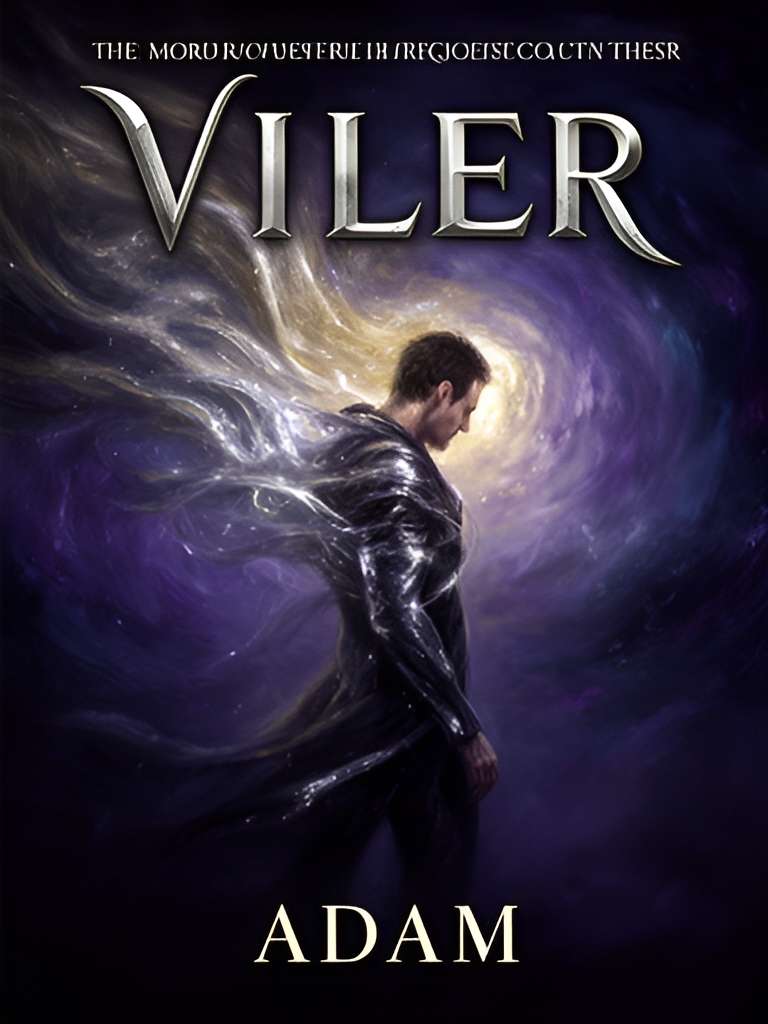
Viler
by kriger
14 chapters55 min read
Chapter 1
The First Slip
Adam stared at the ceiling, the same water-stained crack snaking across the plaster like a dried riverbed. Outside, the city breathed low and restless—distant sirens, the muffled thump of bass from a passing car, the occasional shout swallowed by brick and distance. His apartment was quiet, too quiet, the silence pressing against his ears like cotton. He’d turned off the lamp an hour ago, but sleep refused to come, sliding away each time he grasped for it, leaving him raw and exposed in the dark.
He focused on the rhythm of his breath, trying to force it into something steady, something that might lure unconsciousness. Inhale. Hold. Exhale. His mind, however, refused to quiet. It flicked through the day’s trivialities—the lukewarm coffee at work, the coworker who’d laughed too loud at a joke that wasn’t funny, the way the light had slanted across the bus stop at 5:17 p.m., gilding the rain on the pavement. None of it mattered, and yet it all clung, a static hum behind his eyes.
Then, without warning, the room tilted.
Not physically—he felt no sway, no vertigo—but his perception shattered. He was no longer lying in bed. He was above it, floating near the ceiling, looking down at his own body: limbs akimbo, face slack in the dim glow of the streetlamp filtering through the blinds. His chest rose and fell in slow, mechanical tugs. He could see the faintest trace of breath fogging the air above his lips.
Panic surged, icy and sharp. What is this? He tried to scream, but no sound came. He tried to move his arm—his real arm, the one still resting on the mattress—but it didn’t respond. Instead, the version of him here, wherever here was, twitched a finger in response to the thought. He watched, horrified, as his spectral hand passed through the blanket as if it were mist.
He jerked back—or tried to—and shot backward through the wall, plaster and wood offering no resistance. He emerged into the night air above the street, windless and cool, the city spread out below like a circuit board of light. Cars crawled along the avenues, their headlights weaving yellow threads through the darkness. In a window across the alley, a woman sat on the edge of her bed, brushing her hair, unaware of the eyes that watched her from outside her own skin.
Adam—if it was still Adam—hung motionless, heart hammering against ribs that felt both present and absent. He could see the texture of the brick facade, the peeling paint on the fire escape, the individual threads in the curtain swaying slightly in an updraft he couldn’t feel. There was no lens, no filter—just pure, unmediated sight. It was as if his eyes had been removed from his skull and placed directly into the world.
He willed himself to move. A thought, and he drifted sideways, gliding past the fire escape, past the roof access door, up onto the flat roof of the building. The city sighed beneath him. He passed through the chimney of a neighboring building and into a bedroom where an old man slept, mouth open, a hearing aid dangling from the nightstand. Adam paused, fascinated. He could see the rise and fall of the old man’s chest, the faint tremor in his eyelid, the way his wedding band caught the glow of the digital clock: 2:47 a.m.
A laugh bubbled up—silent, breathless—then died in his throat. This wasn’t a dream. Dreams were fuzzy, unstable, slipping away upon waking. This was clear. Hyper-real. He could count the cracks in the plaster above the sleeping man’s head. He could smell the faint ozone tang of old wiring behind the wall.
He pushed forward, curiosity overriding fear. He drifted down the fire escape, through the alley, and into the street. A taxi idled at a red light, its driver tapping his fingers on the wheel, eyes fixed on the light. Adam floated past the windshield, saw the reflection of the dashboard in the man’s glasses, the half-eaten granola bar on the passenger seat. He crossed the avenue, drifted into a park where homeless figures lay curled beneath blankets, their breaths pluming in the cold. He hovered over one, a woman with a knapsack clutched to her chest, and saw the dream flicker behind her closed lids—fleeting images of a kitchen, a child’s laughter, a door opening.
He rose higher, drawn upward as if by gravity’s reverse. The city thinned below, lights spreading like fallen stars. He passed through the clouds—cool, damp resistance—and emerged into a darkness so deep it felt like velvet. Above, the stars burned with a hardness he’d never seen from the ground, unwavering, ancient. No atmosphere blurred their light. They were points of pure fire, piercing the void.
He turned, looking back. The city was a wound of light in the earth’s dark side, veins of illumination tracing the rivers and grids. For a moment, he felt not fear, but awe—a vast, quiet wonder that left him breathless. He was not just seeing. He was part of the seeing, a consciousness unmoored, observing without being observed.
Then, a tug. Soft at first, like a thread pulling at his sleeve. Then stronger. A sensation of being drawn, not by force, but by inevitability—like a leaf caught in a current it cannot resist. He fought it, flailing mentally, trying to anchor himself to the memory of his bed, the weight of the blanket, the smell of detergent on the pillow.
The pull intensified. Stars blurred. The city lights smeared into streaks. He felt himself accelerating, not through space, but back—toward weight, toward flesh, toward the dull, insistent ache of being alive.
He snapped into his body with a gasp.
Air flooded his lungs. His heart hammered against his ribs like a trapped bird. He was lying flat on his back, sheets tangled around his legs, sweat cooling on his skin. The ceiling crack stared back at him, ordinary, mundane. The clock on the nightstand glowed: 3:12 a.m.
He lay there, trembling, staring into the dark. The room felt smaller, quieter, somehow less than it had before. As if he’d seen the scaffolding behind the facade and could never unsee it.
He lifted his hand, turned it over in the dark. Flesh and bone. Warm. Real.
And yet, he knew—now, irrevocably—that he was more than this.
He closed his eyes. Not to sleep. But to remember the stars.
Chapter 2
Chapter 2
He closed his eyes. Not to sleep. But to remember the stars.
Morning came with the thin, gray light of winter filtering through the blinds. Adam lay still, eyes open now, tracing the cracks in the ceiling like constellations. The memory of the astral flight clung to him—not as a dream, but as a recalibration. His body felt heavier, his breath slower, as if some part of him had been left behind in that velvet dark and was still tugging, faintly, from afar.
He rose slowly, moved through the apartment on autopilot—coffee, toast, the hum of the refrigerator—but his mind kept returning to the sensation: the weightlessness, the silence, the stars not as distant points but as presences. That night, after work, after the city had swallowed itself in traffic and neon, he sat on the edge of his bed and tried again.
He breathed deep, not to relax, but to focus. He recalled the pull—not the return, but the ascent. The moment before the tug, when he had been part of the seeing. He let his thoughts loosen, not forcing, not pushing, but allowing a softening at the edges of his awareness. Like sinking into a warm bath, but inward.
There was a shift.
Not violent, not dramatic—a quiet unfolding. He felt his consciousness loosen from the scaffold of his body, not tear free, but drift, like a leaf released from a branch. He opened his eyes—though they were closed—and saw the room from above. His body lay still on the bed, a shape of warmth under the blankets. He hovered near the ceiling, breathless not from exertion but from wonder. He did not rush. He did not flail. He simply was.
He drifted to the window. The glass was cool against his non-corporeal cheek. Outside, the city breathed in low murmurs—distant sirens, the thump of bass from a passing car, the occasional shout swallowed by distance. But in the astral, sound did not travel as waves. It came as impressions: a flicker of anxiety near a bus stop, a ripple of contentment from a lit window where someone laughed over dinner. Emotions were not heard; they were felt, like temperature changes in the air.
He moved through the wall—not by breaking it, but by slipping through its essence, as if the wall were a thought he had outgrown. The hallway was empty. He descended the stairs, passing through the front door into the night air.
The city unfolded beneath him. Not as a map, but as a living thing exhaling. Streetlights pooled like islands of amber in a dark sea. He floated above intersections, watched cars glide like beetles through the gloom. He passed over a park where a lone figure sat on a bench, head in hands—not sorrow, he sensed, but exhaustion, deep and quiet. He did not intrude. He merely observed, a silent witness.
He rose higher. The city thinned. The lights blurred into constellations of their own. He paused, suspended between worlds, and looked down. Not with the eyes of a tourist, but of someone who had remembered a language he’d forgotten how to speak.
He returned before dawn, not because he was pulled, but because he chose to. He slipped back into his body with the ease of settling into a familiar chair. His eyes opened. The room was dim, but he felt… aligned. Not shaken. Not terrified. Known.
The next night, he went further.
He projected as soon as the house fell silent—after midnight, when the last neighbor’s light blinked out and the street settled into its true rhythm. He moved with purpose now, not drifting, but steering. He practiced holding his form, feeling the edges of his awareness like the rim of a cup—solid enough to hold shape, fluid enough to flow.
He visited the public library. It was closed, of course, but in the astral, doors were suggestions. He passed through the glass façade and entered the hushed vault of knowledge. The books did not glow, nor did they whisper. But their presence was dense, layered—each volume a sediment of thought, some recent and sharp, others ancient and slow, like stone worn by time. He drifted between the shelves, not reading, but sensing. A philosophy text pulsed with quiet intensity. A romance novel hummed with longing, faint and faded. A math textbook felt cold, precise, like a frozen equation.
He lingered in the rare manuscripts room. The air here was thicker, older. He felt the weight of centuries—not just paper, but the hands that had turned these pages, the eyes that had strained over candlelight. A shiver passed through him—not fear, but recognition. These were not just objects. They were vessels of consciousness, echoes of minds that had once burned bright in the flesh.
He left before the first cleaner arrived. Not because he feared detection—he had seen no sign that anyone could perceive him—but because the solitude was beginning to feel less like escape and more like communion.
He bought a notebook the next day. Not leather-bound or pretentious—just a simple spiral pad, the kind students used. He kept it in the drawer of his nightstand, alongside a pen that never seemed to run dry.
He wrote not every night, but often. Not in full sentences, but in fragments, sketches of sensation:
Third projection. Held form for 47 minutes. City below like a circuit board of wakefulness. Felt a pulse of joy from a rooftop bar—someone celebrating, maybe a promotion. Did not approach. Did not need to.
Library again. The poetry section felt like breathing warm air. One book—Rilke, I think—thrummed like a held note. Time… strange. Felt like hours, but clock said 22 minutes.
Watched a couple argue on a street corner. Not with ears. With the gut. Their anger was a dark storm between them, lightning flashing in flashes of accusation. When they parted, the space where they’d stood felt hollowed out, like ground after a fire.
He did not try to explain it. He only recorded. Over time, patterns emerged. Time in the astral did not match the waking world—it stretched, folded, sometimes looped. Emotions from the physical world left imprints, like footprints in damp sand. And the more he journeyed, the less he felt like a visitor. He felt like a listener. A witness. Something that had always been there, waiting to turn its attention inward.
One night, after a long session in the astronomy wing of the library—where he had floated among texts on supernovas and dark matter, feeling the distant pulse of collapsed stars as if they were heartbeats—he returned to his body and wrote:
I am not leaving my body. I am remembering where I’ve always been.
He closed the notebook. Laid his hands on his thighs. Felt the cotton of his pants, the solidity of his knees.
And for the first time since the first slip, he did not reach for the stars with longing.
He reached for them with quiet recognition.
And then, softly, he let go.
Chapter 3
Chapter 3
Over weeks, Adam refines his ability, learning to project at will and stabilize his form in the astral plane. He begins taking nightly journeys, watching the city sleep, visiting empty libraries, and standing on rooftops under starless skies. Though solitary, he feels connected to something vast and quiet. He starts keeping a journal, noting how time distorts and how emotions from the waking world echo strangely in the astral realm.
The city lights below blur into a drowned watercolor as Adam drifts above the rooftops, his breath slow and even in the silence between worlds. He has come to the old observatory on the hill—a place he visits when the weight of waking thoughts grows too heavy. Its dome, half-collapsed and choked with ivy, stands like a broken skull against the night. Inside, the air is thick with stillness, and the great lens, long darkened, seems to swallow light rather than gather it. He floats just above the rusted rails of the broken track that once turned the dome, his form a faint shimmer, more suggestion than substance.
It is here, in the hush between heartbeats, that he feels it—not a sound, not a shift in the air, but a presence. Like the faint pressure of a gaze from behind glass, or the whisper of a thought not his own. He stills, his awareness tightening like a drawn bow. The astral fog around him, usually a passive medium, seems to thicken, coalescing at the edge of perception.
There.
A shape, not solid, but defined by intention—a woman’s form, draped in shifting veils of silver and deep blue, hovering just beyond the observatory’s broken archway. She is not looking at him, not exactly, but her attention is fixed, cautious, probing. Like his own, her consciousness is awake here, unmoored from flesh, moving with quiet purpose. He feels the echo of her wariness, mirrored in his own chest.
He does not speak. Words are clumsy things here, prone to distortion. Instead, he reaches—not with hands, but with thought—and offers a simple question, pure and open: Who are you?
The figure pauses. The veils around her ripple, like water disturbed by a stone. Then, slowly, she turns. Her face is not detailed, but he feels the curve of her jaw, the depth of her eyes—dark pools holding stars. A thought forms in the space between them, clear and soft as chime: I am Elara. I, too, walk here.
A breath he does not need catches in his chest. Relief floods him, warm and sudden, like sunlight breaking through cloud. Me too, he thinks, the words forming with a tremor of disbelief. I thought I was alone.
She drifts closer, her form stabilizing as she focuses. The fog parts slightly around her, revealing hints of fabric—something like a coat, high-collared, fastened with strange, asymmetrical clasps. Her hands, when she lifts them, are long-fingered, palms open in a gesture of peace. I have felt others, she thinks, her tone low, wary. Flickers. Shadows. But never one who answered. Never one who stayed.
I have been coming here for weeks, he thinks, his wonder overcoming caution. I thought the silence meant I was the first. Or the only one who could… stay.
She tilts her head, a gesture almost human. The astral plane is not empty. It is full of dreamers, of echoes, of those who brush against it in sleep. But to come here consciously… to hold form… that is rare. I have searched for signs. I have waited.
A laugh, silent and bright, shimmers between them—not sound, but the pure resonance of shared understanding. Then we are not mad, he thinks, the thought light as a feather. We are not broken.
No, she thinks, and for the first time, her presence softens. The edges of her form glow faintly, like moonlight on snow. We are awake.
They stand in the quiet observatory, two consciousnesses adrift in the vast, silent deep, no longer alone. The city sleeps below, unaware. The stars, distant and unblinking, watch from beyond the veil.
We should meet again, she thinks, her tone gaining a quiet urgency. There is so much I do not understand. The way time bends… how emotions from the waking world leave scars here… I have theories, but I need to test them.
And I have questions, he thinks, feeling a spark of something long dormant—curiosity, unburdened by fear. About what this place is. What we are when we are here.
She nods, the motion graceful, deliberate. Then tomorrow. Same time. Same place. If you will come.
I will, he thinks, and the word carries weight. I will be here.
She begins to fade, not in retreat, but in return—the slow disengagement of a consciousness turning back toward the flesh. Her form grows translucent, the silver veils dissolving into the astral mist like smoke caught in an updraft. But her thought lingers, clear and warm: Thank you for not being alone.
And then she is gone.
Adam remains, hovering in the heart of the broken observatory, the astral fog swirling softly around his ankles. The silence is different now—not empty, but full. Full of possibility. Full of the quiet hum of another mind, resonating in tandem with his own.
He does not rush back. He lets the moment settle, lets the warmth of connection settle into his bones like afterglow. For the first time since the stars pulled him from his body, he does not feel the ache of isolation. He feels, instead, the quiet thrill of kinship.
Below, the city stirs in its sleep. Somewhere, a window opens. A sigh escapes into the night.
Adam smiles—not with his lips, but with the whole of his awareness—and turns his thoughts toward home. His body waits. His journal waits. But tonight, he carries something new: the certainty that he is not the only one who walks between worlds.
And with that thought, he begins the slow descent, not toward escape, but toward return. *
Chapter 4
Chapter 4
The cool press of night air against his skin felt different now—lighter, as if the weight of his body had been left behind like a coat on a chair. Adam hovered above his rumpled sheets, the ceiling of his apartment a blurred smear of shadow and faint streetlight bleed. Below, his chest rose and fell in slow, steady rhythm. He had returned here a dozen times, each crossing smoother than the last, but tonight carried a quiet thrum of anticipation. He was not alone in the dark.
A presence stirred at the edge of his perception—not a shape, not yet, but a direction of attention, like someone turning their head in a crowded room. Then, gradually, she formed: Elara, her outline coalescing from the astral mist as if drawn by thought alone. She wore no distinct clothing, only a suggestion of form, her features soft-edged but unmistakably feminine—high cheekbones, eyes that held a quiet intensity. She hovered a few feet away, neither advancing nor retreating.
You came, she thought, and the words were not heard but known, warm and immediate, like sunlight on closed lids.
I said I would, Adam replied, surprised at how easily the thought formed, how little effort it took to send it across the space between them. You were right. I’m not alone.
A ripple passed through her—amusement, or relief. Neither am I. It’s… strange. To find another. I’ve wondered if I was imagining it, if the solitude had finally cracked my mind.
I’ve thought the same, Adam admitted. But then you appeared. And you felt… real. More real than most things down there.
She drifted closer, though still respecting the invisible boundary between them. Down there? she asked, a hint of curiosity in her tone. You mean the waking world?
The body. The apartment. The noise. He glanced downward, where his physical form lay unaware. It all feels… muffled now. Like hearing through water.
Exactly, Elara said, her voice brightening. That’s what I’ve been trying to understand. This isn’t just escape. It’s not hallucination or dream. It’s… perception unfiltered. The astral plane isn’t another place—it’s the same world, but seen without the limits of the senses. Thought becomes shape. Emotion becomes light or shadow. Time doesn’t flow—it pools.
Adam considered this. I’ve noticed that. Minutes here feel like hours. Or the reverse. Last week, I spent what felt like an hour reading in the empty city library—no one else there, just the hum of the lights—and when I returned, only ten minutes had passed on my alarm.
That’s because time here is subjective, she said. It responds to attention. The more you focus, the more it stretches. In the waking world, time is forced on us by clocks and bodies. Here, we are free of that tyranny.
Free, Adam repeated, testing the word. Or unmoored?
She paused. Perhaps both. But I don’t think it’s dangerous. I think it’s evolution. A next step. We’re not leaving our bodies behind—we’re expanding what it means to be conscious. Imagine if everyone could do this. No more lies. No more hiding. Thought would be transparent. Conflict might finally end.
Adam felt a flicker of unease. Or it could overwhelm us. Imagine feeling every fear, every hatred, every secret—all at once. Not everyone is ready to be seen.
That’s why we practice, she said gently. Why we learn to stabilize, to shield. It’s not about power—it’s about responsibility.
He found himself nodding, though a part of him resisted the certainty in her voice. She spoke as if she had mapped the astral plane already, as if its mysteries were merely puzzles waiting to be solved. He, by contrast, still felt like a child standing at the shore of an ocean, awed by its vastness but wary of its depths.
What do you do when you’re not here? he asked. In the waking world?
I work in a lab, she said. Biochemical research. I spend my days looking at cells under microscopes, trying to understand how life builds itself from strings of protein. Funny, isn’t it? I spend my waking hours studying the minute, and my nights exploring the vast.
Balance, Adam said. That’s important.
Yes, she agreed. Grounding. The body is our anchor. Without it, we might drift too far.
They fell into a comfortable silence, drifting side by side above the sleeping city. Below, streets glowed faintly with the last traces of traffic. A distant siren wailed, then faded. In the astral plane, sound didn’t travel as waves—it arrived as impressions, fleeting and colored by emotion. The siren was not loud, but sharp, like a sting of anxiety passing through the air.
Have you tried shaping things? Elara asked suddenly. Not just observing. Creating?
Adam shook his head. I’ve been afraid to. What if I make something that shouldn’t be here? What if I tear something?
You won’t, she said. Thought here is malleable, but not fragile. It’s like clay—you can press and shape, but it doesn’t shatter unless you strike it hard. Try. Make a door.
He hesitated. Then, picturing a simple wooden door—oak, with a brass handle—he focused. Not with force, but with openness, as if inviting the idea to take form.
A shimmer appeared before him—a vertical ripple in the astral fog. It solidified, edges sharpening, grain blooming across the surface, a handle gleaming faintly. He reached out. His fingers passed through it, cool and insubstantial, yet undeniably there.
You did it, Elara breathed, delight rippling through her awareness. See? It’s not dangerous. It’s… creative.
He laughed, a soft sound that made no sound at all. It’s beautiful.
They spent the next several minutes experimenting—Adam shaping a bench, then a small archway, Elara forming a sphere of condensed light that pulsed like a heartbeat. They shared techniques: how to stabilize form by focusing on the breath (even though they didn’t need to breathe), how to extend perception by softening the gaze of the mind, how to return quickly by thinking of the body’s weight, the pressure of sheets, the rhythm of blood.
You’re a quick study, she said, smiling. Most take weeks to get this far. You’ve only been at it a few days.
I don’t know why it comes easy, Adam said. Maybe I was ready.
Or maybe, she said, her tone turning thoughtful, the astral plane has been waiting.
Before he could answer, her expression shifted—not in fear, but in sudden, sharp absence. Her form flickered, like a candle caught in a draft that wasn’t there. Her thoughts, which had been a steady presence beside him, stuttered—Adam, I think I— —and then she was gone.
Not faded. Not withdrawn. Snuffed.
The astral plane around him seemed to inhale. The light dimmed, not from any external source, but as if the very fabric of the space had lost a thread of resonance. The bench he had shaped dissolved into mist. The archway frayed at the edges.
Adam froze, heart hammering in a chest that no longer existed—or did, but only in memory. Elara? he thought, projecting into the silence. Elara, answer me.
Only silence returned. Not empty, but wrong—like a room where someone had just stopped speaking mid-sentence, the air still vibrating with their last word.
He tried again, harder, Elara! Where are you? But there was no reply, no echo, no sense of direction. She had not moved away. She had ceased to be.
Panic rose, cold and sharp. He thought of her in her apartment—her body lying still, unaware, while her mind had been torn from the astral plane mid-thought. Had she felt it? Had she known?
He had to go back. Had to check.
With a sudden, violent wrench of will, he snapped his awareness toward the pull of gravity, the weight of his limbs, the familiar ache in his lower back from lying too long on one side. The astral world peeled away like wet paper, and he was slammed back into his body with a gasp.
His eyes flew open. The ceiling swam into focus—cracks in the plaster, a stain shaped like a bird. His heart pounded against his ribs. His sheets were damp with sweat. He sat up, trembling, and looked at his hands—ordinary, pale, slightly shaking.
The apartment was silent. The clock on the nightstand read 3:17 a.m.
He swung his legs over the side of the bed, feet touching the cool floor. He didn’t bother to turn on the light. He knew, with a certainty that settled in his bones like ice, that Elara was not just lost.
She was gone.
And something had taken her.
Chapter 5
Chapter 5
Adam floated in the dim half-light of his bedroom, the weight of his return pressing against his ribs like a stone. The astral plane still lingered at the edges of his vision—a faint shimmer, like heat rising off pavement—but Elara was gone. Not faded, not distant. Snuffed. As if someone had reached into the fabric of thought and pulled a thread clean through.
He tried again. And again.
Each time, he slipped free of his body with practiced ease, the familiar tug of release followed by the weightless drift into the silvered mist. He called her name—not with voice, but with intent, a pulse of thought sent rippling into the void. Once, twice, a dozen times. The astral fog remained indifferent. No ripple answered. No presence stirred. Only the same hollow quiet, deeper now, as if the space where she had been had collapsed inward, leaving only the echo of absence.
He hovered above his bed, limbs loose, breath slow, and let the silence press in. It was not empty in the way of a blank page, but in the way of a room after a scream—still vibrating with what had just ceased.
Back in his body, Adam sat on the edge of the mattress, fingers braced against his thighs. The city breathed outside his window—distant horns, the murmur of traffic, a siren fading down the boulevard. Ordinary. Unaware.
He opened his laptop, hands moving without thinking. Typed her name into the search bar. Scrolled past social media ghosts, old forum posts, a blurred photo from a conference she’d once attended—nothing recent. Then, a local news feed, buried beneath ads and weather: Unexplained Death in Midtown Apartment—Woman Found Unresponsive, No Signs of Trauma.
He clicked.
The article was short. A woman, late twenties, found by her landlord after failing to answer calls for two days. No forced entry. No signs of struggle. Toxicology pending. Officials speculated a sudden neurological event—aneurysm, seizure—though nothing confirmed.
Her name: Elara Voss.
Adam stared at the screen until the words blurred. His breath came short. He knew, with a certainty that had nothing to do with logic and everything to do with the hollowness in his chest, that this was no accident. She had not died in her sleep. She had been taken—unmade—while she was there, in the between-place where thought walked without flesh.
He leaned back, the chair creaking under his weight. The apartment felt too quiet now, too still. The ordinary sounds of the city outside seemed muffled, as if heard through water.
He tried not to think of the others. The fleeting impressions he’d sensed in the astral plane over the weeks—faint signatures, like footprints in dust, of minds that flickered just beyond perception. The man who’d sketched strange symbols in a café notebook, his aura humming with quiet focus. The woman who’d paused on a subway platform, eyes closed, head tilted as if listening to something no one else could hear. He had dismissed them as coincidences. Imagination.
Now, he wondered: had they been next?
A coldness spread through him, not fear, but something sharper—dread, yes, but laced with urgency. If Elara had been hunted in the astral plane, then the killer was not merely aware of their kind. They could reach them there. Strike them there. And if that was true, then every projector was a target. Every awakened mind, a candle in the dark, waiting to be snuffed.
He closed his laptop. The screen went black, reflecting his pale face back at him—eyes wide, jaw tight, the quiet man he’d been gone, replaced by something alert, coiled.
He would not wait for the next silence.
He would go back. Not to escape. Not to wonder.
To hunt.
The resolve hardened in him like a knot tightening. He stood, the chair scraping against the floor, and walked to the window. The city lights twinkled, a canvas of indifference, as if the world outside had already moved on from the small, significant death that had occurred within its walls. Adam's gaze drifted upward, to the stars beginning to prick through the urban haze. He felt the familiar tug, the call to step beyond the confines of flesh and bone, to walk the paths of the unseen.
But this time, it was not the allure of escape or discovery that drew him. It was a need to understand, to trace the threads of a violence that seemed to defy the boundaries between worlds. He thought of Elara, of the sudden, unexplained cessation of her presence, and the chill deepened within him. If death could reach into the astral plane, then what safety was there in the physical world? The question hung, unanswerable, a shadow cast over every projector, every mind that dared to venture into the silent realms.
Adam's eyes fell back to the city, his mind racing with the implications. He knew he had to move, to act, but the direction was unclear. All he could do was take the first step, back into the astral plane, with a purpose now that was both grim and necessary. The stars above seemed to twinkle in a different rhythm, as if they too felt the weight of his decision, the beginning of a journey that would take him deeper into the heart of the unseen, and the darkness that lurked within.
Chapter 6
Chapter 6
Adam lay still on his back, the ceiling a blur of water-stained plaster above him, his breath shallow and deliberate. The newsprint still clung to his fingers, the ink smudged where he had gripped it too tight. He had read the obituary three times already—Elara Voss, twenty-eight, biochemical researcher, found unresponsive in her flat, no trauma, no toxins, just… stillness. The coroner’s report had been a polite fiction. He knew what had happened. Not to her body. To her presence.
He closed his eyes.
The shift came not with a jerk, but a sigh—like slipping from a warm bath into cool air. His awareness untethered. The weight of his body dissolved. He was above the mattress, then above the floor, then above the building, the city unfolding beneath him in a lattice of streetlights and distant traffic. But he did not look down. He turned inward, toward the quiet hum beneath the waking world—the astral plane.
It was not a place he entered so much as a layer he peeled back. The physical world faded like a overexposed photograph, its colors bleaching into silver and gray. What remained was not emptiness, but a resonance—a low, vibrational thrum that pulsed where thought had lingered, where feeling had pooled. He moved through it as one moves through water, slow and attentive, his astral form a faint outline of will, shaped by habit and memory.
He began at the observatory—the place where he had first met Elara. The dome stood silent, its glass eyes dark. Inside, the air was thin, stale with the echo of abandoned curiosity. He drifted past the rusted telescope, the cracked star charts, the coffee ring on the wooden console. Nothing. No ripple. No warmth. Just the faint, fading impression of someone who had once sat there, staring up, wondering. He lingered, pressing his awareness into the silence, but it answered only with absence.
He moved on.
The next site was a converted warehouse in the arts district, where a man named Jonah Vire had been found slumped over his drafting table, charcoal smudged across his cheek, his hands still curled around a pencil as if mid-thought. Adam had seen Jonah’s name in a forum on lucid dreaming, a passing comment about “hearing the colors of numbers.” Nothing more. But now, the place felt like a grave.
The warehouse loomed, its broken windows like blind eyes. Inside, the air was thick with the scent of old oil and dust. Adam drifted past easels holding half-finished canvases—swirls of blue and black that made no sense, as if the artist had tried to paint a feeling and given up. On the table, the pencil lay where it had fallen. The paper beneath it was covered in equations, not words—complex, recursive, looping inward like a vortex. Adam leaned closer. The marks were not just symbols. They were thoughts made solid, frozen in the act of being thought.
And then he felt it—a coldness, not in the air, but in the space between thoughts. A absence where awareness should have clung, like a finger dragged through wet sand, leaving a smooth, hollow trail. It was not destruction. It was erasure. As if something had not killed Jonah’s mind, but unmade the very act of his consciousness in this realm—sucked out the intent, the focus, the quiet fire of his attention, leaving only the husk of his body behind.
Adam recoiled, not from fear, but from recognition. This was not random. This was feeding.
He went to the third—a quiet suburb, a ranch-style house with a sagging porch. A teacher, Miriam Lass, had died in her sleep, according to the report. No signs of distress. Her cat had been found sitting on her chest, purring, as if nothing were wrong.
Adam hovered above the roof, then drifted through the walls. The bedroom was dim, the air still. Miriam lay on her side, one hand tucked under her cheek, the other resting on the blanket. Her face was peaceful. Too peaceful.
He moved to the desk by the window. A notebook lay open. A half-written letter to her sister. The last sentence trailed off: I keep thinking about that dream— And then nothing. The ink faded, as if the pen had lifted mid-word and never returned.
He touched the page with his astral fingertip. The paper was warm. Not from the room, but from her—a residual echo of her focus, her care, the quiet intention of someone who had meant to finish. And beneath it, a chill. A void where her awareness had been, not just in sleep, but in the in-between—the threshold where thought begins to form, where the self stirs before waking. It had been scooped out, clean and silent, leaving only the shape of where it had been.
Adam stepped back. His astral form trembled, not from cold, but from the sheer wrongness of it. This was not murder. It was unmaking. The killer did not snuff out a life—they erased the spark that made it a life in the first place. Not the brain. Not the body. The awareness. The part of a person that could look at a star and wonder, that could feel grief or joy, that could be.
He had thought Elara was taken. Now he understood: she had been unmade. And she was not the first.
A fury rose in him, hot and sharp, cutting through the numb dread. It was not grief alone that burned—it was the realization that he had been seen. That his own projections, his own quiet searches, had been like strikes of flint in the dark. Each time he reached out, he had lit a spark. And something had noticed.
He did not weep. He did not scream. He tightened his will, pulled his astral form into a tight, hard point—like a fist clenched in the dark—and shot backward, not toward safety, but toward the source of the cold.
He would not wait to be found again.
He would go looking.
Chapter 7
Chapter 7
Adam drifted above the city’s sleeping rooftops, the astral plane humming with the quiet thrum of countless unconscious minds. Below, streetlights bled halos into the mist, and the wind carried the distant murmur of traffic like a forgotten lullaby. He had come here not to search, but to rest— to let the weight of the day dissolve in the silence between thoughts. The deaths he’d sensed lingered like cold spots in the air, but tonight, for the first time in weeks, the astral felt… empty. Peaceful, almost.
Then, a shift.
Not a ripple. Not a distortion.
A gaze.
It settled on him not with malice, not with hunger, but with the slow, inevitable recognition of something that had been waiting. Adam froze mid-breath, his astral form tensing as if struck by a current he couldn’t see. The presence wasn’t loud. It didn’t roar or surge. It simply was—deep, layered, and ancient, like bedrock beneath soil, like the roots of a tree older than memory. It didn’t come from any direction he could name; it seemed to emanate from the strata itself, from the slow, dreaming layers beneath thought, where time didn’t pass so much as accumulate.
His heart hammered in his chest, though his body lay miles below, wrapped in blankets and shadow. He felt it—not as fear, not yet, but as the awful clarity of being known. Not as a man. Not as a dreamer. But as one who walked here. One who saw.
He tried to pull back, to retreat into the familiar comfort of his apartment, but the presence didn’t chase. It didn’t need to. It had already seen him. And in that seeing, something shifted—not in the air, but in him. The veil between observer and observed had turned transparent. He wasn’t just projecting anymore. He was exposed.
A thought, not his own, brushed against the edge of his awareness—not in words, but in sensation: the chill of deep water, the patience of stone, the quiet certainty of a predator who has watched the same trail for centuries and knows, without doubt, that the prey will return.
Adam gasped—though he had no breath to gasp with—and snapped back into his body with a jolt that left him trembling, sheets tangled around his legs, sweat cooling on his skin. The ceiling of his apartment swam into focus, cracked and water-stained, ordinary and horribly real.
He lay there, staring into the dark, ears straining for any sound beyond the city’s sigh. But the astral was silent now. Empty again. Or perhaps it was only waiting.
He pressed a palm to his sternum, feeling the frantic thud beneath his ribs. Not just fear. Violated. Marked.
His power had never felt like a secret before. It had felt like a gift. A quiet escape. A way to be more than the sum of his routines, his silences, his unspoken longings.
Now he wondered if it had never been his to keep.
If it had been a signal all along.
And if something out there—something old, something patient—had just received the transmission.
The darkness in his room seemed to thicken, like a presence that had seeped in through the cracks, watching him with an unblinking gaze. Adam's skin prickled with gooseflesh as he threw off the covers and got out of bed, his bare feet making barely a sound on the cool floor. He padded over to the window, pushing aside the curtain to stare out into the night. The city stretched out before him, a vast, glittering expanse of lights and shadows, each one a potential hiding place for the entity that had seen him.
His mind reeled with questions. What was it? What did it want? And how had it found him? The last question sent a shiver down his spine. He had always thought of his ability as a private thing, a secret world that only he could access. But now, it seemed, he was not alone. There were others out there, watching, waiting.
Adam's gaze dropped to the notebook on his desk, the one where he recorded all his astral experiences. He had written about Elara, about their meetings in the astral plane, about the sense of connection they had shared. And now, she was gone. He felt a pang of guilt, wondering if he had been wrong to trust her, to share his secrets with her. But he had felt a sense of kinship with her, a sense of being understood.
He walked over to the desk, his eyes scanning the pages of the notebook. The words blurred together, but one phrase stood out: "I feel like I'm being watched." He had written that weeks ago, after one of his earliest projections. At the time, he had dismissed it as paranoia, but now, he wondered if he had been sensing something even then.
The room seemed to be growing colder, the shadows deepening. Adam felt like he was standing on the edge of a precipice, staring into an abyss. He didn't know what was out there, waiting for him, but he knew he had to be careful. He couldn't just sit back and wait for it to come to him. He had to take action, to try and understand what was happening.
But where to start? The astral plane seemed like a vast, uncharted territory, full of hidden dangers and unseen threats. And he was just one man, alone and vulnerable. The thought sent a wave of fear crashing over him, but he pushed it back, trying to focus. He would start by reviewing his notes, looking for any clues that might have missed. And then, he would project again, trying to gather more information, to learn more about the entity that had seen him.
The darkness in the room seemed to be waiting for him, watching him. Adam took a deep breath, steeling himself for what was to come. He would face his fears, and he would uncover the truth. No matter what it took.
Chapter 8
Chapter 8
Adam's heart still pounded as he settled back into his body, the realization that he had been seen by the entity lingering like a shadow. He couldn't shake the feeling that his power, once a secret escape, had become a beacon, drawing the attention of a force that hunted the awakened. The memory of Elara's absence, the emptiness where her presence once was, fueled his determination to understand what was happening. He took a deep breath, focusing on the sensation of the air moving in and out of his lungs, and began to project once more.
This time, he aimed his consciousness toward the last known locations of other missing or deceased sensitives, individuals who, like him, had shown signs of unusual perception or interest in consciousness studies. As he floated through the astral plane, he sensed the residual emotions and thoughts that lingered in these places. In a small, cluttered apartment, he felt a flash of fear, a sense of being pursued, and then sudden silence. In a park, he detected a faint whisper of desperation, a cry for help that had gone unanswered. Each location held a fragment of the final moments of these individuals, and Adam gathered these pieces, trying to construct a profile of the killer.
The more he explored, the more he realized that the killer did not attack physically, but projected as well, using some form of astral interference to sever the victim's connection to their self. It was a metaphysical assassination, one that left no physical evidence, only the eerie feeling of a presence that had been erased. Adam's mind reeled as he tried to comprehend the nature of this threat, the extent of the killer's power, and the motivations behind these murders. He felt like he was walking through a nightmare, each step revealing a new horror, a new layer of complexity to the mystery.
As he continued to gather fragments, Adam began to notice a pattern. The victims all had one thing in common: they had been exploring the astral plane, pushing the boundaries of their consciousness. The killer, it seemed, was targeting those who were awakened, who had discovered the secret world that lay beyond the physical realm. This realization sent a shiver down Adam's spine, as he understood that he, too, was a target. But instead of fear, he felt a sense of determination and purpose. He knew that he had to keep exploring, to keep gathering fragments, no matter the risk. The entity that had seen him, the killer that stalked the astral plane, had to be stopped.
Adam's thoughts were a jumble of emotions and questions, but as he projected back to his body, he felt a sense of clarity, a sense of direction. He knew what he had to do: he had to use his gift to investigate, to follow the trail of clues that would lead him to the killer. And as he settled back into his body, he felt a sense of resolve, a sense of purpose that he had never felt before. He was no longer just a solitary man, using his gift to escape the monotony of modern life. He was a seeker of truth, a hunter of secrets, and he was determined to uncover the mystery that lay at the heart of the astral plane.
The darkness of his apartment seemed to press in around him, but Adam felt a sense of light, a sense of hope. He knew that he was taking a risk, that he was putting himself in harm's way, but he also knew that he had to act. The entity that had seen him, the killer that stalked the astral plane, had to be stopped, and Adam was the only one who could do it. With a sense of determination and purpose, he stood up, his eyes adjusting to the darkness, and began to prepare for his next move. The astral plane, with all its secrets and dangers, awaited him, and Adam was ready to face it head-on.
He slipped on his boots and pulled his jacket from the hook by the door, the fabric familiar against his palms. The city outside was quiet, the streetlights casting long, wavering pools of amber on the wet pavement. He walked without destination, letting the rhythm of his steps sync with the slow beat of his thoughts, feeling the city breathe around him—its hidden pulses, its unspoken fears, all of it now slightly more legible since he had begun to see beyond the veil.
A thought occurred to him, unbidden but insistent: if the killer operated in the astral plane by severing connection, then perhaps the defense lay not in resistance, but in deepening it. Not fleeing the link to self, but anchoring it so fiercely that no interference could unmake it. He thought of Elara’s calm presence, her certainty that the astral realm held keys—not just to evolution, but to survival. He thought of the observatory, the way the stars had seemed to recognize him not as an intruder, but as something returning.
He stopped beneath a flickering lamp and looked up. The sky was overcast, but he knew the stars were there, patient and constant. He closed his eyes, not to escape, but to listen. And in the silence behind his ears, he felt it—not a threat, not a signal, but a quiet, steady resonance, like a tuning fork struck deep in the dark. His gift was not just a beacon. It was a call. And calls, he realized with a slow, spreading certainty, could be answered.
Chapter 9
Chapter 9
Adam drifted from the last echo of the vanished sensitive, the silence where awareness had been not just extinguished but smoothed over, as if a finger had wiped condensation from glass. He hovered in the astral mid-stratum, the fractured light of distant cityscapes bleeding into one another like watercolor left in rain. The pattern was clear now: fear, pursuit, then the clean severance. No struggle, no psychic scream—just the abrupt absence of a mind that had been there a breath before. It spoke of precision, of a hunter who did not rage but unmade.
He turned inward, not to his body but to the question that had been gathering like storm clouds behind his eyes. What was this thing? Not a man, not anymore. Not entirely. The killings felt too deliberate for random psychic infection, too targeted for a natural predator of the astral strata. And yet, the method—this quiet unspooling of self—had no signature in any of the fragmented lore he’d pieced together from old texts, from Elara’s hesitant theories, from the whispers of those who’d glimpsed the edge before vanishing.
Was it a thought-form? A gestalt of fear born from a thousand projectors who’d glimpsed the dark and screamed silently into the void, their terror coalescing over years into something that now walked the edges of awareness? Or was it something older—a native predator of the astral plane, as natural to that realm as sharks to the deep sea, drawn not to malice but to the sudden flare of consciousness like bioluminescence in the dark?
He had no answer. Only the growing certainty that his own light had become a beacon.
With a resolve that surprised him, Adam pushed outward—not toward the familiar landmarks of the city, not toward the observatory or the quiet parks where he’d first met Elara, but toward the periphery. He moved into the astral fringe, where the mirrored reflections of the physical world began to dissolve. Here, the light grew thin, fractured not by distance but by attenuation, as if the fabric of awareness itself was wearing thin. The shapes of buildings became suggestions, then ghosts, then nothing at all. What remained was not emptiness, but a low, granular static—like the afterimage of a signal lost beneath cosmic noise.
He slowed, extending not his sight but his listening. In the astral plane, perception was not passive; it was an act of tuning. And here, at the edge, the noise was not random. It pulsed. Slow. Deep. A rhythm that resonated not in thought but in the bone-deep sense of duration, like the drift of tectonic plates or the cooling of a star.
Adam touched it with his awareness, and the static shifted—not in alarm, but in acknowledgment. Not a mind as he knew it, but an intelligence vast and slow, older than memory, indifferent as bedrock. It did not see him as prey or threat. It saw him as a fluctuation, a brief ripple in a medium that had known epochs of stillness. It did not hunger. It simply was, and in its being, it made the astral plane what it was: not a mirror, but a membrane between the thought and the unthought, the formed and the forming.
He withdrew, not in fear, but in awe. The hunter was not that. The hunter was sharp, urgent, alive with purpose. This was the ground on which the hunter walked—and perhaps, the reason it walked at all.
A realization settled over him, quiet but absolute: strength would not save him. Power, as he had wielded it—bright, probing, eager to understand—was a lantern in a dark forest. It showed the way, but it also showed him. Survival, he now understood, lay not in burning brighter, but in moving like a shadow through the roots. In knowing not just how to project, but how to un-project oneself from notice. In learning the silence between thoughts, the gaps where awareness could slip through undetected.
He turned back toward the familiar pull of his body, the silver thread of connection trembling faintly in his periphery. The apartment waited. His journal lay open on the desk, waiting for words he was no longer sure how to write.
But he would go. Not to fight. Not to flee. To listen. To learn. To move, at last, not as a beacon, but as a question.
Chapter 10
Chapter 10
Adam lay flat on his back in the narrow attic room above the shuttered bookstore, the one with the sagging roof and the smell of damp paper that clung to the rafters like a second skin. He had come here not for shelter, but for exposure—the place where three projectors had vanished in as many months, their names scratched into the underside of the loose floorboard near the chimney, a silent roll call he’d found weeks ago while searching for patterns in the quiet. The city slept below, its lights blurred through the grimy window, but here, in the thin air between worlds, the veil was worn tissue.
He breathed slow, deep, letting the rhythm of his body anchor him even as he began to loosen the tether. Not a full release—never that again, not after Elara—but a deliberate split. Part of his awareness remained heavy in his chest, a stone in the river of his mind, feeling the rise and fall of his ribs, the faint pulse in his wrist where he’d pressed two fingers to his radial artery as a physical bookmark. The rest, the lighter part, he unfurled like a sail catching wind he couldn’t see.
The shift came without vertigo this time, only a softening at the edges of vision, as if the world had exhaled. The attic dissolved—not replaced by darkness, but by a different kind of presence: the astral plane, not as a place, but as a condition of being. He was no longer lying on warped pine; he was suspended in a space where depth had no fixed measure, where the air itself seemed to breathe with a slow, subterranean rhythm. Distant, the city’s aura glowed like bruised embers—flickers of fear from a late-night argument, the dull thrum of a sleeping child’s dream, the sharp, metallic sting of someone waking in pain three blocks over. He ignored them. He had come to be seen.
He projected himself openly, not as a whisper, but as a signal—steady, bright, unafraid. He let his form expand slightly, not to threaten, but to be unmistakable: a shape of clear intention in the gloom, like a lantern held aloft in a fog known to swallow lights. He waited, not with patience, but with the tense stillness of a predator who has become the lure.
Time had no meaning here, or perhaps too much. He felt the anchor in his body—a faint pressure, like a thread tied to his big toe—reminding him he could return. Good. That was the point.
Then, from the edge of perception where the astral thinned into static—a place he had visited only once before, in Chapter Nine, where the intelligence had watched without malice—something moved.
It did not creep. It did not flow. It detached.
A shadow, deeper than the surrounding gloom, peeled itself from the wall of non-light and surged toward him with the suddenness of a striking serpent. It had no face, no limbs, only a coalescing of hunger and motion, a vortex of fractured thought given chase. It came not to speak, but to unmake—to press against the edges of his self and erase the boundary between “I” and “not-I.”
Adam did not think. He pulled.
The anchor flared—a sharp, electric tug in his toe, a flash of warmth in his chest—and he snapped back like a bowstring released.
He gasped, lungs filling with the stale attic air, the rough wood biting into his shoulder blades, the distant hoot of an owl from the park across the street. His heart hammered against his ribs, not just from fear, but from the violent re-entry, the shock of flesh remembering its weight.
But he had seen it.
Just before the severing, as the shadow lunged—a thing of layered darkness, like smoke wrapped around broken glass, like a dozen exposures of the same face printed over itself until the features were lost—he had glimpsed its form.
Not a monster. Not a beast.
A mind.
Worn thin.
Frayed at the edges, as if too many journeys had stripped away the skin of identity, leaving only the compulsion to pursue, to consume, to silence. It was not alien. It was familiar—in the way a half-remembered dream is familiar, or a voice heard through a wall. It had once been someone who projected. Someone who had come here seeking answers, or escape, or power. And had stayed too long.
A wave of relief washed over him—not safety, but recognition. He was not hunting a god, or a force of nature, but a former kindred. The hunter was not outside the cycle. He was a product of it.
And then, just as swiftly, trepidation curled in his gut like a root finding purchase.
If the hunter had once been like him—had once kept a journal, had once marveled at the stars from astral height—then what prevented Adam from following the same path? What kept him from fraying at the edges, from becoming the very thing he feared?
He pressed his palm flat against the floorboard, feeling the grain, the tiny splinters, the real, solid ness of the world. The anchor had worked. He had returned.
But for how long could he keep splitting himself in two?
He lay there, breath slowing, the attic quiet around him, and knew with a certainty that settled in his bones like sediment: he had drawn the hunter out. Now, he would have to understand it.
Not to fight it.
Not to become it.
But to see it—clearly—before the next journey.
Chapter 11
Chapter 11
Adam lay back against the cool sheets, his breath still ragged from the sudden return. The ceiling above him was ordinary plaster, water-stained in one corner where a leak had long since been patched, but the image that clung to his mind was anything but ordinary: a shape woven from shadow and static, limbs too long, face a collapsing mosaic of half-remembered features, as if someone had tried to reconstruct a human visage from frayed film and whispered dreams. It had lunged—not with rage, but with a grim, purposeful hunger—and in the instant before he wrenched his awareness back, he had seen not a monster, but a mirror.
His fingers pressed into the mattress, feeling the familiar give of cotton and springs, the solidity of weight pressing down. He was here. He was whole. Yet the echo of that encounter lingered, not as fear, but as a slow dawning horror. The hunter was not some ancient thing spawned from the astral dark. It was one of them. A projector. Someone who had walked the unseen as he did, who had felt the pull of the stars in the observatory, who had perhaps once laughed with Elara in the mist between thoughts.
He closed his eyes, not to block the vision, but to let it unfold inward. The hunter’s form had not been solid, but layered—like strata of sedimentary rock, each thin sheet a different moment in time. One layer showed a man in a worn coat, standing beneath a flickering streetlamp, breath fogging in the cold. Another, a woman with her hair braided tight, eyes closed in concentration as she hovered above a hospital bed. Another, a child’s hand reaching for a balloon that had slipped its string. All of them flickered, overlapped, then dissolved into the next—no clear beginning, no clear end, just a continuous becoming that had forgotten how to stop.
It was not possession. It was unraveling. The hunter had gone too far, stayed too long, pushed beyond the veil not in search of power, but in pursuit of understanding—and the astral plane, vast and patient, had not resisted. It had absorbed. Bit by bit, thought by thought, the boundaries between self and not-self had softened, then frayed, then dissolved. What remained was not a soul, but a resonance—a pattern of intent that had grown hungry not for flesh, but for the silence that came when another mind blinked out. The hunter did not kill out of spite. It killed because it believed it was saving something.
Adam’s chest tightened. He remembered the observatory—not the stars themselves, but the feeling that they had recognized him. Not as an intruder, not as a threat, but as something returning. Elara had believed the astral realm held keys to evolution. What if the hunter had believed the same thing—and then, seeing too many minds awaken, too many voices rising in the silent dark, had concluded that evolution was not the goal, but the danger? That the veil between worlds was not a membrane to be pierced, but a dam to be held—and that every awakened projector was a crack spreading through its stone?
He opened his eyes. The room was quiet. Outside, a car passed on the wet street, its tires whispering against asphalt. He sat up, swinging his legs over the side of the bed, and pressed his palms to his temples. The astral plane was not a battlefield. It was an ecology. And the hunter was not an invader—it was a diseased part of the whole, trying to amputate the healthy limbs to stop the spread of a sickness it could not comprehend.
A sound escaped him—quiet, ragged, not quite a sob. It was not anger that rose in him now, but sorrow. Deep and quiet, like water seeping into dry earth. He thought of Elara’s last message, not in words, but in the way she had turned toward him in the mist, her presence warm and questioning, as if to say, Are you still here? He had not known then that she was already slipping. He did not know now if the hunter had been the one to unmake her, or if she had simply faded, like a candle in a draft, and the hunter had merely been the first to notice the dark.
But he knew this: the hunter was not evil. It was lost. And in its loss, it had become convinced that the only way to protect the world was to silence every voice that reminded it of what it had once been.
Adam stood, his bare feet touching the floor. He walked to the window and looked out at the sleeping city. Lights blinked in distant windows like stars that had forgotten their names. He did not reach for the astral plane. He did not call. He simply stood, and let the sadness settle into his bones—not as weakness, but as a kind of clarity.
He would go back. Not to fight. Not to flee. But to understand. And if he could, to remind the hunter—not with words, but with presence—that to be awake was not to be a threat. It was to be alive. And that even in the vast, silent dark, no one had to be alone.
Chapter 12
Chapter 12
As Adam delved deeper into the astral plane, the resonance of the hunter grew stronger, a siren's call that beckoned him toward the heart of the storm. The landscape around him shifted and contorted, like a reflection in rippling water, as he followed the thread of the hunter's presence. Thought congealed into strange architectures, labyrinthine cities that stretched toward the horizon, their spires and towers twisting in impossible ways. Time itself seemed to loop upon itself, moments from different eras bleeding into one another like watercolors on wet paper. Adam felt his sense of self begin to fray, his consciousness unraveling like a thread pulled from a tapestry, as he struggled to maintain his grip on reality.
The hunter's resonance led him to a place where the air was thick with the whispers of the forgotten, a realm where the echoes of countless projectors lingered, their thoughts and emotions imprinted upon the astral fabric like scars on a well-worn hide. And there, at the center of this maelstrom, Adam found the hunter – not as a single entity, but as a diffuse awareness, a collective presence that seemed to emanate from the very fabric of the astral plane itself. Thousands of fragmented projectors, absorbed over time, whispered in unison, their voices a gentle breeze that carried the weight of countless lifetimes. The hunter spoke through them, its voice a melancholy sigh that seemed to carry on the wind, pleading with Adam to stop, to understand that awakening brought not evolution, but ruin.
"Why do you persist in this folly, Adam?" the hunter's voice whispered, a mournful sigh that seemed to come from all directions at once. "You have seen the devastation that our kind can wreak, the instability that we bring to the veil between worlds. And yet, you continue to push forward, to explore the depths of the astral plane, heedless of the danger that you pose to yourself and to others." The whispers seemed to grow more urgent, more insistent, as the hunter's presence wrapped itself around Adam like a shroud. "You must stop, Adam. You must understand that our existence is a threat, a cancer that must be cut out if the balance of the universe is to be maintained." Adam felt a sense of wonder and trepidation as he listened to the hunter's words, his mind reeling with the implications of what he was being told. The hunter's plea seemed to come from a place of deep conviction, a sense of necessity that was both compelling and terrifying. And yet, Adam couldn't shake the feeling that there was more to the story, that the hunter's words were only part of a larger truth that remained hidden, waiting to be uncovered.
As Adam stood there, suspended in the heart of the astral storm, the hunter's words echoing in his mind like a mantra, he felt the weight of the unknown pressing down upon him. The whispers of the fragmented projectors seemed to grow fainter, their presence receding into the background as Adam's thoughts turned inward, grappling with the implications of what he had been told. The landscape around him began to shift and change, the twisted cities and labyrinthine corridors melting away like ice in the sun, as Adam's perception of the astral plane began to expand, to encompass the hidden patterns and unseen forces that shaped the universe. And in that moment, he felt a sense of trepidation, a sense of wonder, as he realized that he stood at the threshold of a great and terrible truth, a truth that would change him forever, and forever alter the course of his journey through the astral plane.
The hunter's presence seemed to recede, its whispers fading into the background as Adam's thoughts turned inward. He felt the weight of the unknown pressing down upon him, the sense of wonder and trepidation growing as he struggled to comprehend the implications of what he had been told. The astral plane itself seemed to be shifting, the landscape unfolding like a lotus flower, its petals revealing hidden patterns and unseen forces that shaped the universe. Adam's perception expanded, his consciousness reaching out to encompass the intricate web of energies and resonances that underlay the astral realm.
As he stood there, suspended in the heart of the storm, Adam began to see the hunter's words in a different light. The plea to stop, to understand the danger that awakening posed, seemed less a warning and more a symptom of a deeper fear. A fear that was not just the hunter's, but a fear that resonated through the astral plane itself, a fear that was tied to the very fabric of existence. Adam felt his mind reaching out, trying to grasp the nature of this fear, to understand the underlying dynamics that drove the hunter's actions. And in that moment, he felt a sense of connection, a sense of unity with the astral plane, as if he were becoming one with the very essence of the universe.
The whispers of the fragmented projectors began to return, their gentle breeze carrying the weight of countless lifetimes. Adam felt himself being drawn into their collective presence, his consciousness merging with the diffuse awareness that was the hunter. He saw visions of countless projectors, each one a thread in the intricate tapestry of the astral plane, each one a potential source of instability and chaos. And he saw the hunter, a guardian of sorts, tasked with maintaining the balance of the universe, with preventing the awakening of too many minds and the destabilization of the veil between worlds. The visions swirled around him, a kaleidoscope of images and emotions, as Adam struggled to comprehend the true nature of the hunter and its mission.
Chapter 13
Chapter 13
Adam stood at the heart of the astral storm, the hunter's presence pressing upon him like a tide. The whispers of the fragmented projectors swirled around him, a cacophony of pain and desperation. He could feel the weight of their collective sorrow, the crushing burden of their isolation. The hunter's plea still echoed in his mind, a haunting refrain that spoke of ruin and devastation. Yet, as he listened to the whispers, Adam began to sense a deeper truth, a hidden pattern that underlay the hunter's words.
"You believe you're protecting reality," Adam said, his voice a gentle breeze in the midst of the storm. "You think that by silencing the awakened, you're preserving the balance of the world." He took a step forward, his presence a beacon of calm in the turbulent astral landscape. "But I sense that there's more to it than that. You're not just trying to protect the world – you're trying to protect yourself." The whispers grew louder, a chorus of denial and anger, but Adam stood firm, his empathy a shield against the hunter's rage.
"I understand your pain," Adam continued, his words a soothing balm to the hunter's fractured psyche. "I feel your isolation, your sense of being lost and alone in the vast expanse of the astral plane. You're not just a hunter – you're a guardian, a sentinel who's trying to keep the darkness at bay." The whispers began to fade, the hunter's presence wavering as Adam's words struck a chord deep within its psyche. For a moment, the storm subsided, the astral landscape still and quiet as the hunter hesitated.
In that moment of hesitation, Adam made his choice. He began to withdraw his consciousness, not to flee from the hunter, but to release his grip on the astral plane entirely. It was a subtle movement, a gentle untangling of his threads from the fabric of the astral realm. The hunter's presence surged forward, a desperate attempt to grasp at Adam's departing consciousness, but he was already slipping away, his awareness unraveling like a thread pulled from a tapestry. As he withdrew, the astral landscape began to fade, the colors bleeding away like watercolors in the rain. The hunter's whispers grew fainter, a distant echo that slowly disappeared into the silence.
Adam felt a sense of peace settle over him, a sense of resolution that came from letting go. He was no longer bound to the astral plane, no longer tied to the hunter's twisted game of cat and mouse. He was free, his consciousness drifting away like a leaf on a stream, carried by the currents of the unknown. The last thing he sensed was the hunter's presence, a faint whisper of sorrow and regret that echoed through the emptiness of the astral plane. And then, there was nothing – only the quiet, dark vastness of the unknown, waiting to be explored.
The silence was almost palpable, a physical presence that wrapped around Adam's consciousness like a shroud. He felt himself being pulled back, his awareness slowly coalescing into a sense of self, of identity. It was a gentle, insistent tug, like the pull of a tide returning to the shore. As he drifted back, the darkness began to take on a shape, a form that resolved into the familiar contours of his physical body. He felt his lungs expand, his heart beat, his skin prickle with sensation as the world around him snapped into focus.
But even as he returned to his body, Adam's mind remained with the hunter, with the fragmented projectors and their whispered pleas. He felt a sense of sorrow, of regret, for the hunter's plight, for the pain and the isolation that had driven it to such extremes. He realized that the hunter was not just a monster, a mindless killer, but a complex, multifaceted being, driven by a twisted sense of purpose. And in that realization, Adam felt a sense of empathy, of understanding, that went beyond the boundaries of the astral plane.
As he settled back into his body, Adam became aware of the room around him, the familiar shapes and sounds of his apartment. The lamp on the table cast a warm, golden glow, illuminating the dusty surfaces and the scattered papers. The air was thick with the scent of old books and stale air, a smell that was both familiar and comforting. Adam's gaze wandered, taking in the details of the room, as his mind continued to grapple with the implications of his encounter with the hunter.
He felt a sense of disconnection, of disorientation, as if he was seeing the world for the first time. The familiar contours of his apartment seemed strange, alien, as if he was viewing them through the eyes of a stranger. And yet, even as he felt this sense of disconnection, Adam knew that he was not alone. The hunter's presence still lingered, a faint echo that resonated through the chambers of his mind. He felt a sense of responsibility, of obligation, to the hunter, to the fragmented projectors and their whispered pleas. He knew that he had to make a choice, to decide how to proceed, now that he had glimpsed the truth of the hunter's nature.
Chapter 14
Chapter 14
As Adam began to withdraw his consciousness from the astral plane, he felt a quiet release, like the gentle lapping of waves against a distant shore. The hunter's presence, which had pressed upon him like a tide, hesitated, then receded, its urgency dissipating as it realized Adam was not fleeing, but rather, letting go. The astral storm, which had raged around them, slowly began to dissipate, its turbulent energies unraveling as Adam's connection to the plane weakened.
The hunter, deprived of an adversary, and seeing no threat in Adam's surrender, did not pursue. It remained, a distant, fading presence, as Adam's consciousness continued to withdraw, slowly, deliberately, like a thread being pulled from a tapestry. Adam felt himself being drawn back into his body, his awareness re-coalescing, his senses re-igniting. He was weak, but present, his mind foggy, his thoughts disjointed. He lay in his apartment, his eyes closed, his chest rising and falling with each slow breath.
As he lay there, Adam felt a sense of peace settle over him, like a soft blanket. He had seen the truth, finally, about the nature of his gift, and the world it had opened up to him. He had realized that some doors, once opened, must be closed, not out of fear, but wisdom. The astral plane, with all its wonders, and its terrors, was a realm that demanded respect, and caution. Adam's gift, which had once seemed like a blessing, had become a burden, a weight that he could no longer carry. He was at peace, now, because he had let go, not just of the astral plane, but of his own ego, his own desire to explore, to discover.
The rain, which had been falling outside, all day, created a soothing melody, a constant, reassuring beat, that seemed to lull the world into a peaceful slumber. Adam listened, his eyes still closed, his mind still foggy, but his heart, finally, at rest. He felt the rain, seeping into his bones, calming his nerves, washing away the fear, and the uncertainty, that had haunted him for so long. He was home, now, in his body, in his apartment, in the world. He was safe, and he was at peace. The astral plane, with all its secrets, and its mysteries, was behind him, a closed door, a forgotten dream. Adam smiled, a small, gentle smile, and let the rain, and the darkness, carry him away, into a deep, and dreamless sleep.
The sound of the rain was like a lullaby, rocking him gently, back and forth, as he drifted in and out of consciousness. Adam's mind was a jumble of thoughts, and emotions, as he struggled to come to terms with what he had experienced. He had seen the depths of the astral plane, and the darkness that lurked within. He had faced the hunter, and had chosen to let go, rather than fight. The memory of that choice, and the sense of peace that had followed, was still fresh in his mind.
As he lay there, Adam became aware of the sensation of his body, the feeling of his skin, and his muscles, and his bones. It was a strange, tingling sensation, as if he was rediscovering himself, after a long absence. He felt the weight of his body, the heaviness of his limbs, and the gentle rise and fall of his chest. It was a comforting feeling, a sense of being grounded, and connected to the physical world.
The rain continued to fall, outside, casting a soothing melody, that seemed to wash away the tension, and the fear, that had built up inside him. Adam felt his mind, and his body, relaxing, letting go of the stress, and the anxiety, that had been his constant companions, for so long. He was at peace, now, and he knew it. He knew that he had made the right choice, in letting go of the astral plane, and the hunter, and all the secrets, and mysteries, that it held.
As the darkness deepened, Adam's thoughts turned to Elara, and the others, who had been lost, in the astral plane. He wondered, if they had found peace, as he had, or if they were still trapped, in the cycle of fear, and violence. He thought about the hunter, and the pain, and the isolation, that had driven him, to silence the others. Adam felt a sense of sadness, and regret, for the hunter, and for all those, who had been lost, in the astral plane.
The rain showed no signs of letting up, and Adam felt himself, becoming one, with the sound, and the rhythm, of the droplets, hitting the roof, and the pavement. He was a part of the world, now, connected to the physical reality, in a way, that he had never been, before. The astral plane, with all its wonders, and its terrors, was behind him, a closed door, a forgotten dream. Adam was home, now, in his body, in his apartment, in the world. He was safe, and he was at peace. The darkness, and the silence, closed in around him, like a soft, black blanket, and Adam let himself, drift away, into the depths of his own mind.