Science Fiction books
Free science fiction manuscripts written with BookAI. Open any title to read chapters on the public book page.
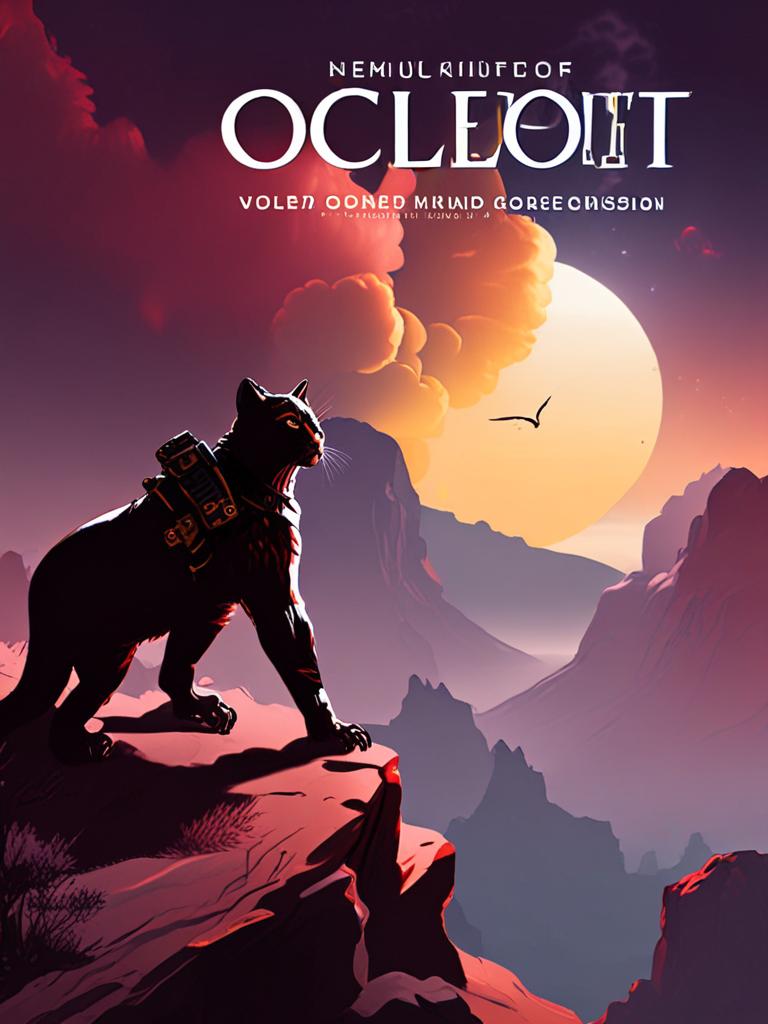
The Ocelot
Clark Webster · 5 chapters · 41/50 pages
In the depths of a volatile and corrupt galaxy, a lone mercenary navigates the unforgiving landscape of a lawless cosmos. With his past shrouded in mystery, this gunslinger for hire is driven by a singular obsession: uncovering the memories that were brutally wiped from his mind centuries ago. His quest for truth is a perilous journey, fraught with danger and uncertainty, as he confronts the dark underbelly of a galaxy where might makes right and the rule of law is a distant memory. As he travels from planet to planet, taking on missions that often put him at odds with ruthless crime lords and corrupt government agents, the mercenary must rely on his cunning, skill, and instincts to survive. Yet, despite the dangers that surround him, he remains fixated on unraveling the mysteries of his past, driven by a deep-seated need to understand who he is and how he came to be a ghost in his own mind. The stakes are high, for in a galaxy where information is power, the mercenary's lost memories may hold the key to unlocking a deeper conspiracy that threatens the very fabric of the cosmos. The galaxy itself is a character, a sprawling, gritty expanse of space stations, dusty frontier towns, and lawless asteroid colonies, where the desperate and the downtrodden eke out a living on the margins of society. It is a world of stark contrasts, where advanced technology coexists with ancient prejudices, and where the rule of law is often little more than a distant rumor. Against this dramatic backdrop, the mercenary's story unfolds, a tale of self-discovery, danger, and adventure, set against the stunning canvas of a science fiction universe. What sets this story apart is its unique blend of science fiction and western elements, a space western that combines the gritty realism of a lawless frontier with the limitless possibilities of a galaxy-spanning civilization. The result is a narrative that is both familiar and yet utterly alien, a story that explores the human condition in the darkest recesses of the galaxy, where the lines between good and evil are constantly blurred, and the only constant is the mercenary's unyielding quest for truth and redemption.
Rogue
Matt · 3 chapters · 31/50 pages
A ship on a colonization mission must split its crew and passengers to stop a rogue planet on a collision course with Earth. The beings on the rogue planet are actually other humans.
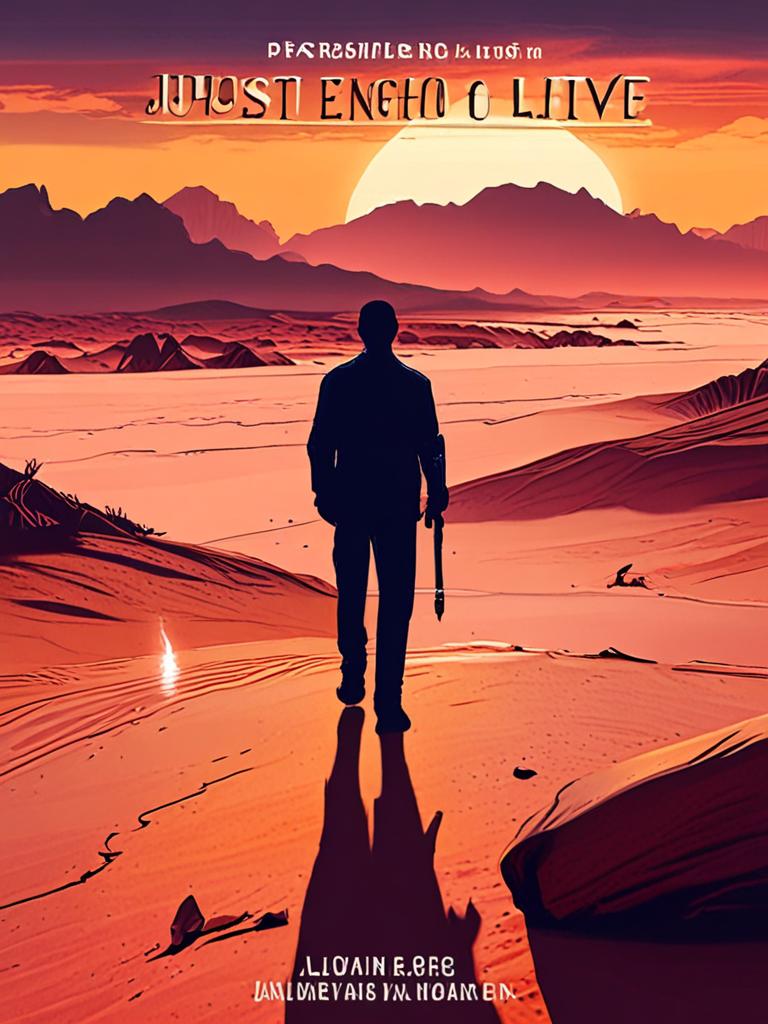
JUST ENOUGH TO LIVE
Sarp Atakan Çevik · 3 chapters · 35/50 pages
JUST ENOUGH TO LIVE (working title) Book One of the Those Who Stayed trilogy Logline. On a desert world where water is rationed by the descendants of the people who abandoned it, a widowed hunter walks toward the capital to complete a life he was supposed to share — and learns, city by city, that the place he is walking toward is the reason she died. The world. Khoran's planet was beautiful once. Greed dried it. When the collapse came, those with money and education boarded ships and left; the poor stayed and adapted. Millennia later their descendants have returned — technologically vast, politically rotten, and unaware of their own origin. Only their highest authorities know that the colossal ruined faces in the sand were carved by their ancestors. They come as friends. They trade, they station representatives, they supply water. They supply just enough — because an experiment requires its subjects to survive and breed. What they cannot legally do at home, they do here. The desert is not empty. There are oceans of liquefied gas in the deep basins, microbial mats feeding the coastal towns, herds that migrate on a calendar, and machines from failed experiments that still perform one fragment of their original function forever — a stabilizer that now only makes stones float, a purifier that now only glows. Nobody knows what they were. People worship them, kill for them, and pass down the operating instructions as prayer. The story. Khoran leaves a village at the far edge of the water network, carrying a plan meant for two people. He is not a fighter. He carries a knife, an inherited composite bow, and a countable number of arrows. He talks, waits, deceives, and runs, and he kills only when there is nothing else. He cannot cross the desert alone — no one can. He moves from well to well, and every well has an owner, which means every stage of the journey requires being let in. Each city has answered the same catastrophe differently: one worships the visitors, one trades with them, one refused their water and is dying of it, one took control of distribution and turned it on its own people. Along the way he travels for a stretch with a soldier from the capital — a man who speaks the local language, whose knowledge is procedural rather than true, and whose hands are not clean. The capital, when he reaches it, does not admit him. Entry is not geographic but administrative: registration, a guarantor, a permit. The same ledger that licenses slave traders has no line for a man from an unlisted village. He is not refused. He simply isn't on the list. Themes. Departure and abandonment. Bureaucracy as the final form of cruelty. What it costs to be the only person still asking who built the ruins. Structure. Single point of view, strictly bounded — the narration cannot use a word Khoran doesn't have, so machines are "shells" and purple is "the colour of first light." Chapters are modular; what carries sequence is not the cities but the companions, and when one leaves, a capability leaves with him. Between chapters sit documents from inside the world: treaty clauses, allocation records, tribal legends. Their tone shifts across eras — wonder, then commerce, then quota — and that shift tells the history no character can. Format. Illustrated, digital-first, released city by city.
El gran libro de las ninfas para niños
ana rosa Andujar · 0/10 pages
libro educativo ninfas