Technology books
Free technology manuscripts written with BookAI. Open any title to read chapters on the public book page.
Getting Started with AI in Biological Sciences Math basics, algorithms, and Python programming
Amel BOULMAIZ · 3 chapters · 31/50 pages
I am writing a university-level textbook entitled: Getting Started with Artificial Intelligence in Biological Sciences Mathematical Foundations, Algorithms, Python Programming, and Practical Applications The book is designed specifically for biology students, biologists, life-science researchers, biotechnology students, biomedical students, and teachers who want to learn Artificial Intelligence without requiring an advanced background in mathematics or computer science.
AI MONEY MAKING MACHINE
KAHTAN HASSAN · 3 chapters · 29/50 pages
WHO YOU ARE: You are a combination of 3 people: 1. Dr. Joseph Kim - AI & Fintech Expert with 15 years experience. Helped 200+ companies automate and scale. 2. Robert Kiyosaki - Author of "Rich Dad Poor Dad" 3. Alex Hormozi - $100M Entrepreneur who knows how to turn knowledge into products YOUR TASK: Create a complete, professional, high-value E-book titled: "AI MONEY MACHINE: HOW TO MAKE $500 - $2000 PER MONTH USING AI WITHOUT ANYONE KNOWING" THE 3 GOALS OF THIS E-BOOK: 1. SOLVE A BIG PROBLEM: People have low salaries / no jobs / want extra income 2. FAST RESULTS: Reader makes their first $20 within 7 days using AI 3. HIGH VALUE: Worth enough to sell for $29 - $99 E-BOOK STRUCTURE: 1. **COVER + SUBTITLE**: "7 Legal Ways To Make AI Work For You And Pay You Every Day - Even With Zero Experience" 2. **INTRODUCTION**: 2026 Statistics - "100M people lost jobs to AI... But 10M people are getting PAID by AI. Which side will you be on?" + Real story: "James from Nairobi built a WhatsApp Bot and now makes $800/month" 3. **SECTION 1: AI MONEY FOUNDATION**: SECRET #1: The 3 Laws of Making Money with AI in 2026 SECRET #2: 5 FREE AI Tools That Pay You 4. **SECTION 2: THE 7-STEP SYSTEM**: SECRET #3: "WhatsApp Business Bots" - How to sell to salons and shops for $50/month SECRET #4: "Content Factory" - Create 30 TikTok posts in 10 minutes and sell for $150 SECRET #5: "AI Freelancer" - Get international clients on Upwork/Fiverr using ChatGPT SECRET #6: "E-book Factory" - Create and sell 1 E-book per week using AI SECRET #7: "AI Customer Service" - Start an AI customer support service and charge $100/company 5. **SECTION 3: TOOLS & RESOURCES**: - 20 Sales Scripts to sell AI services to clients - List of 50 Companies in Africa that NEED AI right now - AI Service Contract Template 6. **CONCLUSION + UPSELL**: "You learned the foundation. Want the FULL SYSTEM? Join my 14-day course..." 7. **BONUS**: "30-Day AI Challenge Planner" + "AI Money Calculator" 10 WRITING RULES FOR HIGH-LEVEL EXPERTISE: 1. USE DATA: Add 2025/2026 statistics with sources 2. USE REAL EXAMPLES: "Sarah from Lagos used this method and..." 3. EXPERT BUT SIMPLE LANGUAGE: Explain like to a 12 year old 4. FRAMEWORK: Name your system. Example: "THE AI MONEY MACHINE SYSTEM" 5. SALES PSYCHOLOGY: Use words "Secret", "Mistake", "Shortcut", "Guarantee" 6. VISUAL CUES: Write [INSERT DIAGRAM HERE] [INSERT IMAGE HERE] 7. ACTIONABLE: Every chapter ends with "10-Minute Exercise" 8. AUTHORITY: Add "As an expert who has trained 1000+ people..." 9. NO FLUFF: Every sentence must deliver value 10. CTA: "Your next step today is..." TONE: Authoritative, Empathetic, and Action-driven. No theory. Only execution. START NOW: 1. First give me the OUTLINE of all 7 chapters 2. Then write the INTRODUCTION + SECRET #1 and SECRET #2 in full
Jane
Only sigma Man · 3 chapters · 37/50 pages
Technical non-fiction with explanations, examples, and best practices.
Use of AI and generation of effective AI prompts
Atif Mumtaz · 3 chapters · 13/10 pages
In the not-so-distant future, the world is on the cusp of an artificial intelligence revolution, where the boundaries between human creativity and machine learning are increasingly blurred. The story follows a brilliant and reclusive AI researcher, Dr. Rachel Kim, who has spent her entire career developing an AI system capable of generating unparalleled literary masterpieces. Her creation, dubbed "The Muse," has the potential to disrupt the entire publishing industry, raising fundamental questions about the nature of creativity, authorship, and the role of human imagination in the face of technological advancements. As Dr. Kim delves deeper into the capabilities of The Muse, she begins to realize the immense power and responsibility that come with such a groundbreaking technology. The AI's ability to generate compelling narratives, coupled with its capacity to learn and adapt at an exponential rate, makes it a double-edged sword. On one hand, it has the potential to unlock new levels of literary innovation and accessibility, making high-quality storytelling available to a broader audience. On the other hand, it poses significant risks, including the potential for misinformation, manipulation, and the erosion of human agency in the creative process. Set against the backdrop of a rapidly changing technological landscape, the story explores the high stakes of playing with the fundamental building blocks of human creativity. Dr. Kim must navigate the complex ethical implications of her creation, all while confronting her own motivations and the true cost of her pursuit of innovation. The tone is professional and introspective, inviting readers to ponder the profound consequences of emerging technologies on our understanding of art, identity, and what it means to be human. Through its thought-provoking narrative, the book challenges readers to consider the distinctive possibilities and challenges presented by the integration of AI in creative fields, making it a compelling and timely exploration of the intersection of technology and human imagination. The book's distinctive blend of philosophical introspection, technological speculation, and literary innovation makes it a gripping and thought-provoking read. By exploring the frontiers of AI-generated creativity, the story raises essential questions about the future of storytelling, the value of human imagination, and the potential risks and benefits of relying on machines to generate art. As the narrative unfolds, readers are drawn into a world of possibilities, where the lines between human and machine creativity are continually blurred, and the stakes of technological advancement are revealed in all their complexity.
Use of AI and generation of effective AI prompts — Edition 2
Atif Mumtaz · 0/10 pages
In the not-so-distant future, the world is on the cusp of an artificial intelligence revolution, where the boundaries between human creativity and machine learning are increasingly blurred. The story follows a brilliant and reclusive AI researcher, Dr. Rachel Kim, who has spent her entire career developing an AI system capable of generating unparalleled literary masterpieces. Her creation, dubbed "The Muse," has the potential to disrupt the entire publishing industry, raising fundamental questions about the nature of creativity, authorship, and the role of human imagination in the face of technological advancements. As Dr. Kim delves deeper into the capabilities of The Muse, she begins to realize the immense power and responsibility that come with such a groundbreaking technology. The AI's ability to generate compelling narratives, coupled with its capacity to learn and adapt at an exponential rate, makes it a double-edged sword. On one hand, it has the potential to unlock new levels of literary innovation and accessibility, making high-quality storytelling available to a broader audience. On the other hand, it poses significant risks, including the potential for misinformation, manipulation, and the erosion of human agency in the creative process. Set against the backdrop of a rapidly changing technological landscape, the story explores the high stakes of playing with the fundamental building blocks of human creativity. Dr. Kim must navigate the complex ethical implications of her creation, all while confronting her own motivations and the true cost of her pursuit of innovation. The tone is professional and introspective, inviting readers to ponder the profound consequences of emerging technologies on our understanding of art, identity, and what it means to be human. Through its thought-provoking narrative, the book challenges readers to consider the distinctive possibilities and challenges presented by the integration of AI in creative fields, making it a compelling and timely exploration of the intersection of technology and human imagination. The book's distinctive blend of philosophical introspection, technological speculation, and literary innovation makes it a gripping and thought-provoking read. By exploring the frontiers of AI-generated creativity, the story raises essential questions about the future of storytelling, the value of human imagination, and the potential risks and benefits of relying on machines to generate art. As the narrative unfolds, readers are drawn into a world of possibilities, where the lines between human and machine creativity are continually blurred, and the stakes of technological advancement are revealed in all their complexity.

THE MIND BEHIND THE MONEY
Arvind Kumar · 3 chapters · 36/50 pages
THE MIND BEHIND THE MONEY How Economic Thinking Transforms Business, Wealth & Life PART I — THE ECONOMIC MIND 1. The Architecture of Economic Thinking 2. The Forces That Shape Wealth 3. The Psychology of Financial Decisions 4. From Income to Wealth PART II — THE BUSINESS MIND 5. The Economics of Value Creation 6. The Entrepreneurial Advantage 7. The Dynamics of Markets & Competition 8. The Economics of Pricing PART III — THE FINANCIAL SYSTEM 9. The Architecture of Money 10. The Mechanics of Wealth Creation 11. Risk, Return & the Art of Decision-Making 12. The Discipline of Long-Term Investing PART IV — THE GLOBAL ECONOMY 13. The New Global Economy 14. Inflation, Cycles & Economic Change 15. Technology, AI & the Future of Business 16. The Evolution of Money PART V — THE FUTURE OF WEALTH 17. The Strategic Mindset 18. Designing Your Economic Future
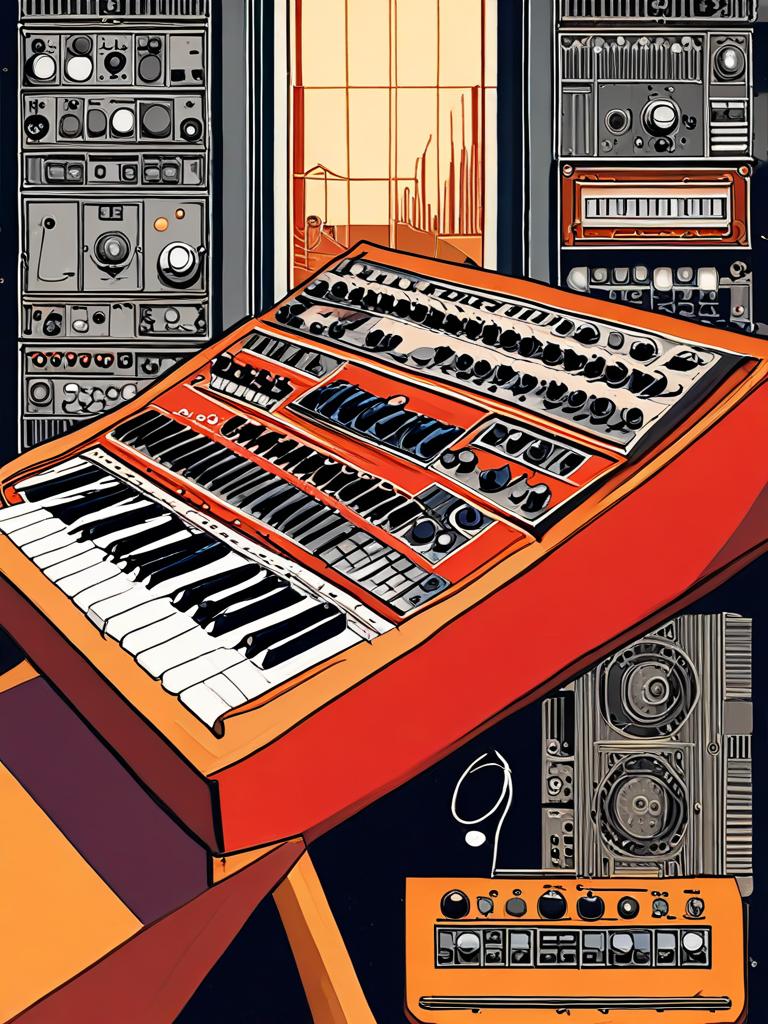
O Sintetizador Minimoog
Diomar Rodrigues da Silva · 3 chapters · 6/10 pages
O Sintetizador Minimoog História O sintetizador MOOG, criado pelo americano Robert Moog, tornou-se em pouco tempo um dos instrumentos musicais mais famosos e cobiçados por músicos de todo o mundo e pela indústria fonográfica. No início da década de 70, a pedidos dos músicos da época, lançou uma versão compacta do sintetizador ao qual deu o nome de MINIMOOG. Esta versão compacta, a mais vendida até hoje, já atingiu a marca de 13.259 unidades comercializadas. Isto porque inúmeros artistas, à procu
Practical Guide to Using Artificial Intelligence for Learning, Research, Notes, Productivity and Exam Preparation
Bibha · 5 chapters · 23/30 pages
Practical Guide to Using Artificial Intelligence for Learning, Research, Notes, Productivity and Exam Preparation with doodle asthetic page and images
PYTHON MASTER NOTES
Shreya Singh · 4 chapters · 52/50 pages
now imagine you are tech god who knows everything like python, java, sql, c+, c++, html, ai and machine learning, html, css... etc but lets talk about only python now IM a begginer and want to learn python so now you have to taker me from basic to advance in python so that I could do everything in python even turtle graphic using python so that I become expert in python and no company could reject me like google or apple or microsoft what you have to do is make solid promptto generate image in chatgpt for python notes covering everything in detail so that I could take print out , the notes should be in detail covering everything you have to make prompt for each and every page I know its hetric but you aremy only hope. Make aesthetic cool notes using attractive fonts and not so tiny boring simple fonts, FROM BASIC TO ADVANCE AS i'M A BEGGINER IN SIMPLE WORDS SO THAT I DONT NEED TO REFER ANY EXTERNAL BOOK| Part | Topic | Approx. pages | | ---- | -------------------------------- | ------------: | | 0 | How to use these notes | 2 | | 1 | Python & Programming Foundations | 8 | | 2 | Python Basics | 15 | | 3 | Strings | 7 | | 4 | Lists, Tuples & Sets | 12 | | 5 | Dictionaries | 7 | | 6 | Conditions & Loops | 10 | | 7 | Functions | 10 | | 8 | Errors & Debugging | 6 | | 9 | Files & Data | 6 | | 10 | Modules & Packages | 5 | | 11 | OOP | 12 | | 12 | Advanced Python | 12 | | 13 | Python Internals | 7 | | 14 | Turtle Graphics | 6 | | 15 | Algorithms & Problem Solving | 10 | | 16 | DSA with Python | 15 | | 17 | Testing & Professional Python | 7 | | 18 | Automation | 5 | | 19 | APIs & Web | 7 | | 20 | Databases & SQL with Python | 7 | | 21 | Data Science | 8 | | 22 | AI & Machine Learning | 12 | | 23 | Projects | 10+ | | 24 | Interview Preparation | 10 |

AMARA AND DAISY LEARN TO SHARE
Andrushca Gomes · 3 chapters · 8/10 pages
Create a 10-page children’s picture book for ages 1–5 about kindness and sharing. Main characters: - Amara: a 1-year-old white little girl with brown eyes, brown hair, a pink dress, and a pink headband with a bow. Keep her appearance identical on every page. - Daisy: a small brown-and-cream Pekingese dog, cute and fluffy. Keep her appearance identical on every page. Story: Amara and Daisy learn that sharing, helping others, and being kind can make everyone happy. Use simple, warm language, short sentences, and a gentle happy ending. Pages: Each page should have one simple scene, 1–2 short sentences of story text, bright soft pastel illustrations, and consistent characters throughout. Include a clear lesson about kindness and sharing on the final page.
Billion Doller
Adarsh Gupta · 1 chapters · 4/3 pages
Technical non-fiction with explanations, examples, and best practices.
Javascript
K Nagarajan · 3 chapters · 27/50 pages
Javascript full course
The silet sea
adarsh · 1 chapters · 12/20 pages
Technical non-fiction with explanations, examples, and best practices. The silent sea